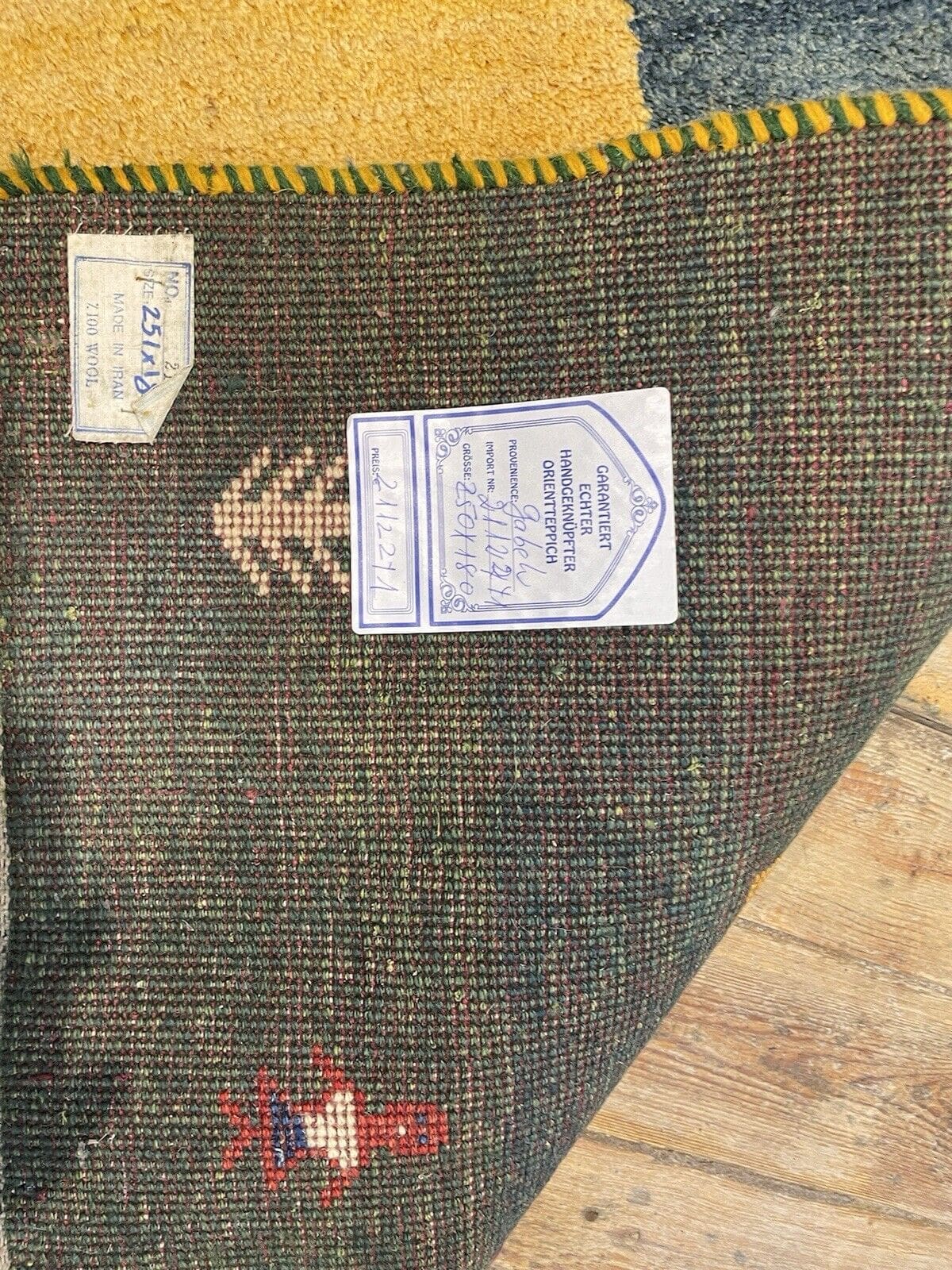
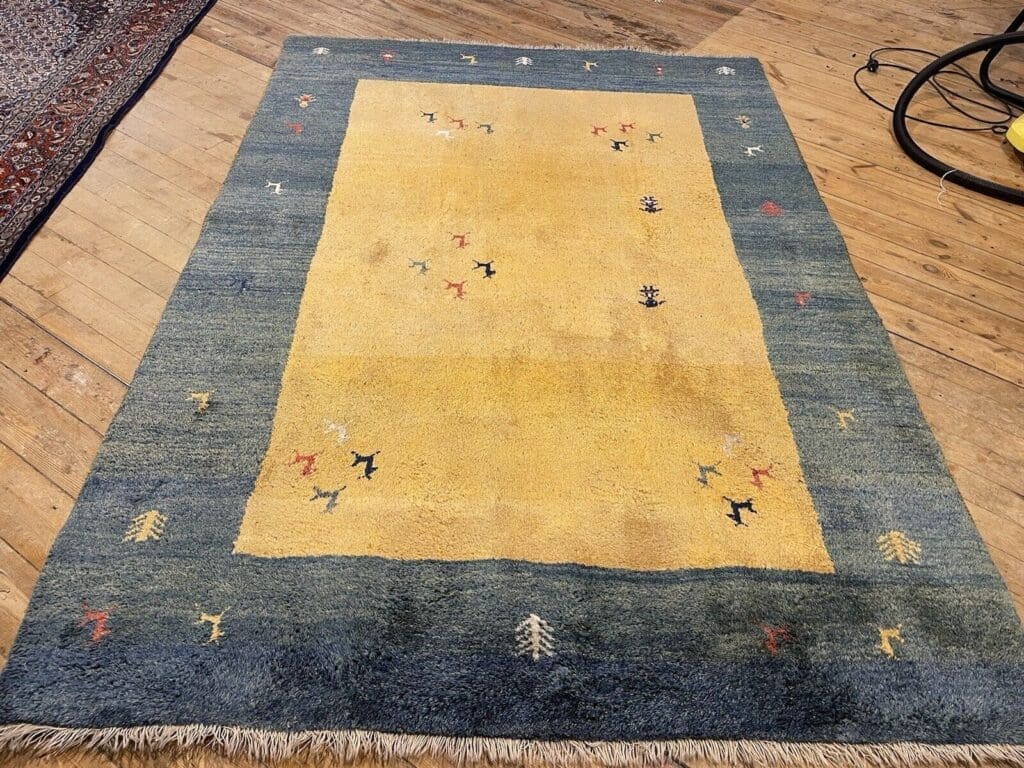
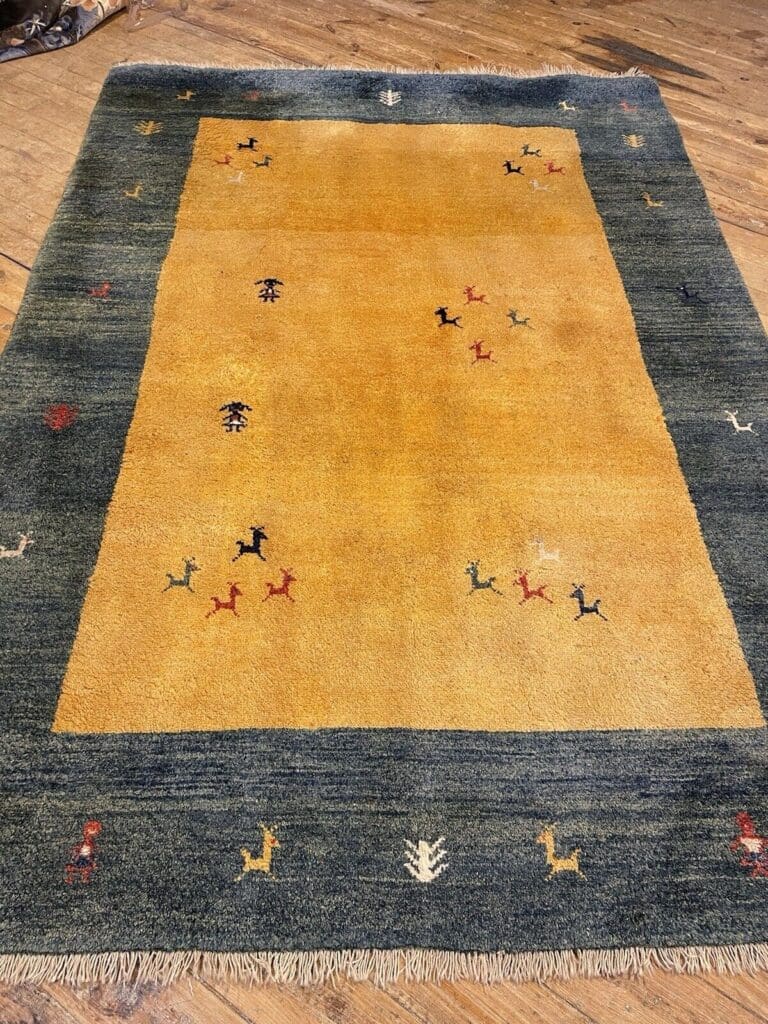
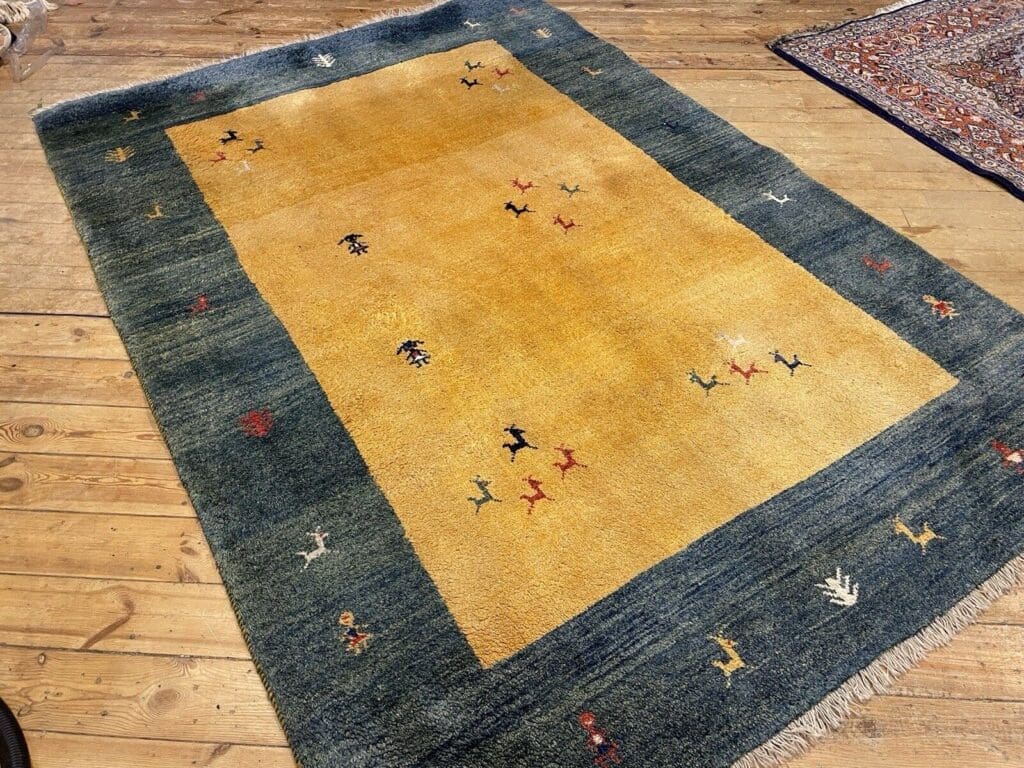
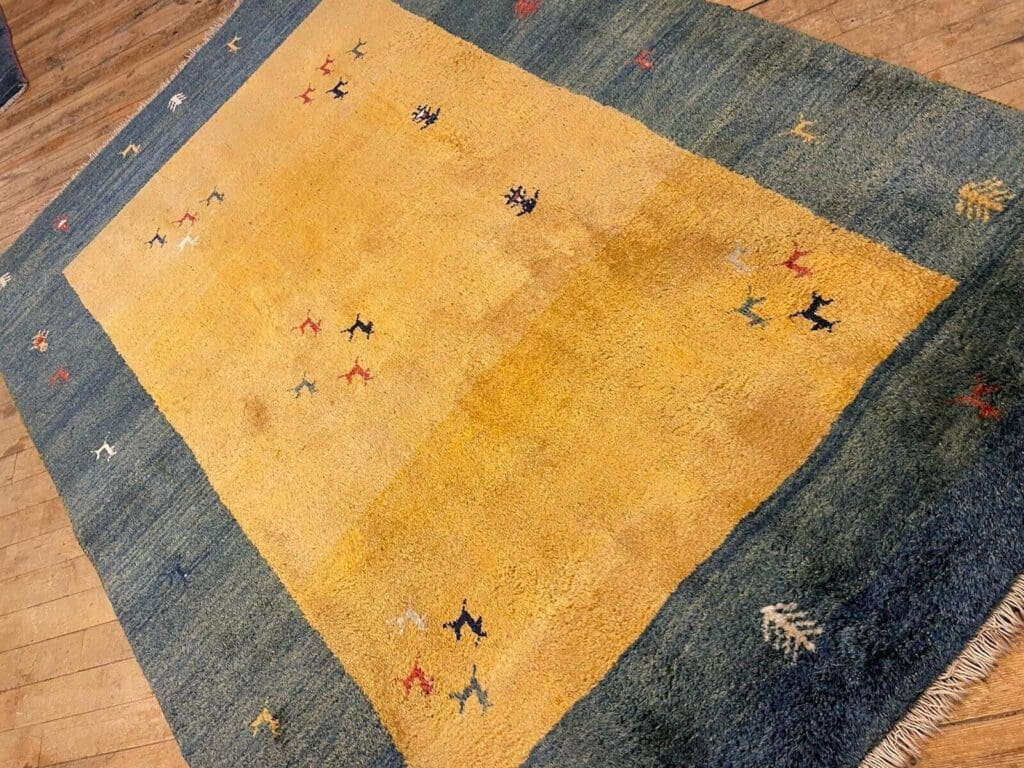
This Gabeh Persian rug is hand-knotted in wool. Wool is a natural fibre with a warm feel and a resilient textile structure, qualities that have made it an established material in rug making. Its surface offers a comfortable feel underfoot while retaining the character of a natural fibre. The material therefore connects everyday use with the traditional requirements of a hand-made floor covering.
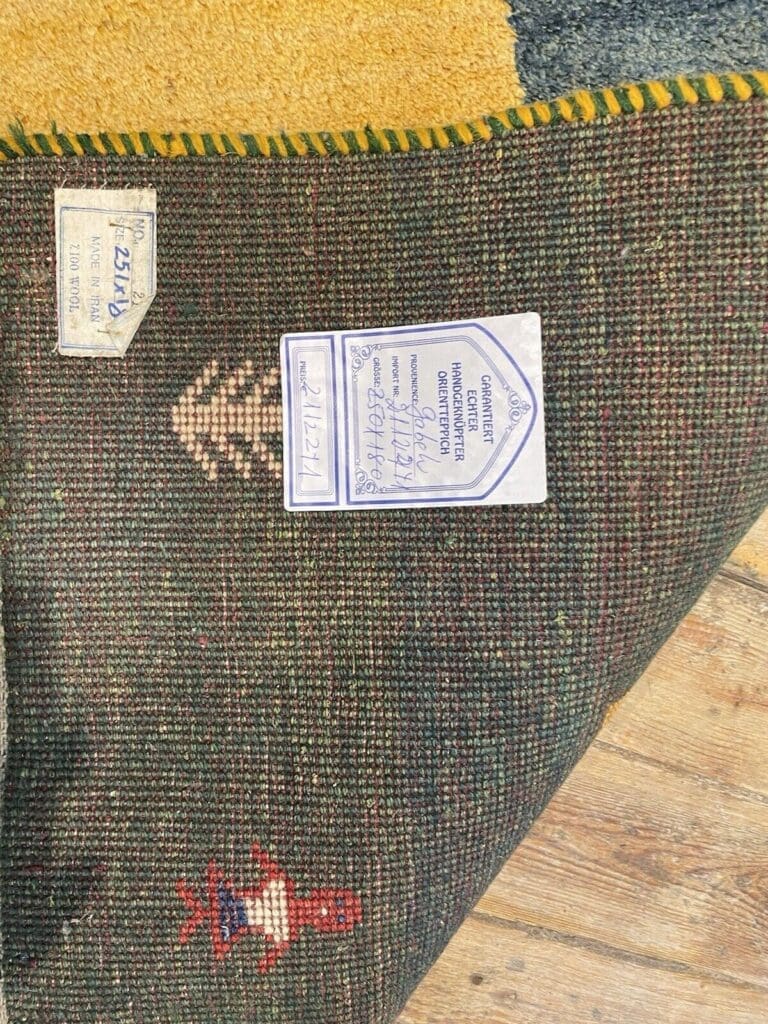
Hand knotting is carried out one knot at a time within the rug’s foundation. The maker works progressively across the loom, controlling the placement of the pile and the tension of the underlying structure. This differs from machine production, where the sequence and appearance are mechanically repeated. A hand-knotted rug is consequently an individual textile work, shaped by the work carried out during its making.
In rug weaving, the relationship between fibre, construction and knot density influences the appearance and handling of the finished surface. Knot density can allow lines and forms to be rendered with greater or lesser detail, although it is not the only factor that determines a rug’s character. Here, the defining production facts are the wool material and the hand-knotted technique.
Wool also contributes to natural insulation and gives the surface a tactile quality rather than a completely smooth one. Its structure is suited to a rug intended for regular use. The combination of a natural material and manual knotting reflects a method associated with Persian rug craftsmanship, in which the making of the textile is an important part of its identity.
Origin and Tradition
Gabeh rugs originate in the Gabeh region of Iran. The region is known for its particular knotting techniques and design traditions. Gabeh rugs are generally associated with a simpler and more rustic visual language than many other Persian rugs. Their effect comes from direct shapes, restrained ornament and the visible relationship between material and making. This simplicity is a characteristic of the type rather than a lack of craftsmanship.
Rug making in Gabeh belongs to a long Iranian and Persian tradition. Knowledge of preparing wool, working the foundation, arranging motifs and completing a rug has been passed on through generations. Such knowledge involves more than a sequence of technical actions. It includes an understanding of how a design can be adapted to the available field and how materials respond during the knotting process.
Nomadic communities are an important part of the tradition associated with Gabeh rugs. Their cultural influences can enter the designs through the selection of motifs, the degree of simplification and the way a composition is organised. For this reason, Gabeh rugs are often understood as individual interpretations rather than as identical copies of a fixed drawing. The personal hand of the craftsperson remains part of the textile result.
Gabeh weaving is frequently linked with geometric forms and straightforward floral motifs. These motifs can reflect the natural surroundings and the environment in which the tradition developed. Rather than reproducing plants or landscapes in a detailed, realistic manner, the design language reduces them to recognisable signs and simplified shapes. The resulting compositions are direct and readable while remaining connected to the cultural setting of their origin.
Iranian rug culture contains many regional weaving traditions, each with its own balance of materials, construction and ornament. Gabeh is distinguished within that wider context by its rustic clarity and less elaborate pattern vocabulary. The tradition also permits personal decisions in colour and composition. Rugs sharing the same general type can therefore differ in their arrangement and details while retaining the visual connection to Gabeh.
The origin in the Gabeh region provides the geographical and cultural context for this rug. The designation Gabbeh Shiraz describes its pattern tradition as given in the product information; it does not replace the stated origin. The rug belongs to the Persian tradition of hand knotting and to the Gabeh design vocabulary, where practical textile work, regional experience and individual interpretation meet.
Design and Pattern
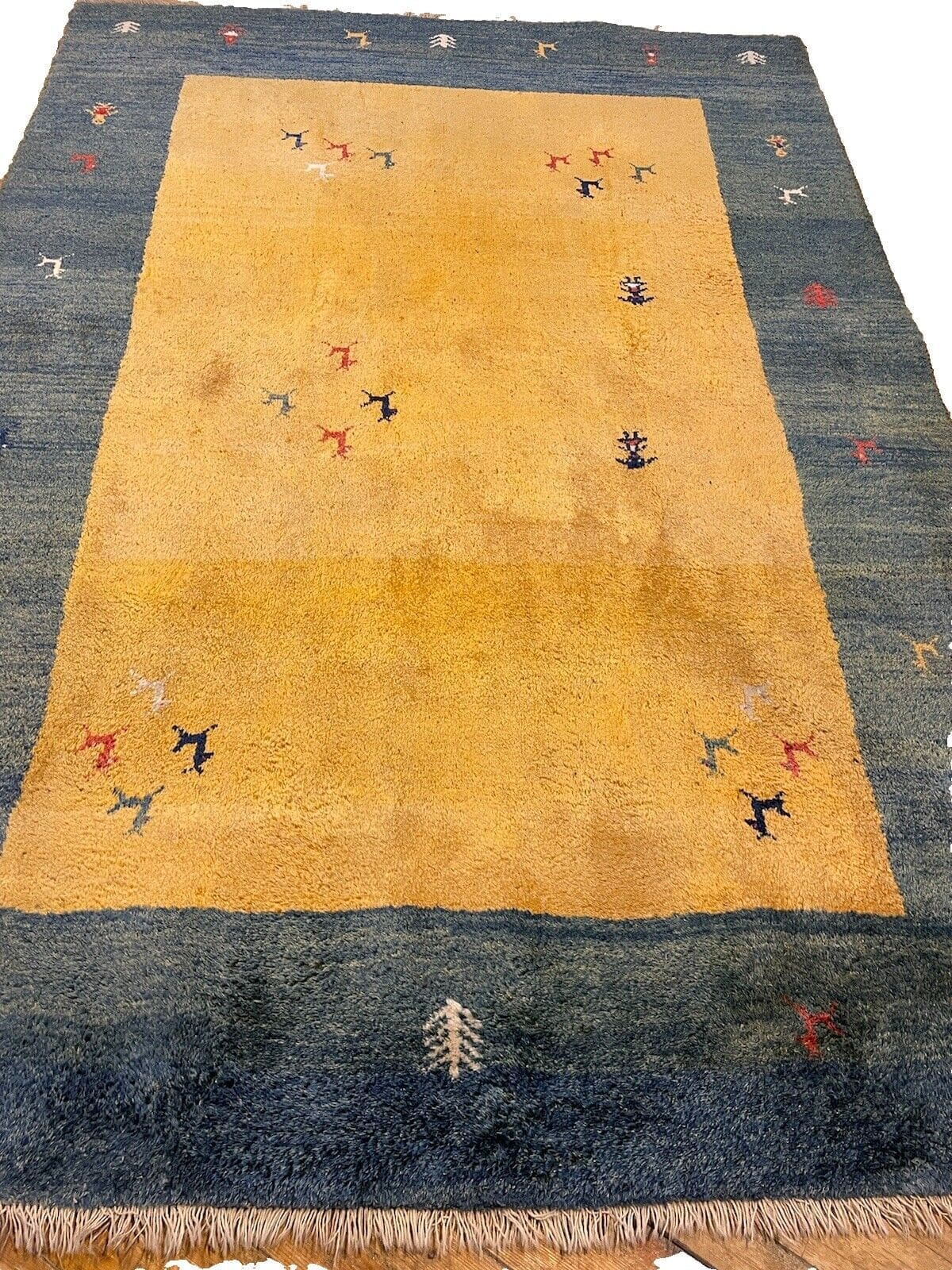
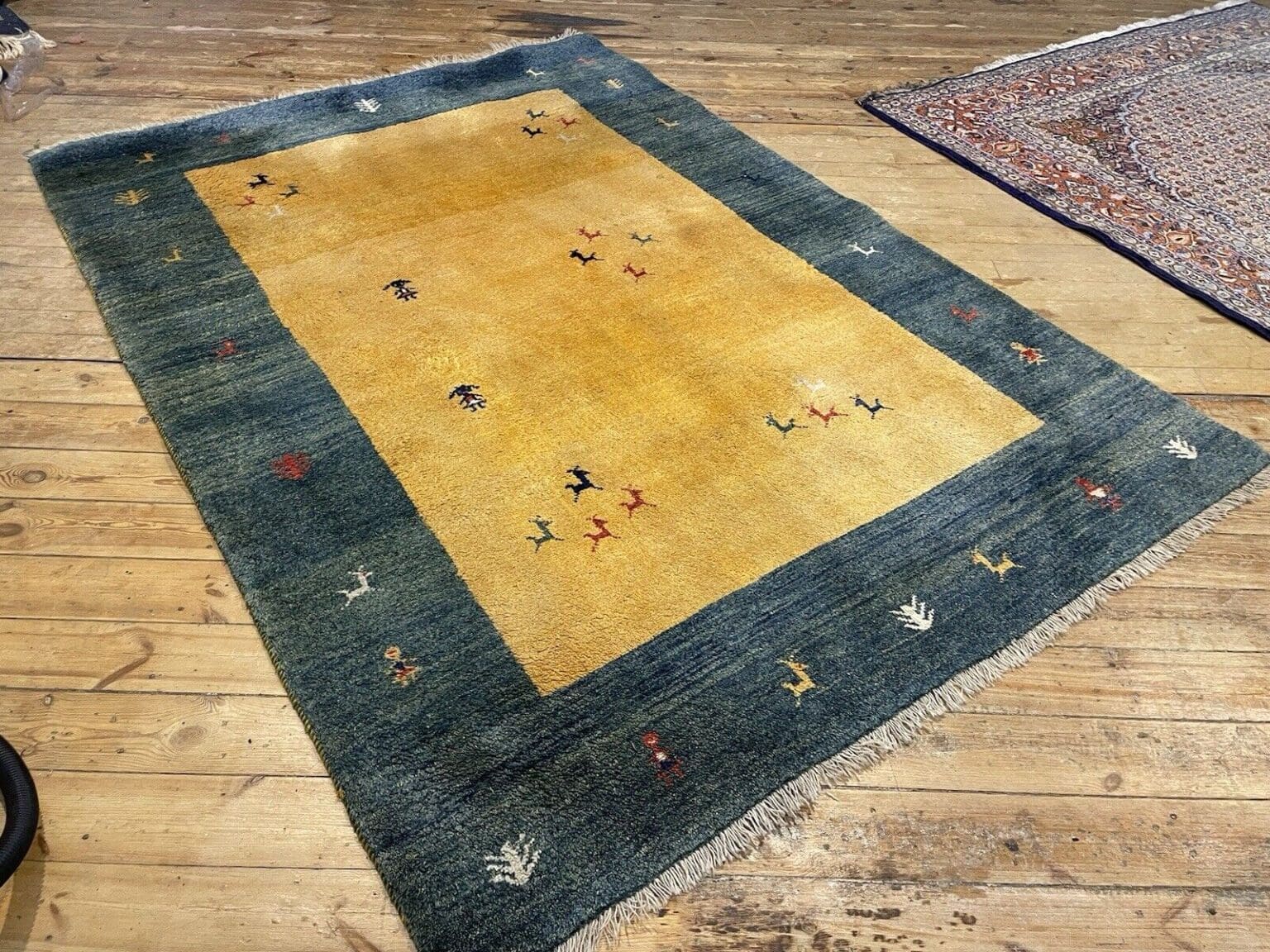
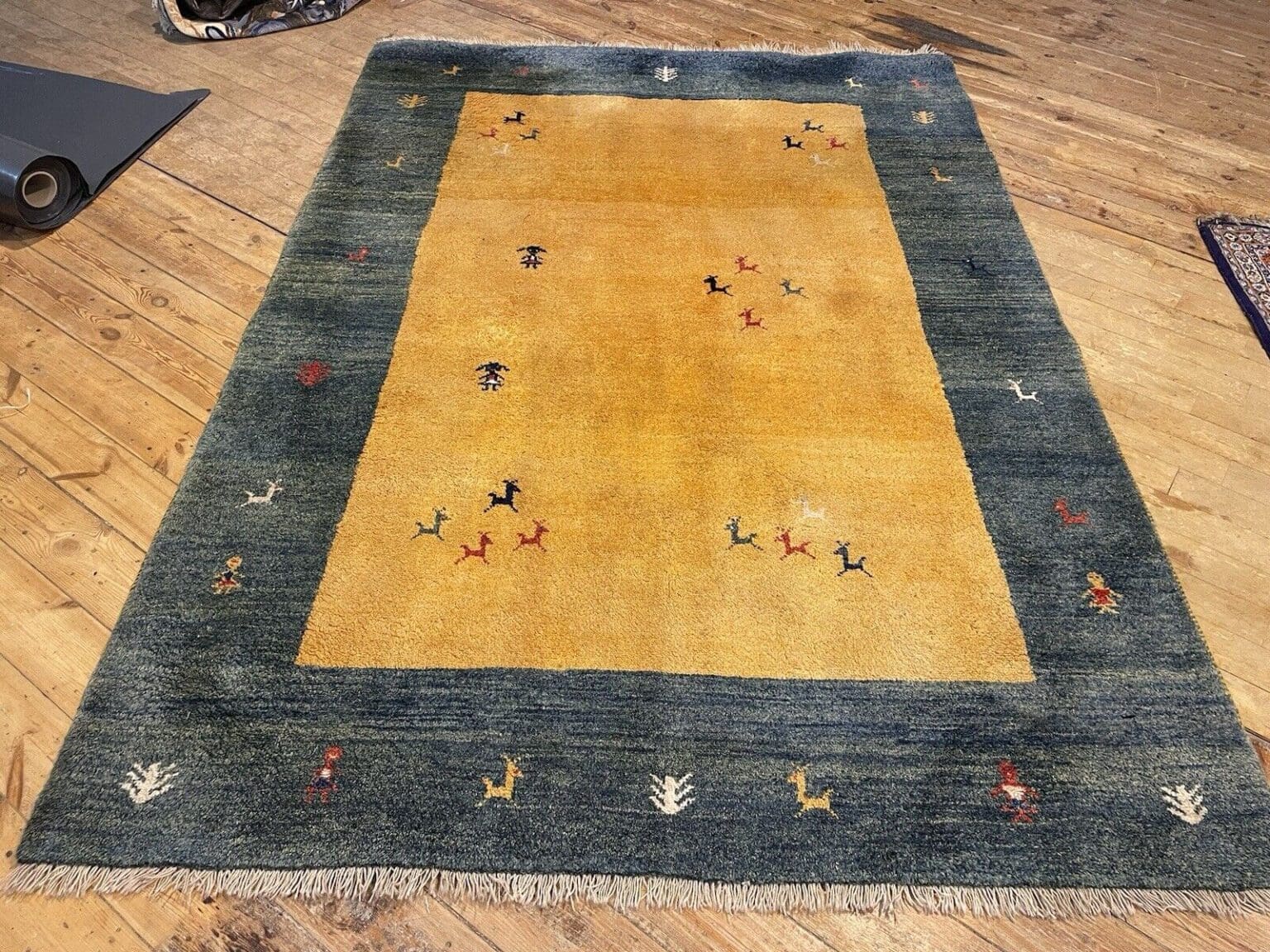
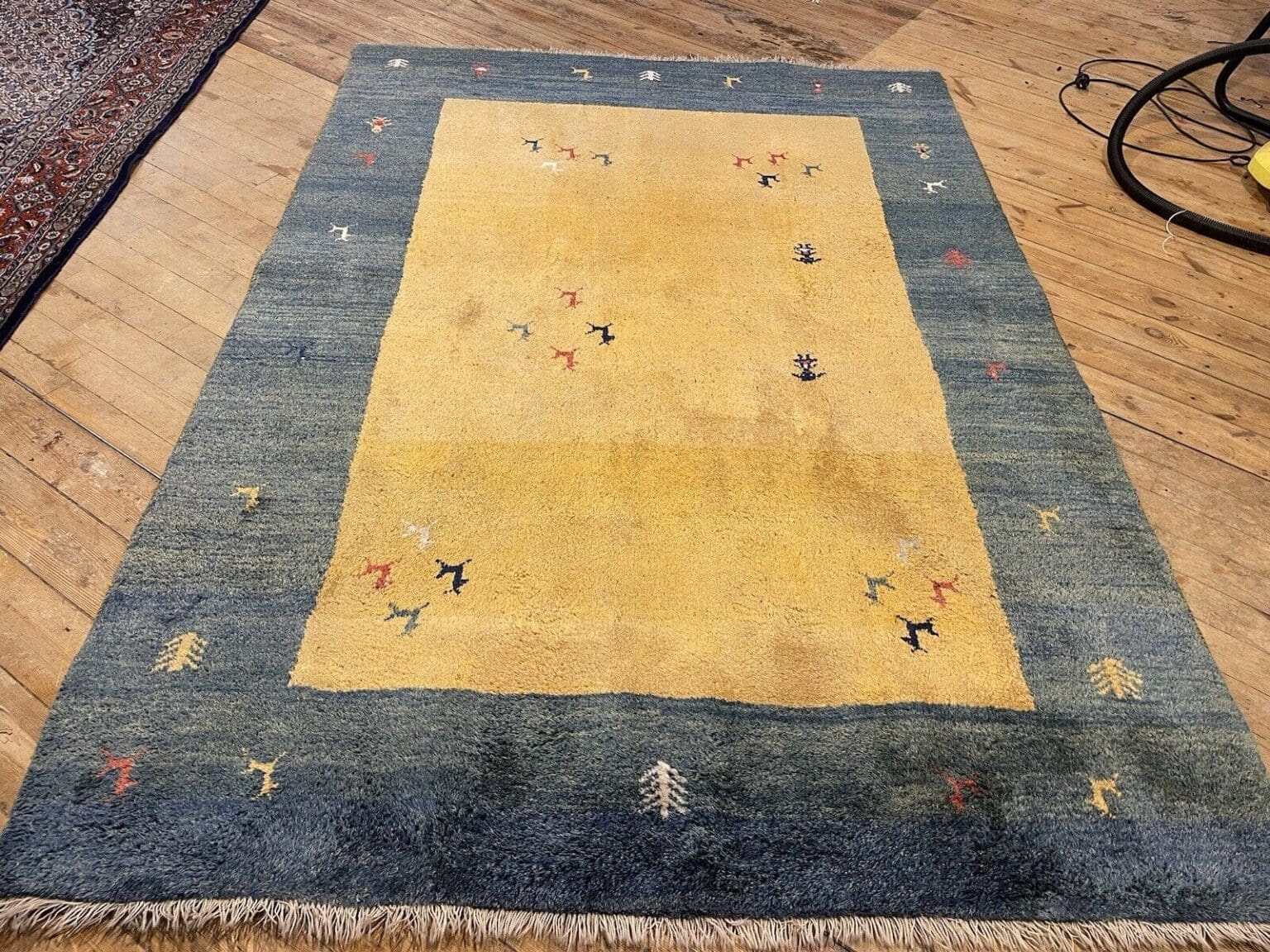
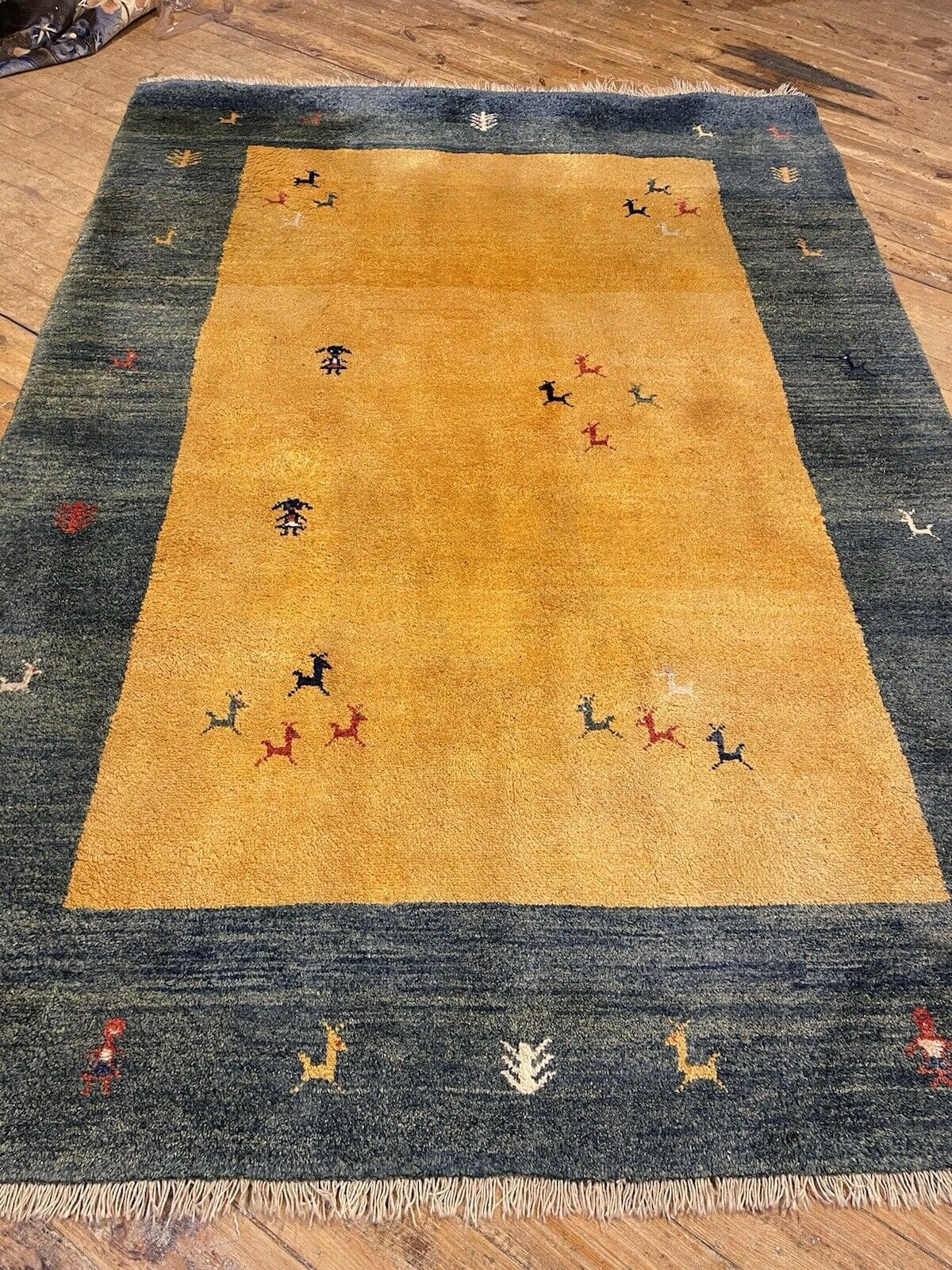
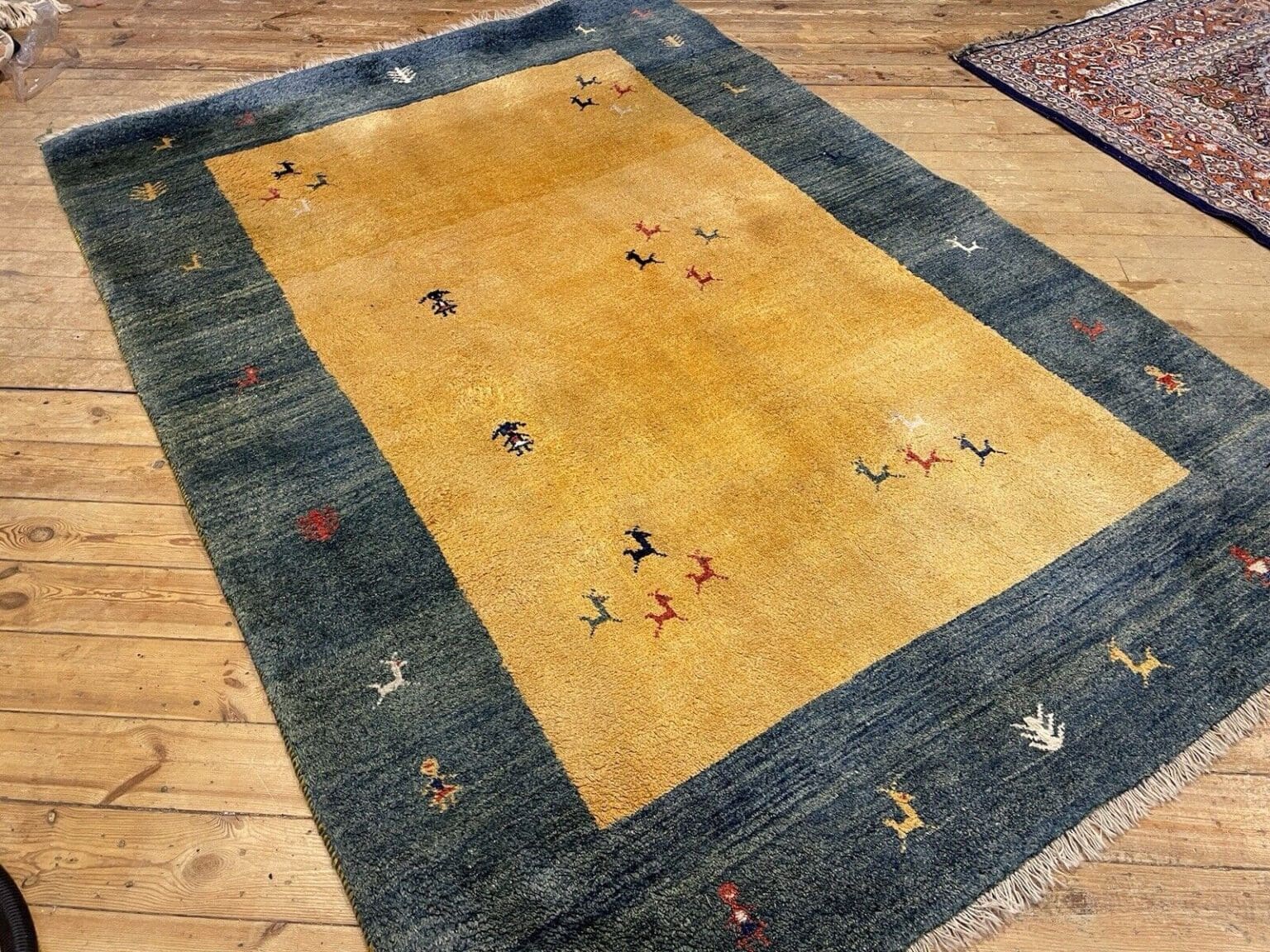
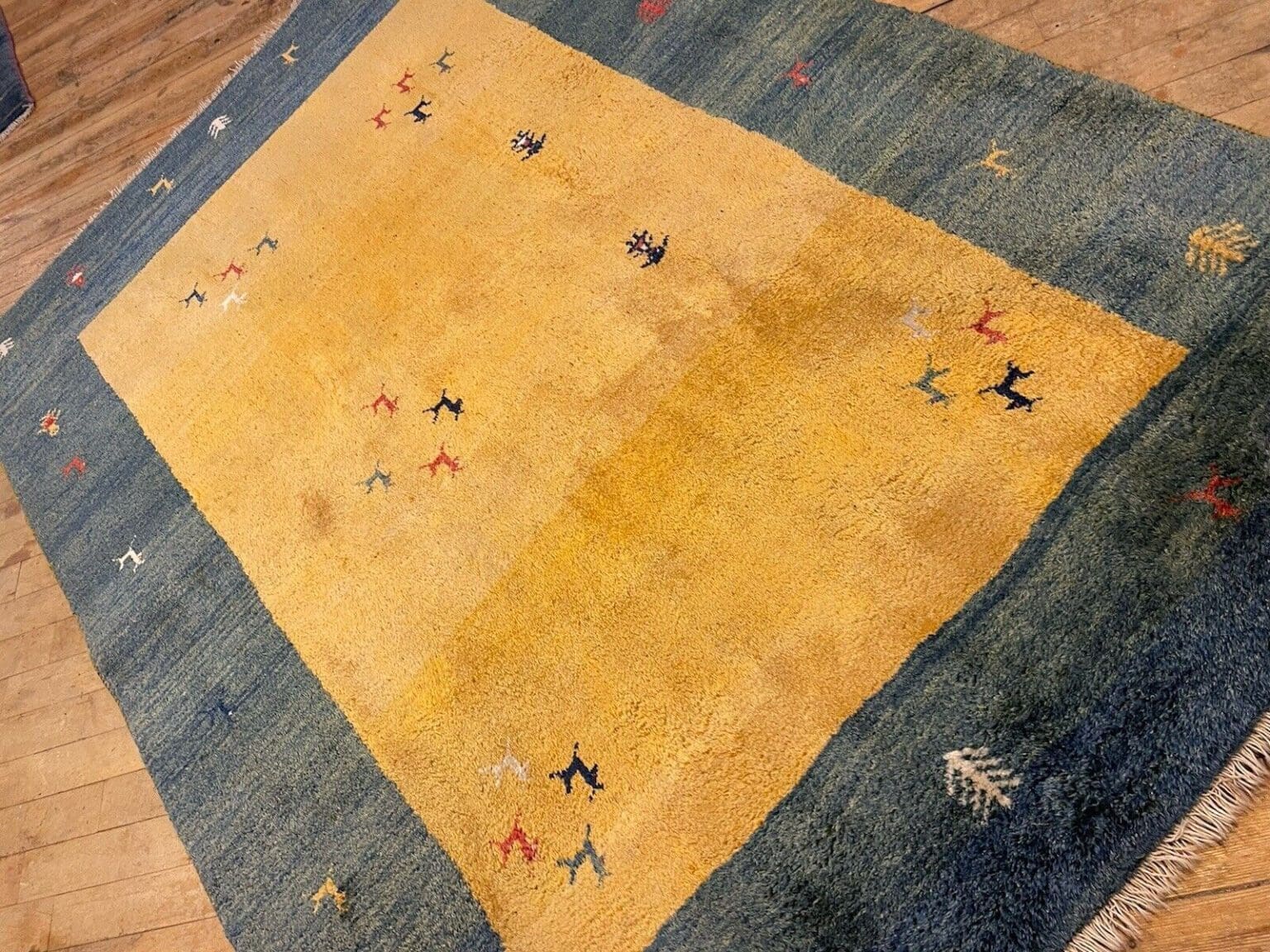
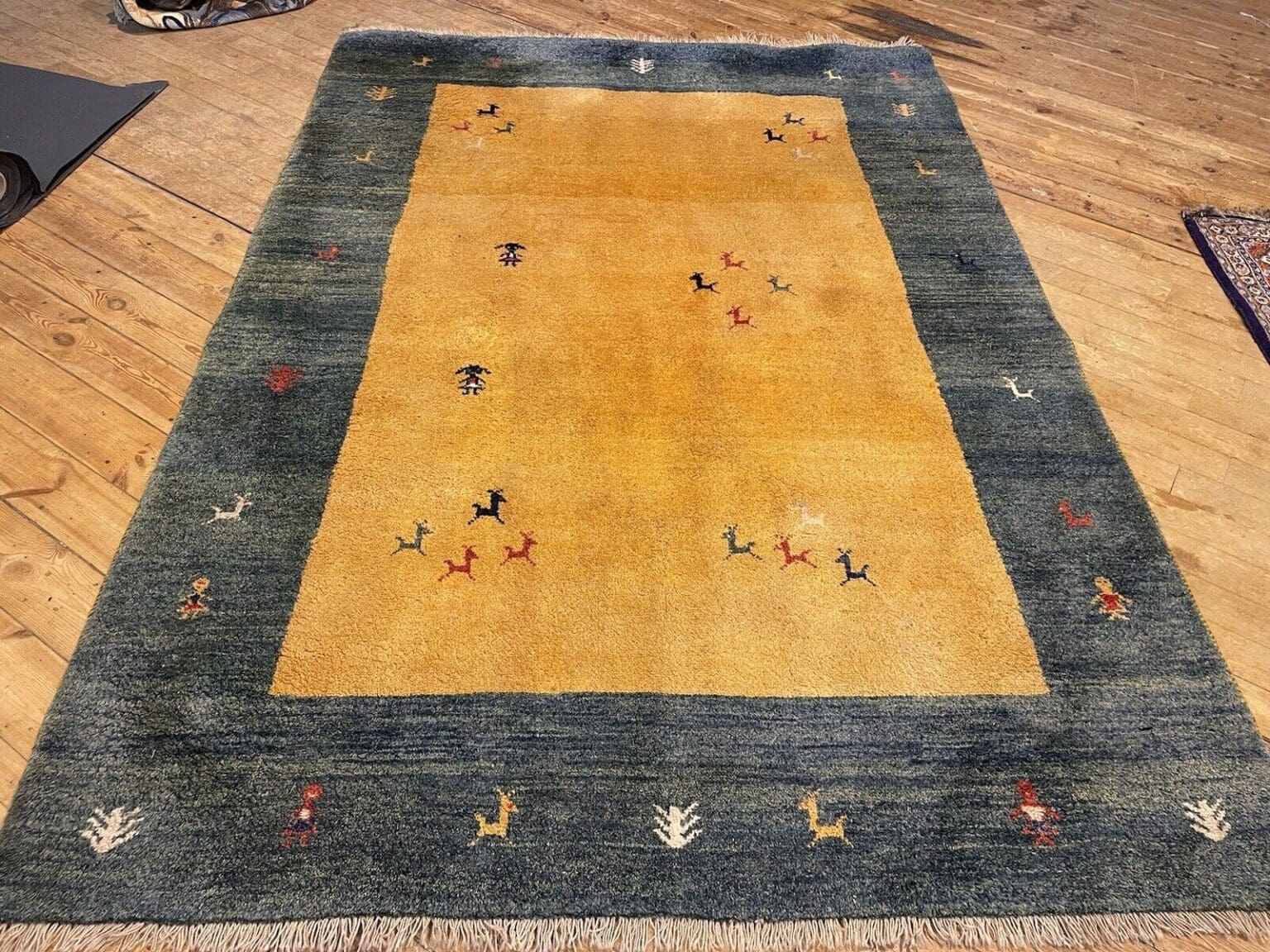
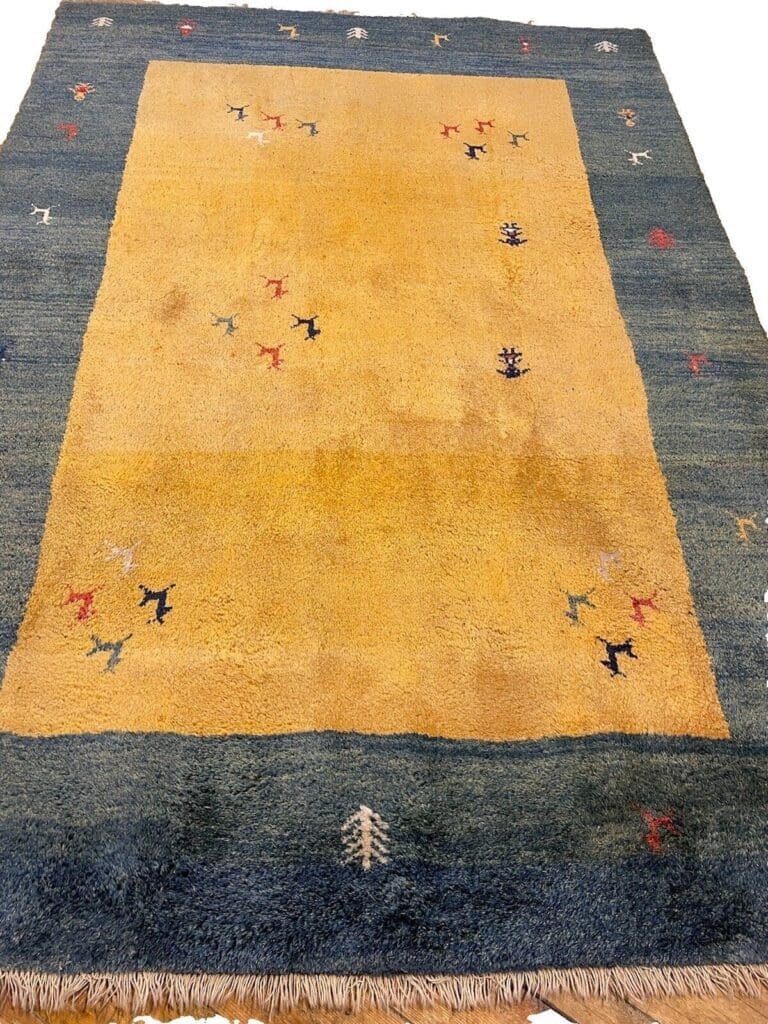
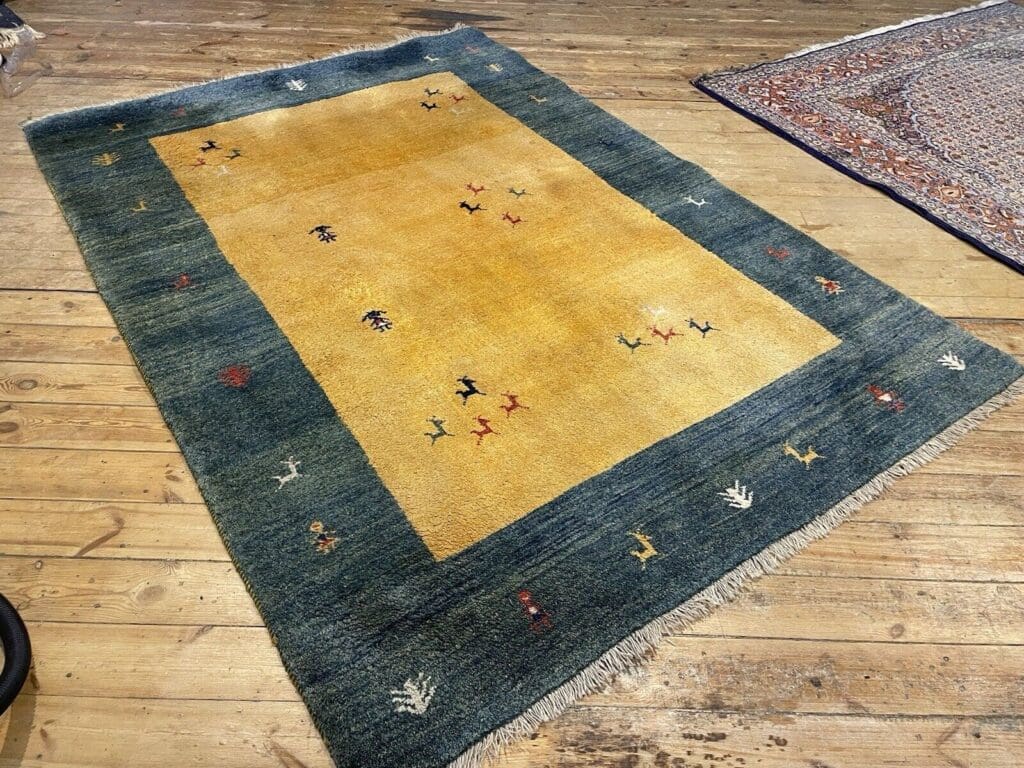
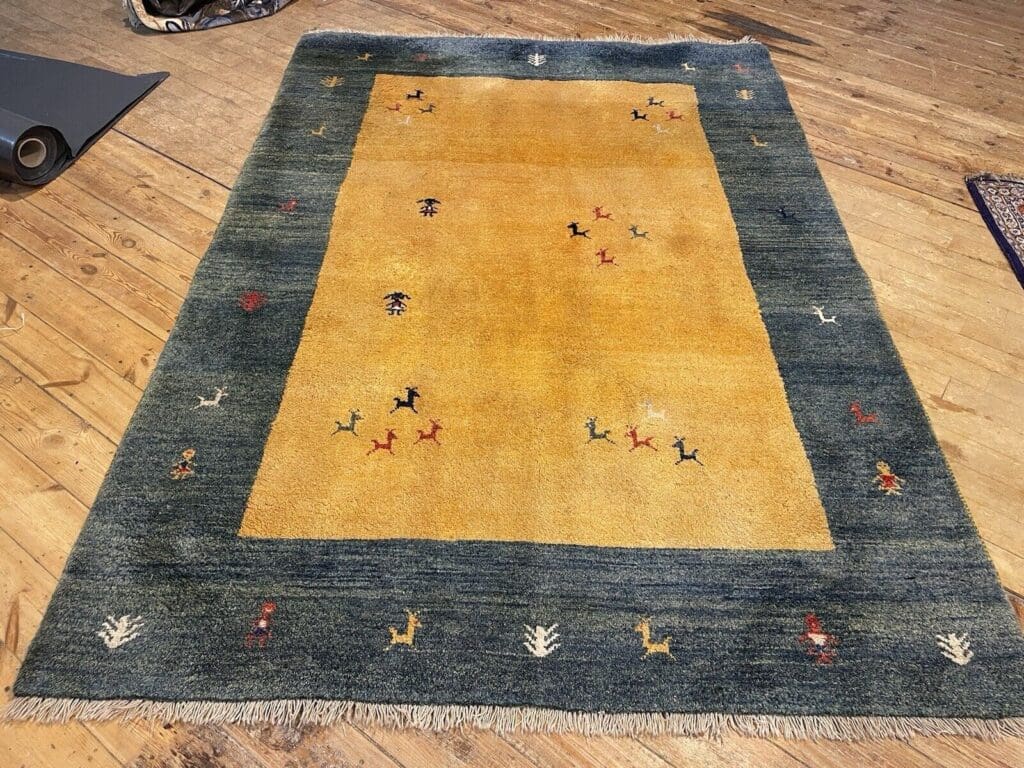
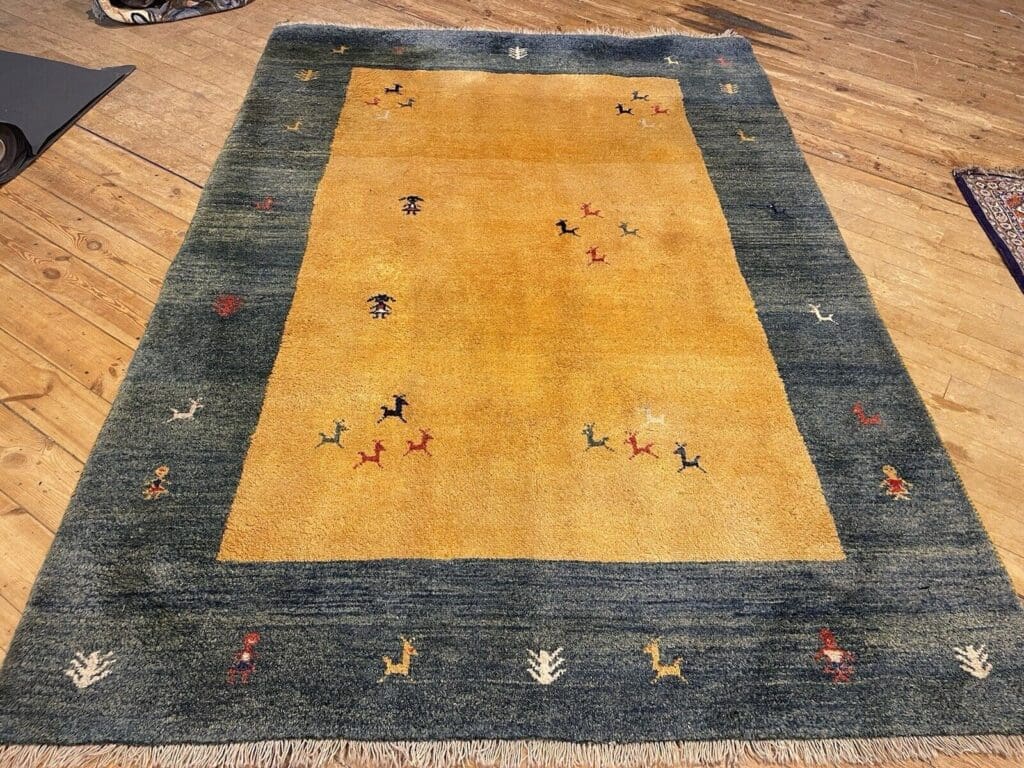
The pattern is identified as Gabbeh Shiraz. Gabeh design commonly brings together geometric forms and earthy colours. Its structure is often created through the relationship of larger areas, clear lines and simplified motifs rather than through a dense accumulation of small details. This gives the pattern a calm, legible organisation while preserving the visual presence of the hand-made textile.
Geometric forms are among the elements frequently associated with Gabeh rugs. Rectangular divisions, diamond-like shapes and other clear arrangements can give the field a sense of order. Simple floral motifs may appear alongside them. These floral elements are usually treated in a reduced manner, functioning as woven symbols or stylised references rather than as detailed botanical studies.
The connection with nature is expressed through simplification. Motifs may recall plants, surroundings or impressions of the landscape without attempting a literal picture. Earthy colours support this reference to the natural environment. They create a grounded colour effect, while geometric organisation keeps the composition distinct. Together, colour and form provide the design with its regional character.
The restrained pattern language can work with both traditional and contemporary interiors. In a more rustic setting, the wool and earthy colour range can relate to other natural materials. In a modern room, the simplified geometry can introduce a textile accent without competing with a more ordered interior. The rug may define a central area or sit between existing furnishings as a visually contained element.
Gabeh designs are often considered enduring because their effect does not depend on a short-lived decorative trend. Their appearance comes from the balance of reduced ornament, natural colour associations and the irregularities that belong to hand production. The Gabbeh Shiraz pattern reference places this rug within that design context, while the stated geographical origin remains the Gabeh region in Iran.
The resulting pattern language is quiet but identifiable. Geometric elements, simple floral suggestions and earthy tones create a surface that can be read from a distance and examined more closely as a hand-made object. The design remains connected to Persian rug history while retaining the direct and rustic quality associated with Gabeh weaving.
Special Features
The notable features of this rug are its hand-knotted construction, wool material and individual patterning. Natural material and reduced geometric or floral design combine the practical role of a floor covering with the cultural significance of a hand-made rug. Because the knots are made by hand, the finished textile is an individual piece rather than a mechanically identical product.
The rug is described as suitable for everyday use. Wool provides natural warmth and a durable fibre structure, while the Gabeh type is described as comfortable, hard-wearing and easy to maintain. Regular vacuuming helps remove dust and dirt. Stains should be treated with a damp cloth, and more intensive cleaning should be entrusted to a professional cleaner in order to protect the material and construction.
Its condition is new without a label. The combination of Iranian origin, Gabeh tradition, wool and hand knotting defines the character of this one-off rug. With careful maintenance, a hand-knotted wool rug can remain in use for a long period, allowing its textile structure and pattern to continue to be seen over time.
FAQ
How should I care for my Gabeh rug?
Vacuum the rug regularly to remove dust and dirt from the pile and to support the condition of its surface. Treat spills or stains promptly with a damp cloth. Avoid unnecessarily vigorous rubbing, as this can put stress on the fibres. For more intensive cleaning, use a professional service familiar with hand-knotted wool rugs. Consistent, gentle care helps keep the colours visible and the fibres in good condition.
Where does the Gabeh rug come from?
The rug comes from the Gabeh region in Iran. Gabeh is known for a long tradition of rug making, particular knotting techniques and a simple, rustic design language. Nomadic communities are part of the tradition associated with the region, and craft knowledge is often passed from one generation to the next. This background connects the rug’s material, construction and pattern with Iranian Persian weaving culture.
What makes the Gabeh rug distinctive?
Its distinctive features are the hand-knotted construction, the use of wool and the individual pattern language of geometric forms, simple floral motifs and earthy colours. These elements bring together functional qualities and the cultural tradition of Gabeh rugs. References to nature and the surrounding environment shape the motifs, while the manual process gives the rug the character of an individual textile work.
To provide the best experiences, we use technologies like cookies to store and/or access device information. Consenting to these technologies will allow us to process data such as browsing behavior or unique IDs on this site. Not consenting or withdrawing consent, may adversely affect certain features and functions.
Functional Always active
The technical storage or access is strictly necessary for the legitimate purpose of enabling the use of a specific service explicitly requested by the subscriber or user, or for the sole purpose of carrying out the transmission of a communication over an electronic communications network.
Preferences
The technical storage or access is necessary for the legitimate purpose of storing preferences that are not requested by the subscriber or user.
Statistics
The technical storage or access that is used exclusively for statistical purposes.The technical storage or access that is used exclusively for anonymous statistical purposes. Without a subpoena, voluntary compliance on the part of your Internet Service Provider, or additional records from a third party, information stored or retrieved for this purpose alone cannot usually be used to identify you.
Marketing
The technical storage or access is required to create user profiles to send advertising, or to track the user on a website or across several websites for similar marketing purposes.

 SECURE PAYMENT
 SHIPPING PARTNERS


