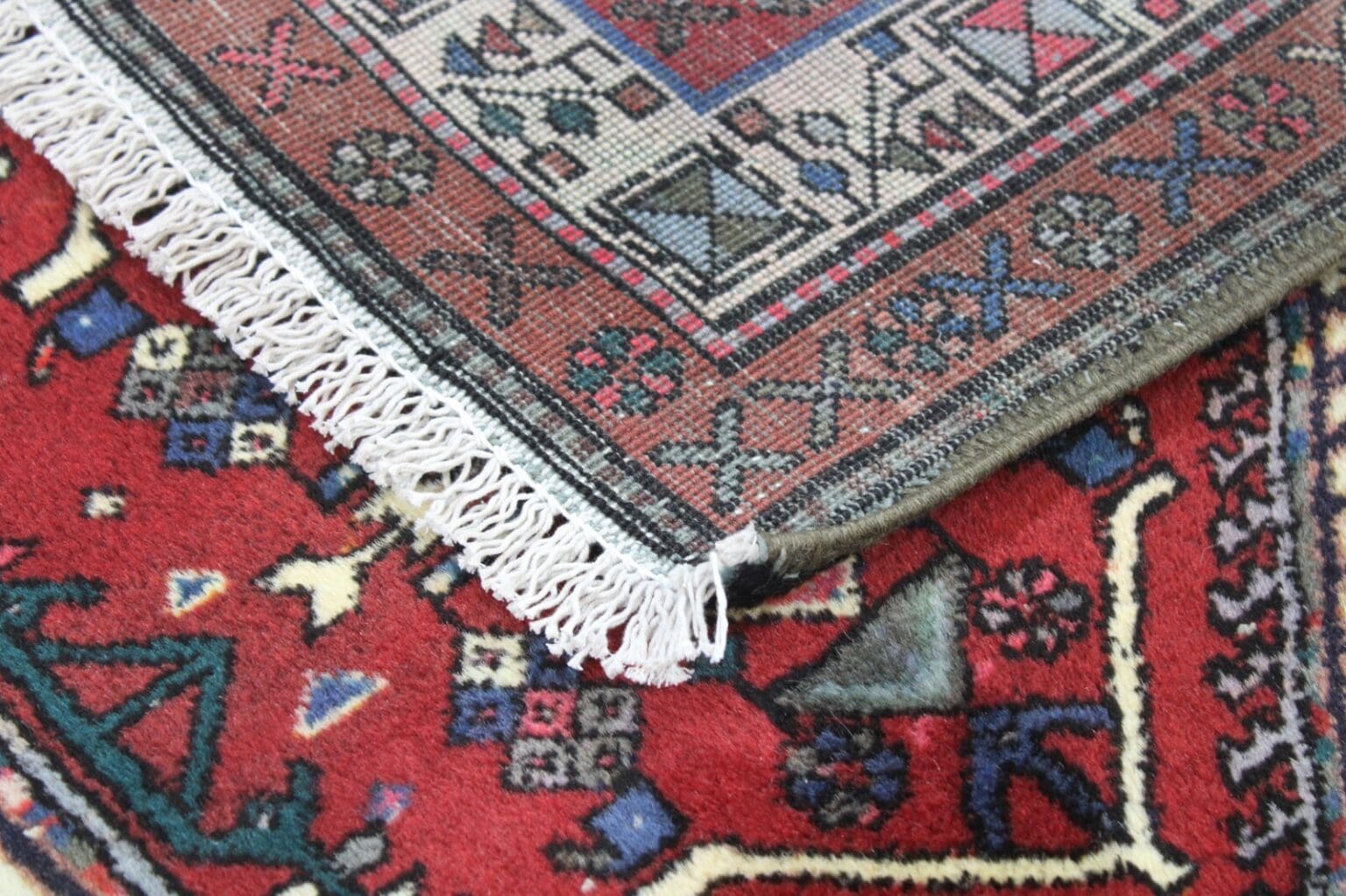
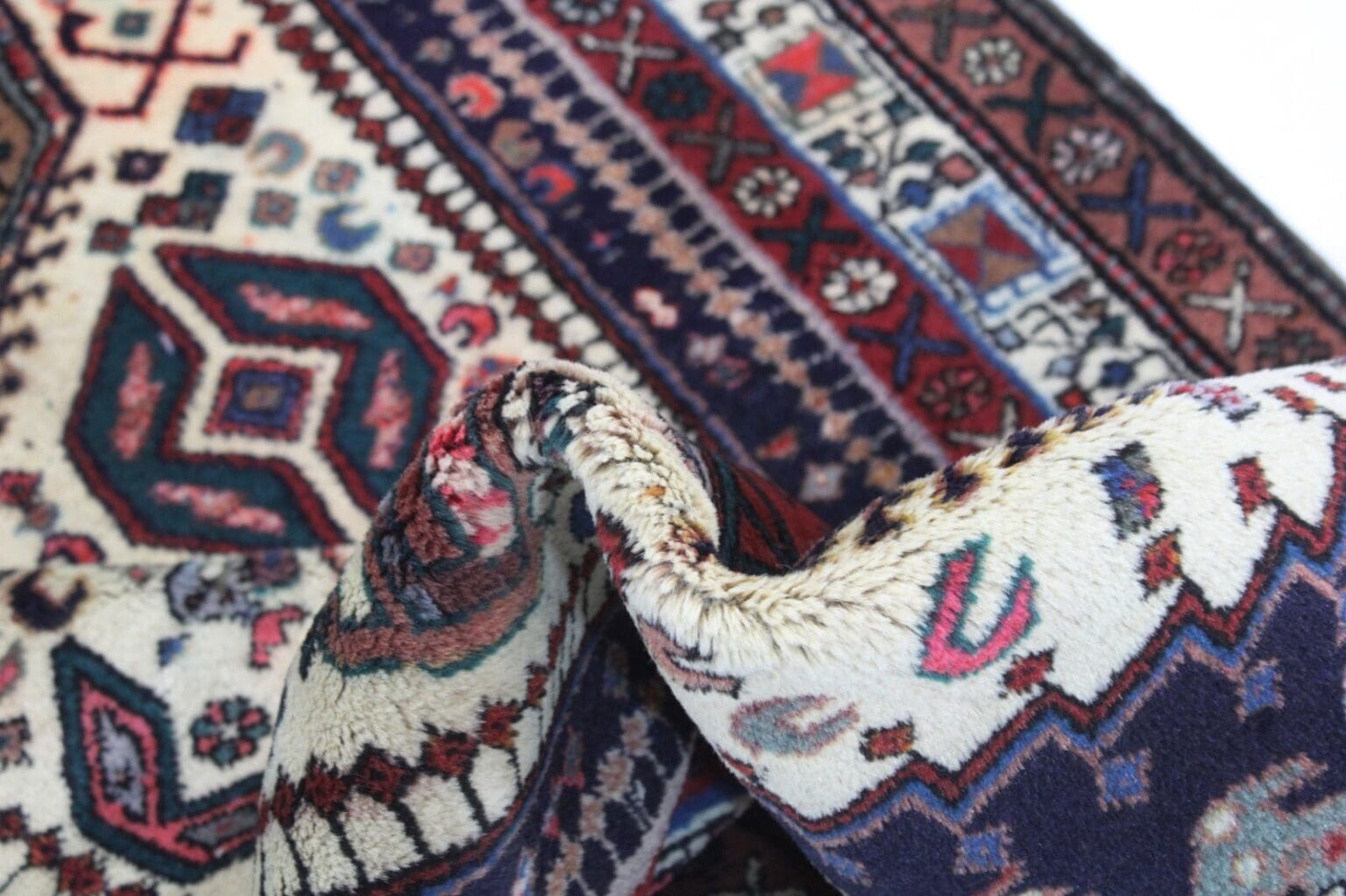
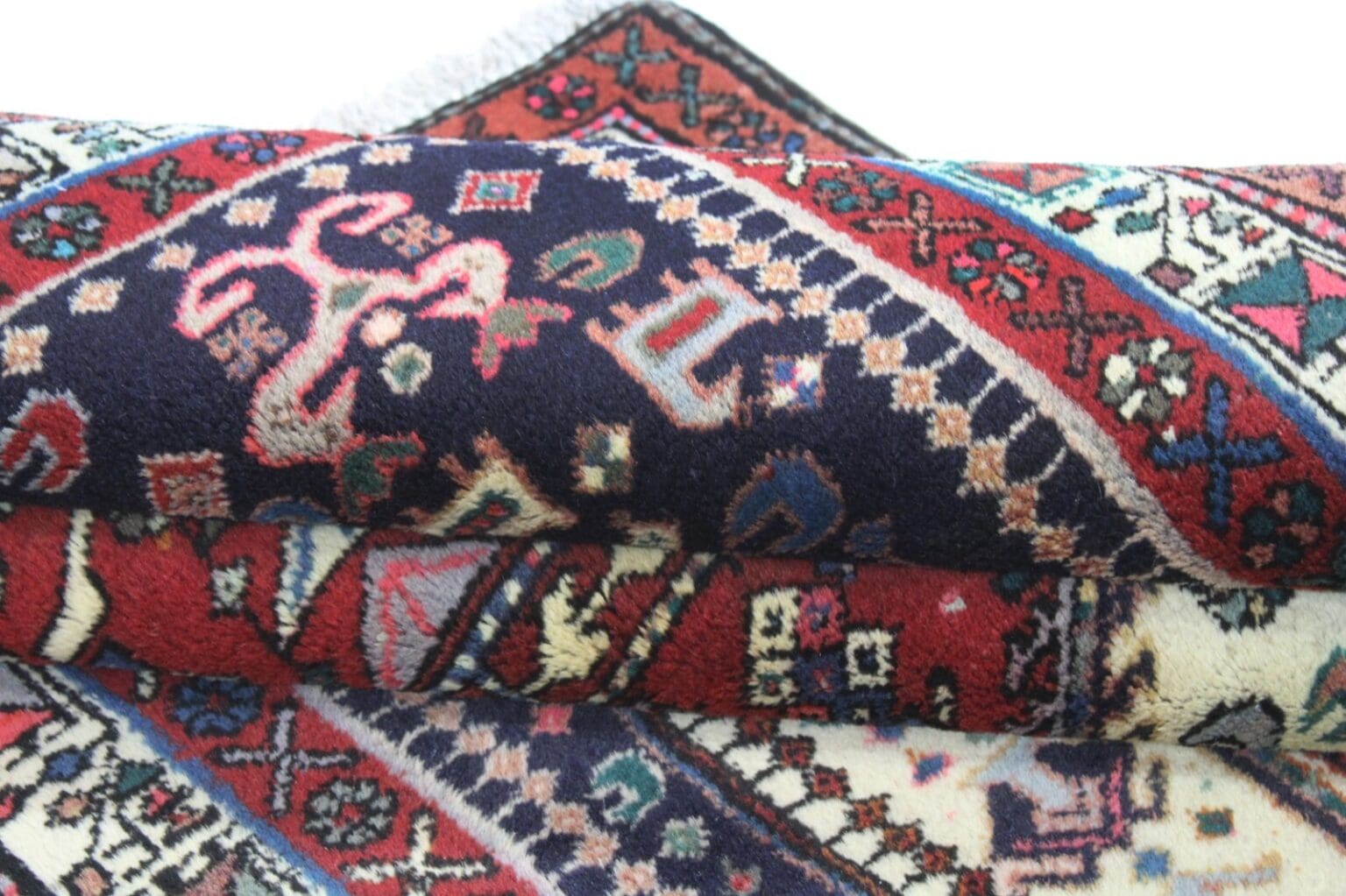
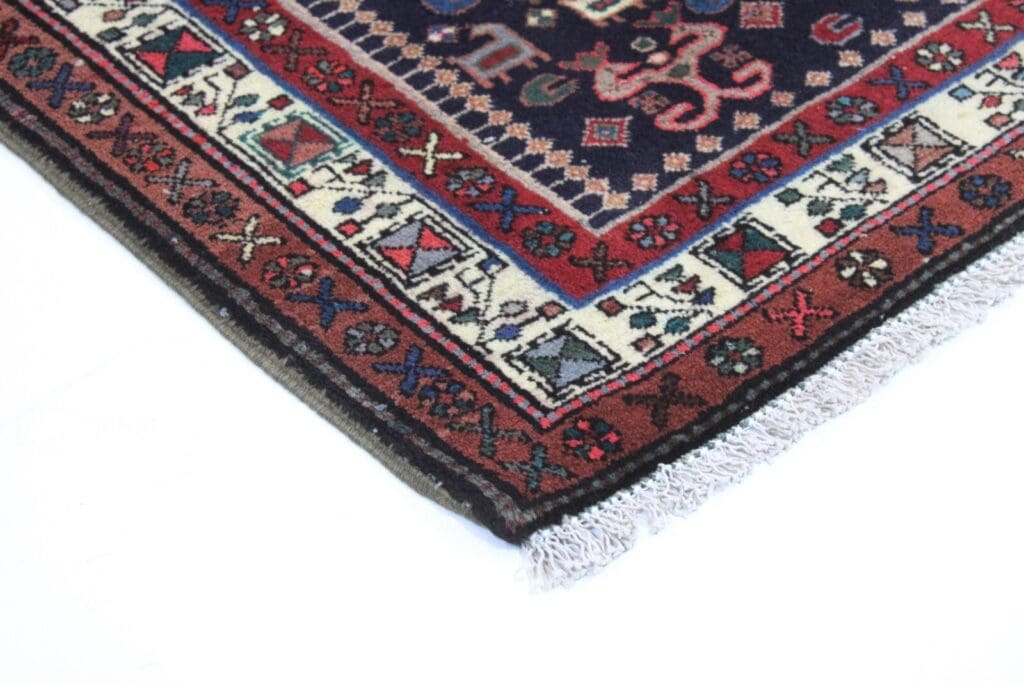
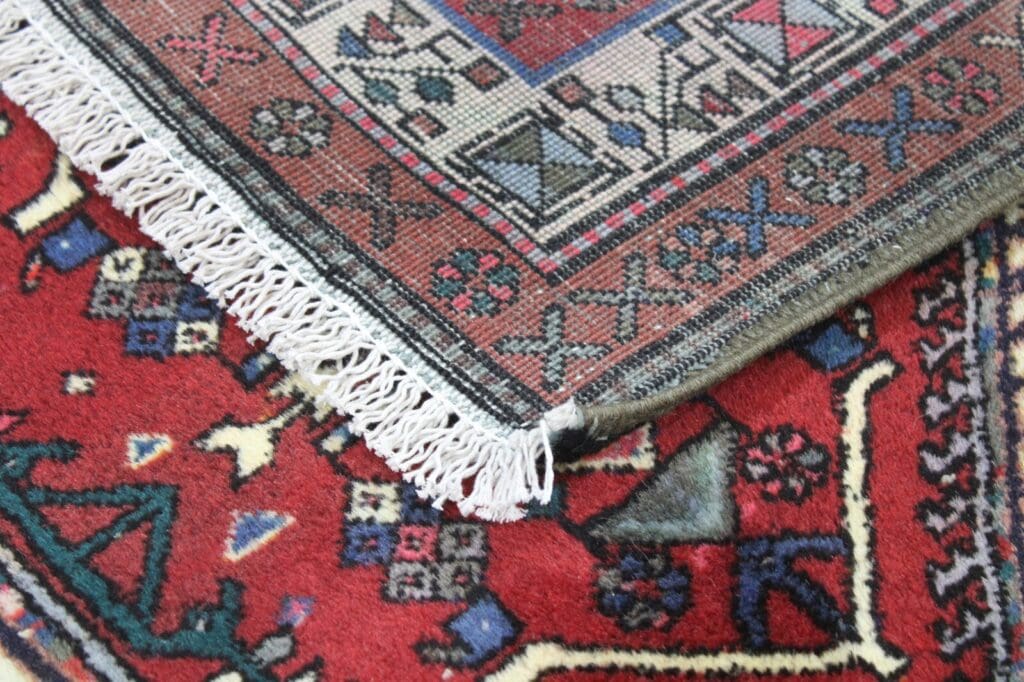
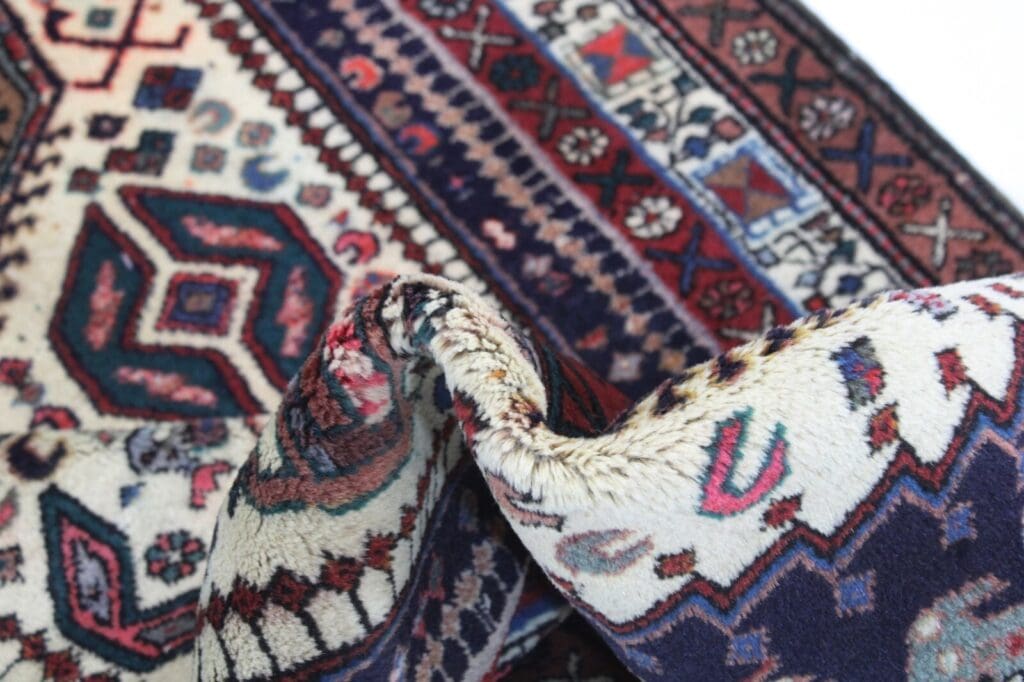
This Persian rug is hand-knotted. Its pile is made of 100% wool, while the warp is specified as 100% cotton. Wool has long been used for the visible surface of hand-knotted rugs because it provides a resilient, tactile textile layer and takes colour clearly. Cotton is commonly used for the warp because it creates an orderly and stable foundation for the rows of knots. Here, both materials are identified separately, with wool forming the pile and cotton forming the warp.
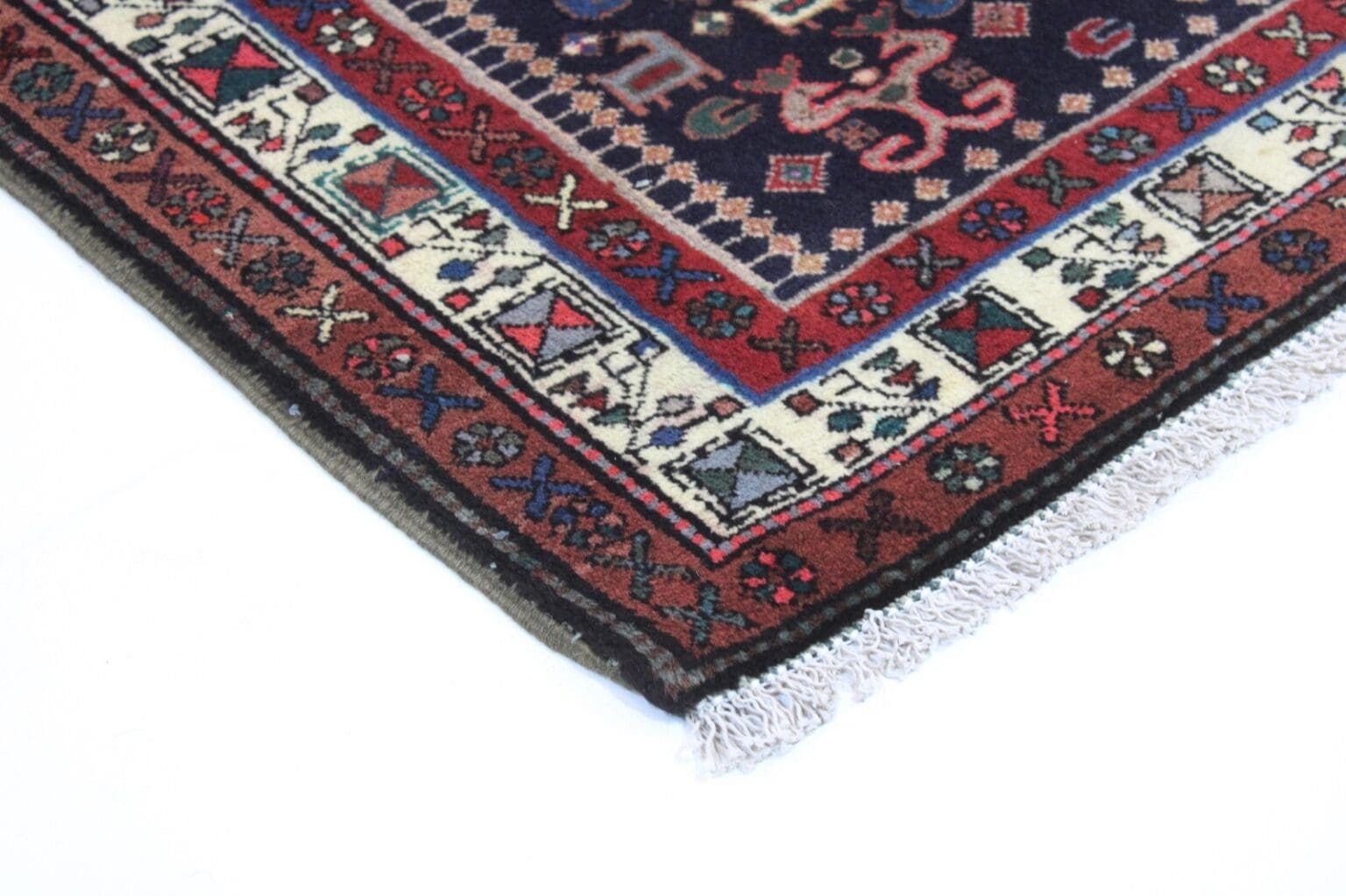
The knot density is stated as normal. In hand-knotting, individual knots are worked into prepared warp threads and secured with weft threads. The pile is built row by row, with the design developing as the work progresses. This is a manual process made up of many repeated stages rather than a single manufactured surface. The stated construction therefore describes a hand-made textile structure and not a machine-produced floor covering.
The rug is used and washed. Washing is a common part of preparing a pre-owned rug and can remove surface dirt accumulated during earlier use. Regular, gentle maintenance remains appropriate for a wool pile, and prolonged dampness should be avoided. The combination of wool pile and cotton warp gives the rug a natural surface and a clearly organised textile foundation. No additional fibre or material is specified for this piece.
Origin and Tradition
The rug is identified as Meschkin Ardebil and comes from Iran. Ardebil lies in north-western Iran, a region with a long tradition of village, town and rural weaving. The name Meschkin, also written Meshkin in some contexts, is used in connection with rugs from the Ardebil area. It is therefore a regional designation within Iranian rug culture, not merely a description of a decorative appearance.
Iranian rug production developed across many different settings over centuries. Urban workshops, village households and communities with a nomadic background developed their own approaches to colour, structure and drawing. These traditions can differ in the way borders are organised, how fields are filled and how motifs are simplified. Hand-knotting links them through a process in which the design must be planned and then built carefully across successive rows.
Ardebil is part of the cultural landscape of north-western Iran and the wider Caspian region. Regional weaving traditions in this area are associated with designs that can use strong outlines and clearly arranged geometric units. Rather than reproducing plants, animals or objects in a strictly naturalistic manner, a geometric design transforms forms into lines, angles, stepped contours and repeated compartments. The result is governed by rhythm and structure.
A hand-knotted Iranian rug is made in several stages. The warp is first arranged as the basic framework. Coloured pile yarn is then tied into the warp, while weft threads help secure each completed row. The surface is checked and adjusted during the work so that the pattern can continue across the rug. This requires knowledge of the knotting process, the tension of the foundation and the sequence of the design. Regional tradition is thus present in both the visual language and the way the textile is made.
The production period for this rug is given as 1980 to 1989. It therefore belongs to a relatively recent phase of Iranian rug production rather than to an antique or historical category. The regional name Meschkin Ardebil, the origin Iran and the stated period provide the factual framework for its classification. These details should be kept distinct from general references to Persian rug history, which covers many regions and periods beyond this individual piece.
Design and Pattern
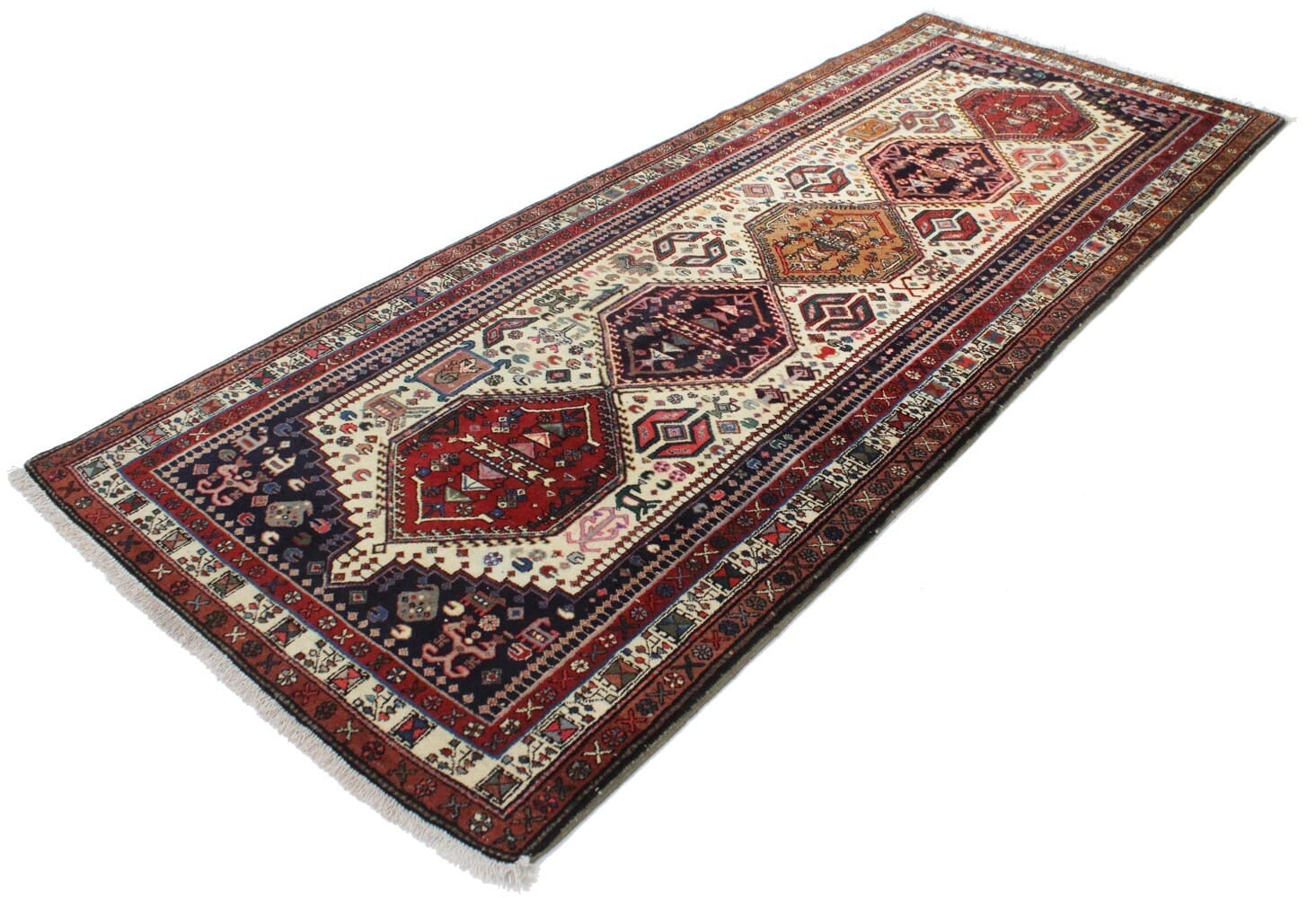
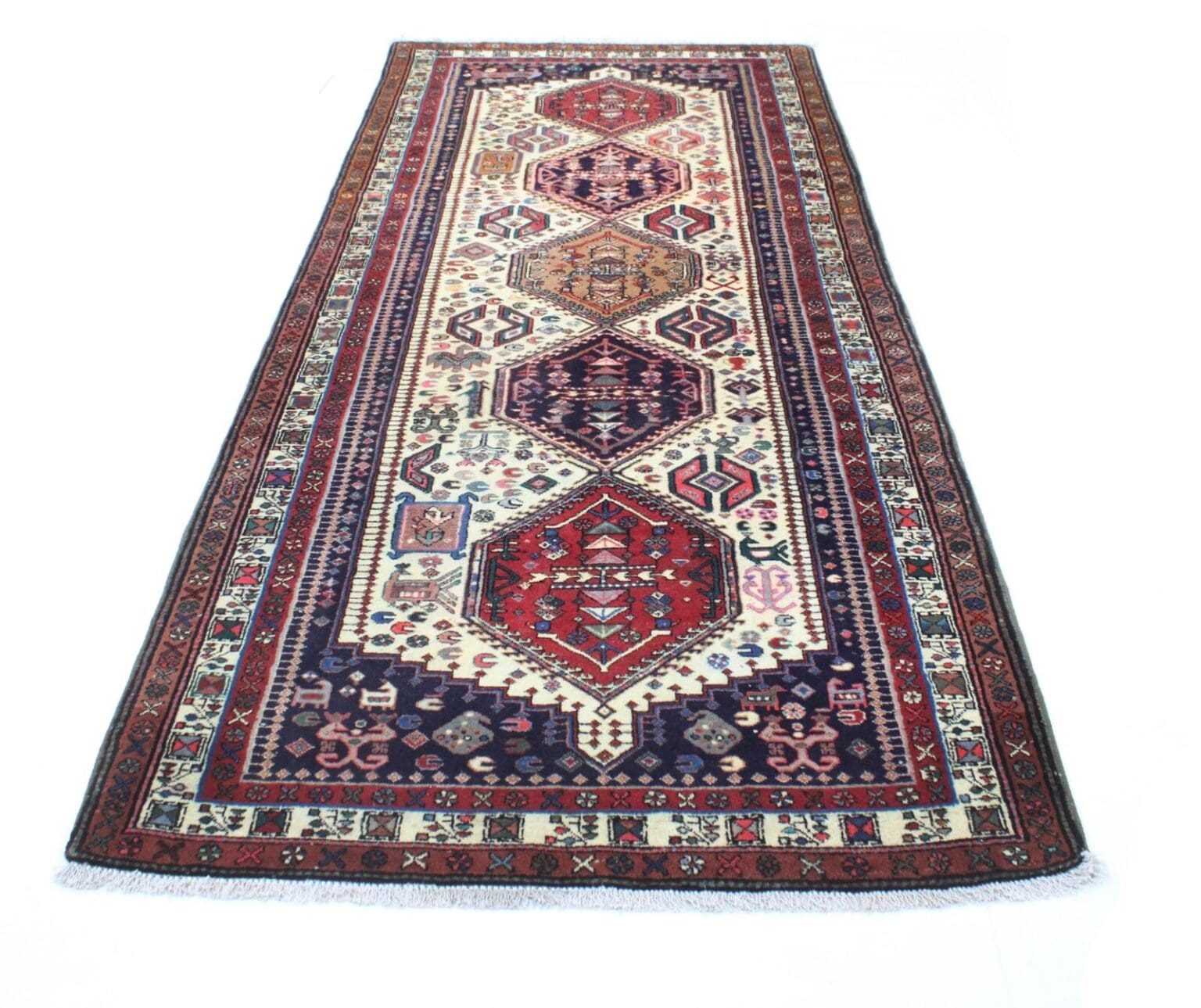
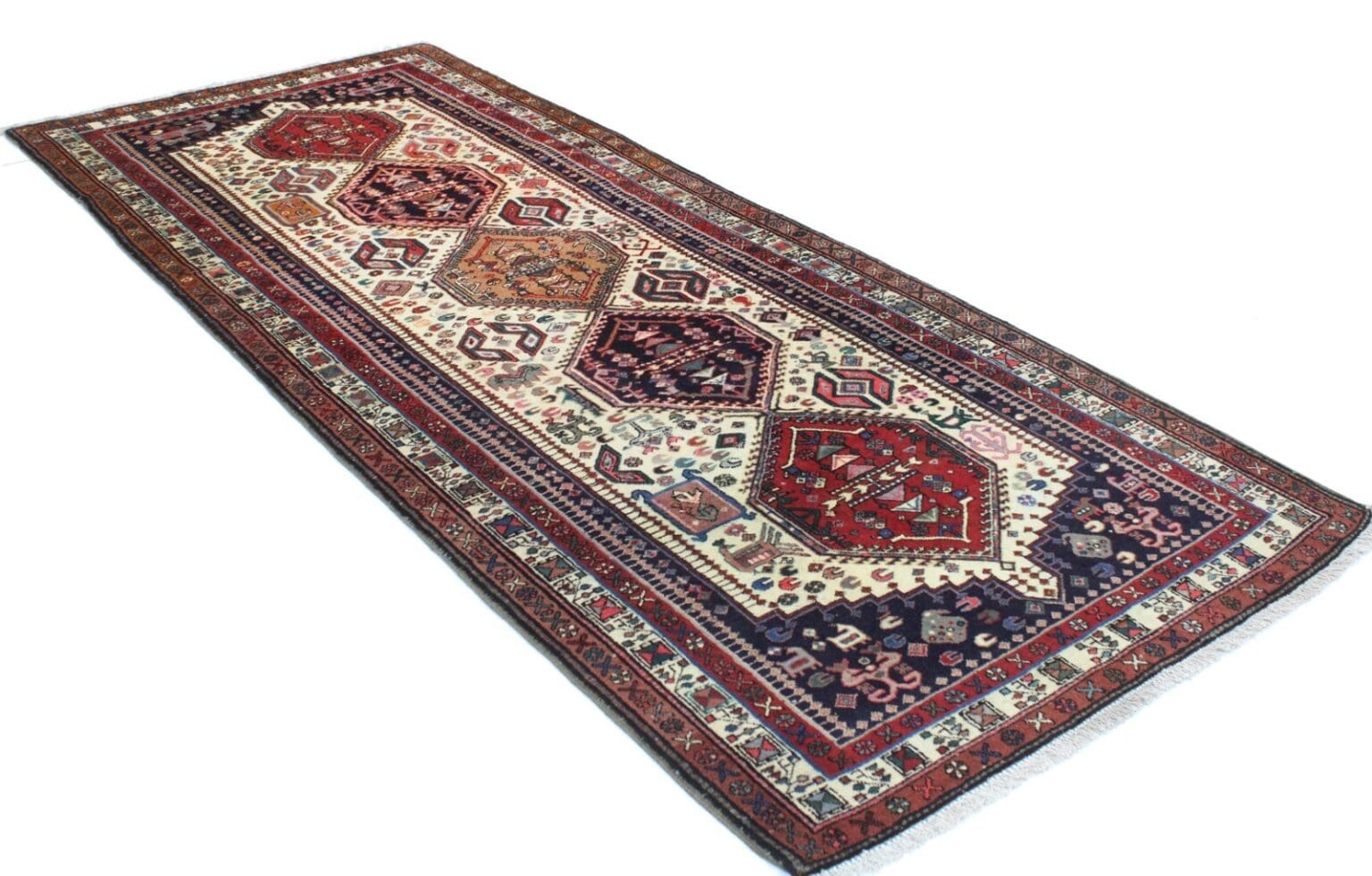
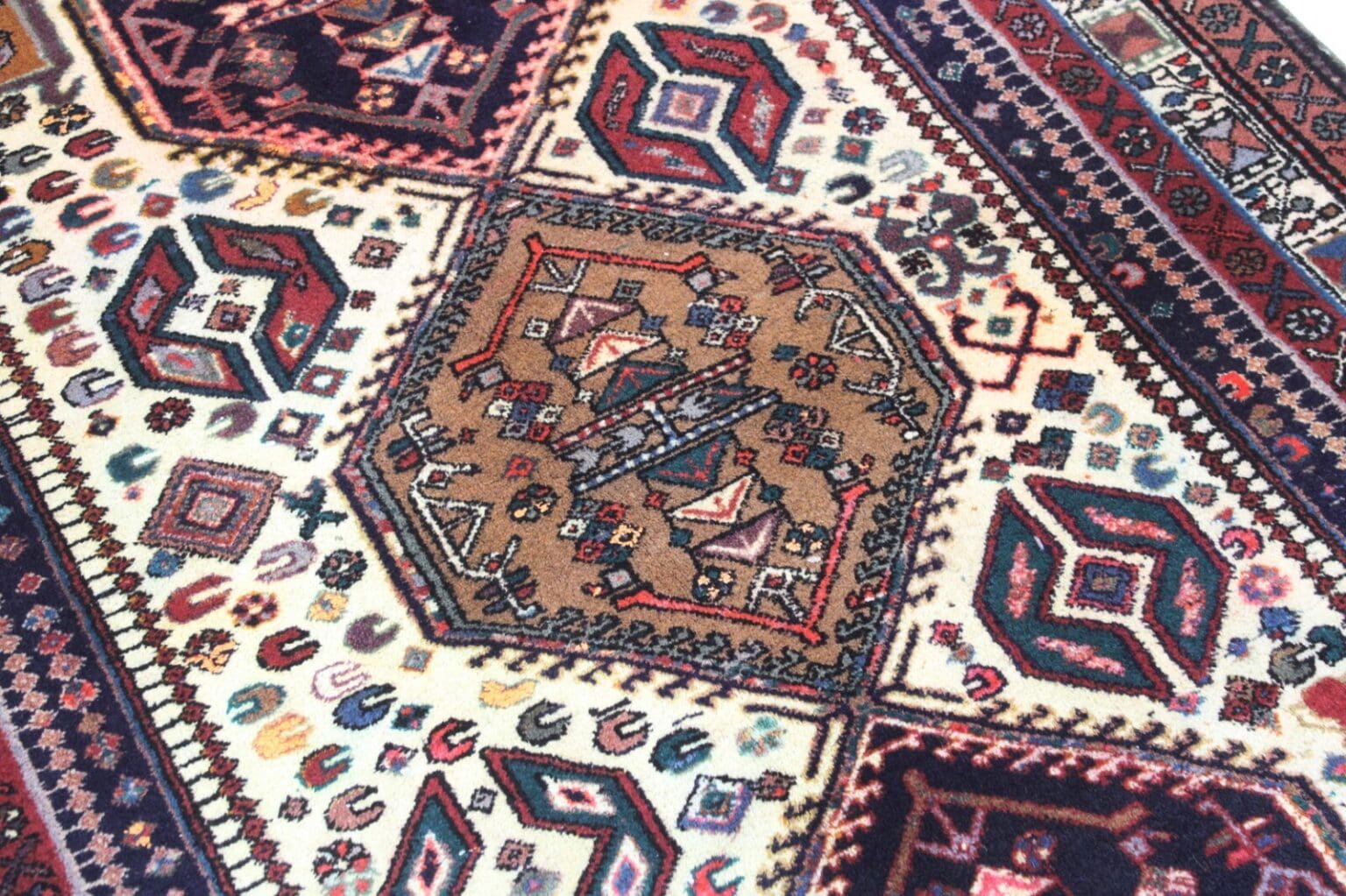
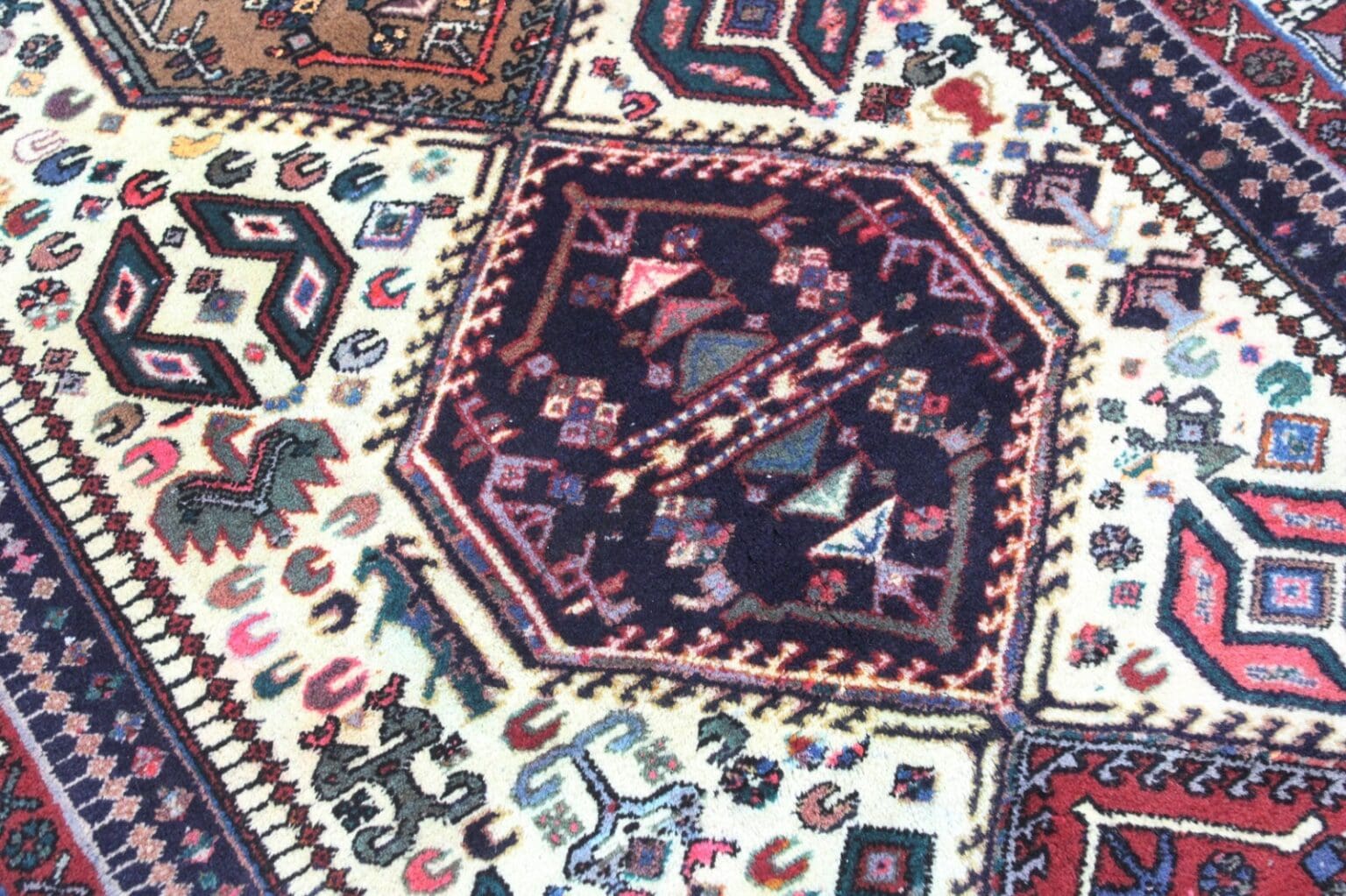
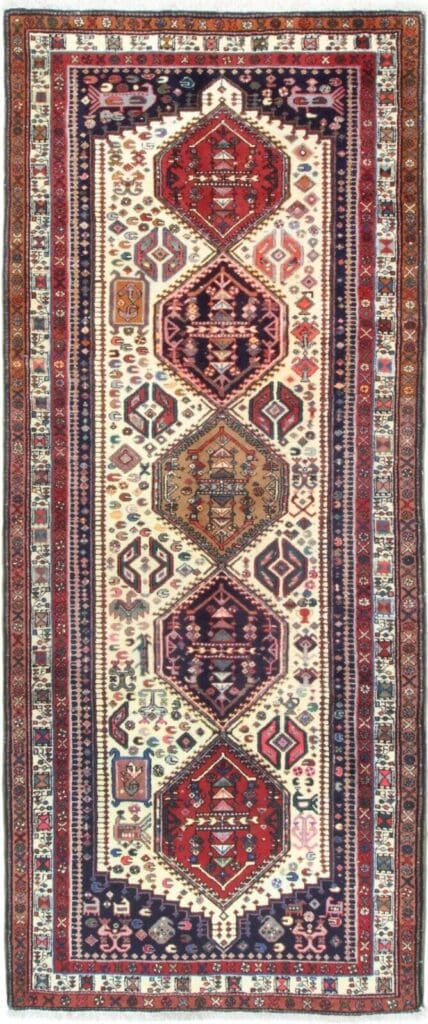
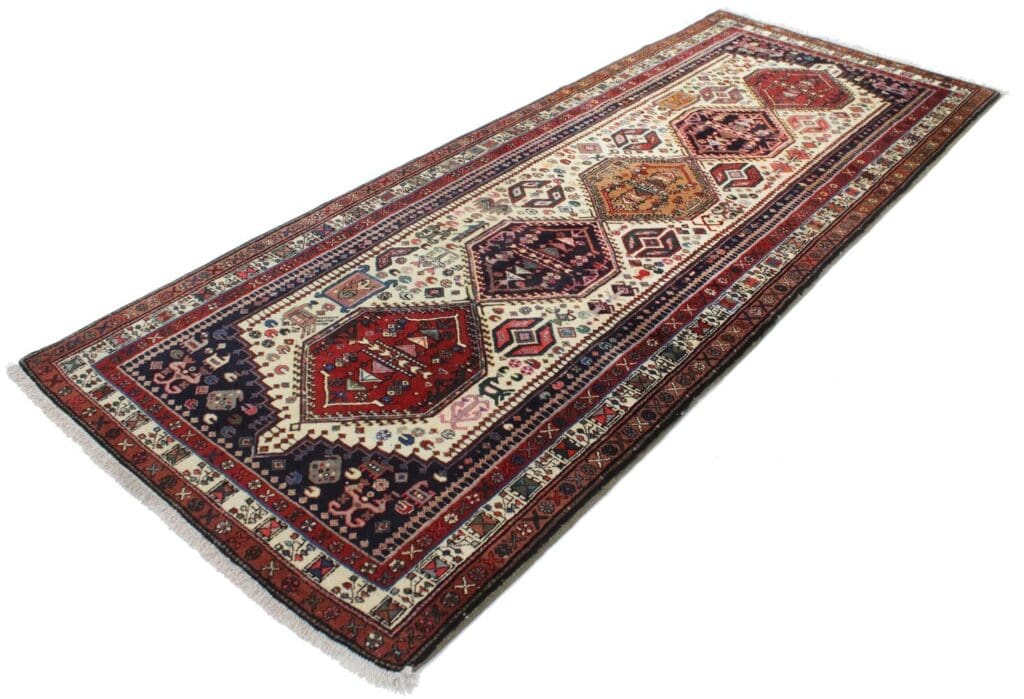
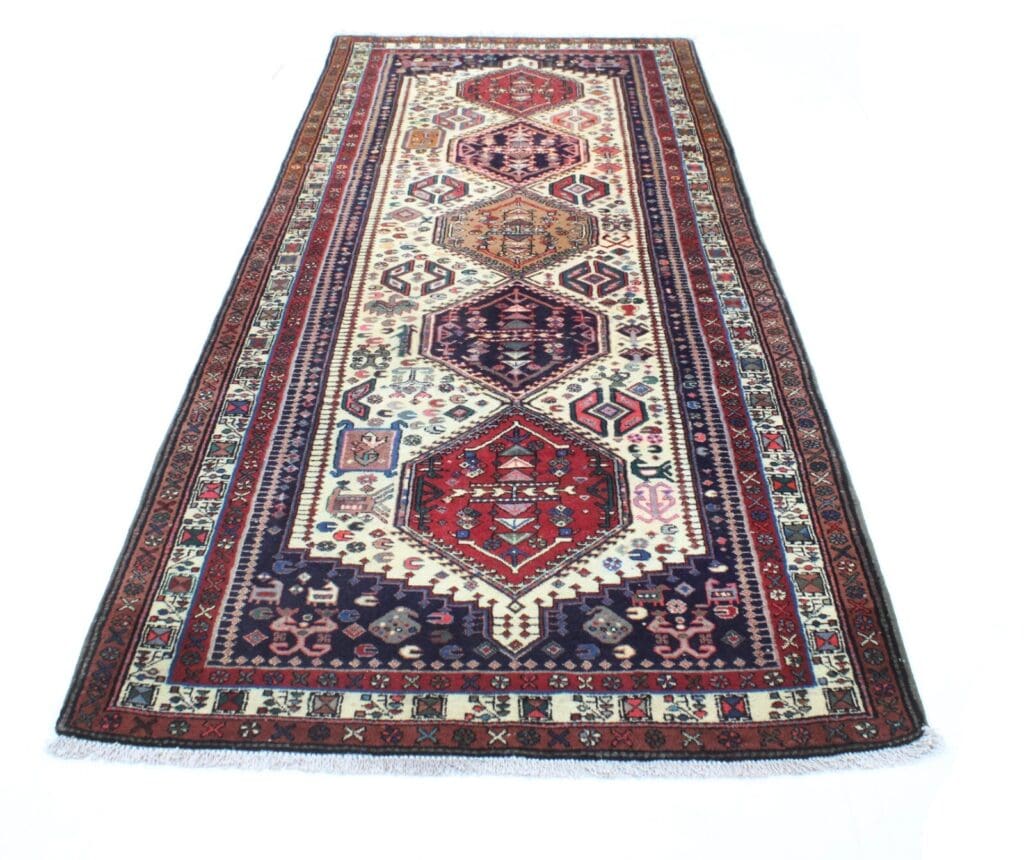
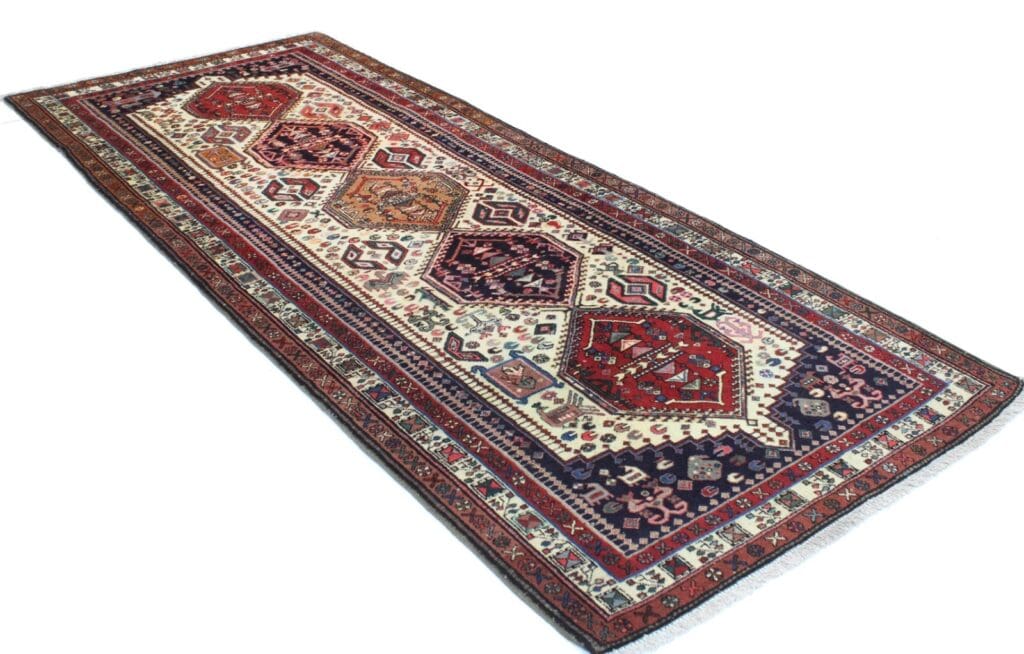
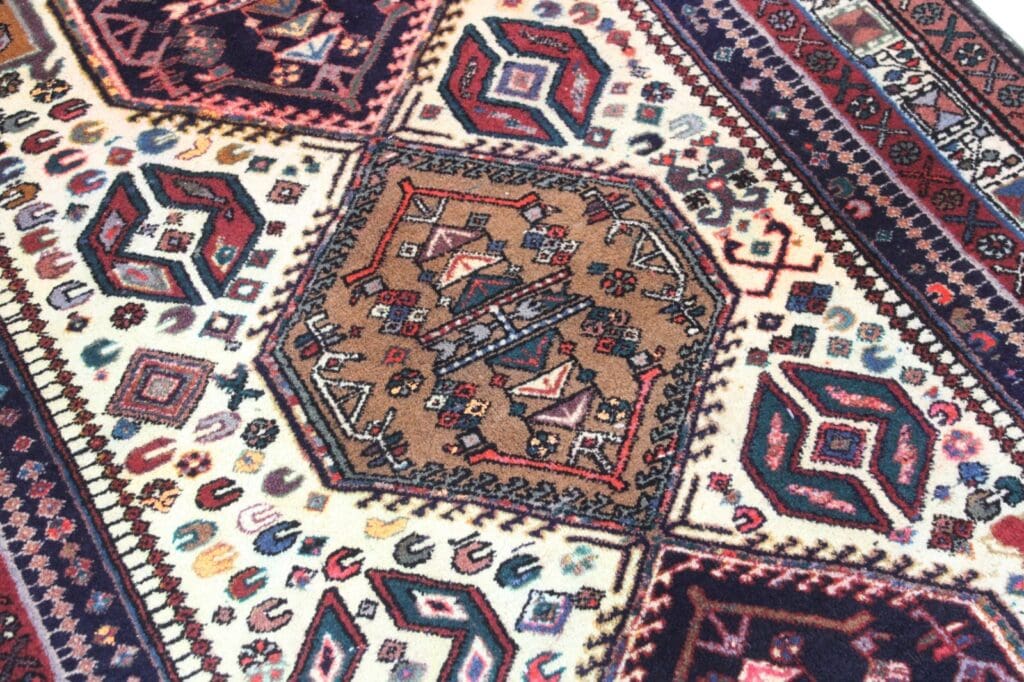
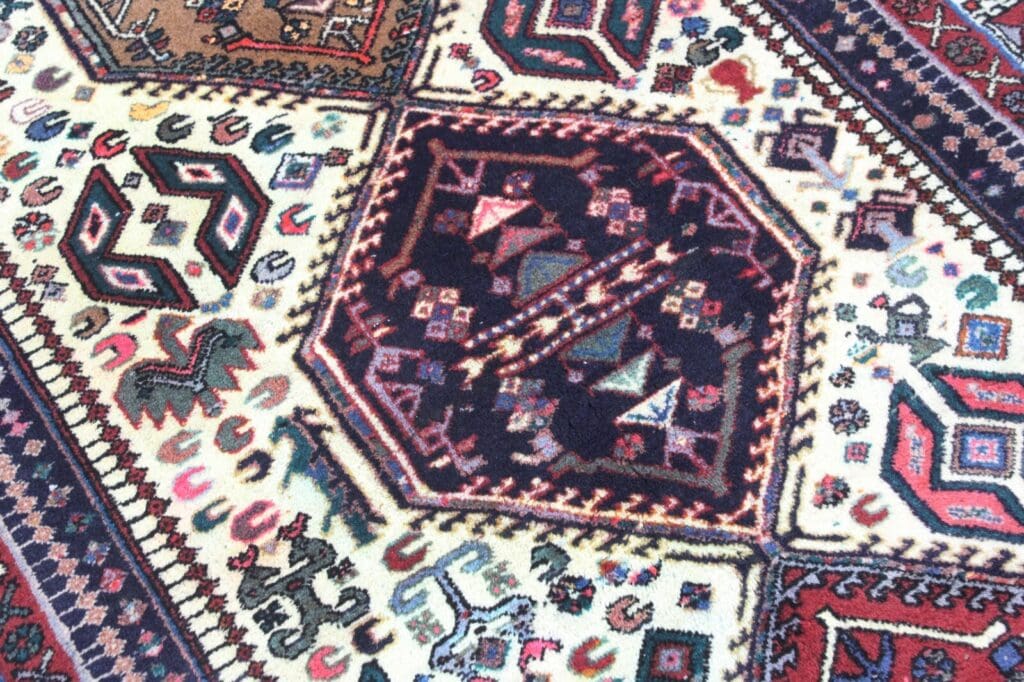
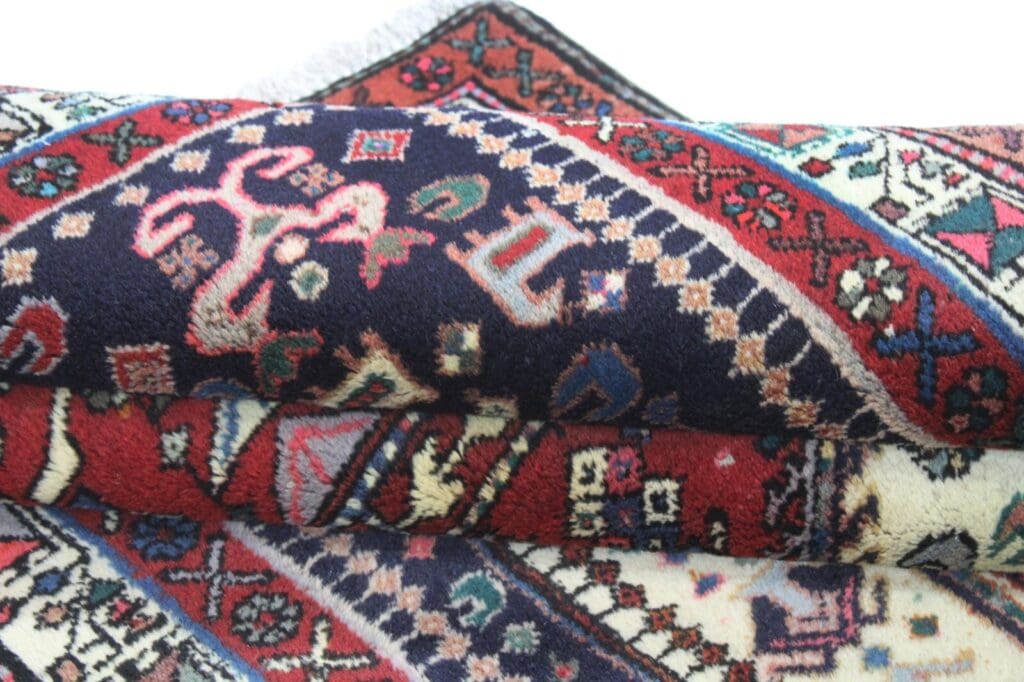
The pattern is described as geometric. Geometric rug design uses lines, angles, diamonds, stepped shapes, hooked forms and repeated units. These elements may organise a central field, define a border or create a rhythm across the full surface. The visual effect comes from the relationship between outlines, intervals and areas of colour. A geometric composition does not require a naturalistic image to create a coherent and recognisable structure.
In north-western Iranian rug traditions, geometric designs can be arranged in direct, clearly legible forms. Motifs may be simplified and placed within a regular field or repeated sequence. A repeated element does not have to be mechanically identical each time; hand-knotting allows small variations within an established design order. This balance between a recognisable pattern and manual execution is part of the broader character of hand-made rugs.
The colour of this rug is specified as red. Red can serve as the dominant ground for a field, as a border colour or as an accent within individual motifs. Its appearance changes according to the colours placed beside it: lighter contrasts can clarify the outlines, while darker tones can make the field appear deeper. The source identifies red but does not provide a complete list of any other colours, so no additional palette is assigned to this particular rug.
The style is described as Oriental. In the product description, that general style label stands alongside the more specific origin Iran and the regional designation Meschkin Ardebil. Oriental rugs encompass many different visual traditions. For this piece, the more precise design information is its geometric pattern, combined with the red colour and its Iranian regional classification. These terms describe separate aspects and should not be treated as interchangeable names for the origin.
Geometric designs also offer a practical way of organising a textile surface. A border can frame the outer edge, while a main field provides a central area for repeated or linked forms. Sections can be extended through sequences of related motifs, allowing a composition to retain its rhythm across a rug. In regional traditions, inherited forms may be rearranged or simplified while remaining recognisable. The design language is therefore based on structure, repetition and proportion rather than on a single prescribed image.
Special Features
The rug is classified as a runner and is described as suitable for underfloor heating. It is also identified as allergy-friendly. These are product details concerning intended use and add to the information about its material and construction. Suitable areas named in the source are the dining room and guest room. Its red colour and geometric pattern provide the stated visual characteristics.
The used, washed condition is another specific feature of this one-off piece. Cleaning and placement should take the existing condition into account. When a rug is placed over underfloor heating, it should lie flat and be installed appropriately so that heat can be distributed evenly and folds do not develop. Suitability for underfloor heating is expressly given for this rug. No further performance claims are added beyond the details stated for the item.
As a runner, the rug is intended for a longer, narrower area of a room. In a dining room it may define a passage or an area near the dining setting; in a guest room it may organise a walkway or an open section of floor. These rooms are named as suitable uses, without making them the only possible locations. Wool pile, cotton warp, hand-knotting, a geometric pattern and red colour together summarise the principal characteristics of this rug.
FAQ
What distinguishes a Persian rug from Iran?
A Persian rug from Iran brings together a regional craft tradition and a manual method of production. In a hand-knotted rug, knots are tied individually into the warp and secured with weft threads. The country of origin indicates the cultural and manufacturing context, while a regional name can provide a more specific classification. This rug is identified as Meschkin Ardebil, has a geometric pattern and was made during the period from 1980 to 1989. Its material information specifies 100% wool for the pile and 100% cotton for the warp. Origin, technique, pattern and fibre content are separate facts, and together they provide a precise description of the piece.
How should a used wool rug be cared for?
A wool rug should be vacuumed regularly and gently so that dust and loose particles do not remain in the pile. With a used and washed rug, the surface should be monitored and excessive moisture avoided. Professional cleaning at suitable intervals can be helpful, but it should be carried out by a specialist familiar with hand-knotted wool rugs. Strong, direct sunlight may alter colours over time, so careful placement and occasional rotation can help reduce uneven exposure. Cleaning products should not be applied without first checking that they are appropriate for wool and for the rug’s existing condition.
Which patterns are typical of Persian rugs?
Persian rugs may feature floral designs, medallions or geometric compositions. Geometric patterns often use diamonds, stepped lines, hooked contours and repeated borders. Floral designs can include stylised leaves and blossoms, while a medallion places emphasis on a central field. The arrangement and interpretation of these forms vary between regional traditions. This rug is specifically described as geometric. Its red colour and Meschkin Ardebil designation add further product information, but they do not justify naming individual motifs that are not stated in the description.
To provide the best experiences, we use technologies like cookies to store and/or access device information. Consenting to these technologies will allow us to process data such as browsing behavior or unique IDs on this site. Not consenting or withdrawing consent, may adversely affect certain features and functions.
Functional Always active
The technical storage or access is strictly necessary for the legitimate purpose of enabling the use of a specific service explicitly requested by the subscriber or user, or for the sole purpose of carrying out the transmission of a communication over an electronic communications network.
Preferences
The technical storage or access is necessary for the legitimate purpose of storing preferences that are not requested by the subscriber or user.
Statistics
The technical storage or access that is used exclusively for statistical purposes.The technical storage or access that is used exclusively for anonymous statistical purposes. Without a subpoena, voluntary compliance on the part of your Internet Service Provider, or additional records from a third party, information stored or retrieved for this purpose alone cannot usually be used to identify you.
Marketing
The technical storage or access is required to create user profiles to send advertising, or to track the user on a website or across several websites for similar marketing purposes.

 SECURE PAYMENT
 SHIPPING PARTNERS