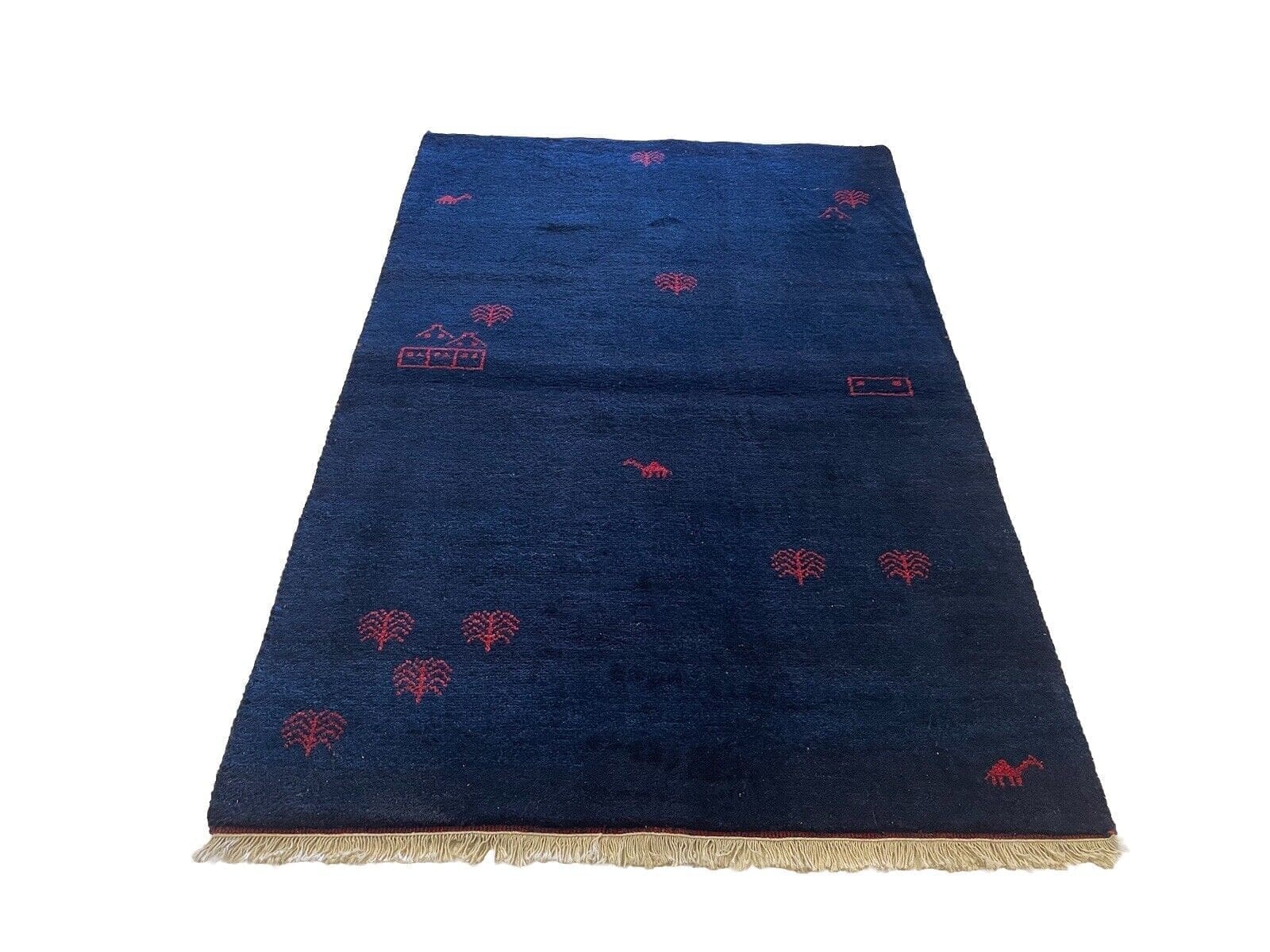
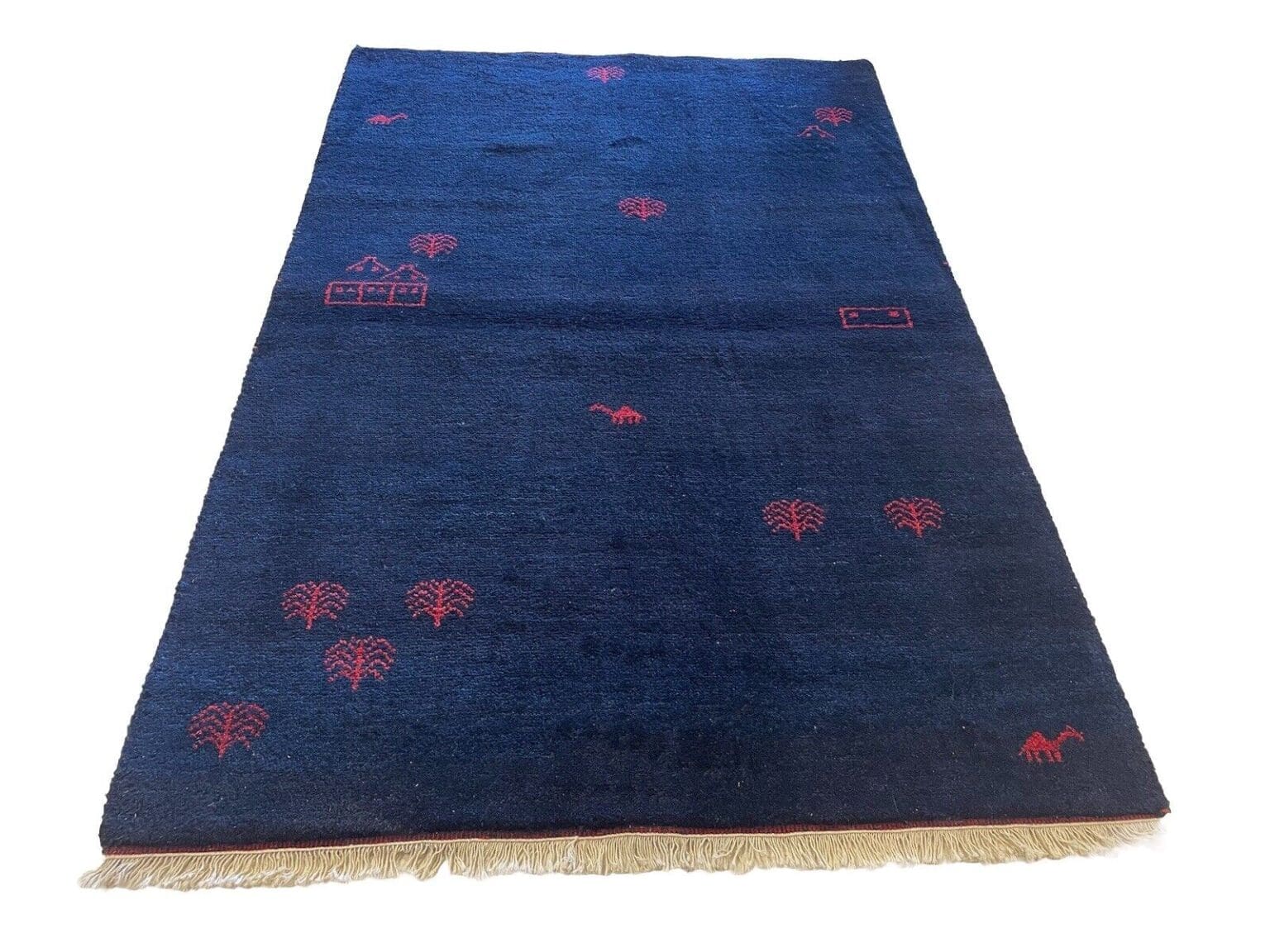
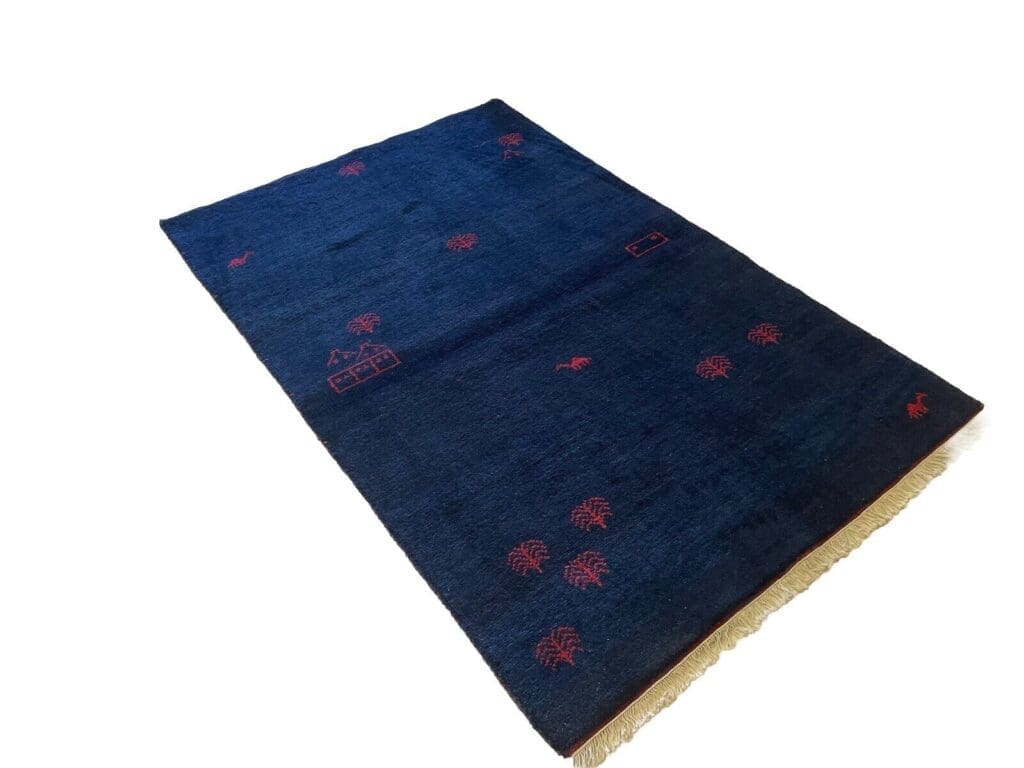
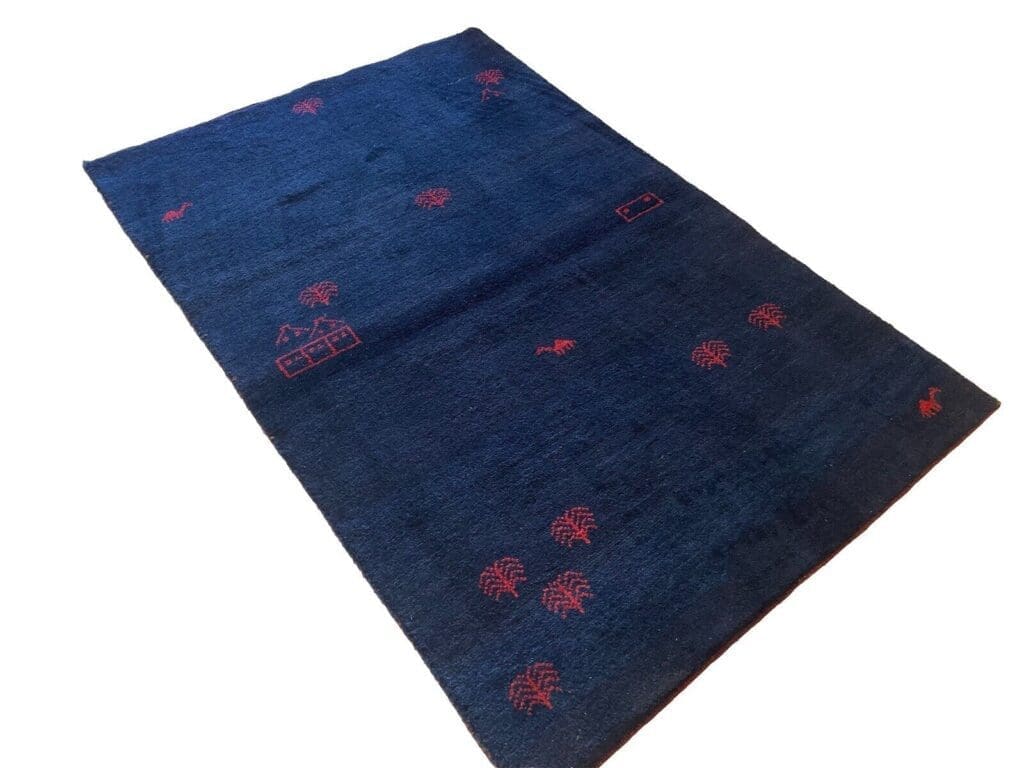
This hand-knotted Persian rug is made from 100% cotton and hand-spun virgin wool. The wool is described as natural blue in colour. Hand-spun virgin wool has a textile character that can differ from the highly uniform appearance of industrially spun yarn. Hand spinning prepares the wool for later processing and forms part of the material history of traditionally made rugs. The resulting yarn contributes to the surface character of a handmade floor covering.
The rug is made by hand rather than by a machine that imitates knotting. In a hand-knotted rug, individual knots are inserted into a textile foundation, building the surface row by row. This piece combines cotton with hand-spun virgin wool and has a pile height of 23 mm. Its construction is also described as hard-wearing. That description identifies a practical quality associated with the rug as a floor covering.
Virgin wool is traditionally used in rugs because of its natural resilience and pleasant handle. Wool can help regulate moisture and is naturally associated with a degree of resistance to dirt. These general properties explain the long-standing place of wool in textile floor coverings. They do not eliminate the need for careful maintenance, but they describe the material qualities commonly valued in wool rugs.
Cotton is also widely used as a textile material in rug construction. It can provide a stable basis for different stages of production and is often combined with wool. Cotton and hand-spun virgin wool are both specified for this rug. No knot density is stated. For that reason, no numerical claim about the number of knots or the fineness of the knotting is added to the description of this individual piece.
Hand-knotted rugs are produced through the interaction of yarn, foundation, knots and later surface finishing. The construction affects the way a rug feels and how colour and pattern appear across it. Hand-spun wool may show small variations in yarn structure that belong to manual production. The source does not specify the exact foundation, knot type or finishing process used for this rug, so those technical details are not assigned to it.
Origin and Tradition
Persian rugs are connected with Iran’s thousands-of-years-old tradition of rug making. In the Iranian cultural sphere, knowledge of spinning, dyeing, weaving, knotting and finishing rugs has been passed down through many generations. Rugs have been produced in urban workshops, village settings and nomadic communities. Each setting developed its own working methods, material preferences, colour relationships and approaches to pattern design.
The term Persian rug places this piece within the Iranian rug-making tradition. It does not identify a particular province or city, because no specific province or city is provided for this rug. Iranian rugs are often associated with places such as Isfahan, Tabriz and Nain. These centres are known for distinctive regional contributions to rug culture, but their names cannot be used as the origin of this piece without an explicit source statement. The accurate general classification here is therefore Persian rug.
The history of Iranian rug making includes different forms of labour and organisation. Fibres may be prepared and spun before later stages are carried out by skilled makers or workshop teams. In a hand-knotted rug, yarn is worked into a prepared foundation and knots are placed one after another. The surface may then be trimmed, washed and finished. The source does not state which detailed regional process was used for this rug, so its production is described only as hand-knotted.
Regional rug traditions can differ in their materials, knotting methods, knot density and arrangement of the design. The available wool, the treatment of cotton, and the colouring process also affect the finished textile. Iranian workshops have historically used both natural and later manufactured dyes. The dyeing method used for this rug is not specified. The stated colour information is limited to natural blue.
The transmission of practical knowledge is an important part of Persian rug tradition. Skills may be learned within families, workshops and local communities. Makers need to understand not only how to tie individual knots, but also how a design is distributed across the entire field. Relationships between the central area, border sections and repeated elements shape many traditional compositions. An abstract design can draw on such principles without presenting a recognisable scene.
Historically, Persian rugs have served both everyday and representative purposes. They could provide a warm surface underfoot, define an area within a room or contribute to interior decoration. Hand production made each rug an individual textile object. General history does not, however, establish a particular age, workshop or provenance for this rug. Its stated condition is brand new with a tag, which is the specific condition information provided for this piece.
Design and Pattern
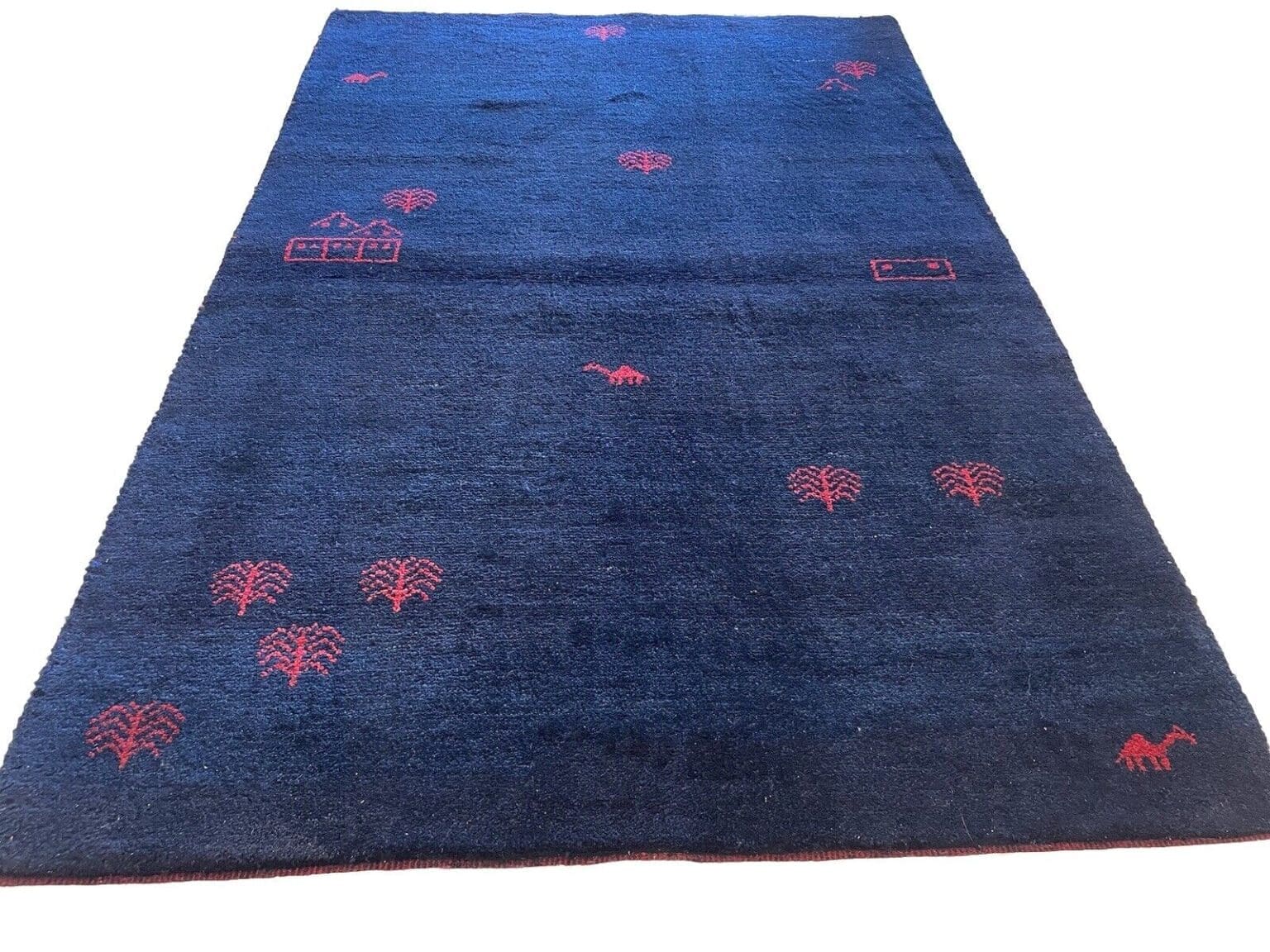
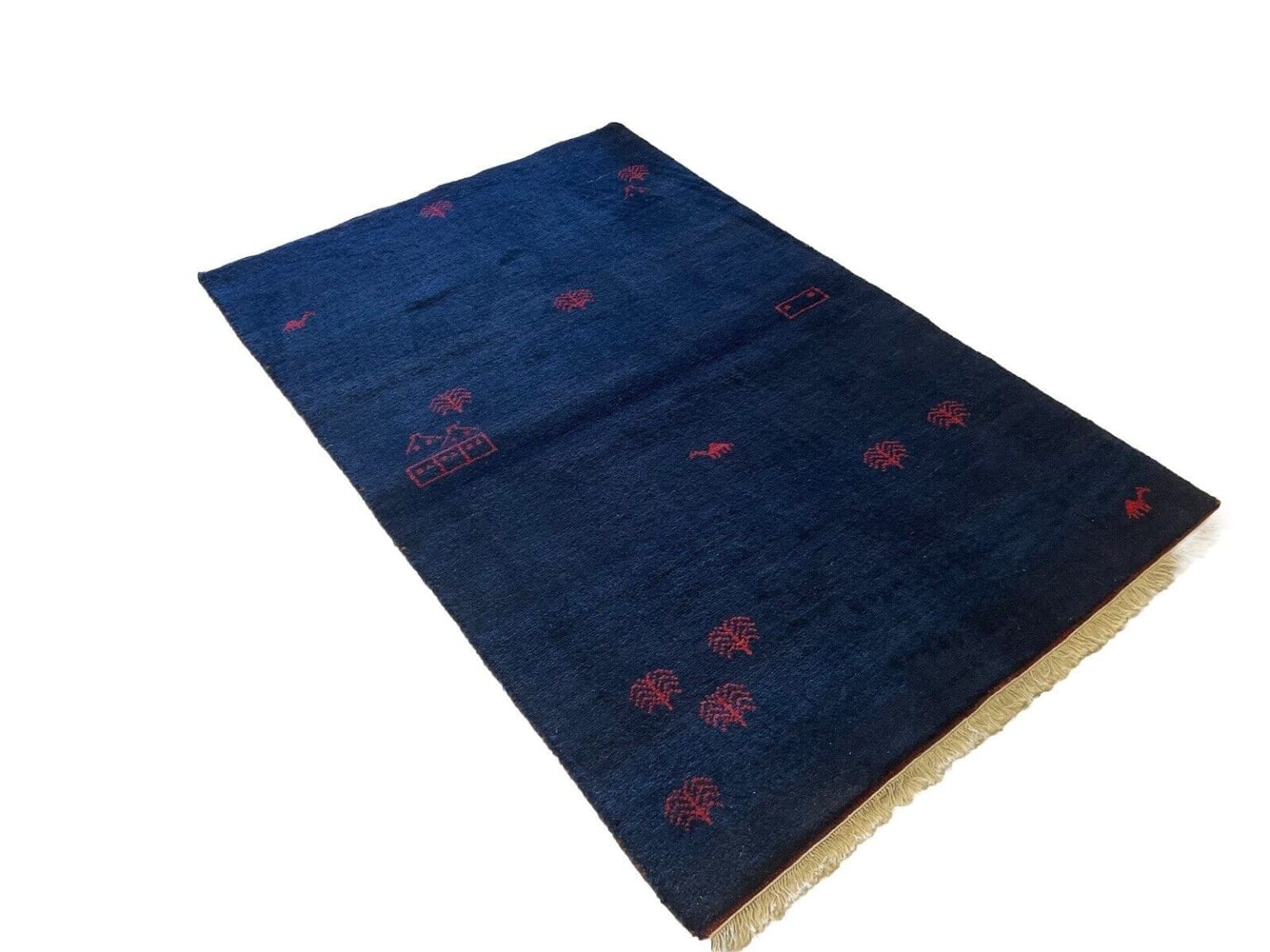
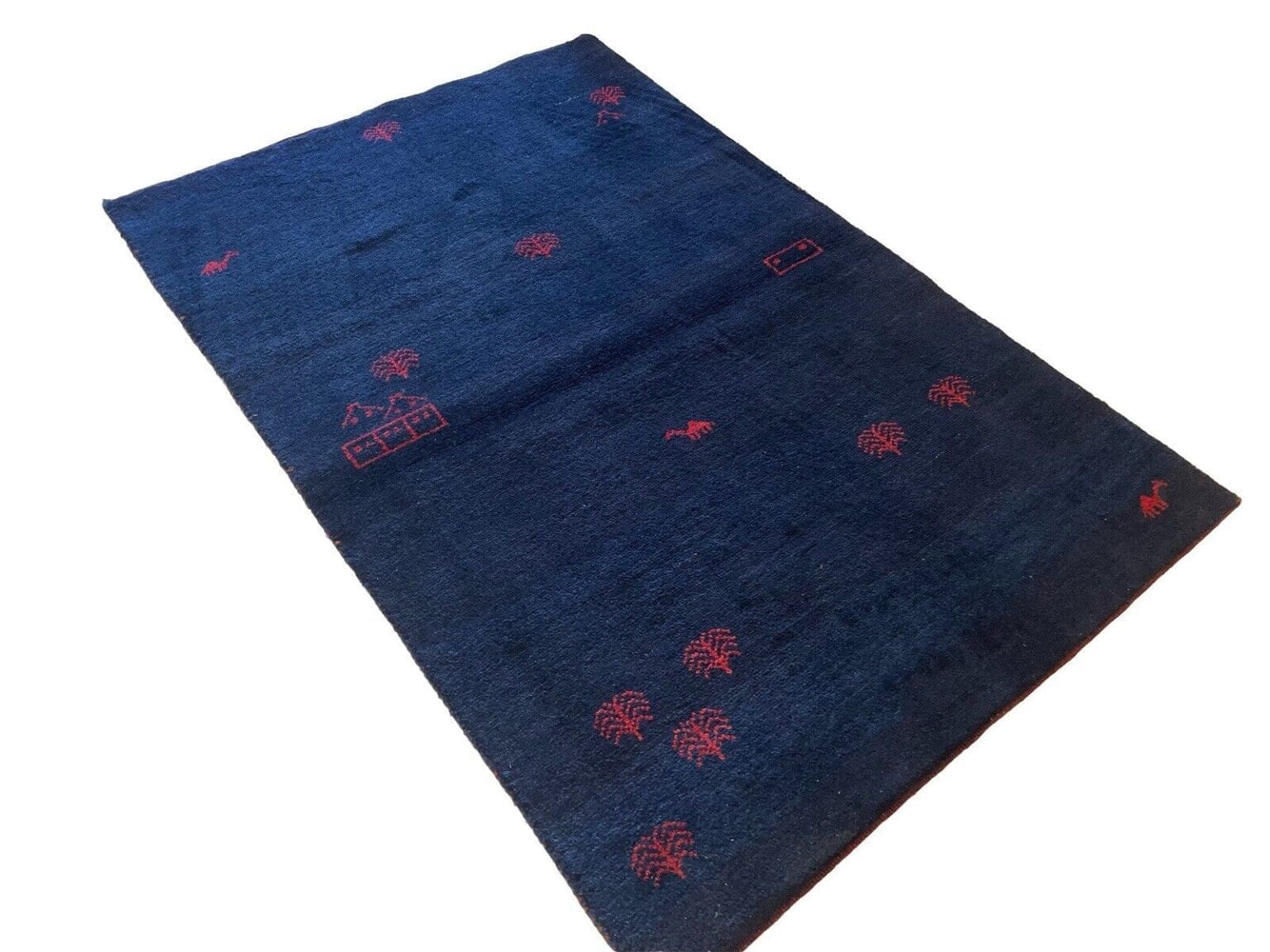
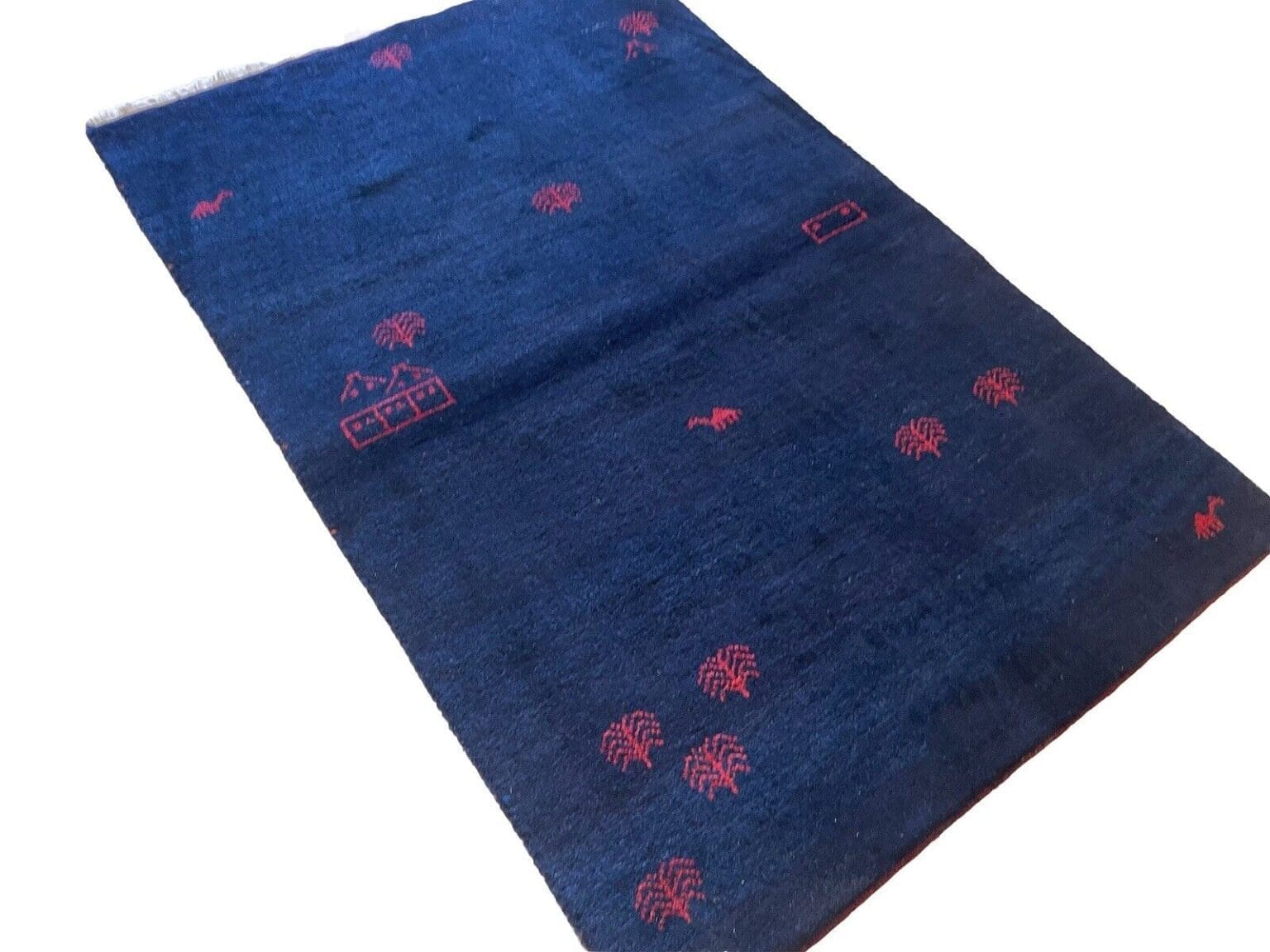
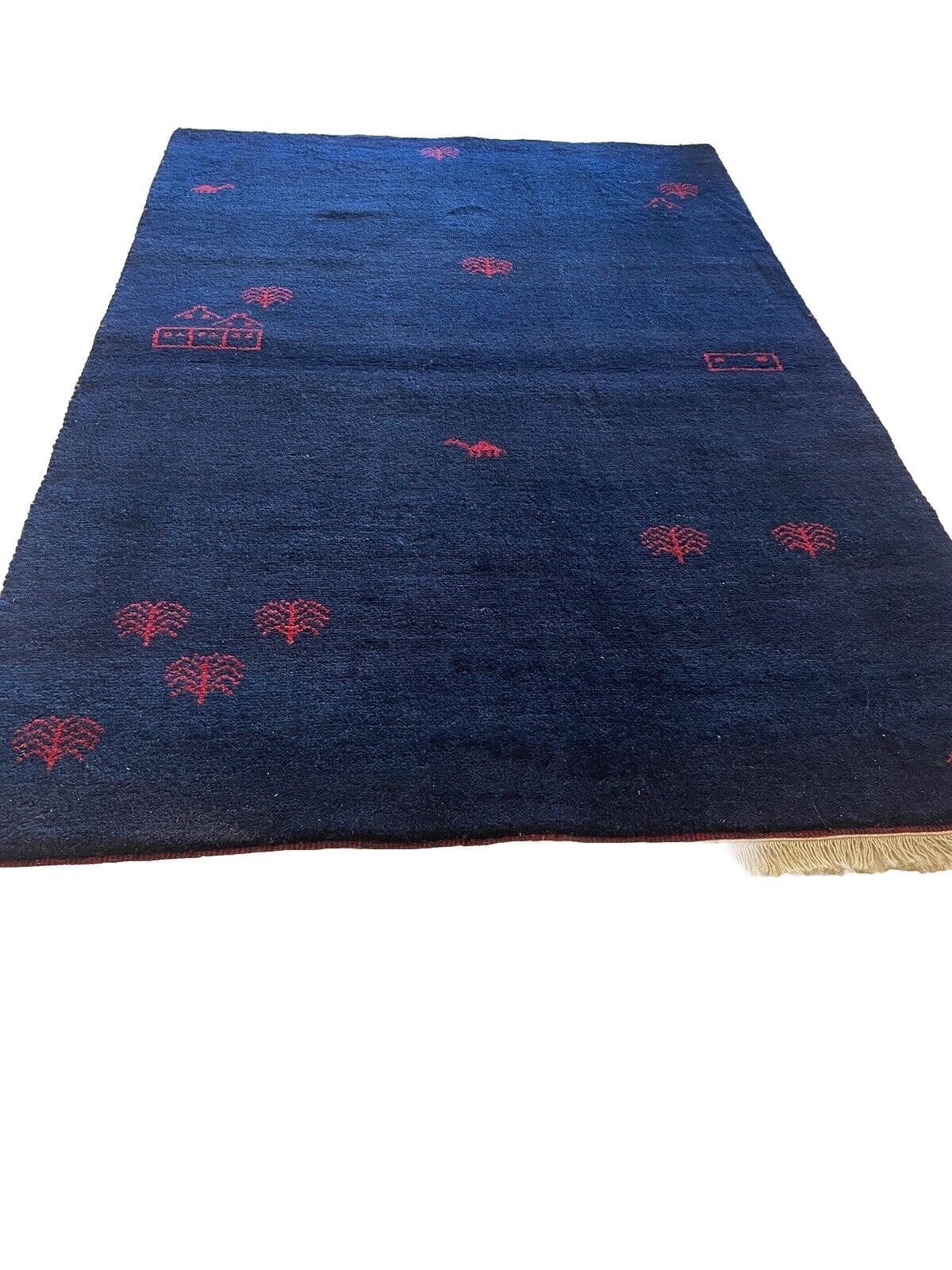
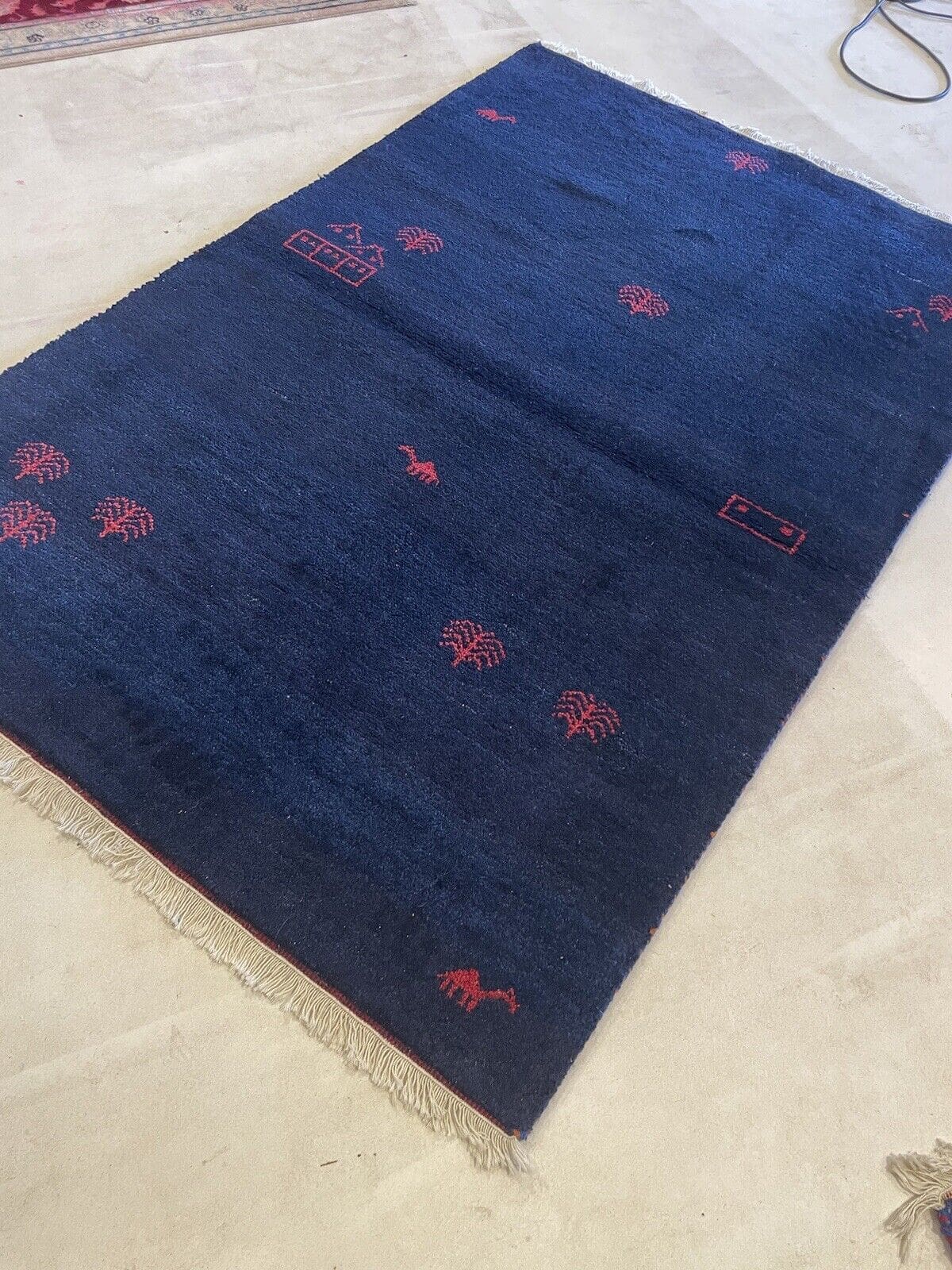
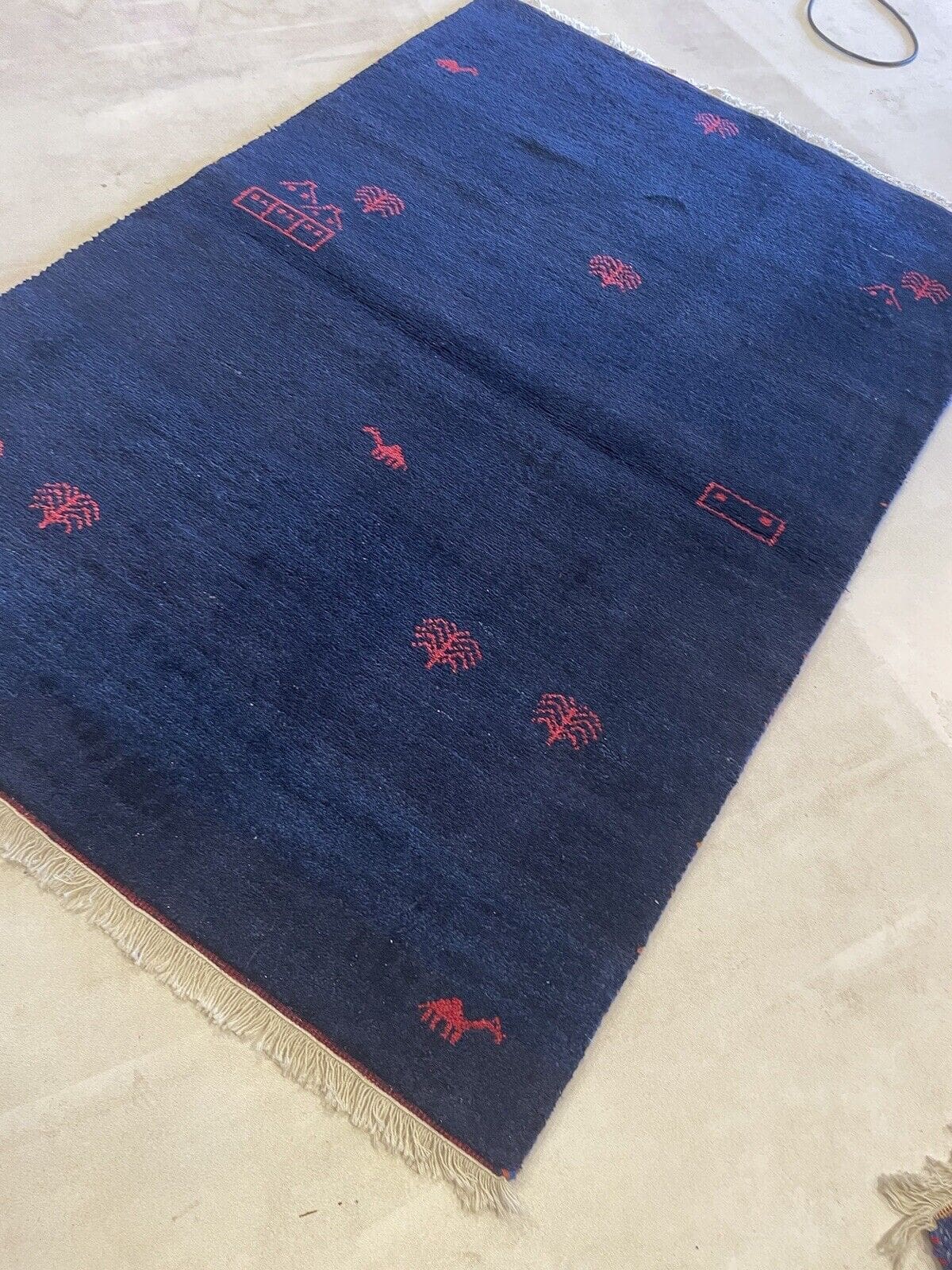
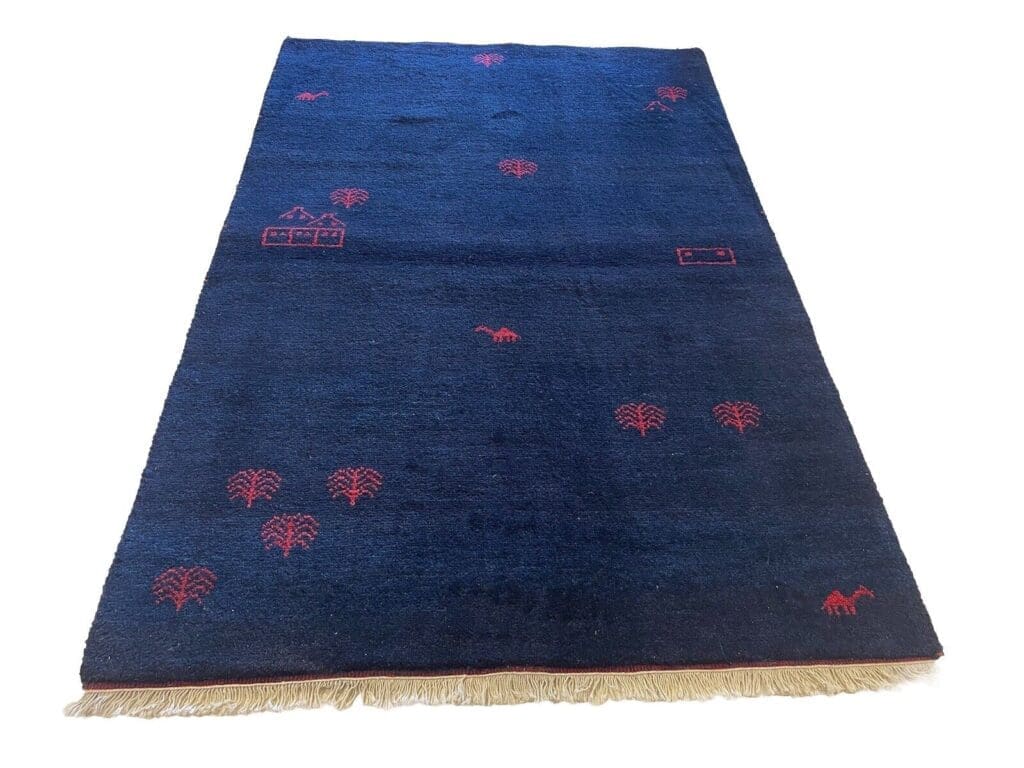
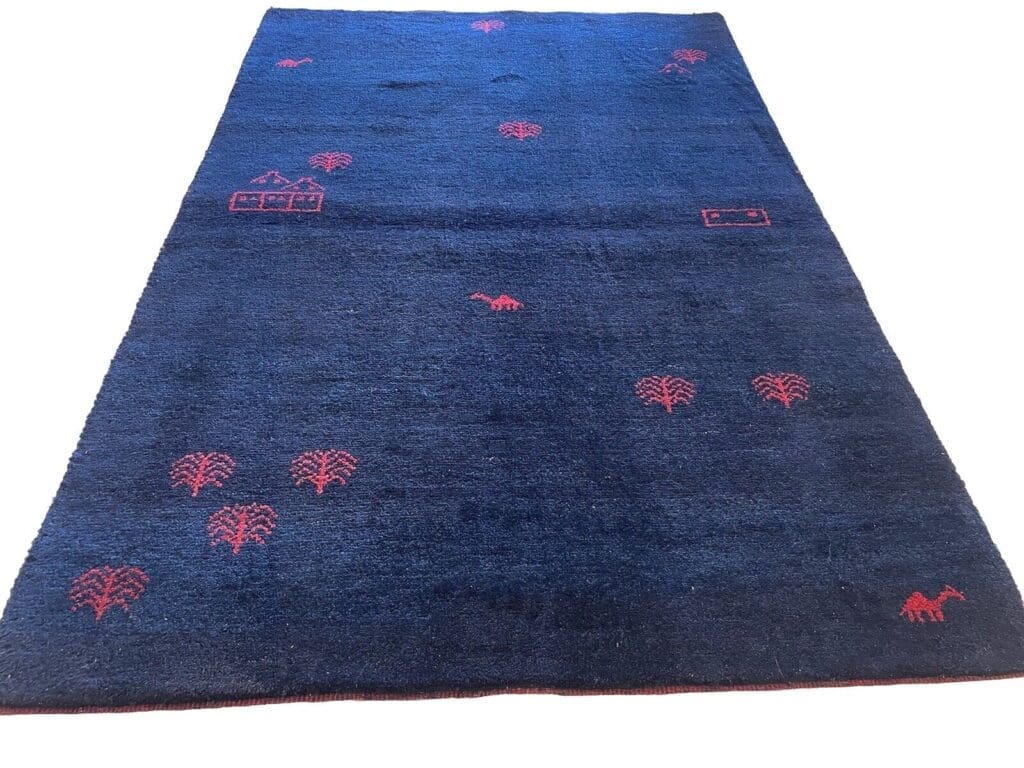
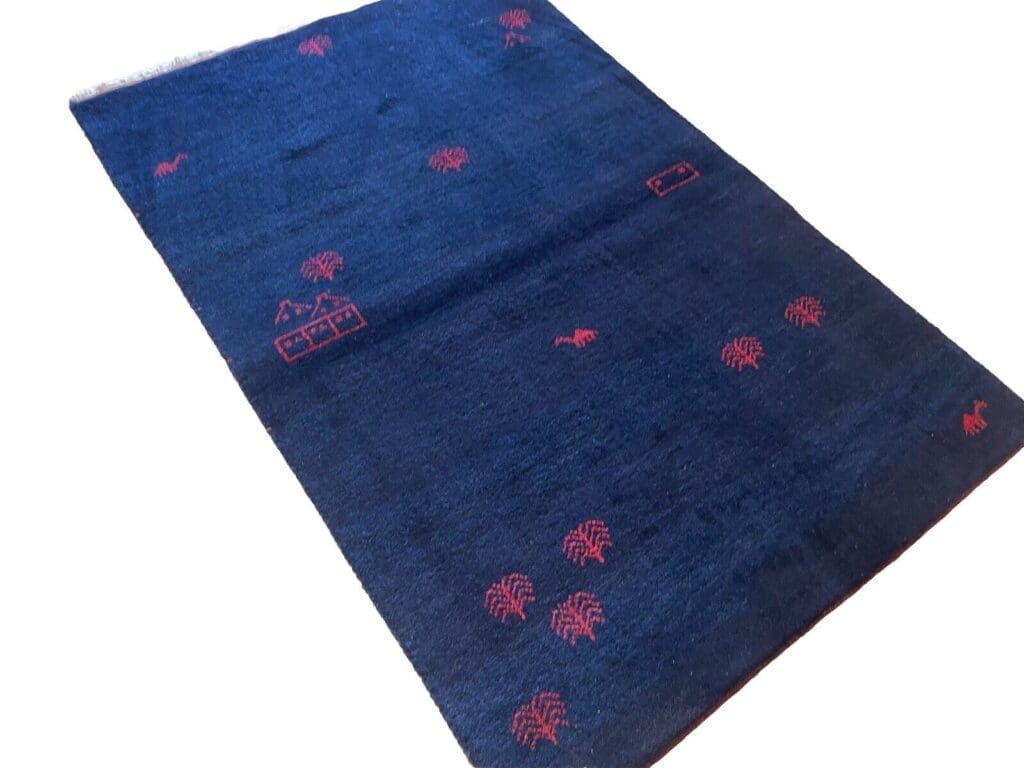
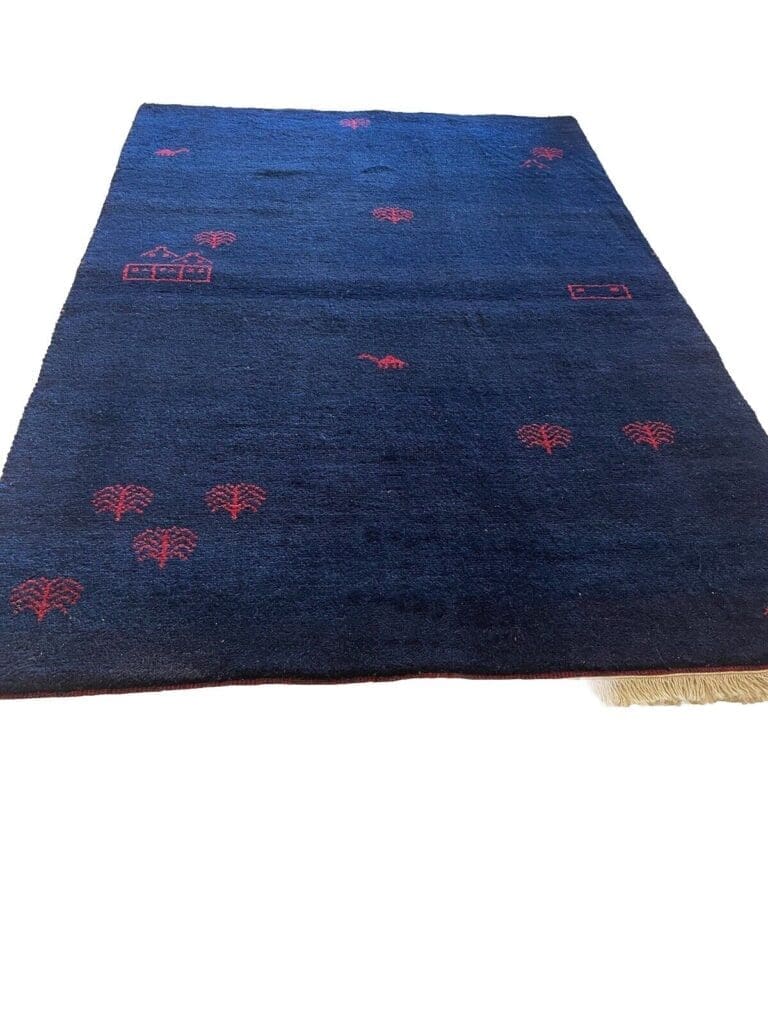
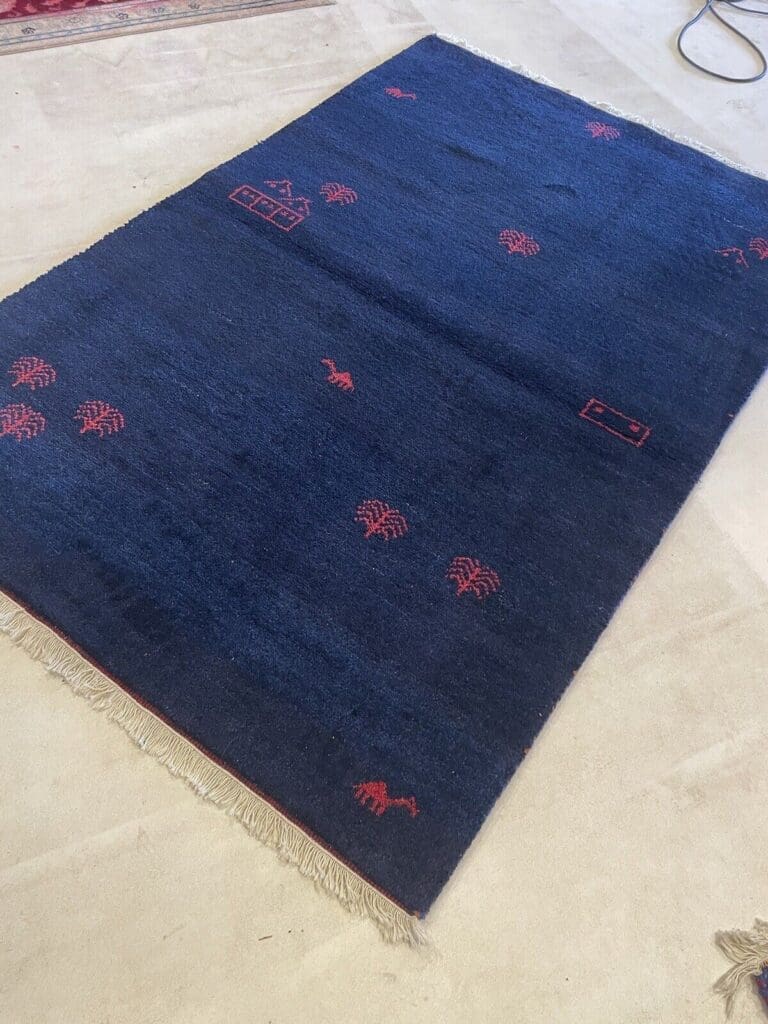
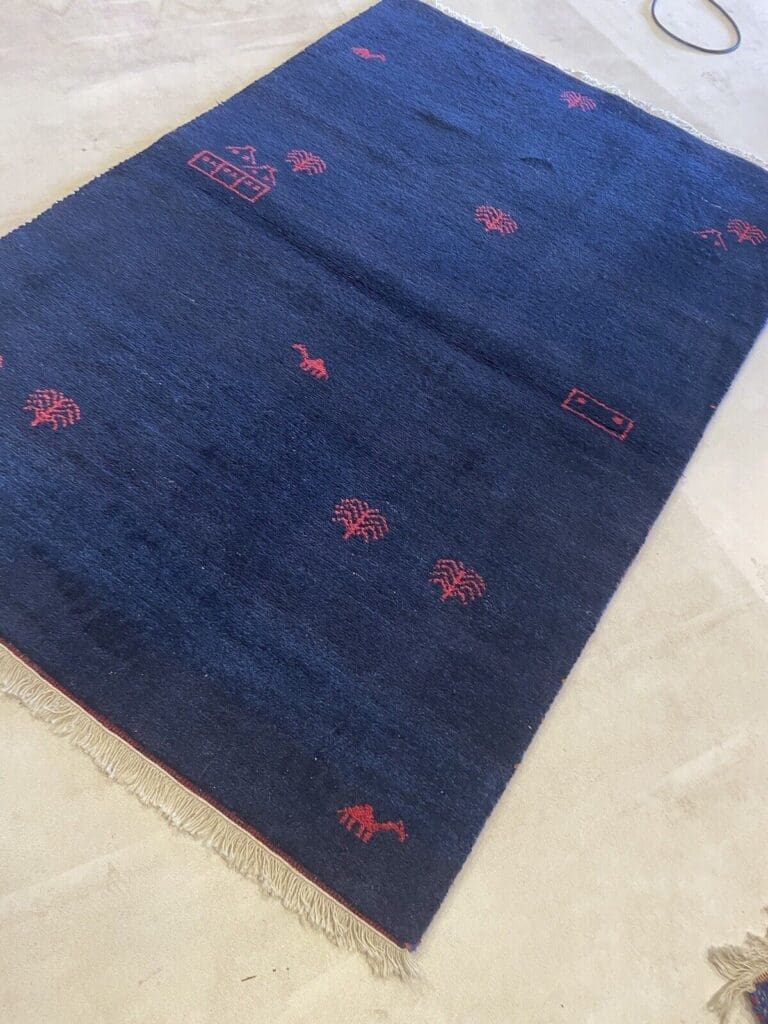
The pattern of this rug is described as abstract. It is not presented as a naturalistic image of one identified object, landscape or scene. Abstract rug design may work with lines, areas, rhythm, repetition and freely arranged shapes. Its visual effect comes from the relationship between the elements rather than from a literal representation. No named pattern family, medallion, floral motif or individual symbol is specified for this rug.
The colour is described as natural blue. In Persian rug design, blue can be used as a ground colour, to separate areas, or to connect shapes across a composition. The source does not define a more precise shade, an additional palette or a particular dyeing method. The colour statement is therefore kept to natural blue. It would not be accurate to add other colours or to assign a specific colour tradition to this individual rug.
Traditional Persian rugs are often organised through a clear relationship between field and border. An inner field may be framed by one or more borders, while medallions, vines, geometric forms or repeating signs establish the direction of the composition. Abstract designs can interpret these structural ideas more freely. The general existence of such design principles does not show that this particular rug contains a medallion, a specific border or a named symbolic motif.
Iranian pattern traditions include floral, geometric and symbolically understood forms. A floral element may recall plants or gardens, while geometric arrangements create order through repetition, balance and clearly defined boundaries. Other motifs can carry associations inherited through cultural history. In an abstract composition, any such meaning may be less directly readable. The secure statement for this rug is limited to its abstract pattern.
Colour and textile surface are perceived together in a hand-knotted rug. A pile surface can receive light differently across its structure, and hand-spun wool can contribute a particular tactile character. These are general observations about the materials and technique, not additional claims about an unmentioned design detail. No assessment of drawing precision, pattern scale or knot density is provided for this rug.
The style is identified as traditionally Persian and Oriental. This stylistic description connects the rug with the broader visual language of Persian and Oriental rugs, but it does not name a specific region or workshop. Its abstract design combines a traditional Persian and Oriental style classification with a non-representational pattern. This makes it possible to describe the design clearly without assigning an unsupported historical or regional meaning.
Special Features
One expressly stated feature is the rug’s suitability for underfloor heating. It can therefore be used on a suitably heated floor. This practical feature accompanies the hand-knotted construction and the combination of cotton with hand-spun virgin wool. The description does not provide a maximum temperature, technical test value or special installation instruction, so none is added here.
The rug is described as hard-wearing, a relevant quality for a floor covering used in everyday life. It has a rectangular shape. Its condition is brand new with a tag, distinguishing it from a used rug. No information is supplied about age, signature, repairs or signs of wear. Those details are not inferred from the material, the style or the hand-knotted construction.
The possible settings named in the description include the living room, bedroom, home office and all rooms in general. This does not establish an exclusive use for any particular room. The practical features identified for the piece are its suitability for underfloor heating, its hard-wearing description and its rectangular form. Its hand-knotted workmanship, material combination, abstract pattern and natural blue colour complete the stated description.
FAQ
How should I care for the Persian rug?
For regular care, gentle vacuuming with a soft brush is recommended. If a stain occurs, dab the affected area immediately with a soft, damp cloth. Avoid vigorous rubbing and unnecessary soaking, as these can place additional stress on the textile surface. Professional rug cleaning is advisable when dirt and deposits need to be removed thoroughly. Cleaning should take the hand-knotted construction, hand-spun virgin wool and cotton content into account. The aim of careful maintenance is to preserve the colour, surface and structure of the rug as gently as possible.
Can I use the rug in damp rooms?
Use in very damp rooms such as bathrooms is not recommended. Moisture can damage wool and affect the textile structure of a rug. Dry areas of the home are more suitable. The rug’s suitability for underfloor heating concerns placement on a heated floor and does not mean that it is intended for permanently humid surroundings. These two conditions should therefore be considered separately: the rug may be suitable for underfloor heating, but it should not be used in strongly damp rooms.
How can I recognise a high-quality Persian rug?
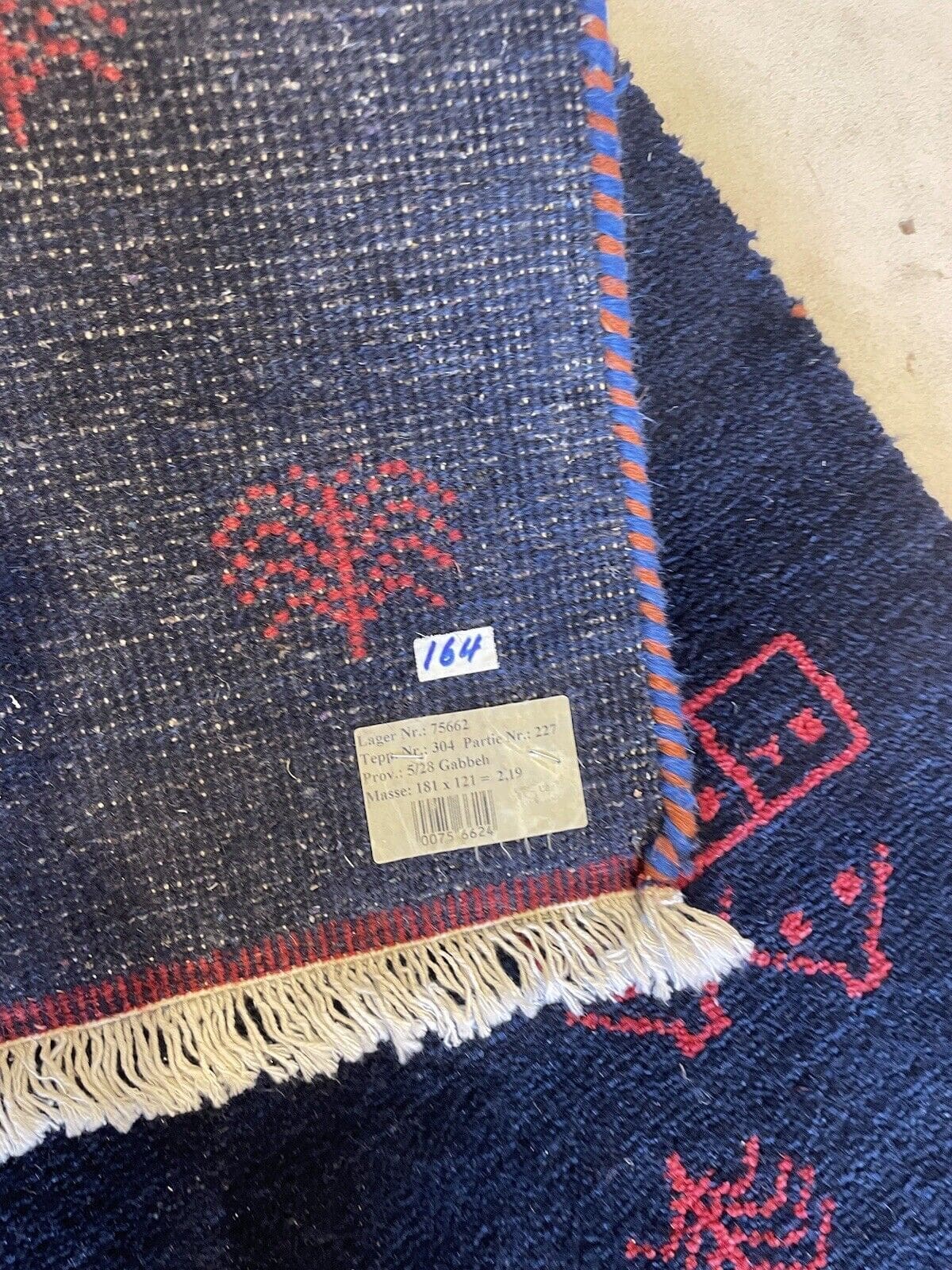
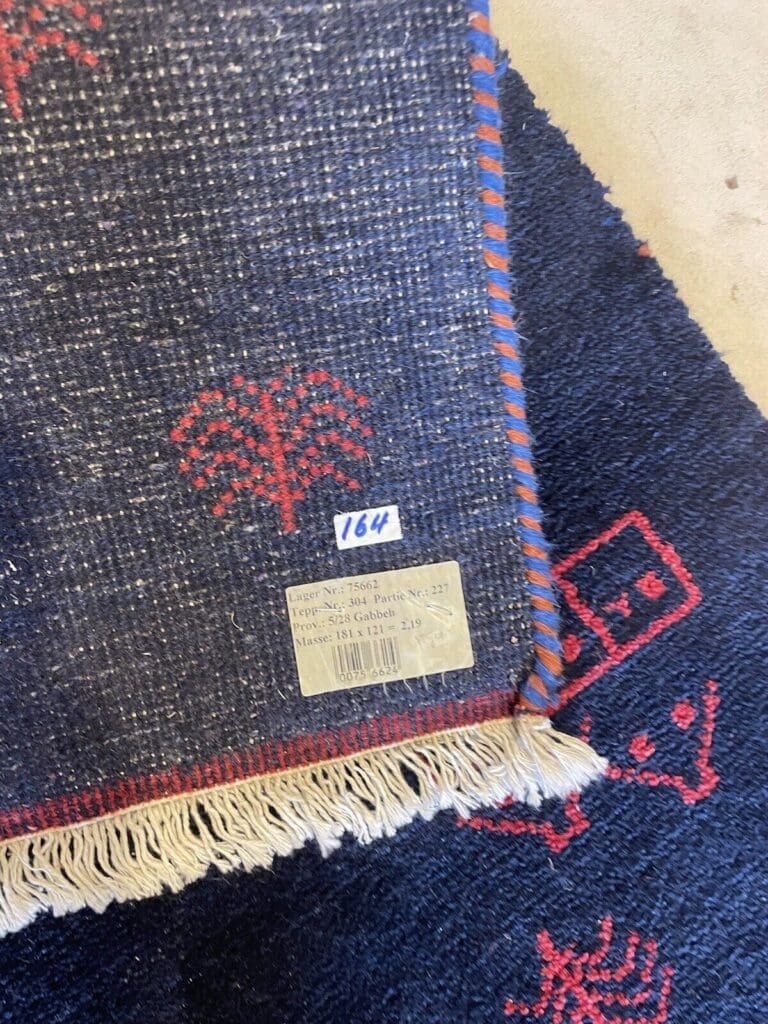
High knot density, even colour distribution and fine workmanship are described as characteristics of a high-quality Persian rug. On an authentic hand-knotted piece, the pattern is clearly visible on the back, and the knot count tends to be high. No specific knot density is stated for this rug, however. The source confirms its hand-knotted construction, the combination of cotton and hand-spun virgin wool, the pile height, the abstract pattern, the new condition and its suitability for underfloor heating. It does not provide an additional numerical knot-count value.
To provide the best experiences, we use technologies like cookies to store and/or access device information. Consenting to these technologies will allow us to process data such as browsing behavior or unique IDs on this site. Not consenting or withdrawing consent, may adversely affect certain features and functions.
Functional Always active
The technical storage or access is strictly necessary for the legitimate purpose of enabling the use of a specific service explicitly requested by the subscriber or user, or for the sole purpose of carrying out the transmission of a communication over an electronic communications network.
Preferences
The technical storage or access is necessary for the legitimate purpose of storing preferences that are not requested by the subscriber or user.
Statistics
The technical storage or access that is used exclusively for statistical purposes.The technical storage or access that is used exclusively for anonymous statistical purposes. Without a subpoena, voluntary compliance on the part of your Internet Service Provider, or additional records from a third party, information stored or retrieved for this purpose alone cannot usually be used to identify you.
Marketing
The technical storage or access is required to create user profiles to send advertising, or to track the user on a website or across several websites for similar marketing purposes.
 SECURE PAYMENT
 SHIPPING PARTNERS


