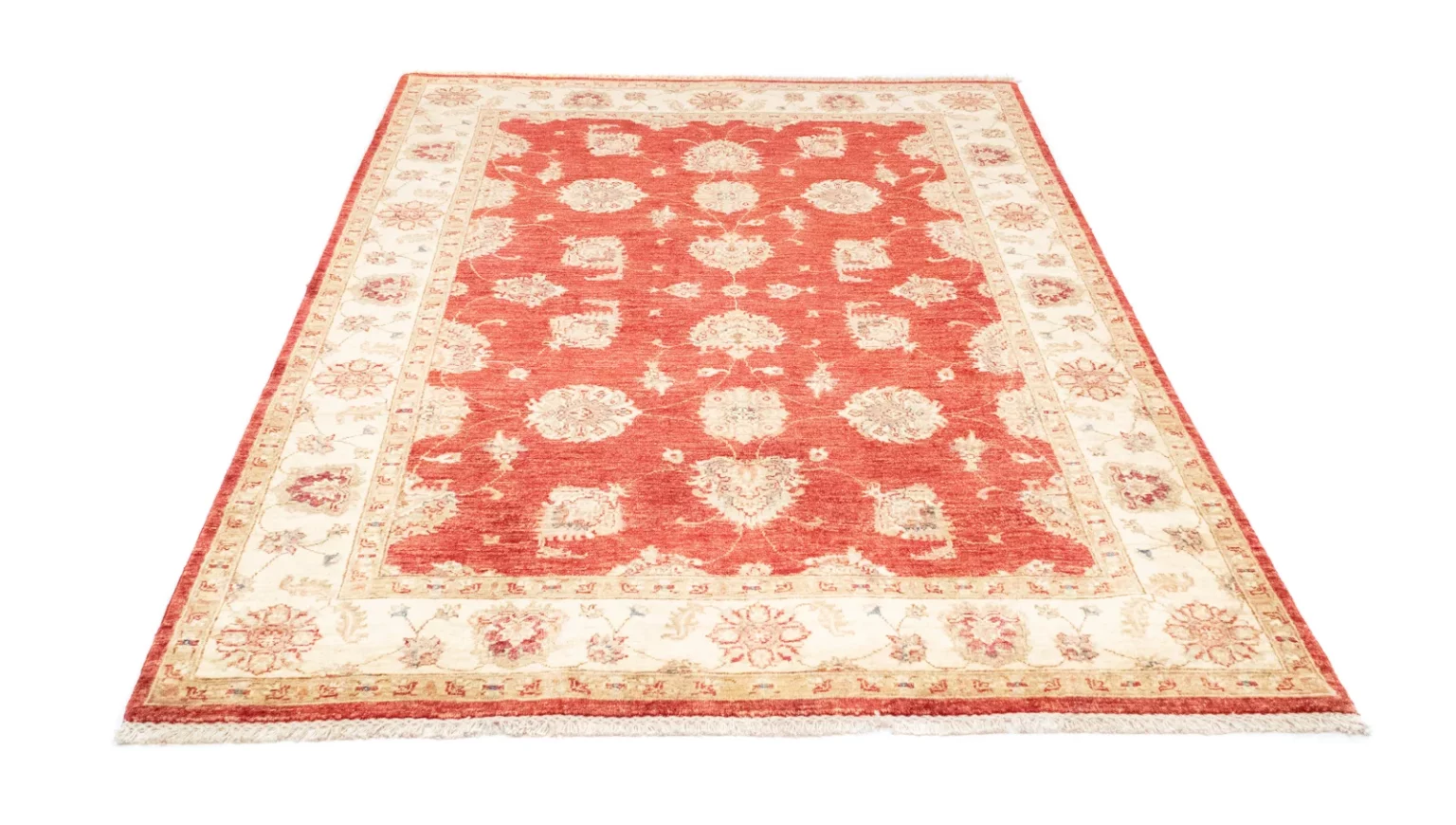
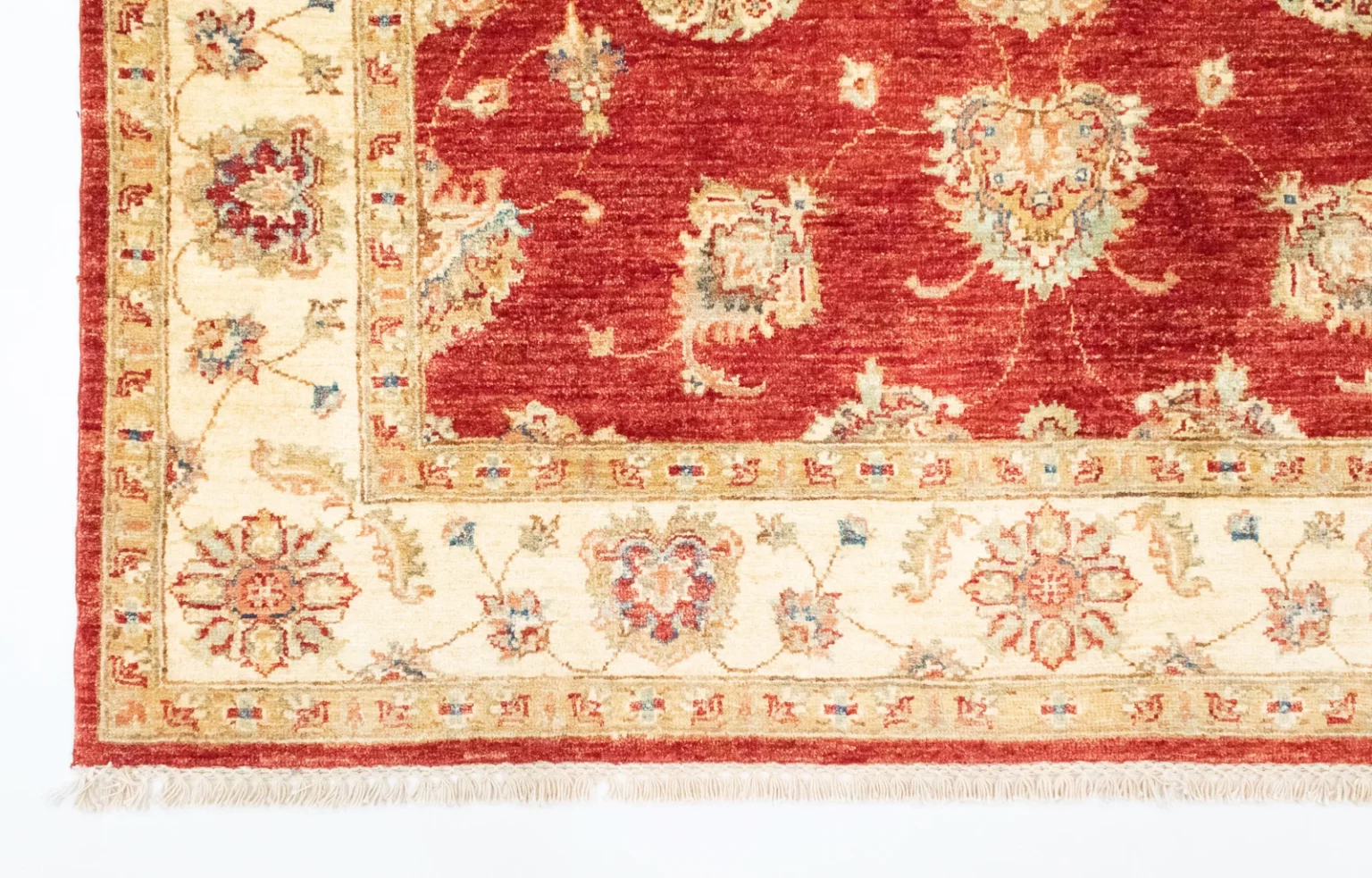
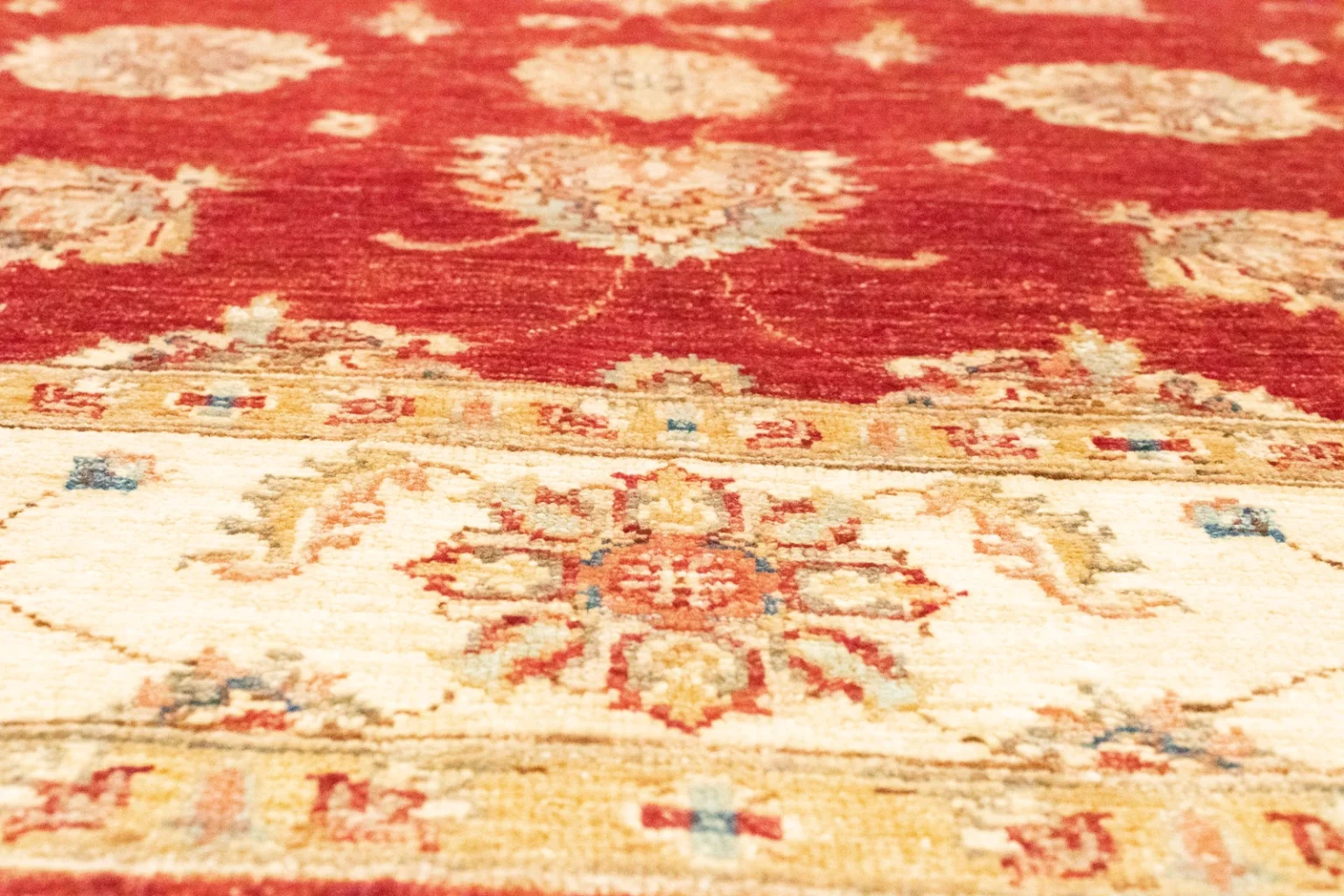
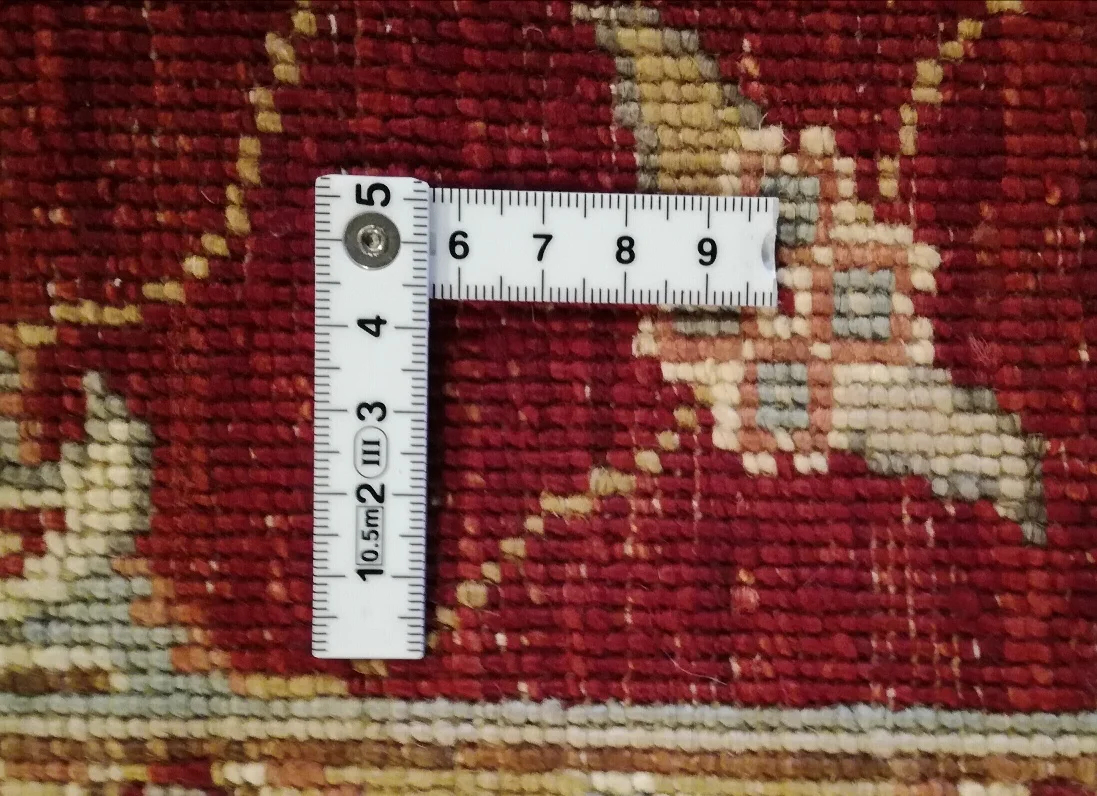
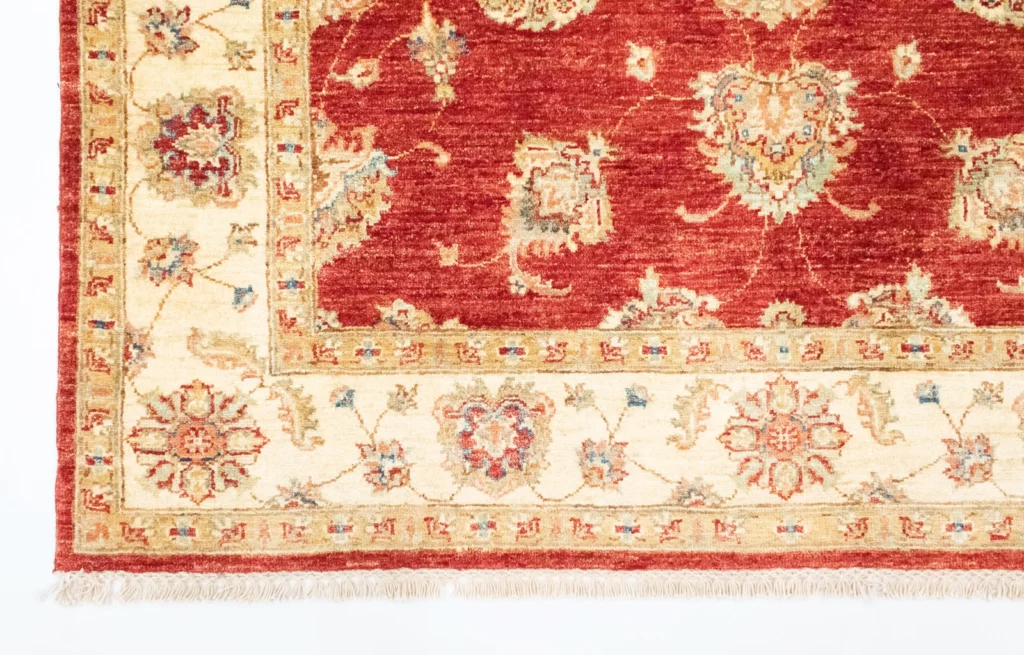
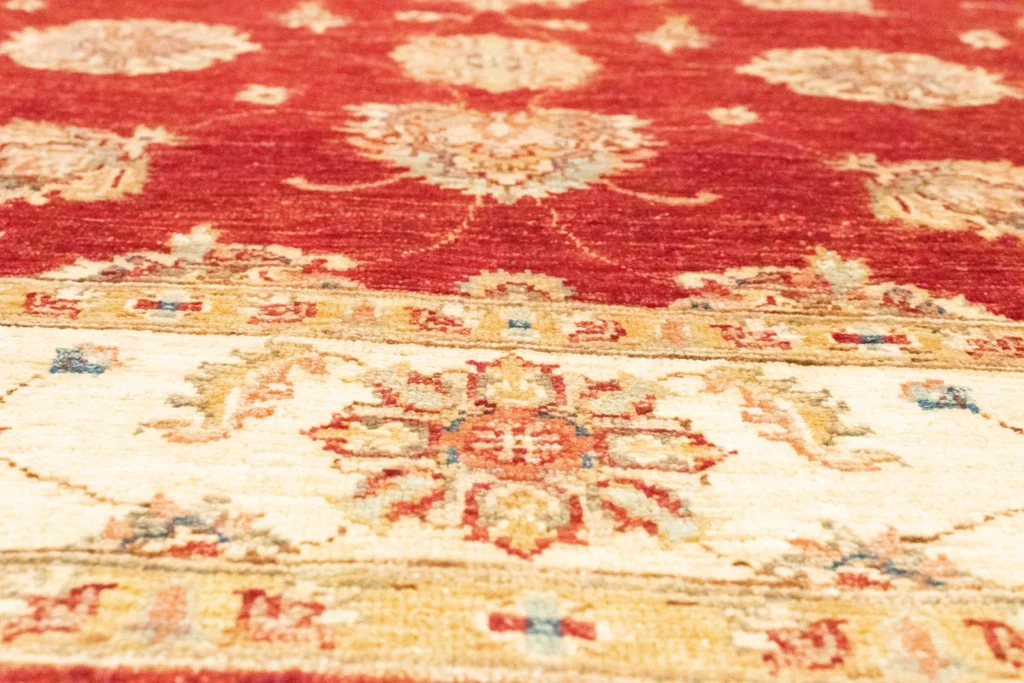
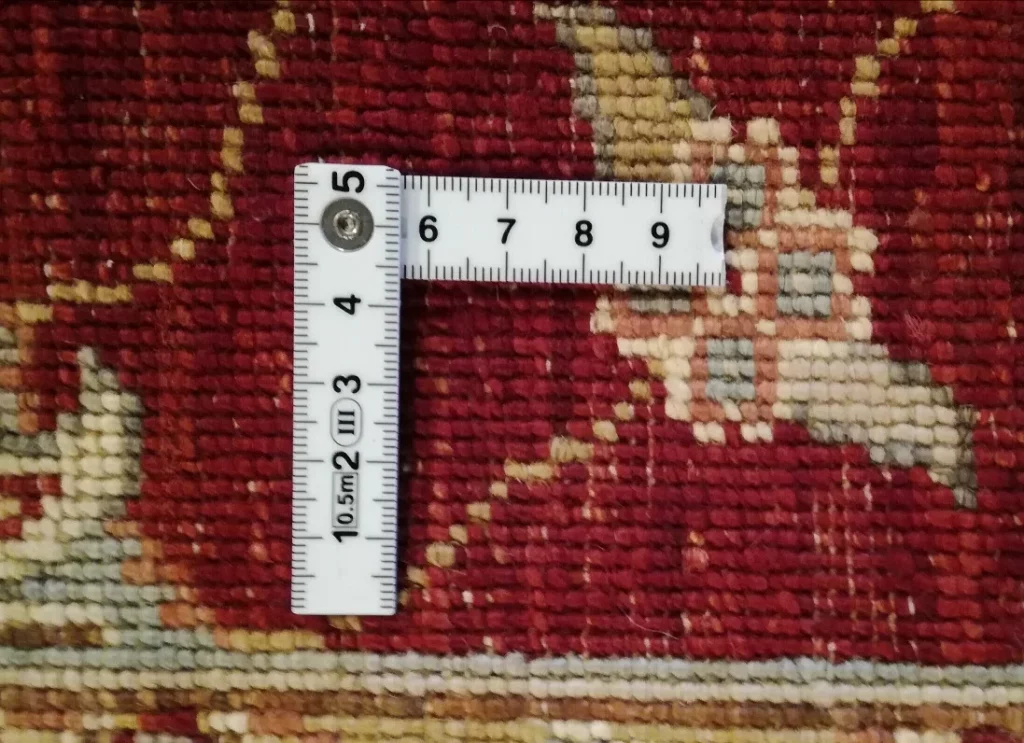
This Ziegler Oriental rug is hand-knotted and has a wool pile. Its knot density is 200,000 knots per square metre. Hand-knotting is a method in which individual knots are tied by hand into the foundation, building the surface row by row. The pile is then worked so that the finished rug has an even textile structure and the design can be read across the surface. Wool is a traditional pile material for this type of work because it can be shaped into a durable, tactile surface through knotting and finishing.
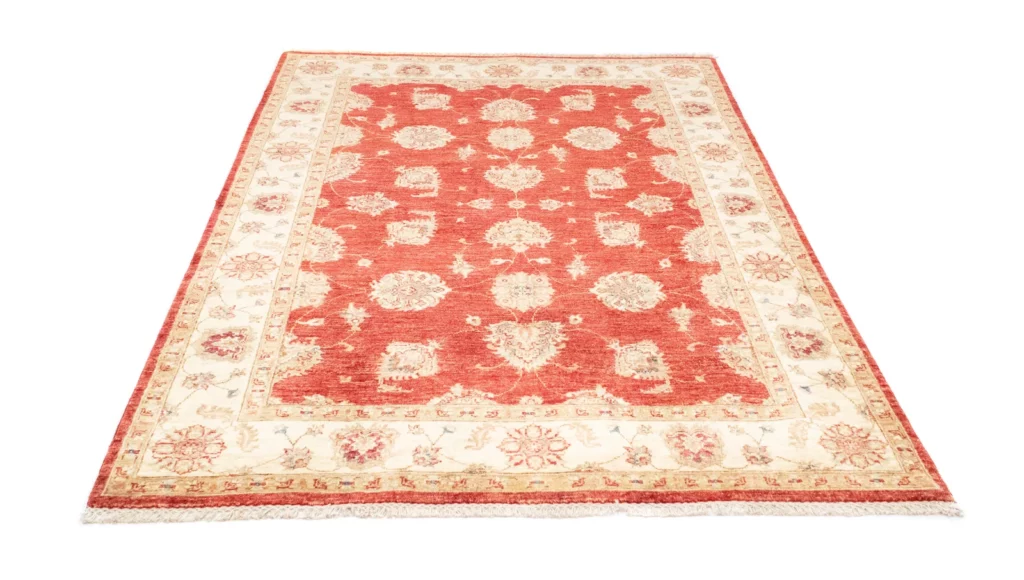
The material and construction are closely connected to the rug’s colour treatment. This piece is described as having varied colours with a faded effect created by stone washing. Stone washing is used to soften the visual intensity of a rug and to give the surface a more settled, lived-in appearance. It is a deliberate treatment of the colours and pile rather than an accidental loss of colour. The resulting effect can make adjacent shades appear more closely integrated and less sharply separated.
A knot density of 200,000 knots per square metre is a technical description of the hand-knotted structure. Knot density is related to the fineness with which a design can be rendered, although it should always be considered alongside the pile material, the colours and the surface finish. In this rug, wool, hand-knotting and the stone-washed faded effect form the principal craft and material features. No additional warp material is specified.
Hand-knotting also explains why each rug has an individual character. Even when a workshop follows a recognised design tradition, the precise distribution of colour and the handling of the pile belong to the individual piece. The stated very good condition provides the condition description for this rug. Together, the construction, wool pile, knot density and finish give a clear account of how the rug is made and how its surface is intended to appear.
Origin and Tradition
The rug comes from Pakistan and is identified as a Ziegler rug. It therefore belongs to the wider field of Oriental rugs, with Pakistan as the stated country of origin. Pakistan has an established carpet-making tradition in which workshops produce hand-knotted rugs for a range of design languages. The Ziegler name refers to a recognised decorative tradition that draws on classical Oriental carpet design while often presenting it through a gentler and more subdued colour treatment.
The history of the Ziegler style is connected with the movement of carpet patterns between the Persian world and European markets. The name is associated with carpets commissioned by the Ziegler company in the Persian region and adapted for European taste. Later rugs following this visual approach were also made in other countries. For that reason, Ziegler is best understood as a style designation rather than as automatic proof of a particular manufacturing location. The stated origin of this individual rug is Pakistan.
This distinction between style and origin is important in Oriental carpet terminology. A design can travel from one weaving centre to another, where local makers interpret it with their own materials, techniques and colour handling. The Ziegler approach became recognisable through the combination of traditional floral and scrolling forms with a comparatively softened palette. The place of manufacture remains a separate fact. Here, Pakistani craftsmanship and Ziegler design language are the two relevant points of classification.
Pakistan’s rug-making heritage includes workshops with different technical practices, knot densities and design traditions. Hand-knotting requires the maker to repeat a sequence of small manual actions across the foundation. The alignment of rows, the placement of colours and the clarity of outlines must be maintained throughout the work. Finishing processes then influence the final appearance of the pile. These principles belong to the broader craft background of Pakistani hand-knotted rugs and help explain why construction and surface treatment are both important when describing a Ziegler rug.
The Ziegler tradition also illustrates how Oriental rugs have never been limited to one unchanging visual formula. Designs were adapted to changing interiors, trading relationships and preferences for colour. Some versions retain a stronger classical character, while others use more open fields and quieter shades. The faded look associated with stone washing fits this history of adaptation, as it gives established decorative ideas a less formal surface appearance. It does not alter the stated origin: this rug is from Pakistan.
Seen in that context, the piece combines a Pakistani place of manufacture with an internationally recognisable Ziegler vocabulary. Its hand-knotted construction connects it to a long-standing textile practice, while the softened colours reflect the design direction for which Ziegler rugs are known. The description remains specific to the facts provided: Pakistan is the origin, wool is the pile material, and the rug has been made by hand with the stated knot density.
Design and Pattern
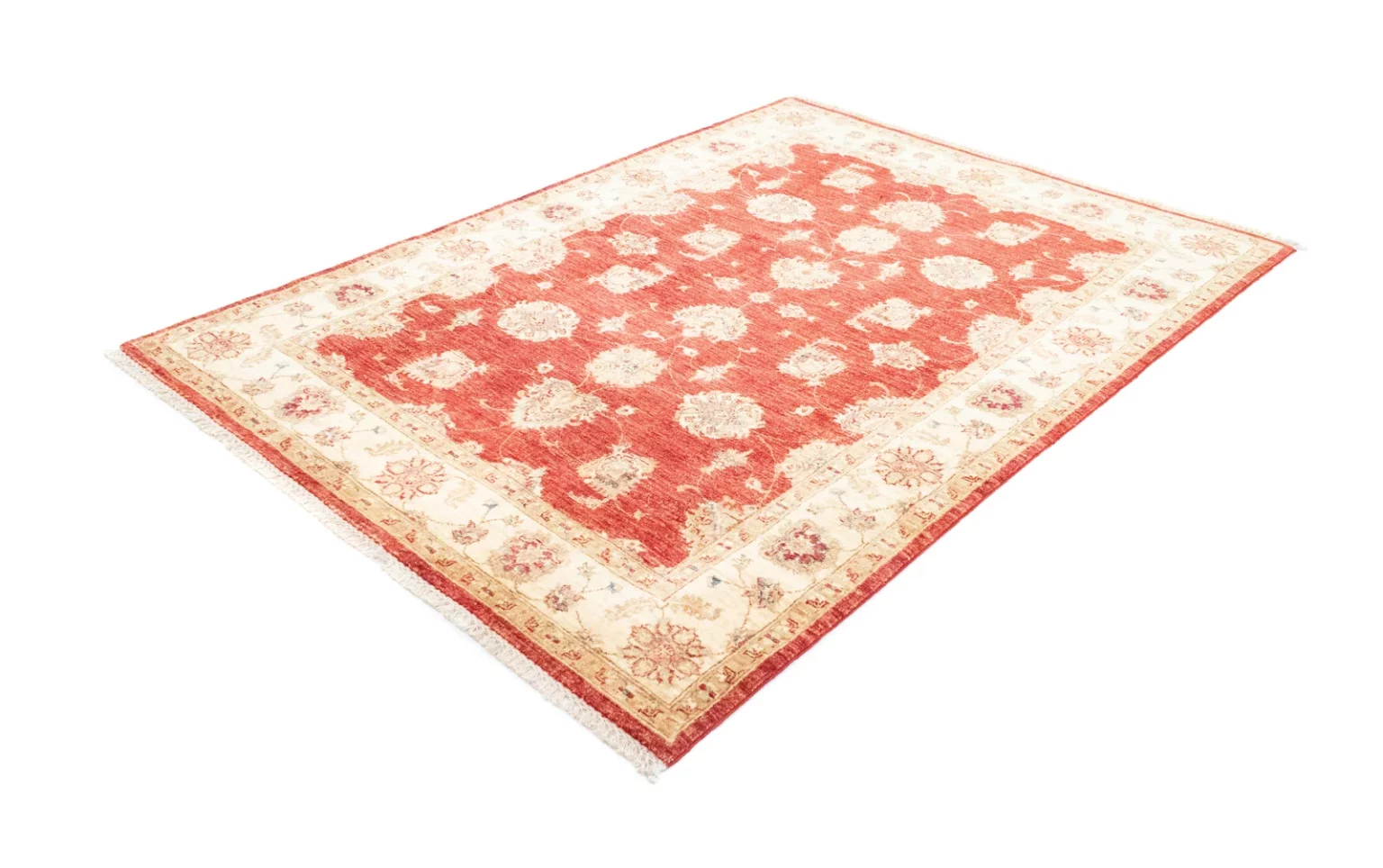
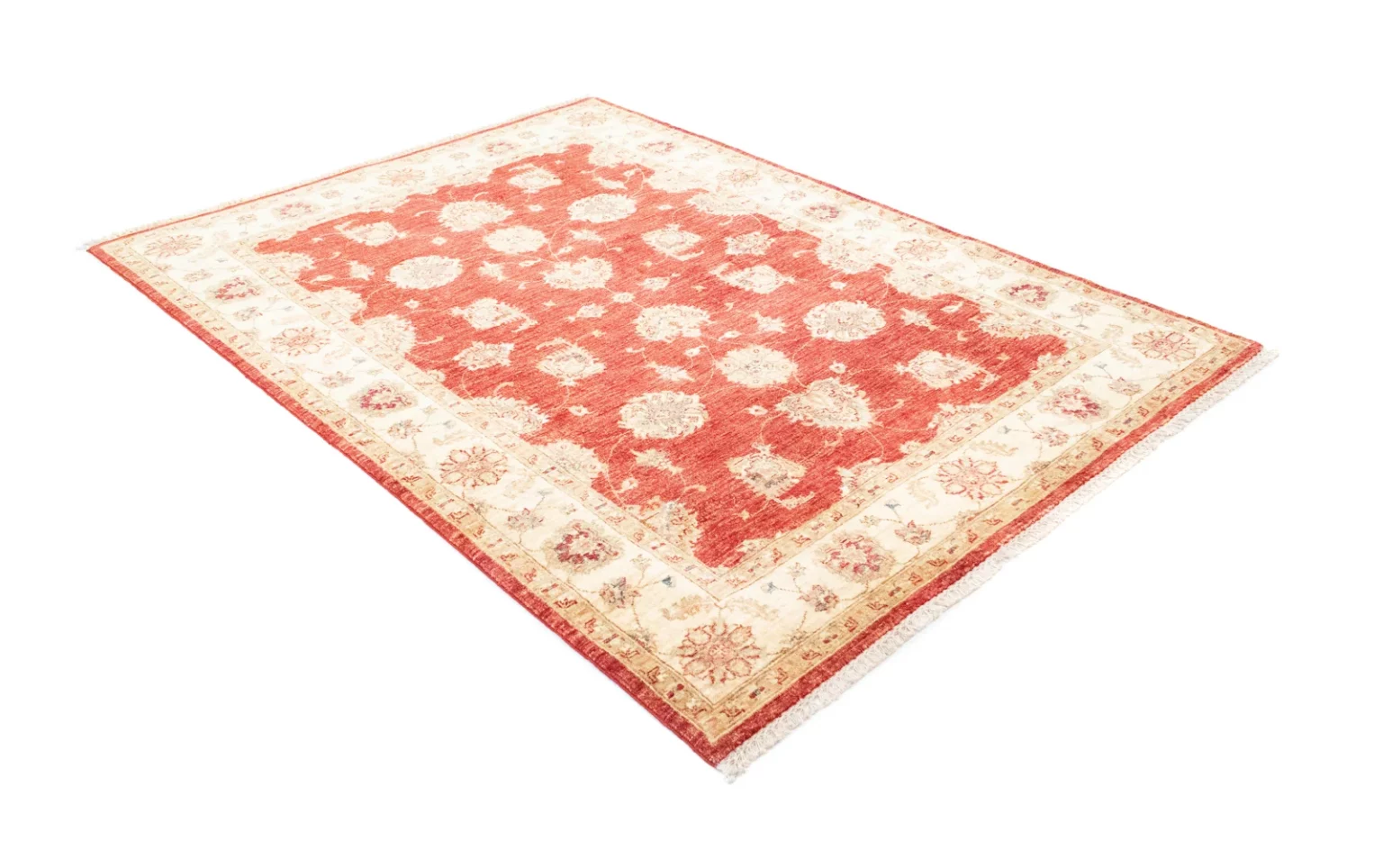
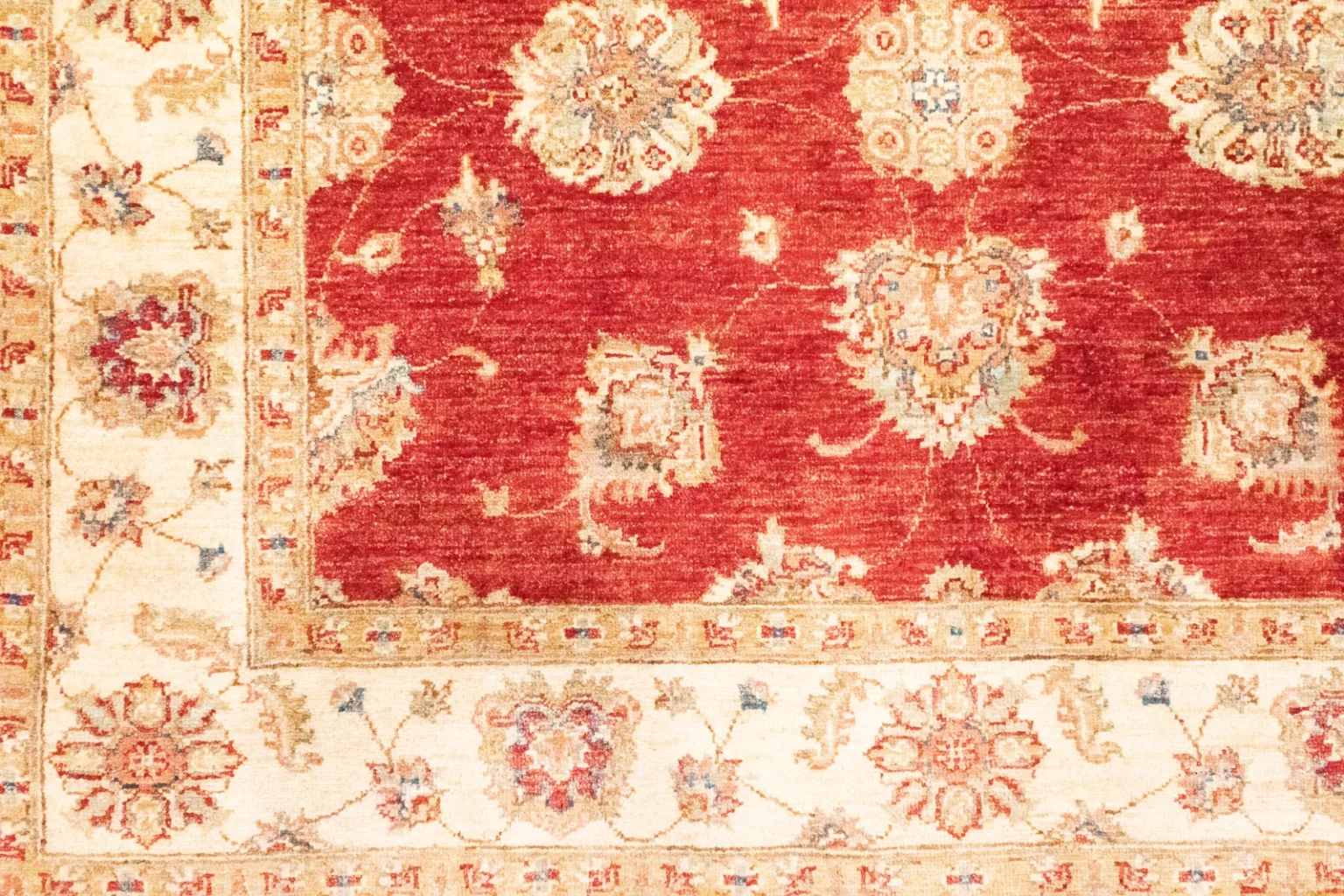
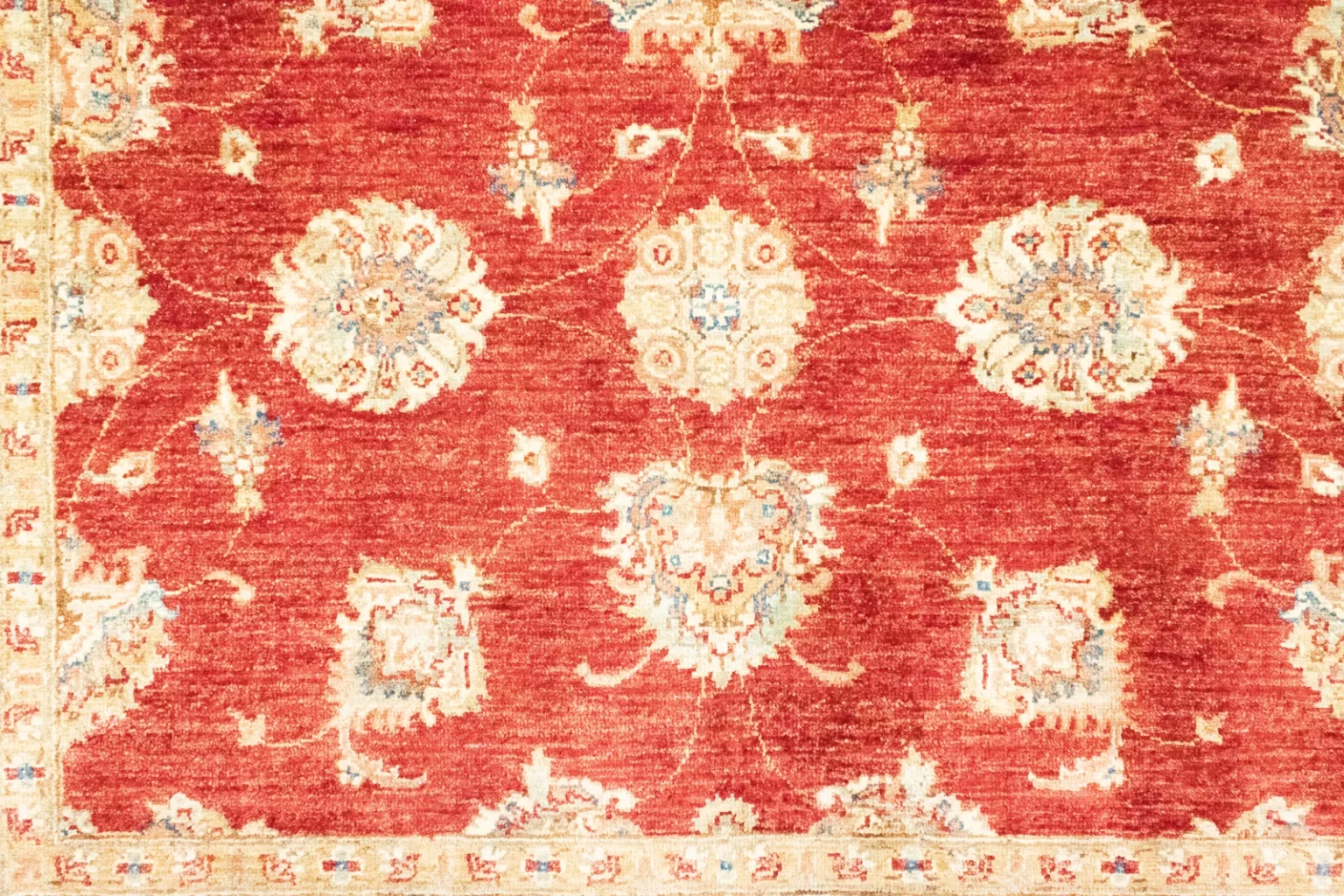
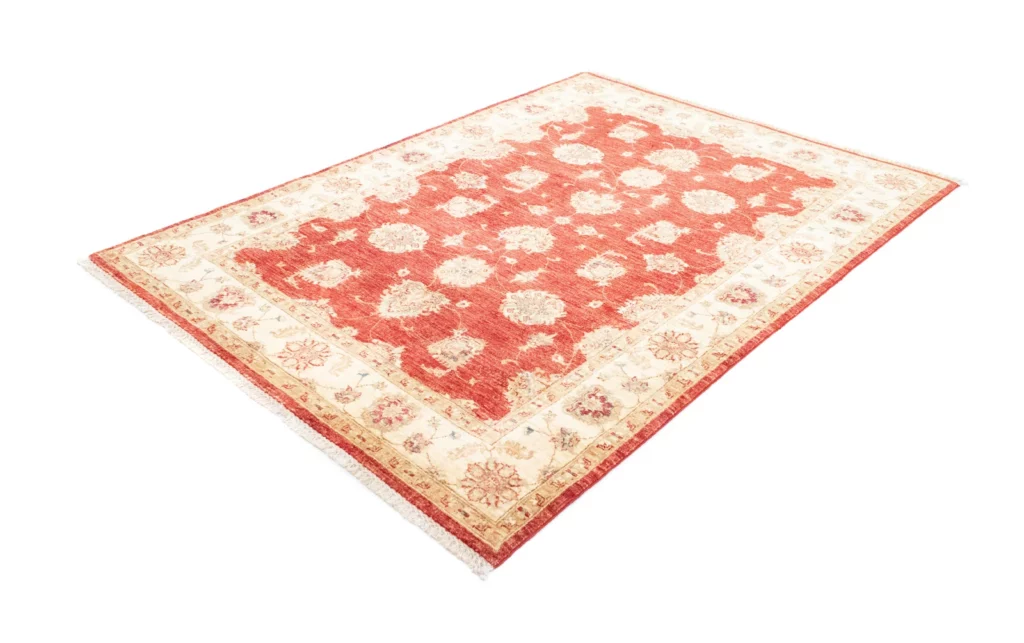
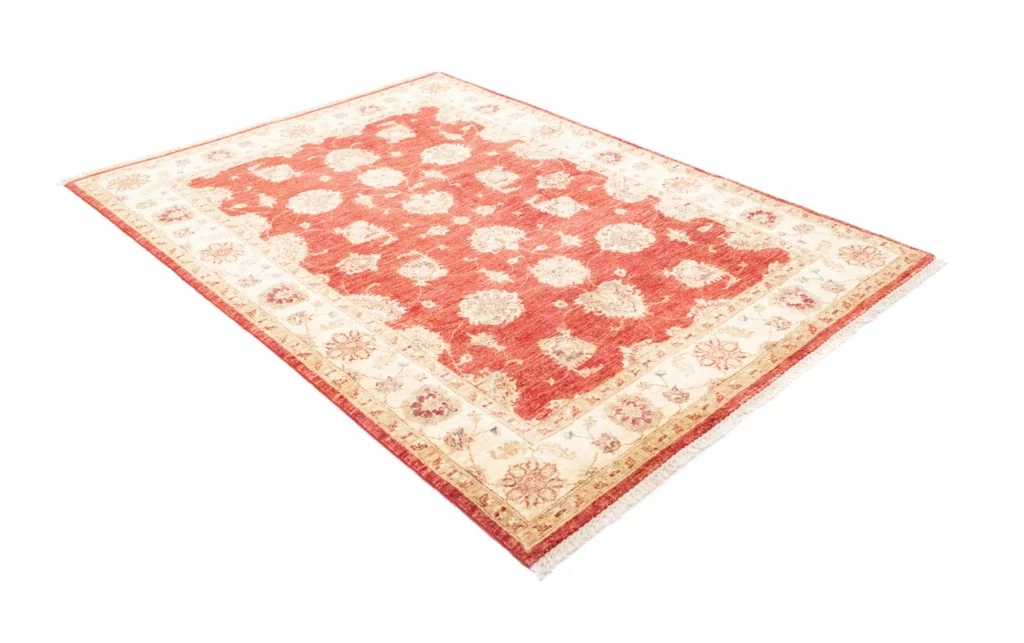
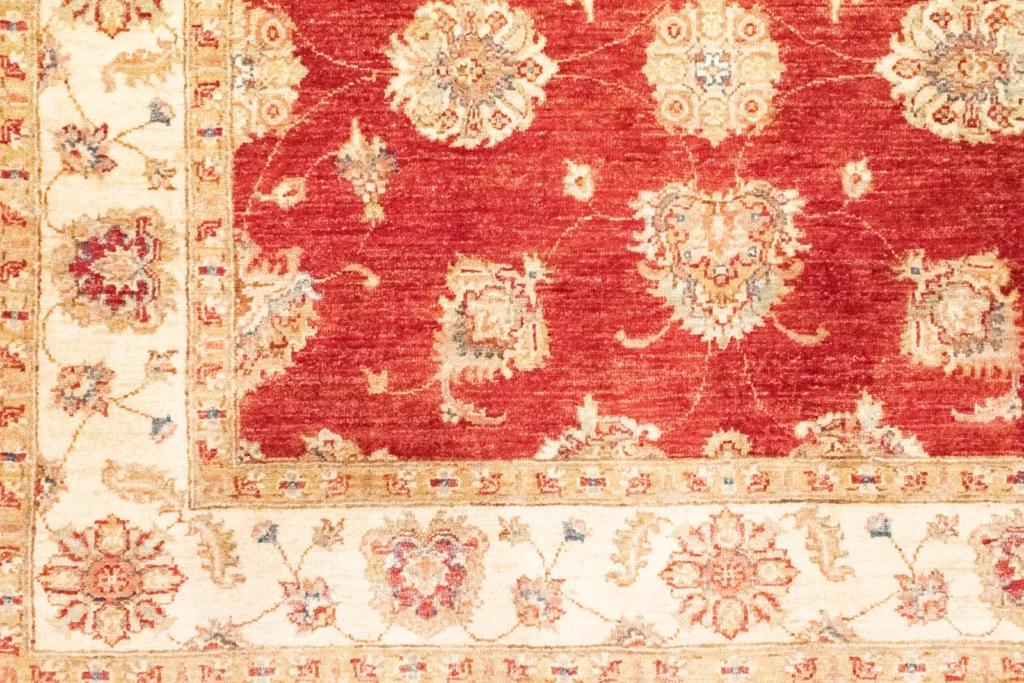
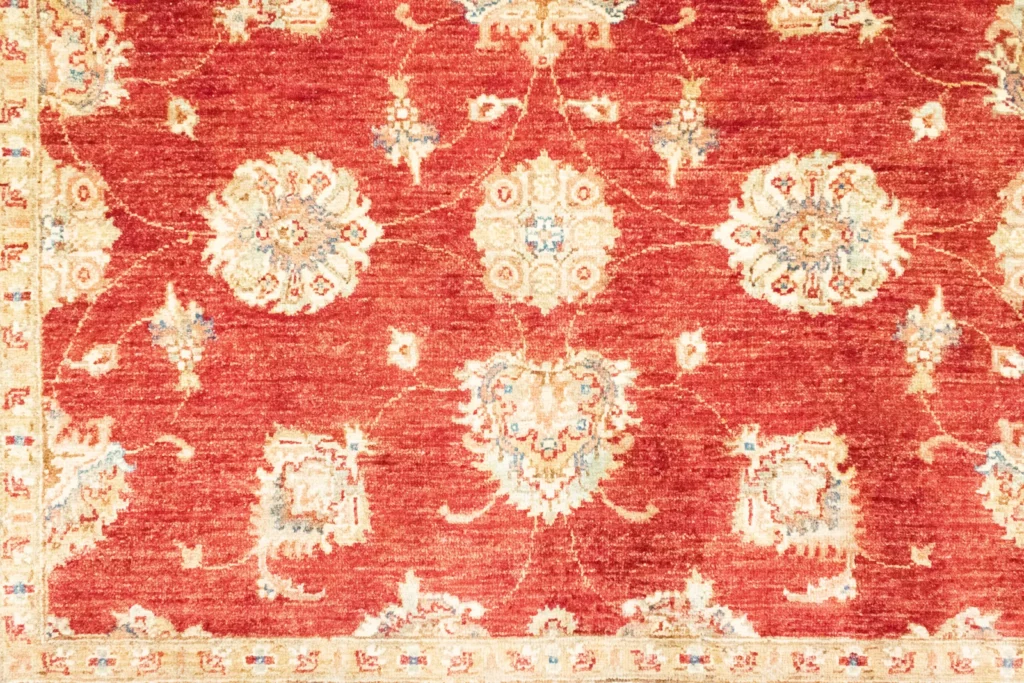
The pattern is described through varied colours and a faded effect produced by stone washing. This makes the colour surface the central design feature. Stone washing reduces visual sharpness and can give the colours a more muted, established appearance. Instead of presenting every shade with the same intensity, the treatment creates a surface in which tones appear more gently connected. The effect is part of the rug’s intended look and should not be confused with an unintentional sign of wear.
Ziegler rugs are generally associated with the broader language of classical Oriental ornament. Floral forms, curling vines, blossoms and repeating arrangements belong to that general design background. Depending on the individual drawing, motifs may be spread widely across the field or placed in a denser arrangement. Borders may frame an inner field, and repeated details can provide rhythm from one area to the next. No specific medallion, border design or individual motif is stated for this rug, so its pattern is described through its varied colours and stone-washed finish.
Colour is especially significant in the Ziegler approach. Traditional carpet ideas are often interpreted with a less forceful contrast, allowing several shades to work together rather than placing every element in opposition. The faded treatment supports this effect by visually unifying the surface. It can also make the rug appear more relaxed within an interior, because the colours are not presented with the hard, untouched intensity associated with some newer surfaces.
A carpet pattern has both a decorative and an organising role. Repetition creates continuity, while differences in scale and colour keep the field from appearing mechanically uniform. In many Oriental designs, the border establishes an outer frame and the central field carries the principal rhythm. Floral and geometric elements may be used separately or together in the wider tradition. Those are general features of Oriental carpet design, not additional claims about the exact drawing of this individual rug.
The design of this piece should therefore be read through the information that defines it: a Ziegler rug from Pakistan with varied colours and a faded stone-washed effect. The style name provides the historical design context, while the colour treatment determines much of the visible impression. The result is an interpretation of Oriental carpet decoration in which the surface appears softened and the palette is deliberately varied rather than presented as a single flat tone.
Stone washing also affects how the pattern is perceived over time. A softened surface can make the relationship between background and ornament seem more integrated, even when the underlying design remains structured. This quality is one reason the Ziegler look is used in both traditionally furnished and more restrained interiors. It brings a sense of established textile character without requiring a claim about a particular motif that is not recorded for this rug.
Special Features
The rug’s specified features are its Pakistani origin, hand-knotted construction, wool pile and knot density of 200,000 knots per square metre. Its condition is described as very good. Visually, it is distinguished by varied colours and a faded effect created through stone washing. These details separate the technical description from the decorative one: the first concerns how the rug was made, while the second concerns how the finished surface looks.
The stone-washed finish is the most distinctive surface feature named for this piece. It gives the colours a softened appearance and reinforces the subdued Ziegler character. Because the rug is hand-knotted, its exact combination of structure, colour distribution and surface treatment belongs to this individual example. The description does not add any unrecorded age, signature, repair history or additional material.
FAQ
How should I care for a hand-knotted Ziegler Oriental rug?
Vacuum regularly to remove loose dust from the wool pile, using a setting suitable for a hand-knotted rug. Blot spills promptly with a damp cloth rather than rubbing them into the fibres. For deeper cleaning, professional rug cleaning at suitable intervals is recommended. The treatment should take the wool pile and the faded stone-washed surface into account so that the colours and finish are handled appropriately.
What makes this Ziegler Oriental rug distinctive?
Its defining combination is hand-knotted construction, a wool pile and a knot density of 200,000 knots per square metre. The rug also has varied colours with a faded effect created by stone washing. Pakistan is the stated origin, and the condition is very good. The Ziegler designation places the piece within a design tradition that combines Oriental carpet ornament with a visibly softened colour treatment.
Can a Ziegler Oriental rug be used in different rooms?
Yes. A hand-knotted Oriental rug can be used in a living room, bedroom or hallway when the floor is dry and suitable for textile furnishings. Its varied colours can be combined with different interior styles, while the faded stone-washed effect has a quieter appearance than a sharply contrasting palette. In every setting, regular care and a secure, non-slip base are advisable to protect the rug and make everyday use safer.
To provide the best experiences, we use technologies like cookies to store and/or access device information. Consenting to these technologies will allow us to process data such as browsing behavior or unique IDs on this site. Not consenting or withdrawing consent, may adversely affect certain features and functions.
Functional Always active
The technical storage or access is strictly necessary for the legitimate purpose of enabling the use of a specific service explicitly requested by the subscriber or user, or for the sole purpose of carrying out the transmission of a communication over an electronic communications network.
Preferences
The technical storage or access is necessary for the legitimate purpose of storing preferences that are not requested by the subscriber or user.
Statistics
The technical storage or access that is used exclusively for statistical purposes.The technical storage or access that is used exclusively for anonymous statistical purposes. Without a subpoena, voluntary compliance on the part of your Internet Service Provider, or additional records from a third party, information stored or retrieved for this purpose alone cannot usually be used to identify you.
Marketing
The technical storage or access is required to create user profiles to send advertising, or to track the user on a website or across several websites for similar marketing purposes.

 SECURE PAYMENT
 SHIPPING PARTNERS


