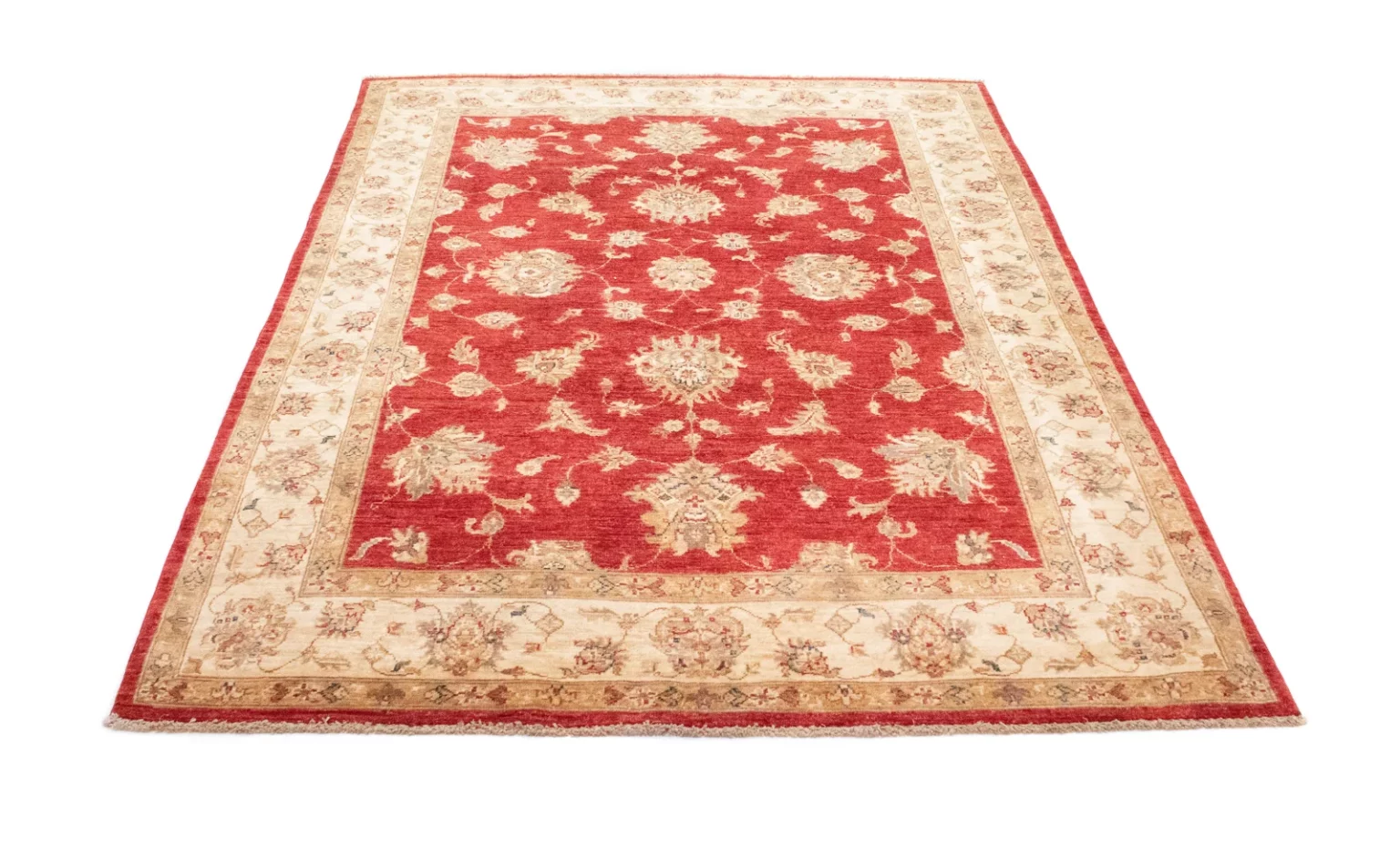
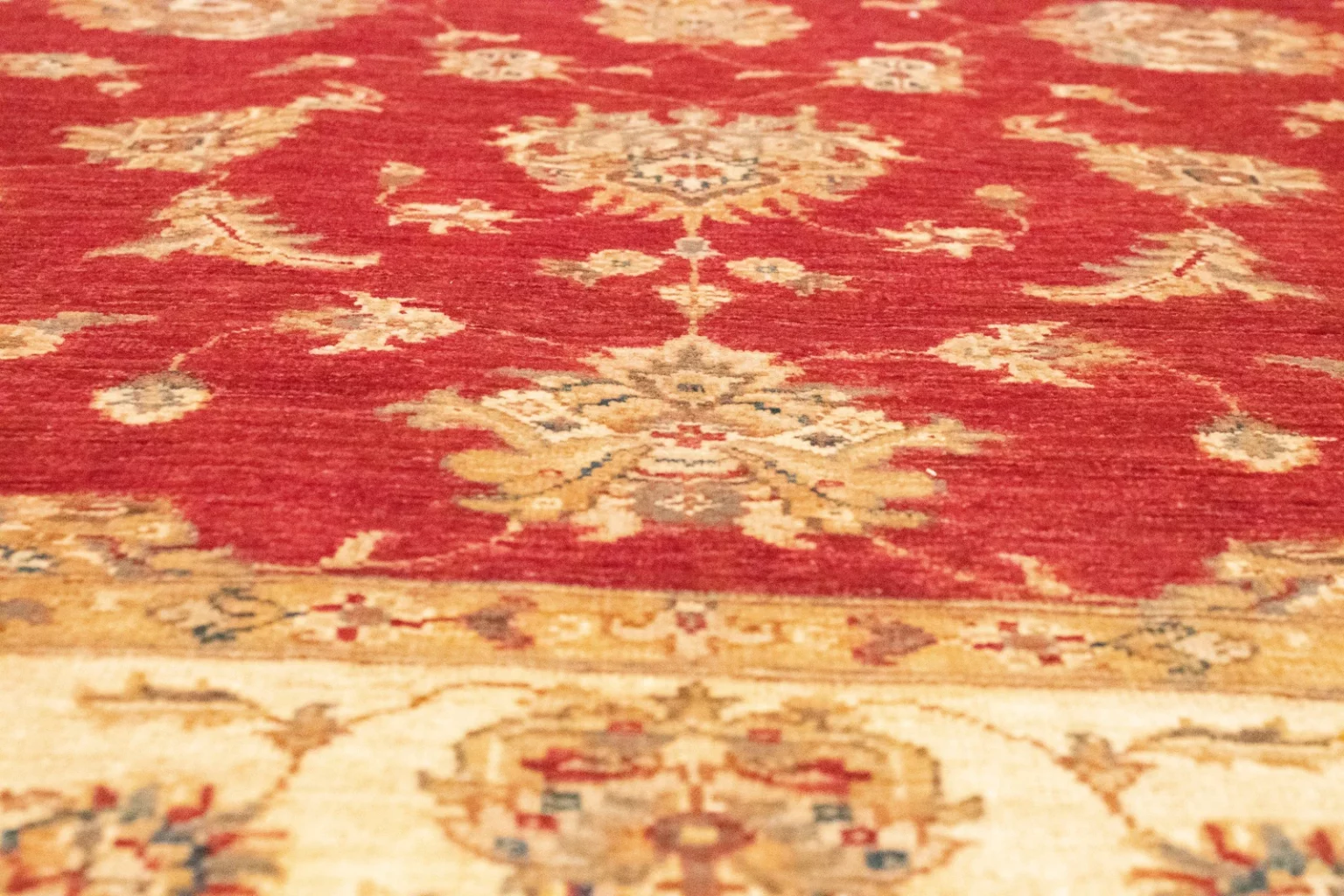
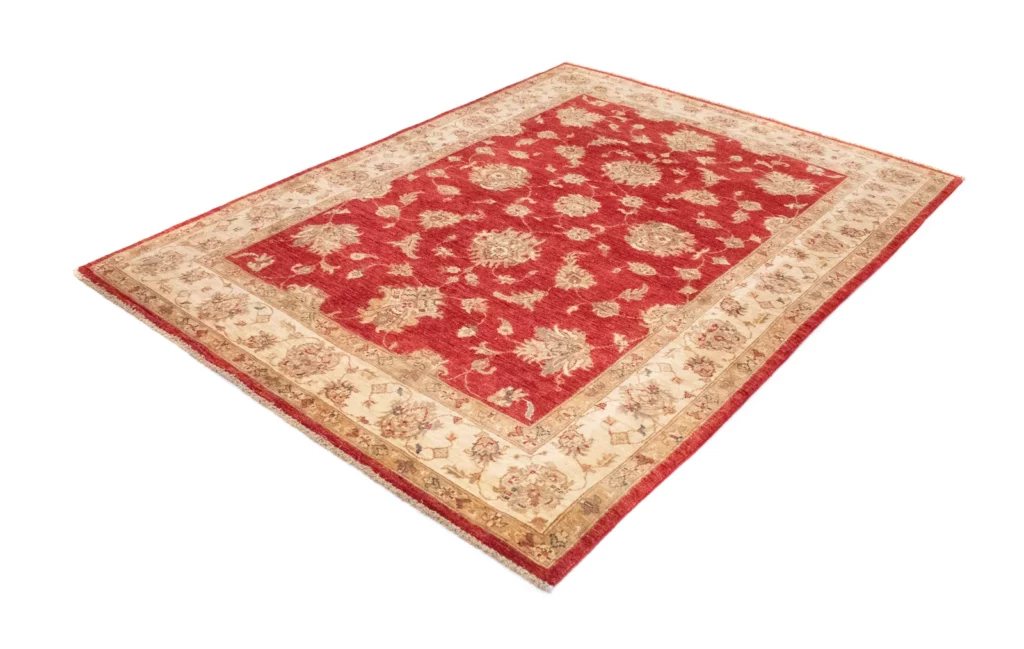
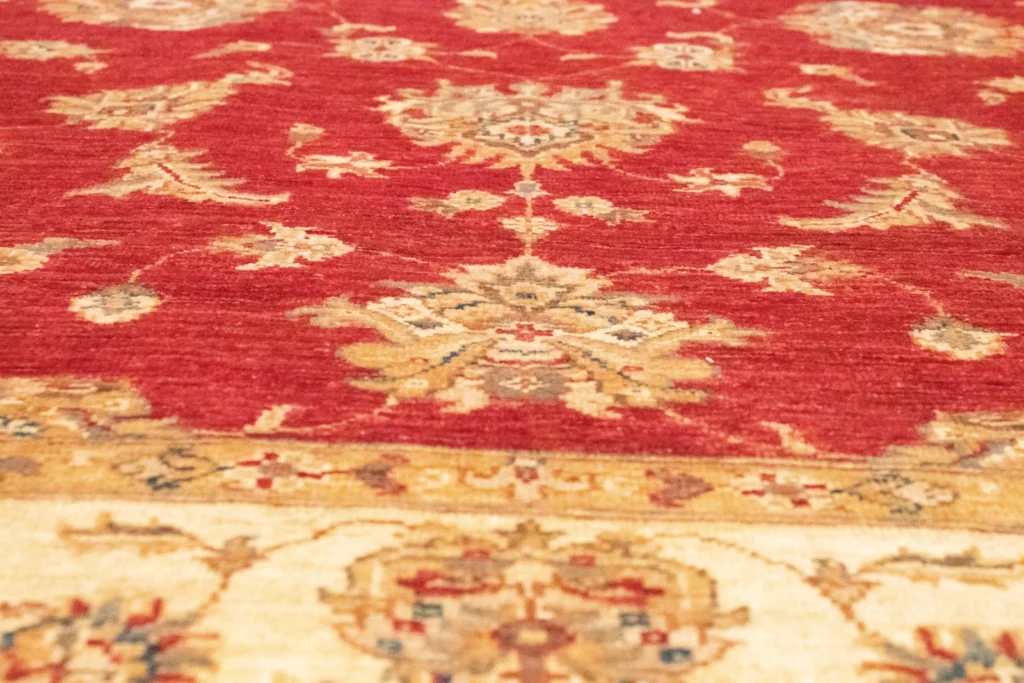
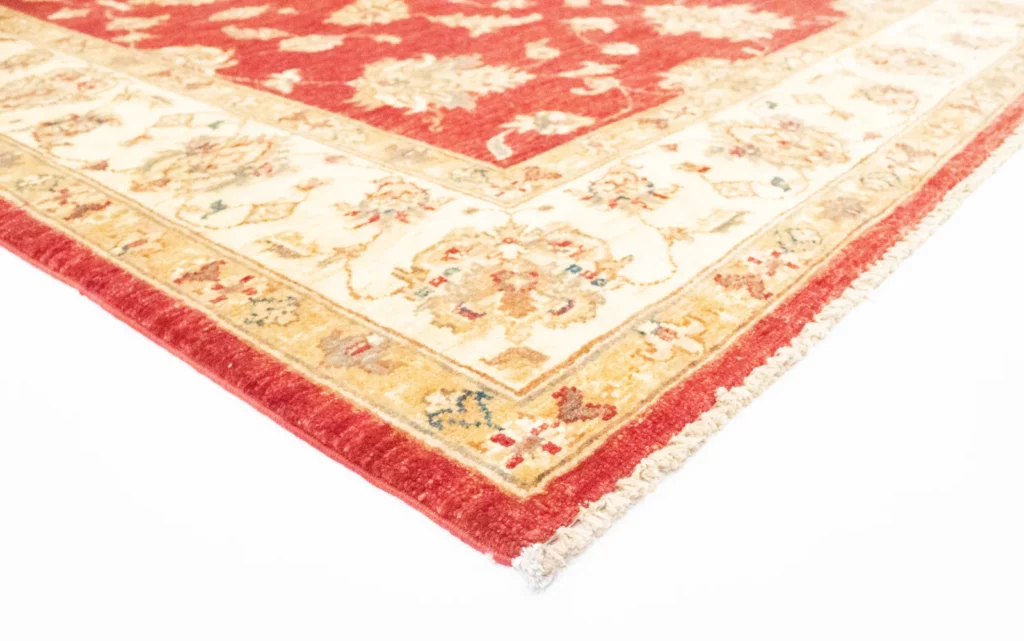
This Ziegler Oriental rug is hand-knotted and has a wool pile. In hand-knotting, each knot is inserted individually into the prepared foundation. The surface is built up gradually, row after row, through controlled manual work. This method requires consistent handling of the yarn, careful alignment of the design, and regular attention to the developing structure. Unlike a machine-made floor covering, the rug is not produced in one continuous industrial process. Its visible pile is created through many separate working steps carried out by hand.
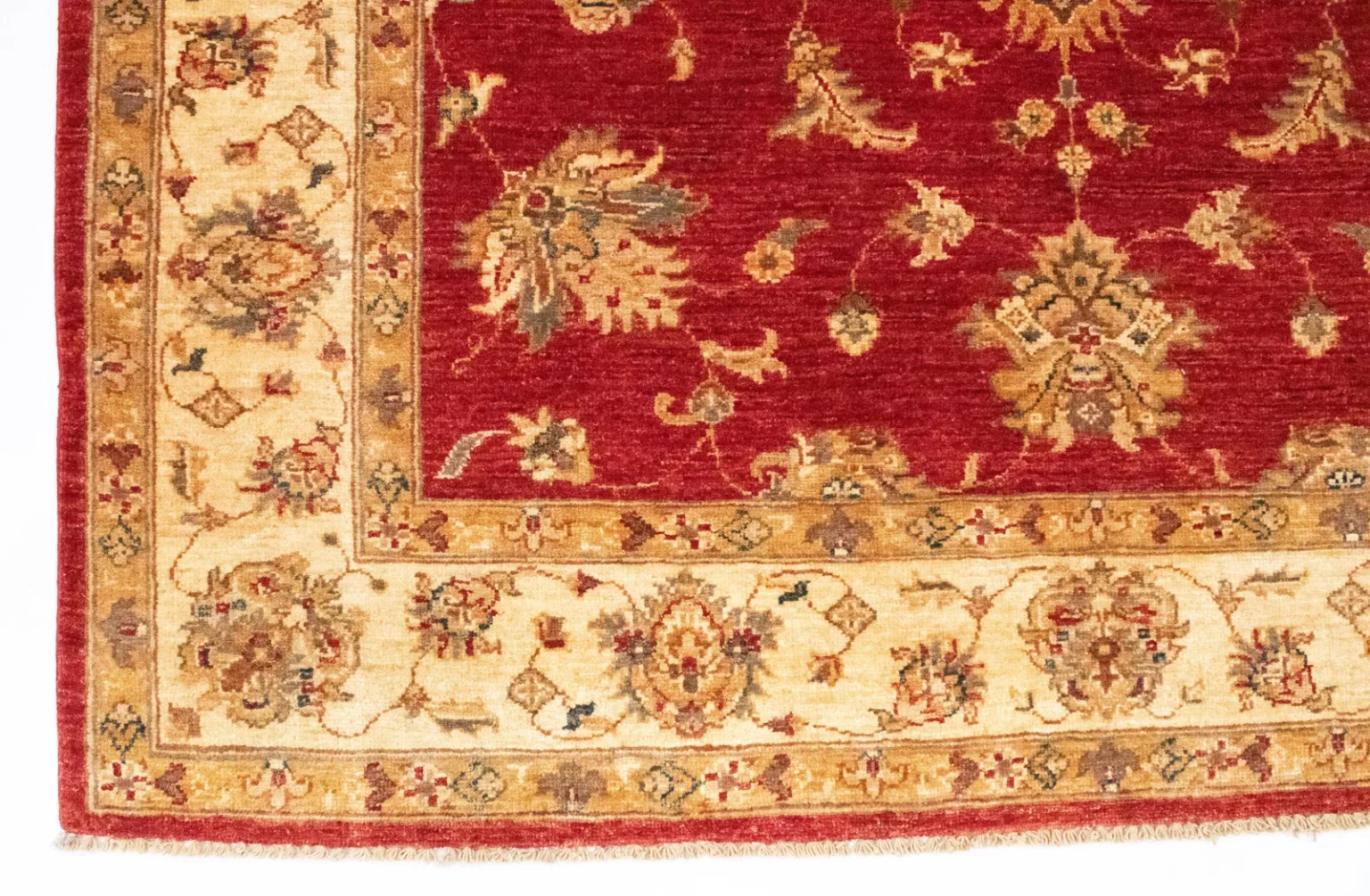
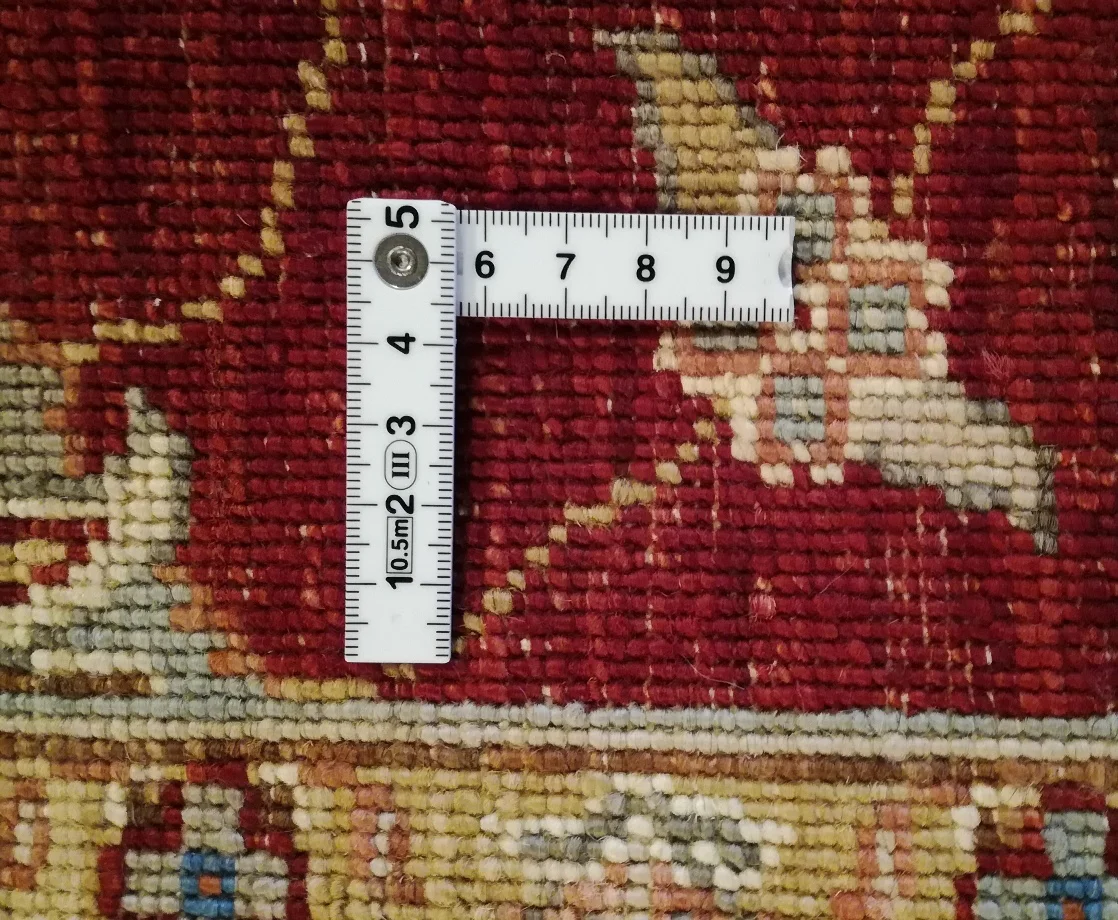
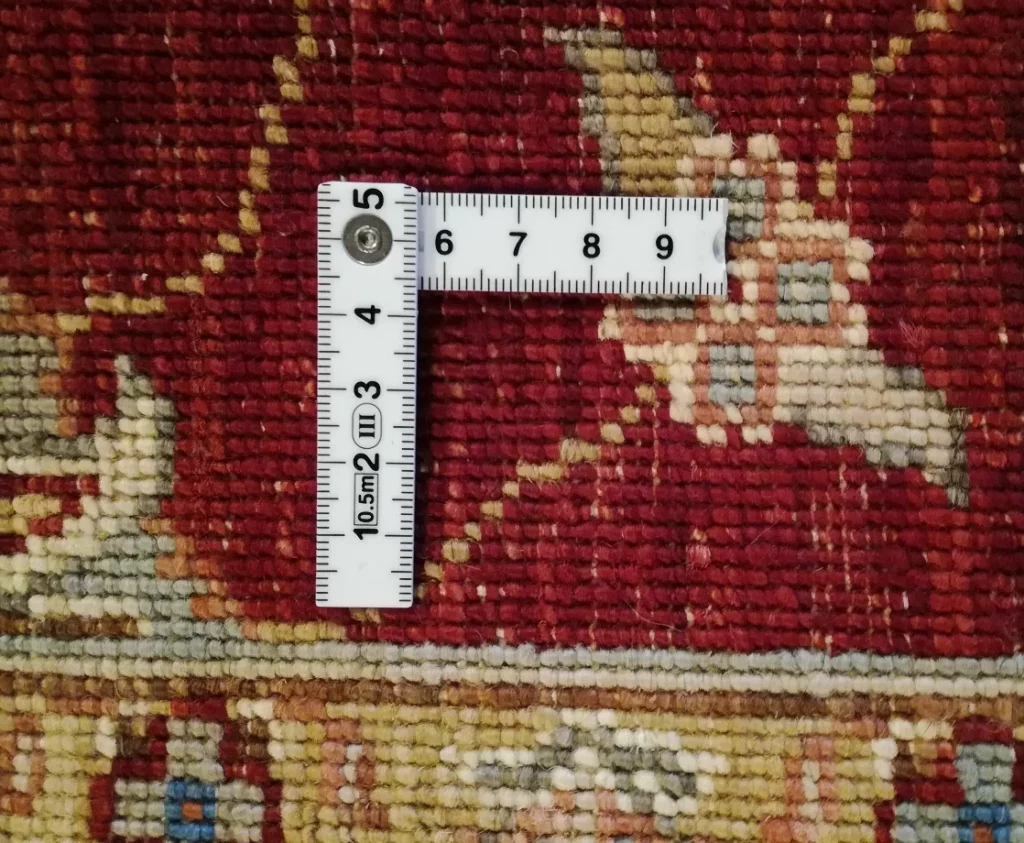
Wool is a traditional material in Oriental rug making. The natural fibre can be spun, dyed, and worked into a pile that has a distinctly textile feel. It also connects the visible surface with the underlying construction of the rug. The pile, warp, and weft work together to form a stable woven object, while the wool remains the material that defines the surface underfoot. The listed knot density indicates a tightly constructed structure. Knot density records the number of knots within a defined area and gives an indication of the amount of detailed manual work involved in the making.
This rug also has a special stone wash. The treatment is used to give the colours a faded appearance and contributes to the characteristic feel of the surface. Stone washing is therefore an integral part of the rug’s presentation rather than simply a routine cleaning step. It changes the visual relationship between colour, pile, and pattern and gives the Ziegler design a deliberately softened appearance. Hand-knotting, wool pile, and stone washing are brought together in one textile object.
The craftsmanship is consequently expressed in several ways: through the individual knots, through the use of wool, through the compact construction, and through the finishing treatment. The hand-knotted structure allows the design to be formed directly in the pile rather than applied as a printed image. Stone washing then gives the completed surface its distinctive faded colour effect. These characteristics describe the material and workmanship of this rug without adding materials that are not stated for it.
Origin and Tradition
The rug is identified as a Ziegler rug and its origin is given as Pakistan and Afghanistan. Ziegler should be understood here as the rug type and design tradition, not as a separate statement of origin. Because Pakistan and Afghanistan are the countries named for this piece, it is classified as an Oriental rug. The Persian Rug designation is not used as an origin claim for this item.
Pakistan and Afghanistan belong to a broad and varied tradition of hand-knotted textiles. Within both countries, knowledge of spinning, dyeing, knotting, pattern planning, and finishing has developed through long-established craft practices. Regional methods and neighbouring cultural influences have contributed to a wide range of rug forms. A hand-knotted rug is therefore both a practical textile and a record of the relationship between material, technique, and design.
The Ziegler tradition is associated with compositions inspired by established Oriental rug patterns while presenting them in a calmer and more adaptable form. Floral ornaments, balanced layouts, and a restrained colour impression are recurring aspects of this design language. The stone wash supports that impression by giving the colours a faded appearance. In this way, the rug combines an inherited pattern vocabulary with a surface treatment that produces a more softened visual effect.
Hand-knotting remains central to this tradition. The maker must maintain an even tension in the foundation, place each knot with care, and follow the pattern across the developing field. After the knots have been inserted, the structure is compacted and the surface is finished. These stages require time and sustained concentration. They also explain why a hand-knotted rug has a physical depth that differs from a printed or mechanically produced design. In this piece, those traditional principles are expressed through its wool pile, dense construction, and stone-washed finish.
The name Ziegler is not the same as the name of one particular city or province. It describes a recognizable approach to design, one that draws on historical Oriental precedents and reshapes them into a harmonious overall composition. For this rug, the stated origin in Pakistan and Afghanistan remains the relevant geographical information, while Ziegler identifies its type and visual tradition. Keeping those two meanings separate provides a precise description of the item.
The wider tradition also shows how rugs can carry cultural references without having a single fixed interpretation. Repeated forms, plant-inspired details, and ordered borders may reflect ideas about nature, balance, and protection. Their meaning depends on the pattern language and on the context in which the design was created. The Ziegler approach uses this inherited vocabulary in a form that is suitable for contemporary interiors while retaining its connection with Oriental rug design.
Design and Pattern
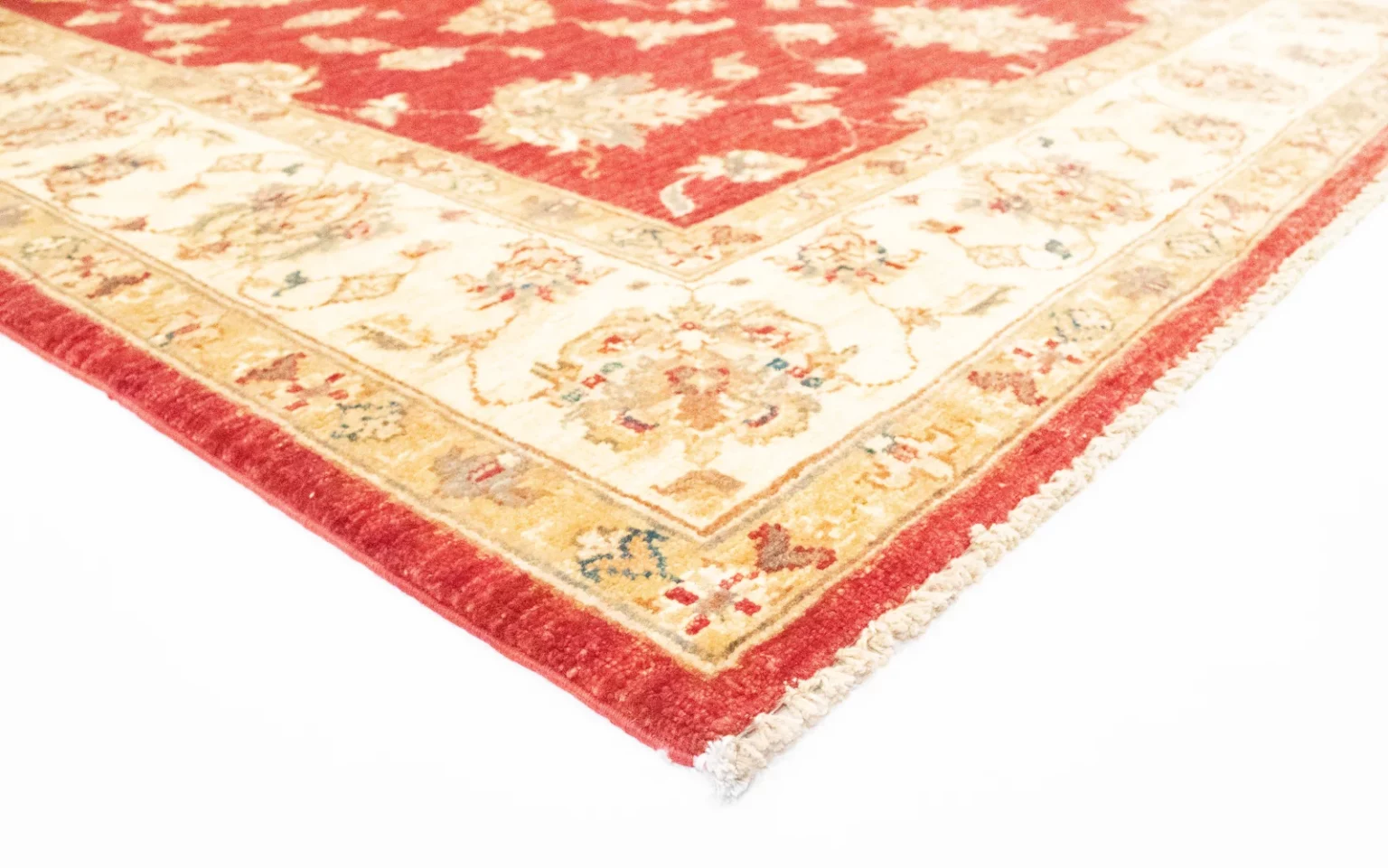
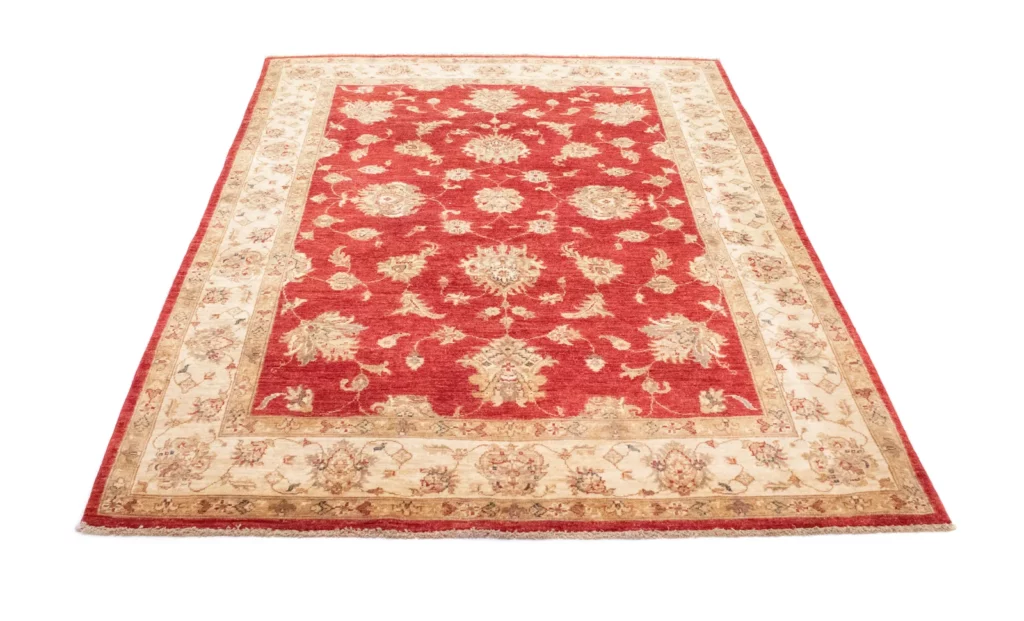
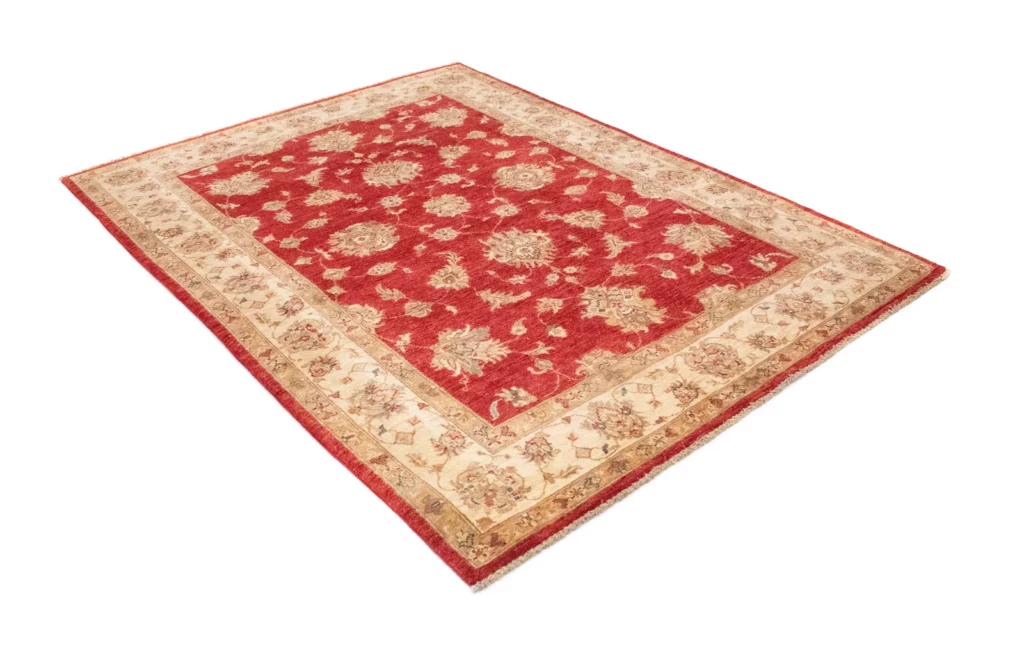
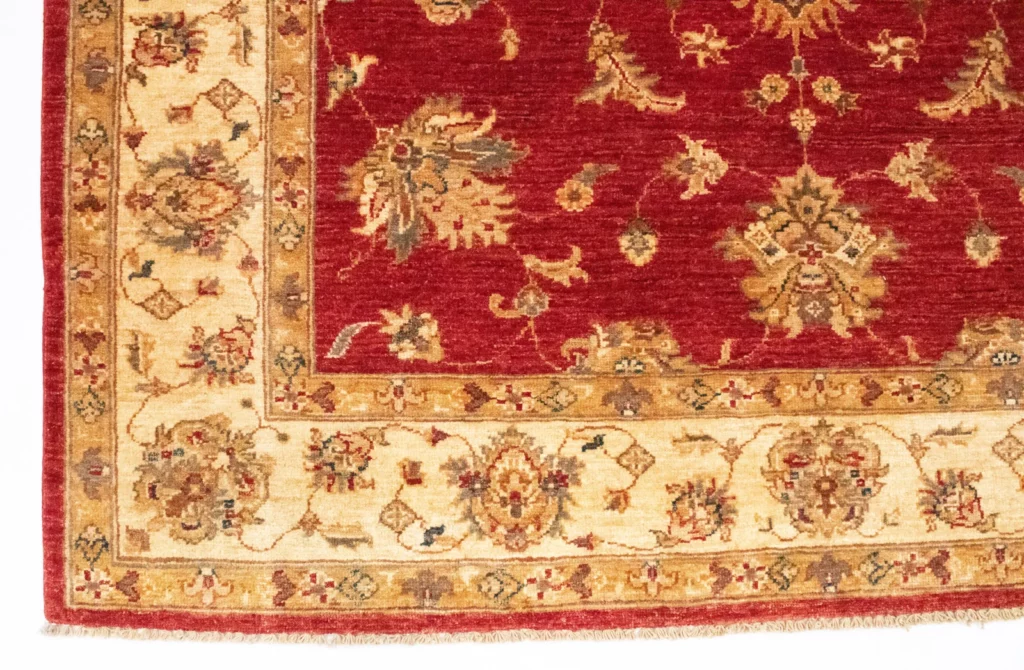
Ziegler rugs are characterized by a combination of geometric and floral elements. Geometric forms establish order and define relationships between the different parts of a composition. Floral elements introduce curved lines, stems, leaves, and other references to the natural world. When these two families of forms are used together, the design can appear organized without becoming rigid. This balance between structure and flowing ornament is a central feature of the Ziegler visual language.
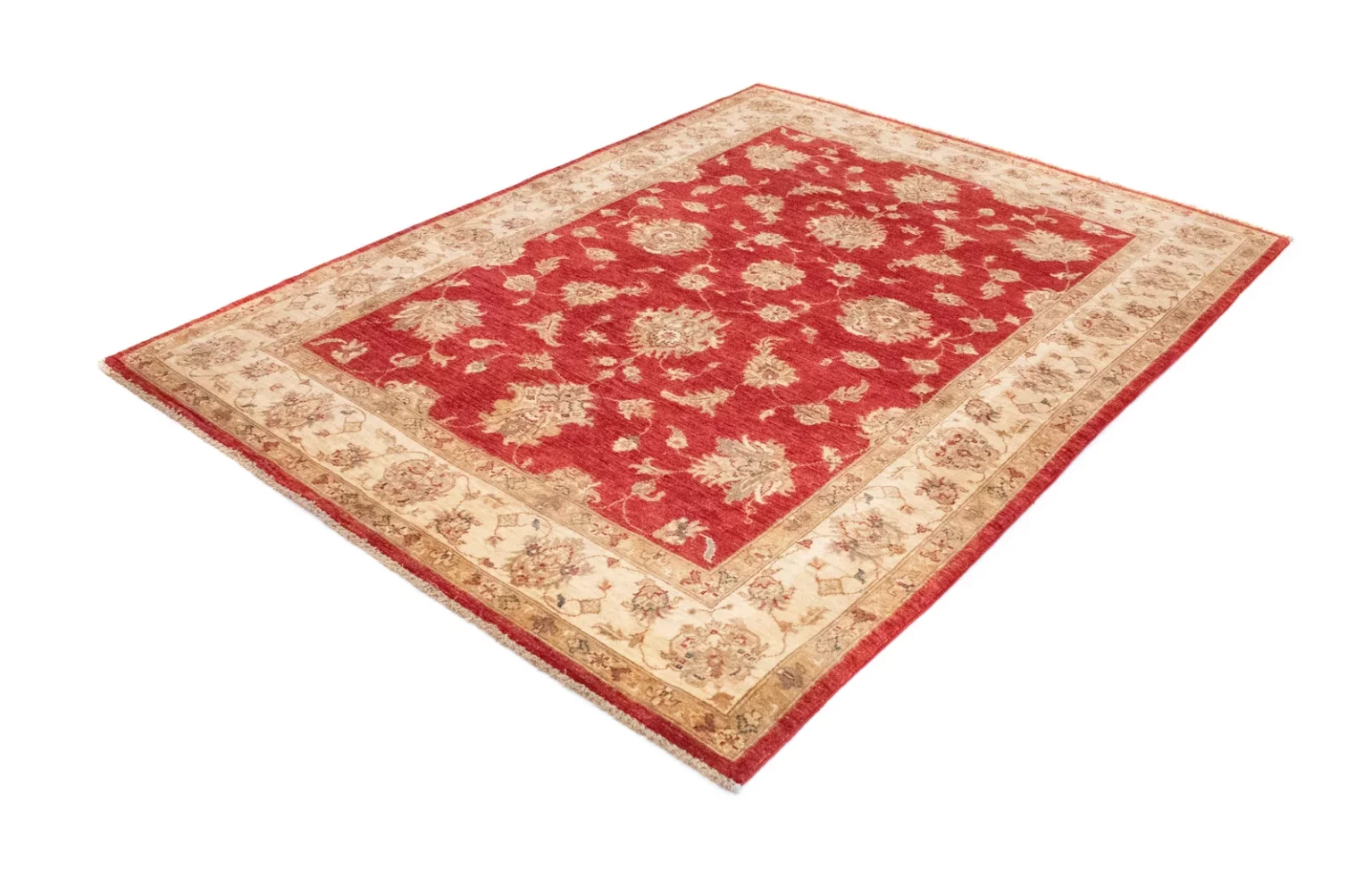
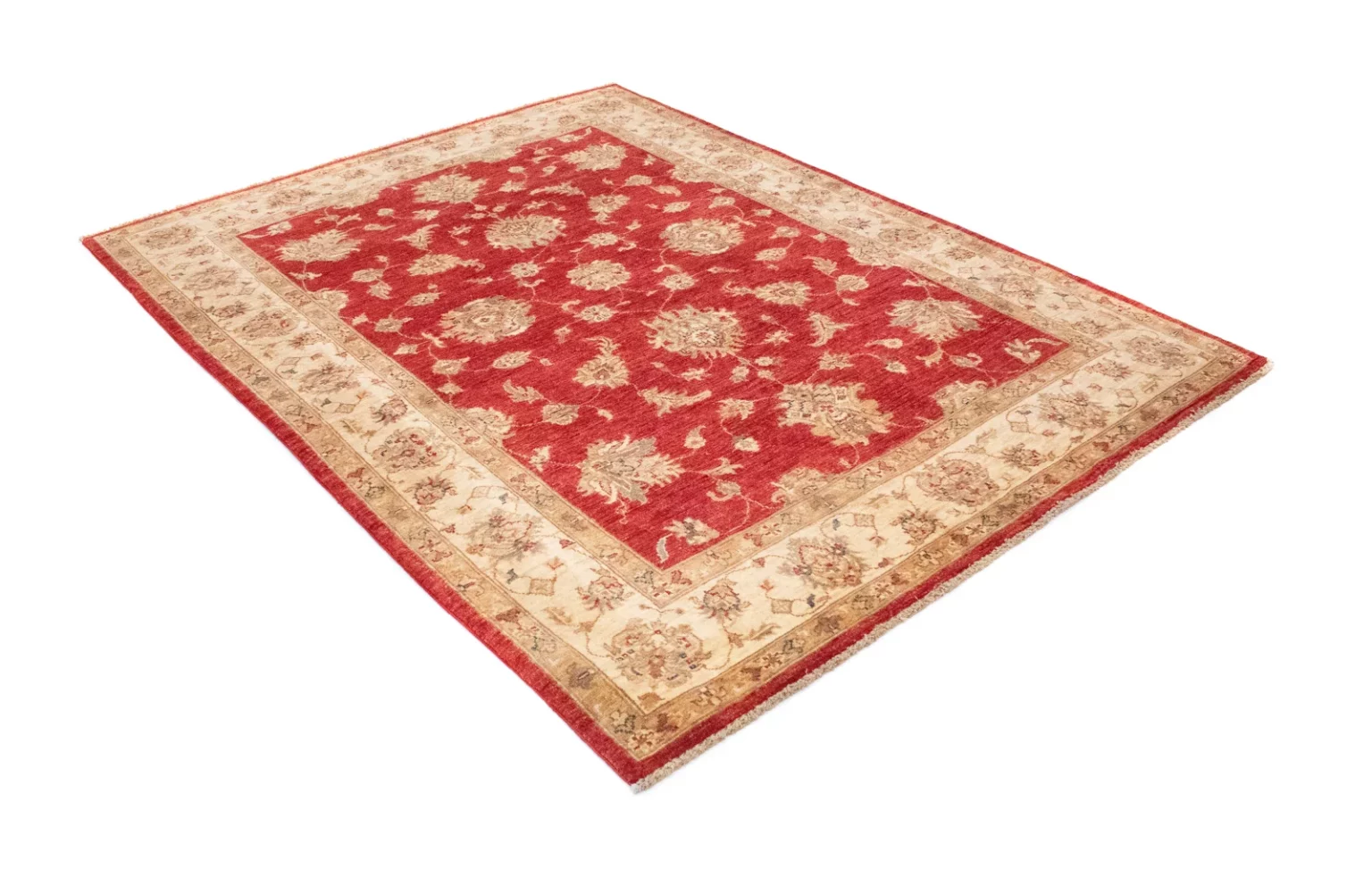
The colour range described for Ziegler rugs includes soft, earthy tones. Warm reds, gentle beige and brown shades, and rich blues and greens are named in the product text. In Oriental rug design, colours do more than fill empty areas: they separate motifs, establish emphasis, and create a visual rhythm across the field and borders. Warm hues may give weight to selected ornaments, while beige and brown can connect neighbouring areas. Blue and green provide further contrast within the overall arrangement.
The pattern can also be read as a form of cultural symbolism. The design tradition is described as containing symbols that may be regarded as good-luck motifs or as representations of nature. Such interpretations belong to the wider history of Oriental textiles. They provide a way of understanding recurring forms, but they do not assign a precise meaning to every individual detail of this particular rug. The design remains a composed textile surface in which ornamental and symbolic readings can exist together.
Ziegler designs draw on historical examples while giving them a more modern twist. This may be expressed through a quieter distribution of colour, a more open relationship between motifs, or a softened surface. The specific arrangement of this rug is not detailed further in the source, so no individual medallion, border, or field structure is assigned to it here. What can be stated is its Ziegler design language, its combination of geometric and floral elements, and its earthy colour direction.
Stone washing forms part of the way the pattern is perceived. By making the colours appear faded, it reduces the sharpness of the contrast between individual areas and gives the surface a gently aged visual character. The treatment does not replace the hand-knotted design; it works with it. The knots create the pattern in the pile, while the washing affects the way that pattern and its colours are seen together.
The result is a design tradition that joins historical reference with a less formal appearance. Geometric order, floral movement, earthy colours, and faded tones form the principal elements associated with the Ziegler type. The rug’s hand-knotted construction adds textile depth to those elements, while the stone wash unifies the surface through its intentionally softened colour effect.
Special Features
The special stone wash is the most distinctive feature of this rug. It gives the surface a characteristic feel and makes the colours appear faded. This treatment is part of the rug’s intended appearance and sets it apart from a piece whose colours have been left untreated. The result is a surface with a deliberately softened character, combining the visual language of a Ziegler rug with the effect created by the finishing process.
The rug is new and hand-knotted. Its wool pile and dense knot construction are described as durable, and the rug is suitable for heavily used rooms without losing its beauty. Its notable features therefore lie in the combination of traditional manual work, wool, compact knotting, and stone washing. No additional material, age, signature, or provenance is attributed to the rug beyond the information stated for it.
FAQ
How should I clean my Ziegler Oriental rug?
Regular vacuuming is recommended for everyday care. For occasional deeper cleaning, a professional rug cleaner should be used so that the hand-knotted wool structure and the stone-washed surface receive appropriate treatment. If a spill occurs, address it promptly with a damp cloth. Aggressive cleaning products should be avoided because they can affect the wool, the colour impression, and the special surface treatment. Vigorous rubbing is also unsuitable for a hand-knotted rug. Gentle handling helps preserve the texture and the faded appearance created by the stone wash.
Where can I place the Ziegler Oriental rug?
The rug is suitable for living rooms and bedrooms, and it can also be placed in a dining room or office. Its combination of floral and geometric elements allows it to work with different interior arrangements, while the earthy colour direction provides a composed visual base. The hand-knotted wool pile adds a textile surface to the room, and the stone-washed finish gives the colours their faded character. It should be positioned so that the pattern remains visible and the surrounding walking areas correspond to the intended use of the rug.
Is the Ziegler Oriental rug suitable for underfloor heating?
Yes, the rug is suitable for use over underfloor heating. Its natural materials and dense knotting technique allow this type of placement. For comfortable use, it should lie flat so that heat can be distributed evenly into the room. This suitability makes it appropriate for contemporary living spaces while retaining the qualities of its hand-knotted wool construction. The underfloor heating recommendation does not alter the rug’s stone-washed surface or its faded colour effect; those remain part of its distinctive finish.
To provide the best experiences, we use technologies like cookies to store and/or access device information. Consenting to these technologies will allow us to process data such as browsing behavior or unique IDs on this site. Not consenting or withdrawing consent, may adversely affect certain features and functions.
Functional Always active
The technical storage or access is strictly necessary for the legitimate purpose of enabling the use of a specific service explicitly requested by the subscriber or user, or for the sole purpose of carrying out the transmission of a communication over an electronic communications network.
Preferences
The technical storage or access is necessary for the legitimate purpose of storing preferences that are not requested by the subscriber or user.
Statistics
The technical storage or access that is used exclusively for statistical purposes.The technical storage or access that is used exclusively for anonymous statistical purposes. Without a subpoena, voluntary compliance on the part of your Internet Service Provider, or additional records from a third party, information stored or retrieved for this purpose alone cannot usually be used to identify you.
Marketing
The technical storage or access is required to create user profiles to send advertising, or to track the user on a website or across several websites for similar marketing purposes.

 SECURE PAYMENT
 SHIPPING PARTNERS


