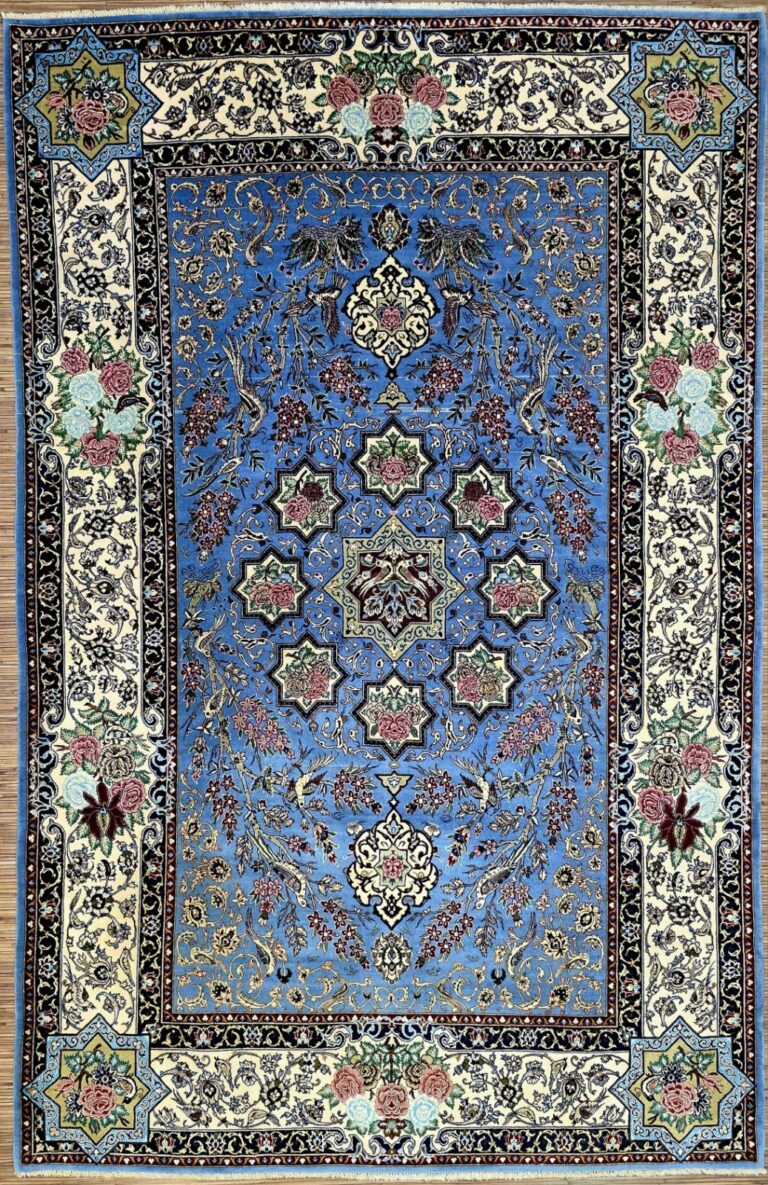
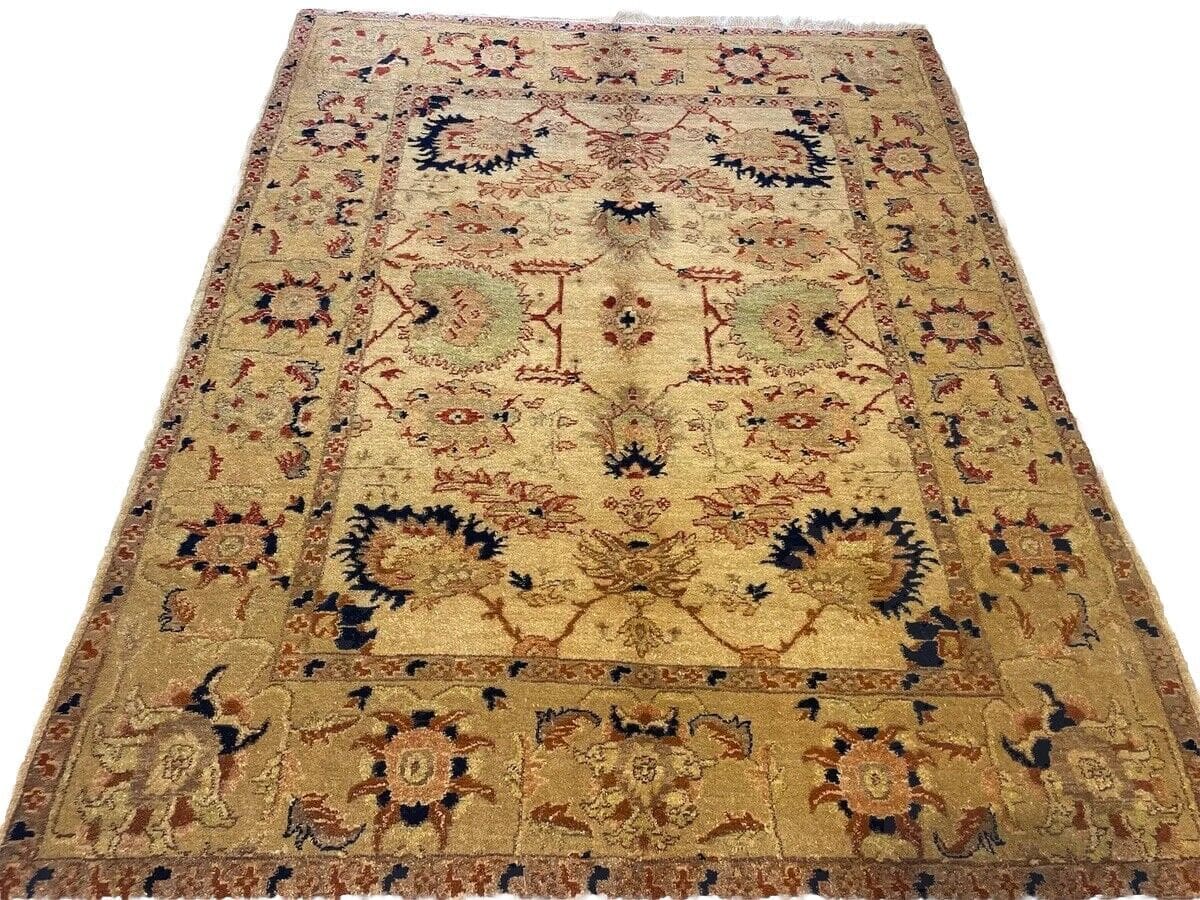
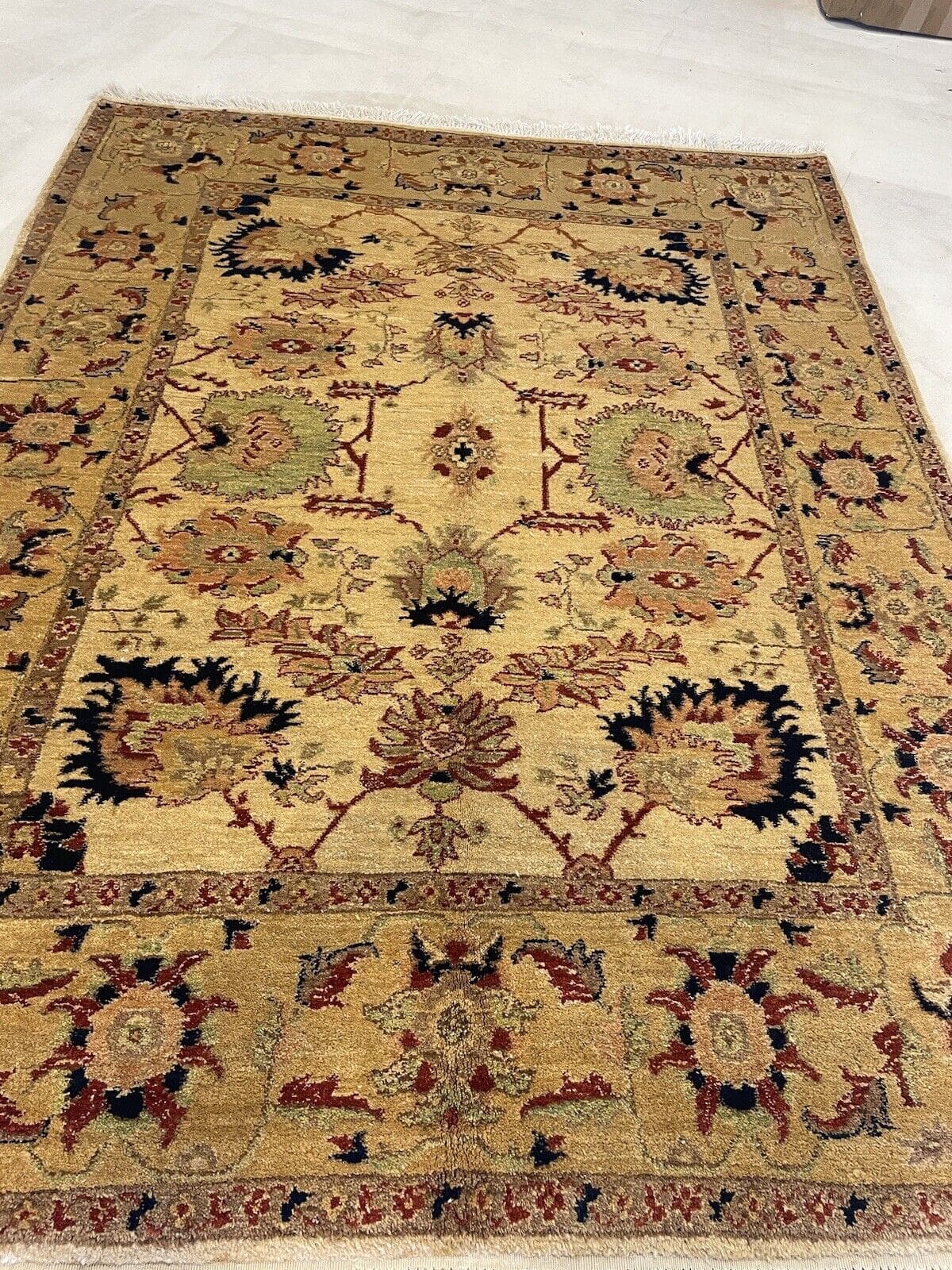
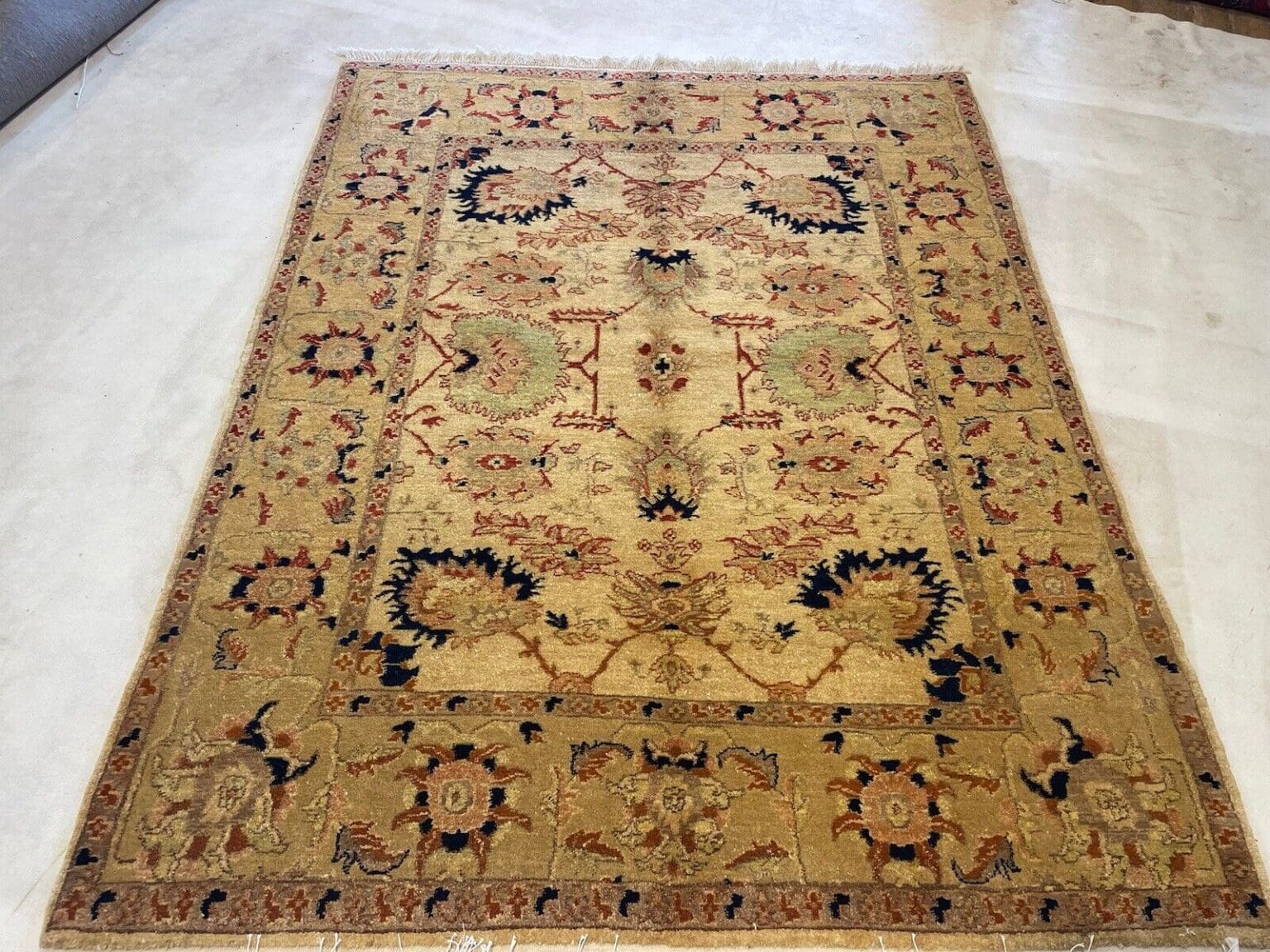
Oriental Rug Pakistan 200 x 150 cm Wool Hand-knotted
€ 1512
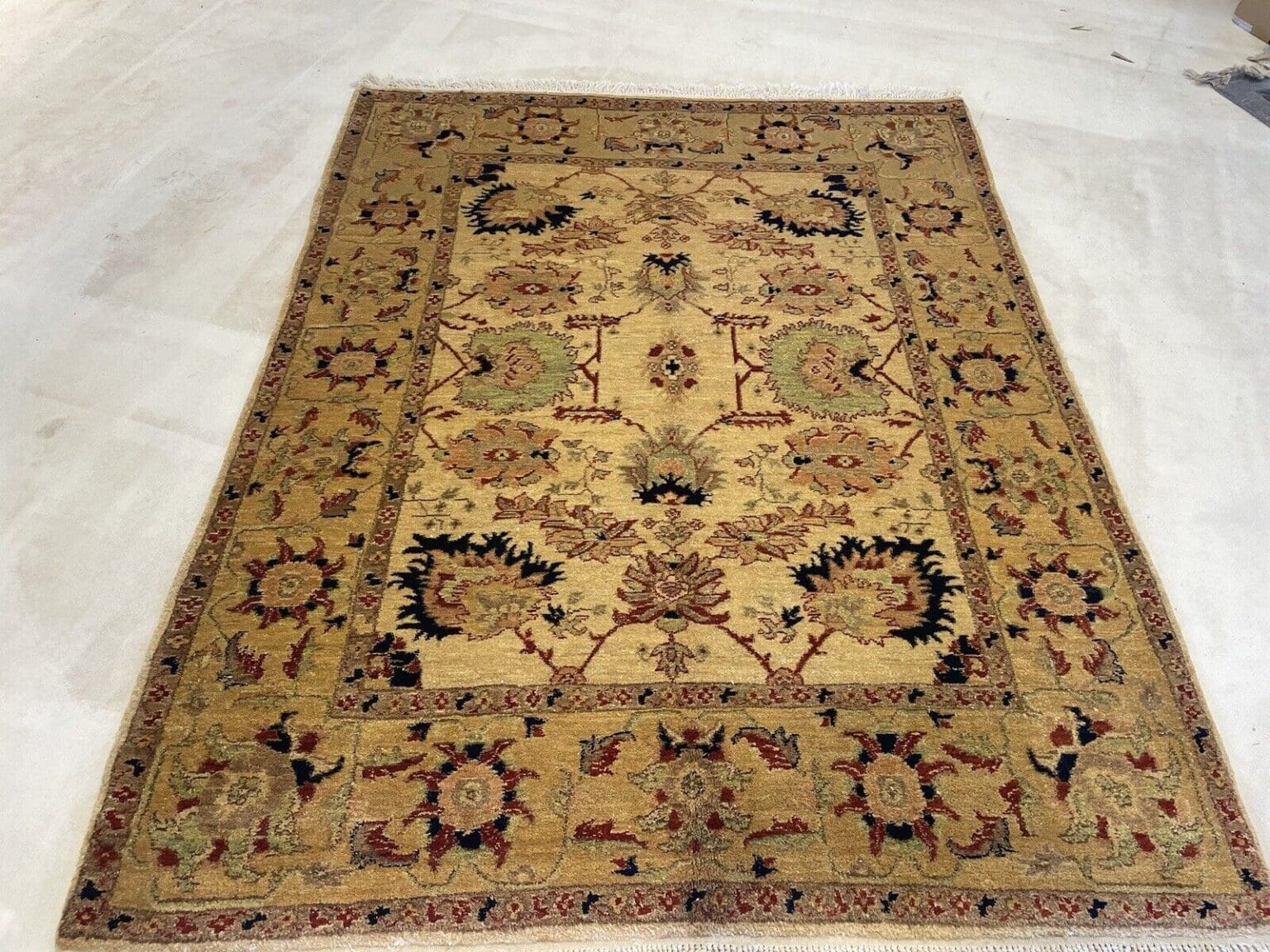
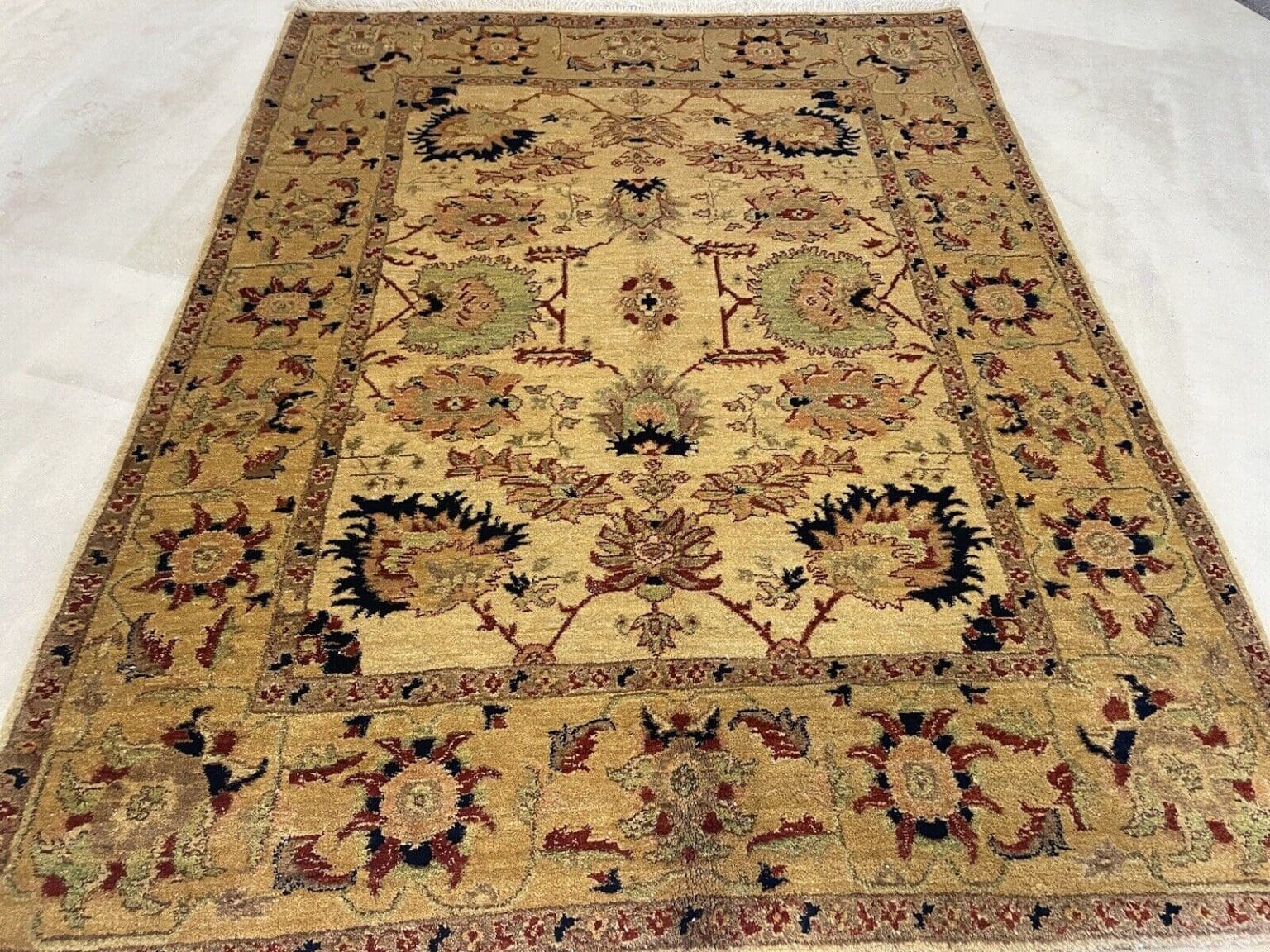
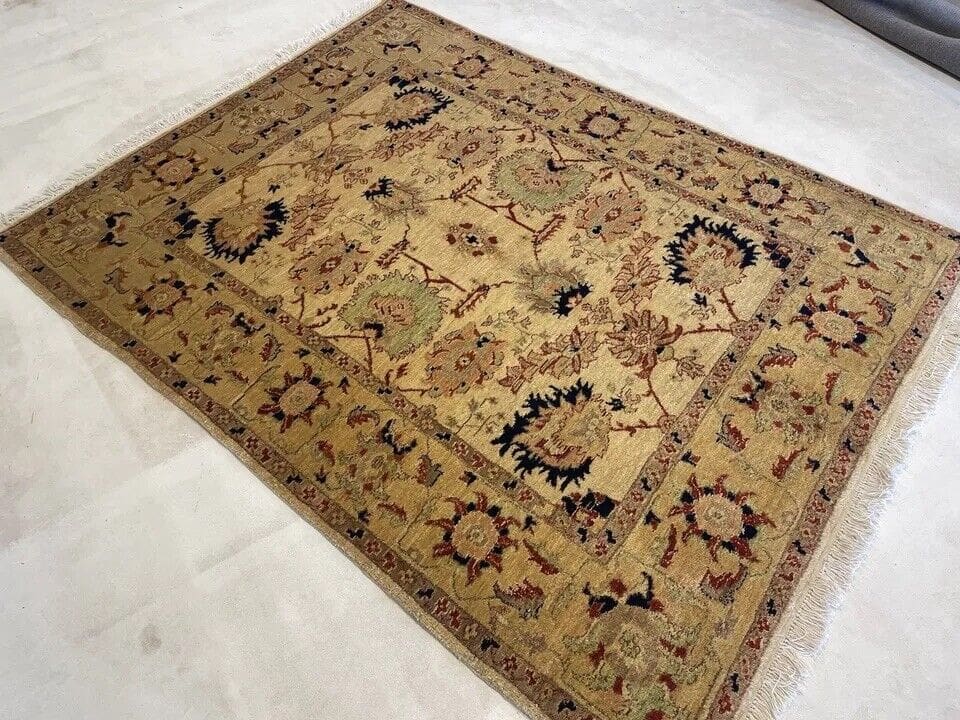
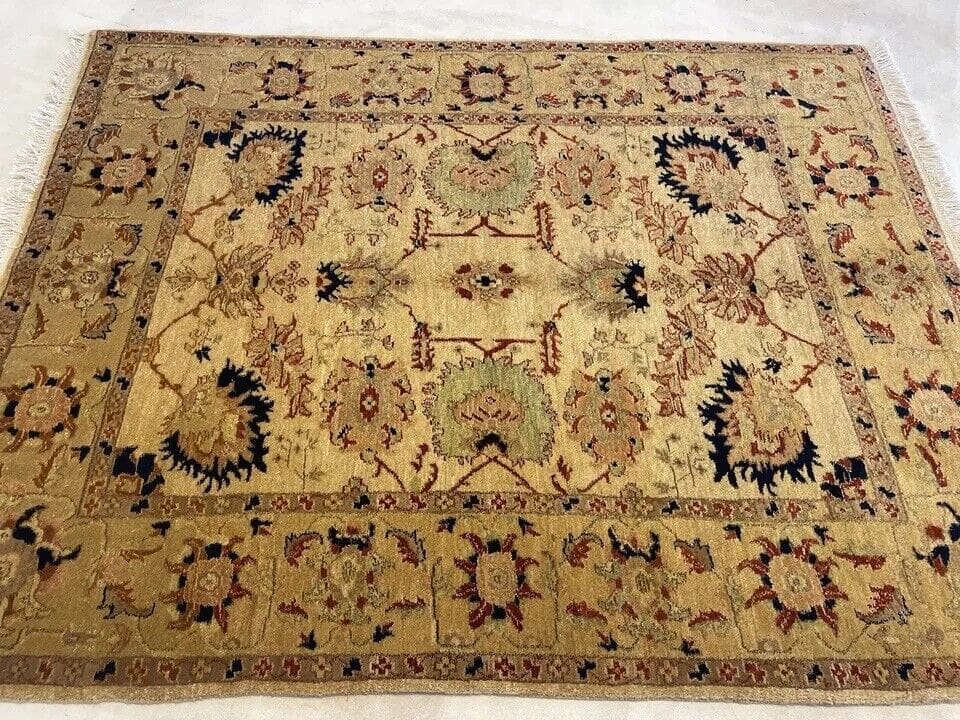
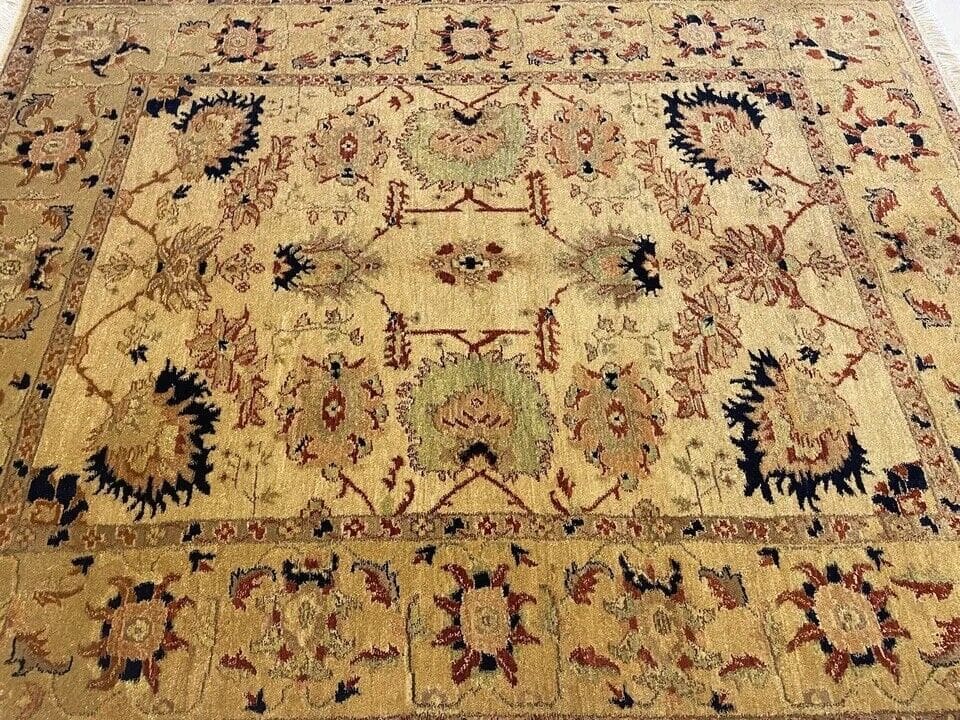
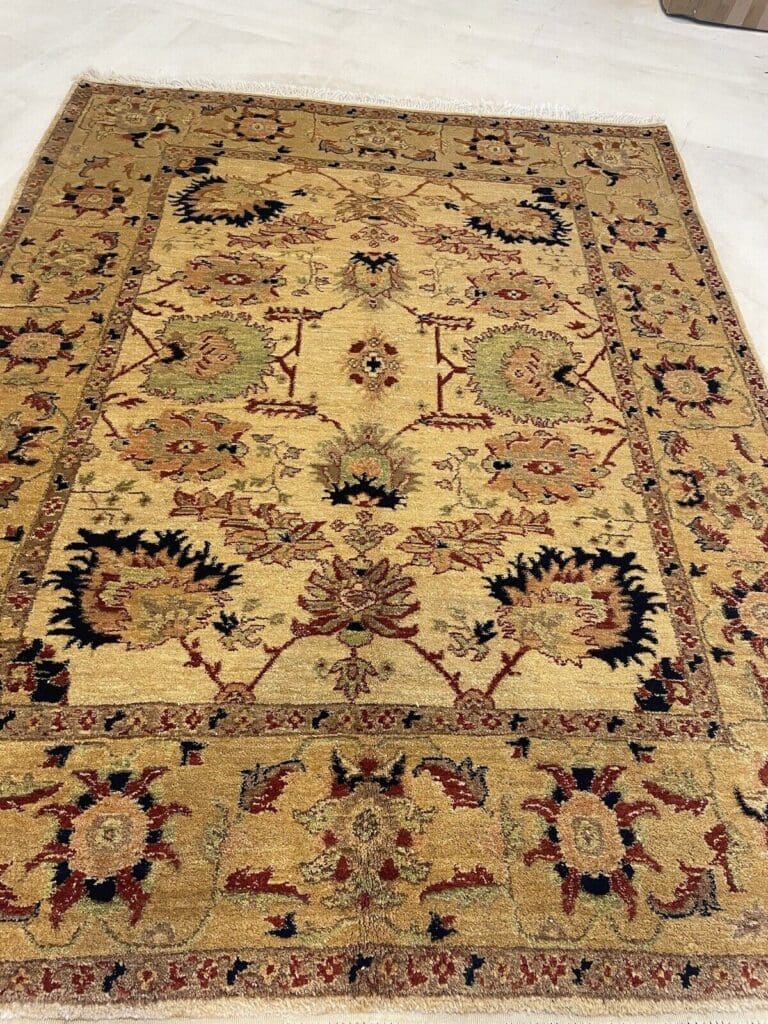
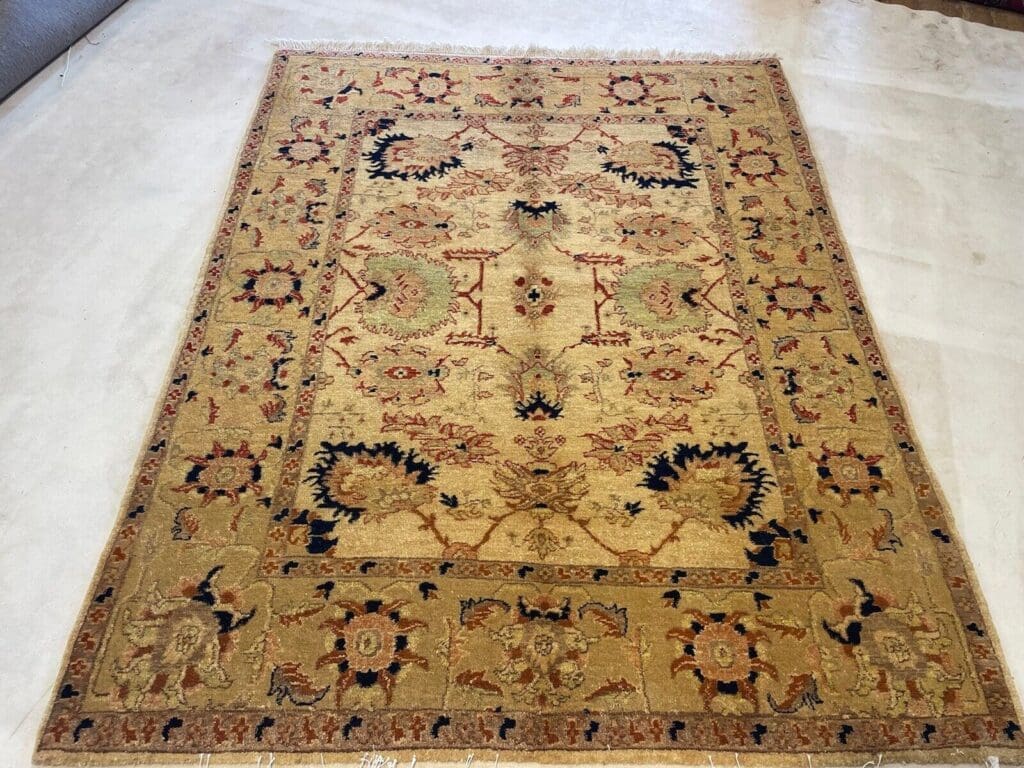
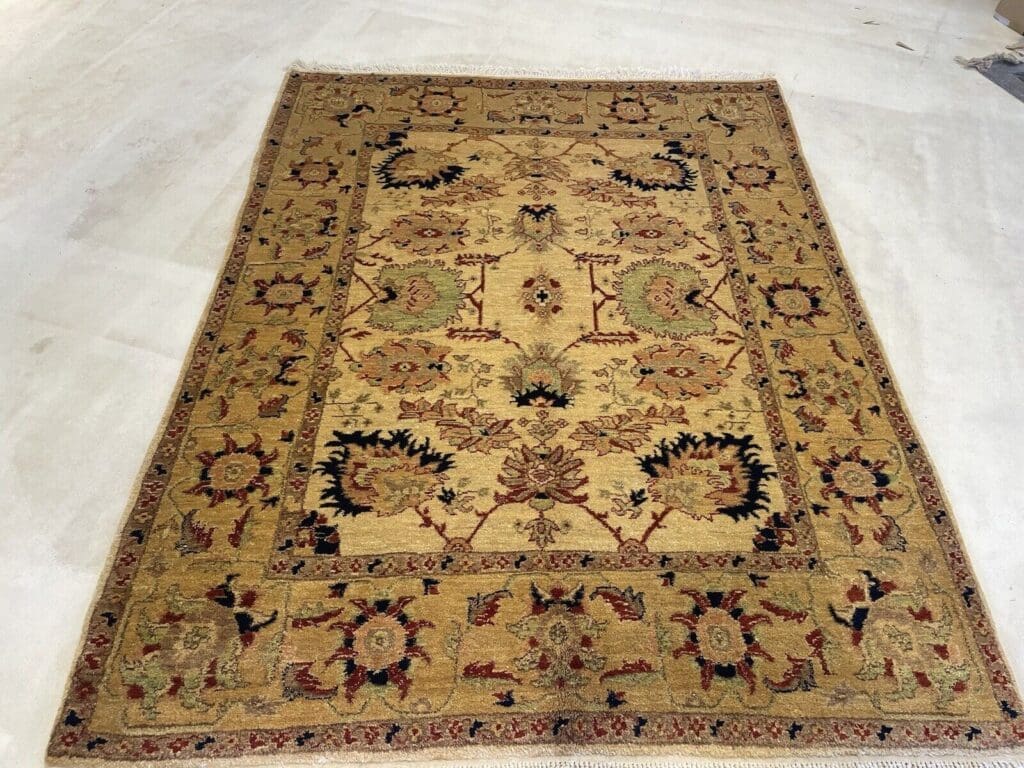
Hand-knotted Pakistan Oriental rug | Material: 100% hand-spun virgin wool pile | Size: 200 x 150 cm | Pattern: All-over beige and grey | Condition: Very good, new with tag
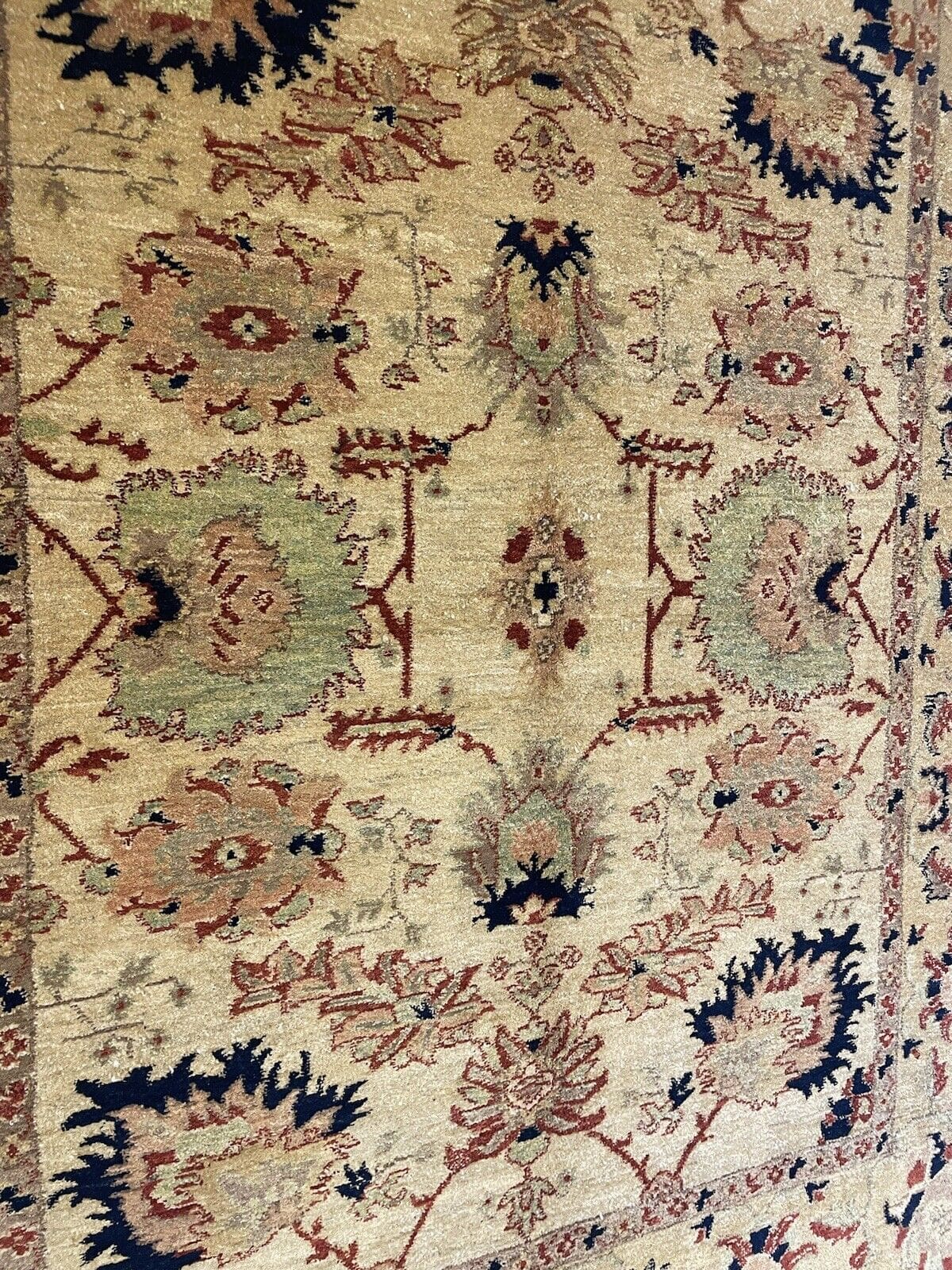
This Oriental rug is made from 100% pure hand-spun virgin wool. The wool forms the pile and gives the surface a naturally soft and tactile character. Hand-spinning creates a distinct fibre structure, allowing the material itself to retain the feel of a traditional textile. The beige and grey colouring appears calm and balanced across the woollen surface.
The rug was made by hand-knotting. In this method, individual knots are tied into the prepared warp threads one by one. Row after row, the knots build the pile and establish the design directly within the structure of the rug. Once the knotting is complete, the pile is worked and finished so that the pattern can be read clearly and the surface gains a coherent appearance. This process gives a hand-knotted rug a character different from that of a machine-made floor covering.
Wool has long been an established material in rug making because it is suitable for a resilient pile while also providing a naturally warm feel underfoot. Its structure gives the surface a comfortable presence in the room. Here, hand-spun virgin wool is combined with traditional knotting work, creating a clearly defined relationship between the stated material and the way the rug was produced.
Origin and Tradition
The rug originates from Pakistan. Pakistan has a long-established tradition of producing hand-knotted rugs, with knowledge passed through generations of weavers and workshops. Across the country, traditional patterns, colour arrangements and working methods are interpreted in different ways. Pakistani production includes rugs with a distinctly traditional appearance as well as designs intended to sit comfortably within contemporary interiors.
Pakistani rug making belongs to the wider history of Oriental weaving. Ideas about pattern, structure and decoration travelled through trade and contact between weaving regions, while local workshops developed their own ways of applying them. The identity of a rug is therefore shaped by more than a motif alone. Wool quality, spinning, knotting, colour balance and finishing all contribute to the finished textile and to its visual language.
In traditional knotting, warp threads are first arranged on the loom. Pile yarn is then tied into these threads, with weft threads used to secure the rows as the work progresses. After several rows, the knots are compacted and the surface is adjusted. This allows outlines, repeated forms and larger fields of colour to be built directly into the rug. The process requires patience, careful counting and close attention to the continuation of the pattern.
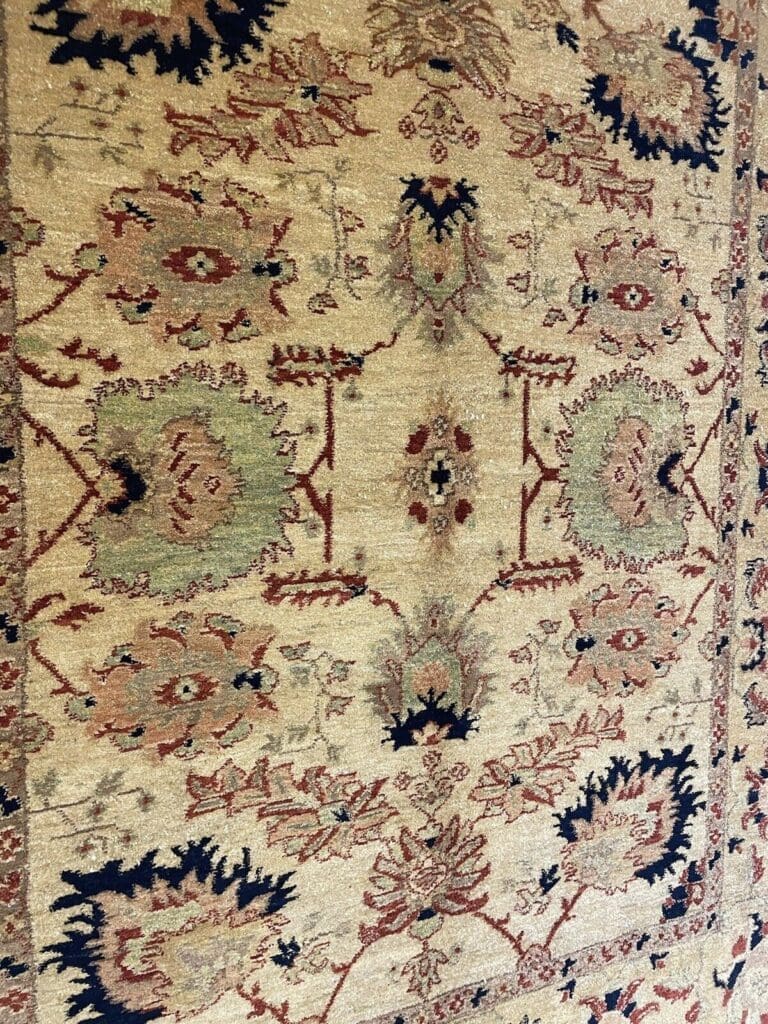
Virgin wool has an important place in many Oriental rug traditions. It can be spun, dyed and shaped into a pile that is both practical and pleasant to touch. Hand-spun yarn may retain subtle variations in thickness and texture. Such variations are part of the making process and help distinguish a handmade rug from an entirely uniform industrial surface. Against a restrained colour scheme, the texture of the wool can remain visible without dominating the design.
The term Oriental rug describes the Pakistani origin and the connection with the broader tradition of hand-knotted rugs from the Oriental weaving world. An Iranian origin is not stated for this piece. Its provenance should therefore be understood as Pakistan, with the design described as traditionally Oriental rather than assigned to an Iranian city or province.
Design and Pattern
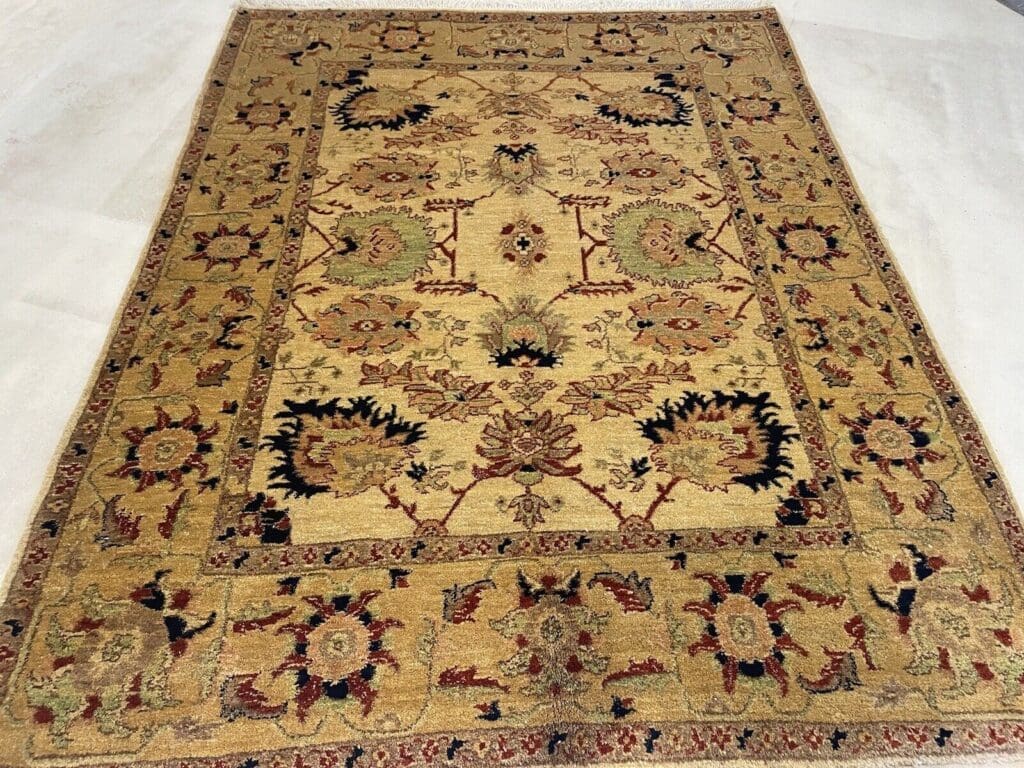
The pattern is described as an all-over design in beige and grey. Rather than concentrating the decoration in one isolated central field, an all-over arrangement gives the surface a continuous visual structure. Repeated forms or ornament can create a steady rhythm from one side of the rug to the other. The restrained colour combination keeps that rhythm composed and allows the overall pattern to remain easy to read.
Beige and grey belong to a neutral palette. Beige introduces a light, warm foundation, while grey adds a cooler and more subdued contrast. Together they create a balanced colour relationship that can work alongside natural timber, understated textiles and contemporary furnishings. The colours are not presented as a separate border and centre arrangement in the source; the stated feature is the beige and grey all-over pattern.
Traditional Oriental rug design often relies on repetition, order and the careful distribution of ornament. An all-over pattern uses these principles across the complete field, allowing the decoration to continue rather than ending at a single central medallion. In a hand-knotted rug, small variations in the execution can give the repeated structure a human quality. The named design characteristic of this rug remains its continuous beige and grey pattern.
Colour is only one part of a rug’s appearance. The direction of the pile, the knotting process and the finishing of the surface can affect how tones are perceived under changing light. On a neutral design, these subtle shifts can be especially restrained. They help the wool surface and the drawn pattern appear as parts of one textile composition, without requiring strong colour contrasts.
The style is identified as traditionally Oriental. This is a design classification, not an additional statement of Iranian provenance. Traditional Oriental styles may draw on established decorative principles while using a quieter modern palette. In this rug, the beige and grey colouring gives the traditional orientation a calm appearance, while the all-over structure provides continuity across the field.
Special Features
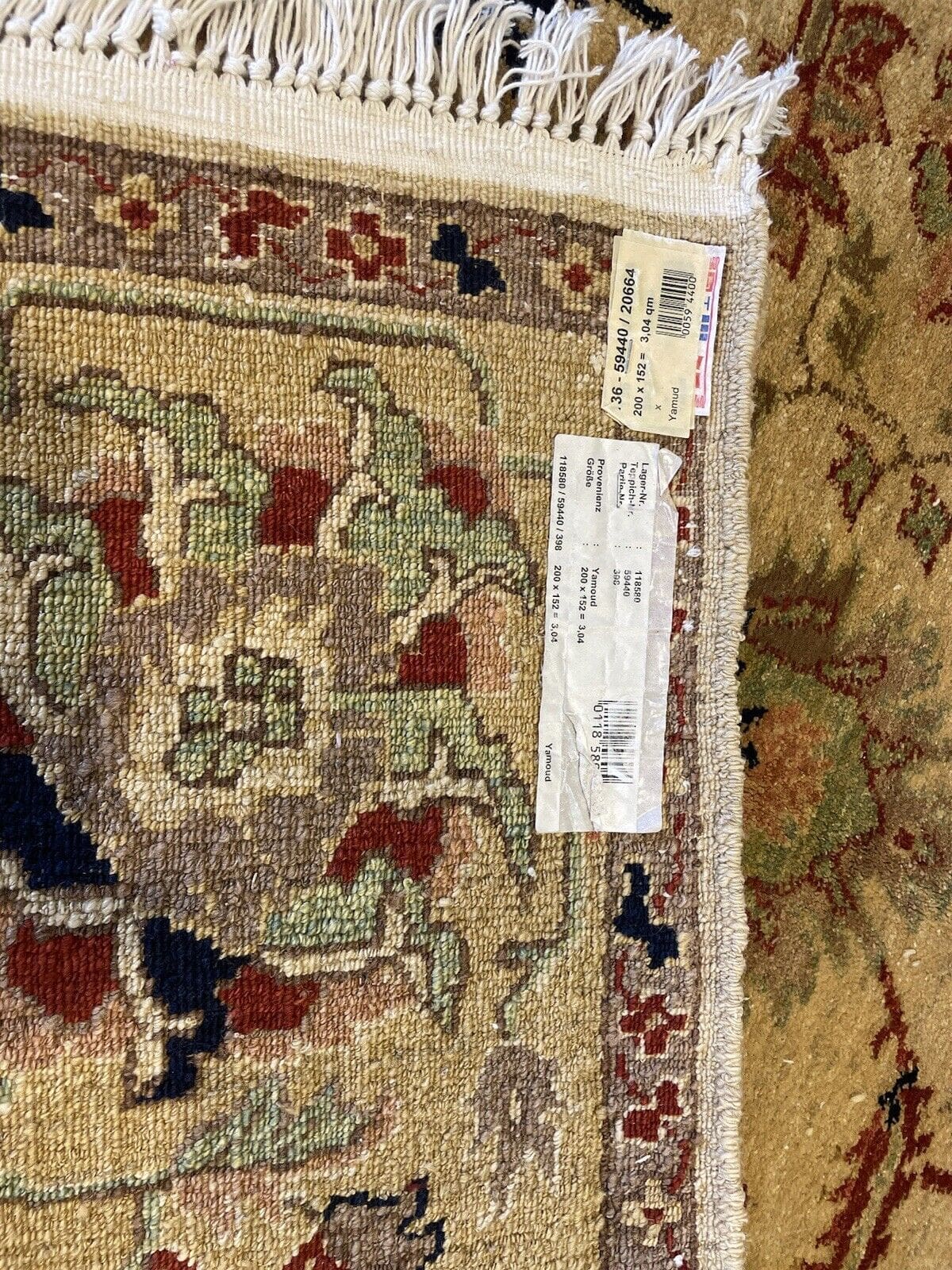
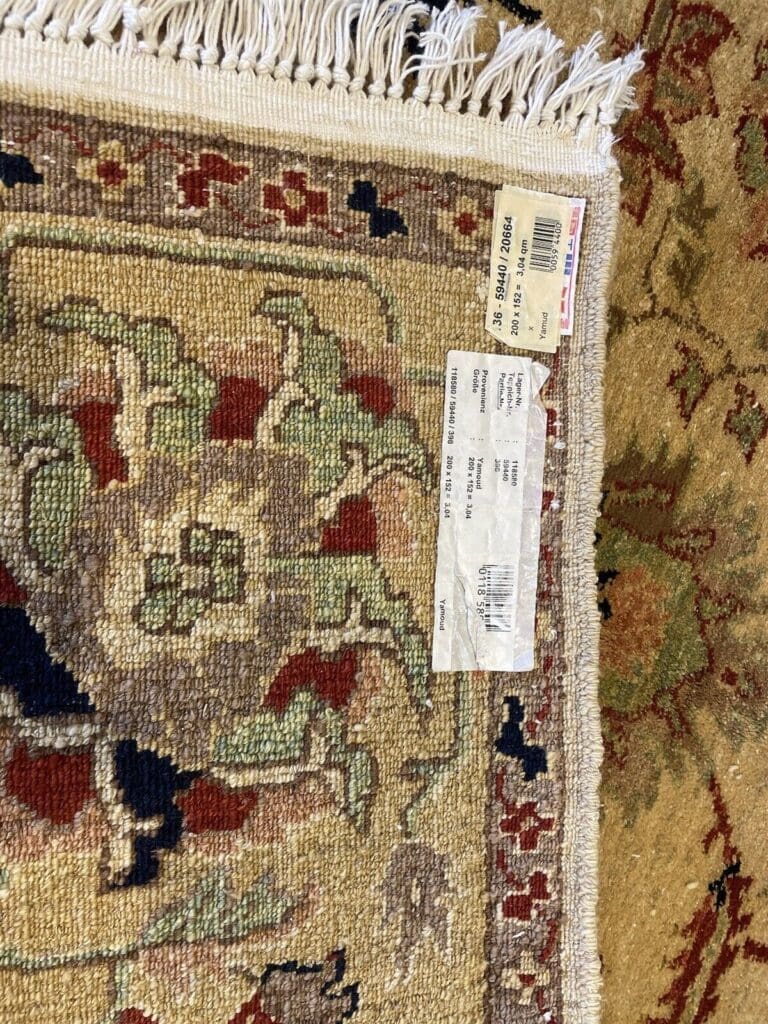
The rug is in very good condition and is new with its tag. These details describe the condition of this individual piece. They are presented together with the hand-spun virgin wool and hand-knotted construction, giving a clear account of the rug’s stated material, production method and current condition.
Suggested areas of use include the living room, bedroom, hallway and dining room. Its beige and grey all-over pattern can be placed within a variety of interior schemes. Wool can retain warmth and provide a pleasant feeling underfoot, which supports its use in domestic living spaces. The rug has a traditional Oriental style and originates from Pakistan.
FAQ
How should I care for this Oriental rug?
Regular vacuuming without a beater brush helps remove dust and loose dirt from the pile in a gentle way. If a spill occurs, it is best to act promptly. The affected area can be treated with a damp cloth and a mild cleaning product. Harsh chemicals should be avoided because they may damage the wool. More substantial soiling is best handled by a professional rug cleaner familiar with wool and hand-knotted construction.
Where do high-quality Oriental rugs come from?
High-quality Oriental rugs come from a range of weaving regions, each with its own traditions, patterns and production methods. This rug comes from Pakistan. Iranian centres such as Tabriz, Nain, Kerman and Isfahan are known for their own rug traditions, but they should not be named as the origin of this Pakistani piece. The provenance and quality of every individual rug need to be considered separately.
What are the main features of a high-quality hand-knotted rug?
Important features can include suitable materials such as virgin wool or silk, careful workmanship, clearly executed patterns and well-balanced colours. Knot density may also be relevant, although no knot density is given for this rug. Origin, weaving tradition and condition are additional factors to consider. For this piece, the expressly stated characteristics are hand-spun virgin wool, hand-knotted production and very good condition with its tag.
To provide the best experiences, we use technologies like cookies to store and/or access device information. Consenting to these technologies will allow us to process data such as browsing behavior or unique IDs on this site. Not consenting or withdrawing consent, may adversely affect certain features and functions.
Functional Always active
The technical storage or access is strictly necessary for the legitimate purpose of enabling the use of a specific service explicitly requested by the subscriber or user, or for the sole purpose of carrying out the transmission of a communication over an electronic communications network.
Preferences
The technical storage or access is necessary for the legitimate purpose of storing preferences that are not requested by the subscriber or user.
Statistics
The technical storage or access that is used exclusively for statistical purposes.The technical storage or access that is used exclusively for anonymous statistical purposes. Without a subpoena, voluntary compliance on the part of your Internet Service Provider, or additional records from a third party, information stored or retrieved for this purpose alone cannot usually be used to identify you.
Marketing
The technical storage or access is required to create user profiles to send advertising, or to track the user on a website or across several websites for similar marketing purposes.
 SECURE PAYMENT
 SHIPPING PARTNERS