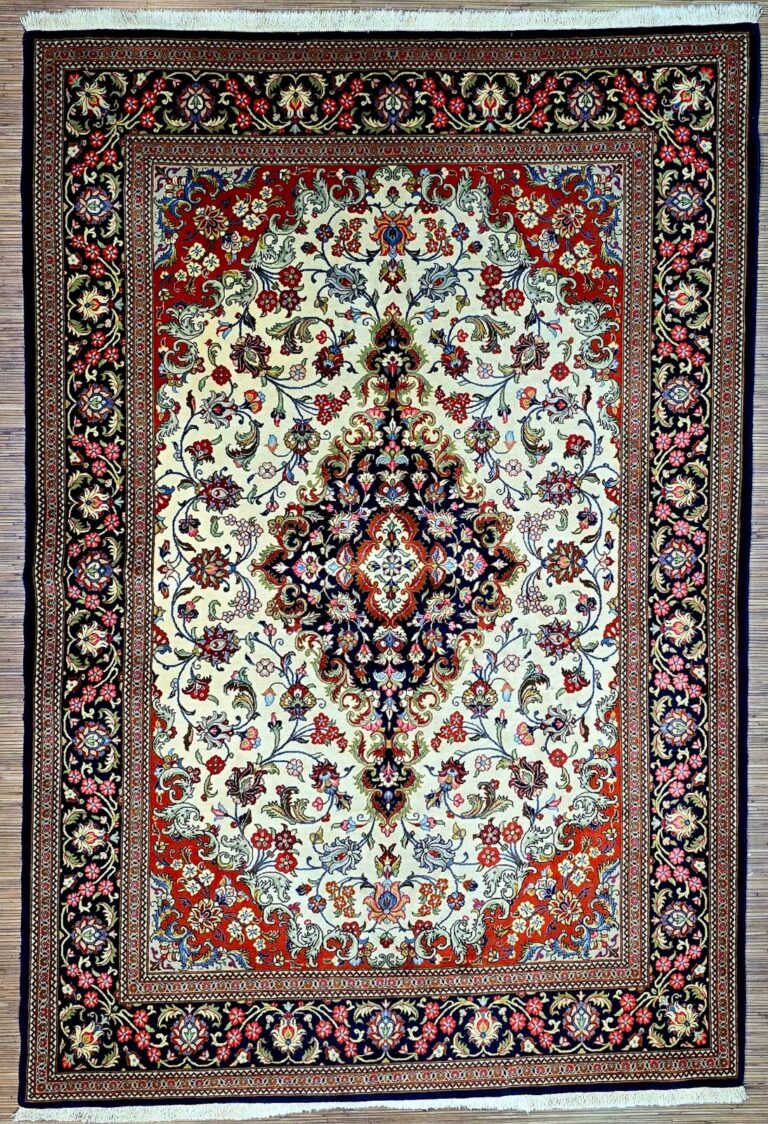
This Oriental rug is hand-knotted with a pile made from Highland virgin wool. Cotton is used for the warp. These materials form the stated construction of the rug: wool creates the visible surface, while the cotton warp provides the framework into which the knots are secured. In hand-knotting, individual knots are tied one at a time around the warp. The work proceeds row by row on a loom until the patterned pile has been built up.
Highland virgin wool gives the pile a natural, tactile character. Wool is widely used in rug making because its fibres are resilient, flexible and able to hold colour effectively. It can also provide a distinct surface feel that differs from synthetic fibres. The pile height of this rug is given as 5 to 9 mm. That height creates a soft textile surface while keeping the Peking design sufficiently defined.
The cotton warp is the structural basis of the knotted fabric. Once the rug is finished, much of the warp is concealed within the construction, but it remains important because the knots depend on it for support. Hand-knotting also involves securing rows with weft threads and trimming the pile so that the surface can be brought into an even form. No knot density, dyeing method or additional construction detail is specified for this rug.
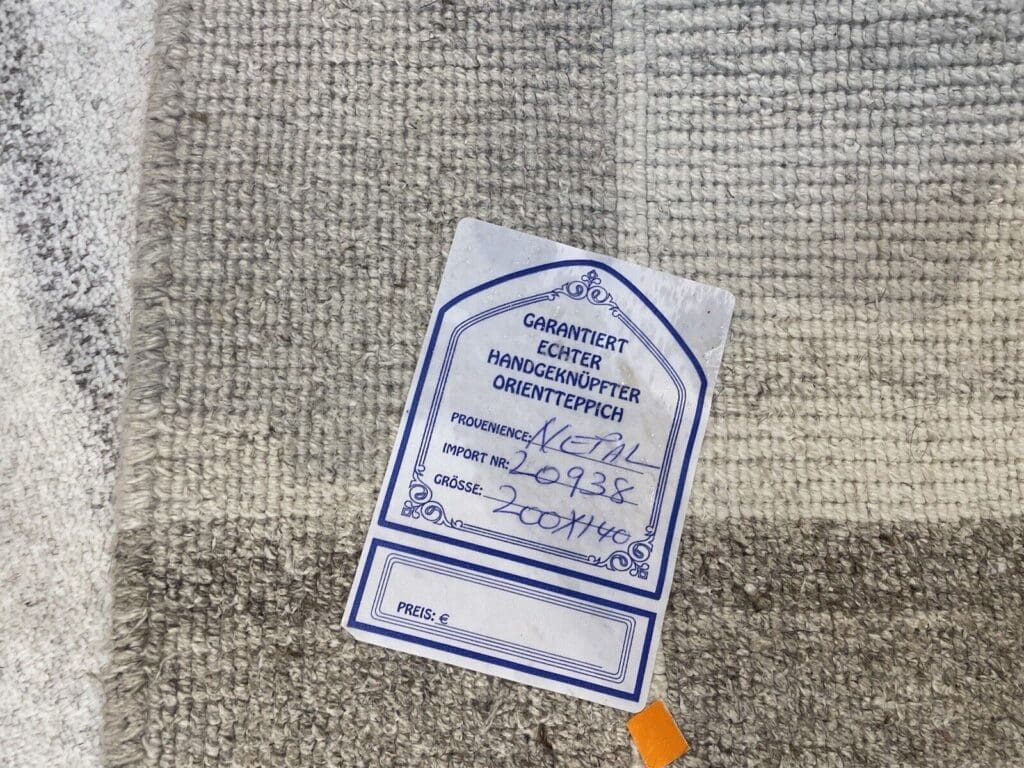
The rug is new with its tag. It is described as suitable for underfloor heating. Routine care should be gentle: regular vacuuming helps remove loose dust, while harsh brushes and unsuitable cleaning products should be avoided. Spills are best dealt with promptly. For a deeper clean, a professional rug cleaner is appropriate. Strong, direct sunlight should be limited so that the colours remain as even as possible over time.
Origin and Tradition
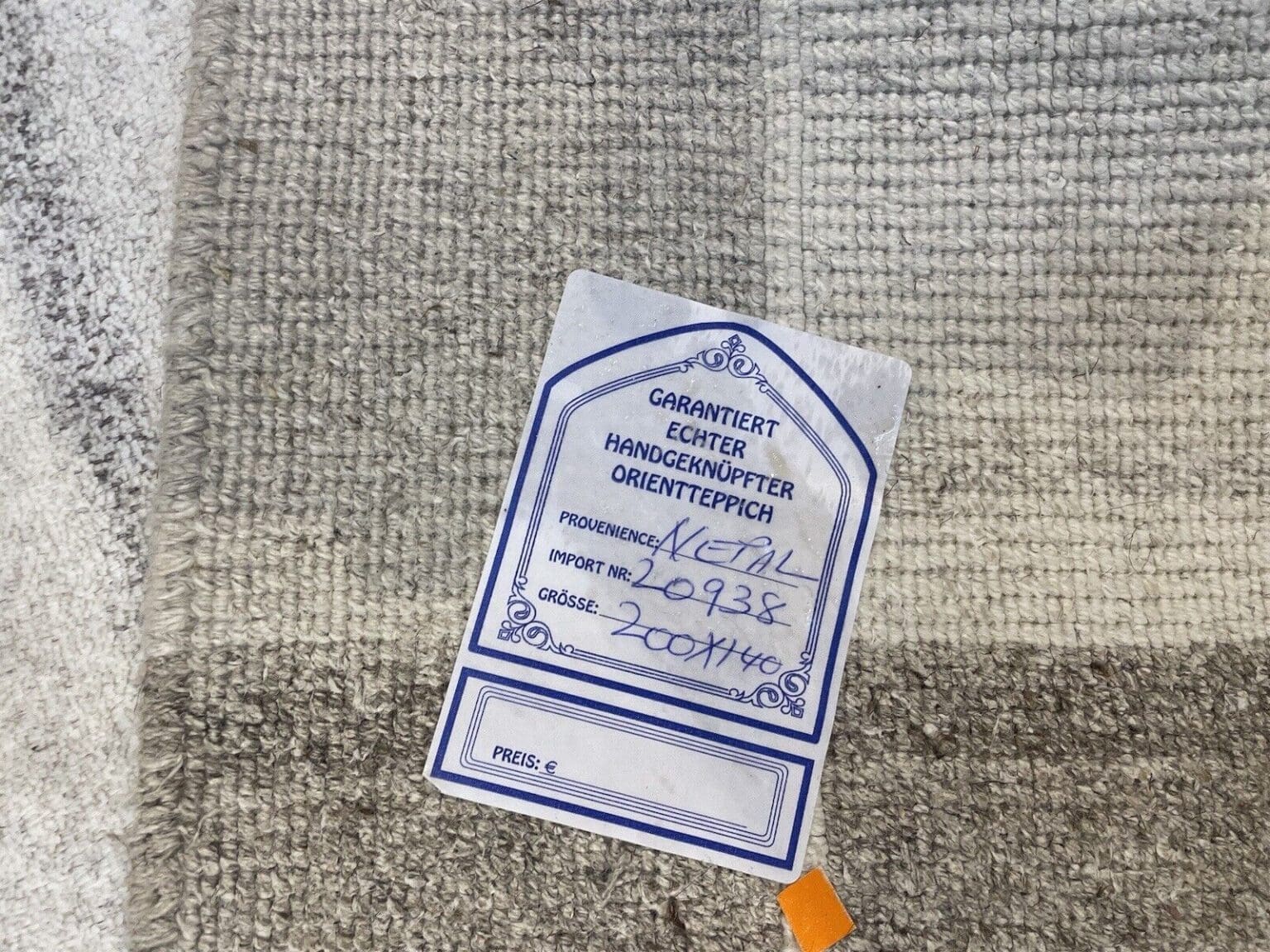
The country of origin for this rug is Nepal. Situated between the Himalayan region and the plains of South Asia, Nepal has a distinctive textile culture shaped by many communities and trading connections. Wool work, weaving and knotting are established parts of the wider Himalayan craft tradition. Nepalese rugs are often associated with workshop production in which hand processes remain central to the making of the finished piece.
Nepal’s modern rug industry developed strongly during the twentieth century. Local textile skills were combined with designs intended for both regional use and the international rug market. Nepalese workshops produce rugs in a range of visual languages, from restrained contemporary surfaces to patterns influenced by Asian and Persian design traditions. The word Nepal identifies where this rug was made. It does not turn a Nepalese rug into a Persian rug, even when its design vocabulary draws on another tradition.
Hand-knotting is a construction method rather than a pattern name. The warp is stretched on a loom, and coloured yarn is tied around selected warp threads to form the pile. After a row has been completed, weft threads help hold the structure together. The process is repeated until the intended design is filled in. The pile is then trimmed and the rug is finished. Because the work is done by hand, the surface is created through the accumulation of many separate textile decisions rather than through a single printed image.
Nepalese rug making also reflects the movement of ideas across Asia. Nepal’s position between India, Tibet and other parts of the region allowed materials, techniques and decorative forms to circulate. A rug made in Nepal may therefore use a pattern associated with a different city or culture. That association concerns the visual language, not the manufacturing country. Here, the origin is Nepal, the technique is hand-knotting, the pattern is identified as Peking, and the style is described as Chinese.
In Oriental rug terminology, origin, technique and design should be read as separate categories. A place name in a pattern description does not replace the stated country of manufacture. This distinction is particularly relevant here because Peking names the design while Nepal names the origin. The rug is accordingly described as a Nepalese Oriental rug with a Chinese-style Peking pattern, rather than as a Persian rug.
The history of hand-knotted rugs is also a history of skilled division of labour. Preparing yarn, arranging colours, operating the loom, tying knots, securing rows and finishing the pile all contribute to the final textile. Contemporary Nepalese production may combine established hand techniques with designs intended for modern interiors. That combination explains how a rug can be rooted in a long craft tradition while being classified as modern in its appearance.
Design and Pattern
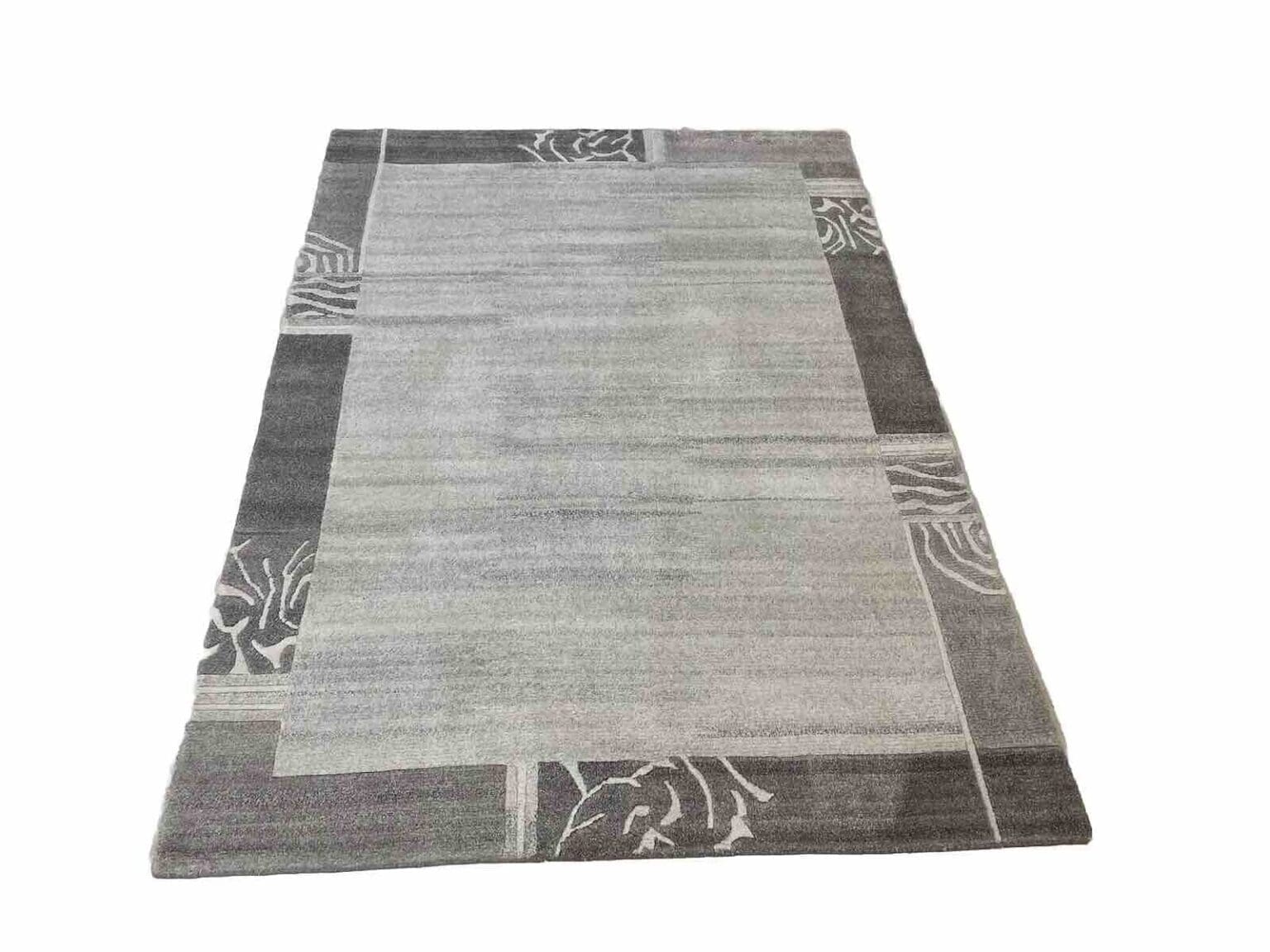
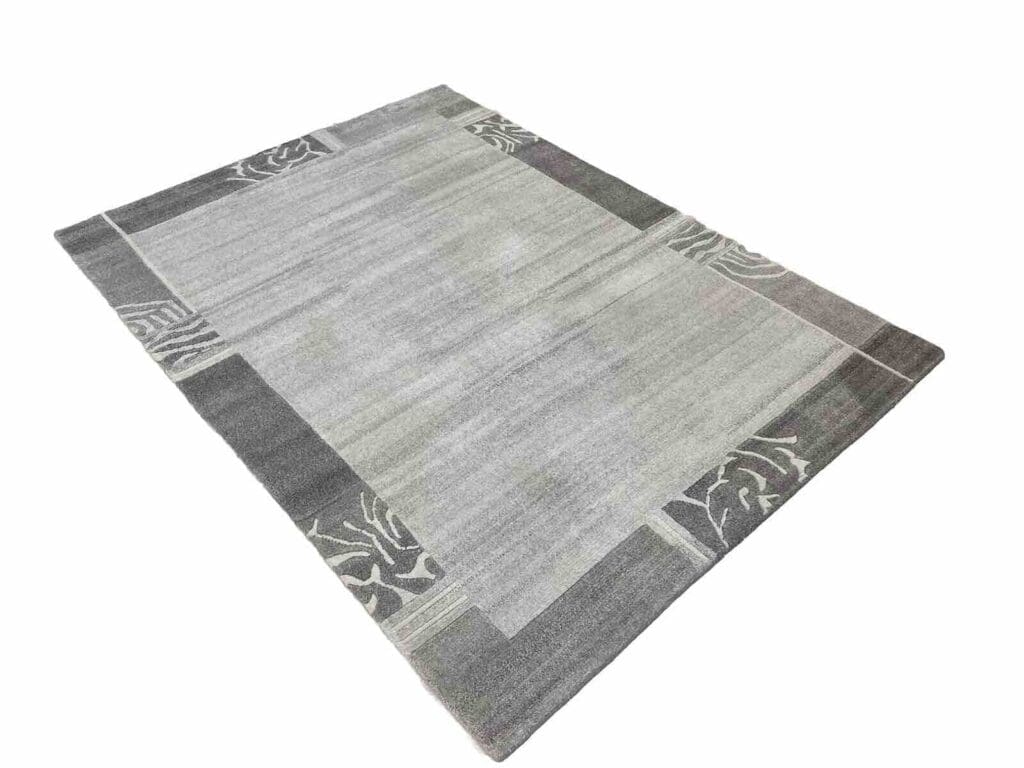
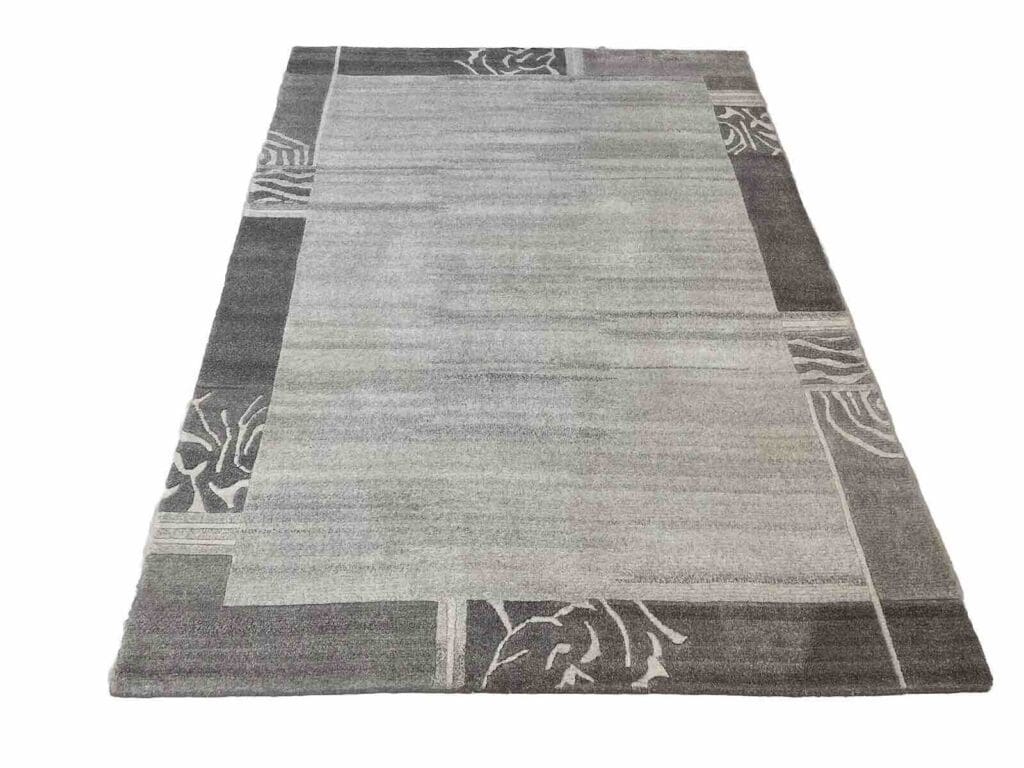
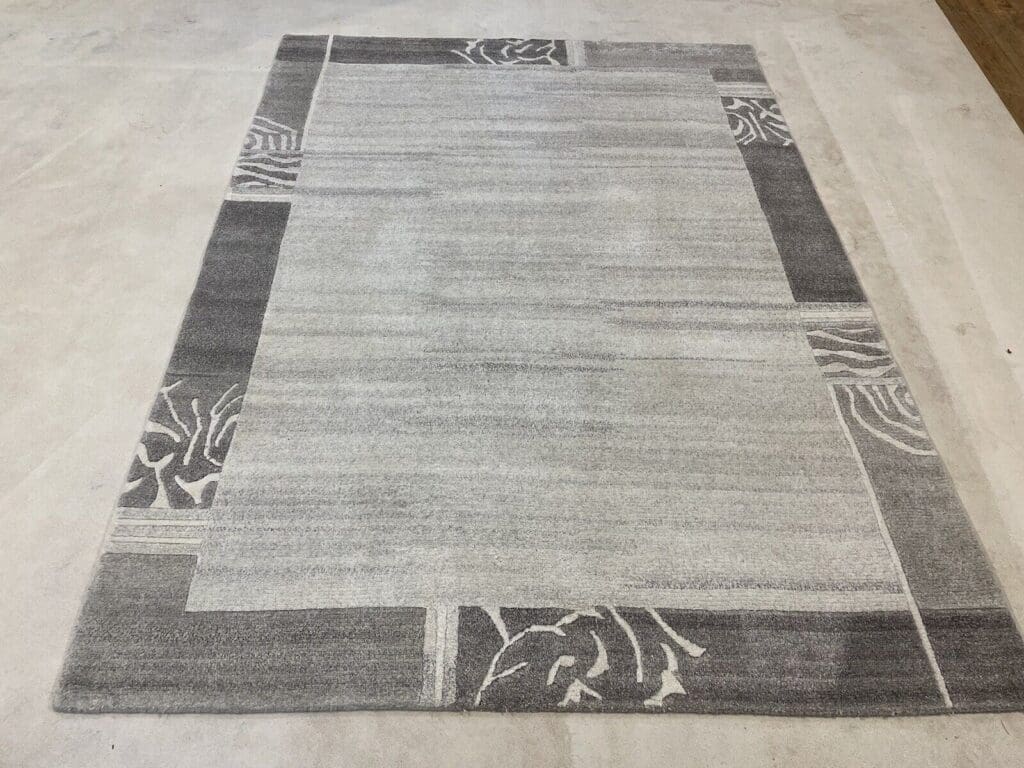
The pattern is identified as Peking, and the style is described as Chinese. In rug design, Peking patterns are generally associated with Chinese-influenced compositions that may combine controlled geometry with stylised botanical or symbolic forms. Depending on the design, the ornament can be arranged around a field, a medallion or a balanced all-over structure. Those are general features of the tradition; the source does not specify every individual motif used on this particular rug.
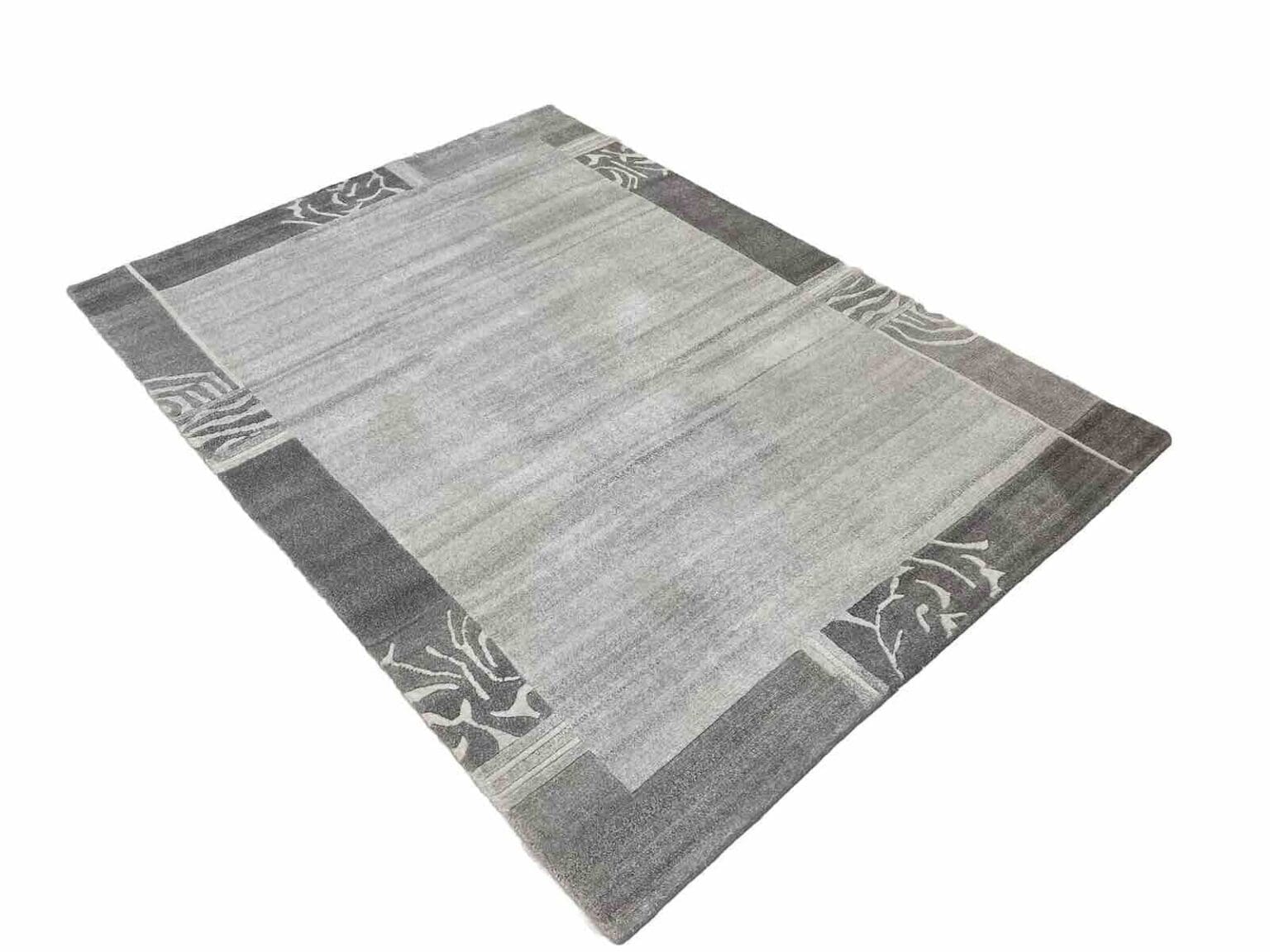
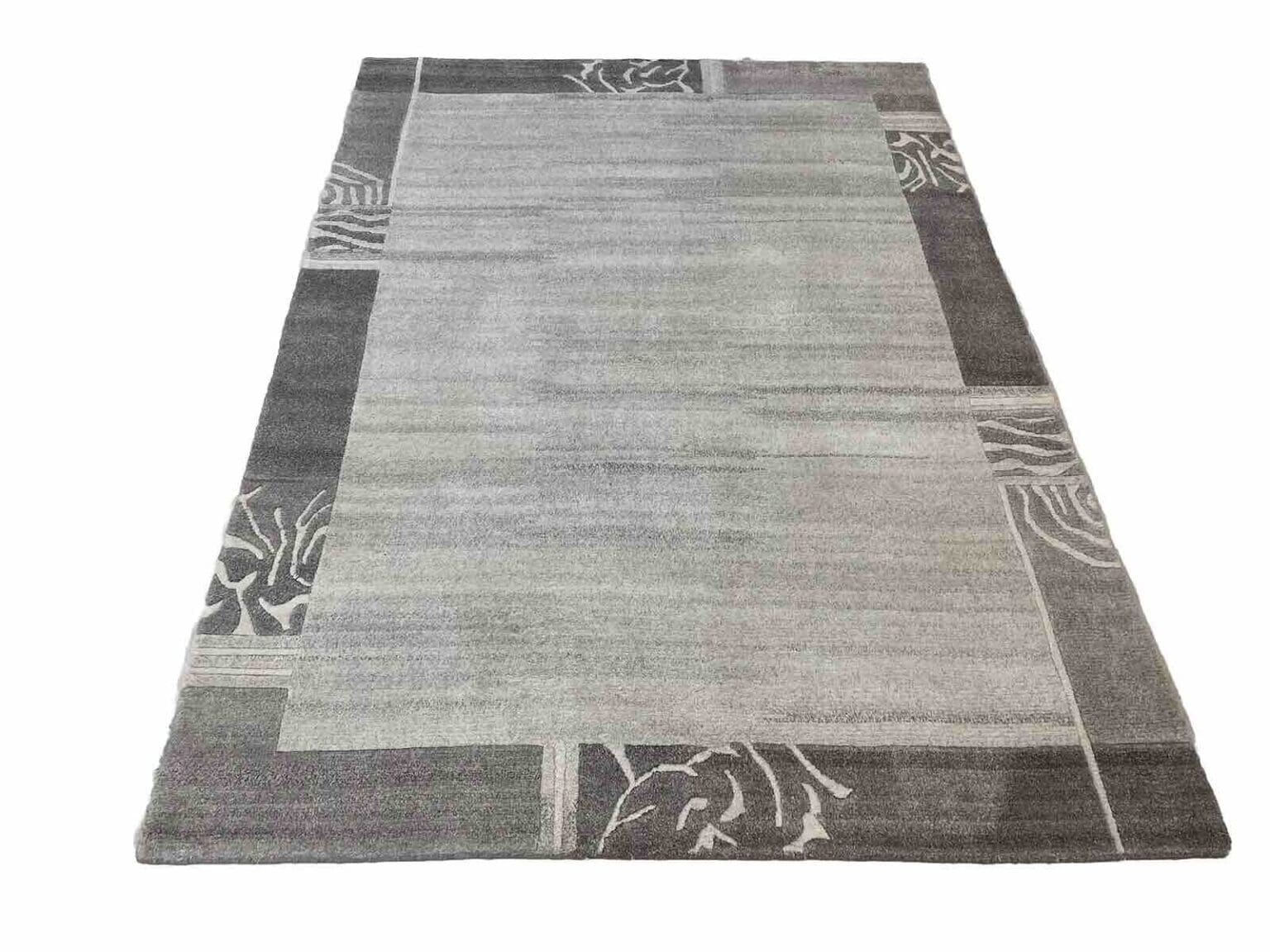
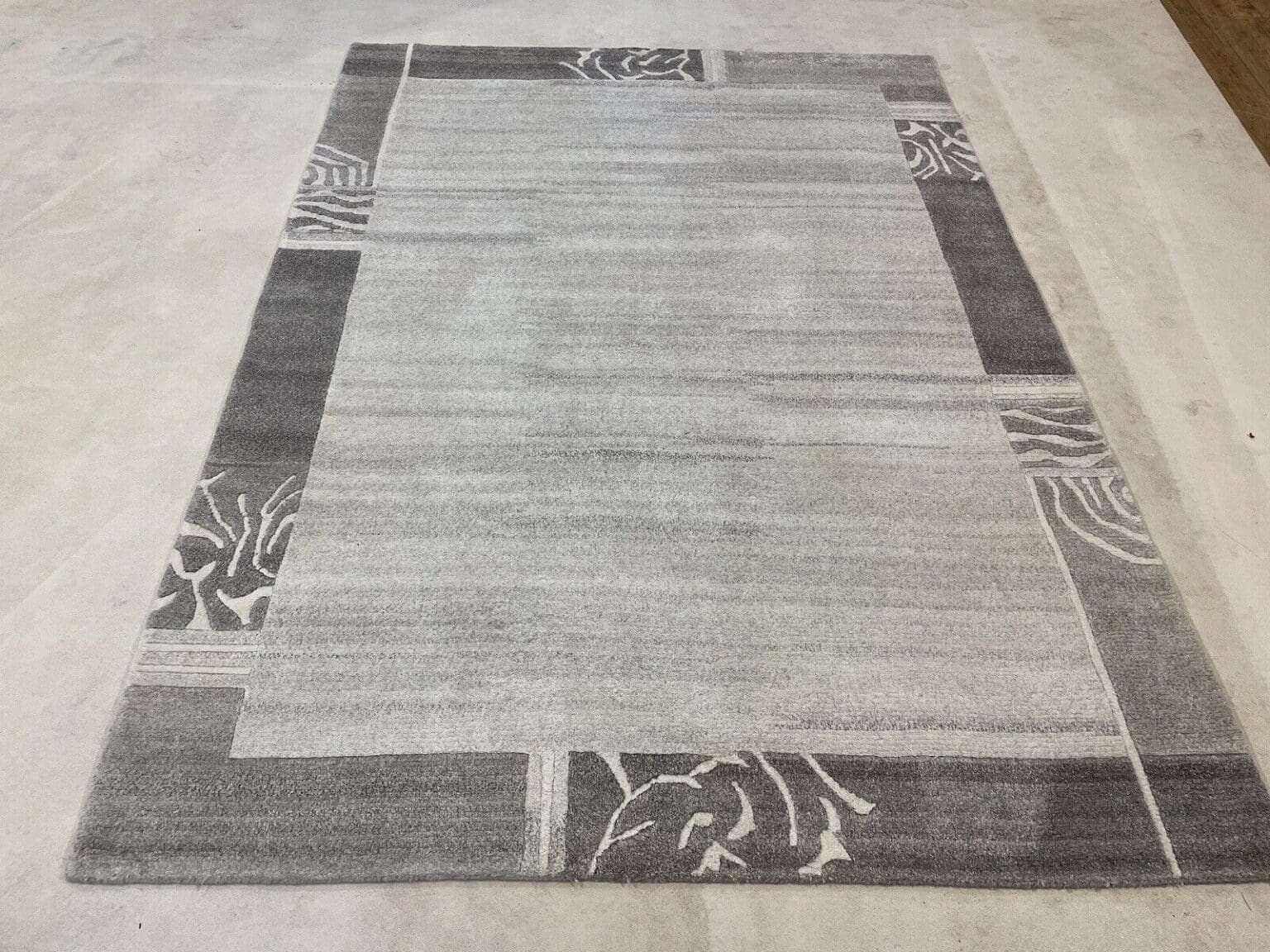
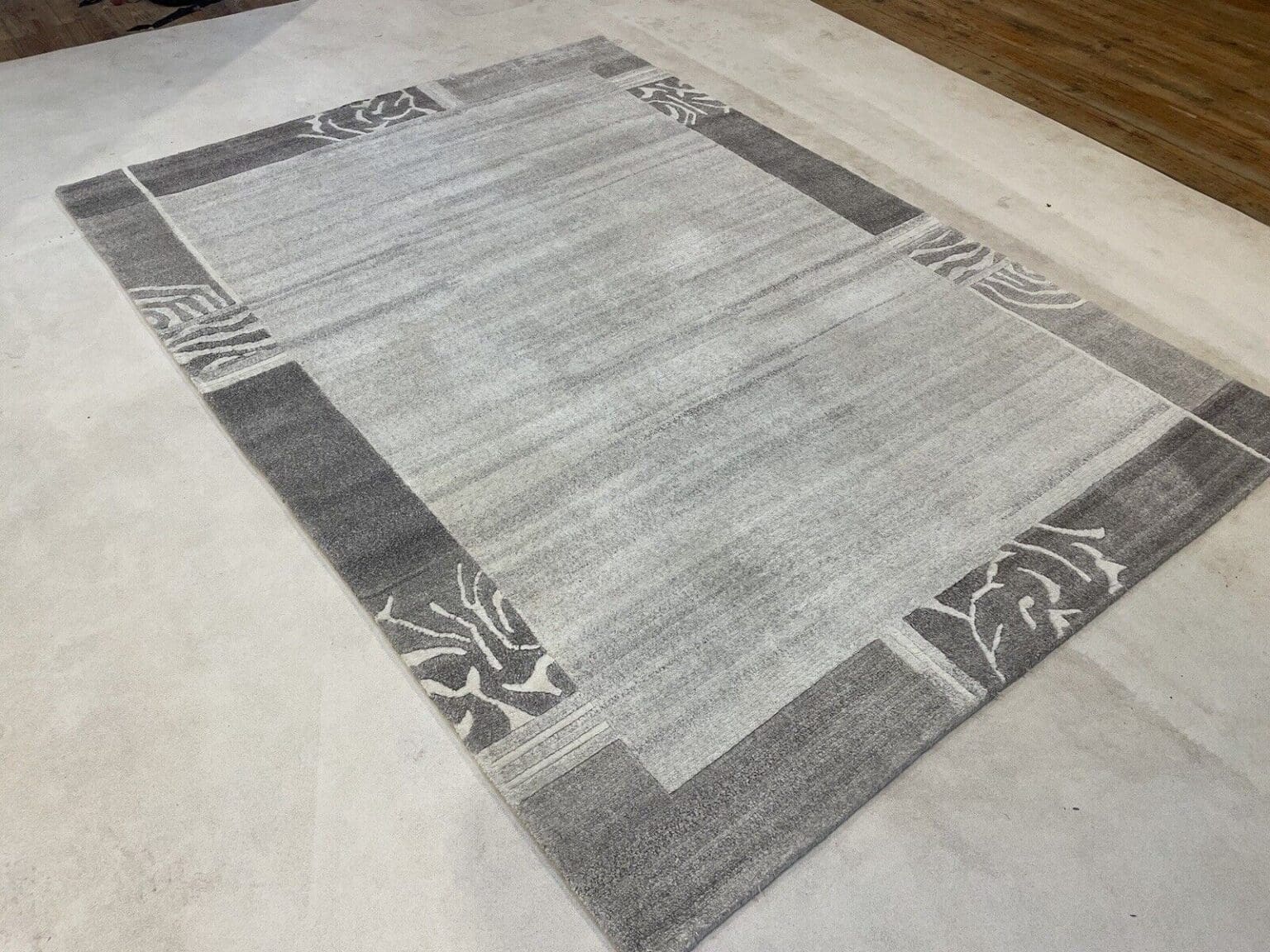
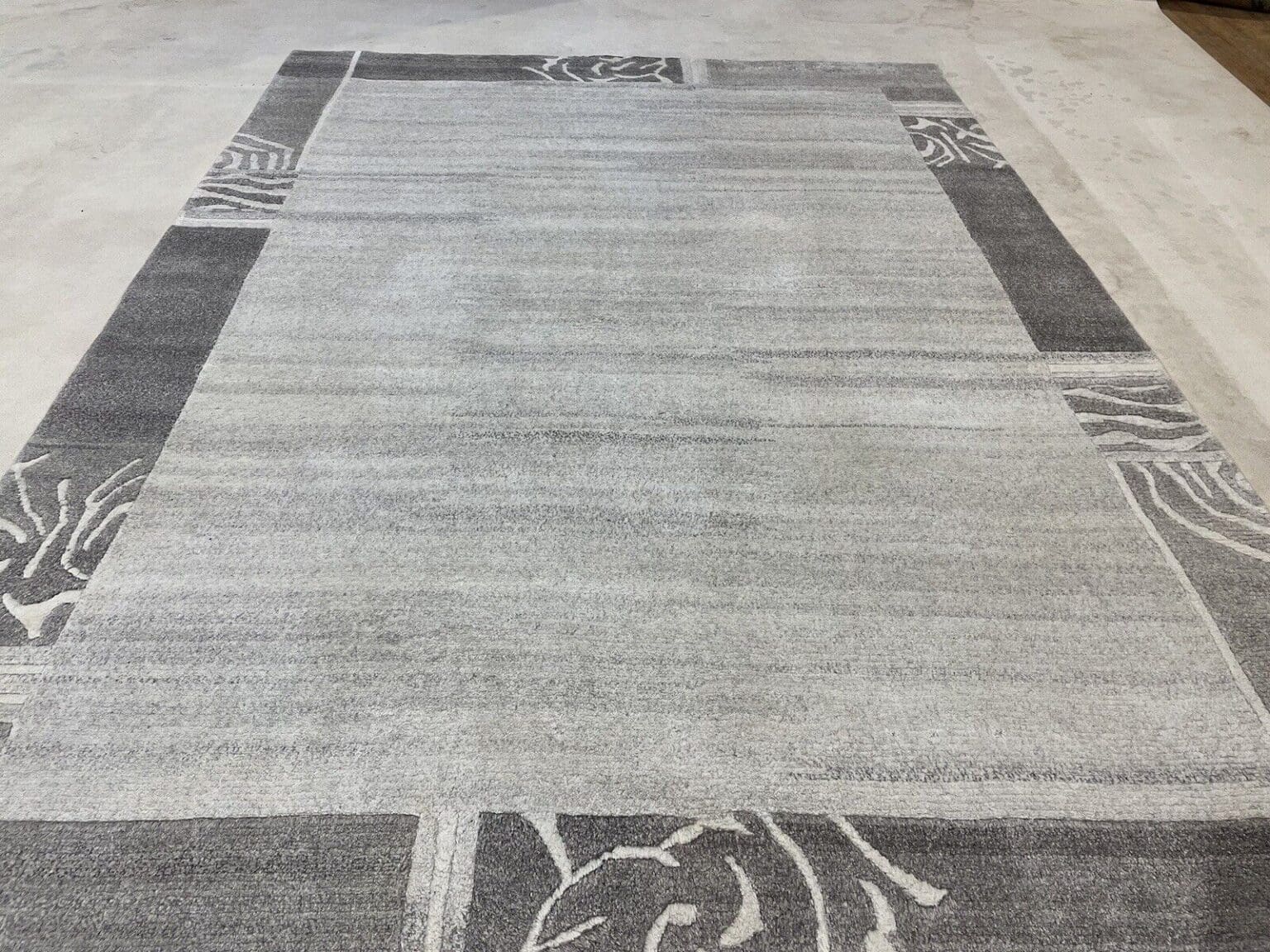
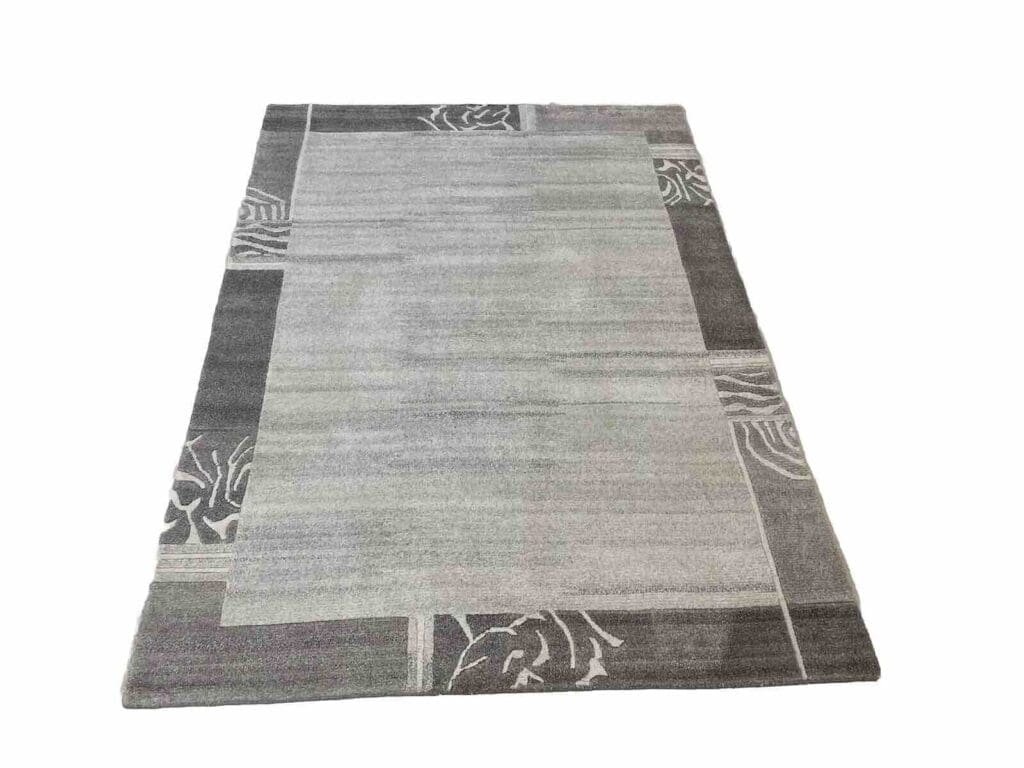
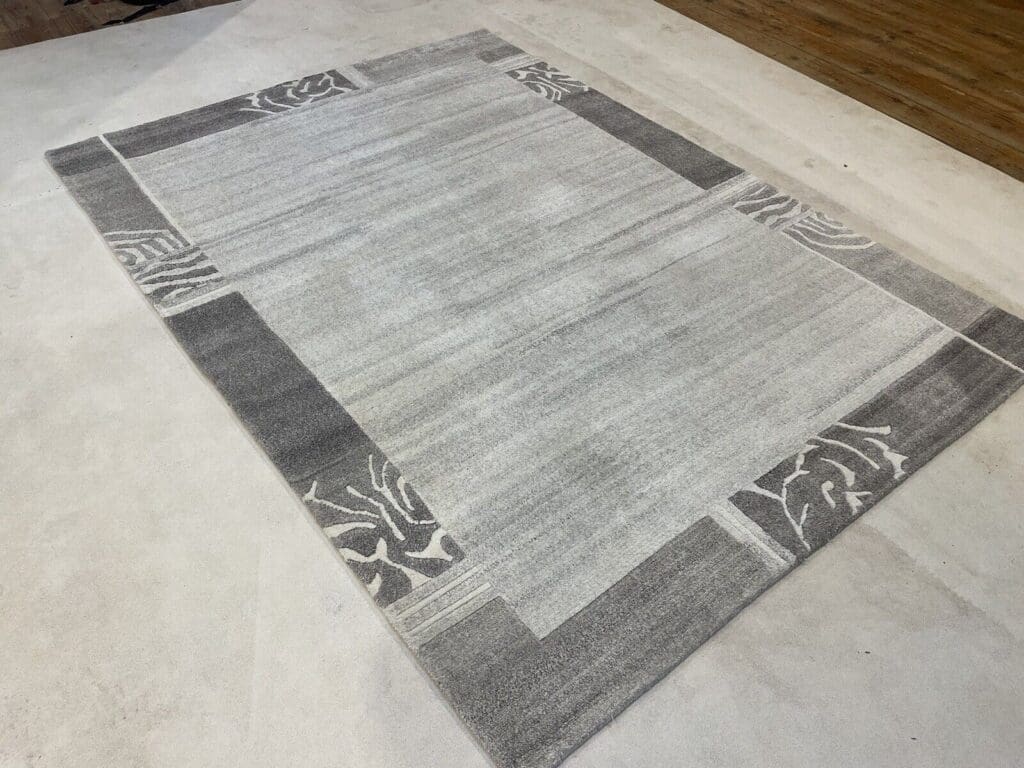
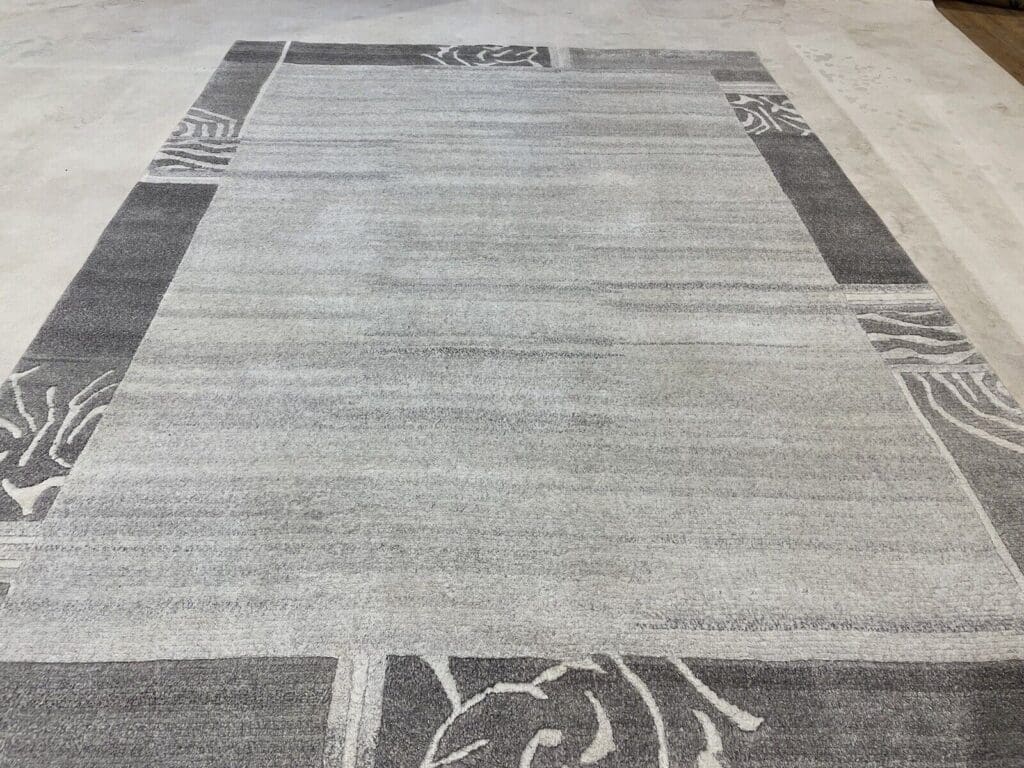
The rug is described as modern. A modern Oriental rug often adapts an established decorative language for present-day interiors by simplifying the arrangement, opening up the field or reducing visual density. The aim is not necessarily to remove tradition, but to present it in a more restrained way. This piece is also described as beige and has a narrow beige border. The border gives the composition a defined perimeter while keeping the overall colour statement quiet.
A border has both a visual and a structural role in a rug design. It frames the central field, marks the transition to the outer edge and can regulate the rhythm of the ornament. When it is narrow, the field usually remains the dominant area of the composition. The specified beige border provides a subdued frame for the Peking pattern. No further colour list, exact motif inventory or detailed field arrangement is provided, so those elements are not assigned to the rug.
Chinese textile and decorative traditions include a wide range of forms, including flowers, foliage, auspicious symbols, cloud shapes and ordered geometric devices. Peking-related rug designs may draw from this broad visual heritage while interpreting it through wool, pile and the format of a floor textile. The Chinese style designation therefore supplies useful context for the pattern without claiming that every historically associated symbol appears here.
The beige colour supports the contemporary classification of the design and can work with both neutral and more contrasting interiors. The rug is listed as suitable for a bedroom, living room, dining room or study. In a bedroom, the textile surface can define a calm floor area; in a living room, its border can help organise a seating arrangement. In a dining room or study, it can establish a clearly framed zone within the room.
Because the pattern is hand-knotted, the design is formed in the pile itself. Lines, fields and borders are built through the placement of knots and are not simply printed onto a finished surface. This gives the pattern a material dimension that belongs to the construction of the rug. The principal design information for this piece is therefore its modern character, Peking pattern, Chinese style, beige colouring and narrow beige border.
Special Features
The specific features of this rug are its hand-knotted construction, Highland virgin wool pile and cotton warp. It has a narrow beige border, is assigned the Peking pattern and is described as having a Chinese style. The rug is new with its tag. It is also suitable for underfloor heating.
The listed pile height is 5 to 9 mm, and the rug measures 200 x 140 cm. The stated suitable rooms are the bedroom, living room, dining room and study. Together, these details distinguish this individual rug from other Nepalese rugs that may use different materials, dimensions, patterns or conditions.
Origin and design should remain distinct in its description. The rug comes from Nepal, while Peking and Chinese style identify its visual direction. It is therefore a Nepalese Oriental rug, not a Persian rug. This distinction gives the country of manufacture and the design tradition their proper place in the product information.
FAQ
How should I care for this Nepalese Oriental rug?
Vacuum the rug regularly and gently to remove loose dust from the wool pile. Avoid aggressive brushes, unsuitable detergents and excessive moisture. If a more thorough cleaning is needed, use a professional rug-cleaning service familiar with hand-knotted textiles. Strong direct sunlight should be avoided where possible, since prolonged exposure can make colours fade unevenly. As the rug is described as new with its tag, careful handling from the beginning is appropriate. The rug is suitable for underfloor heating, but normal care still applies.
What distinguishes the rug’s pattern?
The pattern is called Peking and the style is described as Chinese. These terms refer to the design tradition, not to the country where this rug was made. Its narrow beige border gives the composition a clearly framed edge, while beige is also the stated colour. Peking-influenced designs may generally use stylised floral, geometric or symbolic forms in an ordered arrangement. The source does not list the individual motifs on this rug, so no more specific ornament description is added.
Which rooms are suitable for the rug?
The rug is listed as suitable for a bedroom, living room, dining room and study. In a bedroom it can define a soft textile area, while in a living room it can help organise furniture around a shared centre. In a dining room or study, the framed design can mark a distinct section of the floor. Its suitability for underfloor heating adds another practical placement option. The best position depends on the furniture, flooring, lighting and desired room layout.
To provide the best experiences, we use technologies like cookies to store and/or access device information. Consenting to these technologies will allow us to process data such as browsing behavior or unique IDs on this site. Not consenting or withdrawing consent, may adversely affect certain features and functions.
Functional Always active
The technical storage or access is strictly necessary for the legitimate purpose of enabling the use of a specific service explicitly requested by the subscriber or user, or for the sole purpose of carrying out the transmission of a communication over an electronic communications network.
Preferences
The technical storage or access is necessary for the legitimate purpose of storing preferences that are not requested by the subscriber or user.
Statistics
The technical storage or access that is used exclusively for statistical purposes.The technical storage or access that is used exclusively for anonymous statistical purposes. Without a subpoena, voluntary compliance on the part of your Internet Service Provider, or additional records from a third party, information stored or retrieved for this purpose alone cannot usually be used to identify you.
Marketing
The technical storage or access is required to create user profiles to send advertising, or to track the user on a website or across several websites for similar marketing purposes.

 SECURE PAYMENT
 SHIPPING PARTNERS