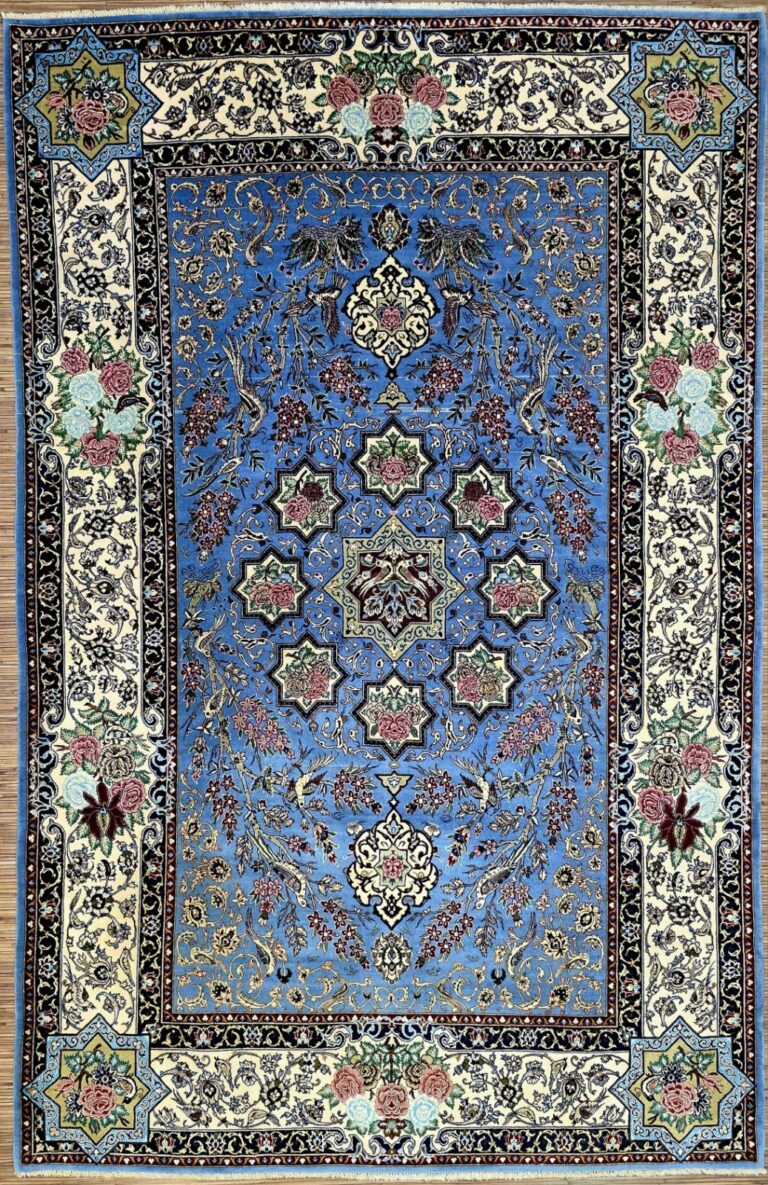
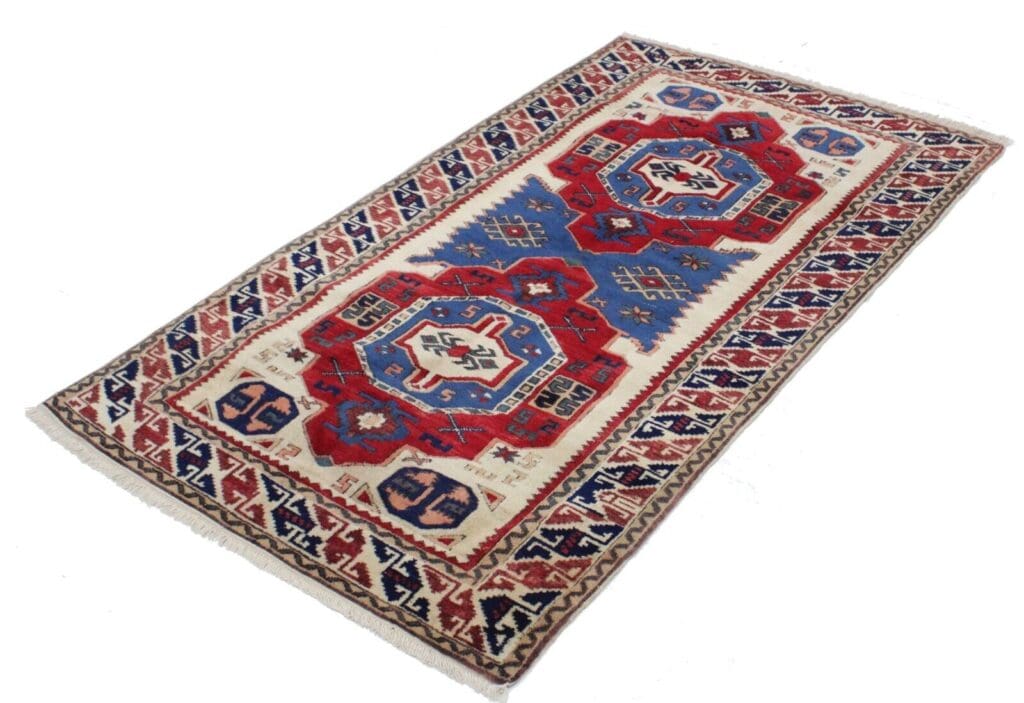
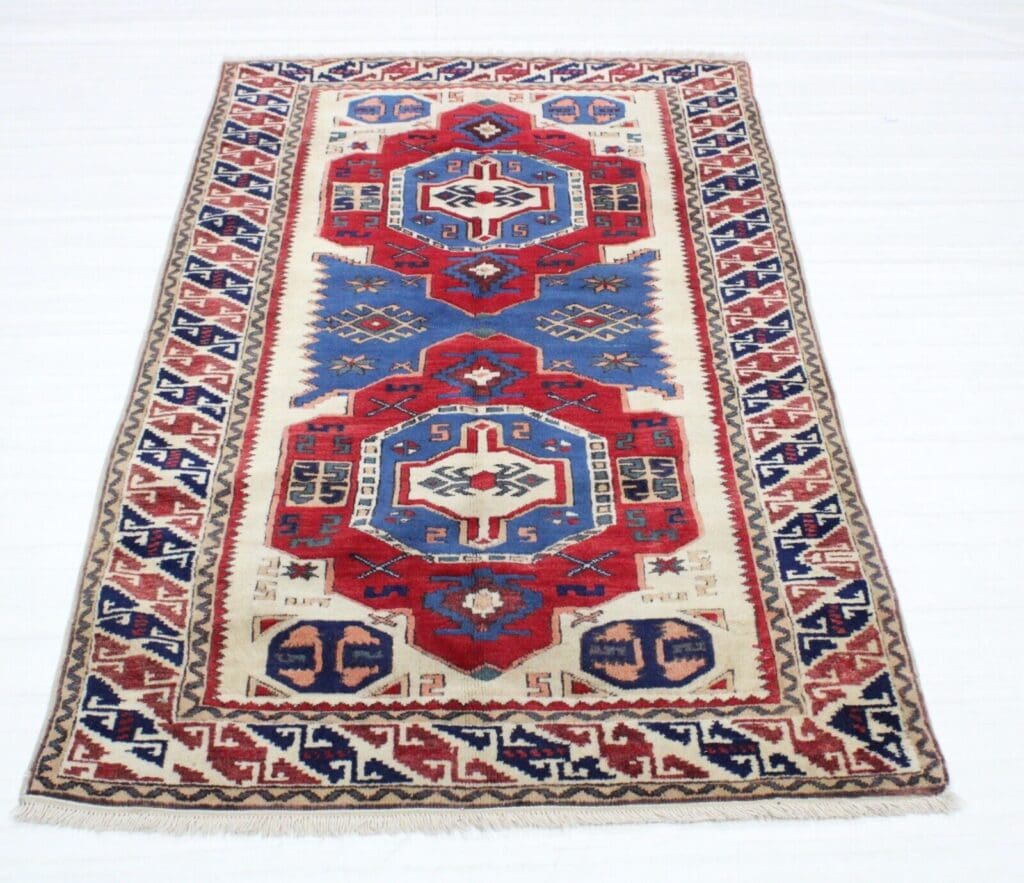
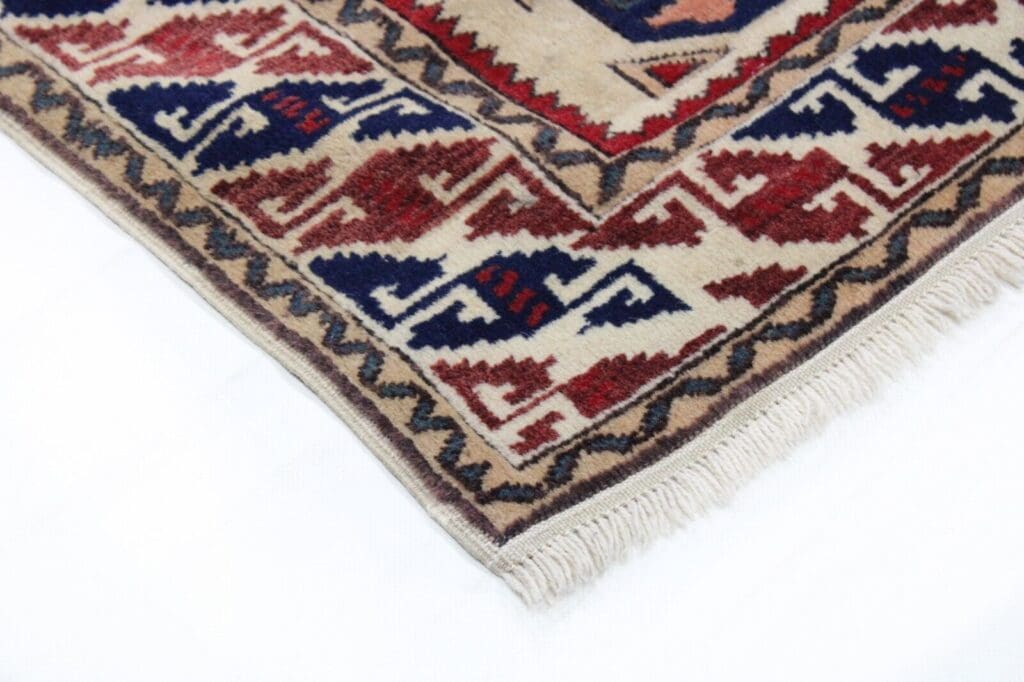
This Oriental rug is hand-knotted and made from 100% wool. In hand-knotting, individual knots are tied into the foundation one by one. The method is different from machine production, where a design is mechanically repeated in a more uniform process. Hand-knotting allows the maker to build the pattern row by row and to follow the contours, colour fields and transitions of the chosen design as the work progresses.
Wool is a traditional material in Oriental rug making. Its resilient fibres, tactile surface and ability to hold colour have made it suitable for rugs intended for everyday interiors. Depending on how it is prepared, a wool pile can feel soft, firm, dense or textured. The material specified for this rug is 100% wool. The source does not provide information about the warp, weft, knot density or the precise grade of the wool, so those details are not assigned to this piece.
The hand-knotted construction connects the rug with a craft based on repeated manual operations. The maker does not only create the visible colours; the outlines, spacing and rhythm of the pattern are also formed through the placement of individual knots. This gives the finished textile a structure built from many small decisions. Here, “hand-knotted” identifies the production technique, while the material statement identifies the pile as pure wool.
The product description calls the rug “top condition”. That condition statement is part of the listed product information. It does not give a separate account of wear, repairs, fringes, edges or previous use. No further condition details are supplied.
Origin and Tradition
The rug is described as an original Pakistan rug, so its stated origin is Pakistan and it should be presented as an Oriental rug rather than a Persian rug. The name Kazak refers to the design or style designation used for the rug. It does not change the country of manufacture into Iran. This distinction matters in Oriental rug terminology: a pattern can draw on a historic regional vocabulary while a particular rug is made elsewhere. For this piece, Pakistan is the stated origin and Kazak is the associated style name.
Pakistan has its own established rug-making industry, with workshops producing both regional designs and interpretations of patterns known throughout the wider Oriental rug world. Hand-knotting in Pakistan combines inherited methods with designs adapted for different markets and interiors. The result can reflect several strands of textile history at once. Calling this rug a Pakistan rug identifies where it was made; it does not describe it as a Persian rug from Iran.
Kazak rugs are historically associated with the Caucasus and with a strongly articulated geometric design language. Their traditional vocabulary often favours clearly defined shapes, assertive outlines and an easily readable arrangement of field and border. These ideas have been adopted and reinterpreted in other weaving centres. In trade descriptions, Kazak may therefore indicate a visual tradition or pattern model rather than the actual place of manufacture. The source specifically identifies this rug as Pakistani.
Oriental rug history is shaped by movement across borders. Traders, travelling craftsmen, drawn designs and repeated ornament books helped motifs circulate between towns and regions. A stepped outline, a diamond form, a hooked detail or a stylised plant can therefore appear in more than one local tradition. The presence of a familiar motif alone cannot establish the origin of an individual rug. Geographic attribution has to follow the stated production information, which here is Pakistan.
Pakistan Oriental rugs belong to the broader hand-knotting tradition of the region while remaining geographically distinct from Iranian production. The distinction is descriptive, not a judgement about quality. This rug brings together the listed elements of Pakistan manufacture, hand-knotting, a 100% wool pile and Kazak-oriented design. Keeping those terms separate gives an accurate account of both its origin and its visual reference.
Design and Pattern
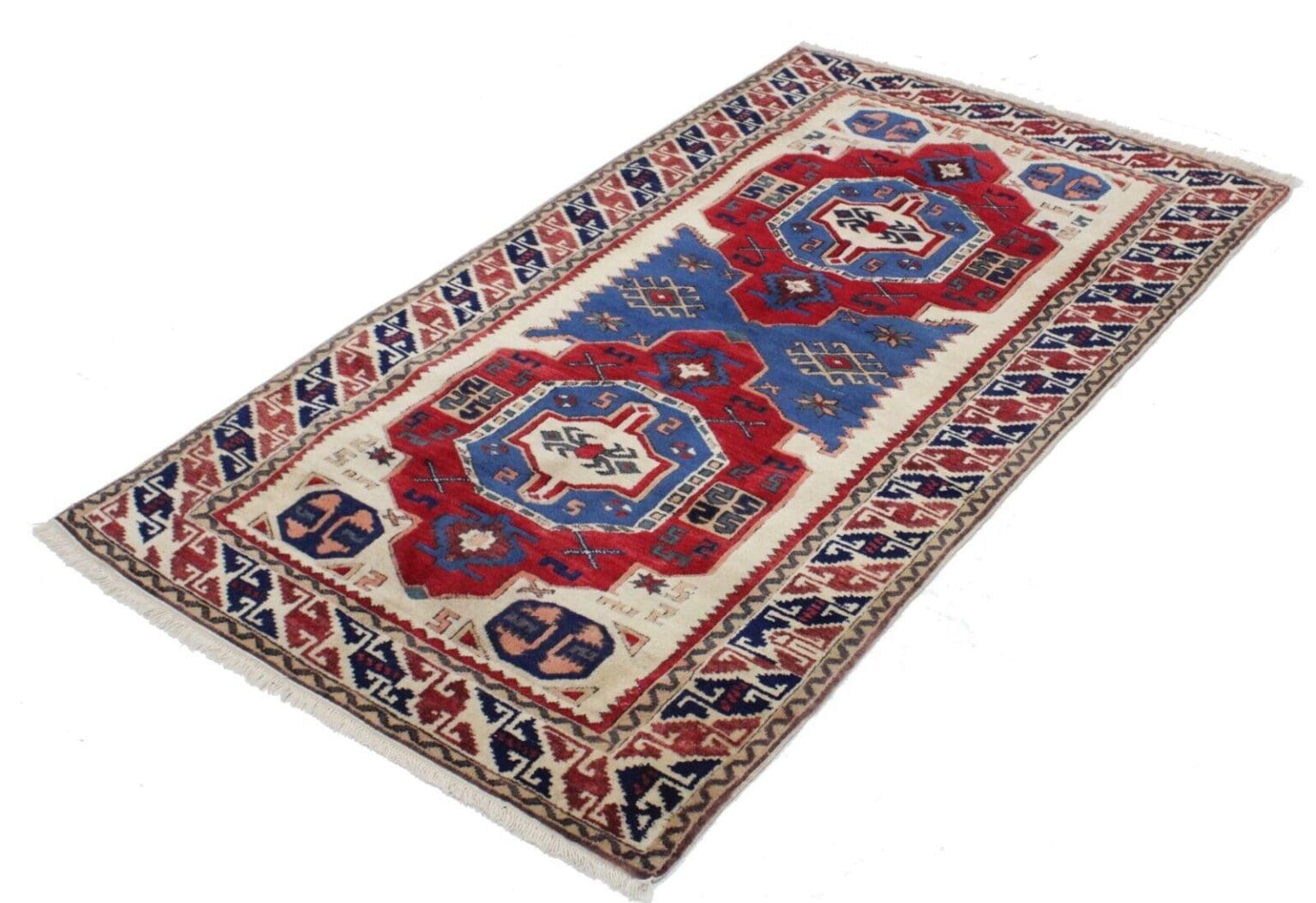
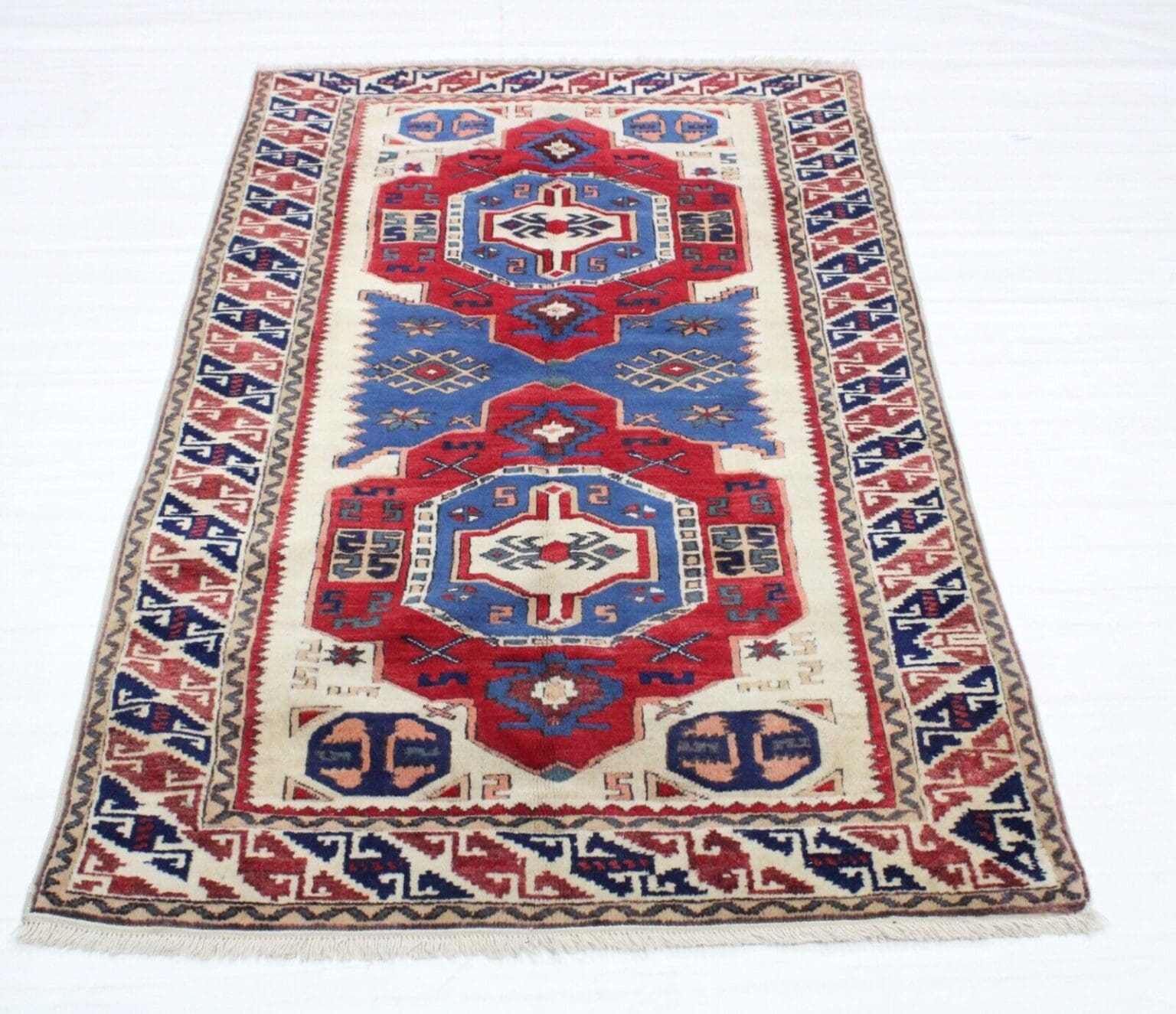
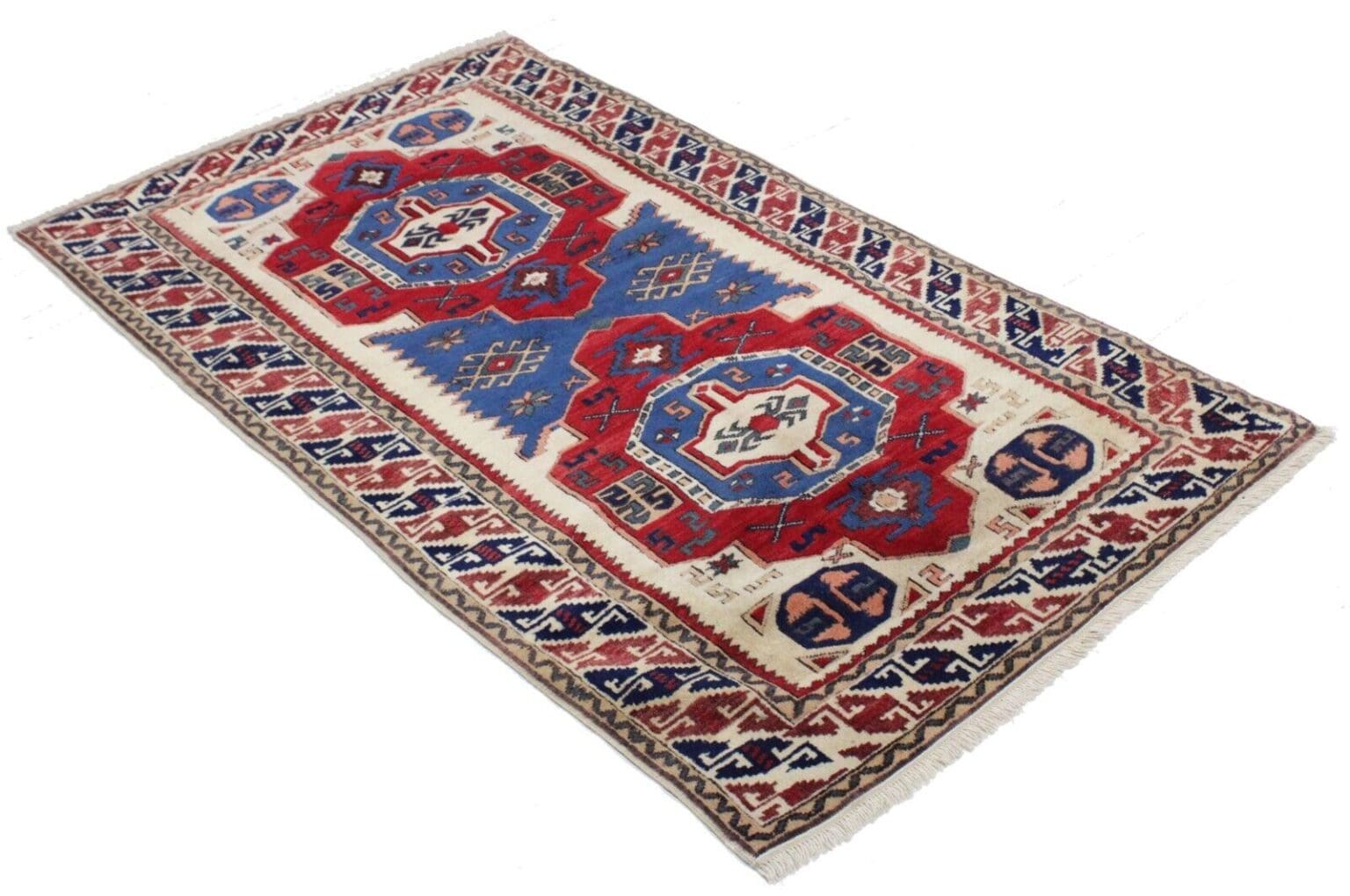
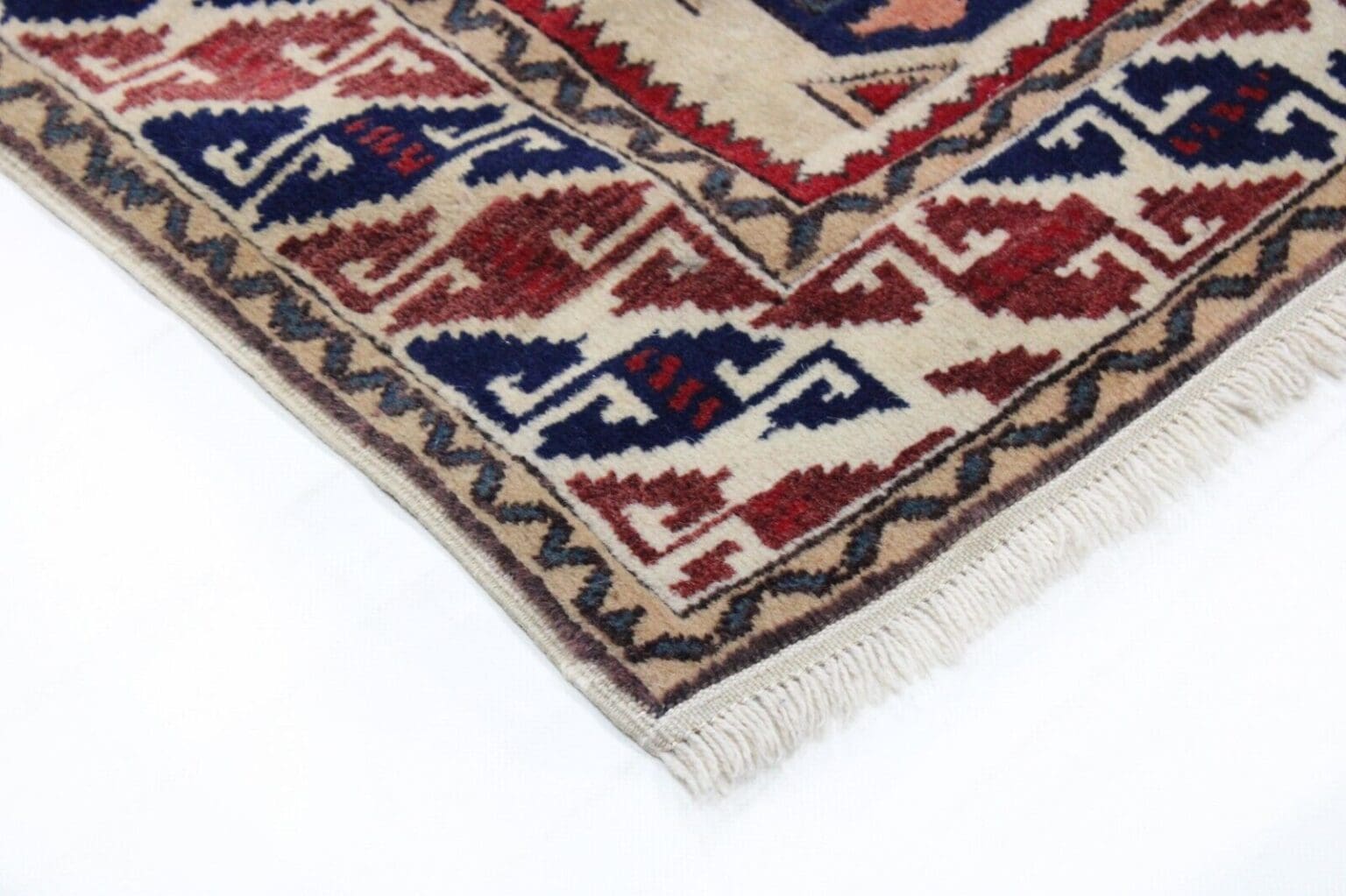
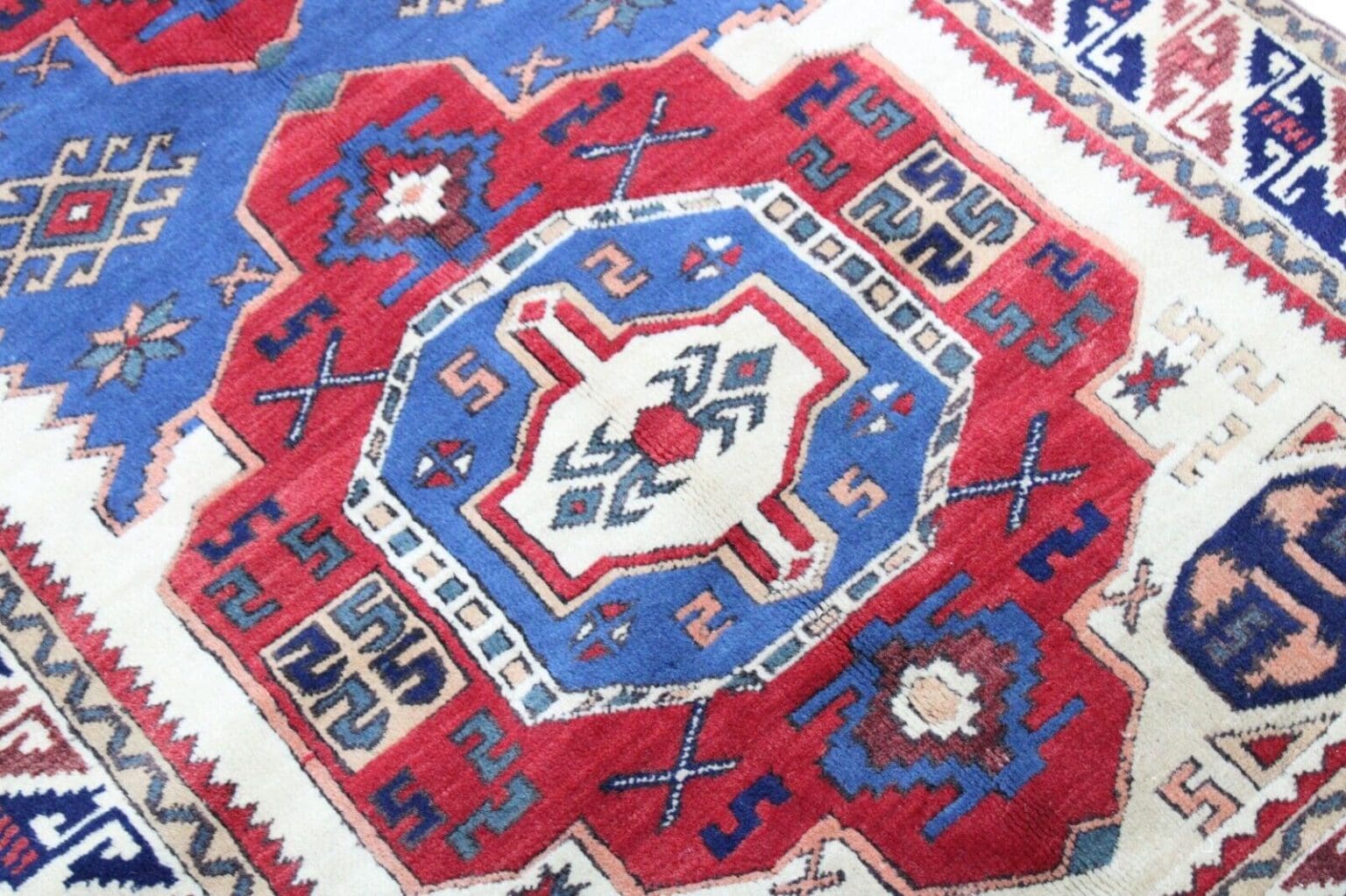
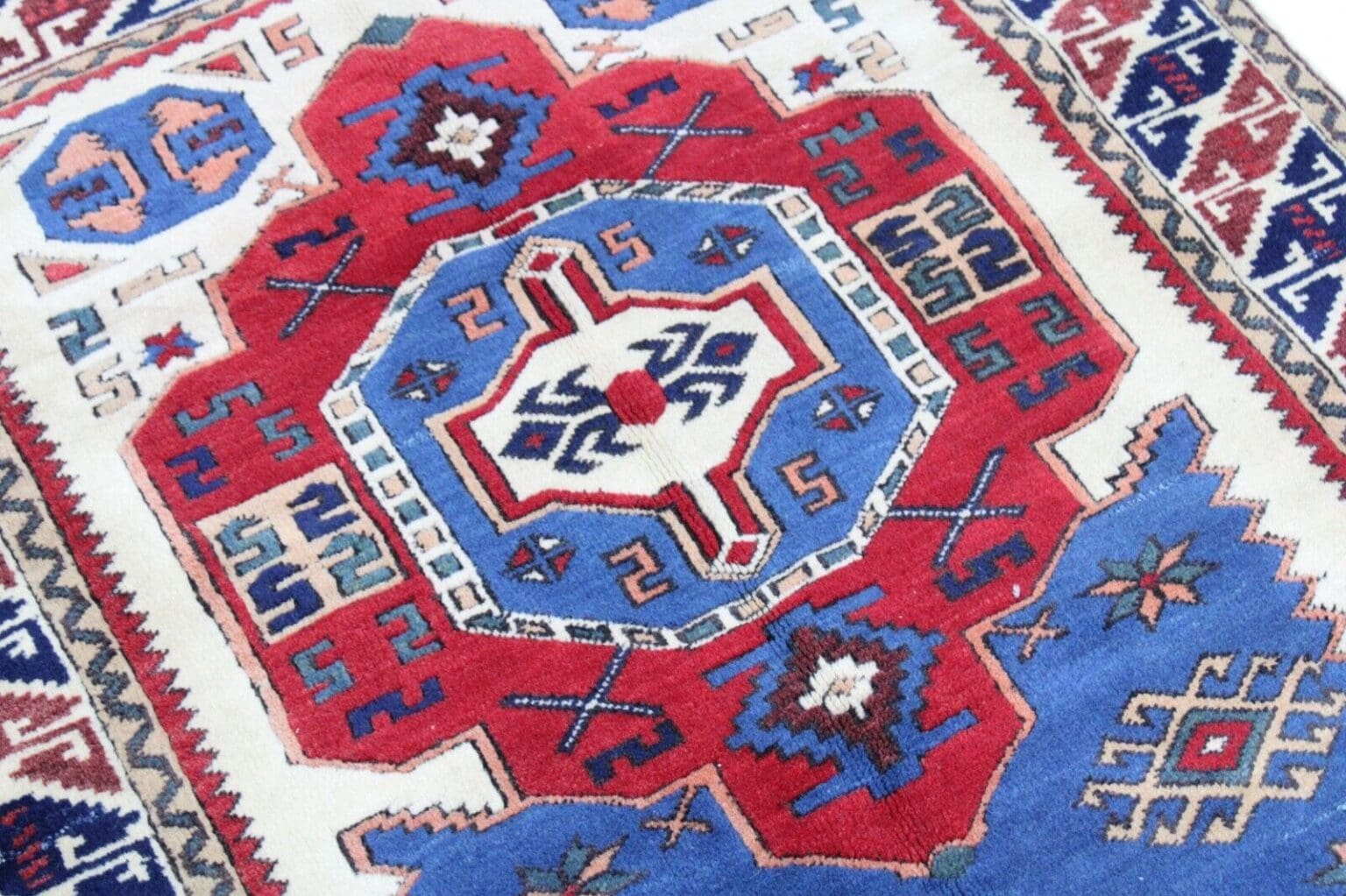
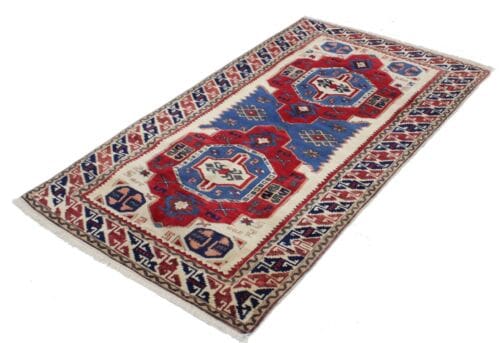
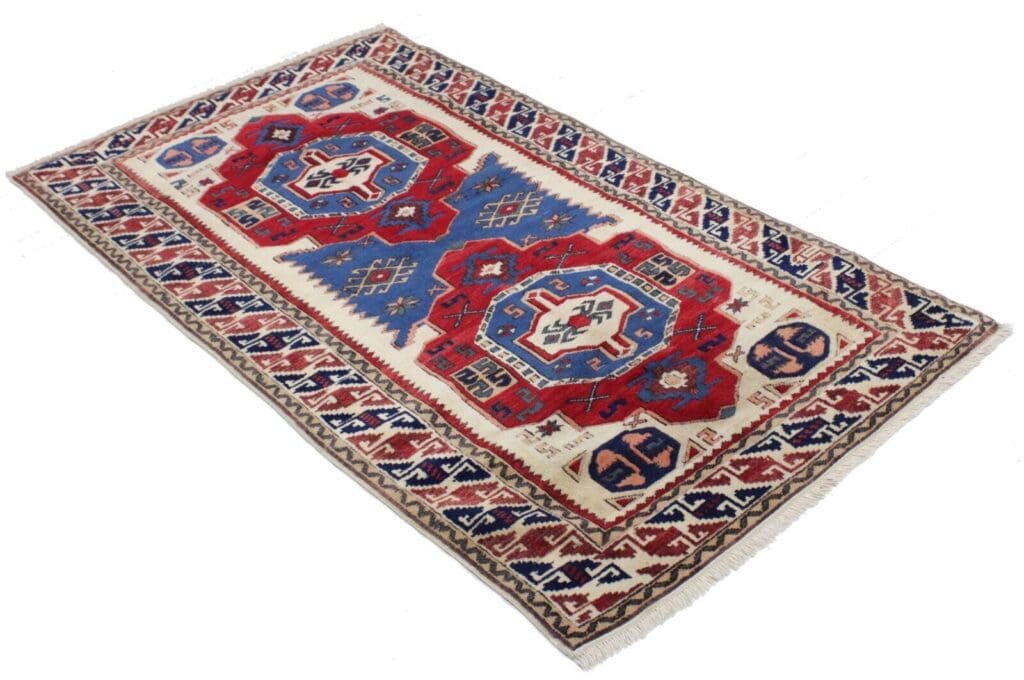
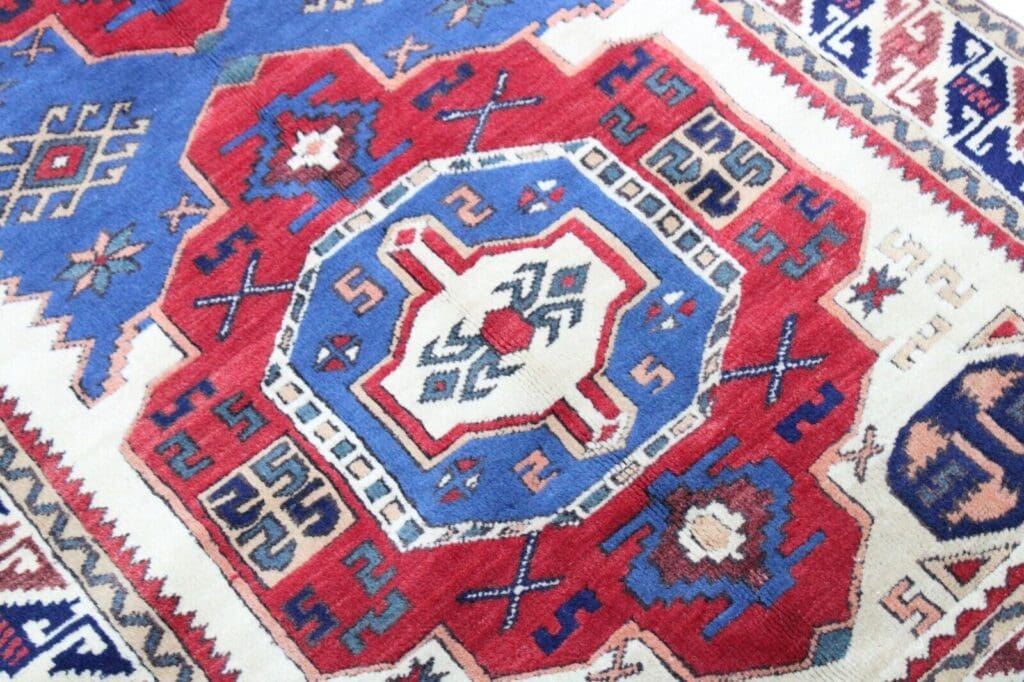
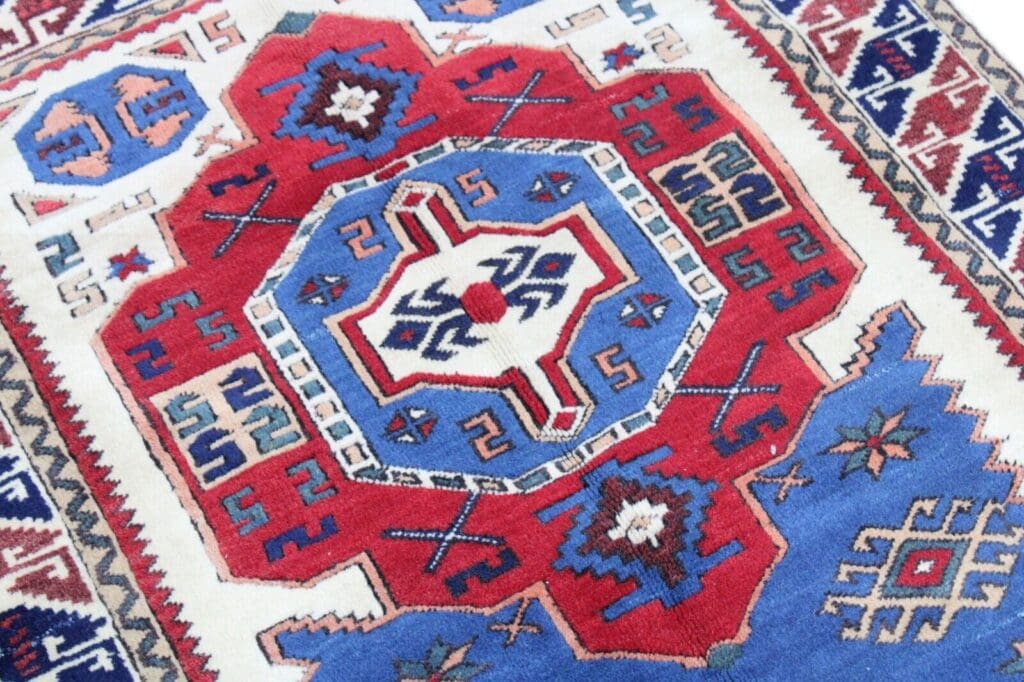
The pattern is described as “exceptional designs”. This is a broad description of the visual character rather than the name of one precisely documented motif. The term Kazak adds a style reference with roots in traditional geometric rug design. The source does not specify individual colours, a particular medallion, a precise border arrangement or identifiable figures, so no such details are attributed to this rug.
In its historic form, Kazak design often relies on geometric structure. Large central forms, stepped contours, diamonds, hooked shapes and repeated border elements may be used to organise the composition. These devices create a clear relationship between the central field and its surrounding frame. Some designs are strongly symmetrical, while others include small variations that reflect the manual process. Such features are part of the broader Kazak vocabulary; the source only confirms the Kazak designation and exceptional designs for this particular rug.
In an Oriental rug, the border is not merely an added decoration. It frames the field, separates the composition from its surroundings and provides visual continuity around the central design. A main border may be accompanied by narrower guard borders. Kazak-inspired compositions can use repeated hooks, diamonds, rosettes or stylised leaves as border signs. Whether any one of these elements is present here is not recorded in the product information and is therefore left open.
The phrase “exceptional designs” should be understood as a general catalogue description. It suggests a distinctive pattern presentation without defining its exact structure. A responsible description can therefore state that the rug is identified as Kazak and is offered with exceptional designs, but it should not turn that phrase into an unsupported account of specific ornaments or colours. The visual details remain those visible in the individual piece, while the written source provides only this broader classification.
Traditional rug designs are often transmitted through working knowledge, sketches and familiar proportions. During hand-knotting, these designs are translated into successive rows of knots. Small changes in line, spacing and repetition can occur as a natural consequence of manual work without removing the overall order of the composition. This relationship between inherited design language and individual execution is one reason Kazak references can appear both structured and lively.
The description states that the rug is suitable for modern and traditional furnishing styles. This indicates a range of possible interior contexts rather than a claim about one specific room or colour scheme. A geometric Oriental rug can be combined with contemporary furniture as a graphic element or placed in a more traditional setting alongside established materials and forms. The appropriate combination depends on the surrounding interior; the source does not prescribe a particular use.
Special Features
The expressly listed features are its manufacture in Pakistan, hand-knotted construction, 100% wool pile, Kazak designation, exceptional designs and “top condition”. The description also presents the rug as suitable for both modern and traditional furnishing styles. These points summarise the available product information without adding characteristics that have not been documented.
The combination of Pakistan as the country of manufacture and Kazak as the style reference gives the rug a precise classification: it is a Pakistan Oriental rug with Kazak design orientation, not a Persian rug. The wording “original Pakistan rug” comes from the source description. No information is provided about age, signature, knot count, dye type, warp, weft or a particular workshop, so none of those properties is claimed.
Care for a wool rug should generally be gentle and proportionate to its construction. Harsh chemicals, excessive moisture and rough treatment should be avoided. If a deeper cleaning is required, a professional service familiar with hand-knotted wool rugs is an appropriate general option. These are general care principles and do not constitute an additional statement about the cleaning history or hidden condition of this individual rug.
FAQ
Is this rug a Persian rug?
No. The rug is described as an original Pakistan rug, so it is an Oriental rug from Pakistan. Kazak is the style and pattern reference used for it. A design name connected with a historic region does not automatically establish the rug’s country of manufacture. For this piece, Pakistan is the stated origin and Kazak is the stated design designation.
What is the rug made of?
The product description states that the rug is made from 100% wool and is hand-knotted. It does not provide separate information about the warp, weft or any other foundation material. The accurate material statement is therefore a 100% wool pile, with no additional construction details supplied.
Which furnishing styles suit the rug?
The description names both modern and traditional furnishing styles as suitable settings. Its Kazak designation and exceptional designs can work as a patterned element in either type of interior. The best placement depends on the furniture, colours and proportions of the room. The source does not assign the rug to one specific room or function.
To provide the best experiences, we use technologies like cookies to store and/or access device information. Consenting to these technologies will allow us to process data such as browsing behavior or unique IDs on this site. Not consenting or withdrawing consent, may adversely affect certain features and functions.
Functional Always active
The technical storage or access is strictly necessary for the legitimate purpose of enabling the use of a specific service explicitly requested by the subscriber or user, or for the sole purpose of carrying out the transmission of a communication over an electronic communications network.
Preferences
The technical storage or access is necessary for the legitimate purpose of storing preferences that are not requested by the subscriber or user.
Statistics
The technical storage or access that is used exclusively for statistical purposes.The technical storage or access that is used exclusively for anonymous statistical purposes. Without a subpoena, voluntary compliance on the part of your Internet Service Provider, or additional records from a third party, information stored or retrieved for this purpose alone cannot usually be used to identify you.
Marketing
The technical storage or access is required to create user profiles to send advertising, or to track the user on a website or across several websites for similar marketing purposes.
 SECURE PAYMENT
 SHIPPING PARTNERS