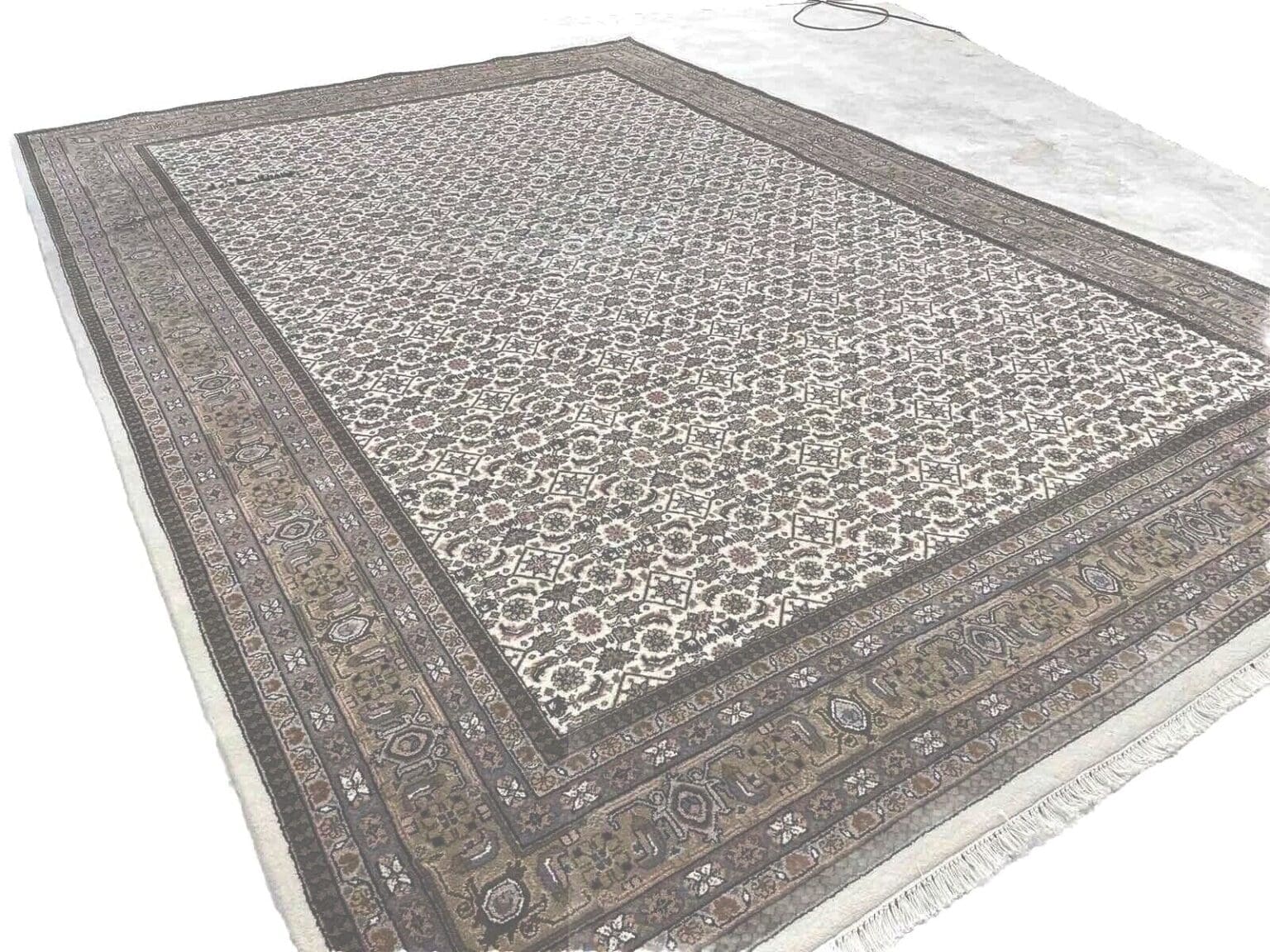
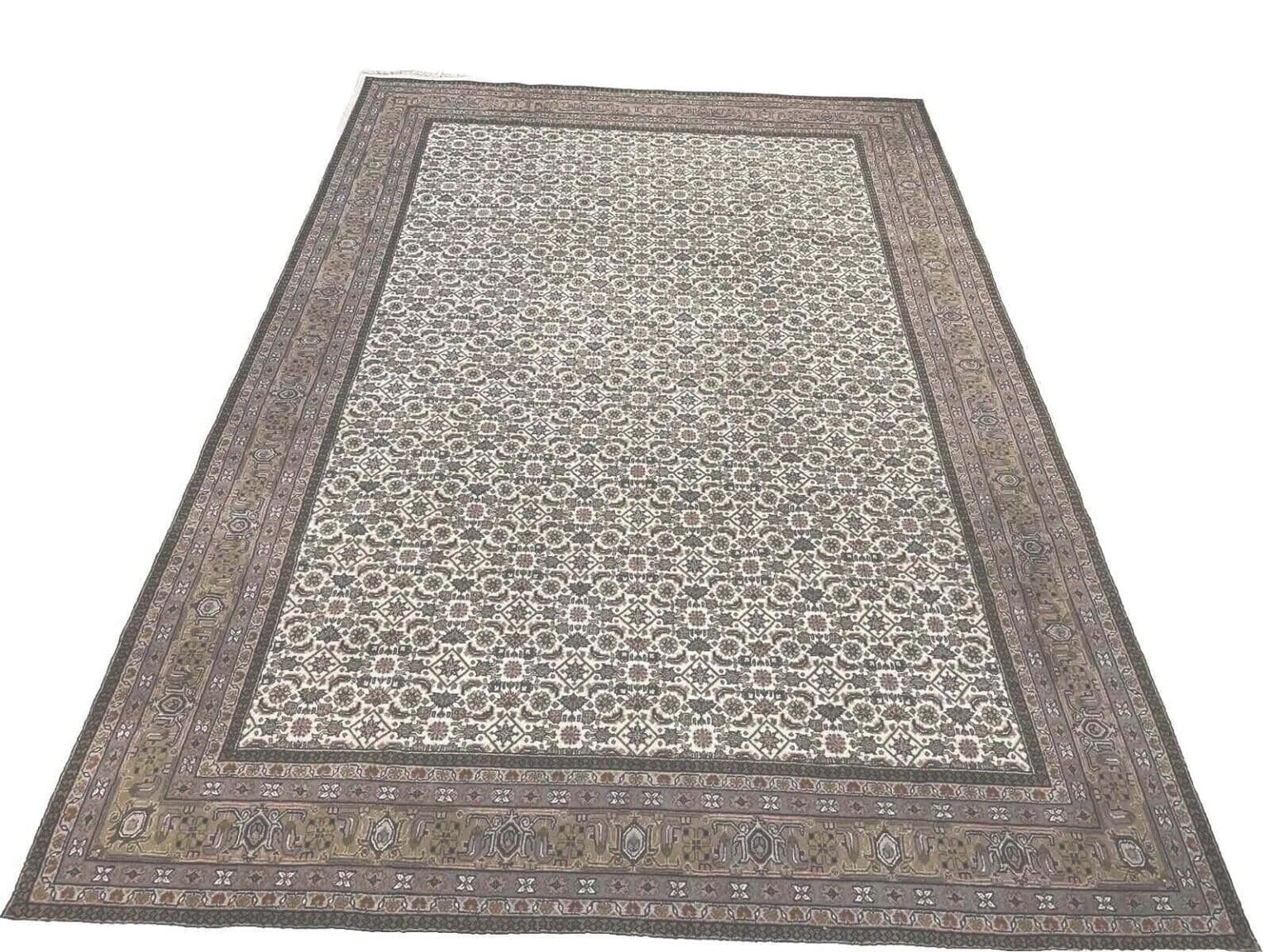
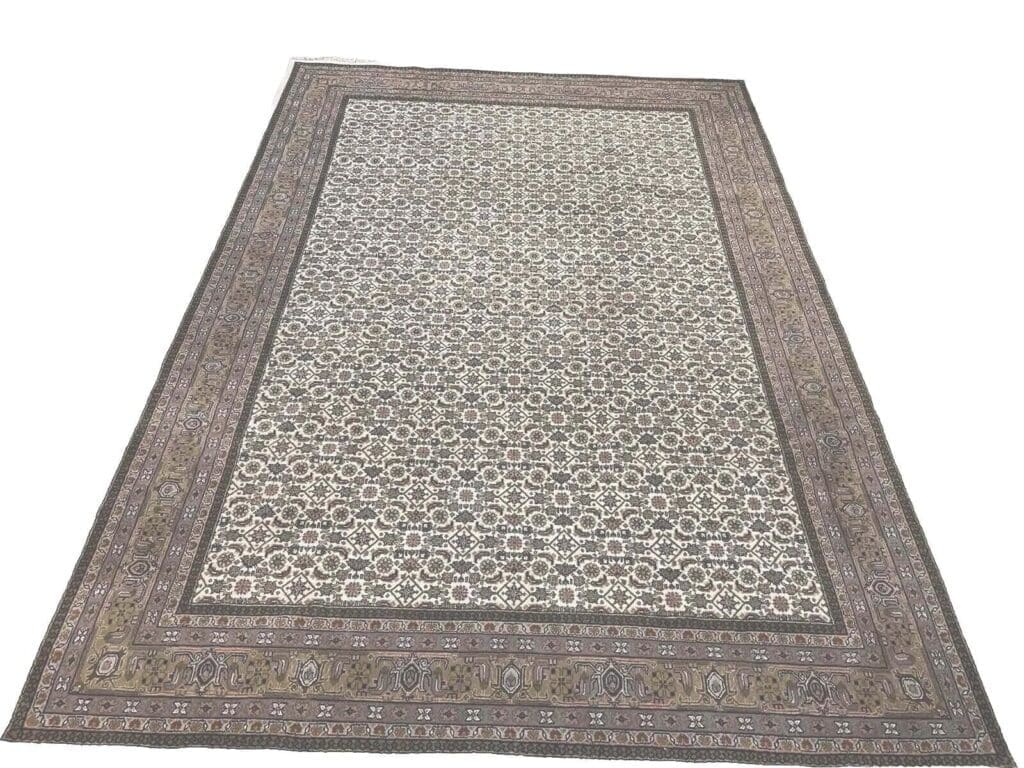
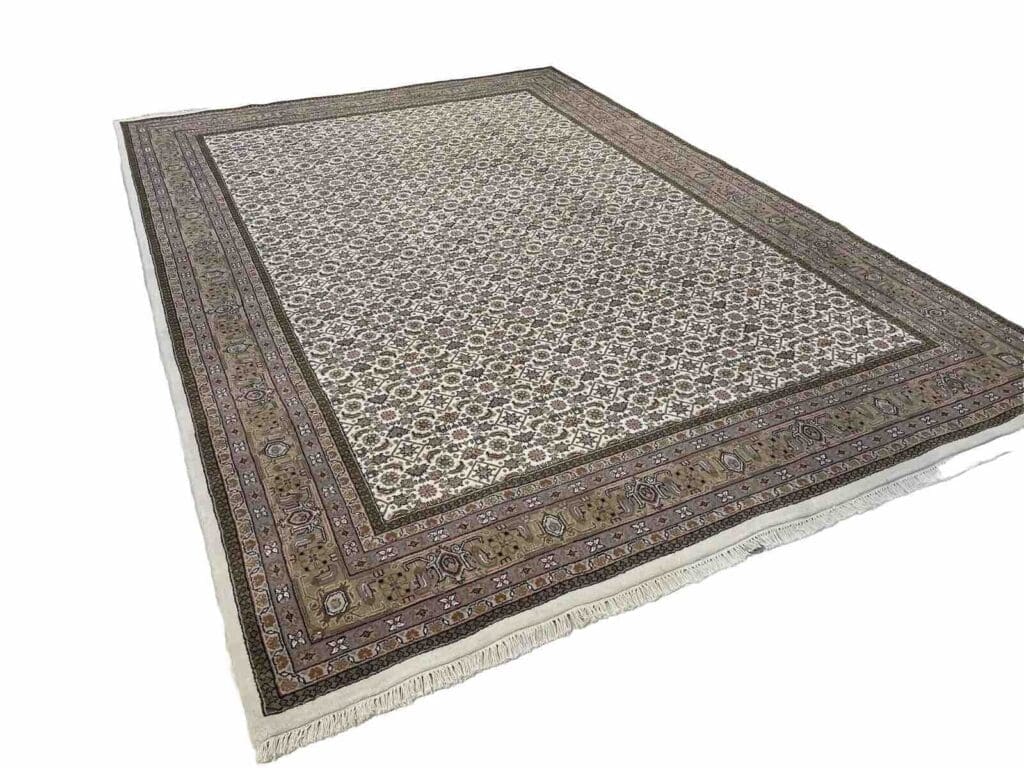
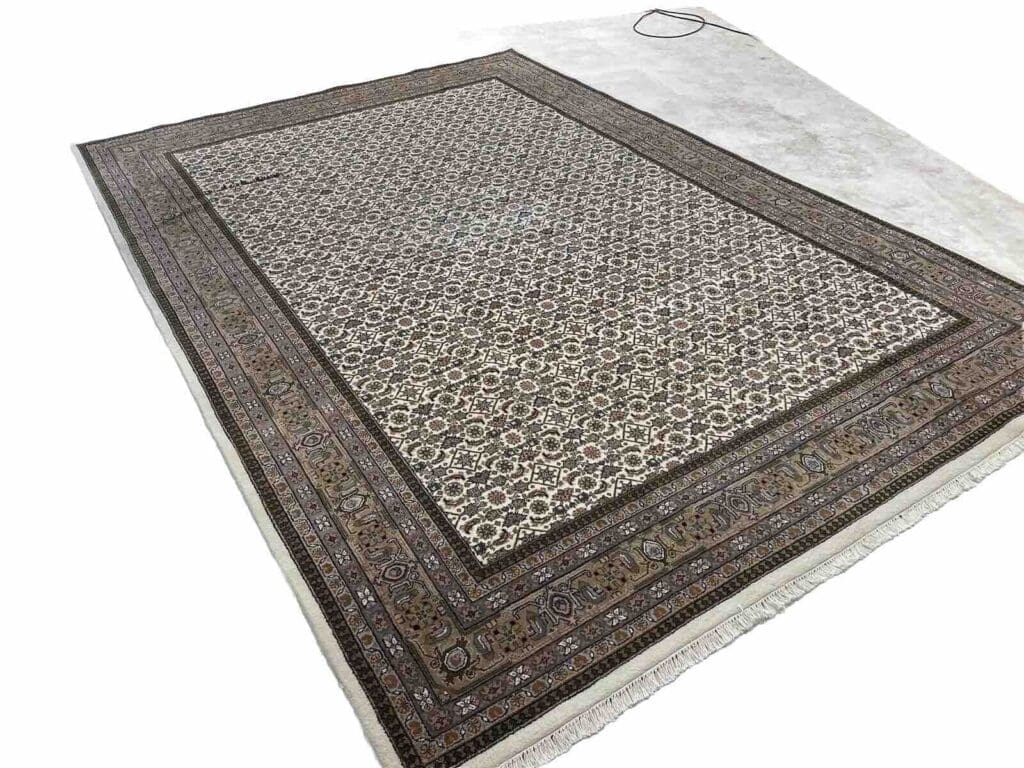
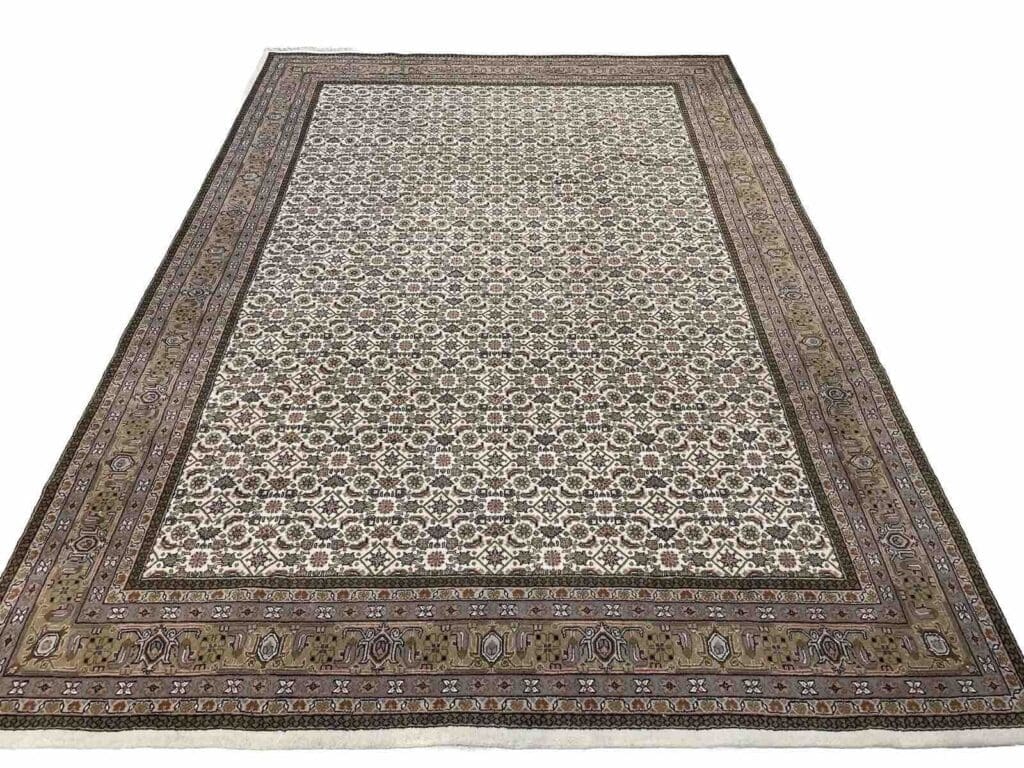
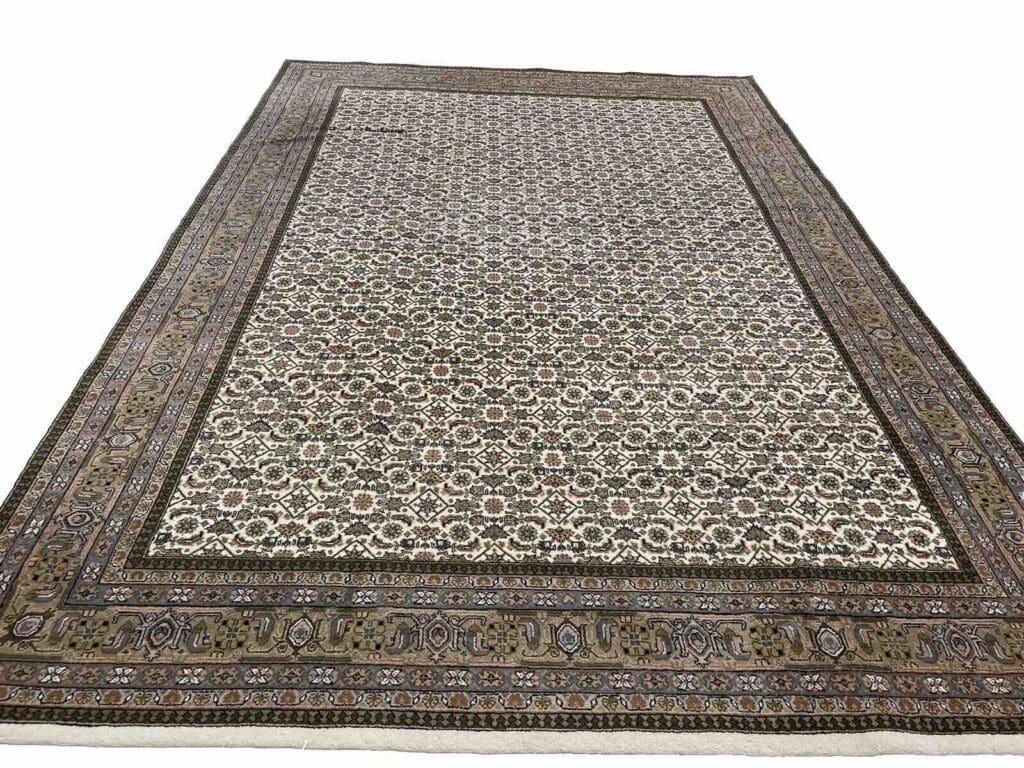
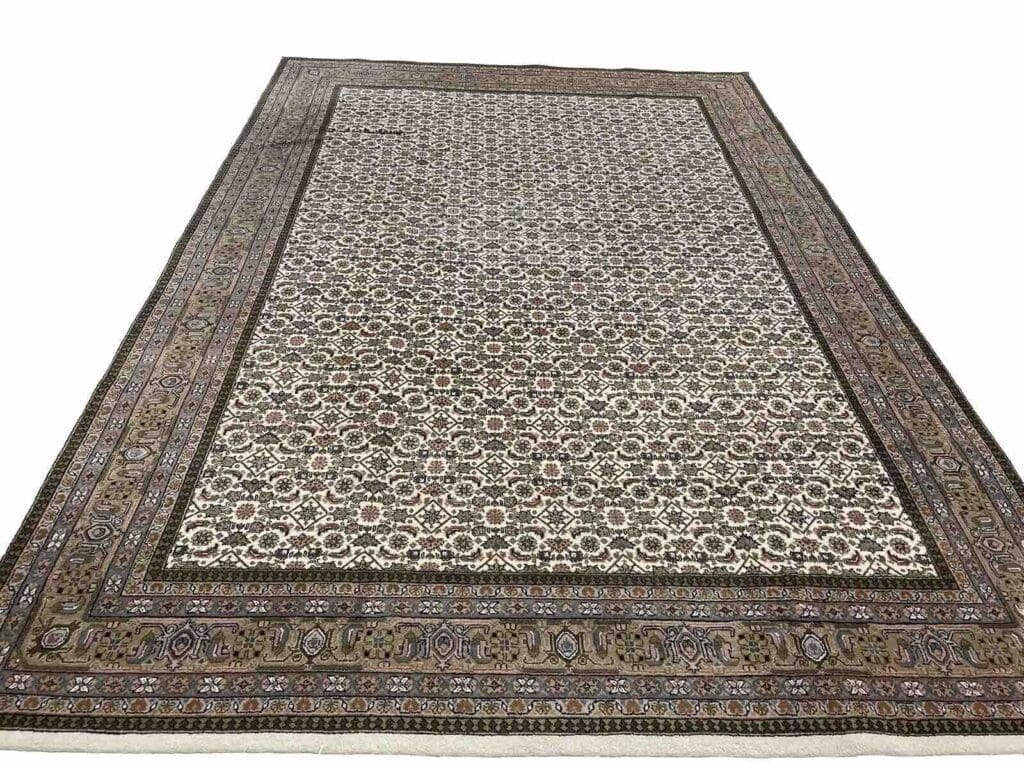
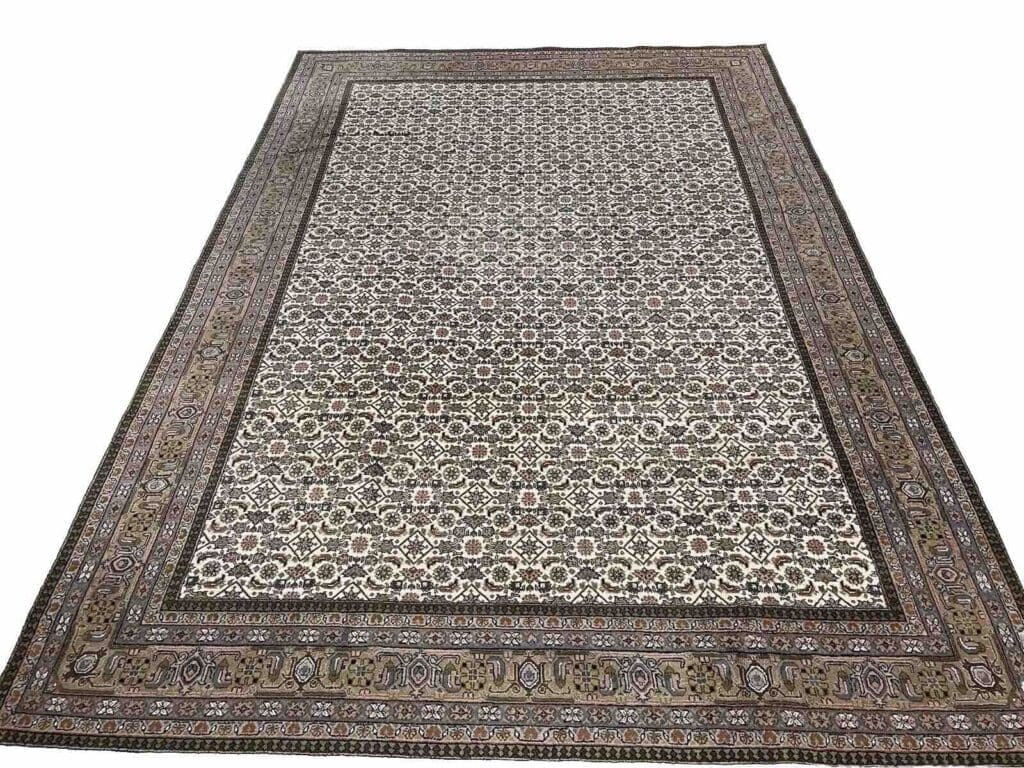
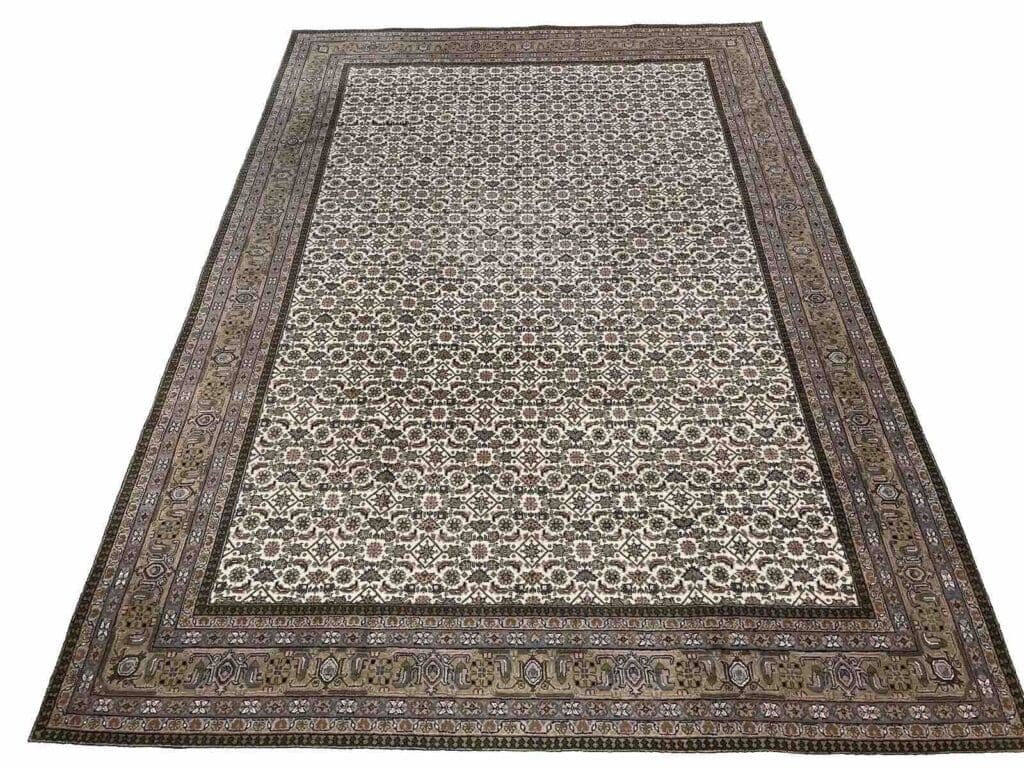
Oriental Rug Kashmir 350 x 250 cm Wool Hand-knotted
€ 2307
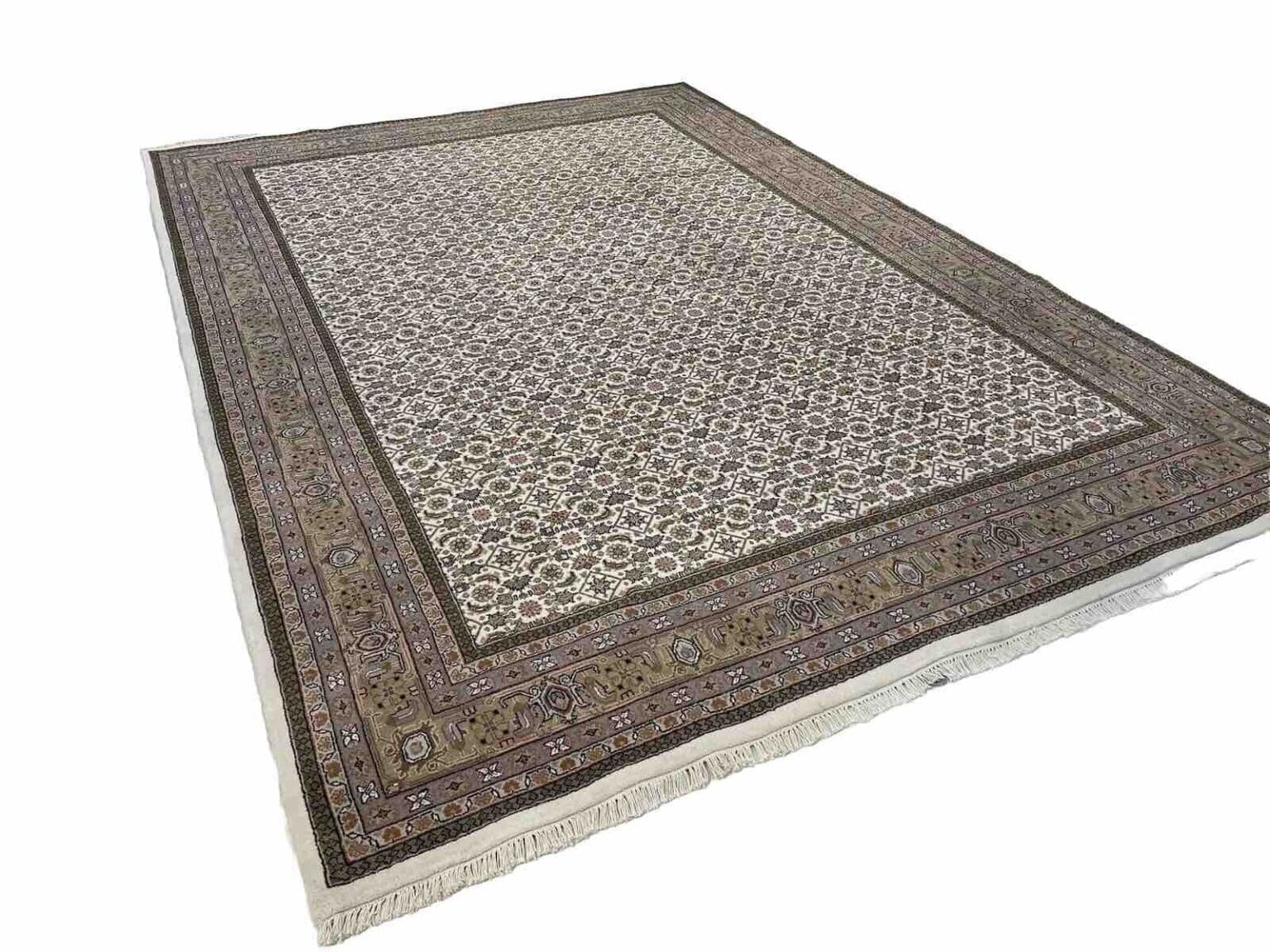
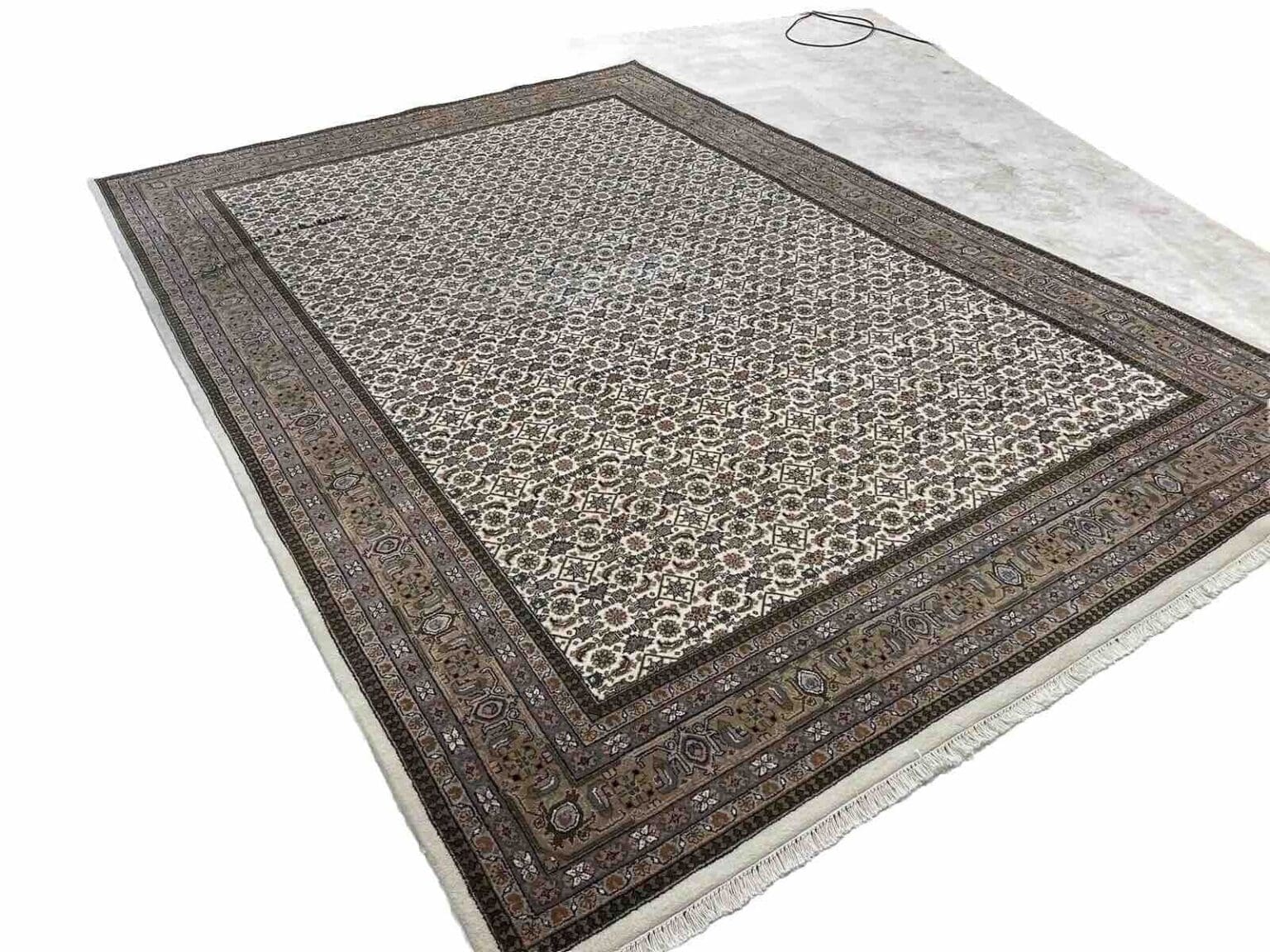
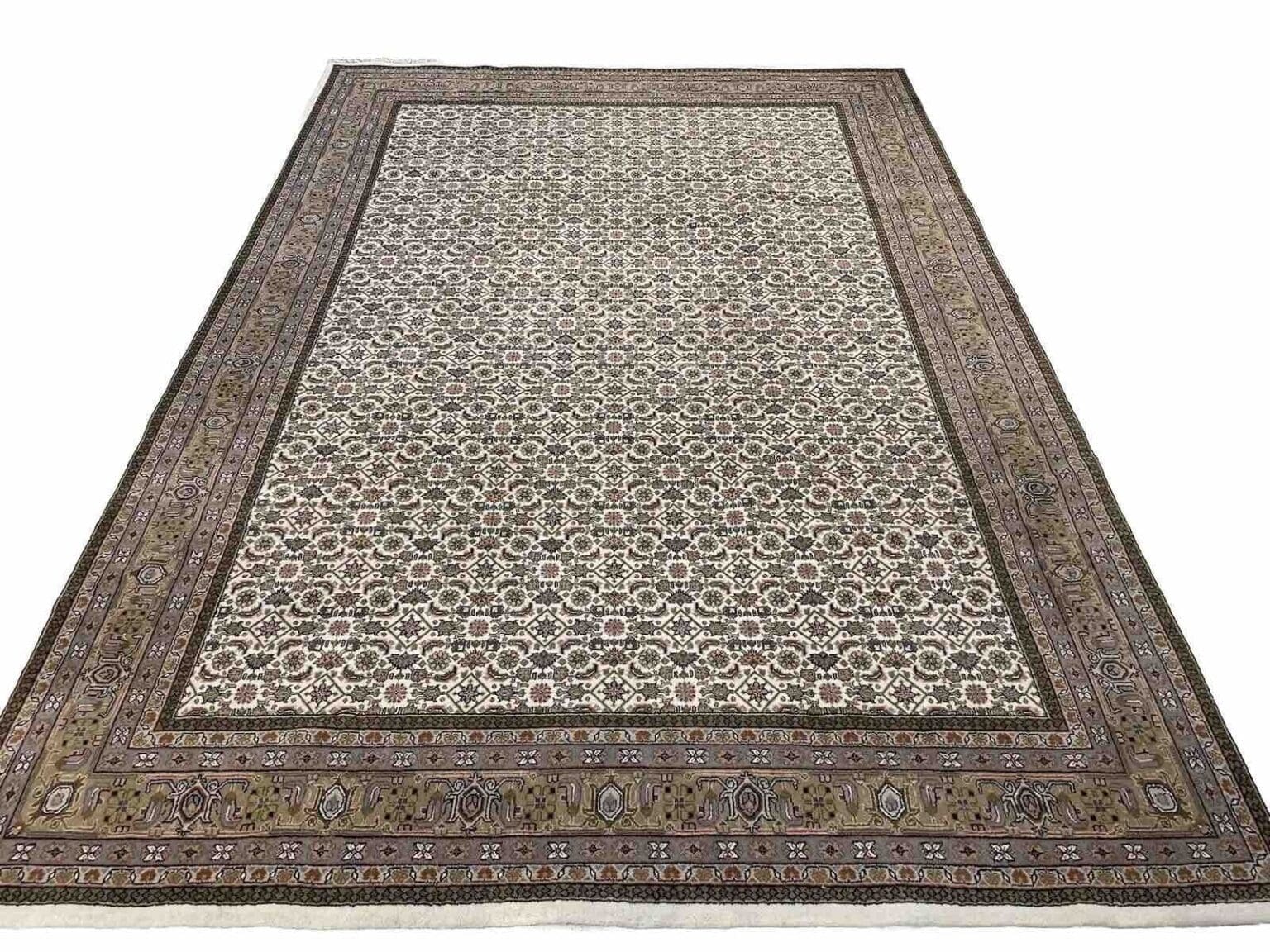
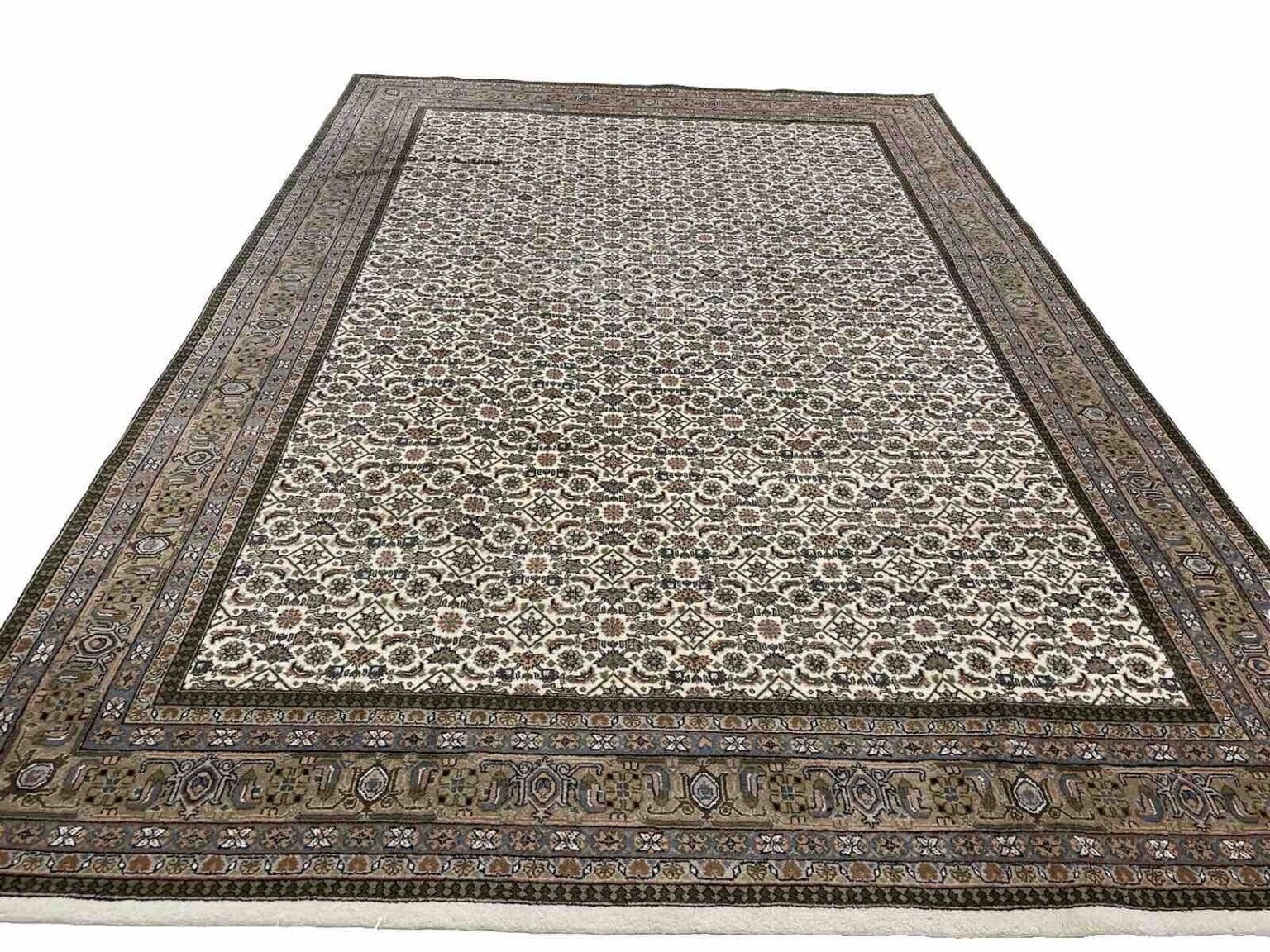
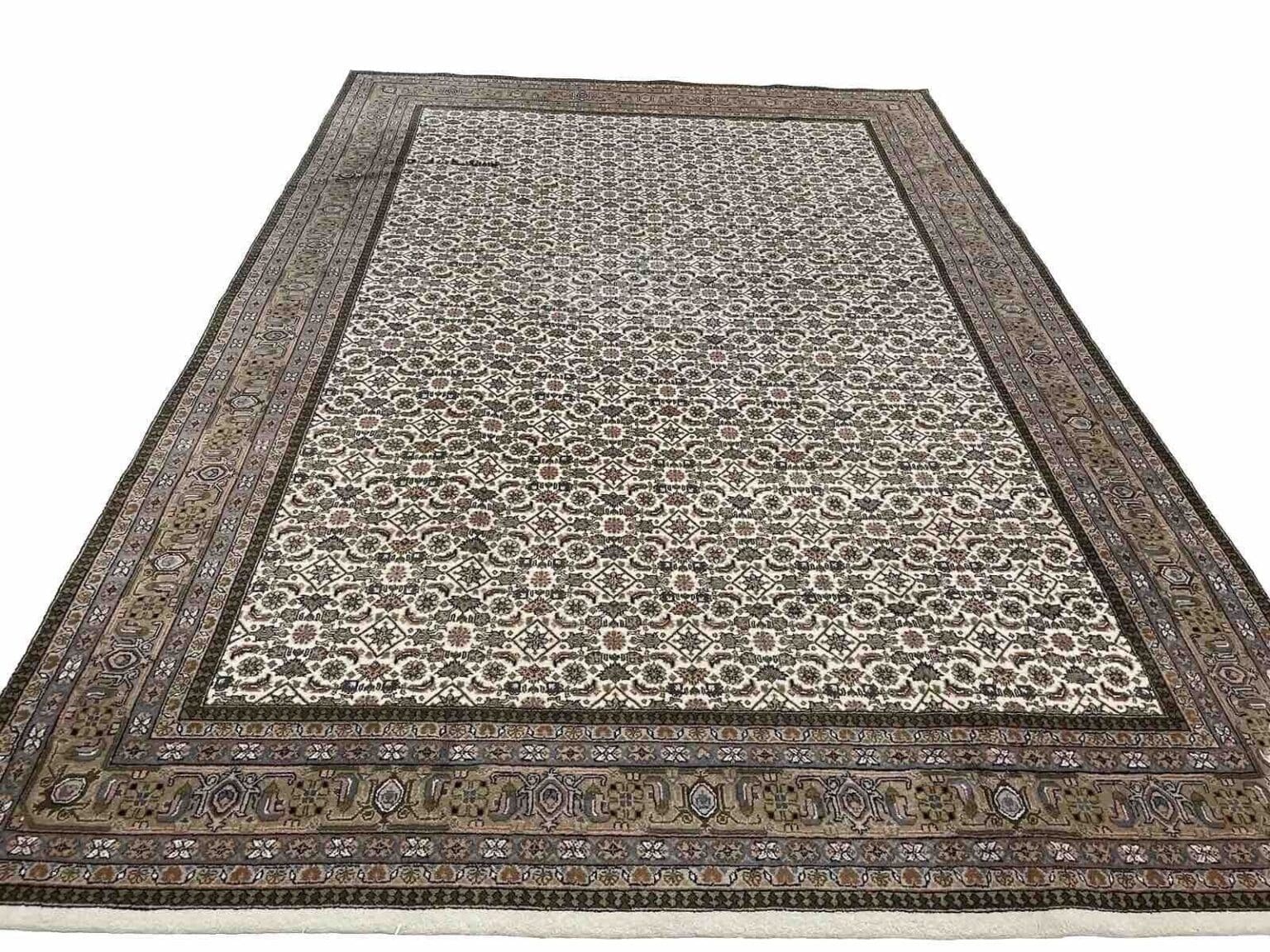
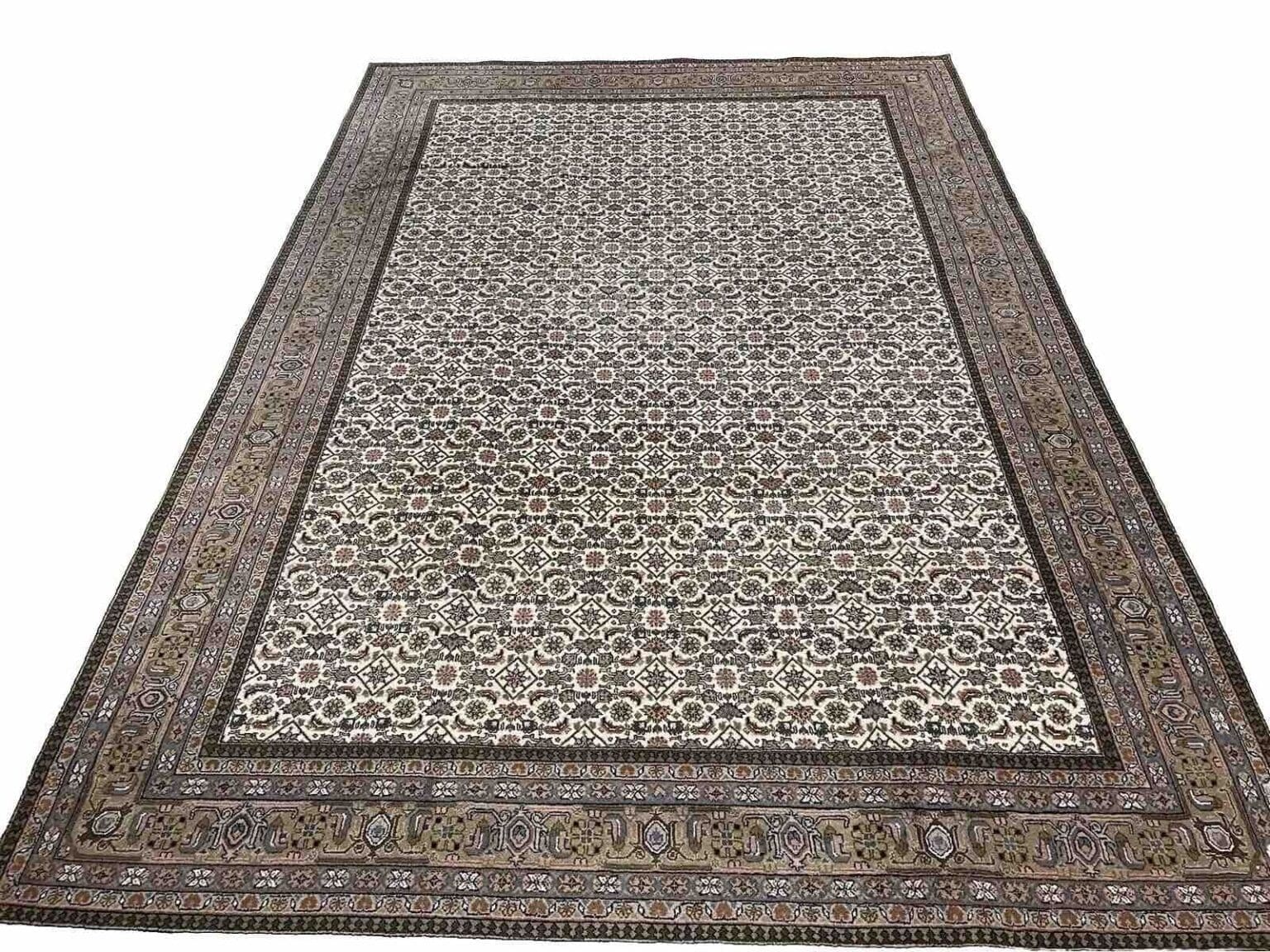
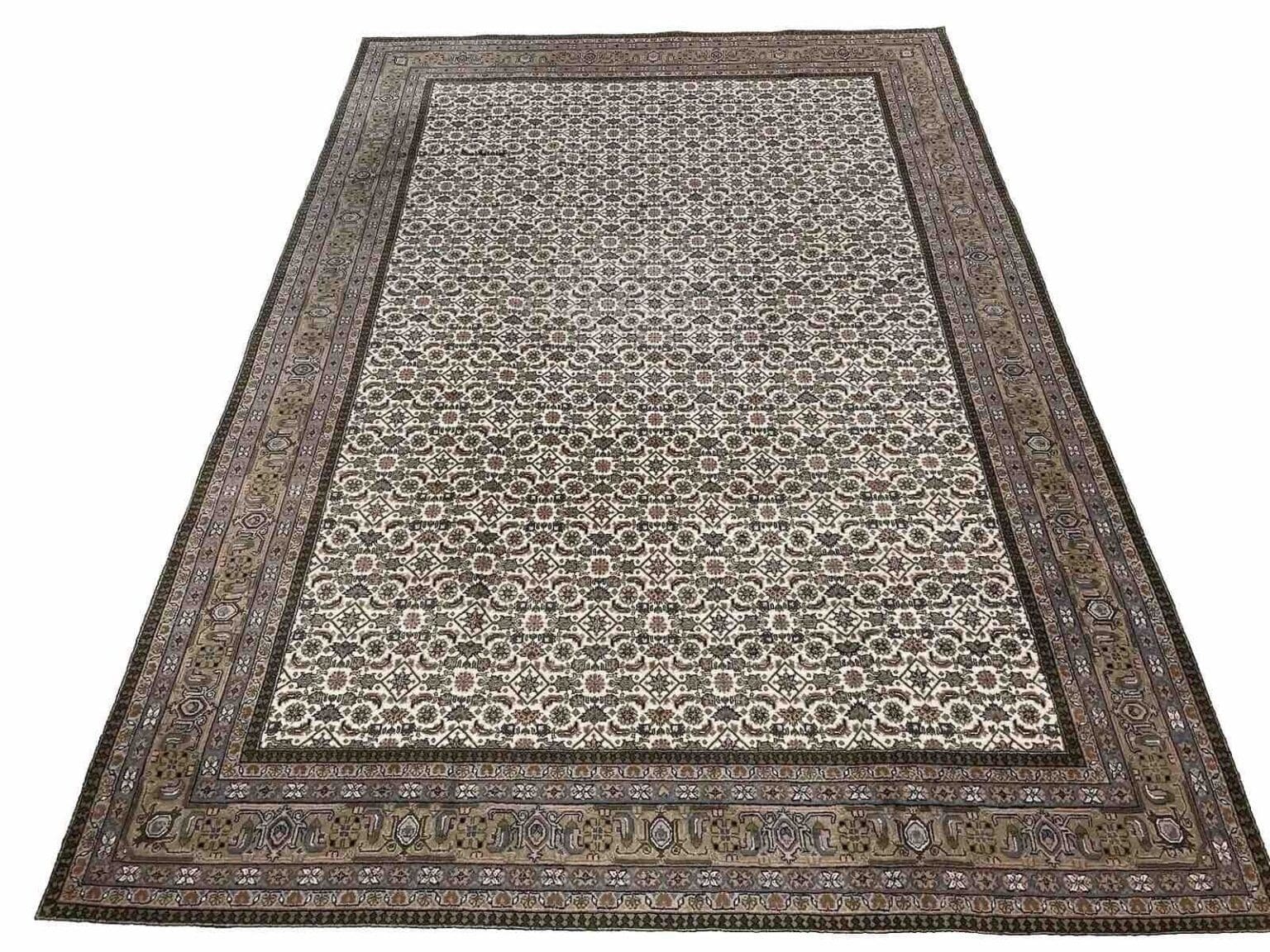
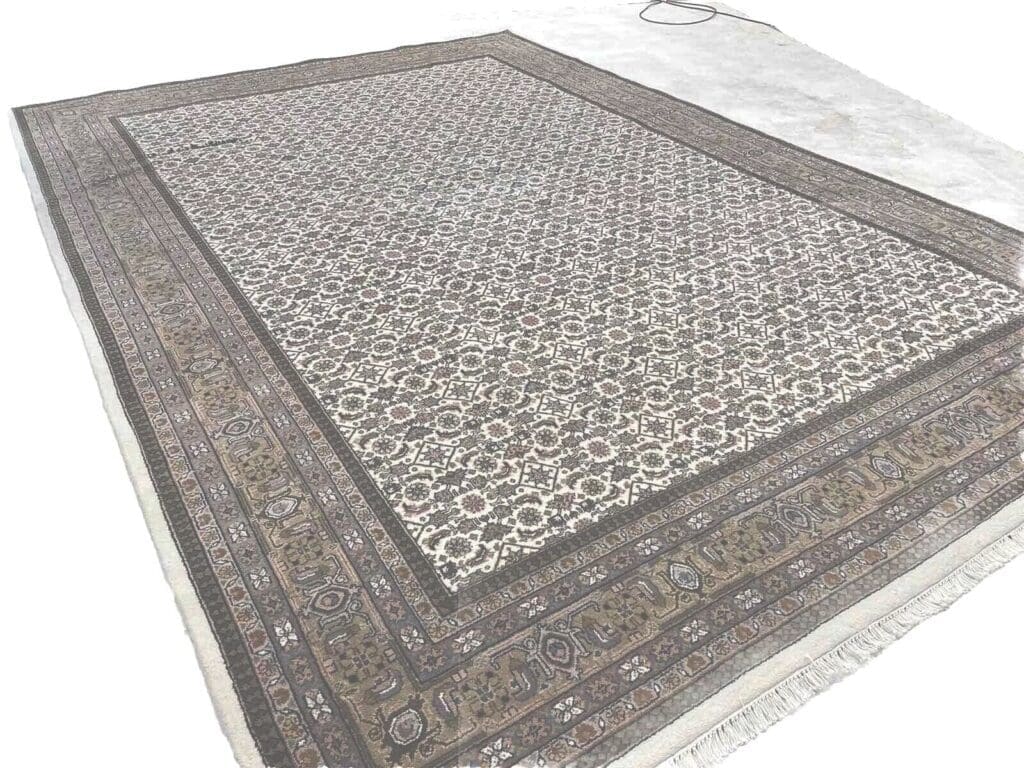
Hand-knotted Kashmir Oriental rug | Knot density: 400,000 knots/m² | Material: Pure new wool pile | Size: 350 x 250 cm | Pattern: Herati | Condition: New with label
This Oriental rug is hand-knotted with a pile made of pure new wool. Wool has long been used in handmade rugs because its natural fibres can create a resilient yet comfortable surface. It also accepts colour evenly and gives drawn motifs a distinct textile character. In hand-knotting, the design is built knot by knot into the foundation. Each knot is placed by hand around the warp, while the rows are secured with weft threads as the work progresses. The pile is then brought into an even surface so that the drawing can be read clearly. The high knot density recorded for this rug supports a detailed rendering of its Herati pattern, including small leaves, curved lines and repeated ornamental units. The pile height is given as 12 mm. The rug is described as new with its label; it has also been professionally cleaned and prepared. It is suitable for use over underfloor heating.
Pure new wool brings a tactile quality to the pile and is associated with the long working tradition of wool rugs. Its surface can show the character of hand construction rather than the uniform appearance of a mechanically produced floor covering. The stated density of 400,000 knots per square metre indicates a finely worked construction. Knot density alone does not create a design, but it gives the maker more room to draw small elements with controlled spacing. The quality of a finished rug also depends on the design plan, the evenness of the rows, the handling of the yarn and the care taken during finishing. Those principles belong to hand-knotted rug production generally and explain how the material and technique work together in this piece.
Origin and Tradition
The origin region given for this rug is Kashmir. Kashmir has a longstanding reputation for textile arts and for the careful use of floral ornament in woven and knotted work. Regional rug making developed through the meeting of local craft knowledge, fine materials and design influences travelling across Asia. A hand-knotted rug begins with a planned structure. The design is transferred to a grid or weaving plan, the foundation is prepared, and rows of knots are built up gradually. The weaver must maintain the rhythm of the pattern while keeping the construction stable. This process makes a rug both a functional textile and a record of sustained manual work.
Kashmir’s rug tradition is often associated with refined line work, balanced compositions and a controlled treatment of floral forms. These qualities can be found in many different designs, but they should not be confused with a claim that every motif originated in Kashmir. The Herati pattern used here originally comes from Iran and became part of a wider Persianate design vocabulary. It has been adopted and interpreted in several weaving regions, including Kashmir. The rug itself is identified with Kashmir as its origin region. The pattern name describes its design tradition, not a change in the rug’s stated provenance. Likewise, the Bijar wording in the original product title does not by itself establish Bijar as the origin of this particular rug.
Oriental rug history includes continual exchange between workshops, cities and trading routes. Motifs were copied, adapted and reorganised as they moved between regions. Iranian centres such as Tabriz and Kashan are known for influential design traditions, while Bijar, Nain and Qom each have their own historical approaches to drawing and construction. Such place names are useful when discussing rug types, but they cannot be assigned to an individual piece unless its origin is stated. For this rug, the stated origin is Kashmir. Its hand-knotted construction, pure new wool pile and fine knot density place it within the broader history of Oriental rug making without changing that regional identification.
The designation of a rug’s origin and the description of its visual language therefore serve different purposes. Origin refers to the region associated with the making of the specific piece. A pattern name refers to the forms arranged across its surface and to the history of those forms. This distinction is particularly relevant for Herati designs, which have travelled widely. It allows the rug to be described accurately as a Kashmir Oriental rug with a Herati pattern, rather than assigning it to Iran merely because the motif has Iranian roots.
Design and Pattern
The rug carries a Herati pattern, one of the recognised floral pattern families in Oriental rug design. Herati compositions are built from repeated leaves, blossoms, curved stems and small connecting elements. A central leaf or rosette may organise the surrounding forms, while paired leaves and curling branches fill the spaces between larger motifs. The visual effect comes from the relationship between repetition and balance. A Herati field can appear orderly because its elements follow a clear rhythm, yet it remains intricate because each unit contains several lines and smaller shapes.
The pattern originally developed in the Iranian cultural sphere and later became widely used beyond Iran. Kashmir workshops incorporated this vocabulary into their own practice, allowing the established floral language to meet local approaches to drawing and colour. The result is not defined by the name alone. The character of a particular rug also depends on the scale of its motifs, the spacing between them, the precision of the outline and the contrast between field and ornament. In this rug, the ground colour is beige. The light tone gives the pattern a calm visual setting and allows the structure of the hand-knotted pile to remain part of the overall appearance.
A dense knotting can be especially useful for Herati designs because the pattern contains many small directional changes. Fine leaves can be separated from neighbouring stems, borders can be kept clear, and repeated motifs can be placed with greater precision. The design is still the result of several factors: the original drawing, the weaver’s interpretation, the selected colours and the regularity of the knotting. This rug combines the traditional Herati vocabulary with a beige colour scheme and a hand-knotted wool pile. Its stated style is traditional Persian and Oriental, while its specific origin region is Kashmir.
Herati belongs to a larger group of floral and geometric traditions found throughout the Oriental rug world. Tabriz rugs are often discussed in connection with elaborate floral compositions and varied drawing. Kashan is associated with detailed, elegant ornament and rich colour arrangements. Nain, Bijar and Qom also have distinctive approaches to pattern and technique. These comparisons provide context for the Herati design, but they do not redefine this rug. Its surface is described by the Herati pattern, its colour is beige, and Kashmir is the stated region of origin.
Special Features
This rug is distinguished by its hand-knotted construction, pure new wool pile and a recorded density of 400,000 knots per square metre. Its pile height is given as 12 mm. The condition is new with label. It is also described as professionally cleaned and prepared, so it can be laid out immediately. The rug is suitable for underfloor heating and is listed as suitable for all rooms. These details concern the individual piece. The beige ground and Herati pattern define its appearance, while Kashmir identifies its origin region. Because it is hand-knotted, its construction is formed through an individual sequence of knots rather than through an industrially repeated surface.
FAQ
How should I care for this Herati Oriental rug?
Regular vacuuming helps remove loose dust and everyday dirt from the pile. The surface should be treated gently and without unnecessary pressure so that the wool fibres are not strained. For a deeper treatment, professional cleaning is recommended. A specialist can match the process to the pure new wool pile and the hand-knotted construction, helping preserve the colour and surface structure. Professional attention is also appropriate when a stain has set or when the rug needs a more thorough refresh. Routine care and suitable cleaning are the basic measures for maintaining a wool Oriental rug.
Where does this Herati-patterned rug come from?
The stated origin region of this rug is Kashmir. The Herati design itself originally comes from Iran and belongs to the floral vocabulary of Persian and Oriental rug art. These are separate descriptions: the pattern records a design tradition, while the origin identifies the region associated with this particular rug. This piece is therefore described as a Kashmir Oriental rug with a Herati pattern. Its hand-knotted technique, pure new wool pile and fine knot density connect it with the wider history of handmade Oriental rugs.
What are the advantages of a hand-knotted Oriental rug?
A hand-knotted rug combines individual manual work with a design tradition developed over many generations. Each piece has its own sequence of knots and is therefore a distinct textile object. Pure new wool is valued for its pleasant handle and practical resilience, while the Herati pattern provides a lasting floral structure. This rug is new with label, professionally cleaned and prepared, suitable for underfloor heating and listed for all rooms. Its high knot density supports the precise rendering of the detailed pattern, and its beige colour gives the ornament a restrained foundation.
To provide the best experiences, we use technologies like cookies to store and/or access device information. Consenting to these technologies will allow us to process data such as browsing behavior or unique IDs on this site. Not consenting or withdrawing consent, may adversely affect certain features and functions.
Functional Always active
The technical storage or access is strictly necessary for the legitimate purpose of enabling the use of a specific service explicitly requested by the subscriber or user, or for the sole purpose of carrying out the transmission of a communication over an electronic communications network.
Preferences
The technical storage or access is necessary for the legitimate purpose of storing preferences that are not requested by the subscriber or user.
Statistics
The technical storage or access that is used exclusively for statistical purposes.The technical storage or access that is used exclusively for anonymous statistical purposes. Without a subpoena, voluntary compliance on the part of your Internet Service Provider, or additional records from a third party, information stored or retrieved for this purpose alone cannot usually be used to identify you.
Marketing
The technical storage or access is required to create user profiles to send advertising, or to track the user on a website or across several websites for similar marketing purposes.

 SECURE PAYMENT
 SHIPPING PARTNERS