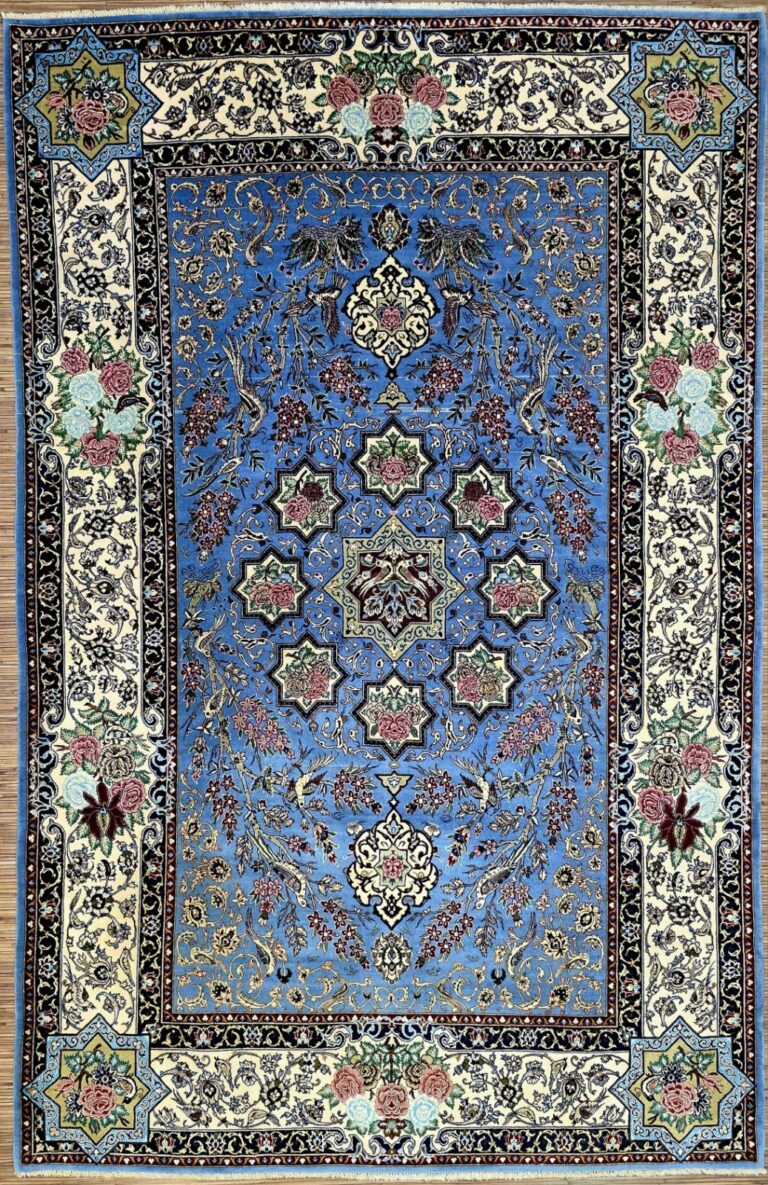
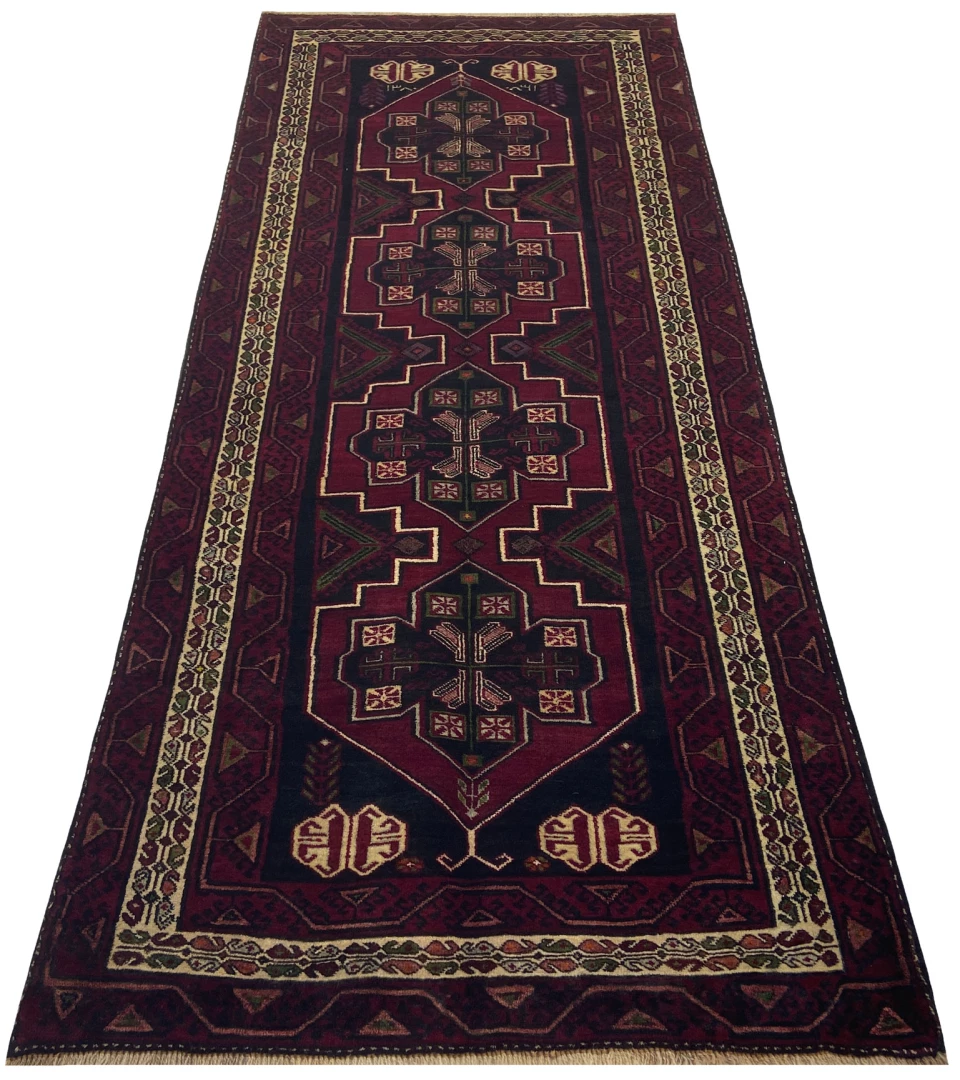
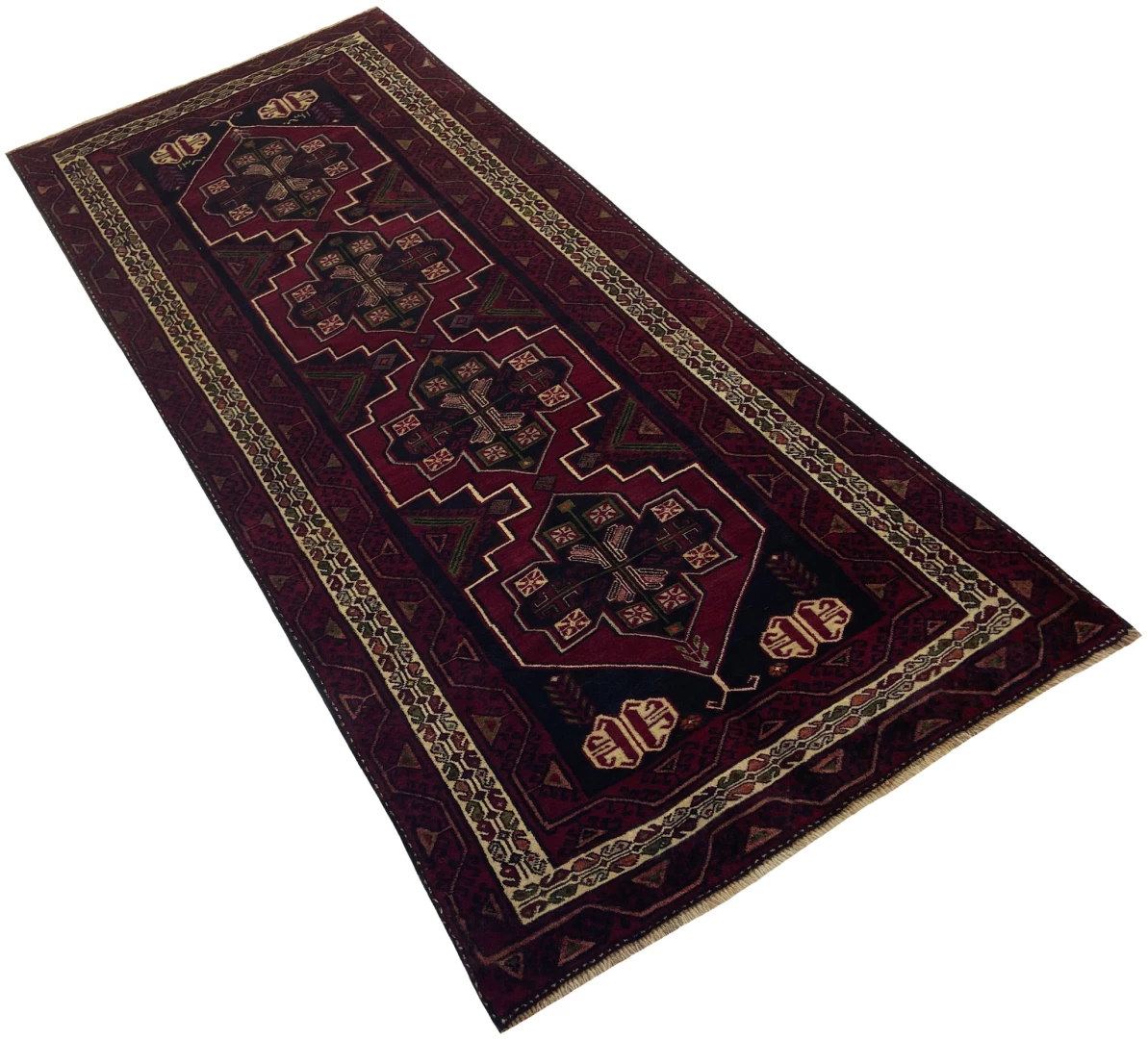
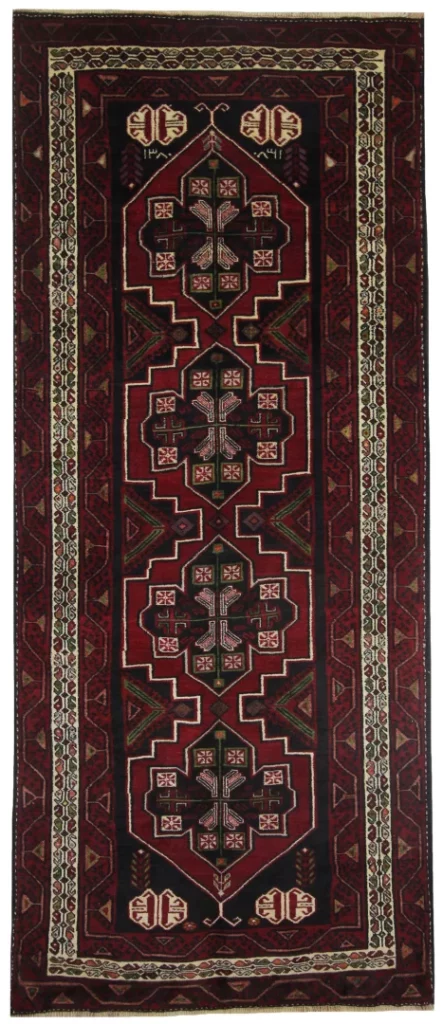
This Belutsch Oriental rug is hand-knotted and made from natural wool. The wool comes directly from the producer’s own production. As a traditional rug material, wool offers a resilient, tactile surface suited to everyday use. Its natural fibre structure also gives a wool rug the familiar feel of a substantial textile rather than a smooth industrial floor covering.
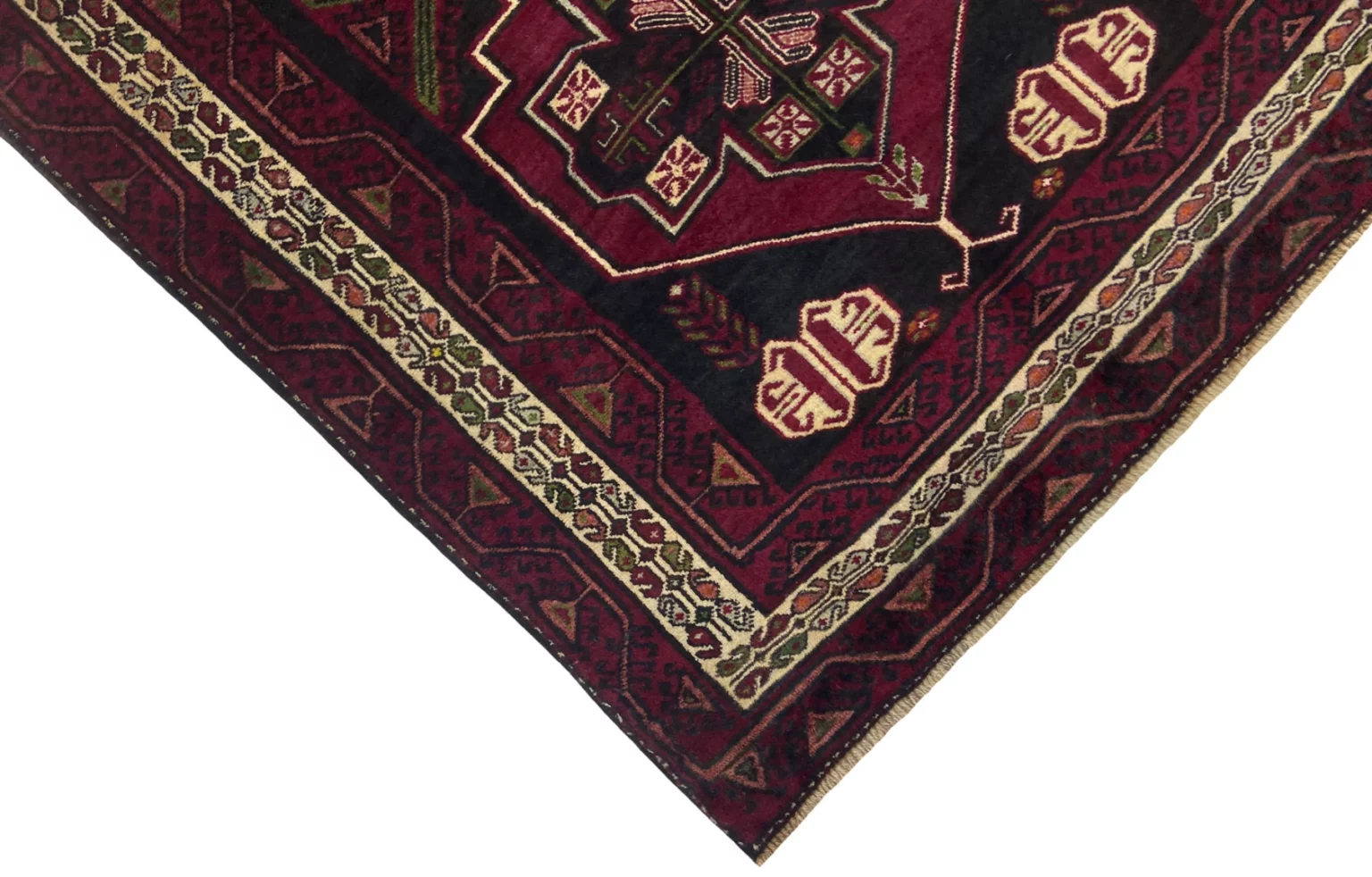
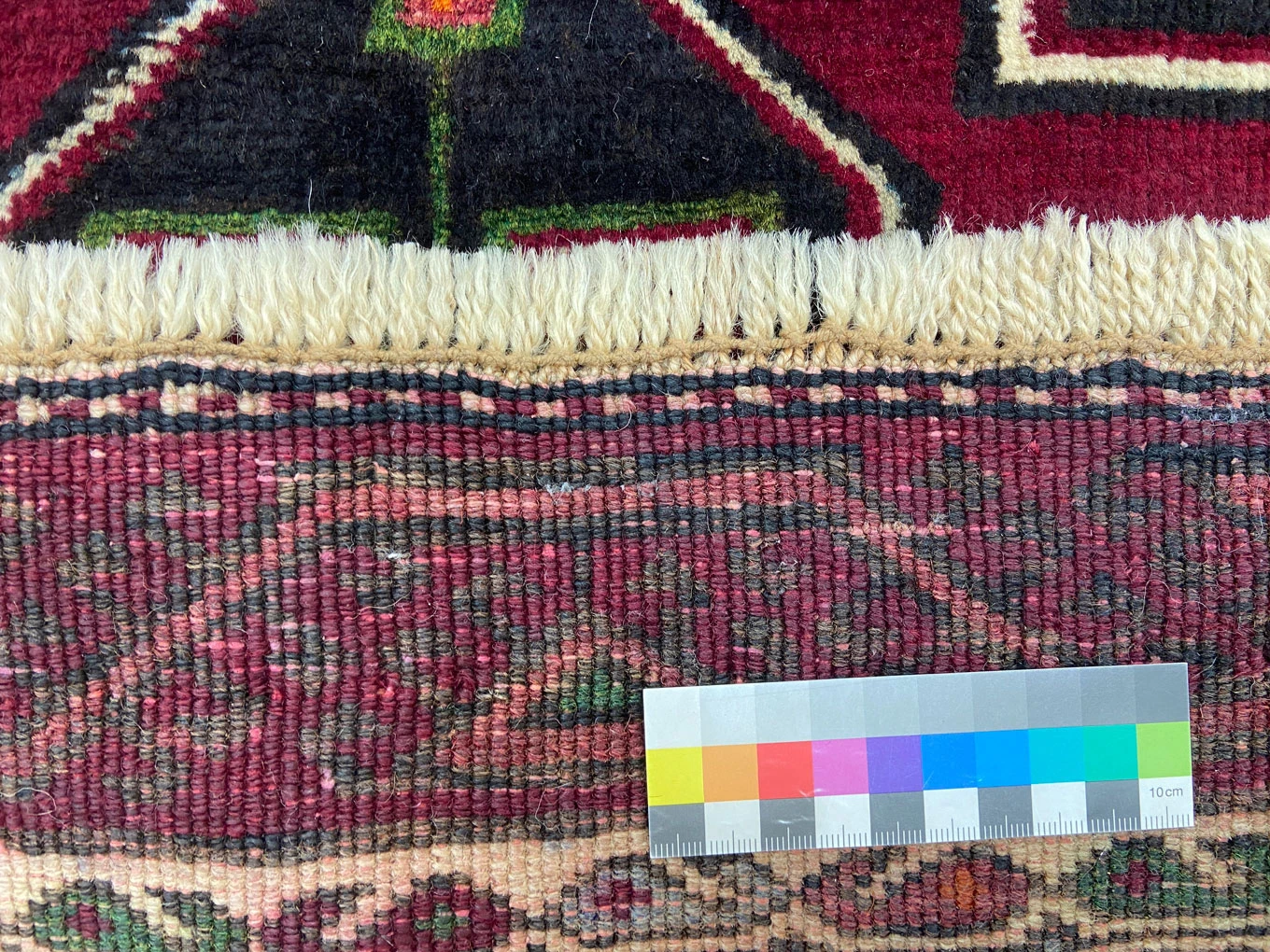
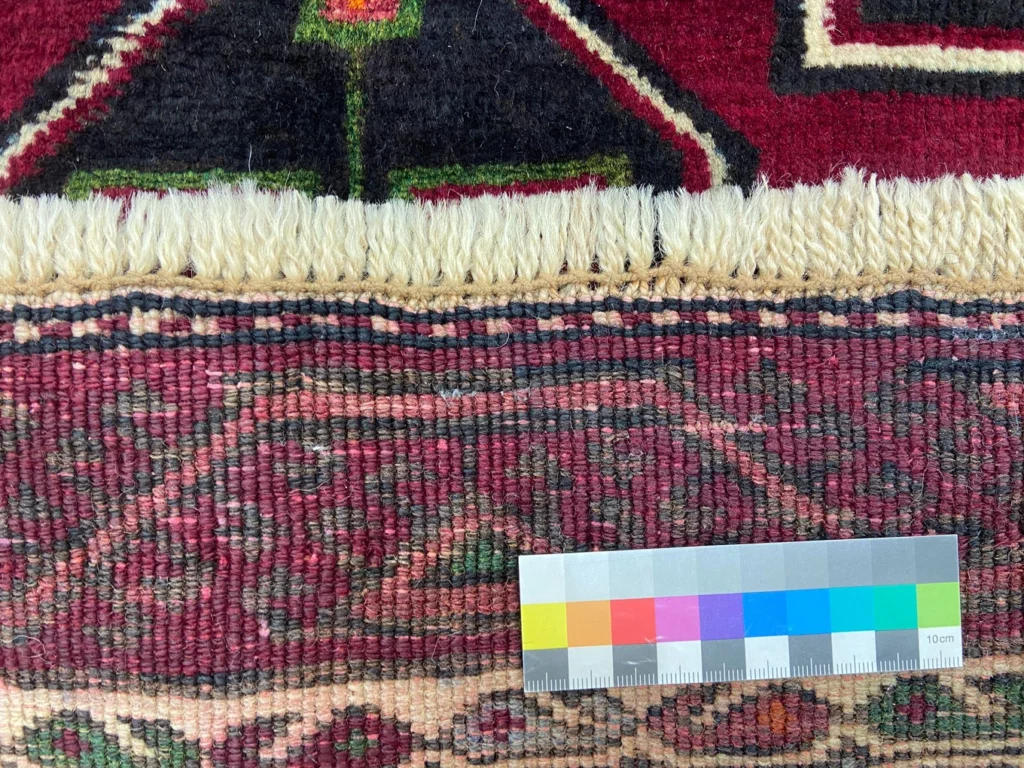
In hand-knotting, each knot is inserted individually into the foundation. The pile is then worked and aligned so that the surface forms a coherent pattern. This process depends on experience, patience and consistent manual control. Unlike a machine-made floor covering, a hand-knotted rug develops small individual characteristics through the work of the person who makes it.
The product information gives a knot density between 120,000 and 250,000 knots per square metre. Knot density describes how closely the individual elements are arranged within the woven structure and is related to the resilience and definition of the pile. Here, the natural wool and the dense hand-knotted construction are the central material and manufacturing features.
The rug is described as being in good condition. Its material and method of construction identify it as a handmade Oriental rug in which natural wool and traditional knotting are particularly important. No additional material or cotton warp is specified, so no further fibre composition is assigned to this piece.
Origin and Tradition
This rug comes from the homeland of the Baluch people. The source places that homeland in the border region between Afghanistan, Persia and Pakistan. The name Belutsch refers to the cultural and craft tradition of the Baluch people. The area is broad and includes varied landscapes, communities and ways of life. Within that setting, rug making developed as a textile practice connected with both mobile groups and settled communities.
Among the Baluch, rug making has been passed on through generations. Knowledge of wool preparation, spinning, dyeing, foundation structures and pattern arrangement is traditionally learned through close practical work. A rug is therefore more than a functional textile: it is also a form of visual and material expression. The work brings together use, inherited design knowledge and the skills required to create a durable hand-knotted surface.
The position between Afghanistan, Persia and Pakistan helps explain why Belutsch rugs do not have one single uniform appearance. Different local and tribal influences meet across this region. Nomadic, village and other settled traditions have developed their own approaches to colour, structure and ornament. Their shared connection lies in manual production, the use of natural materials and the importance of patterns carried through the community.
Traditional production begins with selecting and preparing the wool. The fibre is spun and made ready for use, then dyed when colour is required. The foundation is prepared before the pile is built knot by knot. Each completed row is compacted and aligned as the work progresses. The process can take place in stages and requires close attention to tension, spacing and the relationship between the emerging design and the underlying structure.
Belutsch rugs are often discussed in connection with the practical life of their region of origin. In nomadic contexts, textiles needed to be useful, portable and durable, while still carrying a recognizable visual order. This encouraged a design language in which geometric organization, repeated signs and an earth-related palette play an important role. These are general characteristics of the Belutsch tradition and do not prescribe the exact appearance of every individual rug.
This piece is identified as a Belutsch Oriental rug from that tradition. Its regional classification is based on the stated homeland of the Baluch people and on its hand-knotted form. No more precise attribution to a particular town, tribe or workshop is given. The origin is therefore kept at the regional and cultural level rather than extended into an unsupported workshop or provincial claim.
Design and Pattern
Belutsch rugs are often associated with geometric and symbolic designs. Angular lines, stepped shapes, diamonds and repeated devices are among the forms that can occur in this tradition. Such elements establish a measured rhythm across the surface. They may be used in a border, arranged in a central field or repeated as smaller motifs throughout the composition.
Symbolic signs in tribal rugs should not always be treated as individual images with one universally fixed translation. They often preserve inherited forms and help distinguish one regional or family approach from another. Meaning can therefore lie in the motif itself, in its repetition and in its relationship to the complete pattern. Geometry may evoke ideas of belonging, protection, nature or continuity, although no single explanation applies to every sign used in Baluch weaving.
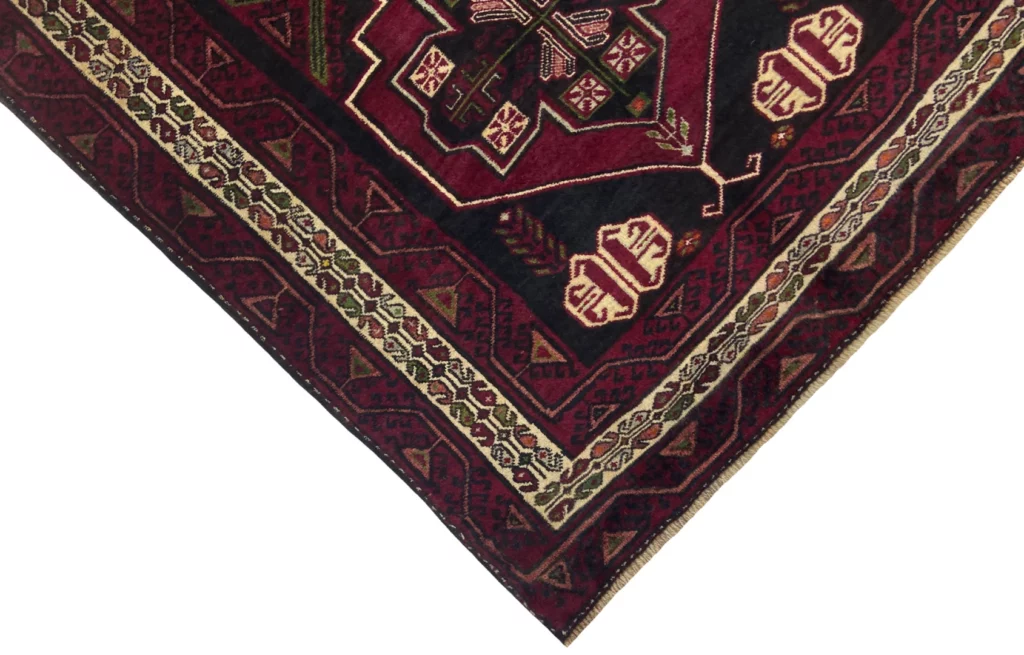
The traditional colour range is often described as extending from deep reds to subdued earth tones. Red can give a field warmth and visual depth, while brown, beige and related natural shades create a quieter balance. In handmade rugs, the appearance of colour is affected by the wool, the dyeing process, the light and the way the surface is used. This is background to the Belutsch design tradition; the exact distribution of colours in this individual rug is not specified.
Many Belutsch compositions depend on the relationship between open areas and strong outlines. A small ornament can gain weight through repetition, while a substantial border can frame the inner field. Repeated forms provide visual continuity, and minor variations retain the evidence of handwork. The result is a pattern language that can appear orderly without being mechanically identical from one element to the next.
Other Oriental rug traditions from the wider region have different design vocabularies. Gabbeh rugs, for example, are known for simple yet expressive designs and often vivid colours; some compositions show scenes from the everyday life of nomadic groups. Kerman is associated with intricate floral patterns. Qom rugs, made in the city of the same name, are known for fine knotting and the use of silk. These examples explain the variety of Oriental weaving traditions and do not identify this rug as Gabbeh, Kerman or Qom.
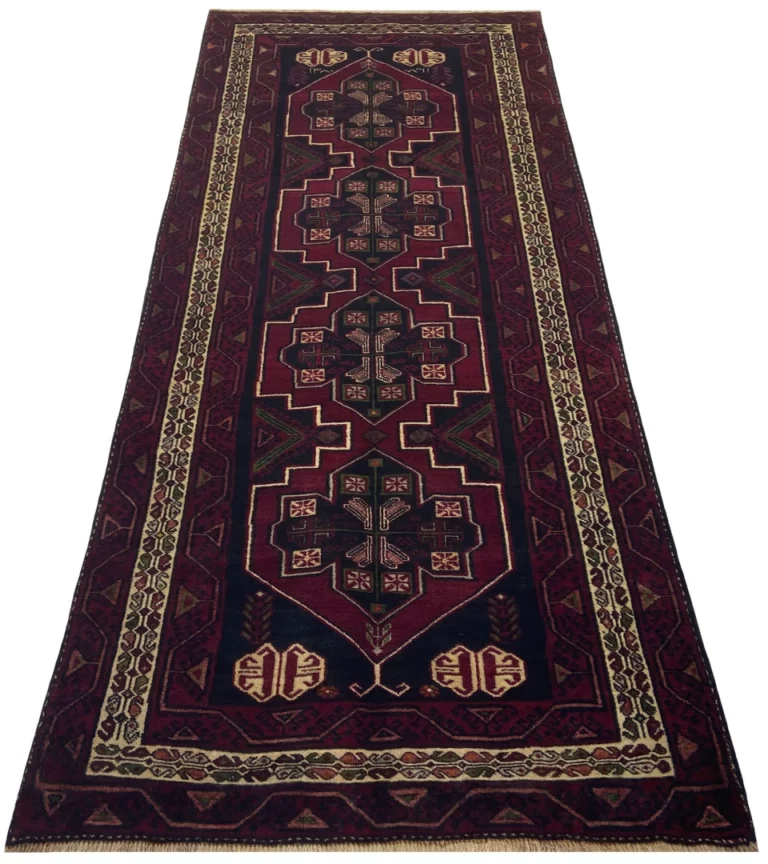
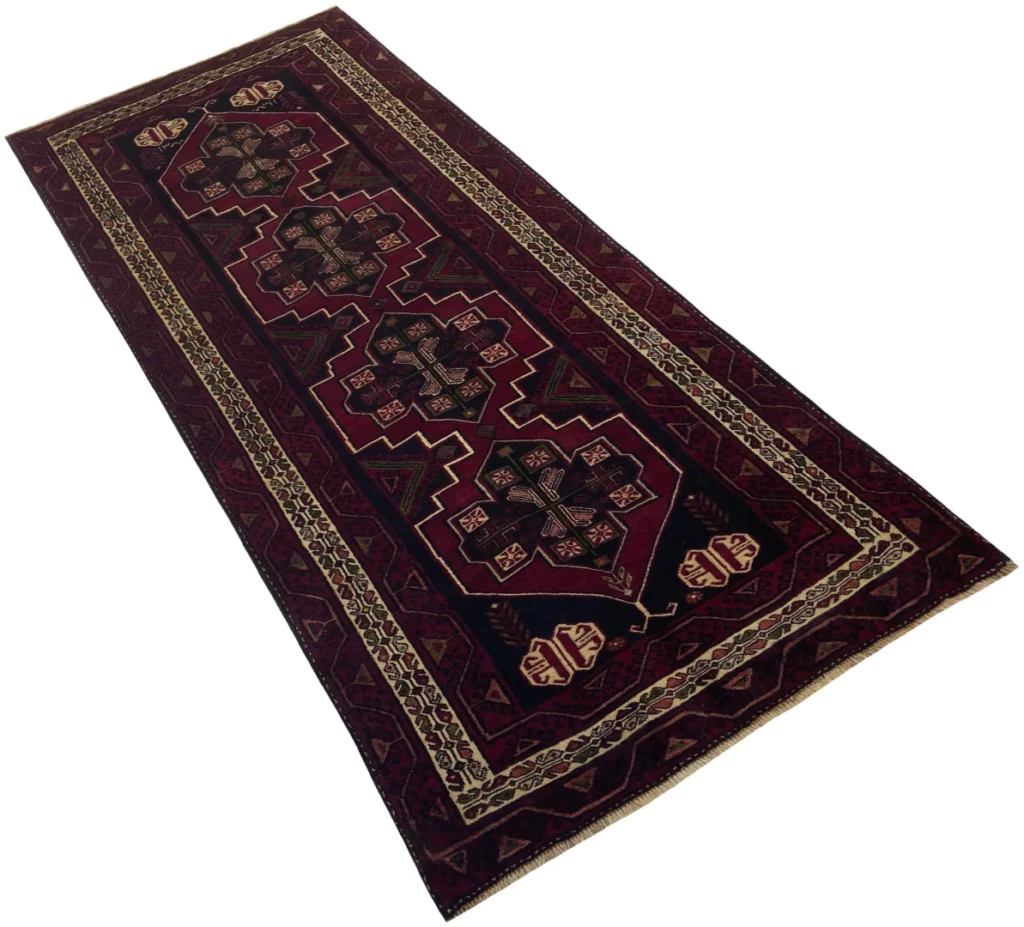
The specific rug is described within the Belutsch tradition of geometric and symbolic patterning. No individual motif, exact sequence of colours or particular medallion is named. The reliable design description therefore remains at the level of the tradition: geometric forms, symbolic elements and a palette that can range from deep red to gentle earth tones.
Special Features
This rug combines natural wool with hand-knotting, bringing together a natural fibre and a traditional method of construction. The wool comes from the producer’s own production, making the material part of the stated manufacturing description. Its surface is shaped by the properties of the natural fibre and has the tactile character associated with a wool rug.
The stated knot density of 120,000 to 250,000 knots per square metre is a clearly identified feature of the structure. The rug is also linked to the homeland of the Baluch people in the border region between Afghanistan, Persia and Pakistan. Its condition is described as good. No information is provided about a signature, age, dye composition, exact workshop or more specific attribution.
FAQ
What distinguishes a Belutsch Oriental rug?
A Belutsch Oriental rug brings together hand-knotting and the weaving tradition of the Baluch people. Natural materials, geometric forms and symbolic motifs are commonly associated with this rug culture. Deep reds and earthy shades also occur frequently in its traditional palette. For this particular rug, the listed features are natural wool from the producer’s own production, hand-knotted construction, the stated knot density and good condition.
How should a hand-knotted wool rug be cared for?
For routine care, vacuum the surface gently using a setting suitable for a wool rug. Prolonged direct sunlight should be avoided where possible, since natural fibres and dyes can be affected by strong light. Blot spills and marks promptly with a damp cloth rather than rubbing them into the pile. A professional cleaning every few years is recommended for a thorough treatment. Strong cleaning agents should not be used without first checking that they are appropriate for the rug.
Which room suits a Belutsch Oriental rug?
A Belutsch Oriental rug can be used in a living room or dining room, where its wool surface and geometric-symbolic design can form part of the interior. It can also be placed in an office or entrance area. A level underlay and a position protected from persistent direct sunlight are sensible requirements. The best room depends on the existing furnishings, the amount of use and the visual role intended for the rug.
To provide the best experiences, we use technologies like cookies to store and/or access device information. Consenting to these technologies will allow us to process data such as browsing behavior or unique IDs on this site. Not consenting or withdrawing consent, may adversely affect certain features and functions.
Functional Always active
The technical storage or access is strictly necessary for the legitimate purpose of enabling the use of a specific service explicitly requested by the subscriber or user, or for the sole purpose of carrying out the transmission of a communication over an electronic communications network.
Preferences
The technical storage or access is necessary for the legitimate purpose of storing preferences that are not requested by the subscriber or user.
Statistics
The technical storage or access that is used exclusively for statistical purposes.The technical storage or access that is used exclusively for anonymous statistical purposes. Without a subpoena, voluntary compliance on the part of your Internet Service Provider, or additional records from a third party, information stored or retrieved for this purpose alone cannot usually be used to identify you.
Marketing
The technical storage or access is required to create user profiles to send advertising, or to track the user on a website or across several websites for similar marketing purposes.

 SECURE PAYMENT
 SHIPPING PARTNERS