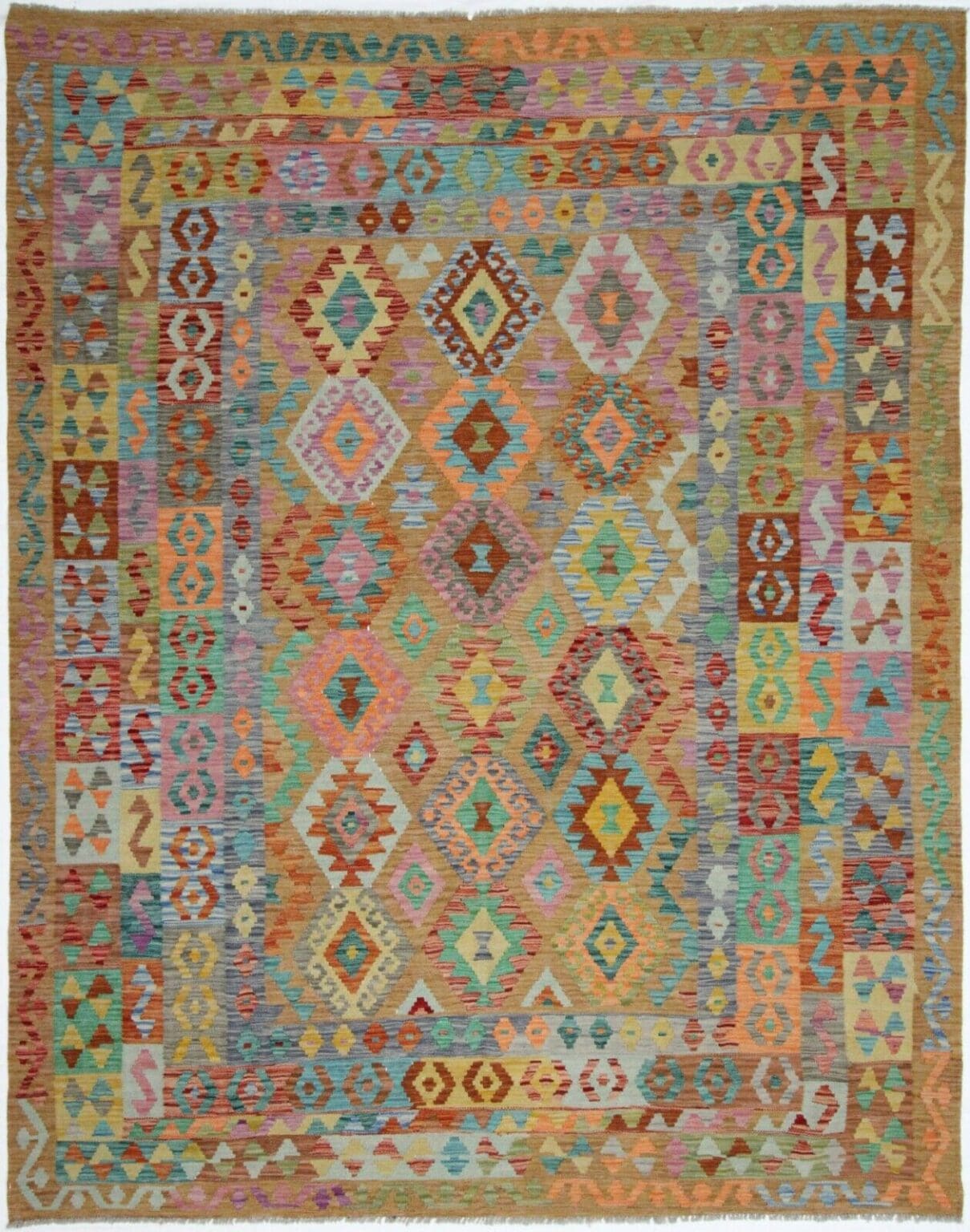
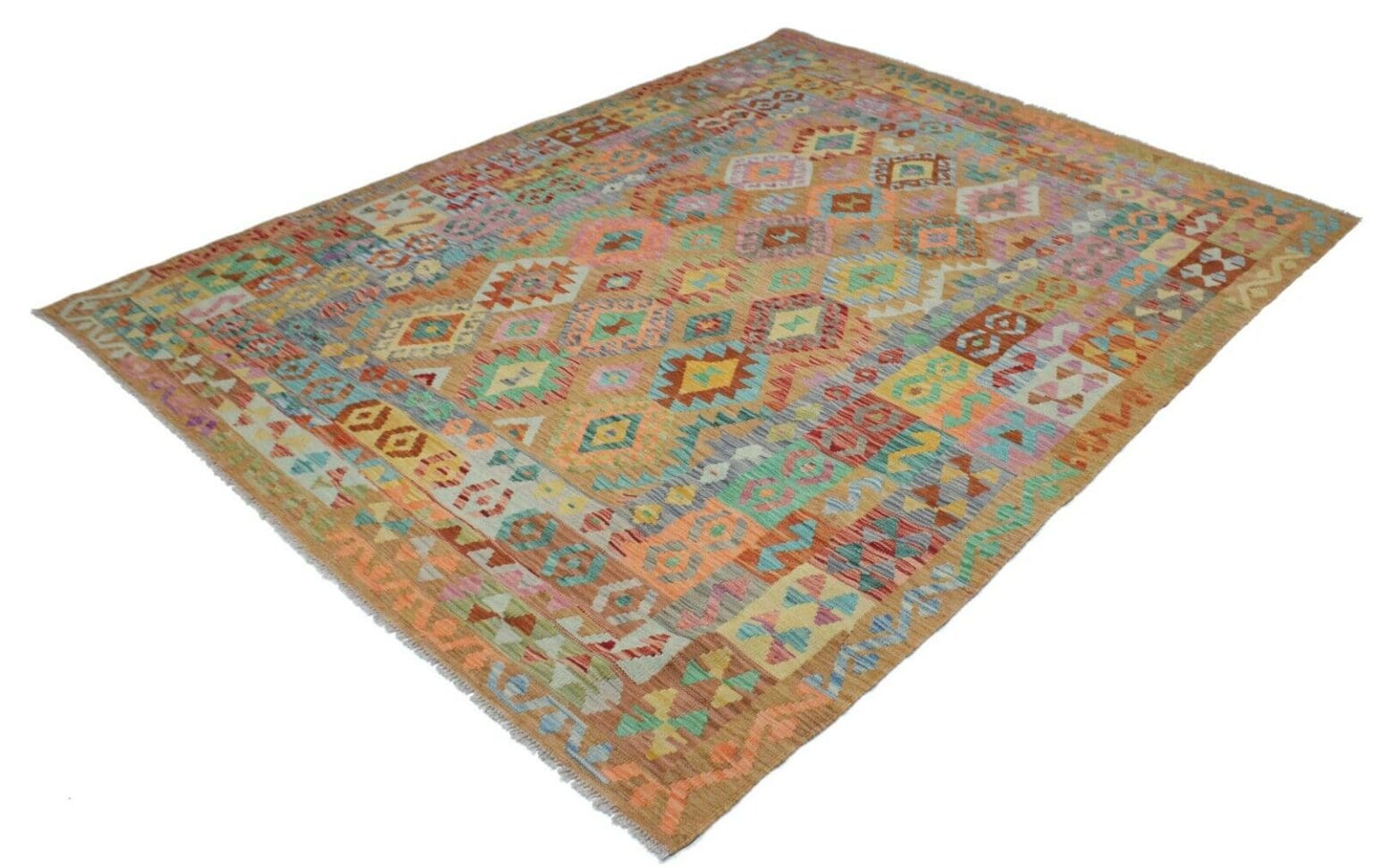
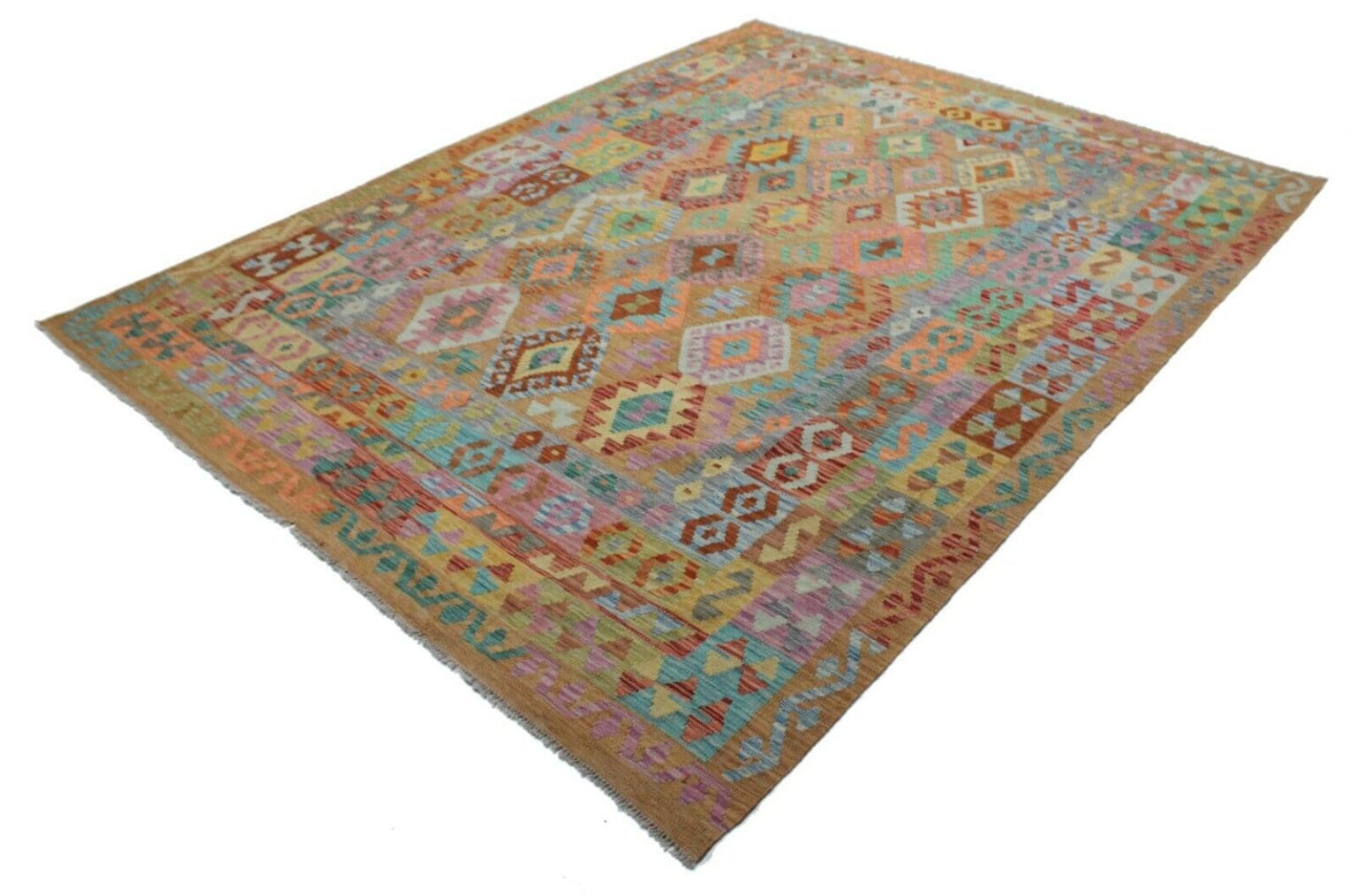
This Oriental rug comes from Afghanistan and is made from 100% wool. Its construction is described as hand-woven, with the production method specified as traditional weaving. It therefore belongs to the woven rug category and differs in construction from a rug made solely by knotting. Wool is the only material named for this individual piece.
Short pile is listed under knot density. This wording describes a short surface or low pile rather than a numerical count of knots. Hand weaving remains the central production feature. The rug is also identified as a Kelim, a term traditionally used for flat-woven textiles. In this context, the designation points to the woven construction and does not establish a Persian origin or a particular Iranian place of manufacture.
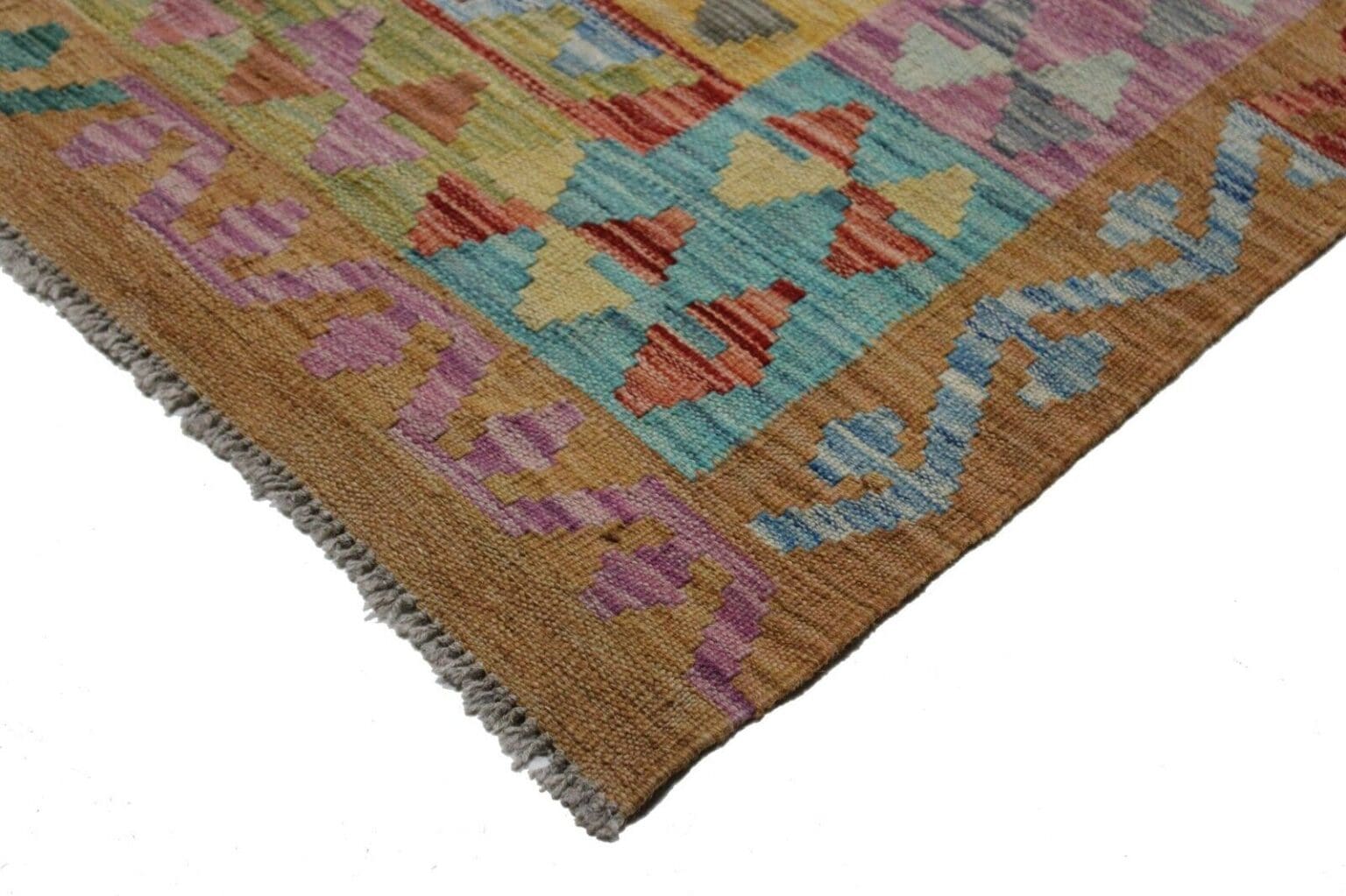
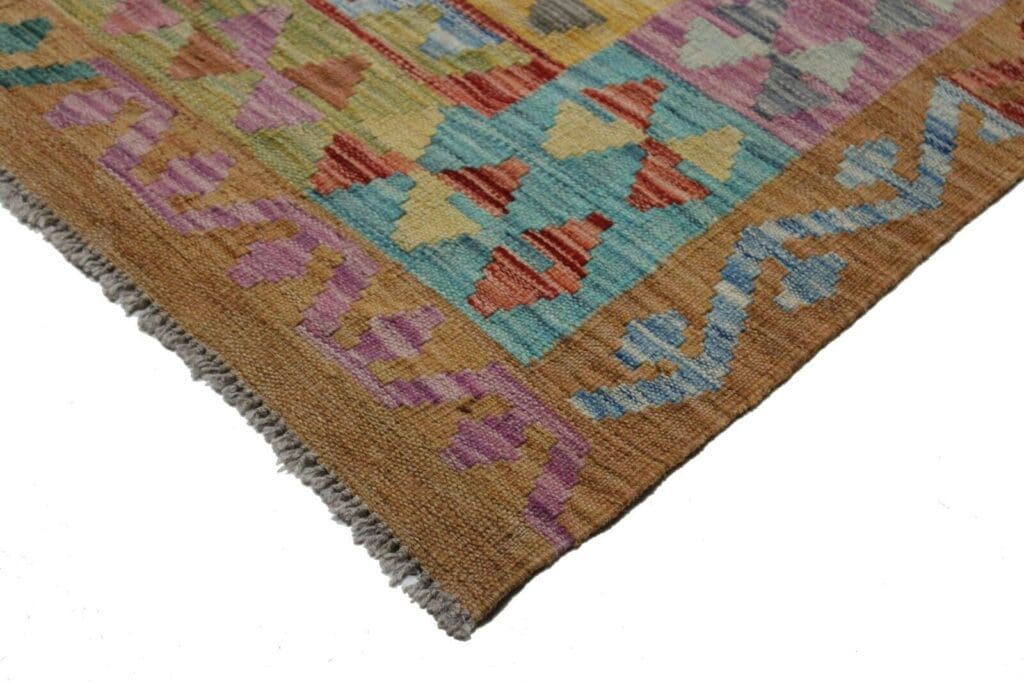
Traditional weaving is based on the interaction of warp and weft. Weft threads pass across the warp and are built up row by row to form the textile surface. In a Kelim, this process creates a flat structure instead of the cut pile found on many knotted rugs. Hand production can leave small variations in rhythm or surface character because the work is carried out manually rather than by an industrial machine. Such variations belong to the nature of the technique.
The rug is reversible, so both sides can be used in the room. The visible effect may change with the direction of the weave, the light and the surrounding floor. It is also suitable for use over underfloor heating. The condition is described as new without a tag. These statements concern the construction, usability and recorded condition of this one-off rug.
Origin and Tradition
Afghanistan has a diverse and independent textile tradition. Rugs and flat-woven floor coverings have been produced in households, village settings and small workshops for generations. Local practices combine practical use with inherited forms and methods. Woven pieces could serve as floor coverings, wall textiles or portable furnishings. Their flat construction made them useful in settings where a movable and comparatively light textile was needed.
Afghan rug production includes several approaches, among them knotted rugs and Kelims. A Kelim is made by inserting and compacting weft threads rather than tying individual pile knots. This method allows the weaver to build clear fields, stripes, diamonds, stepped forms and other graphic elements directly into the textile. The design is created as the work progresses, and the structure of the weave remains fundamental to the finished object.
Hand-woven rugs have a long history in the region because the process can be carried out with relatively simple equipment and transmitted through practical knowledge. The work includes preparing the warp, inserting the weft, maintaining the intended width and finishing the edges. Depending on the workshop and the chosen method, sections of a pattern may be constructed one after another, with repeated forms creating a visual rhythm. The name Afghanistan identifies this rug’s country of origin; it does not justify assigning it to a particular province or city.
In the wider history of Oriental rugs, Afghan textiles are considered alongside work from Iran, Anatolia, Central Asia and other weaving areas. Each region has its own technical vocabulary and decorative traditions. Afghan Kelims represent a woven form, while many well-known Persian rugs are knotted. Even within Afghanistan, appearance can vary according to workshop practice, the preparation of the wool and the inherited pattern language. The country of origin alone is therefore not enough to establish a specific local attribution.
Afghan rug traditions are also connected with nomadic, rural and urban ways of life. Portable textiles needed to be useful, durable and adaptable to different interiors. Geometric arrangements could be clearly organized and repeated through weaving. This relationship between practical function and ordered graphic design is found in many flat-woven works, while the exact character of each individual rug remains tied to its own pattern layout and workmanship.
Design and Pattern
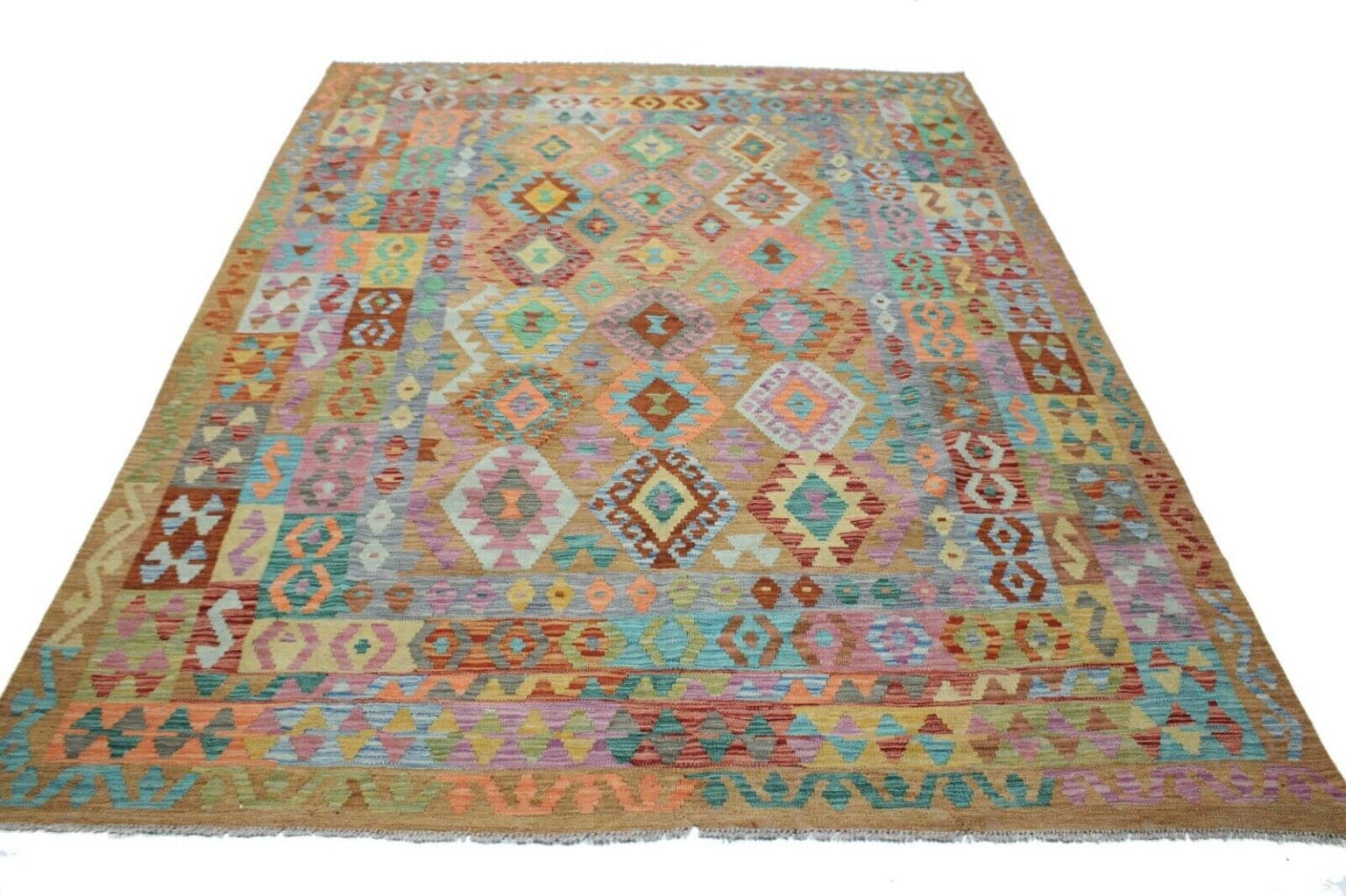
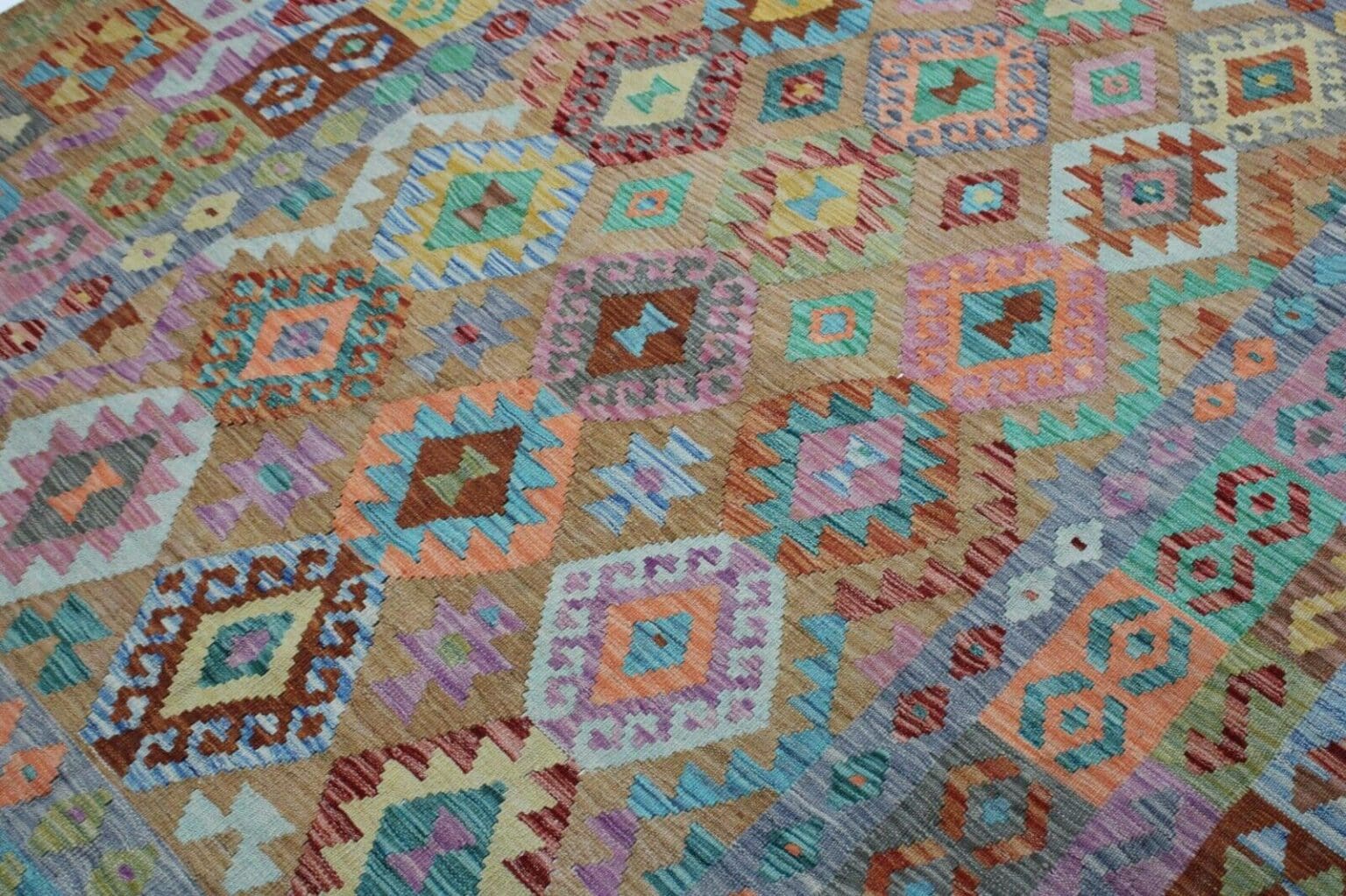
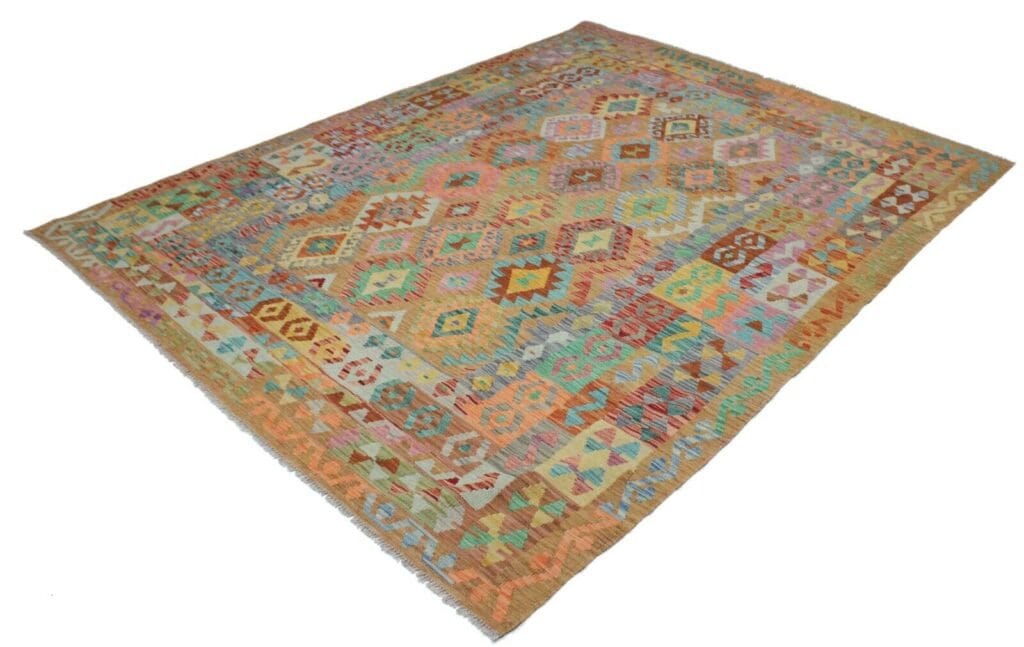
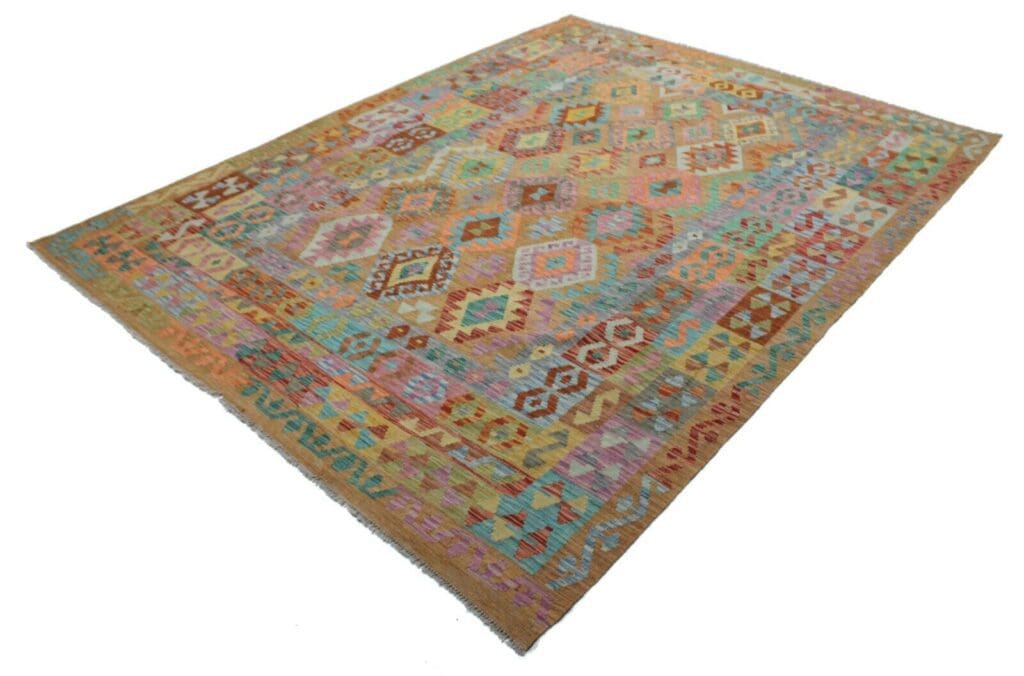
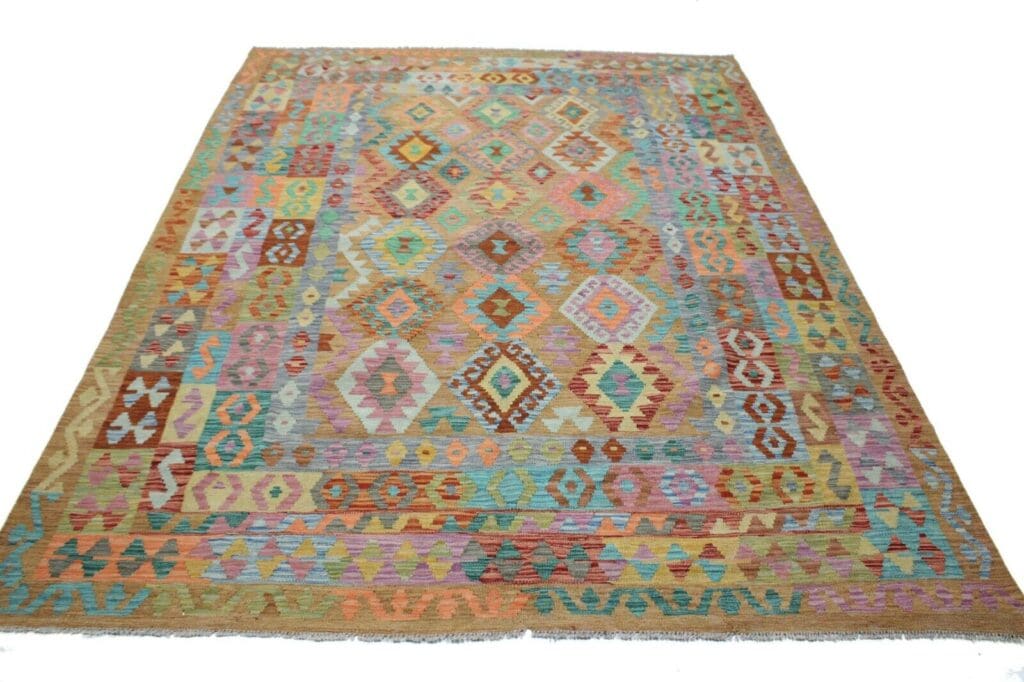
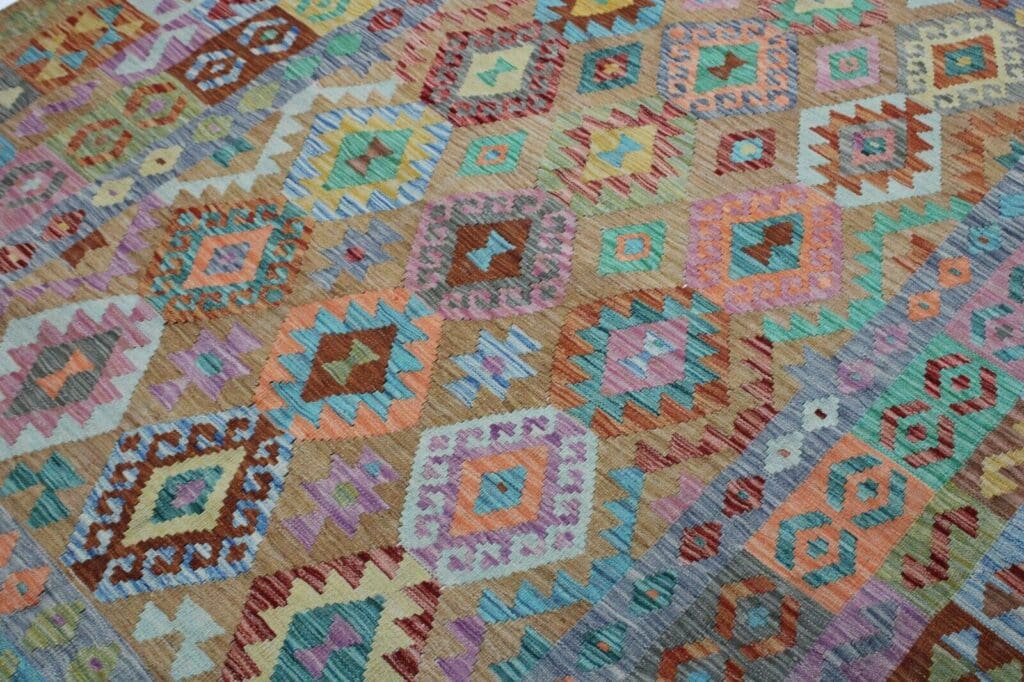
The pattern of this rug is geometric. Geometric design uses lines, angles, diamonds, rectangles, bands or repeated fields to organize the surface. These elements may appear as a border, a central arrangement or a sequence of recurring shapes. In a woven rug, the forms are integrated into the order of the weft rather than applied afterward to a completed pile surface.
The clear formal language corresponds to the listed modern style. Here, modern describes the way the geometric effect can function in a contemporary interior; it does not identify a city or a historical place of origin. At the same time, the product is described as an Old Styl Kelim. That wording indicates a traditional-looking design within the Kelim category, but it does not prove a particular age, antique status or historical attribution.
Geometric Kelims depend strongly on the relationship between shape, repetition and open space. A border may frame an inner field, while smaller motifs can organize transitions between larger areas. Lines can guide the eye across the woven surface, and repeated diamonds or angular forms can establish a regular rhythm. The particular arrangement of those elements is not further specified here; the confirmed design information is that the pattern is geometric.
Flat-woven traditions include both restrained compositions and densely structured designs. Geometric motifs are not limited to one province or one country. They occur throughout many West and Central Asian textile traditions, where they are interpreted through different proportions, colour arrangements and weaving techniques. A pattern name or visual resemblance should therefore not be used as proof of an origin that has not been stated. This rug is identified as Afghan and Oriental, not Persian.
The reversible construction supports the graphic character of a geometric design. Unlike a pile surface that is normally viewed from one principal side, a reversible flat weave allows the reverse to take part in both use and appearance. This makes the direction of the rug flexible within a room. The available description does not specify individual colours, symbols, a named regional motif or a precise border arrangement, so those details are not added.
Special Features
The principal special features of this one-off rug are its reversible construction and its suitability for rooms with underfloor heating. Reversibility allows the piece to be placed in different directions and removes the need for one permanently defined display side. Suitability for underfloor heating provides an additional option when planning the room, subject to the technical requirements of the heating system and the floor.
The rug is new and is supplied without a tag. It is made from 100% wool and hand-woven. Its style is listed as modern, while the product description also identifies it as an Old Styl Kelim. Together, these details describe the material, method of manufacture and design classification without adding an unsupported age statement or a more specific provenance.
The combination of Afghan origin, traditional weaving, geometric pattern and reversible use defines the piece. No specific province, city, signature, numerical knot count or dye method is stated. A thickness is included in the source data, but measurements are intentionally not repeated in this long description.
FAQ
How should I care for a hand-woven wool rug?
Regular vacuuming removes loose particles from the surface and helps prevent dirt from being worked further into the weave through everyday use. A fresh stain should be treated promptly with a damp cloth and a mild soap solution. Rubbing hard, soaking the textile or using aggressive cleaning products can place unnecessary stress on the wool and the woven structure. Liquid should be lifted carefully rather than pressed deeper into the fabric. Professional rug cleaning is appropriate for larger or persistent stains and can help protect the surface and structure when carried out by a specialist. Because this rug is reversible, it can also be turned or repositioned as part of normal room use, while both sides should be handled with the same care.
Where do good Kelims come from?
Kelims are made in several weaving regions of West and Central Asia, including Afghanistan, Iran, Anatolia and other Oriental rug areas. Each tradition has its own methods, proportions and pattern systems. Afghan Kelims represent an independent flat-weaving tradition. Iranian centres such as Isfahan, Tabriz, Kashan and Nain are also associated with important rug traditions, but mentioning them describes other origins and does not make this Afghan rug Persian. A sound assessment should consider the stated origin together with the construction and the actual product details, rather than assigning an origin from a geometric pattern alone.
How can I assess the quality of a Kelim?
For a Kelim, useful points of examination include the consistency of the weave, the finish of the edges, the relationship between warp and weft and the quality of the wool. The stability of the textile and the clarity of the geometric arrangement are also relevant. A numerical knot count is not the same assessment for a flat-woven Kelim as it is for a knotted pile rug; in this product information, short pile is entered under knot density. This piece is specified as 100% wool, hand-woven, reversible and new without a tag. No natural dye information, numerical knot count or particular age is provided, so those characteristics should not be inferred.
To provide the best experiences, we use technologies like cookies to store and/or access device information. Consenting to these technologies will allow us to process data such as browsing behavior or unique IDs on this site. Not consenting or withdrawing consent, may adversely affect certain features and functions.
Functional Always active
The technical storage or access is strictly necessary for the legitimate purpose of enabling the use of a specific service explicitly requested by the subscriber or user, or for the sole purpose of carrying out the transmission of a communication over an electronic communications network.
Preferences
The technical storage or access is necessary for the legitimate purpose of storing preferences that are not requested by the subscriber or user.
Statistics
The technical storage or access that is used exclusively for statistical purposes.The technical storage or access that is used exclusively for anonymous statistical purposes. Without a subpoena, voluntary compliance on the part of your Internet Service Provider, or additional records from a third party, information stored or retrieved for this purpose alone cannot usually be used to identify you.
Marketing
The technical storage or access is required to create user profiles to send advertising, or to track the user on a website or across several websites for similar marketing purposes.

 SECURE PAYMENT
 SHIPPING PARTNERS