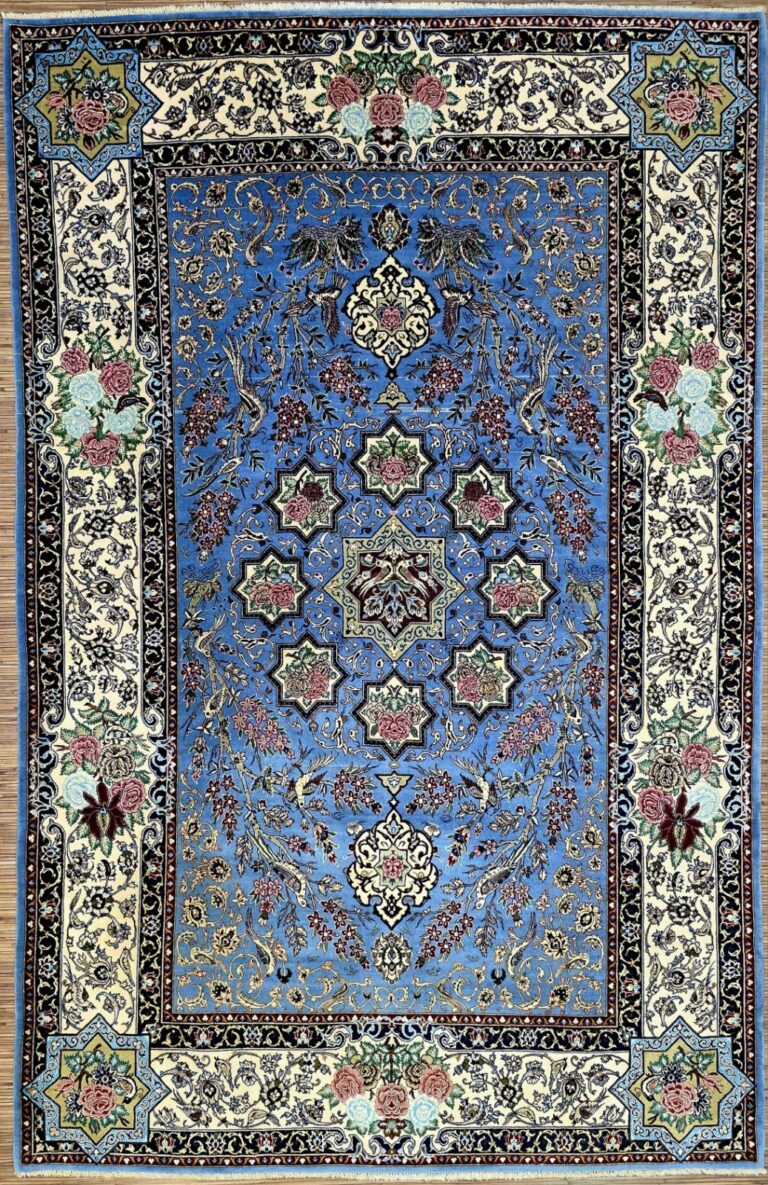
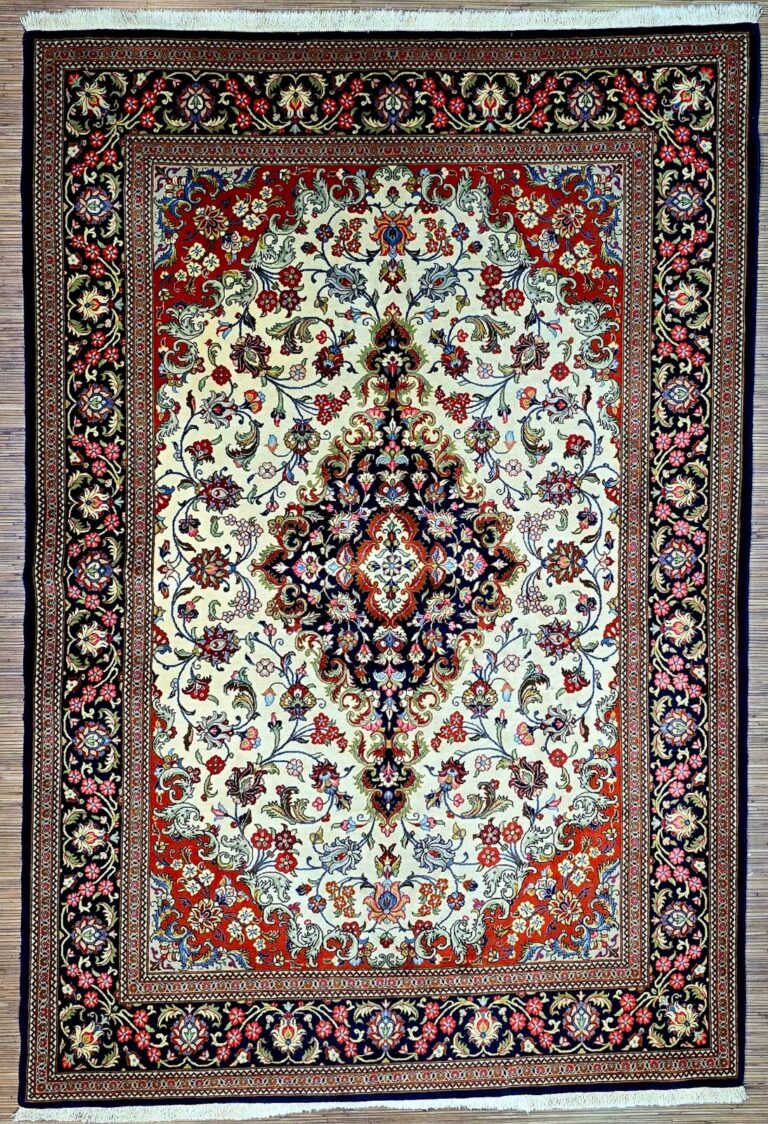
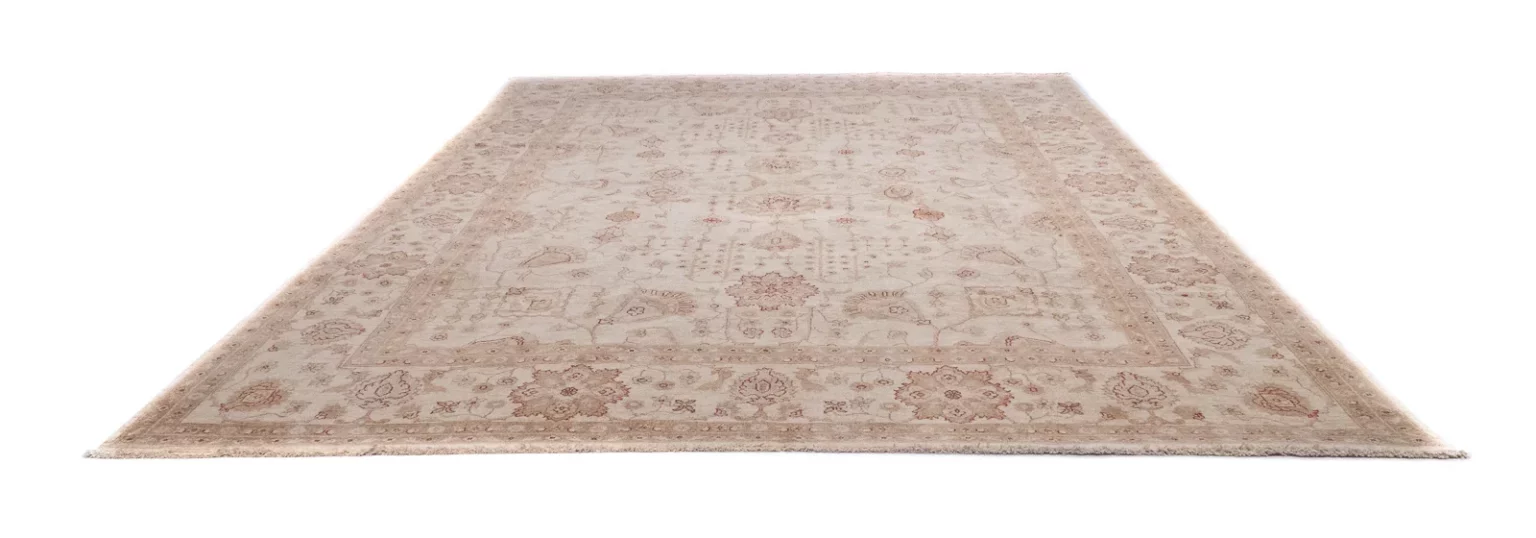
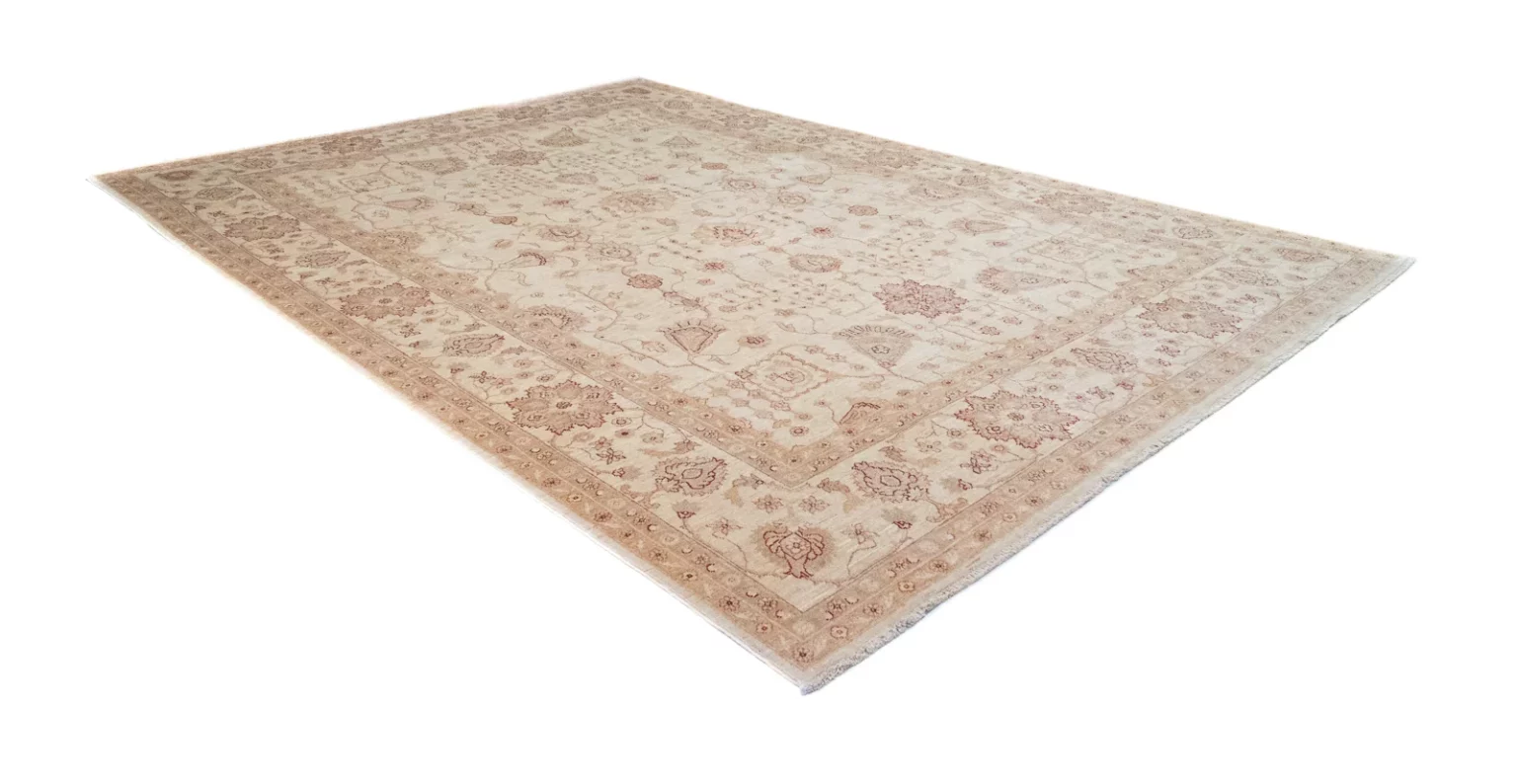
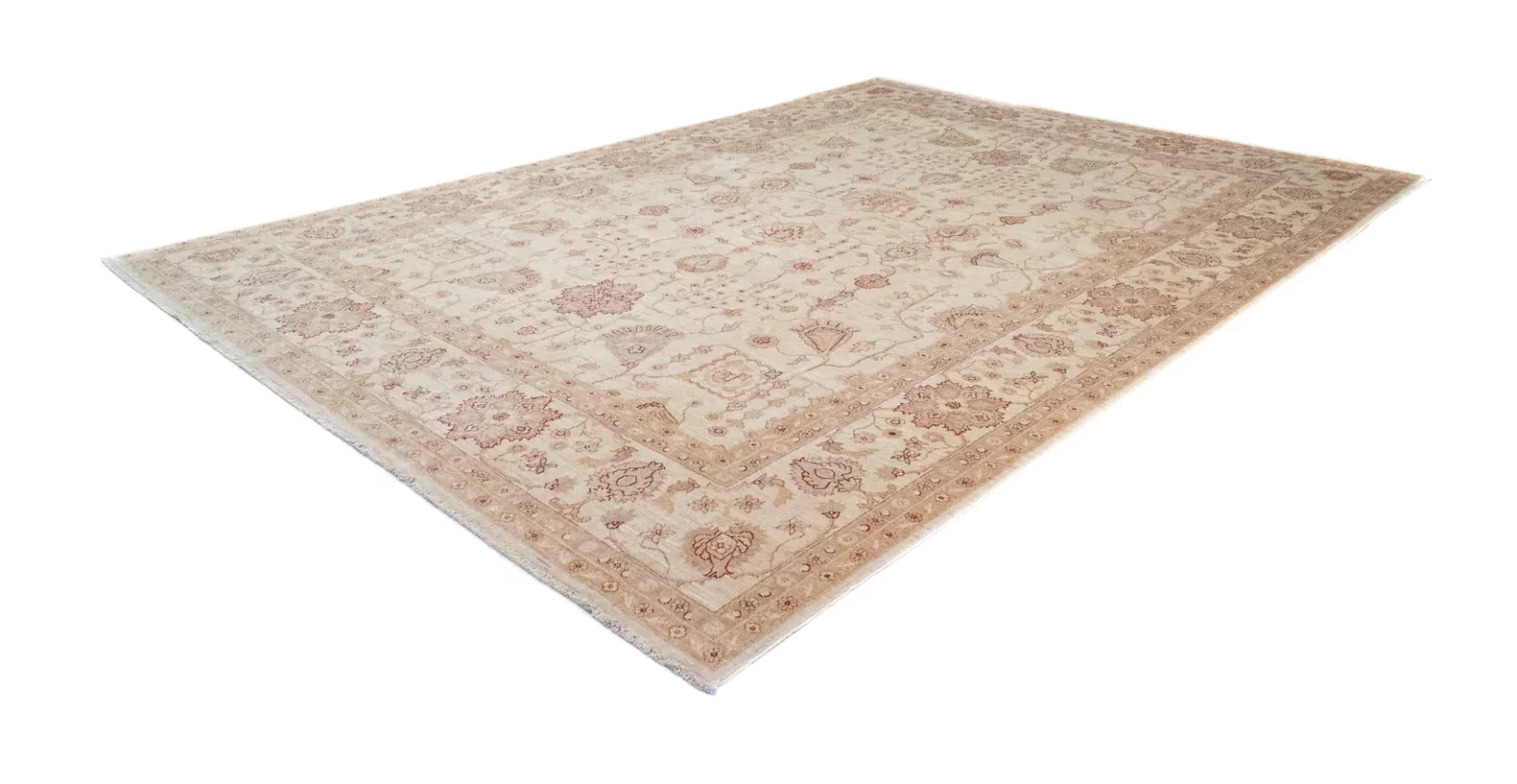
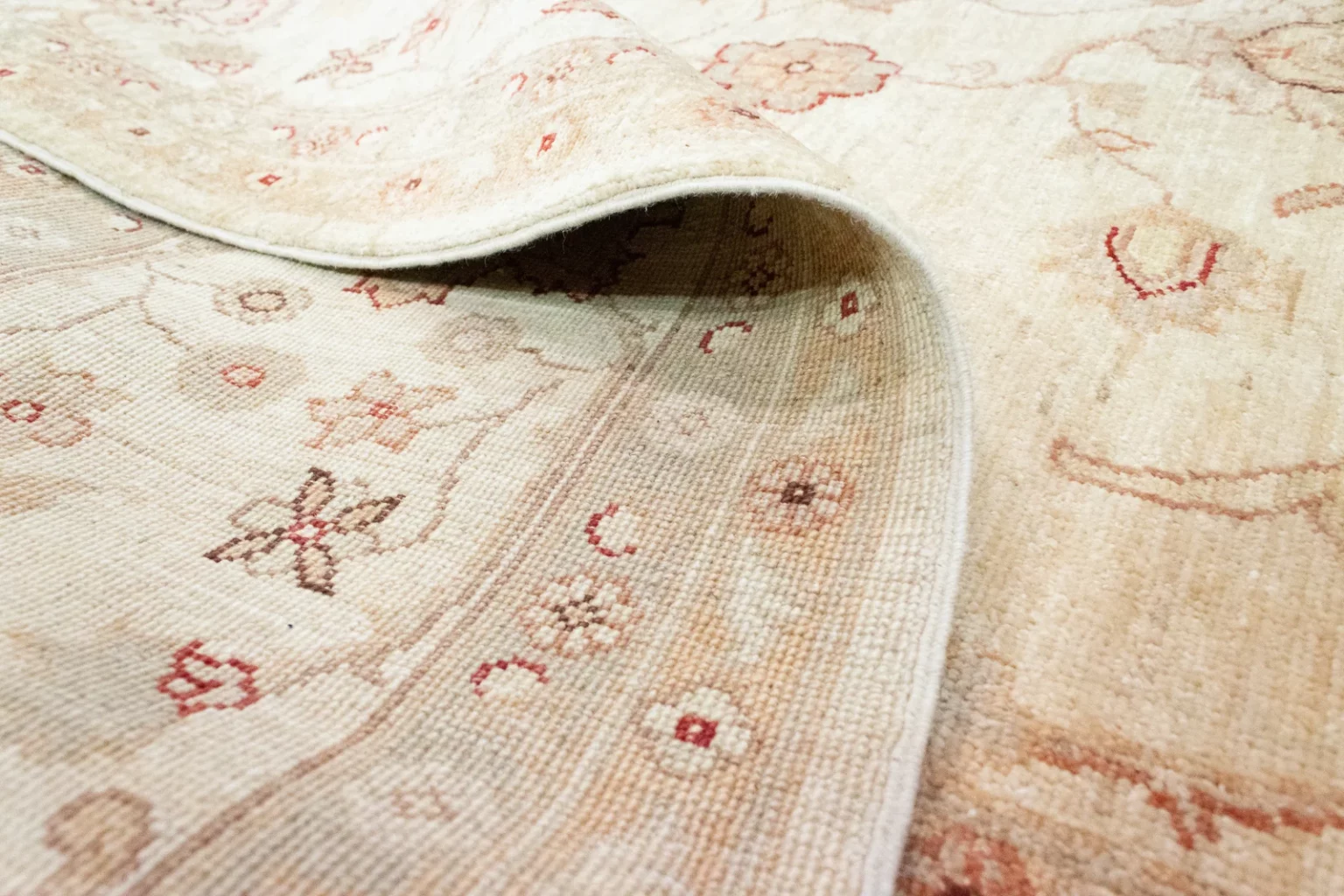
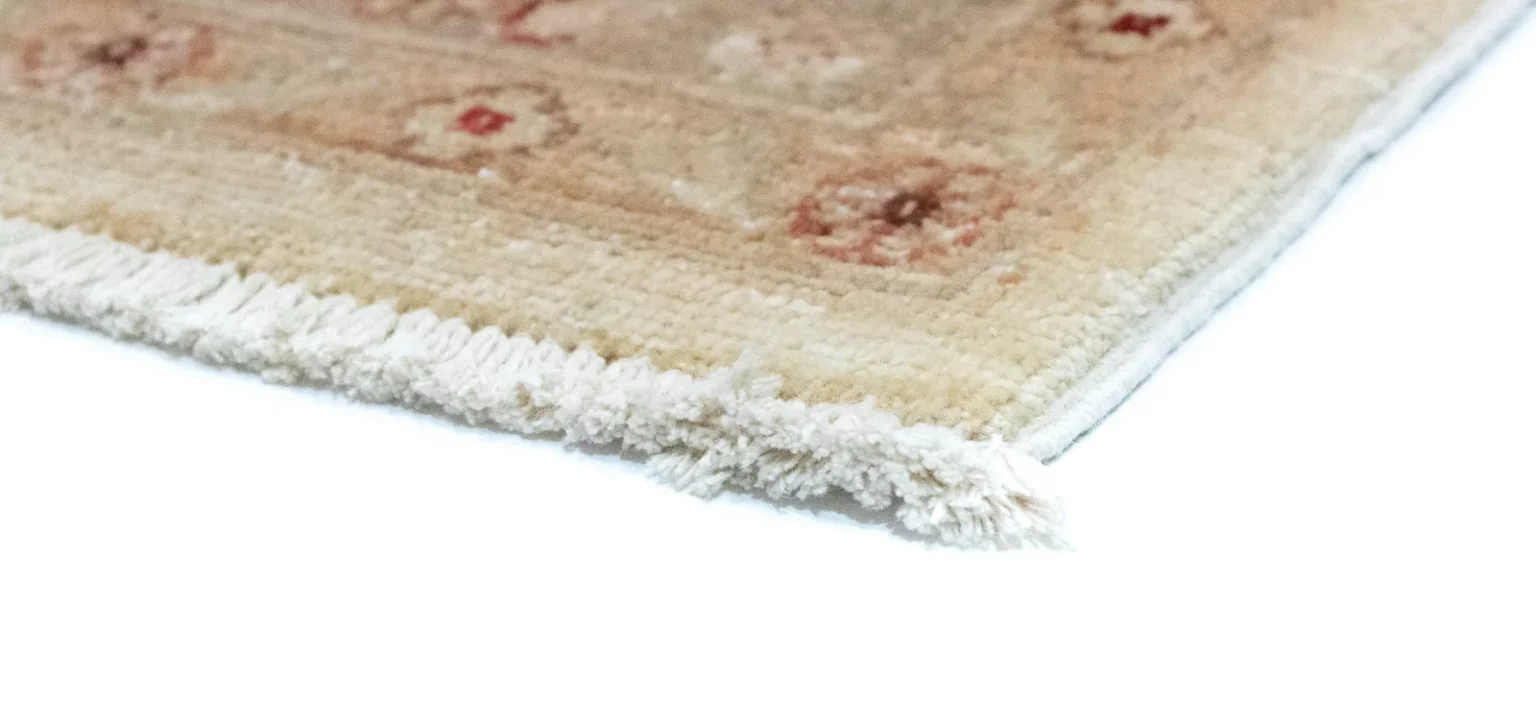
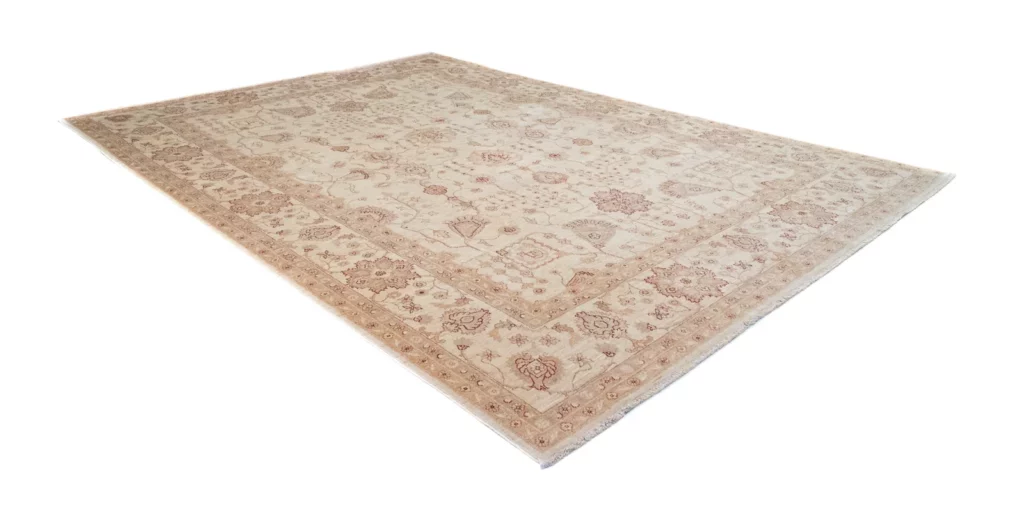
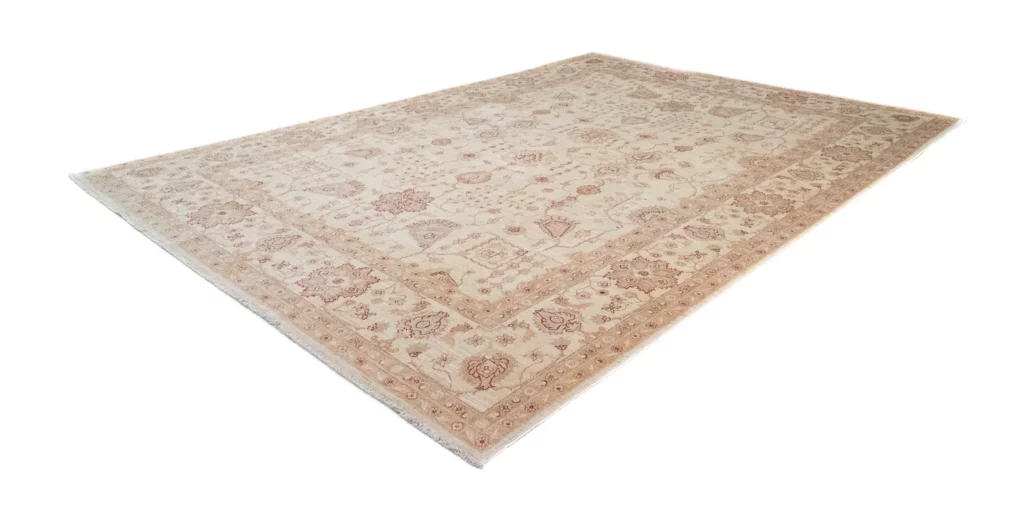
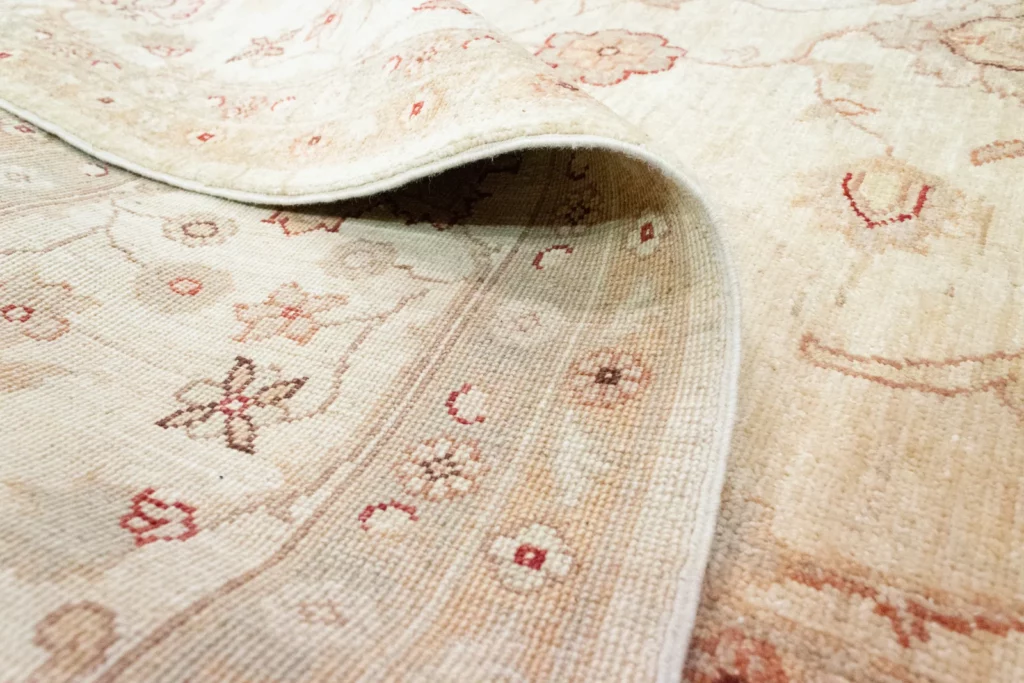
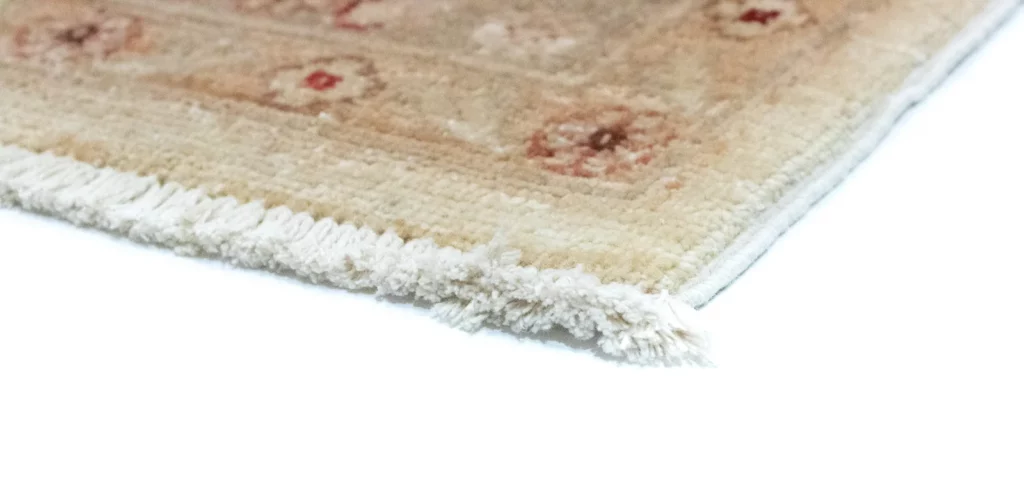
This Ziegler Persian rug is hand-knotted. Hand knotting is a traditional textile technique in which individual knots are tied by hand around the warp threads before the pile is secured and the surface is finished. The process requires time, precision and a consistent working rhythm. Unlike a mechanically produced floor covering, a hand-knotted rug is built knot by knot, so its structure reflects the work of the weaver and the characteristics of the weaving tradition.
The rug has a knot density of 200.000 knots per square metre. Knot density describes how closely the individual knots are placed within the woven ground. It is an important technical feature because a denser structure allows motifs and colour transitions to be rendered with greater definition. It does not by itself describe the age, condition or origin of a particular piece, but it forms part of the technical character of a hand-knotted rug.
The source describes Persian rugs in this group as being made from high-quality wool and silk and as combining durability with a refined sheen. Ziegler rugs are additionally associated with stone washing. This finishing process gives the surface a gently aged appearance and softens the visual effect of the colours. The stone-washed treatment is a defining feature of the Ziegler type named for this rug. No separate warp material is specified for this piece.
Hand knotting also gives a rug a firm textile body and a pile that can be examined closely. Proper care remains important for every hand-knotted carpet. Regular, gentle maintenance helps preserve the pile, the colours and the woven foundation, while professional cleaning is appropriate when substantial soiling has occurred.
Origin and Tradition
A Persian rug belongs to the long weaving tradition of Iran. Persian carpet production developed in a wide range of regional centres, each with its own approaches to drawing, colour, knotting and finishing. The source names Tabriz, Isfahan and Kashan among the best-known carpet centres. Their individual traditions show why the term Persian rug covers many different visual and technical expressions rather than one uniform design.
Tabriz is associated with elaborate floral compositions and carefully organised fields. Isfahan is known for fine detail and for the use of silk threads in refined carpets. Kashan forms another important point of reference in Persian carpet history, with a strong tradition of formal pattern arrangement and controlled colour. These centres demonstrate how workshop practice, local taste and the training of weavers influence the appearance of a carpet.
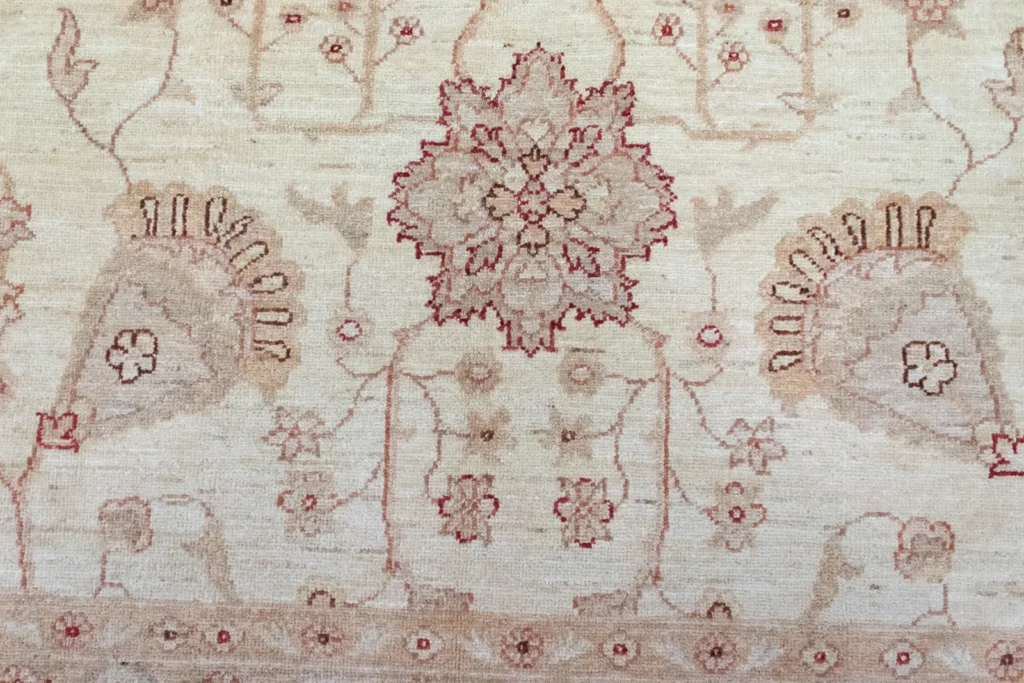
Ziegler rugs occupy a particular place within the broader Persian carpet landscape. They are recognised for a deliberately softened, stone-washed surface and for restrained, earthy colour combinations. The Ziegler approach is connected with the interpretation of Persian design for interiors in which an established oriental weaving tradition is combined with a quieter, less sharply contrasted appearance. The result is not a separate replacement for Persian craftsmanship, but a recognisable type within the wider family of Persian rugs.
The making of a traditional carpet involves more than tying the knots. A weaver must follow the drawing, maintain the proportions of the design and control the tension of the warp and weft. Colours are introduced according to the planned composition, and the pile is trimmed so that the pattern remains legible. Finishing work, including washing, can alter the way light is reflected from the pile and can influence the balance between field and ornament.
Persian carpets have traditionally served both practical and cultural purposes. They provide a durable textile surface, while their patterns preserve conventions passed from one generation to the next. Floral, geometric and scrolling forms can carry regional associations, workshop preferences or references to older decorative vocabularies. The importance of a carpet therefore lies in the combination of construction, drawing, materials, colour and the knowledge required to bring these elements together.
The title identifies this piece as a Ziegler Persian rug. It does not assign the rug to Tabriz, Isfahan or Kashan, and those place names are presented here as examples of Persian weaving centres rather than as a claimed origin for this individual carpet. This distinction matters because a design or a general Persian tradition should not be confused with the specific place where an individual rug was made.
Design and Pattern
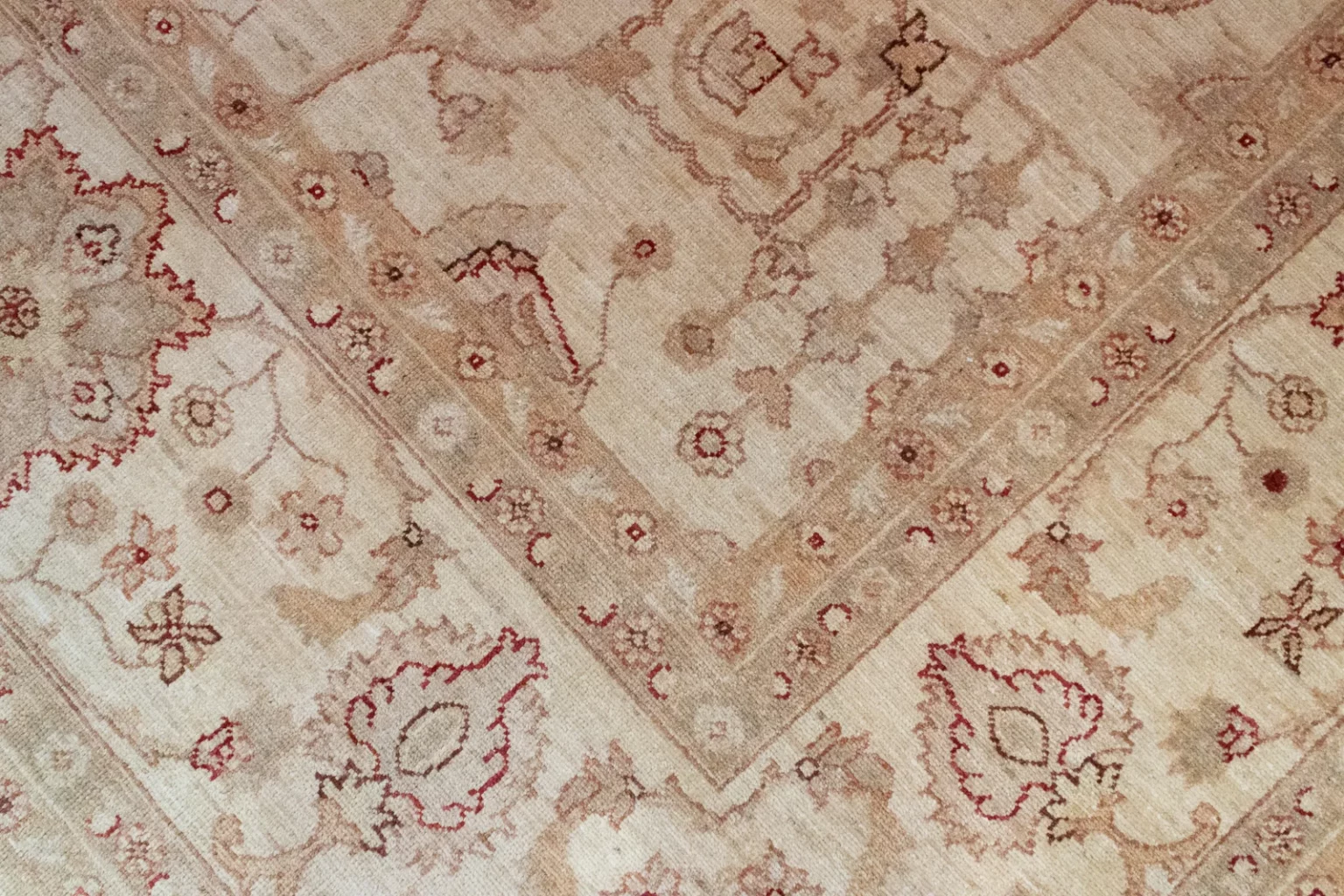
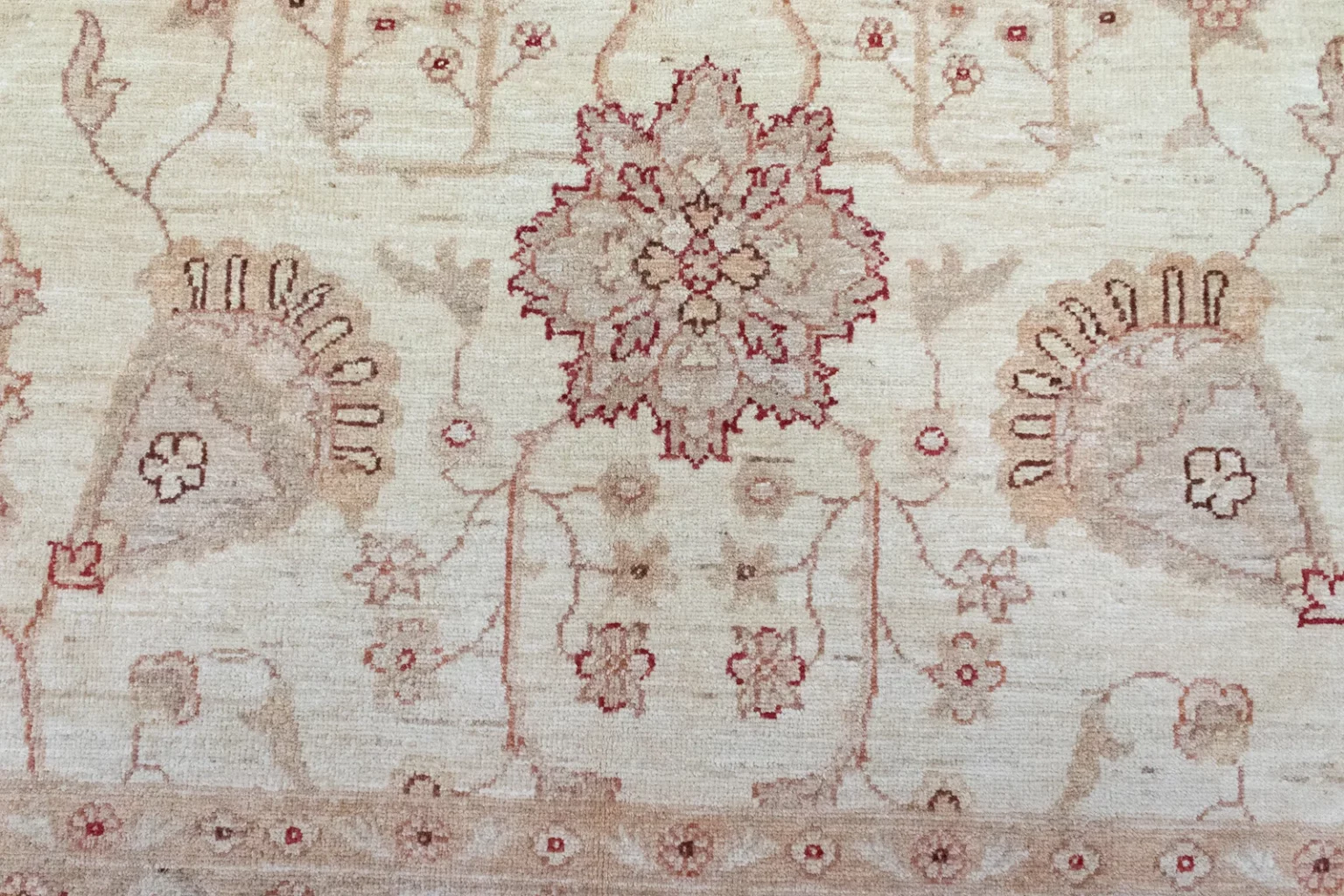
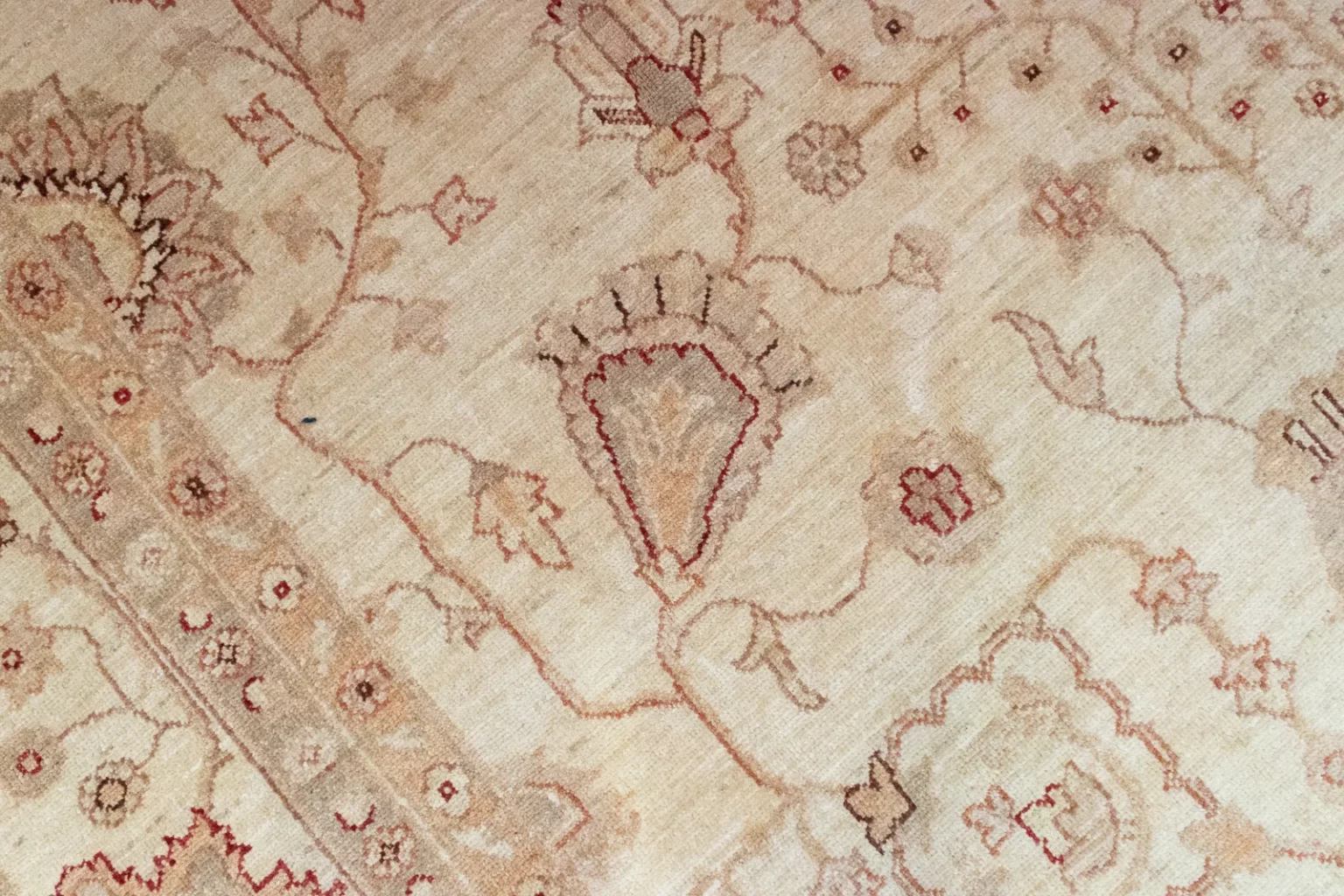
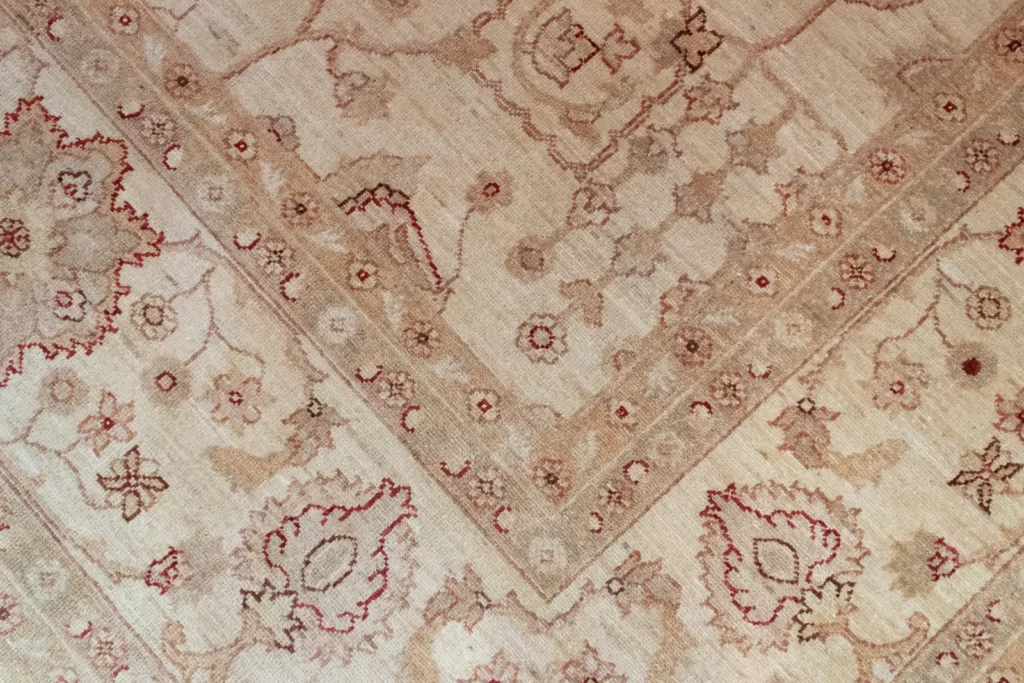
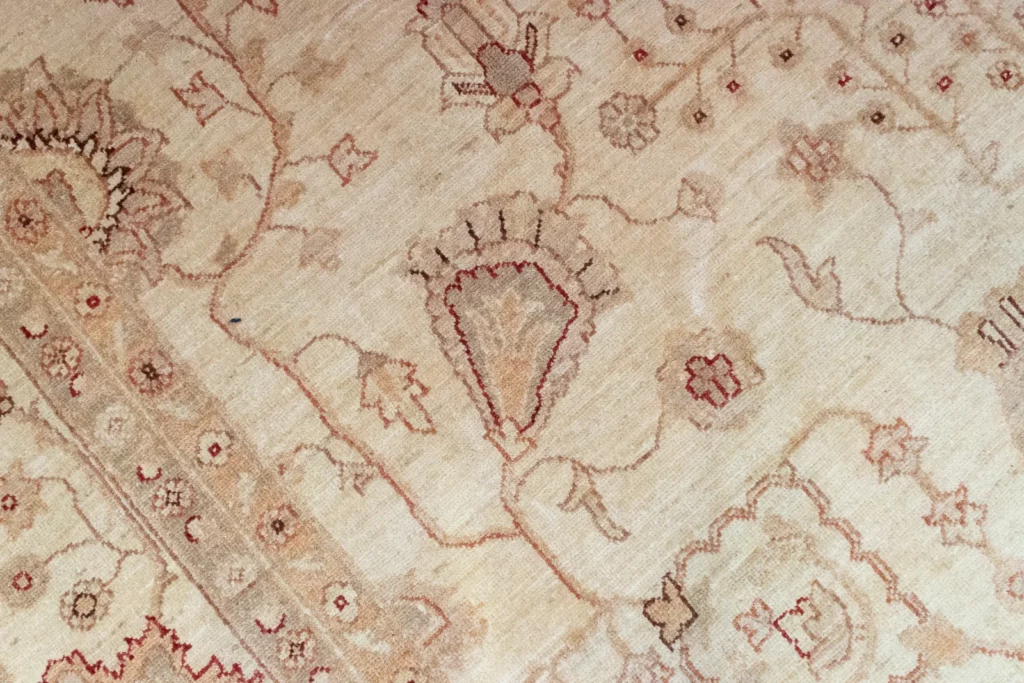
The characteristic visual language of Ziegler rugs is shaped by stone washing and by the use of gentle, earthy tones. The treatment reduces the intensity of the surface and gives the colours a more settled appearance. Rather than presenting every element with strong contrast, the design is allowed to read as a coherent textile surface. This is one reason Ziegler carpets are often selected for rooms that combine traditional furniture with contemporary forms.
The source does not name a specific motif, medallion, border arrangement or field composition for this rug. No individual pattern should therefore be assigned to it. Persian carpet design in general includes a broad vocabulary of floral branches, leaves, palmettes, arabesques, repeating geometries and framed borders. These elements may be arranged in many different ways, and their presence or absence is a characteristic of each individual drawing.
Floral designs in Persian weaving often depend on rhythm and repetition. A branch may extend across a field, while smaller leaves or blossoms balance the surrounding space. In more formal compositions, a central medallion establishes an axis and is supported by corner pieces and a border system. Other designs use an all-over arrangement, in which ornament is distributed throughout the field without a single dominant centre. These are general design principles, not a description of a motif that has not been specified for this rug.
Colour is an important part of pattern perception. Earthy tones can include muted relationships between warm and cool shades, allowing the drawing to remain visible without appearing sharply outlined. Stone washing contributes to this softened impression by changing the surface appearance and reducing the effect of newly saturated colour. The method is particularly relevant to Ziegler carpets because the finish is part of the type’s visual identity.
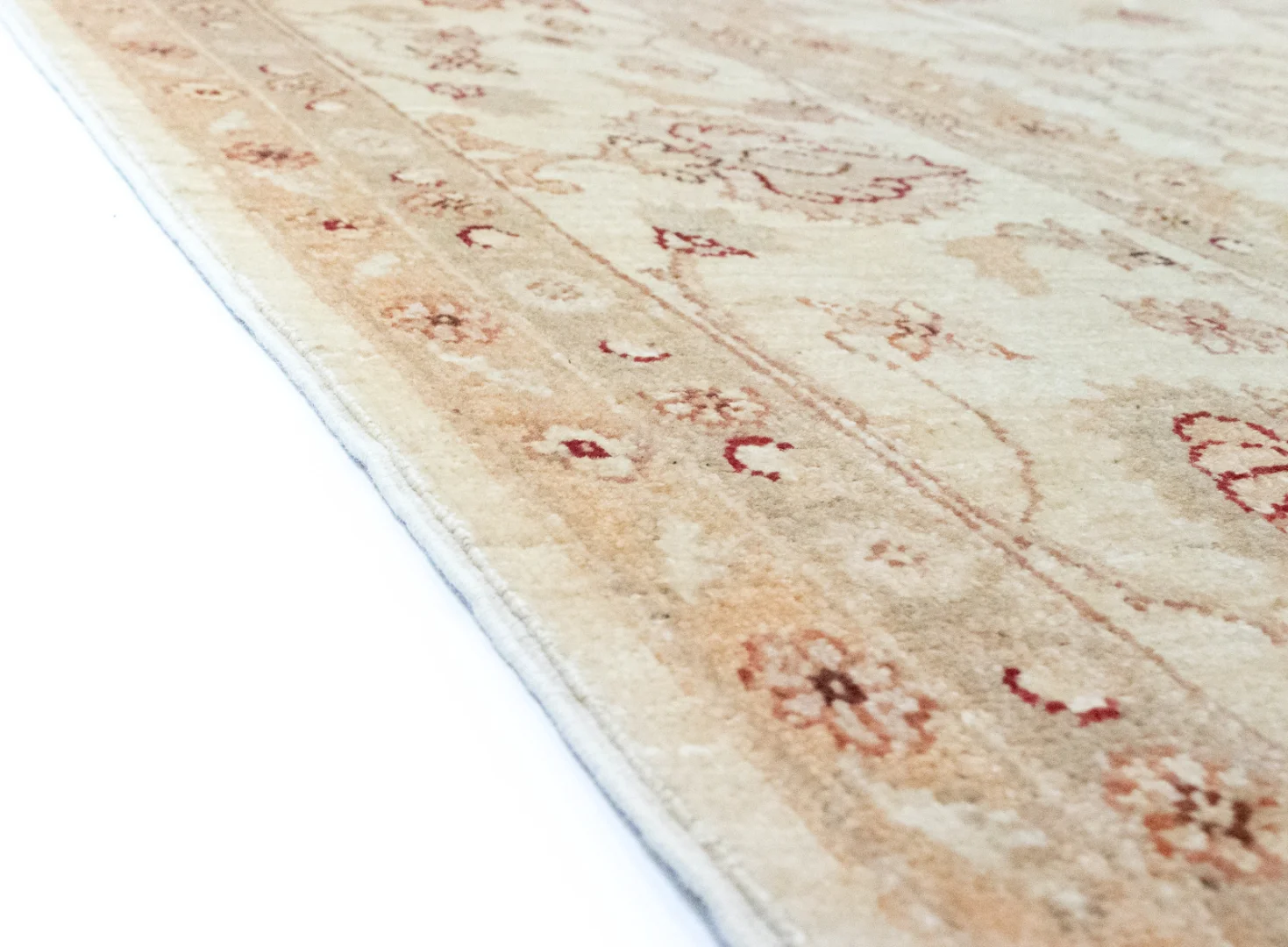
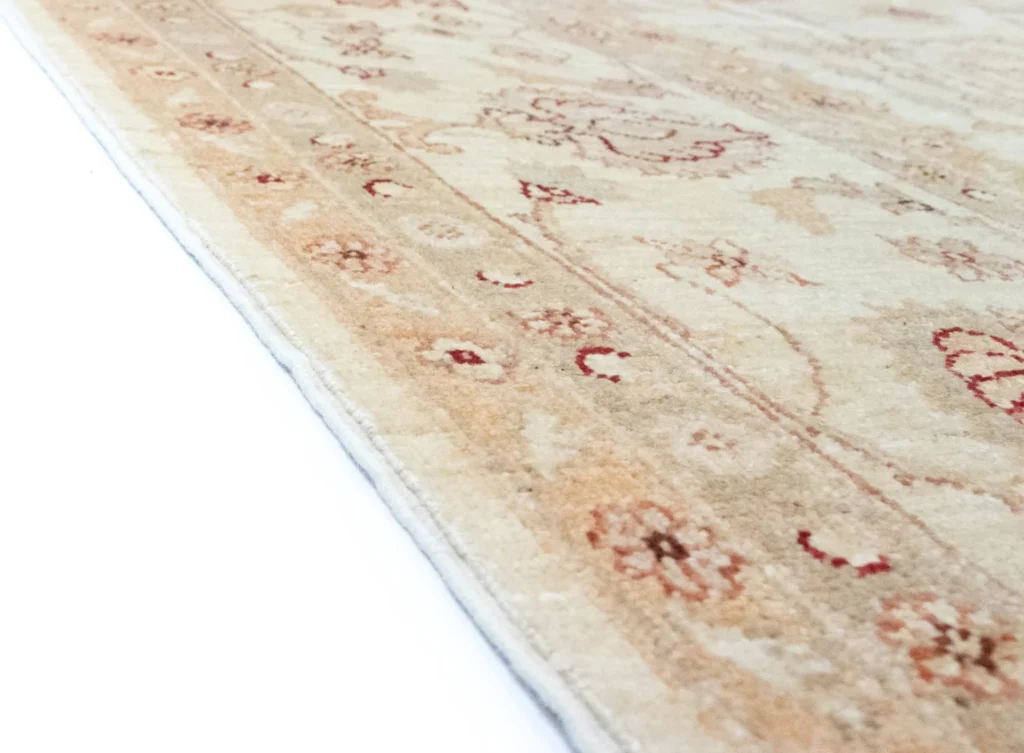
Persian carpet patterns are traditionally planned with attention to balance, scale and the relationship between the field and the surrounding borders. A border can frame the central design and provide a transition between the rug and the floor, while smaller repeating details give the eye a route through the composition. The precision of such arrangements is supported by hand knotting and by the ability of the weaver to interpret a drawn pattern while maintaining the structure of the textile.
In an interior, a subdued Ziegler palette can sit alongside both classic and modern furnishings. The source describes Persian rugs as versatile in different furnishing styles, from classic to modern. That versatility concerns the general character of the type; it does not replace a close look at the actual rug. Lighting, furniture, wall colour and the surrounding floor all affect how its tones and surface treatment are perceived.
Because the individual motif of this rug is not stated, the reliable design information is its Ziegler classification, its stone-washed finish and its association with gentle, earthy colours. These features provide a useful way to understand its appearance without attributing an unrecorded floral, geometric or medallion pattern.
Special Features
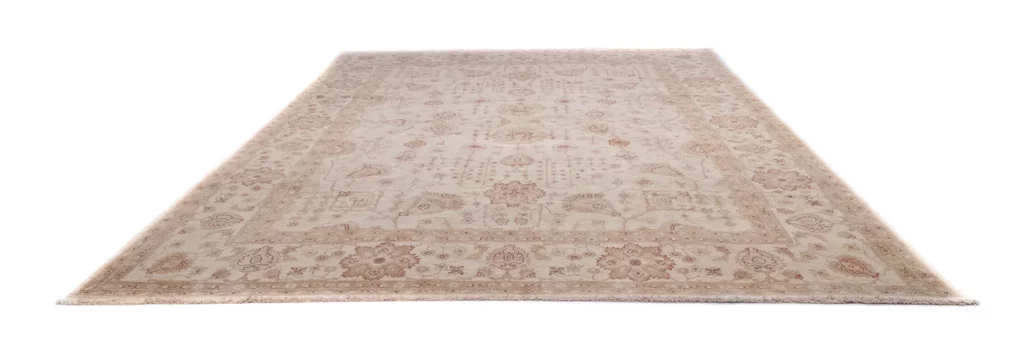
The rug combines several stated characteristics: it is a Ziegler Persian rug, it is hand-knotted, it has a knot density of 200.000 knots per square metre and it has been stone washed. The stone-washed finish distinguishes the piece within the broader range of traditional Persian carpets by giving the surface a softened, gently aged appearance. Its large format is stated separately in the product details, while the long description intentionally focuses on construction, tradition and design rather than repeating measurements.
The source also explains that carpets are checked for their condition and, where necessary, restored before being offered. This is the stated quality-control approach for the collection. No separate restoration measure or particular condition issue is specified for this rug. Care should follow the needs of a hand-knotted textile: vacuum regularly with suitable caution, avoid prolonged direct sunlight and arrange professional cleaning when heavy dirt requires it.
FAQ
What does the stone-washed finish mean?
Stone washing is a finishing treatment associated here with Ziegler rugs. It softens the visual intensity of the surface and gives the colours a gently aged, earthy appearance. The treatment helps explain why Ziegler carpets can look more restrained than Persian rugs with highly saturated, sharply contrasting colours. It is part of the rug’s named character, alongside hand knotting and Persian design tradition. Stone washing should not be confused with wear or damage; it is a deliberate treatment intended to influence the appearance and feel of the finished carpet. Care should nevertheless be gentle, because the pile and woven foundation remain textile materials that benefit from regular maintenance and professional cleaning when necessary.
How should a hand-knotted Persian rug be cared for?
Regular vacuuming is recommended to remove everyday dust and loose particles. Care should be carried out gently so that the pile and edges are not placed under unnecessary strain. Strong soiling should be handled by a professional carpet cleaner familiar with hand-knotted oriental rugs. Prolonged direct sunlight should be avoided because it can cause colours to fade over time. A rug should also be kept in a suitable, dry interior environment and inspected periodically for changes in the pile, fringes or surrounding edges. These measures support the longevity of a hand-knotted carpet without changing its original construction or stone-washed appearance.
What distinguishes a Persian rug from other carpets?
Persian rugs are part of a long Iranian tradition of hand craftsmanship. Their identity is shaped by hand knotting, regional drawing traditions, carefully developed colour systems and the knowledge required to create a coherent pile surface. High knot density can support fine detail, while materials such as wool and silk are associated with durability and sheen in the Persian rugs described by the source. The distinction is therefore not based on one pattern alone. It comes from the combination of technique, design history, materials and finishing. In this case, the Ziegler classification and stone-washed surface add a particular visual direction to the wider Persian rug tradition.
To provide the best experiences, we use technologies like cookies to store and/or access device information. Consenting to these technologies will allow us to process data such as browsing behavior or unique IDs on this site. Not consenting or withdrawing consent, may adversely affect certain features and functions.
Functional Always active
The technical storage or access is strictly necessary for the legitimate purpose of enabling the use of a specific service explicitly requested by the subscriber or user, or for the sole purpose of carrying out the transmission of a communication over an electronic communications network.
Preferences
The technical storage or access is necessary for the legitimate purpose of storing preferences that are not requested by the subscriber or user.
Statistics
The technical storage or access that is used exclusively for statistical purposes.The technical storage or access that is used exclusively for anonymous statistical purposes. Without a subpoena, voluntary compliance on the part of your Internet Service Provider, or additional records from a third party, information stored or retrieved for this purpose alone cannot usually be used to identify you.
Marketing
The technical storage or access is required to create user profiles to send advertising, or to track the user on a website or across several websites for similar marketing purposes.

 SECURE PAYMENT
 SHIPPING PARTNERS