This Ziegler runner is hand-knotted. Its pile is made of wool, while cotton is used for the warp. The combination of a woolen surface and a cotton foundation is part of the traditional construction of a knotted rug. In hand-knotting, individual knots are inserted row by row into the prepared foundation. The visible design therefore grows directly from the arrangement of the knots rather than being applied as a separate surface print.
Wool has long been used in rug making because its fibres are resilient and flexible. It accepts colour well and gives the pile a tangible surface. Cotton serves a different structural purpose in the rug: the warp threads provide the framework to which the knots are attached. The two materials consequently have distinct roles. Wool forms the visible pile, while cotton belongs to the supporting inner construction.
Hand-knotting requires careful alignment as each row is completed and the pattern is continued. An all-over design distributes the ornament across the field instead of making a single medallion the sole centre of attention. The technique and the composition are therefore closely connected. This runner also has a narrow border, which frames the central patterned area and gives the design a defined outer edge.
Origin and Tradition
The runner is presented as a Persian rug and is associated with the Persian carpet-weaving tradition. Persia has historically been one of the major centres of Oriental rug production. Different weaving areas developed their own approaches to colour, ornament, knotting and border design. Rugs were made for everyday interiors as well as for more formal settings. Knowledge of materials, dyes, foundations and pattern structure was passed through workshops and generations of weavers.
Within this broader tradition, Ziegler rugs are known for designs that draw on Persian ornament while creating a spacious and balanced surface. The Ziegler name is linked with a recognised rug tradition in which floral forms, scrolling vines and repeated decorative elements are arranged across the field. Such rugs were produced for different interiors and uses. A runner is the elongated format within this tradition, intended to organise and decorate a narrow passage or similarly shaped area.
Persian rug making does not have one uniform visual language. Regional workshops differ in their preferred motifs, border arrangements and knotting methods. The common foundation is the hand-built textile structure: knots are tied into the warp, and the weave is progressively secured as the work advances. The result is a rug in which ornament and construction are inseparable. Every design decision must be accommodated within the framework of the woven foundation.
Persian rugs are often discussed through a combination of regional names, pattern families and workshop traditions. These terms help place a design within a wider history, but they do not replace an examination of the individual rug. This runner is described with an all-over composition, decorated corners and a framing border. Those features place its visual language within the tradition of Persian rugs whose field and border are intended to be read as one coordinated arrangement.
The history of Persian carpet design includes both densely ornamented fields and quieter compositions. Floral scrolls, leaves and stylised botanical forms can be repeated to create movement across a surface without dividing it into separate picture panels. On a runner, the length of the format becomes part of the design logic. Patterns can be extended along the main axis so that the rug reads as a continuous decorative band rather than as a shortened room carpet.
Persian rugs continue to be used in both traditional and contemporary interiors. Their character results from the interaction of fibre, knotting, colour and composition. In this Ziegler runner, the Persian classification, the hand-knotted construction and the traditional pattern language are presented together. The rug therefore connects a historic weaving vocabulary with the practical shape of a runner.
Design and Pattern
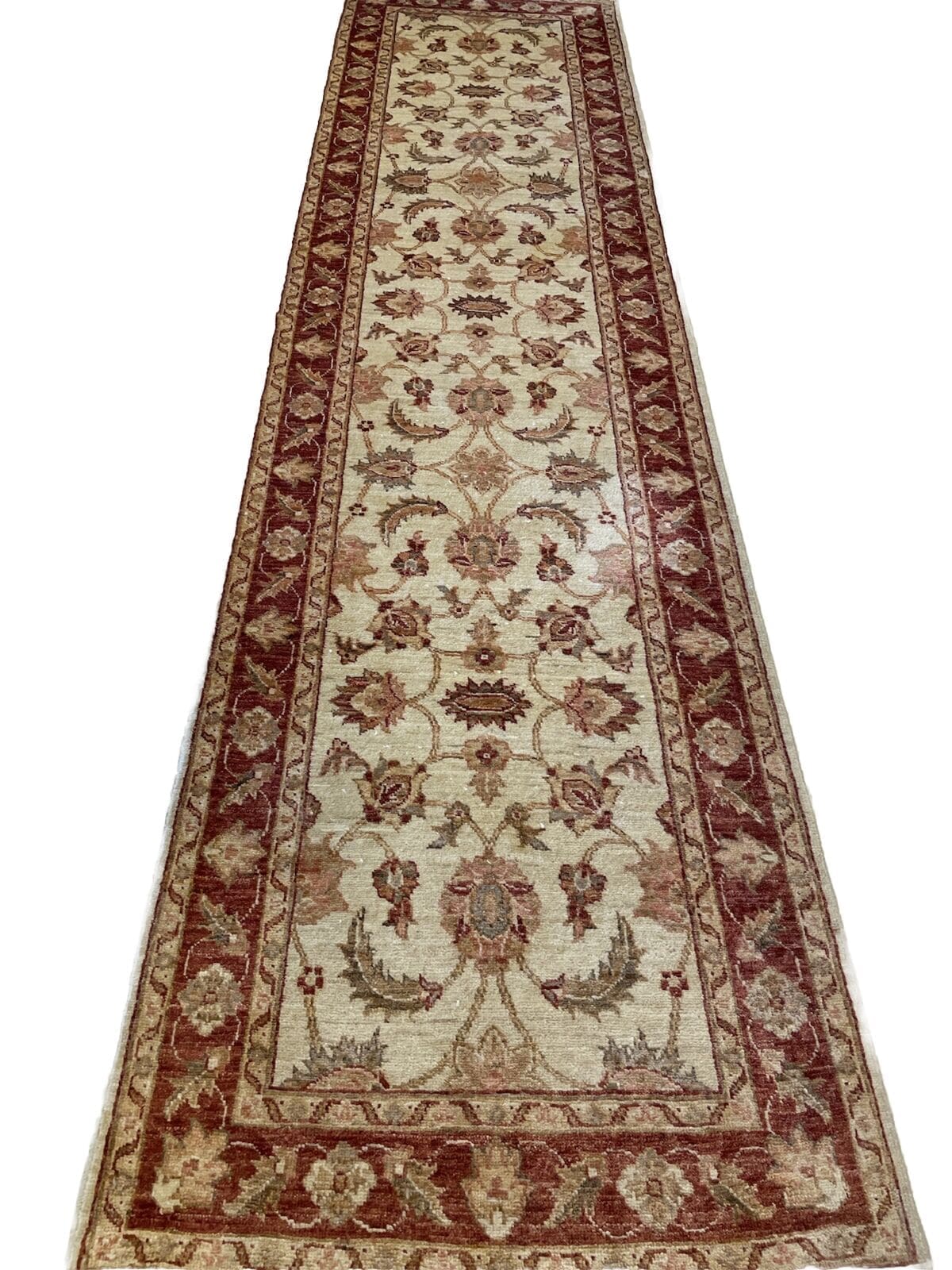
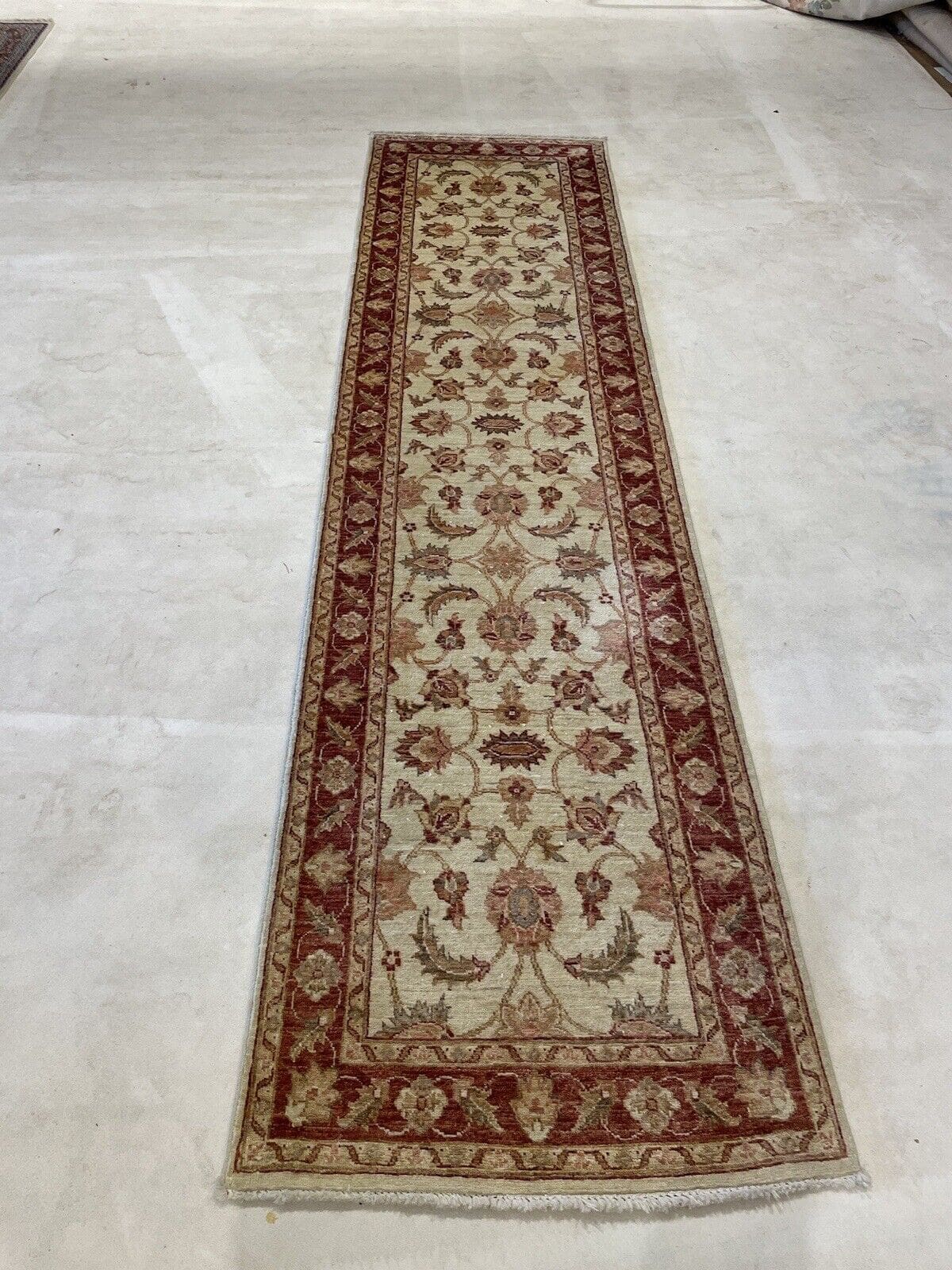
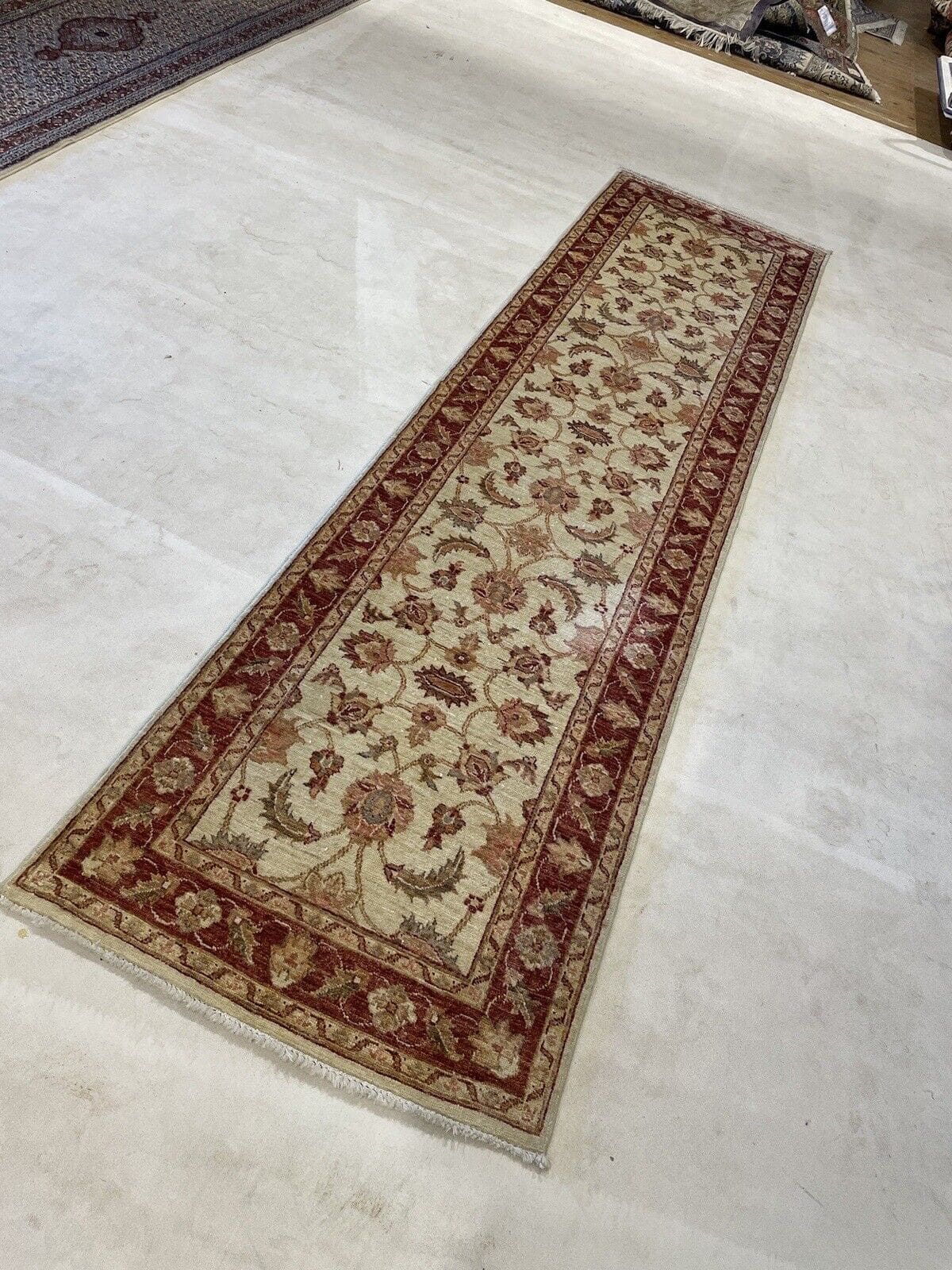
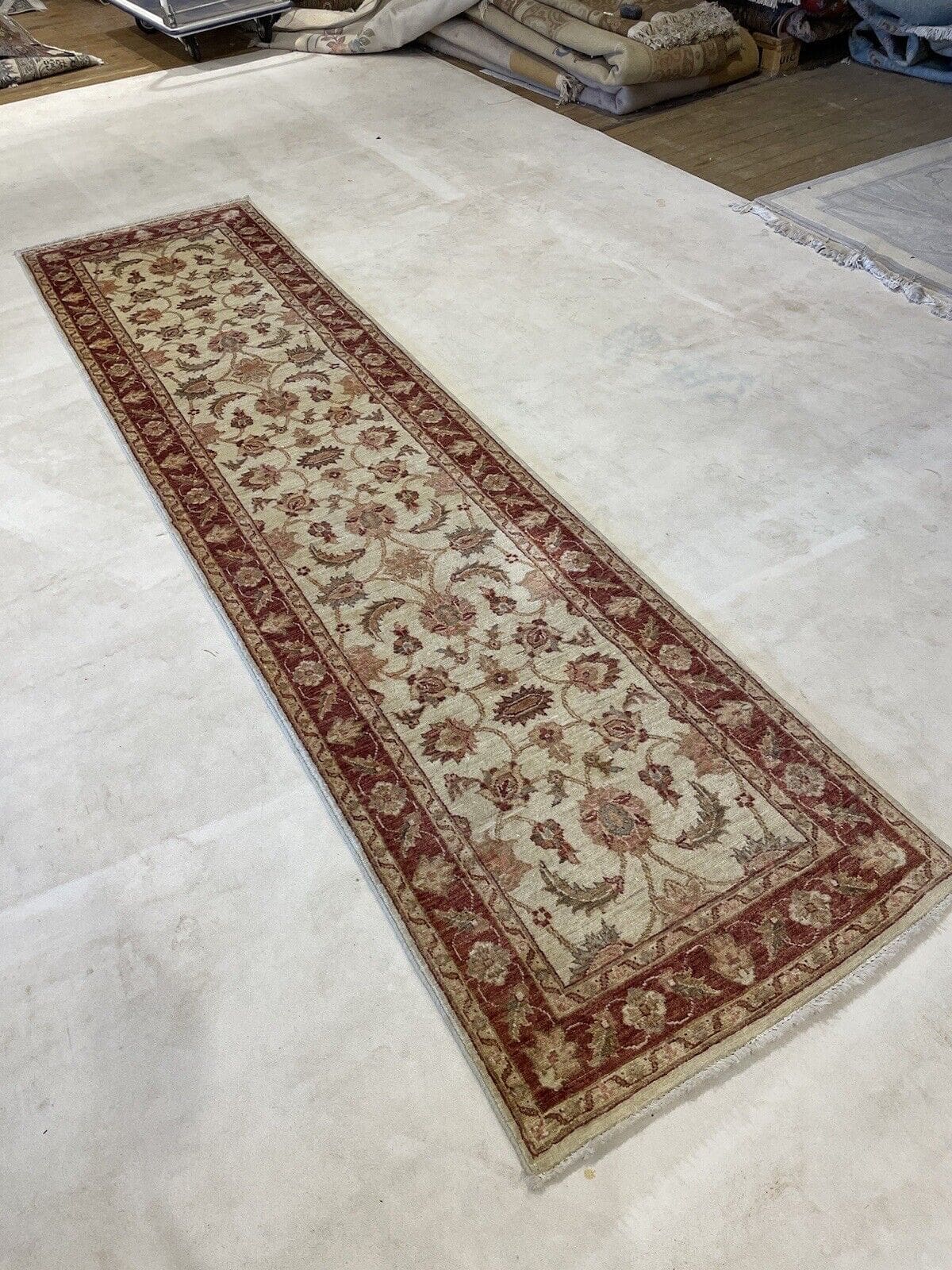
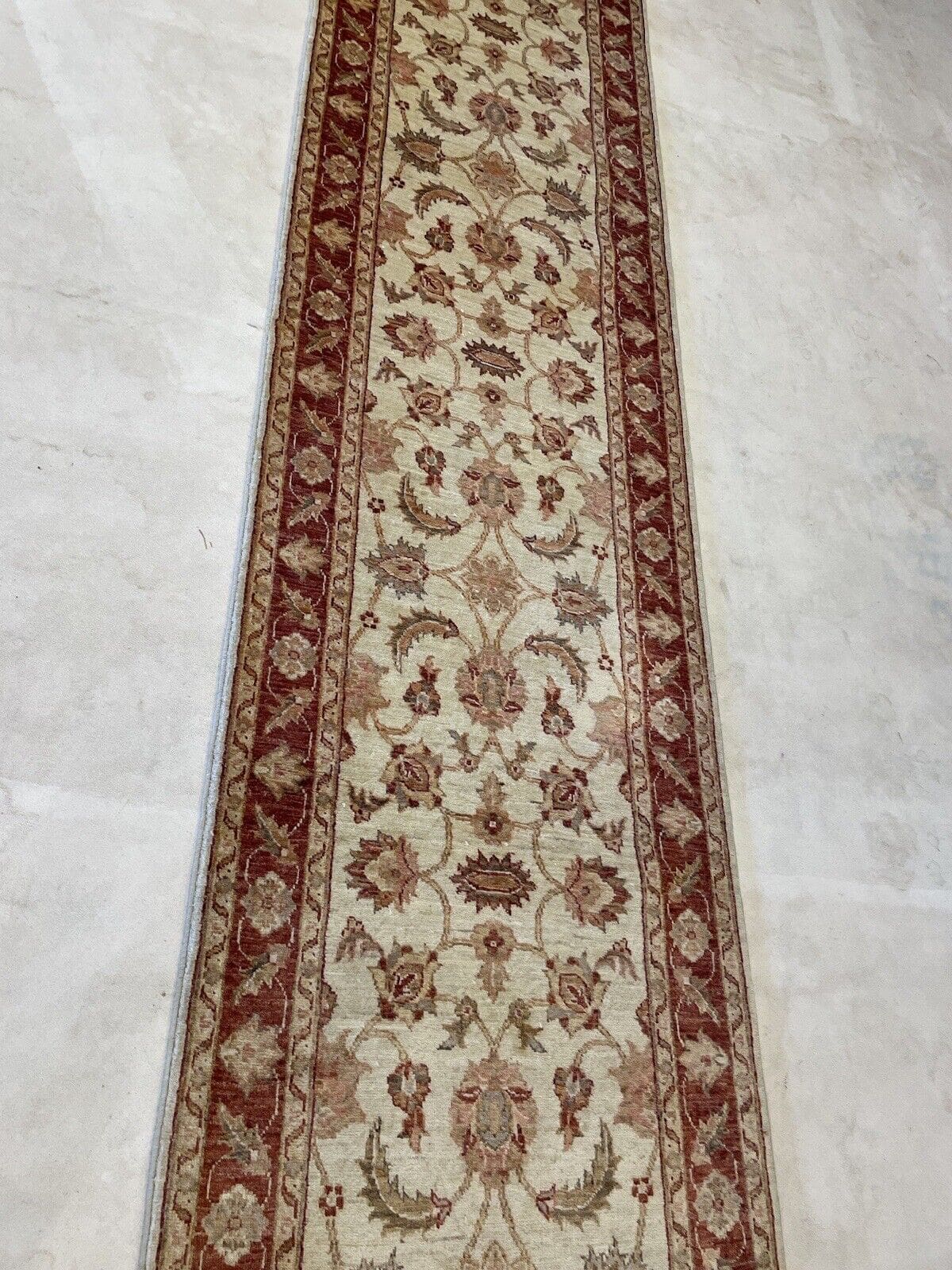
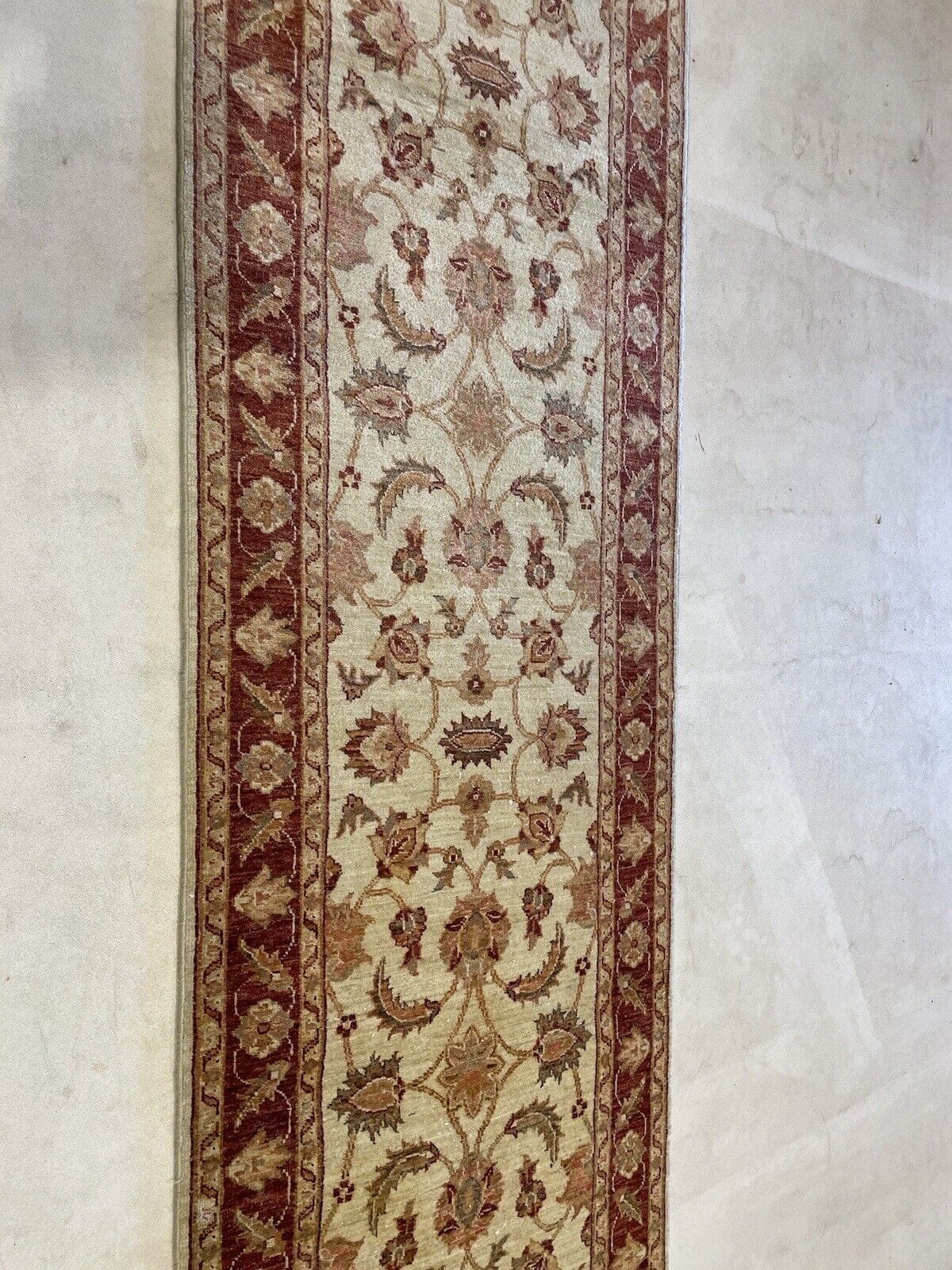
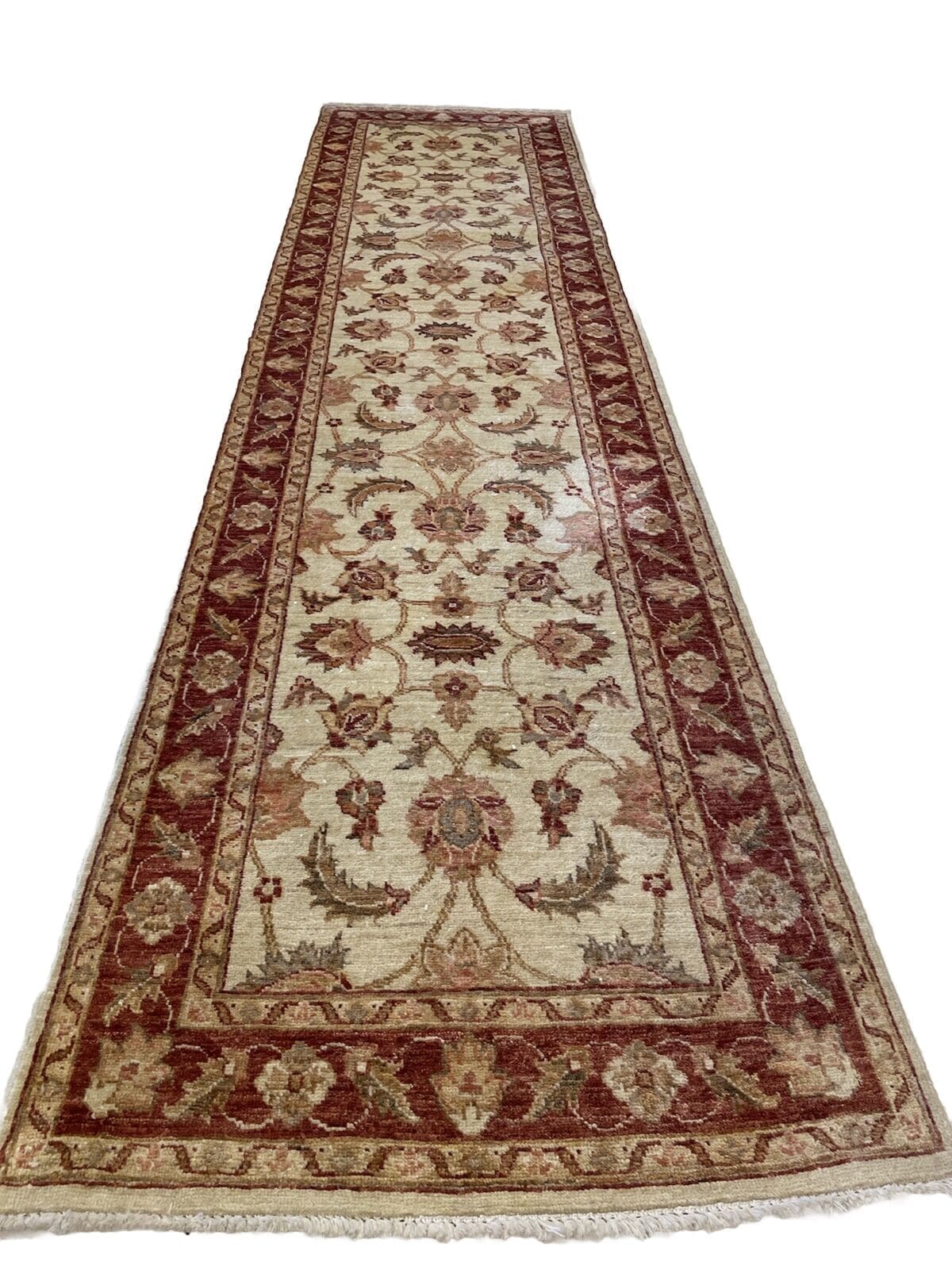
The design is described as an all-over pattern with decorated corners. An all-over composition spreads its ornament across the field rather than relying exclusively on one central medallion. Repeated elements create a visual rhythm and allow the eye to move through the length of the runner. The arrangement is especially suited to a narrow format because the pattern can accompany the direction of the rug.
The decorated corners are a distinct part of the composition. They finish the inner field and connect it visually with the surrounding border. In traditional Persian design, corners may be filled with scrolling forms, leaves or other stylised ornaments. The specific motifs of this rug are not named beyond the description of a patterned field with decorated corners, so the design is best understood through that stated structure rather than through a more specific motif label.
A narrow border frames the overall image. Borders perform more than a purely finishing function in carpet design. They establish the transition between the central field and the outer edge, while repeated ornaments can create a measured cadence around the composition. On a runner, the border also reinforces the long, clearly defined outline. It contains the design without interrupting the continuous character of the field.
The colour is beige. As a restrained ground colour, beige allows the organisation of a traditional pattern to remain visible without making a strong colour statement its main feature. The result can be placed within interiors described as traditionally Persian or Oriental. The runner’s design relies on the relationship between its continuous field, decorated corners and narrow border rather than on a single isolated ornament.
In general, Ziegler design balances decorative detail with an orderly surface. Floral and botanical inspirations in this tradition are commonly stylised so that they can be repeated and distributed across the field. This gives the composition continuity. Corner ornaments mark the transitions, while the border provides a clear frame. Together these elements create a structured pattern that remains legible along the full runner.
The design can be read in stages: first the continuous field, then the corner decoration, and finally the narrow surrounding border. This approach shows how the parts support one another. The runner combines a Persian decorative vocabulary with a rectangular, elongated format, allowing traditional ornament to function within a clearly defined passage-oriented shape.
Special Features
This rug is a runner with a rectangular shape and a beige colour. It is described as an antique Ziegler runner and is suitable for hallways and narrow spaces. It is also specified as suitable for use with underfloor heating. The rug was thoroughly checked and professionally washed. Its condition is given as new without a label, and it is also described as being in top condition. These condition statements form part of the description of this one-off rug.
The hand-knotted construction, wool pile and cotton warp define its material basis. The all-over field, decorated corners and narrow border define its visible design. No additional properties are added here, so the special features remain limited to the information provided for this rug.
FAQ
How should I care for the antique Ziegler runner?
Regular vacuuming helps remove loose dirt from the pile. Use a suitable attachment and avoid treating the surface aggressively. Occasional gentle beating is also recommended. If a spill occurs, work immediately with a soft cloth and a mild cleaning product. Vigorous rubbing can affect the fibres and the appearance of the pattern. Professional rug cleaning is advisable for a thorough treatment, particularly because the pile is wool. Liquids should not be left in the rug longer than necessary.
Can the Ziegler runner be used over underfloor heating?
Yes. The runner is specified as suitable for use with underfloor heating. The temperature should not be set too high, so that the wool is not exposed to unnecessary stress or damage. Even, moderate warmth is the gentler approach for the material. The usual care guidance for a hand-knotted wool-pile rug still applies when it is placed over heated flooring. The heating note describes the intended use of this particular rug.
How can I recognise an authentic Ziegler rug?
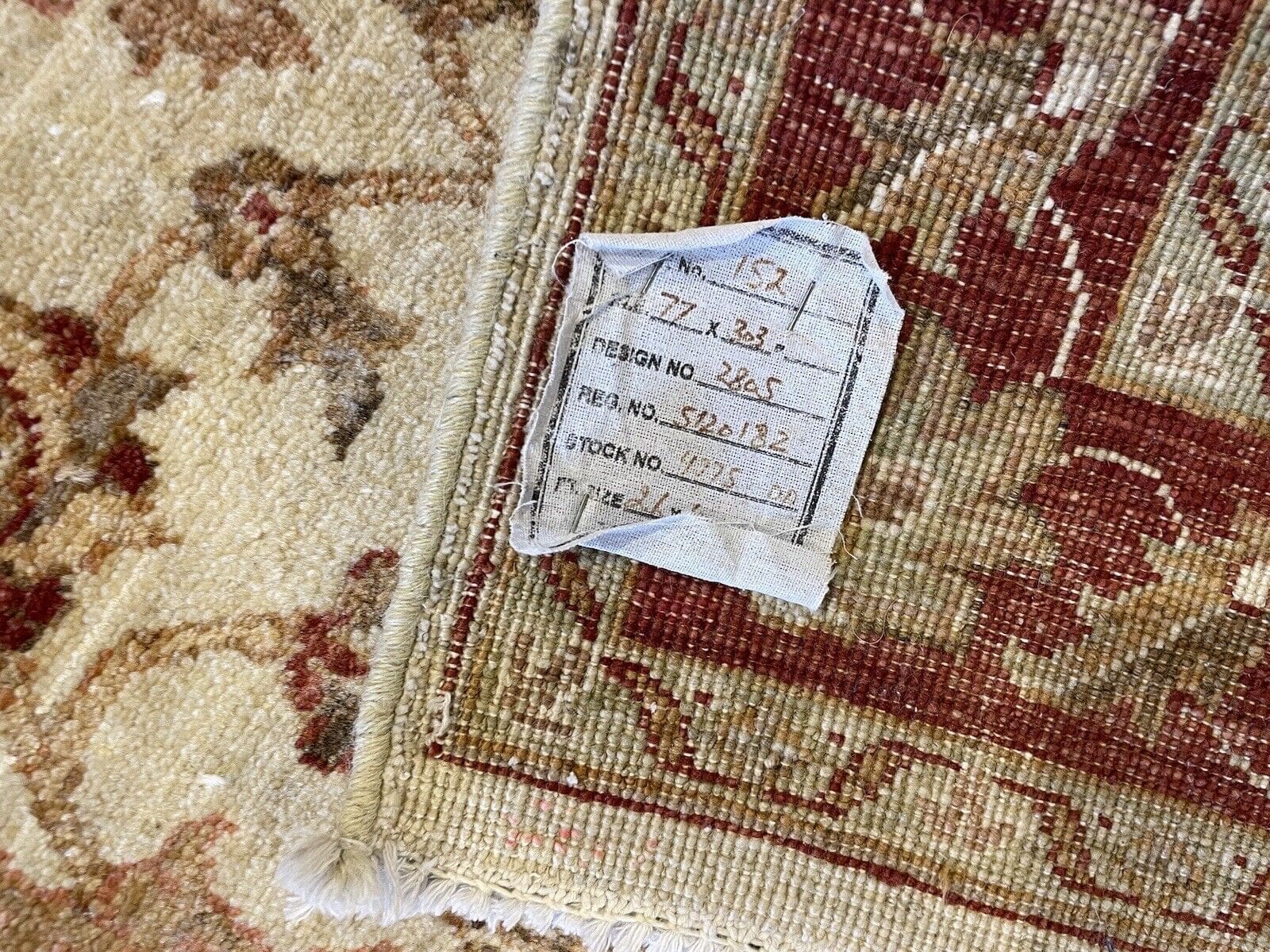
Fine handwork, the use of quality materials and characteristic patterns are important features associated with Ziegler rugs. Knot density and the overall appearance are also considered when assessing a rug. The individual piece should be examined as a whole, including its construction, materials, pattern layout and reverse. For this runner, the all-over field, decorated corners and framing border are the stated design features. Any authenticity assessment should take the specific handwork and structure of the rug into account.
To provide the best experiences, we use technologies like cookies to store and/or access device information. Consenting to these technologies will allow us to process data such as browsing behavior or unique IDs on this site. Not consenting or withdrawing consent, may adversely affect certain features and functions.
Functional Always active
The technical storage or access is strictly necessary for the legitimate purpose of enabling the use of a specific service explicitly requested by the subscriber or user, or for the sole purpose of carrying out the transmission of a communication over an electronic communications network.
Preferences
The technical storage or access is necessary for the legitimate purpose of storing preferences that are not requested by the subscriber or user.
Statistics
The technical storage or access that is used exclusively for statistical purposes.The technical storage or access that is used exclusively for anonymous statistical purposes. Without a subpoena, voluntary compliance on the part of your Internet Service Provider, or additional records from a third party, information stored or retrieved for this purpose alone cannot usually be used to identify you.
Marketing
The technical storage or access is required to create user profiles to send advertising, or to track the user on a website or across several websites for similar marketing purposes.

 SECURE PAYMENT
 SHIPPING PARTNERS


