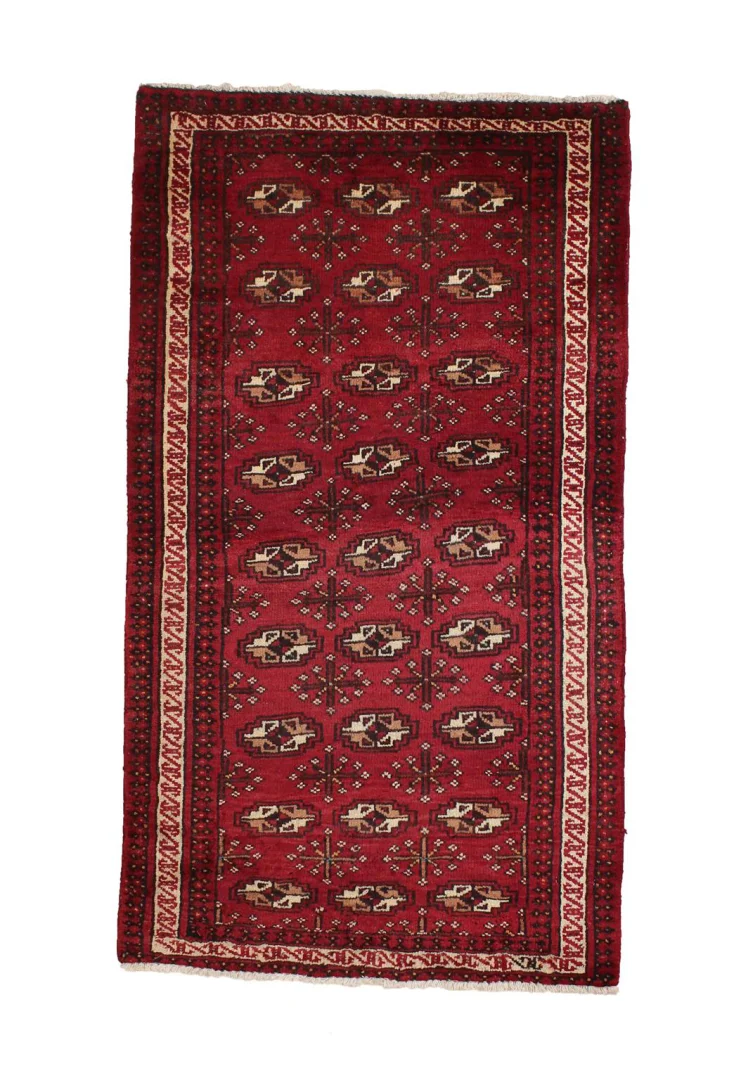
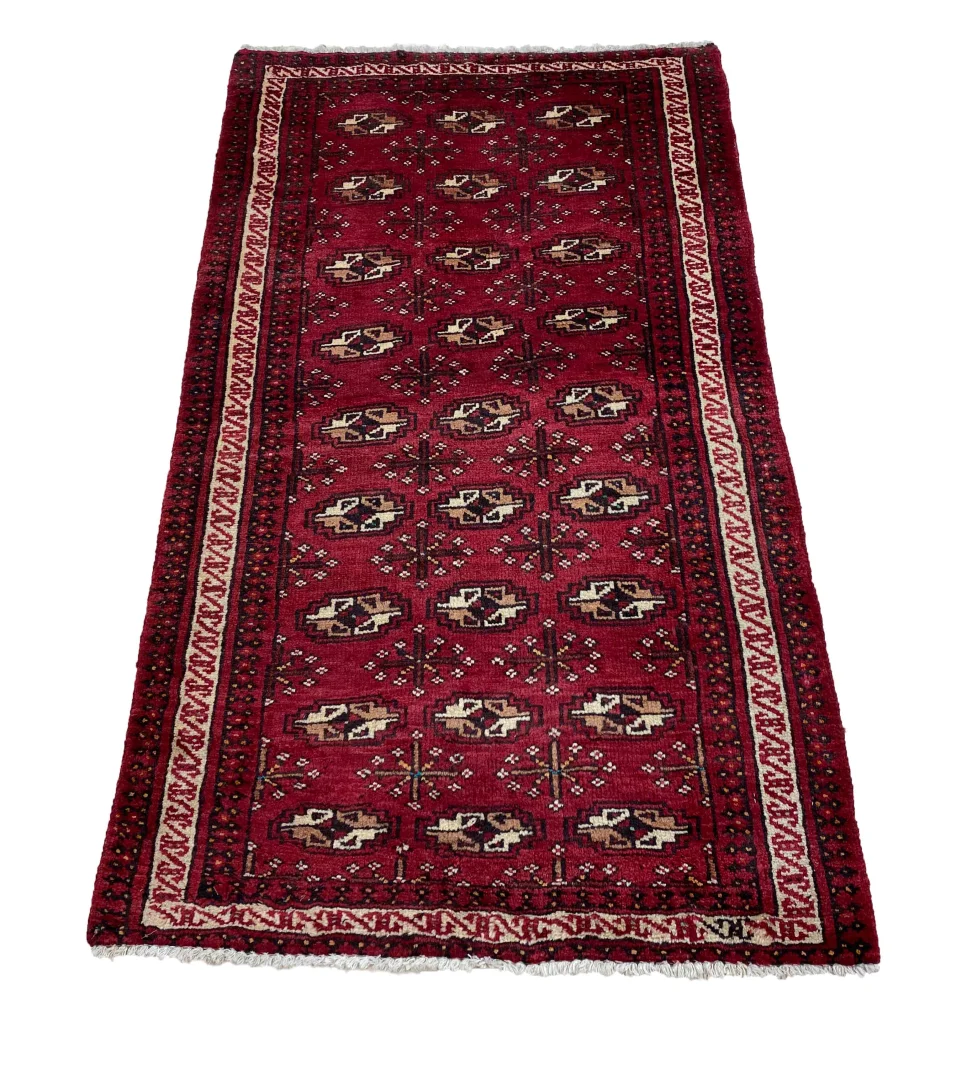
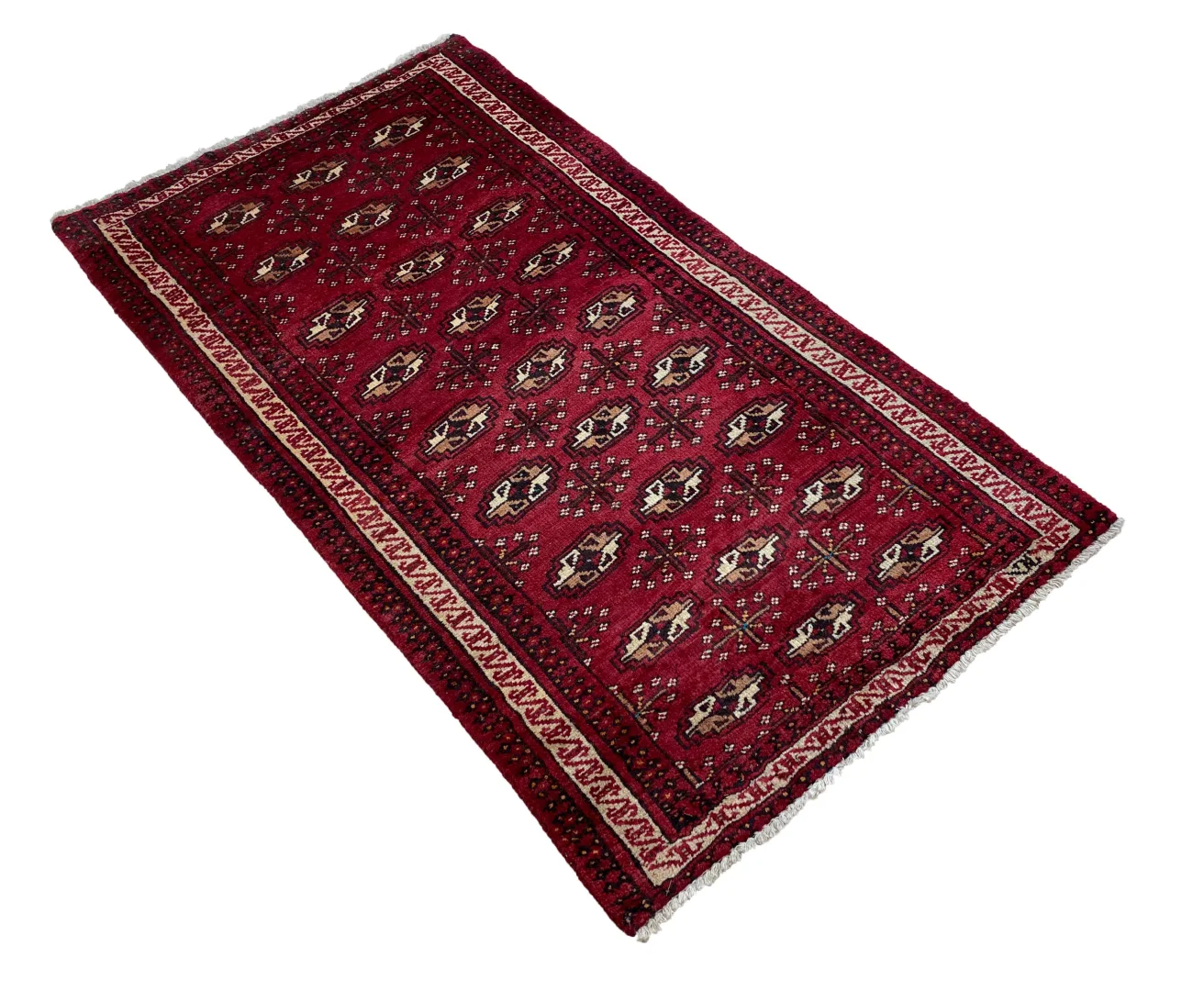
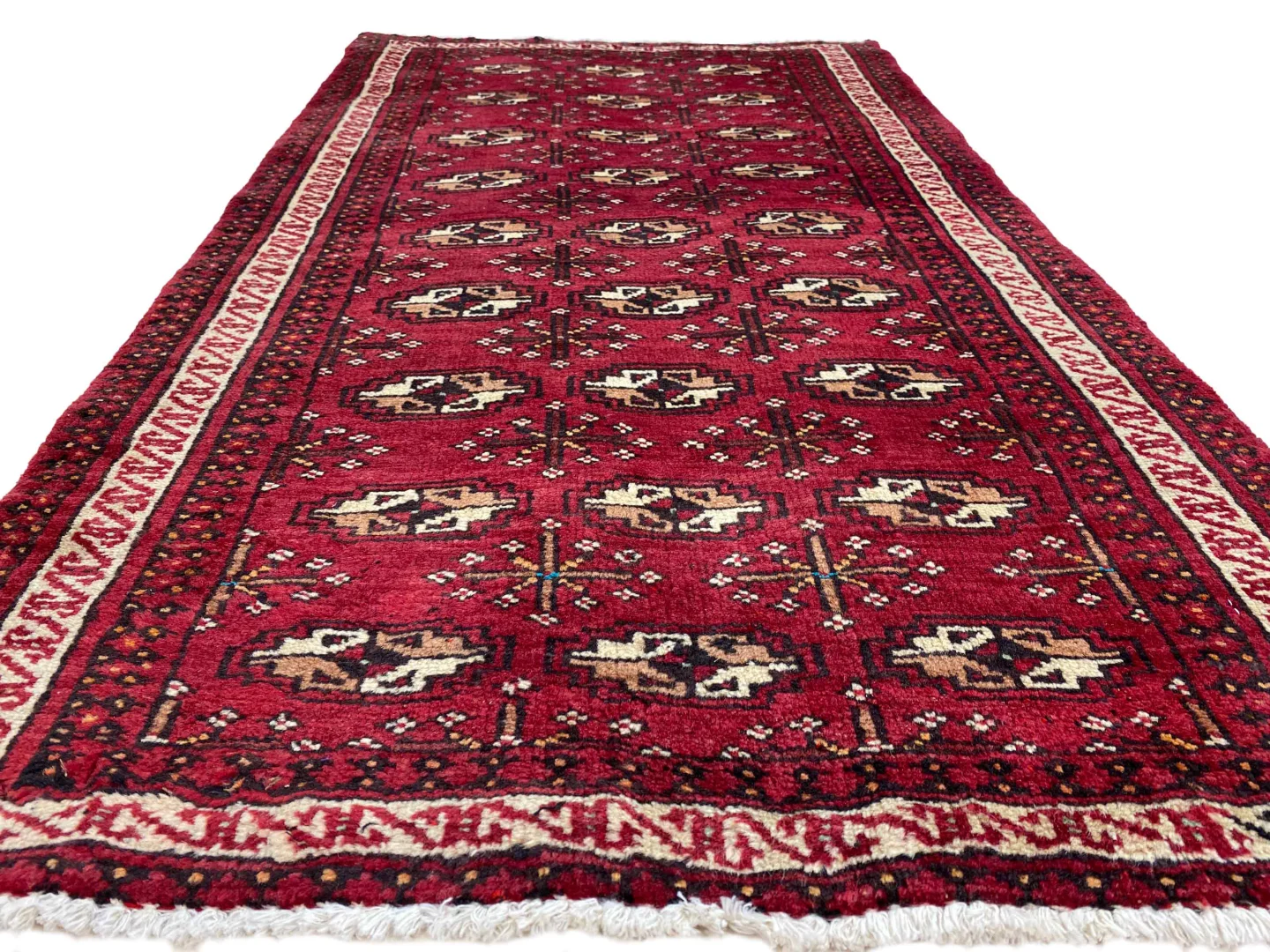
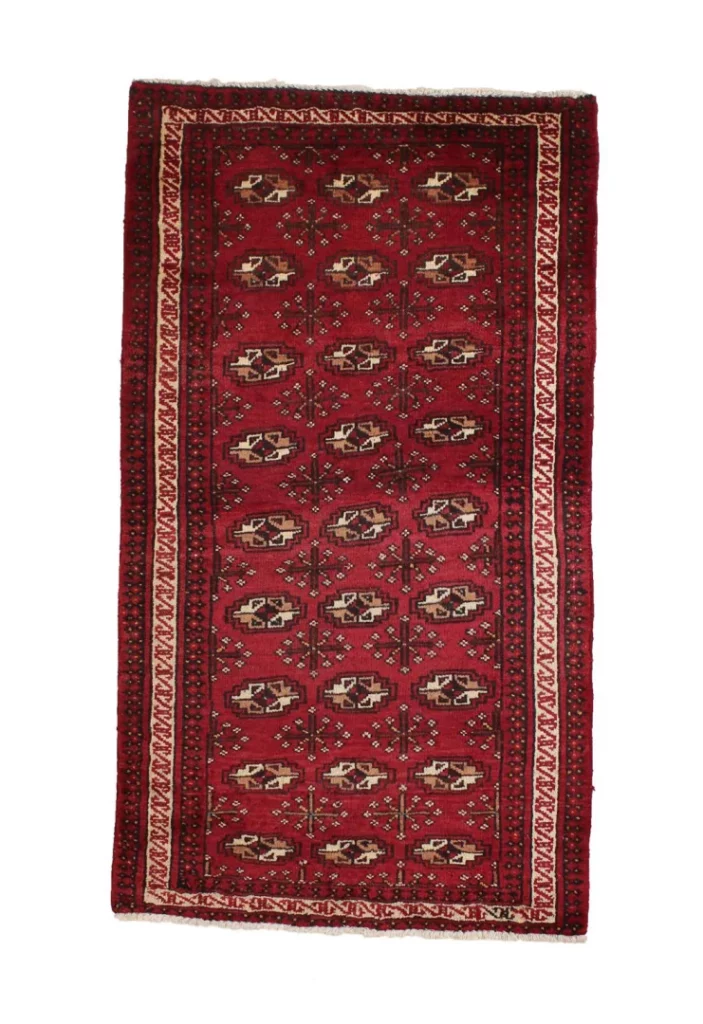
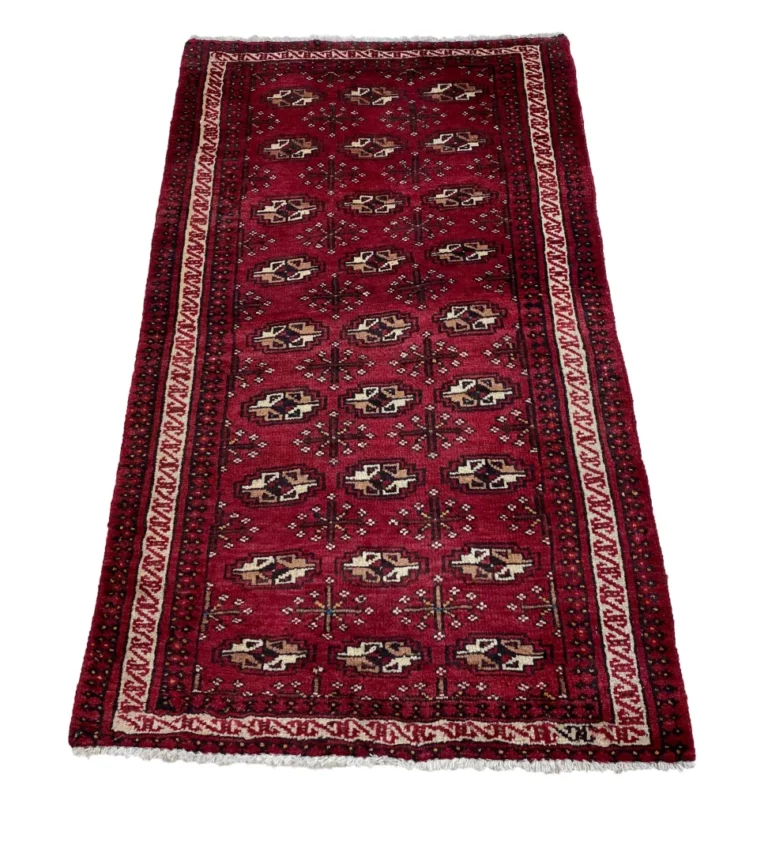
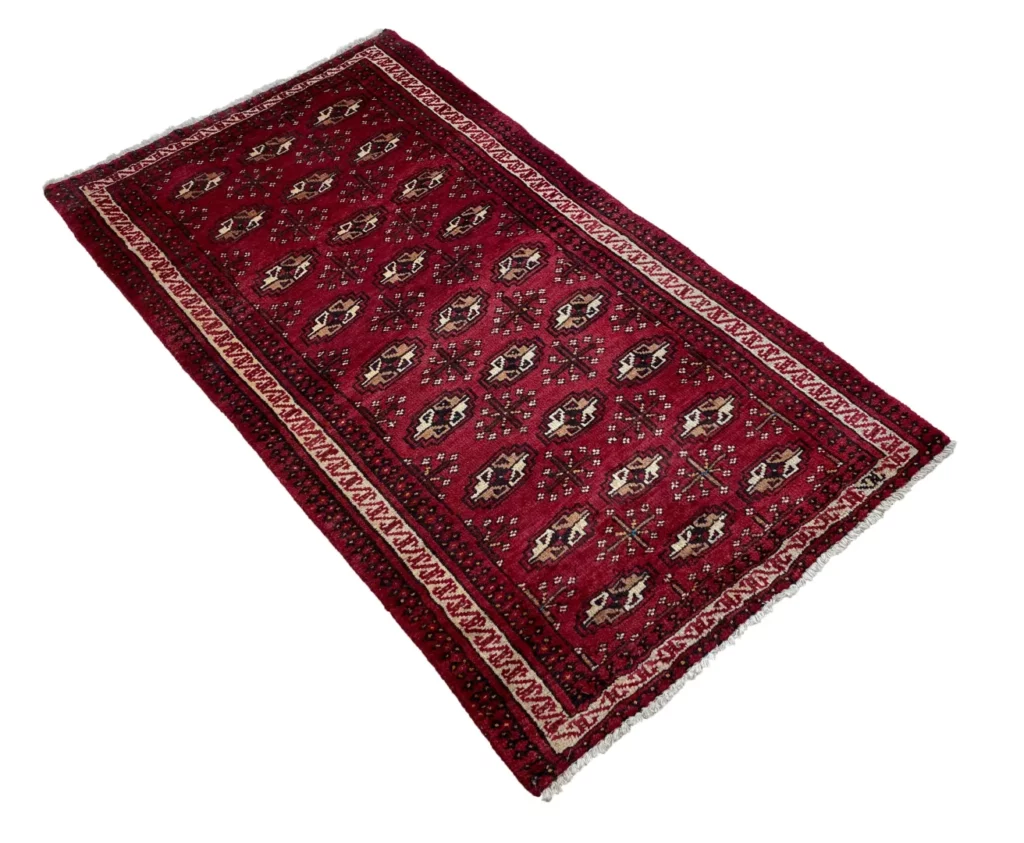
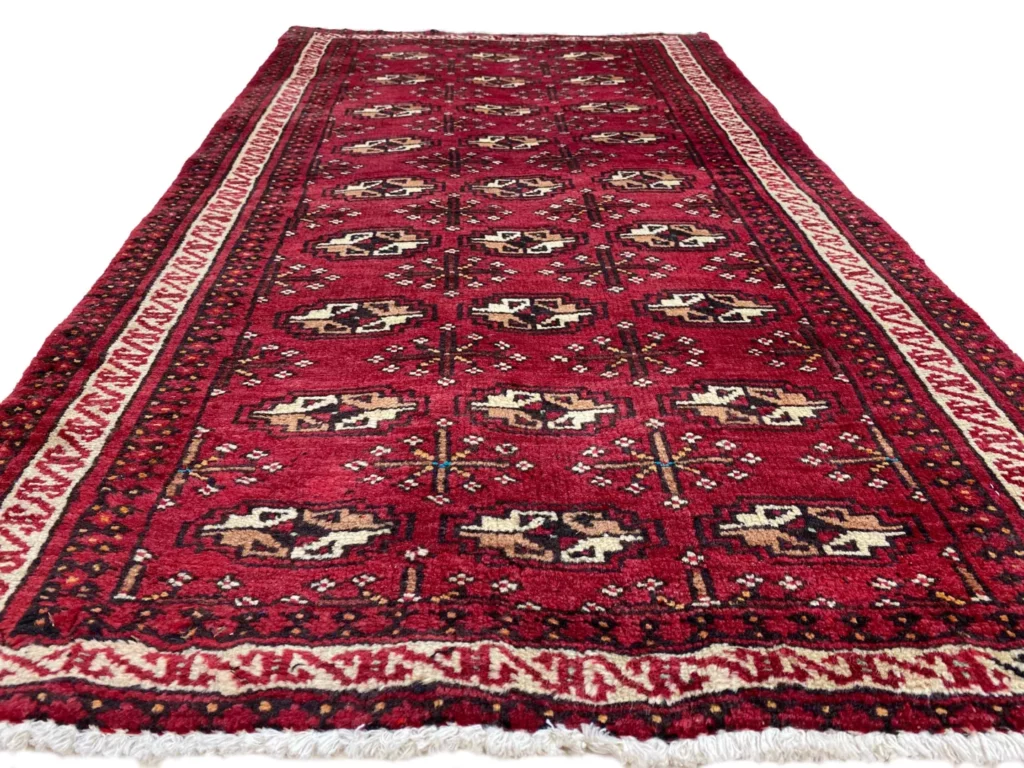
Hand-knotted Turkman Persian rug | Knot density: 150,000 – 300,000 knots/m² | Material: high-quality wool pile | Size: 135 x 75 cm | Pattern: varied Göl motifs in red, violet and brown
This Turkman Persian rug is hand-knotted and made from high-quality sheep’s wool. Wool is the principal pile material. In this rug tradition, sheep’s wool is valued for its resilient fibre, its natural textile character and its comfortable feel. It provides a surface suited to practical use while retaining the qualities associated with a carefully made hand-knotted textile.
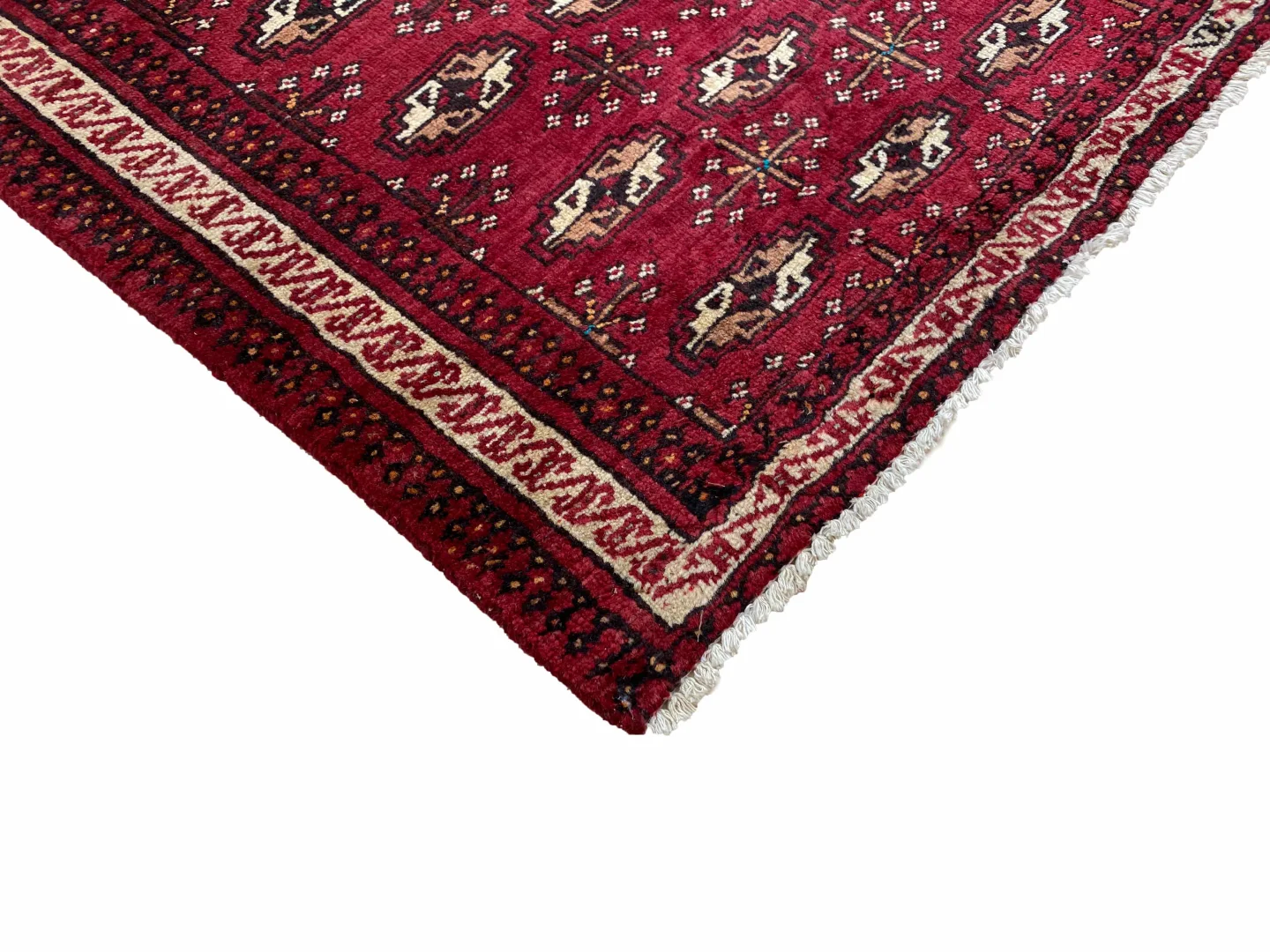
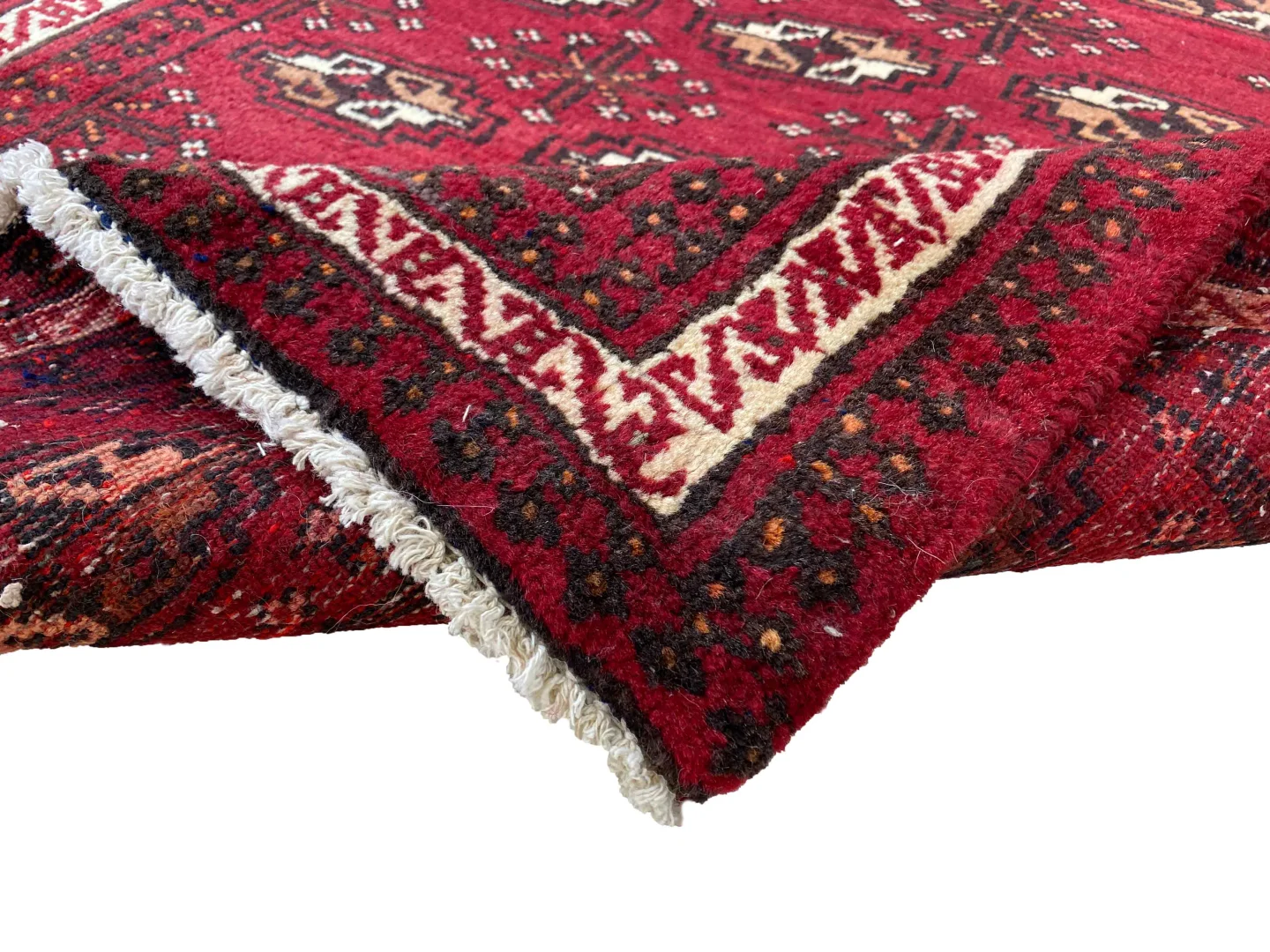
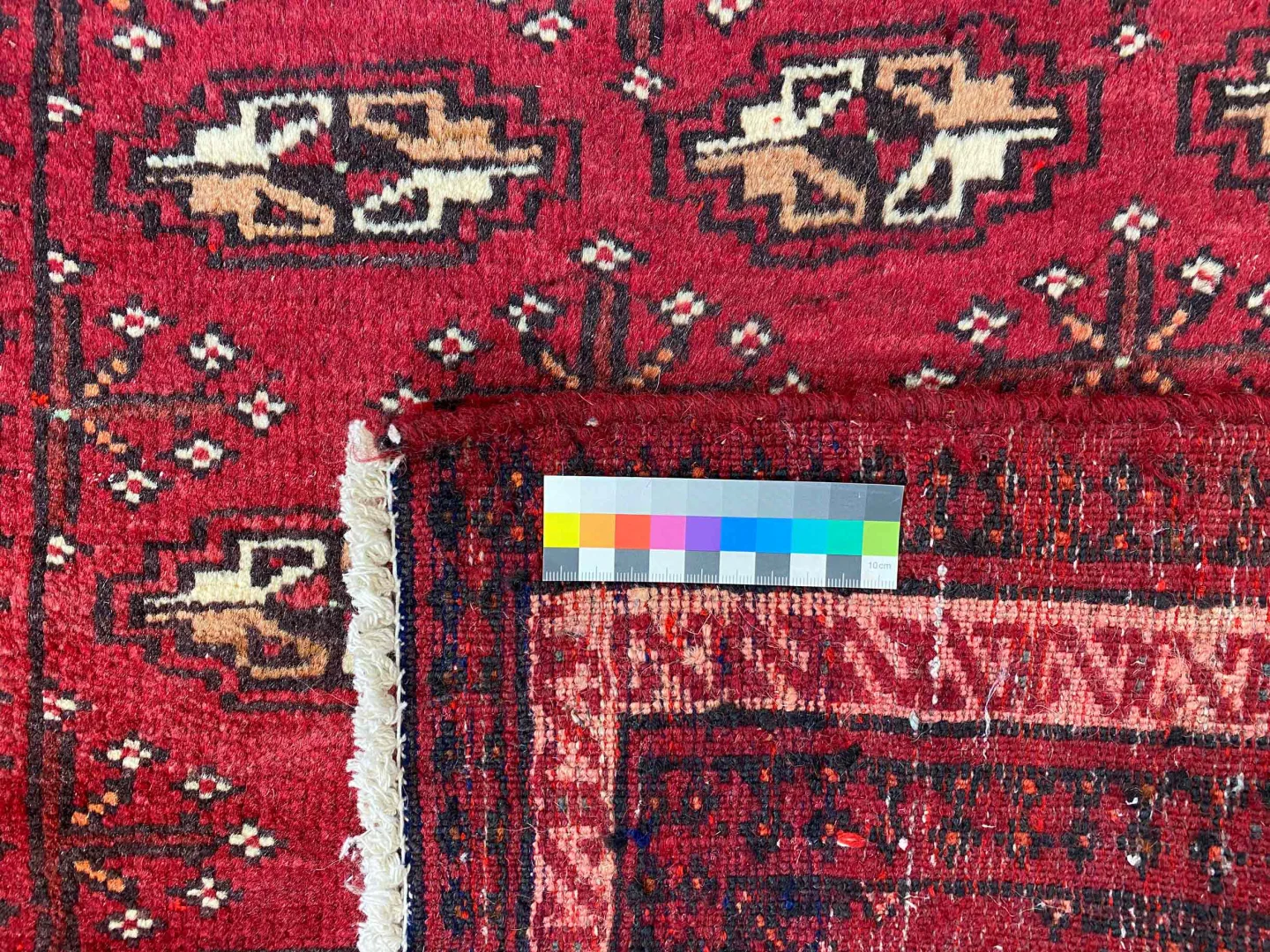
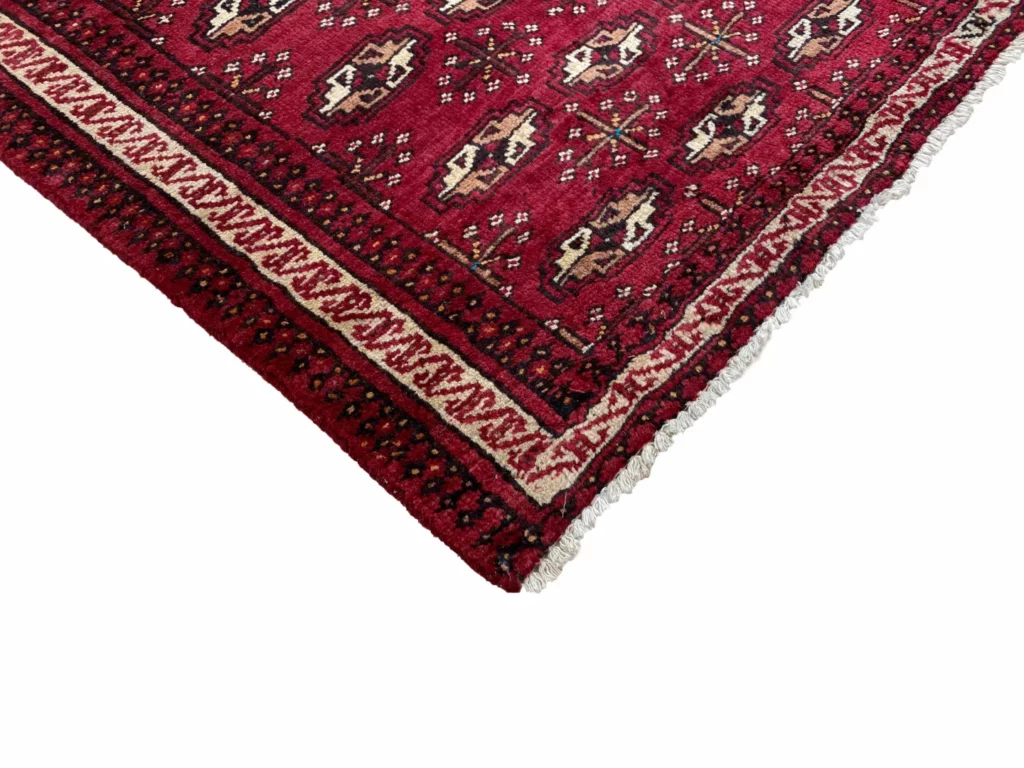
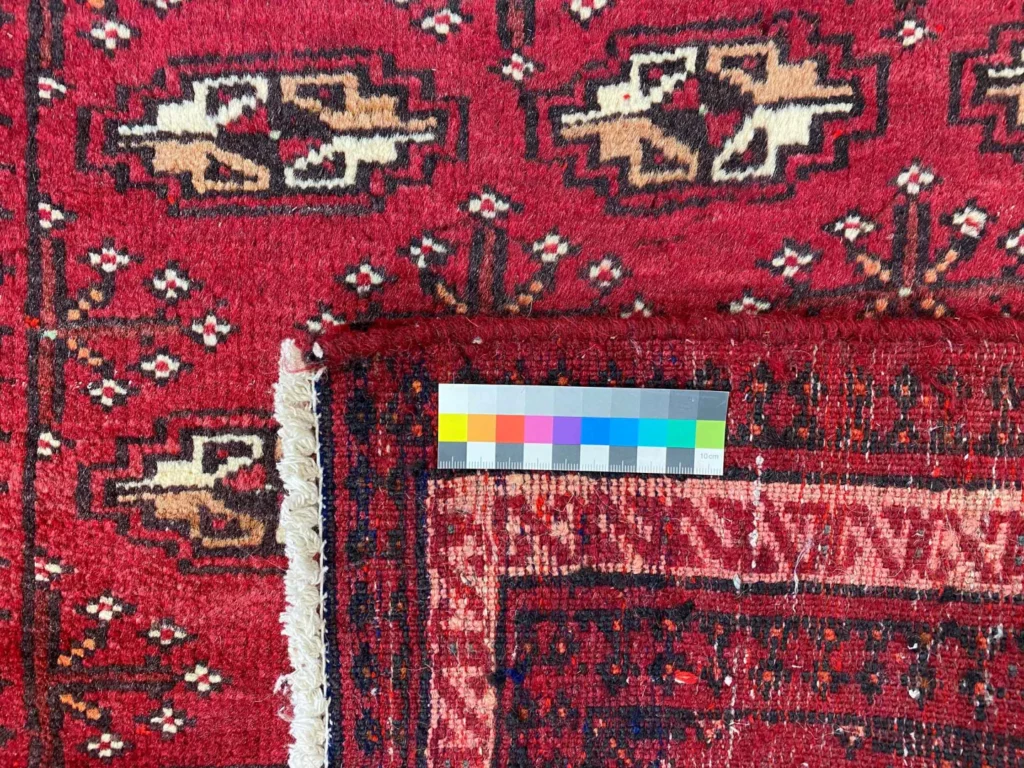
The knot density of this rug is between 150,000 and 300,000 knots per square metre. Knot density indicates how many individual knots have been tied within a defined area. In hand-knotting, the design is built progressively: each knot is placed by hand, the row is compacted, and the next row is prepared. Contours, colour fields and ornaments therefore emerge directly from the construction of the rug.
A hand-knotted rug differs from a printed or machine-made textile because the design is not applied to a completed surface afterwards. Colour and form are incorporated while the rug is being tied. The stated knot density supports a detailed rendering of the varied Göl motifs. High-quality sheep’s wool accepts the chosen colours while preserving the tactile and visual depth characteristic of a wool textile.
The traditional working process includes preparing the wool, arranging the warp, tying the individual knots and compacting the completed rows. The edges and surface are then finished. These stages require practice, consistent tension and close attention to the sequence of repeated motifs. In a Turkman rug, material, technique and ornament are consequently part of one connected craft process.
Hand-knotting also gives the construction a direct relationship to the maker’s work. Unlike a surface design added by printing, the pattern is held within the knotted textile itself. Changes in colour, line and motif are made as the knotting progresses. This is why the technical structure is important to the visual appearance: the wool, the knot sequence and the ornament are experienced together rather than as separate layers.
Origin and Tradition
This Turkman Persian rug comes from northern Persia, near the border with Turkmenistan. Northern Persia belongs to the Iranian cultural sphere and has a long-standing tradition of carpet and textile production. Its position between Persian-influenced areas and the Turkmen cultural region has contributed to an expressive vocabulary of ordered forms and repeated ornaments. Rugs from this setting often balance strong geometric organisation with a distinctive regional identity.
Turkman is used in carpet terminology for a regional and cultural design tradition. It does not necessarily describe one single pattern. Instead, the name can encompass related forms, layouts and craft practices. The use of recurring Göl motifs is an important point of reference. These motifs may serve as central ornaments, repeated units or elements within a wider field. Workshops and weavers can interpret their shapes, borders and secondary areas in different ways.
Knowledge of carpet making in northern Persia has traditionally been transmitted through practical instruction within families and workshops. Skills include preparing the wool, setting up the foundation, tying and securing the knots, maintaining tension and completing the borders. Understanding the order and proportion of the motifs is learned alongside the technical work. A hand-knotted rug is therefore produced through many connected acts of attention rather than through one uniform industrial operation.
The Turkman tradition is associated with Turkmen ornament and with the cultural landscape of the northern frontier. Its visual language often favours repeated structures that make the field easy to read. This does not mean that every rug has identical medallions or identical borders. Variations in Göl shape, spacing, interior drawing and colour balance are part of the tradition. A shared origin and vocabulary can therefore coexist with many individual compositions.
Persian rugs are made in a wide range of formats and for different settings. The broader northern Persian tradition includes smaller pieces as well as larger rugs. Format, however, is only one aspect of a rug’s identity. Material, knotting, colour and pattern work together to establish its character. In a hand-knotted piece, the composition appears gradually as the rows are completed, allowing the structure of the textile and the development of the design to remain visibly connected.
The wider Iranian carpet culture includes several other well-known traditions. Gabbeh rugs are associated with coarse, irregular designs and lively colours. Qashqai rugs often feature complex geometric compositions linked with the nomadic culture of the Qashqai tribes. Tabriz and Isfahan rugs are also part of the Persian tradition and are known for elaborate designs and high knot densities. These examples demonstrate the breadth of Iranian carpet making, but their names represent separate traditions and should not replace the Turkman origin of this rug.
Regional carpet traditions have never existed in complete isolation. Motifs and techniques can travel through neighbouring communities, trade and the transmission of patterns. Even so, each area develops a recognisable balance of ornament, colour and construction. In Turkman rugs, the repeated Göl forms provide an important link to the regional design language. The hand-knotted technique preserves that language in a material form, with the pattern integrated into the structure of the textile.
Design and Pattern
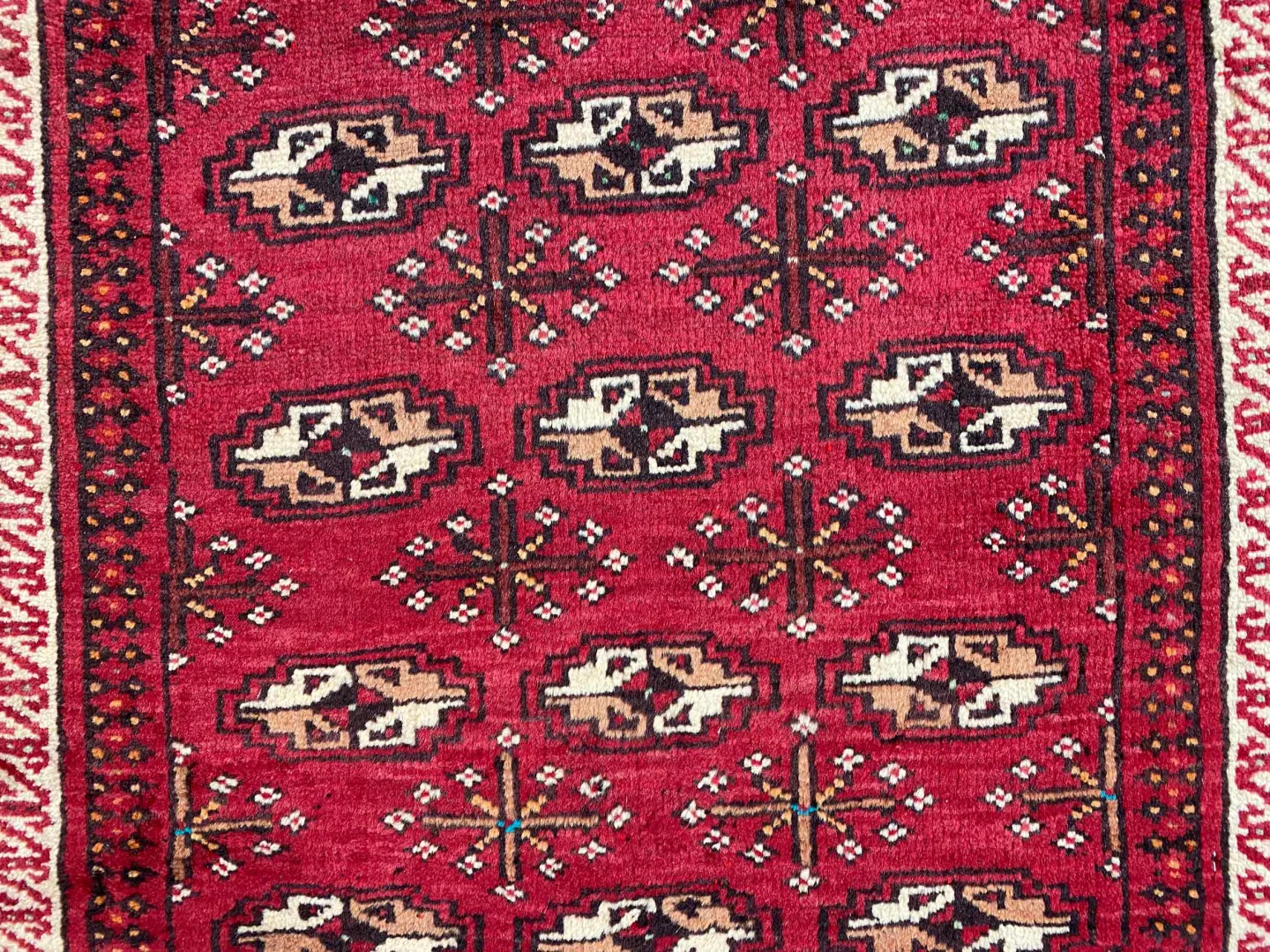
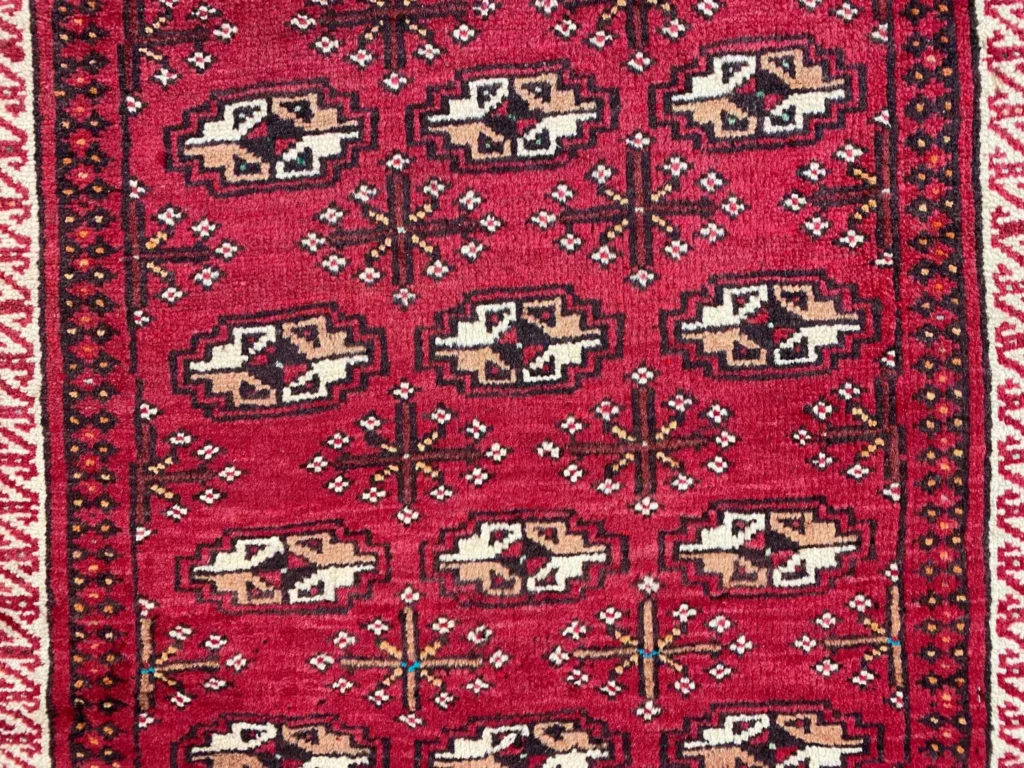
The defining design feature of this rug is its varied collection of Göl motifs. In carpet terminology, a Göl is a recurring ornament, usually outlined clearly and divided into geometric sections. It may contain an outer frame, internal compartments and smaller supporting details. Depending on the composition, Göl motifs can be arranged singly, in rows or as repeated units that organise a larger field.
Repetition gives a Göl design rhythm and visual order. At the same time, the motifs can differ in outline, internal drawing and proportion. The result is a composition that is coherent without being mechanically identical from one element to the next. Regular placement guides the eye across the surface, while the smaller variations show the presence of handwork. In a hand-knotted rug, every such detail is formed through the placement of individual knots.
The colours given for this rug are red, violet and brown. Red is often a strong and anchoring colour within Turkman-inspired palettes. Violet introduces a distinct tonal contrast and can separate or emphasise parts of the ornament. Brown contributes an earthy note that links the individual pattern areas. Together, the three colours create a warm colour group in which the Göl motifs remain clearly visible.
Colour and drawing are directly connected in a knotted rug. The chosen tones are incorporated into the knot sequence, and their placement follows the structure of the motif. Lines, borders and internal fields are consequently formed by the same textile process rather than by a later surface treatment. Wool receives the colours and gives them a material depth. Knot density also matters because it supports the controlled rendering of contours and smaller ornamental details.
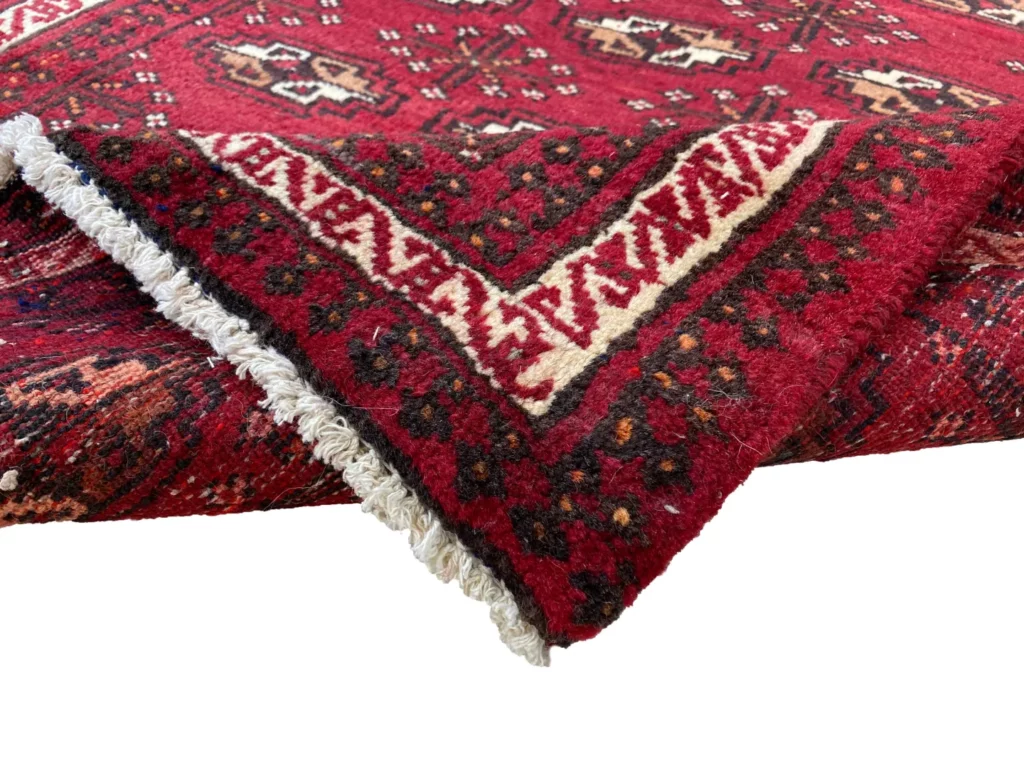
A complete carpet composition may include more than its principal motifs. Intermediate areas and borders can frame the field, separate sections and establish transitions between the centre and the edges. In Turkman designs, geometric forms and repeated ornaments are frequently arranged to create a clear overall structure. Varied Göl motifs can be combined with different borders and secondary patterns while still retaining the regional character associated with the Turkman tradition.
The pattern tradition is not limited to one unchanging template. Göl forms can vary according to region, workshop and design. The distance between motifs, the internal compartments, the surrounding details and the distribution of colour may all be adjusted. This variation explains how Turkman rugs can share a recognisable ornamental language while maintaining different visual identities. Repetition provides continuity; the hand-knotted execution allows the design to retain an individual textile expression.
Geometric patterning also has a practical visual role. Repeated units distribute attention across the field and make the relationship between centre, border and surrounding motifs legible. A Göl can act as a visual anchor, while smaller forms provide transitions and supporting rhythm. The precise effect depends on the arrangement and on the colours chosen. In this rug, red, violet and brown define the stated palette within that varied Göl-based design.
Special Features
This rug combines hand-knotting, high-quality sheep’s wool, a knot density of 150,000 to 300,000 knots per square metre and varied Göl motifs. Its origin in northern Persia near the Turkmenistan border gives it a clear regional context. Red, violet and brown determine the colour scheme. Together, construction, material, pattern and colour identify the piece as a Turkman Persian rug.
Natural wool also has practical qualities beyond its decorative role. Wool rugs can contribute to thermal insulation and sound absorption within a room. Wool is described as easy to care for and resistant to stains and wear. Regular vacuuming helps remove dust and dirt. Direct sunlight should be avoided to help prevent the colours from fading. Fresh stains should be treated promptly with a damp cloth and mild detergent.
FAQ
How should I care for my Turkman Persian rug?
Vacuum the rug regularly to remove dust and loose dirt from the wool pile. Avoid direct sunlight, since prolonged exposure can make colours fade. If a spill occurs, treat it promptly with a damp cloth and a mild cleaning product. Work carefully rather than rubbing aggressively, and avoid soaking the hand-knotted textile. For a thorough cleaning or a stubborn mark, professional rug cleaning is advisable, especially when the wool and the construction need to be preserved. Regular, gentle care is the most suitable way to maintain the surface and colour impression.
What makes Turkman Persian rugs distinctive?
Their distinctiveness comes from the combination of traditional hand production, a high knot density and characteristic Göl motifs. Their regional context is northern Persia near the border with Turkmenistan. Göl ornaments may differ in outline, inner drawing and arrangement, so the common Turkman design language appears in many forms. High-quality sheep’s wool provides the stated material basis, while red, violet and brown establish the colour palette of this rug. The result is both a functional textile and an example of an established regional ornament tradition.
Where do the materials for Turkman Persian rugs come from?
The principal material associated with Turkman Persian rugs is high-quality sheep’s wool from northern Persia. The sheep of this cooler climate are associated with wool that offers quality, durability and a long-lasting fibre. The wool is prepared and incorporated into the pile through hand-knotting. Its natural structure supports a resilient surface and a pleasant feel. It also takes colour effectively, making it suitable for the red, violet and brown tones used in the design tradition. The material and the regional craft process are therefore closely related.
To provide the best experiences, we use technologies like cookies to store and/or access device information. Consenting to these technologies will allow us to process data such as browsing behavior or unique IDs on this site. Not consenting or withdrawing consent, may adversely affect certain features and functions.
Functional Always active
The technical storage or access is strictly necessary for the legitimate purpose of enabling the use of a specific service explicitly requested by the subscriber or user, or for the sole purpose of carrying out the transmission of a communication over an electronic communications network.
Preferences
The technical storage or access is necessary for the legitimate purpose of storing preferences that are not requested by the subscriber or user.
Statistics
The technical storage or access that is used exclusively for statistical purposes.The technical storage or access that is used exclusively for anonymous statistical purposes. Without a subpoena, voluntary compliance on the part of your Internet Service Provider, or additional records from a third party, information stored or retrieved for this purpose alone cannot usually be used to identify you.
Marketing
The technical storage or access is required to create user profiles to send advertising, or to track the user on a website or across several websites for similar marketing purposes.
 SECURE PAYMENT
 SHIPPING PARTNERS


