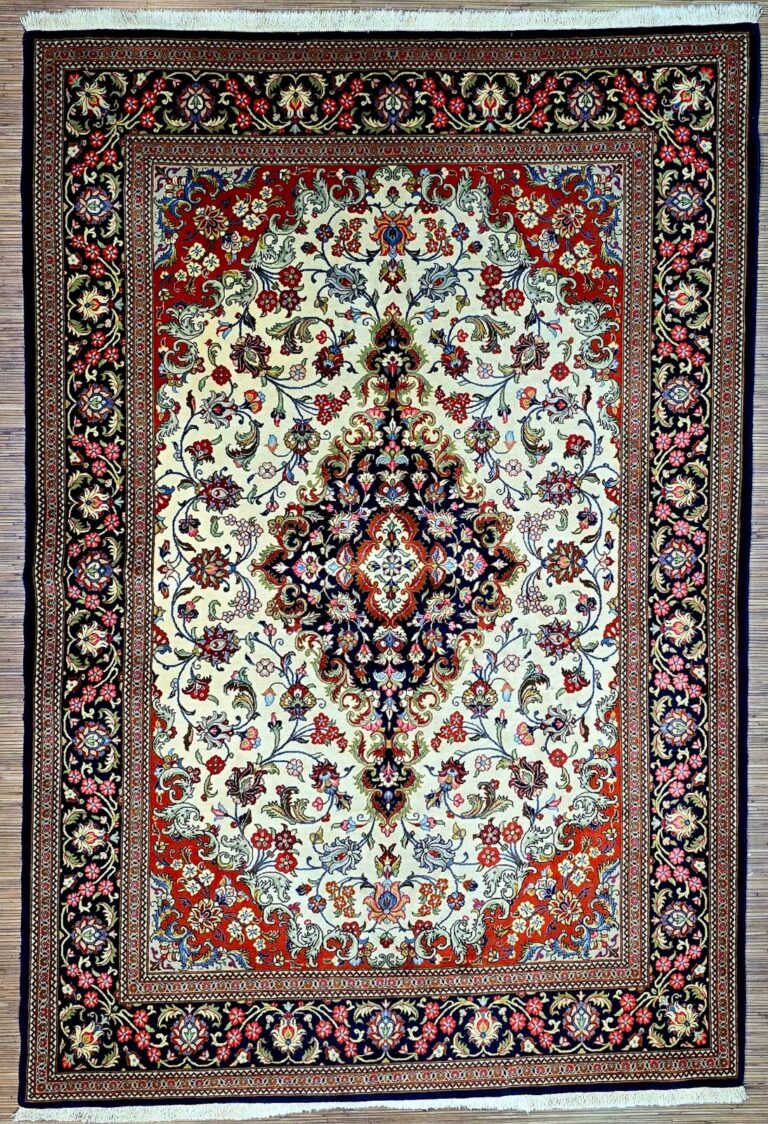
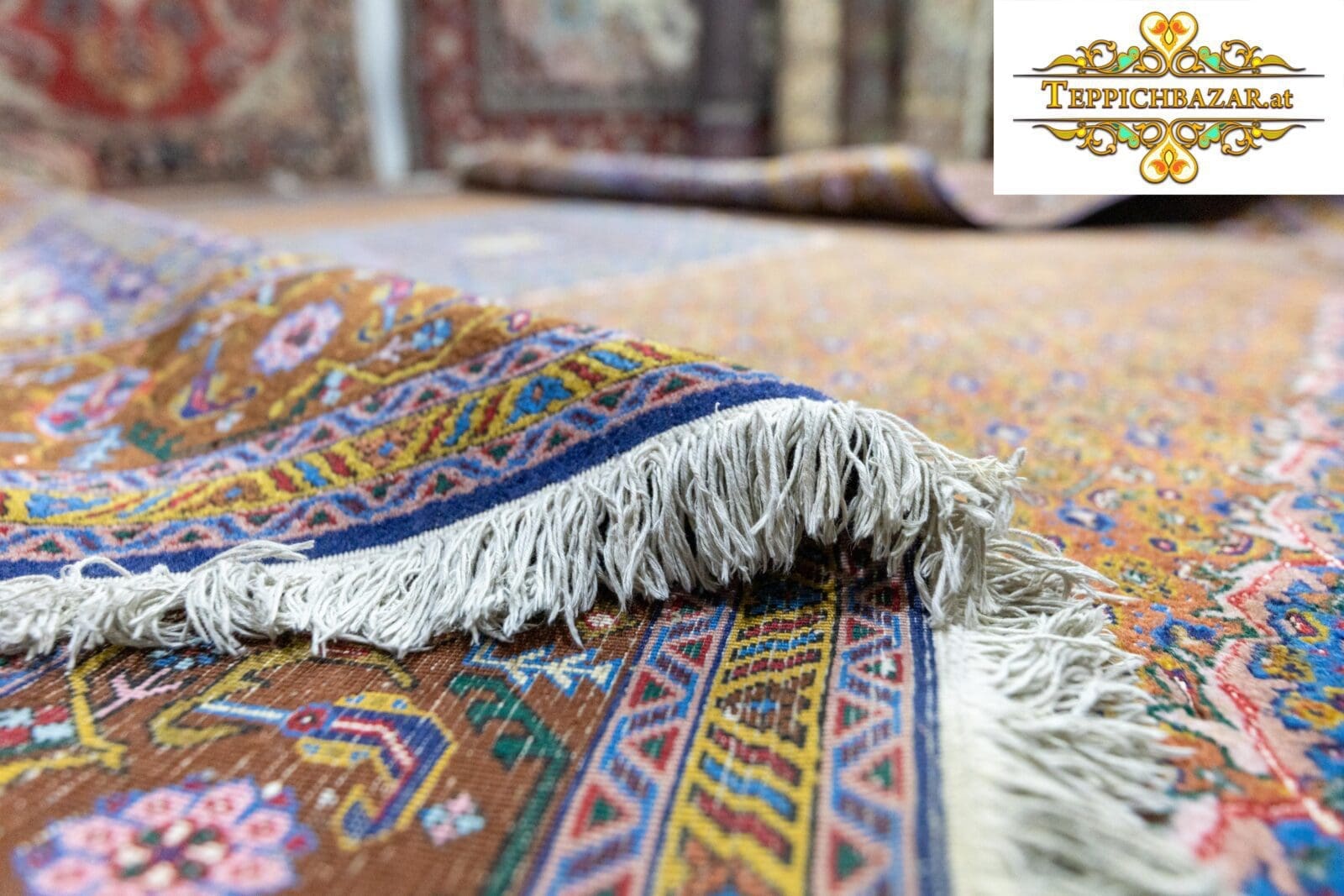
This rug is hand-knotted with a pile of virgin wool containing silk. Its warp is made of cotton. The combination reflects materials used in traditional Persian rug weaving: wool provides a resilient, tactile pile, while silk can introduce finer accents and a more reflective quality to the surface. Cotton is commonly used as a warp material because it supplies an even foundation into which the individual knots are inserted. The material description for this particular rug is therefore wool with silk content in the pile and cotton in the warp.
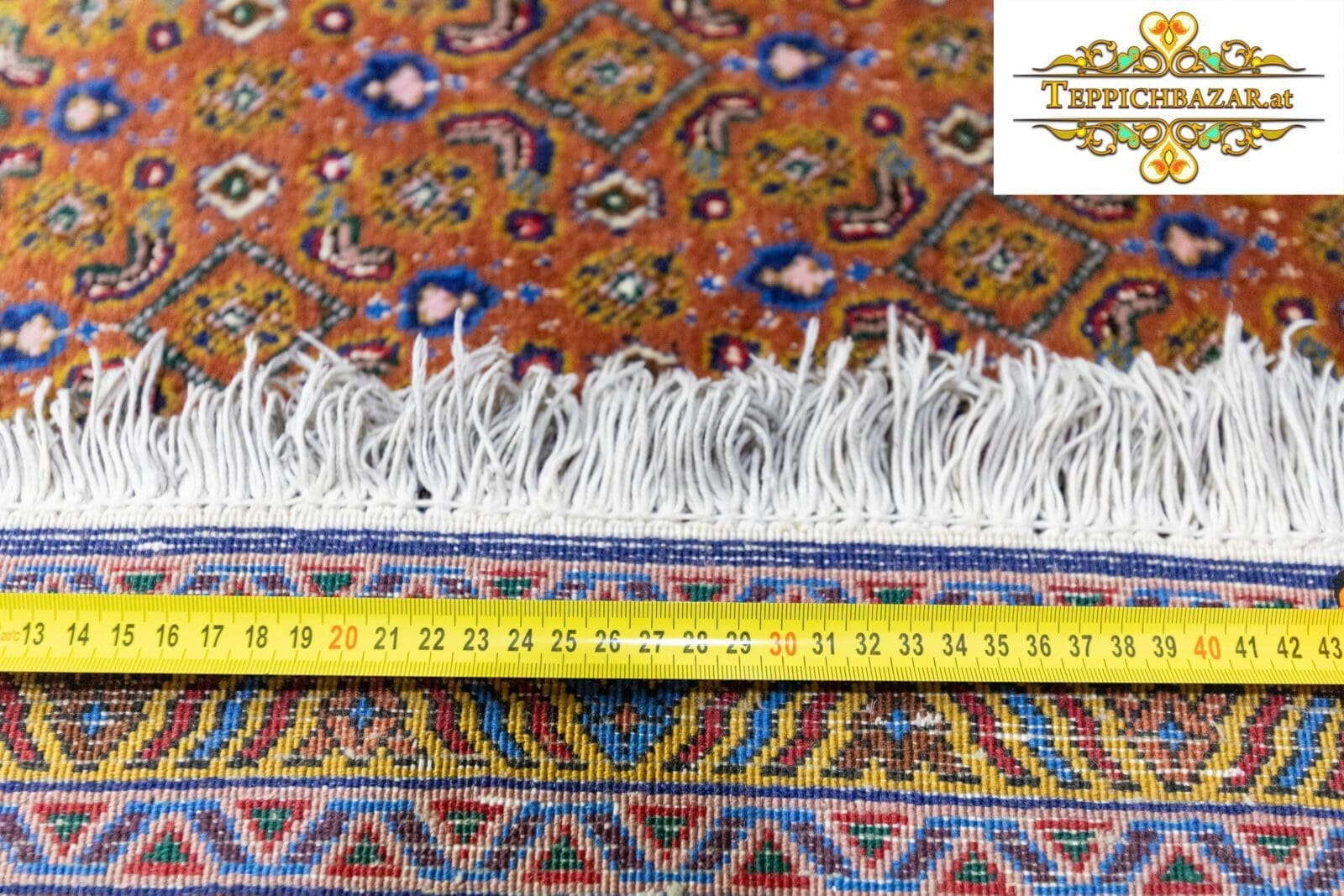
The listed knot density is approximately 250,000 to 280,000 knots per square metre, identified as 35 to 38 Raj. A dense knot structure permits small forms, fine curves and repeated details to be drawn with greater definition. In hand-knotting, each knot is made separately around the warp and secured through the successive rows of the weave. This process differs from machine production and gives the completed rug the character of individually executed textile work.
Wool and silk behave differently under light and touch. Wool has a more subdued, warm textile appearance, while silk may reflect light more distinctly depending on the direction of the pile and the surrounding illumination. In a small-scale Mahi design, this difference can help individual lines and repeated ornaments remain legible. The materials do not remove the handmade character of the rug: slight variations in tension, contour or surface are natural possibilities in a hand-knotted piece.
Knot density is one aspect of craftsmanship, but it is considered together with the precision of the drawing, the regularity of the structure and the handling of the materials. A dense construction requires sustained attention because the pattern must be followed row by row. The weaver must coordinate the warp, the weft and the pile while maintaining the intended rhythm of the design. This relationship between structure and pattern is central to the way a Tabriz rug is made.
The silk content is specifically part of the rug’s material description. It should not be confused with a claim that the entire pile is silk: the stated pile material is virgin wool with silk content, and the warp is cotton. This distinction is useful when discussing care, appearance and construction. The rug remains a Persian hand-knotted textile whose material composition combines a wool pile with an additional silk element.
Origin and Tradition
Tabriz is one of the established carpet centres of Persia and is situated in the north-west of present-day Iran. The city has a long history of rug production and has played an important role as a commercial and cultural meeting point. Through that position, designs, technical knowledge and materials circulated between workshops and regions. Tabriz weaving is consequently associated with carefully planned compositions, precise drawing and a broad range of ornamental traditions.
The city’s carpet history reaches back into the courtly and urban artistic traditions of Persia. Over time, workshops developed different approaches to medallion layouts, all-over fields, floral scrolls, prayer designs and pictorial subjects. Urban weaving allowed compositions to be prepared in a controlled manner and then rendered with numerous small details. The result is not one single Tabriz style, but a regional tradition that includes several designs, structures and levels of pattern density.
Origin and pattern must be kept separate when describing an Oriental rug. Tabriz identifies the regional origin and the associated weaving tradition. Mahi identifies the design used in this rug. A Mahi pattern can occur in more than one Persian weaving area, while the source for this piece names Tabriz as its origin. The combined designation Tabriz Mahi therefore joins a place of manufacture with a particular pattern tradition without treating the motif as proof of origin by itself.
Traditional workshop weaving depends on skills learned through extended practice. A design is transferred into the rug knot by knot, with the weaver following the intended arrangement of colours, contours and repeated units. The more closely spaced the details, the more carefully the sequence must be observed. The craft is therefore both structural and visual: the same actions that create the pile also establish the outline and rhythm of the ornament.
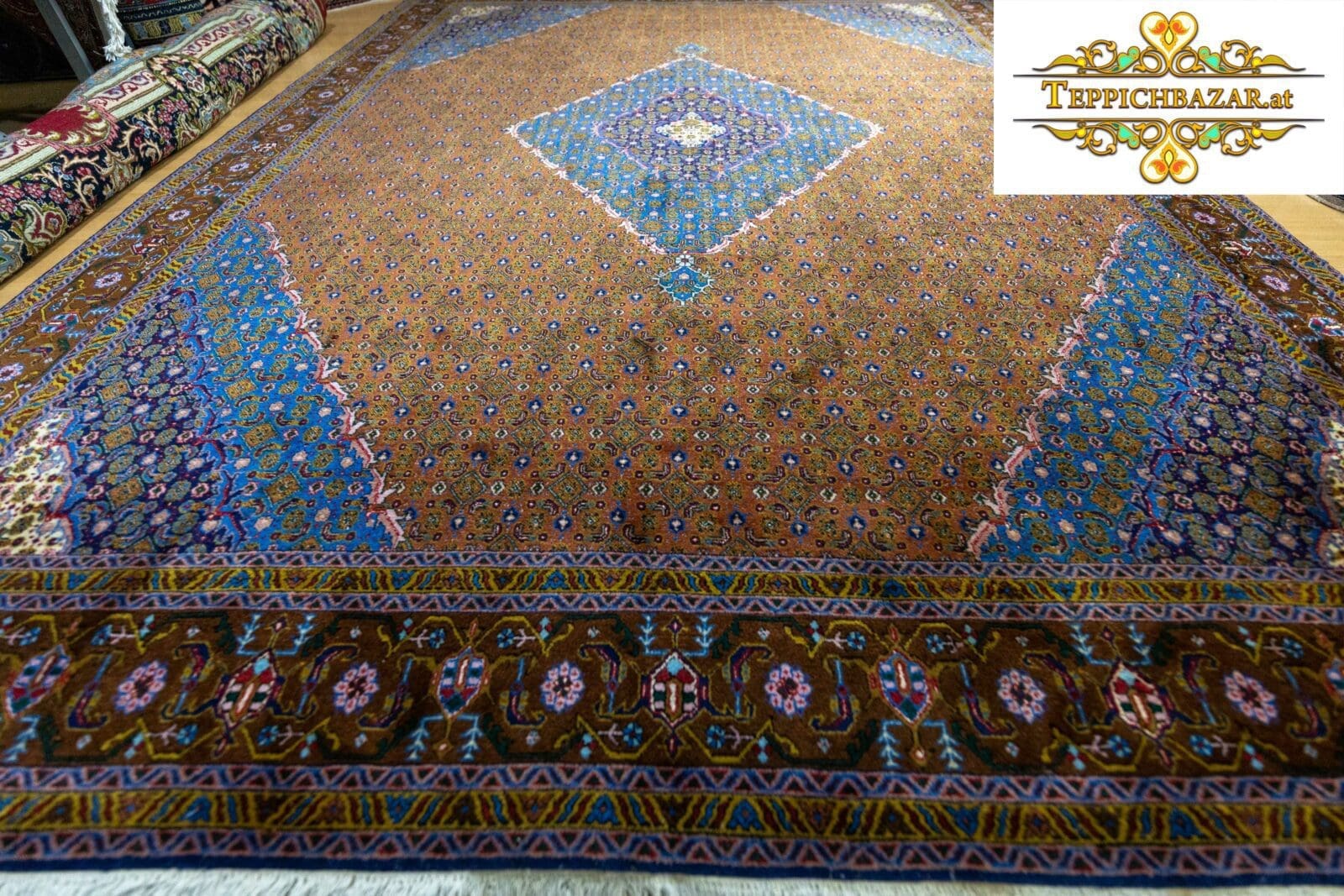
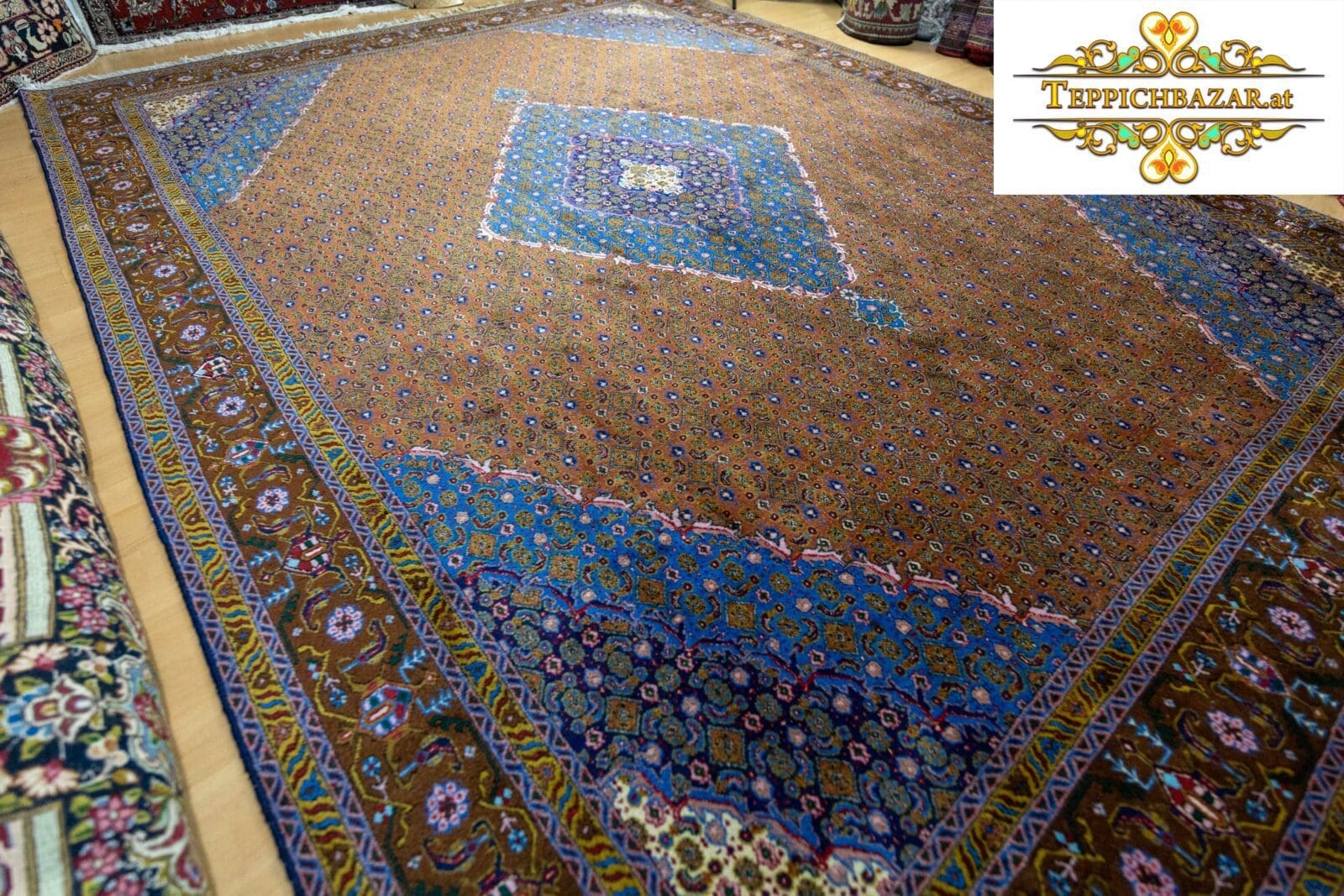
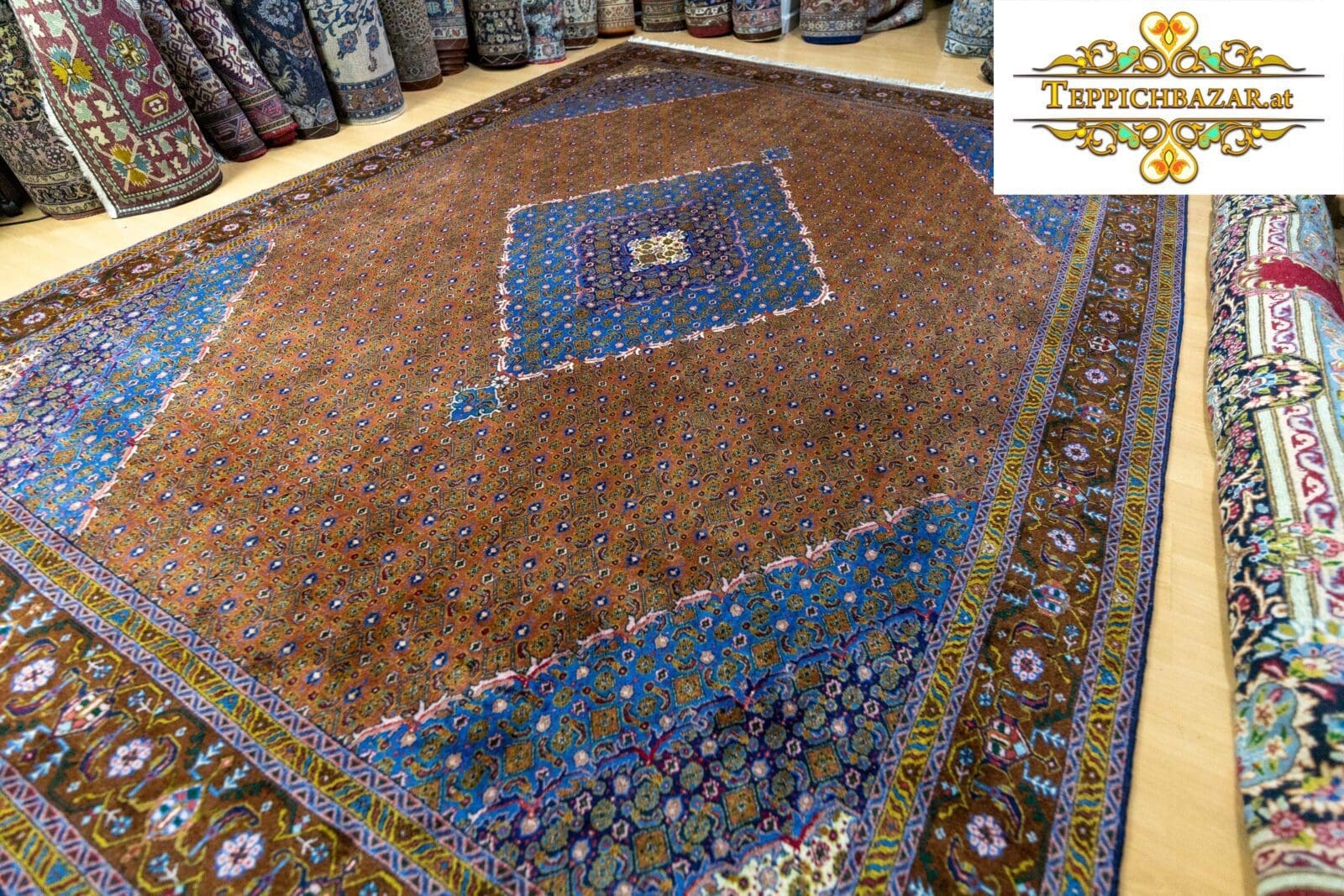
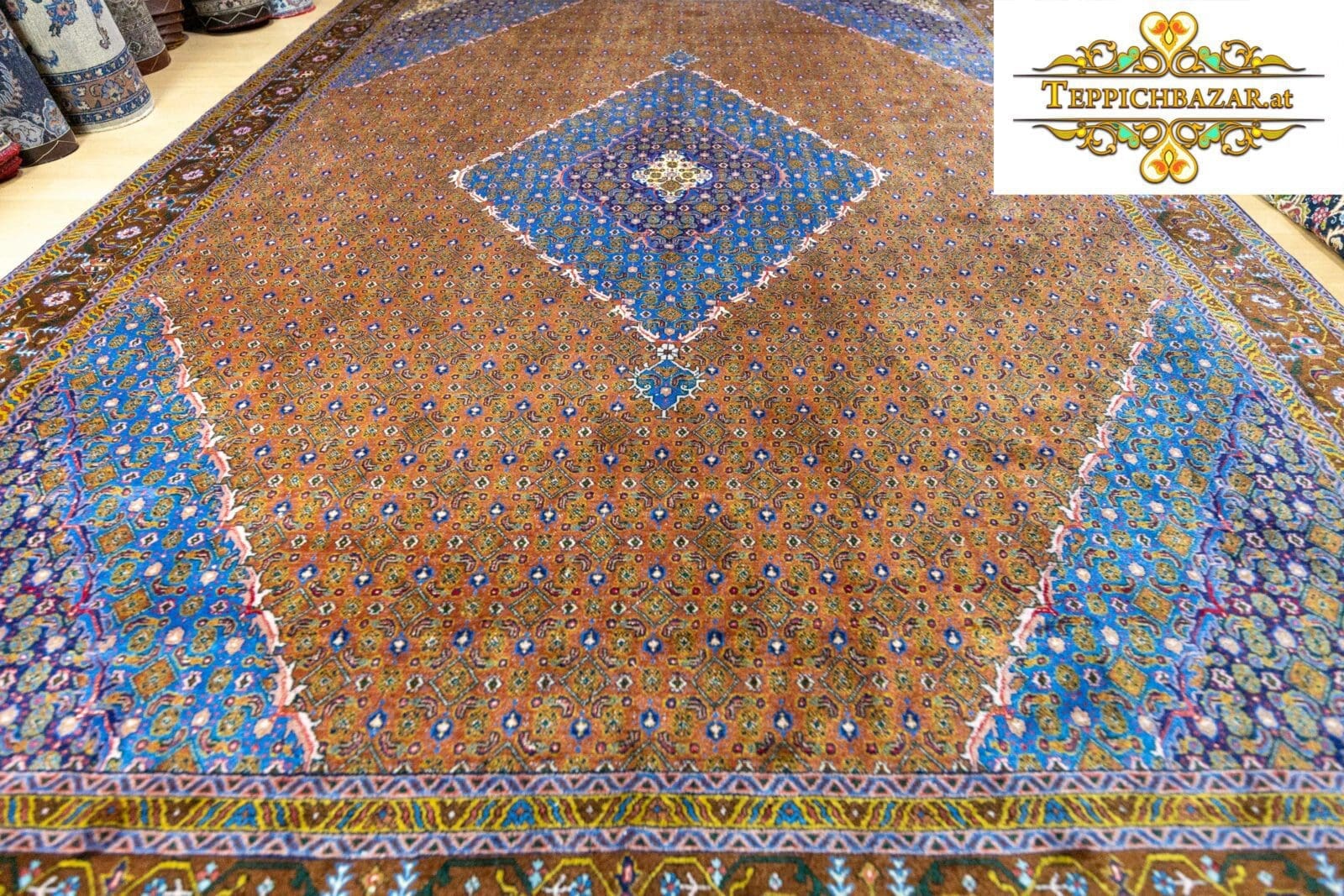
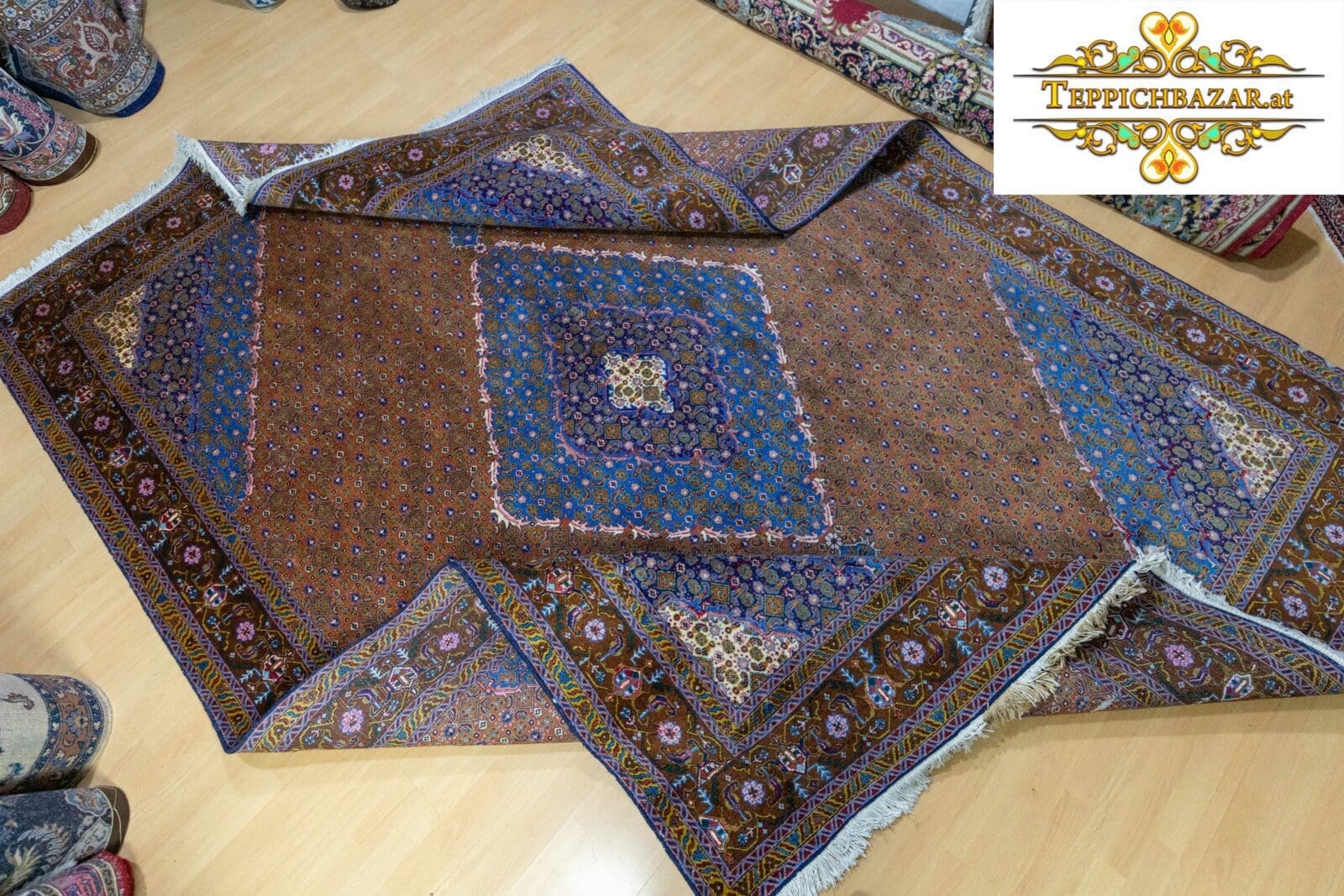
Tabriz rugs are often discussed in relation to balanced field arrangements and clearly organised borders. A composition may use a central medallion, a continuous repeat or a densely filled field, with borders providing a visual frame. This range is part of the region’s tradition rather than a statement about a design element that is not named for this rug. Here, the documented pattern is the Mahi fish pattern, and the regional designation is Tabriz.
Persian rugs from Tabriz have been traded and collected in many countries because the city became recognised for urban weaving and detailed drawing. That historical recognition explains why Tabriz is used as a meaningful origin designation. It does not turn every rug with a Persian-looking ornament into a Tabriz rug. The provenance statement remains tied to the named place, while the design is described independently.
The rug is identified as Persian and as originating from Persia, or Iran. This is distinct from an Oriental rug made elsewhere with a Persian-inspired motif. The origin statement and the Mahi designation are both relevant, but they answer different questions: one concerns where the rug was made, and the other concerns how its ornament is organised. Keeping those terms distinct provides a more accurate description of the piece and of Persian weaving traditions generally.
Design and Pattern
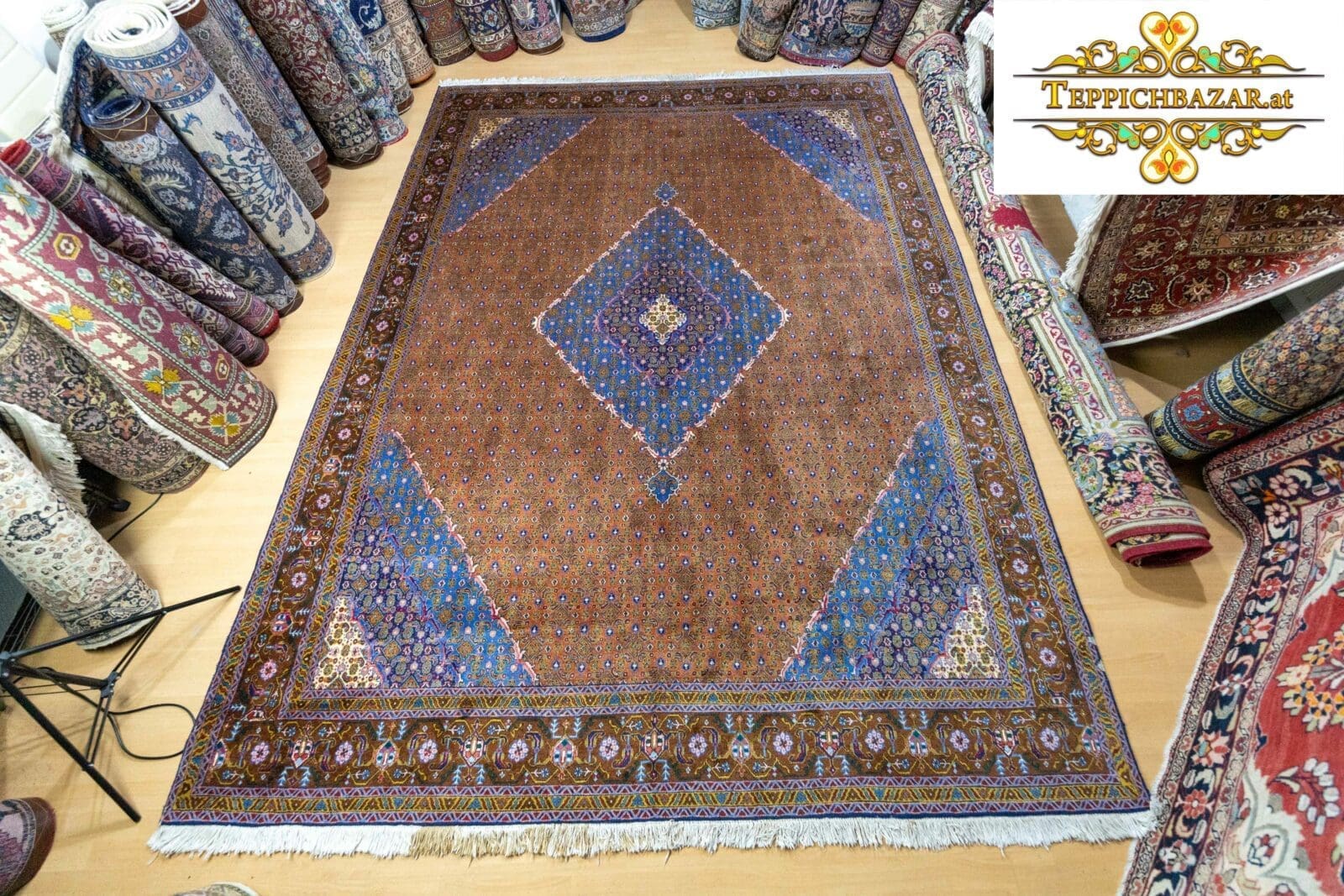
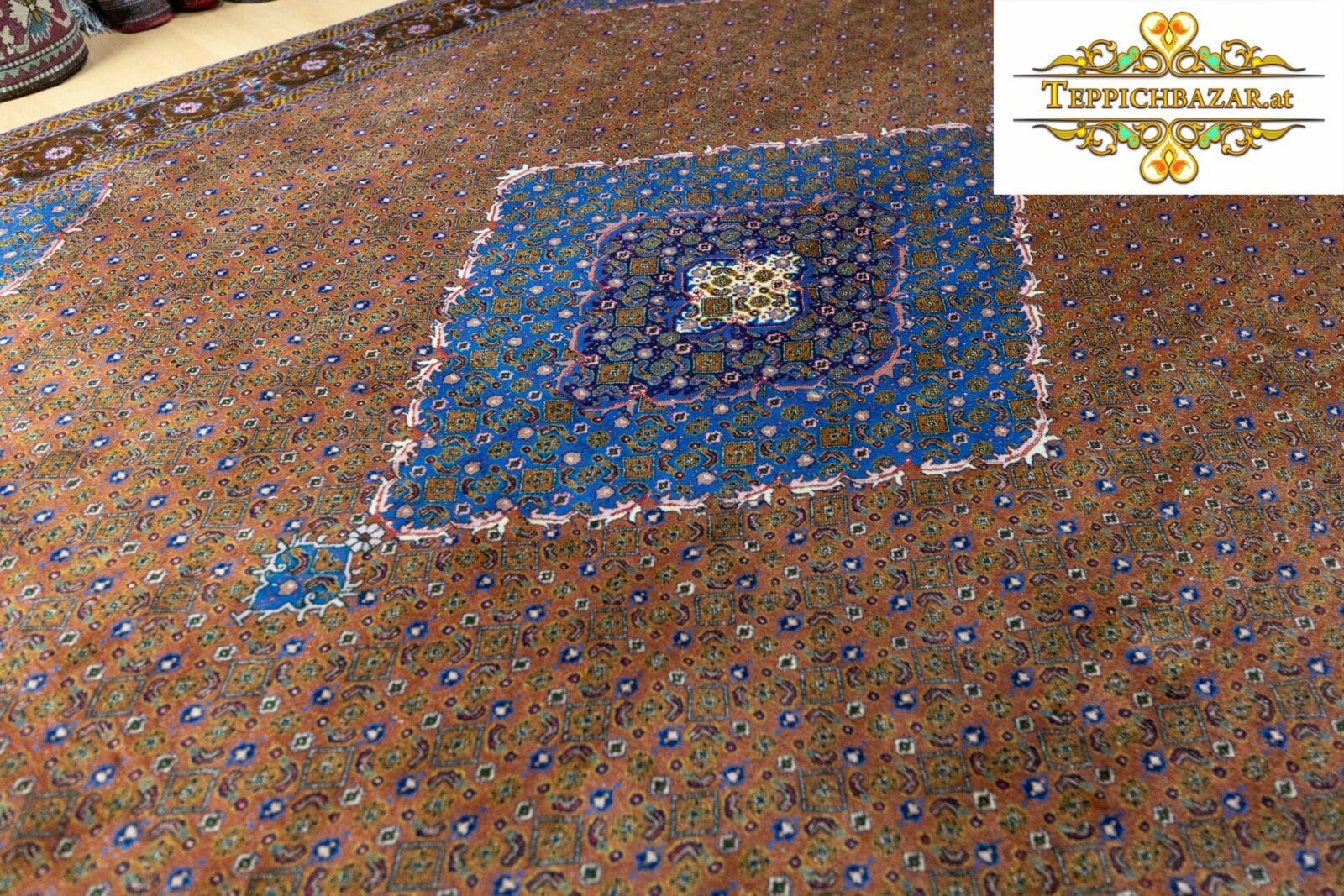
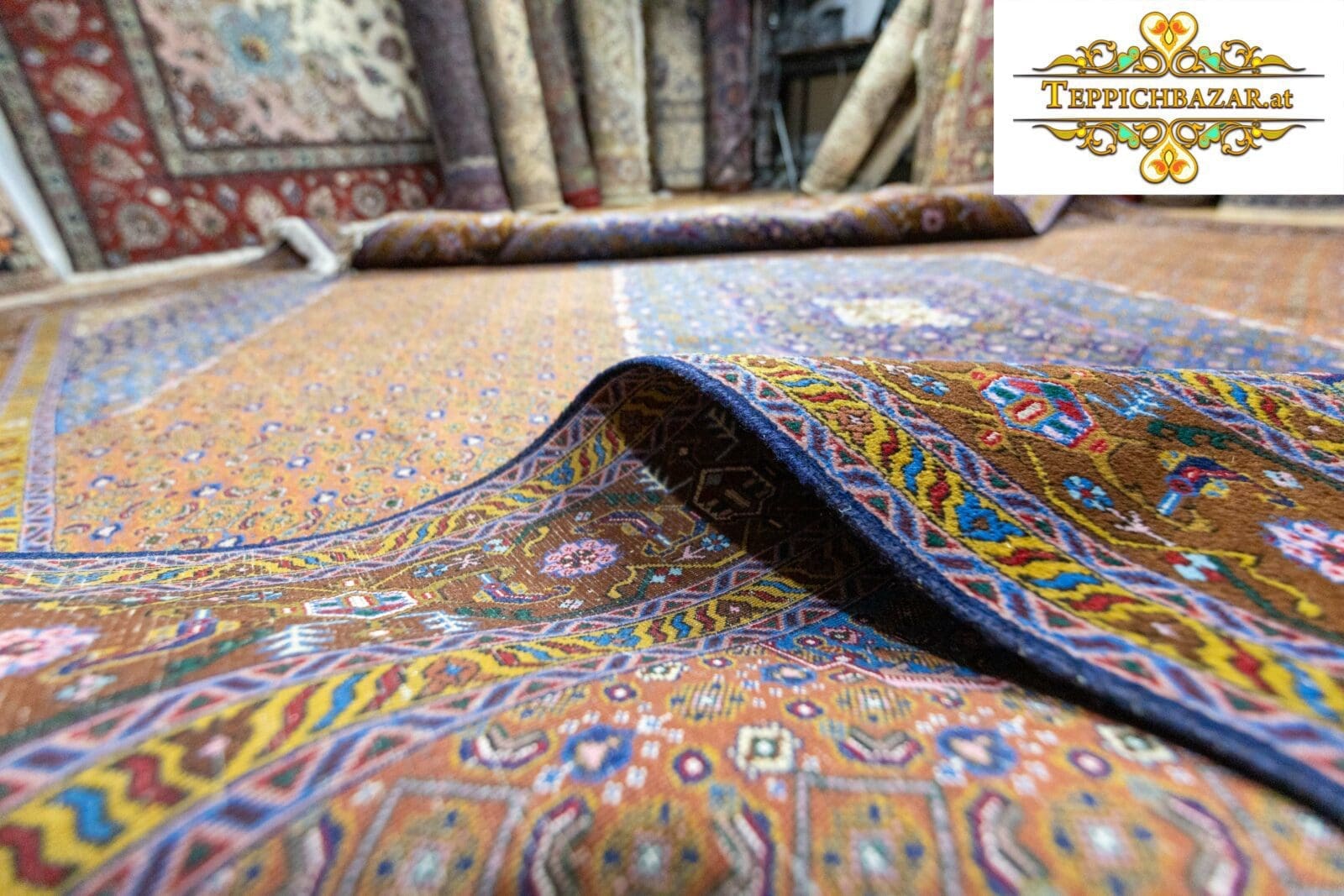
Mahi is commonly known as a fish pattern in Persian carpet terminology. Its basic ornamental unit is formed by two curved, opposing leaf-like shapes that can also be read as stylised fish. The forms are usually linked or repeated so that they create a continuous surface design. Rather than relying on a single large emblem, the pattern builds its visual structure through the regular recurrence and interlocking of many smaller units.
In a Mahi composition, leaves, tendrils and small floral details may accompany the central fish-like form. The exact handling can be compact and orderly or more flowing, depending on the individual drawing. This rug is described specifically as a Tabriz Mahi fish pattern. That designation establishes the pattern family, while the source does not specify additional colour names or individual secondary motifs. Such restraint keeps the description tied to the documented design.
Fish and water-related imagery have a longstanding place in Persian ornament. Mahi forms are often interpreted in connection with life, movement, fertility and abundance. These are cultural associations of the motif, not additional claims about the provenance or condition of this individual rug. As a repeated ornament, the pattern also has a practical visual function: it links separate areas into a coherent field and creates a measured rhythm across the surface.
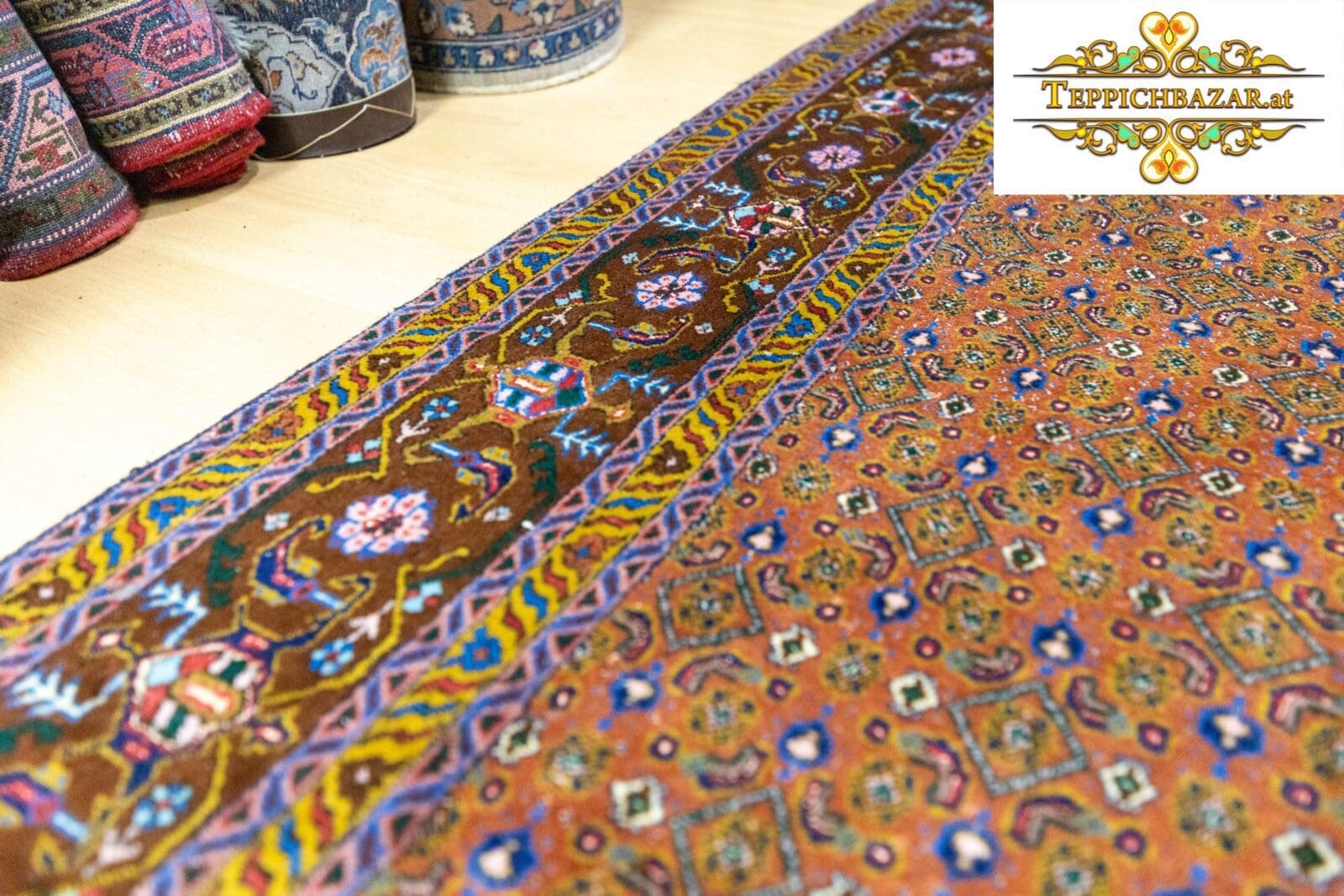
A fine knot structure supports the rendering of small curves, leaf points and transitions between the repeated forms. Viewed closely, the pattern can be read through the individual knots and the texture of the pile. Viewed from farther away, the separate elements merge into a continuous field. This change between detail and overall rhythm is one of the characteristic qualities of finely drawn urban Persian rugs and helps explain why knot density matters for a design of this type.
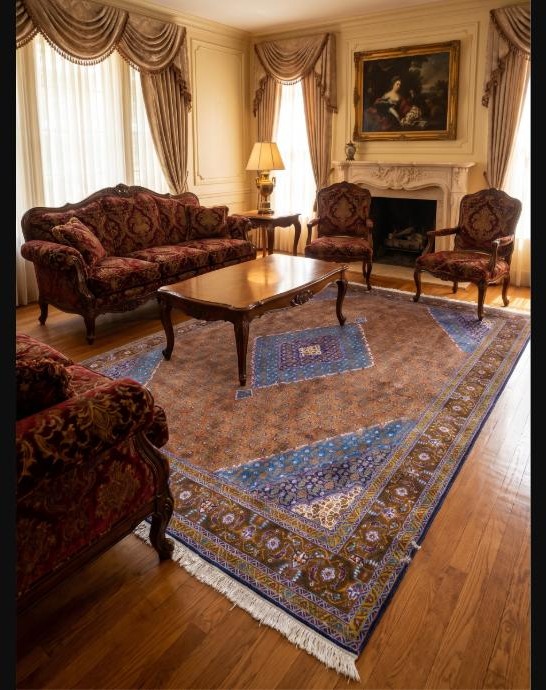
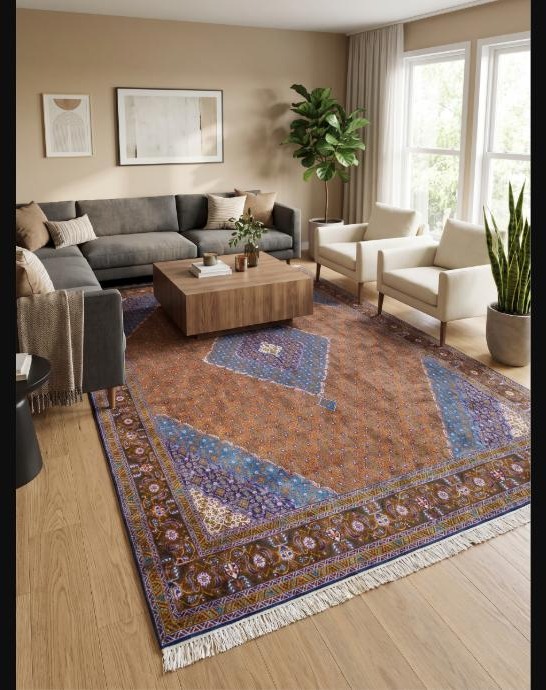
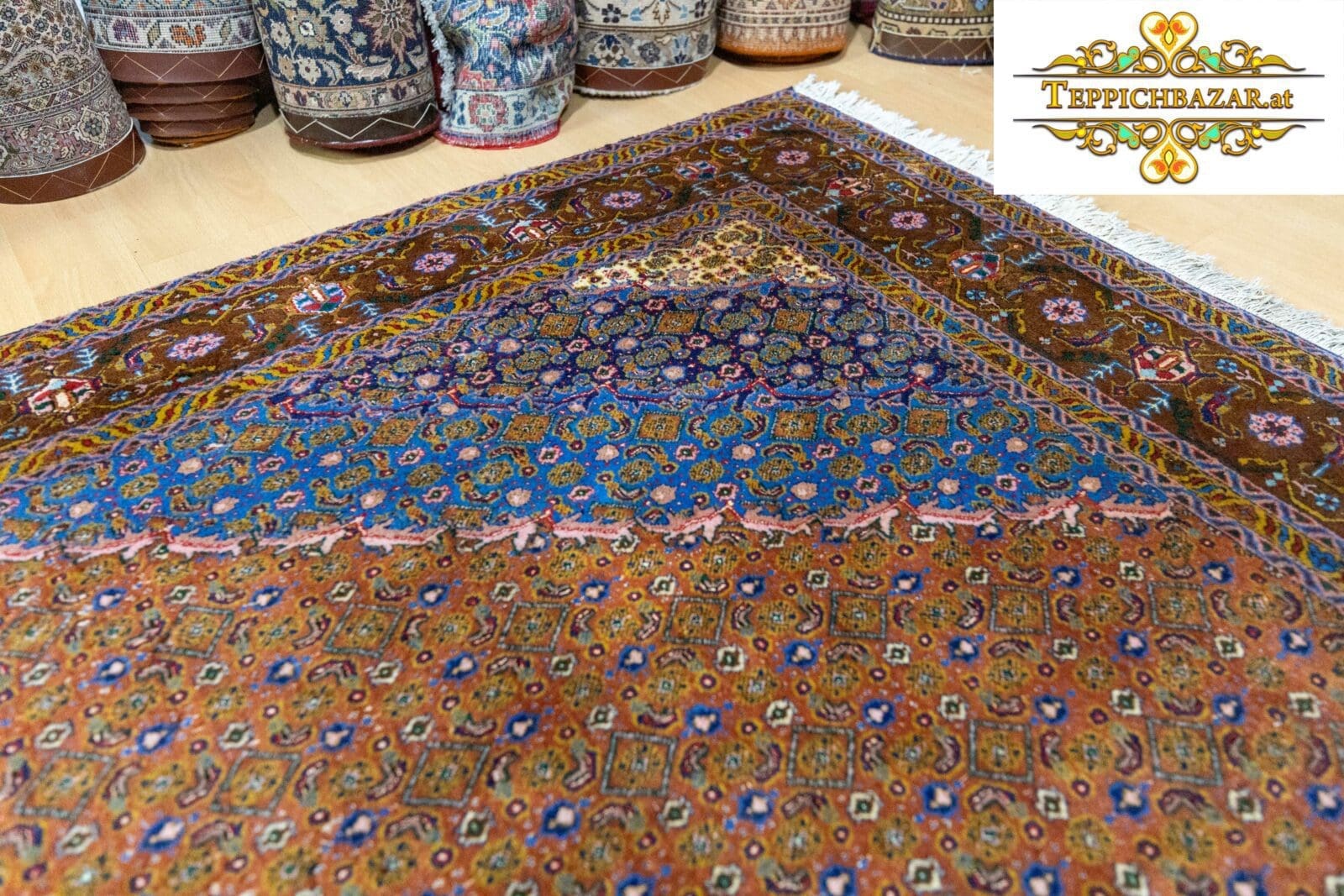
Borders and minor borders often frame a Persian rug and establish the transition between the inner field and the outer edge. In a Mahi rug, however, the main visual activity comes from the repeated pattern and the way the forms connect. The design can therefore be read as a structured all-over composition rather than as a scene centred on one isolated image. The pattern’s adaptability allows it to sit alongside both traditional and restrained contemporary interiors, without requiring a particular furnishing style.
The pattern is dated to circa 1970 in the description. This dating places the rug within a later period of the established Mahi tradition, while the motif itself is much older than that date. Carpet designs are transmitted over generations and can be adjusted by individual workshops. Line quality, density, proportions and colour arrangement may therefore differ from one example to another even when the same pattern name is used. The named Mahi structure remains the constant design reference here.
The relationship between the pattern and the material is also relevant. Wool supplies the principal pile surface, while the silk content may make selected areas respond differently to light. This can influence how the repeated ornament is perceived as the viewer moves around the rug. It does not change the identity of the motif, but it adds a material dimension to the reading of its fine lines and compact details.
Special Features
The rug is described as semi-antique and is associated with a circa 1970 pattern date. Its condition is very good, and it has been freshly washed. These are statements about this particular piece. A signature by the artist Nemat-Nejad is present and can be seen in the photographs. The signature is an identifying feature of the example and is listed alongside its Tabriz origin, Mahi design and silk content.
Its construction combines a virgin wool pile containing silk with a cotton warp. The hand-knotted technique means that the rug was made as an individually executed textile rather than as a machine-made reproduction. Hand-knotted Persian rugs are often considered in terms of durability and long-term value, but no fixed financial development follows from the technique alone. Condition, origin, craftsmanship, documentation, signature and demand all influence how a particular rug is assessed.
For routine care, vacuuming with a soft brush is recommended. Prolonged direct sunlight should be avoided so that the colours remain as even as possible. If a stain occurs, it should be blotted with a damp cloth rather than rubbed. A suitable rug pad can help protect the rug and improve slip resistance. If deeper cleaning is needed, a specialised rug-cleaning product may be used with care.
FAQ
How should I care for my Persian rug?
Vacuum the rug regularly using a soft brush attachment to remove loose dust without placing unnecessary stress on the pile. Avoid leaving it in direct sunlight for long periods, since strong light can cause colours to fade unevenly. If something is spilled, blot the area promptly with a damp cloth. Do not rub the stain, as rubbing can work the dirt further into the textile and disturb the fibres. For more extensive cleaning, choose a product intended for rugs and follow its instructions carefully.
What accessories do I need for a Persian rug?
A good-quality rug pad is the most useful accessory. It can help keep the rug in position, reduce slipping and provide additional protection between the textile and the floor. The pad should be suitable for the floor surface and compatible with the rug. It is also practical to keep a specialised rug-cleaning product available for occasional deeper care. Cleaning agents not designed for rugs should not be applied without first checking their suitability.
How can I recognise the quality of a Persian rug?
Quality is assessed through several features rather than through one detail alone. Knot density, material selection, construction, colour handling and the clarity of the pattern all matter. A higher number of knots per square metre can support more detailed drawing, while an even structure and carefully executed contours indicate controlled workmanship. For this rug, the description records a density of approximately 250,000 to 280,000 knots per square metre, virgin wool with silk content, a cotton warp and a detailed Tabriz Mahi fish pattern. Its Nemat-Nejad signature and very good condition are additional documented characteristics.
To provide the best experiences, we use technologies like cookies to store and/or access device information. Consenting to these technologies will allow us to process data such as browsing behavior or unique IDs on this site. Not consenting or withdrawing consent, may adversely affect certain features and functions.
Functional Always active
The technical storage or access is strictly necessary for the legitimate purpose of enabling the use of a specific service explicitly requested by the subscriber or user, or for the sole purpose of carrying out the transmission of a communication over an electronic communications network.
Preferences
The technical storage or access is necessary for the legitimate purpose of storing preferences that are not requested by the subscriber or user.
Statistics
The technical storage or access that is used exclusively for statistical purposes.The technical storage or access that is used exclusively for anonymous statistical purposes. Without a subpoena, voluntary compliance on the part of your Internet Service Provider, or additional records from a third party, information stored or retrieved for this purpose alone cannot usually be used to identify you.
Marketing
The technical storage or access is required to create user profiles to send advertising, or to track the user on a website or across several websites for similar marketing purposes.

 SECURE PAYMENT
 SHIPPING PARTNERS