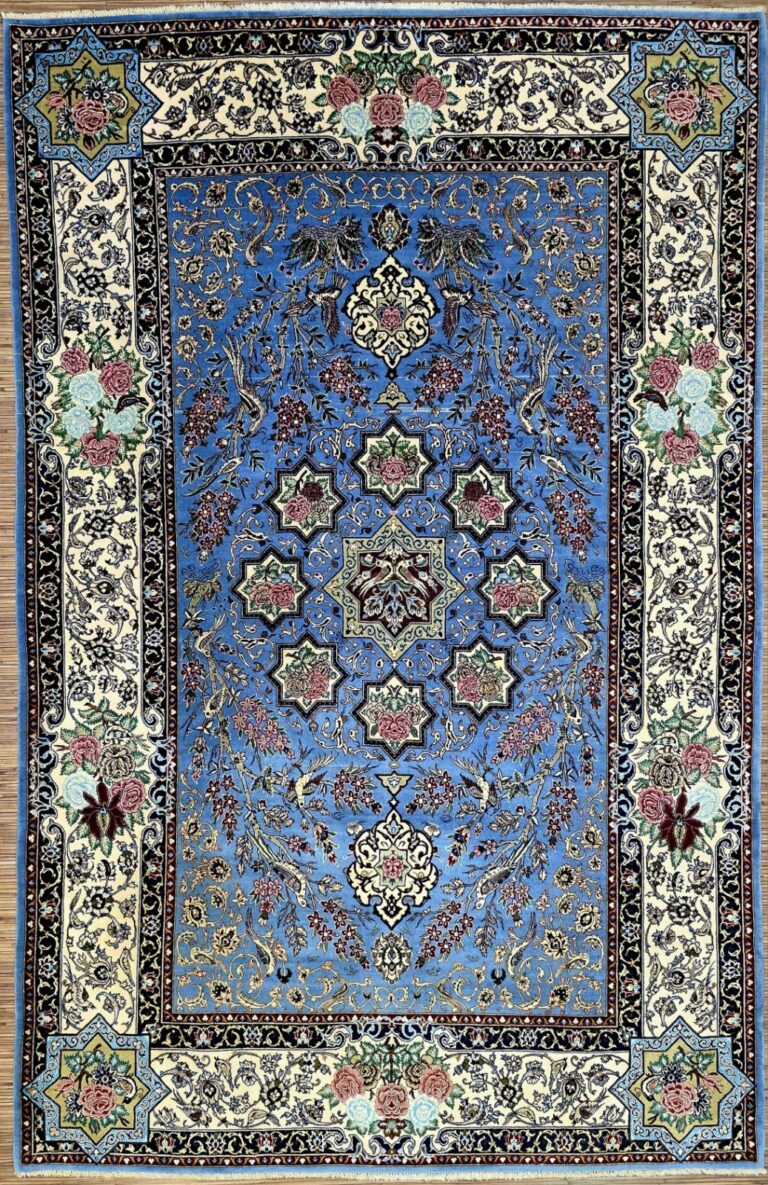
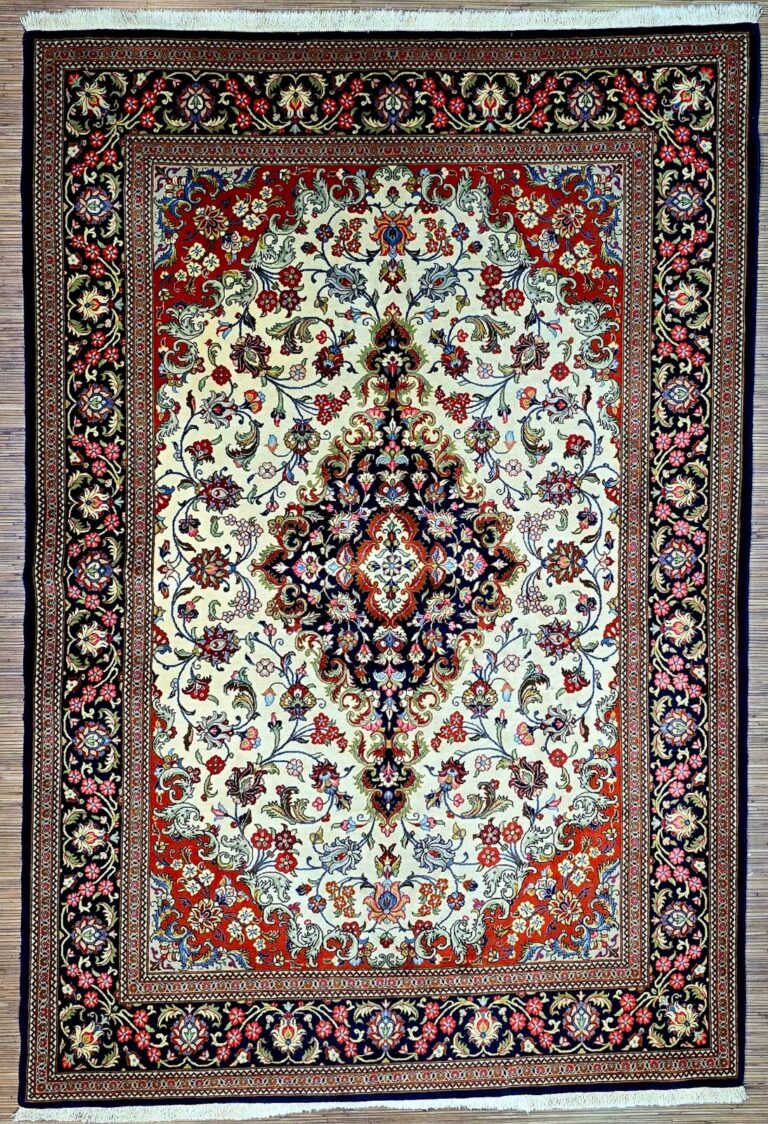
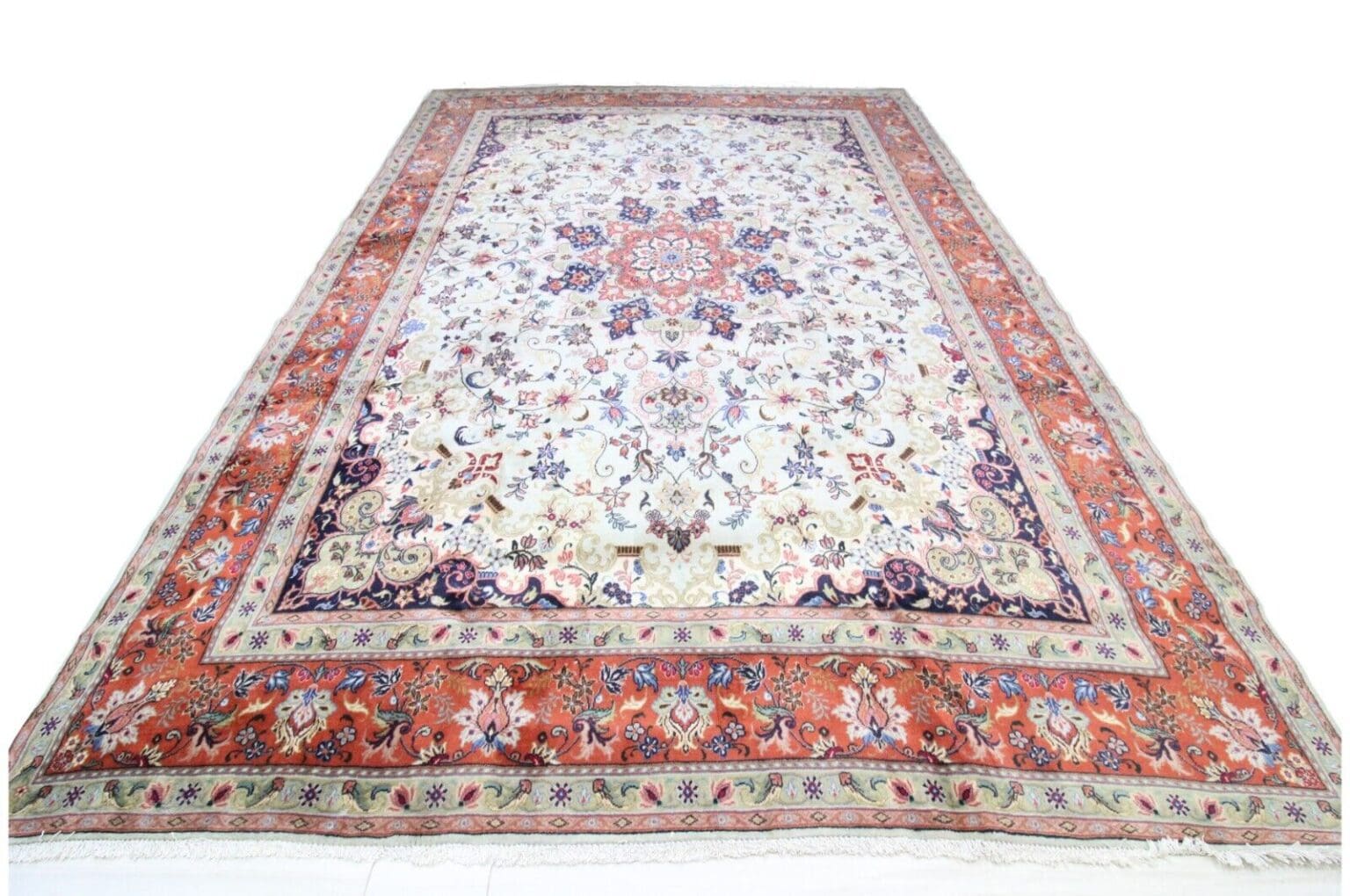
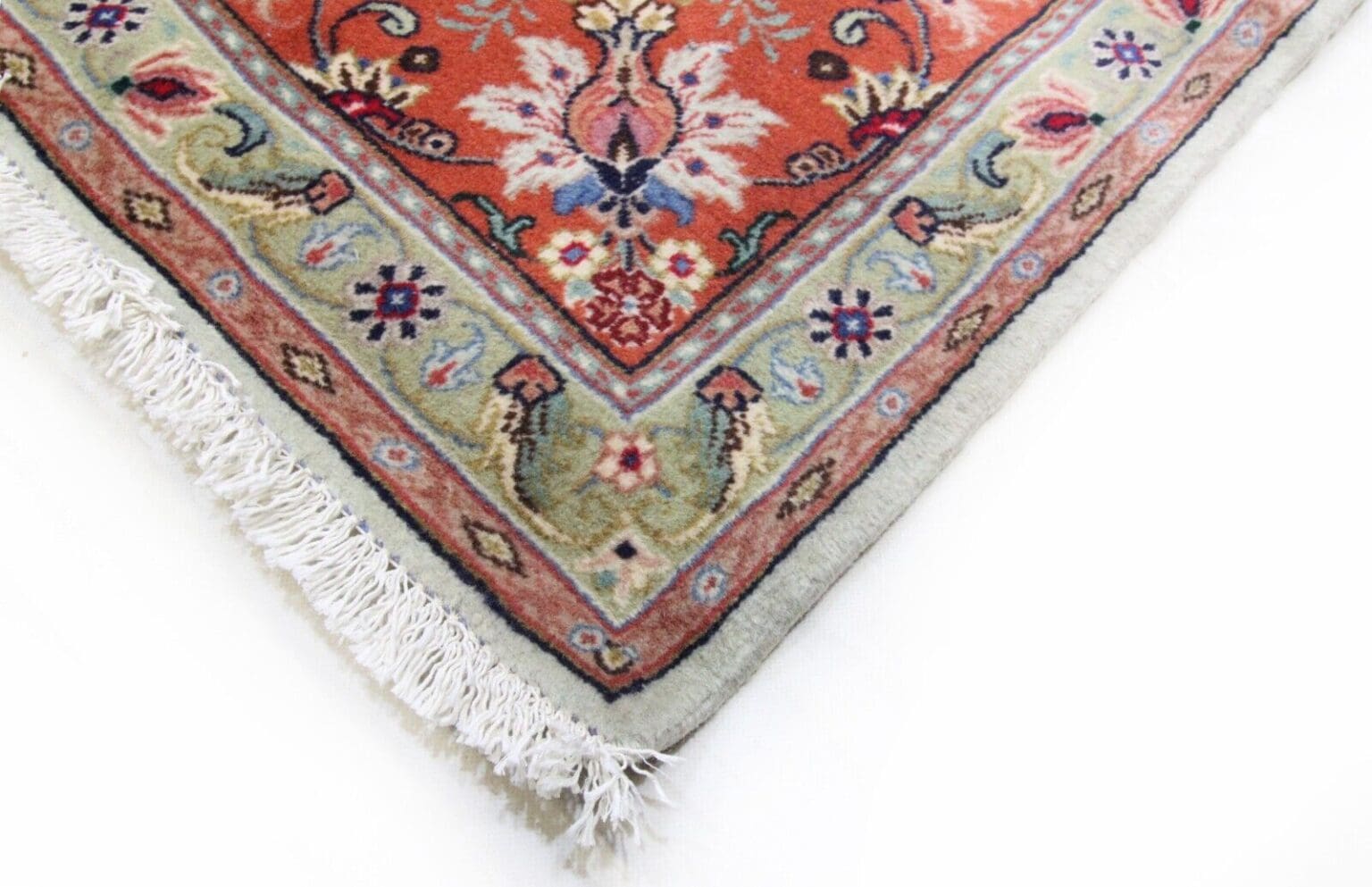
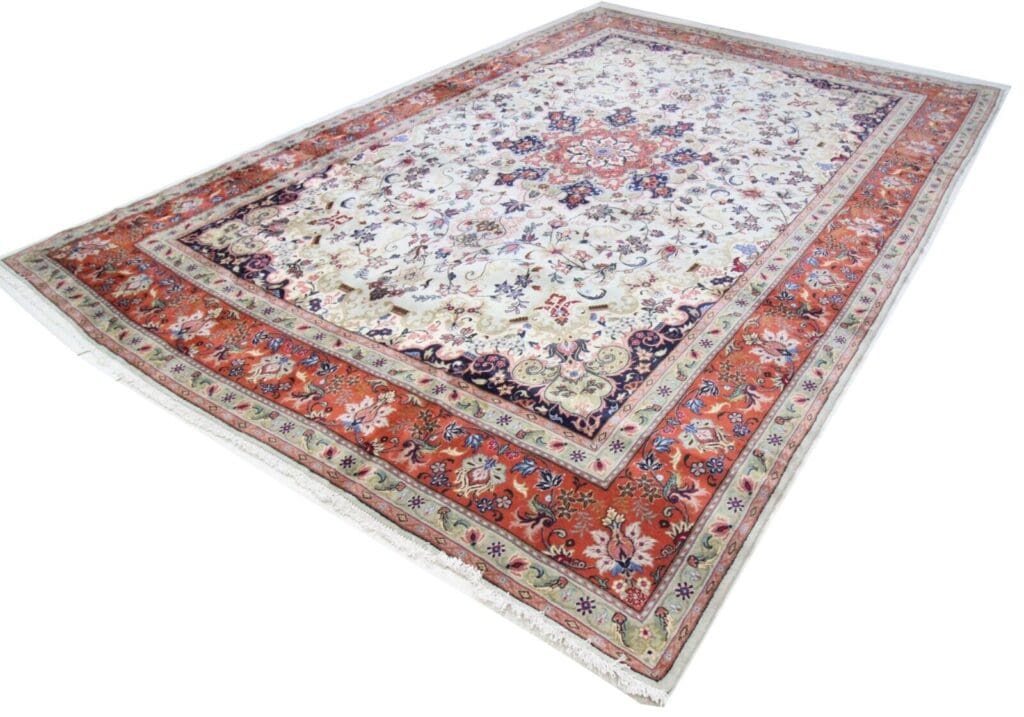
This Persian rug is hand-knotted, with a pile made of 100% wool. The warp is specified as 100% cotton. A wool pile on a cotton warp is a traditional construction found in many Persian knotted rugs. In hand knotting, each knot is placed individually around the prepared warp. Weft threads then help secure the rows, and the pile is built gradually across the rug. The surface is therefore created through a sequence of manual operations rather than through a uniform industrial process.
The product description characterizes the knotting as high quality. This wording refers to the stated knotting quality and forms part of the rug’s material and construction information. Careful knotting allows floral outlines, curves and smaller internal elements to be translated into the pile with control. Wool is commonly used for pile because it gives a substantial textile surface and accepts colour well. Cotton is suitable for the warp because it provides regular, comparatively firm foundation threads for the knotting structure.
Hand craftsmanship makes each knotted rug an individual textile object. Even when a rug follows a regional design tradition, manual work can produce small differences in tension, line formation and colour distribution. The material information for this piece remains specific: the pile is 100% wool and the warp is 100% cotton. No additional material is assigned to this rug. In particular, the stated wool pile should not be expanded into a claim about silk or any other fibre.
The wool forms the visible surface, while the cotton warp lies within the construction and provides the basis around which the knots are formed. When a hand-knotted rug is assessed, its fibres, knotting method and pattern execution are considered together. This construction supports the depiction of a floral design through rows of individually placed knots. It also makes clear why the technique is described as hand-knotted rather than woven or printed.
Nothing in the product information identifies a signature, a named workshop or a specific dyeing process. The reliable craftsmanship details are the hand-knotted technique, the 100% wool pile, the 100% cotton warp and the description of the knotting as high quality. These details describe how the rug is made without adding an unsupported claim about a particular maker or production method.
Origin and Tradition
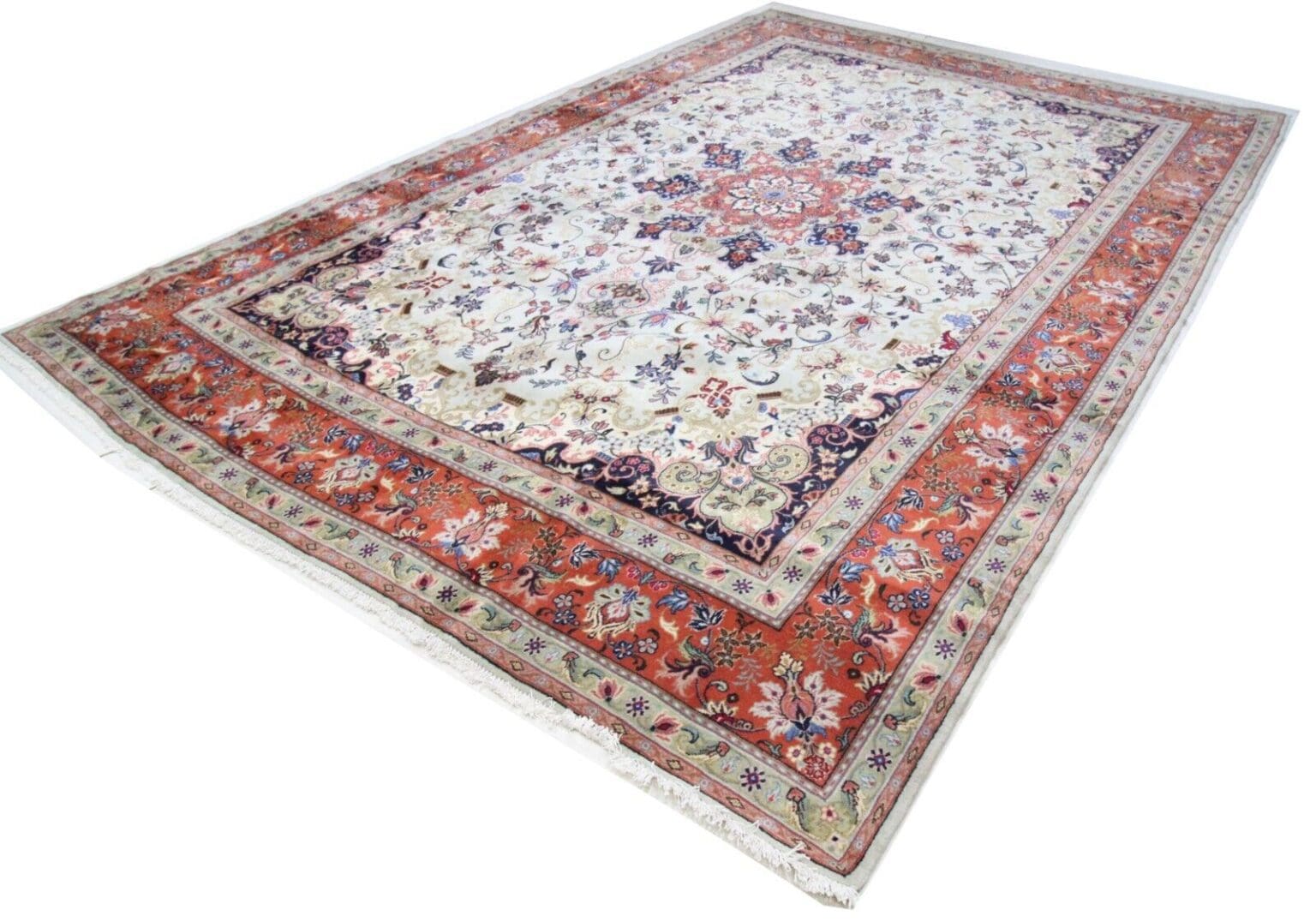
The rug comes from Iran and is identified as a Tabriz Persian rug. Tabriz is one of the established centres of Persian carpet art. The city in north-western Iran has long been associated with the making, design and trade of knotted carpets. Tabriz compositions have travelled widely through commercial networks and have been adapted in many workshops. The name therefore indicates a regional tradition as well as a recognizable vocabulary of design and craftsmanship.
Iranian carpet culture combines practical textile use with an extensive tradition of ornament. A knotted carpet begins with a framework of warp and weft threads, to which the pile is added progressively. Designs may be prepared in drawn plans that guide the placement of medallions, vines, flowers and borders. In the workshop, the plan is converted into coloured knots. The finished surface consequently joins structural textile work with a carefully organized visual field.
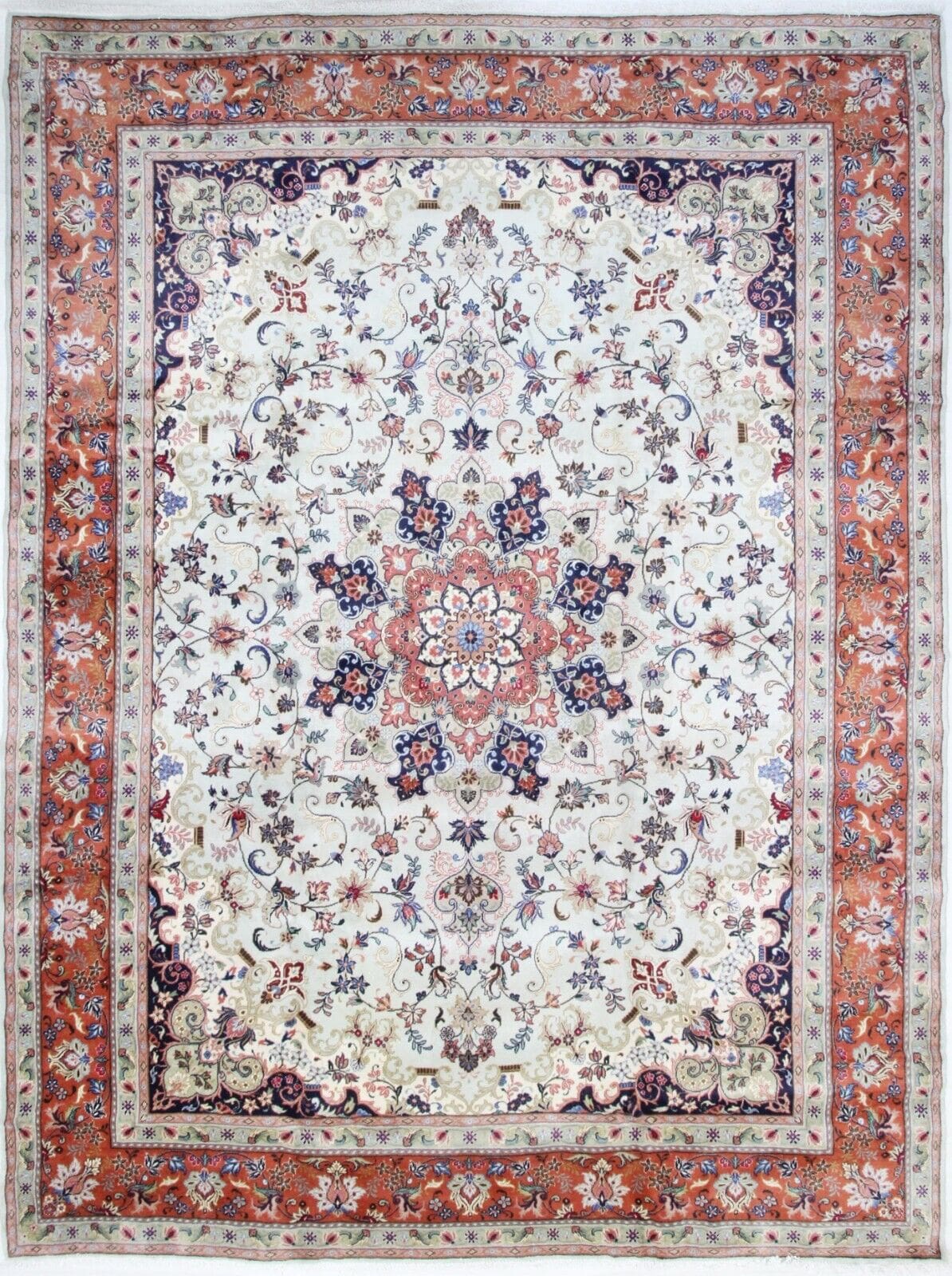
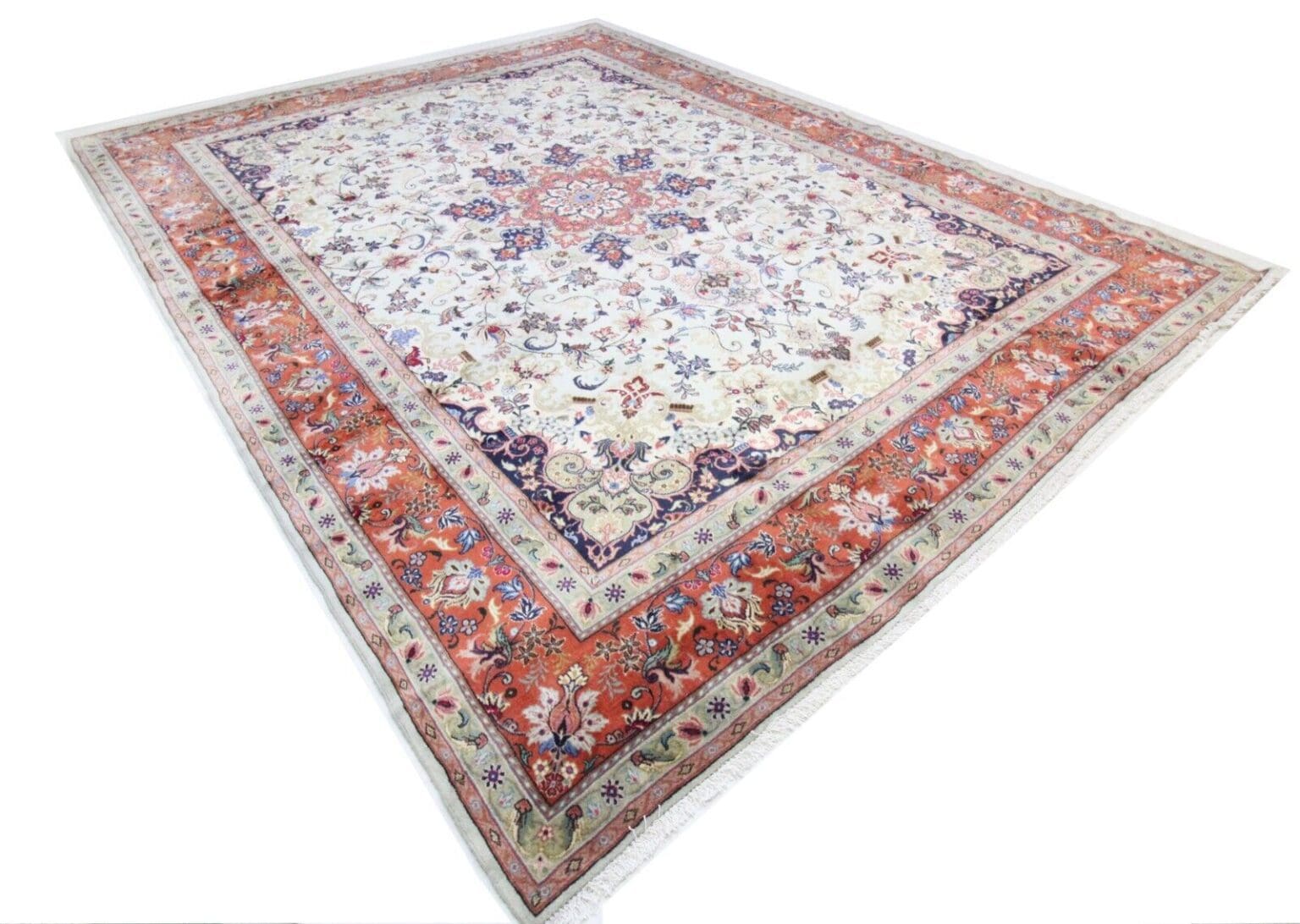
Tabriz rugs are often discussed in connection with precise, varied and detailed compositions. The broader Tabriz repertoire includes central medallions, all-over patterns, floral fields, scrolling vines and ordered border systems. These are features of the regional design tradition, not claims that every one of them appears on this individual rug. For this piece, the stated design information is an oriental pattern with a floral motif. No additional arrangement is specified.
Tabriz’s historical position as a trading and cultural centre allowed different influences to meet. Geometric order can be combined with flowing botanical forms, while a carefully divided field can be framed by ornamental borders. The proportions, colours and density of details may vary from one design to another. In a hand-knotted rug, these ideas are not applied as a flat print: they are built into the pile through the placement of coloured knots.
Persian rugs are commonly distinguished by regional names and workshop traditions. Nain, Isfahan, Kashan and other centres have their own histories and visual conventions, but those names should not be substituted for Tabriz. Here, Tabriz is the designation given for this rug, and Iran is the stated country of origin. The information does not identify a precise workshop within Tabriz, a named weaver or an exact historical production date.
Knotted carpet techniques are maintained through practical experience, repetition and knowledge of materials and pattern structure. A Persian rug can therefore be understood both as a useful textile and as an example of a continuing craft tradition. This rug is placed within that tradition by the stated Iranian origin, the Tabriz designation, its hand-knotted construction and its floral oriental pattern. Other Persian regional names may describe related histories, but they do not change the identity of this Tabriz rug.
The product text places the rug in the 21st century and describes its style as classic. That dating is not an exact year and does not identify a particular workshop. It provides a broad period and stylistic classification. The regional tradition supplies context for the rug, while the individual object remains defined by the information attached to it: Iran, Tabriz, hand knotting, wool pile, cotton warp and a classic oriental floral design.
Design and Pattern
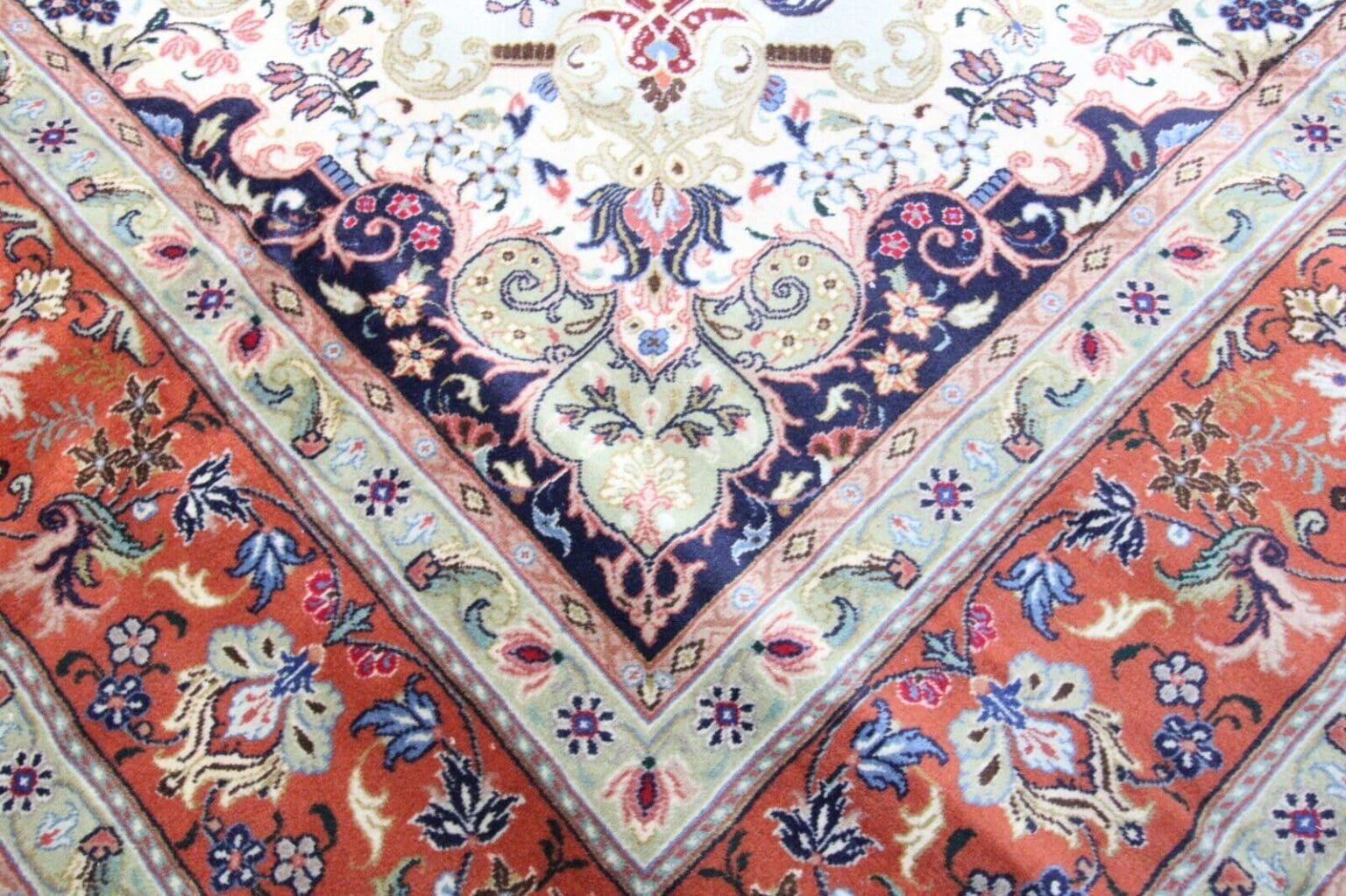
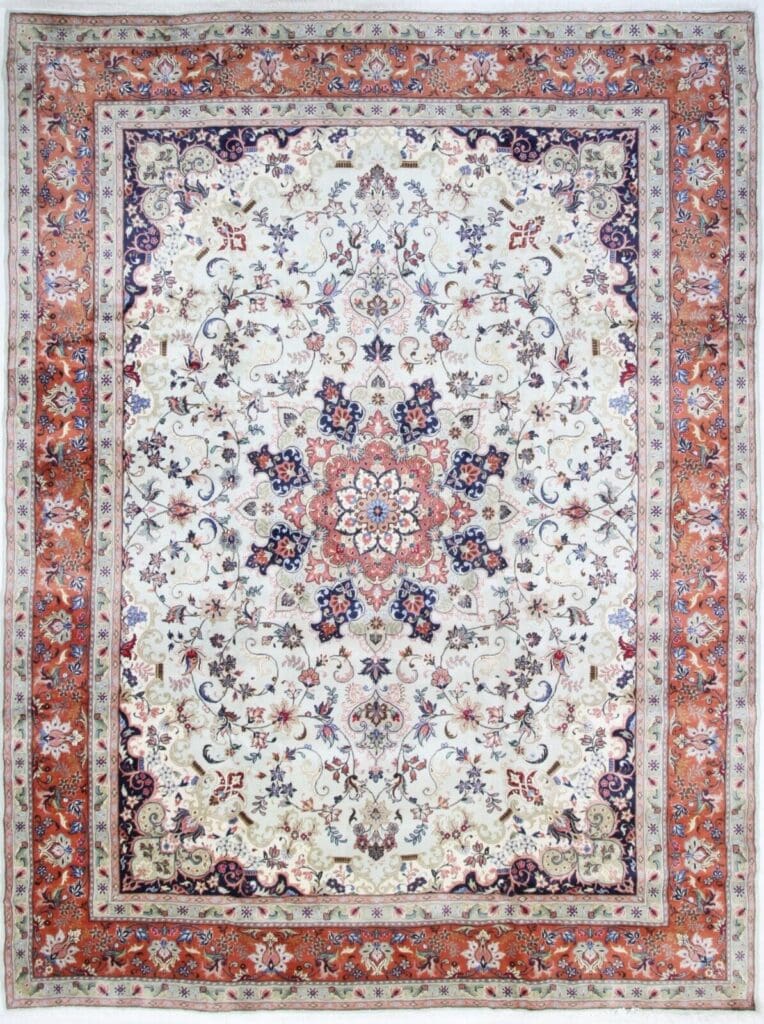
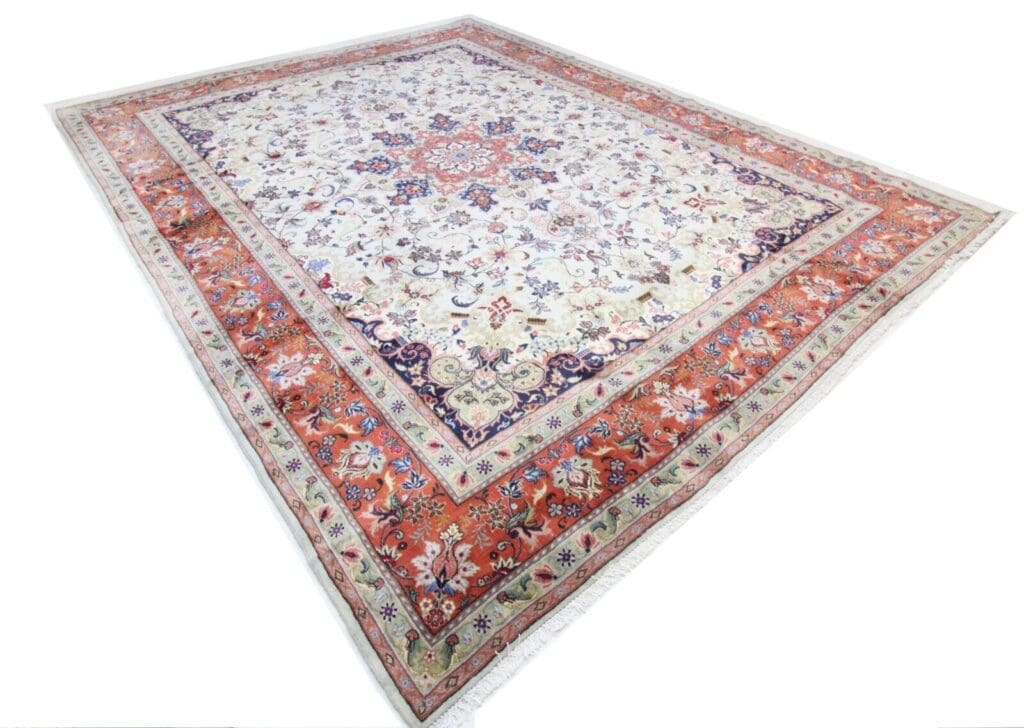
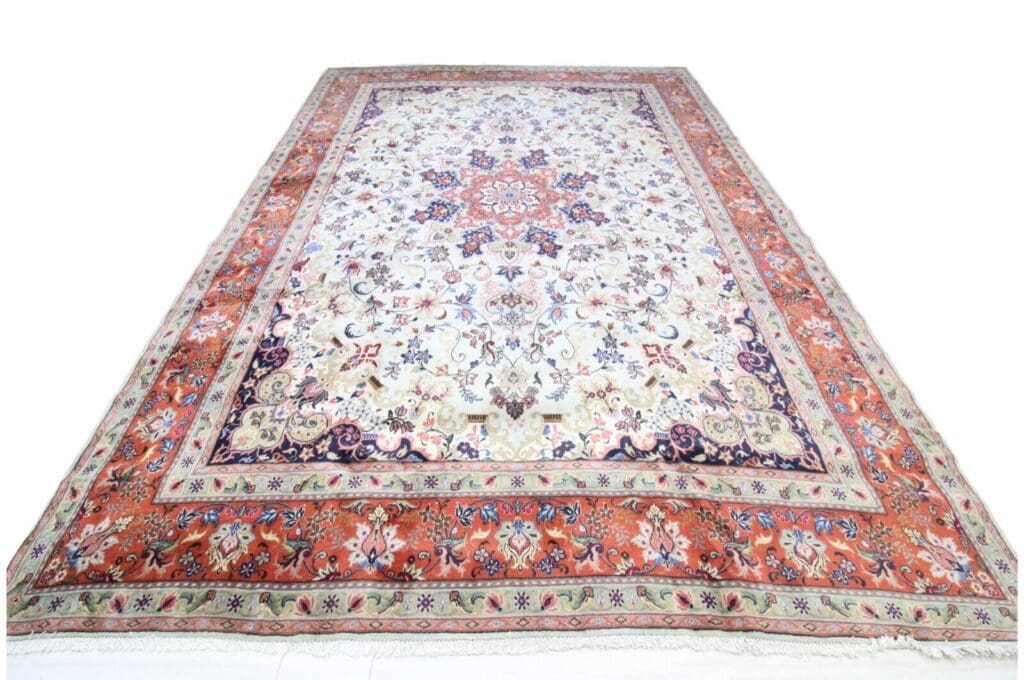
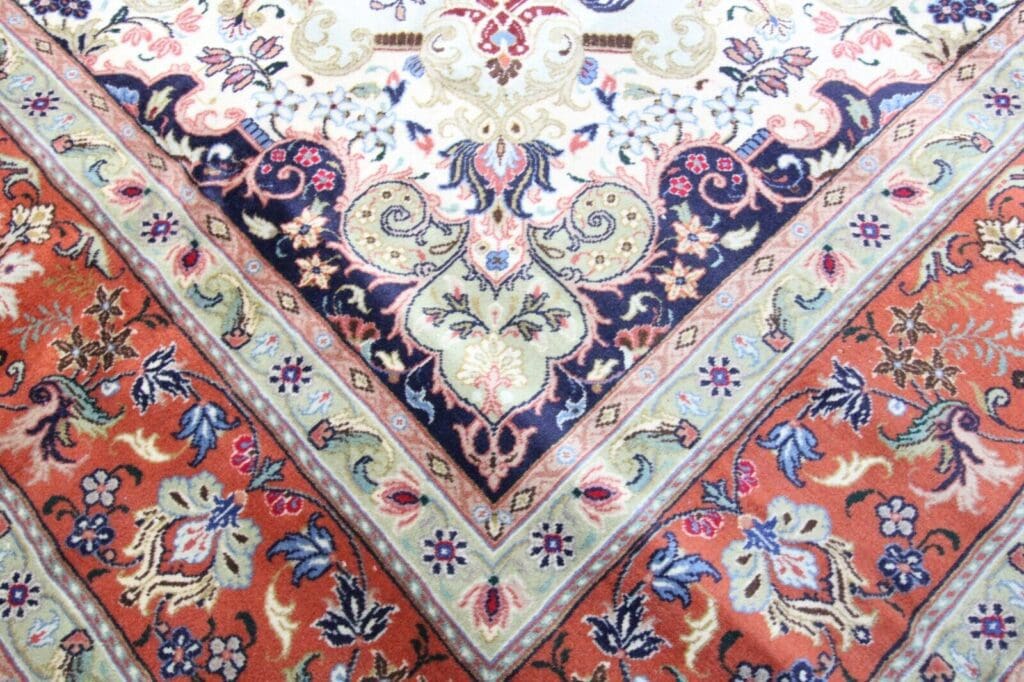
The design is described as oriental with a floral motif. Floral ornament is a central element in the history of Persian carpet design. Flowers, leaves and scrolling stems may fill a field, organize a border or create repeated links between separate parts of a composition. In a floral rug, visual character comes from the relationship between the plant forms, their scale, their repetition and the distinction between primary and secondary ornaments.
Persian floral designs are generally stylized rather than botanical illustrations. A flower may appear as an independent ornament or as part of a continuous vine. Leaves can connect individual blooms, and curved stems can lead the eye across the surface. Through these devices, a pattern can remain ordered while still suggesting movement. The description of this rug establishes the floral character, but it does not name particular flower species or individual symbols.
Oriental carpet compositions often use a relationship between the central field and surrounding border areas. Some designs are organized around a medallion, while others repeat motifs across the entire field. Whether a medallion, a specific border sequence or a named Persian motif is present is not stated for this rug. It would therefore be inaccurate to add such a designation. The confirmed pattern description remains an oriental floral design.
Hand knotting shapes the way the design appears. Lines are formed by sequences of coloured knots, and rounded contours are built through stepped changes in the line. Depending on the plan, a workshop may emphasize fine detail, broad blossoms or clearly separated colour zones. In every case, the pattern becomes part of the pile’s construction rather than sitting on top of a manufactured ground as a printed image.
The style is identified as classic in the product information. In general carpet terminology, classic refers to an orientation toward established compositions, balanced ornament and long-used floral forms. It does not by itself establish an old age or historical manufacture. For this rug, the period is given as the 21st century, while no precise year or production date is supplied. The classic classification should therefore be read as a stylistic description.
Floral motifs can create either a calm repetition or a more varied arrangement through differences in blossom size and form. They may also connect the middle of a rug with its outer edges. The available design information does not set out the exact colours, flowers or border details. Those elements are consequently not described as facts about this piece. What is established is the combination of a Tabriz designation, an oriental floral pattern and a classic style.
The Tabriz tradition provides a regional context for this design without determining every detail of the individual rug. A workshop translates inherited ornament into a particular hand-knotted surface, bringing established ideas together with the execution of one object. The pattern can therefore be understood through the three stated descriptors: Tabriz, oriental floral design and classic style. This approach keeps the regional background separate from unsupported specifics about the individual composition.
Special Features
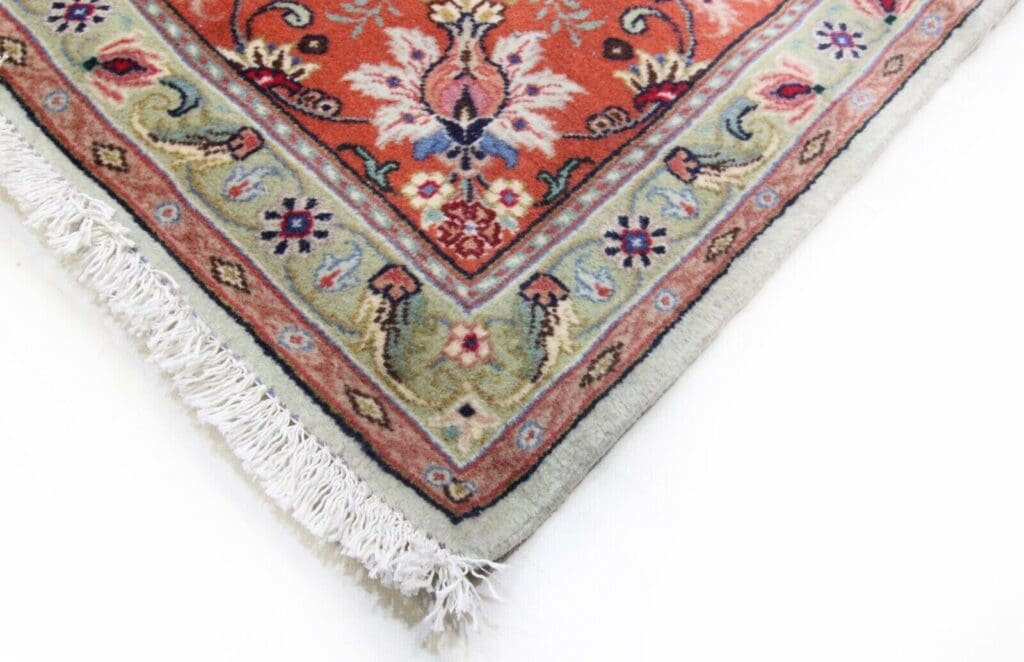
The rug is described as used and very clean. This condition statement is separate from its origin, construction and design. Used indicates that the rug is not presented as new, while very clean describes the cleanliness specified in the product information. No detailed report is provided on wear, repairs, fringes, edges or particular traces of use, so none of those details are added here.
The rug is also stated to be suitable for underfloor heating and child-friendly. These are practical characteristics given in the product description and make it relevant to living spaces with those requirements. The suitability of any particular room should still be considered individually. For ongoing care, regular vacuuming, protection from direct sunlight and professional cleaning when necessary are recommended.
The combination of a 100% wool pile, a 100% cotton warp and hand knotting defines the textile construction. Iran is the stated origin, Tabriz is the regional designation, and the style is listed as classic in the 21st century. No signature, precise workshop, exact manufacture date or additional material is identified.
FAQ
How can you recognize the quality of a Persian rug?
The quality of a Persian rug can be assessed through several factors, including knot density, the materials used and the complexity and precision of the pattern. A carefully made, denser structure can support controlled outlines and smaller decorative elements. The fibre also matters because wool and silk have different characteristics and are used differently in carpet making. This rug is described with a 100% wool pile, a 100% cotton warp and high-quality hand knotting. A complete assessment should still consider the whole object, including the pile, edges, fringes, colour appearance and condition rather than relying on one feature alone.
Can a Persian rug be washed?
Yes, Persian rugs can be washed, but washing should be carried out by a professional with experience in hand-knotted rugs, wool and coloured patterns. An unsuitable process may affect fibres, colours or the tension of the textile structure. Before cleaning, the material, knotting, condition and any vulnerable areas should be examined. Regular vacuuming and professional cleaning when needed are recommended for maintenance. Household detergents and uncontrolled soaking should be avoided when their effect on wool, cotton and the colours cannot be assessed with confidence.
What is the best way to care for my Persian rug?
For routine care, vacuum the rug carefully to remove loose dust without placing unnecessary strain on the pile. Protect it from direct sunlight, since strong exposure can gradually alter colours. If more substantial cleaning is required, arrange professional treatment by a specialist familiar with Persian hand-knotted rugs. Harsh cleaning products should be avoided because they may fade colours or affect the fibres. It is also useful to respond to new spills promptly and have difficult marks treated professionally rather than attempting aggressive cleaning at home.
To provide the best experiences, we use technologies like cookies to store and/or access device information. Consenting to these technologies will allow us to process data such as browsing behavior or unique IDs on this site. Not consenting or withdrawing consent, may adversely affect certain features and functions.
Functional Always active
The technical storage or access is strictly necessary for the legitimate purpose of enabling the use of a specific service explicitly requested by the subscriber or user, or for the sole purpose of carrying out the transmission of a communication over an electronic communications network.
Preferences
The technical storage or access is necessary for the legitimate purpose of storing preferences that are not requested by the subscriber or user.
Statistics
The technical storage or access that is used exclusively for statistical purposes.The technical storage or access that is used exclusively for anonymous statistical purposes. Without a subpoena, voluntary compliance on the part of your Internet Service Provider, or additional records from a third party, information stored or retrieved for this purpose alone cannot usually be used to identify you.
Marketing
The technical storage or access is required to create user profiles to send advertising, or to track the user on a website or across several websites for similar marketing purposes.
 SECURE PAYMENT
 SHIPPING PARTNERS