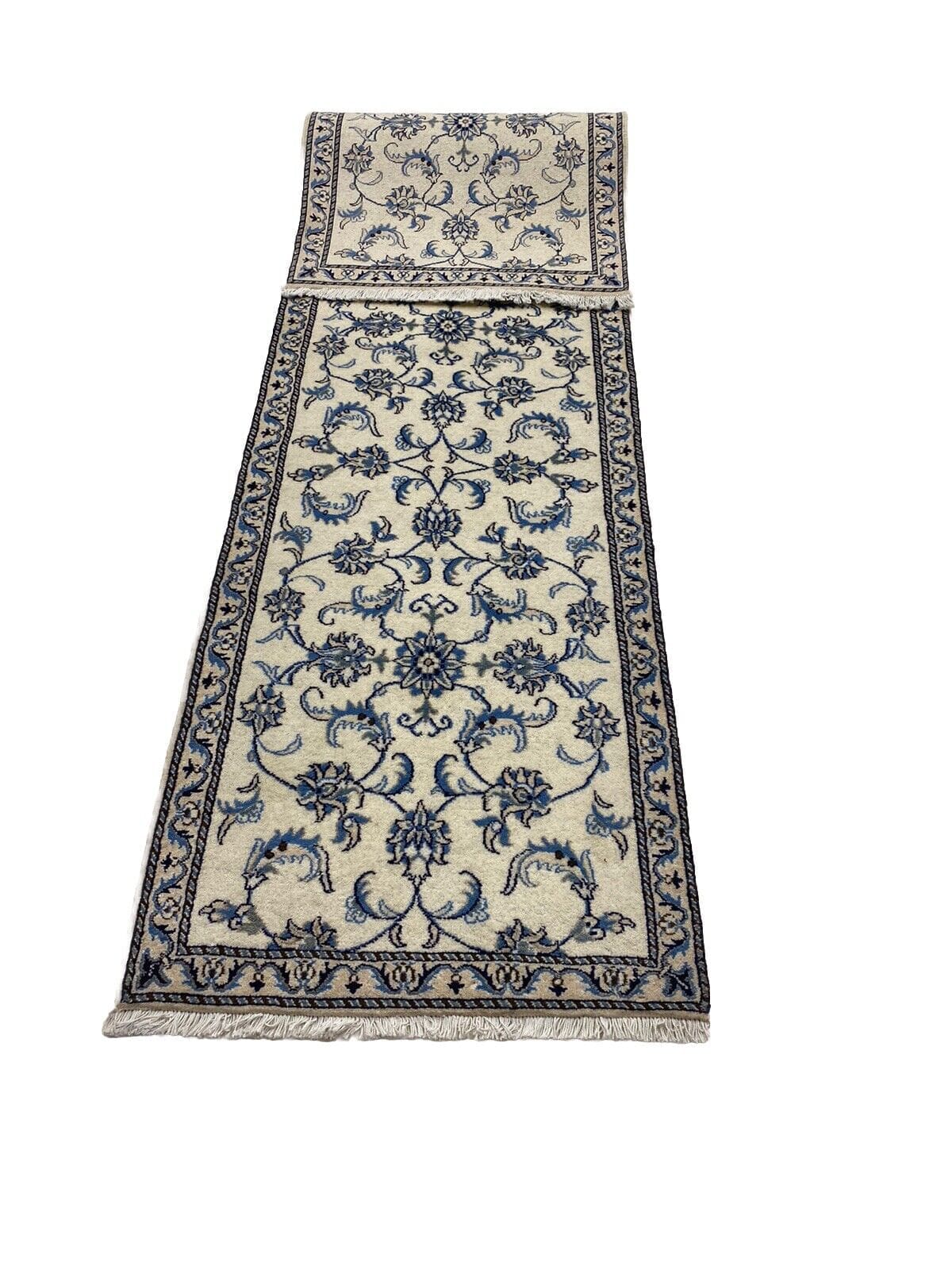
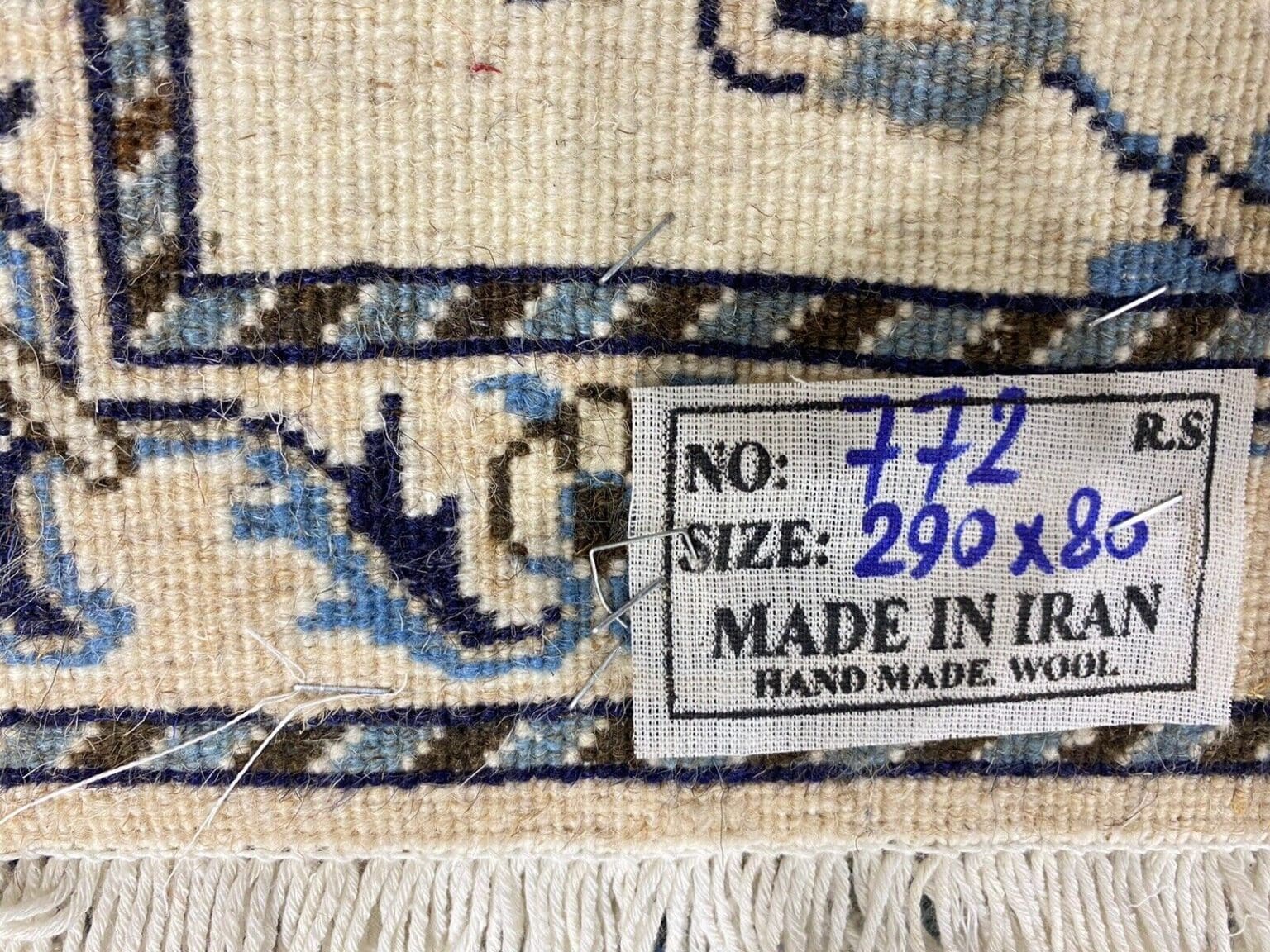
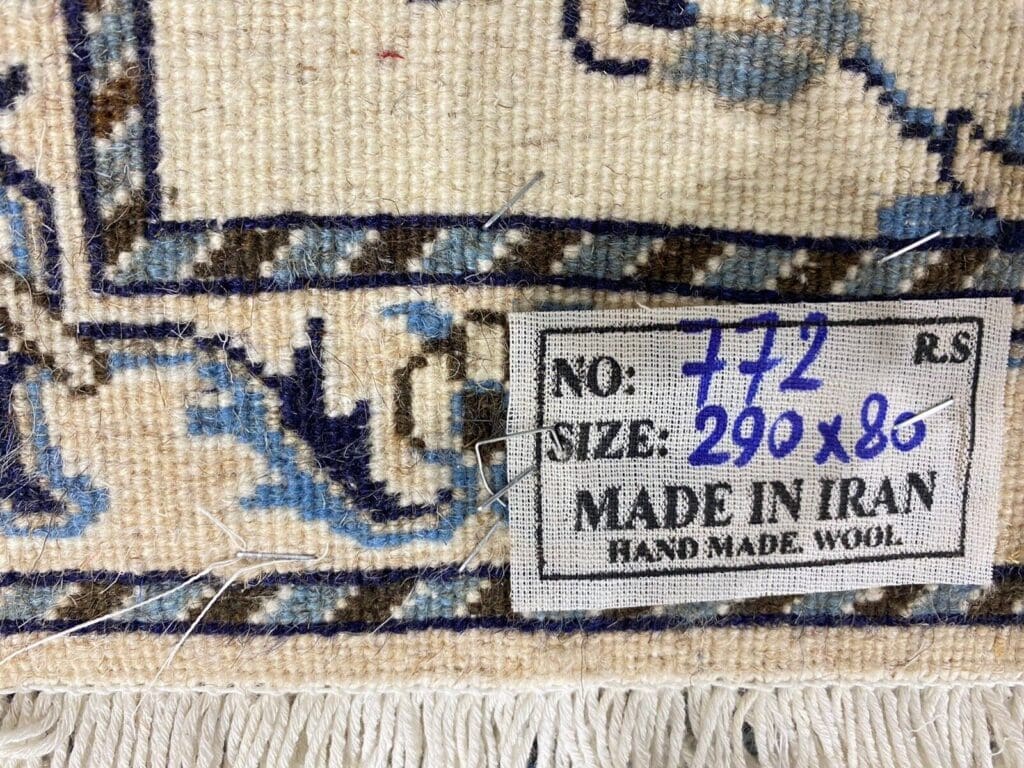
This Super Nain Persian rug is hand-knotted. Its pile is specified as 90% virgin wool and 10% silk, while the warp is made from 100% cotton. The structure therefore combines a predominantly woollen surface with silk in the pile and a cotton foundation beneath it. Virgin wool provides the principal body of the pile, silk adds a finer fibre to the visible surface, and cotton forms the warp on which the knots are secured.
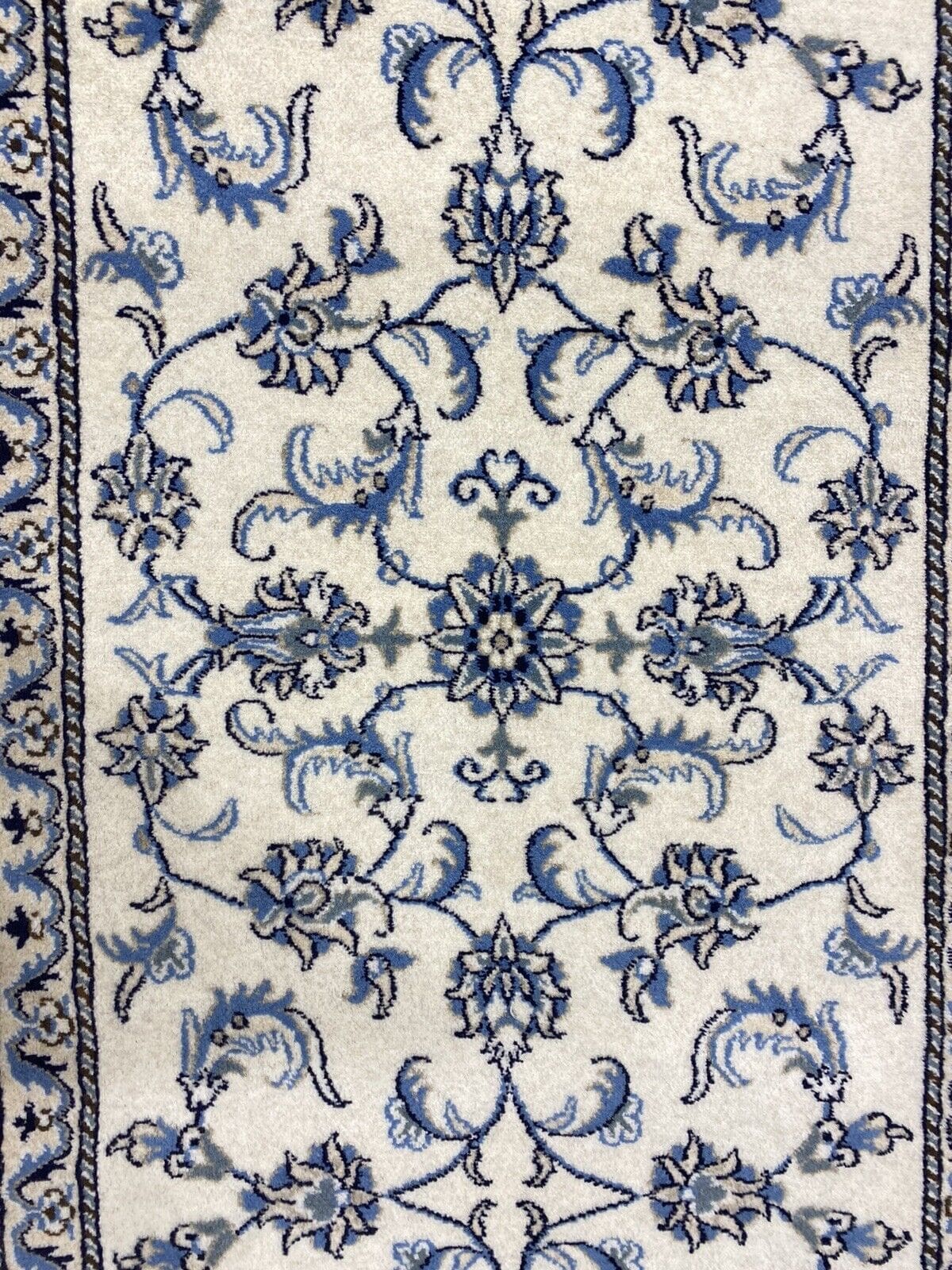
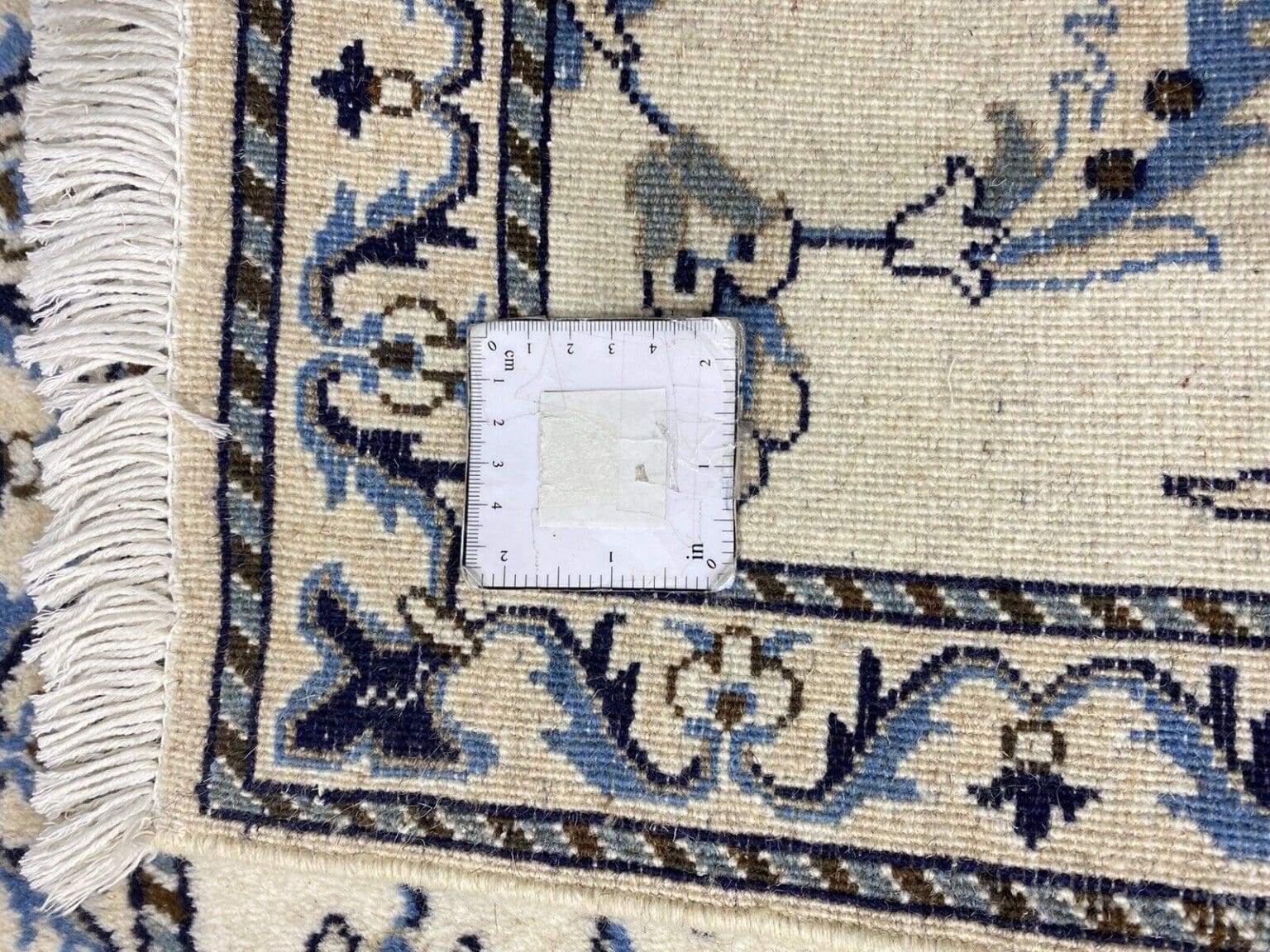
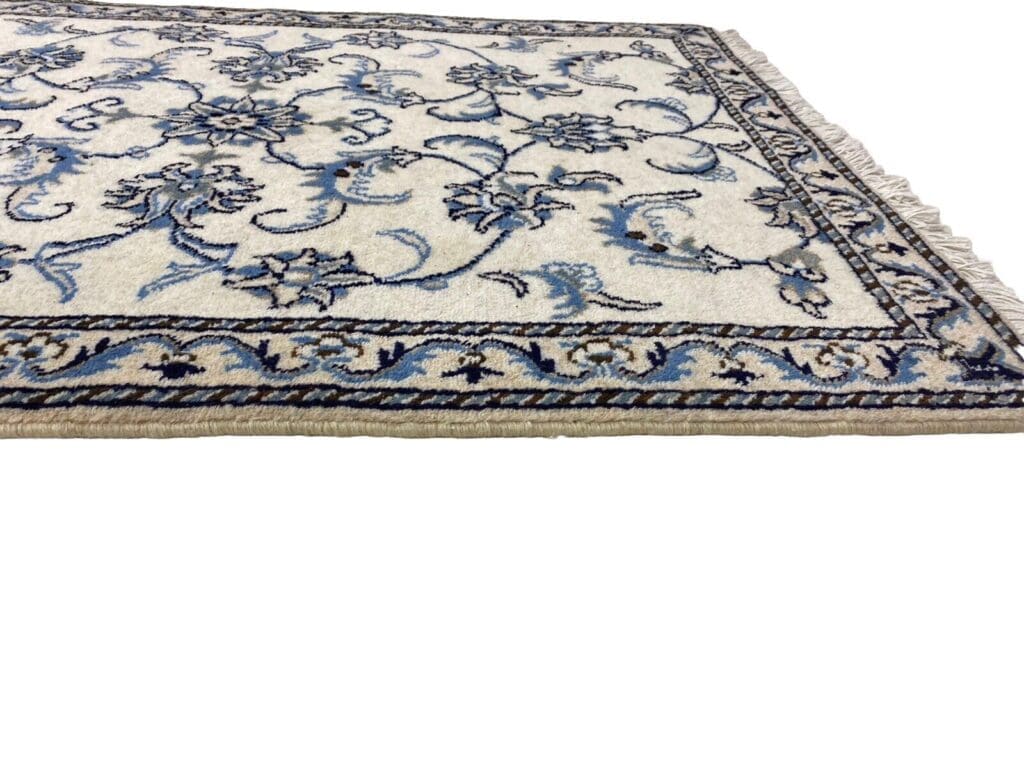
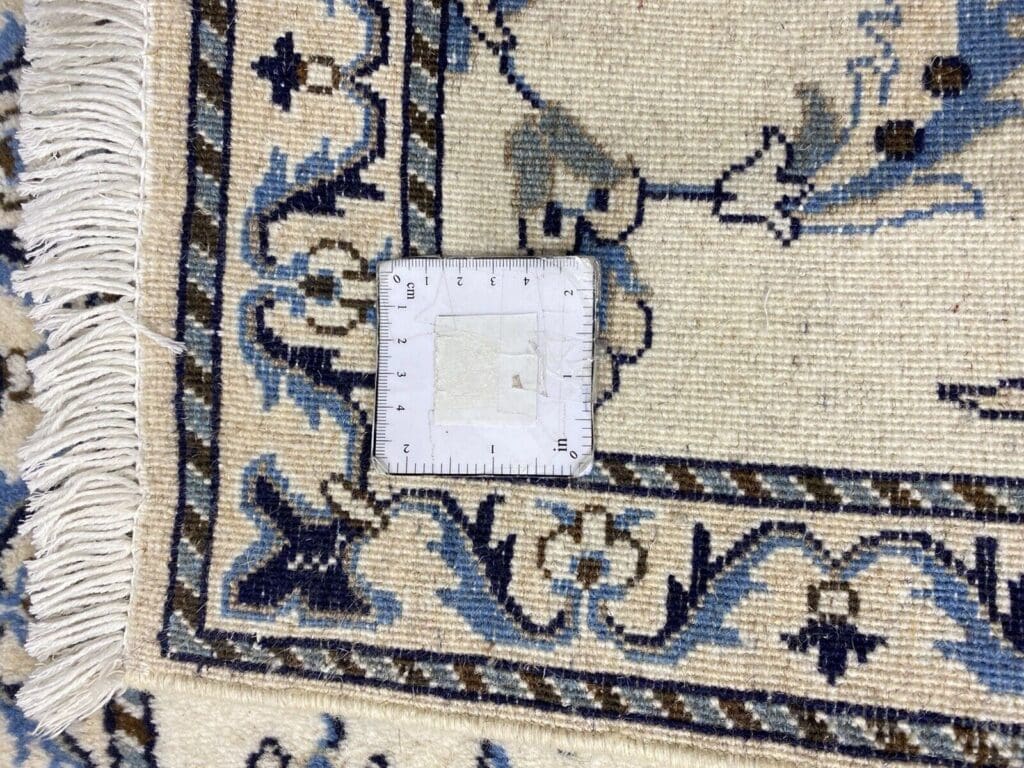
Hand-knotting is a row-by-row process in which individual pile knots are tied around the warp. The finished surface is consequently built from many separate knots rather than printed onto a backing or produced as a machine-made imitation. A knot density of approximately 300,000 knots per square metre indicates very fine construction. Such close knotting allows narrow outlines, small ornaments and carefully controlled transitions to be worked into the design.
The material combination is central to the character of this rug. Wool is traditionally used in rug piles for its resilient, flexible and substantial textile qualities. Silk can introduce a smoother and finer element within a wool pile. Cotton in the warp provides the underlying framework for the rows of knots. These material details describe both the part that is visible underfoot and the textile foundation that supports the hand-knotted construction.
Origin and Tradition
The rug comes from Persia and is identified as Super Nain. Nain is associated with finely made rugs and precise knotting. Within this tradition, careful workmanship, clearly defined drawing and a balanced relationship between materials and pattern are important characteristics. The name Super Nain places the rug within the fine end of the Nain tradition, while its Persian origin connects it with the long history of Iranian rug weaving.
Persian rugs come from a range of weaving centres, each with its own approaches to composition, colour arrangement and execution. Nain is known for a refined visual language, detailed surfaces and controlled line work. Weavers build the image knot by knot along the warp, working through successive rows until the design forms a unified textile field. The appearance of a finished rug is therefore the result of numerous small technical decisions rather than a single applied decoration.
Persian rug weaving has been shaped over centuries by the transmission of patterns, skills and working methods. Designs may be based on established regional conventions, workshop drawings and motifs passed from one generation to the next. In the Nain tradition, these influences are commonly associated with fine drawing and a measured, orderly composition. The quality of the work depends not only on the chosen fibres, but also on even knot placement, clean contours and the way the separate sections of a design are brought into balance.
The Persian tradition includes both central compositions and patterns that develop across the entire field. Floral motifs may show blossoms, leaves and scrolling branches arranged in an organised relationship. Geometric elements can establish axes, borders, repeats or divisions within the composition. In Nain-related designs, these approaches often work together: floral detail is made more legible by precise outlines, while geometric order gives the surface structure. This background explains the cultural and technical setting of a Super Nain rug without assigning another regional origin to it.
Tabriz and Kashan are also associated with accomplished Persian rug making, fine materials and carefully developed designs. They are separate regional traditions and are not the origin of this rug. Their relevance is limited to comparison within Persian weaving history. This rug remains a Persian Super Nain, and its classification comes from the stated origin and name rather than from a resemblance to patterns known from another place.
Design and Pattern
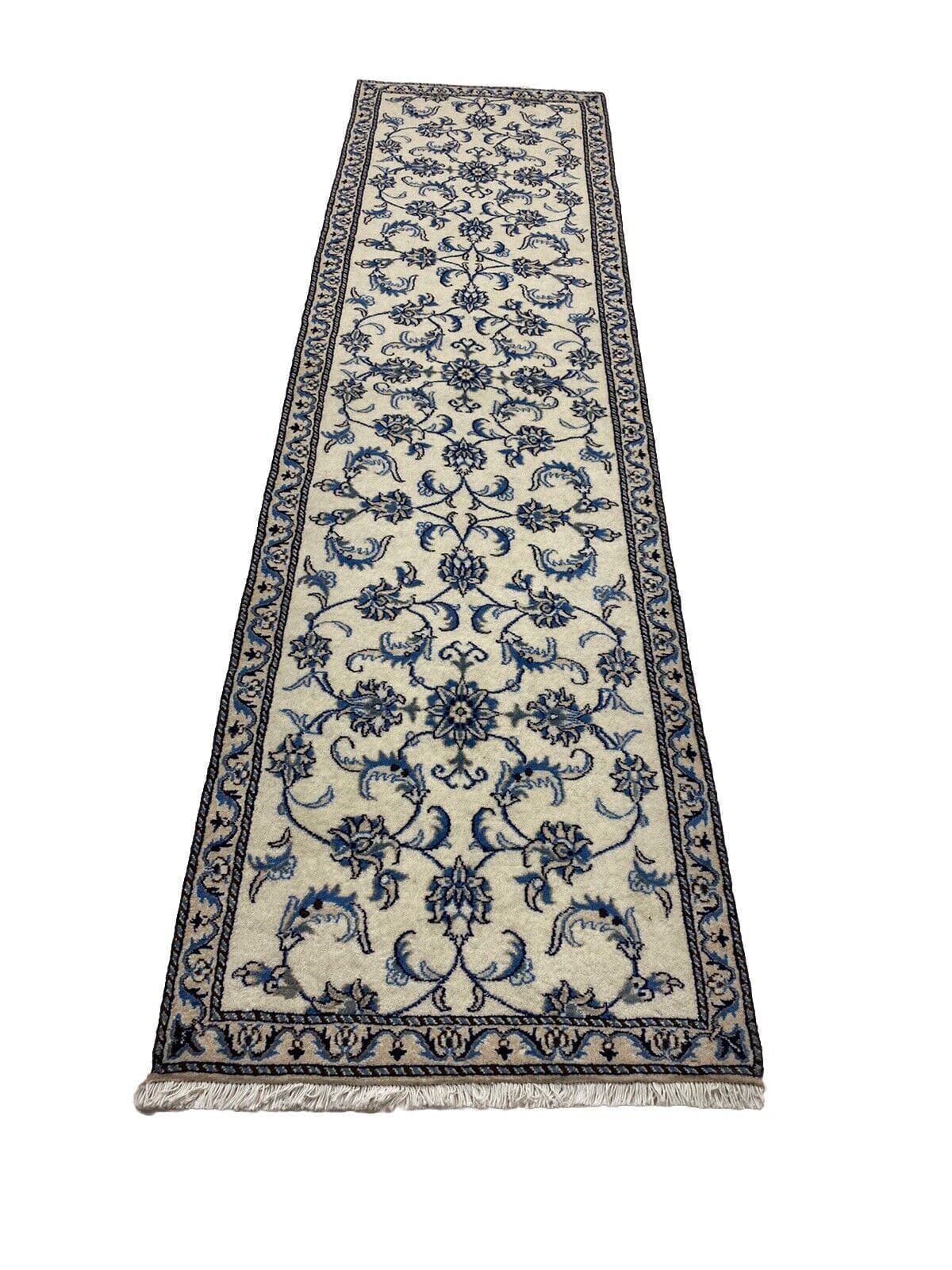
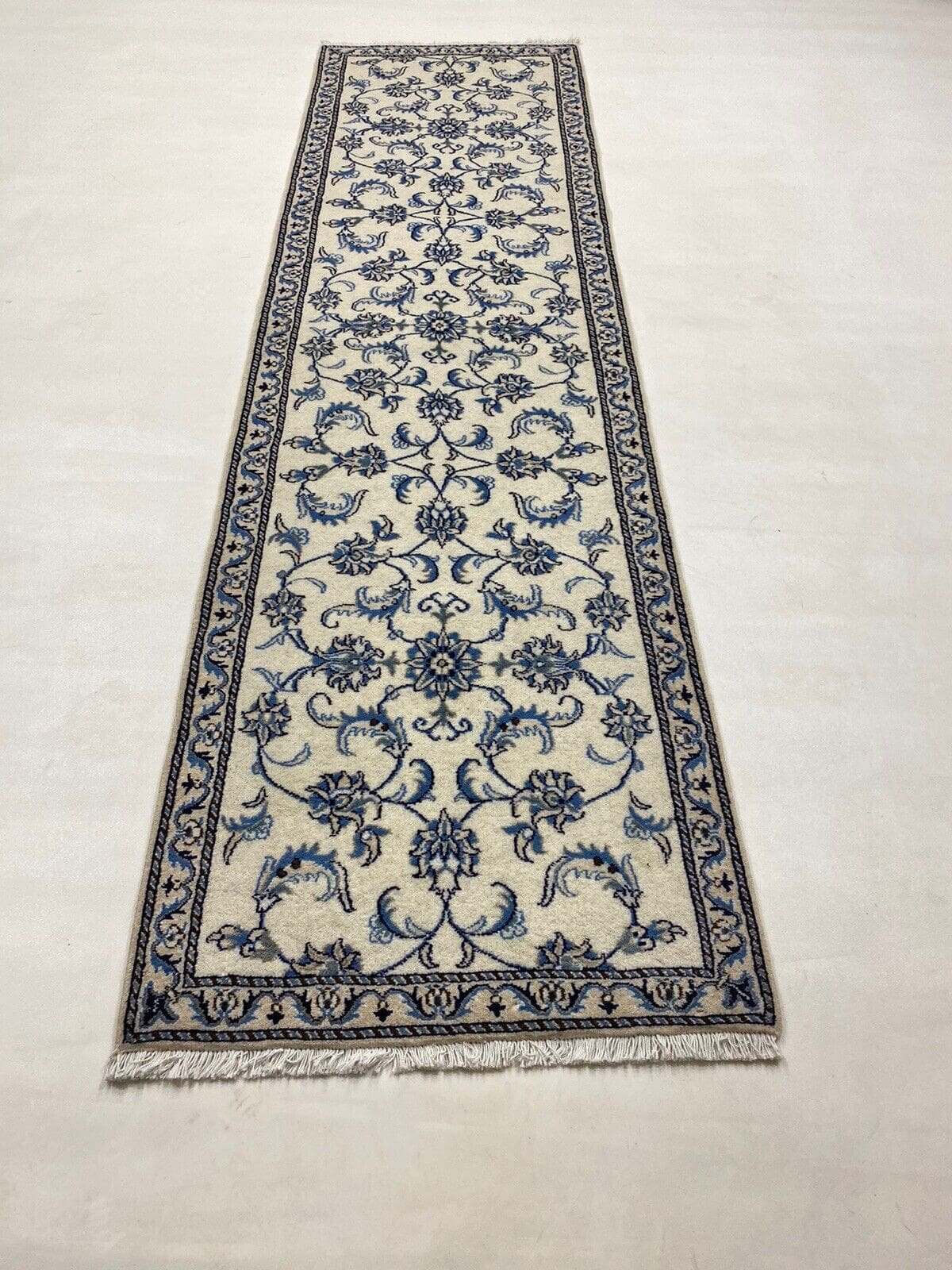
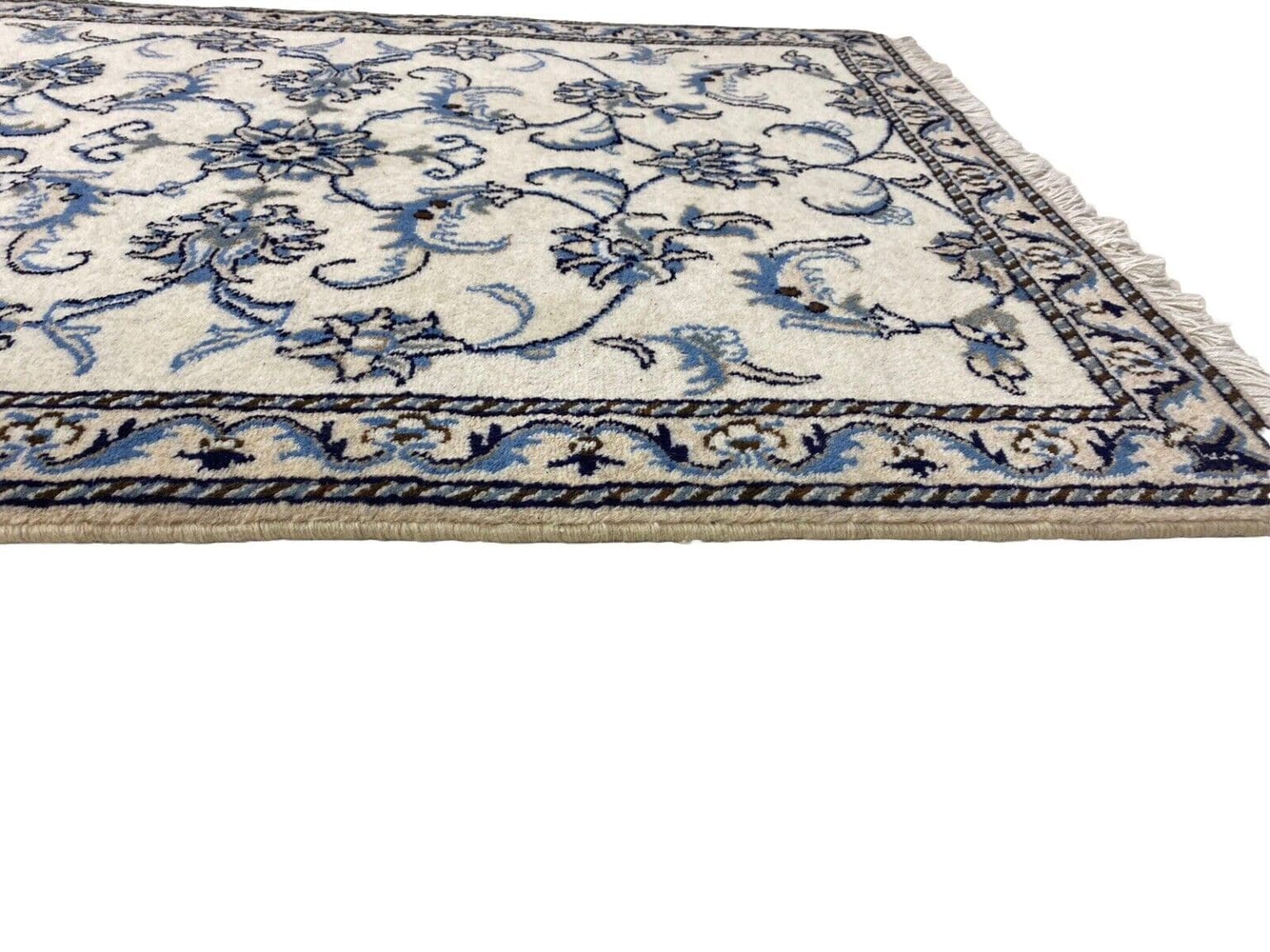
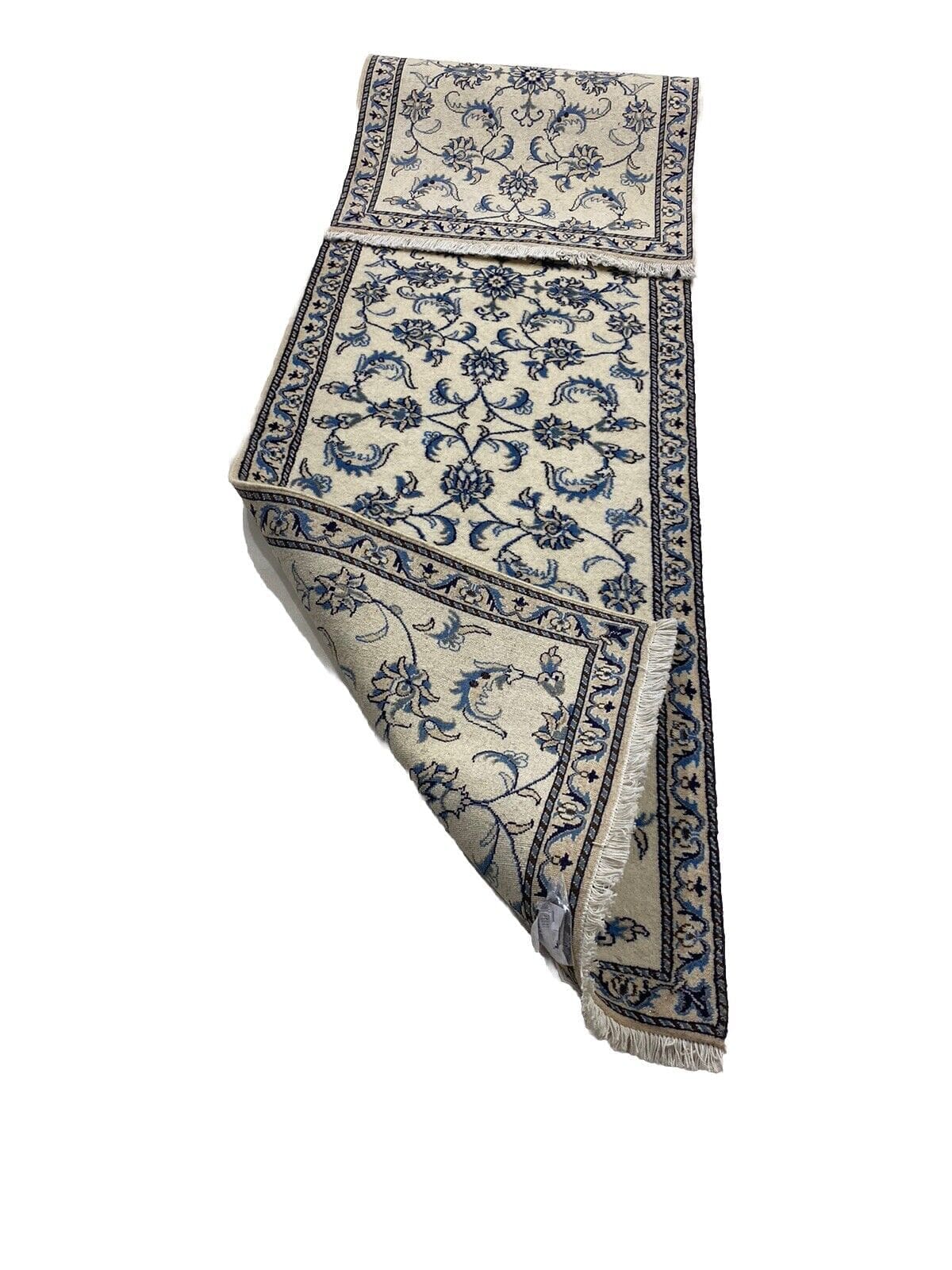
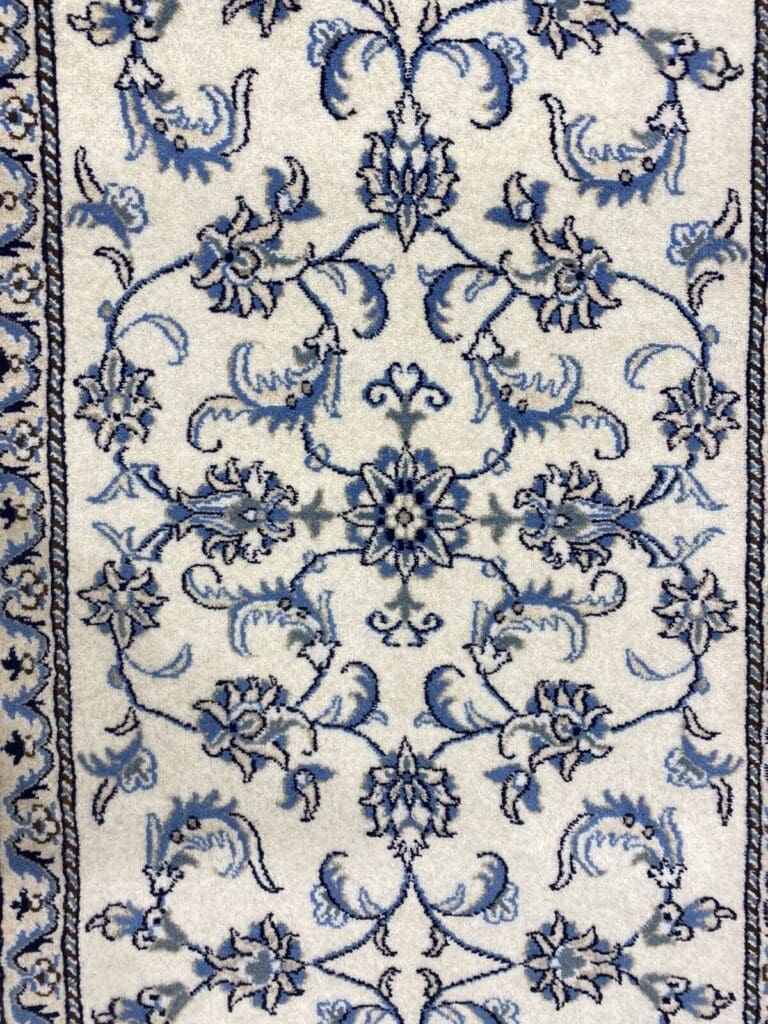
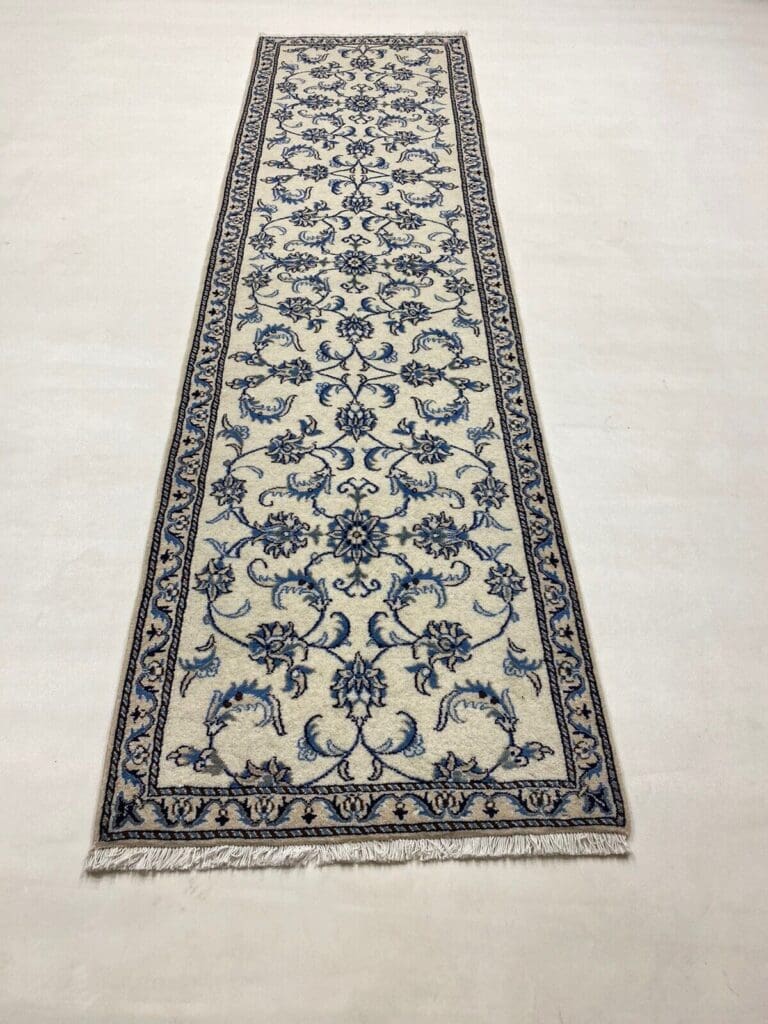
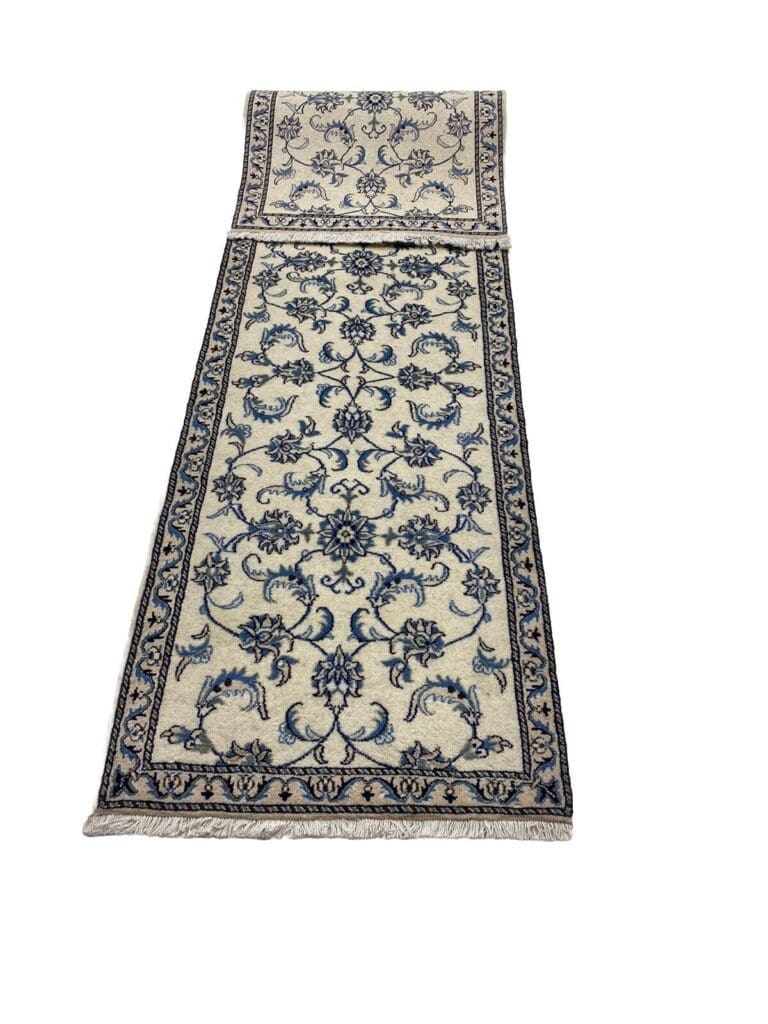
The design of a Super Nain is associated with detailed and harmonious pattern work. The description refers to characteristic patterns and colours but does not specify one exact palette or a particular central motif for this individual rug. It is therefore the general design language that can be described here: finely drawn forms, organised floral elements and geometric structure. Together, these features can create a surface that is detailed while remaining visually coherent.
Floral ornament is one of the established forms of Persian rug design. Blossoms, leaves and vines are arranged in relationships that guide the eye across the field. A scrolling branch may connect individual flowers, while leaves indicate direction and rhythm. In a finely knotted composition, narrow outlines separate adjacent forms and help preserve their clarity. The result is not simply a collection of isolated floral symbols, but a connected system of shapes distributed across the textile.
Geometric elements provide a complementary framework. Repetition, symmetry, borders and directional axes help organise the drawing and distinguish one area from another. Geometry can contain a floral field, define the edge of a composition or create a regular rhythm between more organic forms. Nain designs are often discussed in connection with precise line work and small-scale detail. Their ordered structure allows numerous motifs to coexist without losing the balance of the overall pattern.
Fine knotting supports the rendering of small motifs and narrow contours. It gives the weaver more scope for gradual transitions, compact ornaments and closely controlled lines than a coarser construction would provide. Viewed up close, the surface reveals the relationship between individual knots and the drawn pattern. From farther away, the separate details merge into a continuous field. This combination of close technical work and unified appearance is part of the reason Nain rugs are associated with fine patterning.
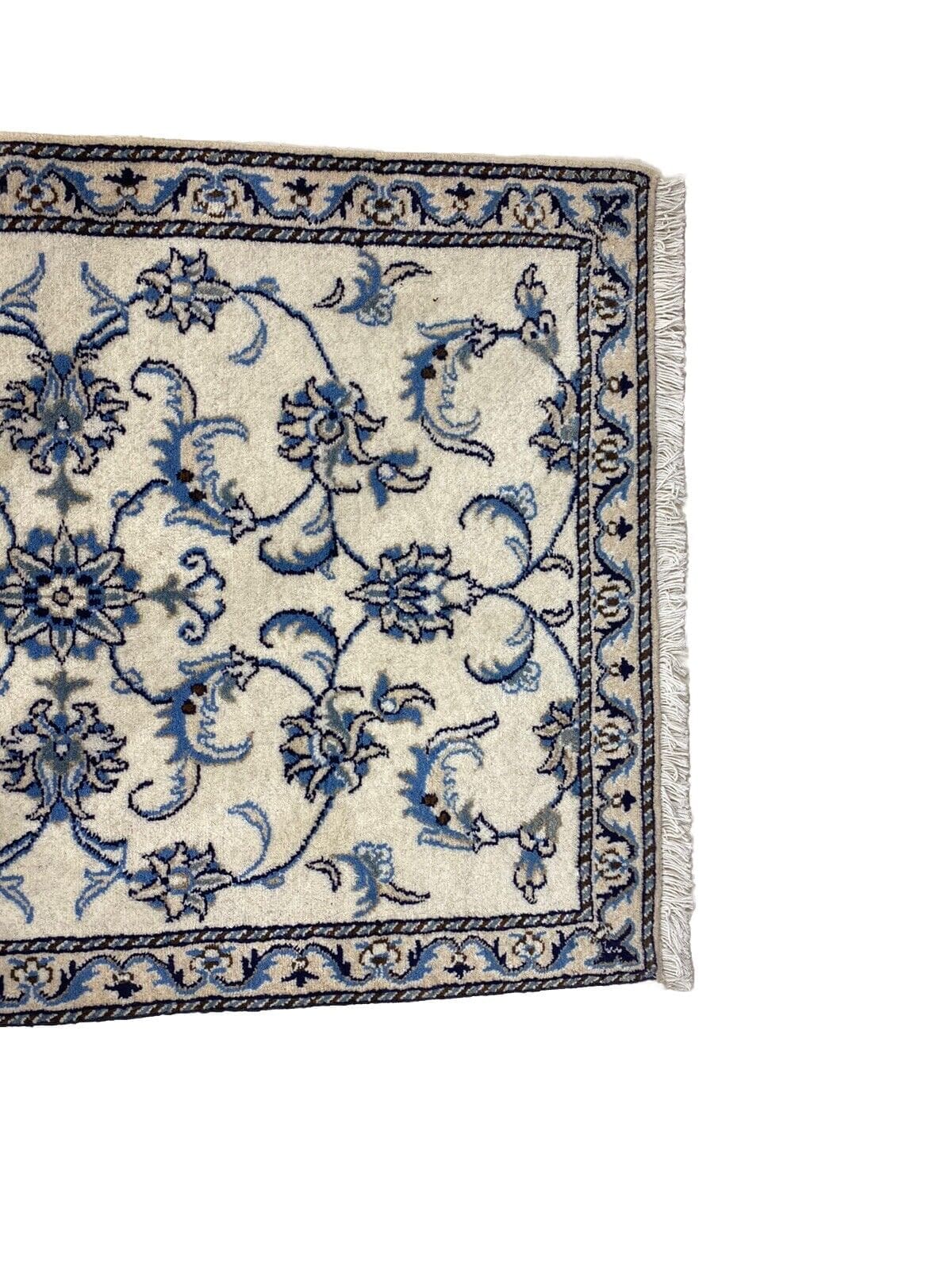
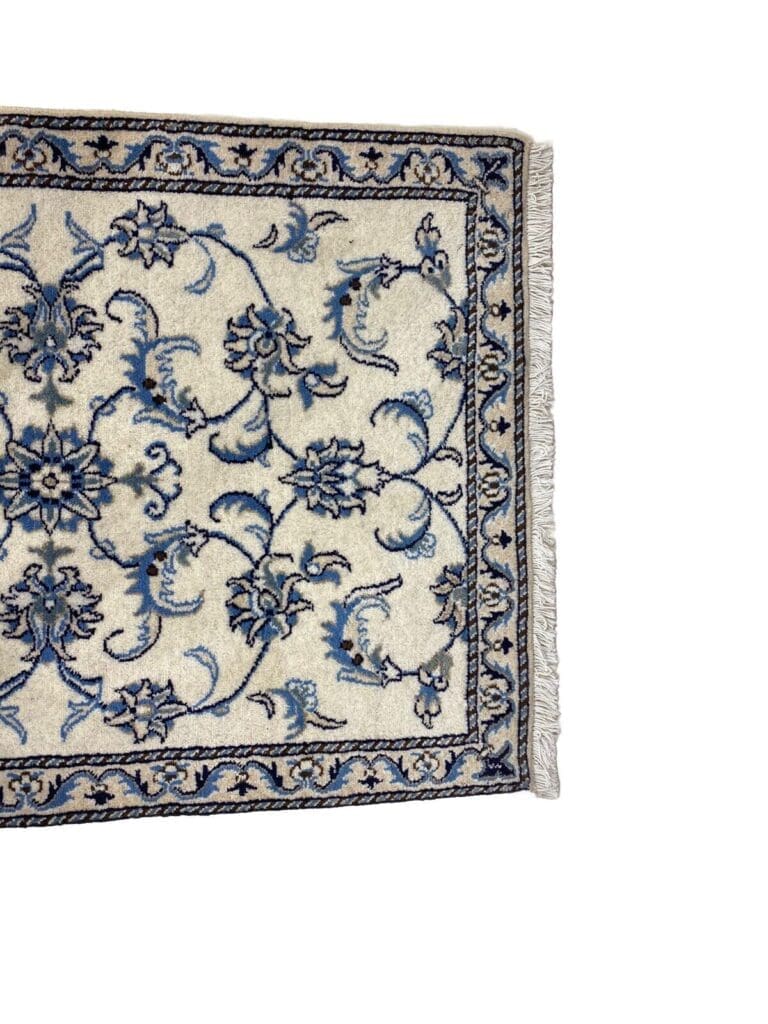
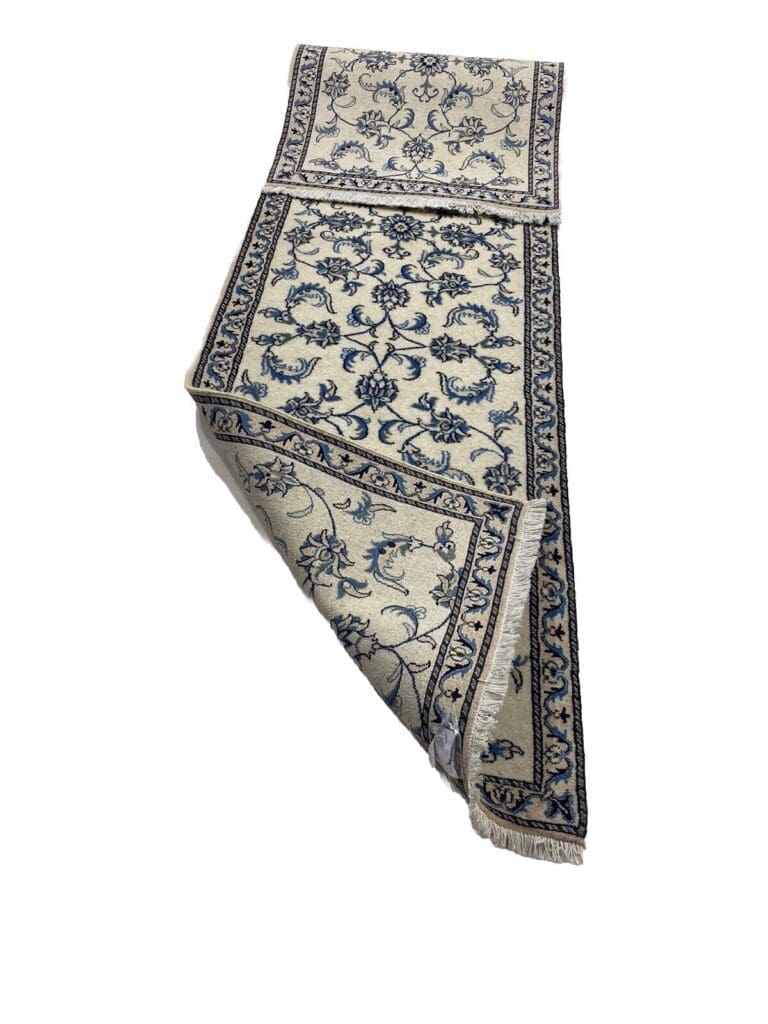
A harmonious rug design also depends on the relationship between field, ornament and edging. A background sets the contrast for the motifs, while borders can lead the eye around the outer edge and give the composition a visual conclusion. The exact colours, borders and individual motifs of this rug are not described in detail. The recorded features are its detailed, harmonious Super Nain pattern language and its connection with floral and geometric Persian design traditions.
As a runner, the rug has an elongated product form suited in general to spaces where a continuous textile design follows a passage or defined stretch of floor. Runner describes the format, not an additional weaving region. Its stylistic identity remains connected to Super Nain, Persian origin, fine hand-knotting and the floral and geometric traditions associated with Nain designs.
Special Features
The rug is new. Its listed special features are that it is pet-friendly, child-friendly, moth-resistant and suitable for underfloor heating. Its thickness is given as approximately 8 mm. These statements form part of the product description. Alongside them, the hand-knotted construction, the wool-and-silk pile and the cotton warp define the rug’s material and structural specification.
The pet-friendly and child-friendly classifications explicitly place the rug within everyday living spaces. Moth resistance is listed as an additional characteristic of the rug or its construction. Suitability for underfloor heating is also specifically stated. These properties do not remove the need for sensible care: natural fibres can still be affected by persistent moisture, heavy soiling or inappropriate cleaning methods.
Regular vacuuming without a brush attachment is recommended. If a spill or mark occurs, it should be dabbed immediately with a damp cloth. Vigorous rubbing can put unnecessary stress on the pile and may work a mark further into the textile. Professional rug cleaning every few years is recommended for long-term care. These practical instructions complement the new condition and the listed usage characteristics without changing the rug’s Persian and Nain classification.
FAQ
How should I care for the Super Nain Persian rug?
Vacuum the rug regularly without using a brush attachment. This removes loose dust while avoiding the additional friction caused by rotating or stiff bristles. Any stain should be dabbed promptly with a damp cloth rather than rubbed forcefully across the pile. Rubbing can stress the surface and spread a mark through the fibres. Professional rug cleaning every few years is recommended for continued care. The pet-friendly and child-friendly descriptions do not replace routine cleaning or careful treatment of moisture and spills.
Where does the Super Nain Persian rug come from?
The rug comes from Persia and is identified as Super Nain. Nain is a Persian rug tradition associated with fine rugs, detailed drawing and precise hand-knotting. Similar qualities can also be discussed in relation to Tabriz and Kashan, but those are separate regional traditions and are not the origin of this piece. Its classification is based on the stated Persian origin and the Super Nain designation, not on a resemblance to a pattern from another weaving area.
What makes the Super Nain special?
Its distinctive features are the fine hand-knotted construction, the listed high knot density and the combination of virgin wool and silk in the pile. The cotton warp is another recorded part of its structure. The rug is new, and its design is described as detailed and harmonious, with the floral and geometric character associated with Super Nain tradition. It is also listed as pet-friendly, child-friendly, moth-resistant and suitable for underfloor heating, combining craft characteristics with stated everyday-use properties.
To provide the best experiences, we use technologies like cookies to store and/or access device information. Consenting to these technologies will allow us to process data such as browsing behavior or unique IDs on this site. Not consenting or withdrawing consent, may adversely affect certain features and functions.
Functional Always active
The technical storage or access is strictly necessary for the legitimate purpose of enabling the use of a specific service explicitly requested by the subscriber or user, or for the sole purpose of carrying out the transmission of a communication over an electronic communications network.
Preferences
The technical storage or access is necessary for the legitimate purpose of storing preferences that are not requested by the subscriber or user.
Statistics
The technical storage or access that is used exclusively for statistical purposes.The technical storage or access that is used exclusively for anonymous statistical purposes. Without a subpoena, voluntary compliance on the part of your Internet Service Provider, or additional records from a third party, information stored or retrieved for this purpose alone cannot usually be used to identify you.
Marketing
The technical storage or access is required to create user profiles to send advertising, or to track the user on a website or across several websites for similar marketing purposes.
 SECURE PAYMENT
 SHIPPING PARTNERS


