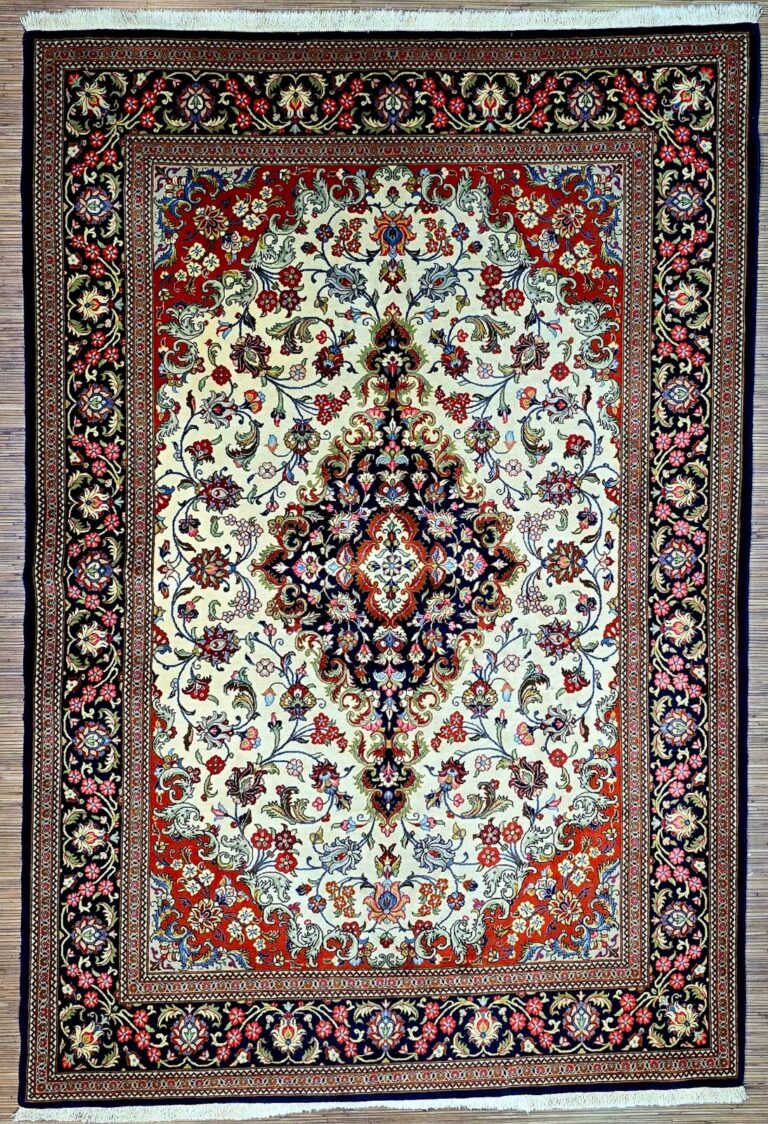
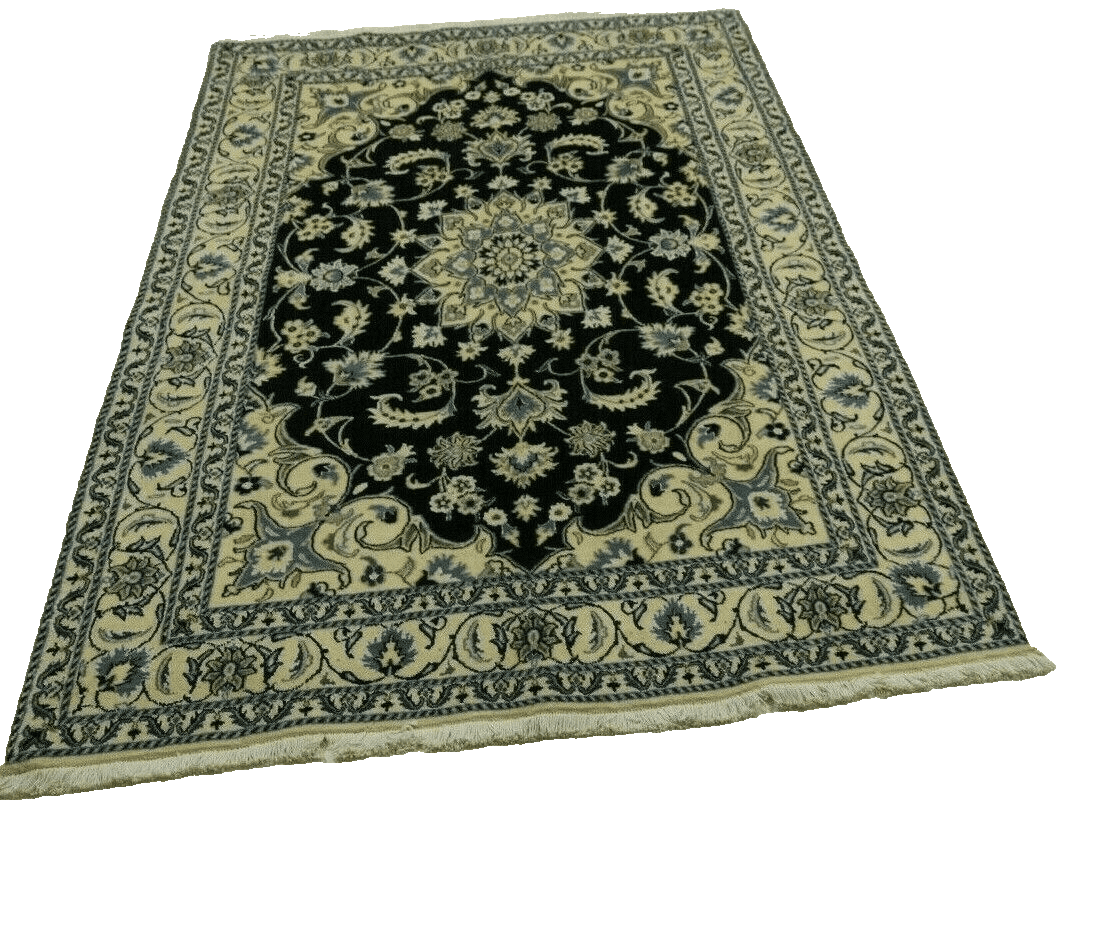
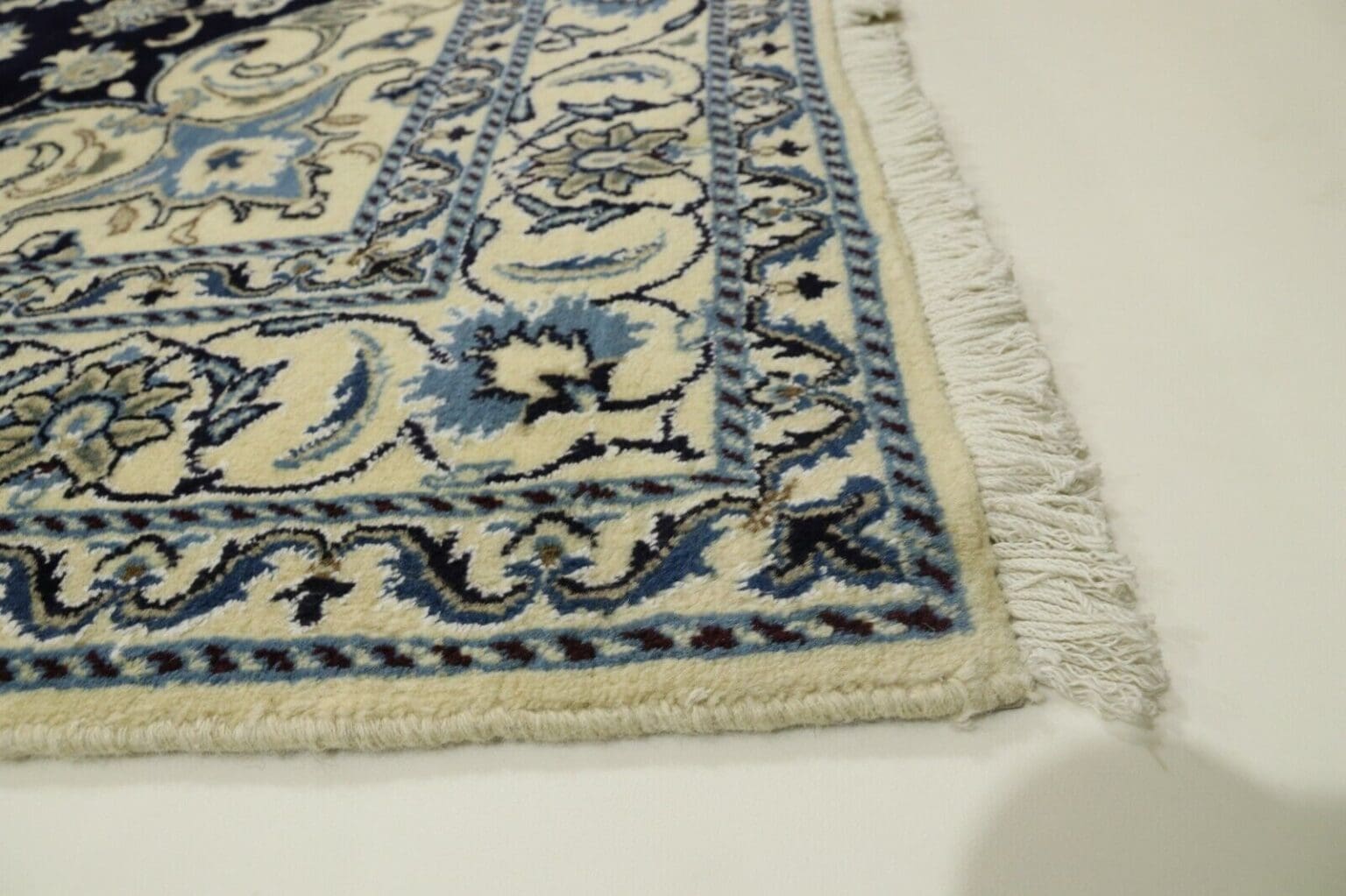
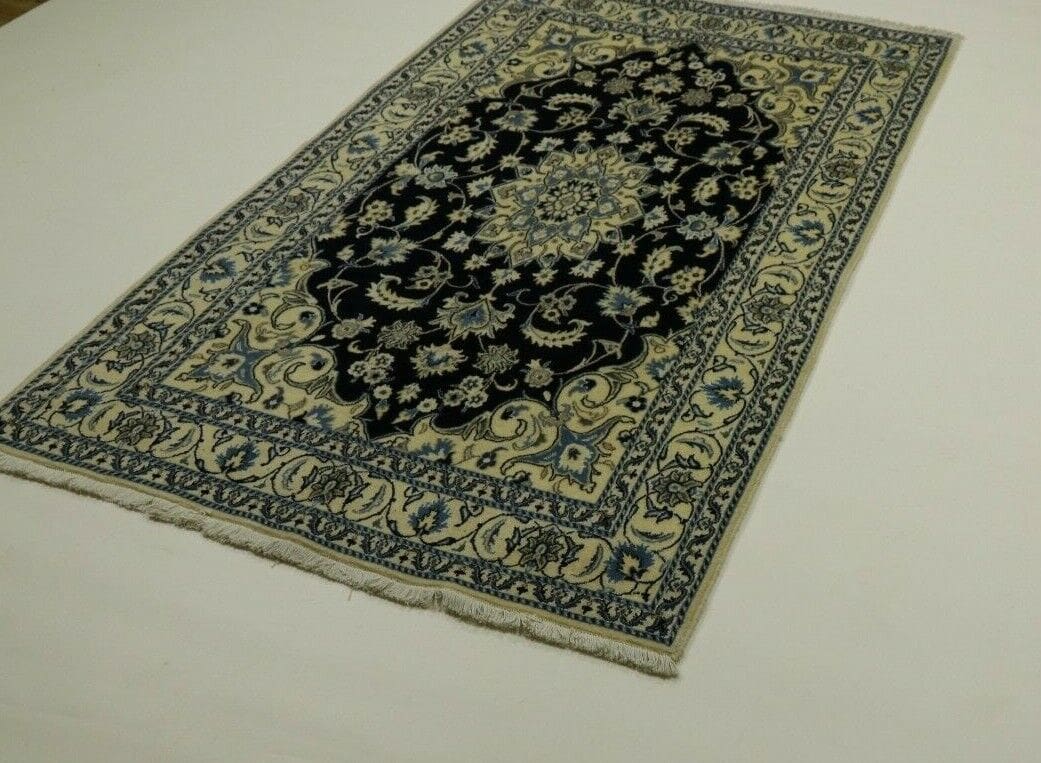
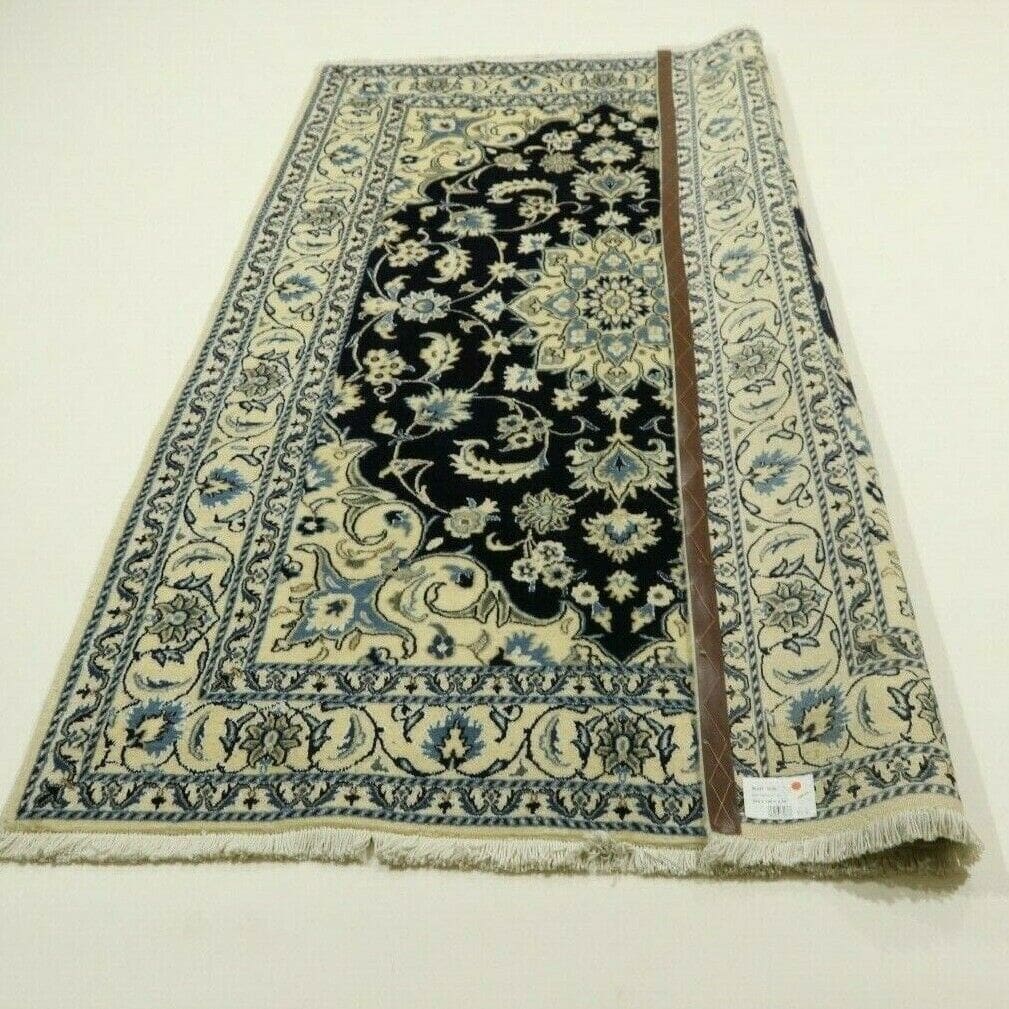
This Super Nain is a hand-knotted Persian rug made from a combination of virgin wool and silk. Its pile is made mainly from virgin wool, with silk also included, while cotton is used for the warp. The combination brings together the soft, warm feel associated with wool and the fine character of silk. The cotton warp provides the foundation into which the knots are worked.
Virgin wool is valued in rug making for its robust and durable fibre. It offers a comfortable feel underfoot and contributes natural depth to the appearance of the pile. Wool has long been used in hand-knotted rugs because it is suitable for detailed manual work and has a resilient structure. Silk can add fine accents and a smooth visual quality, while a cotton warp creates an even framework for the knotting process.
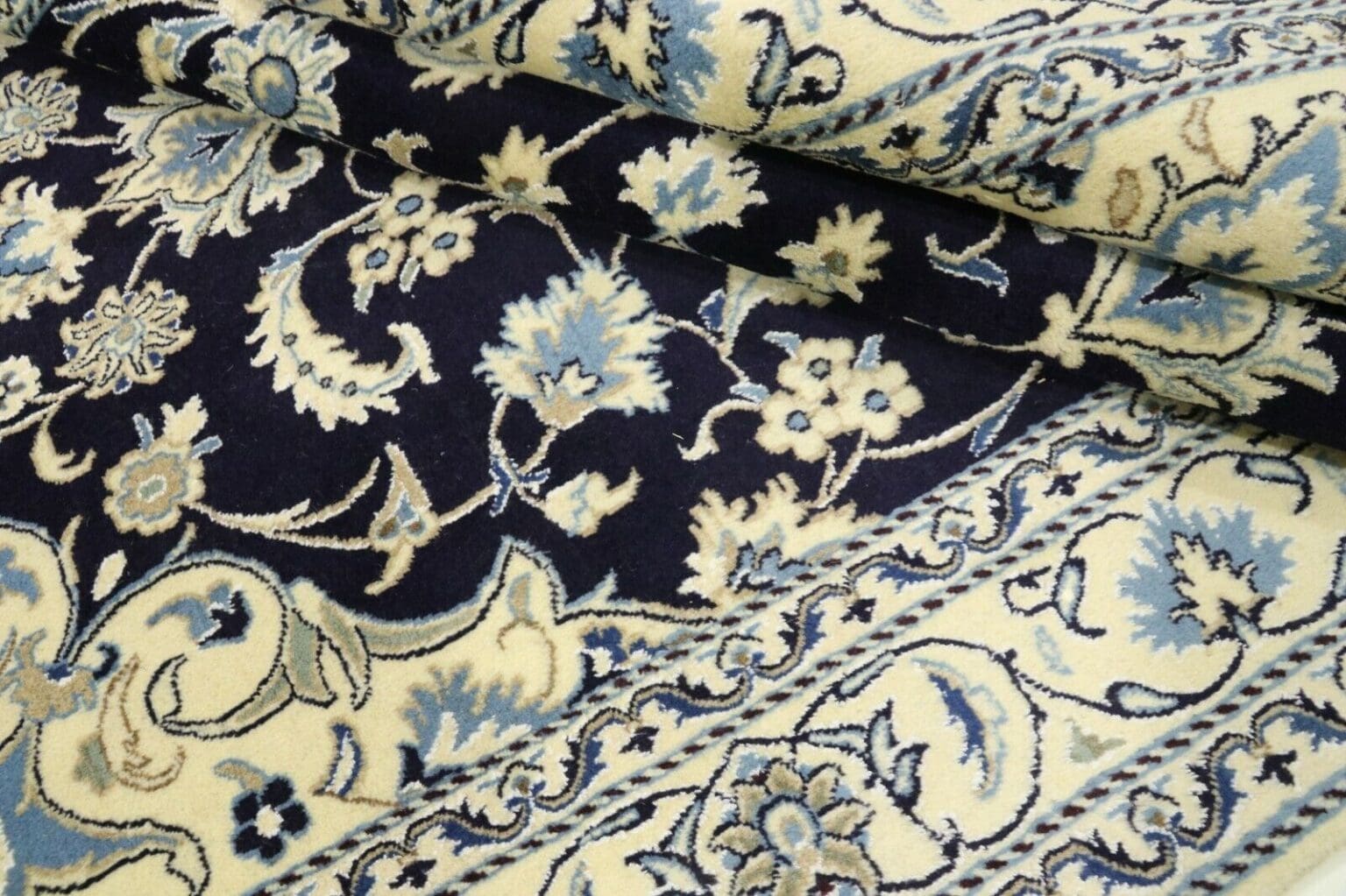
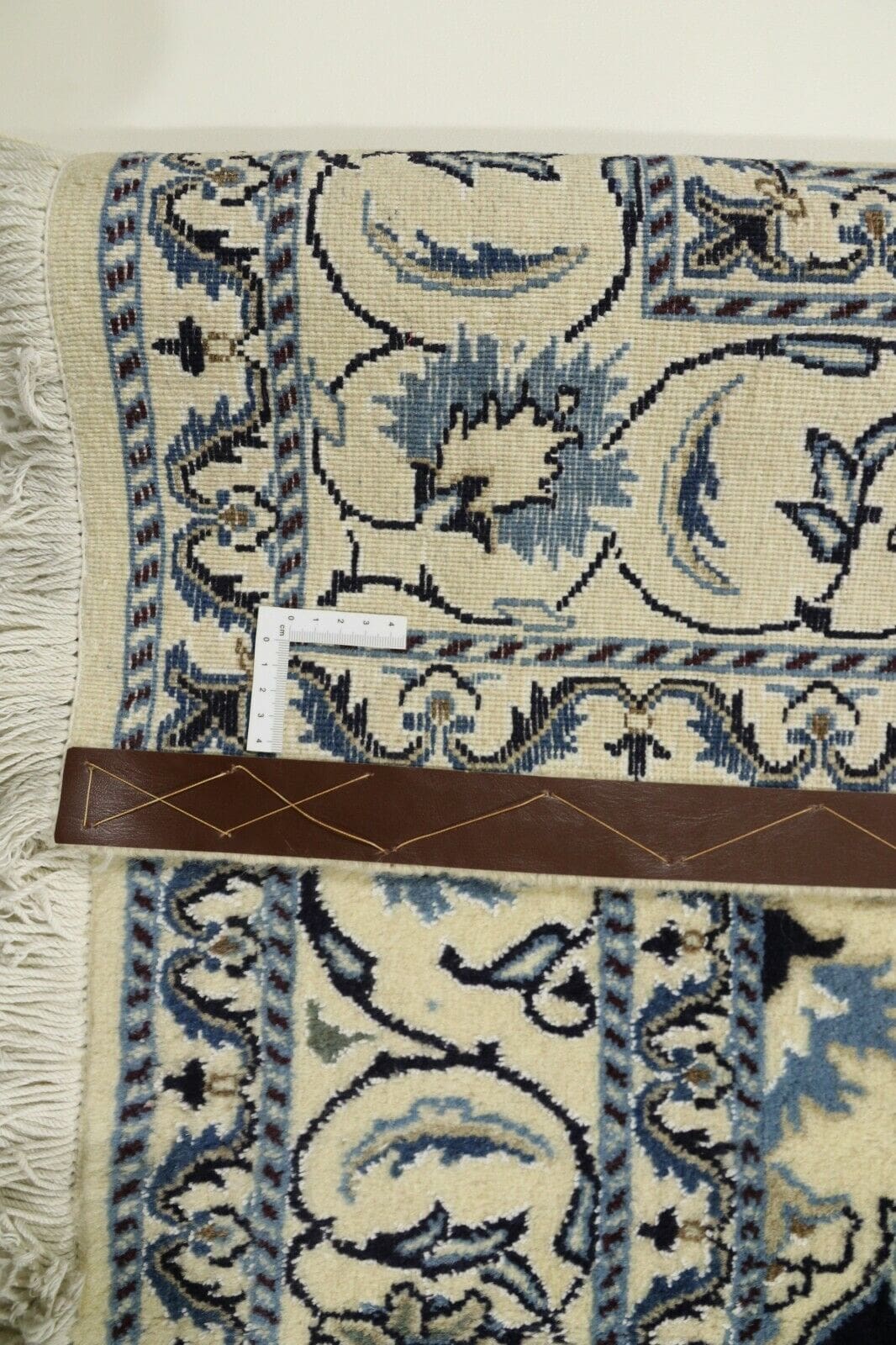
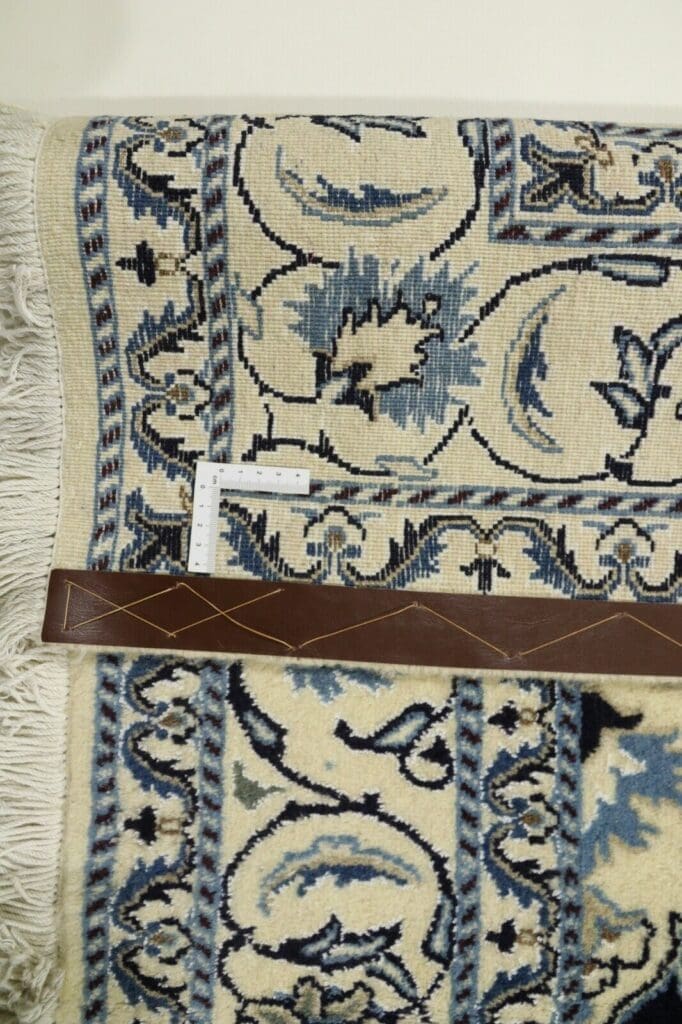
Hand knotting makes every individual rug unique. The knots are inserted by hand into the prepared warp and then secured through the subsequent stages of construction, creating a continuous textile surface. A dense knot structure allows a finely worked texture and supports the rug’s resistant construction. The careful execution required for a high knot density is part of the traditional expertise found in Persian rug making.
The character of a hand-knotted rug is formed through many connected steps rather than through a single process. The warp establishes the underlying structure, the knots create the pile, and later finishing work gives the surface its final appearance. This method allows ornamental details, fine lines and transitions to be rendered with care. The result is a rug whose production depends on manual precision and on the knowledge of established weaving traditions.
Origin and Tradition
The Super Nain comes from Nain in Iran. Nain is located in central Iran and is known as a region producing fine Persian rugs. Rugs from Nain are associated with elegant compositions, carefully developed motifs and a balanced use of colour. Their production belongs to a Persian tradition in which practical use, artistic design and highly skilled handwork are closely connected.
Persian carpet making has a long history. During the Safavid dynasty in particular, rugs developed into important forms of artistic and craft expression. Many principles later associated with Persian carpets were shaped during this period, including the use of ordered compositions, ornamental vocabulary and sophisticated weaving practices. Nain represents a distinct regional expression within this wider history, with an emphasis on refined drawing, controlled ornament and an orderly overall effect.
In Nain, traditional skills are passed from one generation to the next. This knowledge extends beyond tying knots. It includes preparing the structure, interpreting a design, placing a central field, arranging borders and coordinating repeated motifs. A hand-knotted rug is therefore created through a sequence of related decisions. The warp forms the framework, the knots build the pile, and the arrangement of the motifs gives the finished surface its visual structure.
The regional tradition is also connected with the culture and surroundings of Nain. Designs may draw on nature, inherited ornamental forms and the wider visual language of Persian art. A rug is consequently more than a floor covering. Its design preserves knowledge of proportion, repetition, symmetry and the relationship between individual motifs. At the same time, handwork gives each rug its own execution, even when the composition follows familiar regional principles.
A Nain Persian rug thus links a specific Iranian region with the broader history of Persian knotting. The name Nain identifies a regional origin and a tradition of production; it is not simply a description of colour. The Super Nain belongs to this Iranian rug tradition, where fine pattern work, careful construction and a composed design are central characteristics.
The tradition also shows how technical knowledge and visual language support one another. A design has to be translated into a sequence of knots, rows and colour changes. The weaver’s work requires attention to the proportions of the field, the balance of the borders and the continuity of the ornament. This connection between plan and execution is one reason regional rug traditions can be recognised through both their patterns and their construction.
Design and Pattern
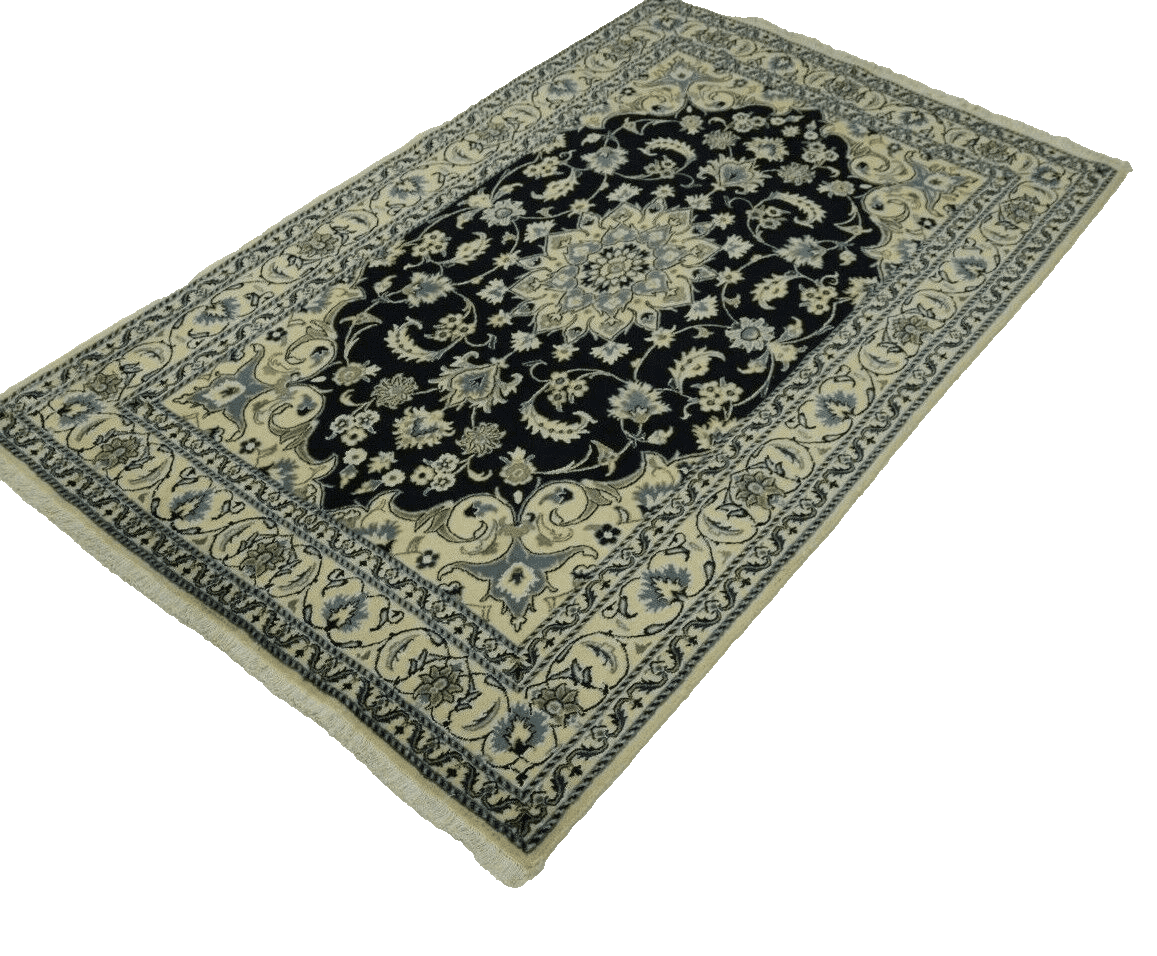
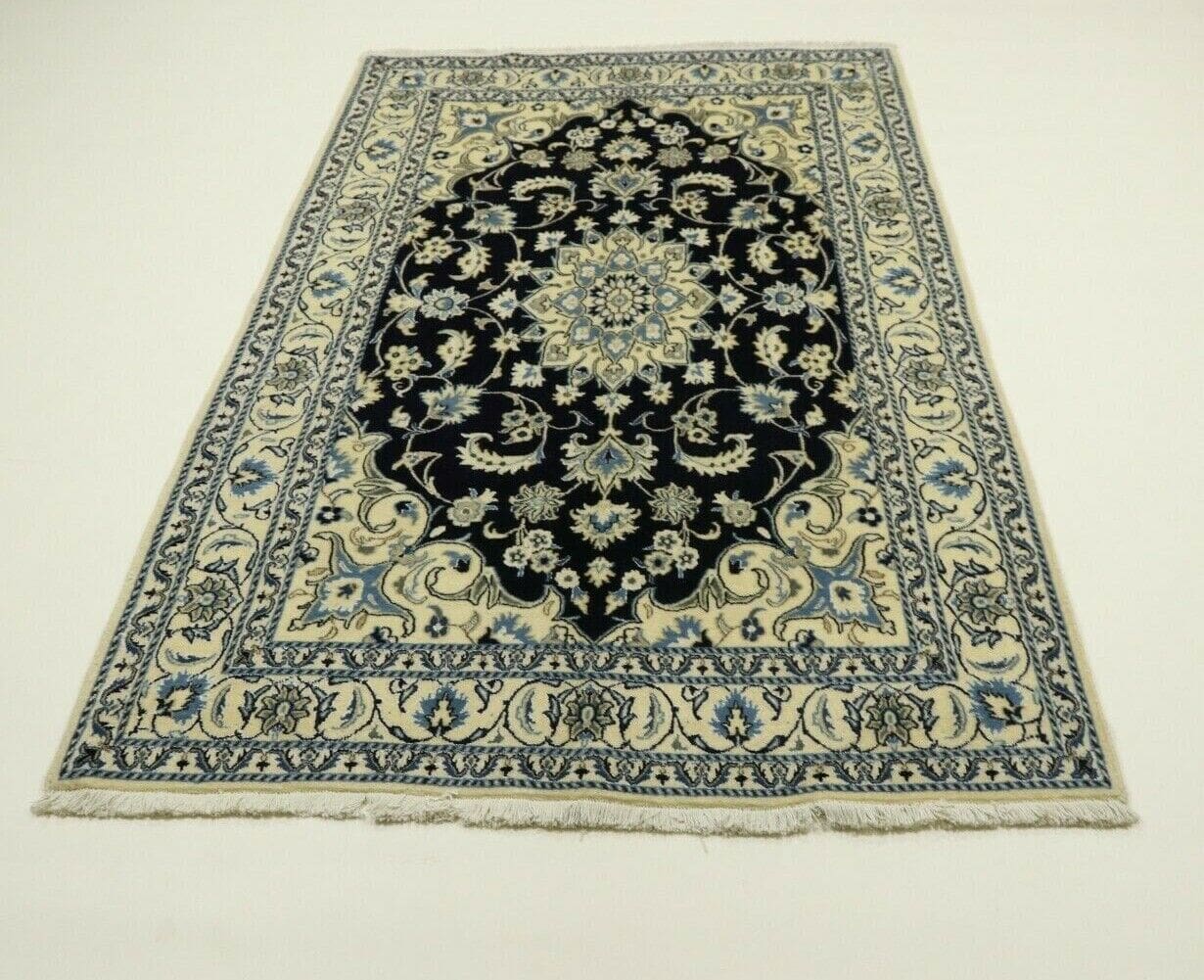
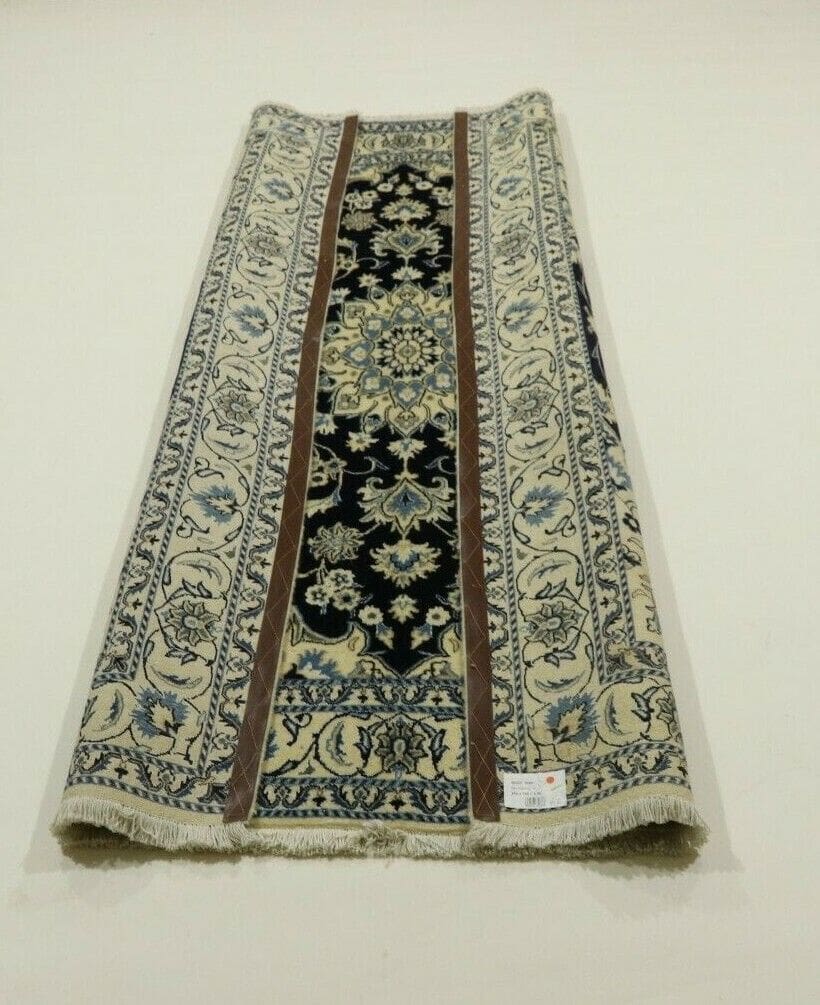
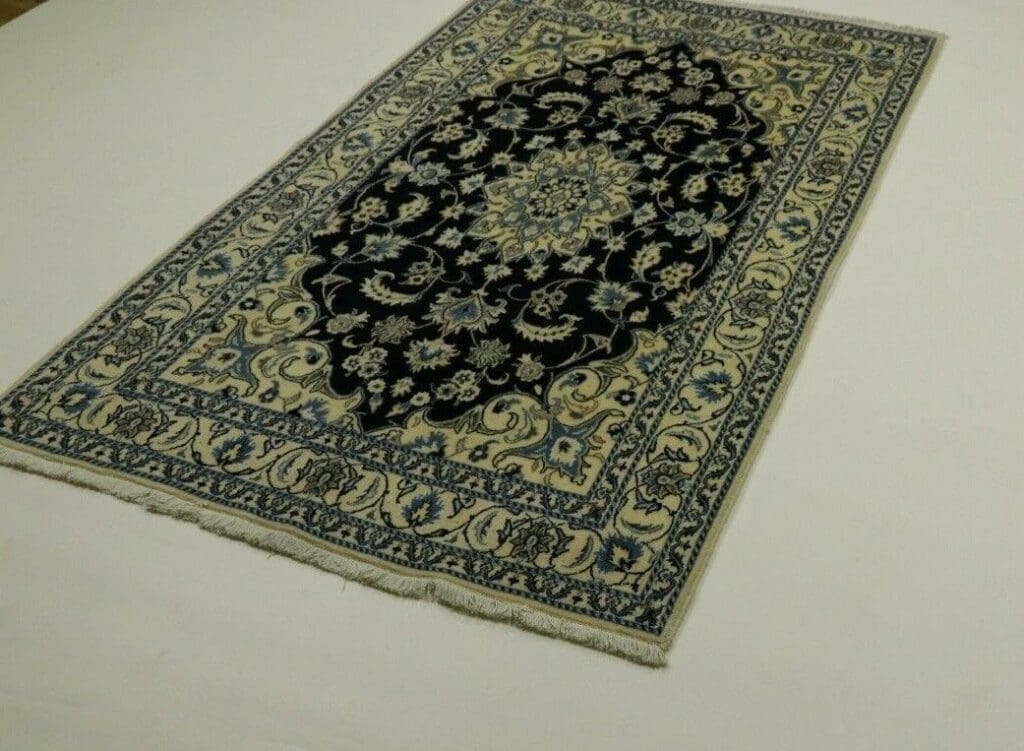
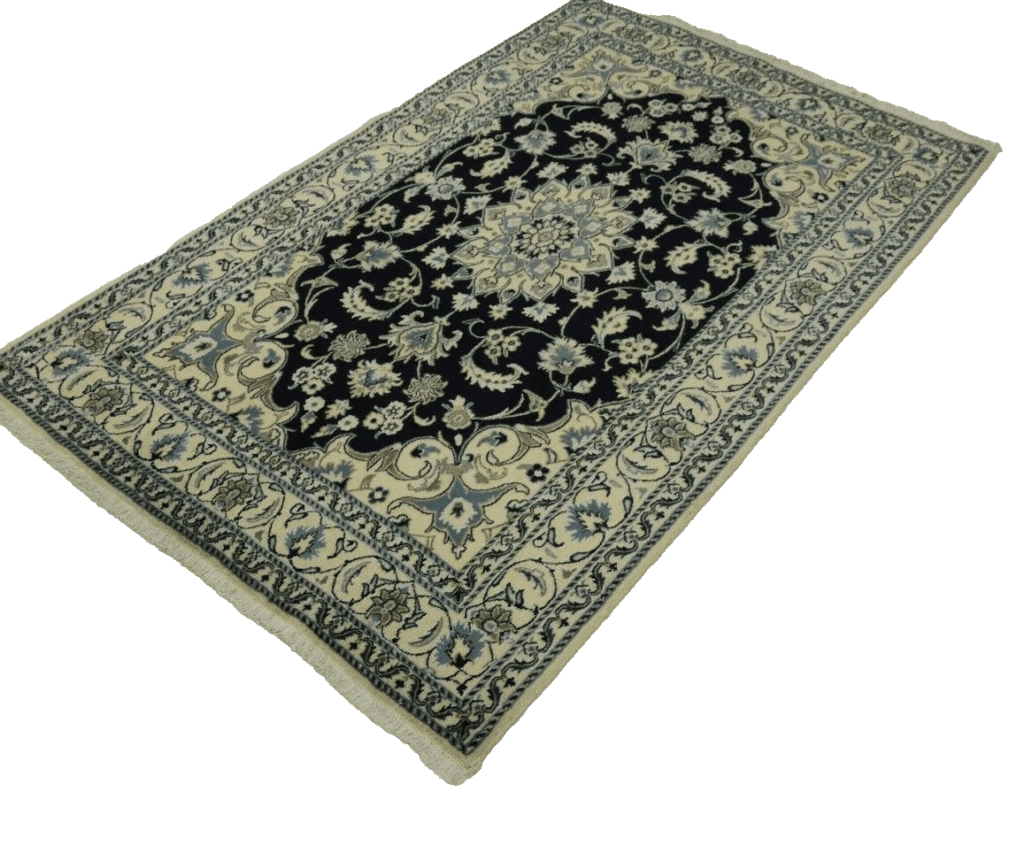
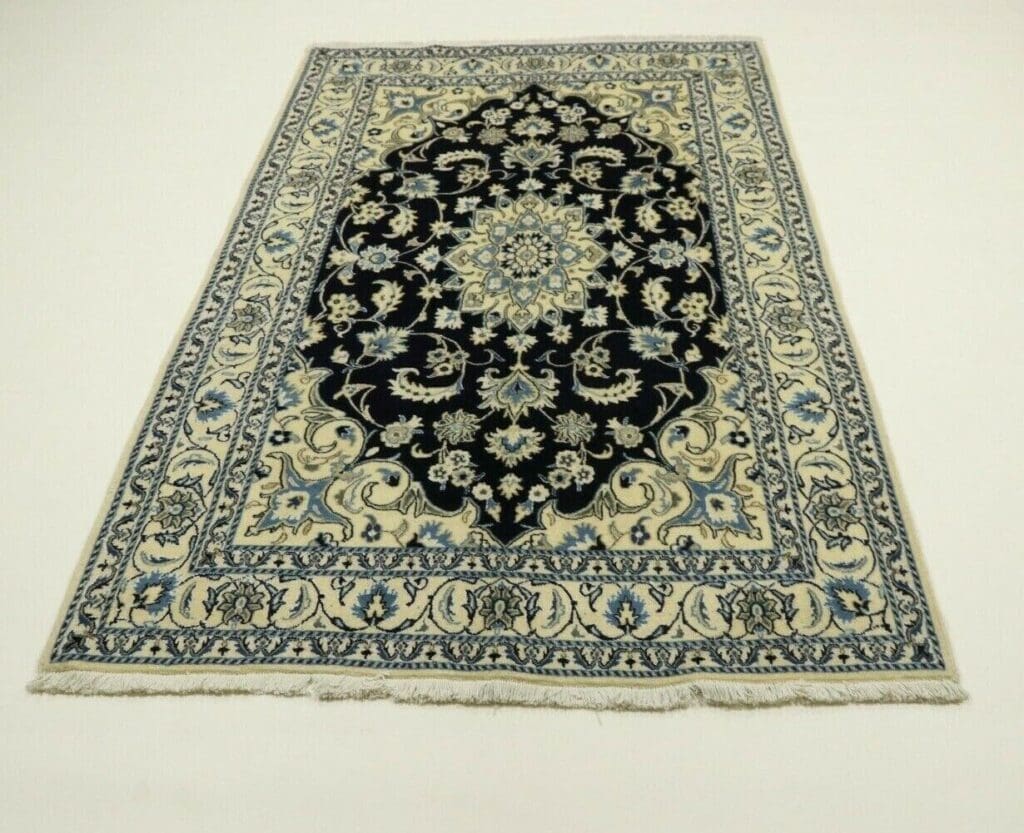
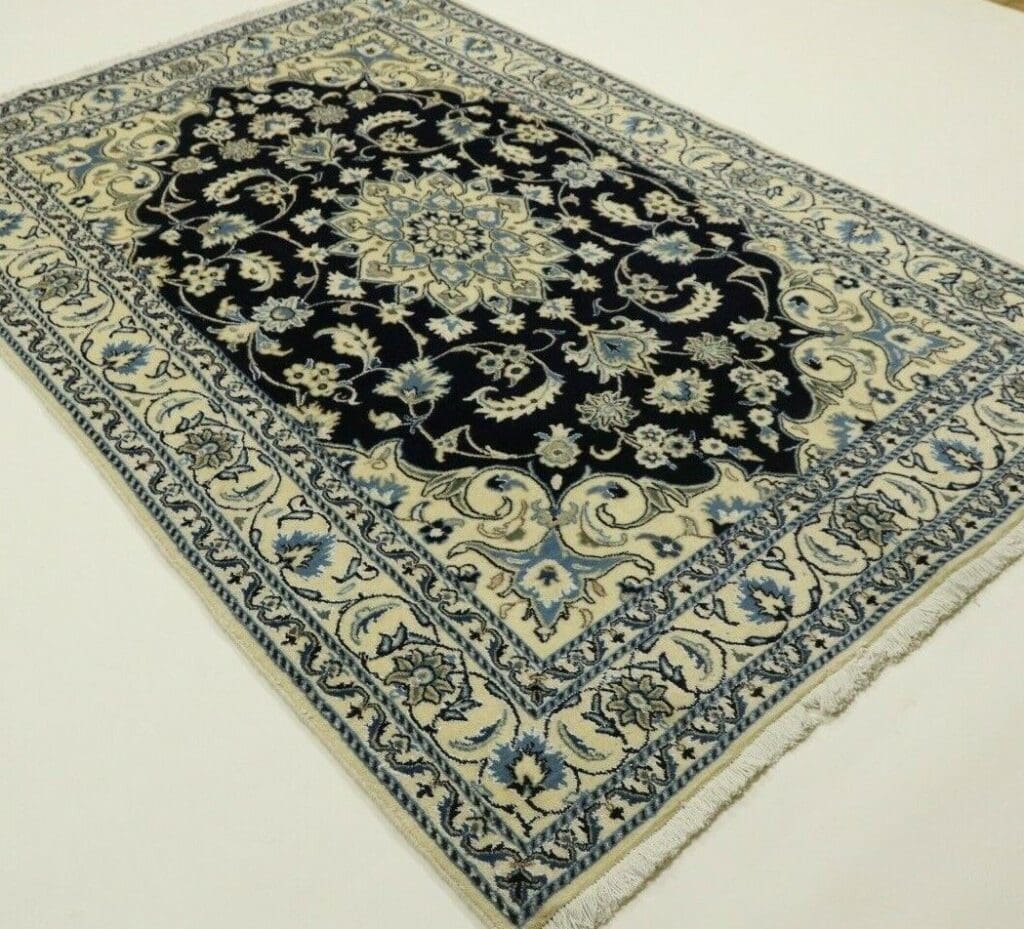
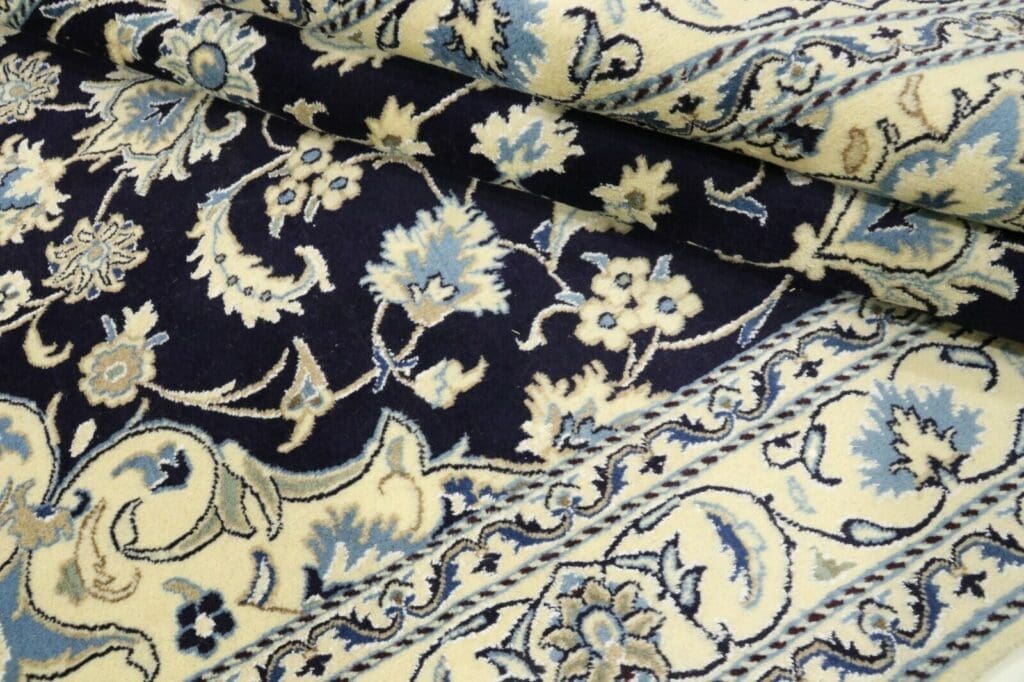
The Super Nain design brings traditional and modern elements together. Typical features include floral motifs and geometric forms, worked with fine detail. Floral ornament may contain leaves, blossoms or curling vines, while geometric elements introduce order, repetition and a clearly structured rhythm. These two visual languages can be combined within one composition without losing the clarity associated with Nain design.
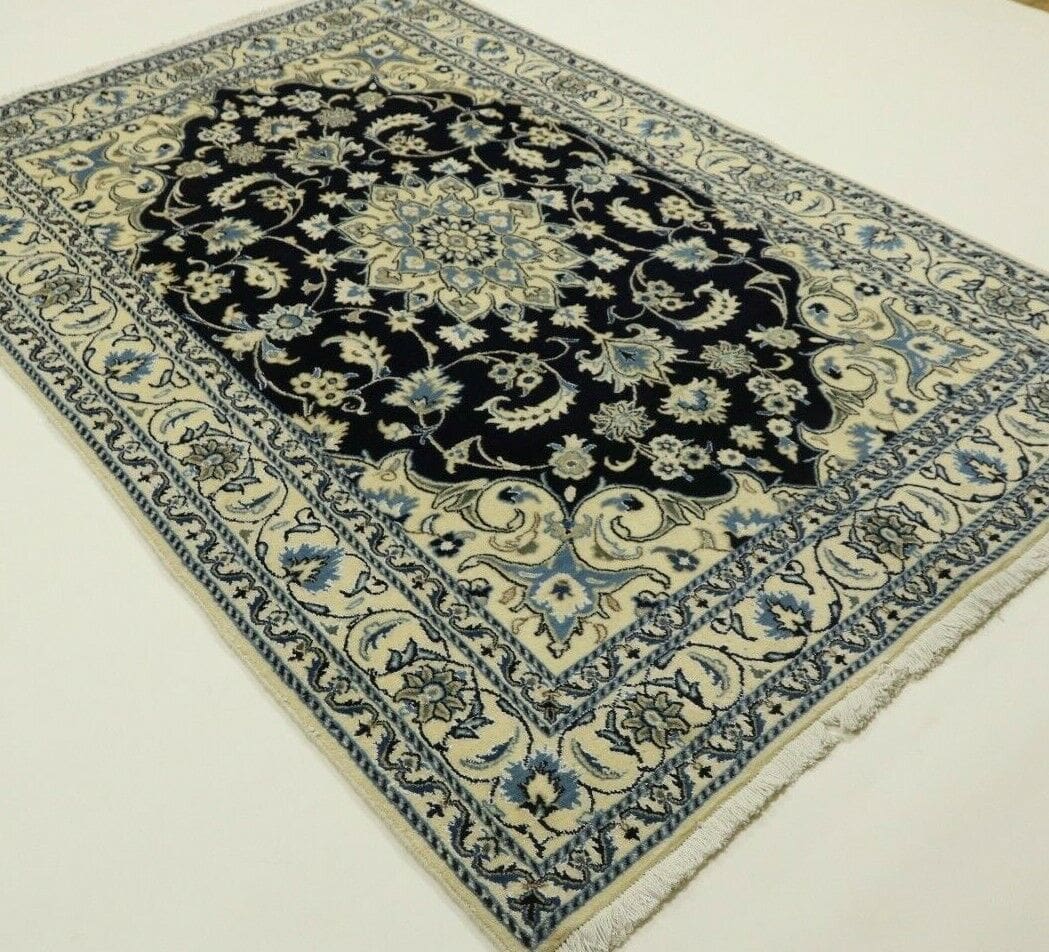
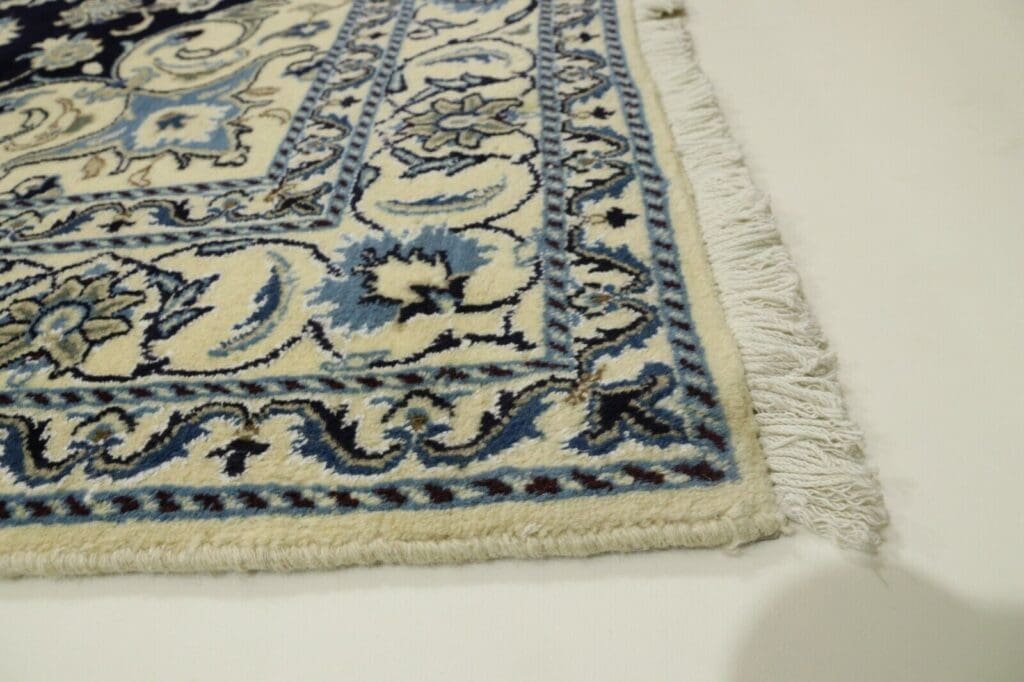
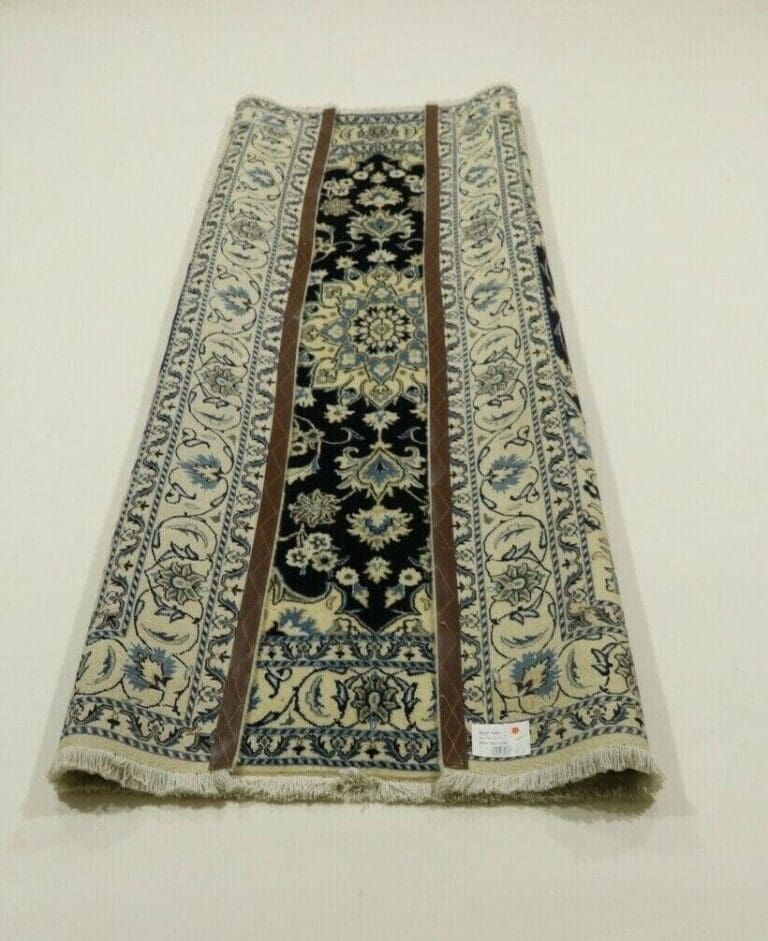
Persian rug patterns are generally organised rather than scattered randomly across the surface. A design may be structured around a central field, one or more borders and repeated secondary motifs. The central field carries the principal arrangement, while the borders frame it and create a transition towards the edge. Fine lines and small ornamental details are placed carefully so that the separate elements read as one connected design.
Nain rugs are commonly associated with an elegant and balanced appearance. The style described for this rug uses gentle, refined tones, allowing the ornament to remain visible without making the overall composition appear restless. Traditional Persian forms can therefore be arranged in a way that works with classically furnished rooms as well as with contemporary interiors. The combination of familiar motifs and a measured presentation gives the design a broad stylistic range.
Ornament in Persian carpet art often carries cultural and symbolic associations. Plant forms may suggest nature and growth, while geometric repetition can express order and rhythm. These meanings belong to the general visual vocabulary of carpet design, whereas the precise effect depends on the individual composition, colours and execution. A rug can consequently function as a useful household object while also presenting a textile work of art.
The detailed patterning is closely related to the hand-knotting technique. Careful work on small shapes, outlines and transitions makes it possible to represent a differentiated design on the pile. In the Super Nain, the Nain regional tradition meets floral and geometric ornament and the combination of traditional with modern design elements. The pattern is therefore understood through both its visual arrangement and the craftsmanship used to create it.
Repeated motifs also help establish visual rhythm. When a form returns at measured intervals, it links separate areas of the design and gives the field a coherent structure. Borders perform a related role by containing the central composition. In a Nain-inspired arrangement, these relationships can remain fine and controlled, so that the ornament is legible while the overall appearance retains its calm, orderly character.
Special Features
The rug is described as new and in very good condition. It is suitable for rooms with underfloor heating, making it usable in interiors where this type of heating is installed. The source description also associates the virgin wool with a pleasant sense of warmth and with helping to regulate the room climate.
Care is described as straightforward for a virgin wool rug. Virgin wool is considered dirt-repellent and easy to maintain. Regular vacuuming without a beater or brush attachment helps remove loose particles. Occasional airing or beating outdoors can remove further loose debris. Stains should be treated immediately with a damp cloth and mild cleaning product. Professional cleaning every few years may also be appropriate.
FAQ
How should I care for the Super Nain Persian rug?
Vacuum the rug regularly without using a brush attachment. It may occasionally be beaten outdoors to remove loose particles. Treat stains straight away with a damp cloth and a mild cleaning product. Professional cleaning every few years can also be useful for maintaining the rug.
Where can I use the Super Nain?
The rug is suitable for living rooms, bedrooms, hallways and studies. Its described durability and elegant design allow it to be used in both private and business settings. It can therefore be placed in interiors with different functions, provided that it is cared for in accordance with its material.
Is this rug suitable for underfloor heating?
Yes. The Super Nain is suitable for rooms with underfloor heating. Its materials and construction allow it to be used on a suitably heated floor. The virgin wool provides a pleasant sense of warmth and also contributes to the regulation of the room temperature.
To provide the best experiences, we use technologies like cookies to store and/or access device information. Consenting to these technologies will allow us to process data such as browsing behavior or unique IDs on this site. Not consenting or withdrawing consent, may adversely affect certain features and functions.
Functional Always active
The technical storage or access is strictly necessary for the legitimate purpose of enabling the use of a specific service explicitly requested by the subscriber or user, or for the sole purpose of carrying out the transmission of a communication over an electronic communications network.
Preferences
The technical storage or access is necessary for the legitimate purpose of storing preferences that are not requested by the subscriber or user.
Statistics
The technical storage or access that is used exclusively for statistical purposes.The technical storage or access that is used exclusively for anonymous statistical purposes. Without a subpoena, voluntary compliance on the part of your Internet Service Provider, or additional records from a third party, information stored or retrieved for this purpose alone cannot usually be used to identify you.
Marketing
The technical storage or access is required to create user profiles to send advertising, or to track the user on a website or across several websites for similar marketing purposes.
 SECURE PAYMENT
 SHIPPING PARTNERS