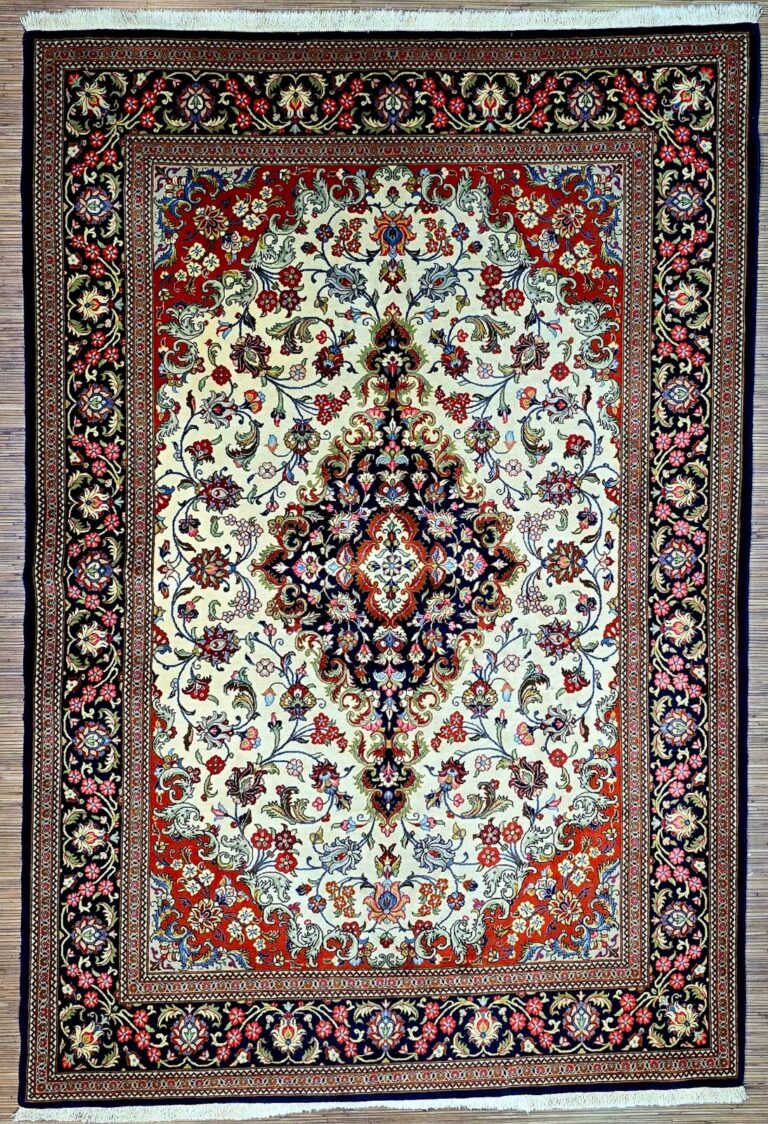
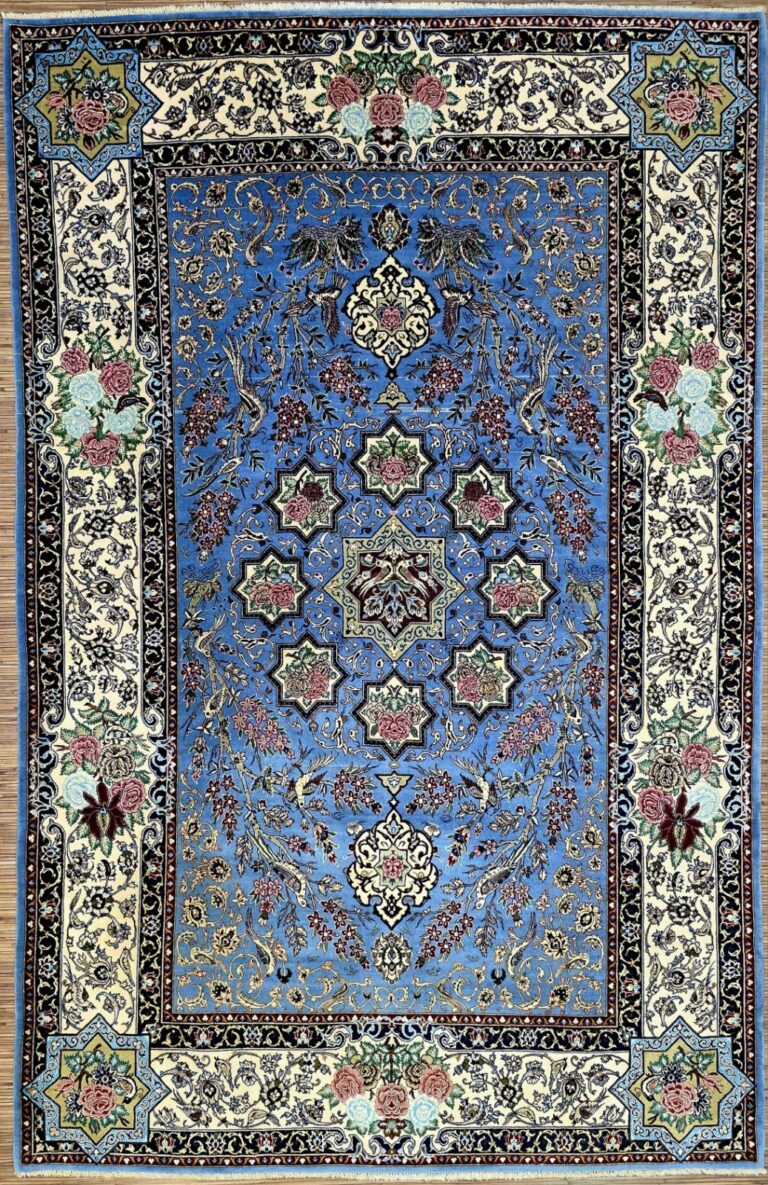
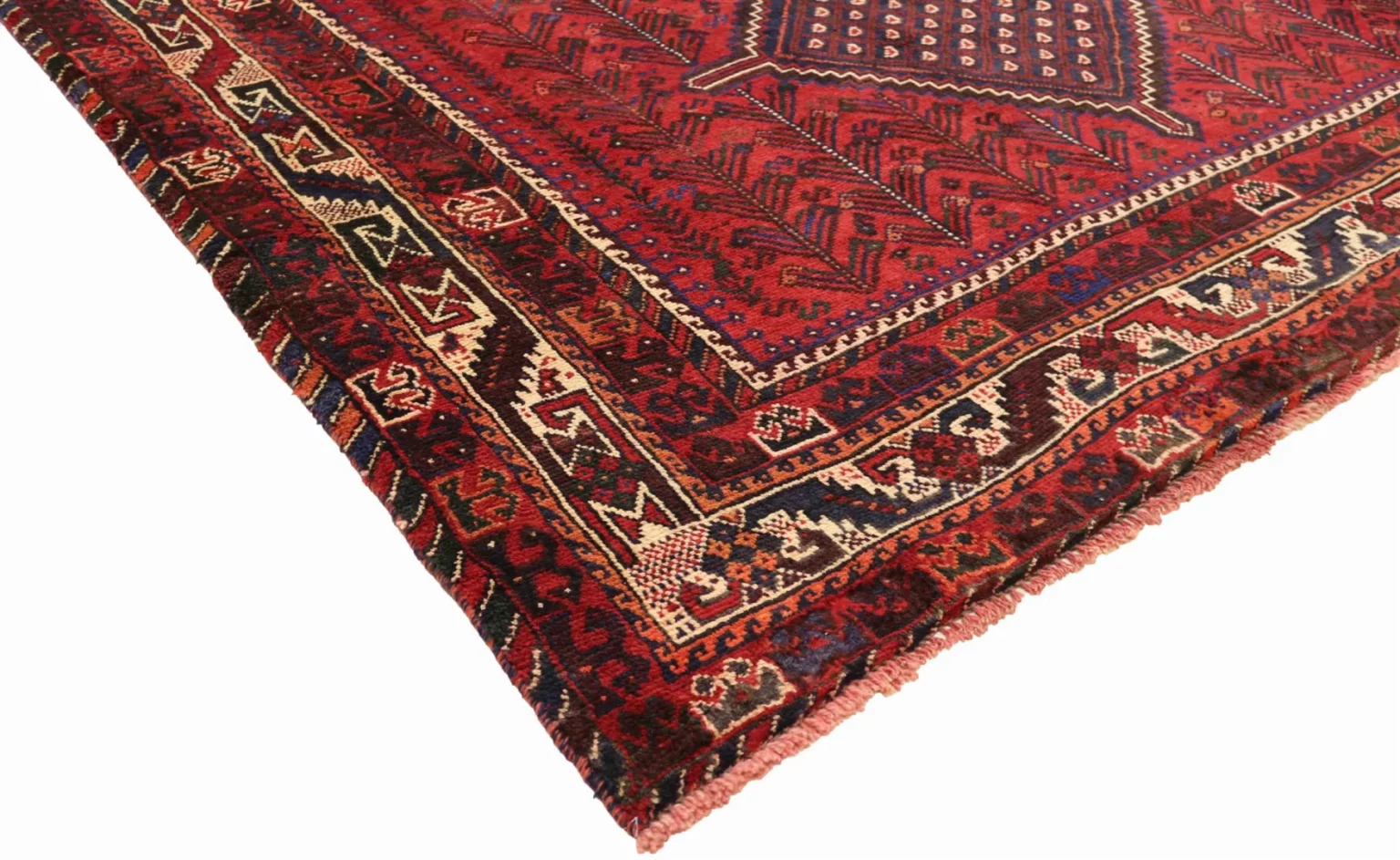
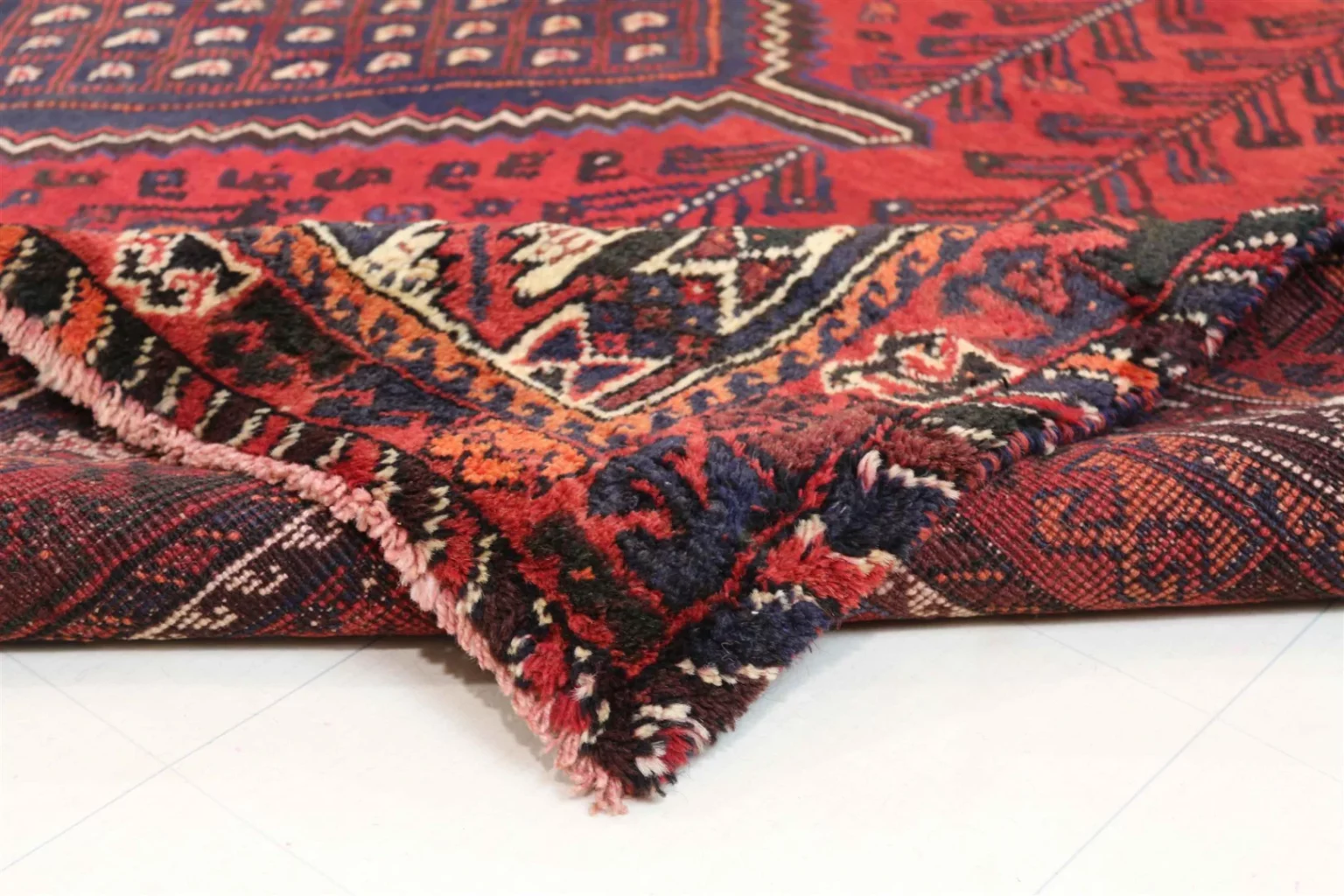
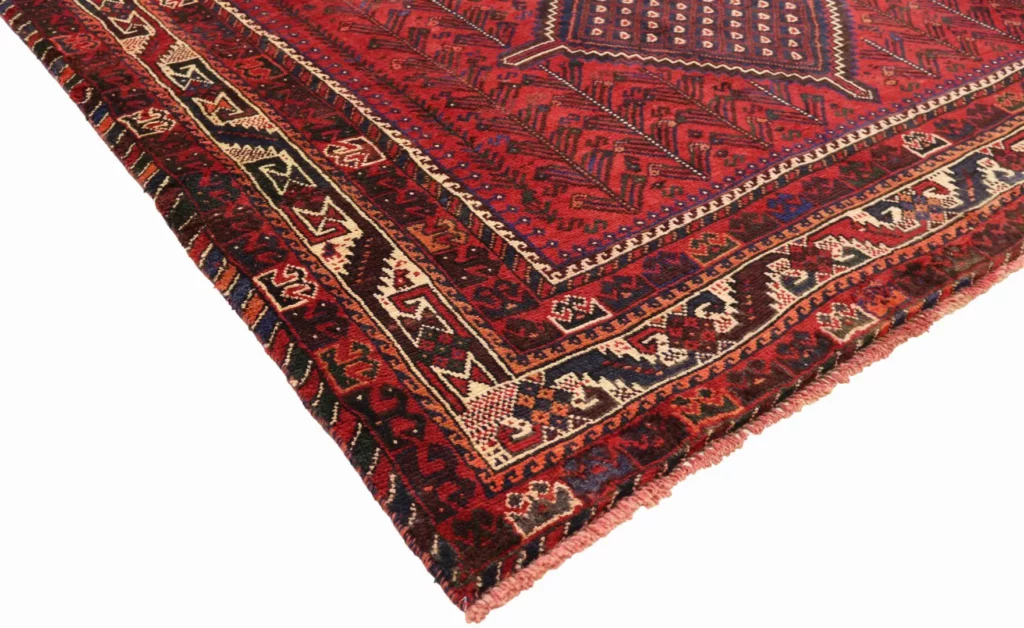
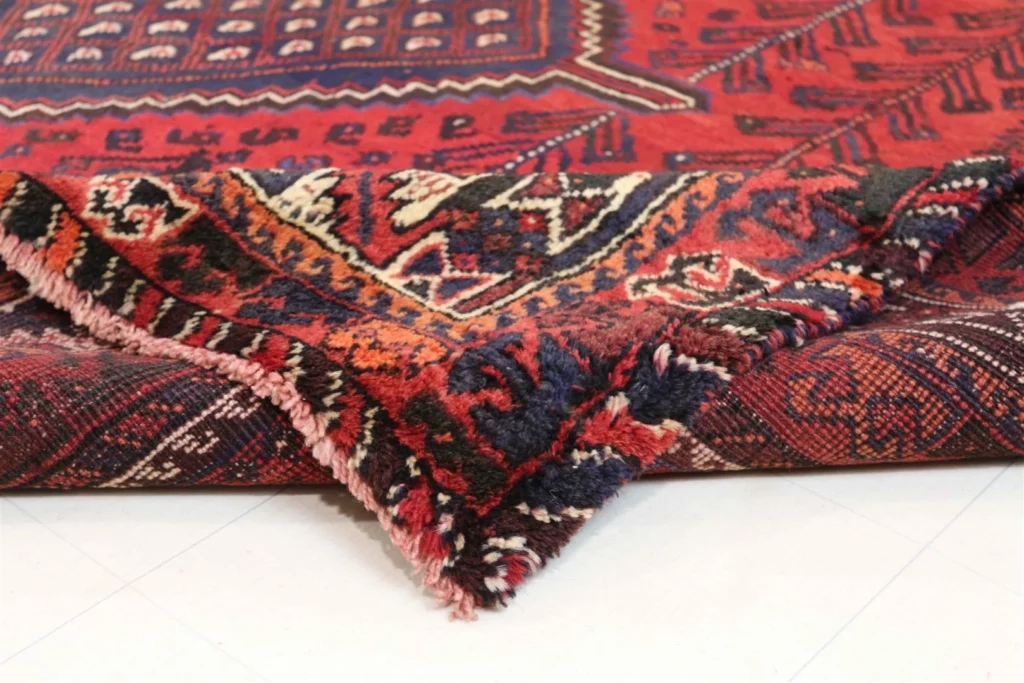
This Shiraz Persian rug is hand-knotted from 100% natural wool. Wool is a traditional material in Iranian rug making and is valued for its resilient yet pleasantly soft fibre. With hand-knotting, the pile is built knot by knot. Each knot is inserted into the foundation and then secured as the woven structure develops. This creates the characteristic textile surface of a hand-knotted rug and clearly distinguishes it from a mechanically produced floor covering.
The knot density of this rug is between 100.000 and 180.000 knots per square metre. Knot density records the number of knots worked into the construction and indicates how finely the surface can be articulated. In general, a denser structure allows smaller shapes and sharper outlines to be rendered with greater definition. A hand-knotted piece nevertheless retains the individual work of the people who made it. It is formed through the repeated manual joining of knots, weft and warp rather than produced as an identical factory item.
The natural wool used for the pile connects this rug with a long-established material tradition. Wool accepts colour well and supports the distinct appearance of geometric ornaments. Its natural handle is suited to rugs that are made for use while retaining a clearly recognisable handcrafted texture. Shiraz rugs are described as being made by experienced craftspeople in the open air and often without a preliminary plan. That approach contributes to the individual character associated with this regional weaving practice.
Origin and Tradition
This rug comes from Shiraz, Iran. Shiraz is the capital of Fars Province and an important reference point within the region’s rug culture. Fars, in southern Iran, has long been associated with both nomadic and settled weaving communities. Rugs from this area therefore do not represent one single, rigid pattern system. Instead, they reflect a regional variety in which inherited forms, local experience and available wool come together.
Shiraz rugs are closely connected with the culture and ways of life of Fars. The region developed weaving traditions that can appear more direct and less formally controlled than the designs of court-oriented workshops. Geometric forms could grow from established motifs, from the memory of the weaver and from the practical process of working at the loom. Regional origin is consequently expressed through a combination of technique, material and ornament rather than through a label alone.
The making of a Shiraz rug follows a sequence of manual actions that requires practice and patience. Knots are placed continuously into the foundation, gradually building the complete surface. Many Shiraz rugs are made without a fully developed drawing placed before the weaver. Shapes may be recalled from memory, adapted from familiar examples or developed through the immediate judgement of the craftsperson. This explains why a regional motif can remain recognisable while changing slightly from one rug to another.
Ghashghai rugs form part of the same wider cultural context in Fars. Ghashghai work is known for its quality and is often associated with a nomadic design heritage. Shiraz rugs may share elements of this regional relationship, while they are often described as using simpler and more direct ornamentation. This is not a fixed ranking between the two traditions. It is a distinction in the way motifs are inherited, arranged and translated into a hand-knotted surface.
Iranian rug history also includes many other important weaving centres. Isfahan is associated with finely worked designs and high knot densities, while Tabriz is often linked with complex floral compositions and vivid colours. These examples demonstrate the breadth of Iranian rug making without changing the origin of this piece: it is a Shiraz Persian rug from Shiraz in Fars Province. Each area developed its own preferences in structure, ornament and colour, even though hand-knotted wool remains a recurring foundation across many Iranian traditions.
Design and Pattern
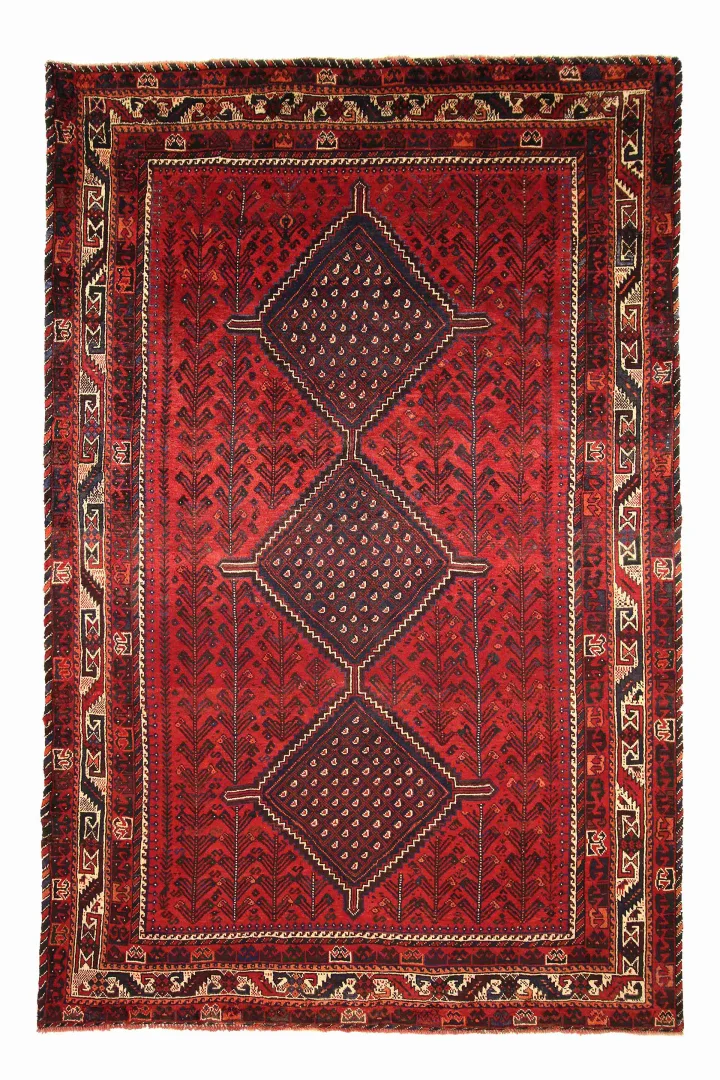
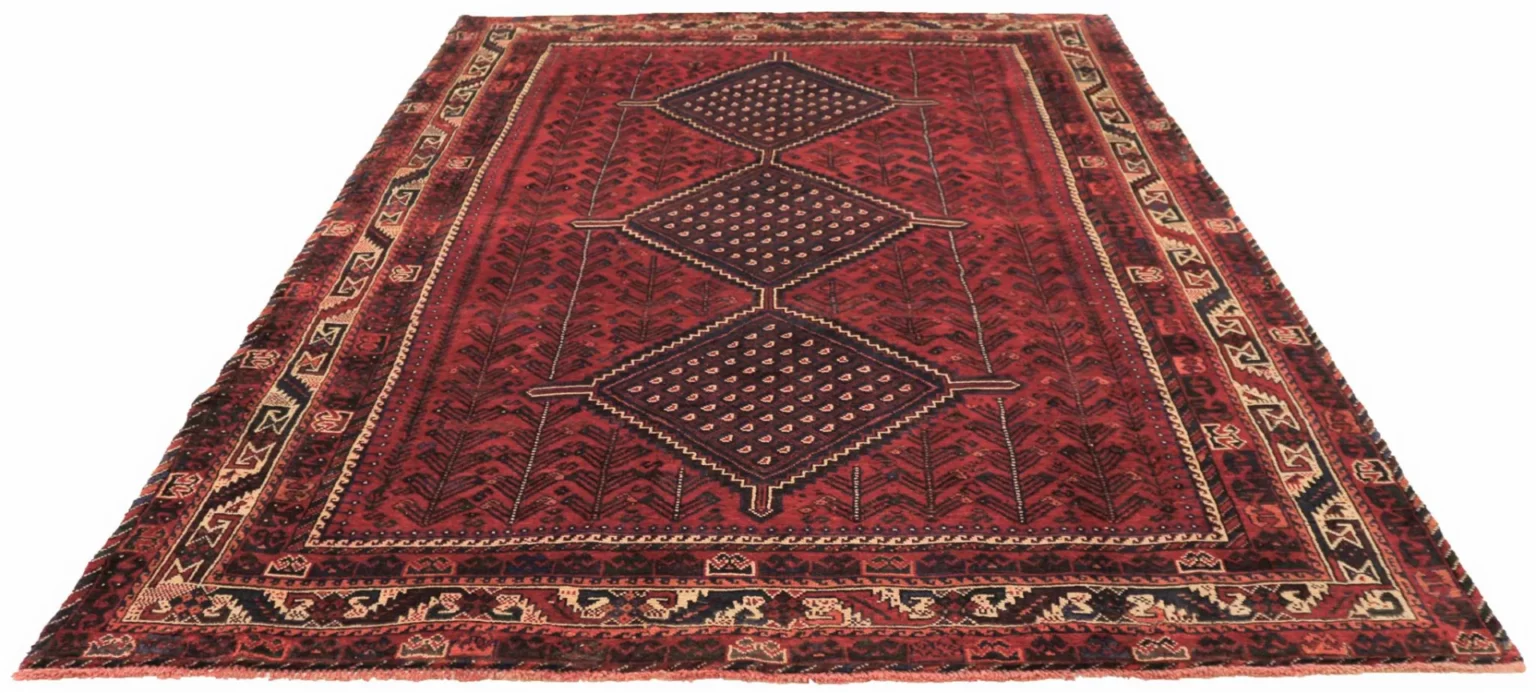
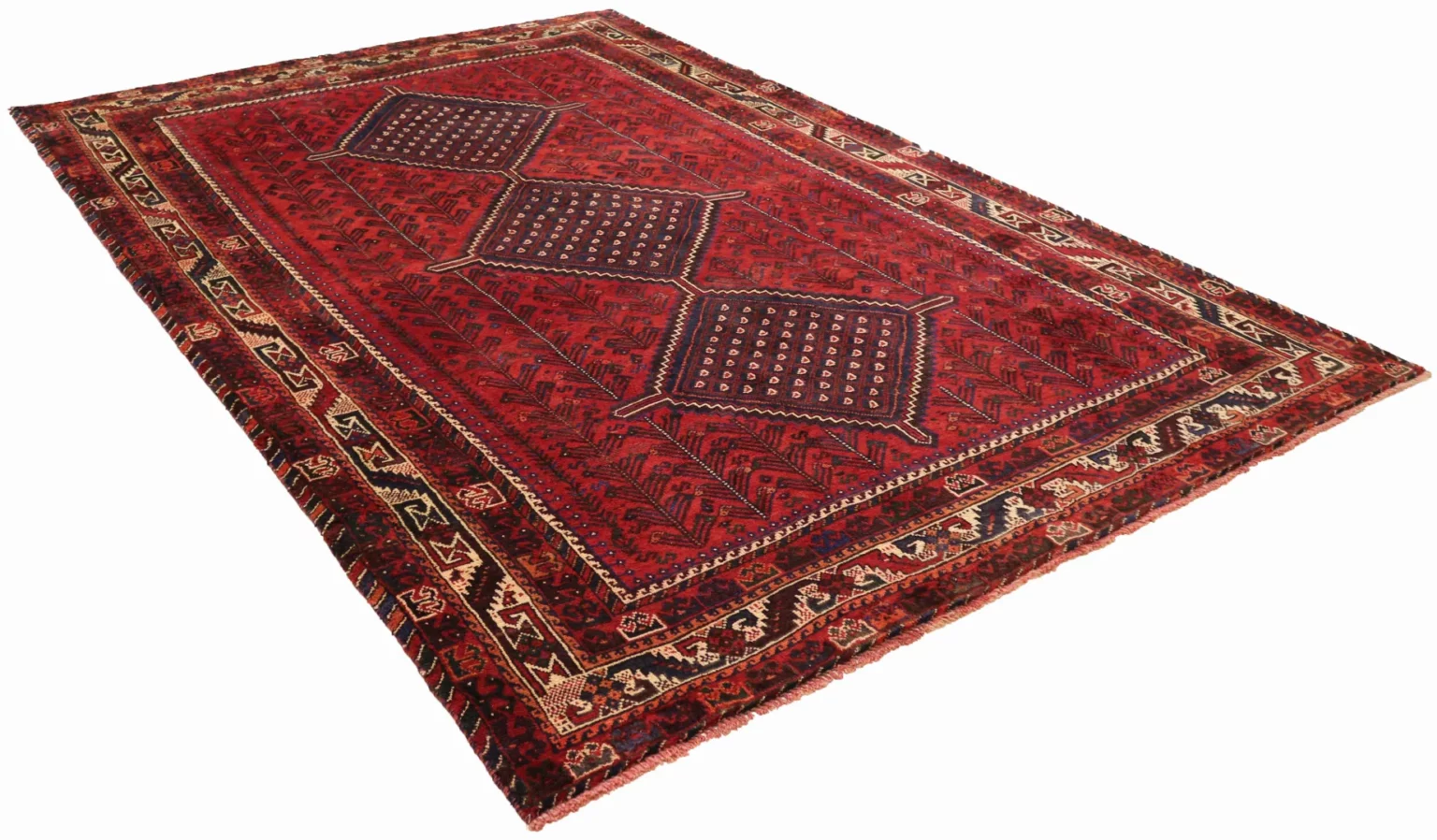
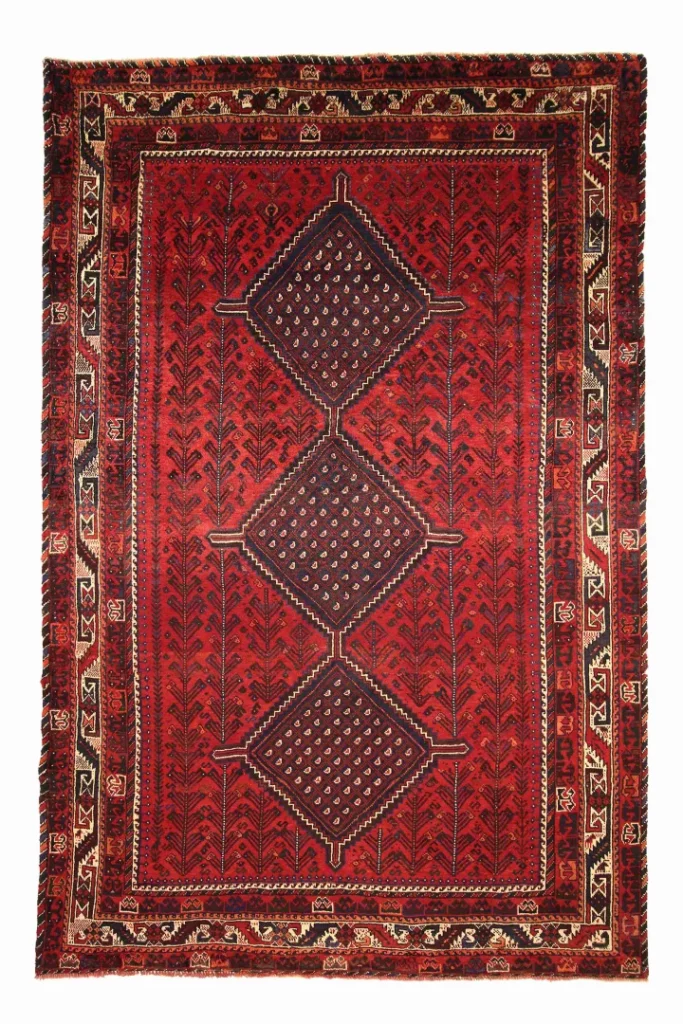
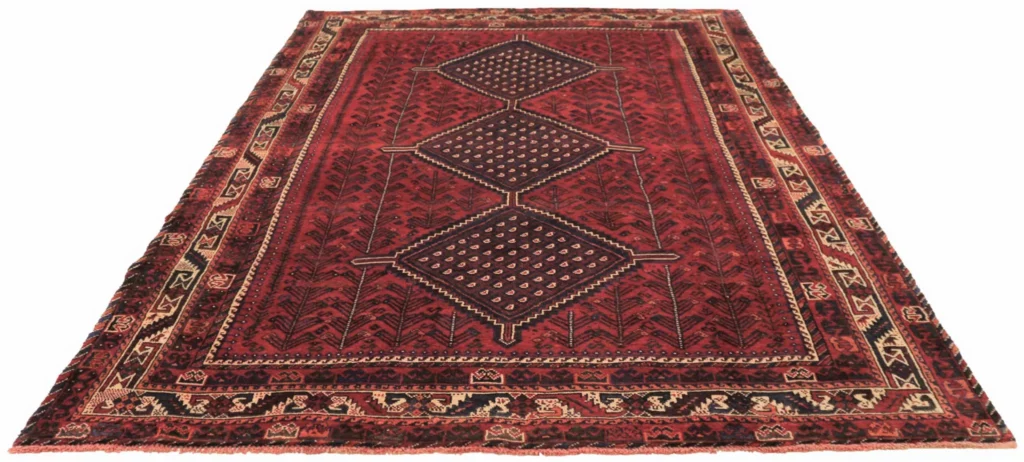
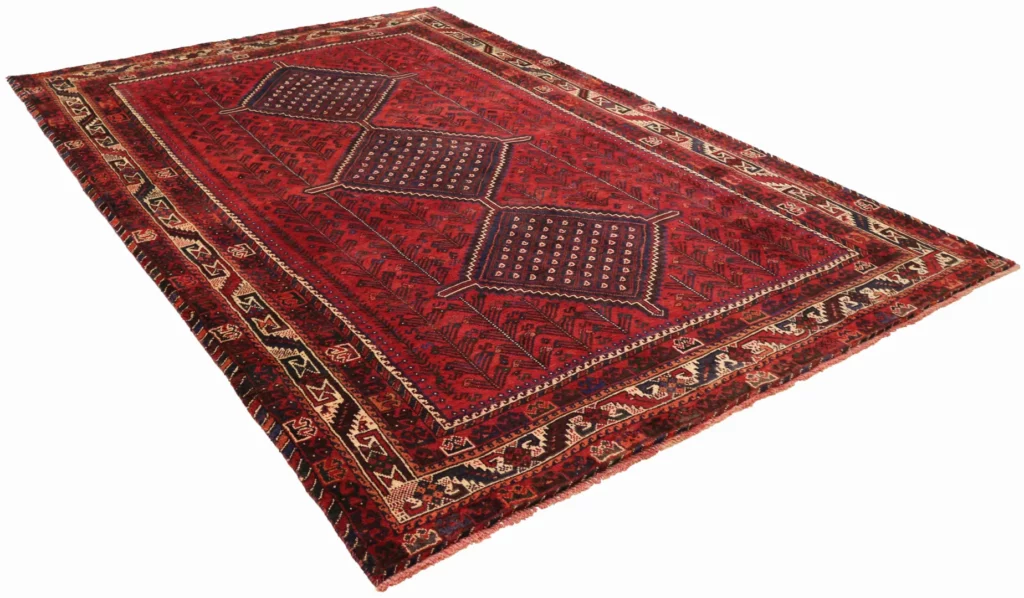
The pattern of this rug consists of geometric ornaments. Geometric design uses lines, angles, diamonds, polygons, repeated compartments and rhythmic arrangements of shape. These elements can divide a field clearly and give the eye a legible order. Unlike a strictly naturalistic floral image, geometry does not depend on an exact depiction of one plant or landscape. It condenses motifs into signs that can be repeated, varied and distributed across the woven surface.
Within the Shiraz tradition, geometric ornament often represents a direct, craft-based visual language. A motif may appear several times in a related form while small differences keep the composition alive. When a design is worked from memory or without a fully prepared plan, repetitions do not necessarily become mathematically identical. Slight changes in spacing, contour and proportion are part of the effect of many handmade rugs. The geometry remains clear without taking on the uniformity of an industrial reproduction.
Shiraz rugs are described with strong colours, particularly lively reds and warm browns. Red may serve as a dominant field colour or as an accent in Persian rug traditions, while brown can create an earthy connection between ornament and ground. The precise visual effect depends on how the tones meet, how the wool receives the dye and how the pattern is distributed. In a rug based on geometric forms, contrasts help separate edges, compartments and repeated elements.
Geometric patterns can be organised in many ways. A rug may use a central field, repeated bands or interlocking motifs; the name of the pattern alone does not establish which arrangement appears here. The confirmed feature of this piece is its geometric ornamentation. It joins the Shiraz regional tradition with a design language whose forms can remain legible across the surface. The visual result is created by the relationship between the sequence of knots, the colour areas and the drawn contours of the motifs.
The simplicity often attributed to Shiraz rugs in comparison with more complex Ghashghai designs does not mean an absence of structure. It refers instead to a concentrated ornament in which individual forms carry much of the composition. The handcrafted quality comes from the fact that a motif is not merely a printed line: it is built from many separate wool knots. The surface therefore combines the clarity of geometric design with the physical texture of hand-knotting.
Special Features
The distinguishing features of this rug are its hand-knotted construction, its pile of 100% natural wool, its knot density of between 100.000 and 180.000 knots per square metre, and its geometric ornaments. Its condition is stated as very good. These details describe the piece directly: it combines a Shiraz origin with a natural wool pile and a clearly geometric design.
Shiraz rugs are described as easy to care for and hard-wearing. Regular vacuuming helps remove loose dust from the wool surface. When more thorough treatment is needed, professional cleaning is recommended. Direct sunlight should be avoided so that the colours remain as even as possible. These care instructions apply to hand-knotted wool rugs and complement the information about this piece without adding unconfirmed properties.
FAQ
What makes a Shiraz Persian rug distinctive?
Its distinctive character comes from the combination of origin, technique and design. This rug comes from Shiraz in Fars Province and is hand-knotted. Its pile is made from 100% natural wool. Geometric ornaments and strong, lively colours including reds and warm browns correspond to the described Shiraz tradition. The knot density is between 100.000 and 180.000 knots per square metre, making the amount of handwork in the structure clear. The condition is stated as very good.
How should a Shiraz Persian rug be cared for?
A Shiraz Persian rug should be vacuumed regularly and gently so that dust does not remain embedded in the wool pile. Professional cleaning is suitable when a more extensive treatment is required. Moisture, harsh cleaning agents and unsuitable methods can affect natural wool and the appearance of its colours. Direct sunlight should be avoided because prolonged exposure can cause fading over time. If a stain occurs, professional advice is preferable before applying cleaning products independently.
Where do Shiraz rugs come from?
Shiraz rugs come from the city of Shiraz in Fars Province, Iran. The region has a deeply rooted rug-making tradition in which hand-knotted wool rugs with geometric forms have an important place. The origin is also connected with Ghashghai rugs, which are known for their quality. Shiraz work is often described as simpler and more direct in its ornamentation. It belongs to the diverse field of Iranian rug making and remains clearly shaped by its regional source.
To provide the best experiences, we use technologies like cookies to store and/or access device information. Consenting to these technologies will allow us to process data such as browsing behavior or unique IDs on this site. Not consenting or withdrawing consent, may adversely affect certain features and functions.
Functional Always active
The technical storage or access is strictly necessary for the legitimate purpose of enabling the use of a specific service explicitly requested by the subscriber or user, or for the sole purpose of carrying out the transmission of a communication over an electronic communications network.
Preferences
The technical storage or access is necessary for the legitimate purpose of storing preferences that are not requested by the subscriber or user.
Statistics
The technical storage or access that is used exclusively for statistical purposes.The technical storage or access that is used exclusively for anonymous statistical purposes. Without a subpoena, voluntary compliance on the part of your Internet Service Provider, or additional records from a third party, information stored or retrieved for this purpose alone cannot usually be used to identify you.
Marketing
The technical storage or access is required to create user profiles to send advertising, or to track the user on a website or across several websites for similar marketing purposes.
 SECURE PAYMENT
 SHIPPING PARTNERS