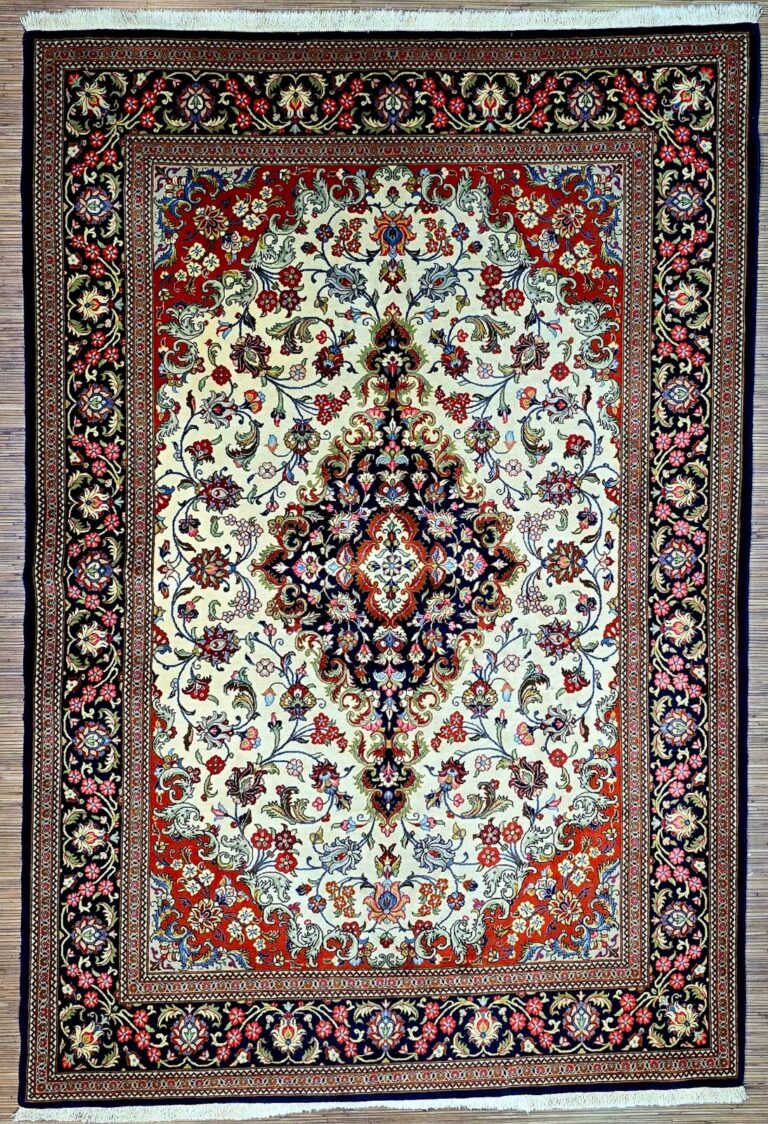
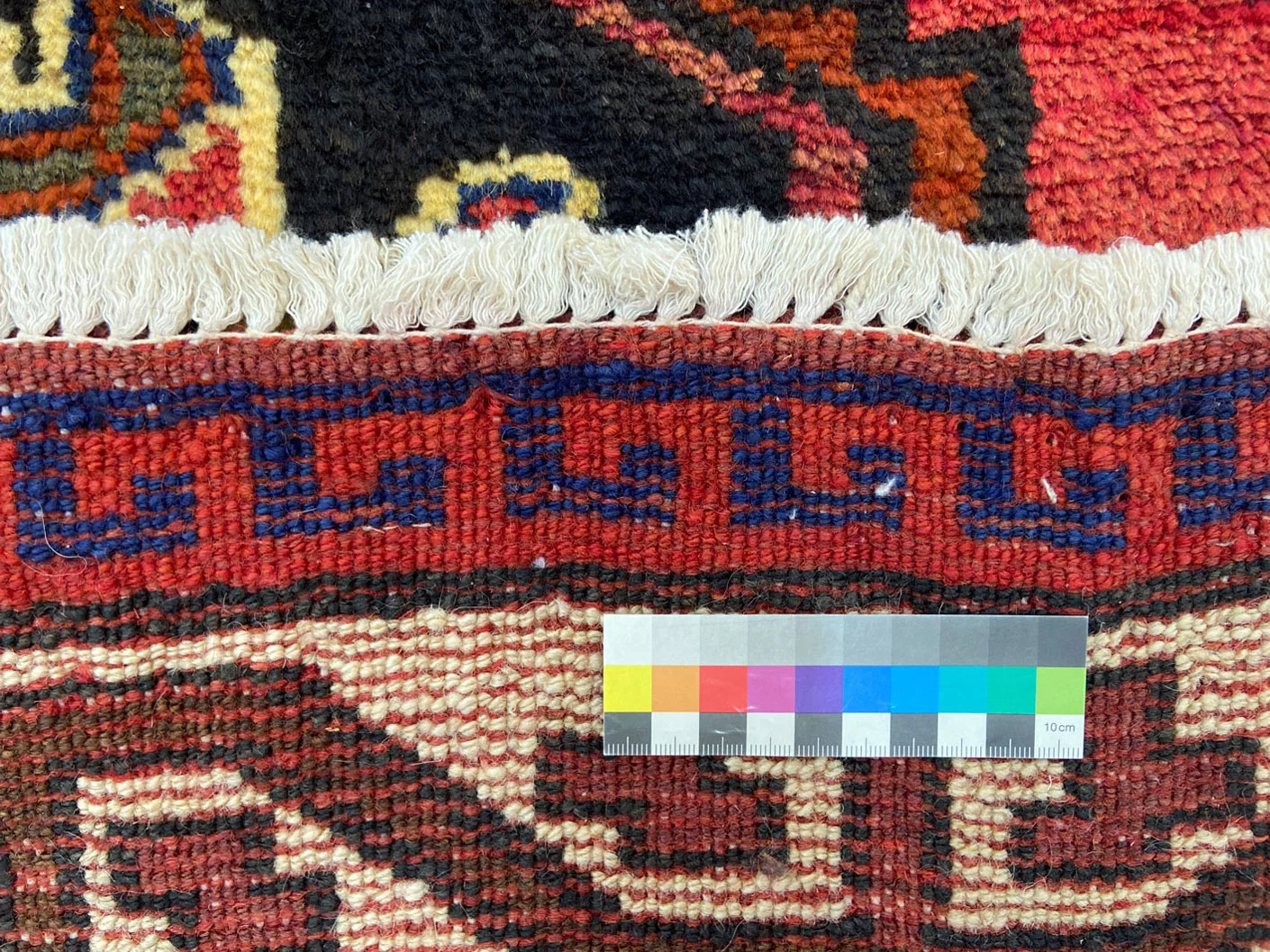
This Shiraz Persian rug is hand-knotted with a pile made from high-quality virgin wool. Its construction reflects a traditional textile process in which the design is built gradually through individual knots. Rather than being produced as an industrial repeat, the surface is formed through careful manual work. The wool pile gives the rug its tactile character and provides the material basis for the visible pattern.
Virgin wool is traditionally used in Shiraz rugs for its pleasant handle, resilience and suitability for long-term use. Wool accepts colour evenly and can develop a natural lustre as it is worked into a pile. The resulting surface combines a soft touch with a firm textile structure. In a hand-knotted rug, each knot contributes to the final image. The succession of knots allows lines, fields and ornaments to remain distinct while forming one continuous surface.
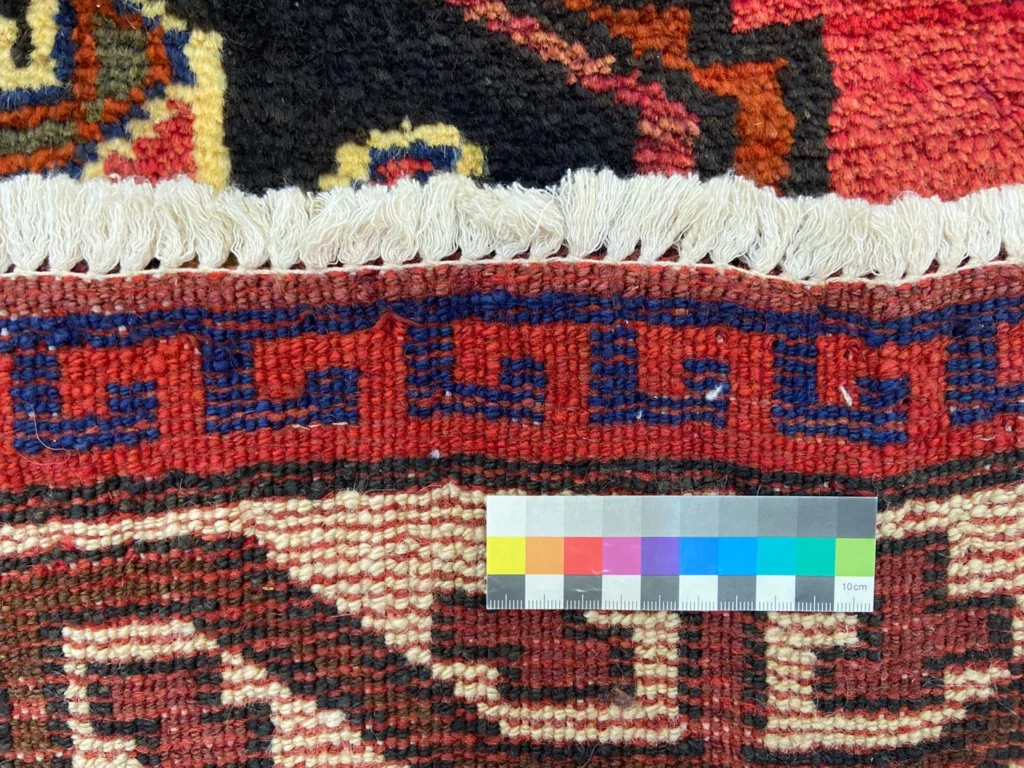
The knot density of this rug is between 100,000 and 250,000 knots per square metre. This density supports a differentiated rendering of the pattern and contributes to the compact appearance of the pile. Hand knotting requires consistent work across the entire field. Knots are placed row by row, with each new section continuing the structure already established. The combination of virgin wool and hand-knotted construction is a central feature of the Shiraz rug tradition.
Origin and Tradition
The rug comes from Shiraz in Iran. Shiraz is located in Fars province and is associated with an important part of Persian cultural history. Historic sites such as Persepolis are closely connected with the region and help explain the cultural setting in which local crafts developed. Carpet making in Shiraz forms part of this wider tradition, with handwork, vivid colour relationships and geometric compositions playing an important role.
Shiraz rugs are associated with nomadic tribes who traditionally knot rugs outdoors. This method belongs to a textile culture in which knowledge of wool, dyeing, knotting and ornament is passed from one generation to the next. Knotting is therefore both a practical skill and a means of preserving visual traditions. The choice of wool, the arrangement of forms and the development of the pattern all come together during the making of the rug.
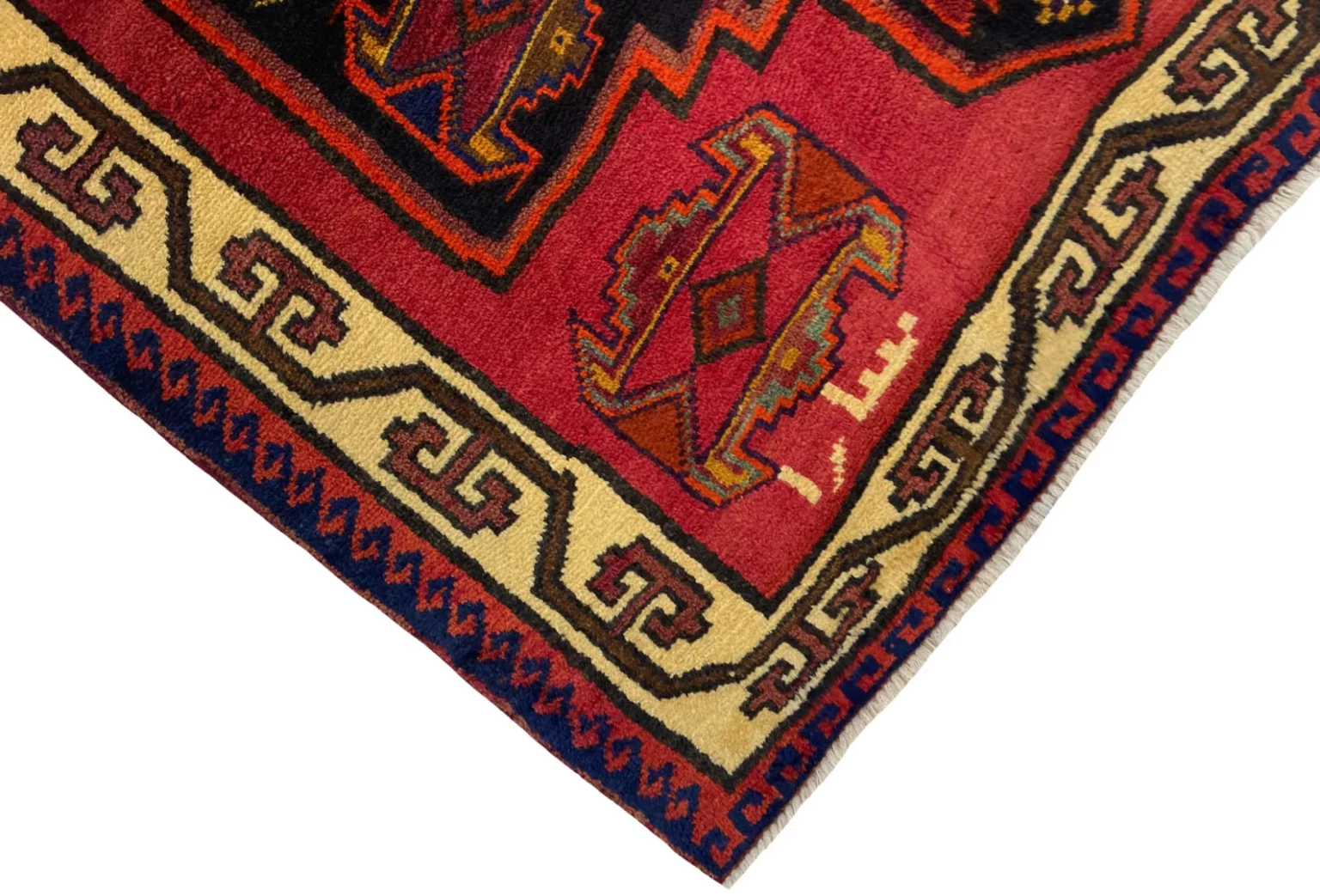
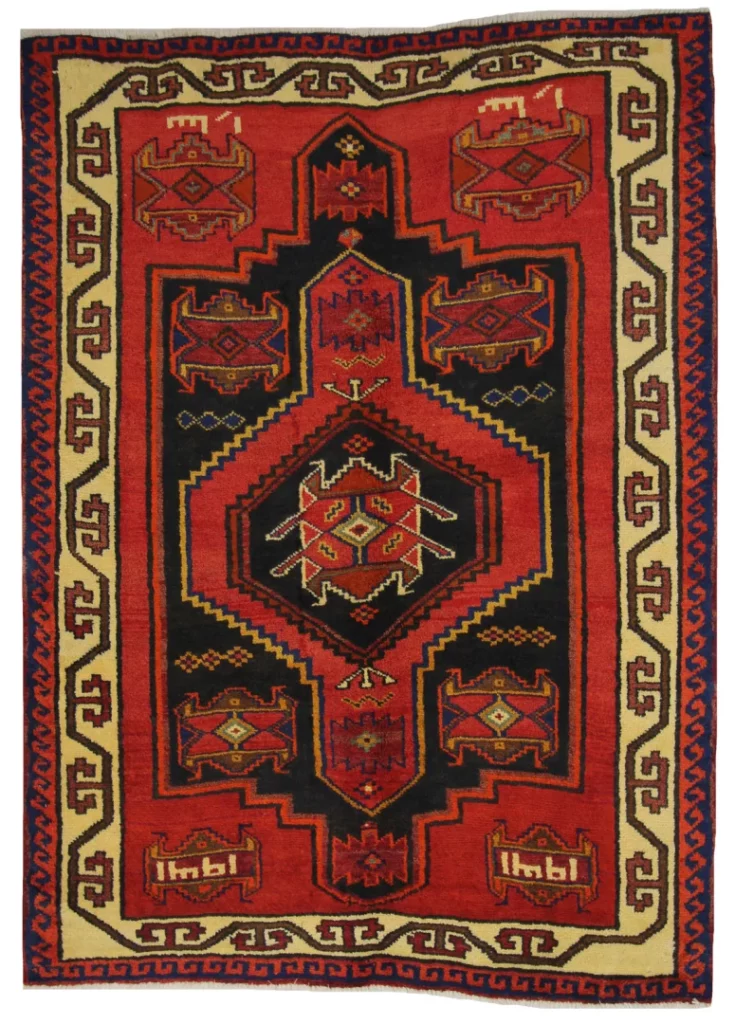
The Shiraz tradition is one expression of the broader Persian art of carpet making. Rugs from different parts of Iran may be distinguished by their patterns, colour schemes and methods of workmanship. Shiraz designs are often recognised by their geometric character and animated visual rhythm. Clear lines, angular elements, diamonds, stepped forms and simplified ornaments can be arranged across a field in repeating or varied sequences. The exact composition may differ from one rug to another, while the regional association remains visible through the overall vocabulary of forms.
Regional tradition does not mean that every Shiraz rug follows one fixed template. Hand-knotted pieces can vary in colour and ornament while still belonging to the same broad weaving culture. Warm reds and browns are frequently associated with Shiraz rugs and form an important part of their traditional colour range. These tones can define the ground, outline individual motifs or connect separate sections of the design. Colour is therefore both decorative and structural, helping the eye follow the pattern across the surface.
Shiraz also belongs to a wider network of recognised Persian carpet centres. Tabriz rugs are often known for floral compositions, while Isfahan rugs are associated with fine and complex motifs. Kashan is another established centre with a related colour range and a notable carpet tradition. These places are not the origin of this rug; they provide context for the variety found within Iranian carpet art. The present rug is identified with Shiraz and reflects the geometric side of that regional tradition.
Design and Pattern
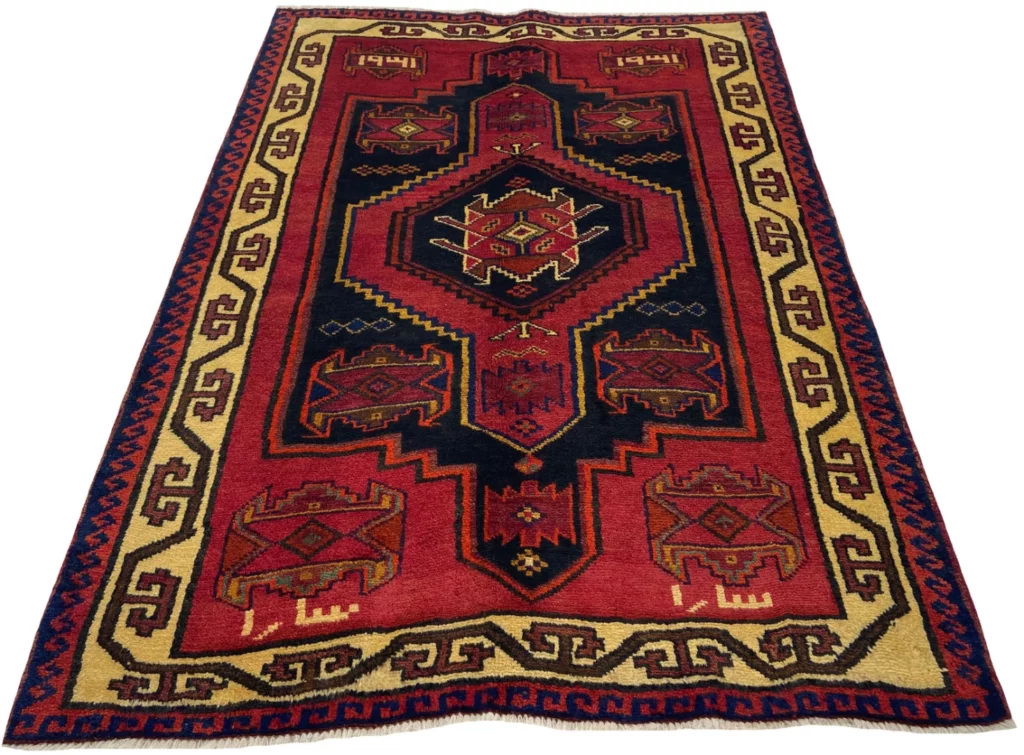
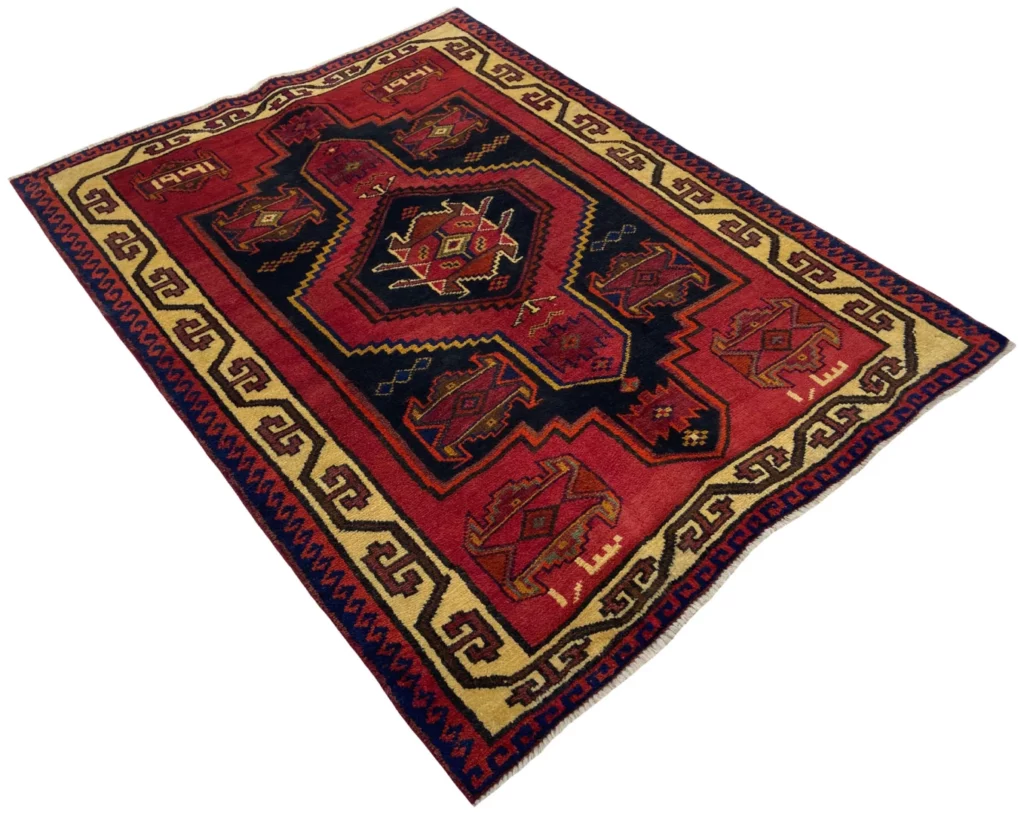
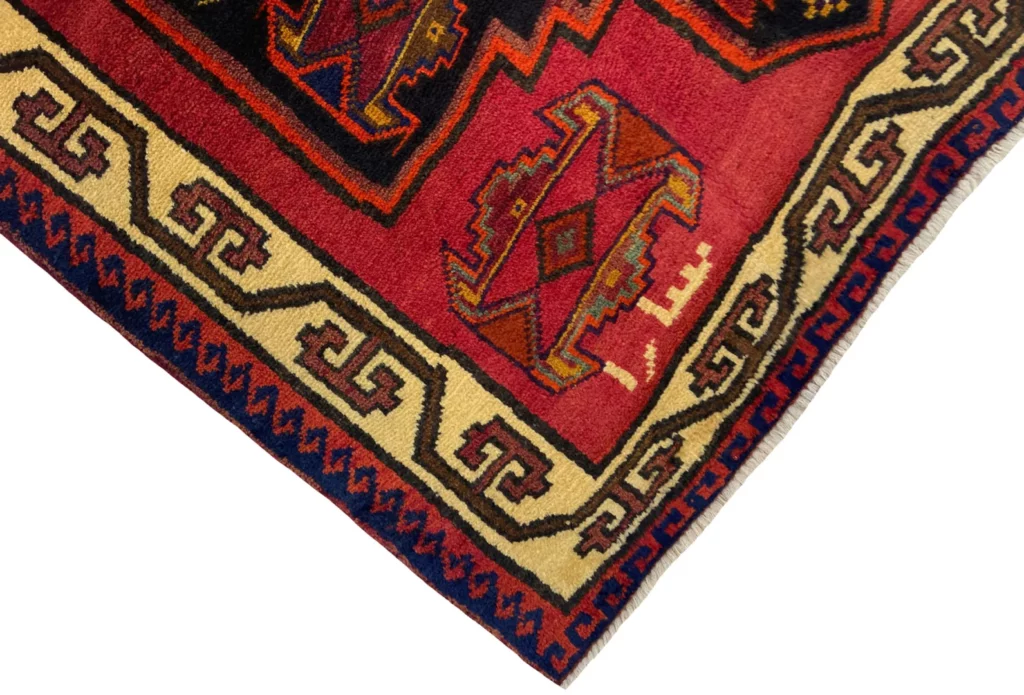
The pattern of this rug consists of geometric ornaments. Geometric design uses lines, shapes, repetition and clearly defined transitions to organise a textile surface. An ornament does not need to depict a leaf, flower or figure directly. It may simplify a form, divide it into angular elements and place those elements in a regular or deliberately varied arrangement. This approach gives the rug a clearly legible rhythm.
Geometric motifs have a long history within Persian ornament. Diamonds, stars, hooked shapes, zigzags and interlocking fields may be read as expressions of order, movement, protection or connection. The meaning of an individual sign is not always fixed and depends on its regional and visual context. In a Shiraz composition, the relationship between the forms is particularly important. Repetition creates cadence, variation prevents monotony and the separation of fields allows the design to be read as a coherent whole.
Warm reds and browns are frequently found in the colour language associated with Shiraz rugs. Red may provide a dominant ground or appear as an accent within a motif, while brown can be used for outlines, secondary areas or connecting elements. Traditional carpet colours are not chosen only for visual effect. They also help distinguish one patterned area from another and lead the eye through the composition. The relationship between colour and geometry gives the design its characteristic liveliness.
Geometric drawing is well suited to hand knotting because it can be developed through a sequence of defined working steps. The knotter follows the order of the forms and builds the design row by row. Small variations can remain visible as evidence of manual production without disrupting the overall arrangement. The relatively high knot density supports a more differentiated rendering of the ornaments and allows transitions between lines and fields to appear clearly.
A geometric pattern can be used in several interior settings while retaining its regional identity. In a living room, it can provide a structured textile field and connect warm colour accents within the furnishings. In a bedroom, it can add a measured pattern without relying on a floral composition. An entrance area or office can also benefit from the clear organisation of geometric ornament. These are general qualities of the pattern type and do not constitute additional claims about the rug’s origin or manufacture.
Special Features
The defining features of this piece are its high-quality virgin wool pile, hand-knotted construction and geometric ornaments. It comes from Shiraz in Iran and is therefore described as a Persian rug. Its condition is excellent. These details identify the material, technique, design, origin and state of preservation of this particular rug.
The combination of wool and hand knotting gives the surface its textile presence, while the geometric pattern provides the visible order. The warm reds and browns associated with Shiraz rugs belong to the regional colour tradition described for this type. The piece consequently brings together the craft practice of Shiraz and the structured vocabulary of Persian geometric ornament in one hand-knotted rug.
FAQ
What makes a Shiraz Persian rug distinctive?
A Shiraz Persian rug combines high-quality virgin wool, hand-knotted workmanship and a geometric design. Its character comes from the interaction of material, technique and regional pattern language. Shiraz lies in Fars province and is known for a carpet tradition associated with nomadic tribes, outdoor knotting and vivid colours. This rug also has a knot density between 100,000 and 250,000 knots per square metre. Its geometric ornaments give the field a clear structure, while the wool offers a pleasant handle and resilience. The excellent condition is an additional feature of this individual rug.
How should I care for my Shiraz Persian rug?
Regular vacuuming and occasional beating are sufficient for routine care. These measures remove loose dirt and help preserve the freshness of the pile. Direct sunlight should be avoided because it can cause colours to fade. This is particularly relevant for rugs associated with warm red and brown colour ranges, where prolonged exposure may alter the visual balance. The advice applies generally to Shiraz Persian rugs. If more substantial soiling occurs, professional rug cleaning is appropriate so that the virgin wool pile and hand-knotted structure are treated correctly.
Which rooms suit a Shiraz Persian rug?
A Shiraz Persian rug can be used in living rooms and bedrooms, in entrance areas and as a decorative textile element in an office. In a living room, its geometric ornaments can organise the floor area and relate to warm tones in the furnishings. In a bedroom, the hand-knotted surface can provide a clearly patterned textile layer. An entrance or office can use the rug to introduce a traditional craft element with defined geometry. The final effect depends on the furniture, lighting and surrounding materials. These rooms are possible settings for a Shiraz Persian rug and are not additional characteristics of this individual piece.
To provide the best experiences, we use technologies like cookies to store and/or access device information. Consenting to these technologies will allow us to process data such as browsing behavior or unique IDs on this site. Not consenting or withdrawing consent, may adversely affect certain features and functions.
Functional Always active
The technical storage or access is strictly necessary for the legitimate purpose of enabling the use of a specific service explicitly requested by the subscriber or user, or for the sole purpose of carrying out the transmission of a communication over an electronic communications network.
Preferences
The technical storage or access is necessary for the legitimate purpose of storing preferences that are not requested by the subscriber or user.
Statistics
The technical storage or access that is used exclusively for statistical purposes.The technical storage or access that is used exclusively for anonymous statistical purposes. Without a subpoena, voluntary compliance on the part of your Internet Service Provider, or additional records from a third party, information stored or retrieved for this purpose alone cannot usually be used to identify you.
Marketing
The technical storage or access is required to create user profiles to send advertising, or to track the user on a website or across several websites for similar marketing purposes.
 SECURE PAYMENT
 SHIPPING PARTNERS