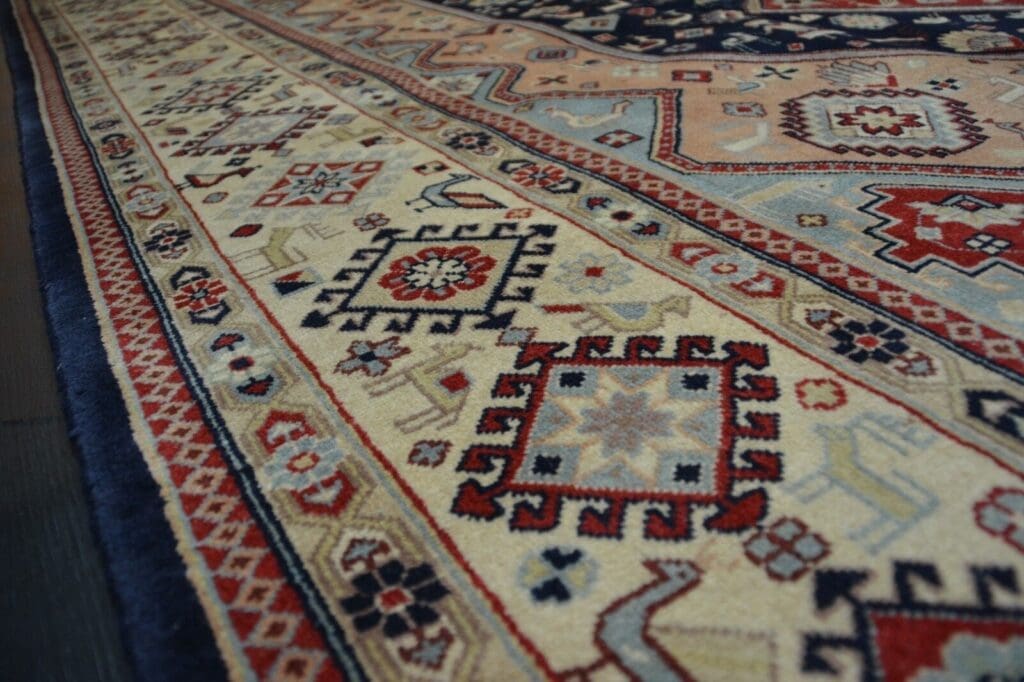
This hand-knotted Semnan Persian rug is made from 90% wool and 10% cotton. The materials used are natural materials. The wool pile gives the surface a soft, pleasant feel. Wool is widely used in rug making because of its resilient structure, comfortable texture, and temperature-regulating properties. It can absorb warmth and release it again as room conditions change, making the material pleasant in everyday use.
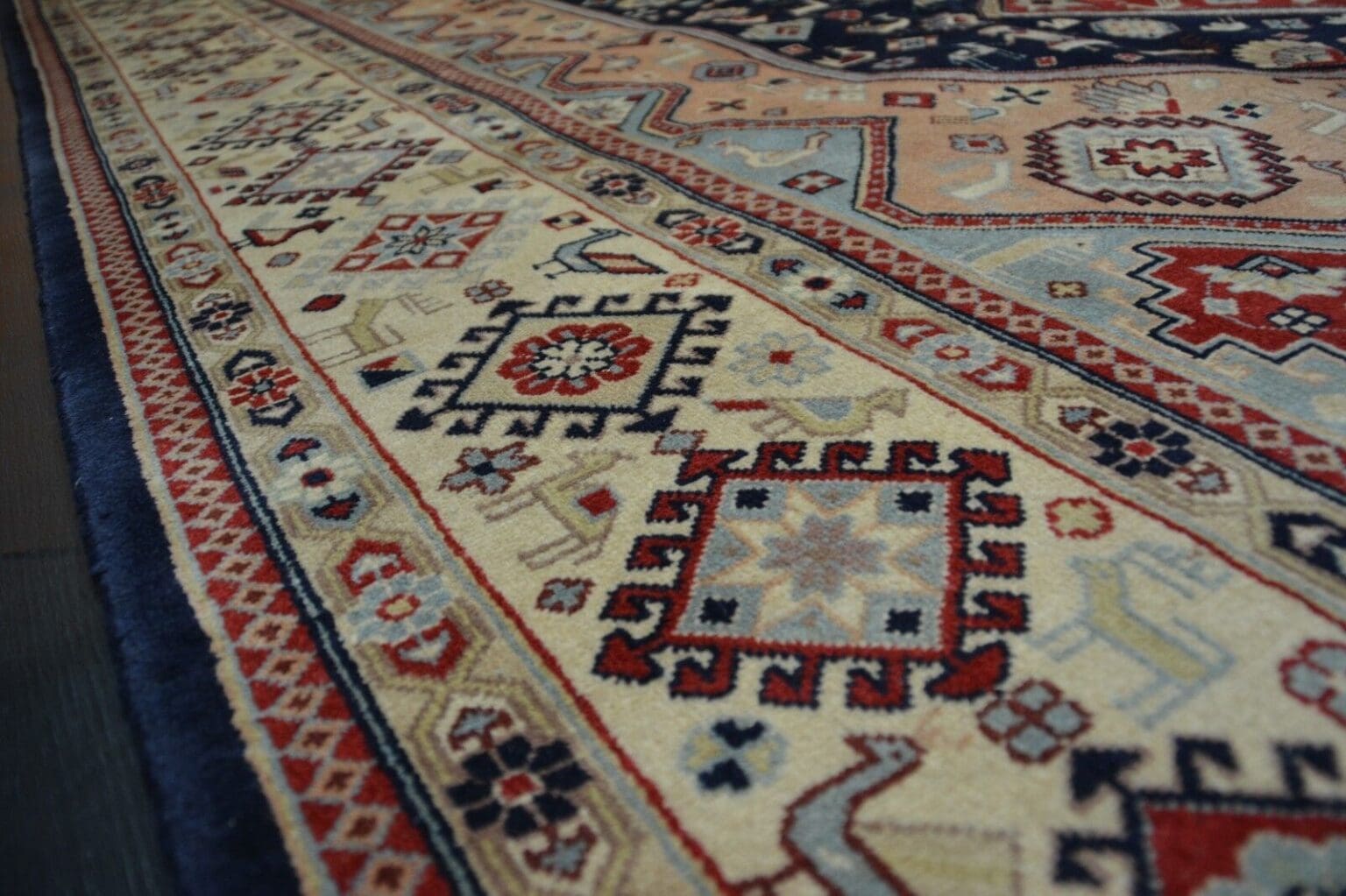
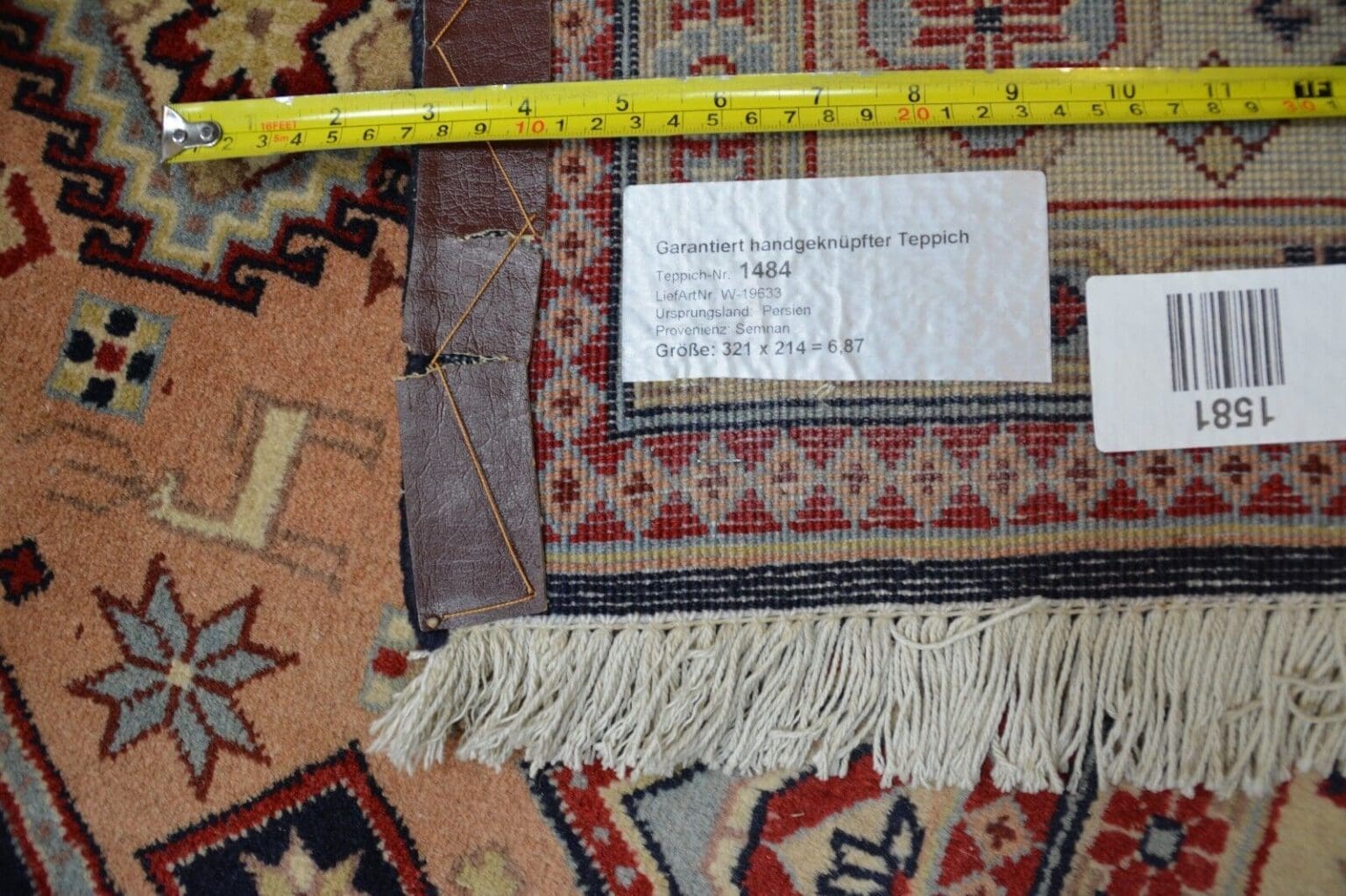
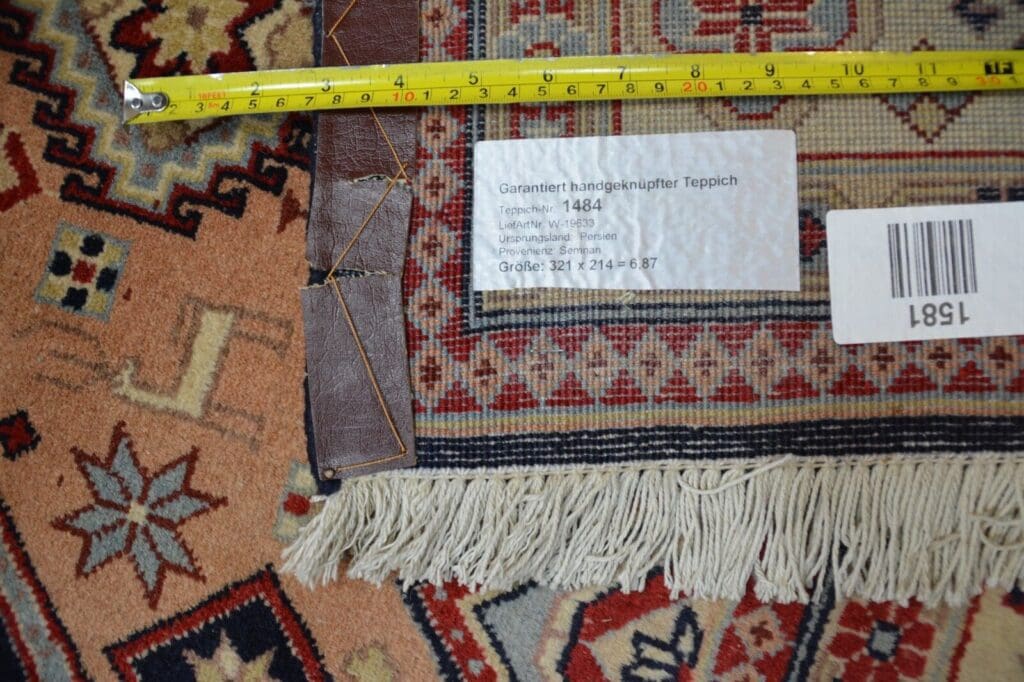
Cotton forms part of the rug’s stated material composition alongside the wool. Together, wool and cotton provide the basis for its hand-knotted construction. In hand knotting, each knot is inserted individually into the foundation. Row by row, this creates the rug’s textile structure. The process requires consistent movements and careful handling of the yarn. It is one of the traditional methods used in Oriental rug production.
Hand knotting allows the surface and the pattern to be worked out in detail. The knots connect the individual yarn areas securely with the foundation. This creates a durable construction suitable for use in living spaces. The description gives the pile height as 1 cm. It also describes the rug as finely made, robust, and easy to care for.
Origin and Tradition
The Semnan comes from the city of Semnan in Iran. Semnan is located in central Iran and is known for its rug-making tradition. The history of the weaving and knotting craft described for the region reaches back to the 19th century. The name therefore refers to a regional tradition in which knowledge of materials, knotting, color, and pattern has been passed down through generations.
Central Iran has long been a meeting point of different cultural influences and settlement areas. Such surroundings support a varied textile culture, in which local practices develop alongside broader Iranian traditions. In rug making, the finished design is only one part of the work. Preparing the materials, building the foundation, and maintaining an orderly knot structure are equally important elements of the craft.
Semnan rugs are associated with a particular knotting technique and characteristic patterns. These features result from the interaction of design, color selection, and manual execution rather than from one isolated step. Local weavers pass knowledge of these processes from one generation to the next. Regional identity can therefore remain visible both in the appearance of the rug and in the method used to make it.
The region’s rug tradition is also described as being influenced by nature and culture. Traditional color nuances and motifs draw on the surroundings and on the cultural life of the people who created them. In Iranian rug art, patterns are not merely surface decoration. They can preserve memories, cultural values, and inherited ideas. Semnan thus identifies both a place of origin and a connected body of craft knowledge.
The development of rug making in Iran includes many regional forms. Semnan is described as one of the places with its own approach to design and workmanship. Regional rugs may differ in the arrangement of ornaments, the balance between geometric and floral elements, and the way colors are organized. These differences help explain the variety within Iranian rug culture without requiring every individual piece to contain exactly the same motifs.
Design and Pattern
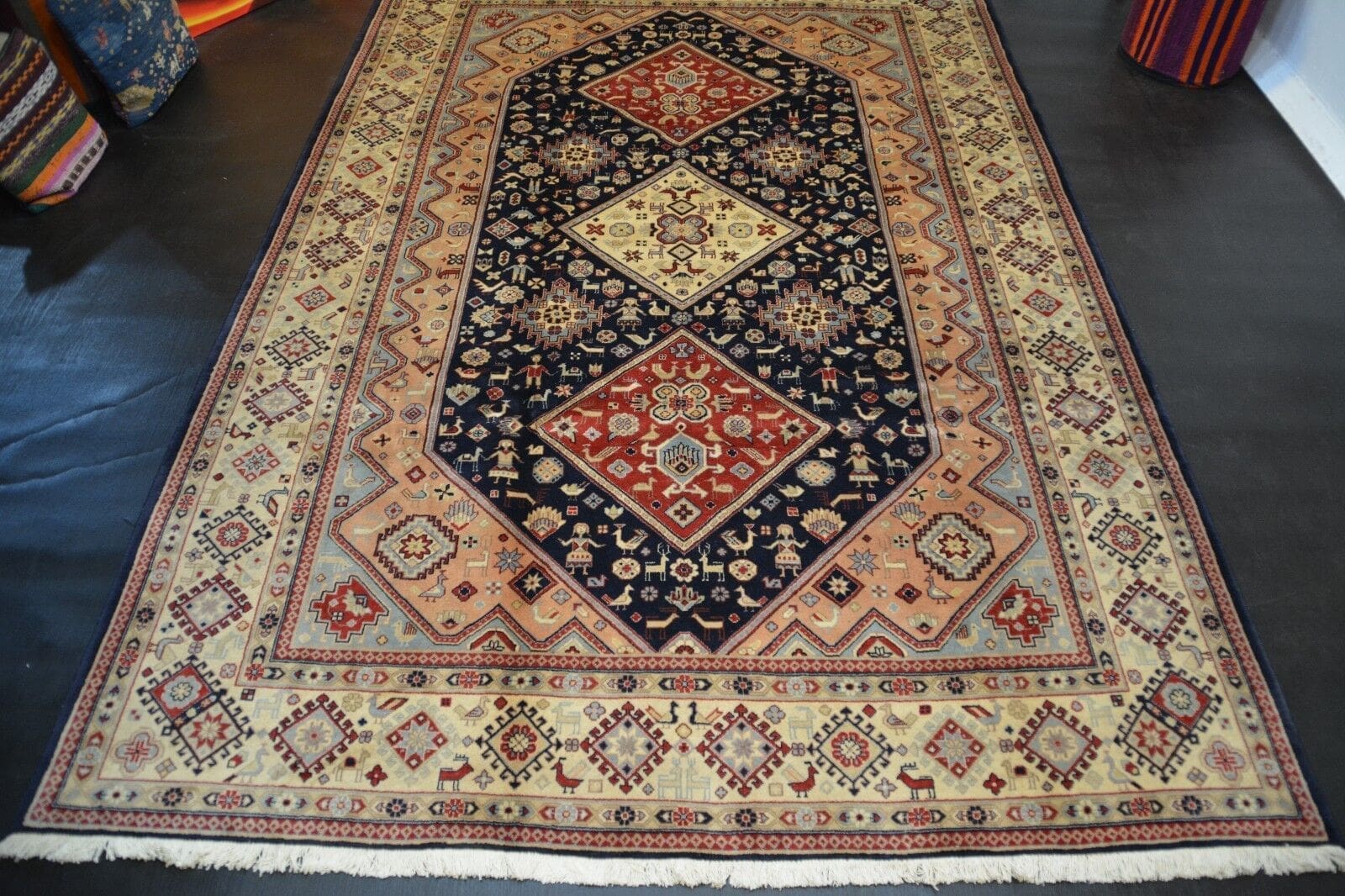
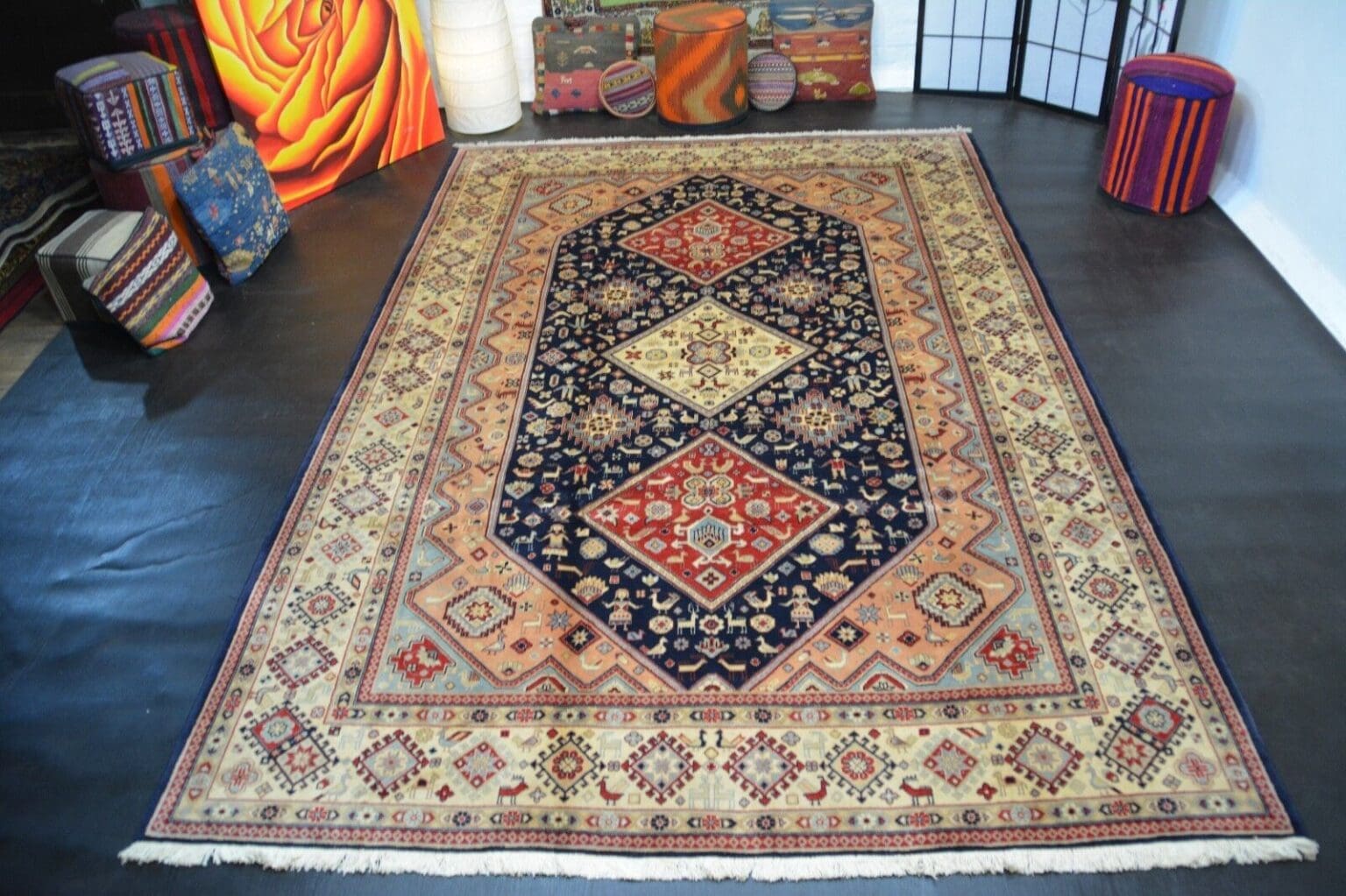
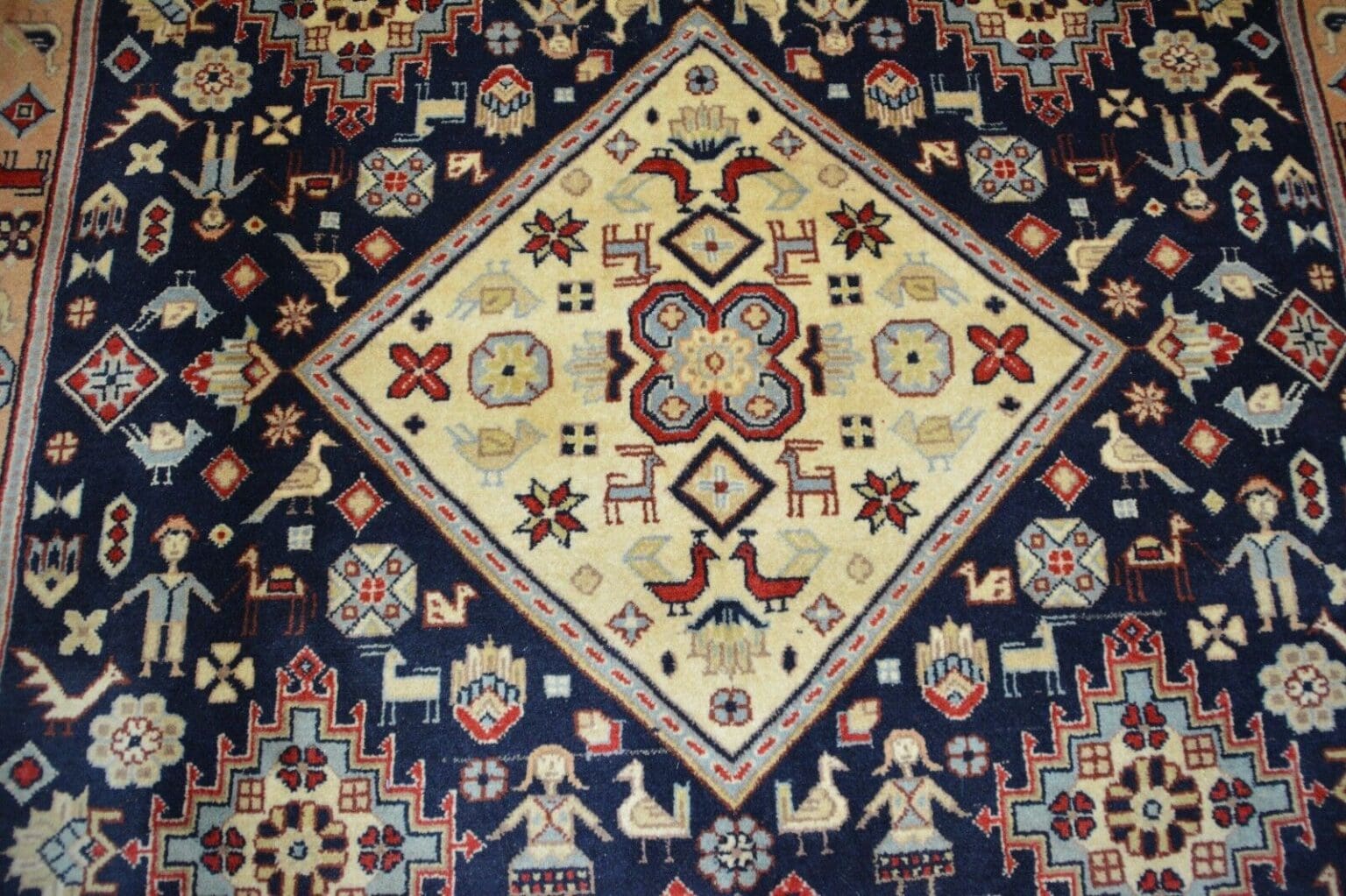
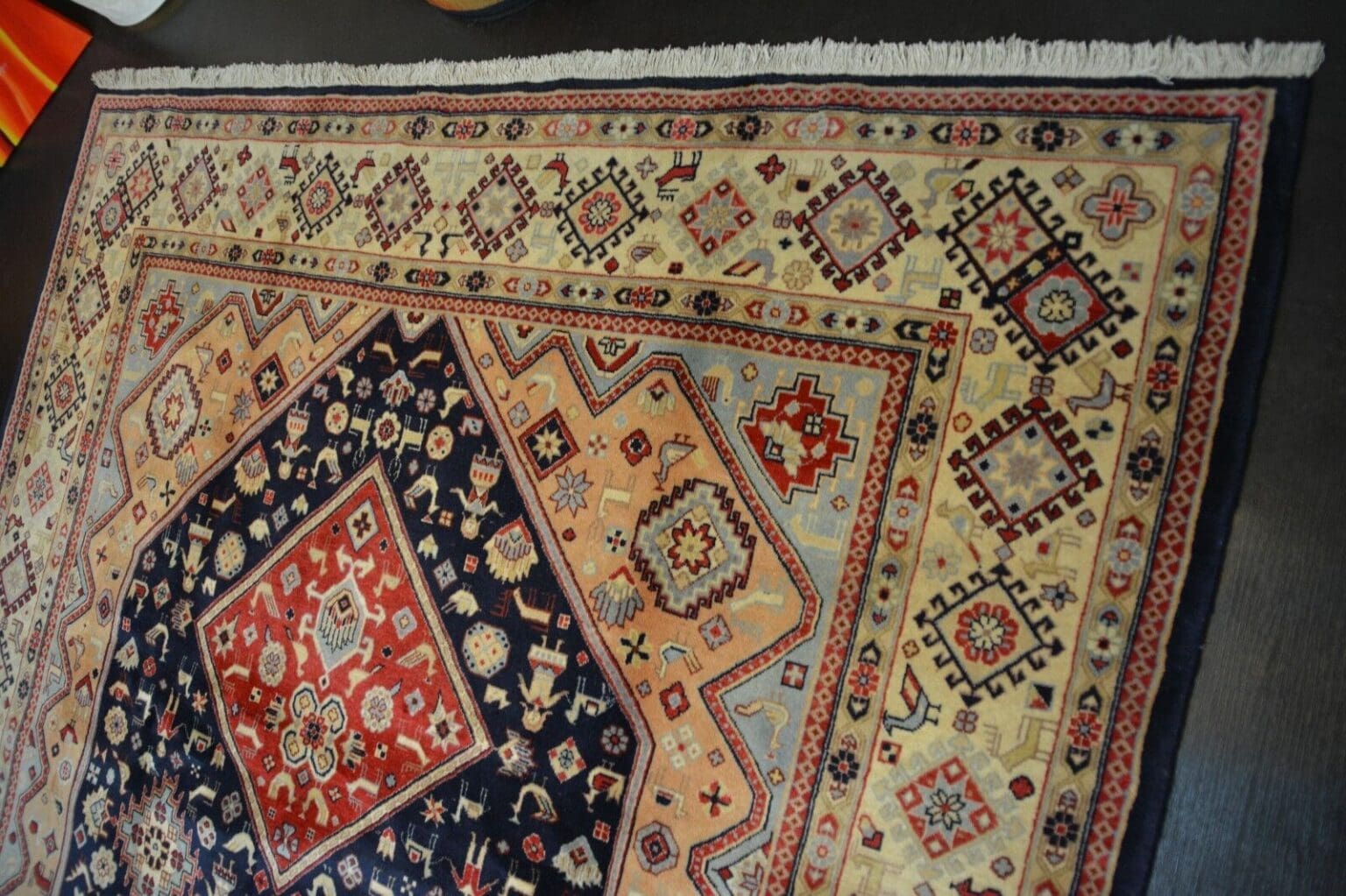
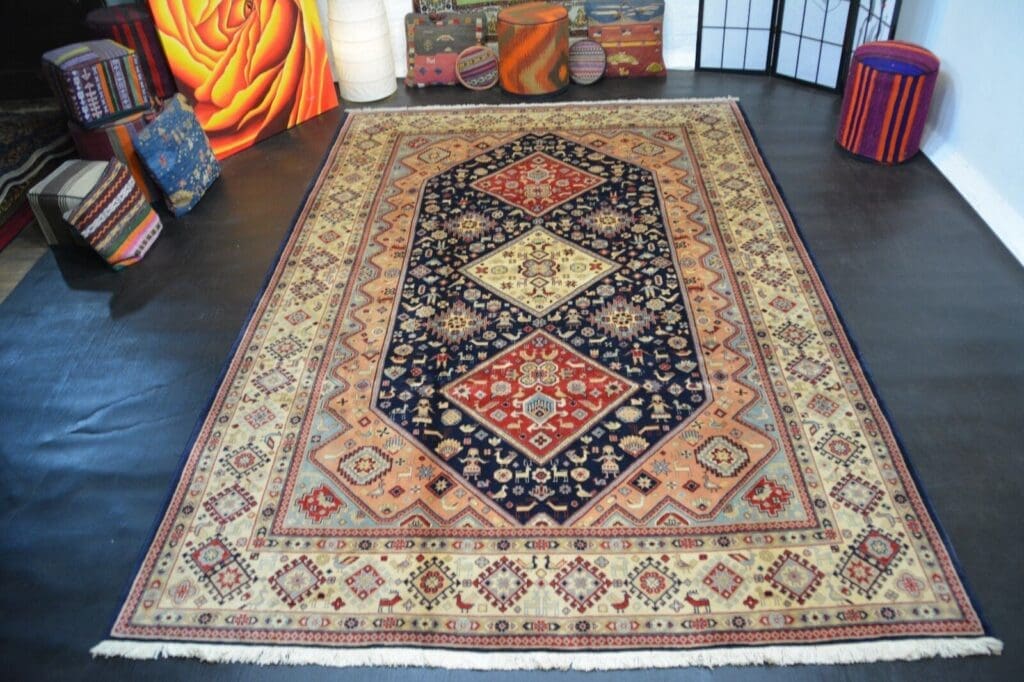
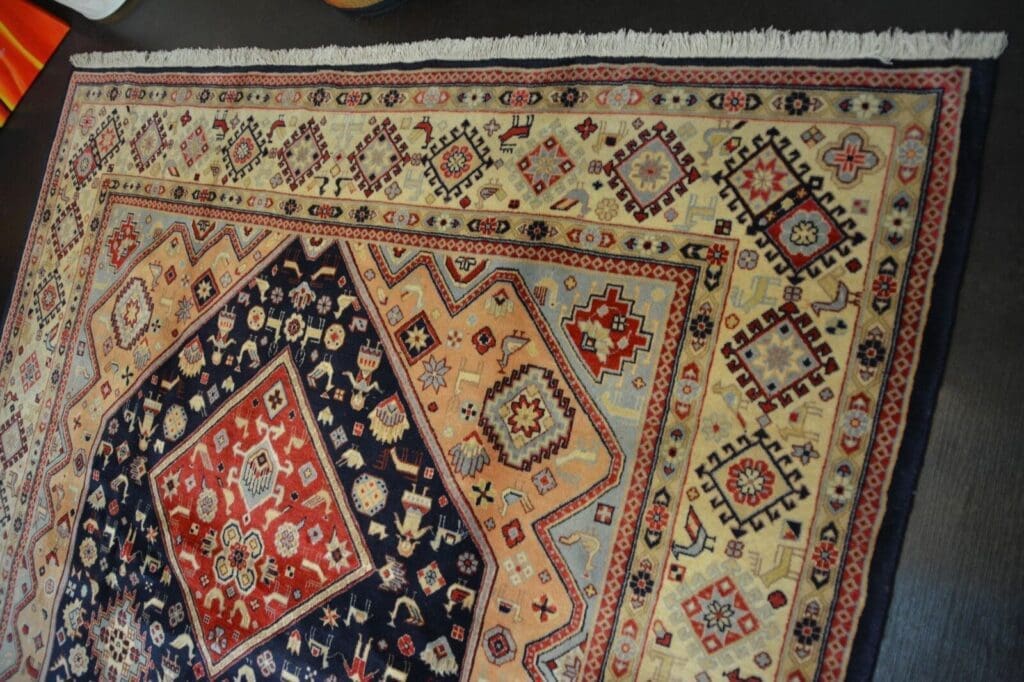
The pattern of this rug is described as traditional Oriental. Its color is beige. Beige is a restrained shade that can be combined with a range of interior styles. In Oriental rug design, a calm ground color can help keep the arrangement of ornaments legible. It can provide a setting for both geometric lines and floral forms.
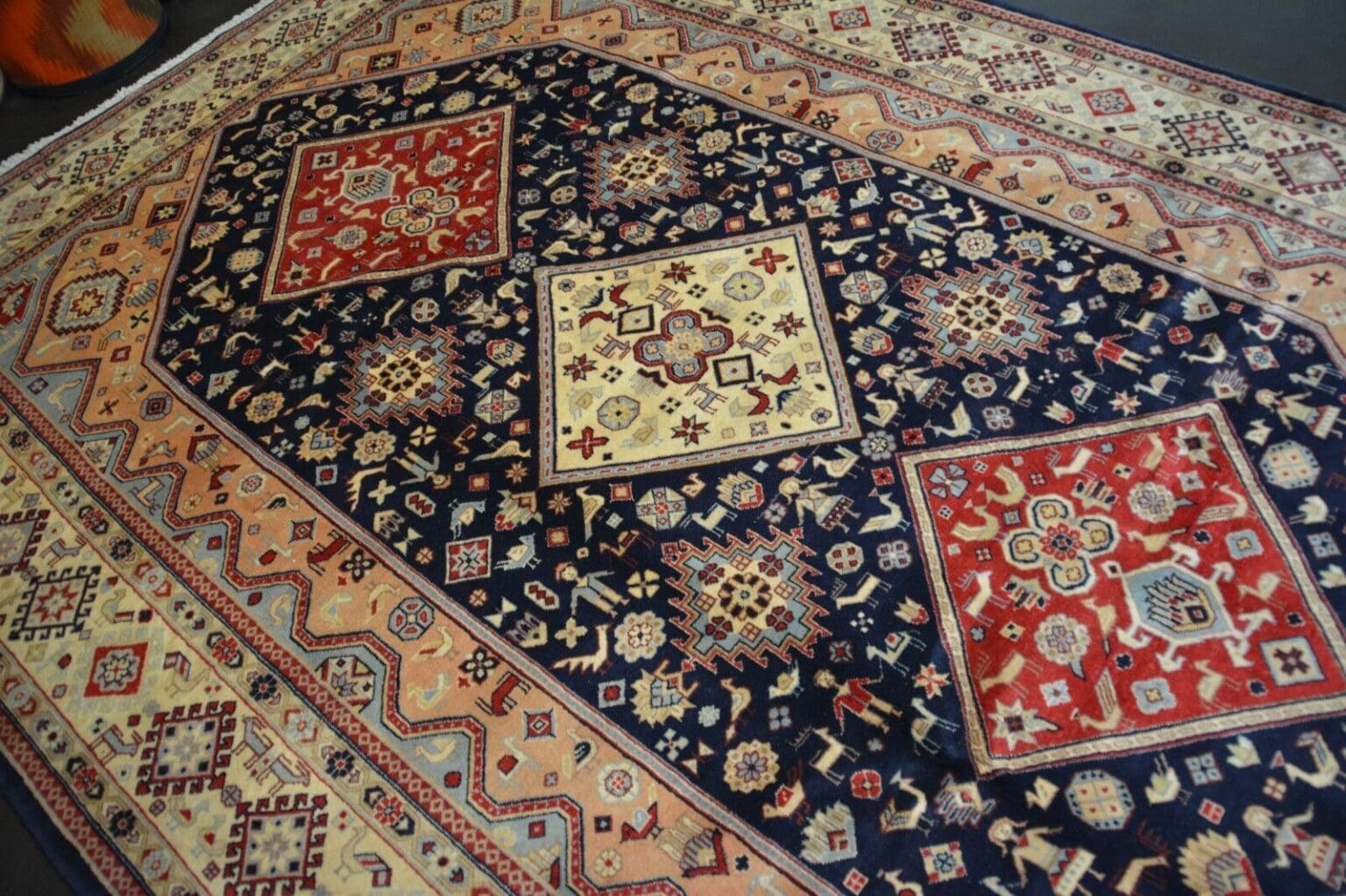
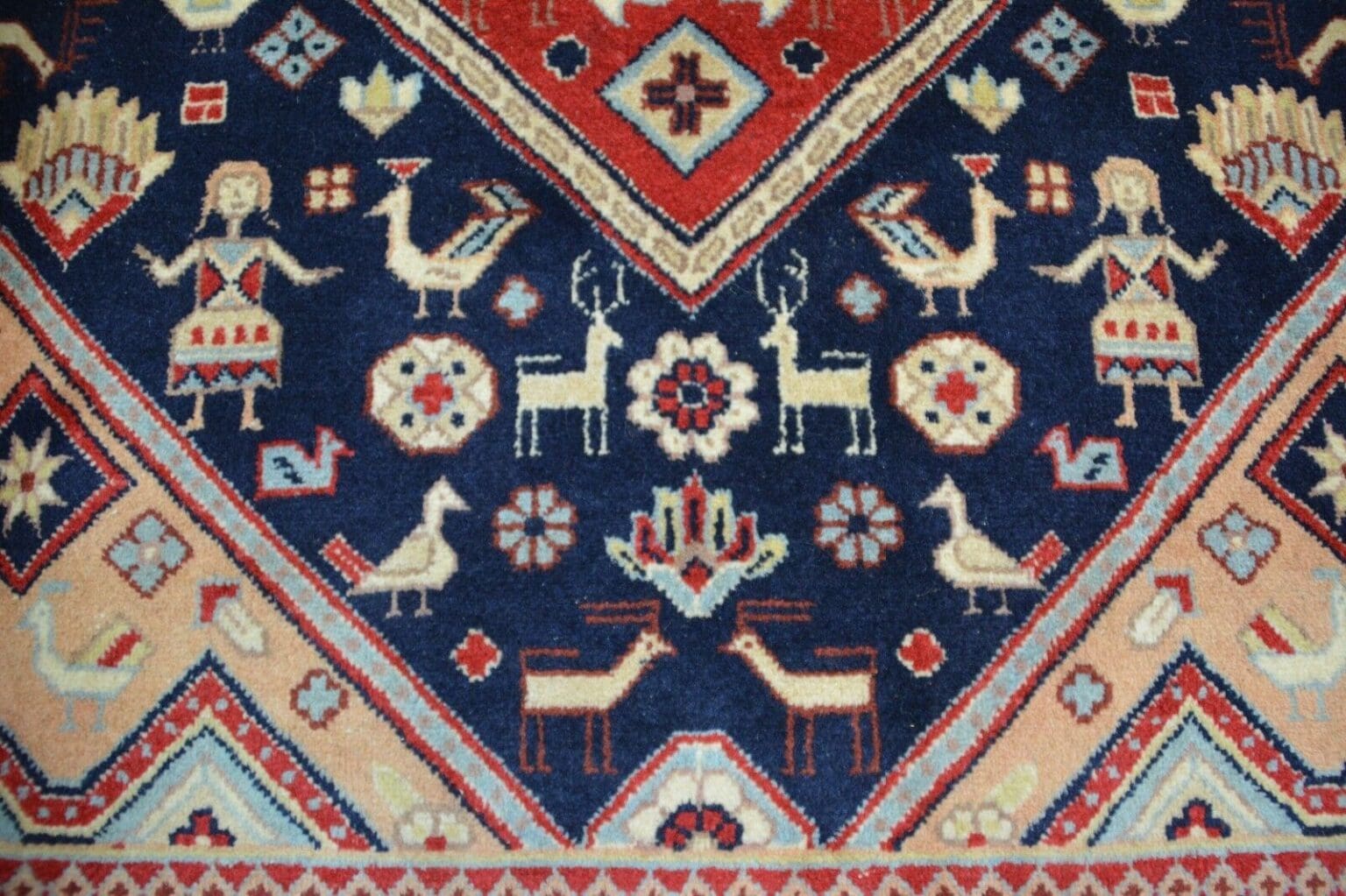
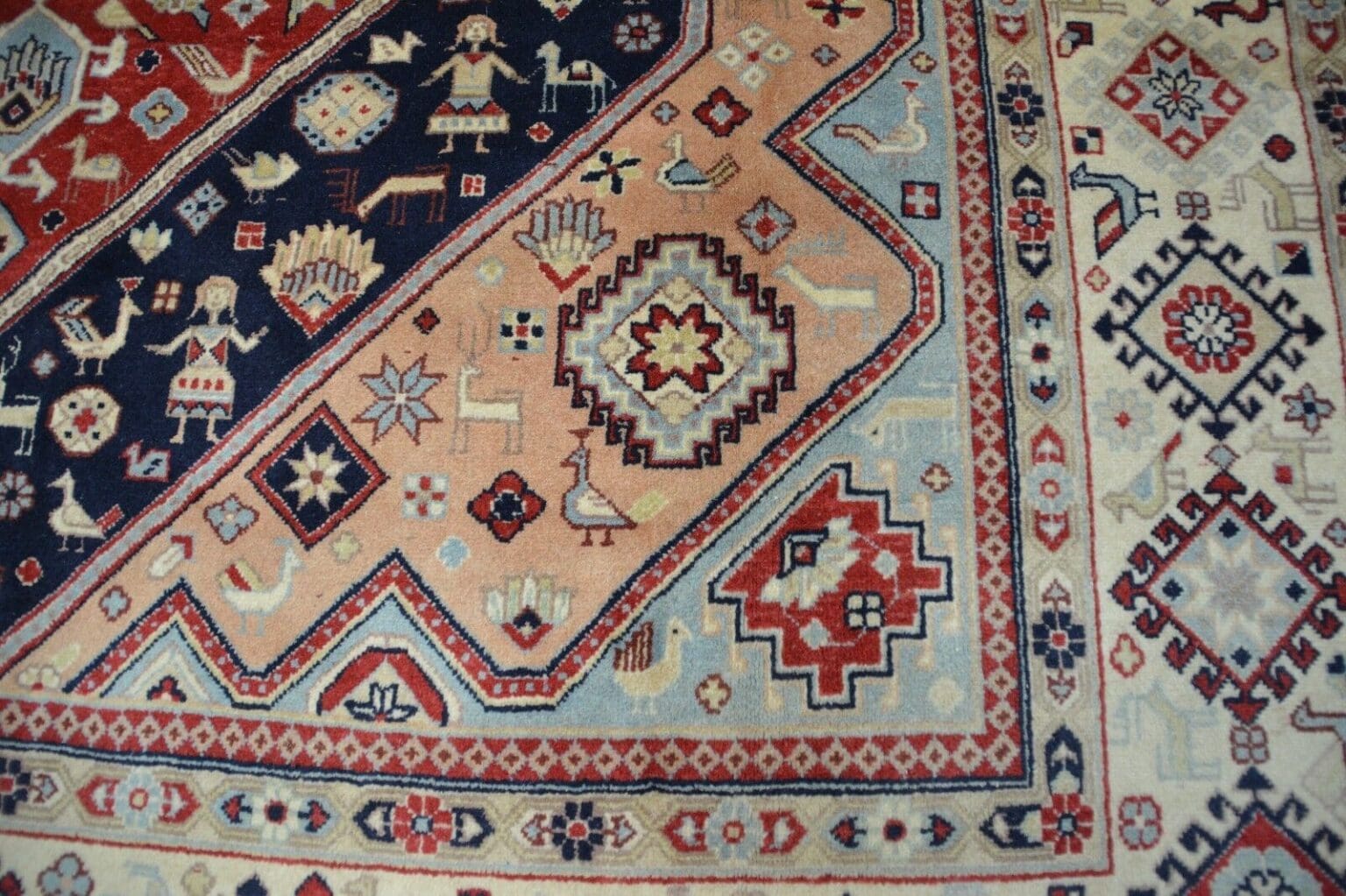
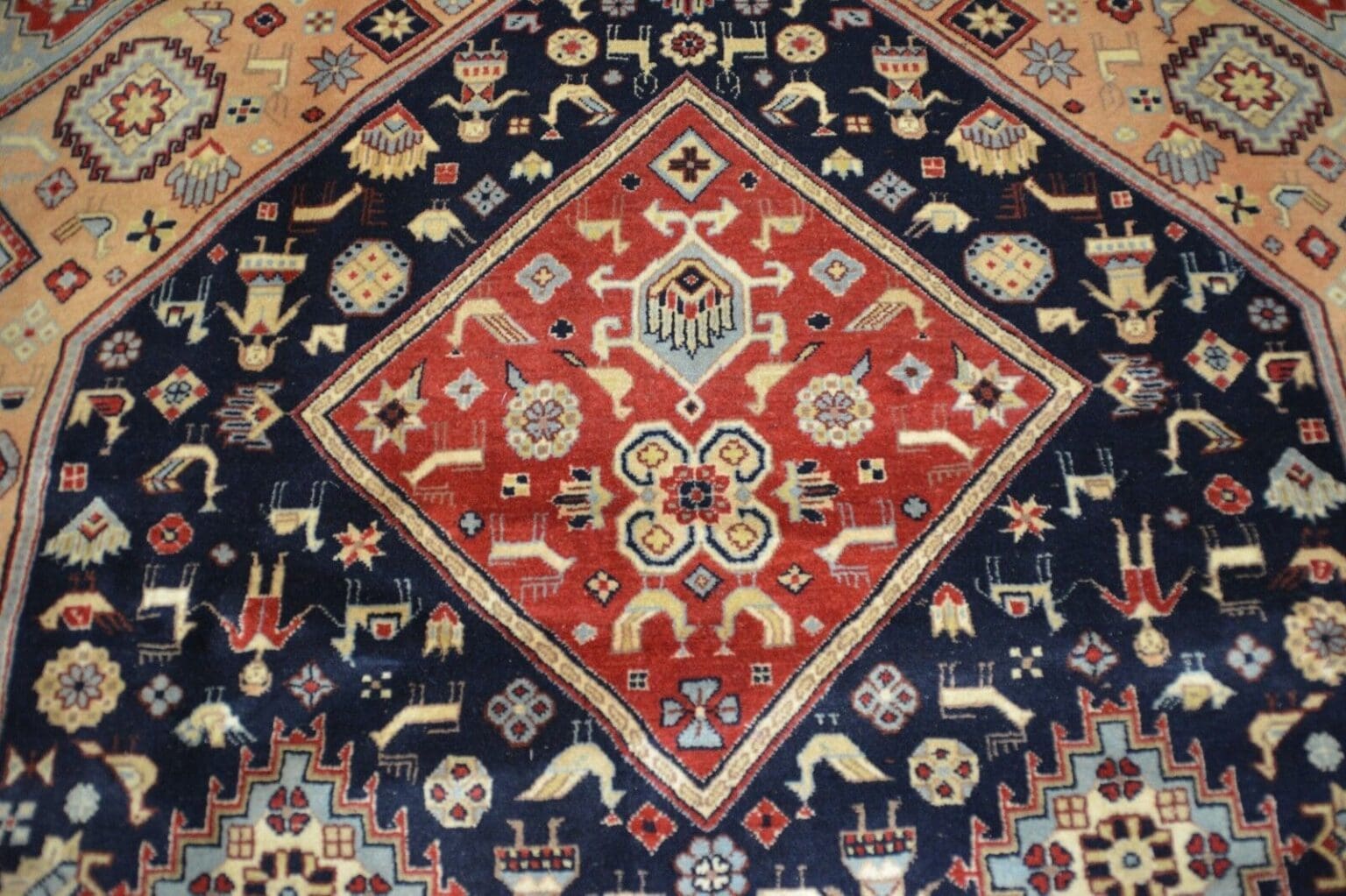
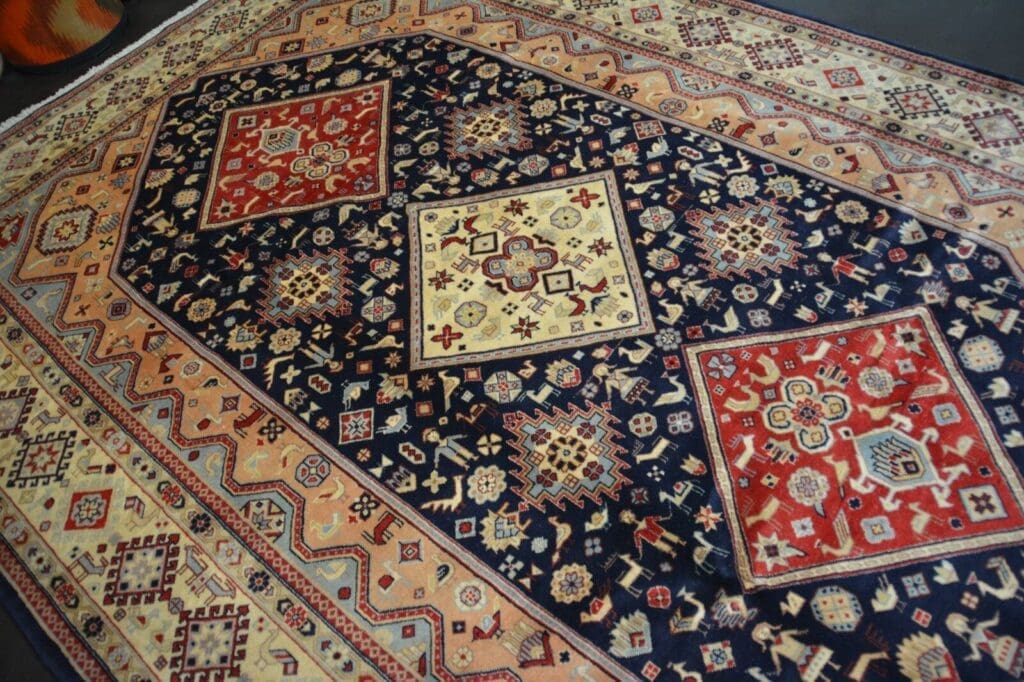
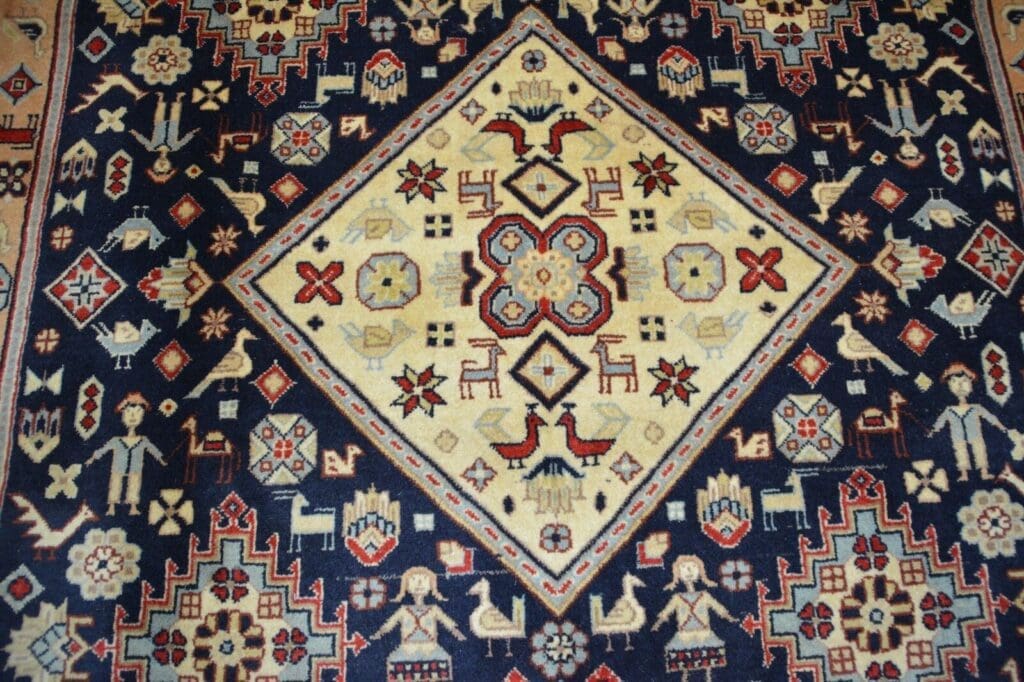
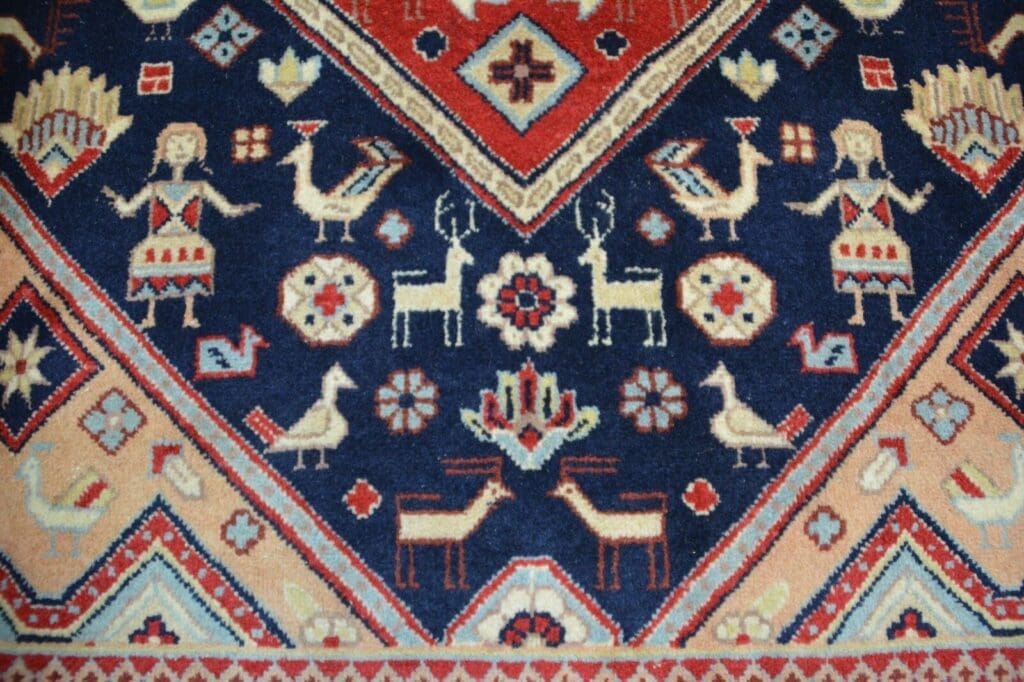
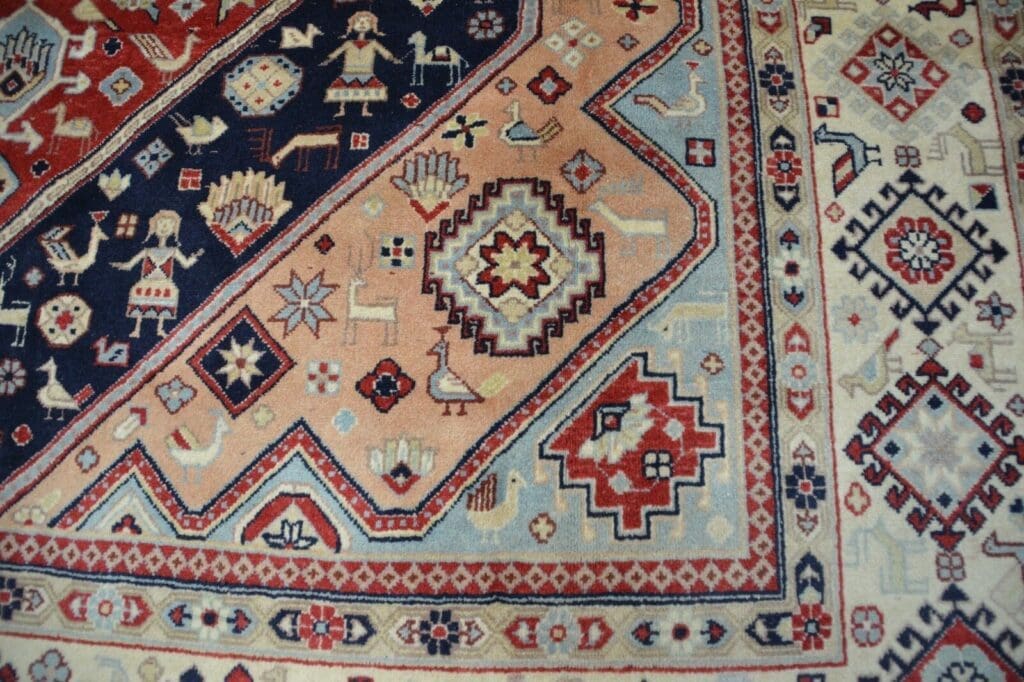
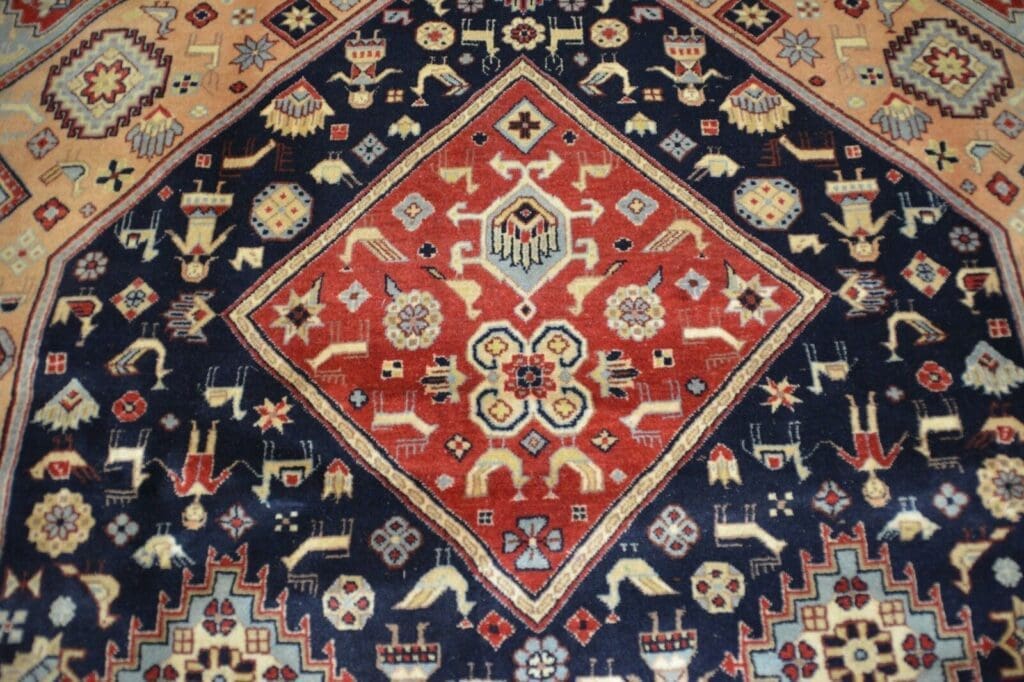
Semnan rugs are described as having balanced compositions with geometric and floral elements. Geometric motifs are based on lines, axes, repetition, and relationships of symmetry. Floral motifs draw on plant forms and are usually rendered in a stylized way in rug design. The two approaches may be combined within one composition. This creates a pattern that is organized while still containing decorative detail.
Oriental rug patterns often use a relationship between a central field and border areas. The field contains the principal composition, while the borders structure the transition toward the outer edge. Repetition establishes rhythm, and smaller motifs can divide larger areas into distinct sections. These principles belong to the general vocabulary of Oriental rug design and help explain why traditional patterns can be used in both classic and contemporary interiors.
The motifs associated with Semnan are connected with nature, everyday life, and spirituality. Some representations may symbolize fertility and prosperity. Such meanings belong to an inherited visual language and should not necessarily be read as literal pictures. A plant motif can have decorative, cultural, and symbolic functions at the same time. The pattern thereby becomes a carrier of stories and tradition as well as a visual arrangement.
The beige coloring places this traditional design within a neutral visual setting. The rug therefore combines an Iranian regional vocabulary with a restrained color impression. Its pattern remains rooted in Oriental tradition, while the color allows it to be placed in classic or modern rooms. The design is not limited to one particular type of living space.
With a hand-knotted rug, the pattern is created during the knotting process rather than applied afterward to a finished surface. The design is translated knot by knot. Small variations in execution are part of the character of this technique. They indicate that the pattern results from manual work rather than from an industrially identical surface.
Special Features
The stated features include hand knotting, the use of wool and cotton, a beige color, and a traditional Oriental pattern. The rug is described as new. Its pile height is 1 cm. The combination of traditional workmanship and restrained coloring makes these formal characteristics readily identifiable.
The rug is also described as easy to care for and robust. Wool has a natural structure that is suitable for regular everyday use. The description further identifies the rug as antistatic and dirt-repellent. These properties are explicitly included in the product information. The rug is intended for living spaces with regular use and can also be used in rooms with underfloor heating.
FAQ
How should the Semnan Persian rug be cared for?
Regular vacuuming is recommended. If more intensive cleaning is required, professional cleaning can be arranged. Direct sunlight should be avoided so that the colors do not fade. The rug is described as easy to care for and robust. Gentle, regular maintenance can therefore help preserve its surface and color appearance over time.
Can the rug be used with underfloor heating?
Yes. The hand-knotted Semnan Persian rug is described as suitable for rooms with underfloor heating. The wool used in its composition is associated with pleasant warmth and good insulating properties. The heating system should be used correctly and the rug placed on a suitable, clean floor. Compatibility with underfloor heating is one of the explicitly stated features of this rug.
Does the rug come with a guarantee?
A guarantee covering quality and workmanship is stated for the purchase. The description generally gives a period of two years, depending on the individual dealer. The precise guarantee terms should therefore be confirmed with the dealer. The scope, starting date, and any exclusions are determined by the conditions applicable to the sale.
To provide the best experiences, we use technologies like cookies to store and/or access device information. Consenting to these technologies will allow us to process data such as browsing behavior or unique IDs on this site. Not consenting or withdrawing consent, may adversely affect certain features and functions.
Functional Always active
The technical storage or access is strictly necessary for the legitimate purpose of enabling the use of a specific service explicitly requested by the subscriber or user, or for the sole purpose of carrying out the transmission of a communication over an electronic communications network.
Preferences
The technical storage or access is necessary for the legitimate purpose of storing preferences that are not requested by the subscriber or user.
Statistics
The technical storage or access that is used exclusively for statistical purposes.The technical storage or access that is used exclusively for anonymous statistical purposes. Without a subpoena, voluntary compliance on the part of your Internet Service Provider, or additional records from a third party, information stored or retrieved for this purpose alone cannot usually be used to identify you.
Marketing
The technical storage or access is required to create user profiles to send advertising, or to track the user on a website or across several websites for similar marketing purposes.
 SECURE PAYMENT
 SHIPPING PARTNERS


