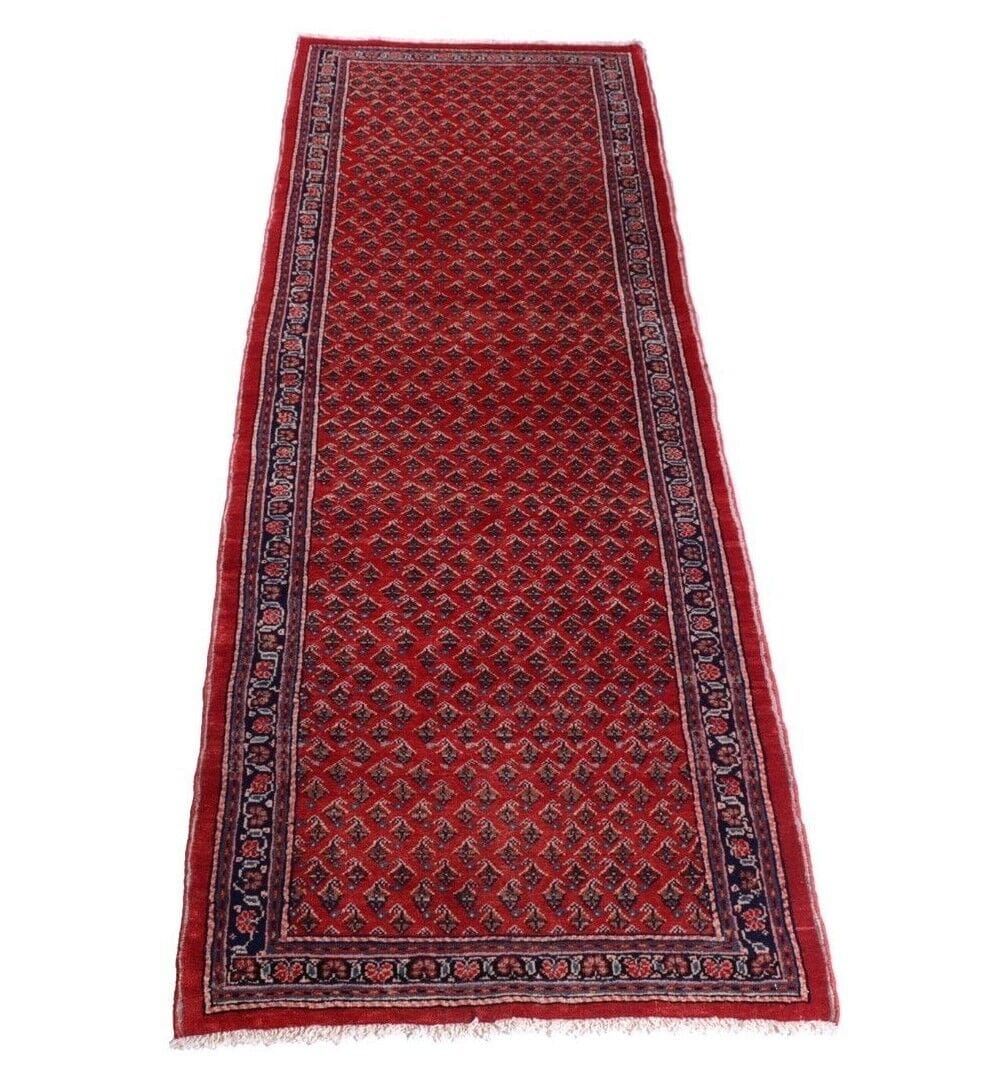
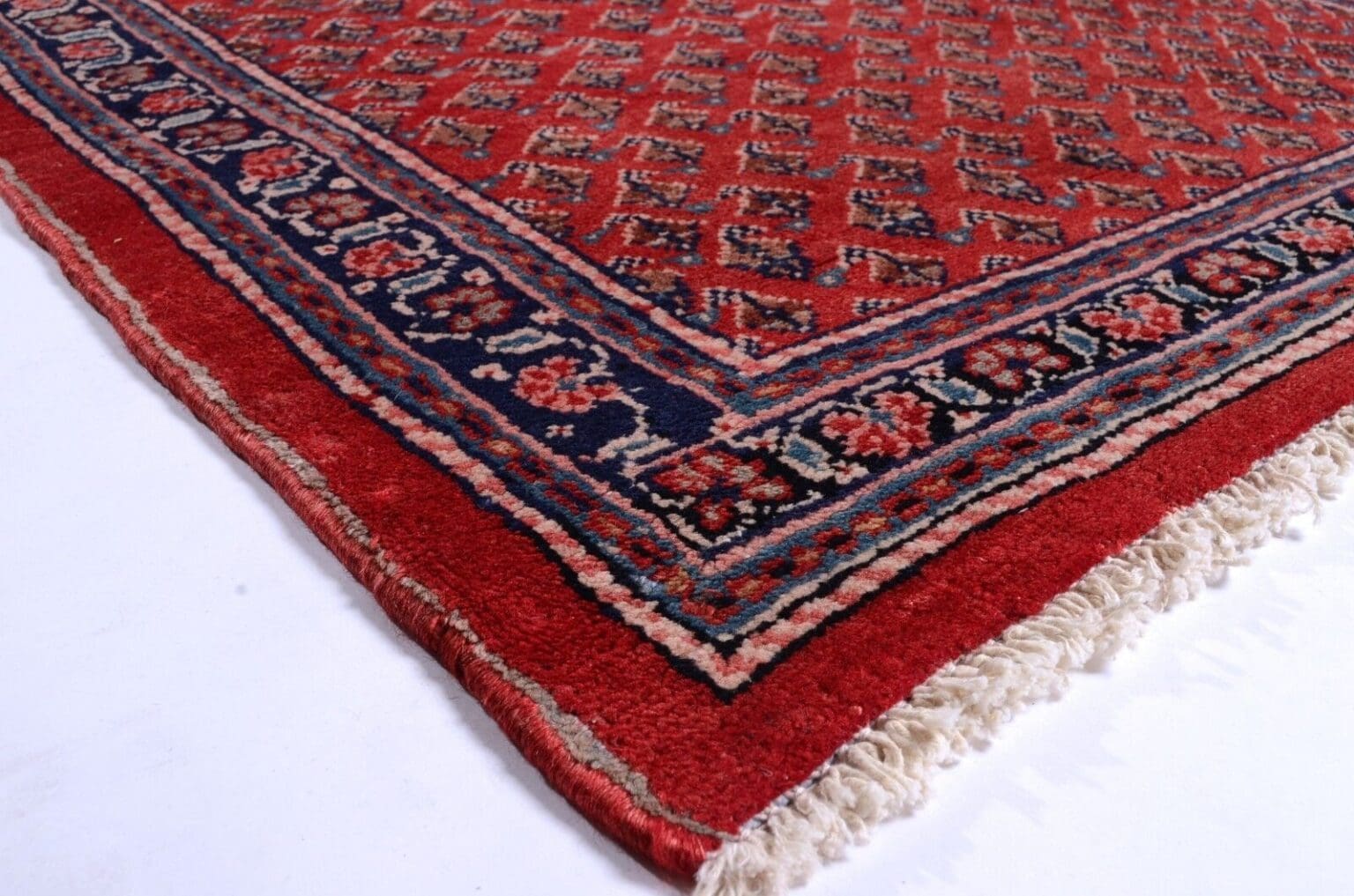
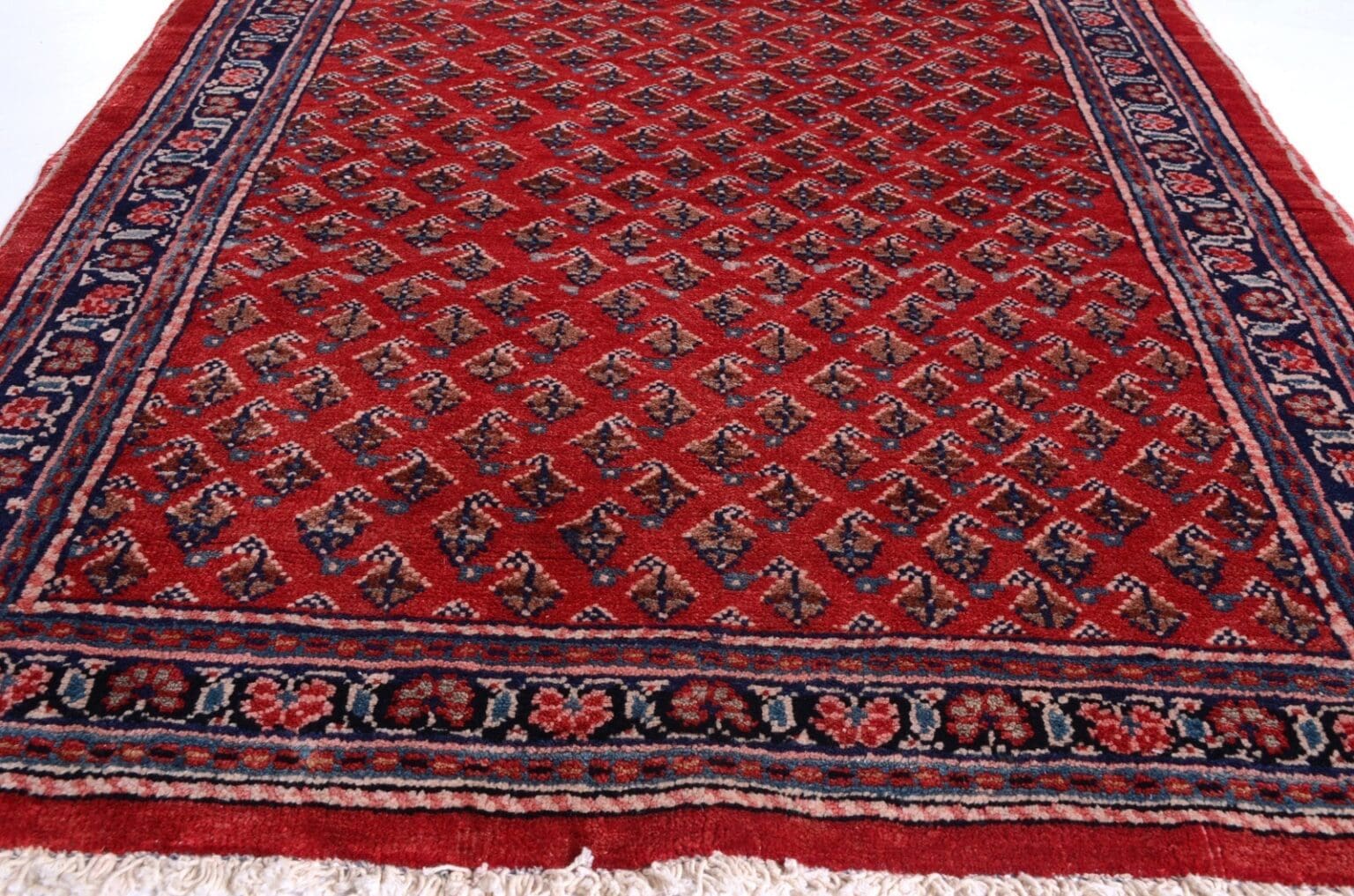
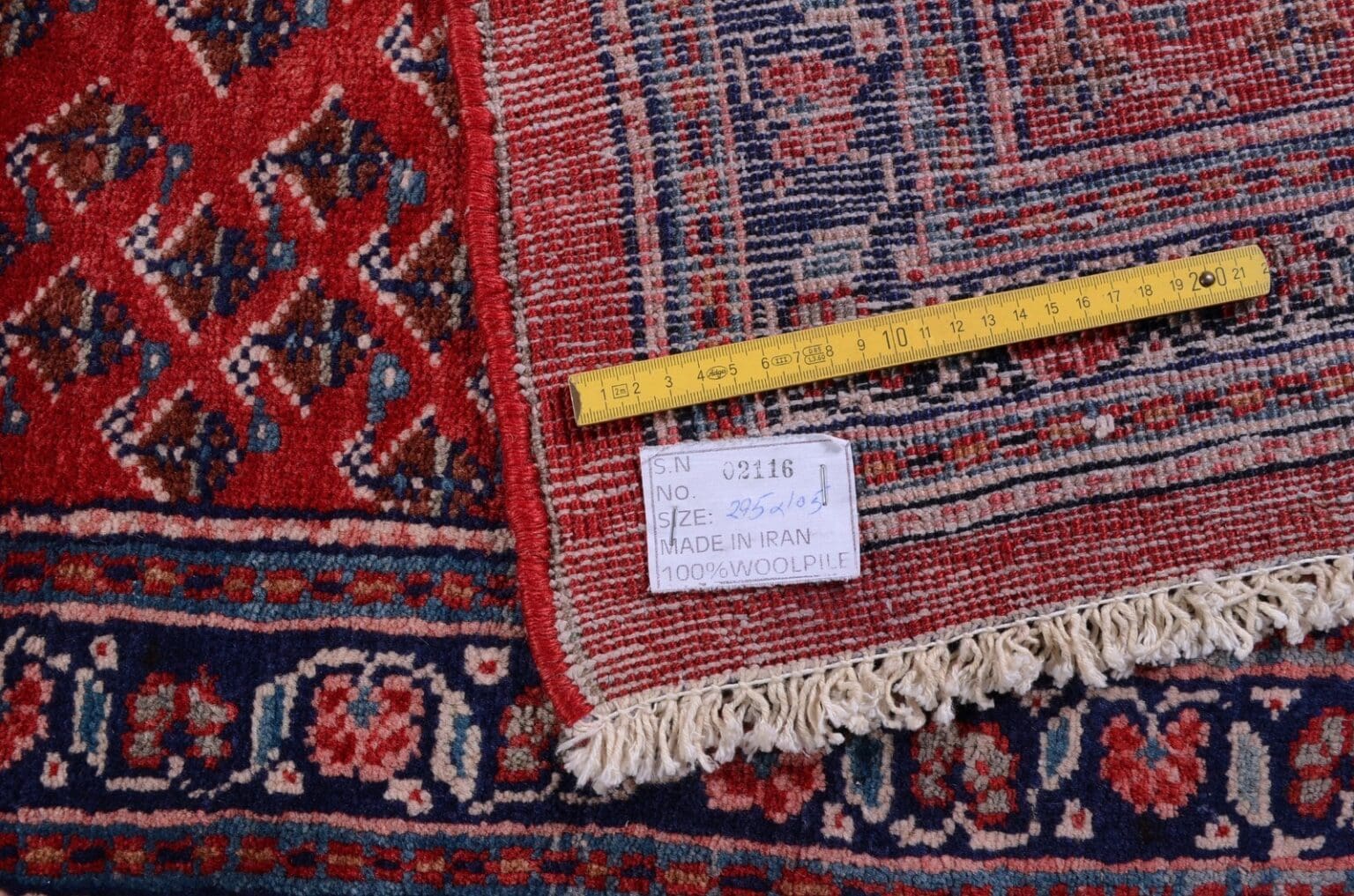
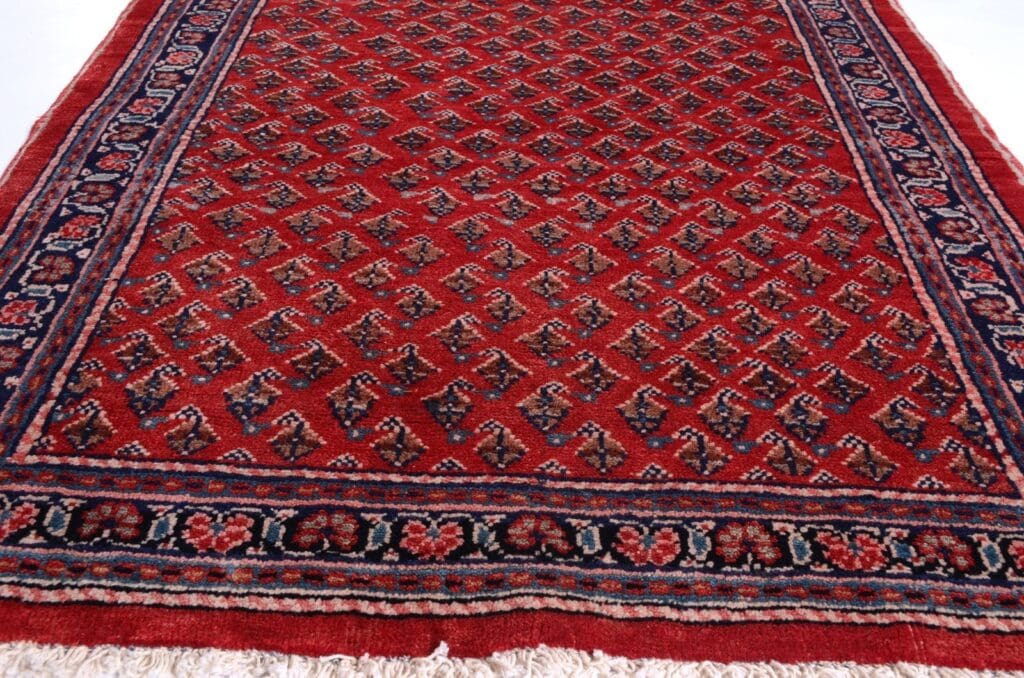
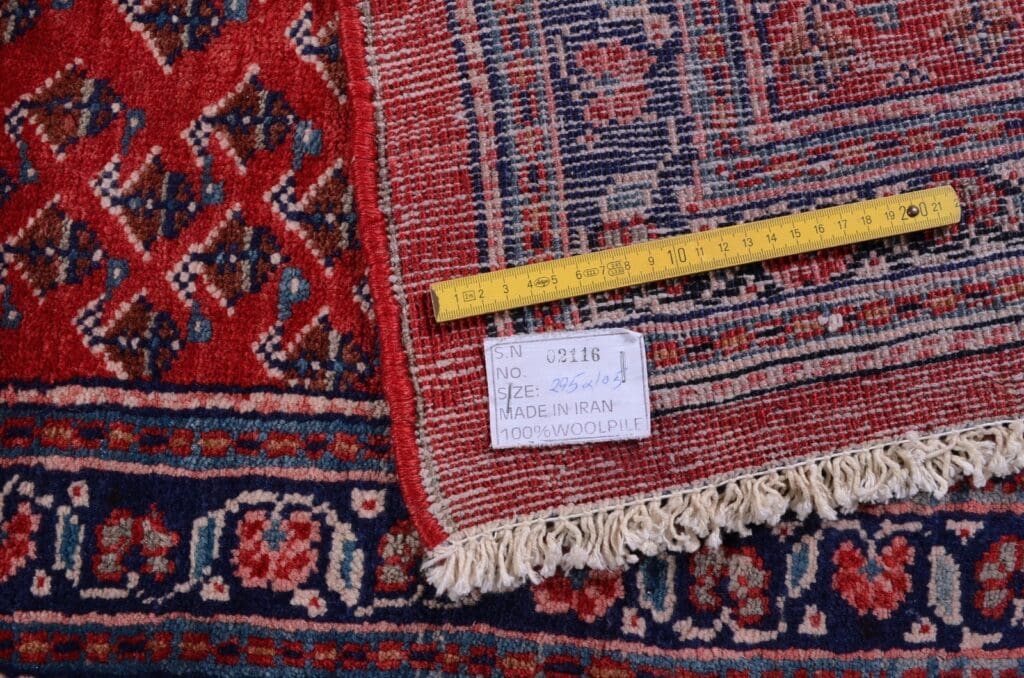
This Sarough Mir runner is hand-knotted with a pile made of 100% new wool and a warp made of 100% cotton. The two materials define the stated construction of the rug: wool forms the visible pile and cotton provides the warp foundation for the knots. This combination belongs to the established making tradition of Persian rugs, where a wool surface is built upon a carefully prepared textile structure. The result is a rug whose material composition and method of manufacture are directly connected.
New wool is valued in hand-knotted rugs for its durability and natural sheen. It gives the pile a pleasant feel underfoot and lends the surface a lively appearance. Here, the wool has been worked knot by knot rather than produced as a repeated machine-made surface. That manual process is central to the character of the rug. It also means that the completed piece is an individual object with its own execution of the Sarough Mir design.
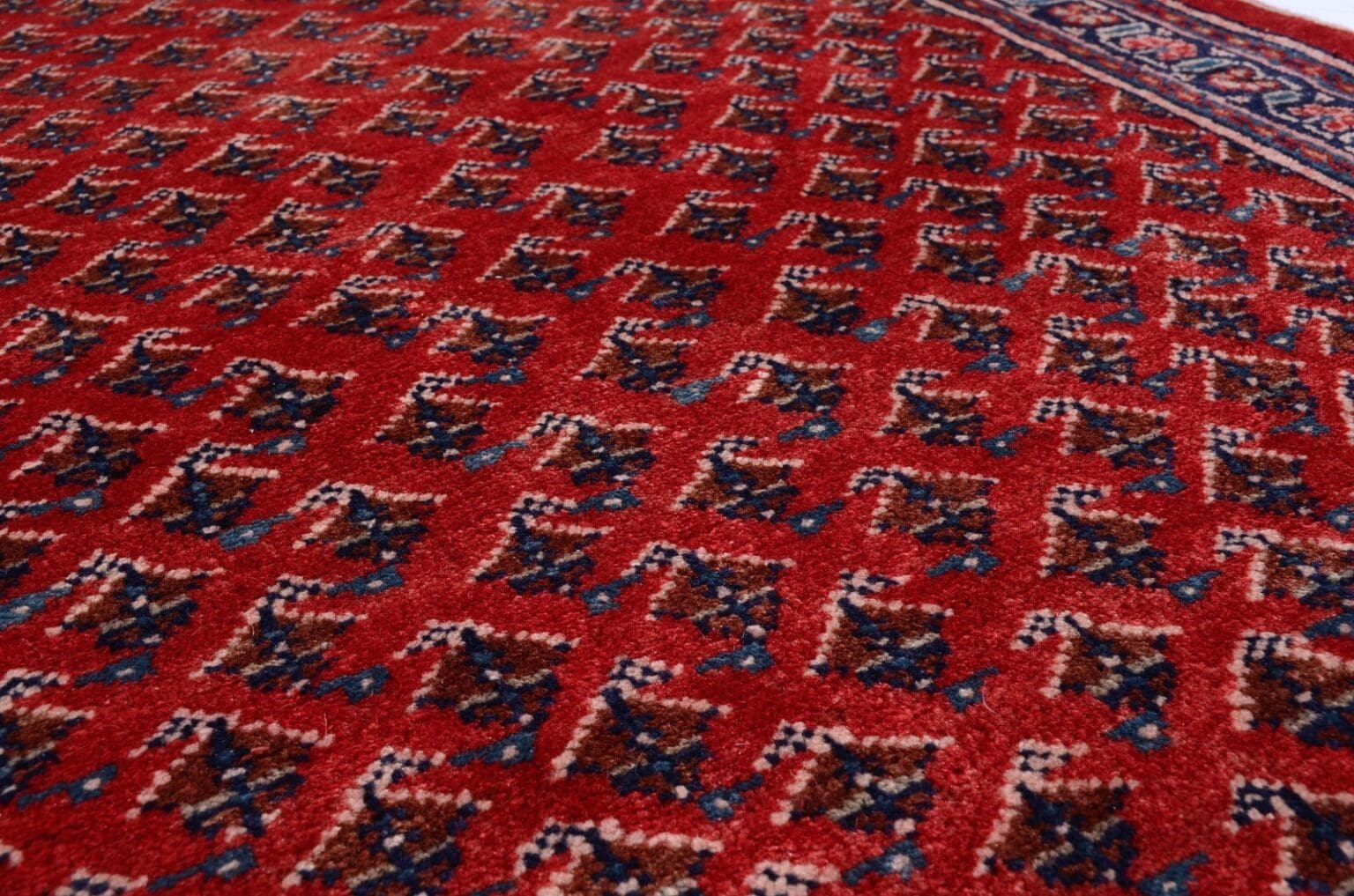
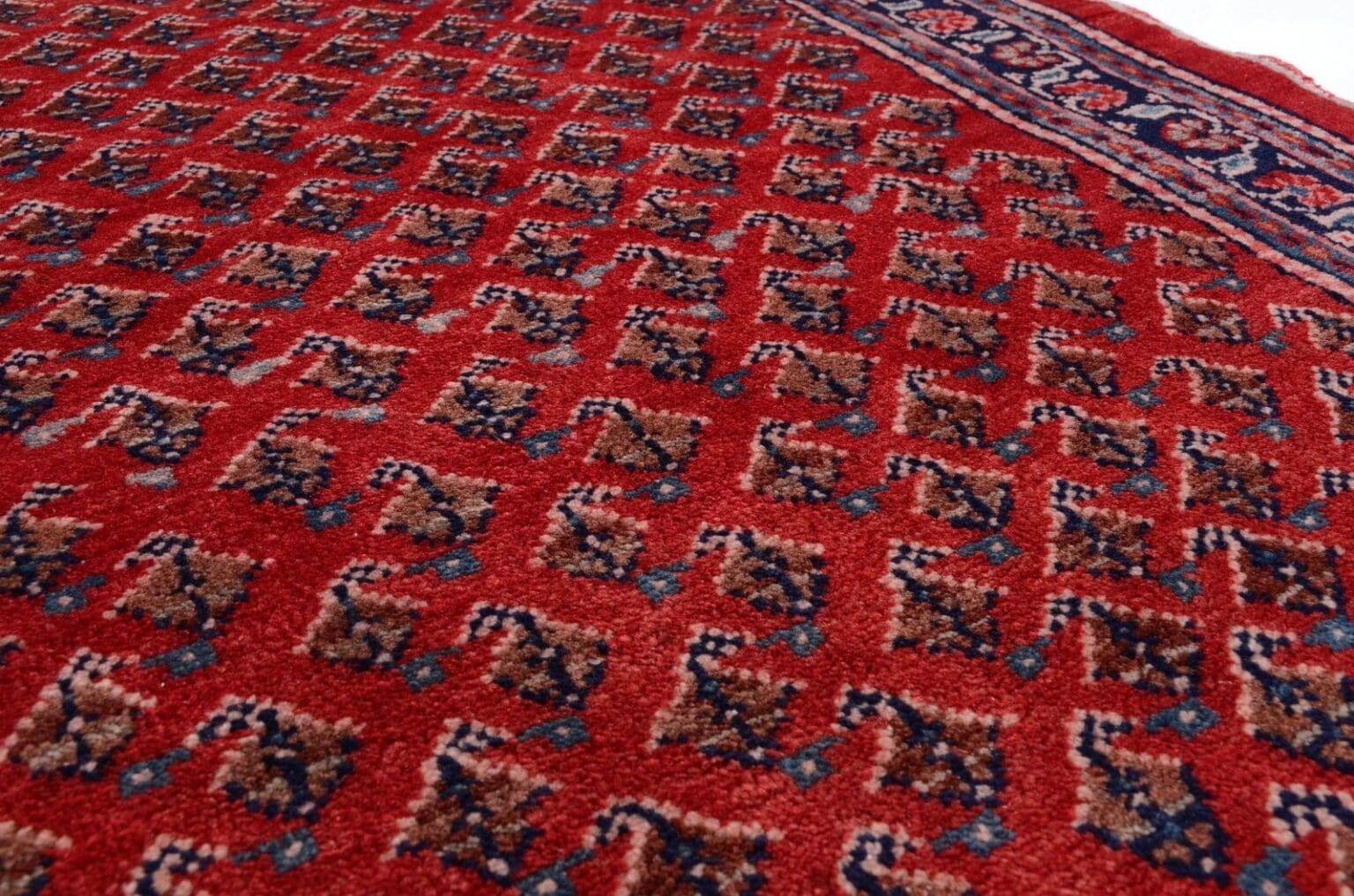
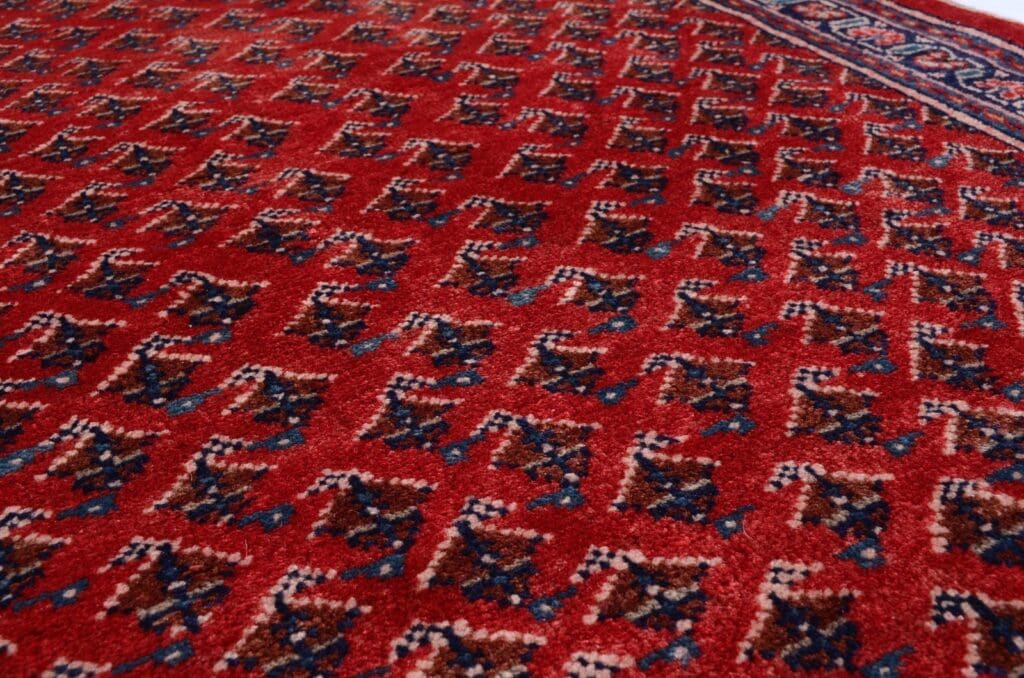
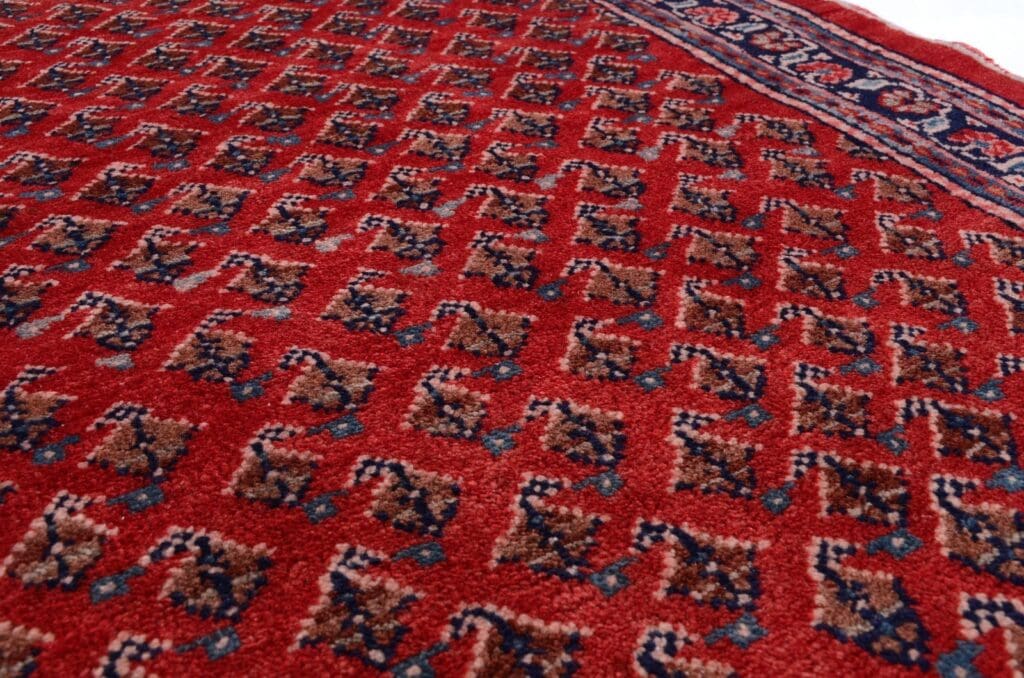
The knot density is 250,000 knots per square metre. This dense construction supports a finely articulated pattern and helps maintain clear relationships between outlines, floral elements and colour fields. Each knot contributes to the finished image, so the decoration is inseparable from the technical structure of the pile. The hand-knotted method, the wool pile and the cotton warp together describe a rug made for lasting use and a detailed visual surface.
Hand craftsmanship also requires continuous attention to the arrangement of forms and colours. The maker must keep the pattern coherent while building the pile across the rug. Repeated motifs therefore retain the order of a traditional design while the actual object remains a one-off. Its character comes from the combination of a regional pattern language, a dense knot structure and the individual work involved in making the rug.
Origin and Tradition
Sarough, also written Saruq, is a traditional city in Iran known for its carpet art. Sarough rugs are associated with Persian weaving culture, strong colours, complex compositions and careful workmanship. This runner is identified as a Persian rug from Persia and is named Sarough Mir. The origin therefore refers to an Iranian carpet tradition, not simply to a general oriental appearance. The place name and the Mir designation together locate the rug within a recognised regional and design context.
The carpet tradition of Sarough developed through knowledge of materials, knotting methods and established pattern arrangements passed from one generation to the next. Production begins with the warp, which provides the basis for the hand-knotting process. Knots are placed individually, and the growing pile is organised so that the design remains legible across the surface. Such work calls for attention to rhythm, colour sequence and the relationship between small motifs and the larger composition.
The history of carpet making in this region reaches back hundreds of years. It forms part of a wider Persian craft culture in which rugs were made for practical use as well as for the expression of local design. Sarough is commonly connected with dense knotting, lively colours and floral patterning. These characteristics are not separate decorations added after production; they are created through the same textile process that gives the rug its structure. The pattern emerges from the disciplined placement of coloured knots.
Regional traditions are useful for understanding why a Sarough rug combines a carefully ordered design with an active, richly coloured surface. The name Mir identifies a particular pattern direction within the Sarough tradition. It is not a claim that every Sarough rug has the same drawing, but a designation for the decorative language used here. The result links the rug to its Iranian place of origin while distinguishing its pattern family.
Persian carpet making is a form of knowledge that includes the preparation of the foundation, the handling of wool, the creation of knot rows and the organisation of borders and fields. A hand-knotted rug is not completed in one industrial operation. Its surface develops progressively, with the maker repeatedly checking the connection between the emerging image and the underlying structure. This explains why hand-knotted rugs are treated as individual works within the tradition, even when they follow familiar regional designs.
The tradition also places importance on the balance between usefulness and visual order. A rug can serve as a floor covering while carrying a carefully developed arrangement of motifs and colour. Sarough examples are known for making this balance visible through their dense construction and detailed floral compositions. In this runner, the traditional Persian-oriental style, red colour and Sarough Mir pattern provide the design identity, while the hand-knotted construction expresses the craft tradition behind it.
Design and Pattern
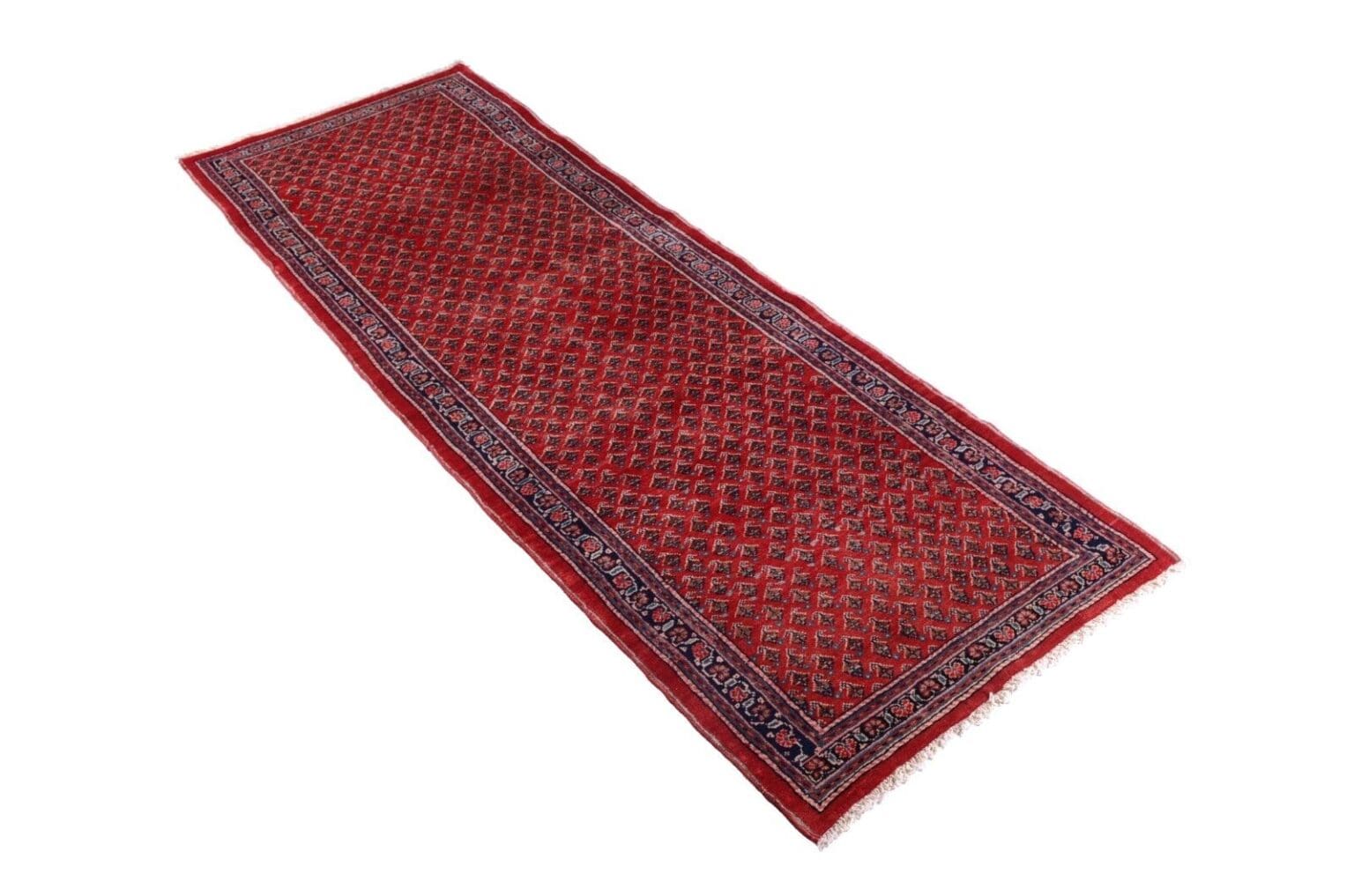
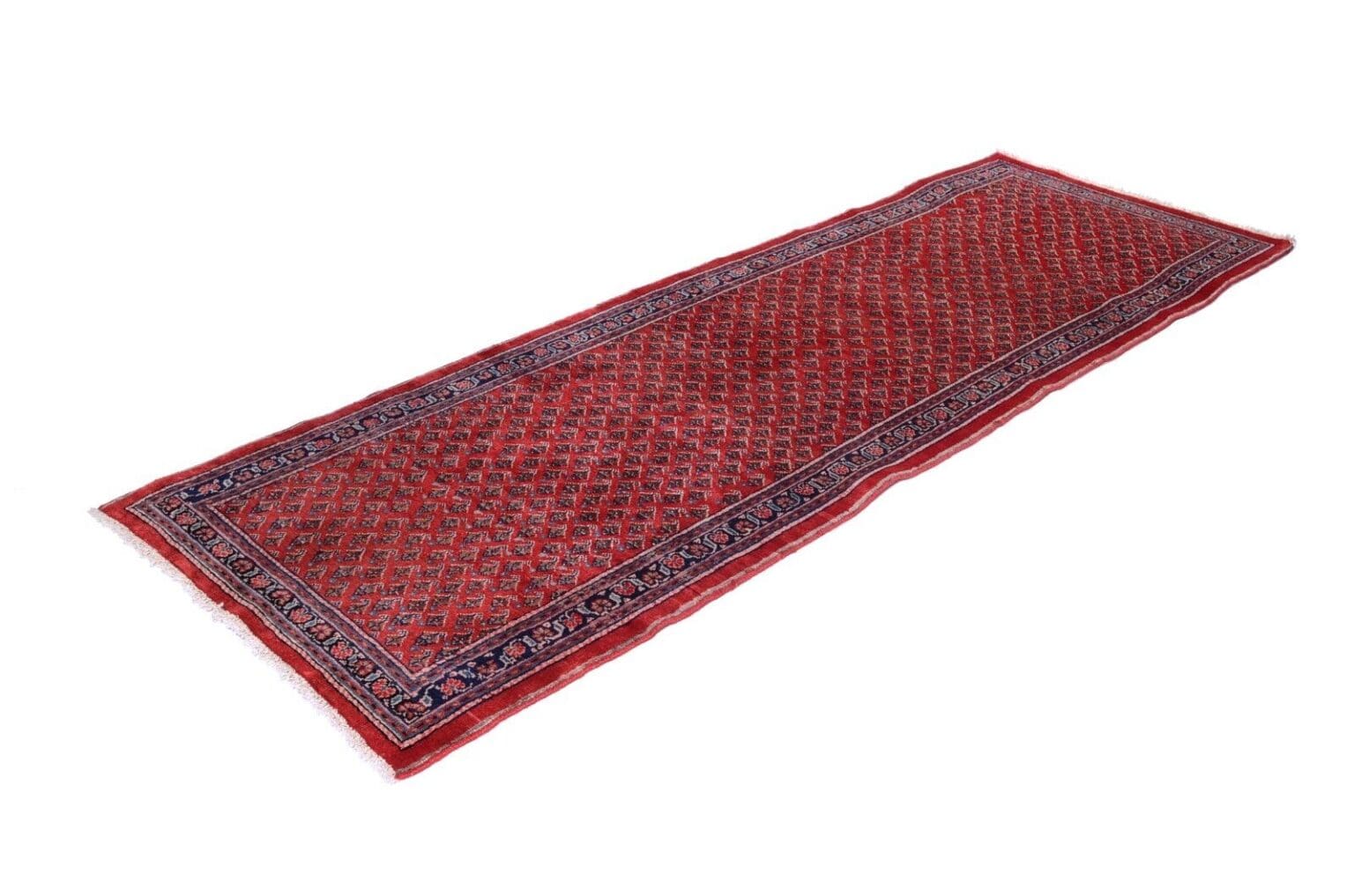
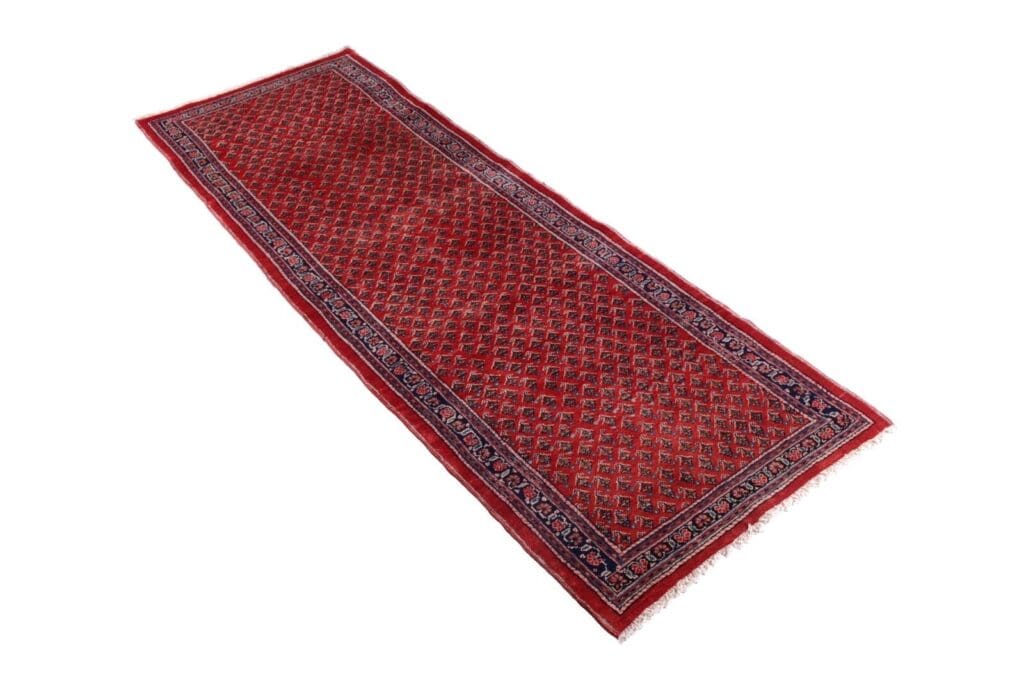
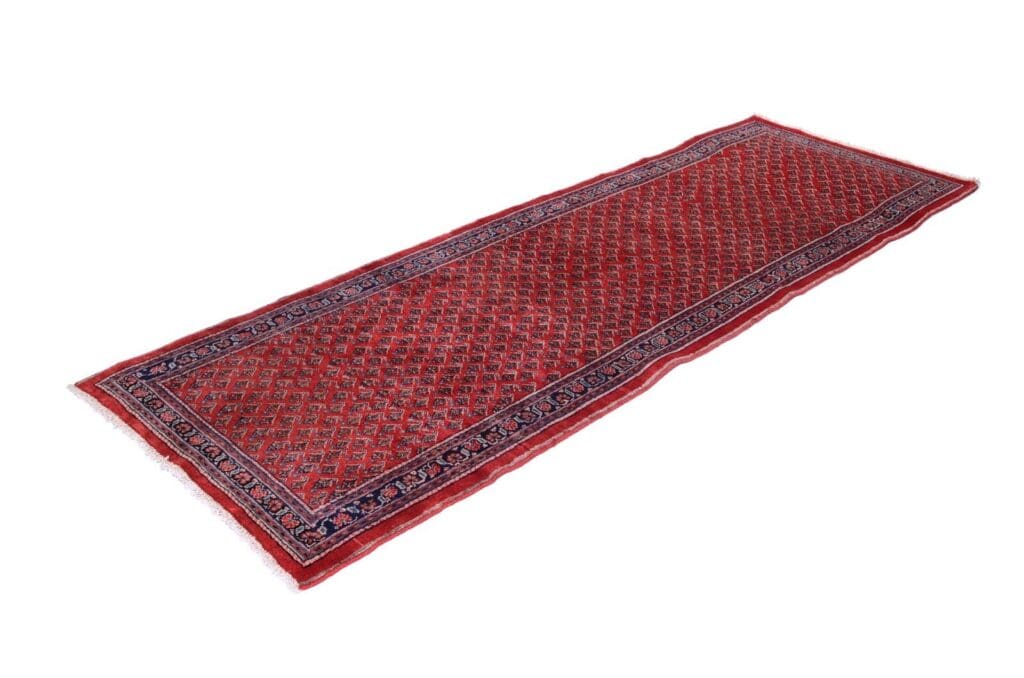
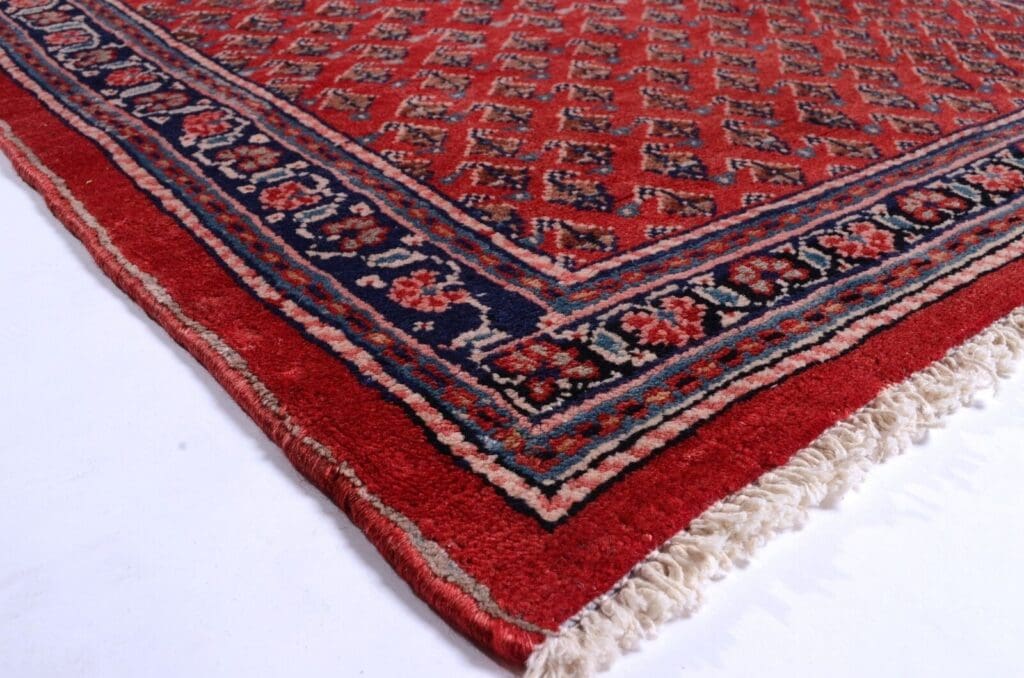
The runner features the Sarough Mir pattern in a traditional Persian-oriental style. Its design is characterised by elegant, often floral forms arranged into a coherent composition. Red is the defining colour of the rug and gives the field a warm, intense basis. Against this background, the drawn elements create a structured surface rather than a random arrangement of ornament. The pattern depends on repetition, connection and a controlled relationship between larger areas and finer details.
Floral designs have a long place in Persian rug art. Flowers, vines and stylised plant forms may refer to nature, but in a rug they are transformed into shapes that can be repeated and joined within a woven order. The maker does not draw them with a free brush. Instead, every contour and colour change is built from knots. This gives the pattern a textile character: the image is created through the accumulation of small units, while the viewer reads the complete arrangement as a balanced whole.
A Sarough Mir composition is understood through the relationship between its decorative clarity and its internal movement. Floral elements may repeat, branch or respond symmetrically to one another. Surrounding lines and intervals give those forms definition and prevent the field from becoming visually unstructured. The dense knotting supports the detailed rendering of such relationships. At close range, the pattern can be considered in terms of individual knots and colour areas; from farther away, it reads as a unified floral design.
Persian motifs are often discussed in connection with nature, belief and history. Their meanings are not always fixed to one single interpretation, and a motif may function both symbolically and decoratively. In this rug, the floral character is the most evident design feature. It places the runner within a tradition that values stylised vegetation, ordered repetition and the creation of harmony through textile form. The Sarough Mir name further identifies the specific direction of the pattern.
The red colouring gives the runner a distinct visual presence without changing the underlying structure of the design. It establishes warmth and continuity across the elongated format, while the floral drawing introduces variation within that field. The combination can be read in a traditional interior or placed against modern furnishings as a deliberate contrast. In either setting, the defining elements remain the red palette, the Sarough Mir pattern and the hand-knotted Persian construction.
As a runner, the rug is suited to a long interior zone, but its design is not restricted to one furnishing period. The traditional Persian-oriental style can sit within a classic arrangement, while the detailed floral surface can also add a clearly defined textile layer to a more contemporary room. Its decorative role comes from the interaction of colour, pattern and hand-made texture rather than from any added embellishment.
Special Features
The knot density of 250,000 knots per square metre is one of the runner’s defining features. It supports the detailed execution of the Sarough Mir pattern and expresses a densely made hand-knotted structure. The pile is 100% new wool and the warp is 100% cotton. These material details describe the stated composition of the rug and distinguish the visible wool surface from its cotton foundation.
The condition is perfect and unused. The runner has not previously been subject to use. Its red colour and traditional Persian-oriental design allow it to be considered for living rooms, hallways and entrance areas. It is also suitable for underfloor heating. The combination of hand-knotted workmanship, high knot density and unused condition gives this one-off piece a clearly defined technical and practical profile.
Sarough Mir rugs are associated with durability, robust construction and detailed pattern work. Those qualities belong to the broader tradition represented by the rug, while its specific condition remains perfect and unused. Because it is hand-knotted, its particular combination of colour, pattern execution and surface is individual rather than an interchangeable machine-made repeat. The rug can therefore be understood both as a decorative textile and as a usable floor covering shaped by Persian craft practice.
FAQ
How should I care for my Sarough Mir runner?
For routine care, vacuum the runner on a low setting. Avoid direct sunlight so that the red colour does not fade. If a spill or mark occurs, treat it immediately with a damp cloth and a mild cleaning product. Regular professional cleaning is recommended to preserve the textile surface over time. The hand-knotted construction should be taken into account during cleaning, as should the wool pile and cotton warp. Harsh treatment and unnecessary stress on the fibres should be avoided. Careful maintenance helps keep the detailed Sarough Mir drawing legible and preserves the pleasant feel of the pile. Any cleaning method should be applied with restraint rather than by aggressive scrubbing or unsuitable chemicals.
Where is the best place to use my Sarough Mir runner?
The runner is well suited to hallways, entrance areas and living rooms. Its elongated form can create a textile link through a passage or define a clear area within a larger room. In an entrance it introduces the red colour and floral Sarough Mir pattern at the point where a space begins; in a living room it can act as a distinct decorative element. The traditional design works with classic furnishings and can also be used as a deliberate contrast to modern furniture. Since the rug is suitable for underfloor heating, it may also be used in rooms equipped with that system.
What makes the Sarough Mir runner unique?
Its individual character comes from the combination of hand-knotting, a density of 250,000 knots per square metre, a pile of 100% new wool and a warp of 100% cotton. The Sarough Mir pattern, red colour and perfect unused condition add further defining details. Every hand-knotted rug is a one-off, with its own execution of pattern and colour rather than a perfectly repeated industrial surface. Sarough rugs are also associated with durability and robust construction within the Persian tradition. In this runner, that broader regional and technical context meets the specific features of the individual piece. It is therefore both a decorative textile with a distinct design identity and a durable floor covering made through traditional hand craftsmanship.
To provide the best experiences, we use technologies like cookies to store and/or access device information. Consenting to these technologies will allow us to process data such as browsing behavior or unique IDs on this site. Not consenting or withdrawing consent, may adversely affect certain features and functions.
Functional Always active
The technical storage or access is strictly necessary for the legitimate purpose of enabling the use of a specific service explicitly requested by the subscriber or user, or for the sole purpose of carrying out the transmission of a communication over an electronic communications network.
Preferences
The technical storage or access is necessary for the legitimate purpose of storing preferences that are not requested by the subscriber or user.
Statistics
The technical storage or access that is used exclusively for statistical purposes.The technical storage or access that is used exclusively for anonymous statistical purposes. Without a subpoena, voluntary compliance on the part of your Internet Service Provider, or additional records from a third party, information stored or retrieved for this purpose alone cannot usually be used to identify you.
Marketing
The technical storage or access is required to create user profiles to send advertising, or to track the user on a website or across several websites for similar marketing purposes.

 SECURE PAYMENT
 SHIPPING PARTNERS