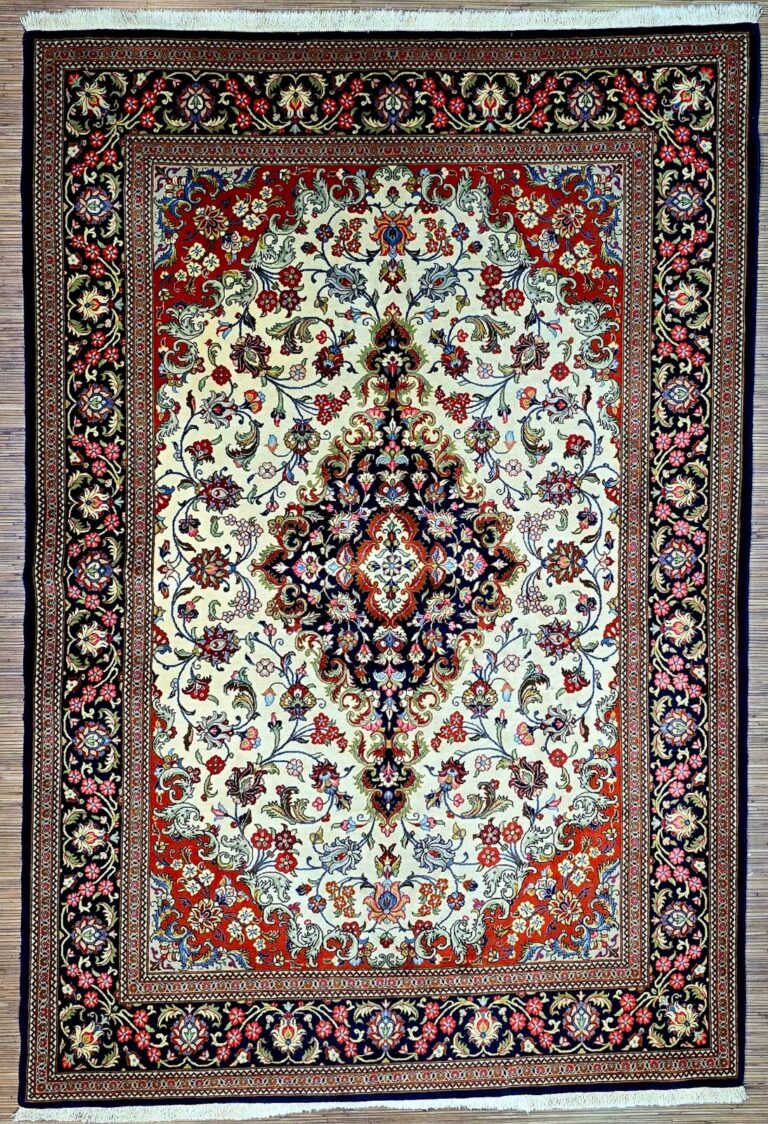
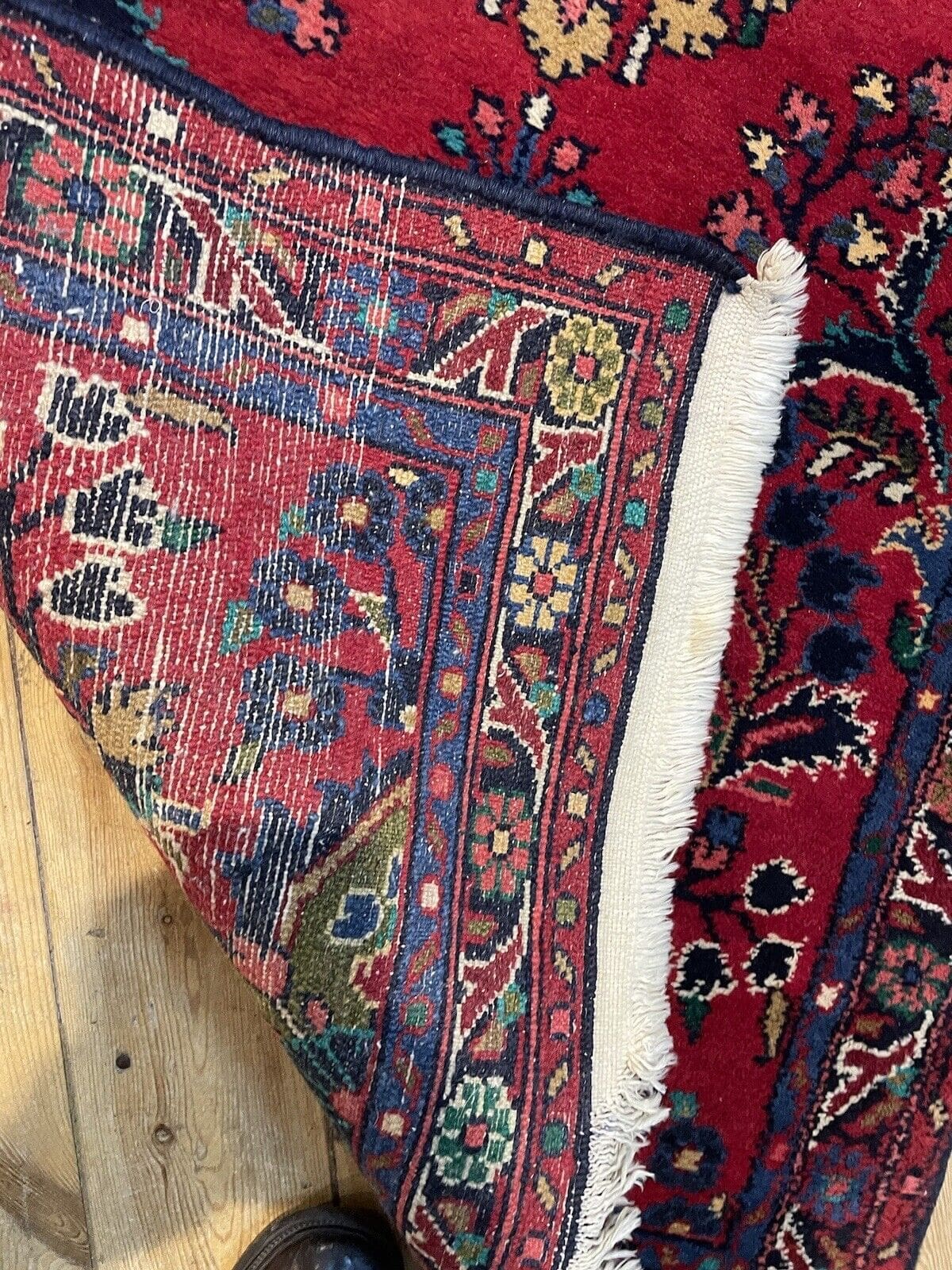
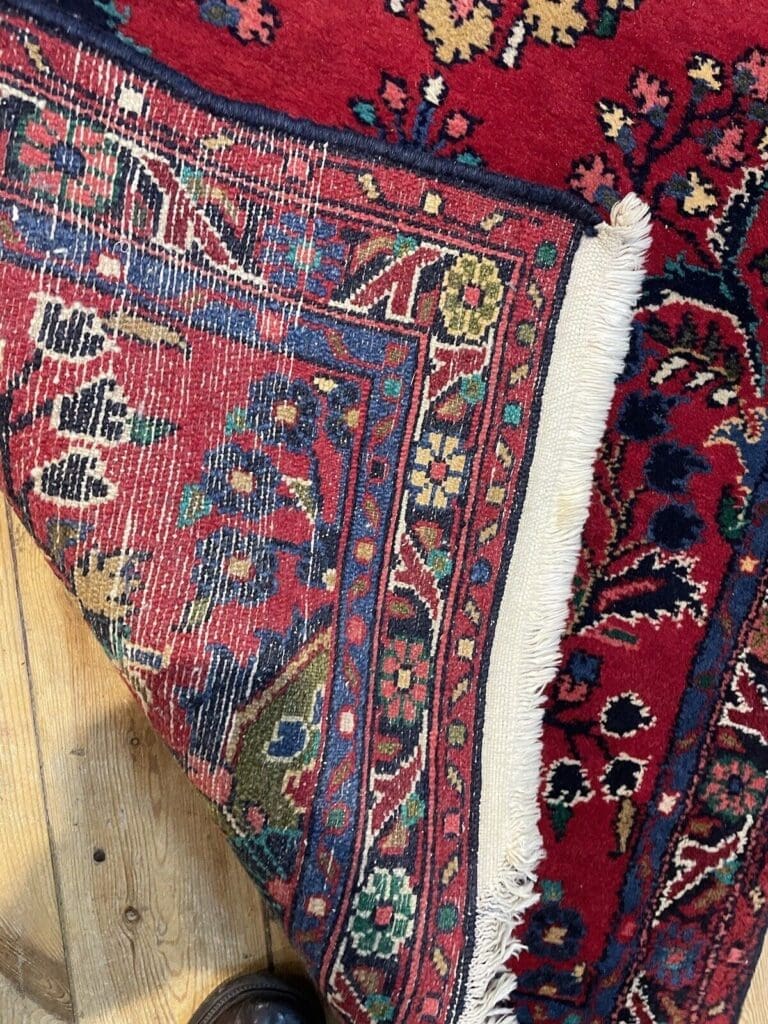
This Sarough Persian rug is made from 100% wool and is hand-knotted. Wool is one of the traditional materials used in rug making. It combines a naturally warm, comfortable handle with a resilient surface. The fibre can absorb moisture and release it back into the room, which makes wool a versatile material for an interior textile. The pile of this rug has a height of 10 mm. The material information refers to the pile; the description gives no separate information about the warp.
Hand-knotting means that the rug is built knot by knot rather than produced as a machine-made series. The process requires consistent handling of the foundation and careful working of each area of the design. Every hand-knotted rug therefore brings together its own relationship of wool, colour and pattern. The product description characterises the knot density with the phrase “high-quality workmanship”. This wording describes the execution of this particular rug.
The combination of a pure wool pile and hand-knotted construction gives the piece its traditional character. Wool has long been used in rug production because it is a strong fibre with natural elasticity. It can recover after pressure and has a distinctive, tactile surface. Hand craftsmanship also allows variations in tension, colour effect and detail that belong to an individual woven piece. These qualities distinguish the making of a hand-knotted wool rug from synthetic or machine-produced floor textiles.
Origin and Tradition
Sarough is a region in Iran and also the name of an established rug tradition. The description identifies this rug as Sarough and calls it a Persian rug. Sarough rugs are generally associated with the town of Sarough in north-western Iran. The art of rug knotting has been maintained there for centuries. This places the rug within an Iranian craft tradition in which careful making, organised patterning and regional identity are closely connected.
Sarough production belongs to the wider Persian tradition of making rugs by hand. In that tradition, design, colour arrangement and knotting are developed as one process. A pattern is not simply printed onto a completed surface. It is formed by the sequence of knots and by the distribution of differently coloured wool. The makers transfer the intended drawing into a textile structure. This explains why pattern and workmanship are inseparable features of a hand-knotted Persian rug.
Regional rugs have traditionally served practical use as well as the continuation of design traditions. Floral motifs, geometric forms and balanced colour fields can be combined in many arrangements. Sarough rugs are known for robust construction and are described here as suitable for both traditional and modern interiors. That classification refers to the way an established Iranian technique can be used in present-day rooms while retaining its regional character.
The dating given for this rug is the 21st century, from 2000 onward. It therefore belongs to a recent phase of the Sarough tradition. The piece combines an established regional name and traditional hand-knotting with a date in the 21st century. A certificate is also included. The certificate forms part of the documented presentation of the rug and provides an additional basis for its identification and description.
Iranian rug making has produced many regional expressions. Across those expressions, handwork, wool and carefully structured patterns remain important points of reference. In this case, Sarough identifies an Iranian origin rather than merely a general oriental decoration. Calling the piece a Sarough Persian rug records both its place within Iranian rug culture and its connection with the regional tradition of Sarough.
Design and Pattern
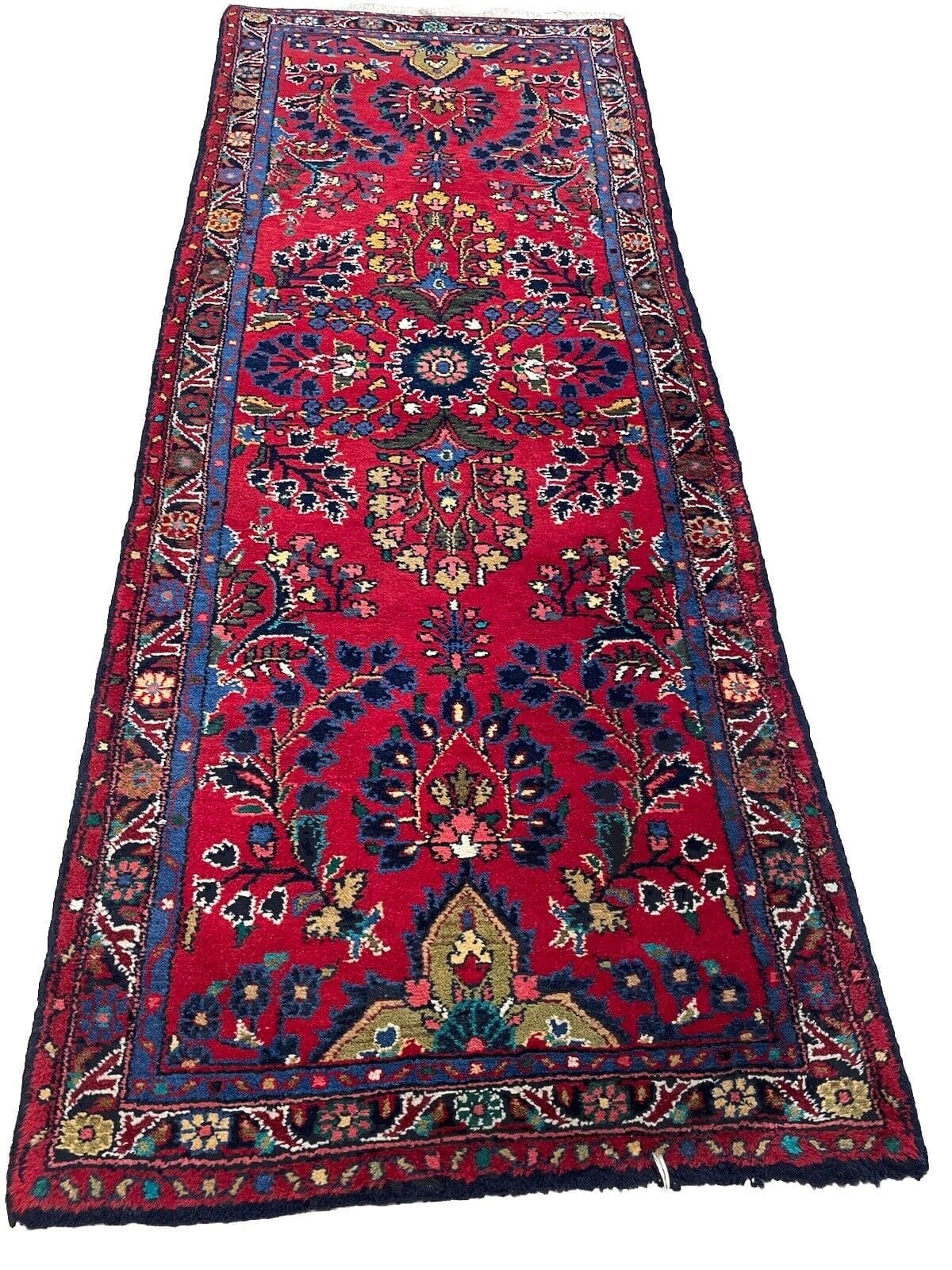
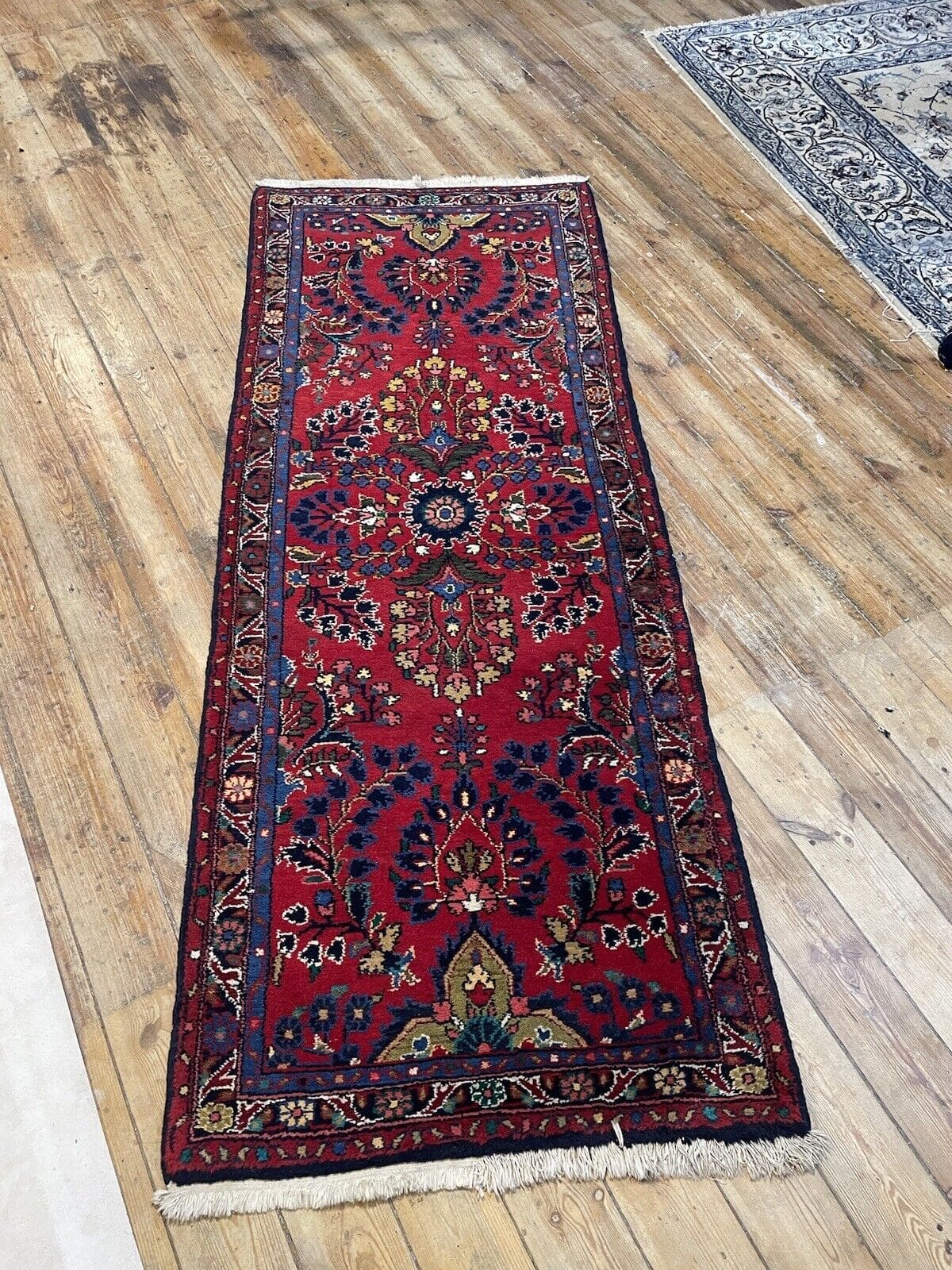
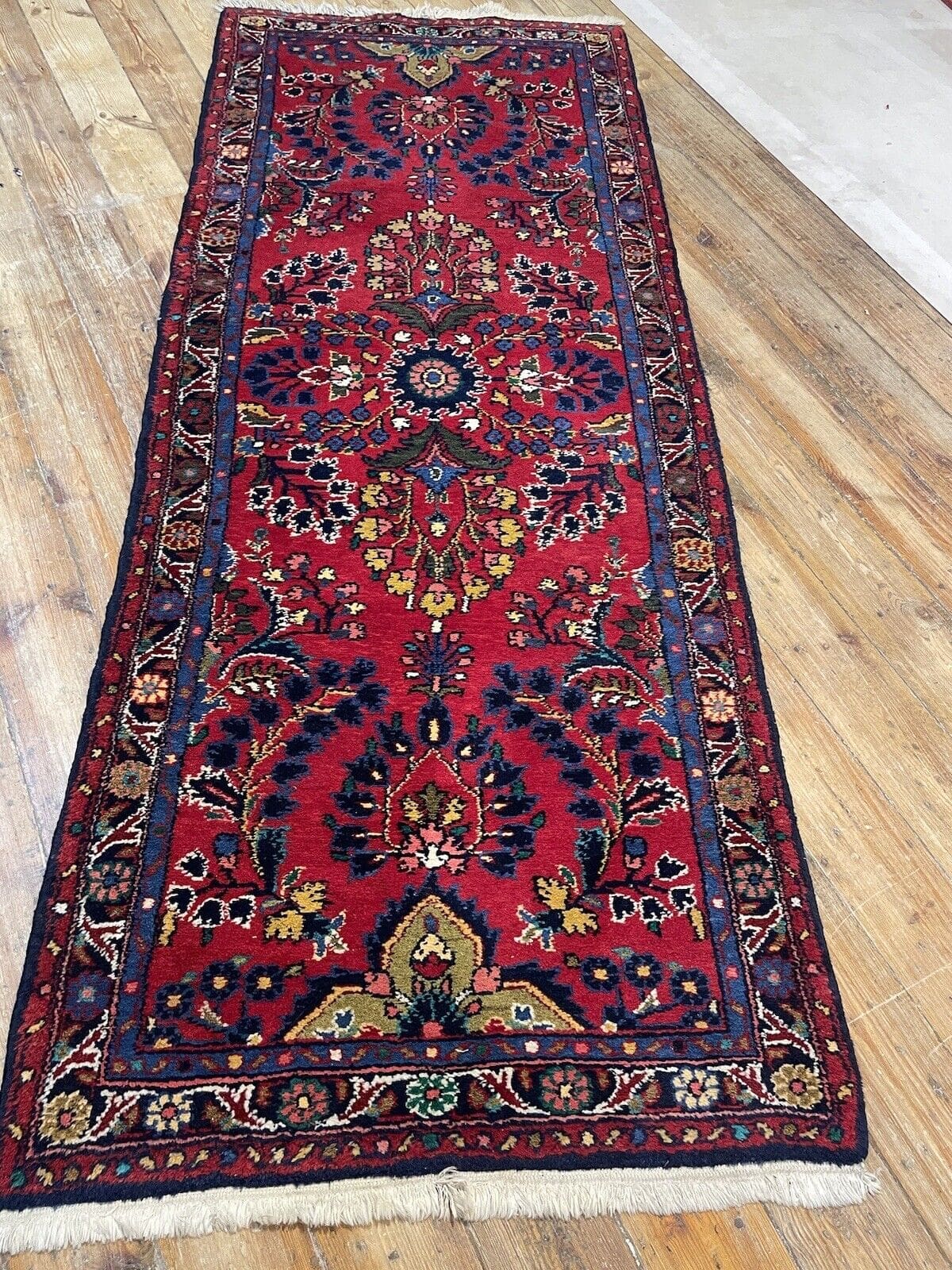
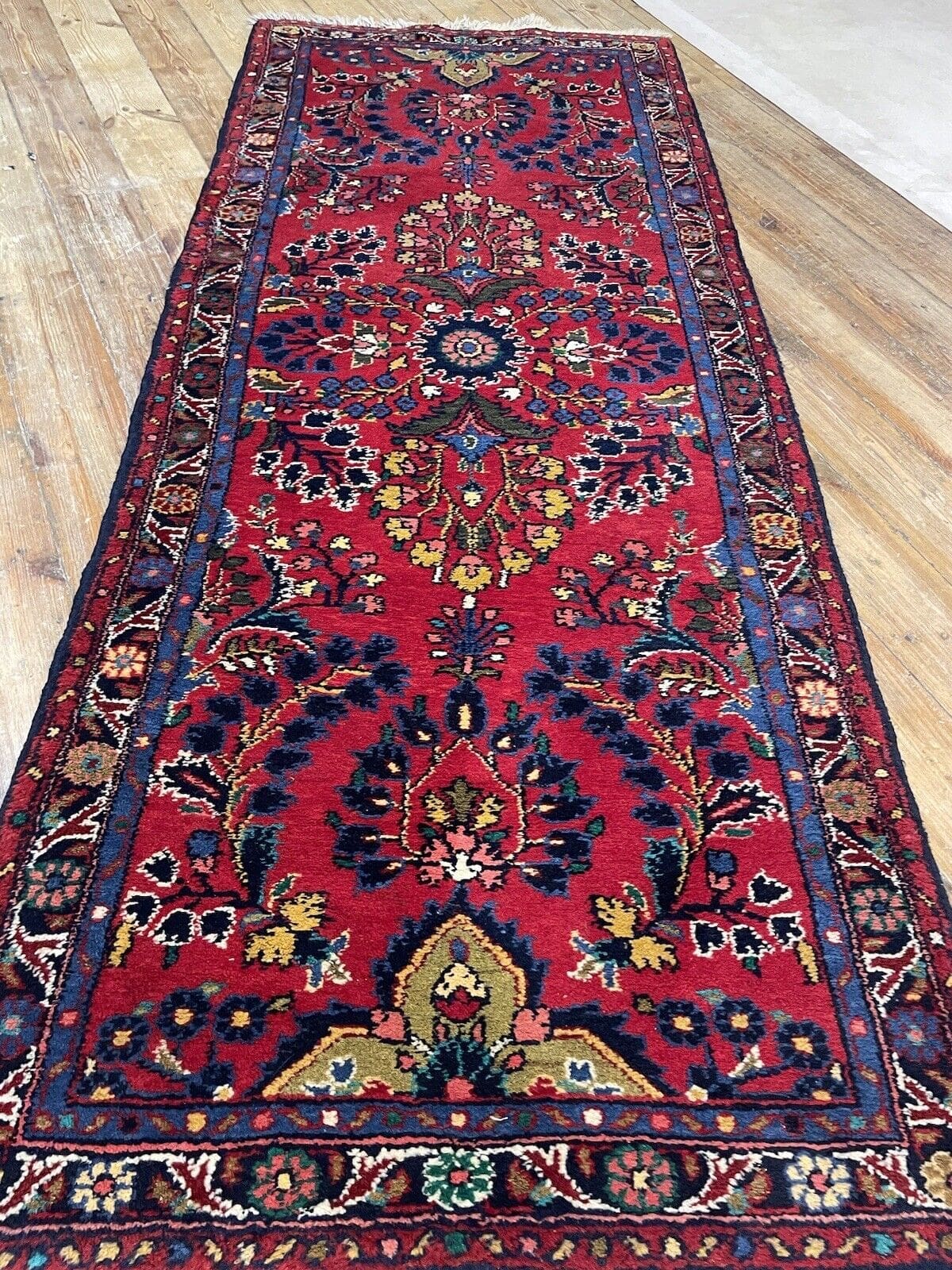
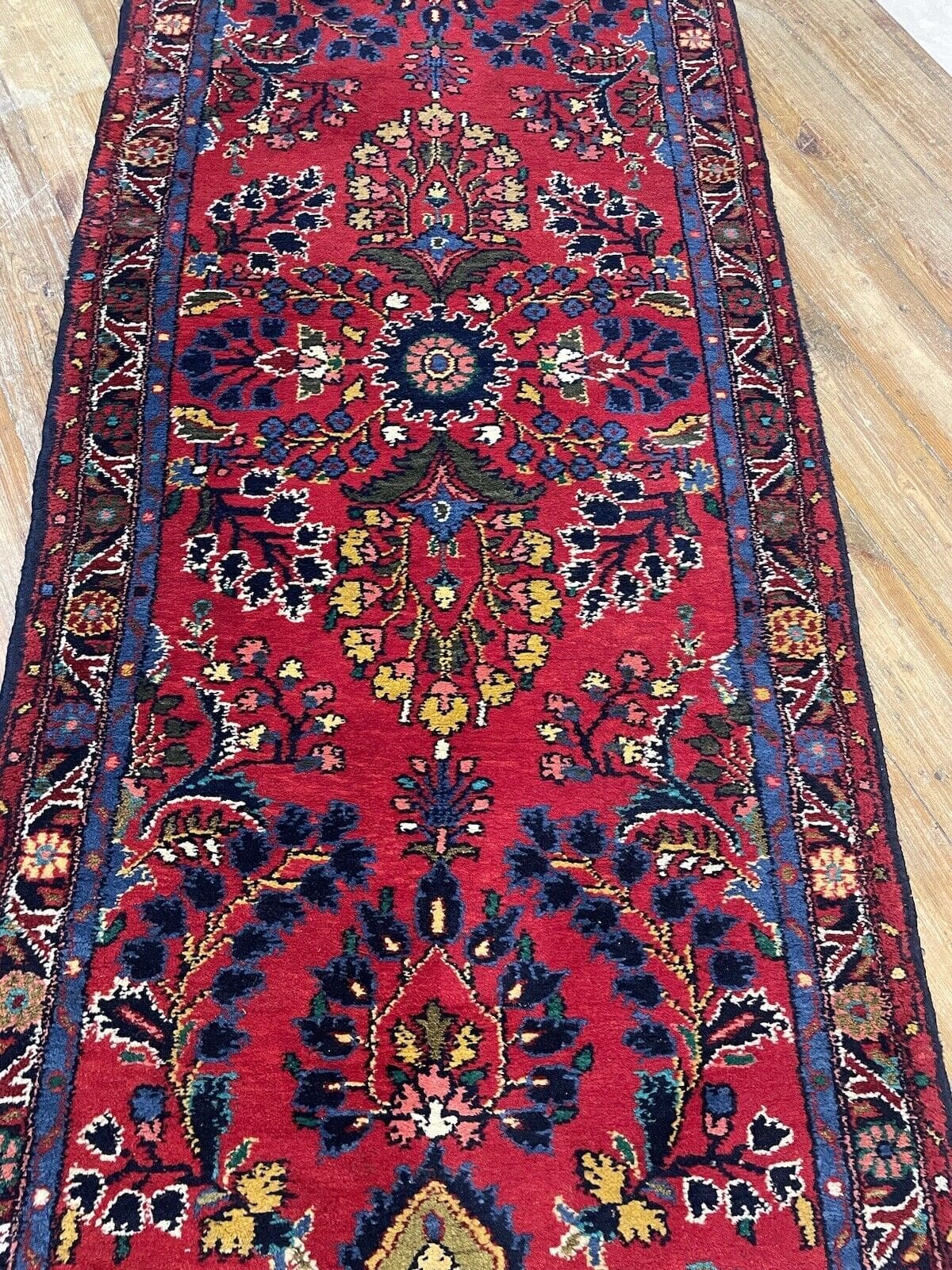
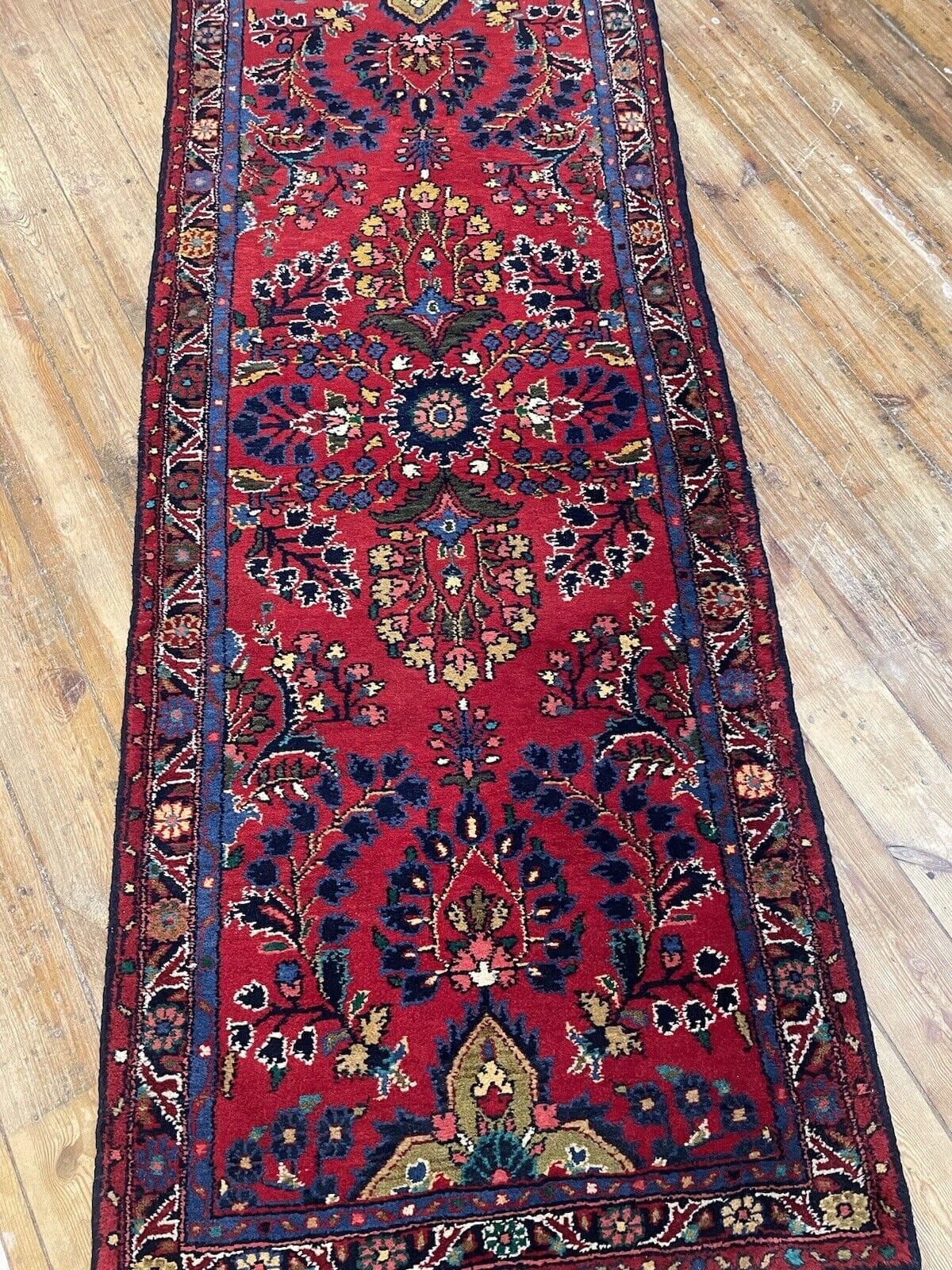
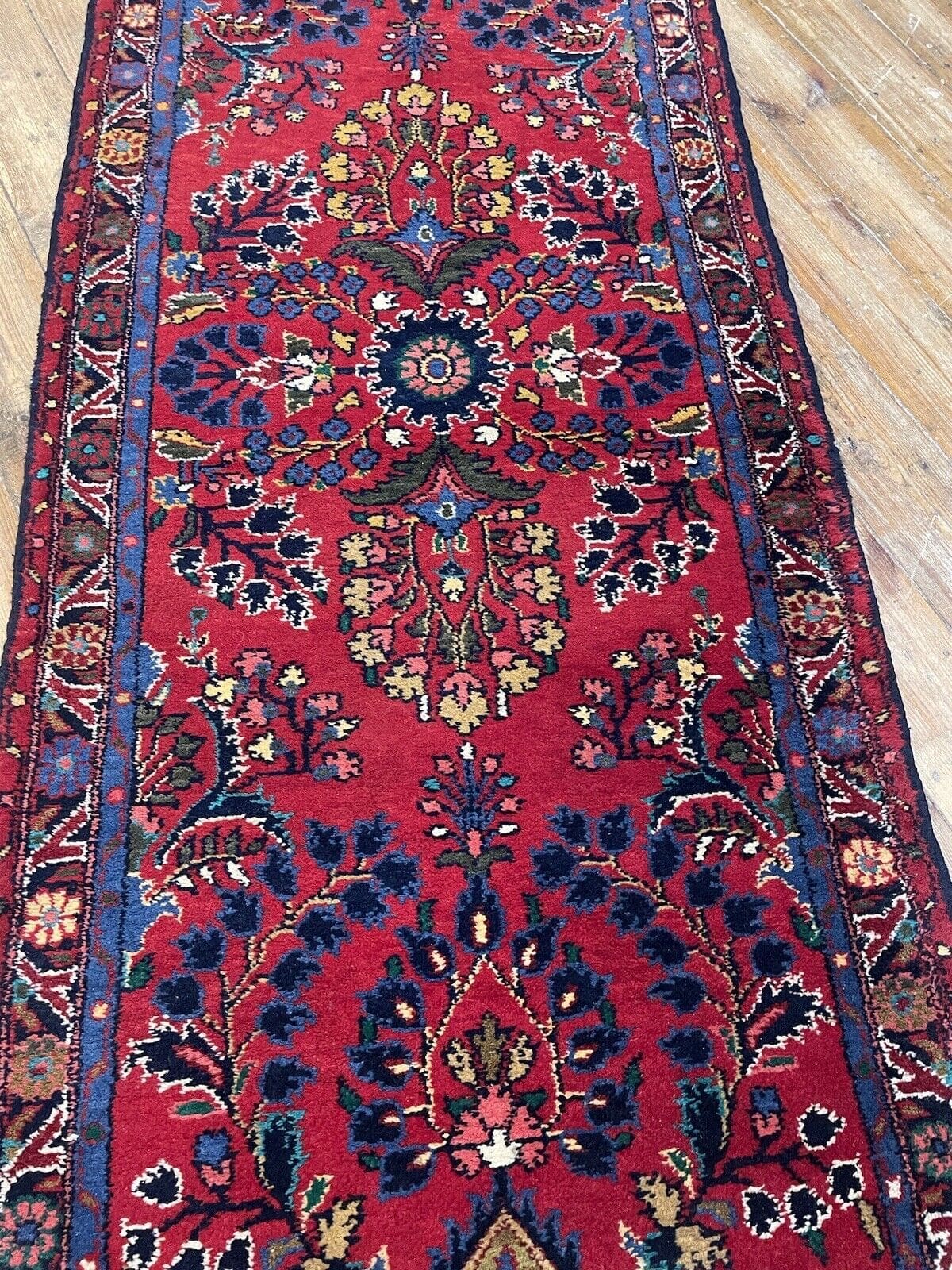
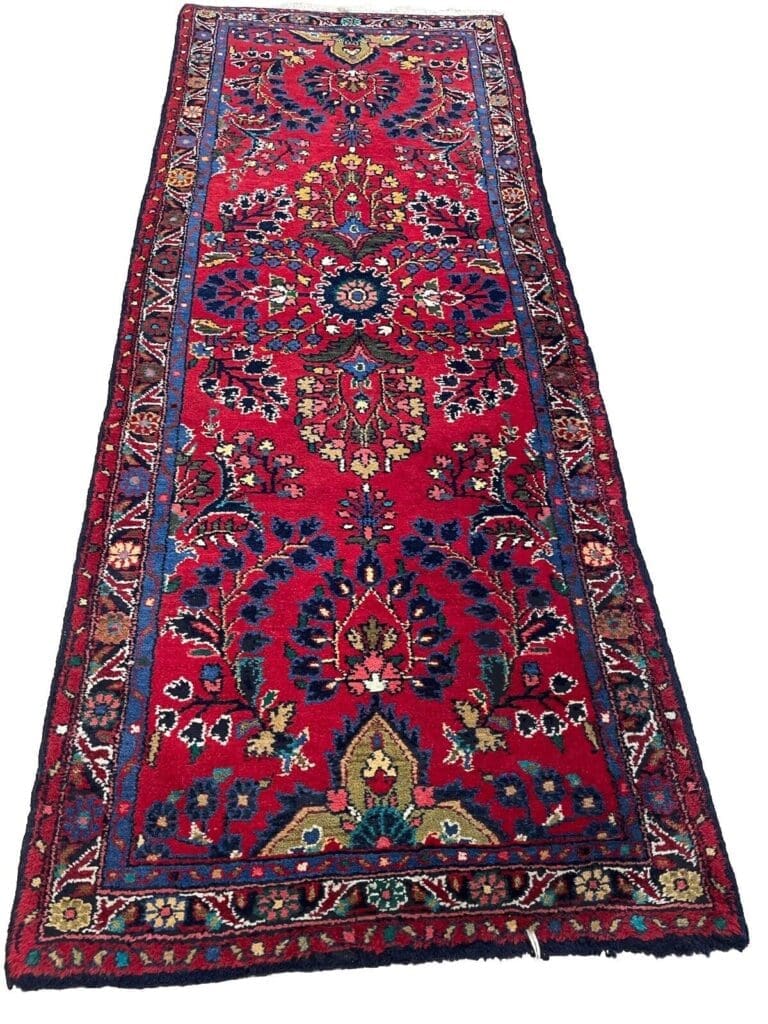
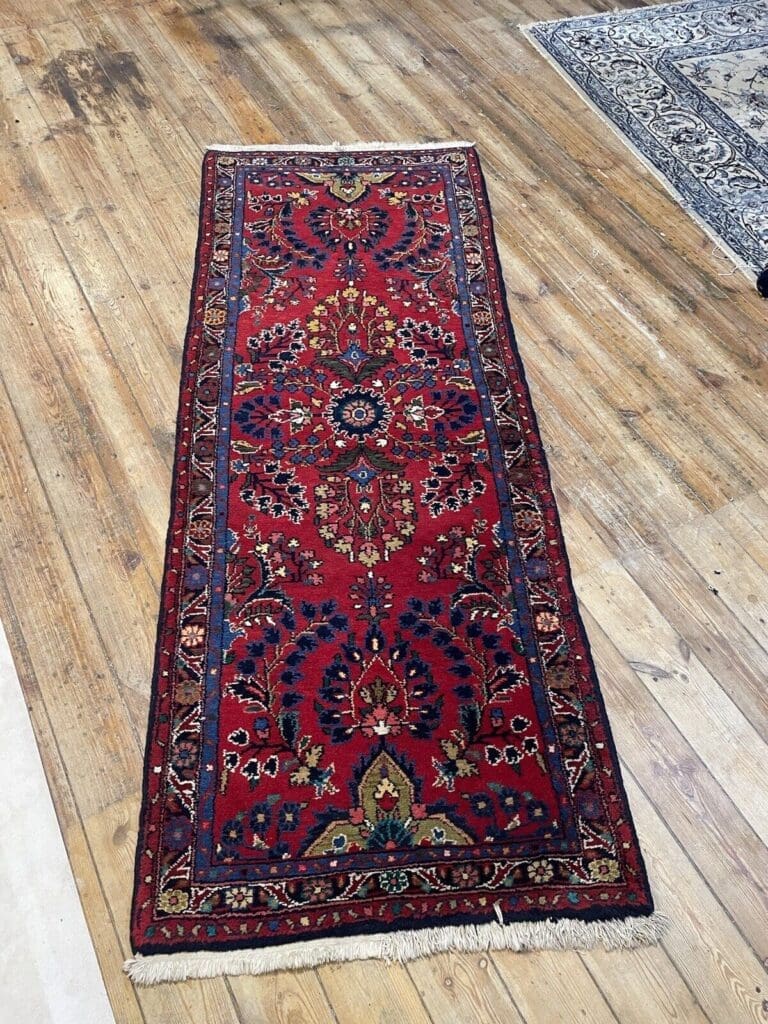
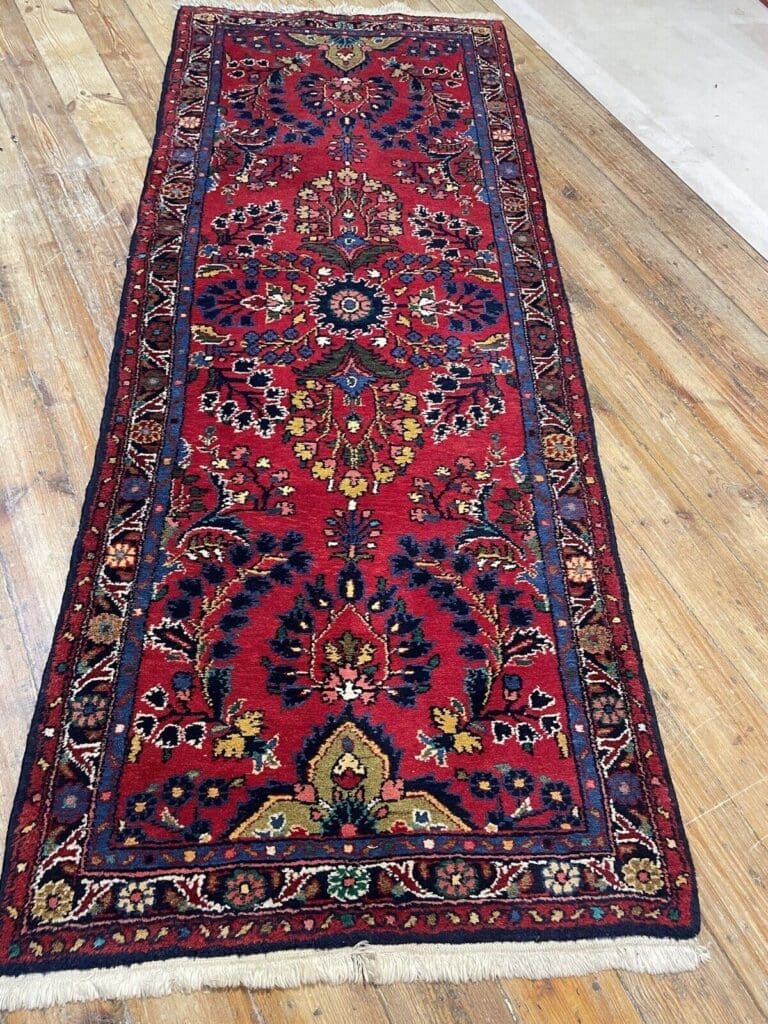
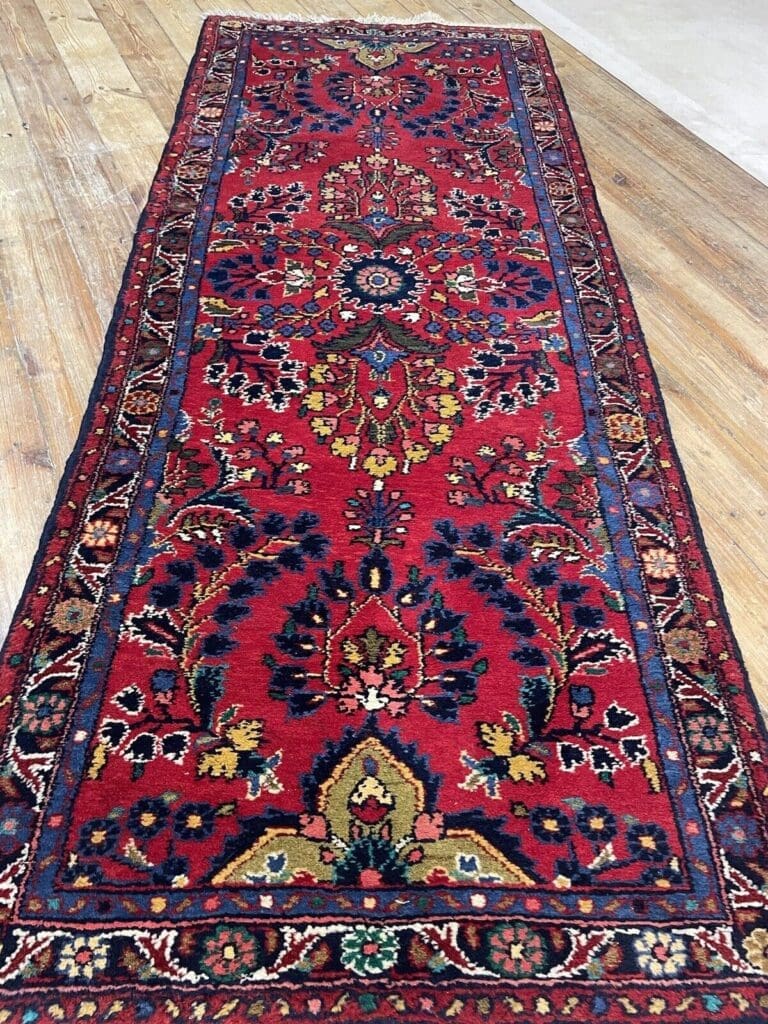
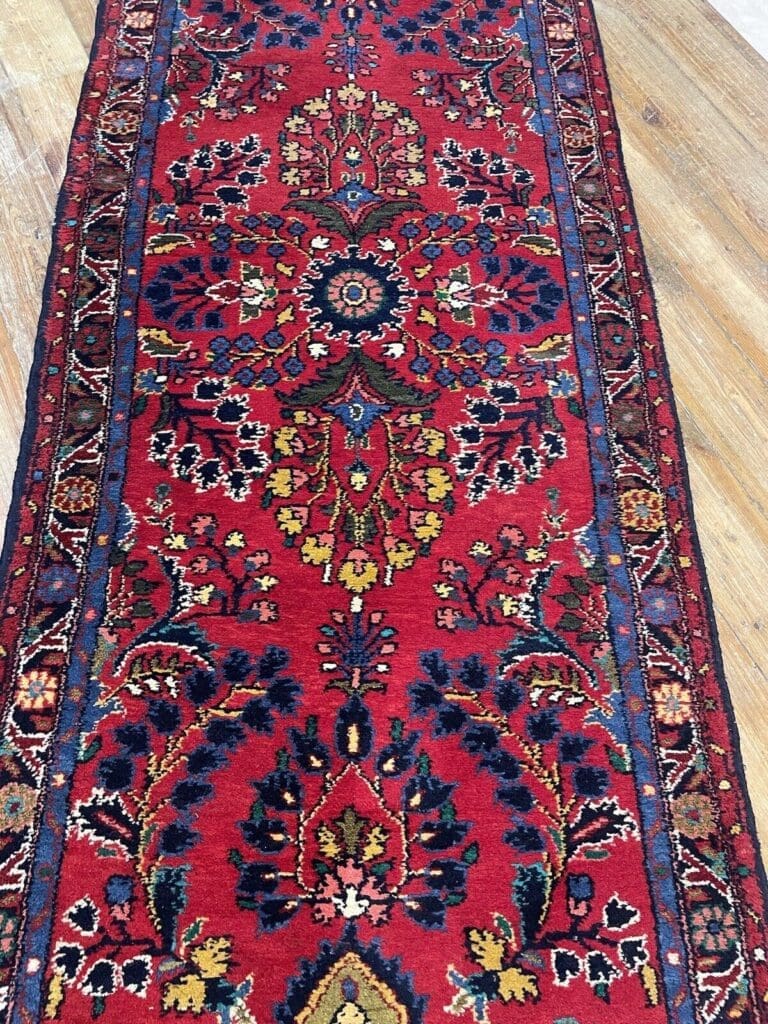
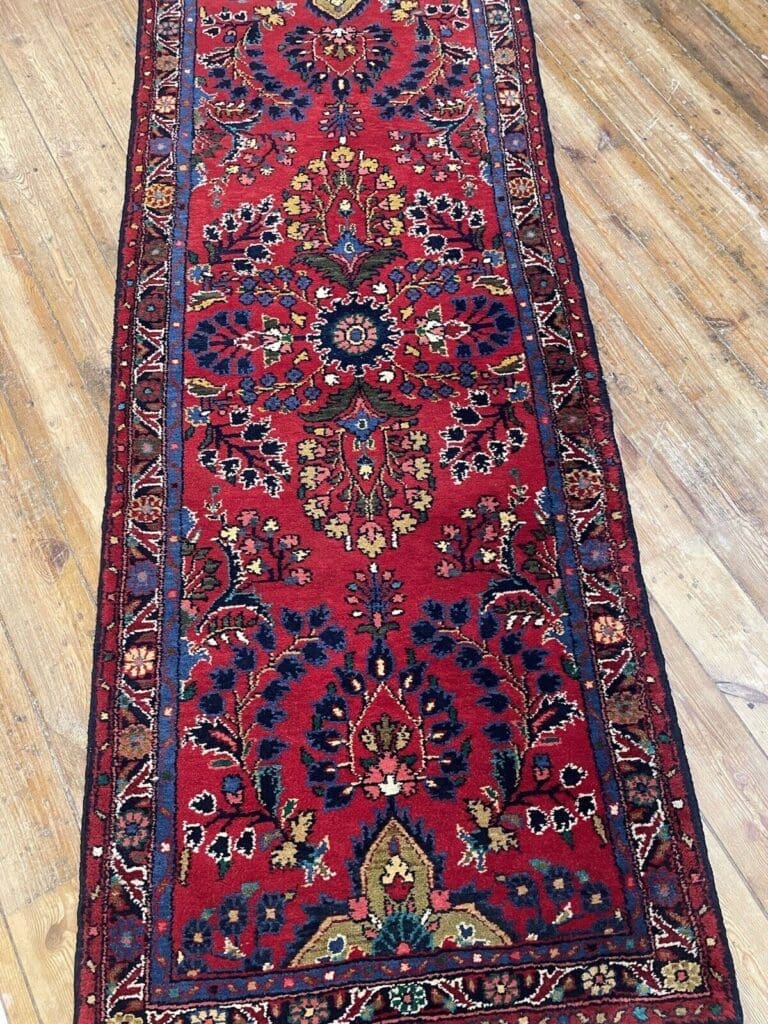
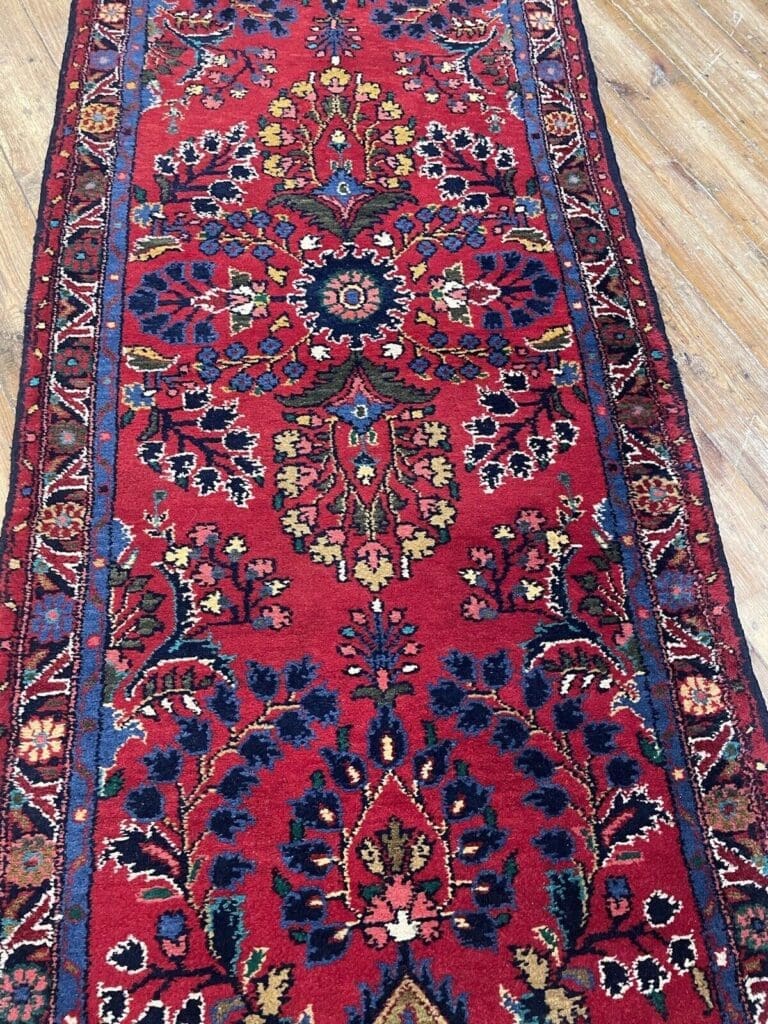
The pattern of this rug is described as oriental, while its style is given as traditionally oriental or Persian. The product title identifies the colour as old red, making red the defining colour impression of the piece. A range of red tones can give a design depth, while neighbouring shades help separate individual areas. The description places the red colour field at the centre of the rug’s visual character.
Floral motifs and geometric forms are typical of Sarough rugs. Floral elements may appear as stylised leaves, blossoms or curling branches. Geometric shapes provide order and divide the surface into clearly related areas. In Persian rug design, these two forms of expression are often used together: natural motifs receive a measured arrangement, while lines and shapes are softened or enriched by small floral details. The term “oriental” used for this rug encompasses that traditional decorative language.
An oriental pattern depends on the relationship between the main field, repeated individual motifs and the surrounding borders. During hand-knotting, these elements are transferred into the textile structure. The result is not a flat printed image but a design built from knots, with a tactile surface of its own. Wool accepts colour with subtle variation and can appear slightly different as the direction of the pile changes. This textile effect is a general feature of hand-knotted wool rugs and supports the character of the pattern.
The red palette gives the separate pattern areas a connected appearance. Red tones are often used in traditional rugs to create a warm and cohesive visual field. This piece is described as having a harmonious and distinctive colour scheme. Its pattern remains oriental and Persian in character. It is not identified as an abstract or minimalist design, but as a traditional decorative composition with floral and geometric references.
The design can be placed alongside classic, modern or oriental interiors. This does not mean that the rug has a modern pattern. It means that a traditional Sarough design can be used in different furnishing contexts. In a classic room, it can continue an established Persian vocabulary. In a modern interior, it can provide a clearly traditional textile element. In an oriental setting, it can relate to existing patterns and colours. The regional design language remains the same in each case.
Special Features
A certificate is included with the rug. The description calls it a certified certificate of origin and states that it documents authenticity and careful workmanship. It provides transparency when the piece is being identified and is part of the supplied presentation. No separate information is given about its period of validity or about specific warranty terms.
The rug is used. Its documented character is defined by its hand-knotted construction, pure wool pile and red oriental design. It can be placed on the floor or used as a wall hanging. Regular vacuuming with a soft brush is recommended for care. Spills should be dabbed promptly with a damp cloth rather than rubbed firmly. For a deeper clean, professional rug cleaning is recommended.
The rug is not suitable for outdoor use. It should be protected from moisture and direct sunlight. These care instructions take account of the natural wool, the hand-knotted structure and the colour arrangement. The product description specifies 100% wool for the pile and does not state the presence of synthetic pile materials.
FAQ
How should I clean the Sarough Persian rug?
The surface should be vacuumed regularly using a gentle brush. If a stain occurs, dab the area carefully with a damp cloth. Avoid vigorous rubbing so that the pile, structure and colour areas are treated gently. For a thorough cleaning, a professional rug-cleaning service is recommended. The rug is intended for indoor use and should be kept away from moisture and conditions that could affect its wool pile.
Does the Sarough Persian rug come with a warranty?
A certificate is included and confirms the rug’s authenticity. The description also notes that such a certificate often provides a warranty relating to material and workmanship quality. No specific warranty conditions, duration or scope are stated for this individual piece. What is expressly included is the certificate accompanying the rug.
Can the rug be used outdoors?
No. The Sarough Persian rug is not suitable for outdoor use. It should be protected from moisture and direct sunlight so that the wool quality, hand-knotted structure and colours can be preserved. Its intended setting is a protected interior. Within an interior, the rug may alternatively be displayed as a wall hanging, as stated in the product description.
To provide the best experiences, we use technologies like cookies to store and/or access device information. Consenting to these technologies will allow us to process data such as browsing behavior or unique IDs on this site. Not consenting or withdrawing consent, may adversely affect certain features and functions.
Functional Always active
The technical storage or access is strictly necessary for the legitimate purpose of enabling the use of a specific service explicitly requested by the subscriber or user, or for the sole purpose of carrying out the transmission of a communication over an electronic communications network.
Preferences
The technical storage or access is necessary for the legitimate purpose of storing preferences that are not requested by the subscriber or user.
Statistics
The technical storage or access that is used exclusively for statistical purposes.The technical storage or access that is used exclusively for anonymous statistical purposes. Without a subpoena, voluntary compliance on the part of your Internet Service Provider, or additional records from a third party, information stored or retrieved for this purpose alone cannot usually be used to identify you.
Marketing
The technical storage or access is required to create user profiles to send advertising, or to track the user on a website or across several websites for similar marketing purposes.

 SECURE PAYMENT
 SHIPPING PARTNERS