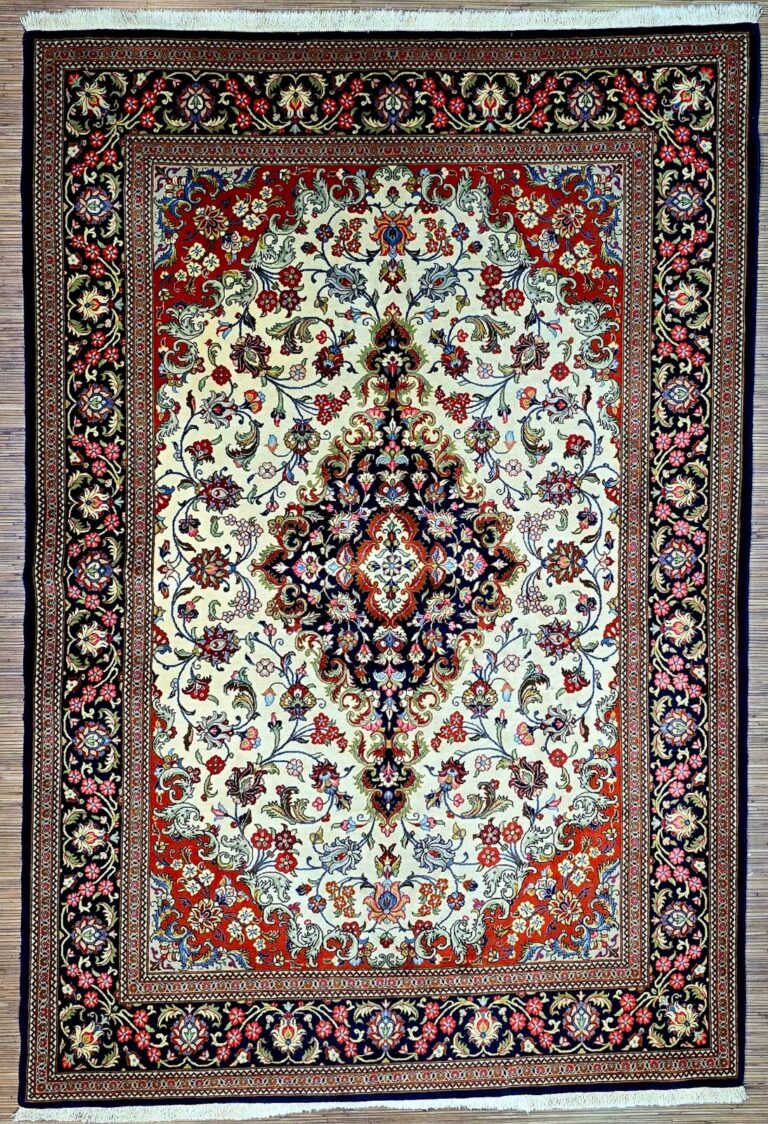
This Persian rug is hand-knotted and made from 90% virgin wool and 10% silk. Virgin wool forms the greater part of the pile, while silk is used as the complementary fibre. The two materials bring different qualities to the surface. Wool gives the pile its predominantly soft, textile character, while silk can catch the light and create subtle points of sheen. The stated composition refers to the pile. A separate cotton warp is not specified and is therefore not included in this description.
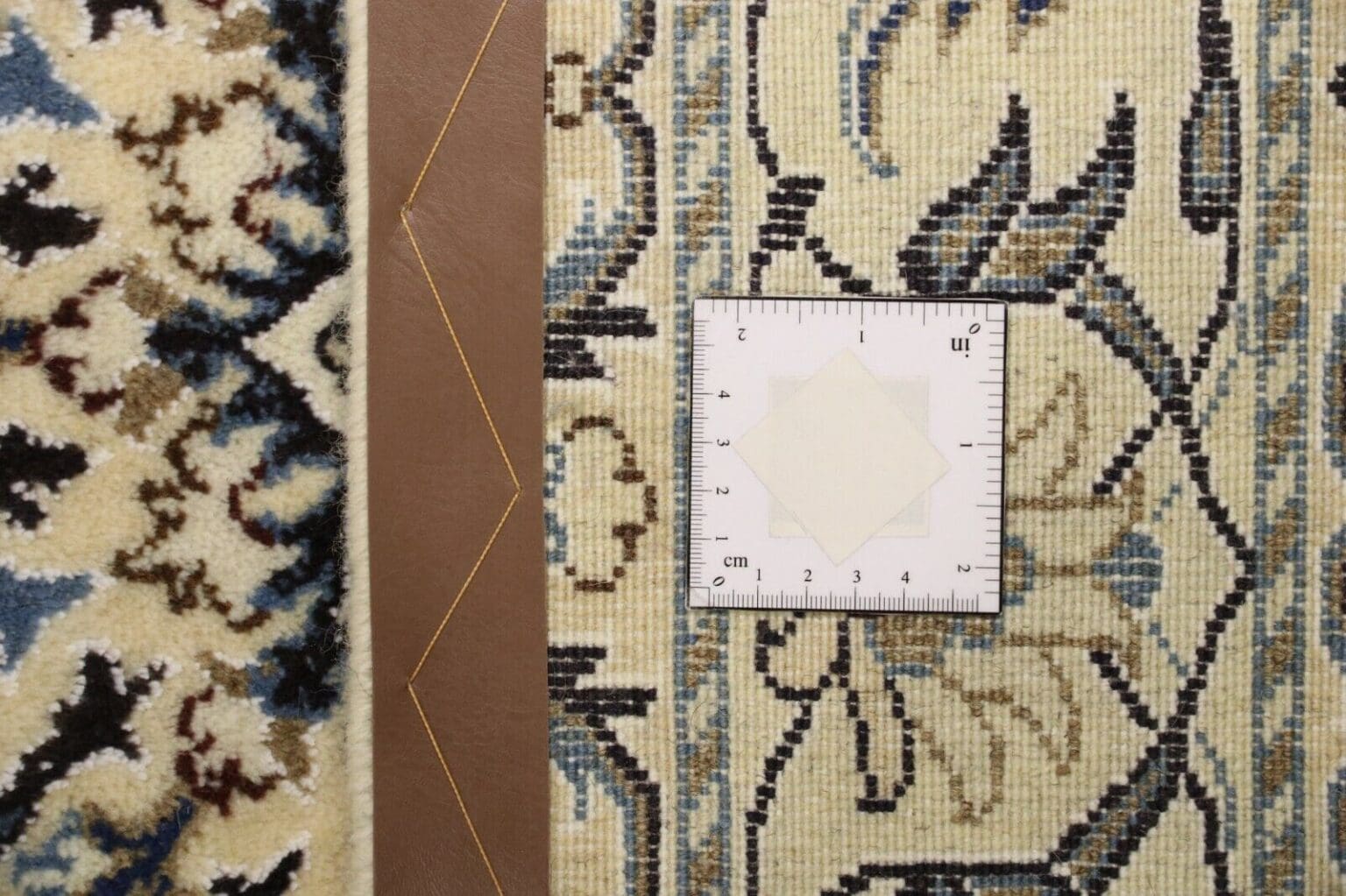
Hand-knotting is a gradual construction method. Individual knots are tied into a prepared foundation and secured with successive weft rows. In this way, the pile and the pattern are built together rather than applied to a finished surface. The person making the rug follows the sequence of colours and forms knot by knot. Once the knotting is complete, the pile is trimmed and the surface is prepared for use.
A blend of virgin wool and silk combines distinct textile properties within one rug. Wool has a long history as a pile fibre because it can produce a resilient yet supple surface and accepts colour in many ways. Silk can be used for finer accents and for a more reflective visual effect. In a hand-knotted piece, both materials are integrated into the same structural process. The resulting surface remains a textile object shaped by manual work.
Hand-knotting allows outlines, repeated elements and small transitions to be developed carefully. Each knot contributes to the overall image as well as to the pile structure. The character of the finished surface depends not only on the number of knots but also on the tension of the foundation, the handling of the weft and the finishing of the pile. These technical principles belong to Persian carpet making in general and explain the construction of hand-knotted rugs.
Origin and Tradition
The rug was hand-knotted in Persia. Persia, now associated mainly with Iran, is one of the historic centres of Oriental carpet weaving. Its tradition includes many workshops, towns and rural weaving communities. It is therefore not one fixed style or a single pattern system. Differences may appear in drawing, colour, knotting technique and the choice of wool or silk.
Traditional Persian rugs are built on a loom. Warp threads are arranged first, creating the lengthwise foundation. Pile knots are then tied row by row and secured with weft threads. The maker develops the textile surface and the visible design at the same time. Depending on the tradition, a design may be transferred from a detailed plan, adapted from an established pattern or shaped through inherited working methods. After knotting, the pile is trimmed and the rug is finished for use.
The history of Persian carpet making is closely connected with the transmission of practical knowledge. Techniques and designs were passed through families, workshops and local communities. At the same time, contact between different weaving areas encouraged the exchange of motifs and methods. Floral scrolls, medallions, geometric fields and borders can therefore appear in many arrangements. A similar ornament may occur in more than one tradition without identifying the same town or region in every case.
Persian carpet production developed in courtly settings, urban workshops and rural households. Court production could involve elaborate compositions and highly controlled ornament. City workshops often worked from established designs, while village rugs could reflect local drawing and the materials available to the makers. These forms of production influenced one another over time. The origin Persia describes the cultural setting of this rug, but it does not name a more specific province, city or workshop.
Wool has an important place in Persian carpet traditions. It can be used for pile, warp or weft and can be dyed in many shades. Silk has also been used where a finer drawing, a smoother surface or a stronger reflection is desired. The combination of wool and silk belongs to the wider technical vocabulary of the region. For this rug, the composition is specifically given as virgin wool and silk, but no narrower local attribution is provided by that fact.
Carpets in Persian and wider Oriental traditions have had practical, social and cultural functions. They can furnish living spaces, provide a softer surface underfoot and help define the arrangement of a room. Their designs preserve forms that have been repeated and adapted across generations. Colours and ornaments may reflect local preferences, available materials and historical exchange. The significance of a rug can therefore involve both its use and the craft knowledge embodied in its construction.
This piece is classified as a Persian rug because its place of making is stated as Persia. No particular province, city, workshop or signature is named. The origin should therefore remain at the level of Persia rather than being expanded into an unsupported local attribution. That distinction reflects the variety of Persian weaving traditions and keeps the description separate from claims about a specific regional school.
Design and Pattern
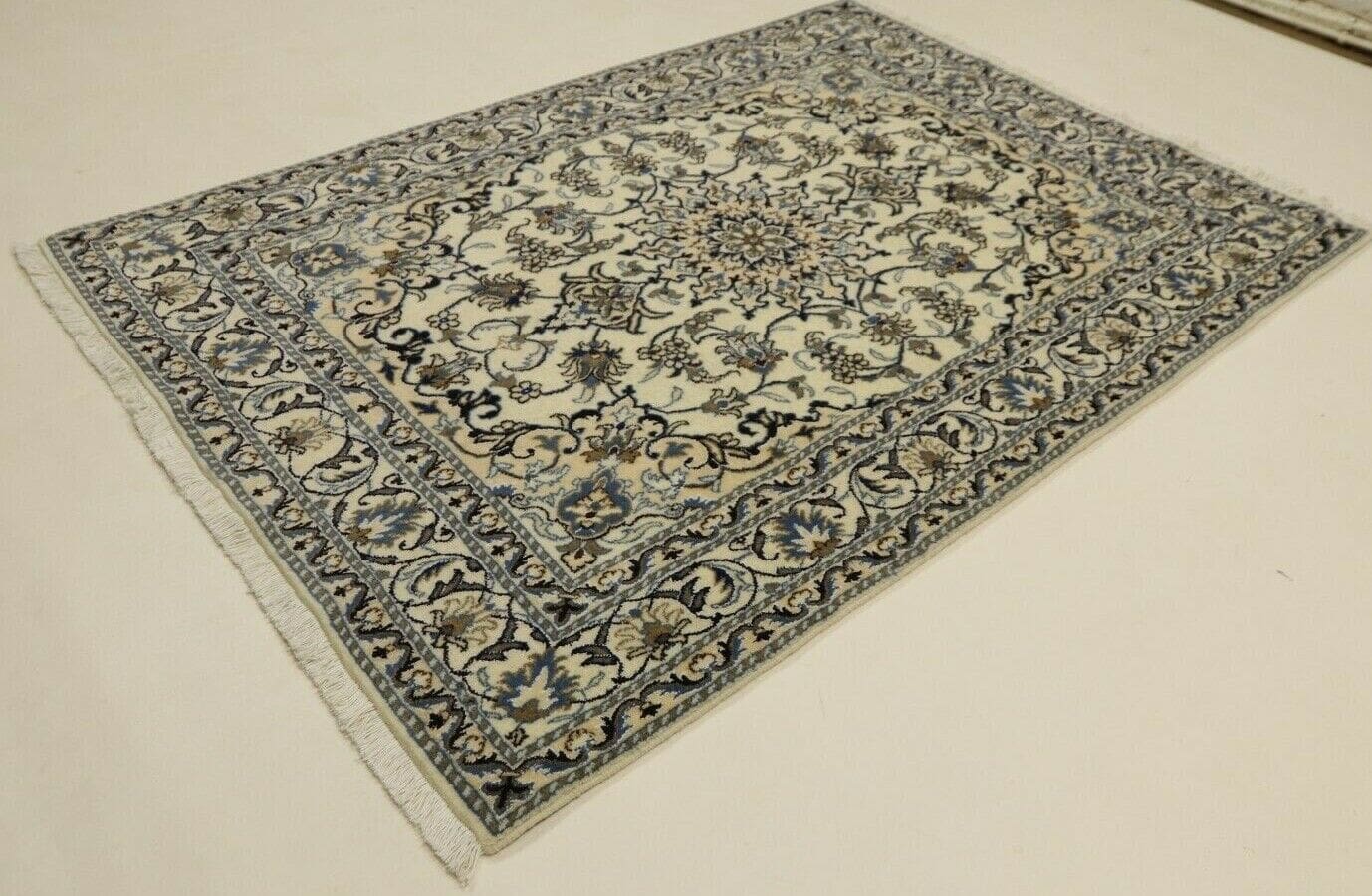
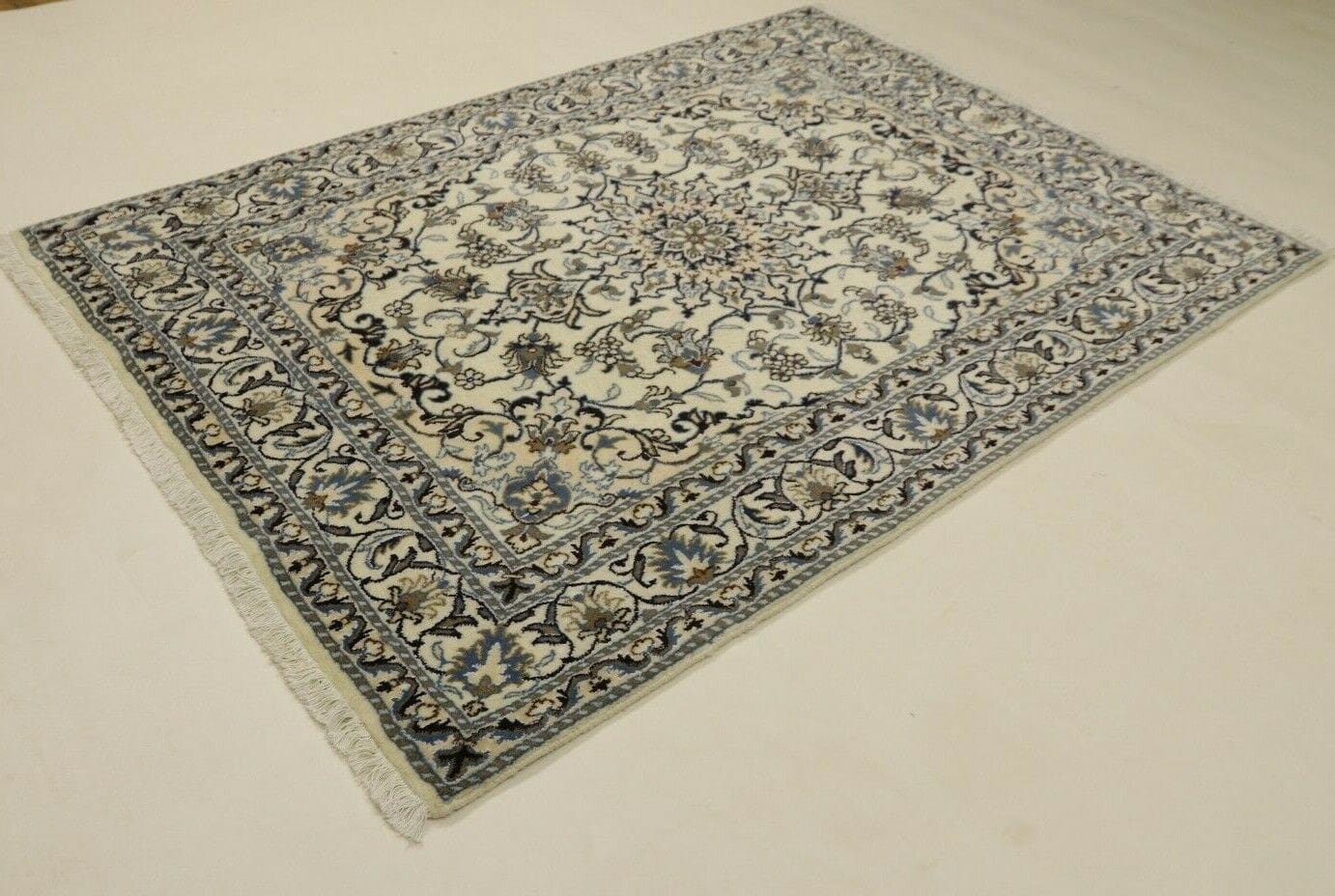
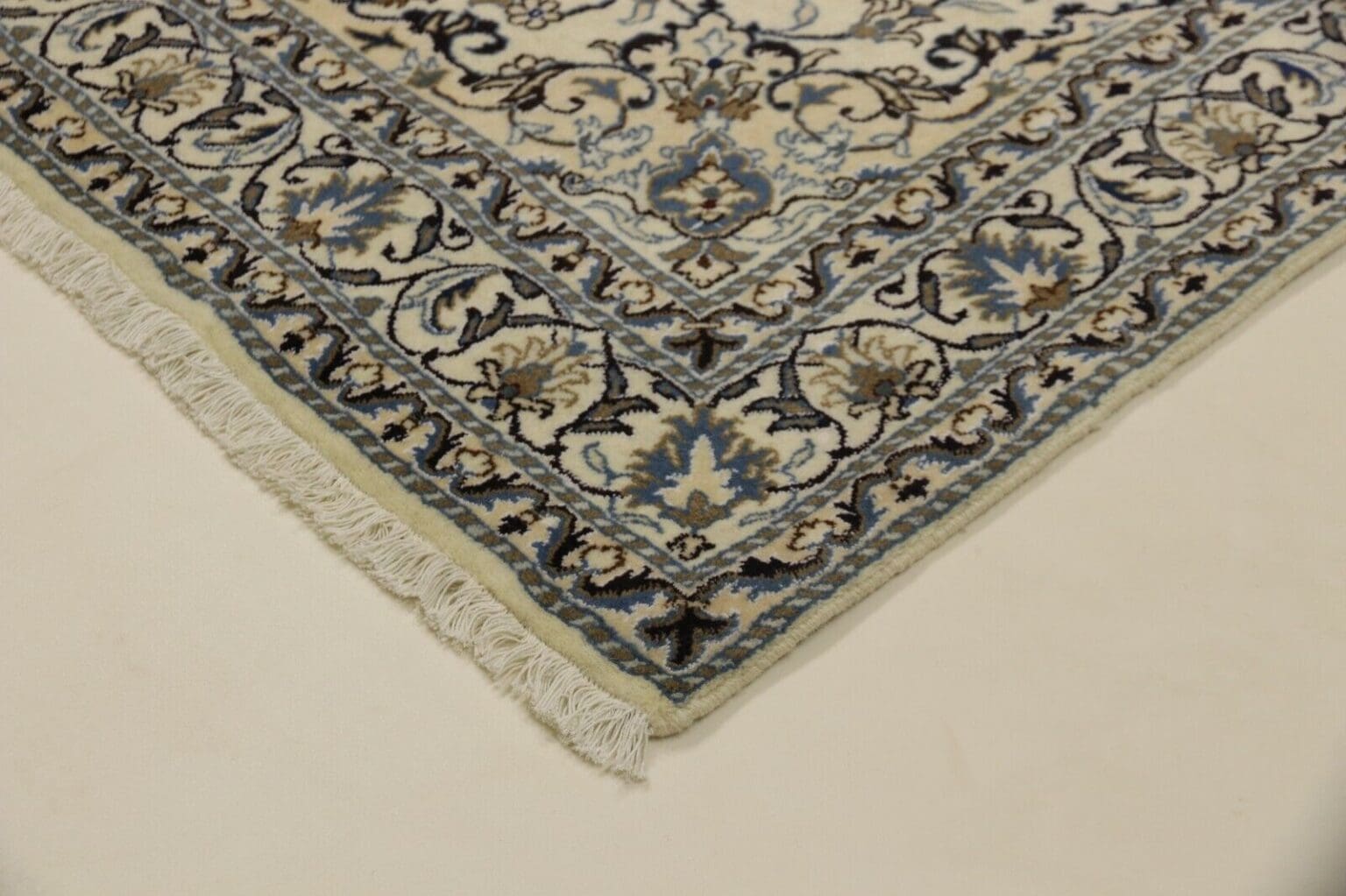
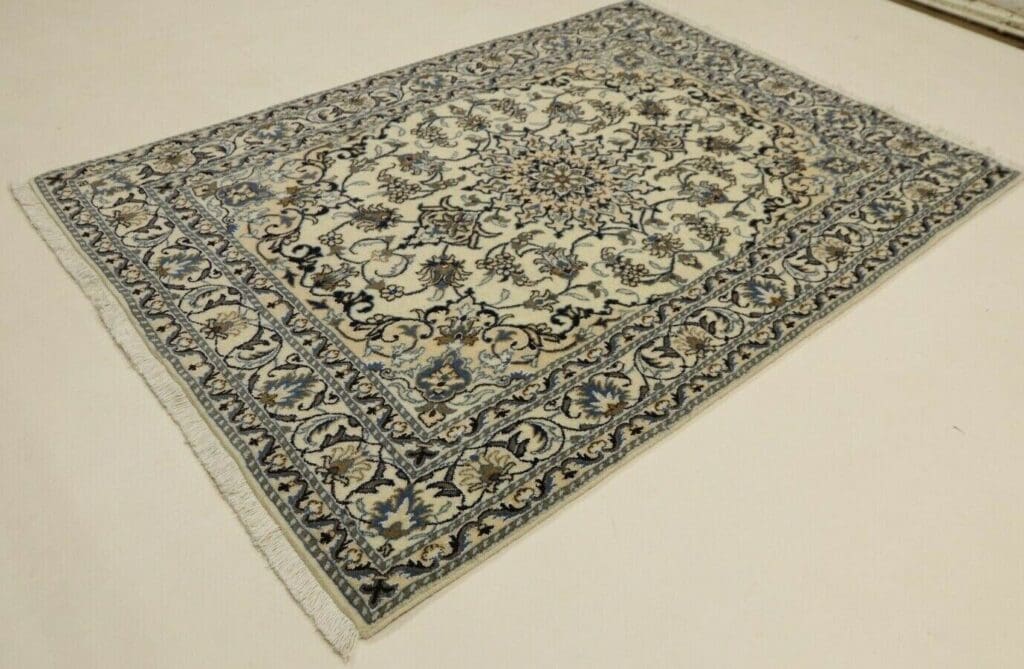
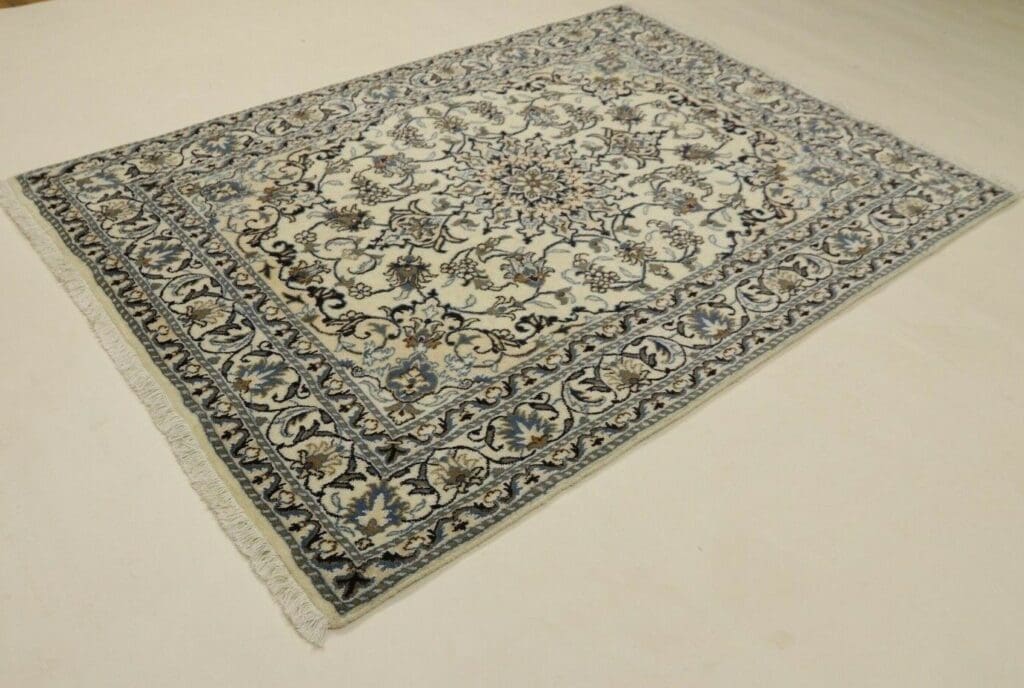
The pattern of this rug is described as Oriental. This is a broad design classification, not the name of a pattern belonging to one particular Persian city. Oriental rugs may contain floral, geometric or stylised forms, and many compositions combine several of these approaches. A design can be arranged around a centre, repeated across the field or organised through borders and framed sections. The classification used here identifies the general design family without assigning an unstated motif.
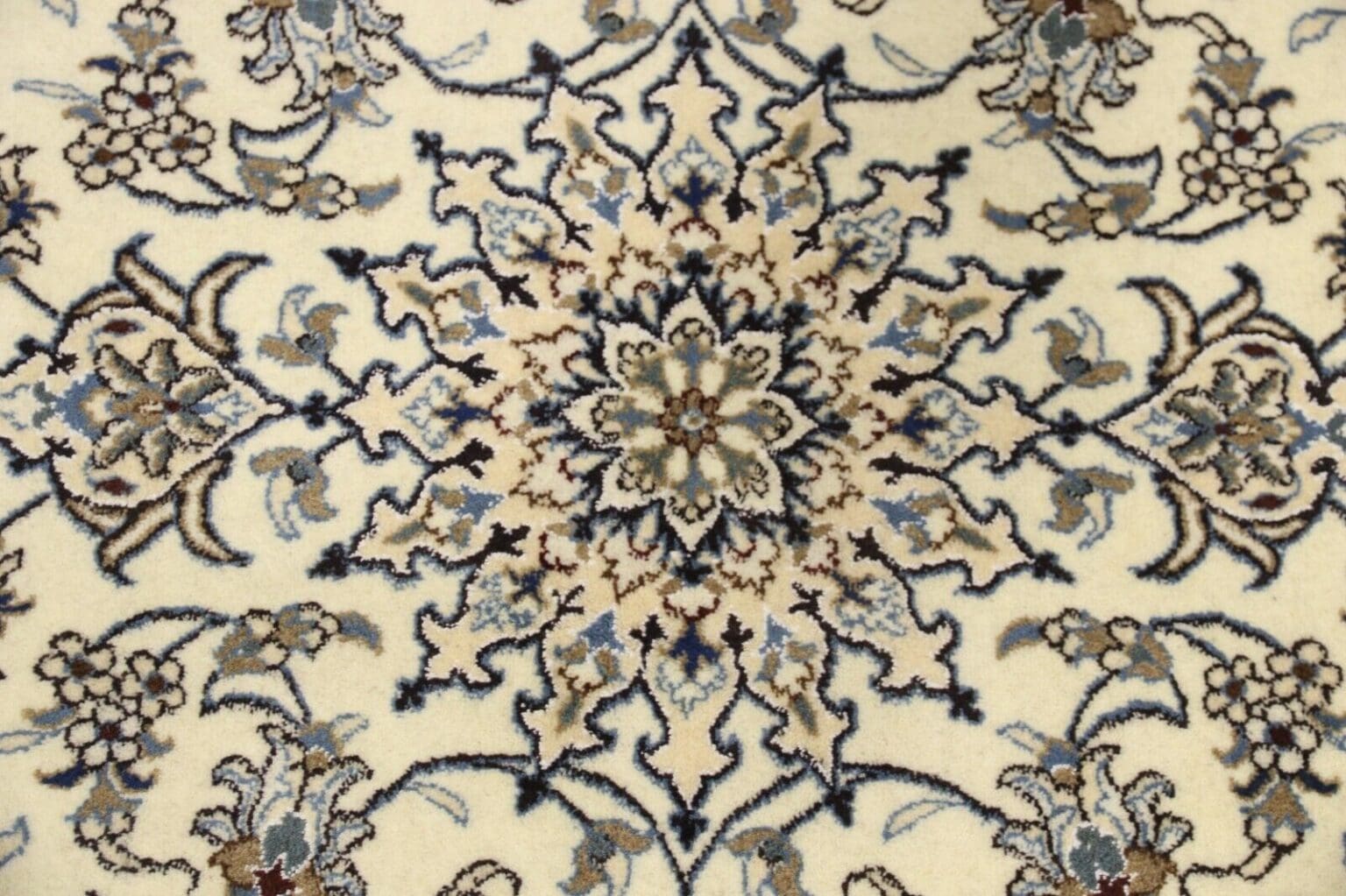
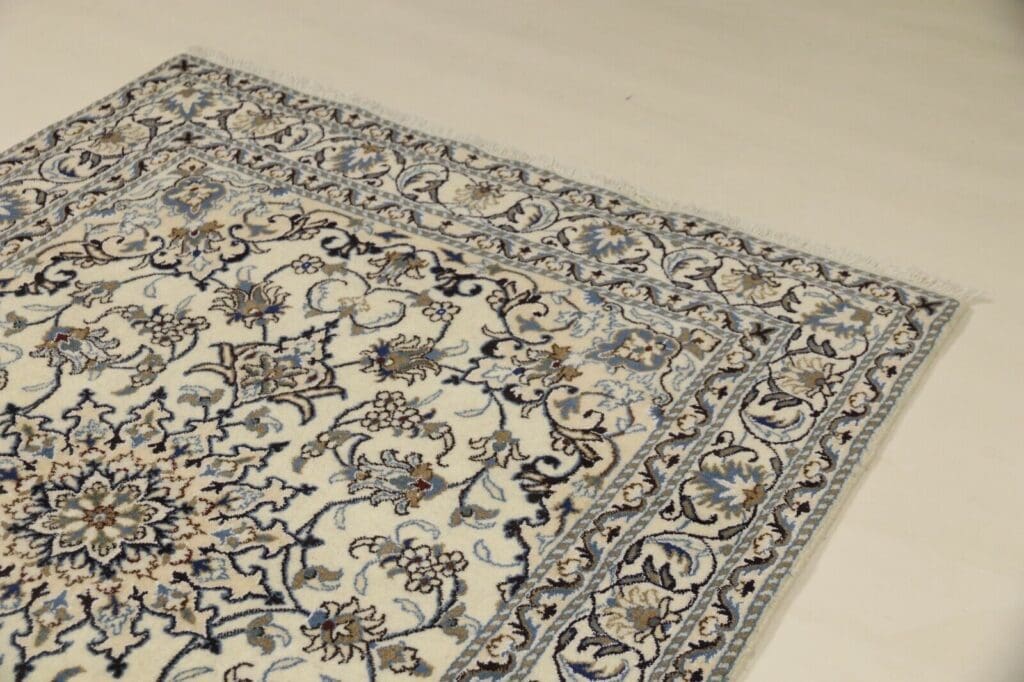
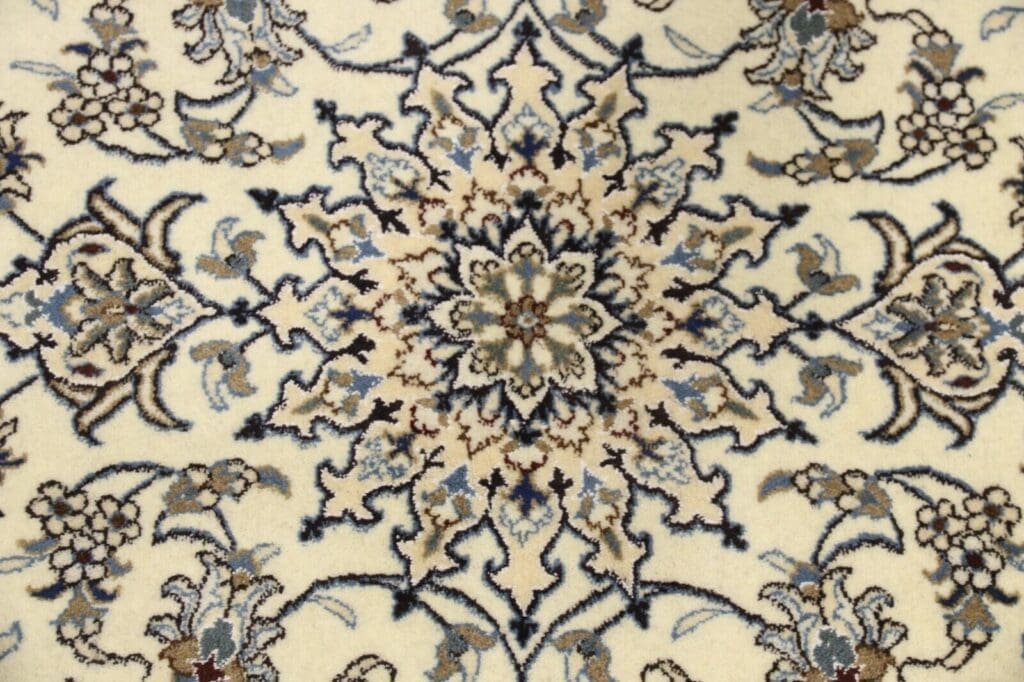
Floral vocabulary is common in Persian carpet design. Leaves, blossoms, rosettes and curling branches may connect different parts of a composition. A vine can run continuously through a field, while flowers and leaves are positioned at regular or varied intervals. These forms are usually stylised rather than exact botanical representations. Their shapes are adapted to repetition, balance and the requirements of a knotted textile surface.
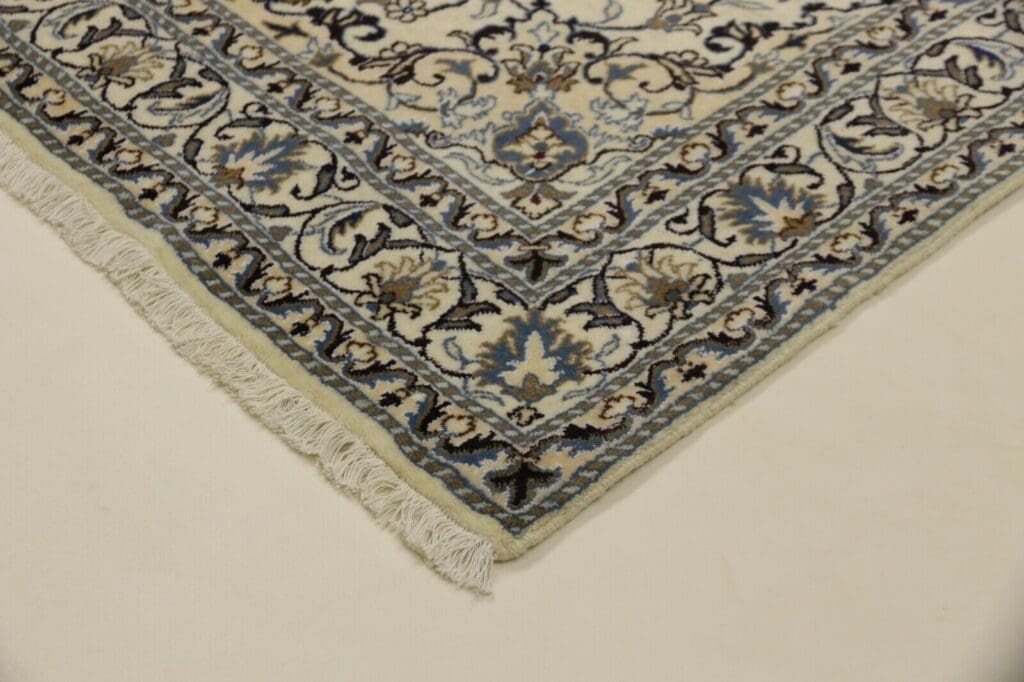
Geometric ornaments create boundaries, intervals and visual rhythm. A medallion can organise the central field, while corner elements create a transition toward the borders. Borders frame the composition and provide an edge to the design. Other patterns distribute ornaments more evenly across the surface without a single central focus. Which structure is used depends on the design tradition, the workshop and the chosen plan. The general designation Oriental does not identify one of these arrangements as the defining motif of this rug.
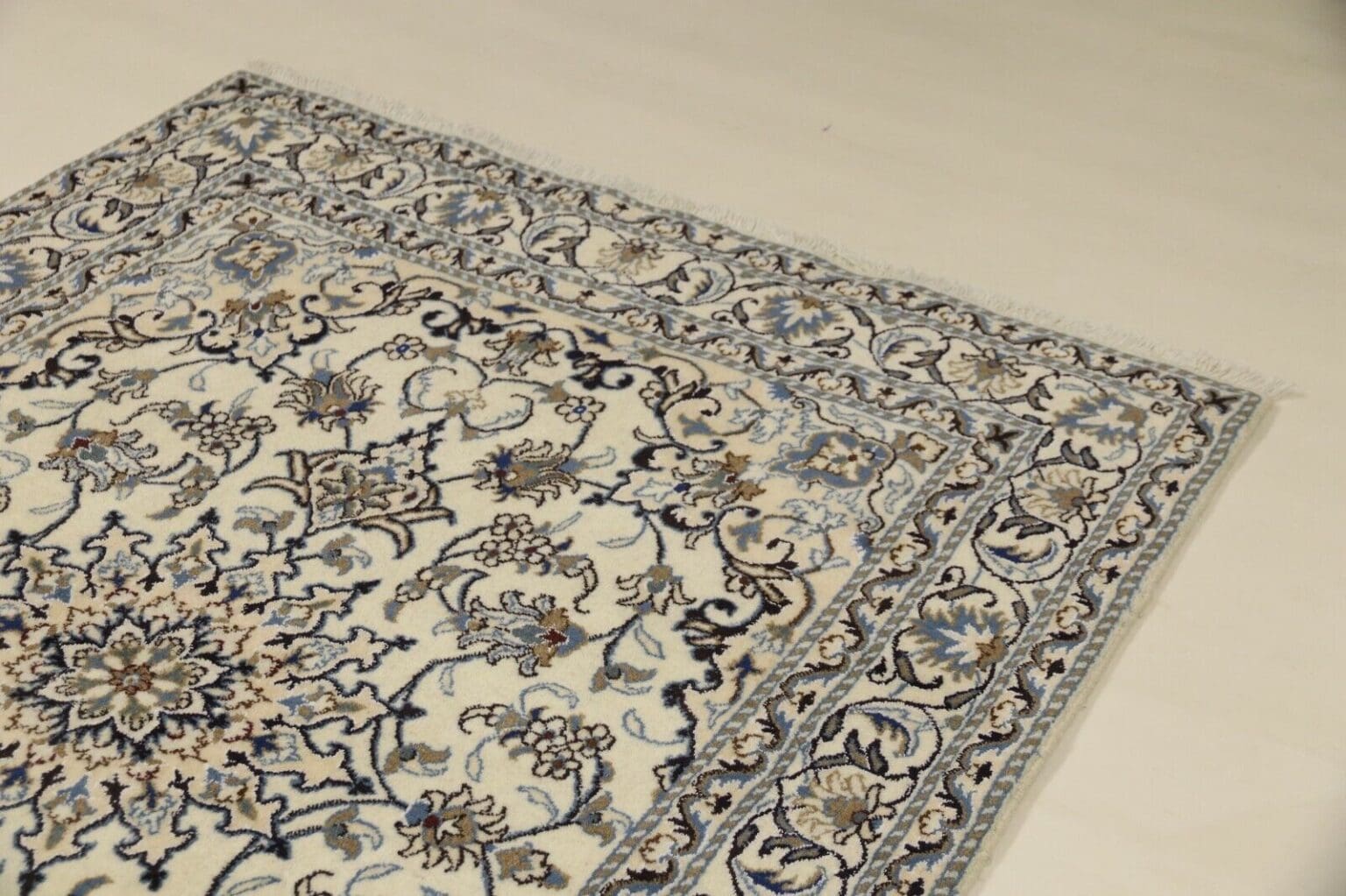
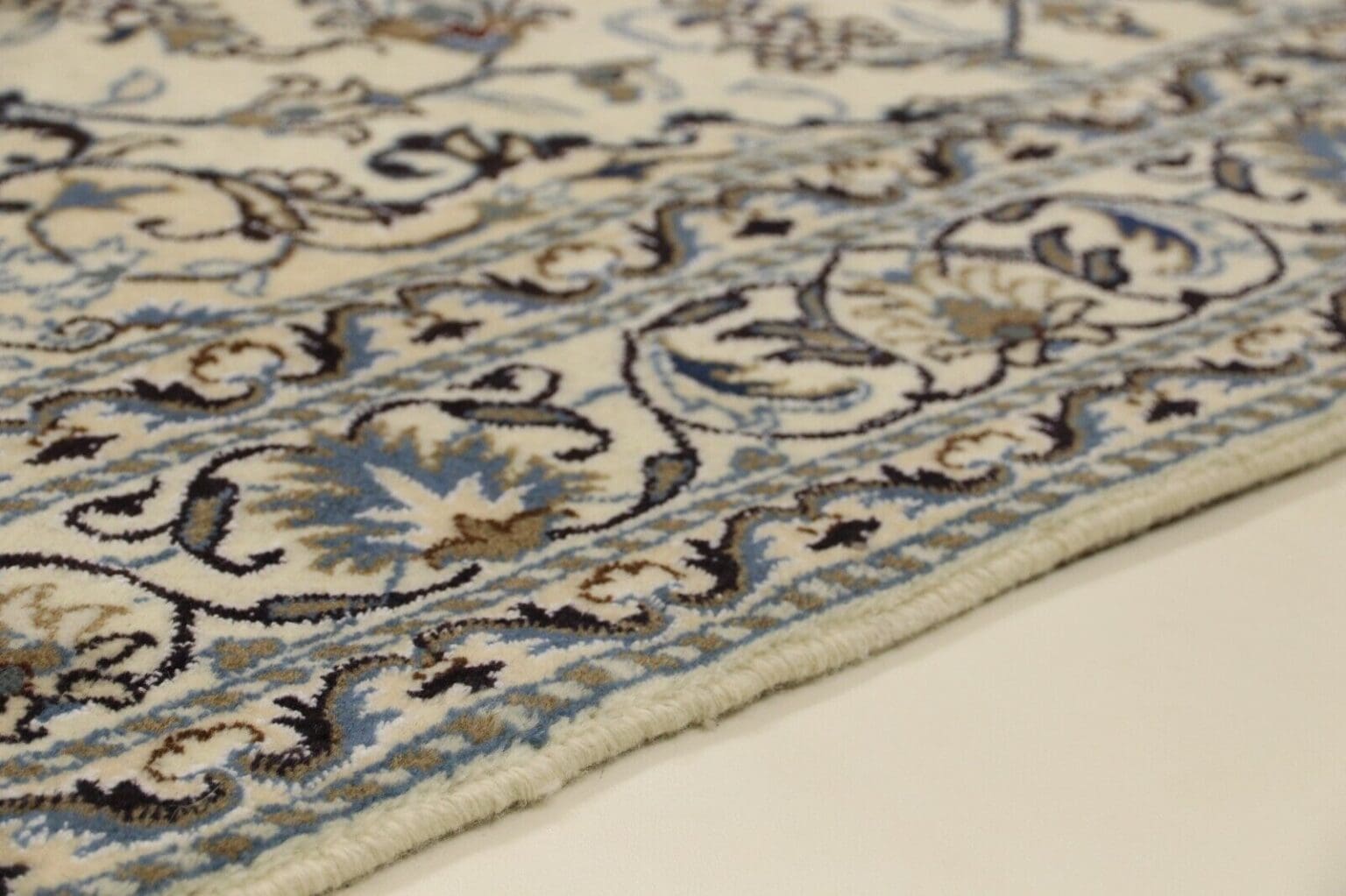
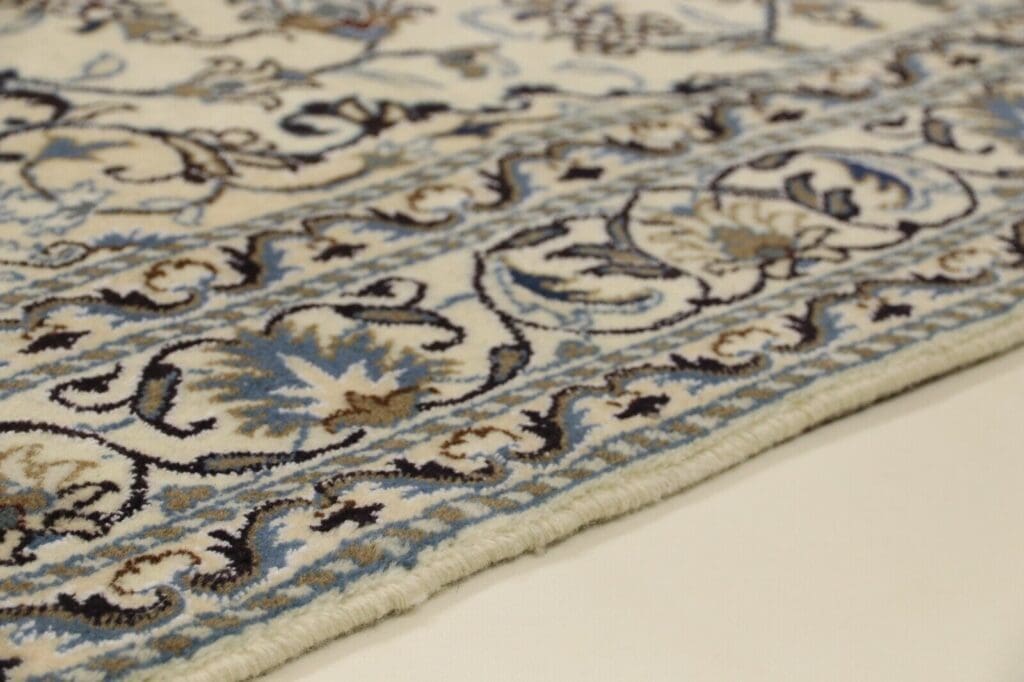
The appearance of a pattern is influenced by fibre, dye, pile direction and light. Wool normally presents a softer and less reflective surface, whereas silk can respond more strongly to changes in viewing angle. This difference can help individual details stand out within a design, but it does not establish a specific origin or motif. The wool-and-silk composition is part of the rug’s visual structure while the pattern remains broadly classified as Oriental.
A hand-knotted design is formed from many small individual units. Lines are constructed knot by knot, and their clarity depends on planning and careful execution. Minor changes in knot placement can influence the movement of a contour. Such variation belongs to the manual process and distinguishes a hand-knotted rug from a mechanically identical surface. The way the design is made is therefore also part of the rug’s visible textile character.
Repetition and variation are important principles in many Oriental carpet designs. Repeated ornaments create order and continuity, while small differences preserve evidence of handwork. Traditional motifs can also carry cultural or symbolic associations, although their meanings may vary according to region and context. For this rug, the source provides the general pattern category Oriental but does not name a specific symbol, colour scheme or individual design.
Special Features
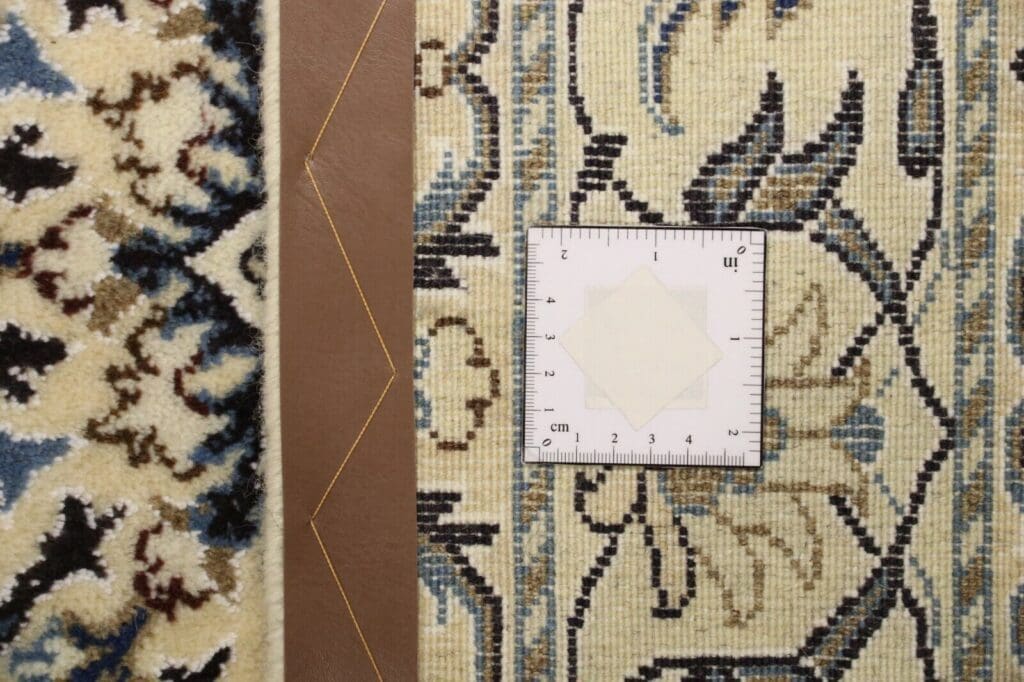
The listed features of this rug include its hand-knotted construction, its high knot density and its combination of 90% virgin wool with 10% silk. It is described as new and in very good condition. The rug is suitable for underfloor heating and has a rectangular shape. A high knot density indicates a closely worked surface and can support the execution of detailed designs. It does not, by itself, establish a particular province or city.
As with hand-knotted rugs generally, small differences in knot placement, line movement or colour distribution may be part of the making process. These variations belong to the character of a one-off textile piece and do not change the stated origin, materials, condition or pattern category. The rug brings together a named Persian origin, a defined fibre composition and a traditional hand-knotting technique.
FAQ
How should I care for this Persian rug?
Regular vacuuming with a soft brush helps remove loose dust without placing unnecessary strain on the pile. Direct sunlight should be limited where possible to reduce the risk of premature colour fading. Spills or stains should be blotted promptly with a clean, damp cloth. Rubbing can roughen the fibres or alter the appearance of the surface, so it should be avoided. For a thorough treatment, professional cleaning at suitable intervals is advisable. The cleaner should be told that the pile contains both virgin wool and silk so that the method can be adapted to those materials. Since the rug is suitable for underfloor heating, it may be used on a floor with that system when the installation is appropriate.
Where do Persian rugs come from?
Persian rugs come from the historic Persian cultural area, which is now chiefly associated with Iran. This area contains numerous regional and craft traditions rather than one single style. Urban workshops, rural makers and historic court workshops developed different approaches to drawing, colour, materials and knotting. A Persian rug therefore cannot automatically be assigned to a particular town from the general origin alone. For this piece, Persia is named as the place of making, while no specific province or workshop is provided. The term Persian rug reflects that stated origin and the long hand-knotting tradition connected with it.
What makes hand-knotted rugs distinctive?
In a hand-knotted rug, each knot is tied individually into the textile foundation. The knots are placed in rows and secured through the warp and weft to create a stable surface. Their number and arrangement influence the structure of the pile and the degree of detail that can be expressed in the pattern. The process is gradual and requires planning, experience and careful manual work. The result is an individual piece that is not reproduced as a completely identical mechanical copy. This rug combines hand-knotting with a high knot density, a pile of virgin wool and silk, and an Oriental pattern. Its method of manufacture therefore contributes directly to both its surface and the way its design is formed.
To provide the best experiences, we use technologies like cookies to store and/or access device information. Consenting to these technologies will allow us to process data such as browsing behavior or unique IDs on this site. Not consenting or withdrawing consent, may adversely affect certain features and functions.
Functional Always active
The technical storage or access is strictly necessary for the legitimate purpose of enabling the use of a specific service explicitly requested by the subscriber or user, or for the sole purpose of carrying out the transmission of a communication over an electronic communications network.
Preferences
The technical storage or access is necessary for the legitimate purpose of storing preferences that are not requested by the subscriber or user.
Statistics
The technical storage or access that is used exclusively for statistical purposes.The technical storage or access that is used exclusively for anonymous statistical purposes. Without a subpoena, voluntary compliance on the part of your Internet Service Provider, or additional records from a third party, information stored or retrieved for this purpose alone cannot usually be used to identify you.
Marketing
The technical storage or access is required to create user profiles to send advertising, or to track the user on a website or across several websites for similar marketing purposes.

 SECURE PAYMENT
 SHIPPING PARTNERS