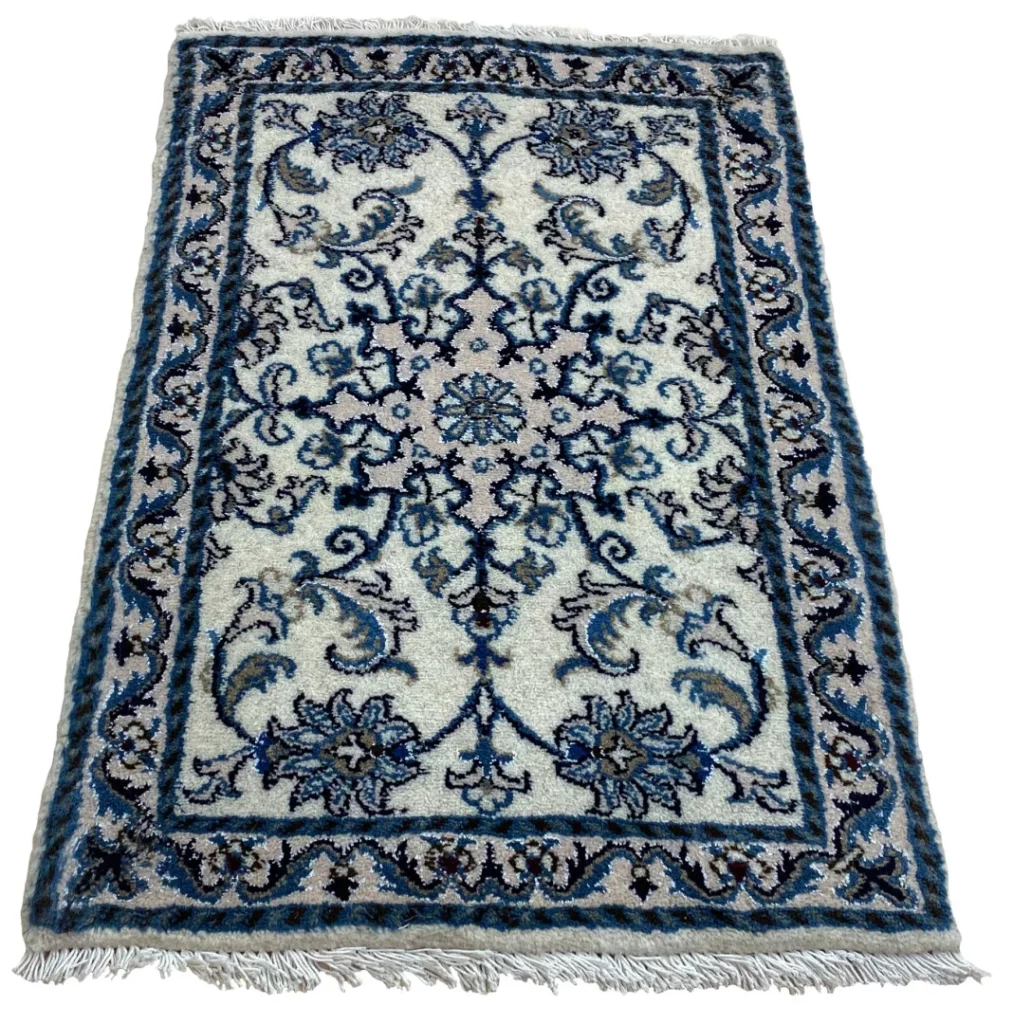
Persian Rug Nain 90 x 60 cm Wool Silk Hand-knotted
€ 272
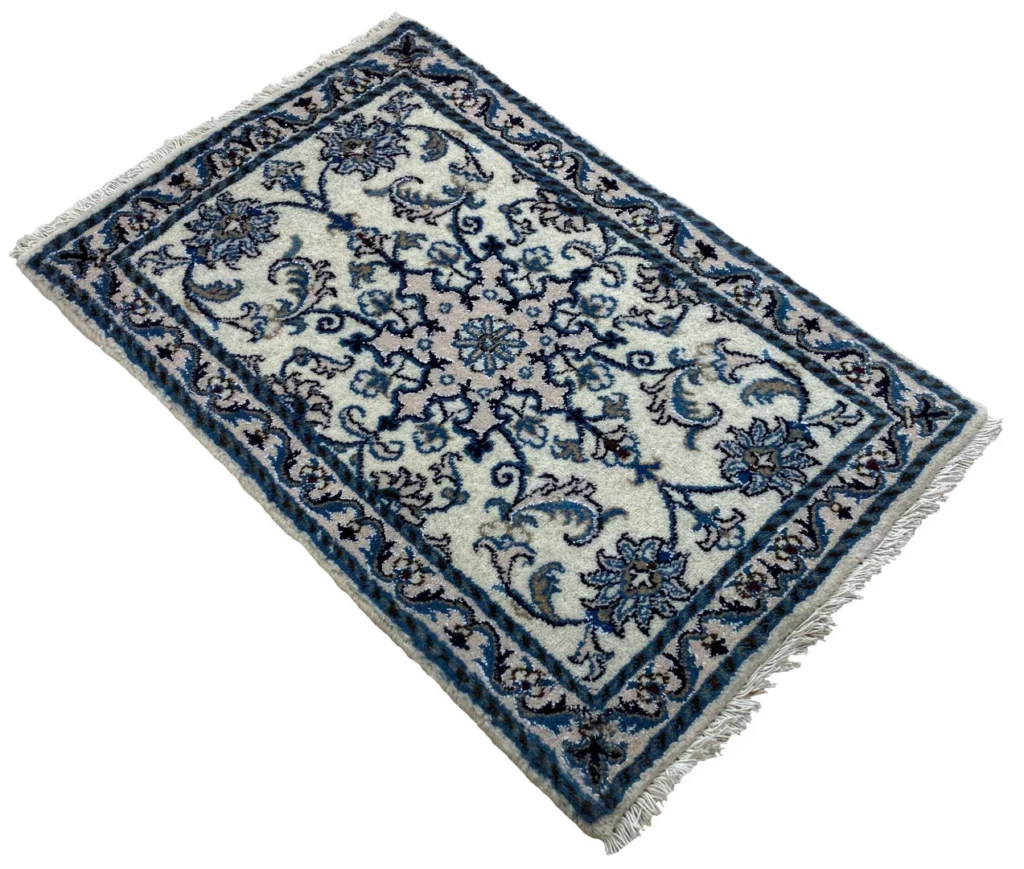
Hand-knotted Nain Persian Rug | Knot density: 12-Lah (approx. 250,000 knots/m²) | Material: Wool and silk pile | Size: 90 x 60 cm | Pattern: Classic floral with central medallion | Condition: New
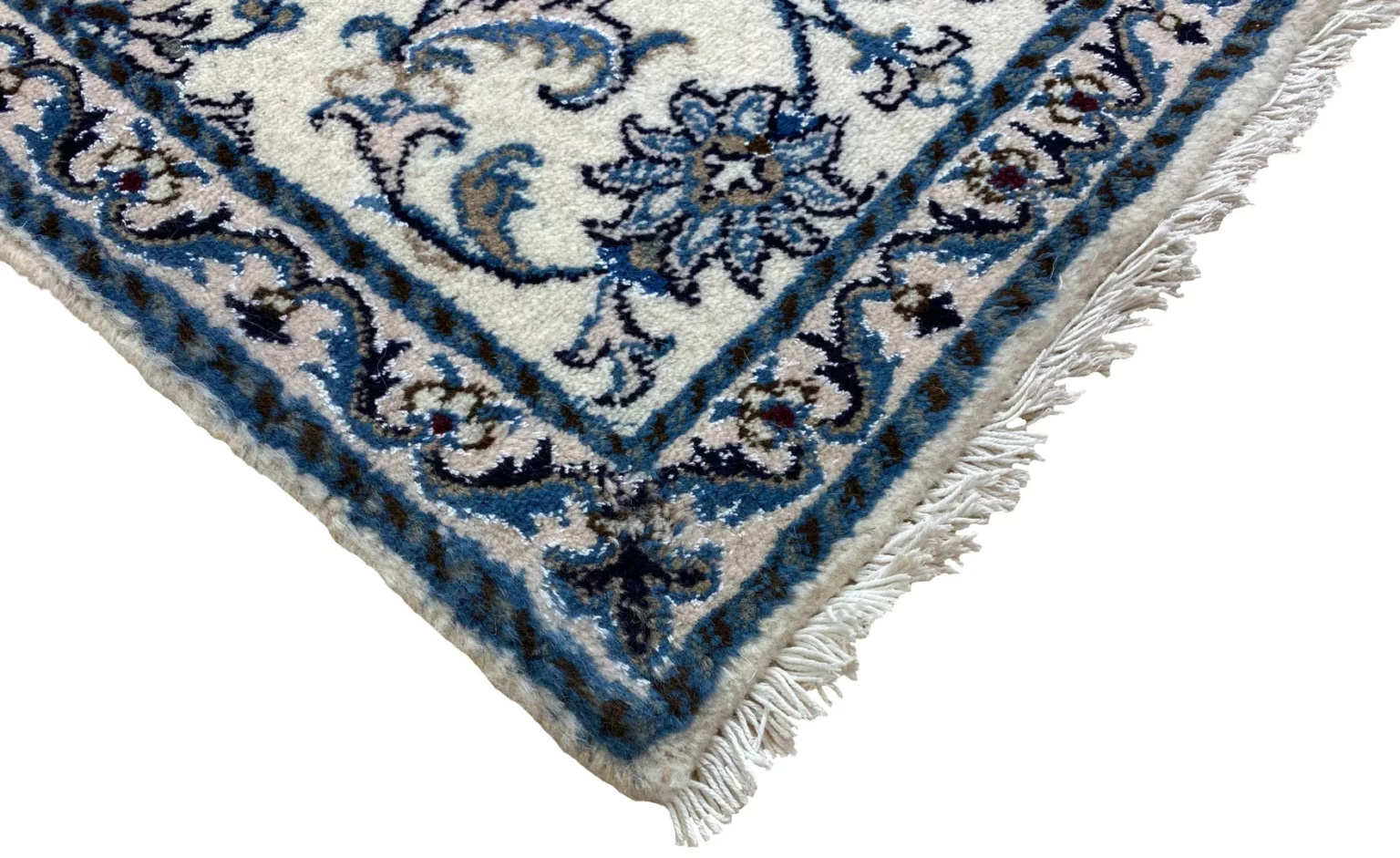
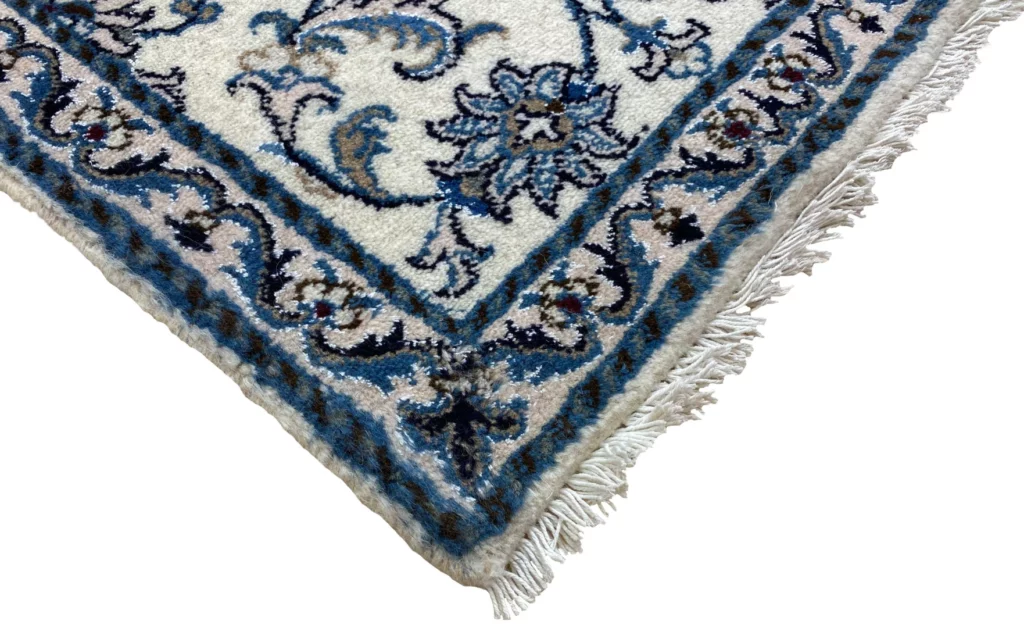
This Nain Persian rug is hand-knotted and made from wool and silk. With hand-knotting, every knot is inserted individually into the prepared foundation. The pile is built row by row, then compacted and aligned so that the separate knots form a continuous surface. This method gives a knotted rug a structure that is fundamentally different from a printed surface or a machine-made floor covering.
The designation 12-Lah belongs to the traditional classification of Nain rugs and refers to knot density. Nain rugs are described through different Lah quality levels, which distinguish the fineness of their construction. A finer structure can generally allow lines to be placed more closely and small shapes to be separated more clearly. The 12-Lah specification for this rug is associated with approximately 250,000 knots per square metre.
Wool forms a resilient yet workable pile. It can be densely constructed and is suitable for developing fields, outlines and transitions within an ornamental design. Silk is used in finer rugs to create delicate accents and a differentiated reflection of light. The combination of wool and silk therefore brings together different textile qualities. Both wool and silk are specified as materials for this rug.
Hand production requires even tension in the foundation, carefully placed knots and close control of the outlines. Floral designs call for particular precision because leaves, vines and blossoms must remain coordinated across the composition. A structured knotting process supports the detailed rendering of a medallion and its accompanying ornament. The condition of this rug is new.
Origin and Tradition
Nain is located in Central Persia and is known as a source of finely made Persian rugs. The town is associated with the historic Isfahan region, one of the important cultural centres of Persian art and carpet weaving. Within this setting, rugs developed that often combine a light visual character with carefully drawn ornament and an orderly floral composition.
The Nain tradition brings together controlled design and demanding knotting work. Many examples use a light ground with finely placed ornament. Medallions, flowers, vines and balanced fields are connected so that the surface appears coherent and measured. The origin Nain places this rug within that Persian design tradition. The designation identifies it as a Persian rug from Central Persia.
Nain rugs are made in different quality levels identified through the Lah system. This classification relates to knot density and offers a traditional way to describe the fineness of different constructions. The figures used in the system distinguish levels of density. A denser construction can permit finer lines, smaller ornaments and clearer separation within the pattern. Lah is therefore not simply a style label but part of the technical vocabulary used for Nain rugs.
The wider Isfahan area is also associated with several important carpet traditions. Isfahan rugs are often linked with detailed designs and carefully developed ornament. Kashan rugs likewise frequently feature floral compositions and orderly layouts. Sarough and Tabriz also have established reputations for rugs with precise drawing and a developed approach to colour and form. These places represent separate traditions and do not alter the stated origin of this rug, which is Nain.
The production of a hand-knotted Persian rug combines regional design knowledge with practical experience at the loom. The pattern is created from individual knots rather than applied to the surface afterward. Each stage of the process contributes to the relationship between ornament, pile and foundation. Material and design are consequently integrated within the textile construction itself.
In this context, Nain identifies a distinct school within the Persian carpet culture of Central Persia. Nain rugs are commonly associated with light colour families, fine floral drawing and compositions organized around a centre. Their designs can be placed in both historical and contemporary interiors while retaining their connection with Persian weaving tradition.
Design and Pattern
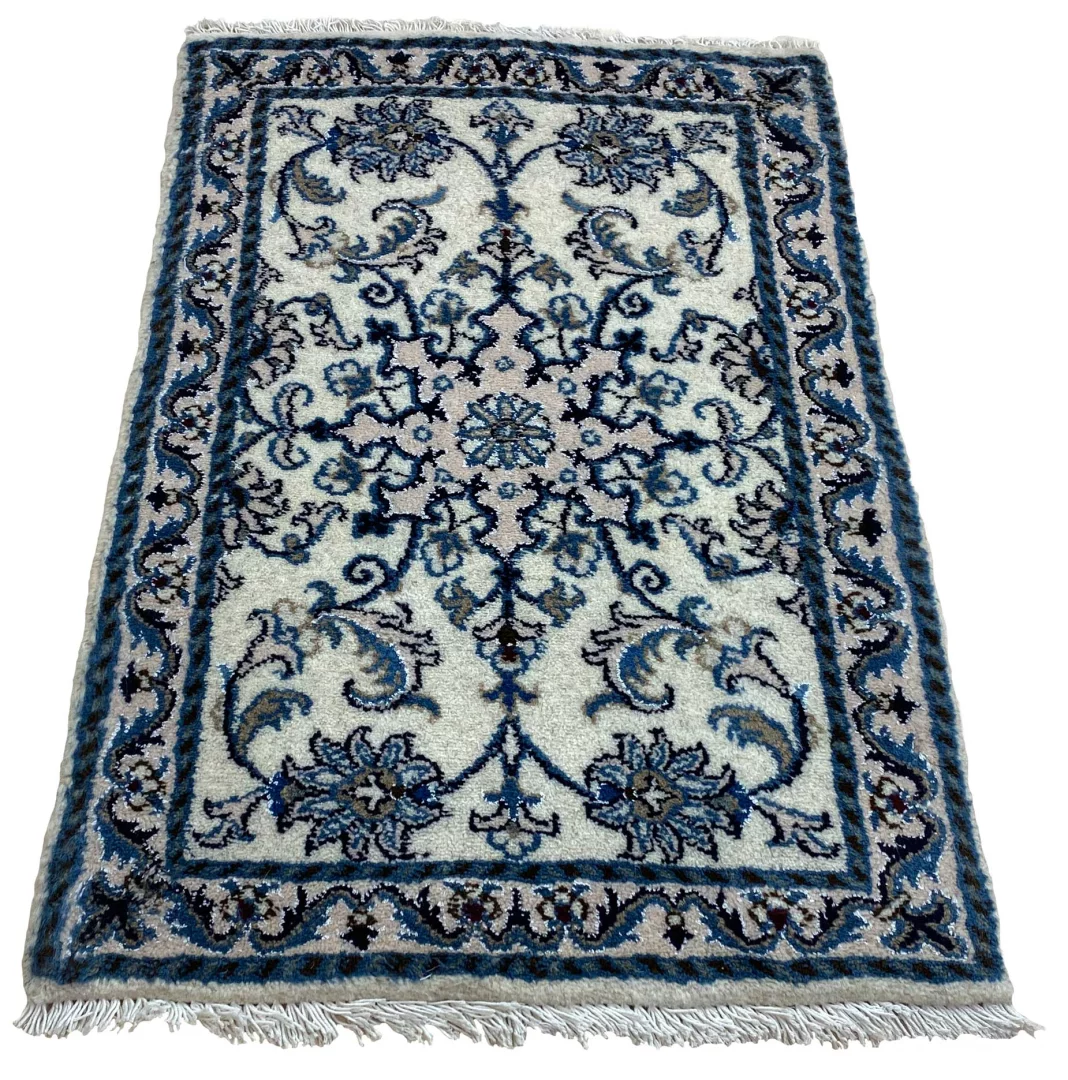
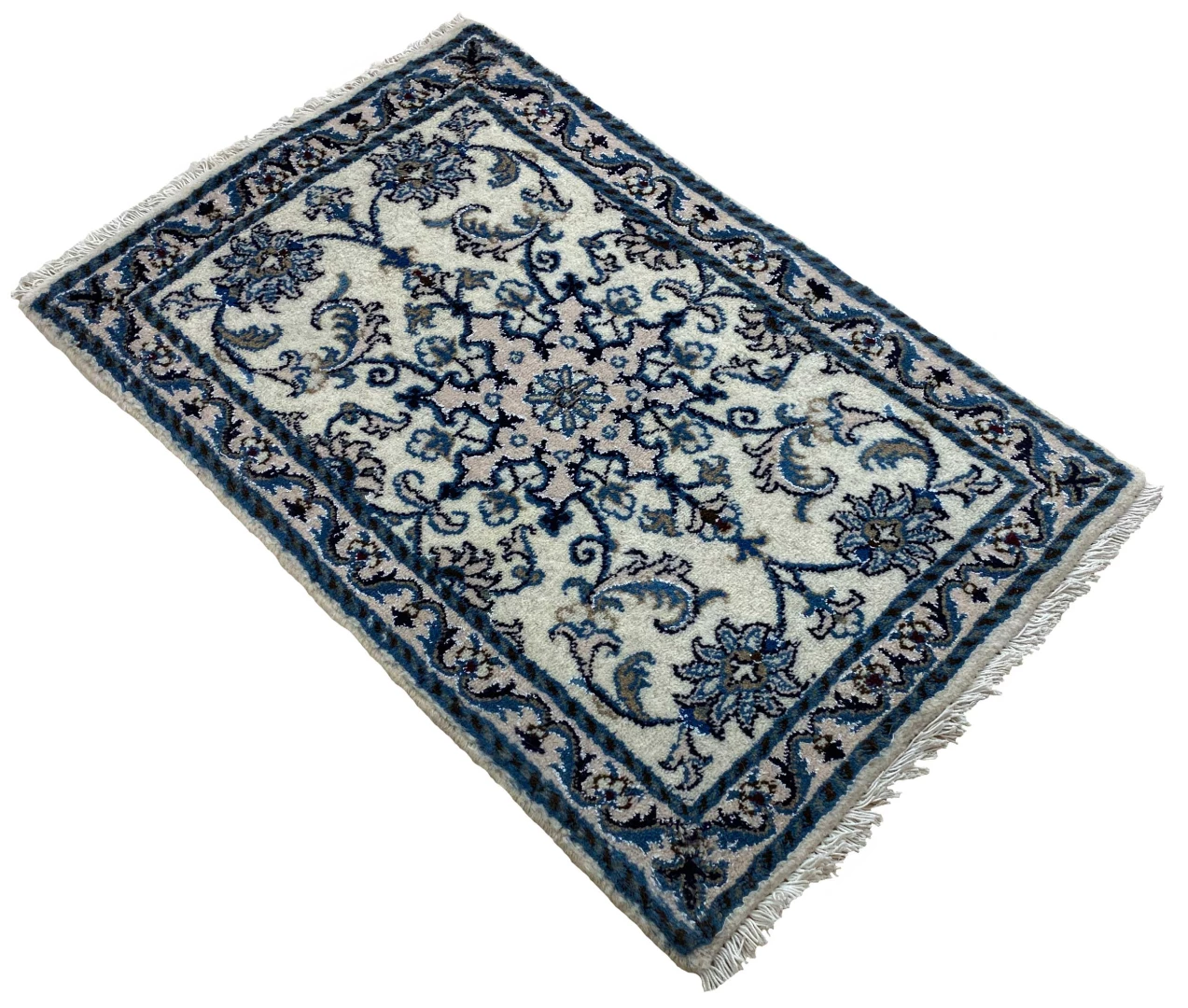
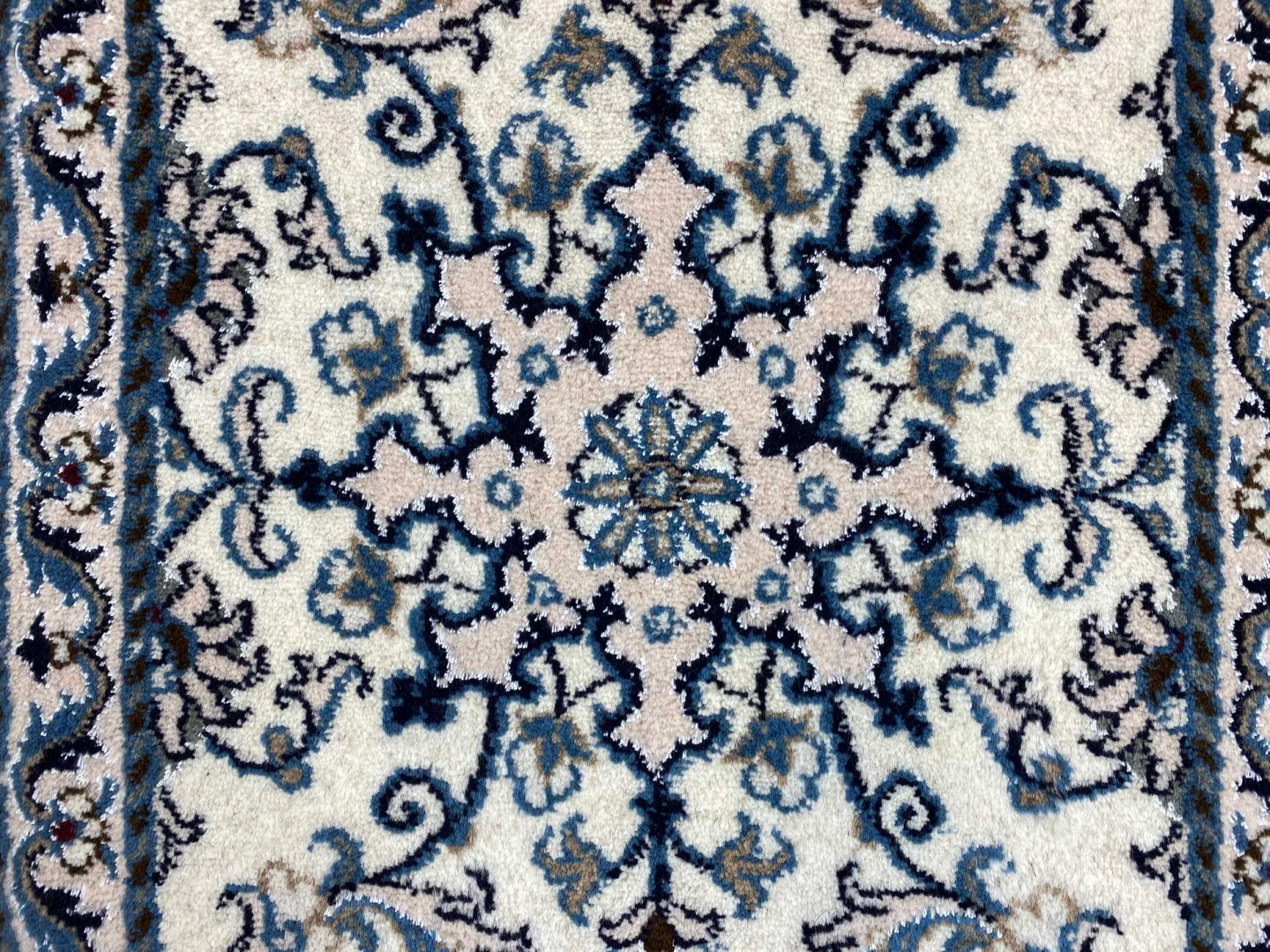
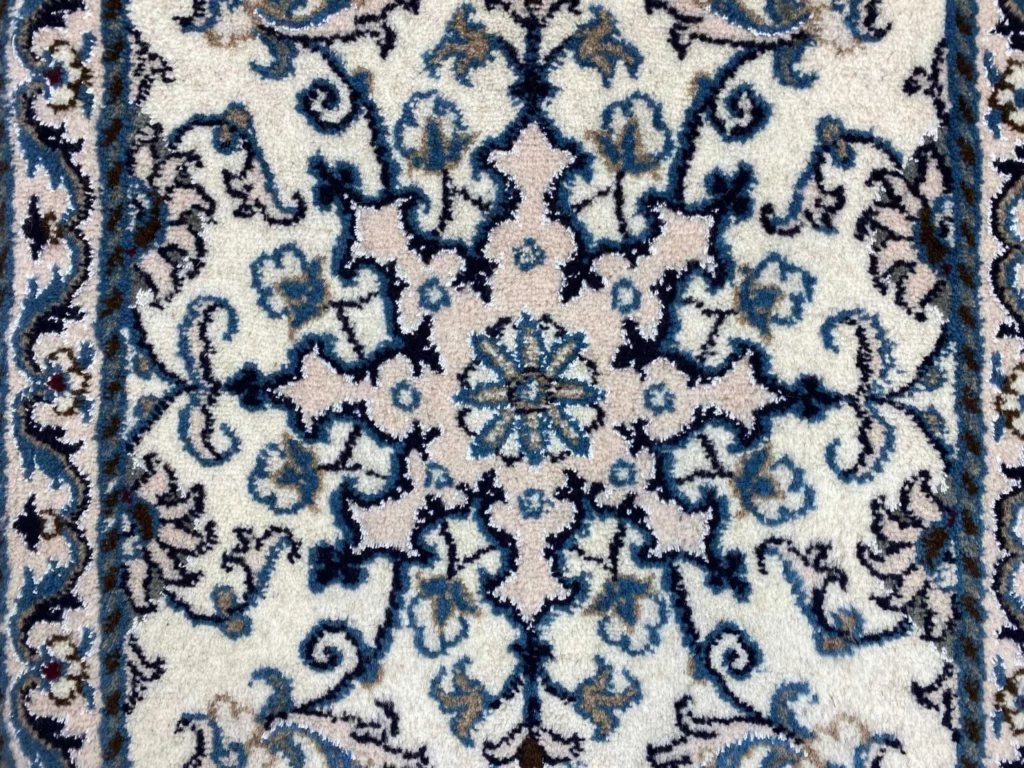
The design of this rug is classic floral with a central medallion. A medallion organizes the composition around a clearly emphasized centre. Floral forms accompany that centre and lead the eye into the surrounding field. This arrangement establishes a visual hierarchy: the centre creates the focus, while flowers and vines divide and frame the remaining surface.
Floral Nain designs are traditionally associated with fine outlines and a composed sense of order. Leaves, blossoms and scrolling stems may interlock without obscuring the principal form. The drawing can therefore remain detailed while still being legible as a balanced overall arrangement. For this rug, the pattern is specifically described as classic floral with a central medallion.
Nain design is often connected with light colours and finely drawn motifs. Such compositions may include gentle pastel shades as well as stronger, more vivid tones. Colour relationships can separate flowers, vines and medallion from one another and keep the drawing readable. The pattern recorded for this rug is the classic floral medallion arrangement; a complete colour description is not provided, so no additional colour claim is made.
A medallion design can be developed in several ways. It may be enclosed by a border, accompanied by smaller floral devices or connected to the field through scrolling vines. Its defining principle is the central organization of the composition. The fine construction associated with Nain rugs is suited to rendering such details, but it does not justify adding elements that have not been specified for this individual rug.
The relationship between Nain and the design traditions of Isfahan and Kashan helps explain why floral Persian compositions are often associated with balance and measured structure. Sarough and Tabriz are also known for developed pattern work, although each has its own regional vocabulary. The pattern name used for this rug describes its visible design concept and should not be read as a claim that it originates from another town.
Floral motifs have a long design tradition in Persian carpet art. They are not necessarily literal botanical studies; instead, plant forms are transformed into lines, leaves, blossoms and repeated ornaments. Symmetry, repetition and the relationship between centre and border create an ordered field. Within this system, the central medallion is an important device for structuring the design.
Special Features
The defining features of this rug are its Nain origin in Central Persia, its hand-knotted construction, its combination of wool and silk, and its 12-Lah classification. The pattern is classic floral with a central medallion, and the condition is new. Together, these details describe the material, technique, regional identity and design without assigning an unstated provenance or an unrecorded feature to the rug.
The combination of wool and silk contributes to the character of a finely worked carpet. Wool provides a resilient textile pile, while silk can create delicate accents and a differentiated response to light. In a hand-knotted Nain rug, these material qualities meet a tradition of ordered floral design. The Lah designation adds the traditional classification of knot density to the description.
A new rug does not carry the signs of use that form part of the appearance of older or previously used pieces. This rug is specified as new. For long-term care, regular professional cleaning and protection from direct sunlight are recommended. These measures help preserve the colour and structure of a hand-knotted Nain rug in a careful and appropriate way.
FAQ
How should I care for a Nain Persian rug?
A Nain Persian rug should be cleaned regularly and protected from direct sunlight. Professional cleaning is recommended because it can take both the colours and the structure of a hand-knotted rug into account. Wool and silk respond differently to moisture, friction and cleaning agents, so careful treatment is important. Even though this rug is new, gentle professional care remains the appropriate method for maintaining its surface and design. A specialist can select a process suited to the materials rather than treating the rug like an ordinary machine-made floor covering.
Which room is best for a Nain Persian rug?
Nain Persian rugs work particularly well in living rooms and bedrooms. They can also be used in hallways or dining rooms. The classic floral design with a central medallion can be placed in both traditional and modern interiors. The most suitable location depends on the room layout and the intended visual effect. This rug’s compact format allows it to be considered for a range of living areas, but the design itself does not require one specific room. Careful placement should also leave the hand-knotted surface unobstructed and protected from avoidable direct sunlight.
Why are Nain Persian rugs expensive?
The price of Nain Persian rugs is influenced by the materials used, the knot density and the long-established weaving tradition. Hand-knotting requires time and experience because the design is formed from individual knots. Wool and silk contribute different textile qualities, while a fine construction supports detailed drawing. The regional tradition of Nain and the careful development of floral medallion designs are also part of how such rugs are assessed. These factors explain the value associated with the type without adding a separate claim about provenance or history to this particular rug.
To provide the best experiences, we use technologies like cookies to store and/or access device information. Consenting to these technologies will allow us to process data such as browsing behavior or unique IDs on this site. Not consenting or withdrawing consent, may adversely affect certain features and functions.
Functional Always active
The technical storage or access is strictly necessary for the legitimate purpose of enabling the use of a specific service explicitly requested by the subscriber or user, or for the sole purpose of carrying out the transmission of a communication over an electronic communications network.
Preferences
The technical storage or access is necessary for the legitimate purpose of storing preferences that are not requested by the subscriber or user.
Statistics
The technical storage or access that is used exclusively for statistical purposes.The technical storage or access that is used exclusively for anonymous statistical purposes. Without a subpoena, voluntary compliance on the part of your Internet Service Provider, or additional records from a third party, information stored or retrieved for this purpose alone cannot usually be used to identify you.
Marketing
The technical storage or access is required to create user profiles to send advertising, or to track the user on a website or across several websites for similar marketing purposes.
 SECURE PAYMENT
 SHIPPING PARTNERS


