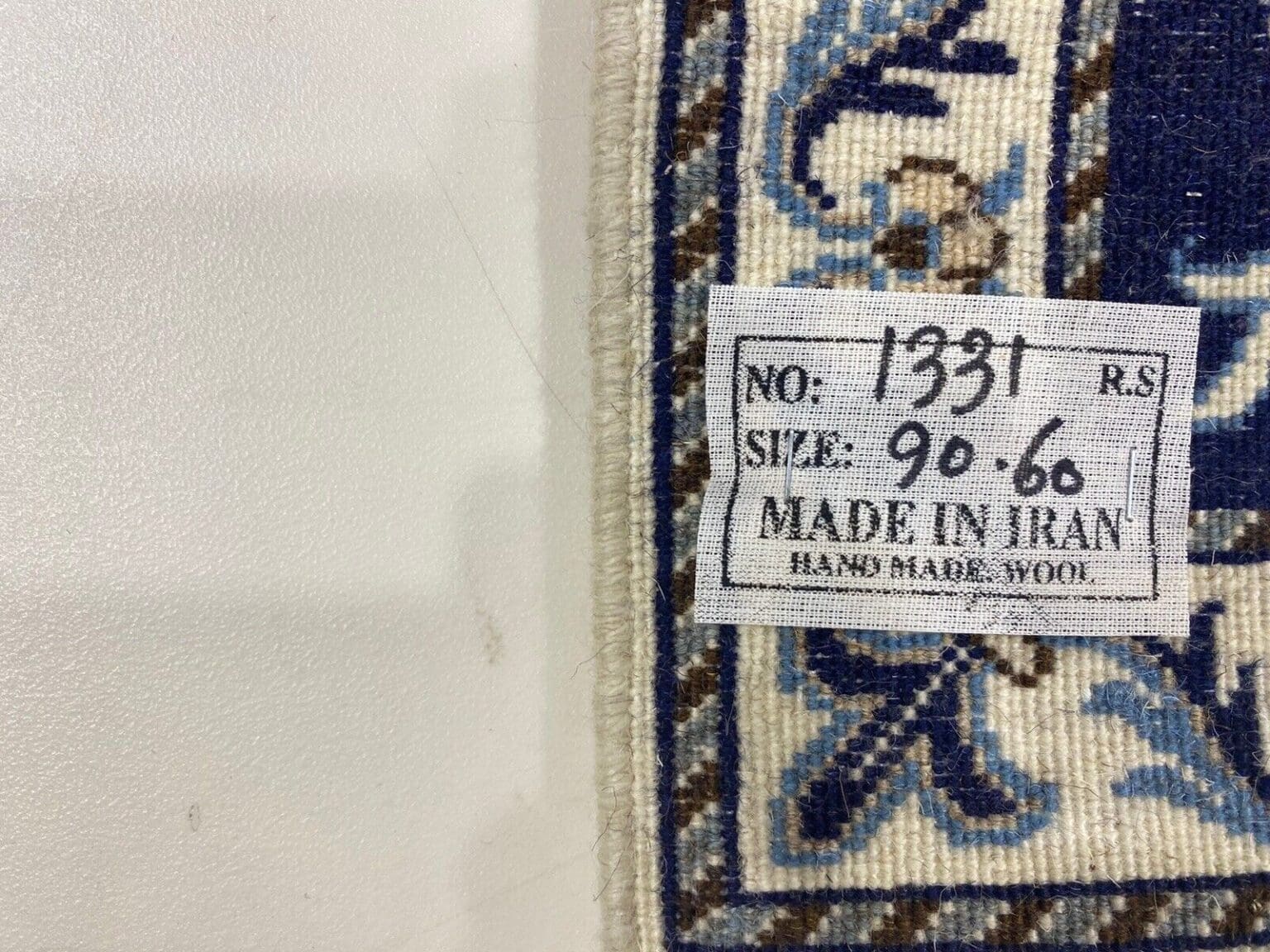
The Super Nain is hand-knotted. Its pile is made from 90% virgin wool and 10% silk, while the warp is 100% cotton. This combination brings together the practical character of wool and the distinct surface effect of silk. Virgin wool gives the pile a resilient textile structure and a warm feel underfoot. Silk adds a subtle sheen that can become more or less visible as light moves across the surface.
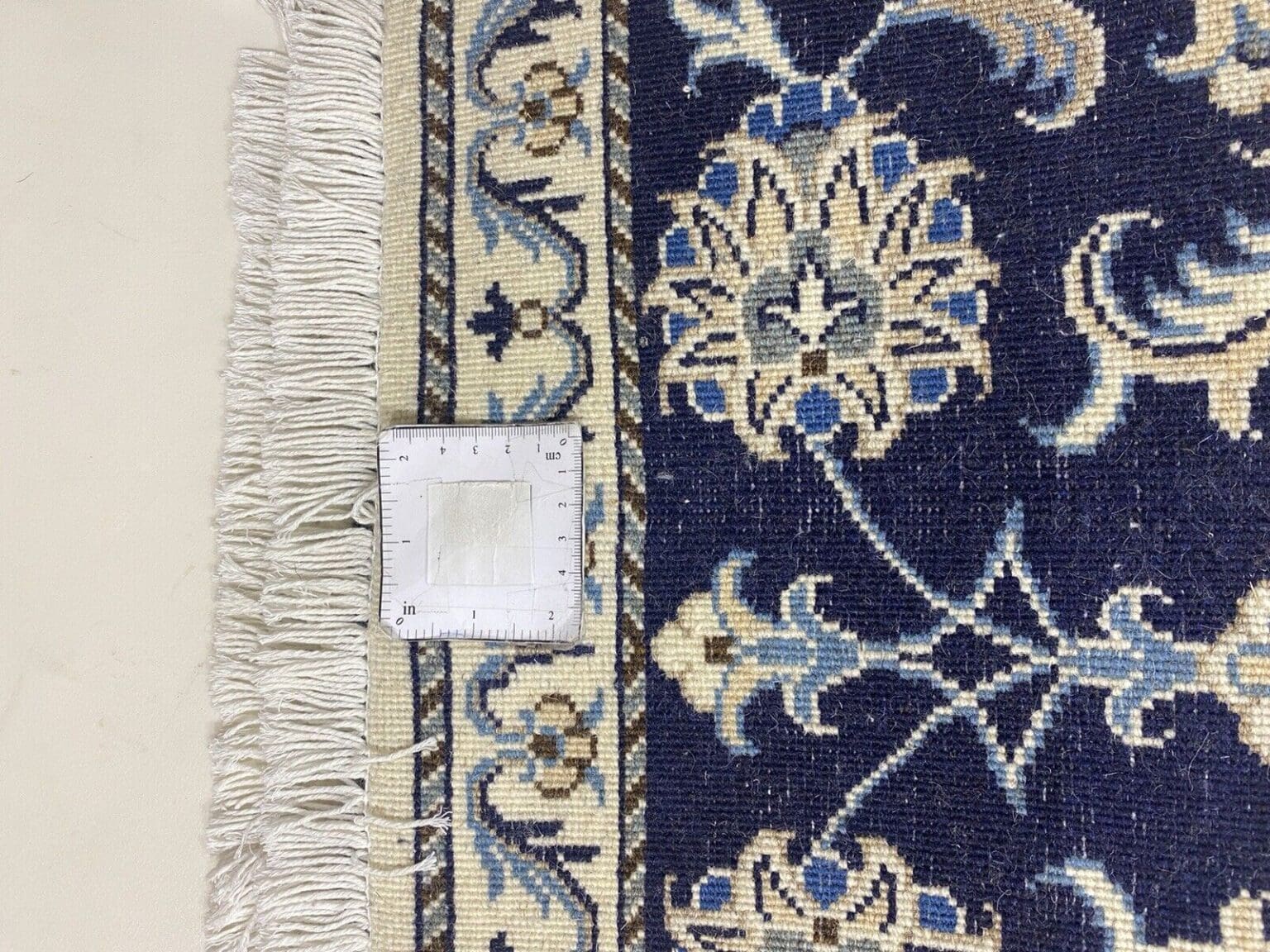
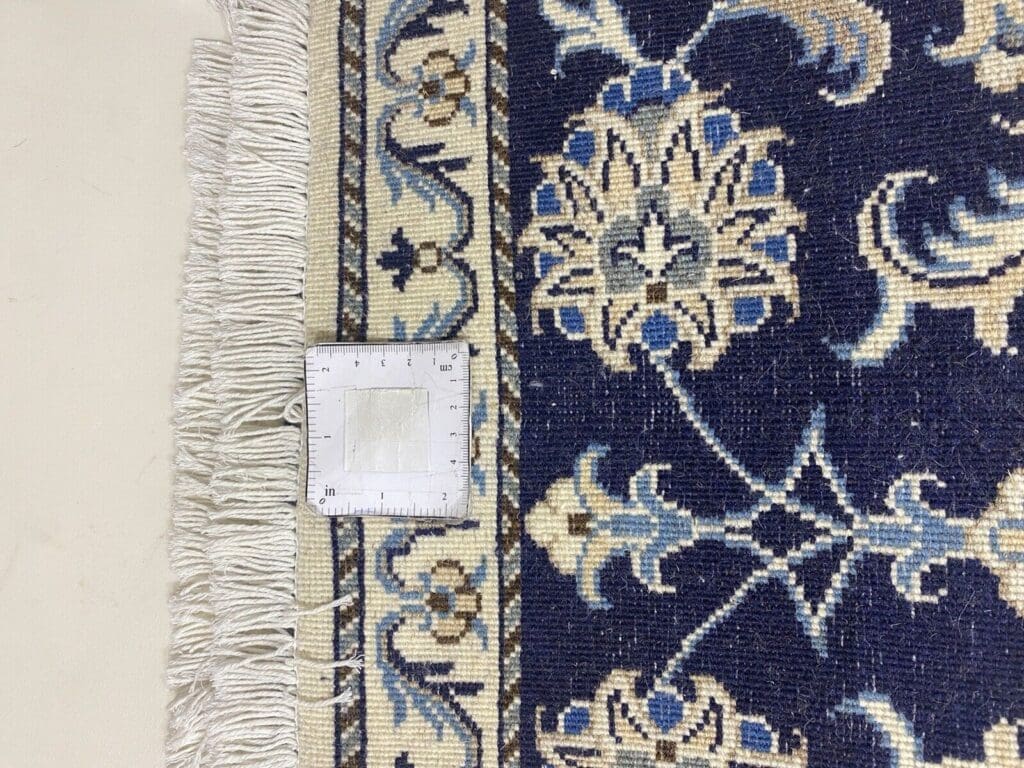
Hand-knotting means that individual knots are placed by hand into the foundation of the rug. Once a row has been completed, the pile is compacted and worked into an even surface. This process requires controlled manual work and makes it possible to render fine details in the design. The cotton warp forms the supporting framework of the construction. Although it is largely concealed in the finished rug, it contributes to the stability of the woven foundation.
Virgin wool is valued for its durable fibres and comfortable touch. It also has naturally insulating and cushioning qualities, which can contribute to a balanced feel in a room. Silk is often introduced into a pile when a finer texture and a restrained play of light are desired. In this rug, the two fibres are brought together through hand-knotting rather than industrial production. The listed composition distinguishes the wool and silk in the pile from the cotton used for the warp.
The character of a hand-knotted rug is also shaped by the sequence of work carried out by the maker. Knot placement, trimming and the finishing of the surface all influence how clearly the design can be read. Handwork does not create the uniform appearance of a machine-made floor covering. It produces a textile object in which the construction, the fibre mixture and the drawing of the pattern remain connected. The Super Nain is therefore described through its materials and its manually knotted technique.
Origin and Tradition
Nain is a city in Iran known for its Persian rugs. It lies in the dry landscape of central Persia and developed a recognised regional tradition of fine rug making. Nain rugs are associated with carefully organised designs, controlled knotting and a restrained colour effect. Their visual language often brings a clear overall structure together with numerous small details. The origin name Nain consequently refers both to a place and to the craft tradition developed there.
The history of rug making in Nain reaches back to the sixteenth century. As in other Iranian weaving centres, knowledge of fibres, dyes, drawing methods and working sequences was passed from one generation to the next. A regional rug tradition is not defined by one single pattern alone. It is formed by the relationship between the foundation, the pile, the knotting method, the design and the way the finished surface is handled.
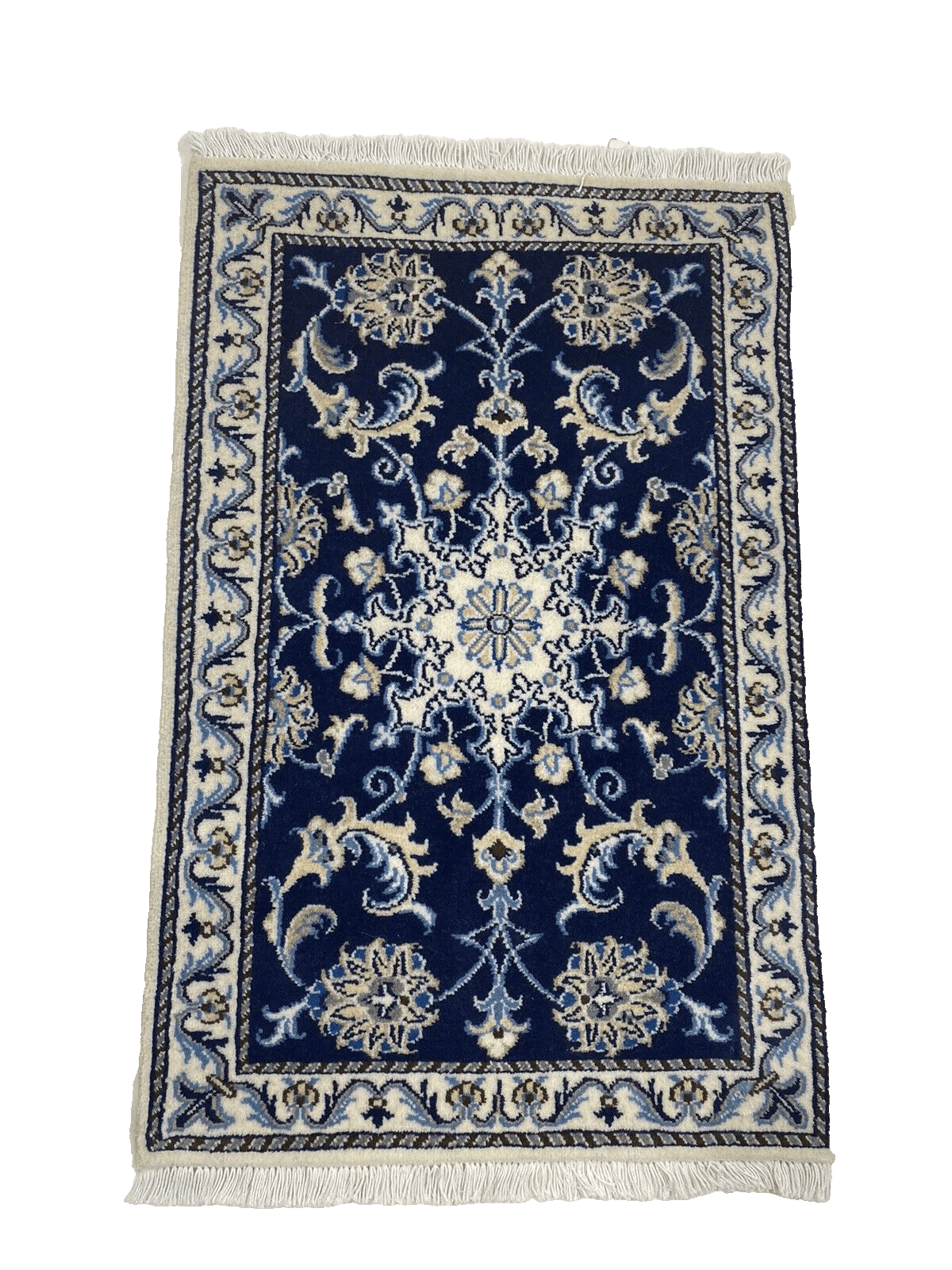
Nain designs are commonly connected with a calm and harmonious arrangement. Floral forms may be combined with geometric organisation, allowing curved stems and blossoms to sit within a clearly ordered composition. Central layouts, finely drawn borders and repeated secondary ornaments are among the devices found in Persian rug design. Individual rugs may vary considerably in their drawing, but the Nain vocabulary is generally linked with balance, precision and fine line work.
The region’s tradition reflects a broader Persian approach to designing rugs as complete fields rather than as isolated decorative marks. A central field, surrounding borders and smaller transition elements can be arranged so that the eye moves gradually across the surface. The success of such a composition depends on proportion and on the consistent handling of detail. Nain weaving is often discussed in this context because its patterns can combine delicacy with a clearly legible structure.
Nain rugs are frequently associated with soft and harmonious tones. Lighter grounds can make floral details stand out, while carefully related accent colours define the outlines and separate the different parts of the design. This restrained approach allows the pattern to work in both traditional and contemporary rooms. It does not depend on a single interior style; rather, the organised field and fine ornament can support different kinds of furnishing.
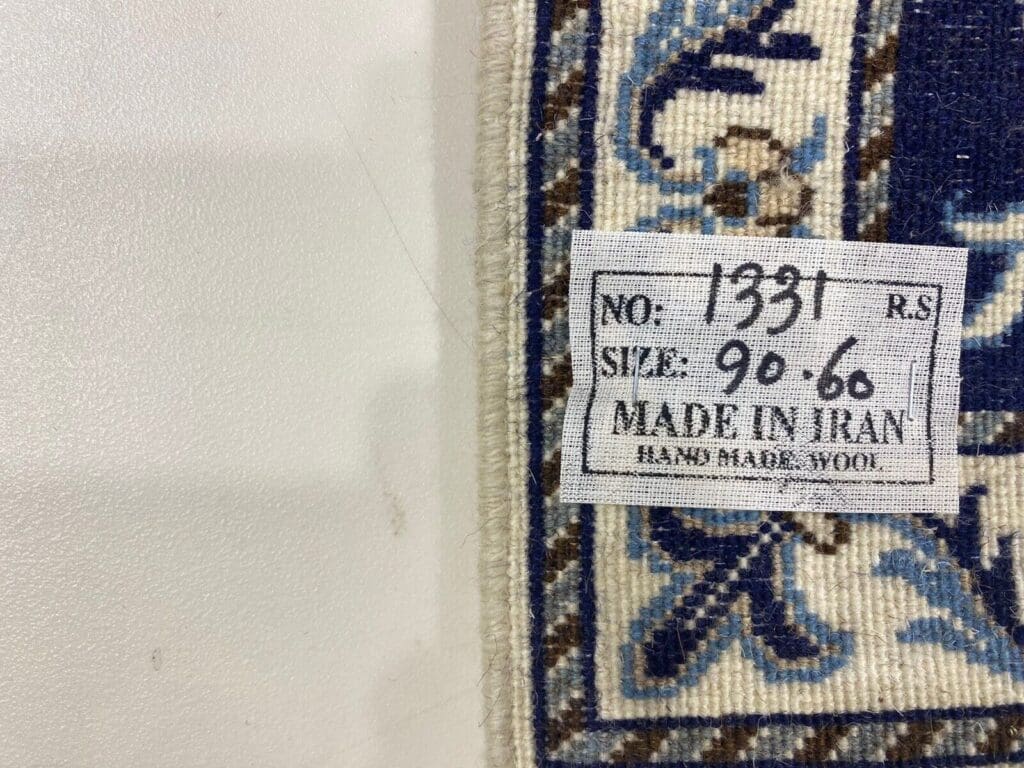
The designation Super Nain connects this rug with the tradition of finely executed Nain rugs. It does not replace the facts that the rug is Persian and hand-knotted. The regional background explains why floral and geometric order, fine drawing and a balanced colour concept are relevant when describing the design. The rug’s stated pattern is Oriental, while Nain identifies its Persian origin. These are separate descriptions: one concerns visual classification, the other concerns place and tradition.
Design and Pattern
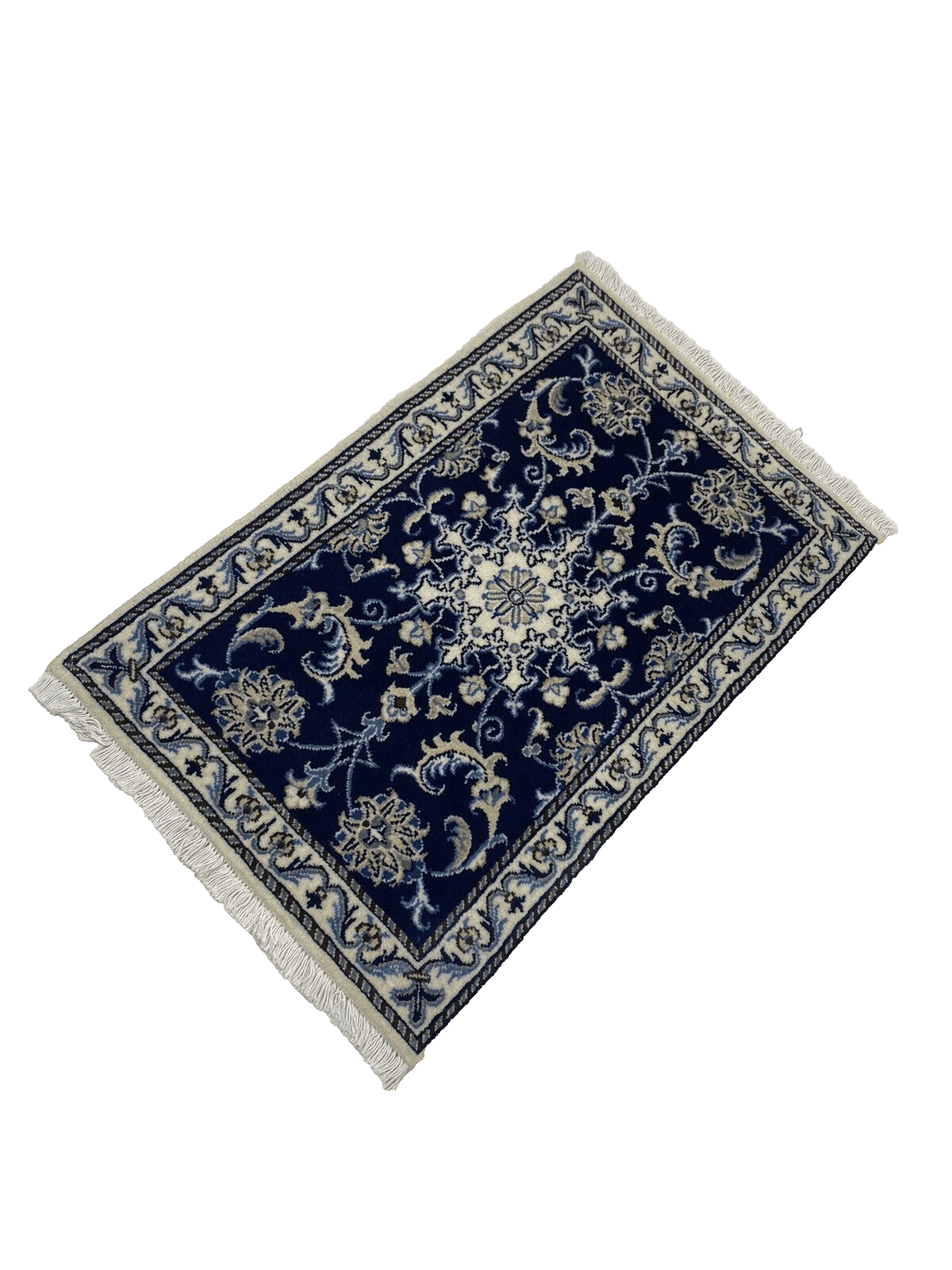
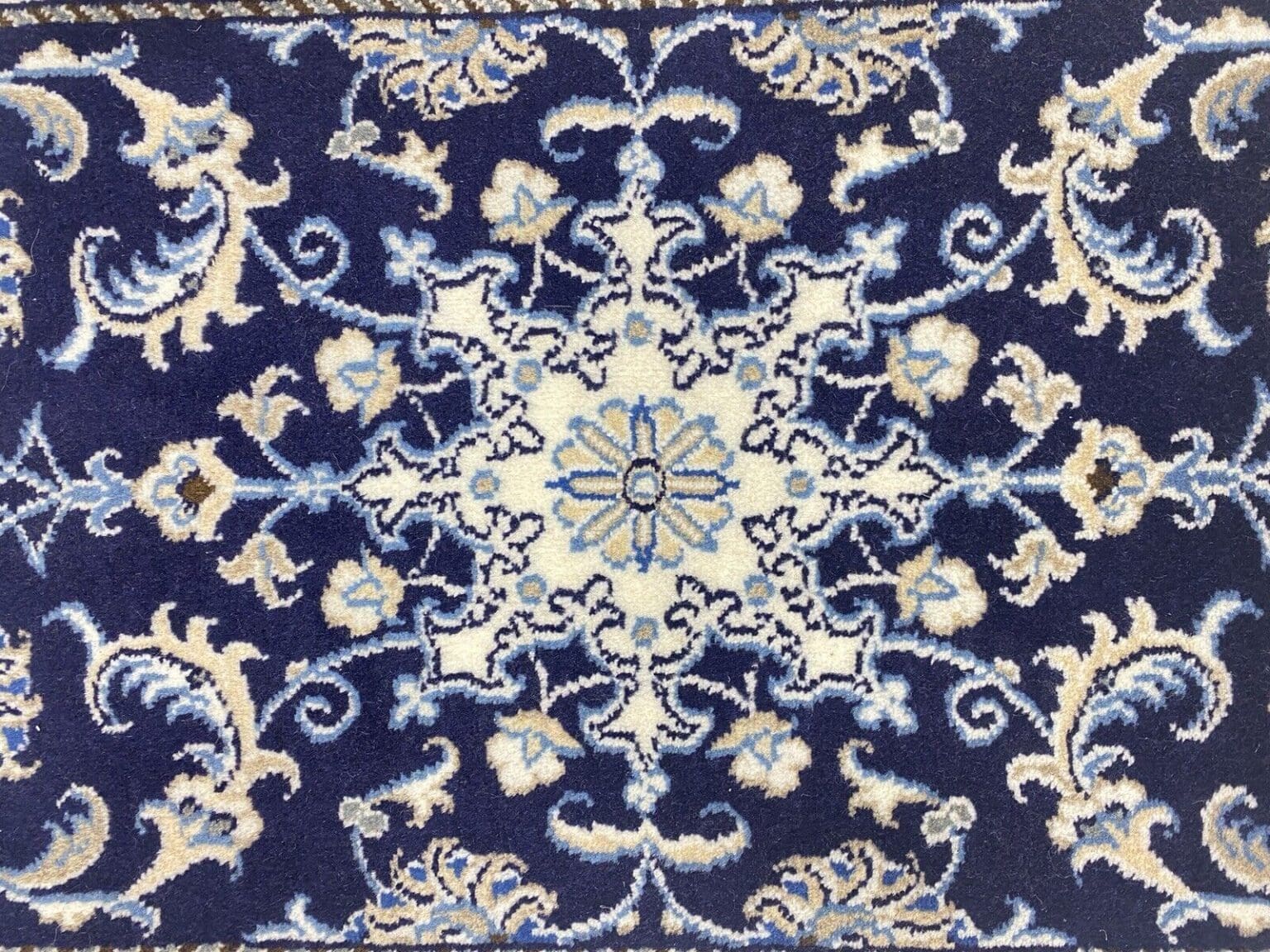
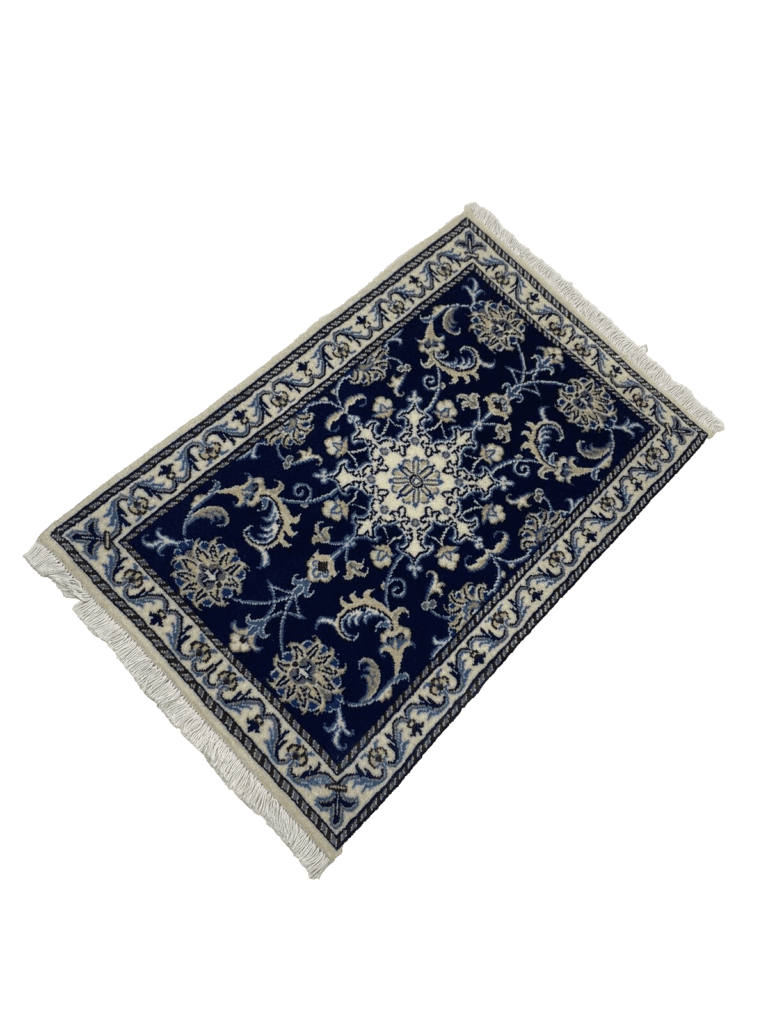
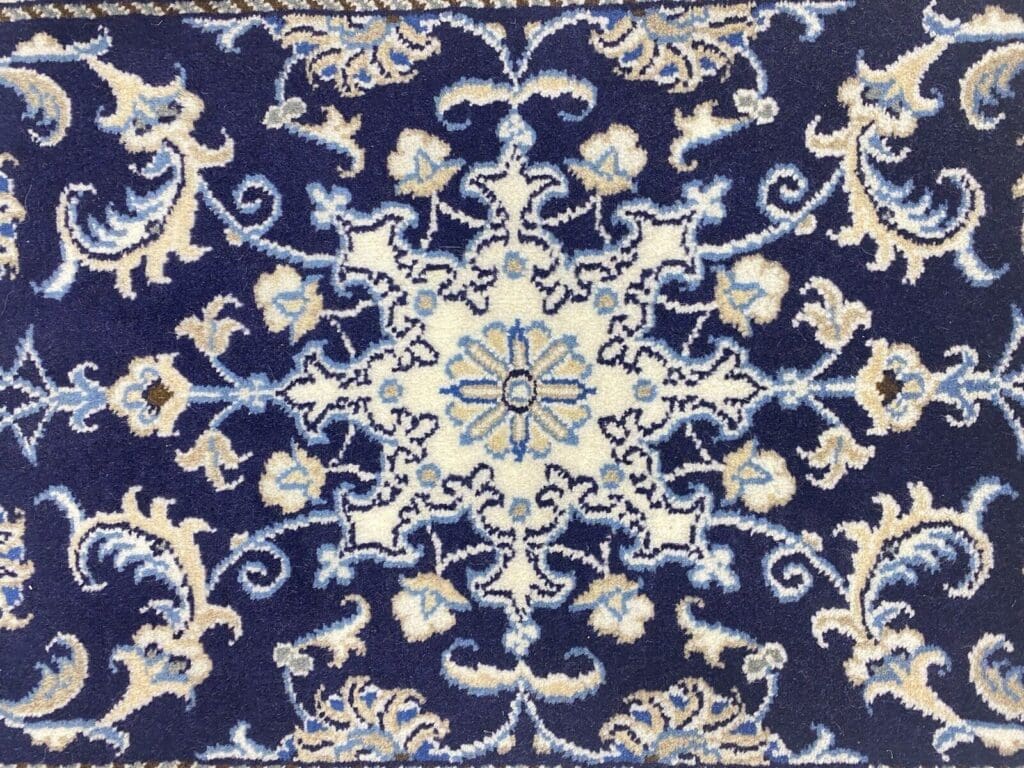
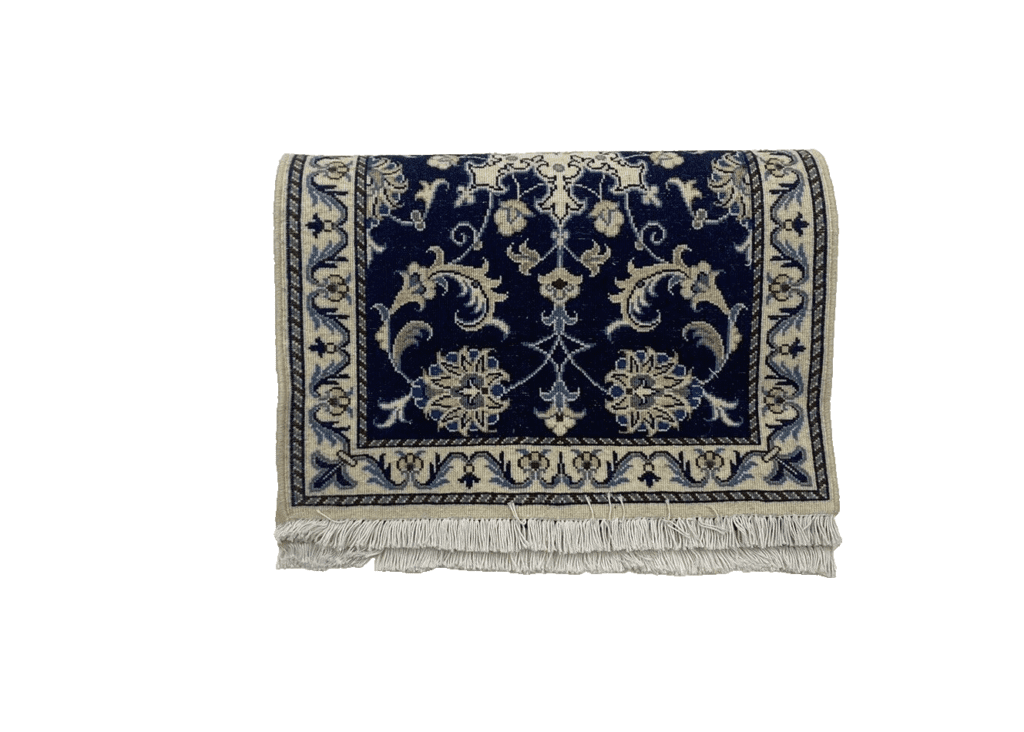
The Super Nain has a fine, detailed Oriental pattern. Its design relates to the Nain tradition, where floral elements and geometric structure may be used together. Vines, blossoms and smaller ornaments can be arranged to form a continuous visual field. Curved lines bring movement to the composition, while geometric organisation keeps the individual motifs in balance.
In a Nain-inspired design, the relationship between ornament and open ground is important. A central arrangement may guide attention towards the middle, while a border gives the outer edge a defined conclusion. Secondary borders can create gradual transitions between the central field and the main frame. The exact drawing of an individual rug depends on its design and on the work of the person who knotted it. The wider Nain vocabulary is nevertheless recognised through orderly proportions, detailed outlines and a measured repetition of forms.
The colour approach associated with Nain rugs is often quiet and harmonious. A light ground may provide contrast for floral motifs without making the composition appear loud. Related accent colours can clarify the contours and distinguish one ornament from another. Silk can catch the light in selected areas, giving some details a finer visual emphasis. Wool provides a more natural, softly textured counterpoint, so the overall surface can combine muted areas with discreet highlights.
An Oriental pattern of this kind can work in several furnishing contexts because it is based on structure and detail. In a traditional room, it can reinforce the Persian character of the setting. In a modern interior, the precise drawing can introduce texture and visual order without requiring a period-style room. The stated suitability for living rooms, bedrooms and hallways reflects this versatility. As a textile field, the rug can also help define a seating area or connect separate parts of a room.
A high knot density is generally useful for rendering small contours and closely related ornamental details. This is particularly compatible with Nain compositions, where vines, flowers and geometric lines can be drawn with considerable precision. The pattern of this particular rug is classified as Oriental; its connection with Nain comes from the stated origin and the regional design tradition. Origin and pattern should therefore not be confused: Nain names the Persian source, while Oriental describes the broader decorative category.
Special Features
The rug is new and hand-knotted. Its knot density is approximately 300,000 knots per square metre. This fine construction supports detailed pattern work and is one of the defining features of the piece. The combination of virgin wool and silk brings together a comfortable, resilient pile with a restrained sheen. The rug is suitable for use over underfloor heating.
It is also described as suitable for homes with pets and children and as moth-resistant. These practical statements complement the rug’s material and craft characteristics. Gentle care remains appropriate because the pile contains natural fibres and includes silk, which benefits from considerate handling. The hand-knotted construction is another distinguishing feature. Each piece is produced through manual work rather than as an identical machine-made series, so the finished rug retains the character of an individual textile.
FAQ
How should I clean and care for the Nain Persian Rug?
Regular, gentle vacuuming is sufficient for routine care. The surface should be treated carefully rather than aggressively brushed or scrubbed. If a spill occurs, a slightly damp cloth with a mild cleaning agent can be used to address the mark. Strong chemicals should be avoided because they may damage the colours and fibres. Serious or extensive soiling is best handled by a professional rug cleaner. This restrained approach is especially suitable for a pile made from virgin wool and silk, as both the natural fibres and the surface finish should be preserved.
Is the rug suitable for underfloor heating?
Yes. The Super Nain can be used on floors with underfloor heating. Wool is described as a good conductor of heat, and the combination of wool and silk allows warmth to be distributed evenly across the rug. This helps the surface remain comfortable in use. The heating system should still be operated as intended, and the hand-knotted pile should be protected from unsuitable cleaning methods. Compatibility with underfloor heating is one of the stated properties of this rug.
Where can I place the Nain Persian Rug?
The rug is suitable for living rooms, bedrooms and hallways. Its finely organised Oriental pattern can be combined with different furnishing styles and can establish a distinct textile area within a room. In a living room it may complement a seating arrangement; in a bedroom it can introduce a quiet, warm surface; and in a hallway it can provide a decorative focal point. Direct sunlight should be avoided so that the colours do not fade. Placement should also allow the hand-knotted pile to be treated gently and kept clear of unsuitable cleaning products.
To provide the best experiences, we use technologies like cookies to store and/or access device information. Consenting to these technologies will allow us to process data such as browsing behavior or unique IDs on this site. Not consenting or withdrawing consent, may adversely affect certain features and functions.
Functional Always active
The technical storage or access is strictly necessary for the legitimate purpose of enabling the use of a specific service explicitly requested by the subscriber or user, or for the sole purpose of carrying out the transmission of a communication over an electronic communications network.
Preferences
The technical storage or access is necessary for the legitimate purpose of storing preferences that are not requested by the subscriber or user.
Statistics
The technical storage or access that is used exclusively for statistical purposes.The technical storage or access that is used exclusively for anonymous statistical purposes. Without a subpoena, voluntary compliance on the part of your Internet Service Provider, or additional records from a third party, information stored or retrieved for this purpose alone cannot usually be used to identify you.
Marketing
The technical storage or access is required to create user profiles to send advertising, or to track the user on a website or across several websites for similar marketing purposes.
 SECURE PAYMENT
 SHIPPING PARTNERS


