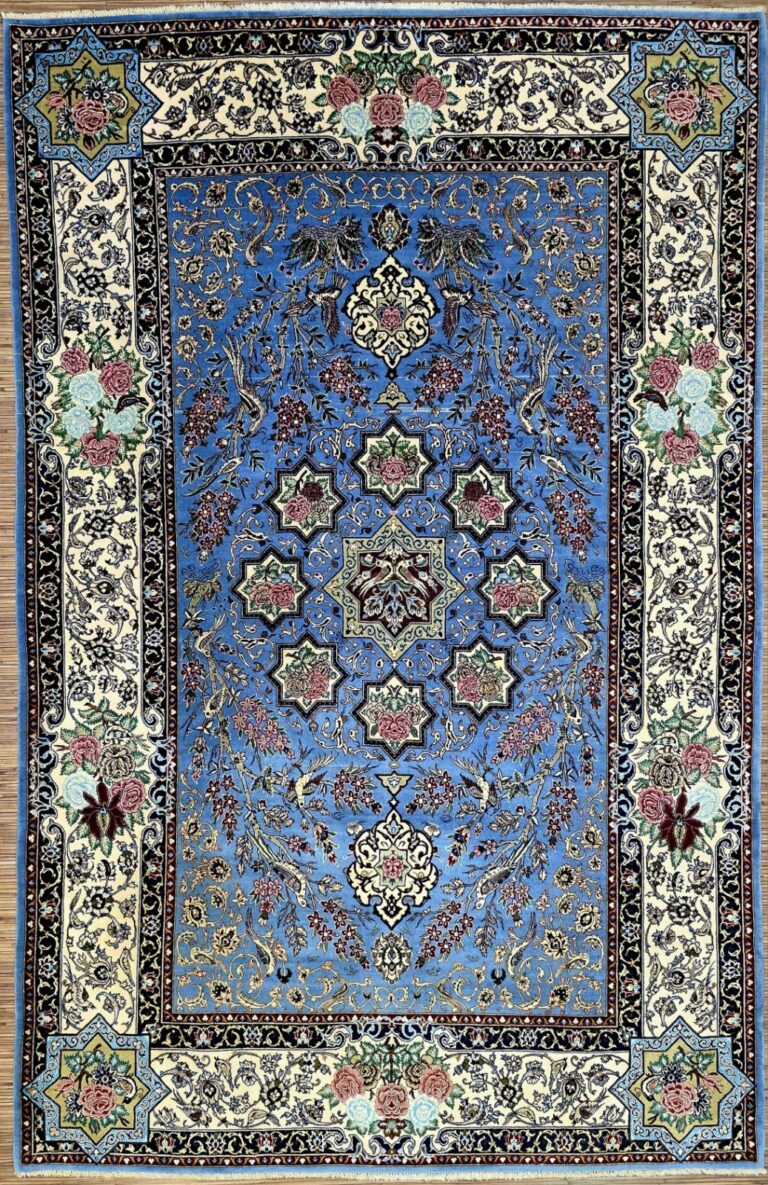
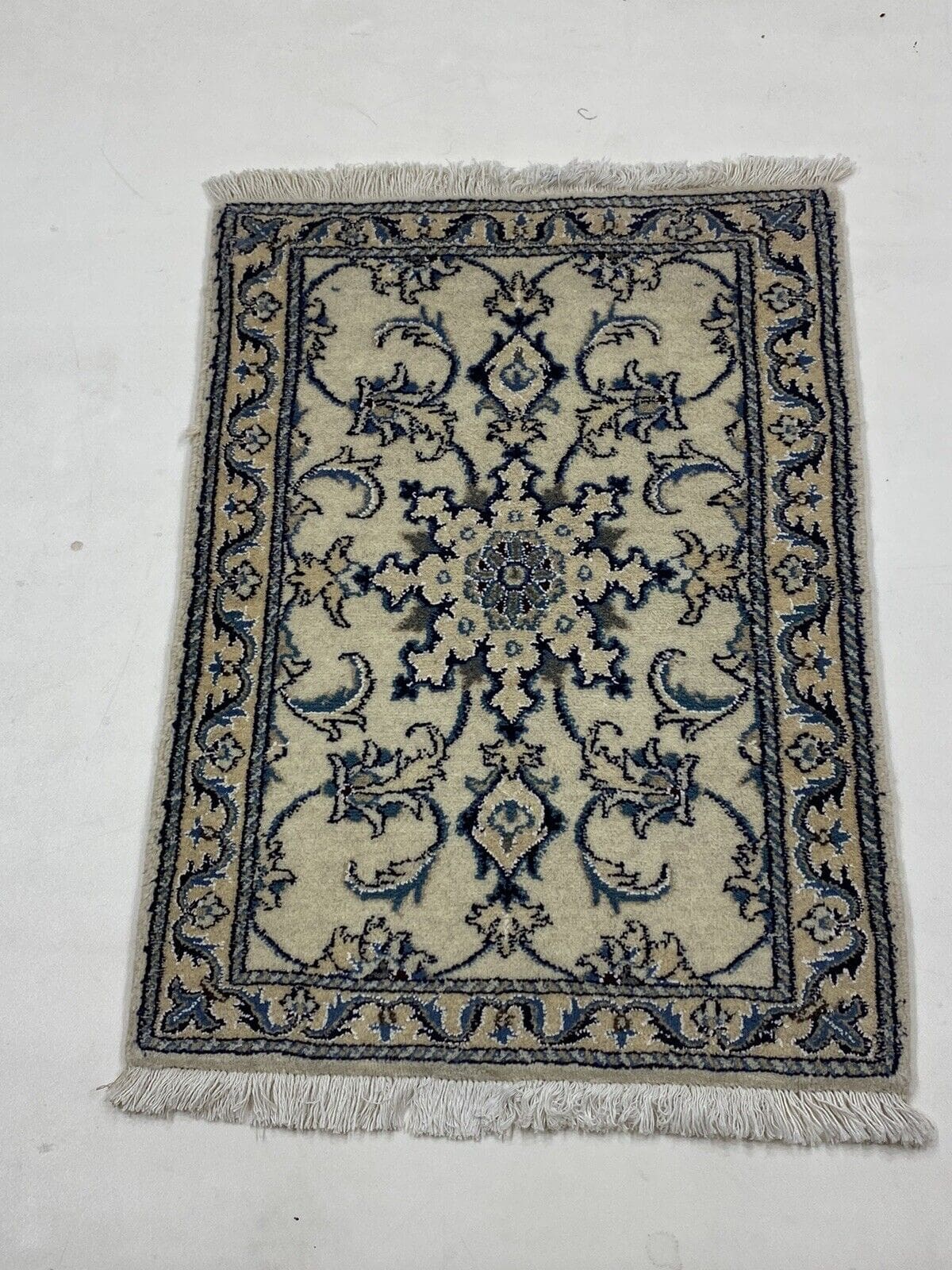
This Nain Persian rug is hand-knotted, with a pile made from 90% new wool and 10% silk. The warp is 100% cotton. The two pile fibres contribute different qualities to the finished surface. New wool forms the greater part of the pile and provides a durable, resilient foundation. Wool is naturally insulating and retains warmth, giving the rug a substantial textile character for living spaces and areas that are used regularly.
The silk content adds a softer handle and a visible sheen. Together, wool and silk create a surface in which a more resilient fibre is combined with a finer, smoother one. The silk brings a refined lustre to the pile, while the wool supplies the stronger underlying structure. The rug is suitable for underfloor heating. Its pile height is approximately 8 mm.
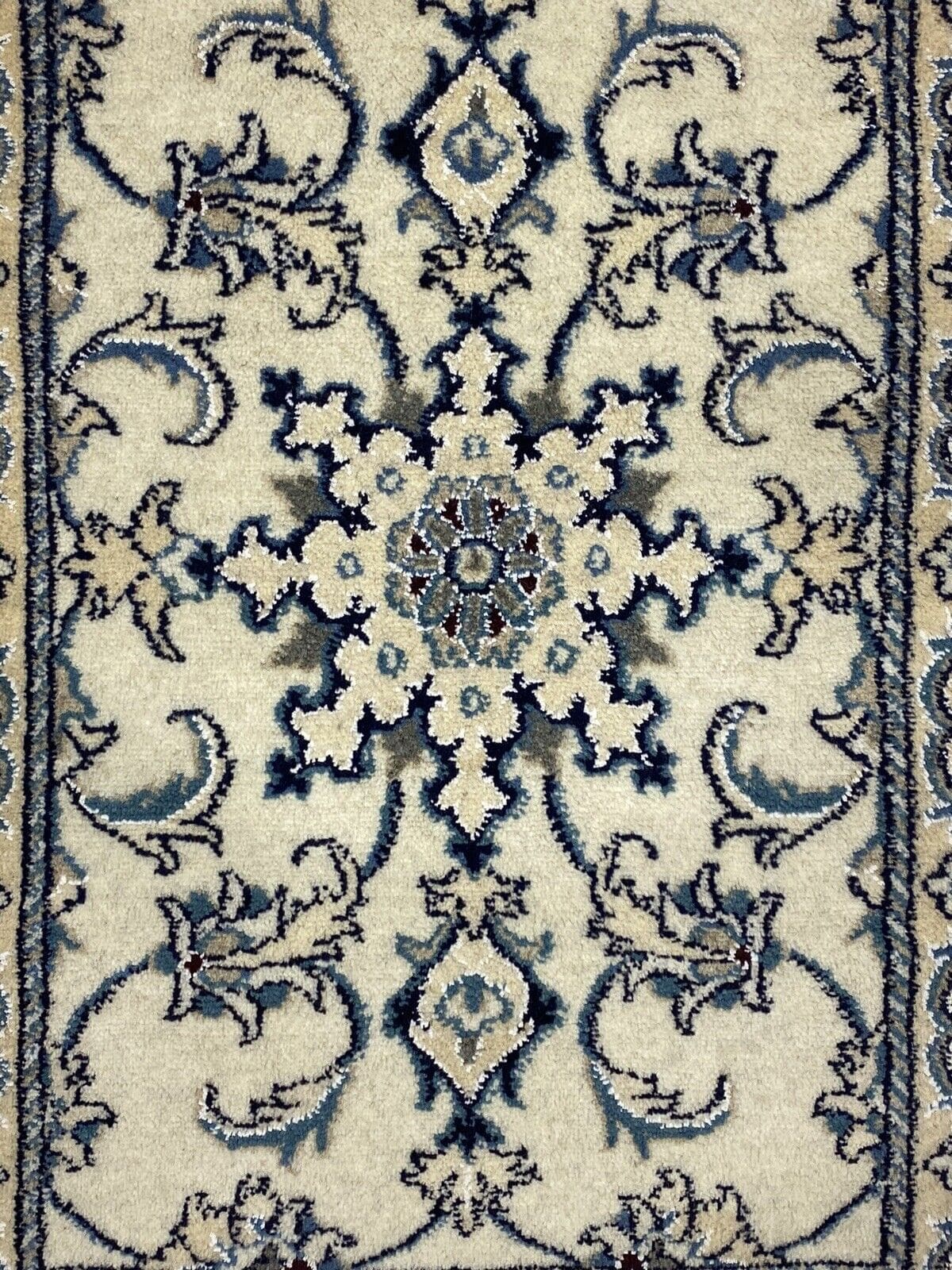
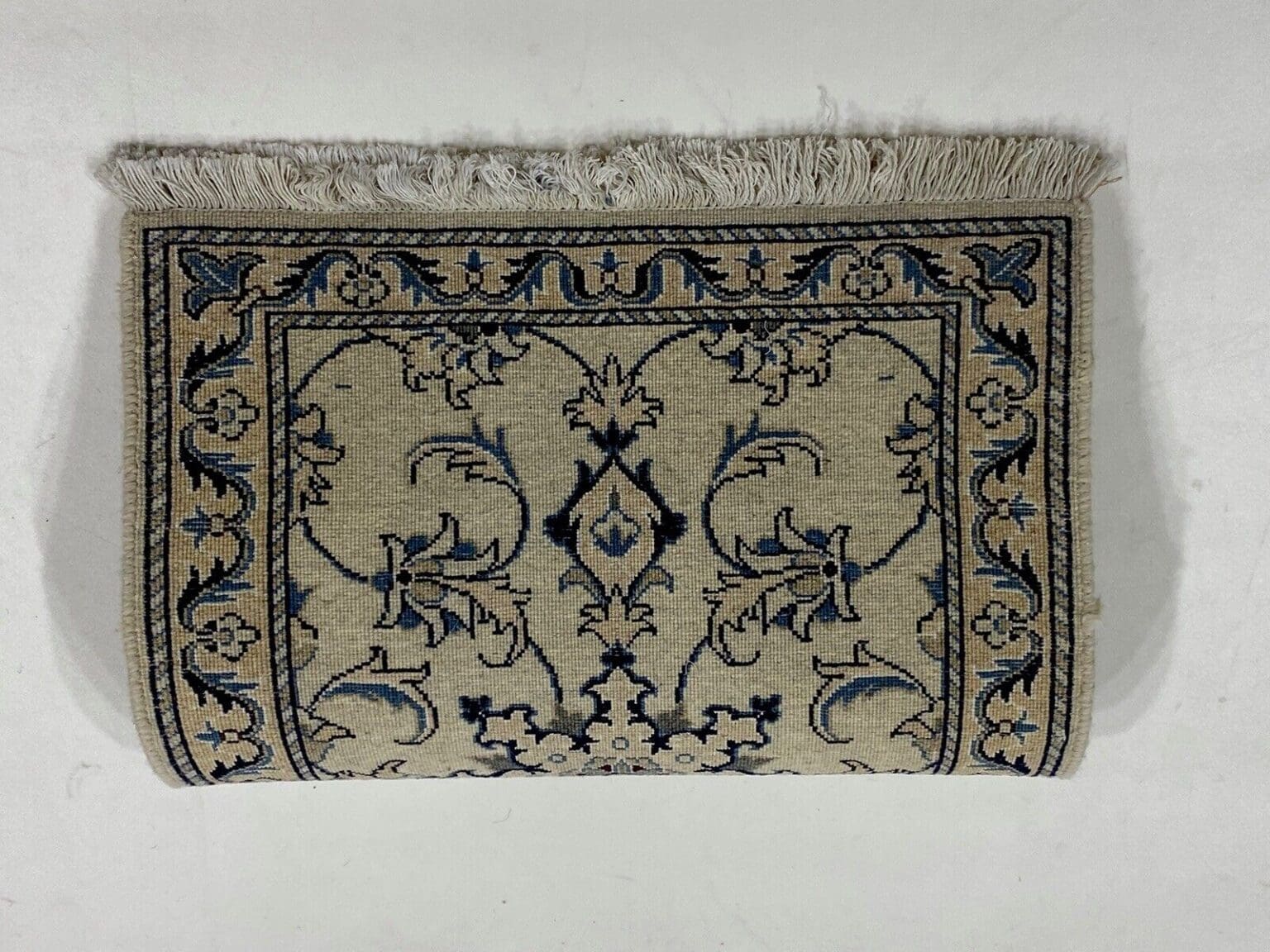
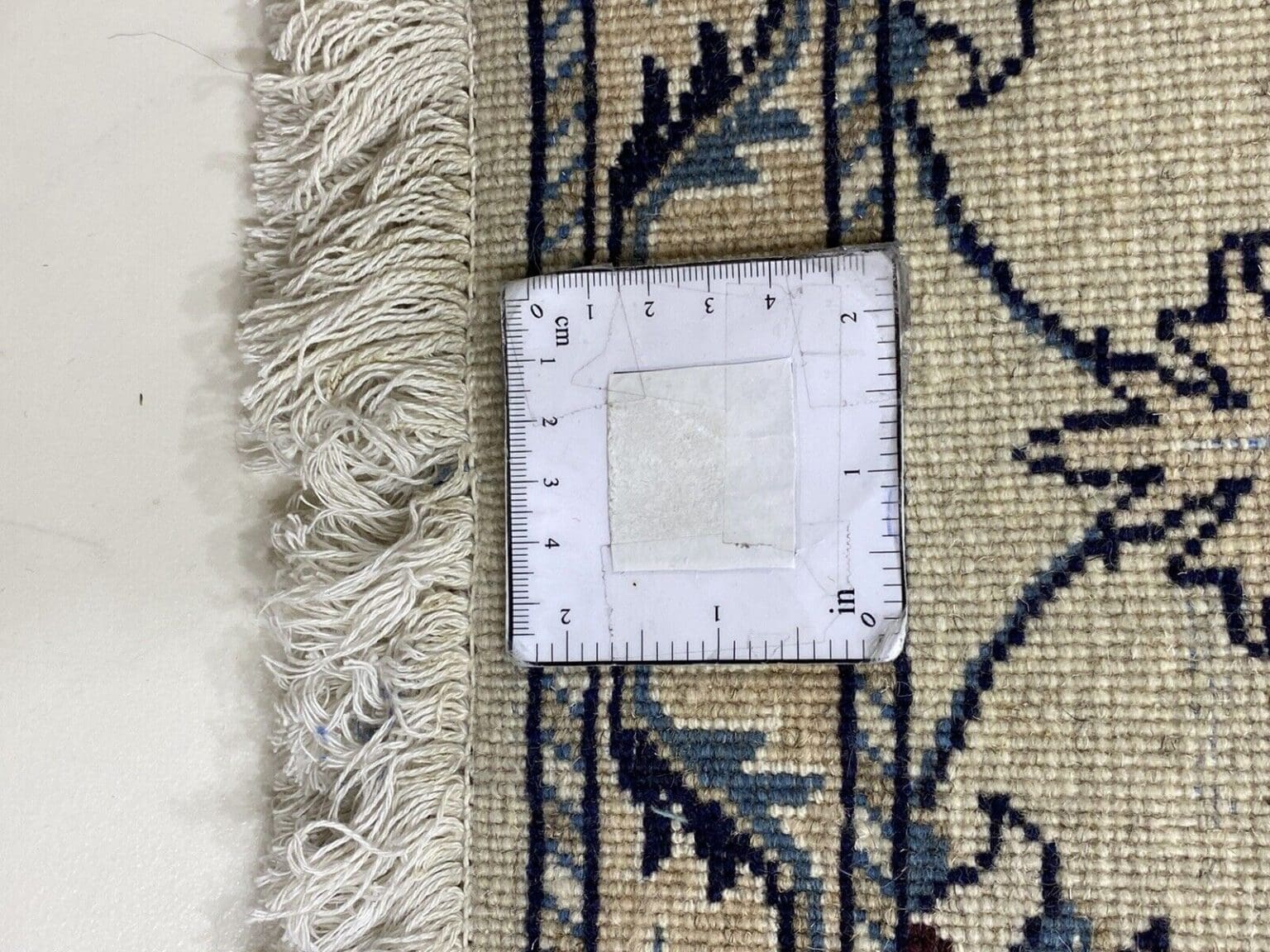
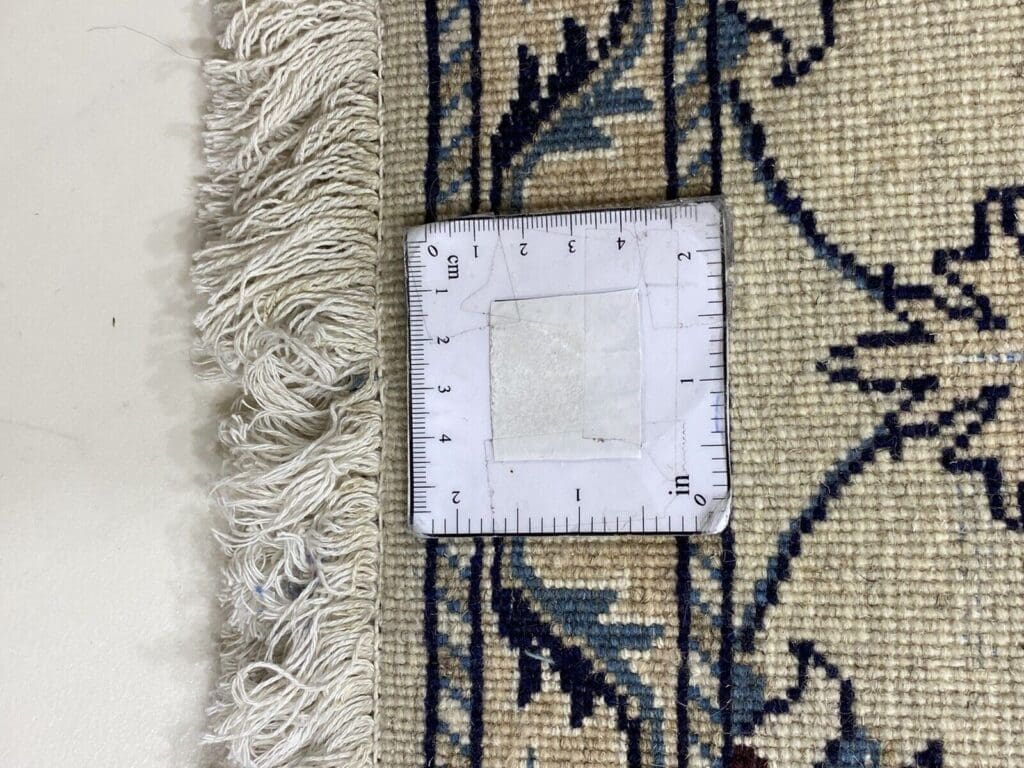
The knot density is approximately 300,000 knots per square metre. Dense knotting allows delicate lines, small ornaments and carefully arranged pattern sections to be rendered with clarity. A hand-knotted rug is not produced in one continuous industrial process. Individual knots are worked into the foundation by hand, and the design is built up progressively across the textile structure. This gives each piece its own execution. Here, the hand-knotted technique, wool-and-silk pile and cotton warp form the stated construction.
Each material has a distinct role. Wool contributes resilience and natural insulation, while silk changes the surface feel and adds sheen. Cotton is used for the warp, the structural foundation of the rug, rather than as a pile fibre. Separating these functions helps explain the character of the finished textile. The combination is both practical and decorative, with a robust wool basis and a silk element that lends a smoother appearance.
Origin and Tradition
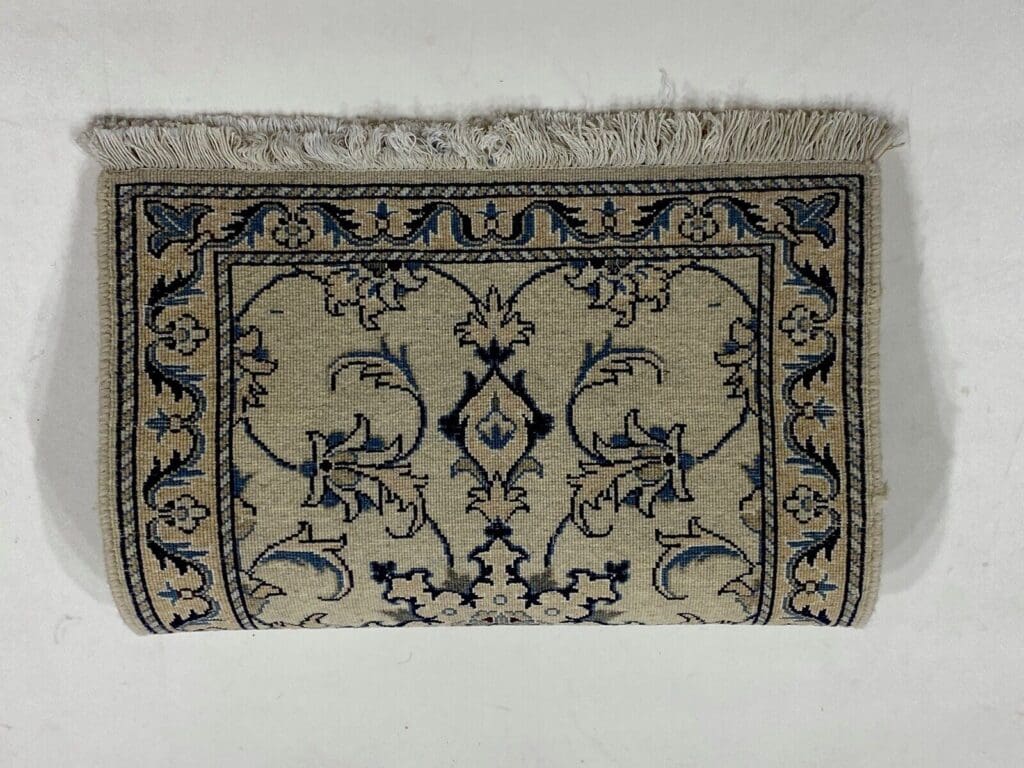
The rug comes from Persia, present-day Iran, and is assigned to the province of Nain. Nain is one of the recognised Iranian centres of carpet weaving. Its tradition is associated with precise workmanship, finely drawn ornament and the use of selected materials. Nain rugs are often identified with controlled compositions and nuanced colour arrangements. Their appearance depends not only on individual motifs, but also on the relationship between the main field, the border and the smaller repeating details.
Carpet production in Nain has a long history reaching back to the sixteenth century. Across generations, weaving knowledge developed around the relationship between design and construction. A weaver must understand the foundation, the organisation of the pattern and the handling of the fibres. The result is not identical to a standardised factory product. Small variations in execution belong to the nature of an individually hand-knotted rug and reflect the way the piece was made.
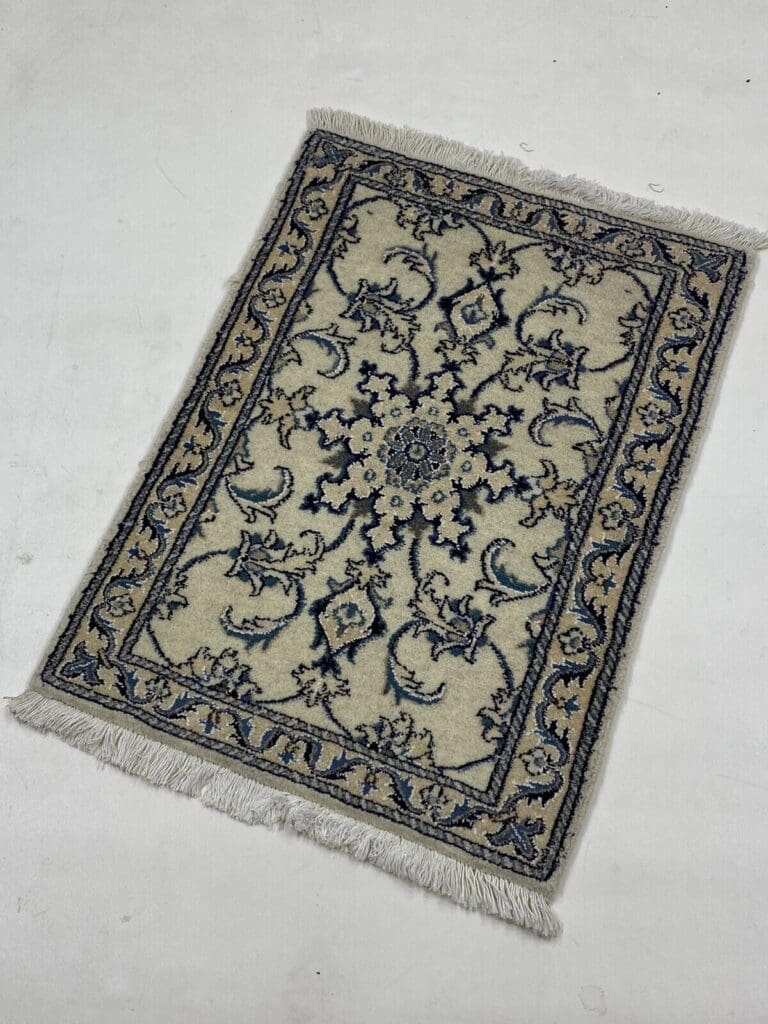
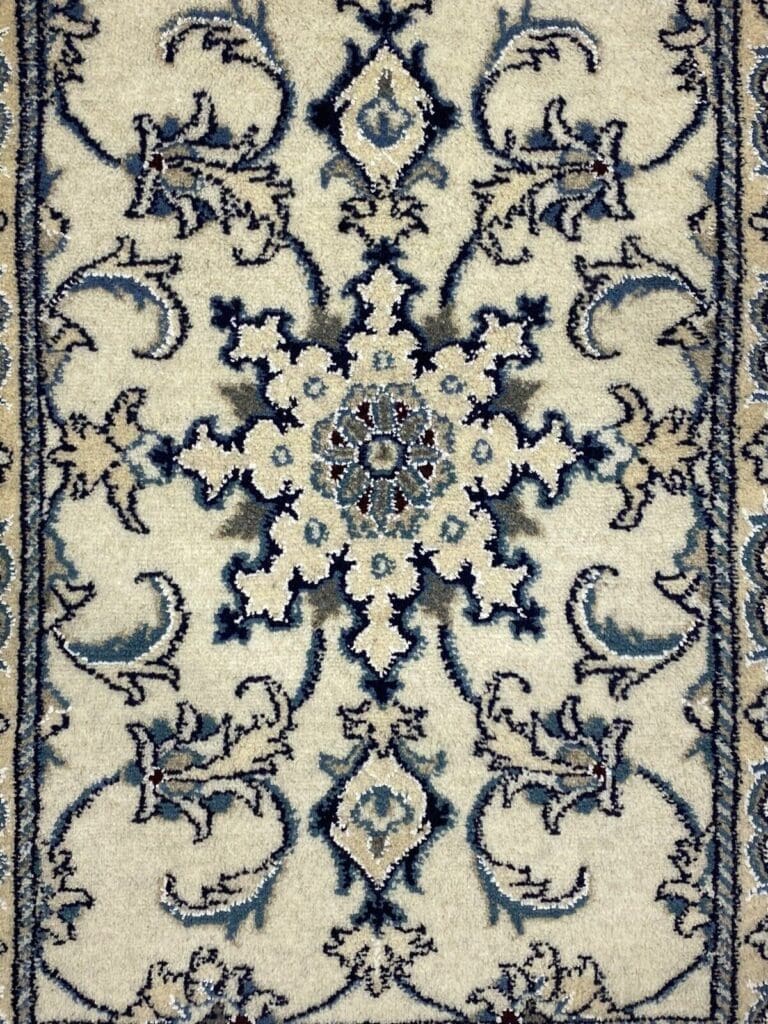
The Nain tradition is known for finely articulated designs and gentle colours. Floral and ornamental forms are important parts of this vocabulary, while geometric order may structure the arrangement. Such compositions can be read through the balance of a central area, surrounding borders and repeated details. Seen from a distance, the elements form a coherent field; viewed more closely, the density of the knotting reveals the fine textile work within that surface.
Persian rugs from places such as Nain are more than practical floor coverings within their cultural tradition. They also carry regional methods of design and accumulated craft knowledge. Colour ranges, ornament and the distribution of pattern convey a textile language developed over a long period. A hand-knotted Nain therefore connects a regional tradition with the individual interpretation represented by one particular rug.
The place name here identifies the stated Iranian origin and the associated Persian weaving tradition. It should not be confused with the name of a single motif. Nain refers to the origin and stylistic context of this rug. Its traditional Oriental and Persian character complements that regional classification.
Design and Pattern
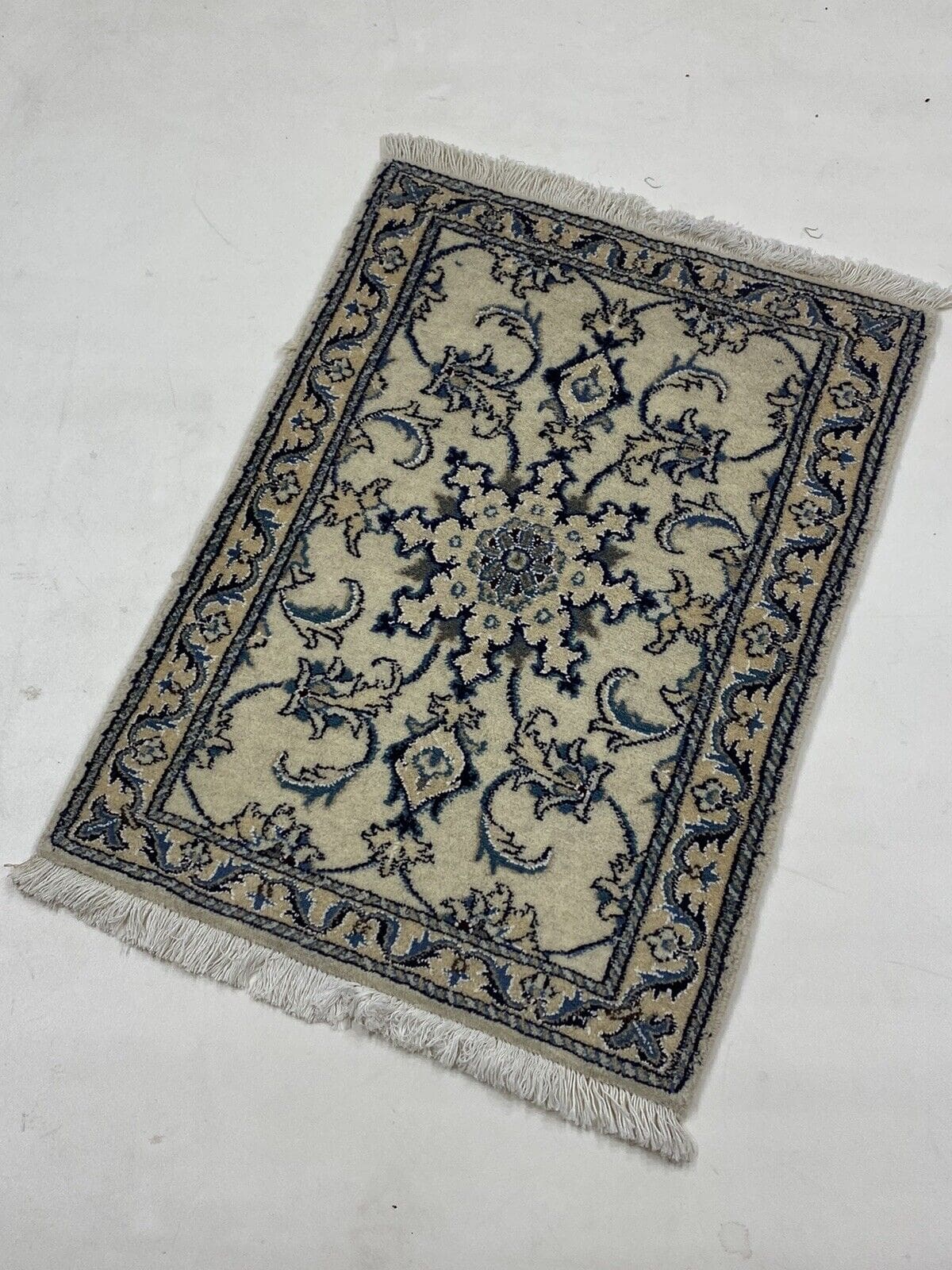
The design follows traditional Oriental and Persian pattern ideas. Floral and geometric elements may be combined within this type of composition. Floral forms introduce organic lines and flowing contours, while geometric structures provide order and rhythm. Together they create a pattern that is organised without losing the variety of individual ornamental details.
The colour scheme is multicoloured and uses soft tones with restrained, elegant nuances. This kind of colour effect belongs to the established visual language associated with many Nain rugs. Colours do more than provide decoration: they help distinguish the different levels of the composition. A central field may be separated from its surrounding border, while smaller ornaments establish transitions and repetition between the larger areas.
In finely knotted Persian rugs, the appearance of a pattern is closely linked to the density of the construction. Narrow lines, small changes in direction and delicate forms can be set out with greater definition in a densely knotted pile. The ornament can appear coherent while still retaining the visual evidence of textile work. Hand knotting supports this detailed drawing because the pattern is formed progressively as the knots are inserted into the foundation.
Symbols and ornaments rooted in Persian culture are often associated with ideas of good fortune, prosperity and beauty. These associations belong to the broader visual tradition of Persian carpets and help explain why certain floral and geometric forms have been preserved and reinterpreted over time. They do not require every individual ornament to have one fixed meaning. Instead, they place the design within a cultural vocabulary that has been used across generations.
Wool and silk also affect the way the design is seen. Silk can catch the light in selected areas, while wool gives the surface a softer and more even visual quality. The impression may therefore change with the light in the room. The multicoloured palette remains connected to the traditional Persian direction and can be used with a range of interior styles, from classic settings to more contemporary rooms.
The rectangular shape supports a clear arrangement of a main field and surrounding framing elements, a structure frequently found in traditional carpet compositions. No further specific name is given for an individual motif. The stated characteristics are the traditional Oriental and Persian design, the multicoloured execution, the fine ornamental approach and the Nain context.
Special Features
The rug is described as new and in very good condition. Its listed features include suitability for underfloor heating, a pet-friendly and child-friendly character, and resistance to moths. The new wool contributes to a durable surface and resistance to ordinary wear. Silk adds lustre and a softer feel to the pile.
Daily care is straightforward. Regular vacuuming is sufficient to help maintain the described condition. A soft brush attachment should be used to treat the surface gently. Spills and marks should be dabbed promptly with a damp cloth. For more intensive cleaning, a professional carpet-cleaning service can be consulted. Direct sunlight and moisture should be avoided so that the fibres and colours are protected.
The key technical features are the hand-knotted construction, the dense knotting and the combination of new wool with silk. Alongside the Nain classification, multicoloured design and rectangular form, these details define the rug as a Persian Oriental rug with a traditional regional and material character.
FAQ
How should I care for the Nain Persian rug?
Regular vacuuming is the basic care routine. Use a vacuum cleaner with a soft brush attachment so the pile is treated gently. Marks should be dabbed as soon as possible with a damp cloth rather than rubbed aggressively. For deeper cleaning, use a professional carpet-cleaning service. The rug should be protected from direct sunlight and moisture, as both can place stress on the fibres and colours. The new-wool pile is described as durable, but suitable care remains important for preserving the surface and the very good condition in which the rug is supplied.
What is the difference between a hand-knotted and a machine-made rug?
A hand-knotted rug is made by inserting individual knots into the foundation by hand and building the design progressively. The process is therefore different from fully standardised machine production, and the finished piece has its own individual execution. A high knot density supports the rendering of fine lines and detailed patterns. Machine-made rugs may also be regular and precise, but they use another manufacturing method. This rug is defined by its hand-knotted construction, dense knotting and pile made from new wool and silk, making it a single textile piece rather than a repeated factory format.
Can the rug be used outdoors?
The rug is intended mainly for indoor use. Its suitability for underfloor heating concerns use inside the home and does not mean that it is designed for permanent outdoor exposure. A protected outdoor area may be conceivable because the wool pile is described as durable, but the rug must be kept away from direct sunlight and moisture. These conditions can affect both fibres and colours. A dry, sheltered interior is therefore the appropriate setting for careful, long-term use.
To provide the best experiences, we use technologies like cookies to store and/or access device information. Consenting to these technologies will allow us to process data such as browsing behavior or unique IDs on this site. Not consenting or withdrawing consent, may adversely affect certain features and functions.
Functional Always active
The technical storage or access is strictly necessary for the legitimate purpose of enabling the use of a specific service explicitly requested by the subscriber or user, or for the sole purpose of carrying out the transmission of a communication over an electronic communications network.
Preferences
The technical storage or access is necessary for the legitimate purpose of storing preferences that are not requested by the subscriber or user.
Statistics
The technical storage or access that is used exclusively for statistical purposes.The technical storage or access that is used exclusively for anonymous statistical purposes. Without a subpoena, voluntary compliance on the part of your Internet Service Provider, or additional records from a third party, information stored or retrieved for this purpose alone cannot usually be used to identify you.
Marketing
The technical storage or access is required to create user profiles to send advertising, or to track the user on a website or across several websites for similar marketing purposes.
 SECURE PAYMENT
 SHIPPING PARTNERS