This Nain Persian rug is hand-knotted with a pile made from virgin wool and silk and a cotton warp. Virgin wool forms the greater part of the pile. The source describes it as warm, hard-wearing, and easy to care for. It is also noted for soil-resistant qualities and for its ability to regulate warmth. These properties give the rug the natural textile character associated with wool while providing a comfortable surface underfoot.
Silk adds a fine, smooth element to the wool pile. It gives the surface additional sheen and makes the colours appear more vivid. The two fibres therefore contribute different qualities to the finished rug: wool supplies body, warmth, and resilience, while silk brings a finer texture and a brighter reflection of light. The cotton warp forms the structural basis on which the pile is knotted. This combination is stated for this particular rug and is part of its described construction.
Hand-knotting is a gradual process in which individual knots are placed into the prepared foundation. The work is carried out by hand rather than through one uniform machine-made operation. The resulting textile structure connects the foundation, the pile, and the drawn pattern directly. The high knot density supports a finely worked surface and allows the oriental design to be rendered with clear lines and detailed floral elements.
The making of a hand-knotted rug requires repeated attention to the arrangement of the knots and to the consistency of the developing pattern. Wool and silk are worked together in the pile, while the cotton warp supports the construction from within. This method explains why hand-knotted rugs are assessed through their materials, their back, their pattern, and the density of their knotting. In this Nain, those characteristics form part of a carefully described traditional Persian construction.
Origin and Tradition
The rug comes from Persia and is identified in the source with the city of Nain in Iran. Nain is a recognised centre of Persian rug weaving with a long craft tradition. Skills connected with preparing, knotting, and finishing rugs have been passed through generations there. The regional identity is therefore linked not only to a place name, but also to a continuing practice in which material selection, handwork, and ordered pattern design are closely related.
Persian rugs combine practical use with a highly developed textile language. A rug is made to serve as a floor covering, yet its construction and ornament also express the traditions of the weaving region. Individual knots are integrated into a larger composition, and the finished surface depends on the disciplined repetition of this work. A high knot density can support fine drawing, allowing lines and decorative details to be represented with greater precision.
Nain rugs are associated with an elegant and clearly organised approach to Persian design. The name Super Nain identifies the version named in the source and does not create a separate place of origin. Nain itself lies in Iran, a country with a broad rug-making history made up of many regional methods and visual traditions. The rug’s classification as a Nain Persian rug therefore refers to the stated Iranian origin and to the Nain tradition of hand-knotting.
Weaving knowledge in Nain has been refined over generations. That continuity is visible in the relationship between a carefully prepared foundation, a dense hand-knotted pile, and a controlled ornamental drawing. The craft is not limited to the visual result. It also includes decisions about fibre, colour, knot placement, and finishing. These elements are brought together during production so that the rug can function as a durable household textile while retaining the character of a handmade object.
Oriental and Persian rugs also have a cultural role beyond interior decoration. Patterns and colours contribute to the identity of a room and can carry associations with prosperity and social standing. At the same time, rugs remain part of everyday domestic life. Their importance lies in the combination of use, craftsmanship, and visual tradition. This Nain follows that cultural context through its Persian origin, its hand-knotted manufacture, and its traditional oriental styling.
Because the rug is made by hand, its production belongs to a slower form of textile work than industrial manufacture. The pattern is built through many individual actions, and the completed piece reflects the connection between the weaver’s technique and the regional design vocabulary. Nain is consequently more than a label for appearance in this description: it names the Iranian city and the weaving tradition with which the rug is identified.
Design and Pattern
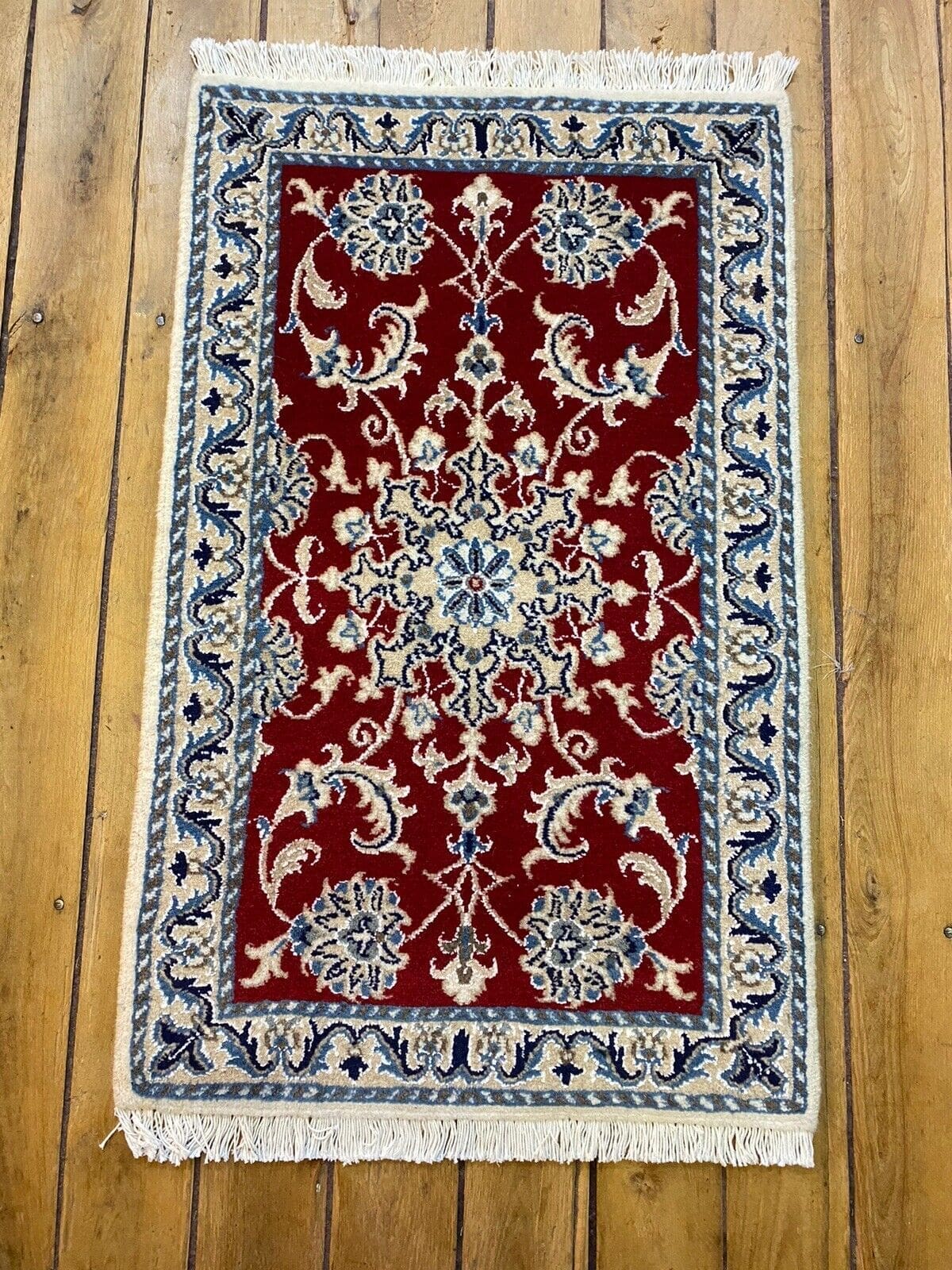
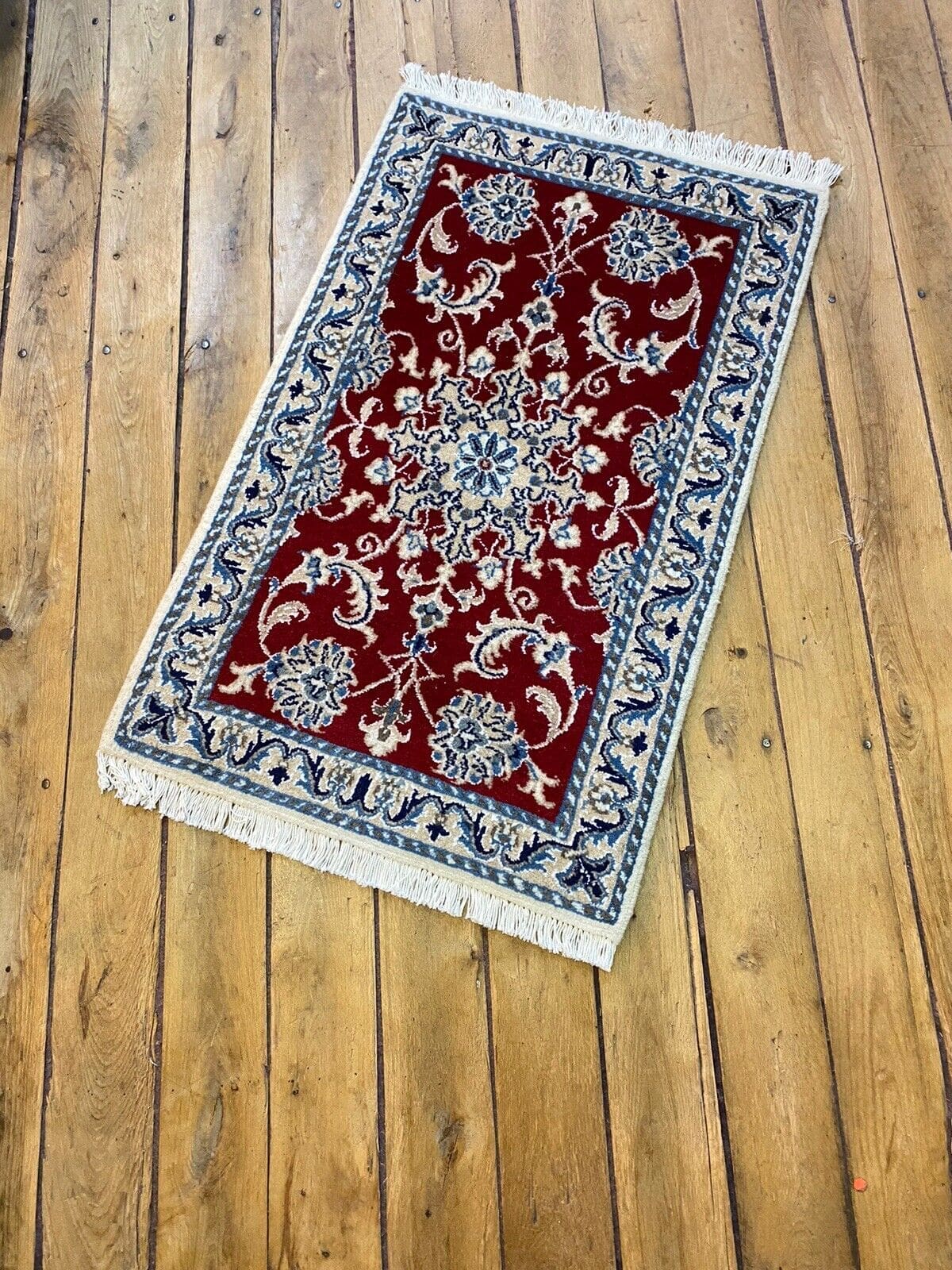
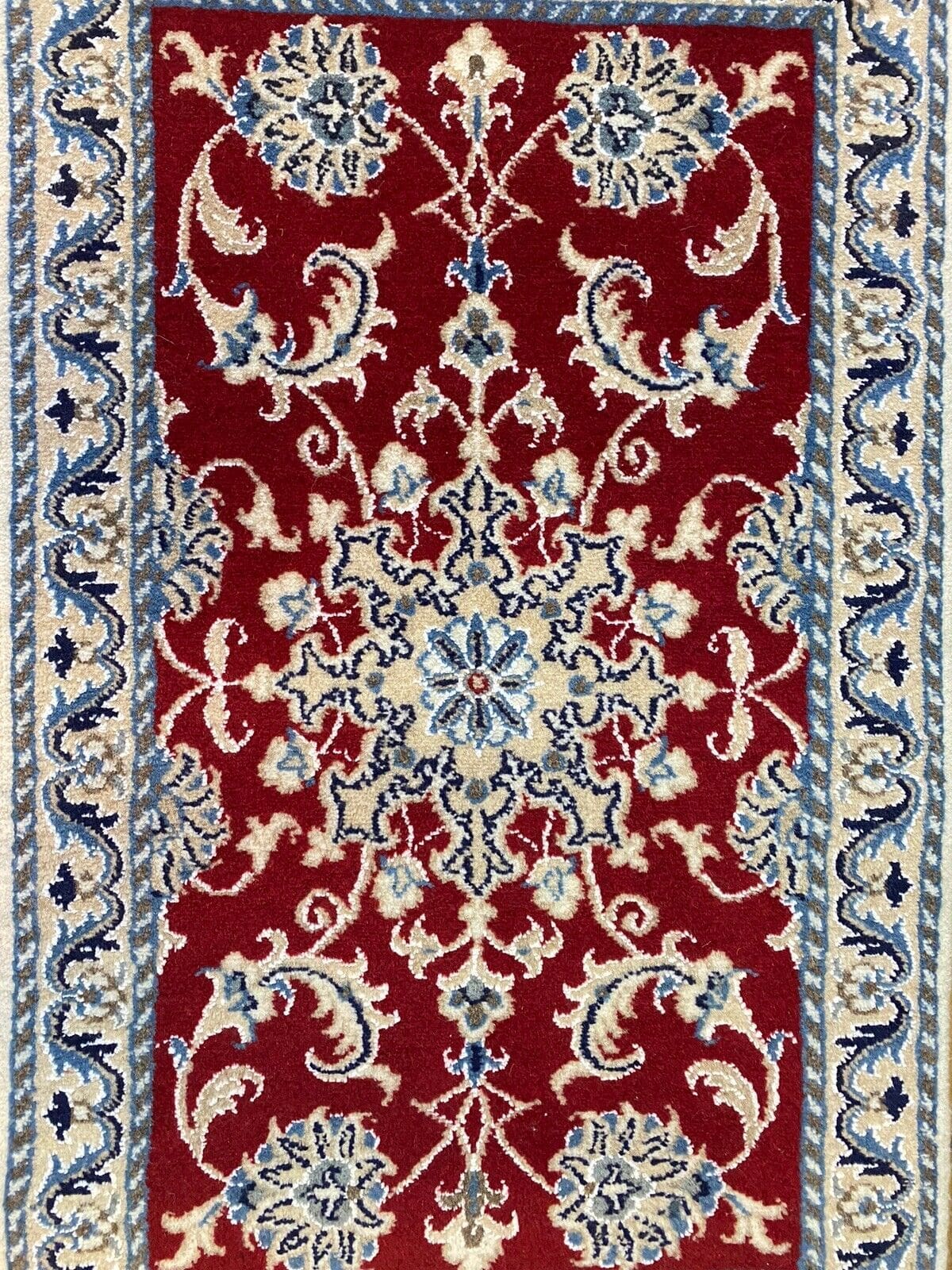
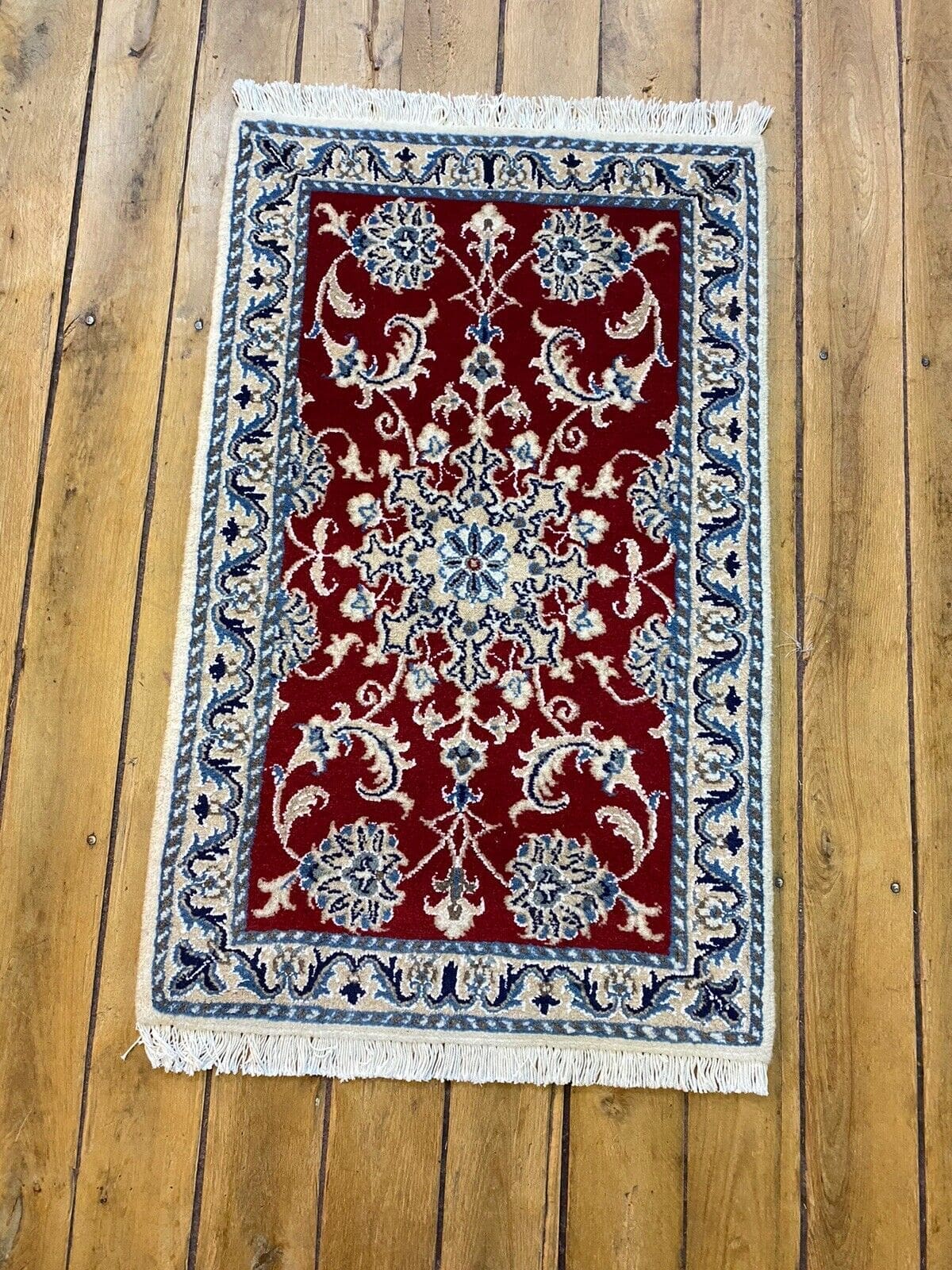
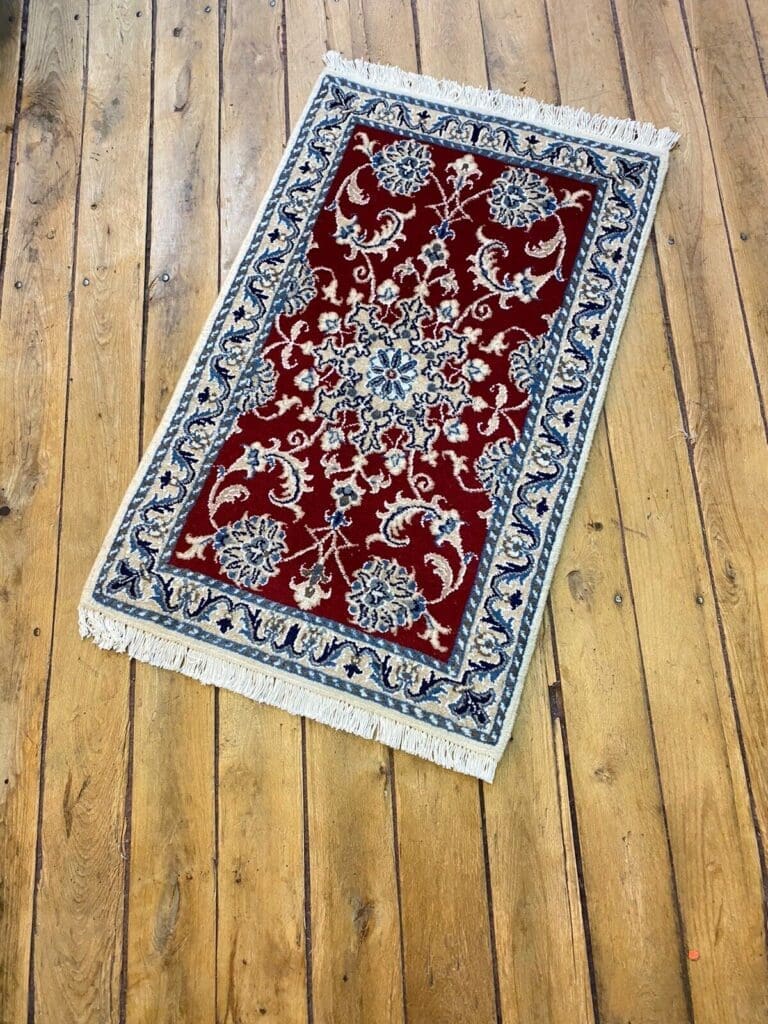
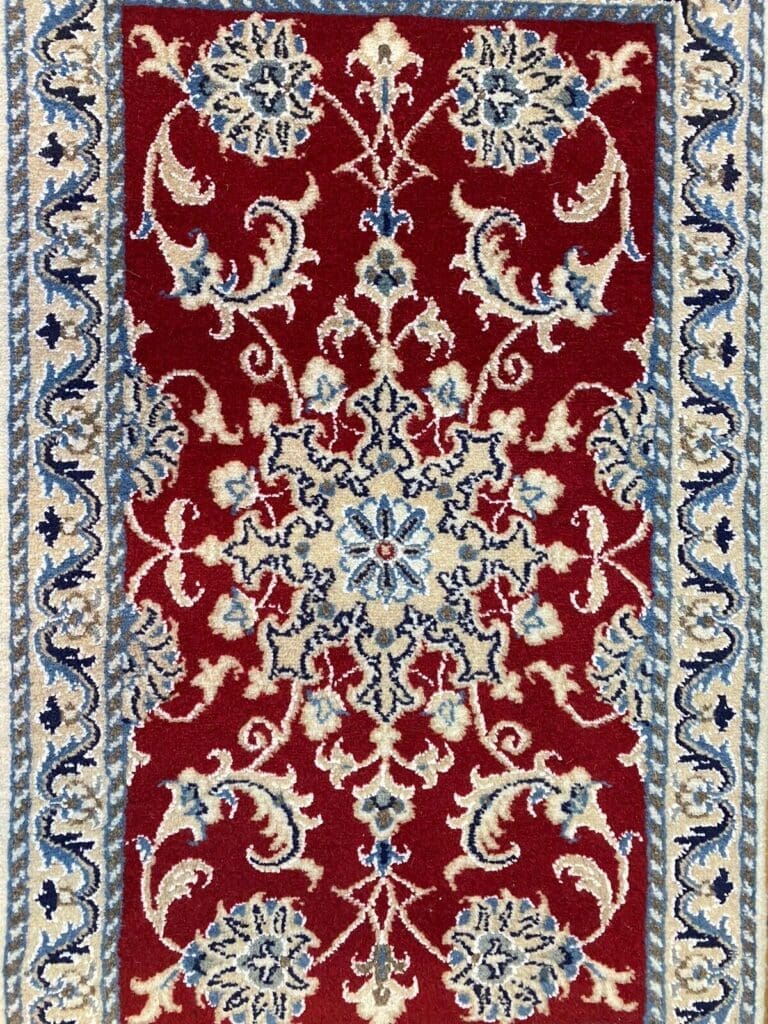
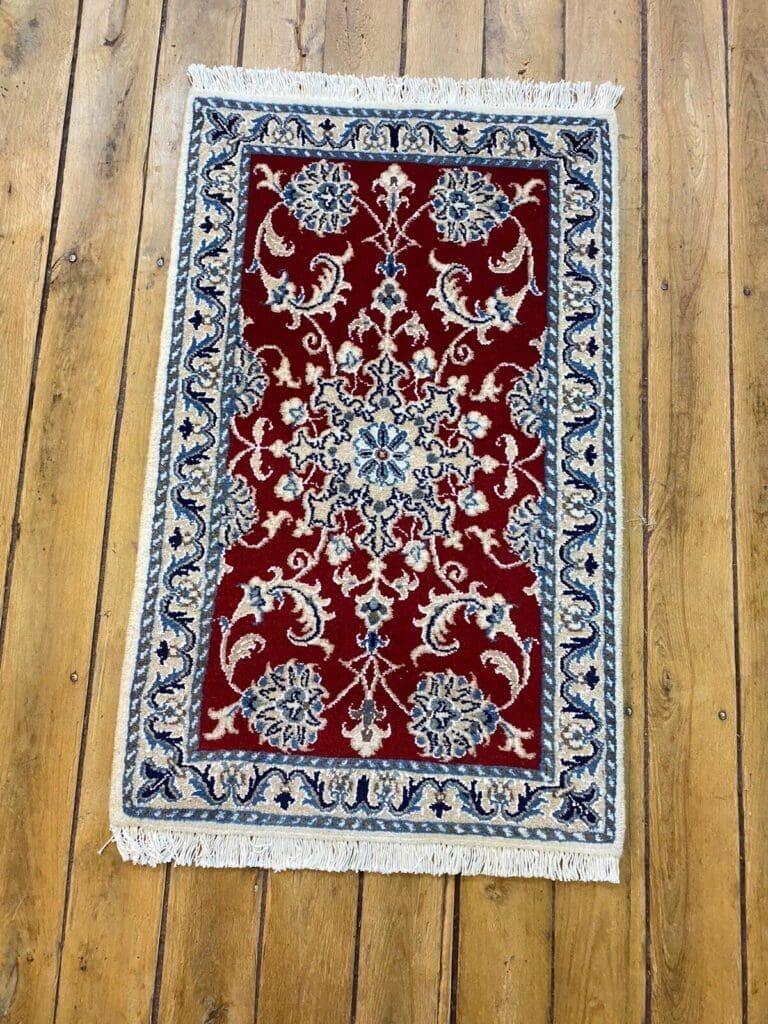
The pattern is described as Oriental. Its design is also characterised as classical and elegant, drawing on traditional Persian motifs. Floral forms and clearly defined lines are named as central visual elements. Together they create an ordered composition in which decorative detail is balanced by a readable overall structure. The rug is therefore rooted in Persian design without being limited to a single historical furnishing style.
Red is the stated colour of the rug and shapes its overall visual impression. In Persian and Oriental textile design, a strong ground colour can provide a coherent field for ornamental drawing. Here, the silk in the pile contributes to the way the colour reflects light. It gives the surface added lustre and can make the red and the accompanying pattern appear more lively as the viewing angle changes.
The floral motifs and clean lines allow the rug to relate to both modern and traditional interiors, as described in the source. This does not assign the rug to one particular decorating scheme. Rather, the combination of a traditional Persian vocabulary with a clear layout gives the design a broad interior context. The colour balance and the organised drawing make the rug an independent textile element within a room.
Many Persian compositions depend on the relationship between a field, repeated ornament, and guiding lines. Floral motifs may be stylised rather than copied directly from nature, then arranged into a regular visual rhythm. Lines separate and connect areas of the composition, helping the eye follow the pattern across the surface. In the Nain tradition, controlled drawing and fine execution are important parts of the design approach. A dense knotting structure supports the presentation of such details.
An Oriental rug communicates through the interaction of colour, repetition, and ornament rather than through a literal narrative. The red colour, floral design, and Persian character work together to create the stated traditional appearance. The pattern can add warmth to a room while retaining a formal sense of order. Its decorative language comes from Persian rug tradition, while its adaptable arrangement allows it to sit alongside different kinds of furniture and architecture.
The silk component has a visual role as well as a material one. Its sheen changes the way the colours are perceived and adds variation to the surface. Against the red ground, this effect helps the floral motifs and clear lines remain visually distinct. The design is consequently shaped by both drawing and fibre: the pattern supplies the structure, while the wool and silk pile influence texture, light, and colour depth.
Special Features
The listed special features are hand-knotting, suitability for underfloor heating, and a pet- and child-friendly classification. Hand-knotting identifies the rug’s method of production and distinguishes it from a machine-made construction. Its high knot density is associated with a finely detailed surface and supports the precise rendering of the pattern. The rug is also listed as new and perfect in condition.
This Nain is suitable for use with underfloor heating. The virgin wool provides natural thermal insulation, while the source advises avoiding excessive heat. The pet- and child-friendly designation describes the intended practicality of the rug in a household setting. These features are presented alongside the Persian origin, the wool and silk pile, and the traditional Oriental pattern.
FAQ
How should I care for this Nain Persian rug?
For routine care, vacuum the rug without using a brush attachment. This helps protect the fibres and avoids unnecessary mechanical stress on the pile. Occasional professional cleaning is recommended to help preserve the colours and the quality of the materials. Because the pile combines virgin wool with silk, it is sensible to use a careful approach and avoid vigorous rubbing when dealing with marks. A specialist cleaner can assess the hand-knotted construction and treat the surface appropriately, helping to maintain the texture, colour, and condition recorded for this rug.
Can the rug be used over underfloor heating?
Yes. The rug is specifically described as suitable for underfloor heating. The virgin wool also offers natural thermal insulation. As with any textile placed over a heated floor, excessive heat should be avoided. Keeping the heating at a suitable setting supports gentle everyday use and helps protect the fibres. The underfloor-heating suitability is one of the stated special features of this Nain Persian rug and is part of its intended use in a living environment.
How can I identify a hand-knotted rug?
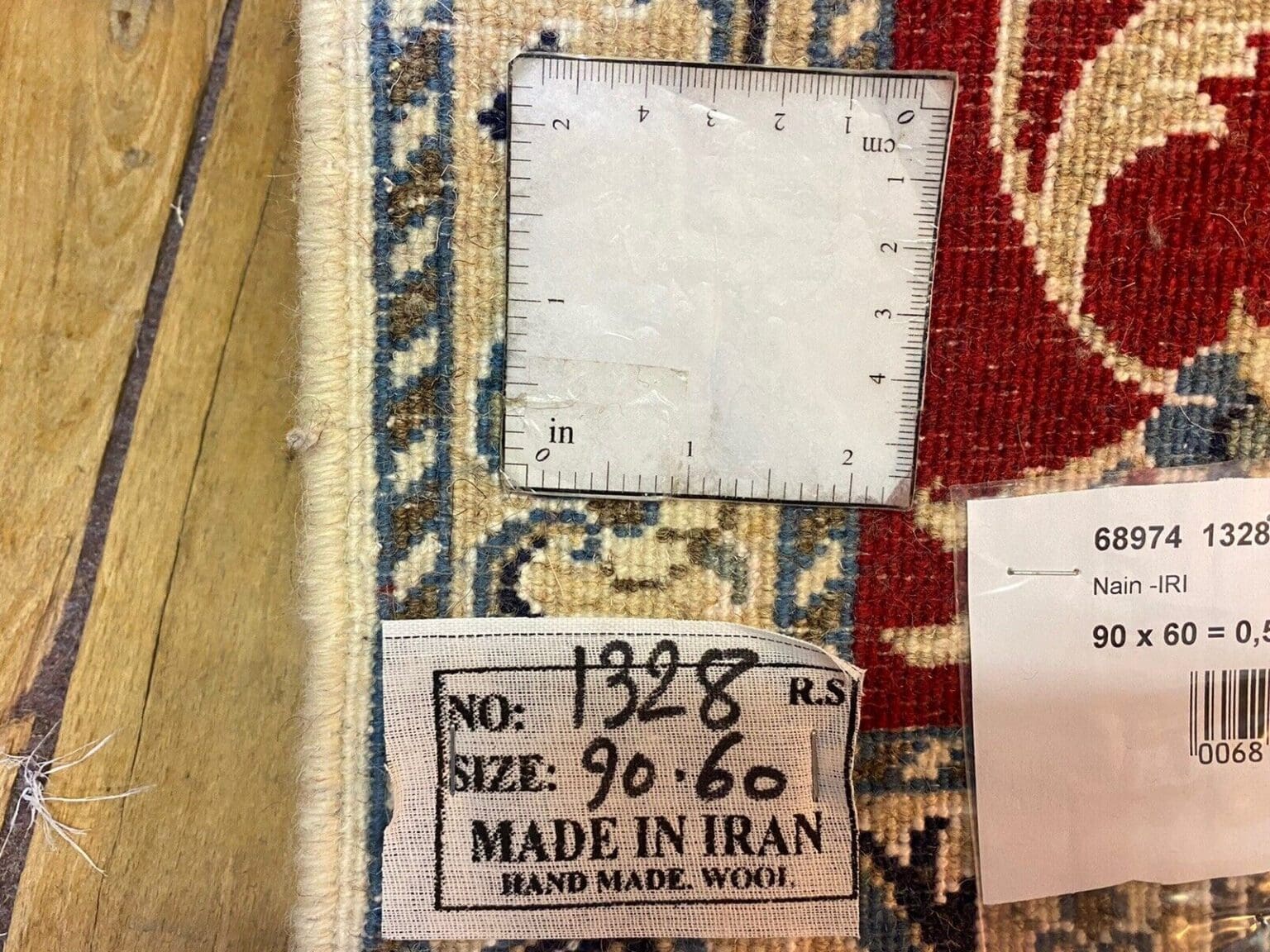
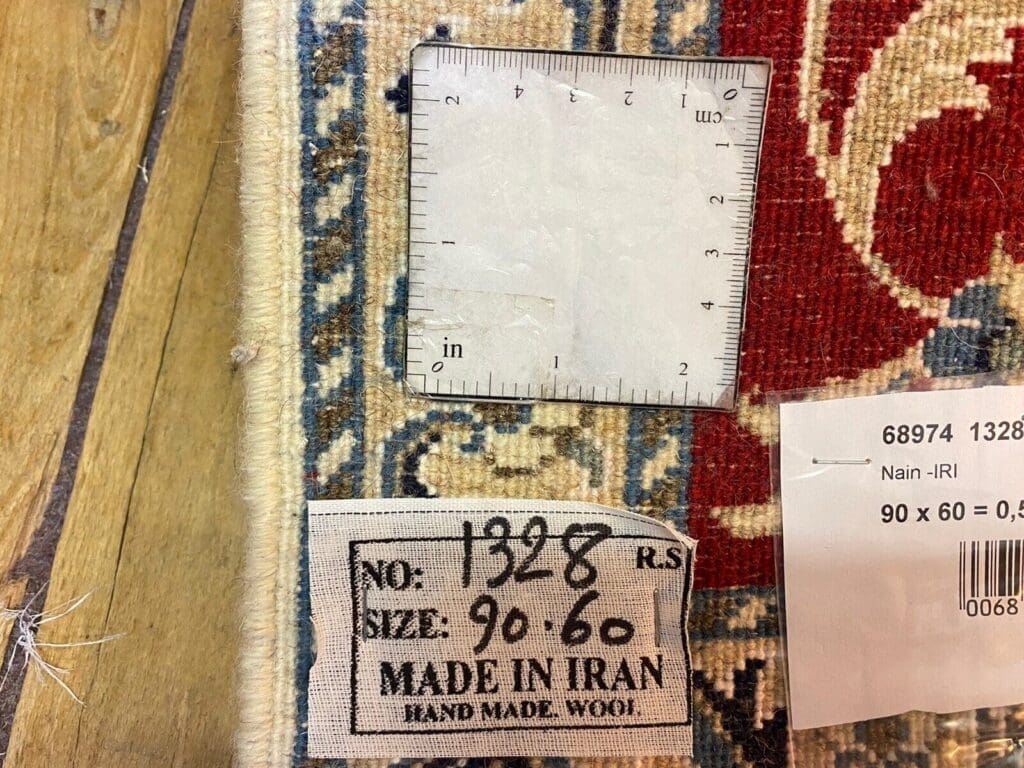
Knot density, pattern, and materials can all provide useful indications. A hand-knotted rug will normally have a back that is not perfectly uniform, whereas a machine-made rug often has a regular, flat-looking back. These signs should be considered together rather than in isolation. For this rug, the stated hand-knotted technique is accompanied by a pile of virgin wool and silk and a high knot density. A professional inspection can provide further confirmation by examining the back, the foundation, the knots, and the way the pattern is formed.
To provide the best experiences, we use technologies like cookies to store and/or access device information. Consenting to these technologies will allow us to process data such as browsing behavior or unique IDs on this site. Not consenting or withdrawing consent, may adversely affect certain features and functions.
Functional Always active
The technical storage or access is strictly necessary for the legitimate purpose of enabling the use of a specific service explicitly requested by the subscriber or user, or for the sole purpose of carrying out the transmission of a communication over an electronic communications network.
Preferences
The technical storage or access is necessary for the legitimate purpose of storing preferences that are not requested by the subscriber or user.
Statistics
The technical storage or access that is used exclusively for statistical purposes.The technical storage or access that is used exclusively for anonymous statistical purposes. Without a subpoena, voluntary compliance on the part of your Internet Service Provider, or additional records from a third party, information stored or retrieved for this purpose alone cannot usually be used to identify you.
Marketing
The technical storage or access is required to create user profiles to send advertising, or to track the user on a website or across several websites for similar marketing purposes.
 SECURE PAYMENT
 SHIPPING PARTNERS


