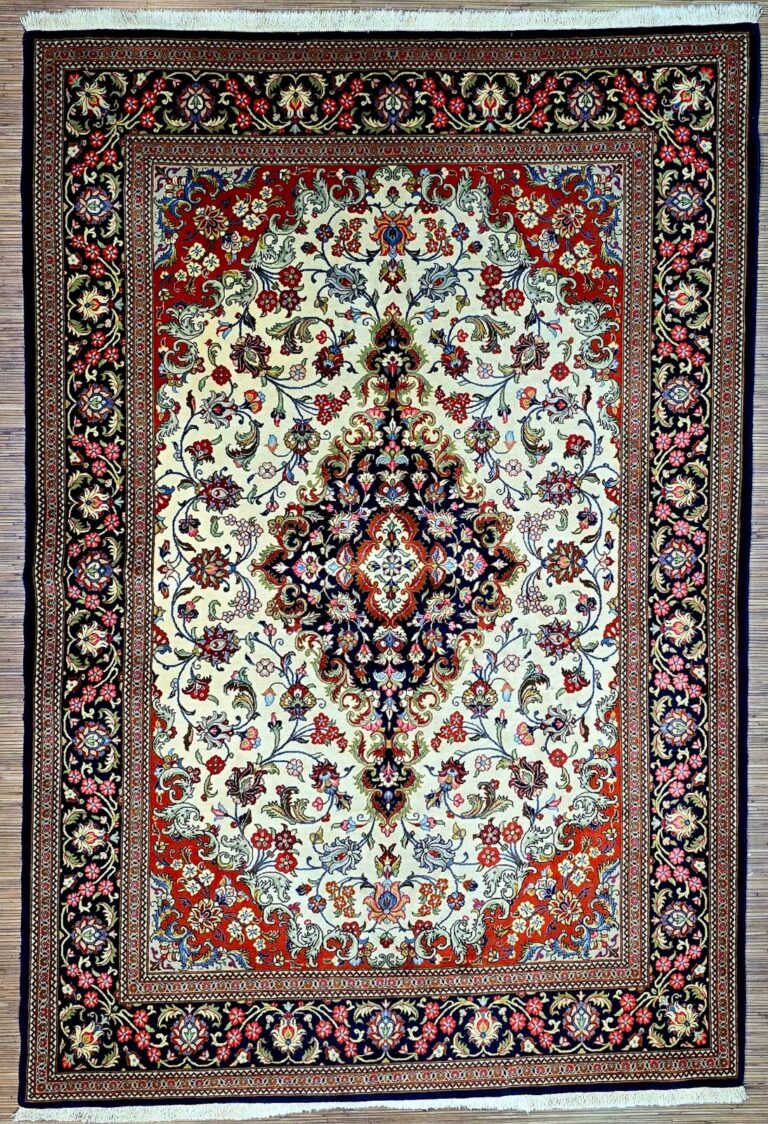
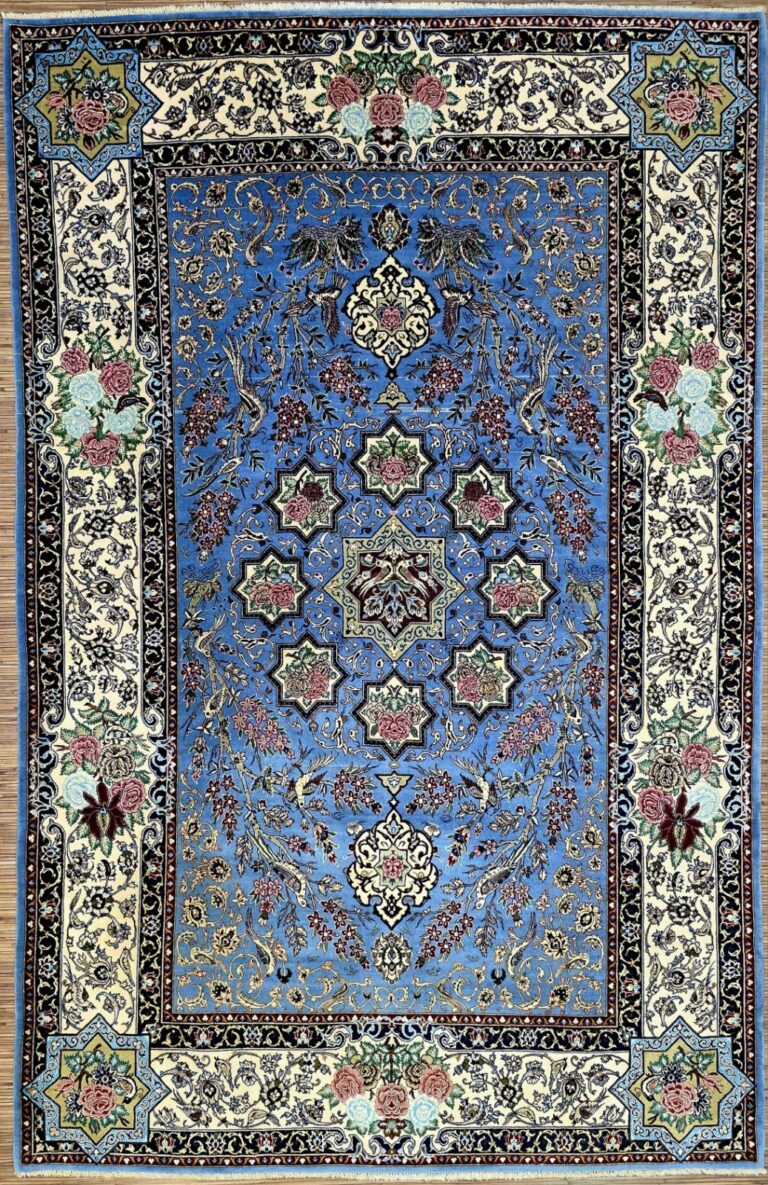
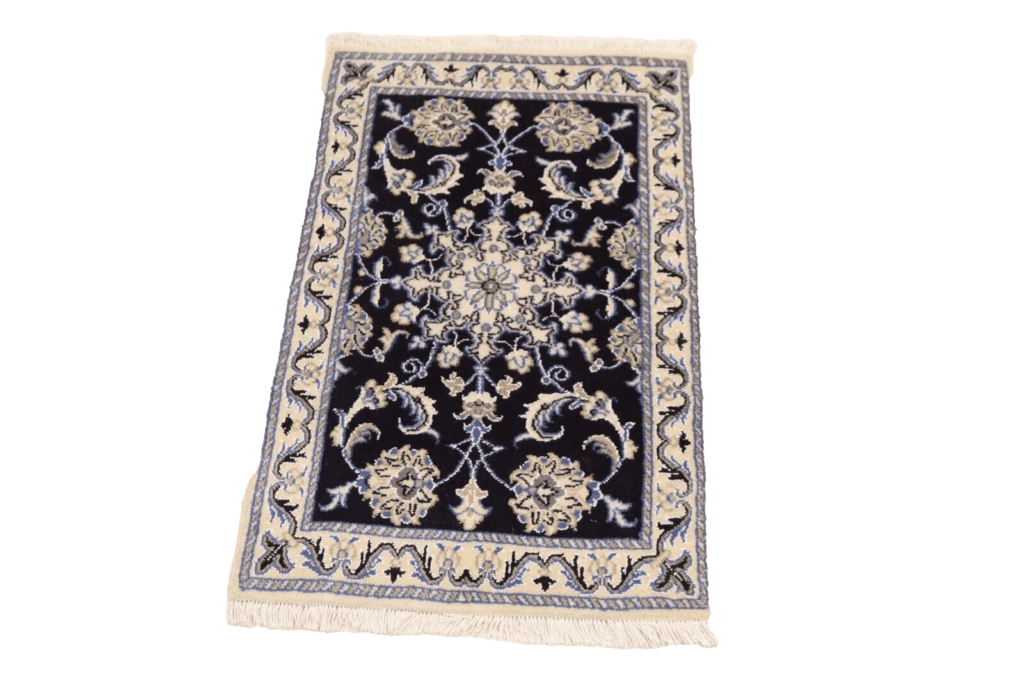
This Nain Persian rug is hand-knotted with a pile made from 90% virgin wool and 10% silk. Its warp is made from 100% cotton. The combination brings together the resilience and warmth associated with wool and the more refined surface effect of silk. Virgin wool provides a pleasant, substantial texture and forms the durable basis of the pile. Silk adds a subtle sheen and helps the drawn elements of the design appear with greater distinction.
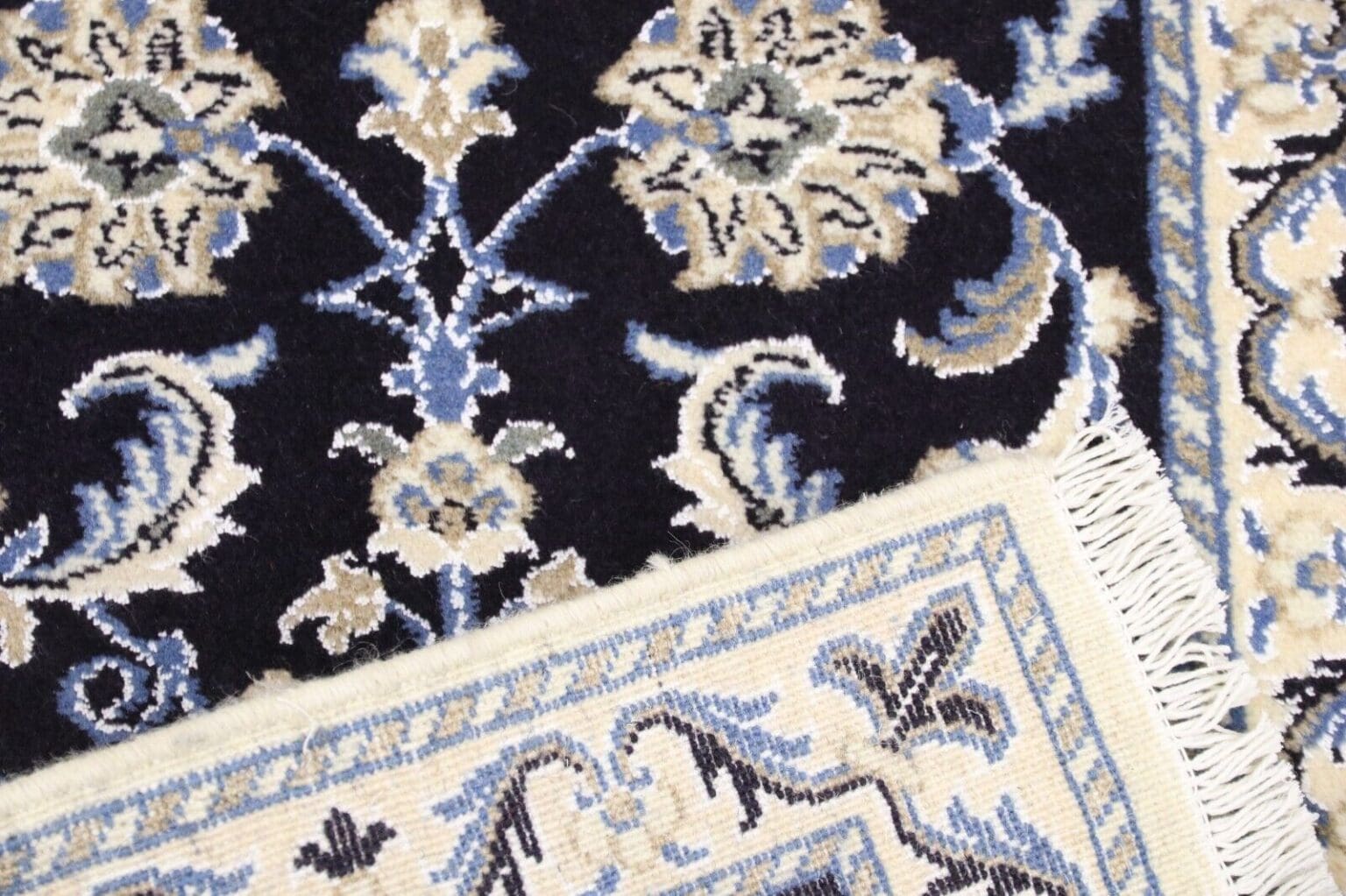
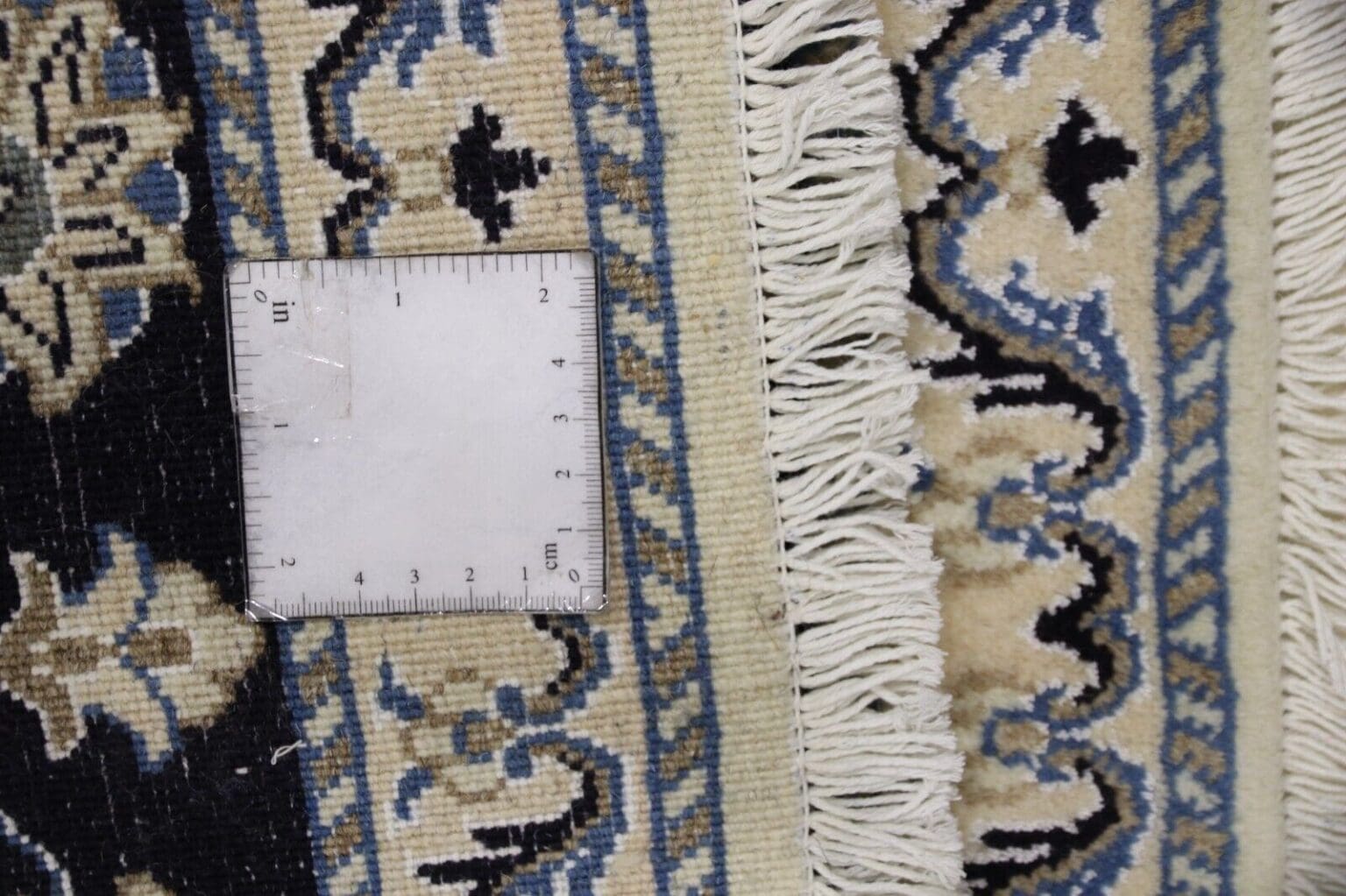
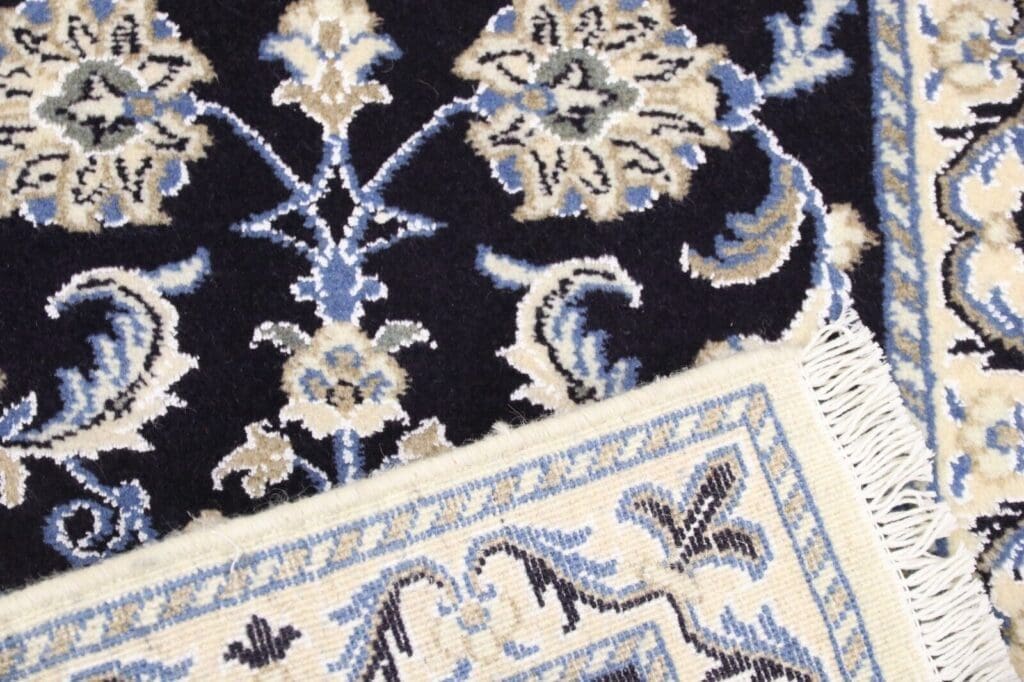
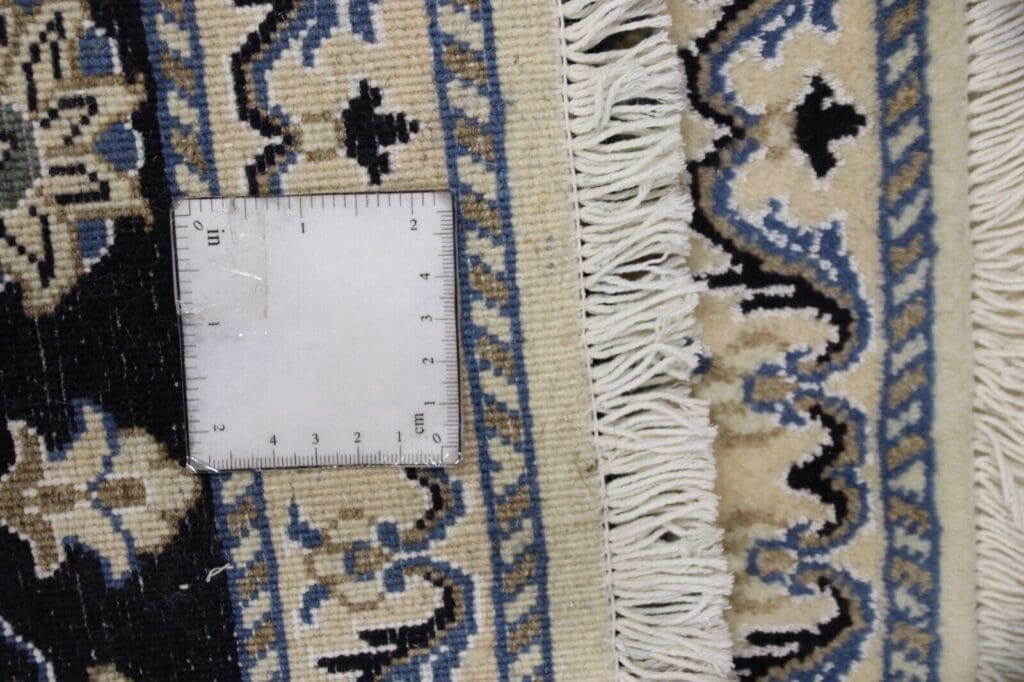
Hand-knotting means that each knot is made individually by hand. This method allows small ornaments, fine lines and carefully arranged shapes to be worked into the rug one step at a time. The product is specified with a knot density of approximately 300,000 knots per square metre, supporting a finely executed construction and precise pattern details. The rug is new and suitable for use with underfloor heating.
The choice of materials is closely related to the way the surface is perceived. Wool gives the pile a durable and comfortable character, while silk responds to light with a finer variation in sheen. The cotton warp provides the structural foundation for the knots. Together with the handmade construction, these materials create a textile surface in which the foundation, pile and pattern work as one. The rug is also described as suitable for homes with pets and children and as moth-resistant.
Origin and Tradition
This rug comes from Persia and belongs to the tradition of Nain rugs. Nain is associated with an important strand of Iranian carpet making. Its weaving tradition brings together craft knowledge passed down through generations and close attention to drawing, materials and colour. Nain rugs are understood through this relationship between careful construction and a balanced overall composition rather than through decoration alone.
The Nain tradition is based on the combination of established handwork and a developed sense of proportion and aesthetics. A carpet is shaped not only by the motifs selected, but also by the way its makers relate lines, fields and ornaments to one another. The use of virgin wool, silk and cotton reflects this approach. The pile is intended to be useful and agreeable in texture, while the surface is prepared to show the design clearly. Hand-knotting makes the gradual development of that relationship visible in the finished textile.
Nain carpet design is known for floral motifs and geometric forms. These two groups of elements can be brought together in a single composition, allowing an arrangement to remain ordered while retaining ornamental detail. Iranian carpet design has developed such forms over long periods, preserving recognisable ideas while permitting differences in colour, proportion and individual drawing. The result connects regional heritage with use in contemporary interiors without removing the traditional character of the pattern language.
Persian carpets also carry a cultural and technical tradition beyond their practical role as floor coverings. The knowledge required for knotting is transmitted from one generation to the next. It includes patience, control of the drawing and the ability to join many small actions into a coherent surface. The Nain designation therefore points to a textile culture in which the selection of fibres, the arrangement of motifs and the method of making are considered together.
The regional background helps explain the association of Nain rugs with fine, organised designs. Floral elements can suggest growth and movement, while geometric forms provide structure and visual direction. A balanced use of colour keeps individual ornaments legible and allows them to form a unified field. This rug follows that Nain-related connection between skilled handwork, ornament and controlled colour arrangement.
Design and Pattern
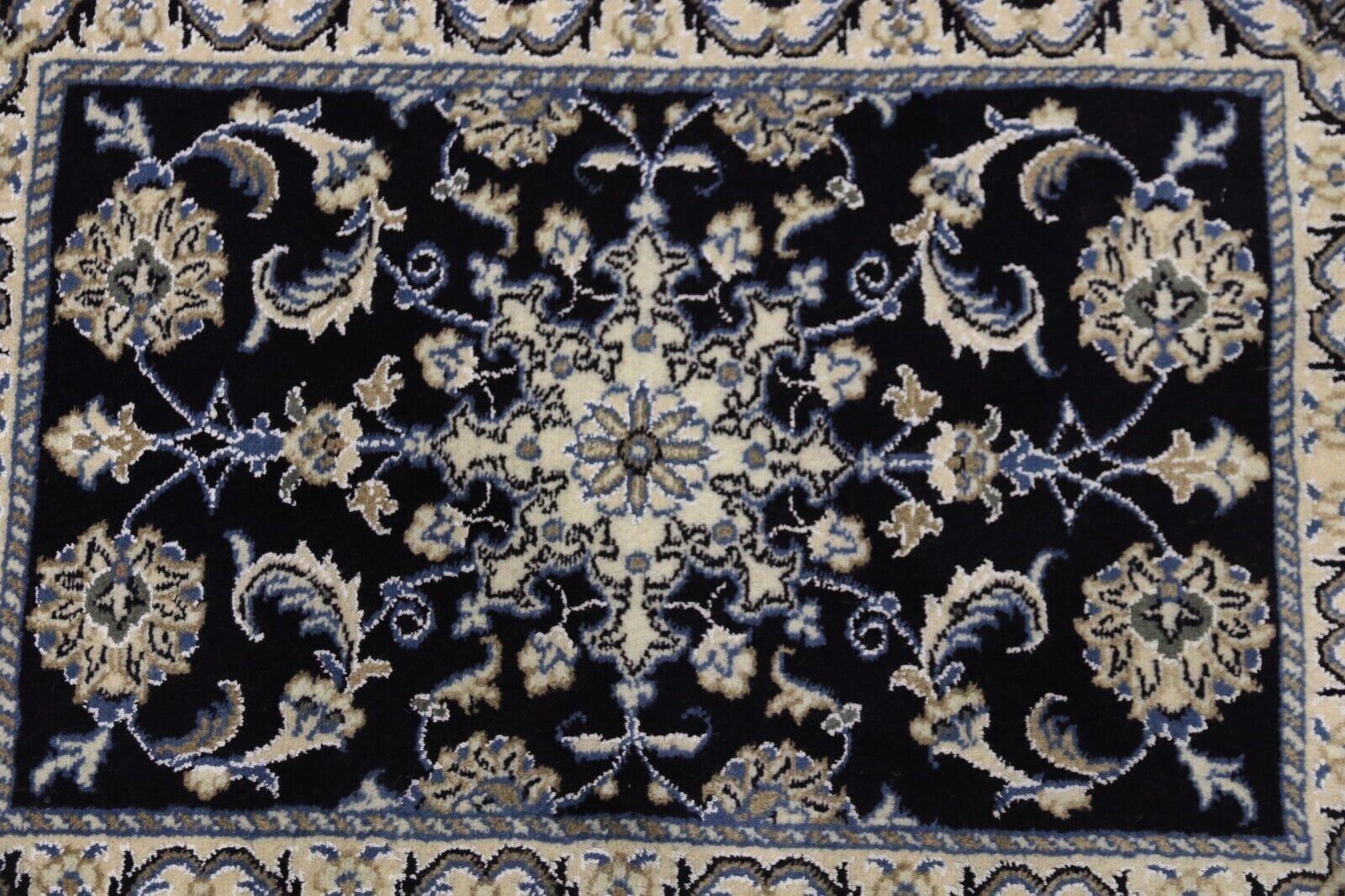
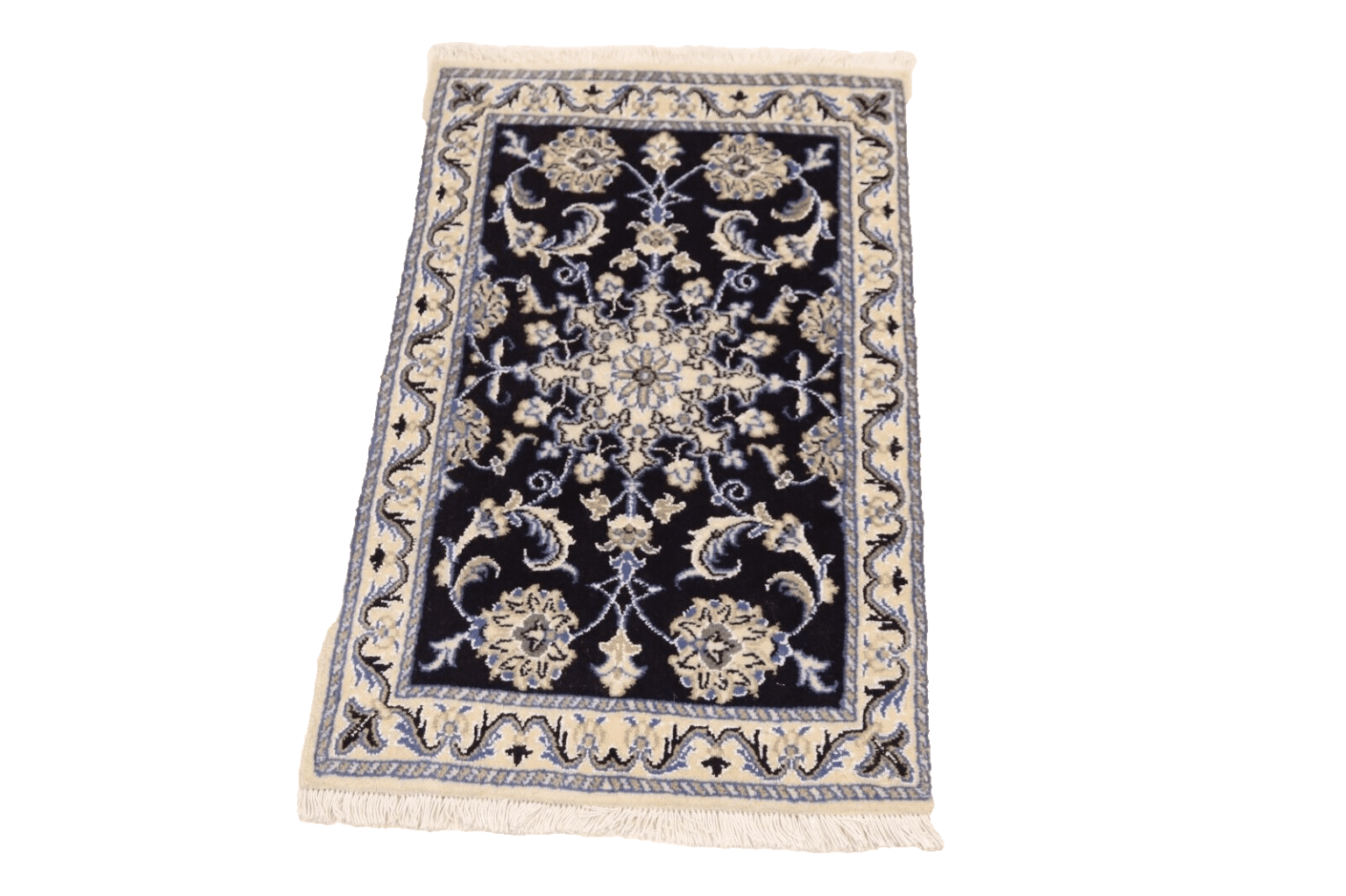
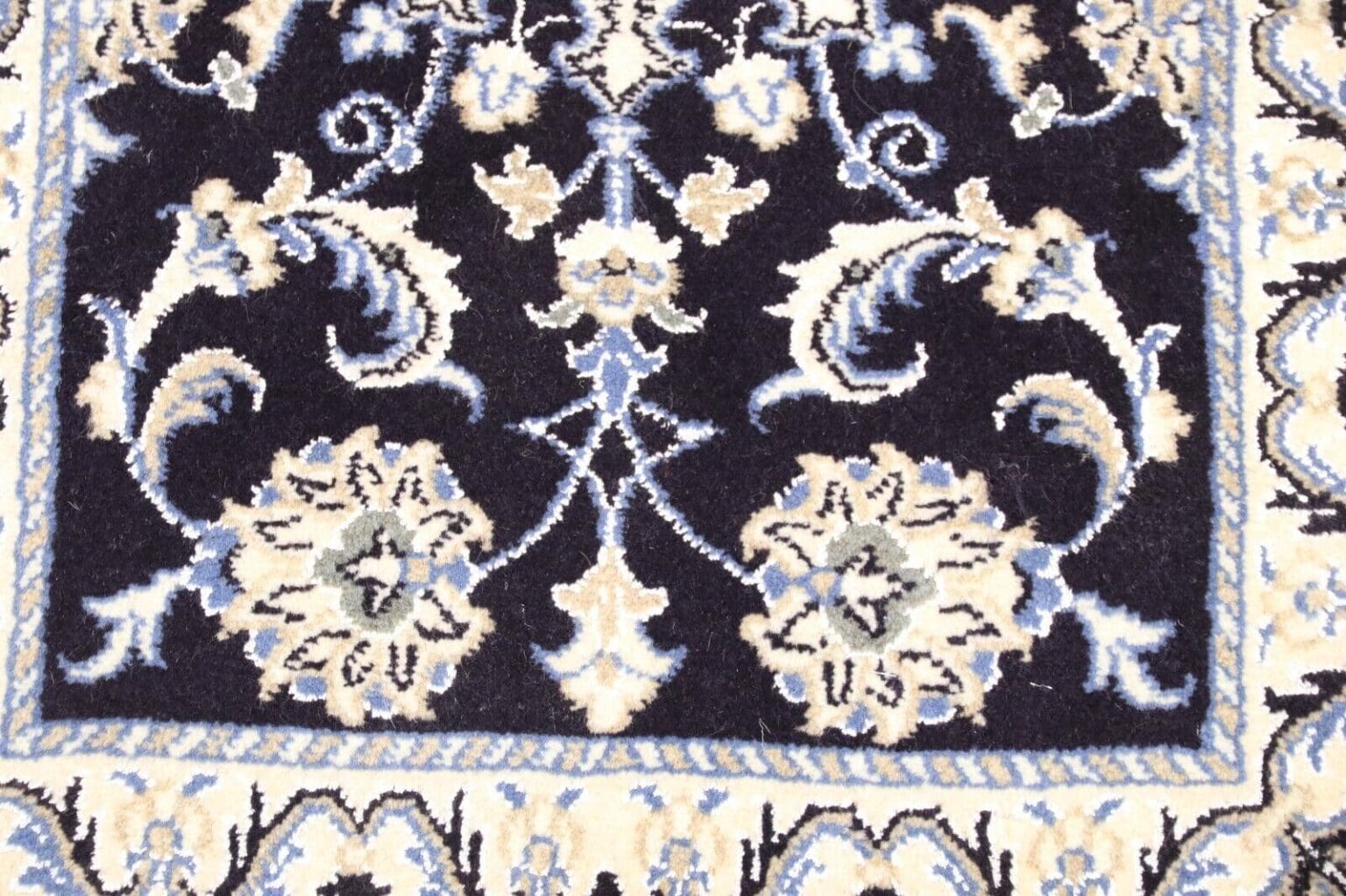
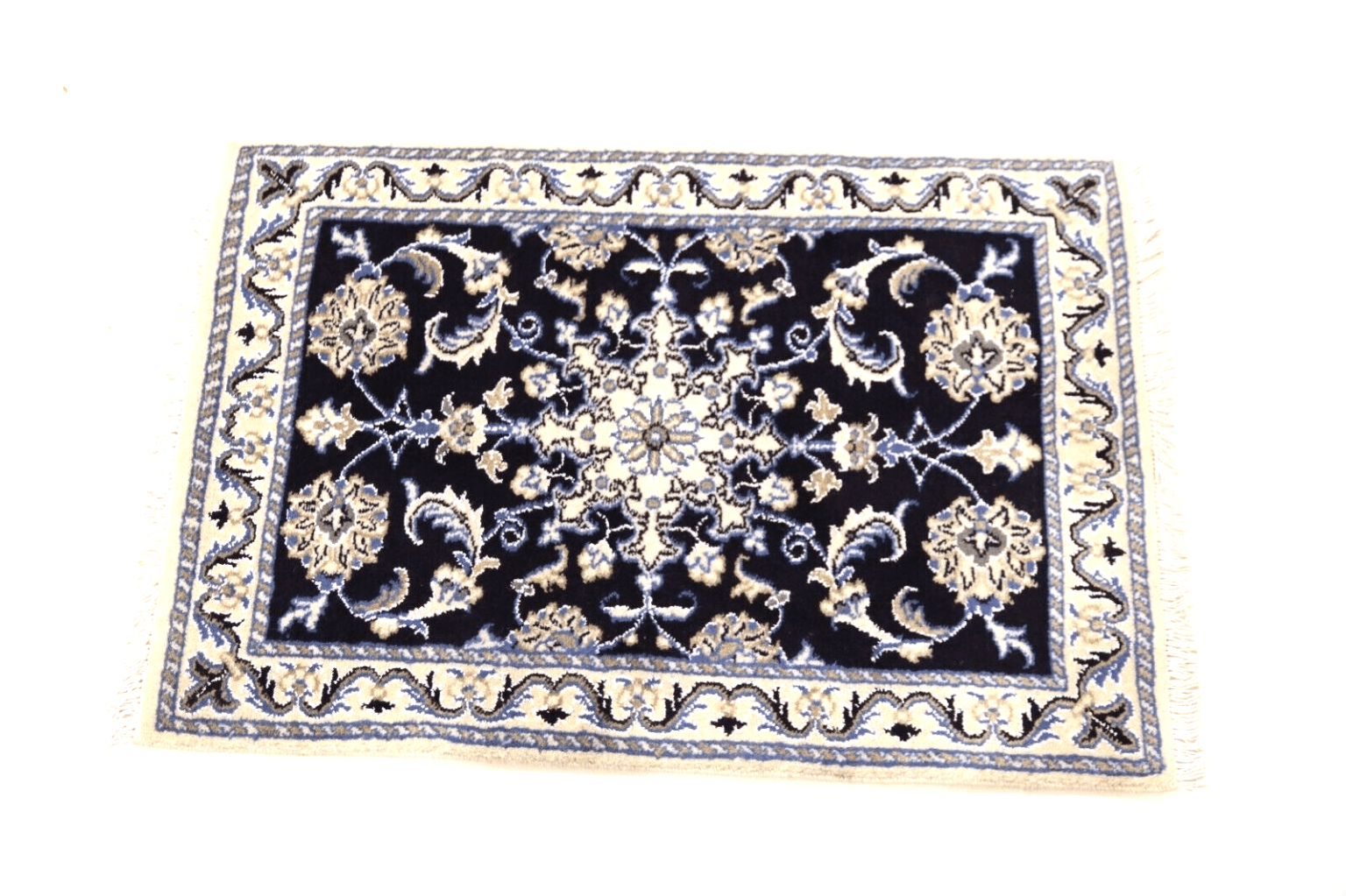
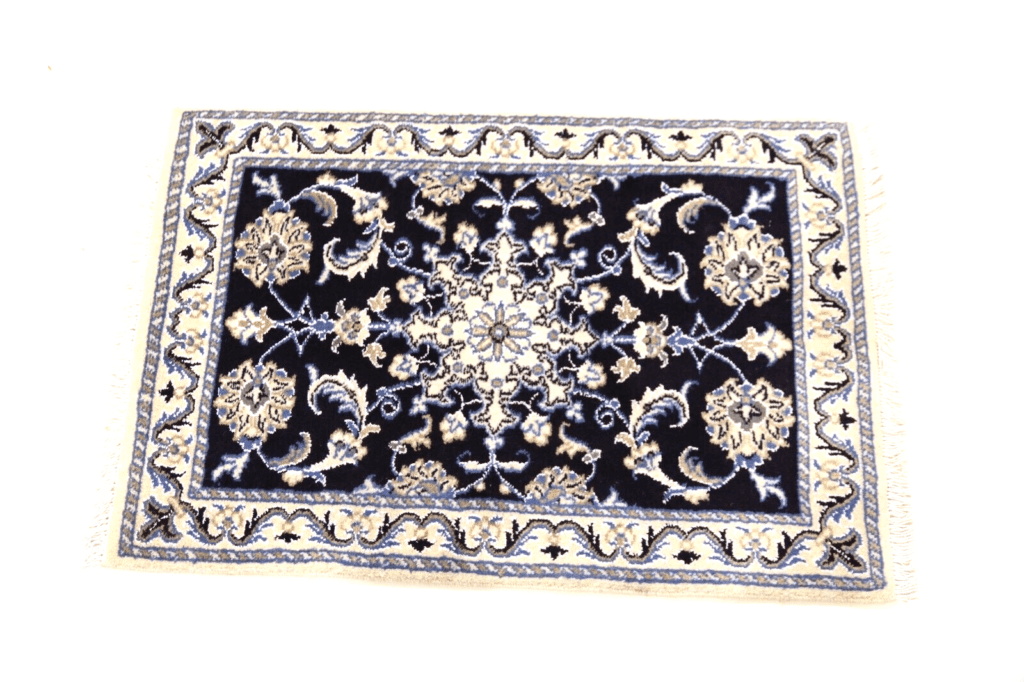
The design is described as oriental and as traditional oriental or Persian in style. Its colour is dark blue. This deep ground gives the ornament a composed setting and allows the difference between wool and silk to be perceived across the surface. Depending on the light, the silk can create finer variations in brightness, while the virgin wool establishes the main texture and visual body of the pile.
Nain pattern traditions frequently combine floral motifs with geometric forms. Floral ornament may refer to stylised leaves, blossoms and scrolling stems. Geometric elements can define axes, borders or clearly ordered fields. In Persian design these approaches are not necessarily separate: a flower may be arranged according to a geometric order, and a straight line may develop into a flowing vine. This interaction creates a pattern that is structured without losing its wealth of detail.
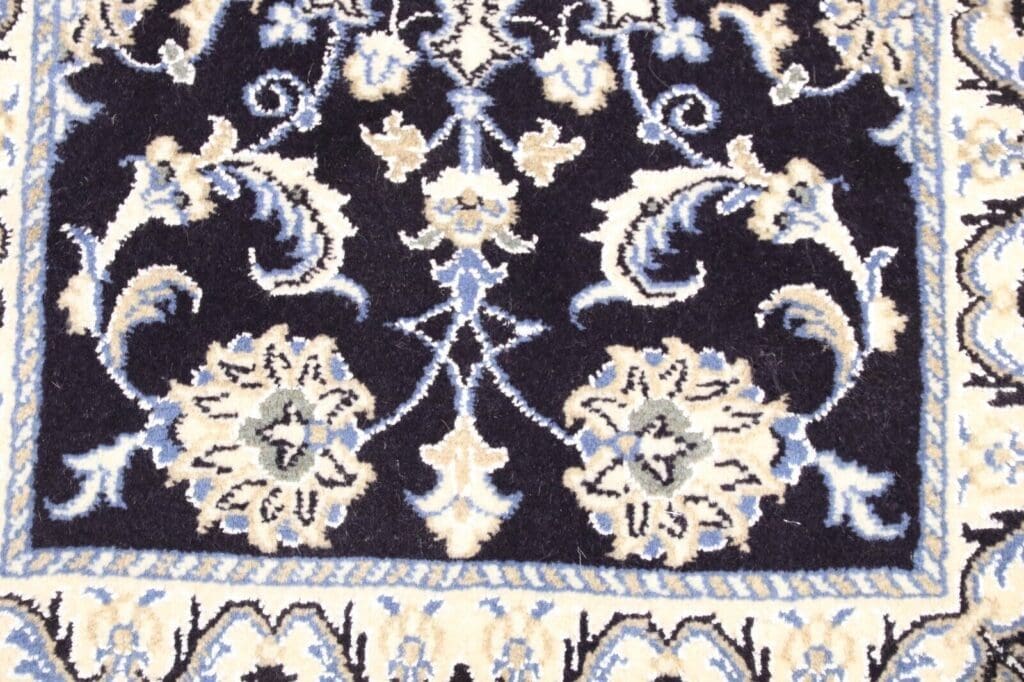
A dense knotting supports the rendering of fine ornament. Small colour areas and narrow lines can be separated with greater precision when the drawing is worked into a closely knotted surface. The handmade process does not create the mechanical uniformity of a printed or machine-made repeat. Instead, it produces a textile character in which the individual execution of the knots contributes to the surface. The wool and silk pile further differentiates softer, more muted areas from points where light is caught by the silk.
Dark blue determines much of the rug’s overall presence. It can be placed alongside light furnishings as a contrasting ground, or used within a more traditionally oriented setting. The rug is suitable for a living room, bedroom or hallway. Its oriental drawing introduces a clearly defined textile element into each of these spaces and can be combined with a range of interior styles.
The composition is neither purely abstract nor freely pictorial. It belongs to an ornamental tradition in which forms from nature and geometric order are brought into relation. Repetition creates rhythm, an ordered arrangement provides orientation, and the handmade execution preserves an individual surface character. The pattern can therefore be read in two ways: from close up through its small details, and from farther away as a coherent field of colour and ornament.
Special Features
The rug is new and hand-knotted. Its listed special features include suitability for underfloor heating, suitability for homes with pets and children, and resistance to moths. These points place the rug in a practical domestic setting as well as a traditional decorative context. The dark blue colour, the wool-and-silk pile and the finely worked oriental design define its appearance.
Care should take the natural materials into account. Regular dusting is recommended for routine maintenance. If a more extensive cleaning is required, the rug should be entrusted to a professional carpet-cleaning service. Chemical cleaning products should not be used, as they may damage the colours and materials. A careful approach is particularly appropriate for a pile that combines virgin wool with silk and for a surface created by hand-knotting.
As a one-off hand-knotted rug, this piece has a handmade surface connected with the Nain tradition. Its possible settings include the living room, bedroom and hallway, where the traditional oriental pattern can be coordinated with different furnishing styles. The material structure and the listed household properties make it suitable for everyday residential use while retaining the visual language of a Persian rug.
FAQ
How should I clean the Nain Persian rug?
For routine care, the rug should be dusted regularly. This should be done gently so that the pile, silk content and knotted surface are not placed under unnecessary strain. When a more thorough cleaning is needed, a professional carpet-cleaning service is recommended. Chemical cleaning products should be avoided because they can damage both the colours and the materials. With a pile made from virgin wool and silk, the cleaning method should take the more sensitive fibre into consideration. Professional treatment and restrained everyday care help preserve the textile surface and respect the construction of this hand-knotted rug.
Where can I use this Persian rug?
The rug can be used in a variety of living spaces. In a living room, its dark blue oriental design can help define a seating area or provide a textile accent. In a bedroom, the combination of wool and silk contributes a distinct surface texture to the room. It can also be placed in a hallway. The traditional Persian pattern works with different interior styles rather than being limited to one type of furnishing. Since the rug is suitable for underfloor heating and is described as suitable for homes with pets and children, it is intended for an actively used domestic environment. Its exact placement should be chosen according to the room and the desired relationship between the pattern and the furnishings.
How does a hand-knotted rug differ from a machine-made rug?
In a hand-knotted rug, each knot is made individually by hand. This produces an individual texture and allows fine designs to be developed gradually through the work of the maker. Every piece therefore has its own handmade surface. A machine-made rug is produced through a technical process and generally cannot reproduce the same individual texture and detail associated with hand-knotting. In this Nain Persian rug, the handmade construction is combined with a fine pile of virgin wool and silk and with an oriental pattern tradition. The distinction concerns both the production method and the way the completed surface looks and feels.
To provide the best experiences, we use technologies like cookies to store and/or access device information. Consenting to these technologies will allow us to process data such as browsing behavior or unique IDs on this site. Not consenting or withdrawing consent, may adversely affect certain features and functions.
Functional Always active
The technical storage or access is strictly necessary for the legitimate purpose of enabling the use of a specific service explicitly requested by the subscriber or user, or for the sole purpose of carrying out the transmission of a communication over an electronic communications network.
Preferences
The technical storage or access is necessary for the legitimate purpose of storing preferences that are not requested by the subscriber or user.
Statistics
The technical storage or access that is used exclusively for statistical purposes.The technical storage or access that is used exclusively for anonymous statistical purposes. Without a subpoena, voluntary compliance on the part of your Internet Service Provider, or additional records from a third party, information stored or retrieved for this purpose alone cannot usually be used to identify you.
Marketing
The technical storage or access is required to create user profiles to send advertising, or to track the user on a website or across several websites for similar marketing purposes.
 SECURE PAYMENT
 SHIPPING PARTNERS