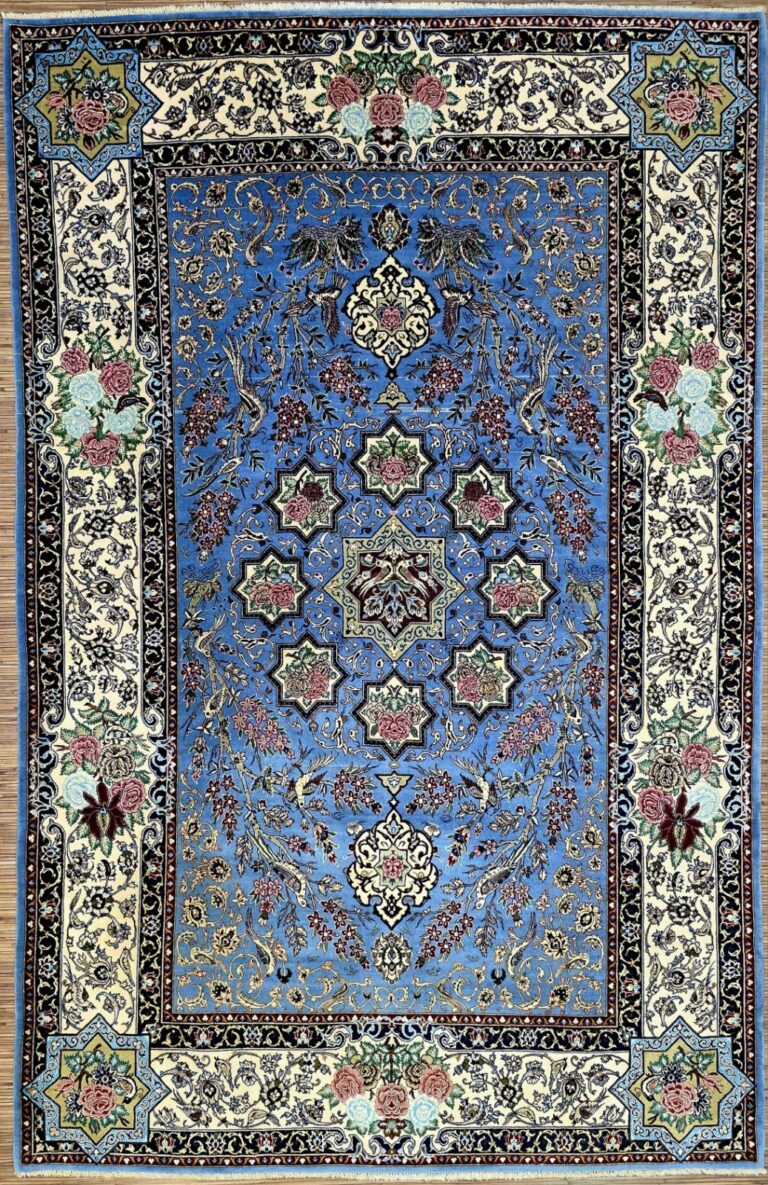
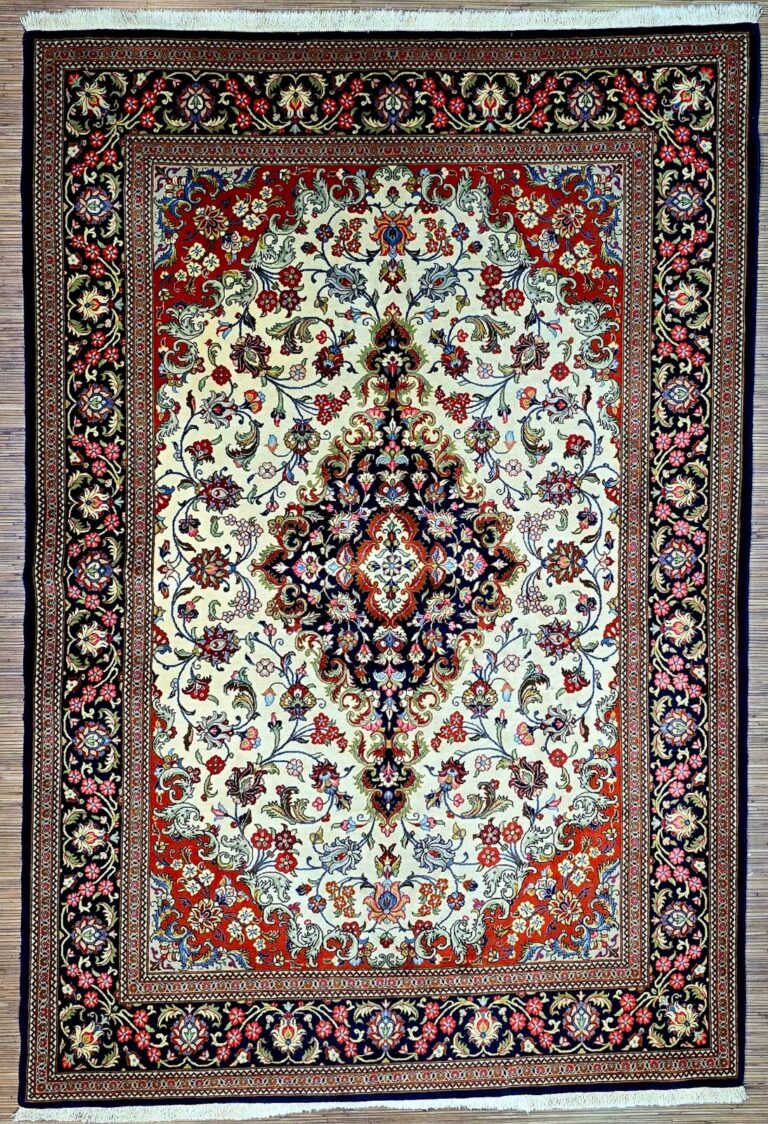
This Nain Persian rug is hand-knotted and combines virgin wool with silk. The pile consists of 90% virgin wool and 10% silk. Wool is valued in rug making for its strength and durability. It provides a resilient surface suited to everyday use while retaining a comfortable feel underfoot. Silk contributes softness and a subtle sheen to the material blend. Together, the two fibres create a surface that combines the practical character of wool with the refined appearance associated with silk.
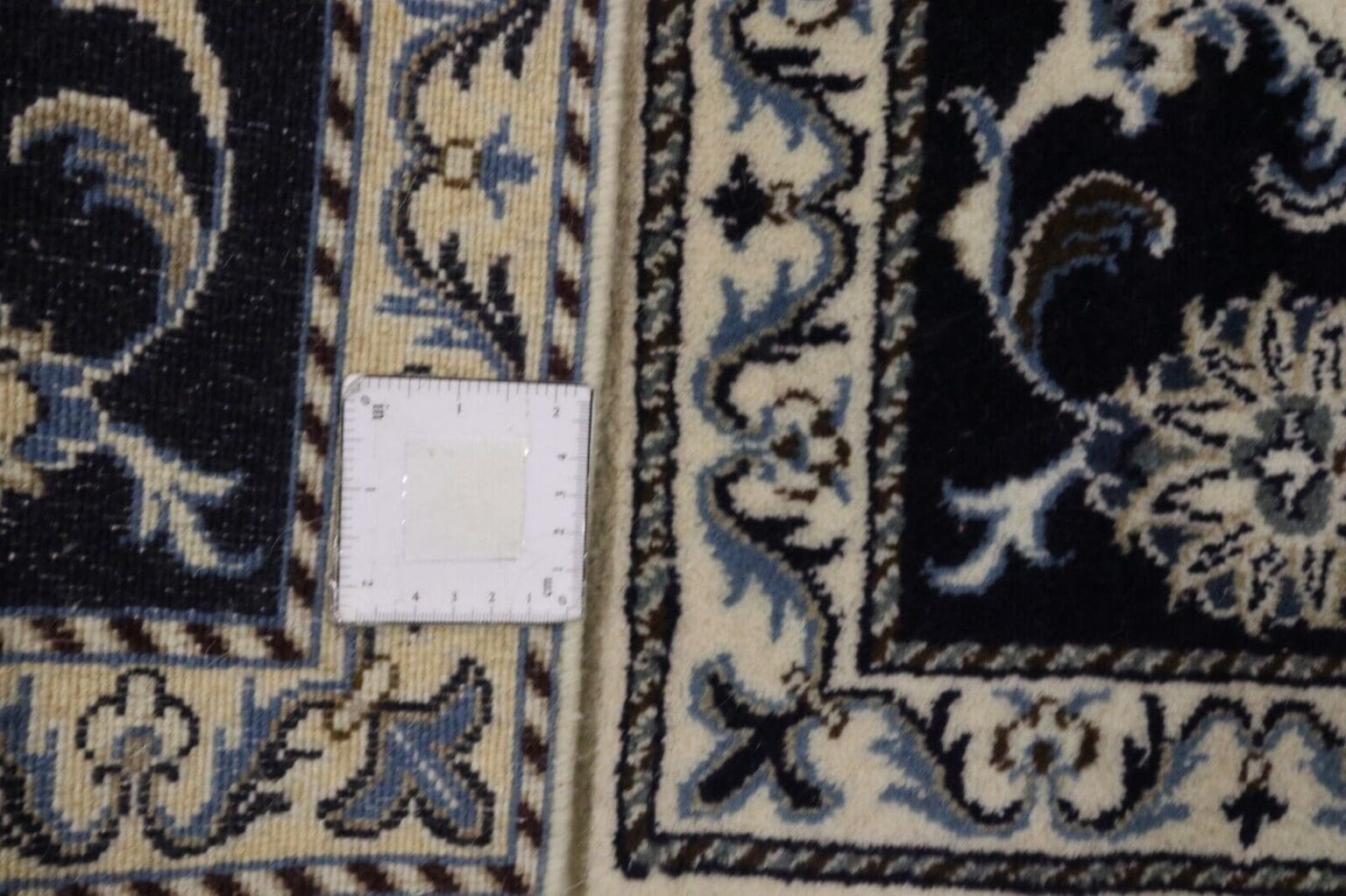
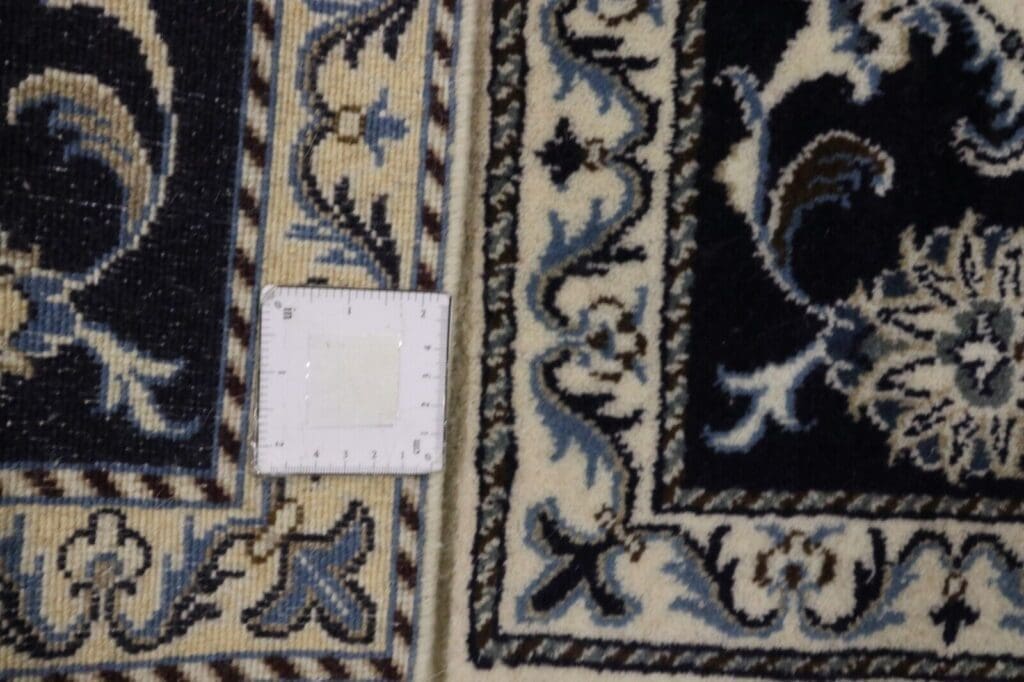
Hand-knotting is a detailed textile process in which individual knots are inserted into the foundation and secured row by row. The pile is built gradually, allowing the design to be transferred in small, controlled sections. The rug has a high knot density, which supports fine detailing in the ornament. This type of construction is associated with careful workmanship because the maker must maintain the intended drawing, even tension and regular progression of the woven structure throughout the piece.
The rug is offered as new merchandise in perfect condition. Its pile height is 8 mm. The natural materials used in the rug are also described in the product information as environmentally friendly and hypoallergenic. Care should therefore be gentle, so that the qualities of both virgin wool and silk remain protected. The hand-knotted construction and the selected fibre combination give this rug a clear relationship to traditional Persian rug making while allowing it to serve as a functional floor covering.
Origin and Tradition
This rug comes from Nain, a city in Iran known for its fine rugs and established weaving tradition. Nain’s rug-making heritage is traced back to the 19th century. Its regional production is associated with precise drawing, fine knotting and a disciplined approach to the arrangement of ornament. Within the broader history of Iranian rugs, Nain represents a recognisable local tradition in which technical accuracy and classical Persian design are closely connected.
Nain weaving follows a Persian understanding of the rug as an ordered composition rather than a random collection of decorative details. A design is arranged through relationships between the field, borders and smaller ornamental units. Floral forms may be placed along a central axis or repeated in balanced arrangements, while geometric features help define direction and structure. This combination of organic ornament and measured order is an important part of the design language associated with Nain.
The regional craft also depends on the preparation and controlled use of materials. Wool offers a stable basis for the pile, while silk can be used to introduce finer accents and a more delicate surface effect. During knotting, the design is built section by section. The weaver must follow the pattern while managing the tension of the foundation and the placement of each knot. A high knot density makes it possible to reproduce narrow lines, small motifs and subtle transitions with greater precision than a coarser construction would allow.
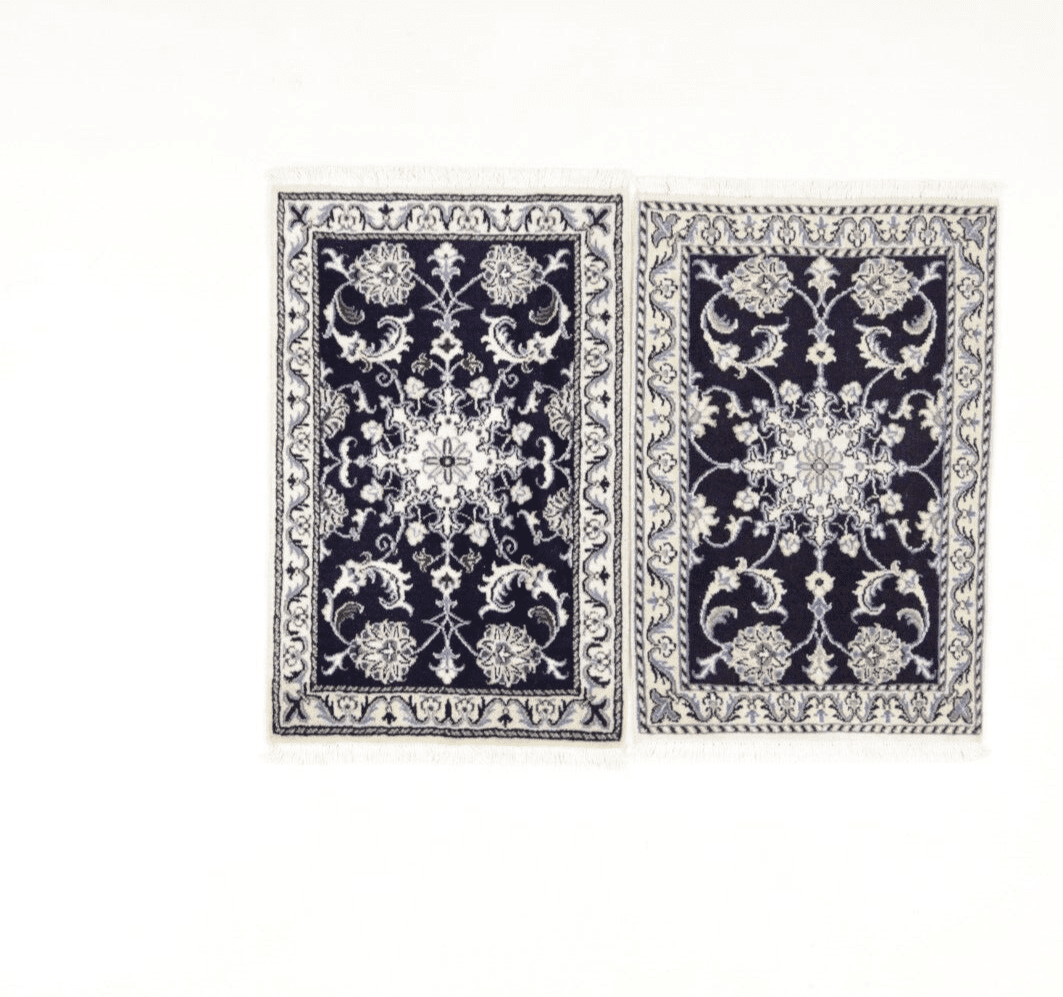
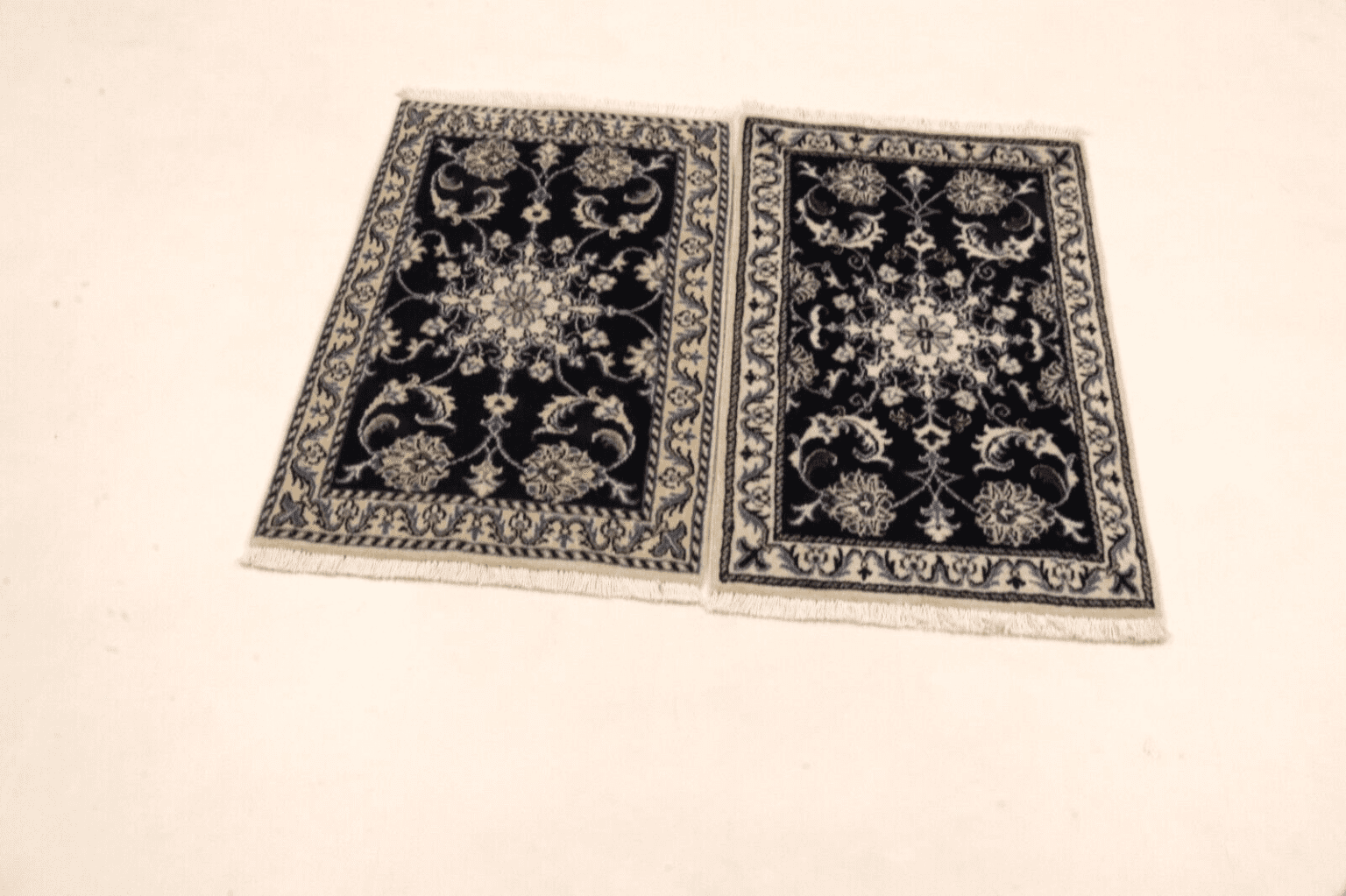
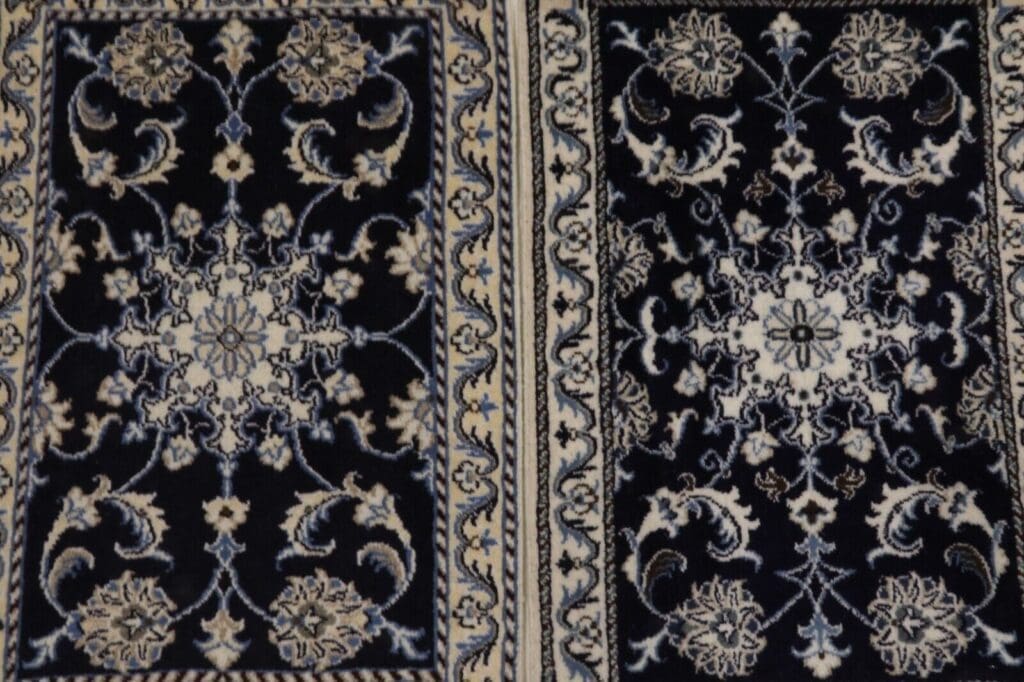
As a Persian rug, this piece belongs to the history of Iranian textile art, whose patterns and working methods have been passed on across generations. The name Nain refers to the stated city of origin and its particular weaving tradition, not simply to a general oriental appearance. Traditional Nain designs often bring together floral and geometric elements in a calm, symmetrical framework. Colour is part of this framework as well. A dark blue ground can provide visual depth and give lighter ornamental details a distinct outline within the overall composition.
The continuity of the Nain tradition lies in the relationship between technique and design. Fine knotting is not separate from the pattern; it is what allows the pattern to be drawn with clarity. The result is a form of Persian craftsmanship in which the surface, the material and the ornamental plan are considered together. This rug therefore represents both a regional origin in Iran and the wider Persian tradition of producing carefully structured, hand-knotted floor textiles.
Design and Pattern
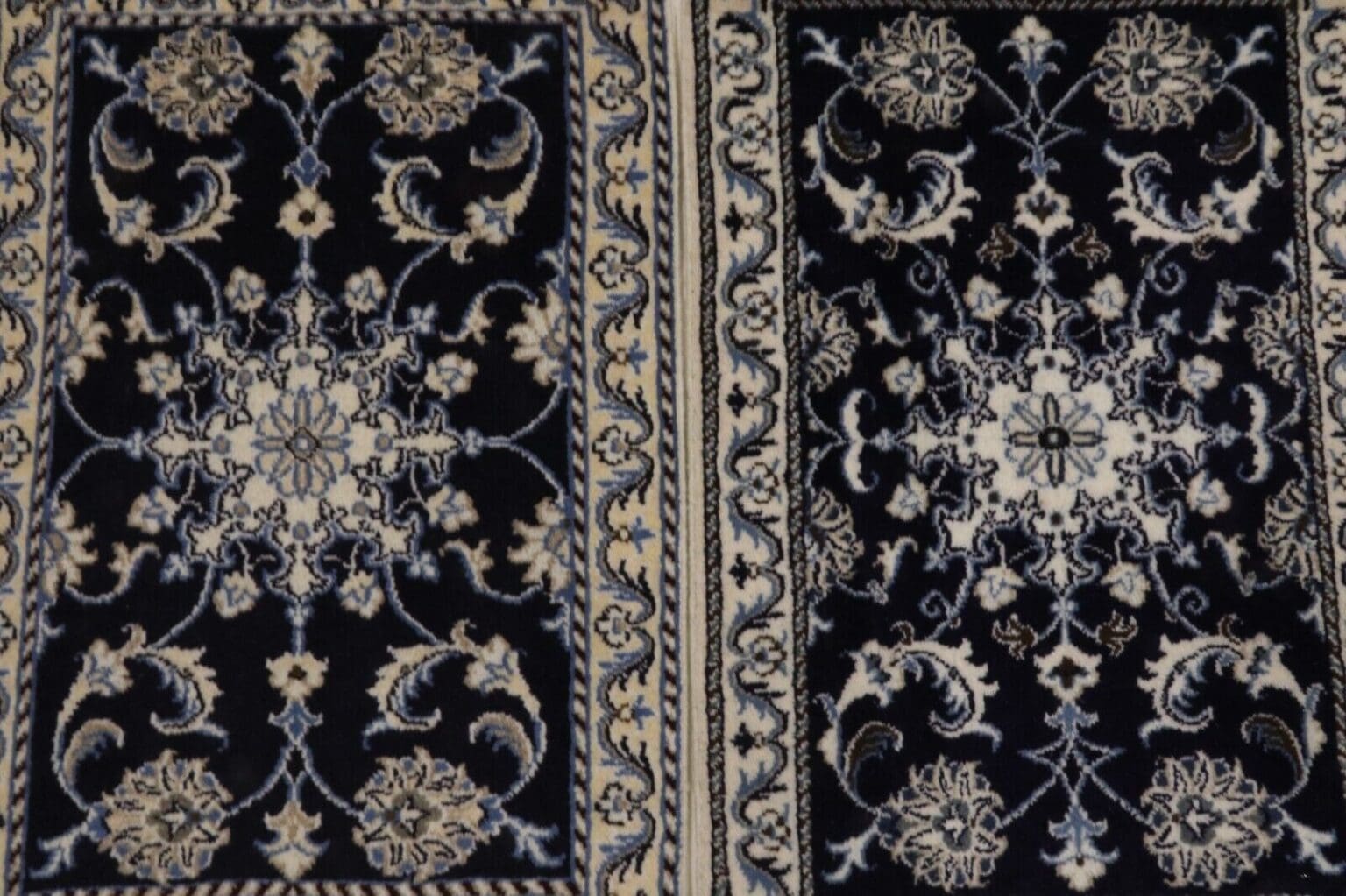
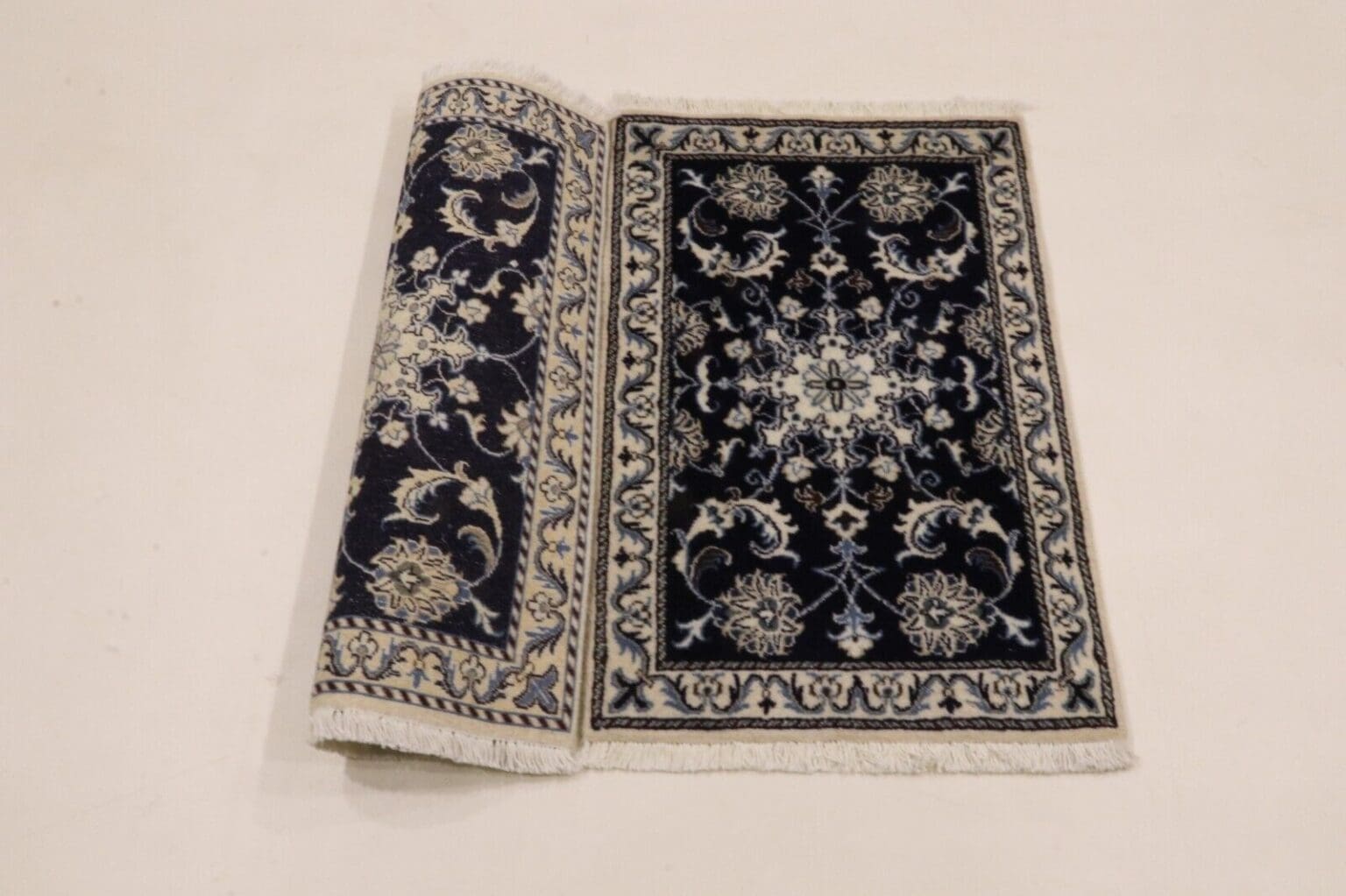
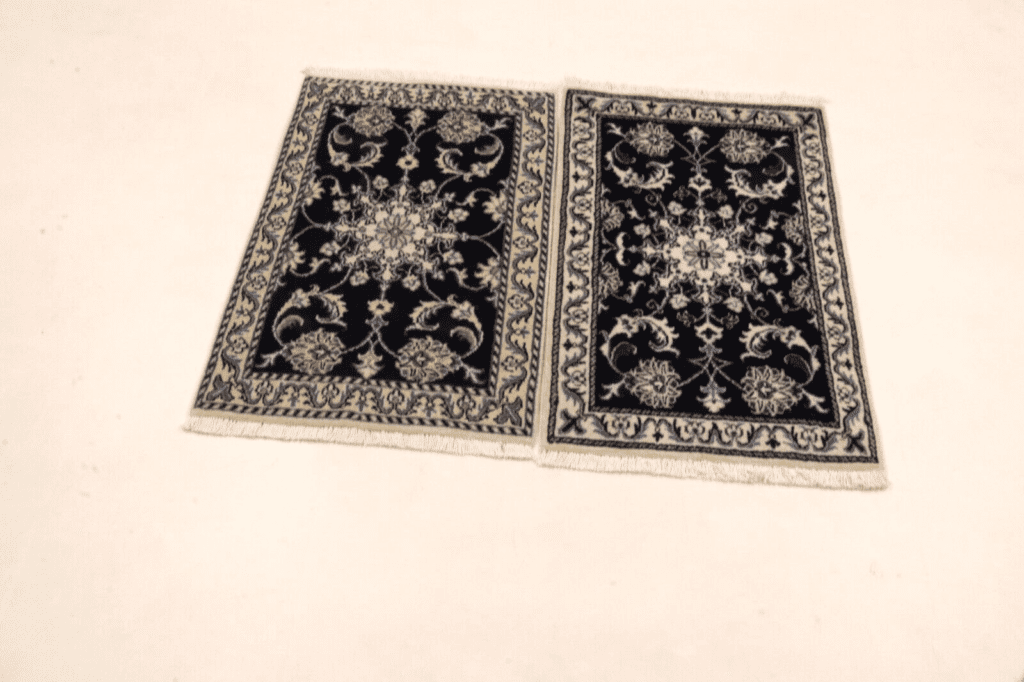
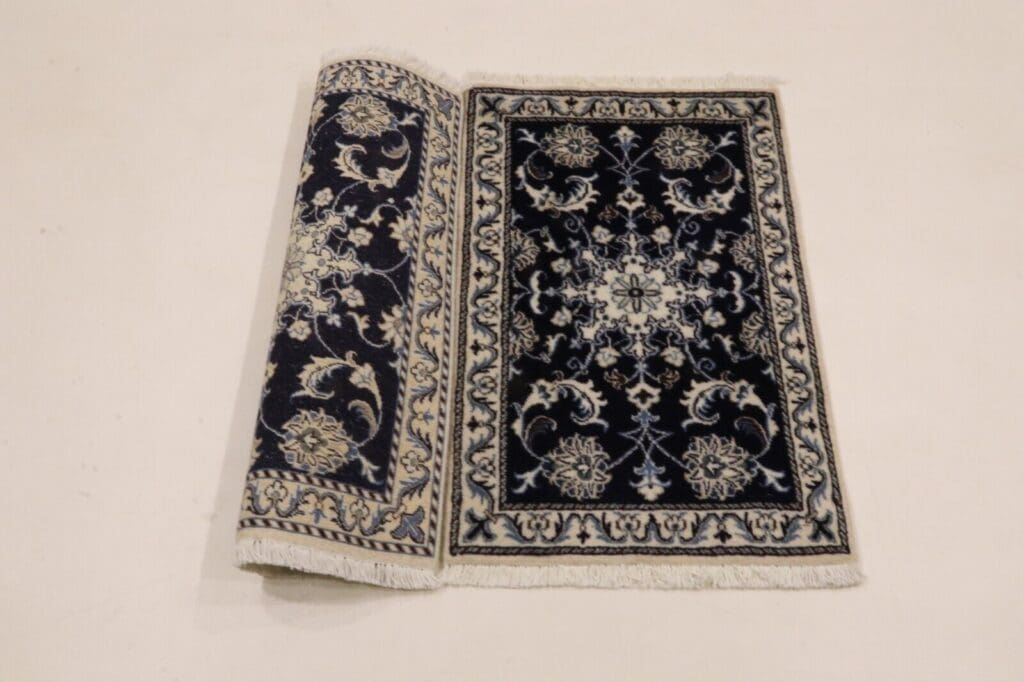
The rug is described as traditional Oriental and Persian in style. Its colour is dark blue. This deep colour forms a quiet, unified ground for the ornament and gives the design a clearly defined base. In Persian rug composition, colour is considered in relation to the entire layout rather than as an isolated feature. A dark ground can separate floral lines and geometric contours, helping the elements remain legible while preserving a balanced overall appearance.
The established Nain vocabulary includes floral and geometric symbolism. Floral motifs draw on forms from the natural world. They may suggest blossoms, leaves, vines or stylised branches, but in Persian ornament they are transformed into repeatable textile shapes rather than copied as literal botanical illustrations. Their symbolism is associated with beauty and a connection to nature. Repetition and controlled variation allow these forms to create rhythm across the field and within the borders.
Geometric elements add structure through lines, axes and clearly organised sections. They help stabilise the composition and divide the surface into related areas. In Persian design, geometric forms are connected with ideas of stability and harmony. Symmetry, repetition and measured spacing make it possible for a pattern with many small details to remain coherent. The floral and geometric components are therefore complementary: one introduces organic movement, while the other provides order and visual definition.
The rug’s high knot density supports the fine rendering of its design. Narrow outlines, small transitions and detailed ornamental areas can be worked with greater accuracy when the construction contains many closely placed knots. The appearance of the rug is created by the interaction of motif, ground, border and colour distribution, not by any single decorative element alone. Dark blue, the traditional Oriental-Persian style and the combination of floral and geometric forms establish the principal visual character described for this piece.
This kind of design can work with different interiors because Persian ornament is decorative while remaining clearly structured. The rug is suitable for use in a living room, bedroom or office. Its traditional character is intended to remain adaptable to the surrounding furniture and décor. The motifs do not represent one fixed narrative; instead, they belong to a long-established visual language in which plant forms, geometry, rhythm and balance are brought together on a woven surface.
Special Features
The distinctive features of this rug include its high knot density, its combination of virgin wool and silk, its hand-knotted construction and its dark blue colour. It is offered as new merchandise in perfect condition. The rug is suitable for underfloor heating. The heating should not be set excessively high, so that the materials and construction are treated with care. The rug is also described as pet-friendly.
Routine care can consist of vacuuming without a brush and occasional gentle beating to loosen surface dust. Persistent stains should be handled by a professional rug cleaner. This helps avoid unnecessary damage to the colours and fibres. The rug can be used in a living room, bedroom or office. Its hand-knotted workmanship, natural fibre combination and traditional Persian design provide a practical floor covering with a clear connection to the craft traditions of Nain.
FAQ
How should I care for the Nain Persian rug?
Regular vacuuming without a brush is recommended for everyday care. Avoiding the brush prevents unnecessary stress on the pile, especially where virgin wool and silk are used together. The rug may also be gently beaten from time to time to remove loose dust and light surface dirt. A stubborn stain should not be treated with aggressive products or excessive moisture at home. Professional rug cleaning is recommended in such cases, since unsuitable methods can affect the colours and materials. Gentle, consistent care helps preserve the condition of this new rug and protects its hand-knotted surface.
Is the rug suitable for underfloor heating?
Yes, this Nain Persian rug is suitable for underfloor heating. The product description expressly identifies it as suitable for this type of floor. The heating should not be set too high, however. Moderate heat helps protect the natural fibres and the hand-knotted construction. The rug can therefore be used on a heated floor when the temperature is kept at an appropriate level. As with any textile placed over underfloor heating, even heat distribution and the avoidance of extreme temperatures are sensible measures for careful use.
Where can I use the rug?
The rug can be used in several parts of the home and is also suitable for an office. The suggested locations are the living room, bedroom and office. Its traditional Oriental-Persian style allows it to be combined with different interior schemes. The dark blue colour creates a defined and calm base for the surrounding furnishings. In a living room it can accompany a seating area, in a bedroom it can provide a textile accent, and in an office it can introduce a classical Persian design reference. The best placement depends on the existing furniture, available space and desired arrangement.
To provide the best experiences, we use technologies like cookies to store and/or access device information. Consenting to these technologies will allow us to process data such as browsing behavior or unique IDs on this site. Not consenting or withdrawing consent, may adversely affect certain features and functions.
Functional Always active
The technical storage or access is strictly necessary for the legitimate purpose of enabling the use of a specific service explicitly requested by the subscriber or user, or for the sole purpose of carrying out the transmission of a communication over an electronic communications network.
Preferences
The technical storage or access is necessary for the legitimate purpose of storing preferences that are not requested by the subscriber or user.
Statistics
The technical storage or access that is used exclusively for statistical purposes.The technical storage or access that is used exclusively for anonymous statistical purposes. Without a subpoena, voluntary compliance on the part of your Internet Service Provider, or additional records from a third party, information stored or retrieved for this purpose alone cannot usually be used to identify you.
Marketing
The technical storage or access is required to create user profiles to send advertising, or to track the user on a website or across several websites for similar marketing purposes.
 SECURE PAYMENT
 SHIPPING PARTNERS