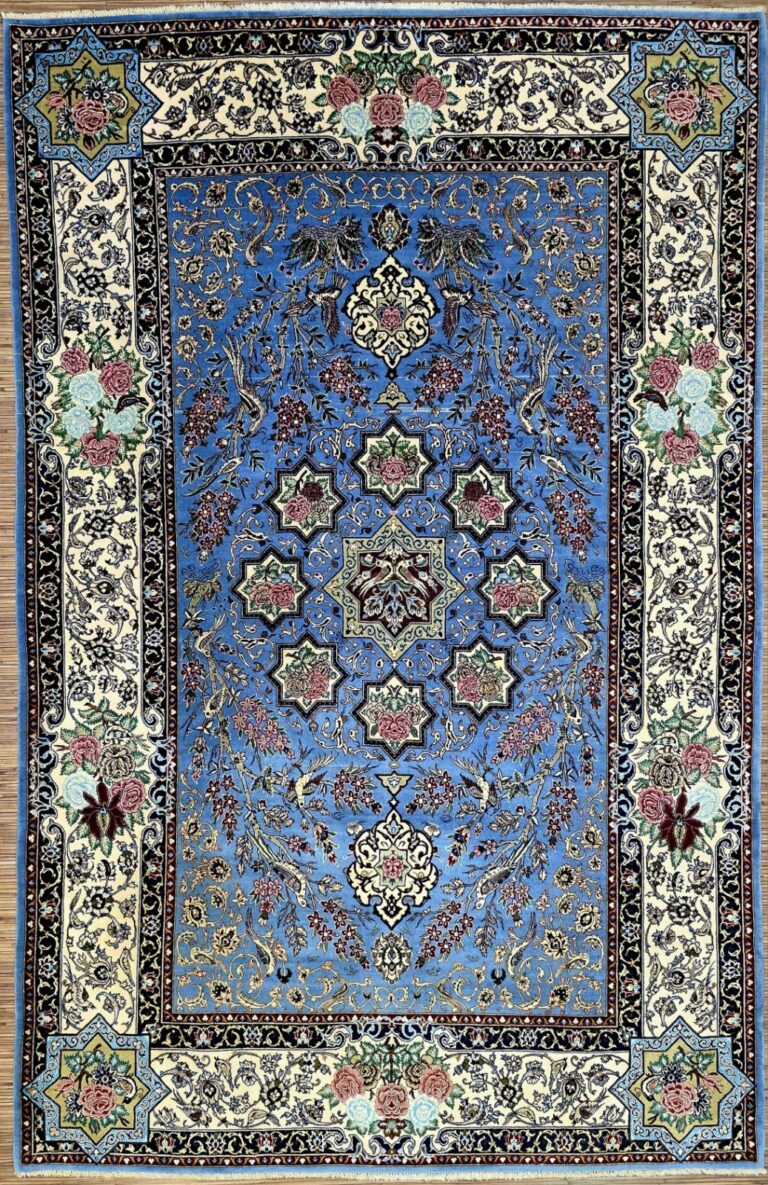
This Nain 9 La Persian rug is hand-knotted, with a pile made from 95% virgin wool and 5% silk. The two materials shape the character of the surface in different ways. Virgin wool provides the principal textile body of the pile, while the silk content contributes to its fine appearance and noticeable sheen. The result is a surface that feels textile and substantial while retaining a refined visual quality. The rug is made knot by knot by hand rather than by an industrial machine.
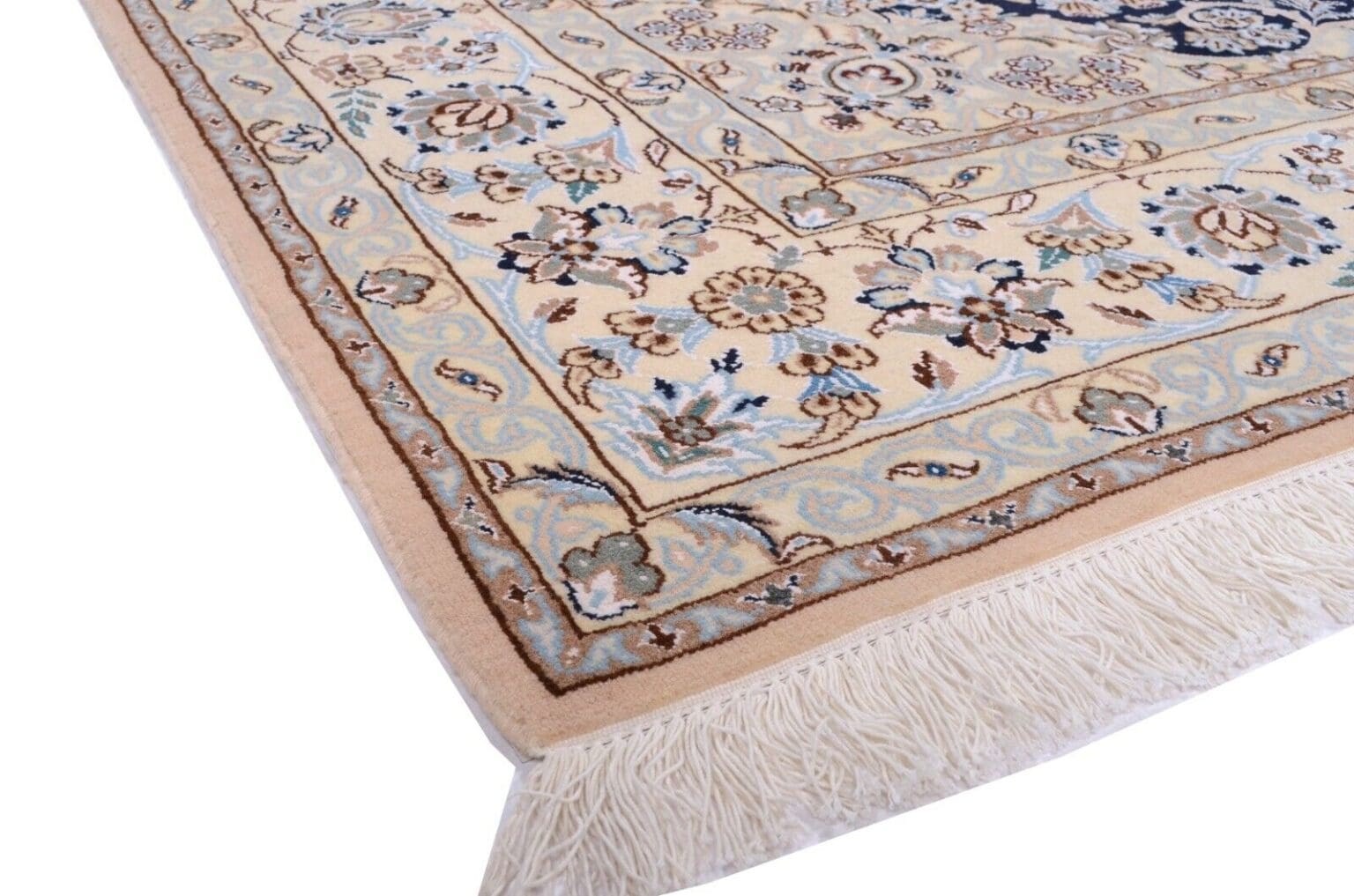
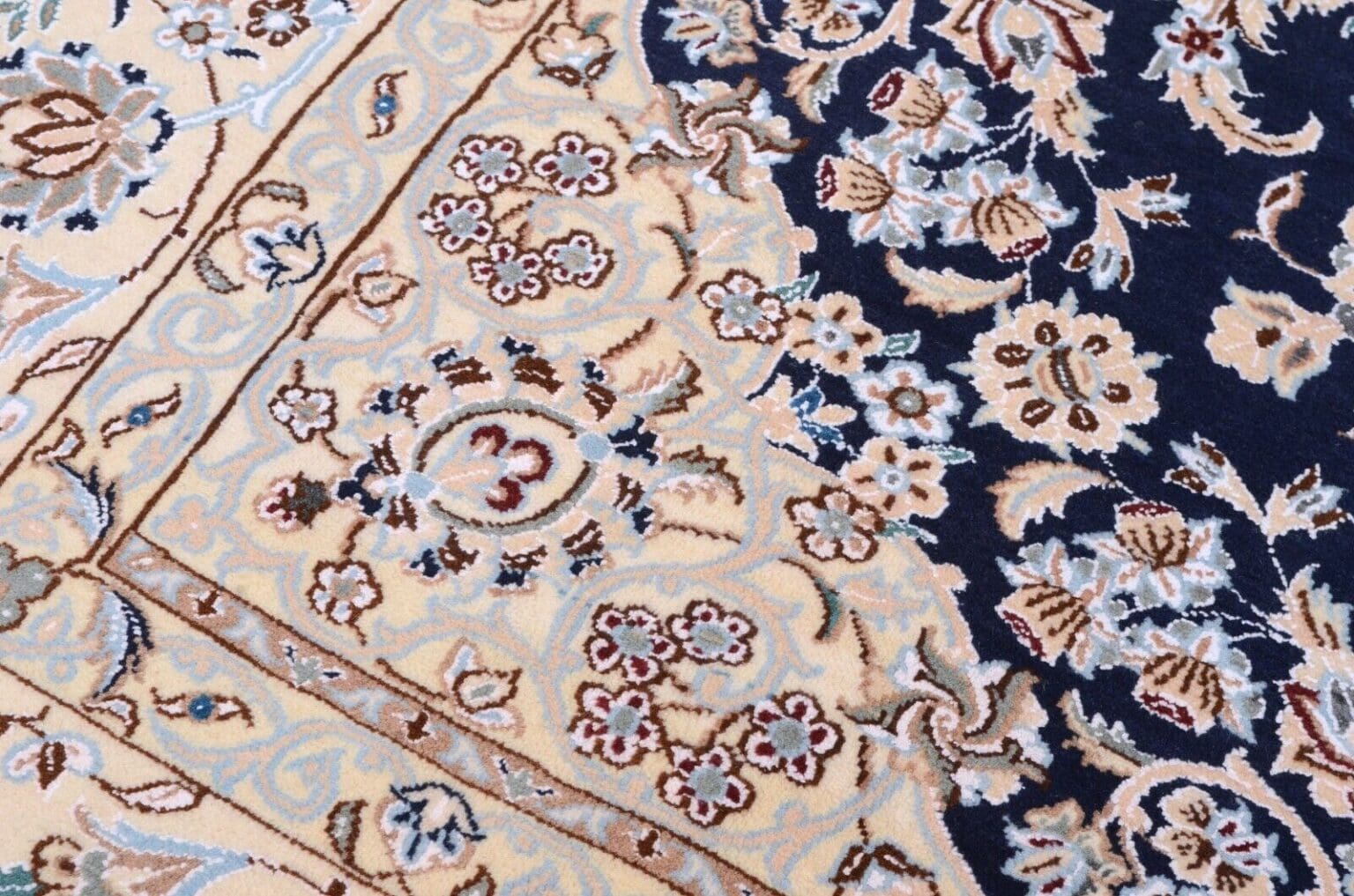
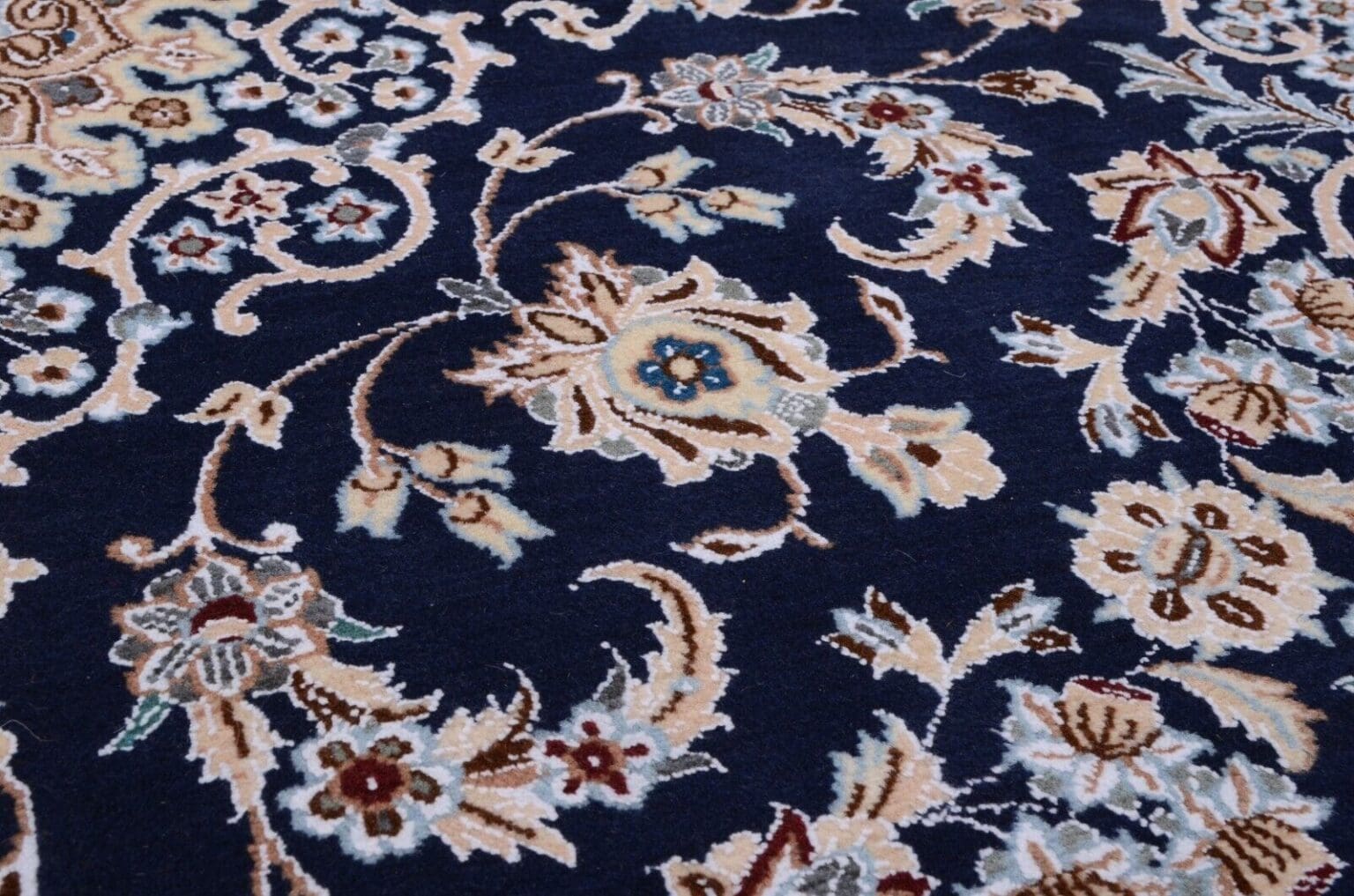
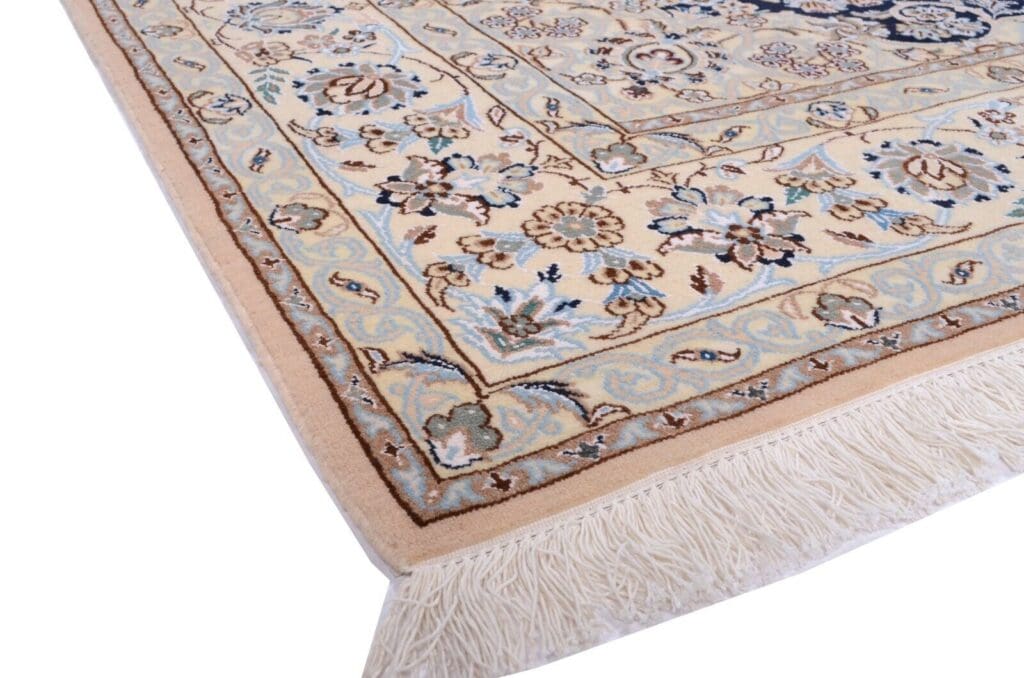
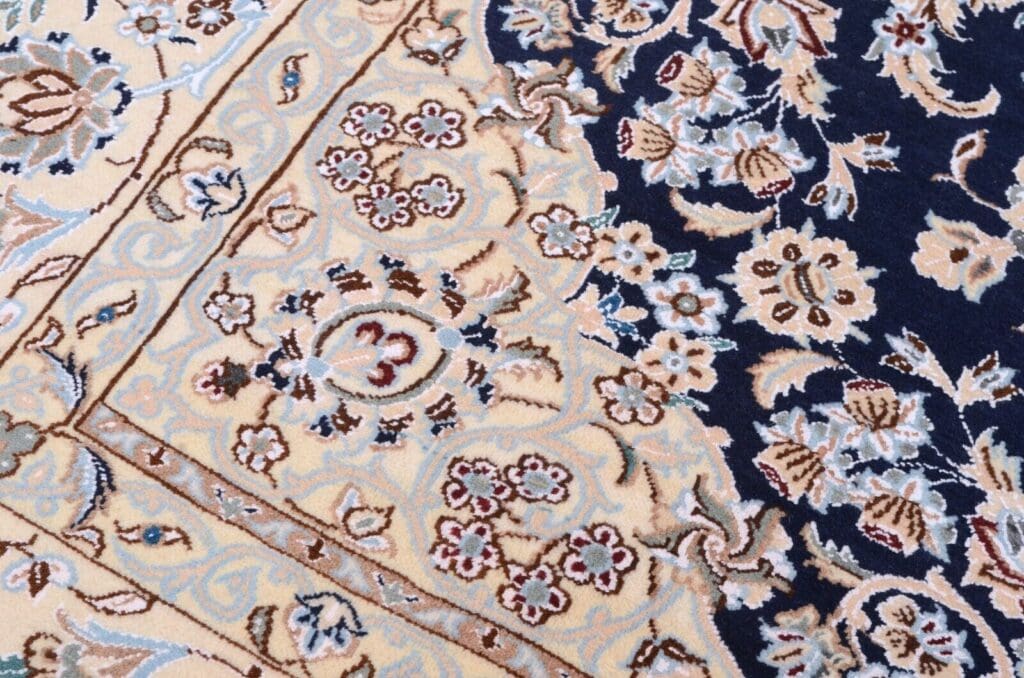
Its knot density is 400,000 knots per square metre. This dense construction supports the detailed rendering of the pattern and helps the floral design retain clear lines. In hand-knotting, each row is built through a large number of individual actions, with the design gradually taking shape across the foundation. The high density allows small floral elements, narrow outlines and the surrounding details of the medallion to be worked with precision. Wool and silk also give the pile a pleasant tactile quality and a visible lustre.
The rug is new and described as perfect. Its hand-knotted construction, dense knotting and stated wool-and-silk composition are part of its specific character. The craftsmanship reflects a process based on controlled repetition rather than mechanical uniformity. Each section of the composition is formed through the arrangement of individual knots, making the finished surface a textile expression of the design rather than a printed image.
Origin and Tradition
Nain is a city in Iran and an established centre of Persian carpet production. Nain rugs are associated with fine drawing, careful hand-knotting and the use of wool together with silk. The local tradition of hand-knotted carpets developed in the early nineteenth century, when these rugs also began to gain recognition in Western markets. Their visual language combines the broader vocabulary of Persian carpet art with a particularly controlled and finely articulated ornament.
The Nain tradition places importance on the relationship between the central field, the border and the smaller decorative passages that connect them. Floral scrolls, leaves and blossoms are arranged with close attention to proportion. Producing such a composition requires more than repeating isolated motifs: the weaver must maintain the intended balance as the design progresses across the rug. A dense knot structure is well suited to this approach because it can distinguish between fine lines, compact ornaments and larger areas of colour.
Persian carpets from Nain belong to a craft culture in which a rug can serve as a practical floor covering as well as a piece of textile art. Patterns are transmitted through workshop traditions, then adjusted through individual design choices and changing interpretations. Light colour schemes and natural tones are familiar features of many Nain carpets. They provide a calm ground for the ornament and allow the drawing to remain legible. The result is a regional style recognised for its precision, restrained balance and combination of wool with silk.
The Nain 9 La belongs to this Persian context. The name Nain identifies the tradition and place associated with the design, while the hand-knotted technique identifies the method by which this individual rug was made. Its character therefore comes from the interaction of regional pattern language, material and construction. It does not rely on a temporary decorative trend; instead, it uses established Persian forms that continue to be interpreted in contemporary interiors.
Design and Pattern
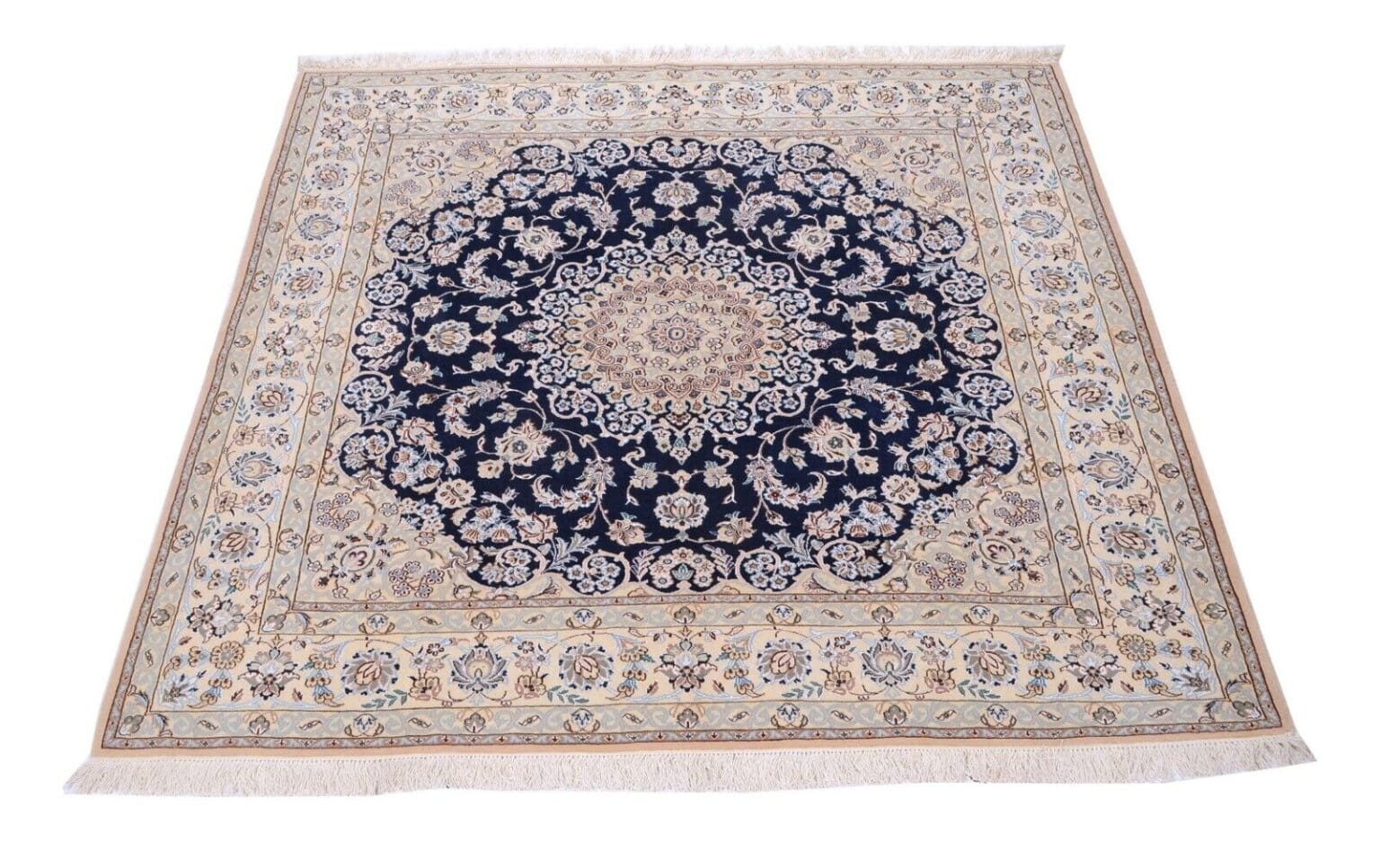
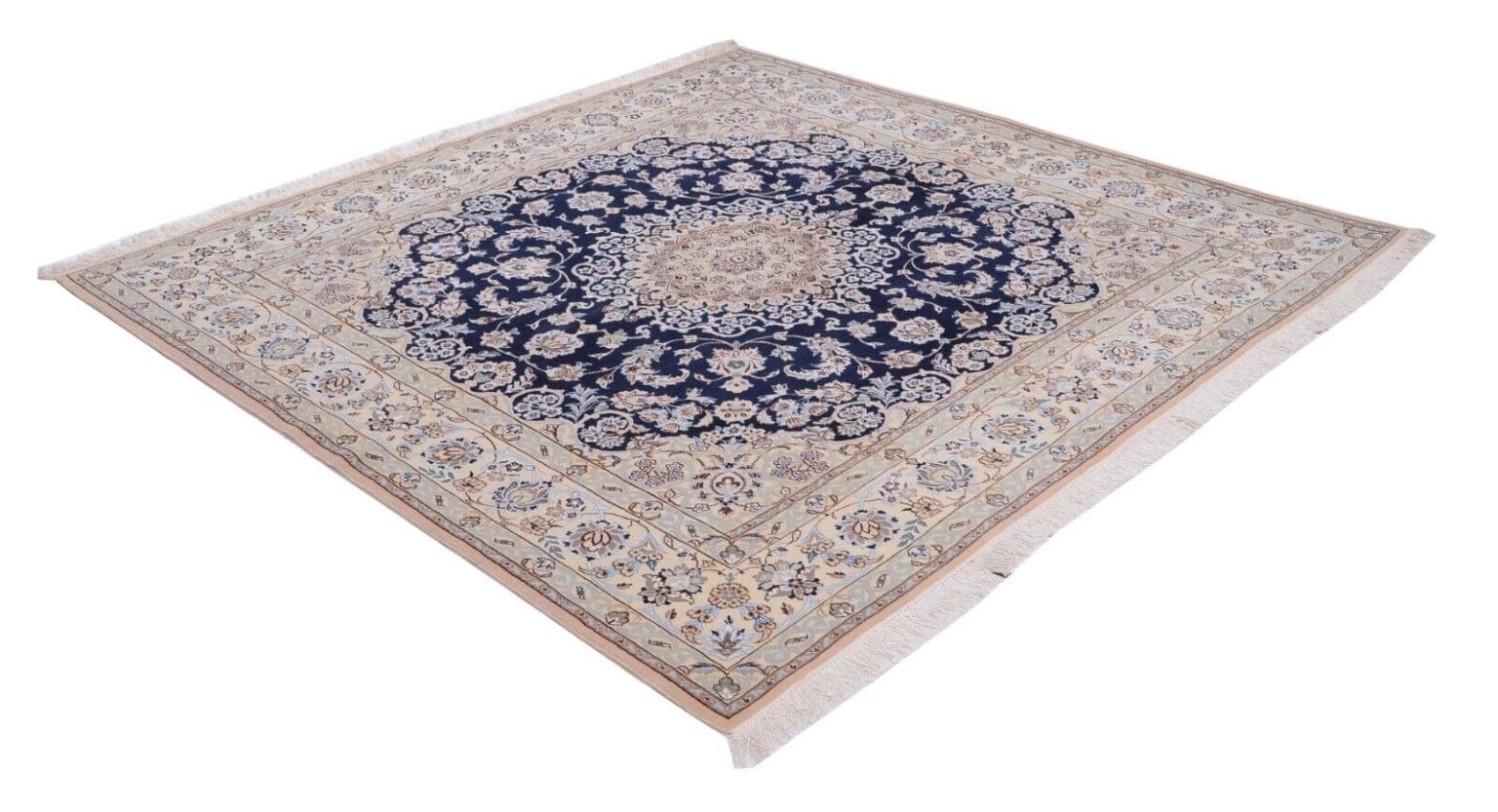
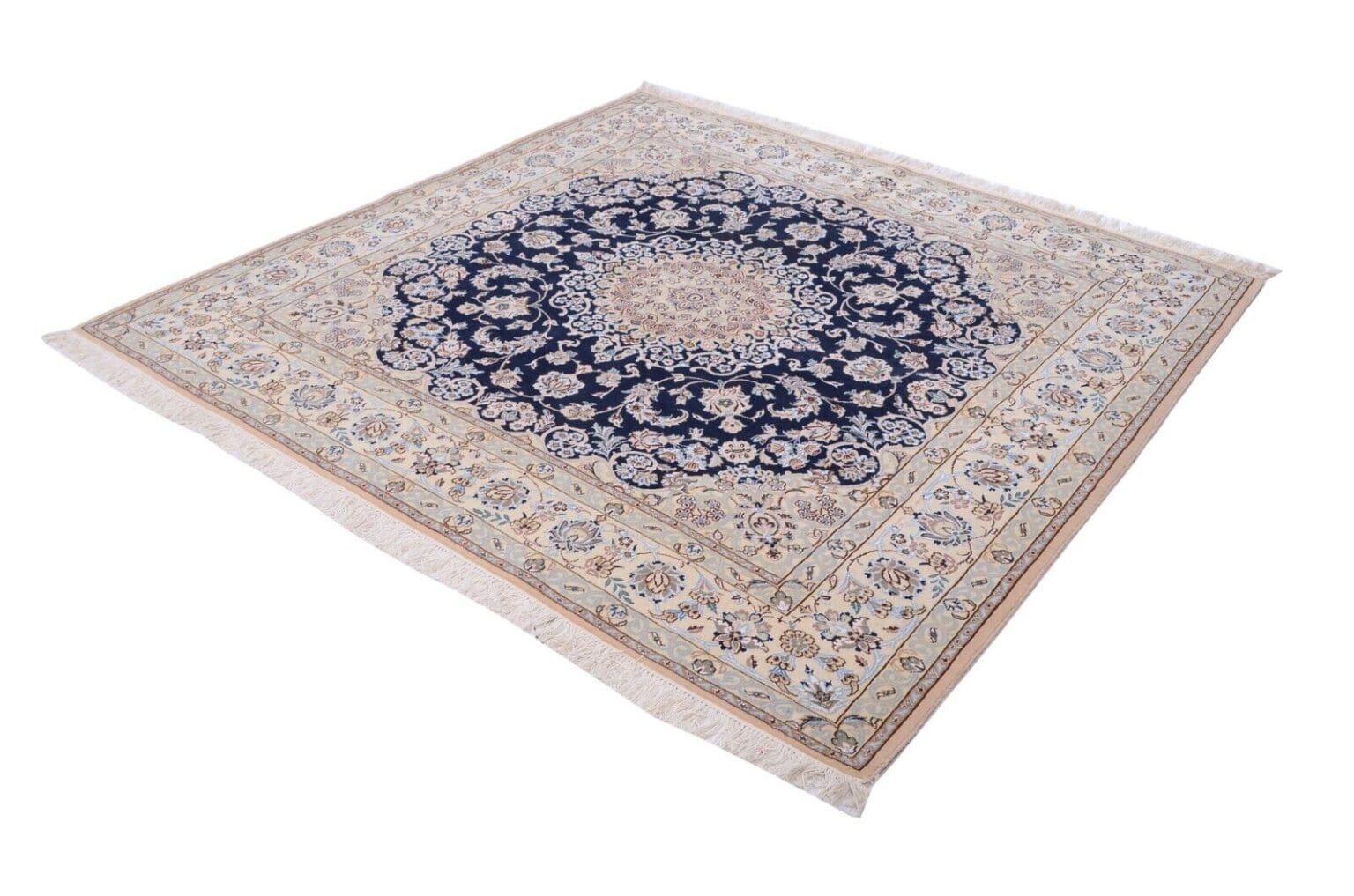
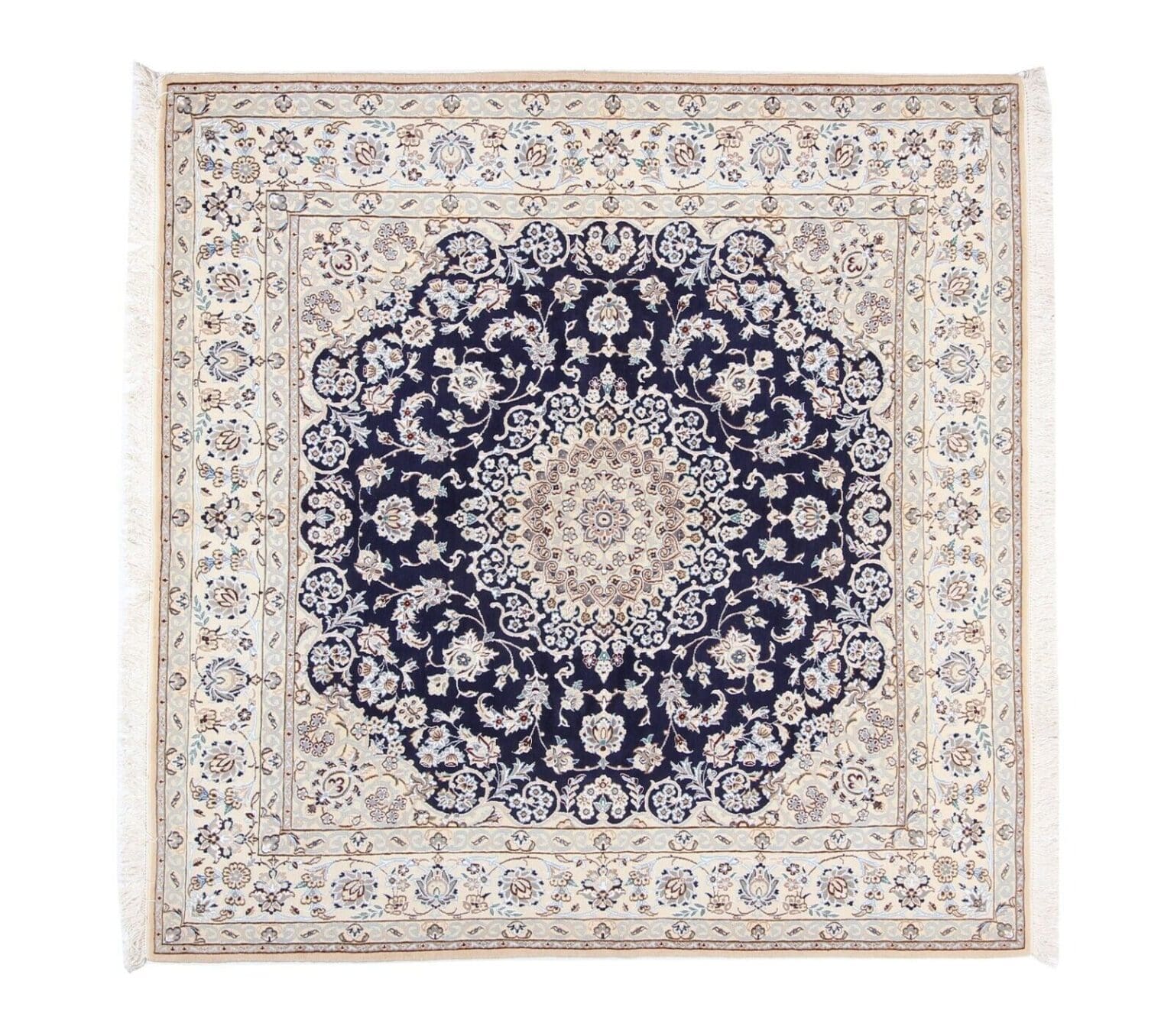
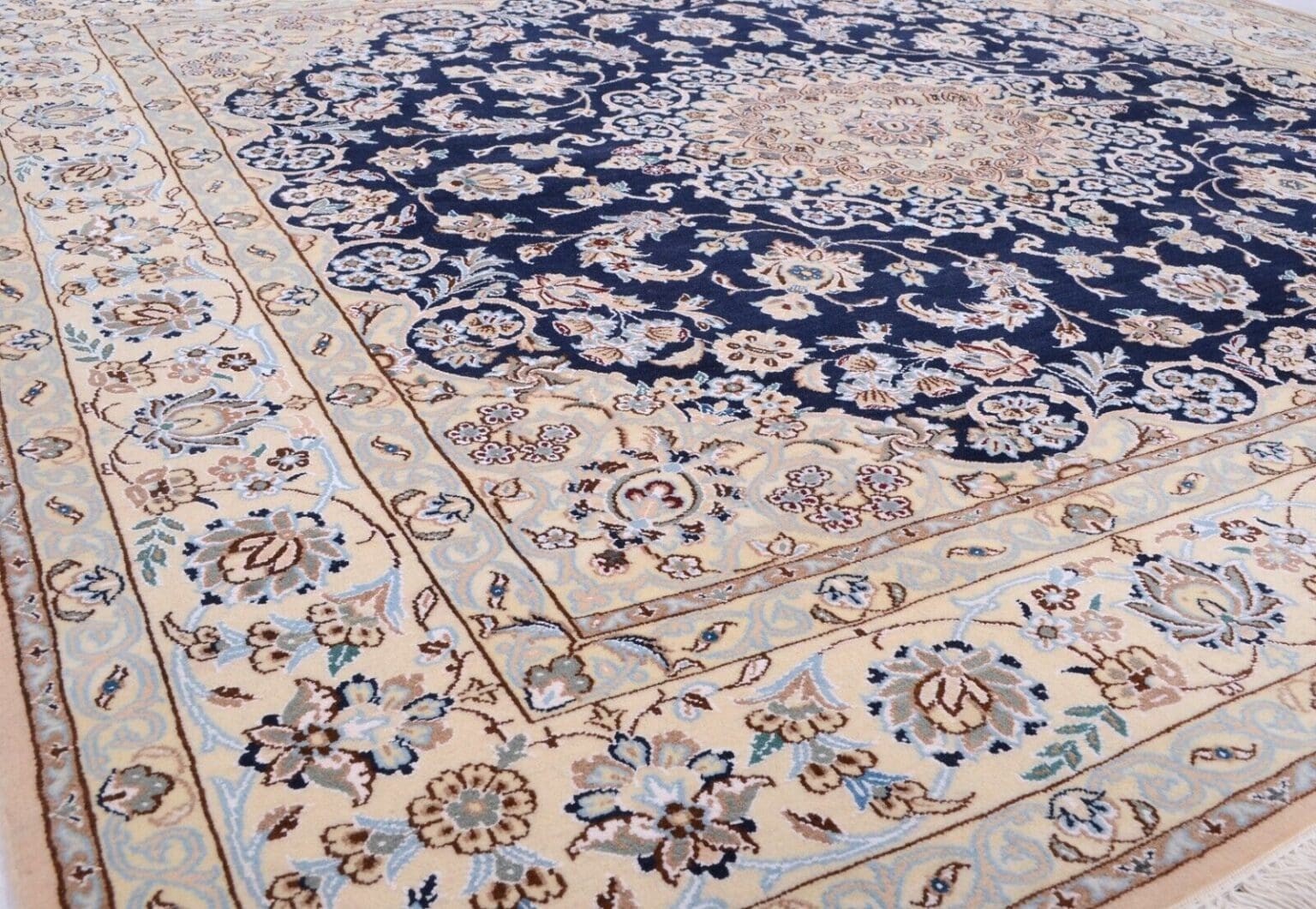
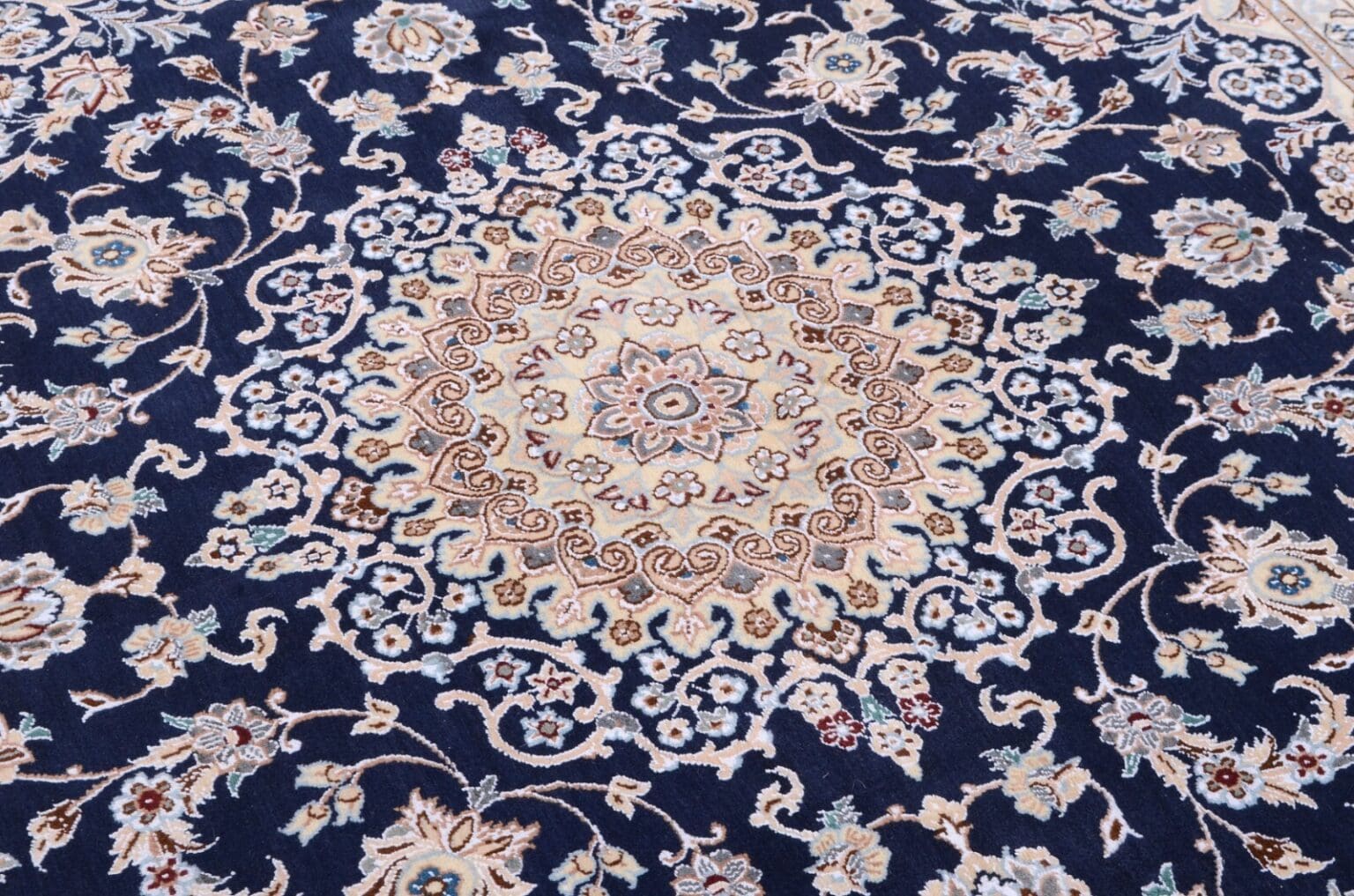
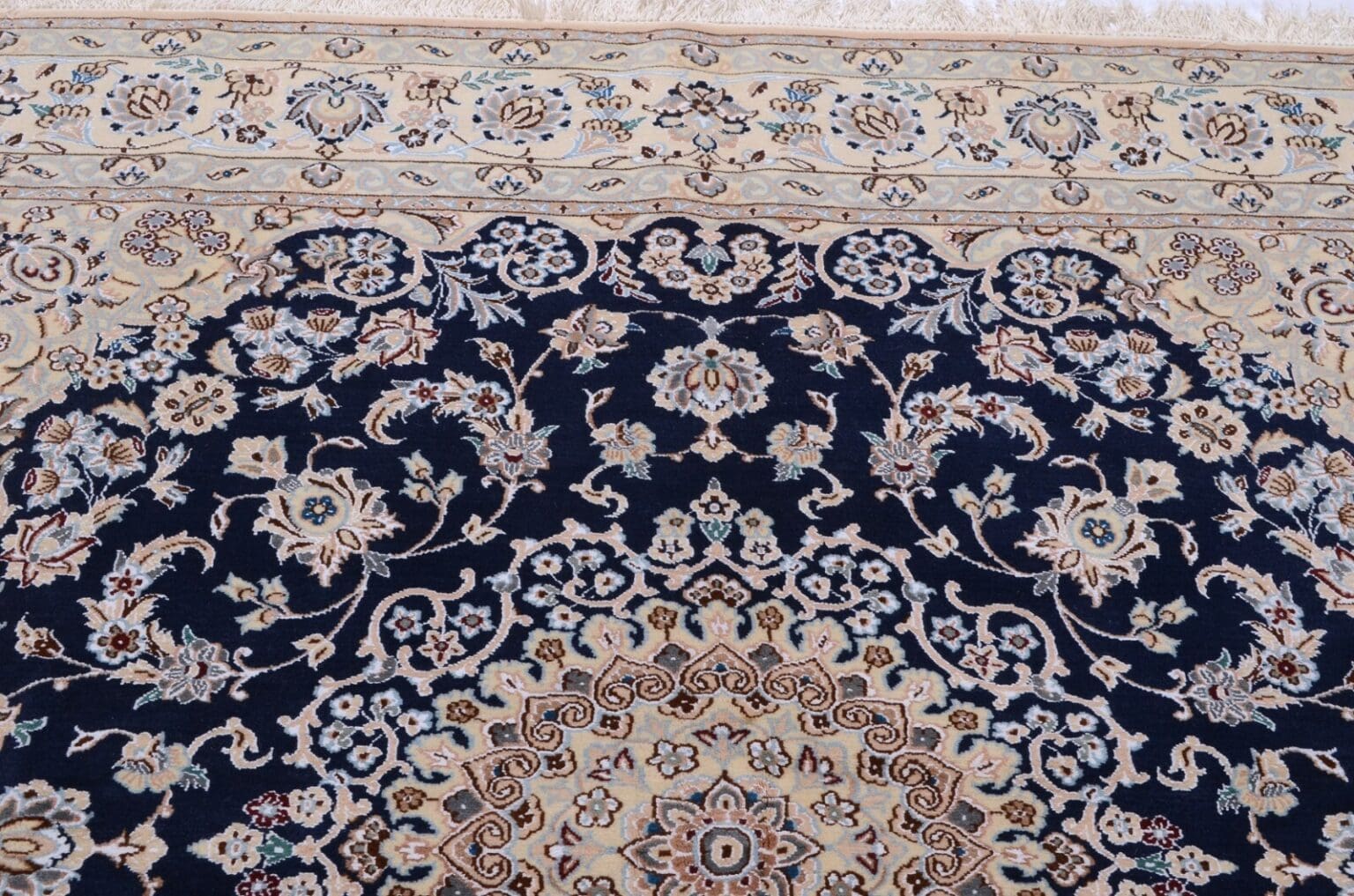
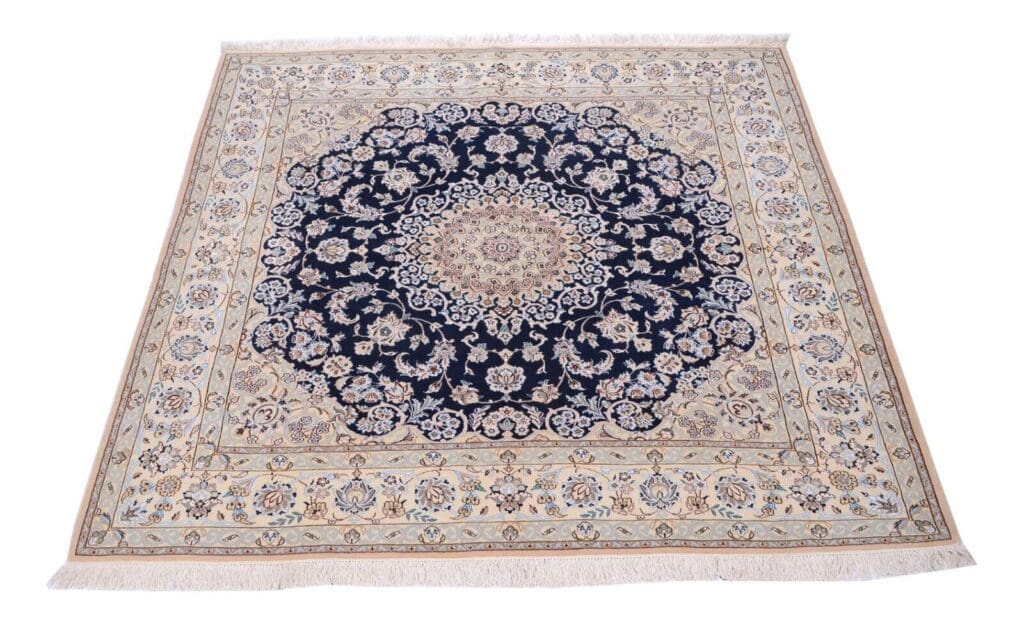
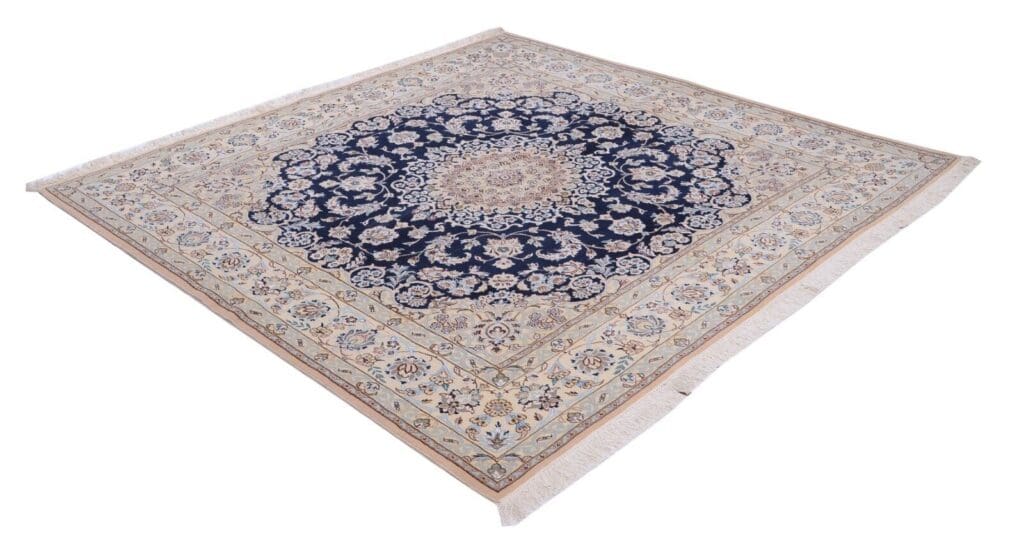
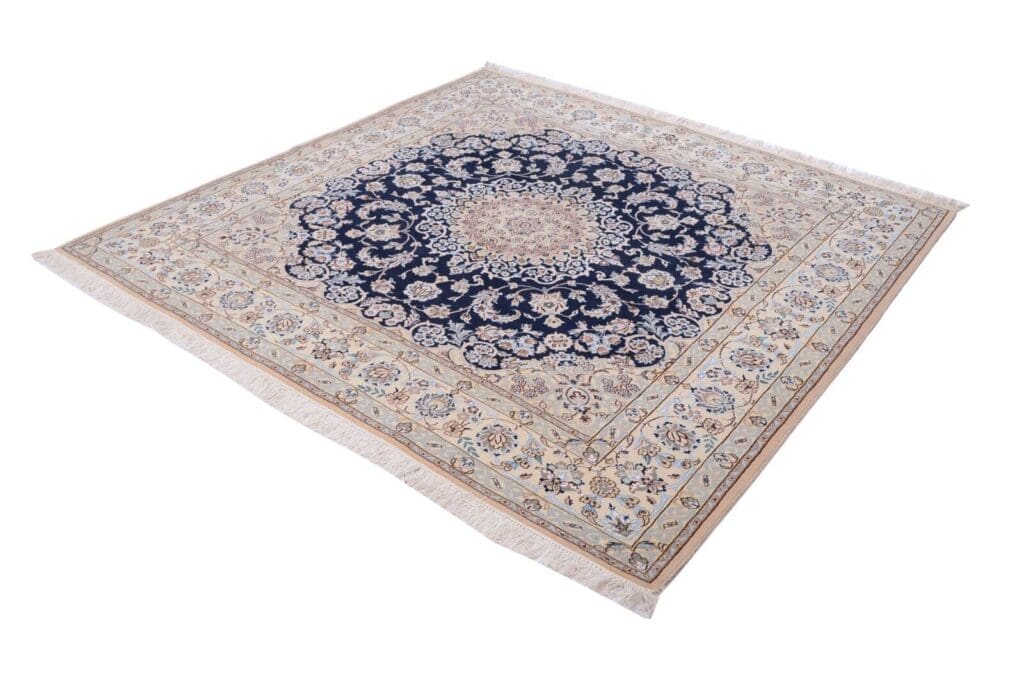
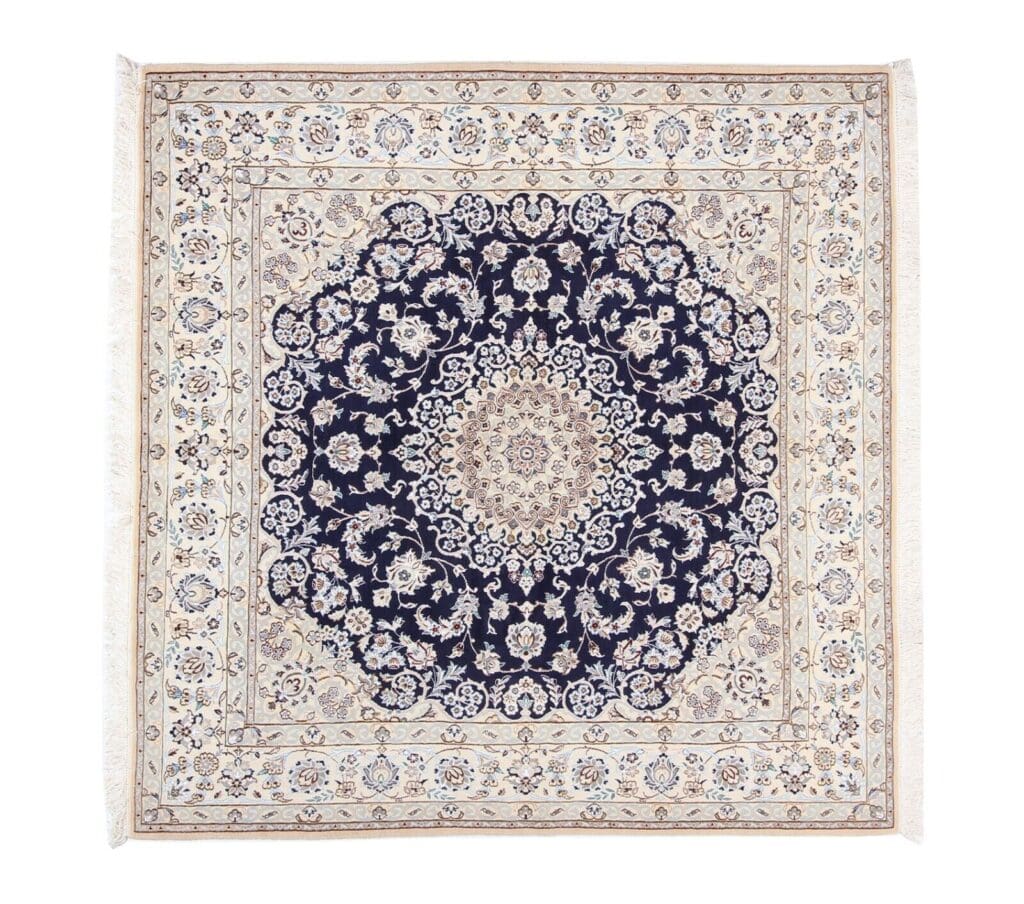
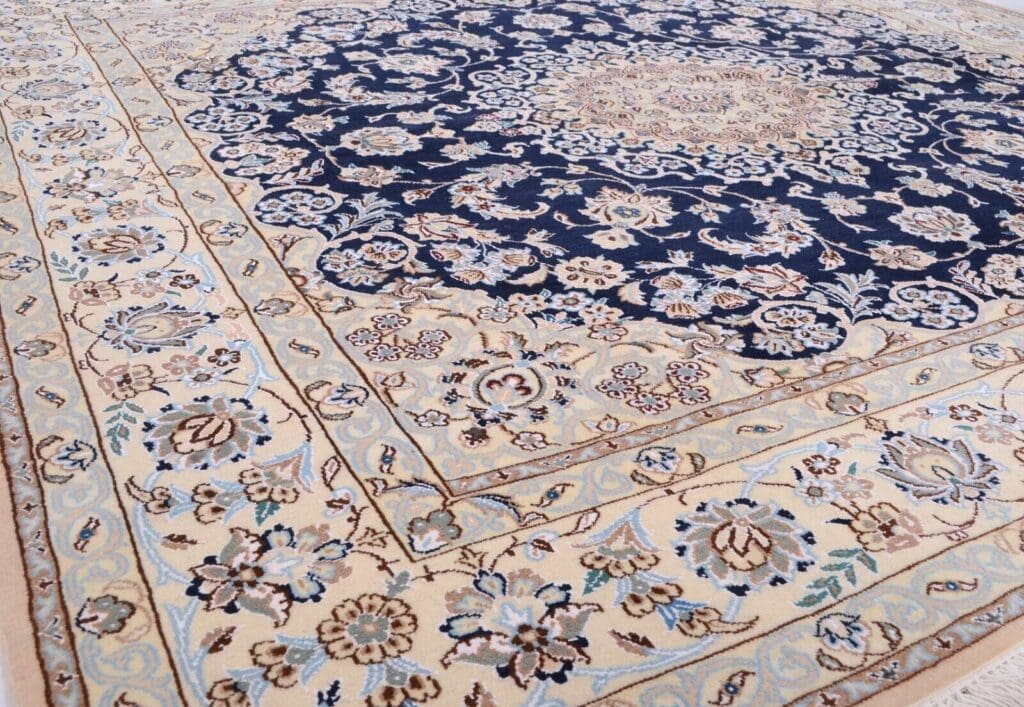
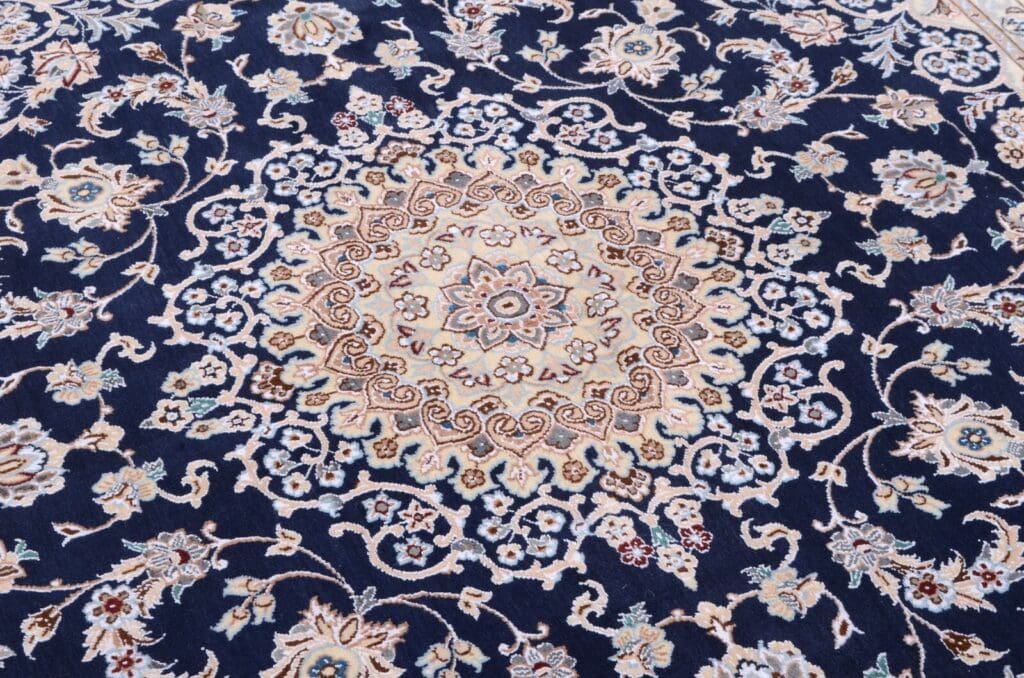
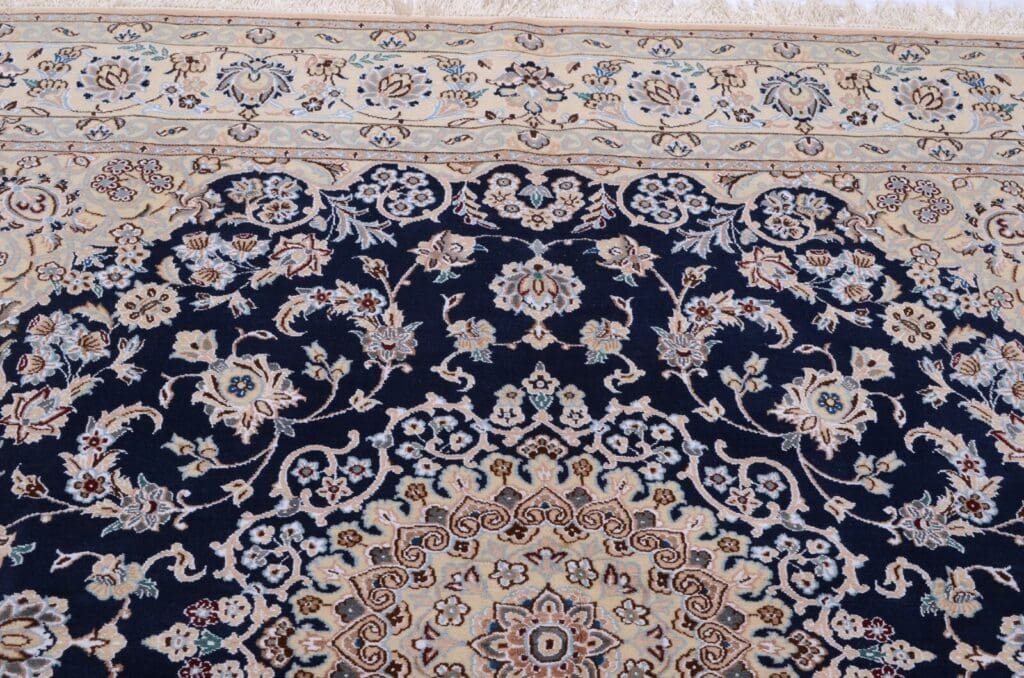
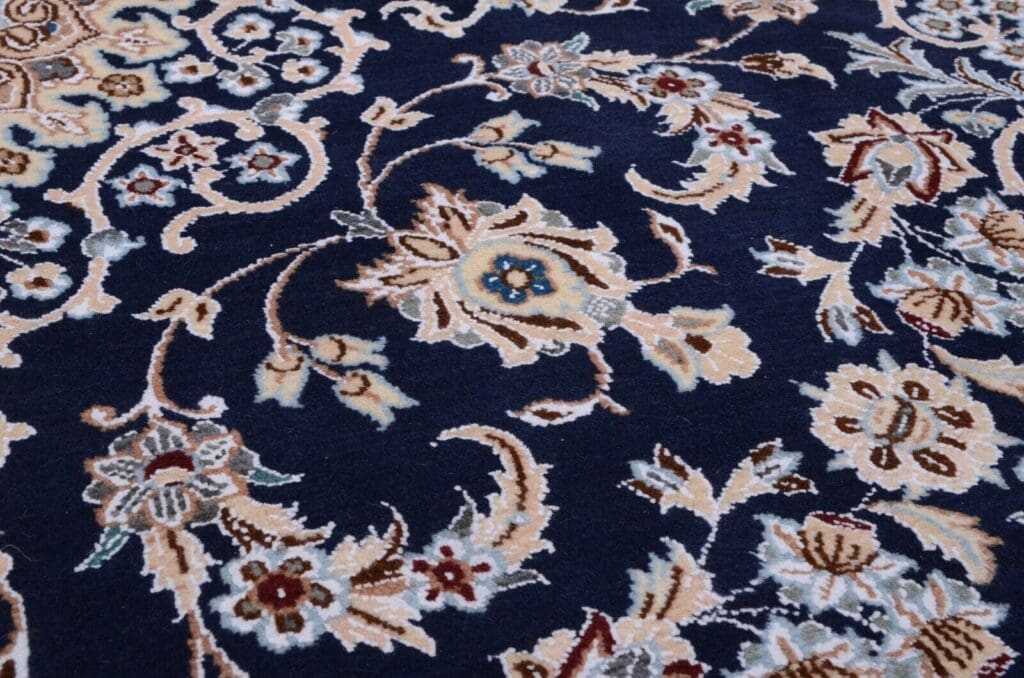
The rug has a floral motif with a medallion. The medallion acts as the visual centre, while flowers, leaves and scrolling forms organise the surrounding field. This central structure gives the composition a clear point of focus, yet the floral details create movement around it. The eye can follow the ornament outward from the centre and then return to the medallion through the repeated lines and connecting forms.
Floral designs are a recurring subject in Persian carpet art. They interpret plants, blossoms and garden imagery through stylised lines rather than attempting a literal botanical depiction. The Persian garden is often understood as an ordered image of nature, and carpet design translates that idea into a balanced arrangement of stems, leaves, flowers and borders. On this rug, the floral vocabulary gives the field a lively character while the medallion maintains a readable overall structure.
The composition is described as having a form of asymmetrical symmetry. The complete design remains balanced, but individual floral details do not need to appear as exact mirror images. This allows the pattern to avoid rigidity and gives the ornament a sense of movement. Dense knotting helps the weaver distinguish the small elements that make this effect possible. Fine transitions and compact motifs can be placed close together without losing their relationship to the larger composition.
The colour description includes soft blue, cream and earthy tones. Cream introduces lightness, while blue and earth colours provide contrast and help organise the floral drawing. Together they create a restrained palette that can sit alongside both modern and traditional furnishings. The style is identified as traditionally Oriental and Persian. Its decorative language therefore remains clearly rooted in Persian carpet design while its colour balance allows it to function as an accent in different interior settings.
The combination of a defined medallion and an all-over floral vocabulary gives the rug both a strong centre and a richly structured surface. It can be used as a decorative accent in a living room, dining room or study, and the same design language can also be placed in a bedroom or hallway. The pattern supplies visual definition without removing the sense of order associated with Nain carpets.
Special Features
The rug is new and described as perfect. It is suitable for use over underfloor heating. The materials are described as temperature-resistant, while the rug also provides pleasant warmth and a degree of cushioning. This makes it possible to combine the textile surface with a room that already uses underfloor heating.
Recommended care consists of regular vacuuming and occasional beating. Direct sunlight should be avoided in order to help preserve the colours and structure. Professional rug cleaning is an option when a deeper treatment is needed. A rug pad is recommended as well: it helps prevent slipping, protects the rug and improves comfort and safety during use.
FAQ
How should I care for a Nain rug?
Vacuum the rug regularly and beat it occasionally as part of routine care. Avoid direct sunlight so that the colours and structure can be preserved. If more thorough cleaning is required, professional rug cleaning is recommended. A suitable rug pad can also protect the rug and support safer everyday use.
Is the rug suitable for underfloor heating?
Yes. The Nain 9 La Persian rug is suitable for use with underfloor heating. Its materials are described as temperature-resistant. At the same time, the rug contributes pleasant warmth and cushioning. It can therefore be used as a textile floor covering in rooms equipped with underfloor heating.
What accessory is recommended for the Nain rug?
A rug pad is recommended. It helps keep the rug from slipping, protects it and improves comfort and safety. The pad is therefore a practical addition to the care and everyday use of this hand-knotted Nain rug.
To provide the best experiences, we use technologies like cookies to store and/or access device information. Consenting to these technologies will allow us to process data such as browsing behavior or unique IDs on this site. Not consenting or withdrawing consent, may adversely affect certain features and functions.
Functional Always active
The technical storage or access is strictly necessary for the legitimate purpose of enabling the use of a specific service explicitly requested by the subscriber or user, or for the sole purpose of carrying out the transmission of a communication over an electronic communications network.
Preferences
The technical storage or access is necessary for the legitimate purpose of storing preferences that are not requested by the subscriber or user.
Statistics
The technical storage or access that is used exclusively for statistical purposes.The technical storage or access that is used exclusively for anonymous statistical purposes. Without a subpoena, voluntary compliance on the part of your Internet Service Provider, or additional records from a third party, information stored or retrieved for this purpose alone cannot usually be used to identify you.
Marketing
The technical storage or access is required to create user profiles to send advertising, or to track the user on a website or across several websites for similar marketing purposes.
 SECURE PAYMENT
 SHIPPING PARTNERS