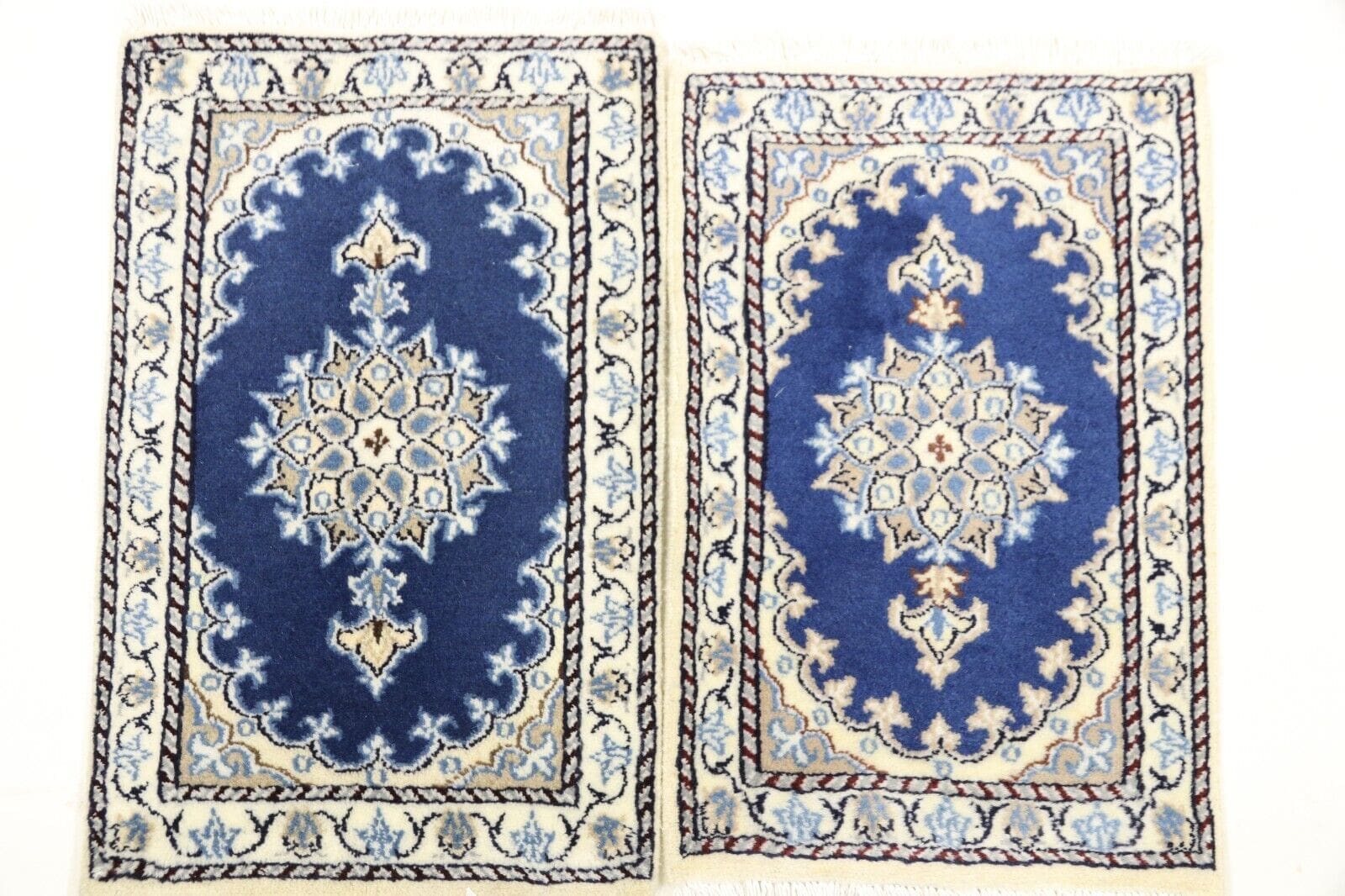
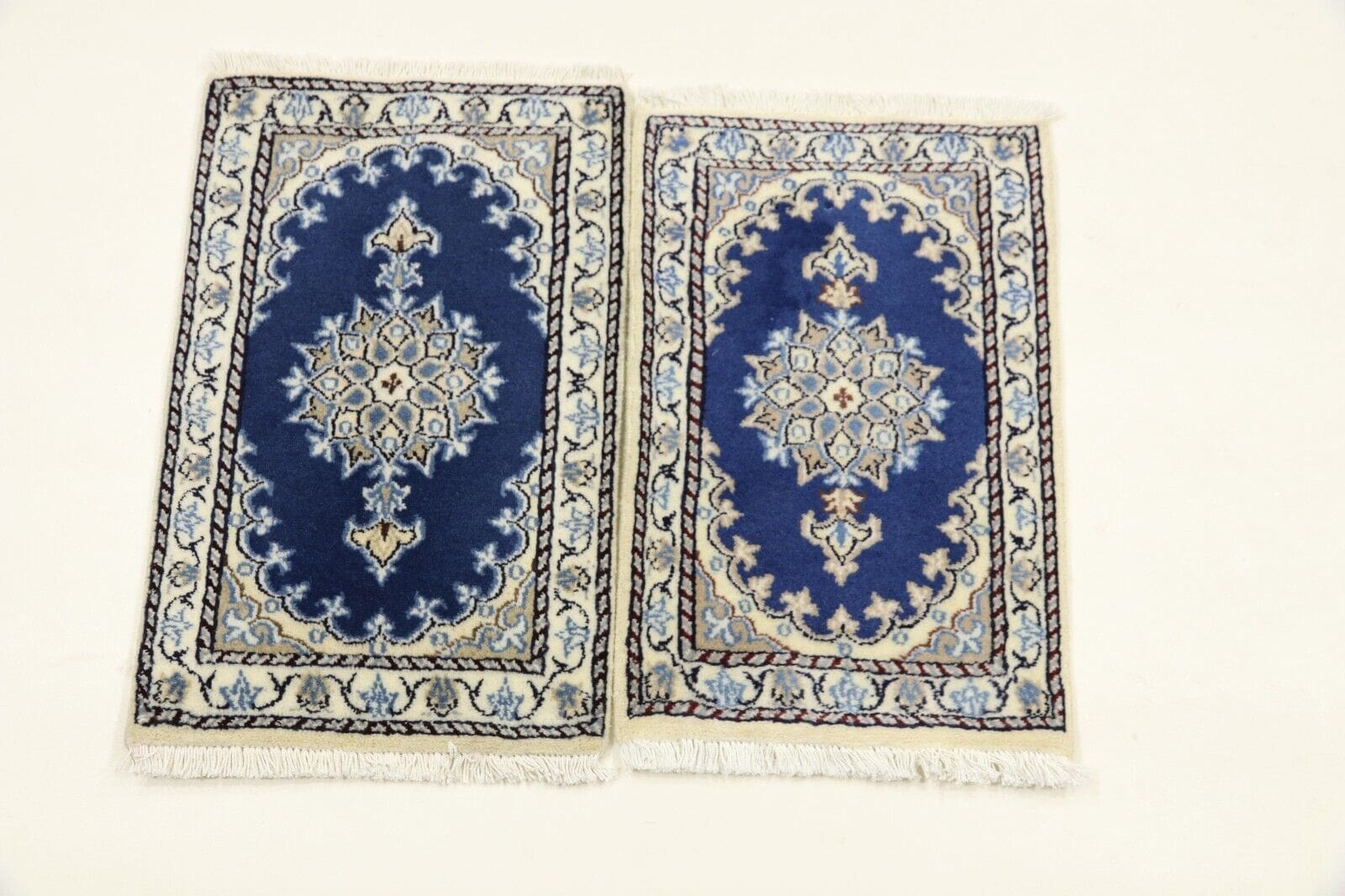
These two Nain Persian rugs are hand-knotted. Their pile is made from 95% virgin wool and 5% silk, while the warp and weft are 100% cotton. The combination of wool and silk brings together two natural fibres with different qualities. Wool is valued for its resilience, comfortable handle and durable surface. Silk has a smooth feel and reflects light with a fine lustre, allowing subtle colour variation and detailed areas of the design to stand out. The silk content therefore contributes both visual highlights and a refined surface character.
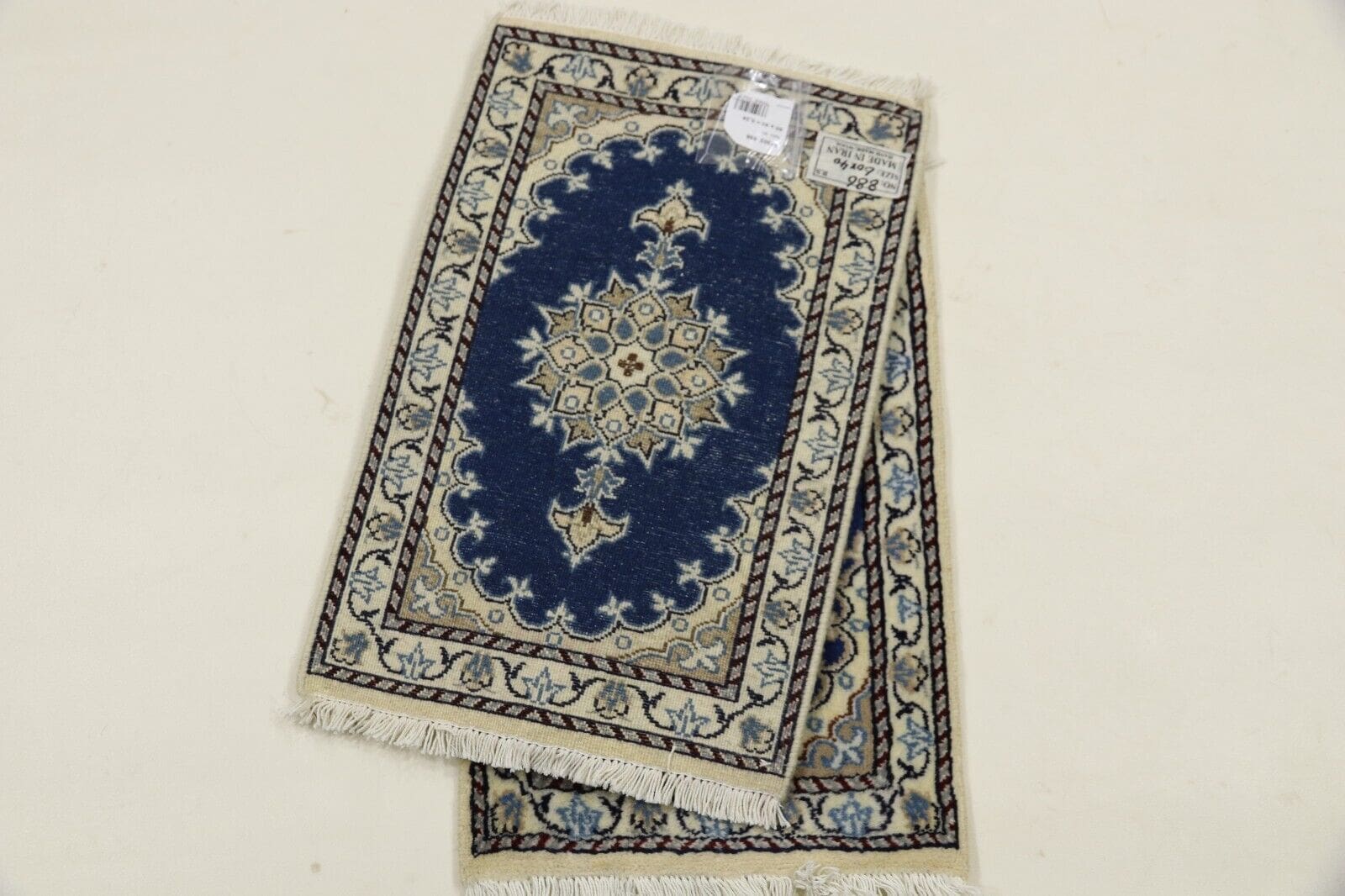
Hand-knotting is a traditional textile technique in which pile knots are tied individually around the prepared warp. Weft threads secure the rows and help form the structure of the rug. The pattern develops gradually as each knot is placed according to the design. This process requires patience, concentration and careful control of the drawing. The rugs in this offer have a knot density of approximately 300,000 knots per square metre, a feature that supports the precise rendering of small floral and geometric details.
Completing one hand-knotted rug can take several months. The work proceeds row by row rather than through a rapid mechanical process. Wool forms the greater part of the pile and provides its body, resilience and comfort. Silk is used as the finer component of the pile and can create highlights where the light meets the surface. Cotton forms the warp and weft foundation on which the pile is built. These materials are therefore assigned distinct roles within the construction of both rugs.
The listed condition is new and very good. The two pieces are described as hand-knotted Nain Persian rugs made with virgin wool, silk and cotton. This makes it possible to distinguish the visible pile material from the structural materials: the pile contains wool and silk, whereas the warp and weft are cotton. The craftsmanship is part of the object itself, because the pattern and the surface are created through the same sequence of individually tied knots.
Origin and Tradition
Nain is a city in central Iran and also the name of a recognised Persian rug tradition. The area is known for carefully made rugs in which fine wool, silk and detailed handwork play an important role. The use of these fibres shapes the appearance and handling of Nain rugs. Wool gives the surface substance and durability, while silk permits fine accents and a changing response to light. The name Nain therefore identifies a Persian regional tradition rather than merely describing an ornamental style.
The rug-making tradition of Nain belongs to the wider history of Iranian textile art, which has been passed on through generations. Persian carpet culture reaches back over a long period, with roots extending to the sixteenth century. Within this tradition, a rug is both a practical textile and a carrier of design knowledge, material expertise and manual skill. A pattern is not printed onto the finished surface. It is created during the knotting process, with the composition emerging from the arrangement of individual knots, rows and colours.
Nain is also associated with an architectural history and with artistic mosques. This regional setting forms part of the cultural background in which the city’s carpet tradition is understood. Knowledge of fibres, colour, warp preparation, weft insertion and pattern reading is needed throughout production. The weaver must keep the developing surface aligned with the intended design while maintaining the structure of the rug. The finished textile thus reflects a chain of decisions that begins with the foundation and ends with the final knot.
Nain differs from a general Oriental-rug designation because it names a specific Persian place and tradition. Rugs from the area often favour a balanced and finely organised composition. Floral forms and geometric order may be combined so that the surface remains coherent and carefully divided. A dense knotting structure makes it possible to render narrow lines, repeated ornaments and small changes in the drawing with greater definition. Regional tradition provides the framework, while individual pieces can still vary in their exact pattern and colour arrangement.
Persian rugs come from many regional traditions, each with its own relationship between materials, construction and design. Nain is associated with the particular combination of fine wool, silk and precise knotting. This does not mean that every Nain rug has an identical appearance. Regional identity establishes a recognisable craft context within which patterns, colours and proportions can differ. For these two rugs, Nain is the stated origin. The description does not name a specific workshop, weaver or production year, so no additional provenance is assigned.
Design and Pattern
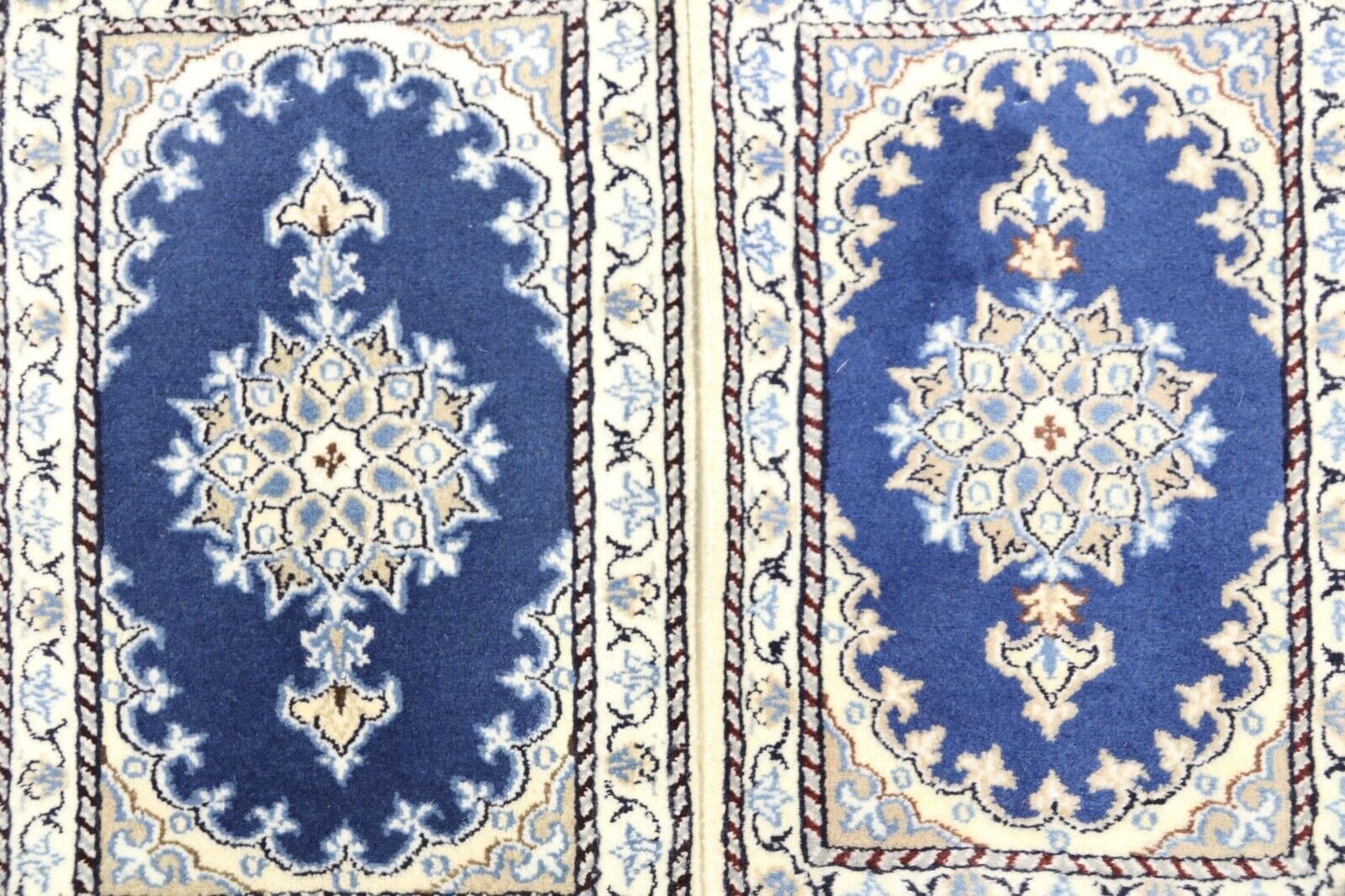
The two Nain Persian rugs are described with floral and geometric design elements. Floral motifs may include blossoms, leaves, vines and stylised plant forms. Geometric shapes provide order through axes, repetition, symmetry or clearly defined fields. In Persian carpet design, these two visual languages can work together rather than appearing as separate systems. Plant forms may be arranged within a balanced framework, while lines and angles organise the overall composition and guide the eye across the surface.
Nain designs are traditionally associated with carefully controlled drawing and fine detail. The relationship between the central field, the surrounding elements and the border is important to the reading of the whole rug. A floral composition may be enclosed by a border, while smaller ornaments connect the inner field with the outer frame. Such transitions prevent individual motifs from appearing isolated. Because the design is built into the textile through knotting, each contour must be translated into rows, colour changes and individual pile knots.
The high knot density named for these rugs supports a differentiated rendering of complex patterns. It is a technical property of the two pieces and helps the weaver articulate smaller shapes and finer lines. Silk can bring points of light and delicate accents to such a drawing, while the larger wool component gives the pile its body. The appearance may change subtly with the direction of the light, yet the underlying organisation of the floral and geometric design remains clear.
The description characterises the colours as soft or neutral and the designs as elegant. This makes the rugs suitable for a range of interior settings, from traditional rooms to modern spaces. It does not provide a detailed colour list or the name of a particular palette, so no such additional colour claim is made here. The restrained colour effect gives the patterned surface a composed presence, while the floral and geometric vocabulary preserves its Persian regional character.
A rug pattern does not necessarily represent one literal story. It communicates through repetition, balance, botanical forms, borders and the relationship between filled and open areas. In Nain rugs, precision and proportion are important parts of this visual language. The decorative effect remains inseparable from the craft: every line, petal and geometric transition must be formed through the placement of knots. Design and construction therefore develop together rather than being separate stages.
The two pieces belong to the same stated Nain tradition, but the source does not provide a specific pattern name, exact drawing or named border composition. They are identified by their floral and geometric motifs and by their soft, neutral colour effect. No more specific design designation is added. This preserves the distinction between the documented characteristics of these rugs and the broader background of Nain pattern traditions.
Special Features
The specifically described features are the hand-knotted construction, a pile of 95% virgin wool and 5% silk, and a warp and weft made from 100% cotton. The rugs also have an approximate knot density of 300,000 knots per square metre. This dense construction supports the detailed appearance of the floral and geometric pattern. Both pieces are described as new and in very good condition.
The wool-and-silk pile determines much of the surface character. Wool contributes resilience and comfort, while silk adds lustre and fine reflections of colour. The neutral colour effect and elegant designs allow the rugs to be incorporated into different interior styles. Living rooms and dining rooms are named as suitable areas. Direct sunlight should be avoided because prolonged exposure can cause colours to fade over time.
The rugs are sold. The description does not state a production year, signature, named workshop or repairs. It also gives no condition assessment beyond “New, very good.” The relevant special features of this offer are therefore the stated Nain origin, the natural-fibre composition, the hand-knotted technique, the fine knotting and the recorded condition. No additional provenance or construction detail is inferred.
FAQ
How should I care for a Nain Persian rug?
For routine care, vacuum the rug without a beater-brush attachment. This removes dust and loose dirt while avoiding unnecessary mechanical stress on the pile. Spills and stains should be treated as soon as possible with a damp cloth and a mild cleaning agent. Vigorous rubbing can affect the fibres and should be avoided. Professional cleaning every few years is recommended to help preserve the surface and colour appearance. Because the pile contains both wool and silk, a specialist cleaner should handle deeper cleaning with both fibres in mind.
Where is the best place for a Nain Persian rug?
Living rooms and dining rooms are identified as suitable locations. In these areas, the floral and geometric design can form part of the overall interior arrangement. The neutral colours and elegant patterns work with both classic and modern furnishings. The rug should be protected from direct sunlight, since strong and prolonged exposure can lead to colour fading. A clean, dry setting and considerate everyday use help maintain the appearance of the surface.
Why are Nain Persian rugs distinctive?
Nain Persian rugs combine a regional Iranian tradition with detailed hand craftsmanship. The features stated for this offer are the high knot density, the use of virgin wool and silk, and the finely drawn floral and geometric designs. Silk contributes lustre and delicate colour accents, while wool provides resilience and comfort in the pile. Since each knot is tied individually, the pattern is formed through a time-consuming manual process. The rugs therefore represent decorative design together with the craft knowledge and cultural history of Persian carpet making.
To provide the best experiences, we use technologies like cookies to store and/or access device information. Consenting to these technologies will allow us to process data such as browsing behavior or unique IDs on this site. Not consenting or withdrawing consent, may adversely affect certain features and functions.
Functional Always active
The technical storage or access is strictly necessary for the legitimate purpose of enabling the use of a specific service explicitly requested by the subscriber or user, or for the sole purpose of carrying out the transmission of a communication over an electronic communications network.
Preferences
The technical storage or access is necessary for the legitimate purpose of storing preferences that are not requested by the subscriber or user.
Statistics
The technical storage or access that is used exclusively for statistical purposes.The technical storage or access that is used exclusively for anonymous statistical purposes. Without a subpoena, voluntary compliance on the part of your Internet Service Provider, or additional records from a third party, information stored or retrieved for this purpose alone cannot usually be used to identify you.
Marketing
The technical storage or access is required to create user profiles to send advertising, or to track the user on a website or across several websites for similar marketing purposes.
 SECURE PAYMENT
 SHIPPING PARTNERS


