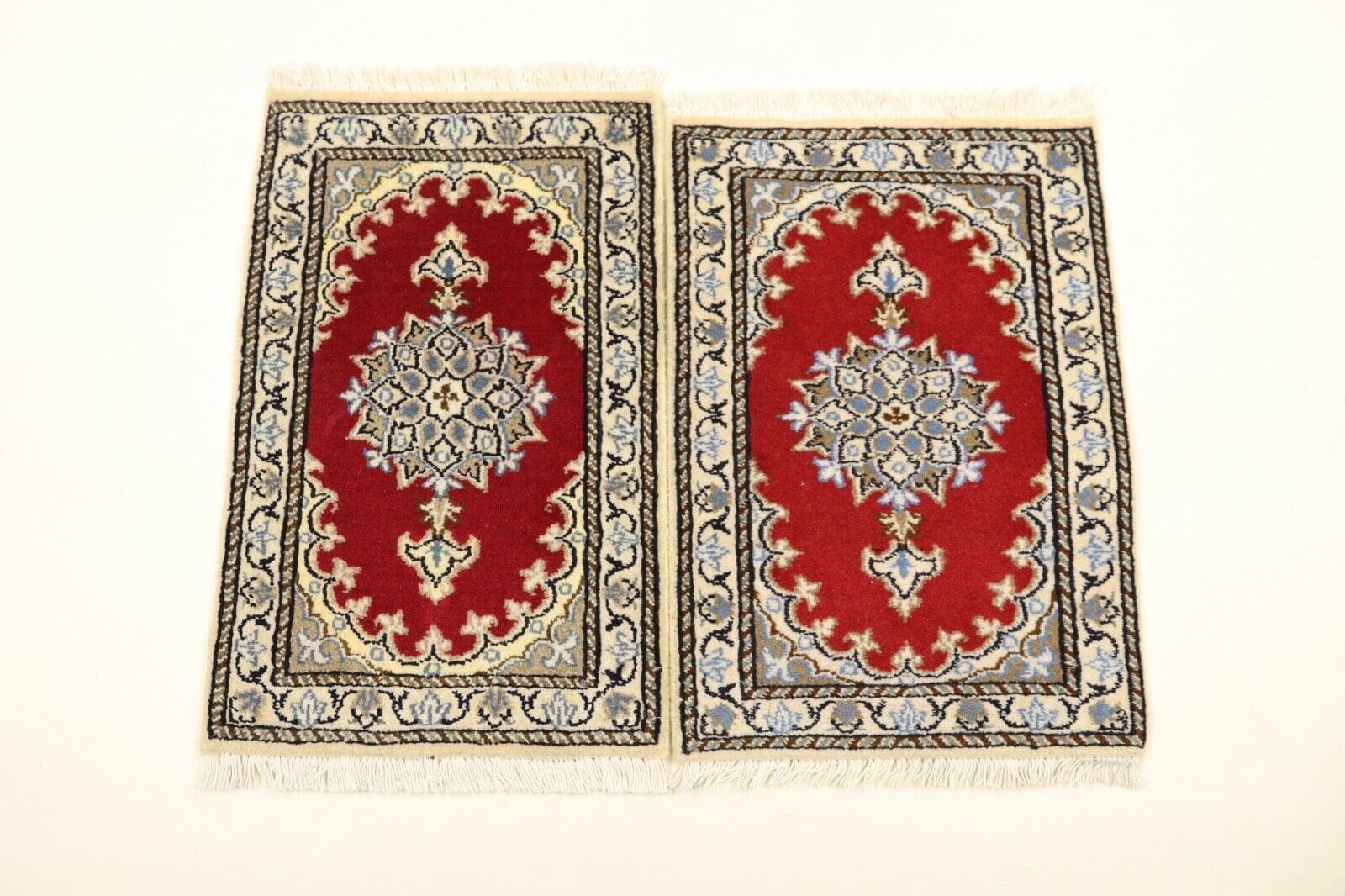
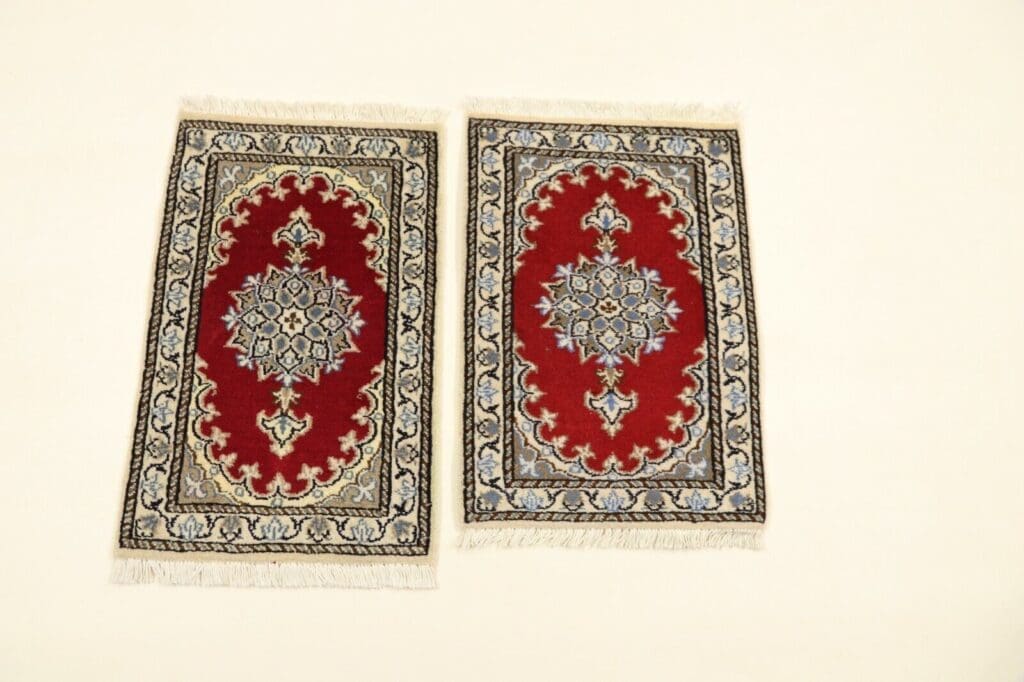
This Nain Persian rug is hand-knotted. Its pile is made of 95% virgin wool and 5% silk, while 100% cotton was used for the warp and weft. These materials each contribute to the rug’s textile character. Virgin wool provides a soft yet resilient foundation for the pile. Wool has traditionally been valued for its comfortable handle, natural warmth and ability to cope well with everyday use. Its structure also gives the surface a distinct feel rather than the entirely smooth character of a purely silky pile.
The silk content adds a finer, smoother fibre to the wool and can produce a subtle sheen. In a hand-knotted rug, silk may also help small contours and delicate areas of a design appear more sharply defined. Cotton in the warp and weft forms the supporting structure into which the knots are tied. It provides the framework for the rows of knots and helps the woven foundation retain its shape as the pile is built up.
The knot density is approximately 300,000 knots per square metre. A fine knotting structure allows a design to be worked through with closely placed lines, small floral details and carefully controlled geometric transitions. It also represents a considerable amount of manual work, since each knot is inserted and secured within the textile structure. Here, that fine construction is combined with a pile made from virgin wool and silk and a cotton foundation.
Hand-knotting requires the steady coordination of knots, warp and weft. The knots are built up row by row, with the pile then trimmed and adjusted as the work progresses. The result is not an identical factory-made series item but a one-off piece with its own handmade execution. This rug is described as a unique piece and comes with a certificate of authenticity. Its condition is new and very good.
Origin and Tradition
Nain is a city in Iran and also the name of an important Persian rug tradition. The city is associated with a long-established culture of textile craftsmanship in which methods have been passed on through practical instruction. Nain rugs are known for fine knotting, carefully selected materials and an ordered approach to pattern design. The name Nain therefore refers here to a Persian regional tradition and not simply to a decorative theme.
The weaving tradition of Nain developed its own recognizable approach within Persian rug making. Designs are created through a controlled knotting process in which the drawing emerges from individual coloured knots and the structure of the foundation. A pattern is divided into related sections so that vines, flowers, leaves and geometric outlines can be combined in a balanced arrangement. This method allows a design to remain detailed while retaining a clear overall structure.
Persian rug making is closely linked to the knowledge and skill of its weavers. The craft includes more than tying the individual knots. It also involves preparing the warp, inserting the weft, beating the rows into place and managing the pile surface. Each step affects the regularity and legibility of the finished pattern. In Nain, this technical precision is associated with a fine and often elegant vocabulary of forms.
Such knowledge is traditionally transferred across generations. Working methods, pattern construction and the handling of wool, silk and cotton are learned through repeated practice. The tradition therefore continues through new one-off rugs rather than existing only in historical examples. As a hand-knotted piece from Persia, this rug belongs to the Nain tradition and brings together its regional background with a pile of virgin wool and silk and a cotton warp and weft.
The term Persian rug describes a hand-crafted rug connected with the Iranian and Persian cultural sphere. Within that wider tradition, Nain is associated with refined workmanship and designs that are often arranged across clearly organised fields. Origin and technique are related but not interchangeable: origin identifies the cultural and geographical context, while the knotting method describes how the individual rug was made. Both aspects are relevant to understanding a Nain Persian rug.
Design and Pattern
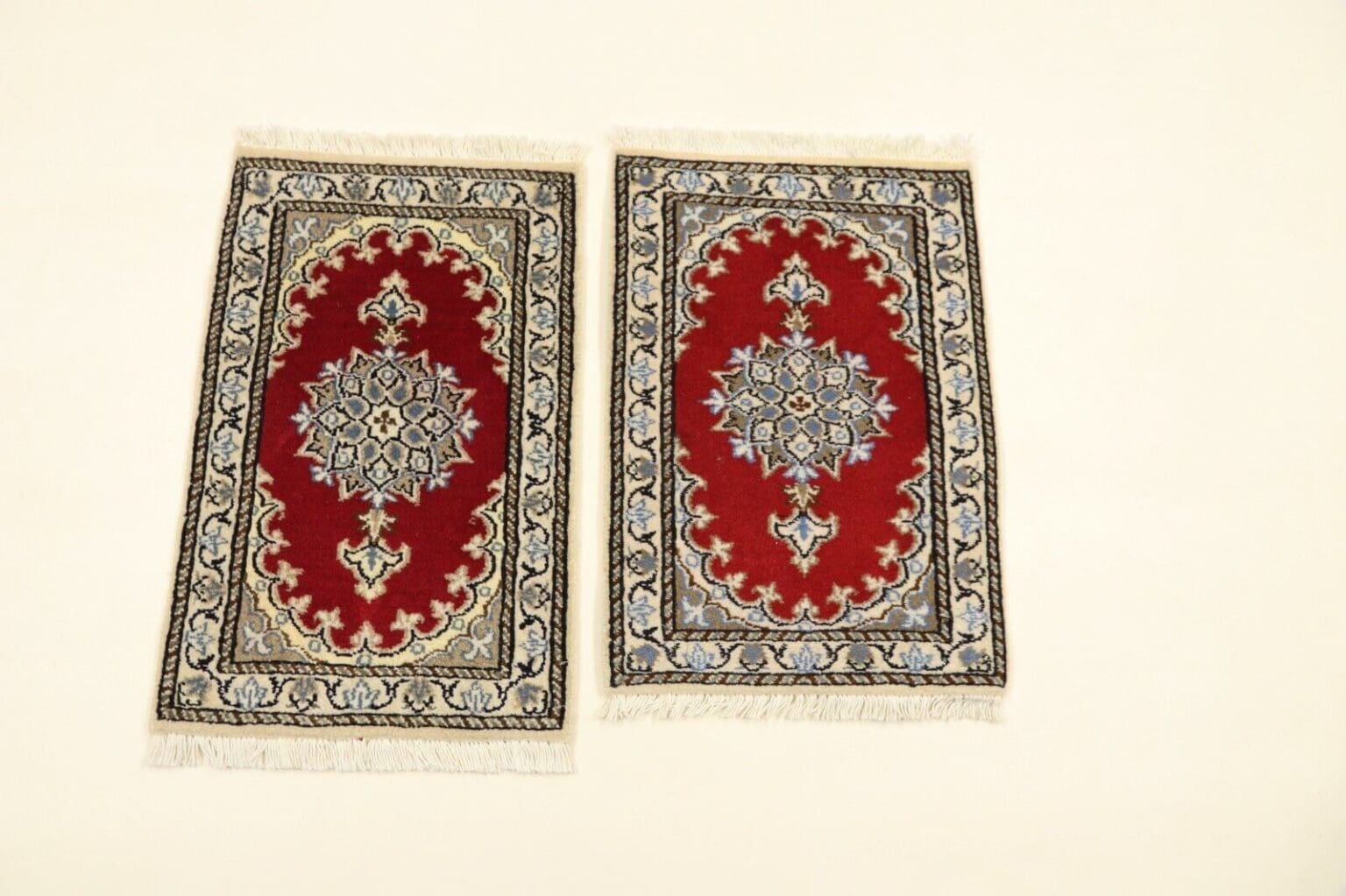
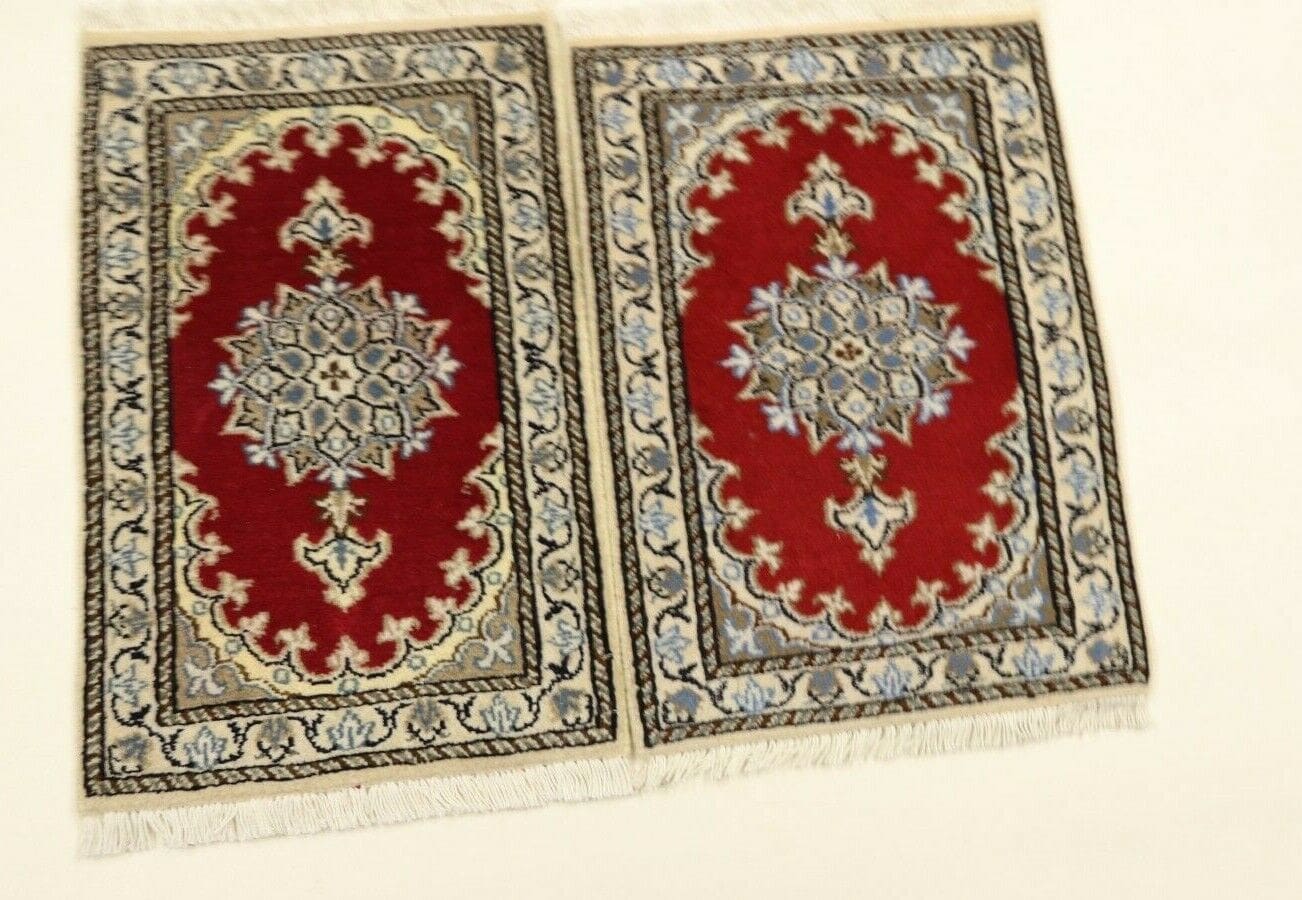
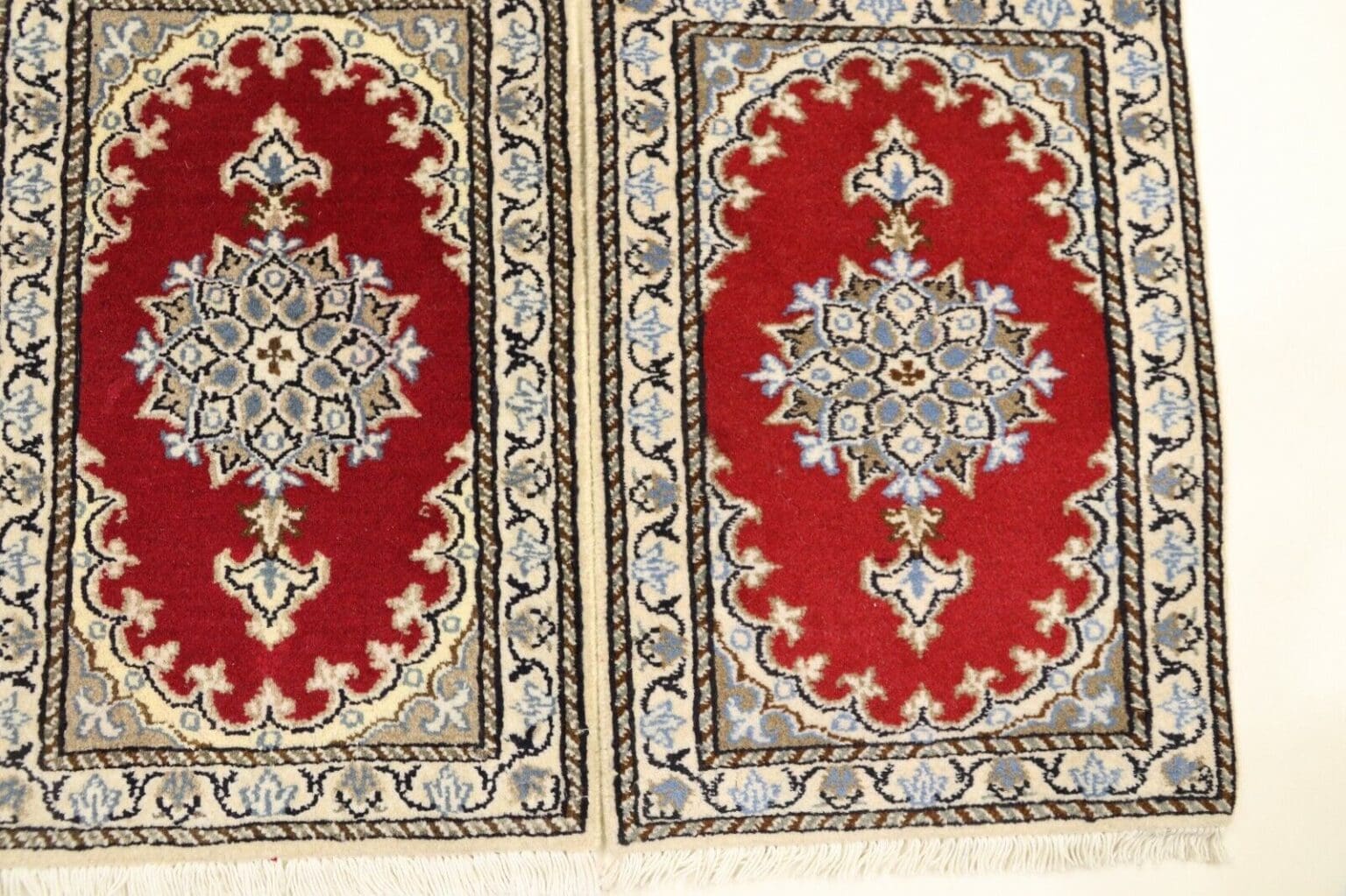
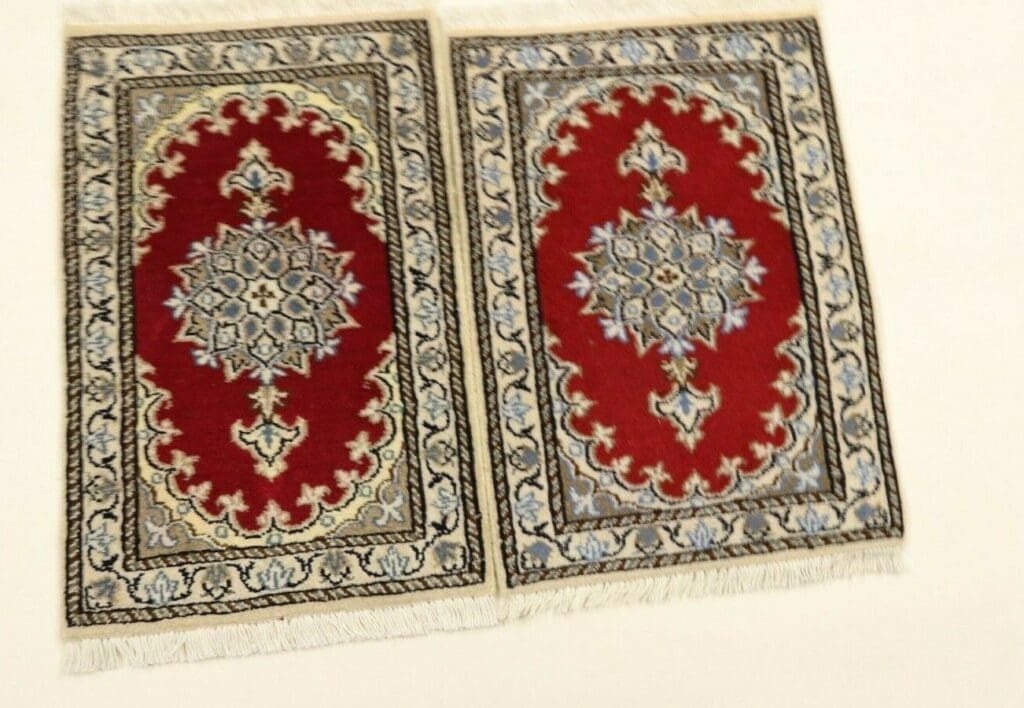
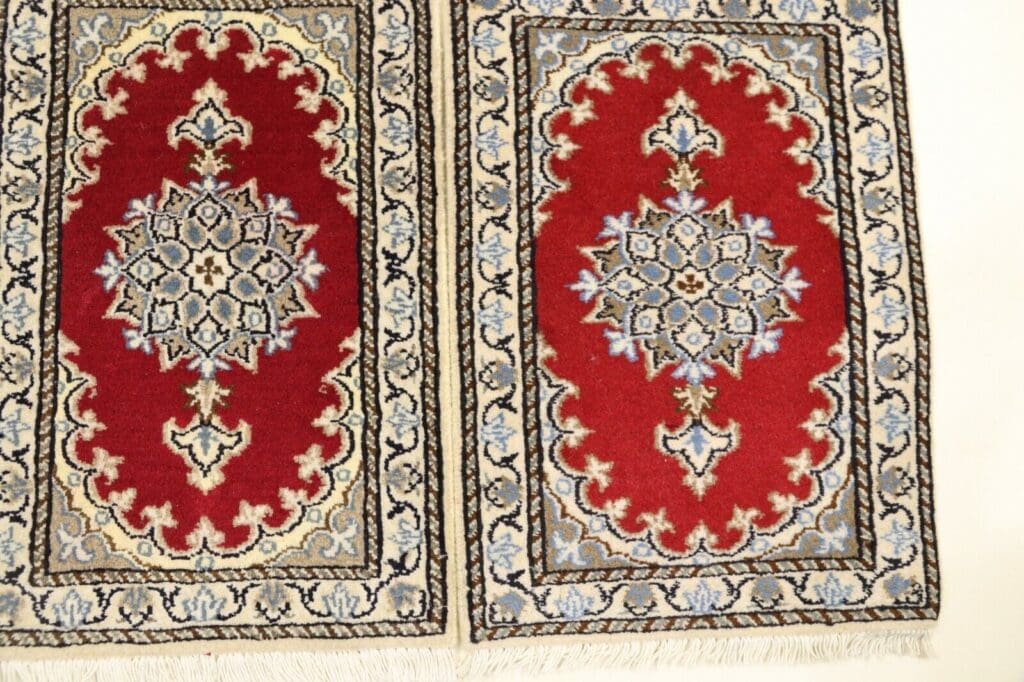
The design of this rug is identified in the source as Oriental. Floral and geometric motifs are characteristic of Nain rug design. Floral elements may include stylised blossoms, leaves, vines and plants arranged with symmetry or repetition. Geometric components can provide a framework through fields, borders and recurring outlines. These two families of forms are often used together, allowing organic details and structured lines to support one another.
In finely knotted Nain designs, much of the visual effect comes from the relationship between small individual forms. A vine may lead into a flower, while narrow lines define a border or organise a central field. The fine knotting structure makes it possible to draw such transitions with considerable detail. It does not prescribe one single pattern for every Nain rug, but it provides the technical basis for rendering a chosen design with precision.
Nain design is often associated with harmonious, restrained colour arrangements. Such palettes can keep the composition calm and make the drawing easy to read. Colour has a structural function as well as a decorative one: it separates the ground from the motifs, clarifies the direction of the lines and gives related forms a visual connection. Floral and geometric details can consequently be perceived as parts of one ordered composition.
A hand-knotted pattern is not printed onto the finished surface. It is formed through the sequence of coloured knots and develops row by row. Design and craftsmanship are therefore inseparable. Fine knotting supports a detailed drawing, while the manual process gives a one-off rug the characteristics of its individual execution. The regional language of Nain is thus present through the organisation of the motifs, while the completed piece remains a particular handmade work.
Nain rugs are frequently designed so that floral and geometric elements can be read in traditional, classic or contemporary interiors. This is a general feature of the design tradition rather than an additional claim about a particular room. The important point is the ordered relationship between the motifs. A central field, surrounding borders and smaller connecting forms can create a visual hierarchy in which larger areas and fine details work together.
The tradition also demonstrates how pattern depends on construction. Broad areas may be organised by a central motif or a formal field, while borders define the movement toward the edge. Leaves, flowers and fine lines fill spaces and connect separate sections. Different designs apply these principles in different ways. For that reason, Nain identifies a regional design tradition without suggesting that every rug from the region follows one unchanging layout.
Special Features
The distinctive features of this Persian rug include its hand-knotted construction, its fine knot density and the combination of virgin wool and silk in the pile. Cotton was used for the warp and weft. The rug is a one-off and is supplied with a certificate of authenticity. It is new and in very good condition. These details describe both its handmade construction and the specific characteristics documented for this individual Nain rug.
The material combination brings together the soft, resilient nature of virgin wool and the subtle sheen associated with silk. The fine knot density supports detailed workmanship and reflects the care involved in the construction. Taken together, these features identify a Nain Persian rug in which regional tradition, textile structure and Oriental design meet in one individual piece.
FAQ
How should a Persian rug be cleaned?
Routine cleaning should be carried out gently. Vacuuming without a brush attachment is suitable for removing loose dust and dirt while avoiding unnecessary mechanical stress on the pile. Fresh stains should be treated as soon as possible with a soft, damp cloth and mild shampoo. Rubbing firmly should be avoided because it can affect the fibres and disturb the surface. Larger or more difficult soiling should be handled by a professional rug cleaner. The combination of virgin wool and silk also makes careful control of moisture and friction particularly appropriate.
How does a Nain rug differ from other Persian rugs?
Nain rugs are known for fine knotting and the use of high-quality materials. Compared with more robust Persian rugs from regions such as Tabriz or Isfahan, they are often lighter in appearance and show more finely articulated, elegant designs. Floral and geometric motifs are common, as are softer and more restrained colour palettes. These points describe the Nain tradition in general. This particular rug is a hand-knotted Nain one-off from Persia with a pile made of virgin wool and silk.
What is the best way to care for a hand-knotted rug?
Careful, regular maintenance helps preserve a hand-knotted rug. Direct sunlight should be avoided in order to reduce the risk of fading. Turning the rug every few months can help distribute wear more evenly. For storage, a dry, well-ventilated room is appropriate because persistent moisture can encourage mould. When vacuuming, avoid using a brush attachment. Stains should be treated carefully, and substantial soiling should be entrusted to a specialist familiar with hand-knotted rugs and their fibres.
To provide the best experiences, we use technologies like cookies to store and/or access device information. Consenting to these technologies will allow us to process data such as browsing behavior or unique IDs on this site. Not consenting or withdrawing consent, may adversely affect certain features and functions.
Functional Always active
The technical storage or access is strictly necessary for the legitimate purpose of enabling the use of a specific service explicitly requested by the subscriber or user, or for the sole purpose of carrying out the transmission of a communication over an electronic communications network.
Preferences
The technical storage or access is necessary for the legitimate purpose of storing preferences that are not requested by the subscriber or user.
Statistics
The technical storage or access that is used exclusively for statistical purposes.The technical storage or access that is used exclusively for anonymous statistical purposes. Without a subpoena, voluntary compliance on the part of your Internet Service Provider, or additional records from a third party, information stored or retrieved for this purpose alone cannot usually be used to identify you.
Marketing
The technical storage or access is required to create user profiles to send advertising, or to track the user on a website or across several websites for similar marketing purposes.
 SECURE PAYMENT
 SHIPPING PARTNERS


