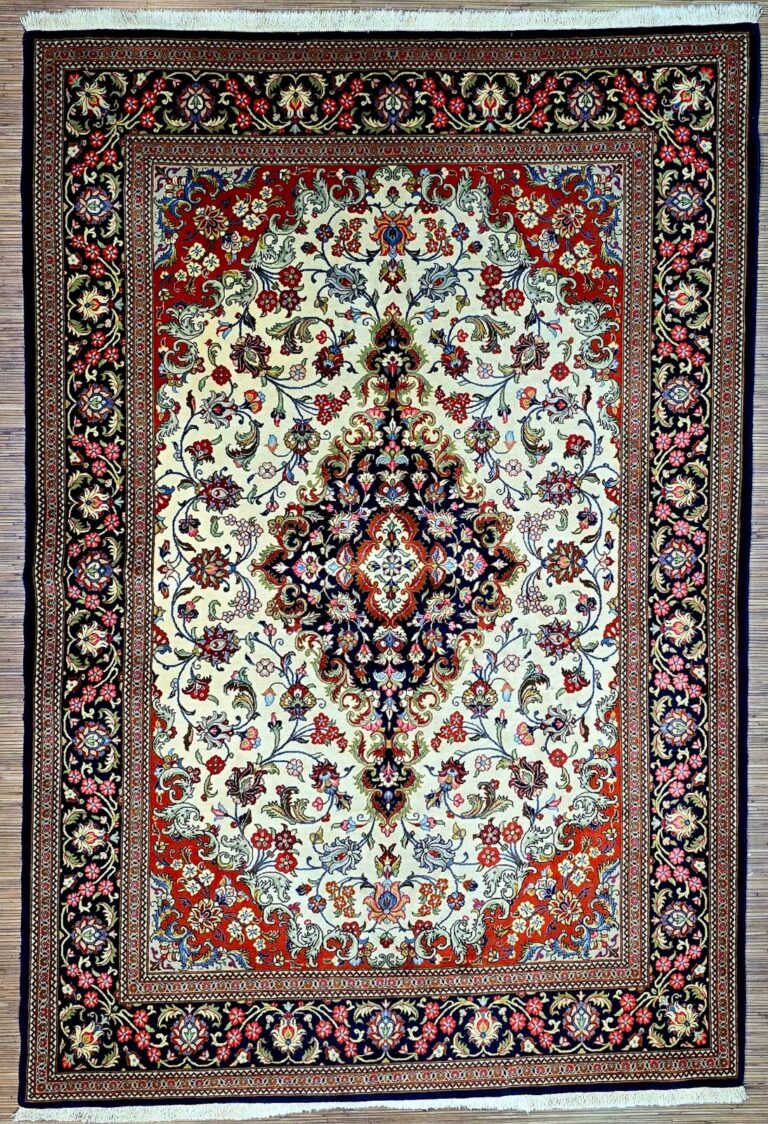
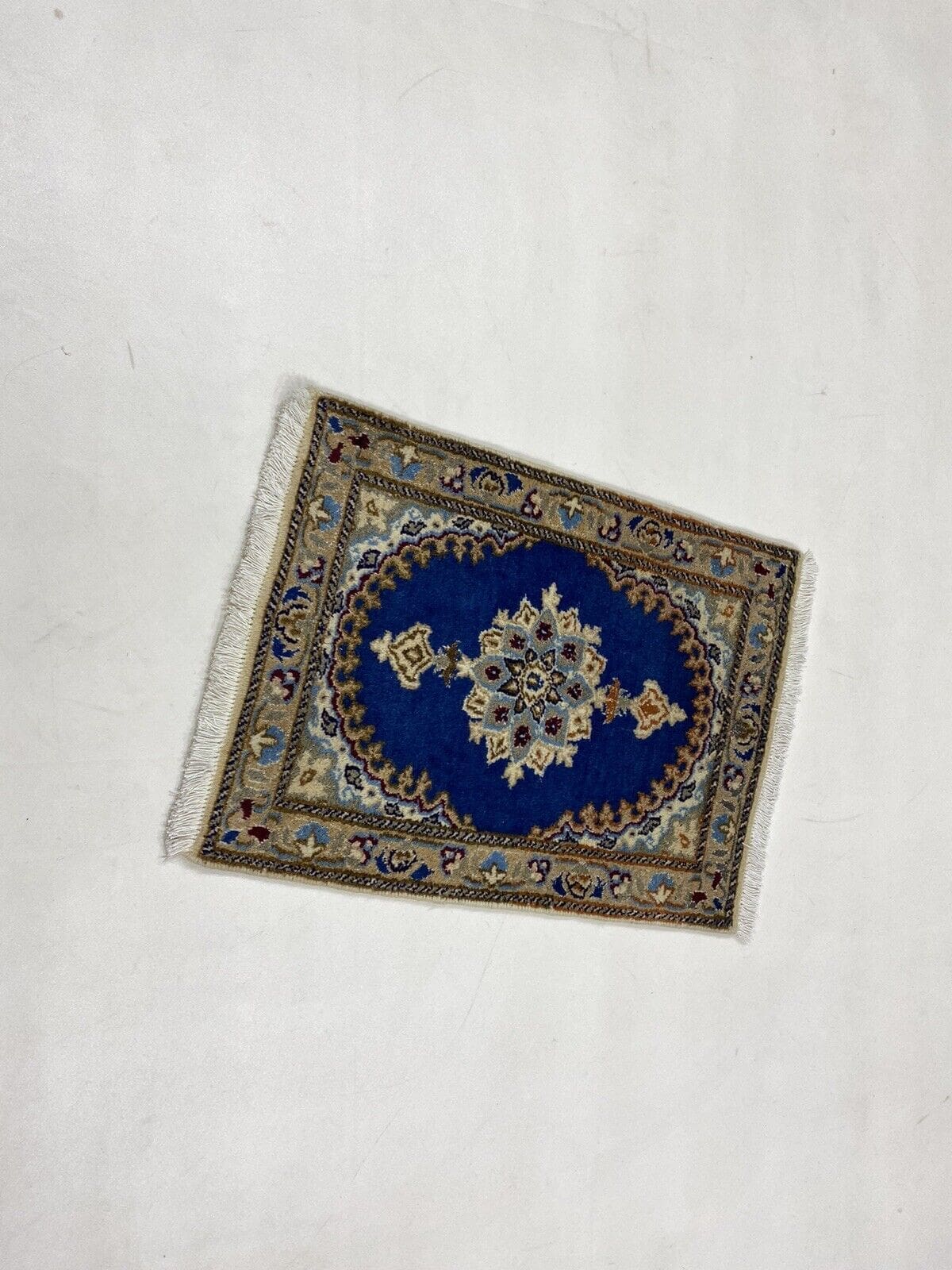
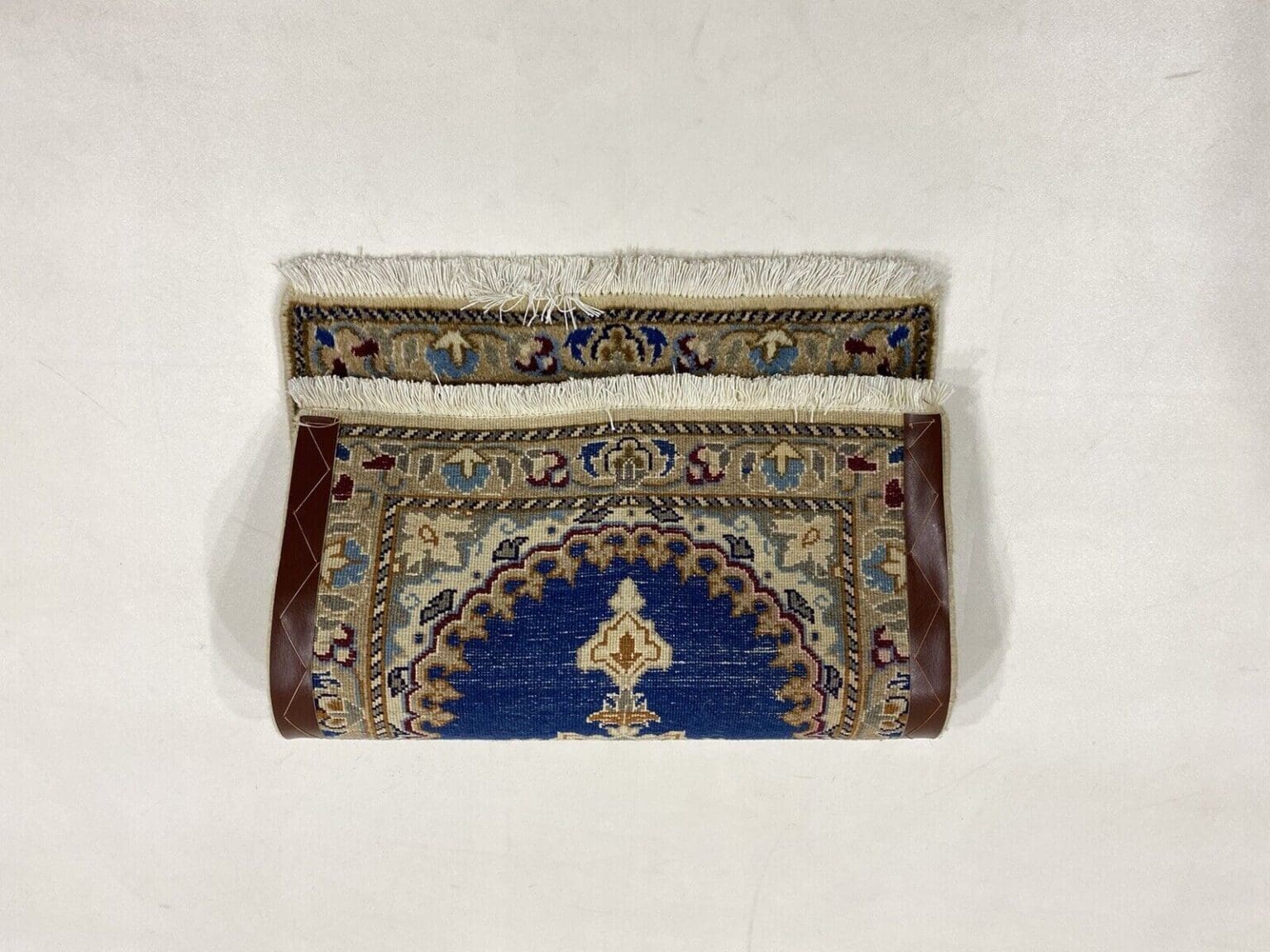
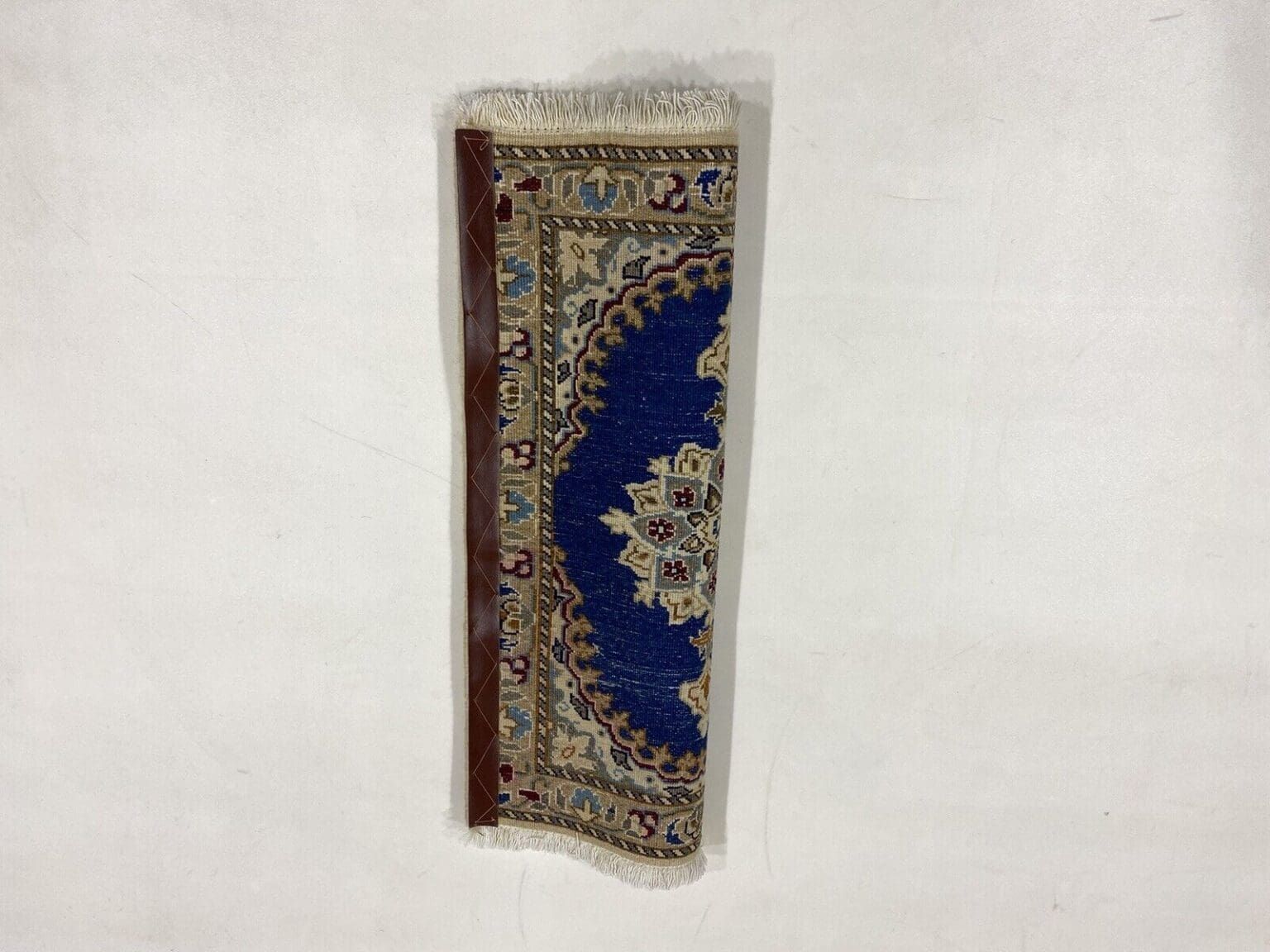
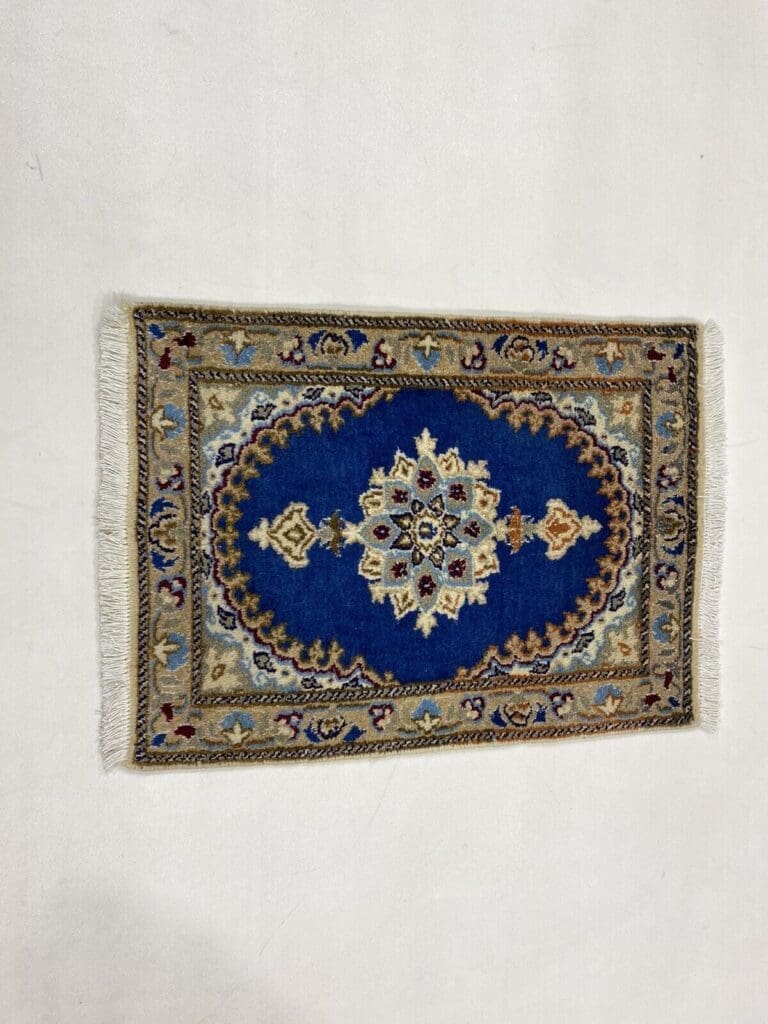
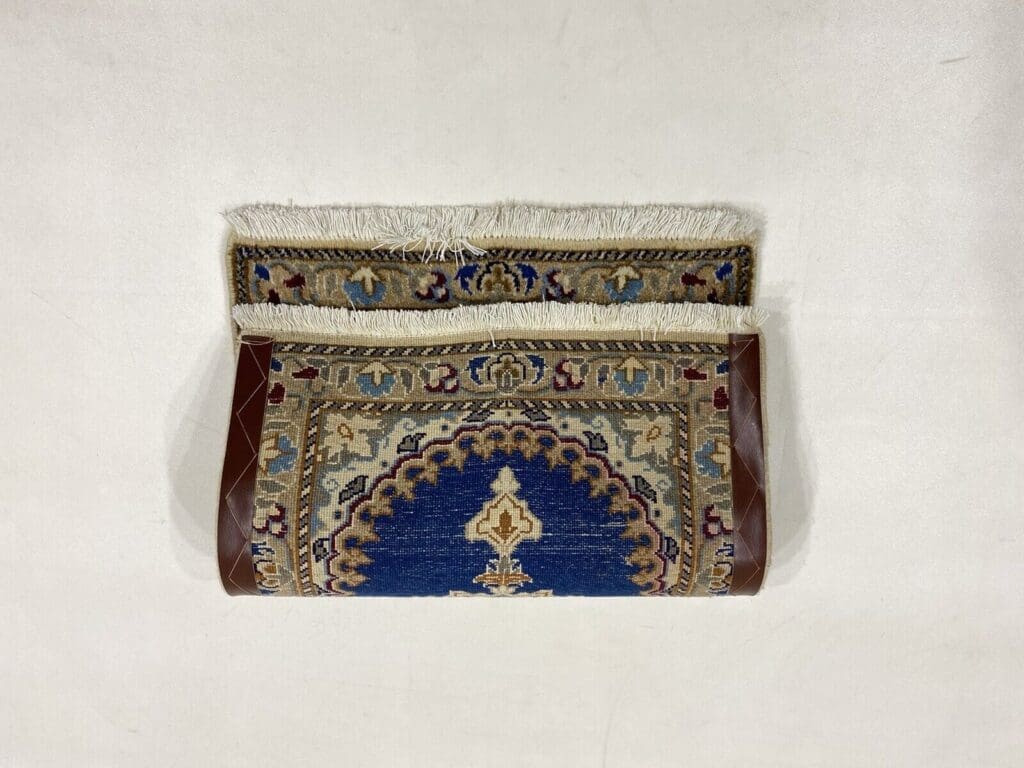
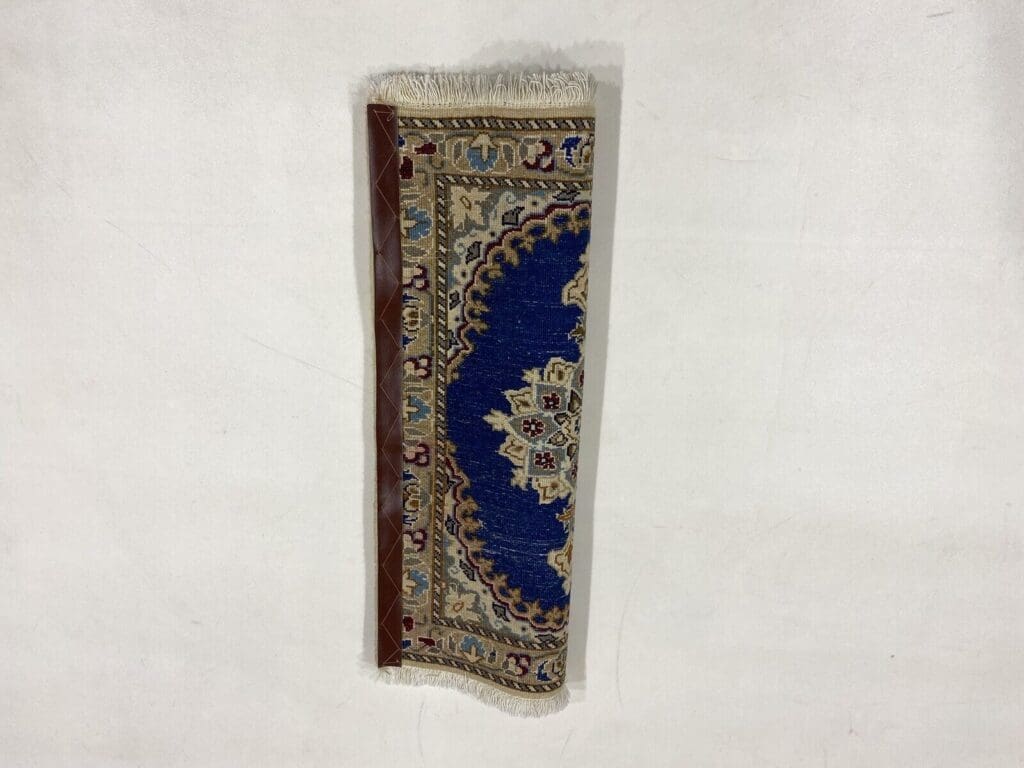
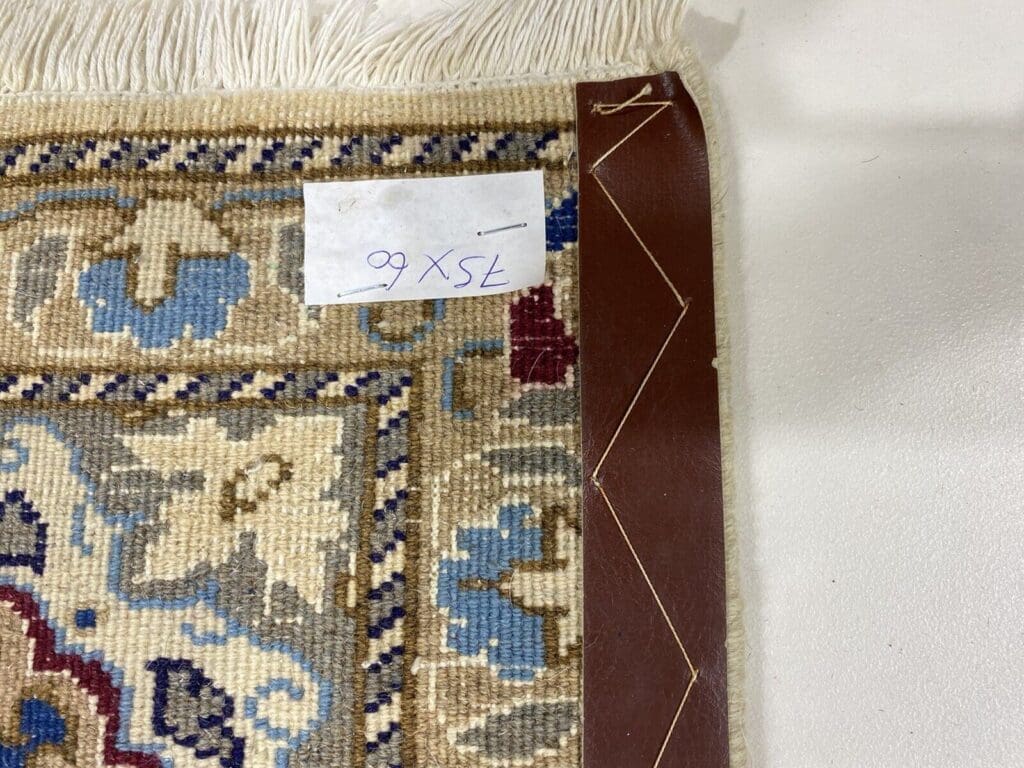
This Nain Persian rug is hand-knotted. The pile is made of 100% wool, while the warp and weft are specified as 100% cotton. In a knotted rug, these materials perform different roles: the pile creates the visible and tactile surface, and the warp and weft form the textile framework that holds the rows together. Hand knotting means that the knots are placed individually into the prepared foundation rather than being produced as part of a machine-made surface.
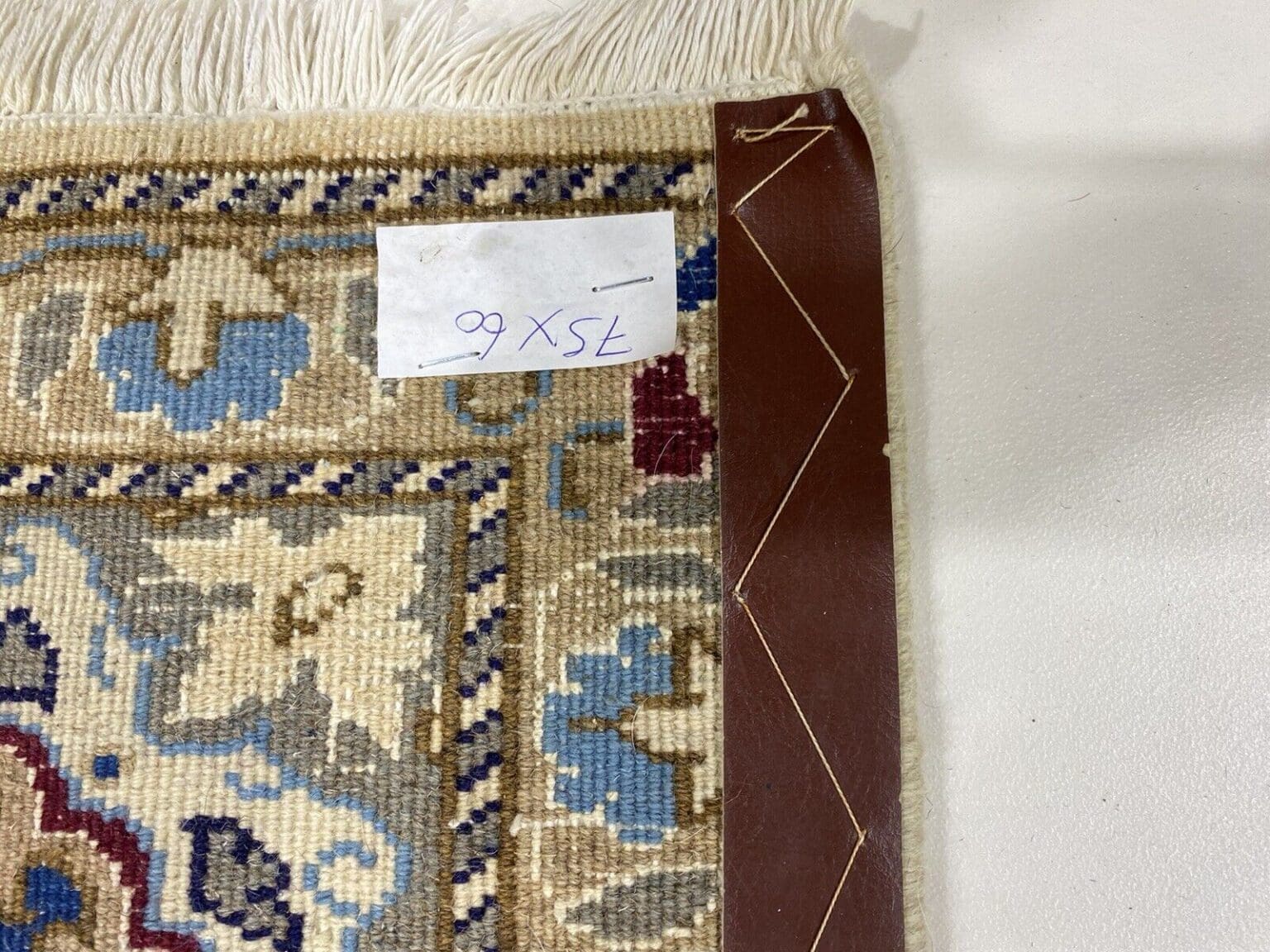
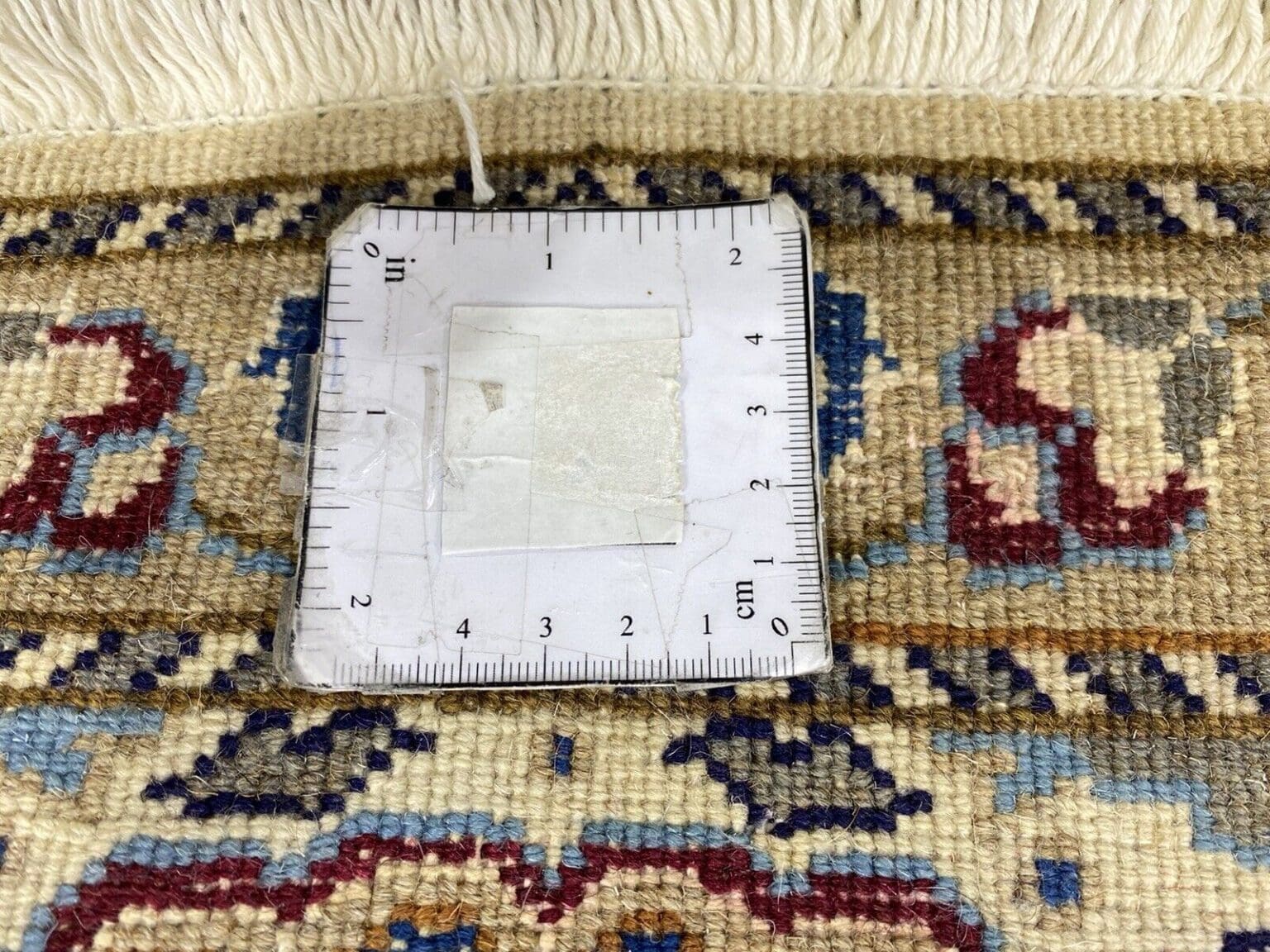
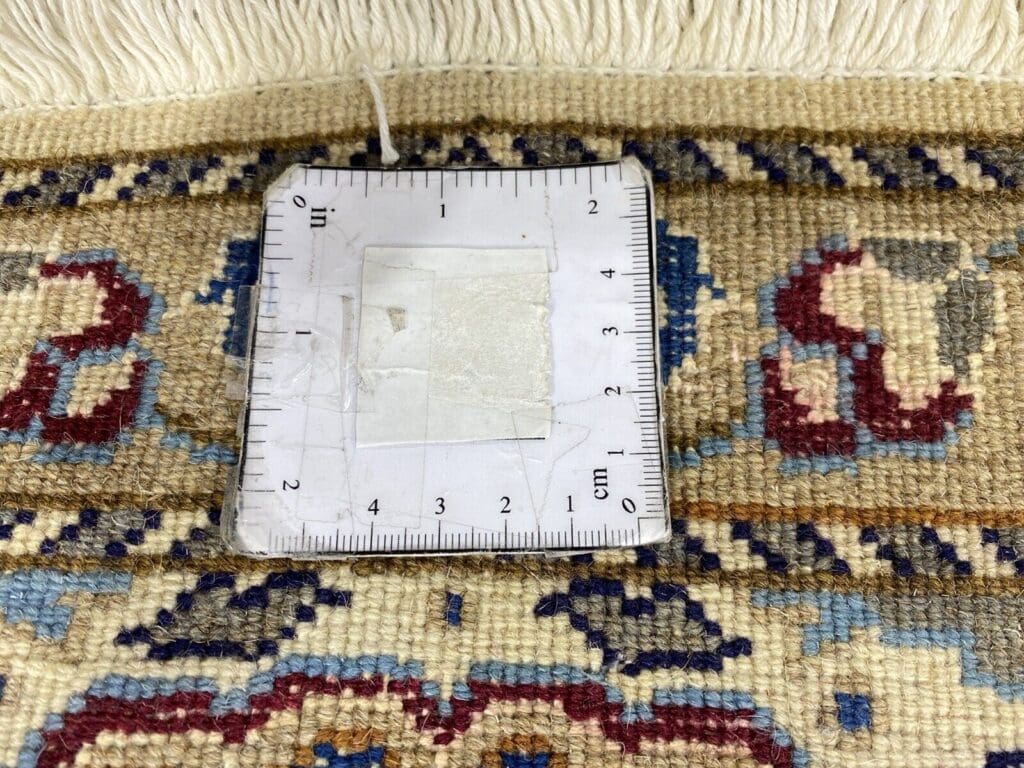
The listed knot density is approximately 300,000 knots per square metre. A dense knot structure allows a design to be rendered with fine lines, small details and controlled transitions. It also requires close attention during the work, since the alignment of successive knots affects the clarity of the finished pattern. The rug’s stated thickness is approximately 6 mm. Its construction is therefore described through the combination of a wool pile, cotton warp and weft, hand knotting and a high knot density.
Wool is a traditional pile fibre in Oriental rugs. It provides a resilient, tactile surface and has long been used for hand-knotted floor coverings. Cotton is commonly used as a foundation material because it can provide a stable framework for the knotting process. In this rug, the material information distinguishes the pile from the foundation: wool belongs to the pile, while cotton is used for the warp and weft. No additional fibre is needed to describe the stated construction.
Hand knotting is a time-intensive craft. Each knot becomes part of the design and contributes to the structure of the pile. The process requires the pattern to be followed row by row, with the foundation and weft supporting the developing surface. This method differs from industrial production, where the visible construction is created by mechanised processes. The condition of this rug is described as good.
Origin and Tradition
Nain is a city and weaving centre in Iran, known for fine Persian rugs. The region’s rug tradition is associated with detailed compositions, careful workmanship and a refined approach to pattern. Nain rug production forms part of the wider history of Persian carpet making, a craft that developed through the transmission of technical knowledge, design vocabulary and workshop practice.
The tradition of Nain rugs reaches back several centuries and is closely linked with the history and culture of the region. Knowledge of preparing the foundation, placing knots, securing rows with the weft and finishing the surface has been passed from one generation to the next. These stages require practical experience as well as an understanding of how material, density and pattern interact.
The name Nain therefore identifies more than a decorative look. It refers to a regional Persian tradition within Iran. Nain workshops are associated with fine motifs and careful execution, and their rugs are often recognised for floral and geometric compositions. The specific appearance of each hand-knotted rug can still vary, because the design is built through manual work rather than reproduced as an identical industrial surface.
Persian rug making uses regional pattern systems to create a sense of identity. Borders establish the outer framework, while central fields and connected motifs organise the interior. In Nain, this inherited vocabulary is often handled with an emphasis on fine detail and orderly composition. The craft knowledge lies not only in copying a motif, but also in maintaining proportion, rhythm and continuity while the rug is being knotted.
This rug is described as originating in Persia, and Nain is the named regional designation. It is consequently classified as a Persian rug rather than as a rug from another producing country. The regional name, the Iranian origin and the hand-knotted construction belong together in its product description, while the individual design is expressed through its own pattern arrangement and colour treatment.
Design and Pattern
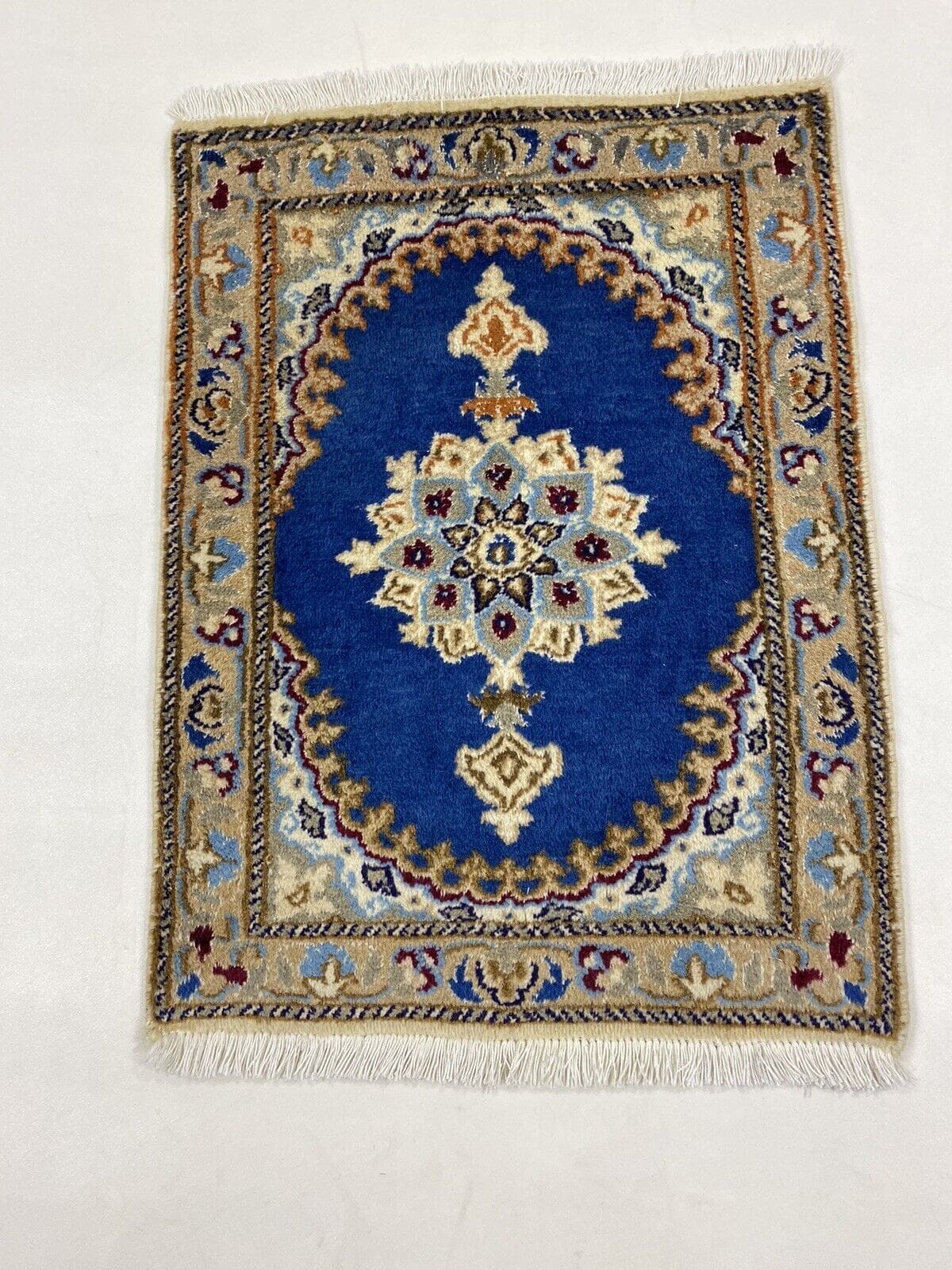
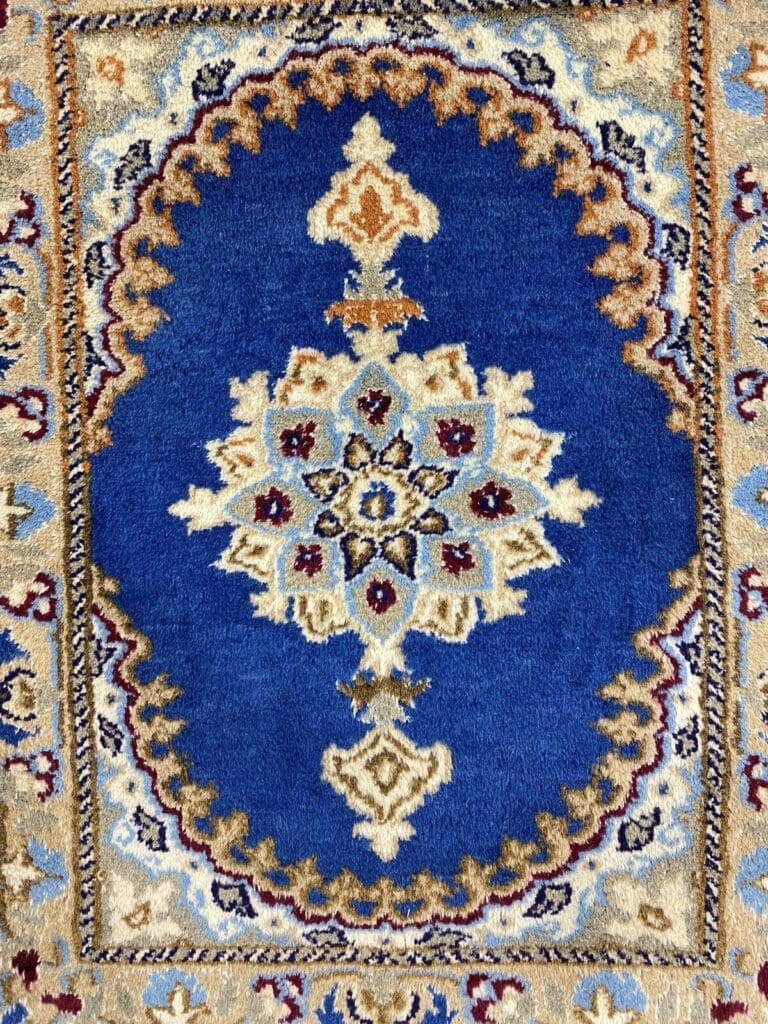
Nain rugs are known for elegant floral designs and balanced pattern arrangements. Flowers, vines and other botanical forms may be linked into an orderly composition, while geometric elements can define, divide or frame parts of the design. This vocabulary allows the pattern to remain structured while retaining the fine ornamental character associated with Nain weaving.
The traditional palette described for Nain ranges from soft beige and blue tones to deeper, richer colours. Lighter shades can establish a calm ground, while darker accents help define borders, outlines and individual motifs. The contrast between restrained and saturated tones gives the composition visual structure. These colour families describe the regional design tradition presented in the source text.
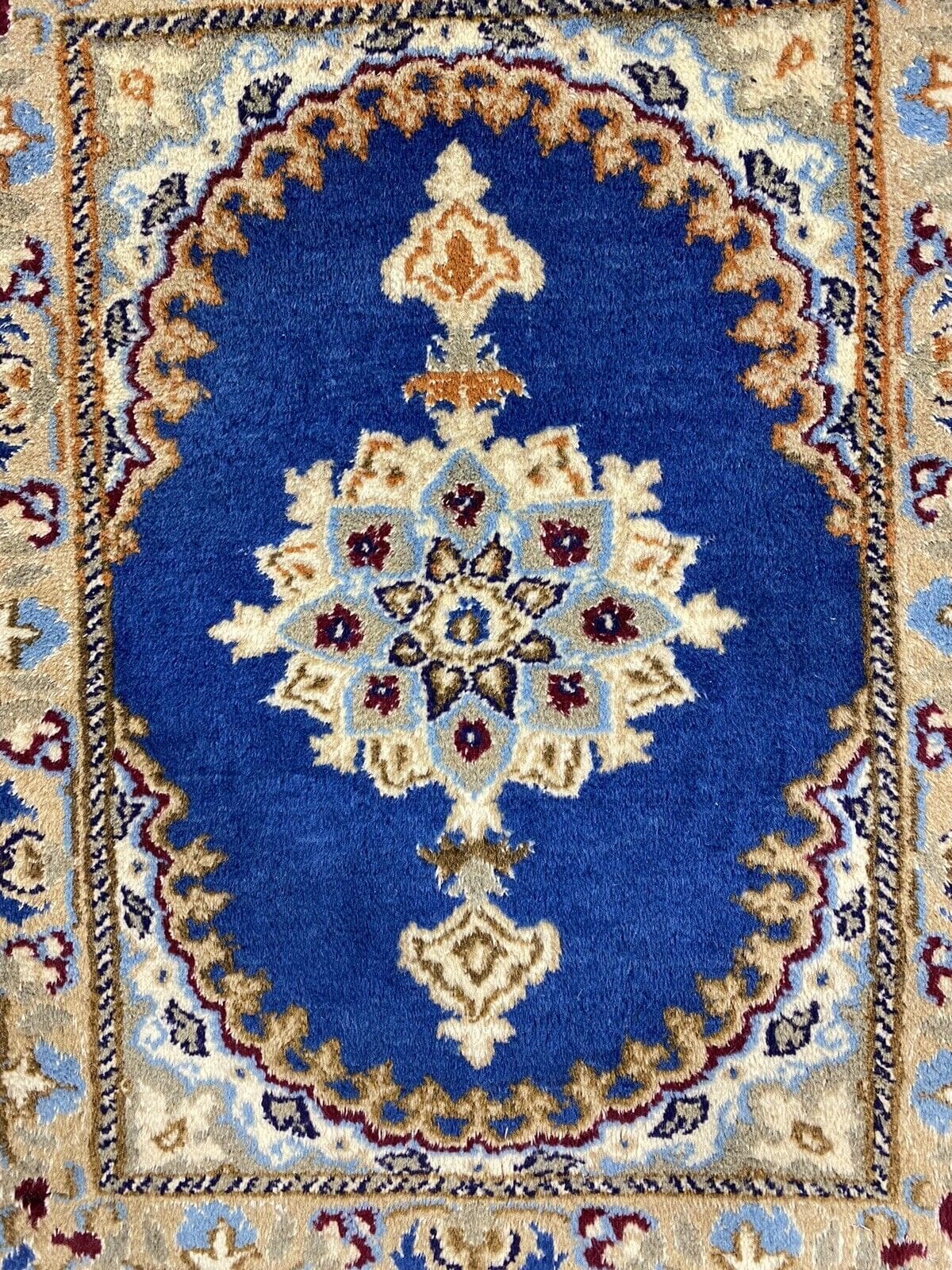
A high knot density supports the rendering of narrow outlines and small pattern details. In a floral design, it can help the weaver place curved stems and compact decorative elements with greater precision. In geometric sections, it can help maintain cleaner edges and more even repetition. The pattern is built knot by knot, so the technical density and the visual design are closely connected.
Nain design is often associated with harmony rather than with an overloaded arrangement of motifs. Floral elements can be distributed across a field, framed by borders or combined with geometric order. Variations in tone give the design depth without changing its traditional Persian character. The balance of colour, ornament and spacing is an important part of the regional pattern language.
Every hand-knotted rug remains individual in its execution. Even within a recognised regional tradition, the precise placement of motifs and the handling of lines develop through the work of the knotter. The Nain identity is provided by the named origin and its established design vocabulary; the rug itself is represented by the particular arrangement, material surface and workmanship recorded for this piece.
Special Features
The stated features of this Nain Persian rug include an approximate density of 300,000 knots per square metre, a 100% wool pile, a 100% cotton warp and weft, hand-knotted workmanship and a thickness of approximately 6 mm. Its condition is described as good. The high density is associated with detailed pattern reproduction and a durable construction.
The rug’s hand-knotted method is itself a defining feature. The surface is assembled through individually placed knots, connecting the practical structure of a floor covering with the regional pattern tradition of Nain. The description also notes that the rug can contribute to room acoustics and temperature regulation. These functions accompany its role as a textile floor covering.
Hand-knotted Persian rugs are also commonly connected with long-term use and possible retention of value. The Nain rug thus represents both a usable furnishing and an example of a traditional craft. Its particular attributes remain the stated materials, technique, density, thickness and good condition, rather than an invented age, signature or provenance beyond the named Iranian origin.
FAQ
How should I care for my Nain Persian rug?
Vacuum the rug regularly and gently to remove dust from the wool pile. It should preferably be protected from direct sunlight. For stains, the care guidance recommends a mild soap solution. Deep cleaning is best entrusted to a specialist who understands wool, cotton foundations and hand-knotted construction. Strong chemicals, excessive moisture and rough treatment can affect the surface and colour appearance, so cleaning should be carried out carefully and according to the nature of the mark.
How do Nain rugs differ from other Persian rugs?
Nain rugs are associated with high knot density, fine wool and elegant designs. Their regional design language often includes floral and geometric patterns, together with balanced arrangements and a restrained range of colours. Other Persian rug regions may use different knotting approaches, pattern systems and colour combinations. Tabriz and Isfahan are mentioned as examples of regions with their own characteristics. Nain is particularly identified with fine execution, detailed motifs and the long-established craft tradition of its Iranian weaving centre.
How can I recognise a high-quality Persian rug?
Useful points of reference include knot density, which is often recorded on a label, the feel of the pile, workmanship, the fineness of the pattern and the materials used. The production method also matters: a hand-knotted rug is generally valued more highly than industrially made merchandise. For this rug, the recorded details are approximately 300,000 knots per square metre, 100% wool in the pile, 100% cotton in the warp and weft, and hand-knotted construction. These characteristics should be considered together. A single number alone does not describe the complete quality or character of a rug.
To provide the best experiences, we use technologies like cookies to store and/or access device information. Consenting to these technologies will allow us to process data such as browsing behavior or unique IDs on this site. Not consenting or withdrawing consent, may adversely affect certain features and functions.
Functional Always active
The technical storage or access is strictly necessary for the legitimate purpose of enabling the use of a specific service explicitly requested by the subscriber or user, or for the sole purpose of carrying out the transmission of a communication over an electronic communications network.
Preferences
The technical storage or access is necessary for the legitimate purpose of storing preferences that are not requested by the subscriber or user.
Statistics
The technical storage or access that is used exclusively for statistical purposes.The technical storage or access that is used exclusively for anonymous statistical purposes. Without a subpoena, voluntary compliance on the part of your Internet Service Provider, or additional records from a third party, information stored or retrieved for this purpose alone cannot usually be used to identify you.
Marketing
The technical storage or access is required to create user profiles to send advertising, or to track the user on a website or across several websites for similar marketing purposes.
 SECURE PAYMENT
 SHIPPING PARTNERS