This Nain Persian rug is hand-knotted. Its pile is made of 95% virgin wool and 5% silk, while the warp is 100% cotton. This combination brings together materials with different textile properties. Virgin wool provides the resilient, flexible foundation traditionally valued in a pile, while silk can add finer definition and a smoother visual response within the surface. The cotton warp forms the ordered foundation into which the knots are tied.
The listed knot density is approximately 300,000 knots per square metre. A density of this kind indicates a finely structured construction in which a large number of individual knots work together across a compact ground. In hand-knotting, each knot is tied separately around the warp and weft structure. The row is then secured and compacted before the next part of the pile is developed. The evenness of the finished surface depends on the preparation of the yarn, the tension of the foundation and the experience required to repeat the process accurately.
Wool and silk serve different purposes within the pile. Wool is traditionally used for its elasticity, resilience and tactile character. Silk can be spun more finely and may support narrow details or subtle changes in the way a surface receives light. Cotton in the warp gives the foundation a stable, regular structure. These material characteristics explain the technical composition of this rug without adding any unstated information about its production history.
The rug is identified as a one-off piece and is supplied with a certificate of authenticity. Its condition is described as new and perfect. These details belong to the specific item: they distinguish it as an individual hand-knotted rug and provide the documented product information that accompanies the material and construction details.
Origin and Tradition
Nain is a recognised carpet centre in Persia. The city lies on the central Iranian plateau and developed a distinctive tradition of fine carpet weaving. Nain rugs are commonly associated with controlled drawing, refined knotting and a composed, often light-looking visual language. The name Nain therefore indicates a regional origin and a historical craft tradition rather than merely naming a decorative effect.
The development of Nain weaving is connected with the region’s wider experience in working with fine textiles and carefully prepared yarns. These skills helped shape a carpet tradition in which precision, balance and a dense structure became important qualities. As in other Persian centres, the character of the rugs emerged from the interaction of local knowledge, available fibres, established weaving methods and inherited design practices.
Persian carpet making has never followed one single universal formula. Individual regions developed their own approaches to layout, ornament, colour distribution, borders and knotting. Nain is generally distinguished by a controlled sense of order rather than by deliberately irregular or loosely improvised drawing. Designs are often arranged so that the main field, secondary details and borders relate clearly to one another. This regional background provides the context for the traditional Persian-Oriental style specified for this rug.
Hand-knotting is a patient process based on careful repetition. A design is translated into areas of colour, lines and ornament. Knots are tied row by row, compacted into the foundation and then trimmed or adjusted as the pile develops. The finer the intended drawing, the more important the preparation of the ground and the accuracy of the knot placement become. In this technical context, the listed knot density can be understood as an indication of a finely organised structure.
Nain rugs are classified within the Persian branch of Oriental rugs. Their regional name helps identify a particular weaving culture, but it does not mean that every Nain rug has an identical layout or the same materials. Individual pieces can differ in colour, ornament, scale, fibre composition and knot density. This rug is specifically described as a Nain from Persia, hand-knotted, and made with a high stated knot density. No additional historical information about its maker, date or earlier ownership is provided and none is added here.
The Nain tradition also belongs to the broader landscape of Persian carpet production. Centres such as Isfahan, Kashan and other Iranian weaving regions developed their own design vocabularies and technical preferences. Nain remains a distinct regional designation within that landscape. Its general reputation rests on a combination of fine workmanship, measured composition and a disciplined approach to drawing. For this individual rug, the relevant documented details are its Nain origin, Persian classification, hand-knotted construction, stated fibres, new perfect condition, one-off status and certificate of authenticity.
Regional carpet traditions are passed on through repeated practice rather than through a single fixed pattern. Weavers learn how to prepare the foundation, handle the yarn, maintain tension and interpret a design while working. The result reflects both the conventions of the region and the particular execution of the individual piece. This is why a Nain rug can be identified within a tradition while still remaining a one-off object with its own exact combination of materials and workmanship.
Design and Pattern
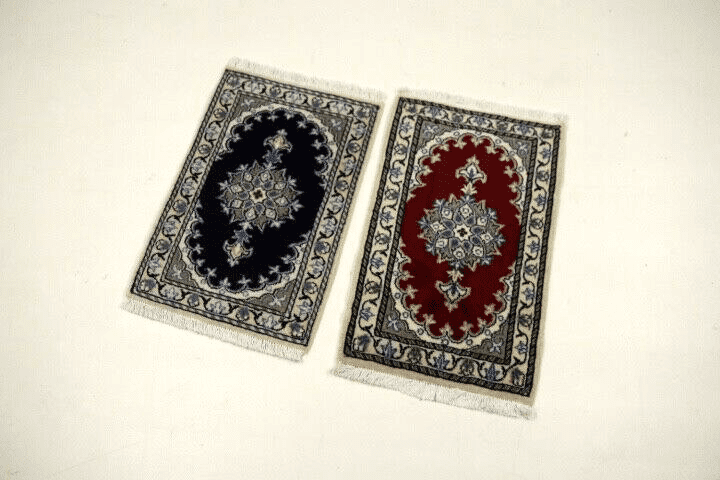
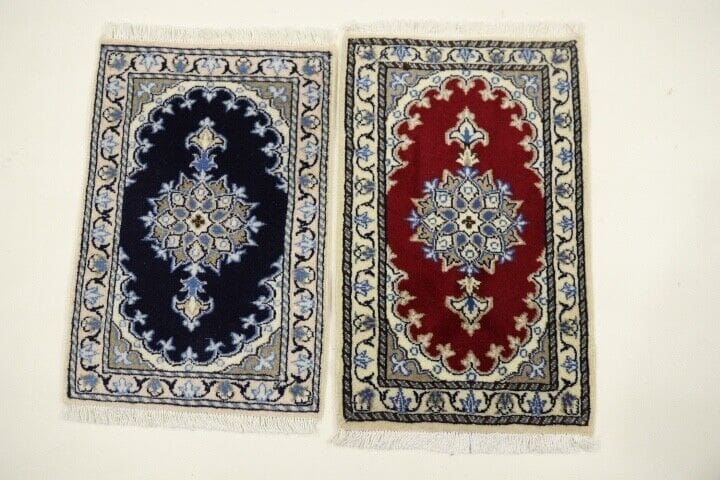
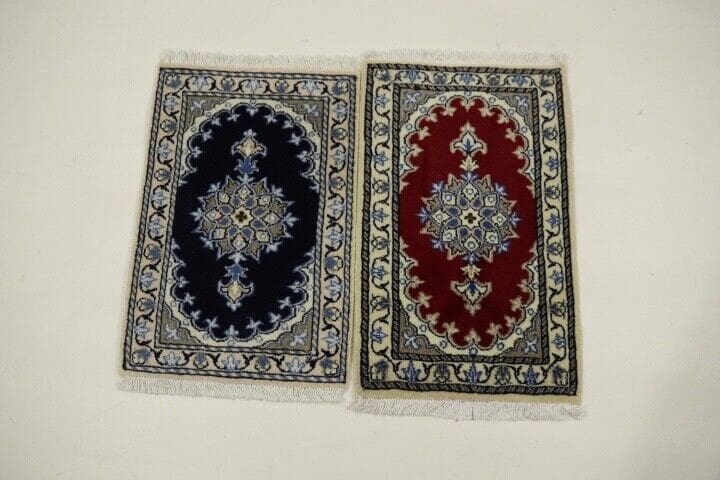
The pattern of this rug is described as traditional Persian-Oriental. The source does not name a specific medallion, floral arrangement, border type or individual motif. The design is therefore not assigned an additional ornament name. The style description places the rug within the established Persian-Oriental design language without claiming a detail that has not been specified for this particular piece.
Traditional Nain designs often establish a clear relationship between a central field and one or more surrounding borders. In Persian carpet design, the field may be organised around a central focus or around regularly distributed ornaments. A border can frame the composition and create a transition between the decorated interior and the outer edge. Which arrangement appears on an individual rug must be determined from that rug itself. For this piece, the secure description remains its traditional Persian-Oriental style and its Nain regional classification.
Persian ornament frequently combines vines, leaves, blossoms and geometric ordering into repeating or connected units. Motifs may be arranged symmetrically, repeated as a pattern sequence or grouped around a visual centre. The design is created not only by the visible figures but also by the spacing between them, the movement of the lines and the relative scale of the details. These principles explain the construction of a coherent Persian composition without turning general design knowledge into an unsupported statement about a specific motif on this rug.
Nain weaving is generally associated with fine outlines and carefully balanced layouts. A dense knotting structure can, as a general technical matter, support narrow lines and smaller drawn details because more individual knots are available to reproduce a design. That relationship concerns the capabilities of the technique; it is not a claim that every possible detail is present here. The documented facts are that the rug is hand-knotted and that its knot density is listed as approximately 300,000 knots per square metre.
The word Oriental is used here as a broad category for decorative rugs shaped by established weaving traditions, repeated ornament, border structures and regional craft knowledge. Persian refers to the origin in Persia and to the design culture associated with Iranian carpet making. Together, the terms in the style description define the framework in which the rug is presented. They do not serve as evidence for a particular floral, geometric or medallion pattern that the source does not identify.
When viewing a Nain rug, attention can generally be given to the connection between its lines, fields and edge zones. A well-organised composition guides the eye from the outer frame into the field and back again. The contrast between virgin wool and silk may also create differing surface responses, since the fibres interact with light in different ways. This is a general material effect, not a claim about a specific colour sequence or degree of sheen on this rug, neither of which is detailed in the source.
The design can therefore be placed accurately within a traditional Persian-Oriental context while its individual ornamentation remains undescribed. It is a hand-knotted Nain one-off with a finely structured construction and a traditional Persian-Oriental style. The regional name and technical information provide a reliable basis for classification, while the absence of a named motif is respected rather than filled with an assumption.
Special Features
The rug is identified as a one-off and is supplied with a certificate of authenticity. A one-off is an individual piece rather than a series-produced item offered in identical form. The certificate accompanies the rug as documentation of its stated authenticity. Together with the Persian origin and Nain designation, these details provide a clear product classification.
The condition is described as new and perfect. This statement concerns the offered individual rug. No information is provided about previous use, repairs, restoration or a specific age, so none of those details are added. The hand-knotted construction, the combination of virgin wool and silk in the pile, and the cotton warp remain the relevant technical characteristics.
The listed knot density and the use of silk alongside virgin wool further define the textile execution. These features, together with the certificate and the one-off status, are the specific points that distinguish the item in the supplied description. They do not imply an additional provenance, a named workshop or an undocumented historical date.
FAQ
What identifies a Nain rug?
Nain rugs belong to the Persian carpet tradition of the city of Nain and its surrounding weaving region. In general, the name is associated with fine knotting, orderly compositions and carefully controlled drawing. It does not prescribe one single pattern for every rug. This item is specifically described as a Nain from Persia, hand-knotted and made in a traditional Persian-Oriental style.
Which materials are used in the rug?
The pile consists of 95% virgin wool and 5% silk. The warp is 100% cotton. Virgin wool contributes resilience and flexibility to the pile, while silk can provide finer textile definition and a different response to light. The cotton warp forms the foundation to which the knots are attached. The rug is hand-knotted and is listed with a knot density of approximately 300,000 knots per square metre.
What is the condition of the rug?
The rug is described as new and perfect. It is offered as a one-off and comes with a certificate of authenticity. No details are given about previous use, repairs or a particular age. The relevant documented points are therefore its new perfect condition, hand-knotted construction and the certificate accompanying the individual piece.
To provide the best experiences, we use technologies like cookies to store and/or access device information. Consenting to these technologies will allow us to process data such as browsing behavior or unique IDs on this site. Not consenting or withdrawing consent, may adversely affect certain features and functions.
Functional Always active
The technical storage or access is strictly necessary for the legitimate purpose of enabling the use of a specific service explicitly requested by the subscriber or user, or for the sole purpose of carrying out the transmission of a communication over an electronic communications network.
Preferences
The technical storage or access is necessary for the legitimate purpose of storing preferences that are not requested by the subscriber or user.
Statistics
The technical storage or access that is used exclusively for statistical purposes.The technical storage or access that is used exclusively for anonymous statistical purposes. Without a subpoena, voluntary compliance on the part of your Internet Service Provider, or additional records from a third party, information stored or retrieved for this purpose alone cannot usually be used to identify you.
Marketing
The technical storage or access is required to create user profiles to send advertising, or to track the user on a website or across several websites for similar marketing purposes.
 SECURE PAYMENT
 SHIPPING PARTNERS


