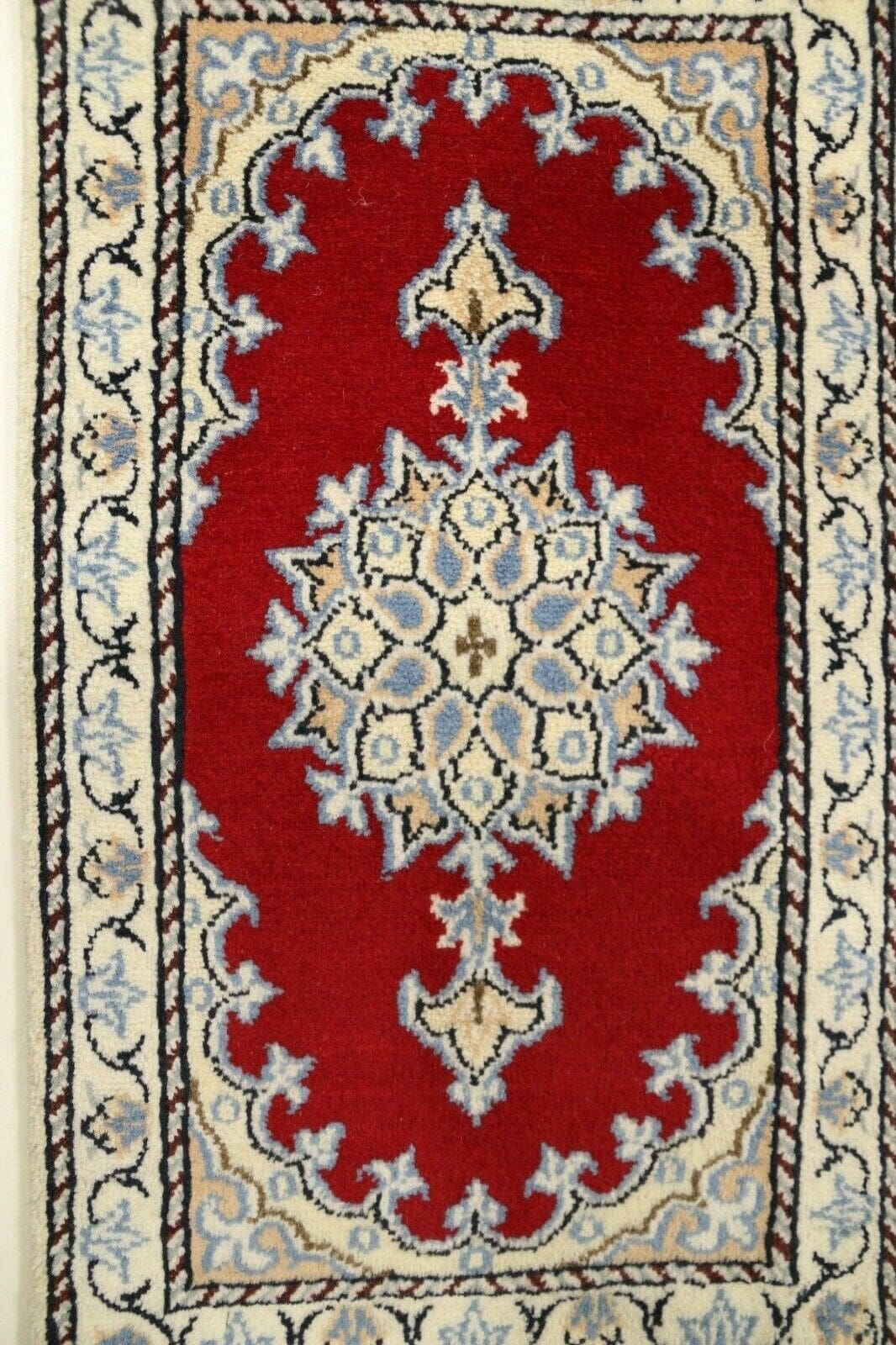
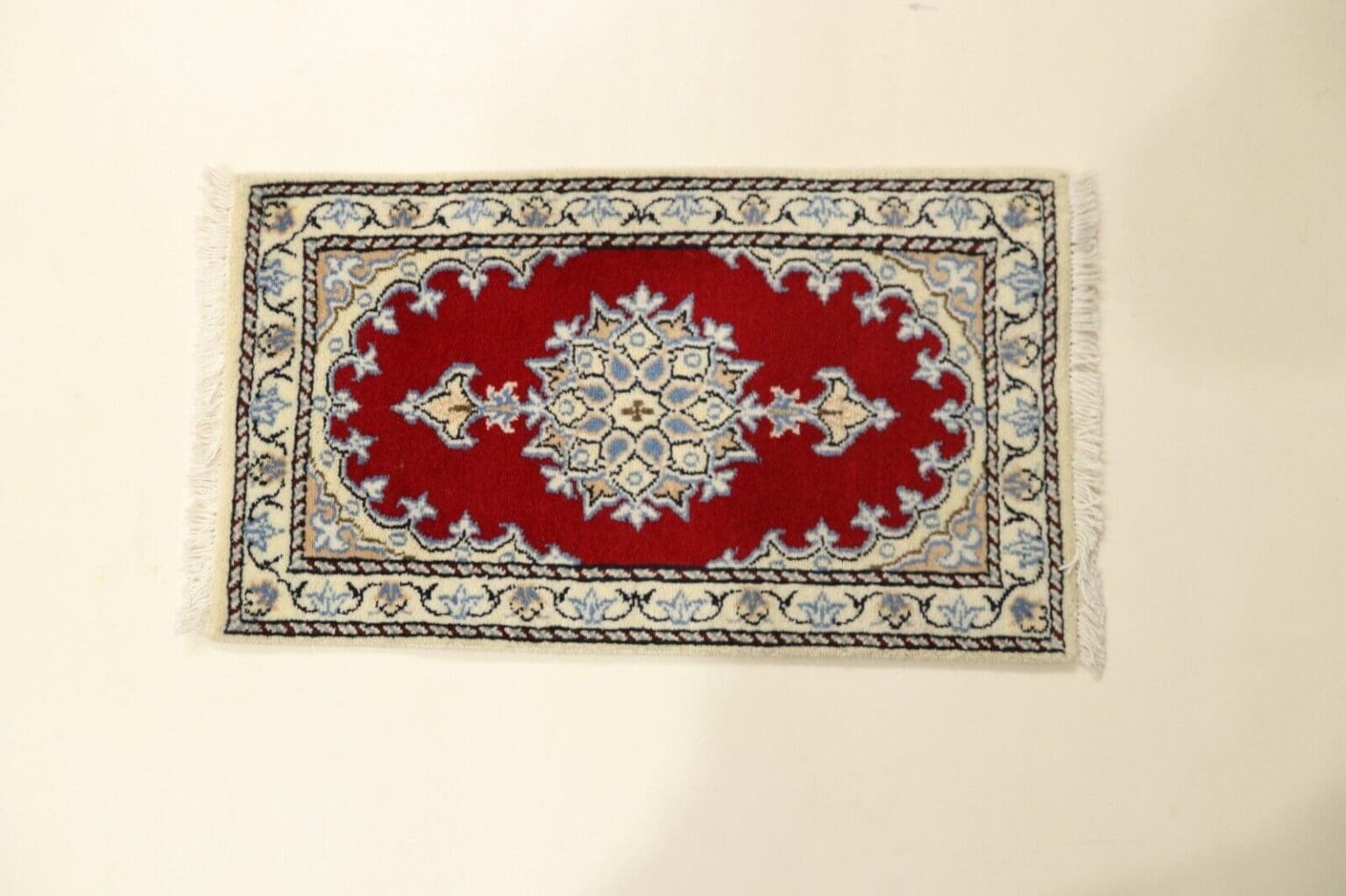
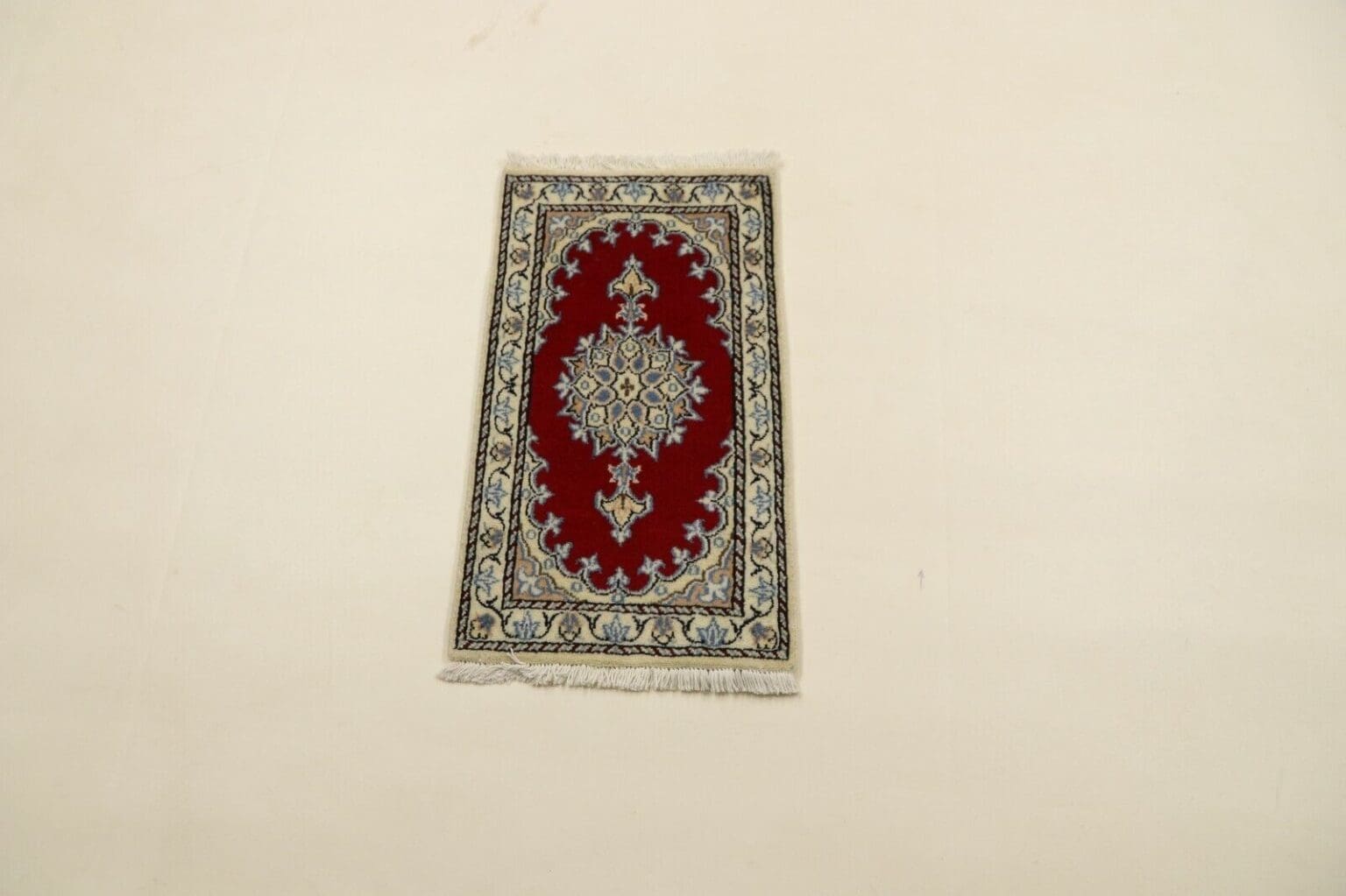
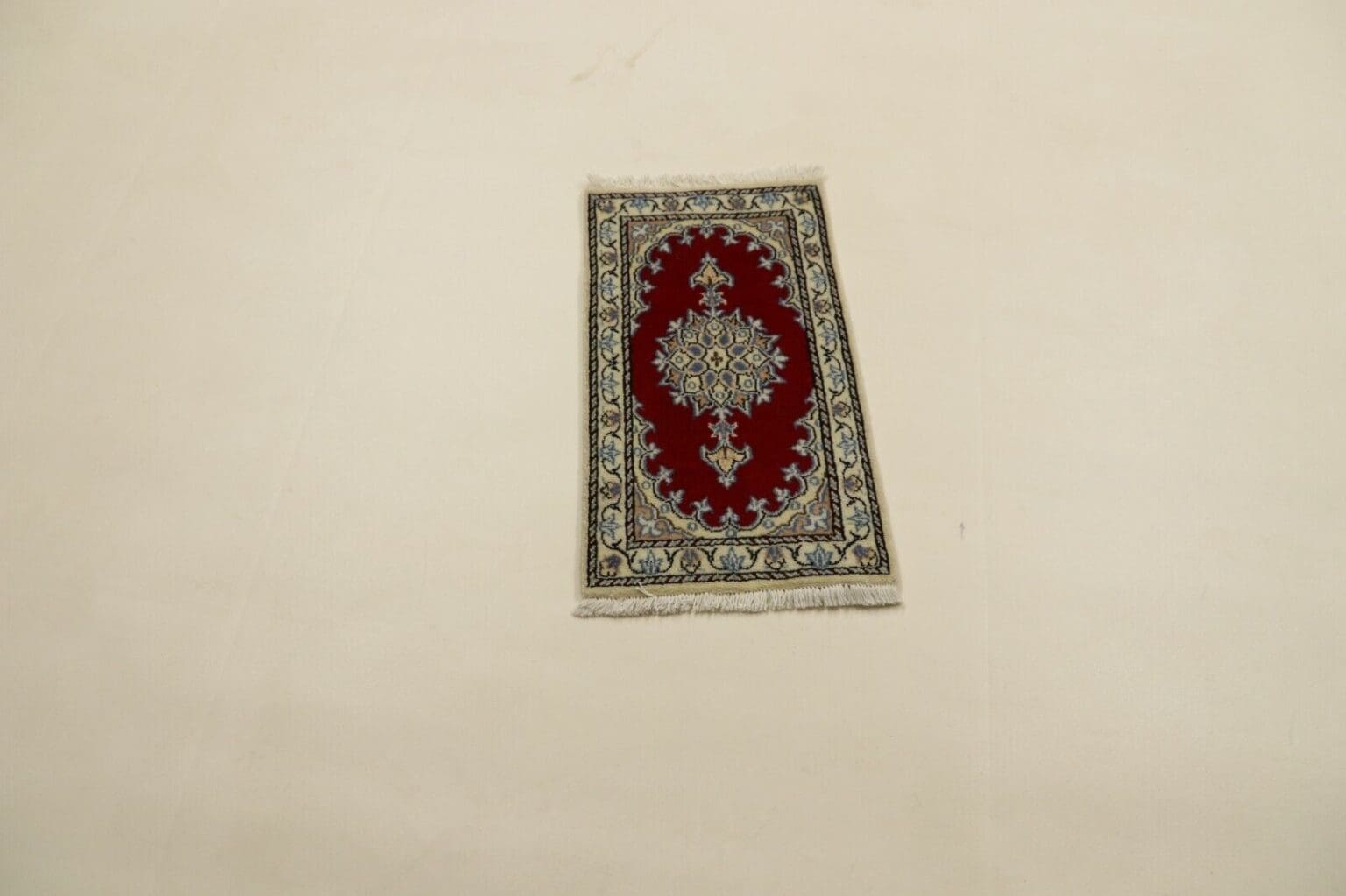
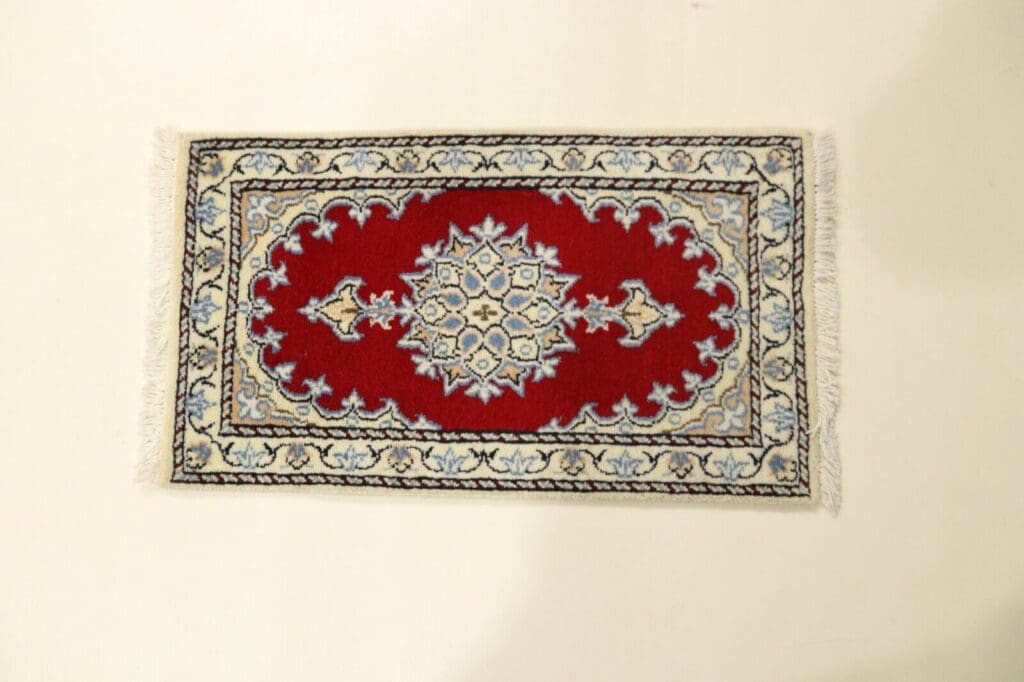
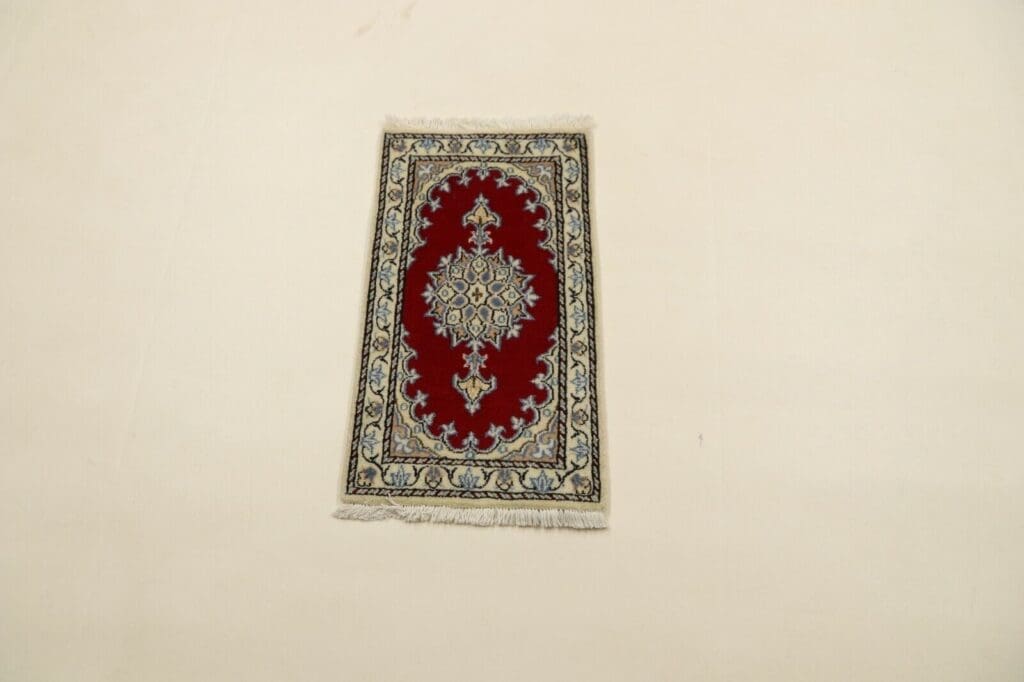
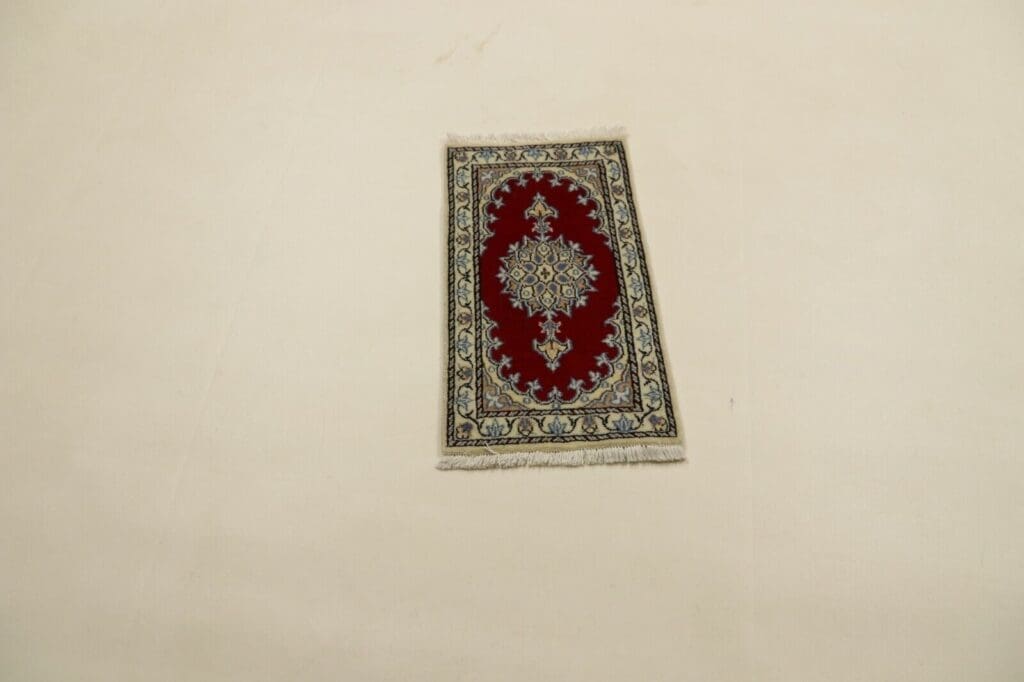
Persian Rug Nain 60 x 40 cm Wool Hand-knotted
€ 120
Hand-knotted Nain Persian rug | Knot density: approx. 300,000 knots/m² | Material: pile 90% virgin wool, 10% silk | Size: 60 x 40 cm | Pattern: nature-inspired and floral motifs | Condition: New, very good
1 available
- ✓Free Shipping in EU
- ✓2-5 Business Days Delivery
- ✓14-Day Return Policy
- ✓Worldwide Shipping on request
 SECURE PAYMENT
 SHIPPING PARTNERS
Inventory number: F224AB98
Description
Nain Persian Rug
Material and Craftsmanship
This Nain Persian rug is made with a pile consisting of 90 percent virgin wool and 10 percent silk. Virgin wool forms the larger part of the surface and gives it a pleasant handle together with resilient qualities. Wool is naturally somewhat resistant to dirt and can be kept clean with careful, regular maintenance. These characteristics have made wool a longstanding material for textile floor coverings intended for everyday interiors.
The silk content adds a fine sheen to the wool surface and contributes to the rug’s elegant appearance. The way the surface is perceived may vary gently with the available light. Wool and silk therefore combine a soft tactile impression with a refined visual effect. The description also highlights the pleasant warmth underfoot provided by the textile surface.
The rug is entirely hand-knotted. In this method, individual knots are tied into the foundation and gradually become part of the pile and the overall design. This requires patience, a steady hand and close attention to the alignment of the motifs. Hand-knotting distinguishes the piece from mechanically produced floor coverings because the surface is built up through repeated manual work. The rug is new and in very good condition. It is also suitable for use over underfloor heating.
Origin and Tradition
Nain is a city in Iran and the name of an important Persian rug tradition. Located in central Iran, the city is associated with a long-established culture of textile craftsmanship. Nain rugs are commonly connected with fine knotting, carefully selected fibres and a restrained, balanced approach to composition. The name Nain therefore indicates more than a decorative look: it points to a place and to the weaving culture that developed there.
The rug-knotting tradition in Nain reaches back to the sixteenth century. Across many generations, practical knowledge about fibres, foundation construction, pattern planning and surface finishing has been passed on. As with other Persian weaving centres, Nain developed a recognisable regional vocabulary. Its character comes from the relationship between precise workmanship, controlled ornament and an ordered overall design.
Persian rug making traditionally brings together a planned drawing and a highly manual process. A design is not treated simply as decoration placed on top of a textile. It is organised through the relationship of field, border, axes and repeated motifs. In Nain, this organisation is often paired with fine knotting and the use of delicate wool and silk fibres. Such materials allow small forms to be rendered clearly, while the knotting process determines the image section by section.
The Iranian rug tradition is also a tradition of transmitted technical knowledge. It includes preparing and handling fibres, maintaining an even foundation, dividing the design into workable areas and finishing the pile with care. A hand-knotted rug is consequently formed through numerous connected stages rather than one single operation. Its final appearance reflects the cumulative effect of these decisions. For Nain rugs, the calm precision of this process is central to the regional craft tradition.
The designation Nain identifies the Persian, or Iranian, origin of this rug. It should not be confused with any floral pattern used in another region. Regional traditions can produce different designs and colour arrangements, yet Nain remains associated with fine knotting, quality fibres and a composed visual structure. This combination of place, method and design history explains why Nain has a distinct position within Persian rug culture.
Design and Pattern
The rug presents typical motifs inspired by nature. Floral elements are recurring features in Nain-related design and may include blossoms, leaves, vines and symmetrical plant forms. These ornaments are not distributed randomly. They are arranged in relation to an inner field and surrounding borders, creating a coherent visual structure across the textile.
In Persian ornament, the flower is often associated with life, growth and fertility. Leaves and vines can suggest continuity and ongoing development. These associations belong to the cultural background of floral design and do not require the motif to depict one specific plant. The important point is the balance between references to nature and formal order. Lines may be repeated, mirrored or gathered into a central composition.
Geometric forms also play a role in Persian rug design. Clear contours help establish rhythm, symmetry and structure. They may frame botanical motifs, divide areas of the field or appear as small details within a larger pattern. Geometric shapes are commonly connected with ideas of stability and order in Persian visual culture. Their presence provides a measured framework in which more flowing floral forms can be placed.
A Nain composition may be organised around a clearly defined field with one or more borders. The field carries the main ornamental rhythm, while the border gives the outer edge a controlled transition. Repeated motifs link the different areas and allow small details to participate in the wider design. Fine knotting supports the depiction of such details while preserving the quiet balance associated with the regional tradition.
Nain rugs are frequently described as having harmonious and gentle colour arrangements. A coordinated palette helps the floral forms read as one composition and supports the relationship between field and border. Light areas and restrained contrasts can be used to create distinction without disrupting the overall unity. This rug is described as displaying nature-inspired and floral motifs. That design language can sit within traditional interiors as well as more reduced contemporary settings because its effect depends on proportion, repetition and balance.
In a hand-knotted rug, the pattern is inseparable from the construction. The drawing is built gradually through thousands of individual knots rather than printed onto a finished surface. Each section contributes to the continuity of the field, the borders and the smaller ornaments. The Nain origin and the floral, nature-related vocabulary establish the cultural and visual framework of this one-off piece.
Special Features
A notable technical feature is the knot density of approximately 300,000 knots per square metre. Such density allows fine ornaments to be represented in detail and requires careful execution of each individual knot. It also contributes to an even, closely formed surface. Knot density is therefore both a technical characteristic and an indication of the amount of work involved in producing a finely knotted textile.
This rug is a one-off and comes with a certificate of authenticity. It is new and in very good condition. Its combination of virgin wool and silk, fully hand-knotted construction and Nain origin brings together material qualities with a clearly identifiable regional tradition. Its suitability for underfloor heating offers an additional practical option for use in the home.
FAQ
What is the best way to clean my Persian rug?
For routine care, gentle vacuuming without a rotating brush is recommended. This removes dust and loose particles while avoiding unnecessary stress on the pile. A fresh spill should be blotted promptly with a clean, damp cloth rather than rubbed. Rubbing can affect the fibres and disturb the surface. If a cleaning product is needed, it should be mild and used carefully. For a complete cleaning, a professional service is advisable so that the combination of virgin wool and silk can be treated appropriately.
Where does the traditional knotting technique for this rug come from?
The traditional knotting technique for this Persian rug comes from Nain in Iran. Rug making there has a centuries-old history that reaches back to the sixteenth century. Knowledge of precise knotting, pattern planning and the handling of fine fibres is passed down through the craft tradition. The characteristic refinement results from repeating many carefully controlled steps and coordinating the material, the knots and the ornament.
How long does a hand-knotted Persian rug last?
With suitable care and depending on how it is used, a hand-knotted Persian rug can last for several decades and may become a textile object passed from one generation to the next. The resilient virgin wool, the silk content and the dense knotting support long-term use. Gentle handling, regular maintenance and professional cleaning are also important. Longevity therefore depends not only on the rug’s age, but on the way it is used and protected from avoidable wear.
Additional information
| Design Style | |
|---|---|
| Color | |
| Size | |
| Shape | |
| Origin | |
| Knot Density | |
| Material |
Related products

Persian Rug Tabriz 290 x 205 cm Wool Hand-knotted
€ 5850
Persian Rug Isfahan 250 x 155 cm Silk Hand-knotted
€ 3600
Persian Rug Nain 355 x 252 cm Wool Hand-knotted
€ 4200
Persian Rug Tabriz 355 x 252 cm Wool Hand-knotted
€ 4890
Persian Rug Tabriz 206 x 150 cm Wool Hand-knotted
€ 1830
Persian Rug Tabriz 293 x 203 cm Wool & Silk Hand-knotted
€ 3300
Persian Rug Nain 330 x 215 cm Wool Hand-knotted
€ 3600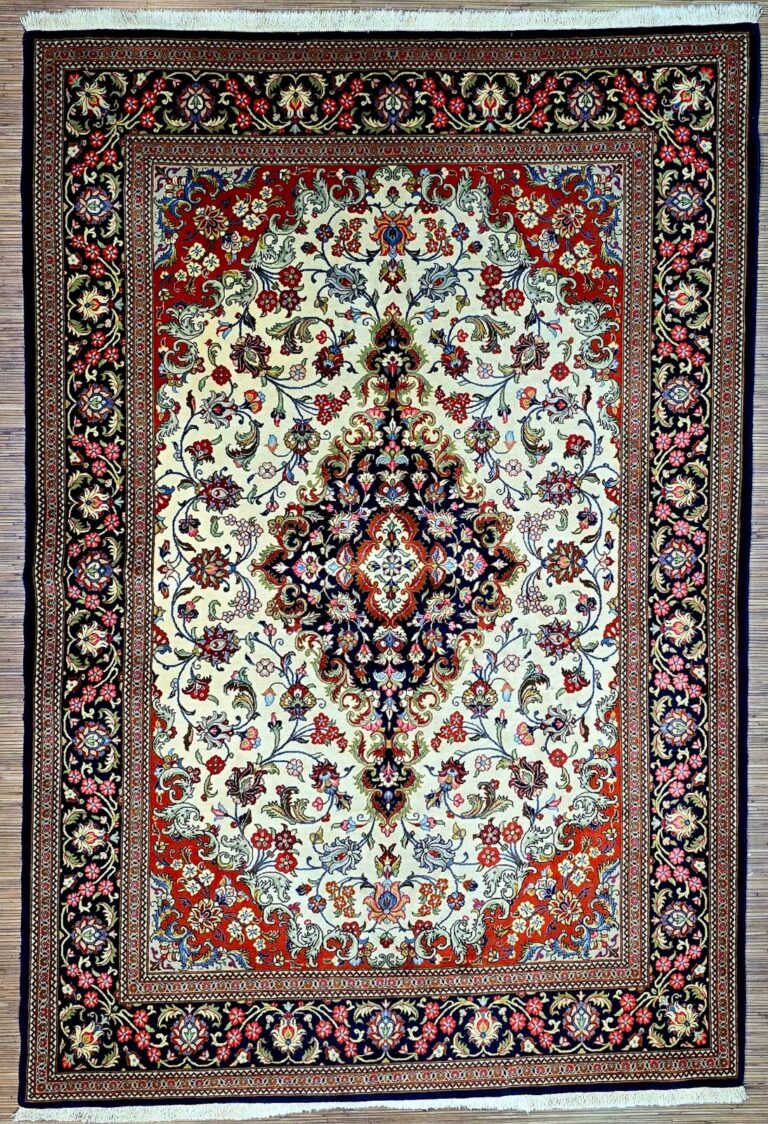
Persian Rug Qom 216 x 142 cm Wool Hand-knotted
€ 990