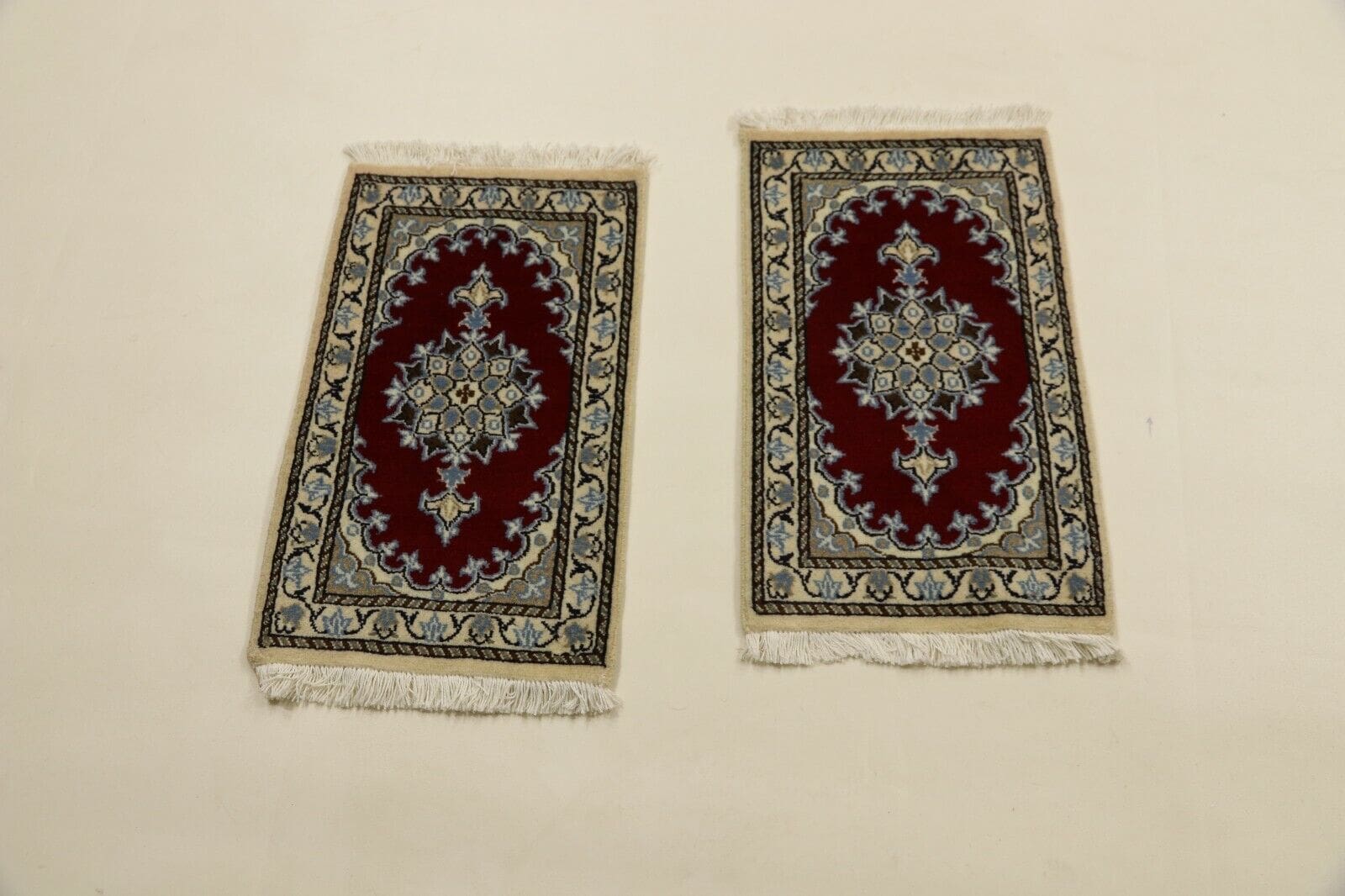
This Nain Persian rug is hand-knotted, with a pile made from 90% virgin wool and 10% silk. The two fibres give the surface distinct but complementary qualities. Virgin wool creates a soft, comfortable handle and a natural textile character. Silk adds a restrained sheen, allowing colour areas and fine drawn details to respond subtly to the light. Combining wool and silk is part of the material tradition associated with finely made Nain rugs.
The knot density is approximately 300,000 knots per square metre. In hand-knotting, each knot is inserted individually into the foundation. This process permits the weaver to render delicate lines, small ornaments and balanced forms with precision. A dense structure also helps keep transitions and contours clearly defined. Knot density is therefore a technical characteristic of the surface, while the exact result additionally depends on the regularity of the work and the relationship between the yarns and the design.
A hand-knotted rug is not produced as a printed surface or as a mechanically repeated pattern. The composition is built knot by knot. Colours and shapes are placed according to a design or an established arrangement, with the foundation providing the structure in which the knots are secured. The work requires control of sequence, spacing and tension. In a Nain rug, these practical steps are combined with the use of wool and silk to create a fine, ordered textile surface.
Wool and silk play different roles within the pile. Wool gives the surface body and a pleasant softness. Silk can catch the light and bring emphasis to parts of the ornament. Together they create a material contrast between a quieter woollen appearance and the gentle lustre of silk. The hand-knotted technique makes the construction part of the rug’s character. This piece is described as new, and no signs of use are stated.
The pile materials and the close knotting define the rug’s technical character. They connect a traditional Persian method with a finely articulated surface. The quality of a hand-knotted rug is not determined by knot count alone; consistency, material selection, design control and finishing also matter. For this piece, the stated combination is virgin wool, silk, hand-knotting and a knot density of approximately 300,000 knots per square metre.
Origin and Tradition
This rug originates from Nain in Iran. Nain is a city with a distinct Persian carpet-making tradition. That tradition is traced back to the sixteenth century. Fine wool rugs and combinations of wool with silk have an important place in the region’s textile production. The name Nain therefore identifies both a geographic origin and a particular historical environment of weaving.
Nain weaving knowledge has been transmitted through families and workshops over generations. It includes preparing fibres, establishing the foundation, dividing the composition, selecting colours and translating a drawing into a regular sequence of knots. The weaver must also understand proportion and repetition so that the pattern remains coherent across the surface. Regional knowledge is thus expressed not only in the finished ornament, but also in the practical relationship between material, structure and technique.
Persian rugs from Nain are associated with fine workmanship and carefully organised compositions. Wool and silk may be used together to create different visual effects within one design. Wool provides the principal textile presence of the pile, while silk can highlight selected contours or ornamental passages with its reflective quality. This relationship between the two fibres is part of the material vocabulary of Nain weaving and helps explain the characteristic delicacy often associated with the type.
Nain is located in central Iran and has developed its own regional textile identity. Its carpet tradition belongs to the wider culture of Persian weaving, in which workshop knowledge, pattern construction and hand production are closely connected. Designs may be guided by inherited models, but the actual rug is created through the decisions and work of the makers who execute it. A regional tradition therefore provides continuity without making every hand-knotted rug mechanically identical.
Order and proportion are important ideas in the Nain tradition. The placement of motifs, the repetition of elements and the balance between open and ornamented areas can be controlled through a carefully prepared design. A dense knotting structure allows small details to be transferred with clarity. The technique preserves more than a way of making a floor covering: it also carries knowledge about visual rhythm, colour relationships and the arrangement of a textile field.
Nain rugs are frequently connected with fine floral decoration and a clearly structured pattern language. These features belong to a broader Persian tradition in which plant forms, geometric order and symmetry are used in many regional interpretations. Nain developed a recognisable version of that language through its materials and precise handwork. The term therefore refers to more than an Oriental appearance; it identifies a Persian origin and a regional approach to weaving.
The origin stated for this piece is Nain, Persia/Iran. No particular workshop, individual weaver or signature is provided, so no such attribution is made. The rug can be placed within the history of Nain weaving through its named origin, its Persian classification and its hand-knotted construction. This context explains the type without adding unrecorded provenance to the individual item.
Design and Pattern
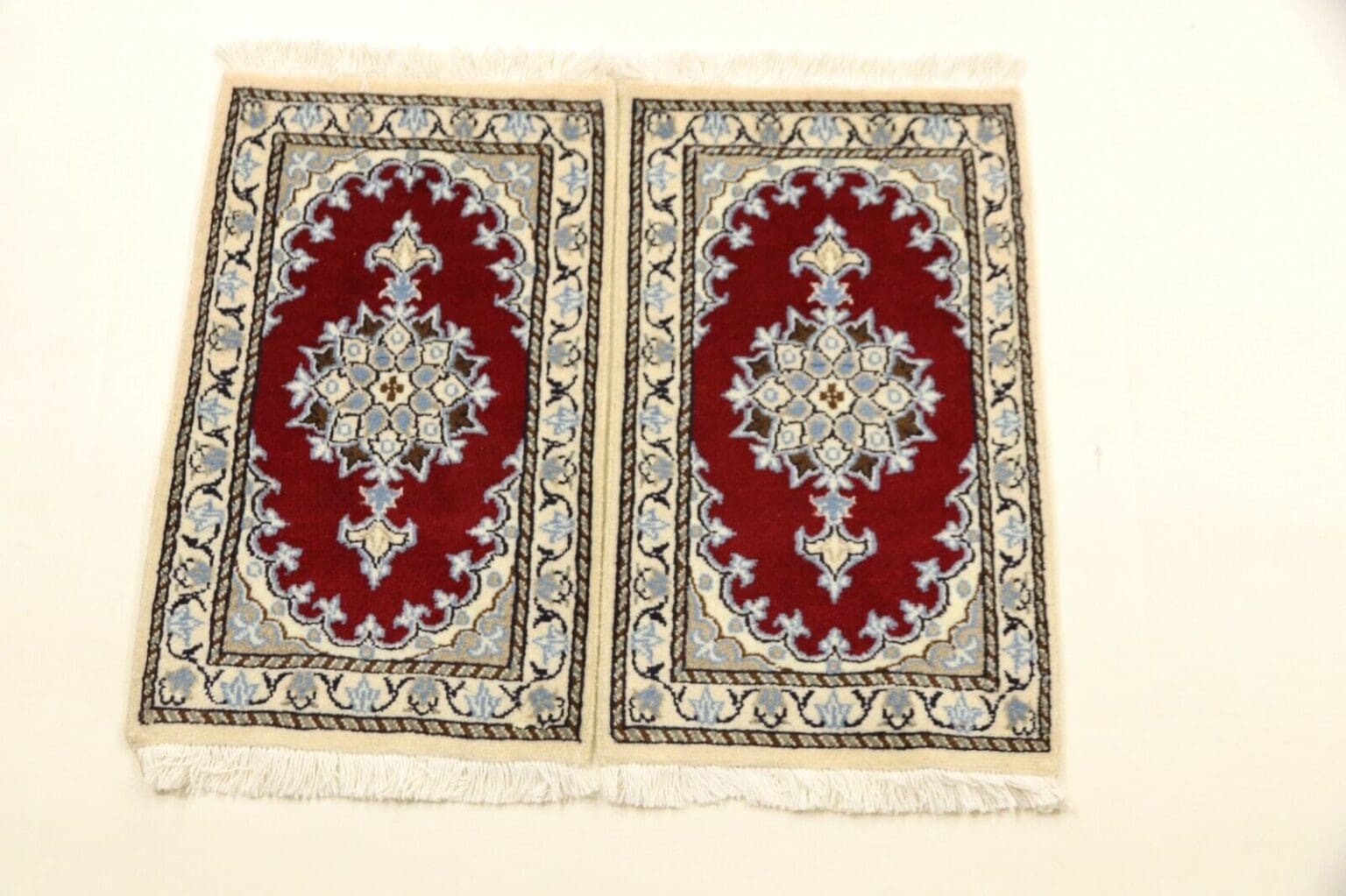
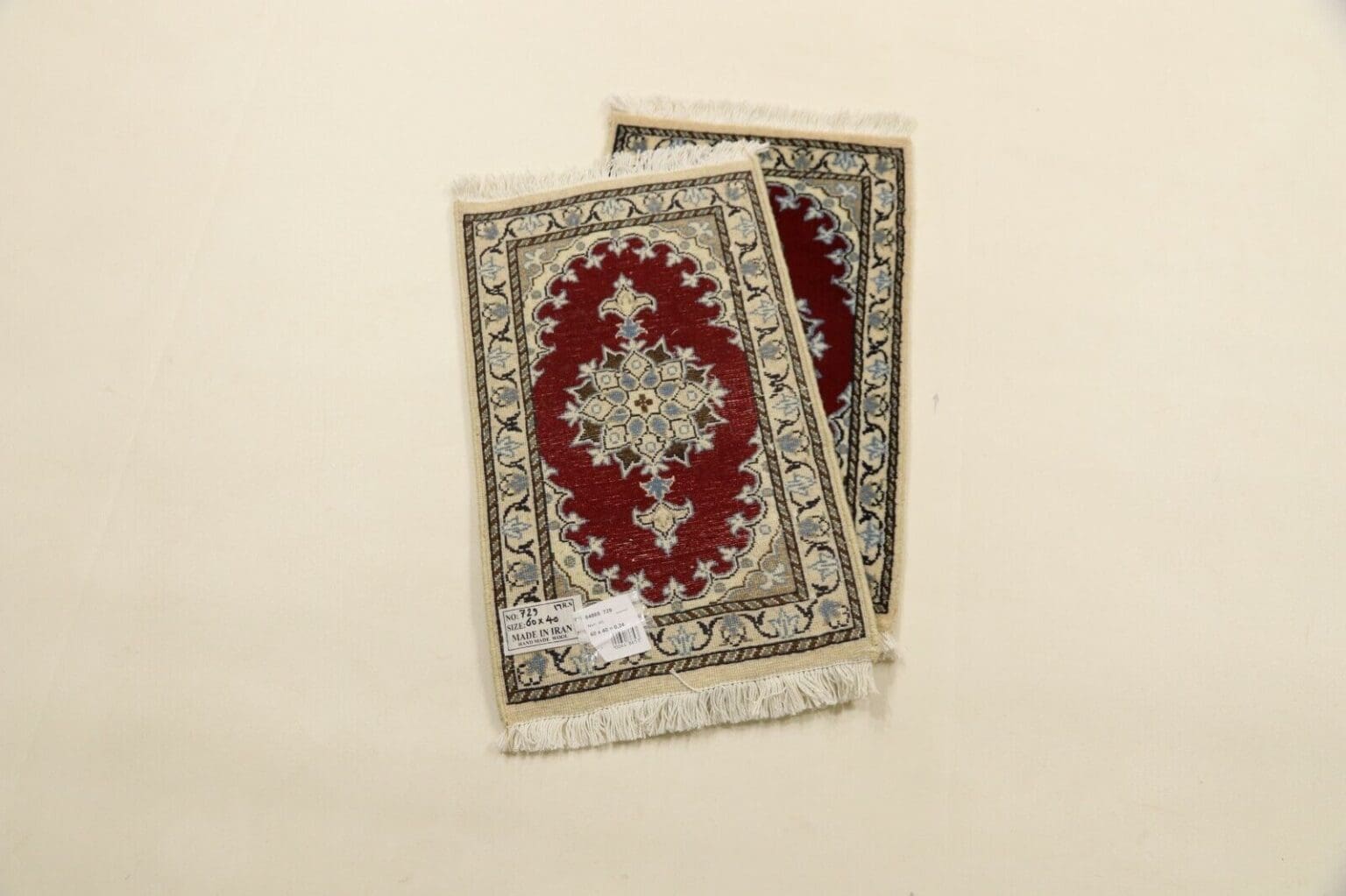
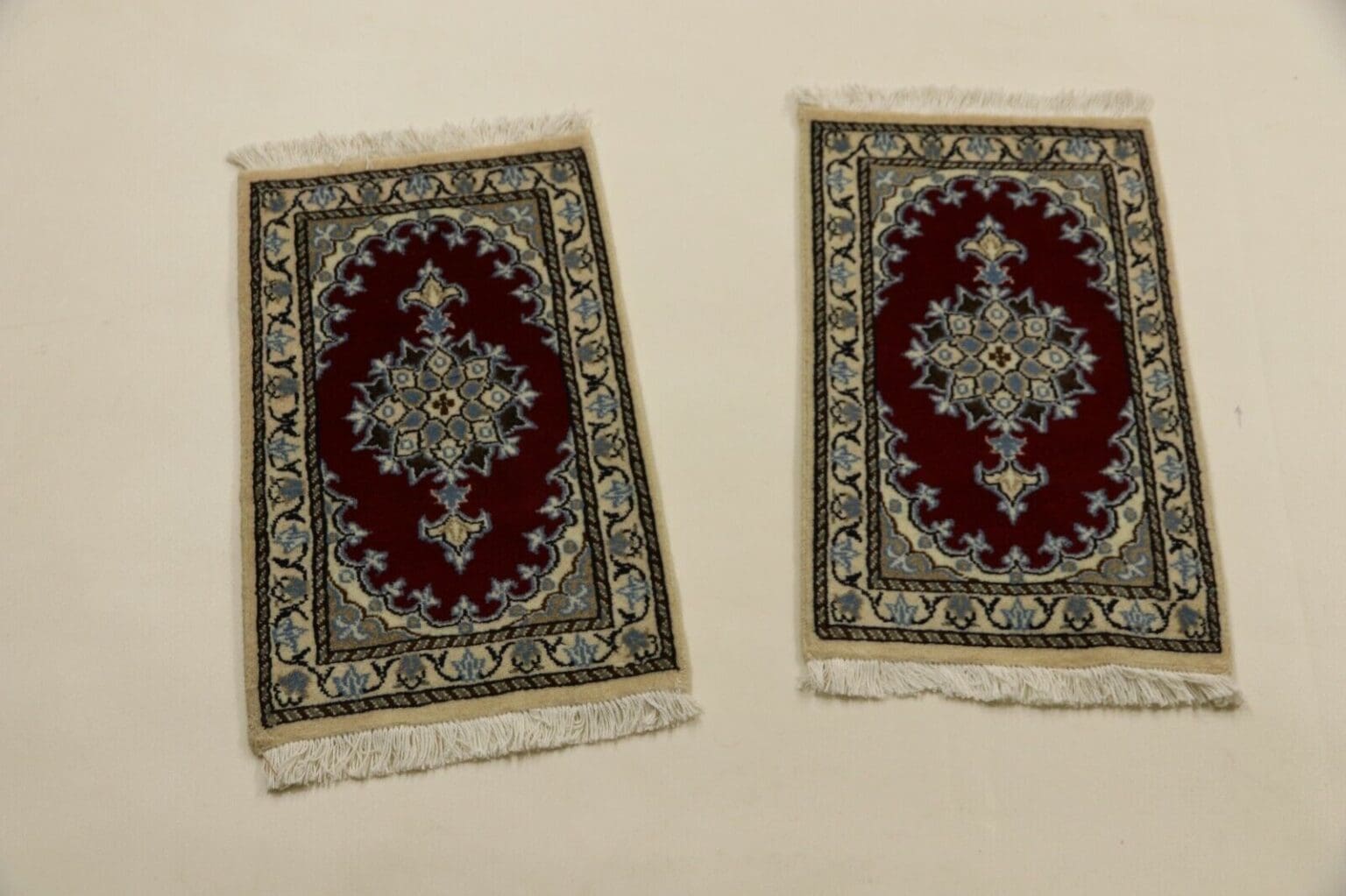
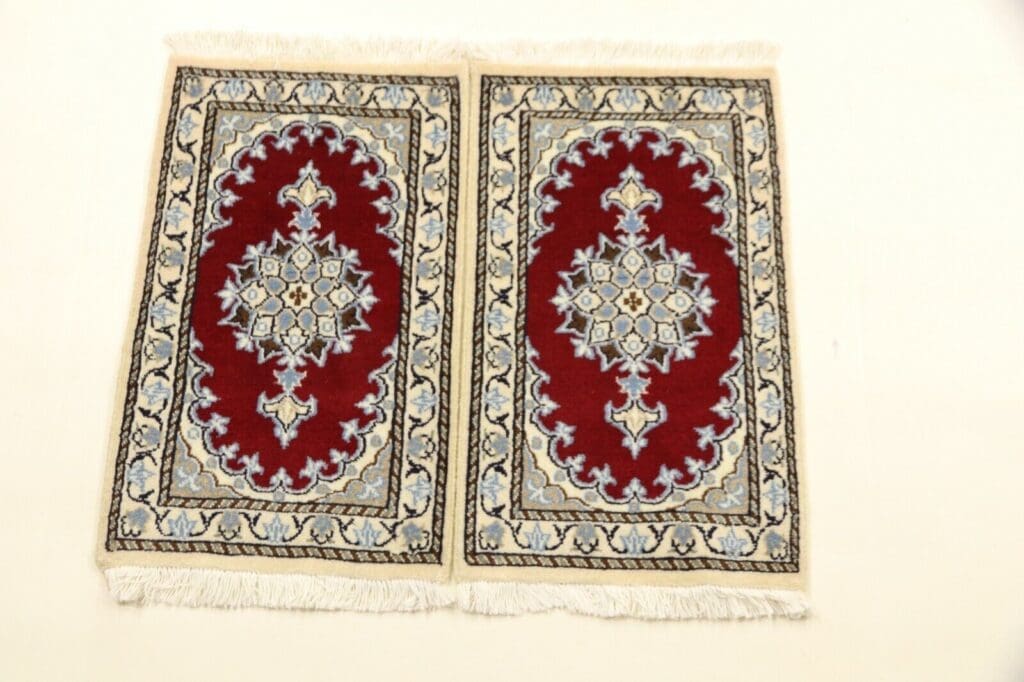
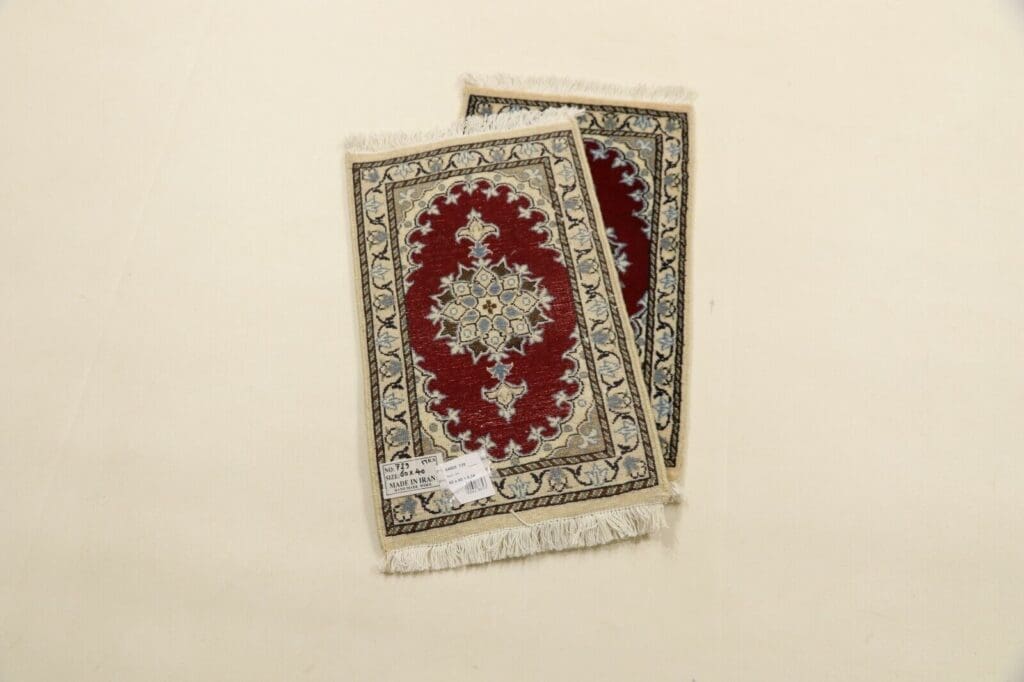
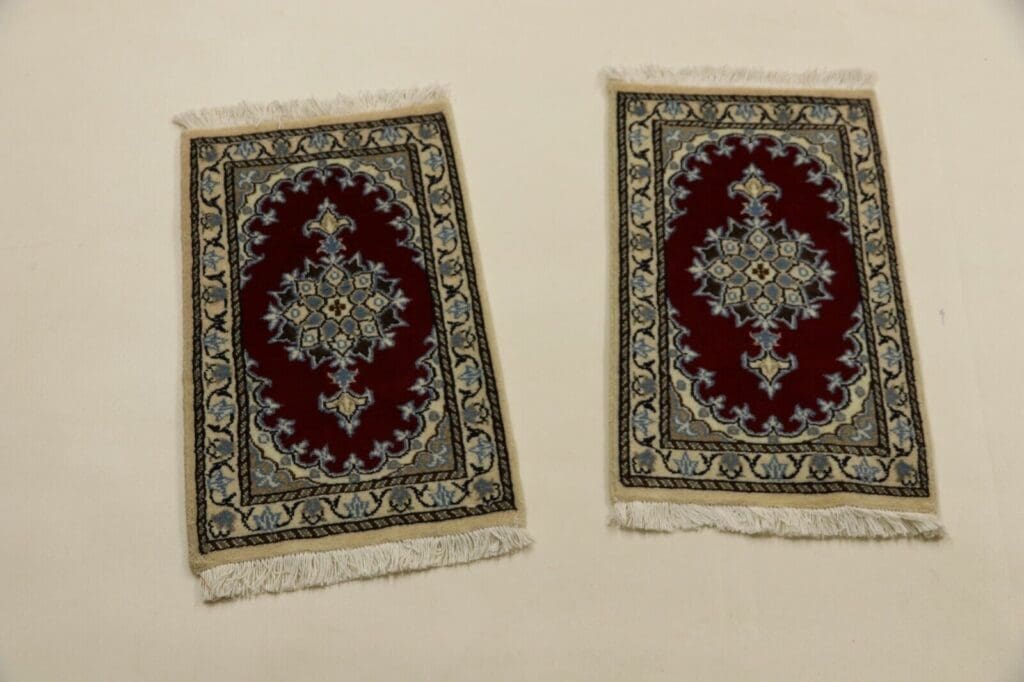
The rug’s pattern is described as Oriental, and its colouring as multicoloured. These are the specific design descriptions given for the piece. Oriental carpet design is a broad field that can include floral ornament, geometric structure and symmetrical arrangement. Nain rugs are often discussed in relation to these elements, which may be combined into a finely divided and carefully balanced composition.
Floral forms are established devices in Nain pattern traditions. Flowers, leaves and scrolling stems can be arranged within fields, borders or larger interconnected schemes. They do not have to imitate nature literally. A plant form may be simplified, mirrored, repeated or placed within a geometric framework. This allows the design to remain recognisably organic while following the discipline of a structured textile composition.
Geometry gives a pattern a framework. Axes, repeated shapes and linear divisions establish relationships between separate motifs and help organise the surface. Symmetry can balance the two sides of a design or draw attention towards a central arrangement. In Persian carpet design, such order allows a composition to contain many details without appearing arbitrary. Dense hand-knotting supports the precise execution of the outlines and transitions required by these structures.
A multicoloured palette creates different levels of contrast and separation. Colour may distinguish floral details, define geometric edges or connect parts of the composition across the field. Wool and silk reflect light differently. The silk content can therefore introduce a gentle lustre, while wool gives other areas a more subdued textile appearance. The pattern’s visual character changes subtly with illumination, yet remains rooted in the woven and knotted structure rather than being applied on top.
In a hand-knotted rug, a motif is constructed from the placement of individual knots. It is not printed as a surface repeat. This makes the design part of the textile’s physical structure. Fine Nain patterns can consequently reveal many small changes of colour and contour when viewed closely, while still forming a unified Oriental composition from farther away. The relationship between technique and design is central to understanding this type of rug.
Oriental patterning can be used in a range of interior settings. A symmetrical composition may sit naturally among traditional furnishings, while a multicoloured ornament can also provide structure in a more restrained room. The rug can serve as a floor covering and at the same time contribute to the room’s decorative arrangement. Its effect depends on the surrounding colours, furnishings and light; those contextual factors do not change the stated Oriental and multicoloured description of this piece.
The design tradition of Nain thus brings together fine execution, floral references, geometric order and symmetry. For this rug, the documented pattern is Oriental and the documented colour treatment is multicoloured. The silk content contributes to the surface sheen described in the source. No individual medallion, border layout or specific colour names are added, because those details are not stated for this one-off rug.
Special Features
The stated special features are the pile combination of 90% virgin wool and 10% silk, the hand-knotted construction and the knot density of approximately 300,000 knots per square metre. The rug is from Nain in Iran, has an Oriental pattern, is multicoloured and is described as new. It is also specified as suitable for use with underfloor heating.
When used over underfloor heating, the temperature should not be set too high. A suitable underlay can help protect the rug and support its service life. Regular vacuuming with a soft vacuum cleaner is recommended for care. Marks should be treated promptly with a damp cloth and a mild cleaning product. Professional cleaning every few years can assist with preserving its value. Direct sunlight should be avoided so that the colours do not fade.
FAQ
How should I care for the Nain Persian rug?
Regular vacuuming with a soft vacuum cleaner is recommended. If a stain occurs, treat it promptly with a damp cloth and a mild cleaning product. Professional cleaning every few years can help maintain the rug’s value. Direct sunlight should be avoided to reduce fading in the multicoloured design. Care should be gentle and limited to the appropriate treatment of the textile surface.
Where can the rug be used?
This Nain Persian rug can be used in living rooms and bedrooms, as well as in offices and reception areas. Its multicoloured Oriental design can be combined with traditional furnishings or with a more contemporary interior. It can function as a floor covering while also contributing to the room’s decorative scheme. The surrounding furnishings and lighting will influence how the colours and silk sheen are perceived.
Is the rug suitable for underfloor heating?
Yes, this Nain Persian rug is suitable for underfloor heating. The temperature should not be set too high. A suitable underlay may also be used to help protect the rug and extend its service life. The underlay should itself be appropriate for use with underfloor heating.
To provide the best experiences, we use technologies like cookies to store and/or access device information. Consenting to these technologies will allow us to process data such as browsing behavior or unique IDs on this site. Not consenting or withdrawing consent, may adversely affect certain features and functions.
Functional Always active
The technical storage or access is strictly necessary for the legitimate purpose of enabling the use of a specific service explicitly requested by the subscriber or user, or for the sole purpose of carrying out the transmission of a communication over an electronic communications network.
Preferences
The technical storage or access is necessary for the legitimate purpose of storing preferences that are not requested by the subscriber or user.
Statistics
The technical storage or access that is used exclusively for statistical purposes.The technical storage or access that is used exclusively for anonymous statistical purposes. Without a subpoena, voluntary compliance on the part of your Internet Service Provider, or additional records from a third party, information stored or retrieved for this purpose alone cannot usually be used to identify you.
Marketing
The technical storage or access is required to create user profiles to send advertising, or to track the user on a website or across several websites for similar marketing purposes.
 SECURE PAYMENT
 SHIPPING PARTNERS


