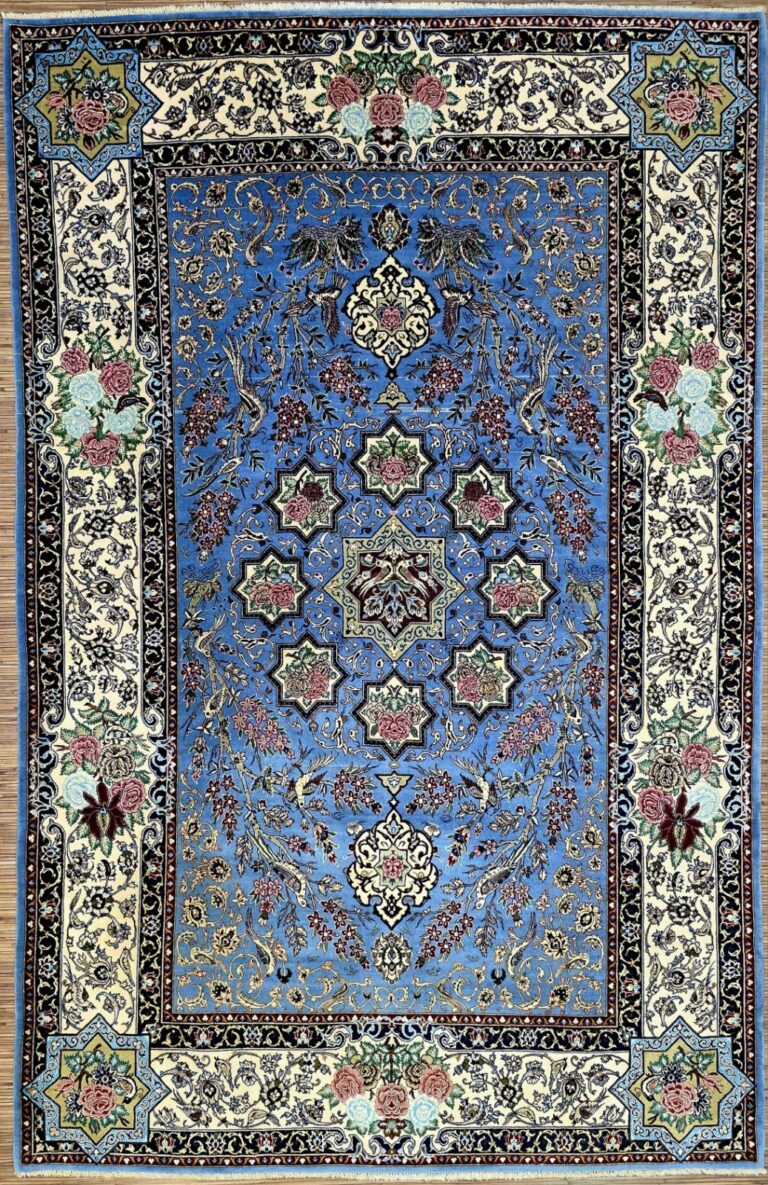
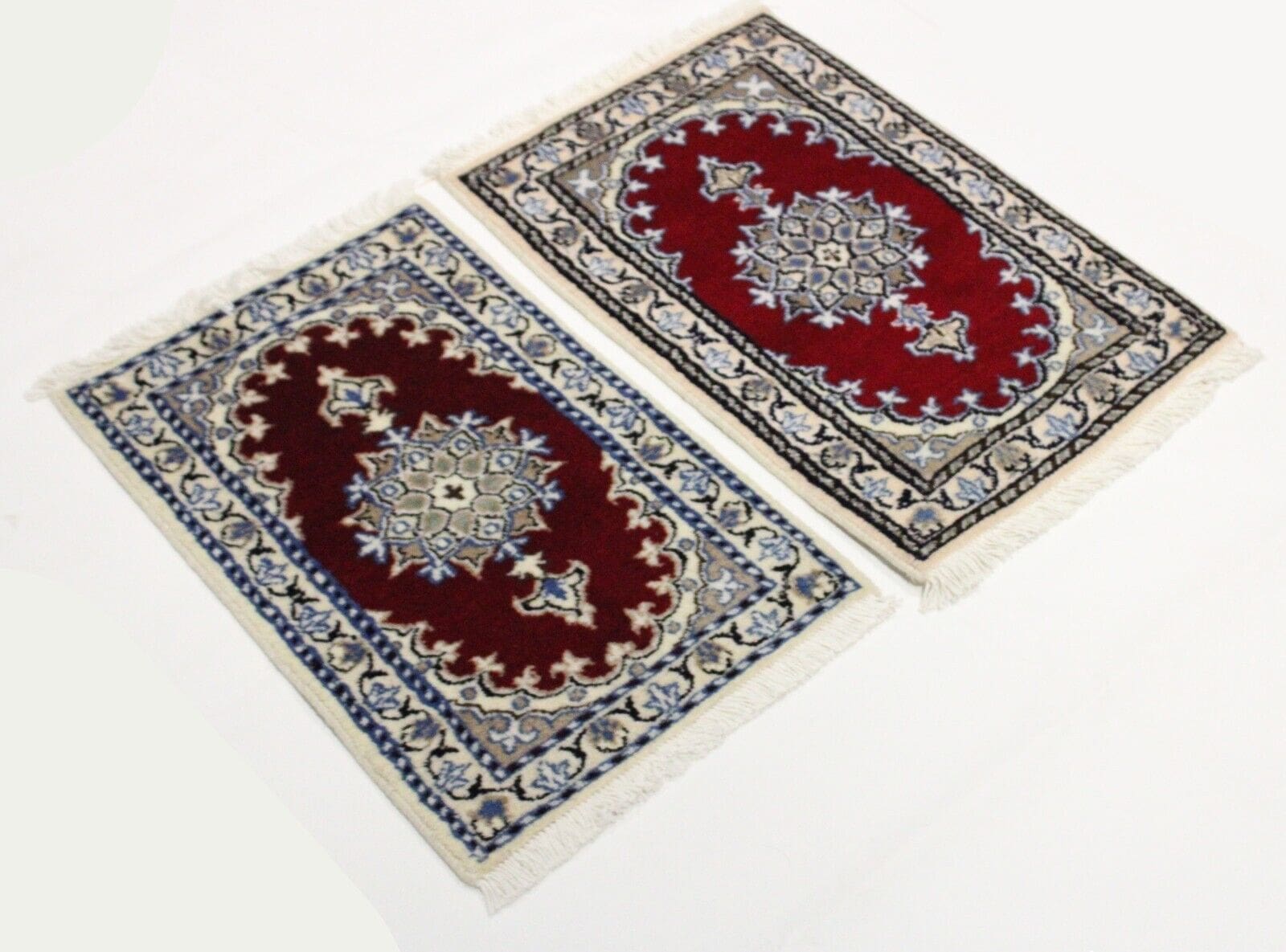
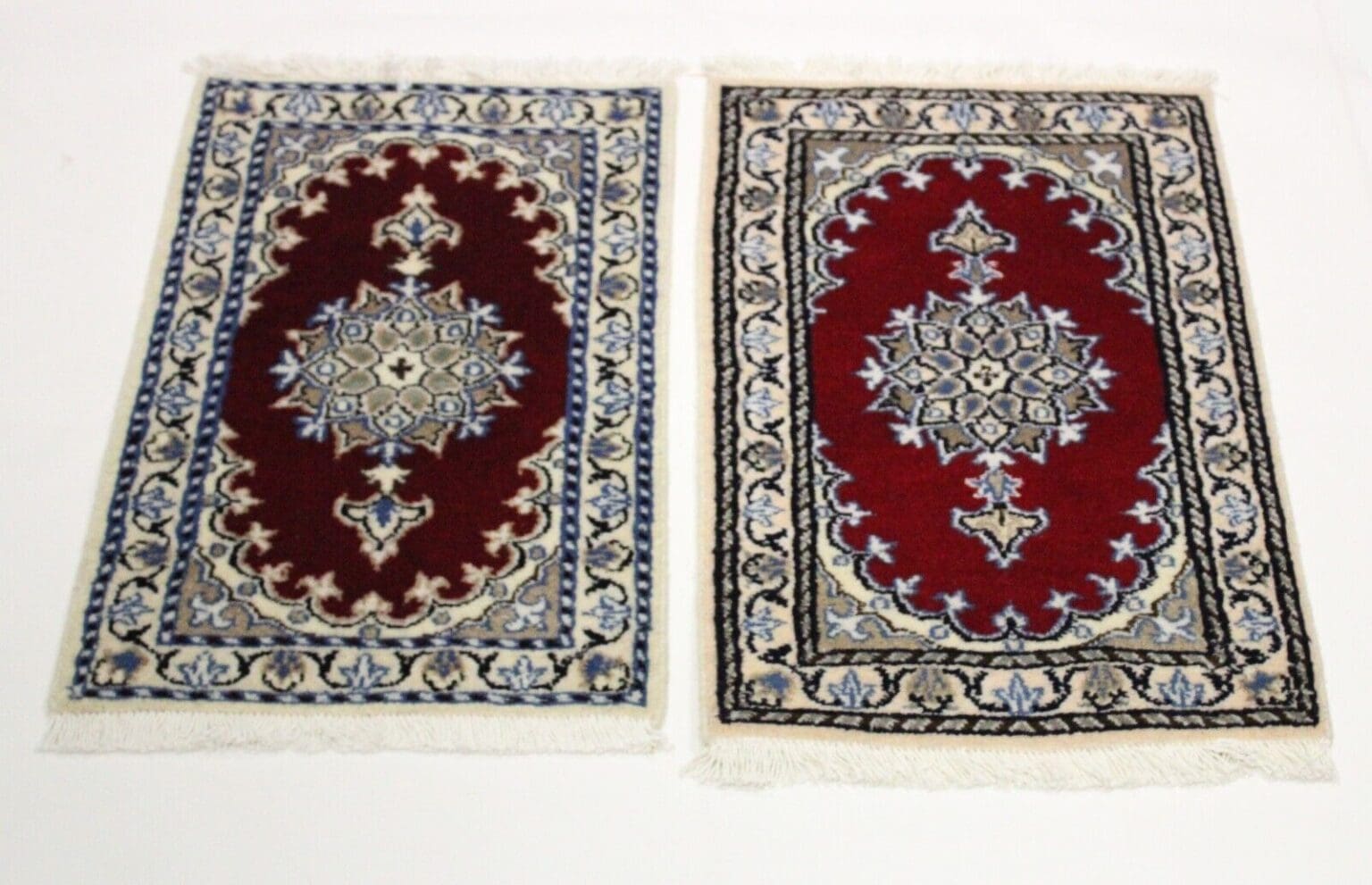
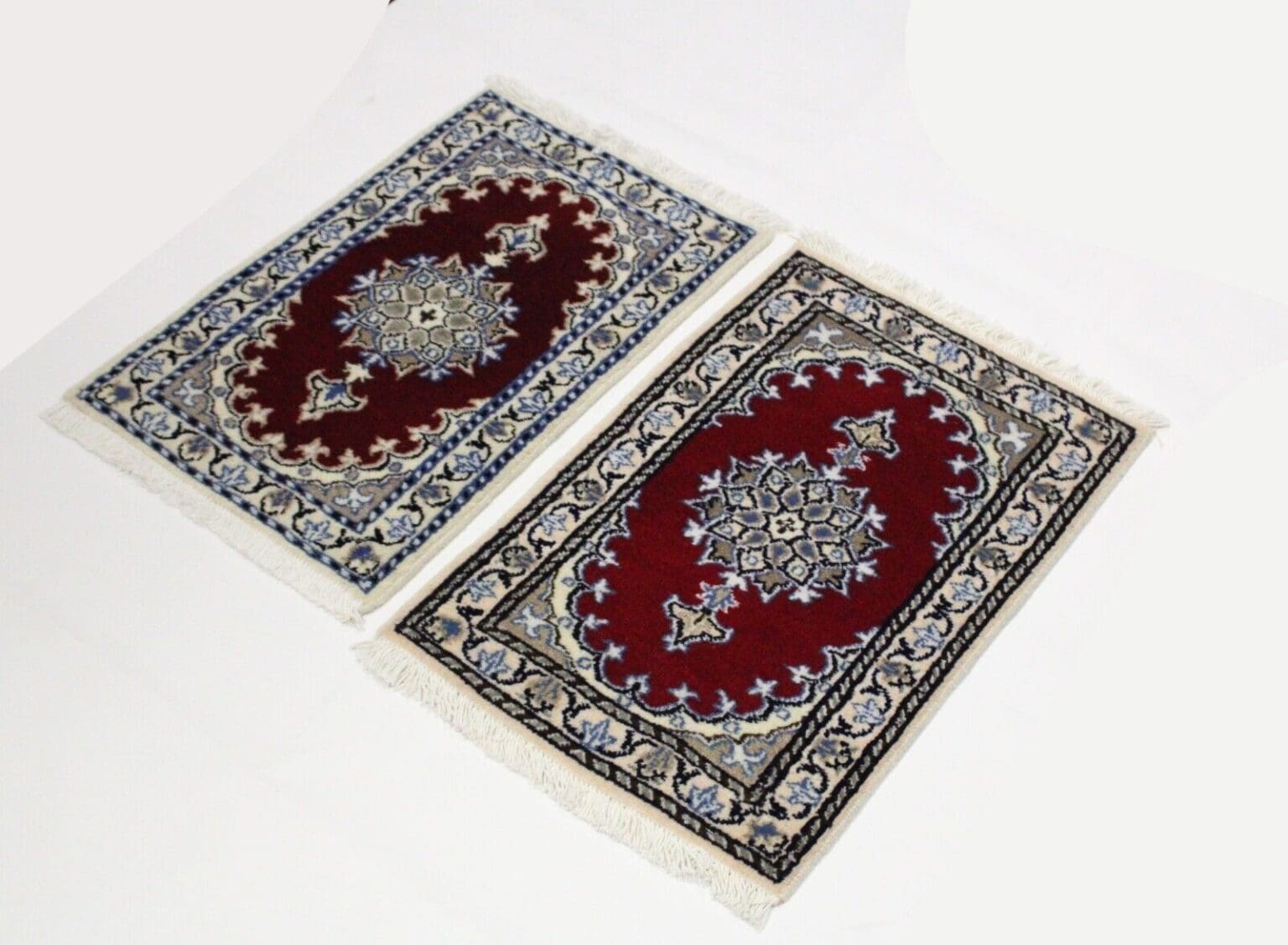
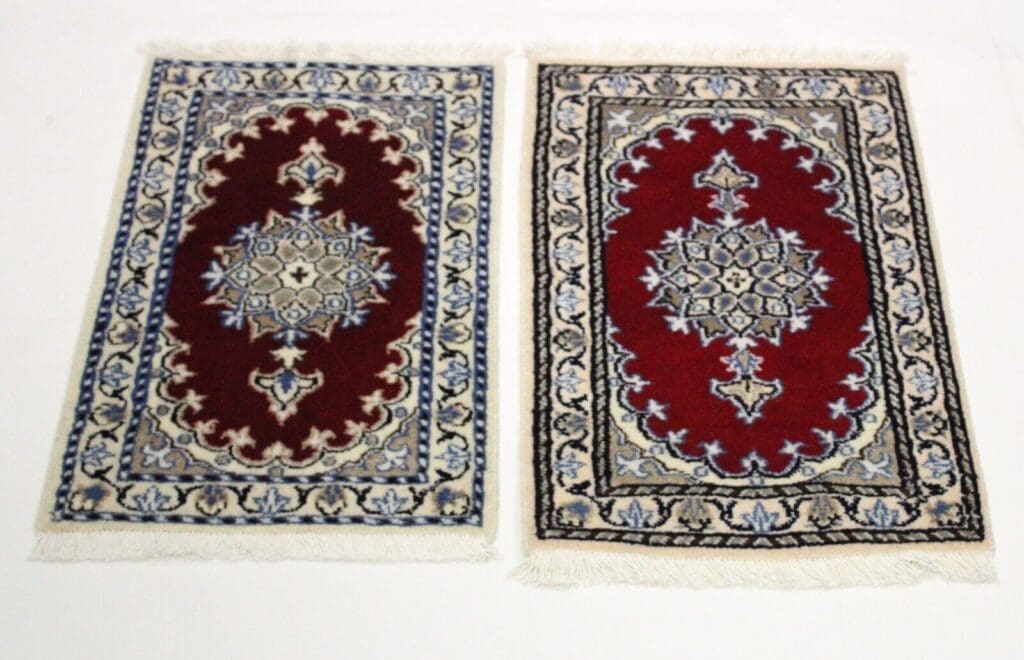
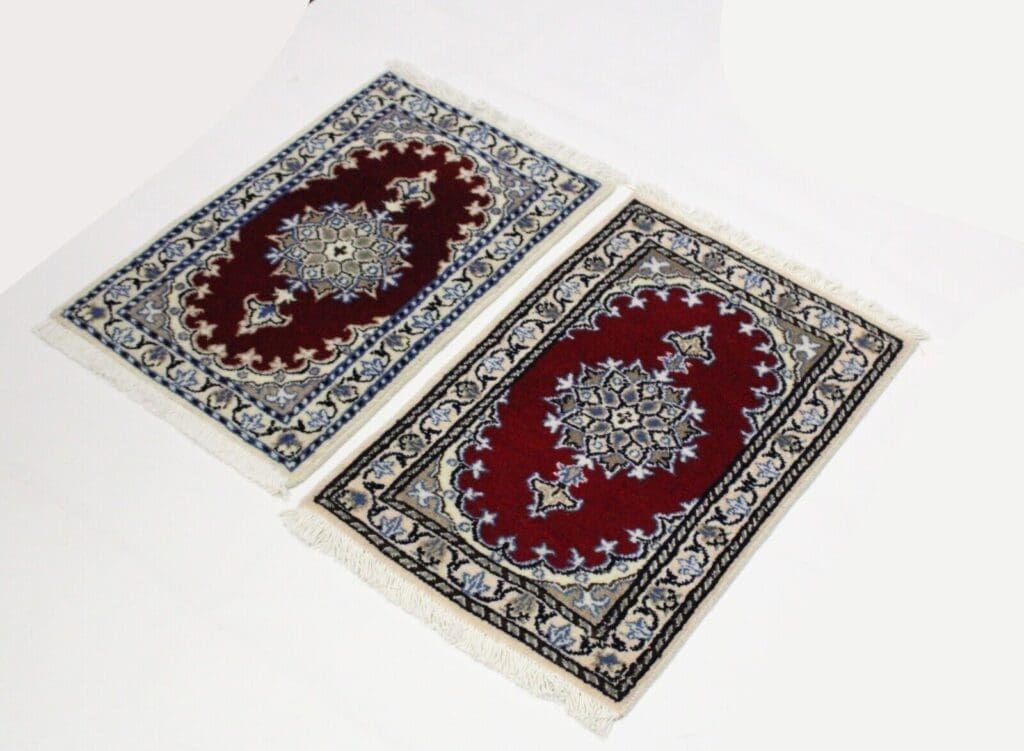
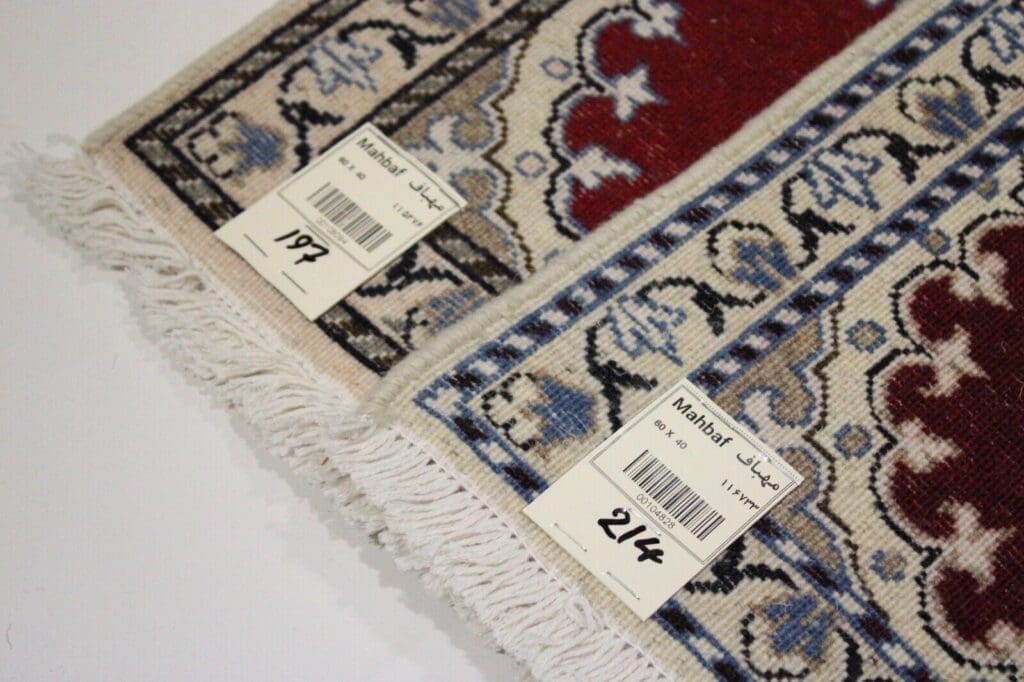
Hand-knotted Nain Persian rug | Knot density: Hand-knotted | Material: wool and cotton | Size: 40 x 60 cm | Pattern: Oriental | Condition: new without label
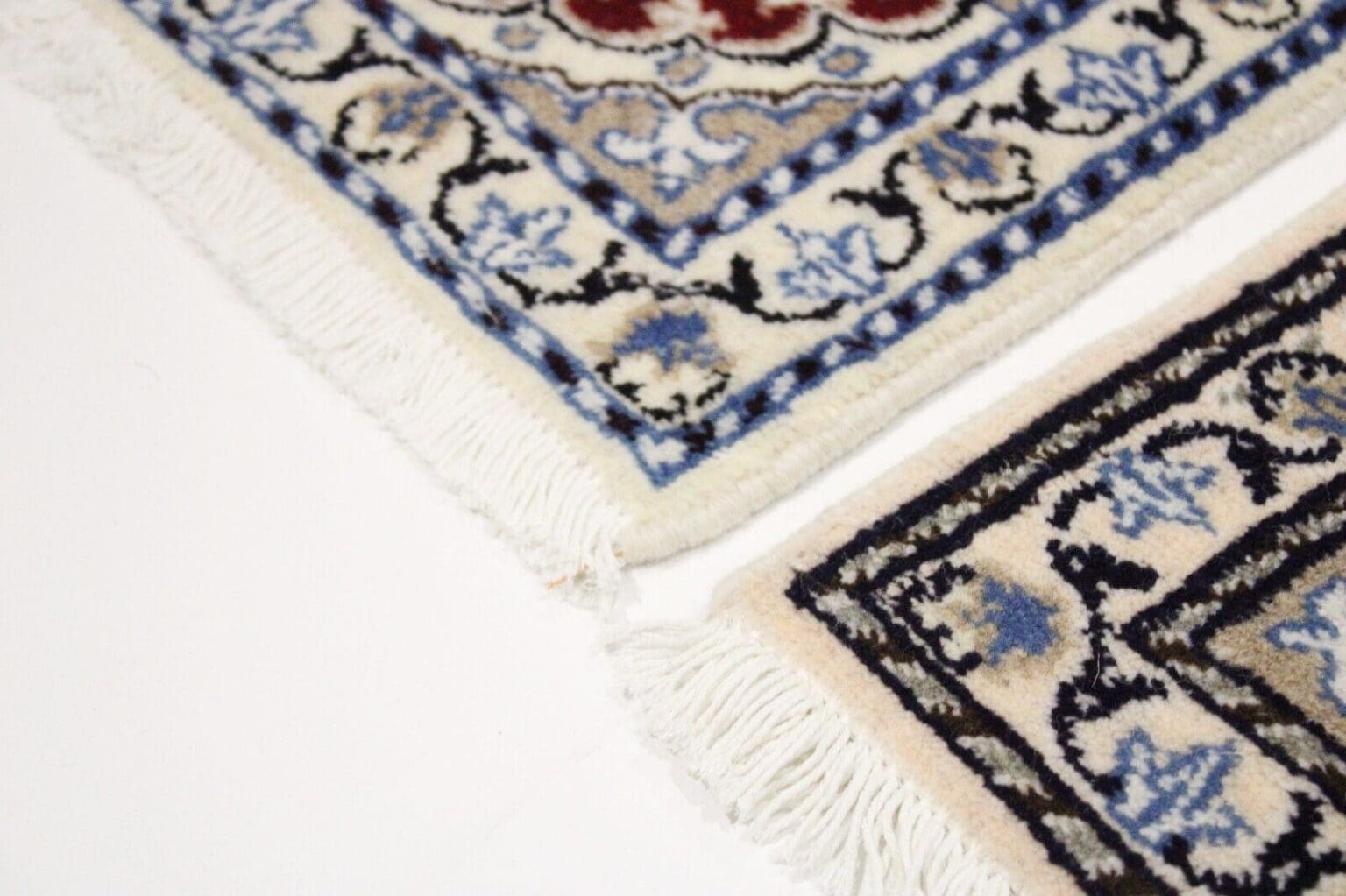
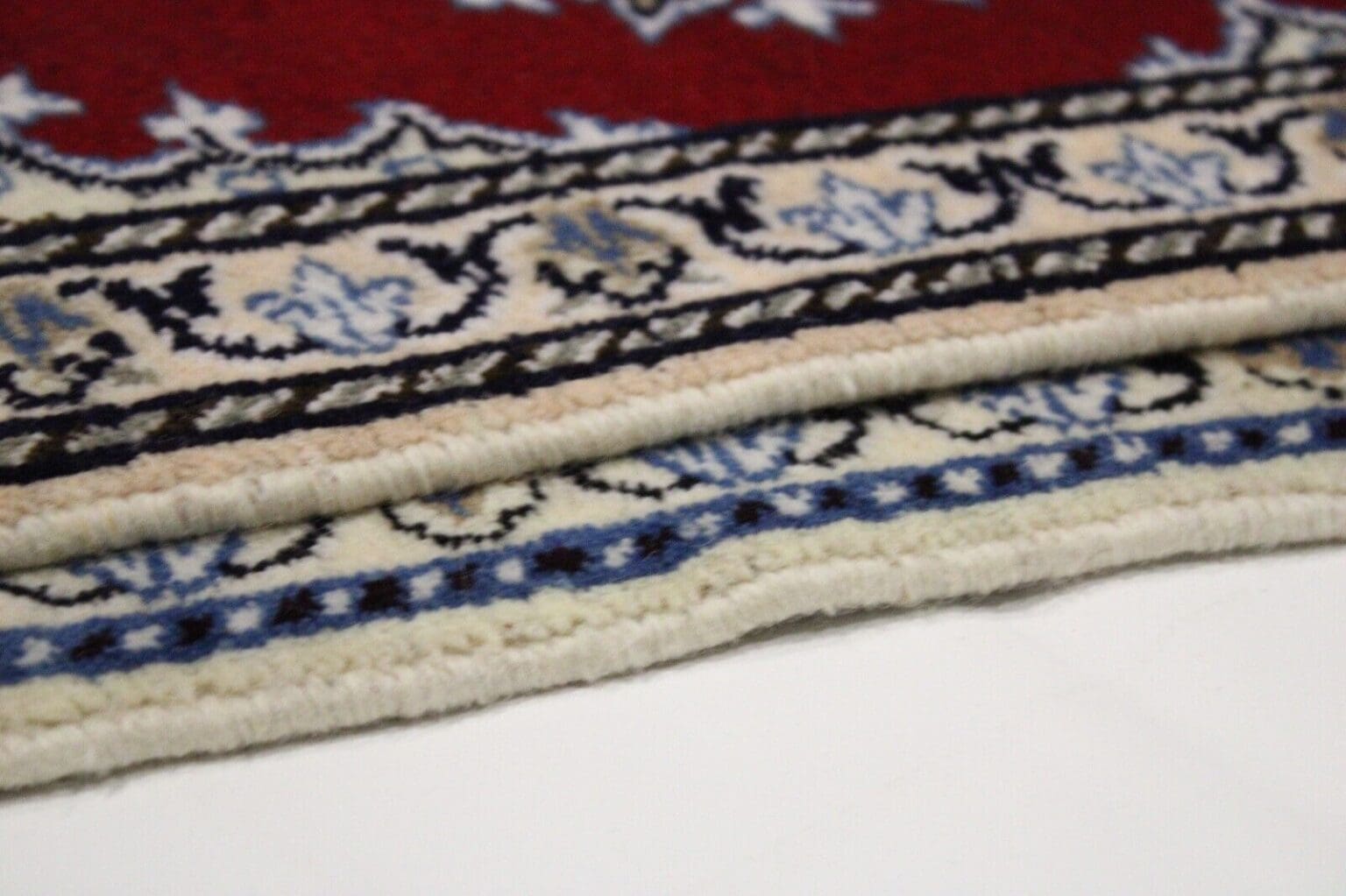
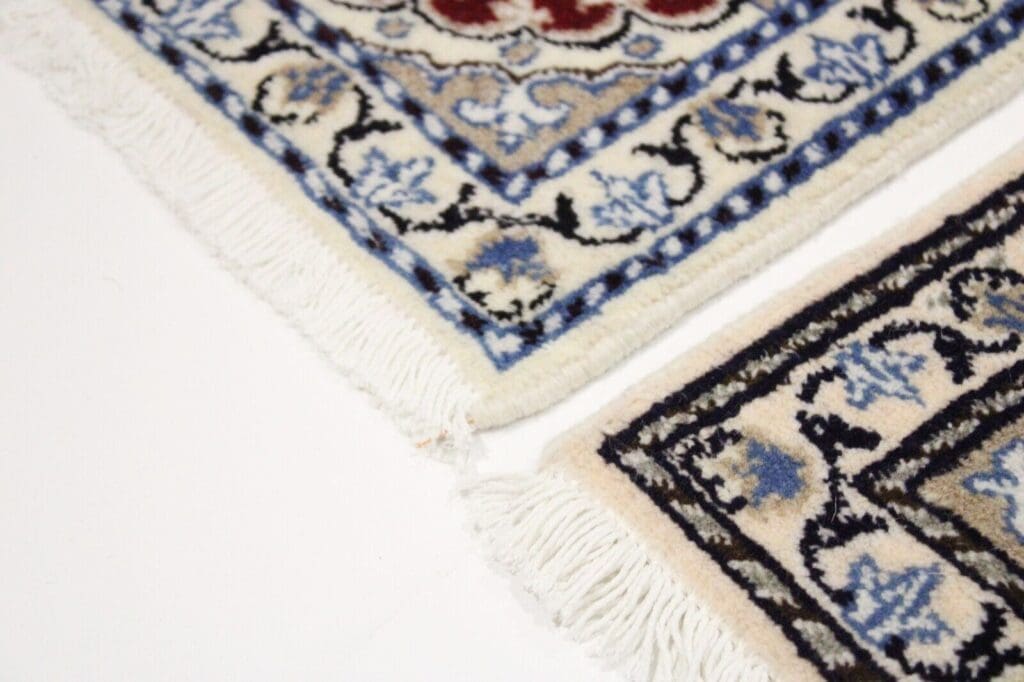
This Nain Persian rug is hand-knotted. Hand knotting builds the textile one knot at a time on a prepared foundation, so the surface is formed through a sequence of individual manual steps rather than by machine production. The rug is described as high pile, giving its surface a noticeably deep and tactile character. The pile is the visible fibre layer that receives the greatest contact during everyday use and therefore deserves careful vacuuming and suitable cleaning.
The listed materials are high-quality wool and cotton. Wool has long been used in rug making because its resilient fibres can withstand regular use while retaining a pleasant hand. It also accepts colour evenly and provides a practical surface fibre for a knotted rug. Cotton is a traditional textile material in Oriental rug construction and may form part of the foundation in different weaving structures. For this rug, wool and cotton are specified, but the source does not assign each material separately to pile or warp.
Hand knotting requires an ordered working process. The foundation is stretched on the loom, knots are inserted row by row, and the structure is secured as the work progresses. The pile is then trimmed and aligned so that the pattern can be read across the surface. The result is a textile whose appearance is connected to the rhythm of manual construction. Each section is developed directly in the woven structure, rather than printed onto an already completed surface.
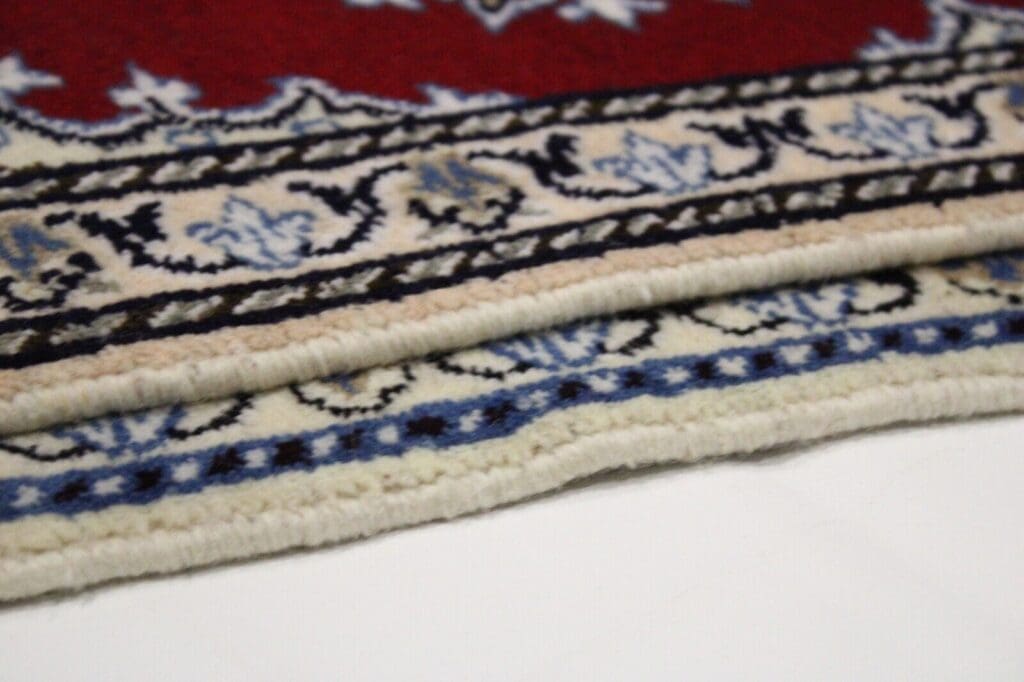
The description of high pile refers to the height and character of the visible woollen surface. A deeper pile can feel softer underfoot and gives the rug a fuller profile than a flat weave. It should be vacuumed with equipment and settings suited to a hand-knotted rug, avoiding unnecessary stress on the fibres. A specialist cleaner is appropriate for heavy soiling or treatment questions. These are general care considerations arising from the construction; they do not add an age, signature, restoration history or other unlisted detail to this particular rug.
Origin and Tradition
This rug is described as a Nain Persian rug from Persia. Nain is a recognised rug-making centre in Iran, located in central Iran. Its modern carpet tradition developed around urban workshops and became known for carefully organised compositions and controlled execution. The name Nain therefore identifies both the stated regional origin and a particular branch of Persian rug tradition.
Persian rug making contains many regional schools, each with its own relationship between drawing, materials, colour and structure. Urban workshops commonly work from prepared designs and place emphasis on balanced layout and precise ornament. Nain rugs are generally discussed within that urban tradition. The regional name should not be confused with every rug that uses a Persian-looking floral design: the design language may travel across regions, while the origin of an individual rug remains a separate fact.
Nain developed its own reputation within the wider history of Iranian weaving. Older Persian pattern vocabularies were adapted for workshop production, with compositions that often use a central field, surrounding borders and carefully distributed botanical elements. Symmetry and visual order are frequent organising principles in this tradition. These conventions explain the place of Nain in the history of Persian carpets without asserting a specific medallion, colour scheme or detailed drawing for this rug when those particulars are not supplied.
Manual knotting is a long-established Persian craft. It brings together drawing, fibre preparation, colour handling and repeated hand movements. A design is not simply applied after the rug is finished; its structure is created while the knots are inserted. In urban weaving centres, a pattern plan can guide the placement of motifs and help maintain proportion across the field. The knotted surface therefore records both the intended design and the technical decisions made during production.
Persian rugs have traditionally been made in many formats for domestic interiors and other settings. A smaller rug can define a limited area, while a larger one can organise a complete seating or dining arrangement. This item is identified as a Nain Persian rug, as traditionally Persian in style, and as suitable for all rooms. Its placement should still be selected in relation to the use of the room, the furniture arrangement and the amount of foot traffic. The stated suitability for underfloor heating adds a practical use detail, but the instructions for the heating system and the floor should also be observed.
The term Persian rug is appropriate here because the origin is given as Persia, meaning Iran in the context of carpet production. Oriental rugs from other countries may share floral, geometric or medallion traditions, but they are not thereby Persian rugs. Nain is the regional designation supplied for this piece. Keeping origin and pattern separate makes the description precise: the rug is from the Nain Persian tradition, while its listed pattern category is Oriental and its style is traditionally Persian.
The cultural history of Persian carpets is also a history of workshops, family skills and changing interior needs. Designs have been adapted over time without losing the importance of proportion, rhythm and repeated ornament. Nain belongs to the part of this history associated with an urban Iranian production environment. The hand-knotted technique and the use of wool and cotton connect the individual object with that broader textile tradition, while the condition and other product details remain specific to the offered rug.
Design and Pattern
The pattern is listed as Oriental, and the style is described as traditionally Persian. These terms place the design within a broad ornamental vocabulary rather than naming one exact motif. Oriental rug designs may include flowers, leaves, vines, rosettes, geometric divisions, medallions and border systems. The supplied classification establishes the stylistic direction of this rug, but it does not specify an individual motif, colour arrangement or central composition.
Traditional Persian designs often rely on a clear relationship between the central field and the surrounding borders. The field carries the principal ornament, while the borders frame the composition and create a defined edge. Some designs use a central medallion; others repeat motifs across the entire field in an all-over arrangement. These are established design structures in Persian weaving and provide useful context for the stated Oriental and traditionally Persian style without turning a general convention into an unverified detail about this rug.
Botanical ornament has an important place in Persian carpet design. Flowers and leaves can be drawn in a naturalistic manner or reduced to highly stylised signs. Vines connect separate forms, creating movement across the field, while repeated blossoms establish rhythm. Geometric outlines help organise the drawing and keep individual motifs legible. Nain designs are often associated with refined, controlled arrangements of this kind. That association explains the regional design background, but it does not identify a particular floral pattern here.
A rug’s visual structure depends on more than the presence of individual ornaments. The scale of the motifs, the width of the borders and the balance between decorated and quieter areas all influence how the composition is read. Small repeated forms can produce a finely articulated surface, while larger forms create a more direct visual rhythm. In a hand-knotted rug, these distinctions are built into the textile itself. The pattern is therefore closely connected to the knotting process and to the way the drawing is translated into rows of knots.
Persian ornament has been reinterpreted by different regions and across different periods. Medallions, scrolling foliage and border patterns appear in many schools, but their proportions and line work vary. Nain is commonly placed among the urban traditions that favour an orderly layout and carefully balanced ornament. The wider word Oriental remains useful for the catalogue classification supplied for this rug, while the Nain designation provides the more specific regional context. Neither term requires an invented colour palette or an unlisted signature motif.
A traditionally Persian rug can work with both classic and restrained contemporary interiors. In a room with carved wood or patterned textiles, an Oriental design can participate in an established decorative language. In a simpler setting, it can serve as the main patterned textile while the surrounding furnishings remain quiet. Placement should take account of the high pile, furniture legs, door clearance and walking routes. The rug is described as suitable for all rooms, but the most appropriate position depends on the practical demands of each room.
Pattern also affects maintenance in practical ways. Dust and small particles can settle between fibres in a deeper pile, so regular gentle cleaning is useful. Moving furniture across the surface can place stress on the pile and should be avoided where possible. Strong, prolonged sunlight can affect textile dyes, making a position with controlled daylight preferable. These points are general care guidance for a hand-knotted, high-pile rug and do not add colours or construction details that are not included in the product information.
Special Features
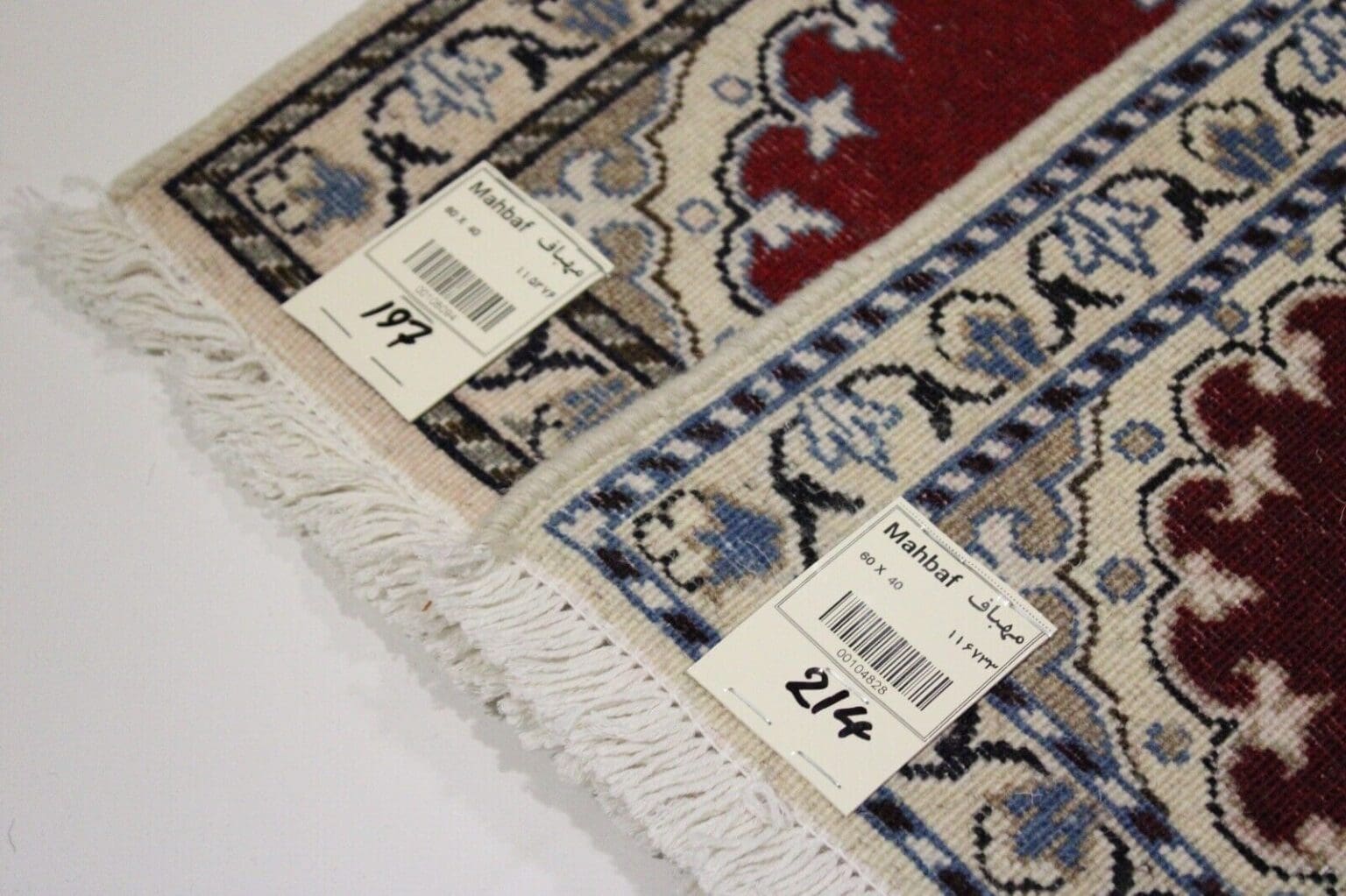
The rug is described as new without a label. This condition statement applies to the offered item and also makes clear that no label is present. No age, date of manufacture, signature, restoration record or provenance beyond the stated origin in Persia is provided. Those details are therefore not part of the description.
Suitability for underfloor heating is listed as a feature. When using a rug on a heated floor, the heating should be distributed evenly and the installation instructions for the floor system should be followed. A rug pad designed for heated floors can help keep the rug stable and protect the floor, provided that the pad is compatible with the system. The rug should not be treated as a replacement for the technical requirements of the flooring or heating manufacturer.
The rug is also described as suitable for all rooms. Its high-pile construction makes regular, careful maintenance appropriate. Loose dirt should be removed without aggressive brushing, and spills should be addressed promptly. Direct, prolonged sunlight should be limited to reduce unnecessary stress on the colours. For substantial staining or moisture, professional rug cleaning is preferable to improvised treatment.
FAQ
How should a Persian rug be cleaned?
A hand-knotted Persian rug should be vacuumed regularly with a setting that is suitable for a high-pile surface. The vacuum should remove loose dirt without pulling at the pile or abrading the fibres. If a liquid is spilled, blot it promptly with an absorbent cloth rather than rubbing it into the rug. Household chemicals and strong stain removers are not automatically suitable for wool and should not be used without checking their compatibility. For a full wash or difficult staining, a professional cleaner experienced with Oriental rugs is the appropriate choice. Prolonged direct sunlight should also be avoided because it can cause colours to fade.
What makes a Nain Persian rug distinctive?
A Nain Persian rug combines a Persian regional tradition with hand-knotted construction. Nain is an Iranian rug centre associated with urban workshop production, balanced layouts and carefully worked ornamental designs. This rug is specified as using wool and cotton, with a high pile and an Oriental, traditionally Persian style. Its distinct character therefore comes from the combination of regional classification, manual craftsmanship and Persian design tradition. An exact motif, signature, age or individual workshop is not listed, so those details are not used to define this particular piece.
How do I choose the right size for a room?
Begin by measuring the area available on the floor and then consider doors, circulation paths and the position of the furniture. A small rug can define a compact zone in front of a chair, beside a bed or in an entrance area, while a larger rug can connect several pieces of furniture. Decide whether the furniture should sit partly on the rug or remain completely outside it, and keep the arrangement consistent. With underfloor heating, a suitable pad and sufficient contact with the floor are important. This item is described as suitable for all rooms, but its best position still depends on the room’s function, furniture layout and level of use.
To provide the best experiences, we use technologies like cookies to store and/or access device information. Consenting to these technologies will allow us to process data such as browsing behavior or unique IDs on this site. Not consenting or withdrawing consent, may adversely affect certain features and functions.
Functional Always active
The technical storage or access is strictly necessary for the legitimate purpose of enabling the use of a specific service explicitly requested by the subscriber or user, or for the sole purpose of carrying out the transmission of a communication over an electronic communications network.
Preferences
The technical storage or access is necessary for the legitimate purpose of storing preferences that are not requested by the subscriber or user.
Statistics
The technical storage or access that is used exclusively for statistical purposes.The technical storage or access that is used exclusively for anonymous statistical purposes. Without a subpoena, voluntary compliance on the part of your Internet Service Provider, or additional records from a third party, information stored or retrieved for this purpose alone cannot usually be used to identify you.
Marketing
The technical storage or access is required to create user profiles to send advertising, or to track the user on a website or across several websites for similar marketing purposes.
 SECURE PAYMENT
 SHIPPING PARTNERS