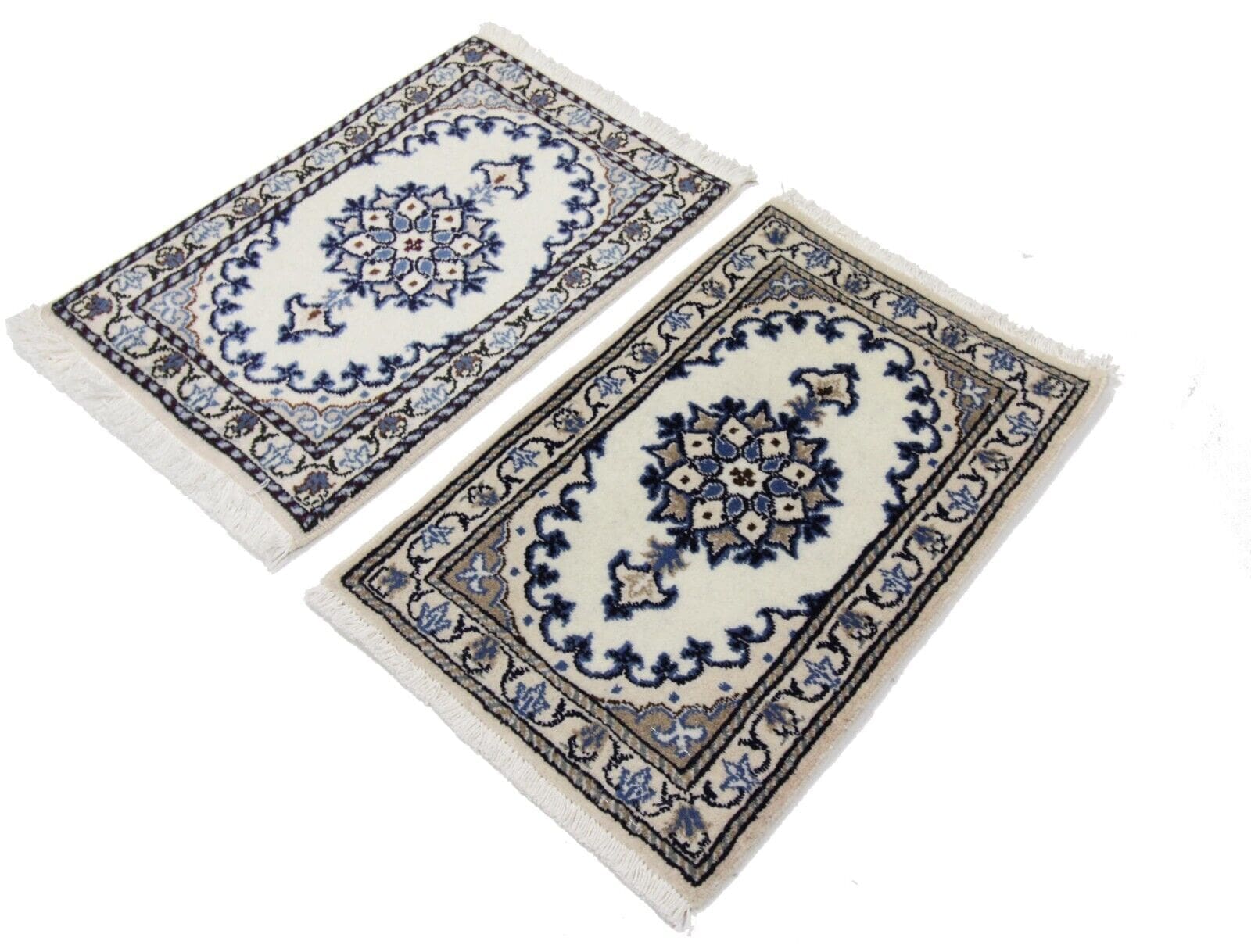
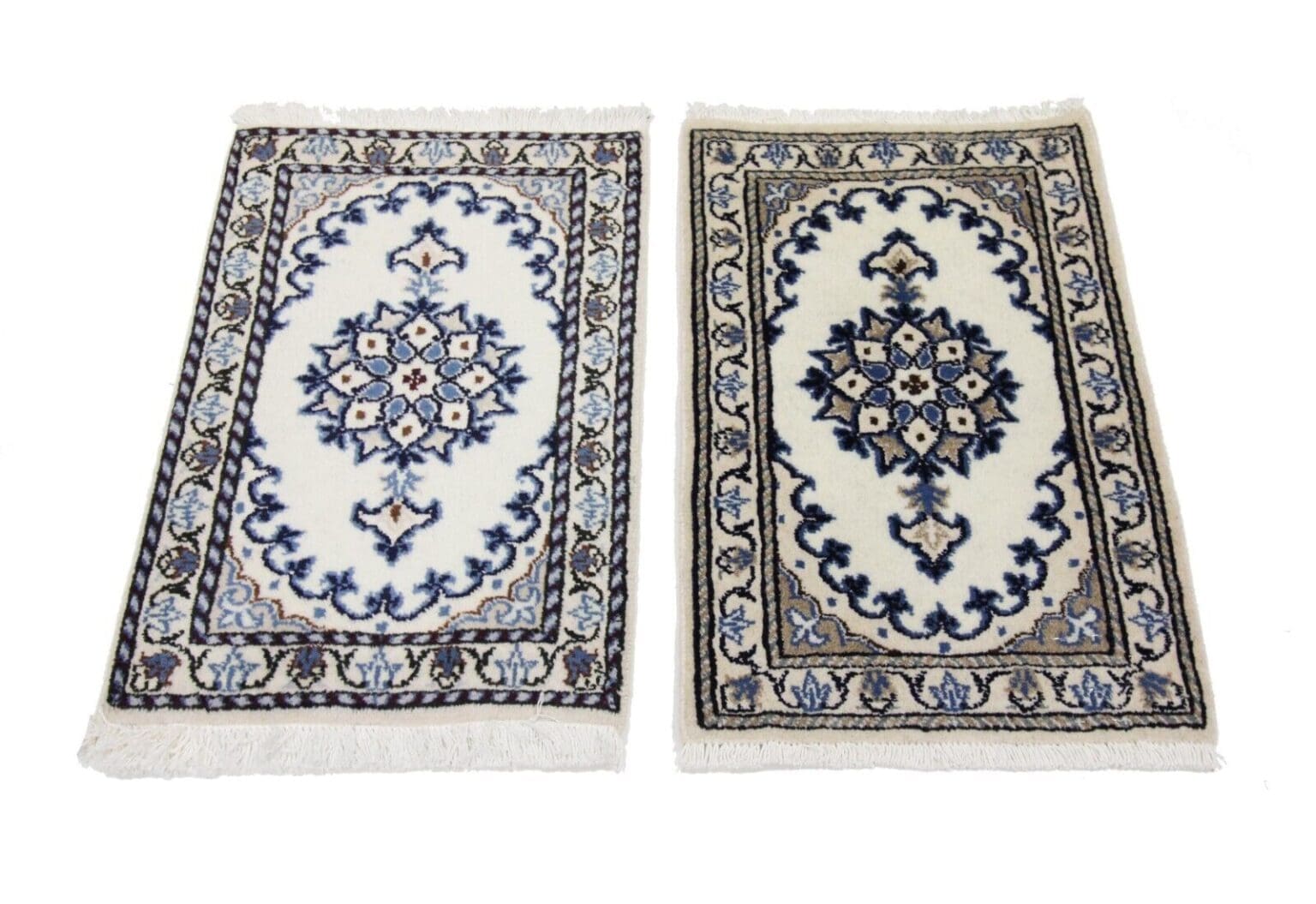
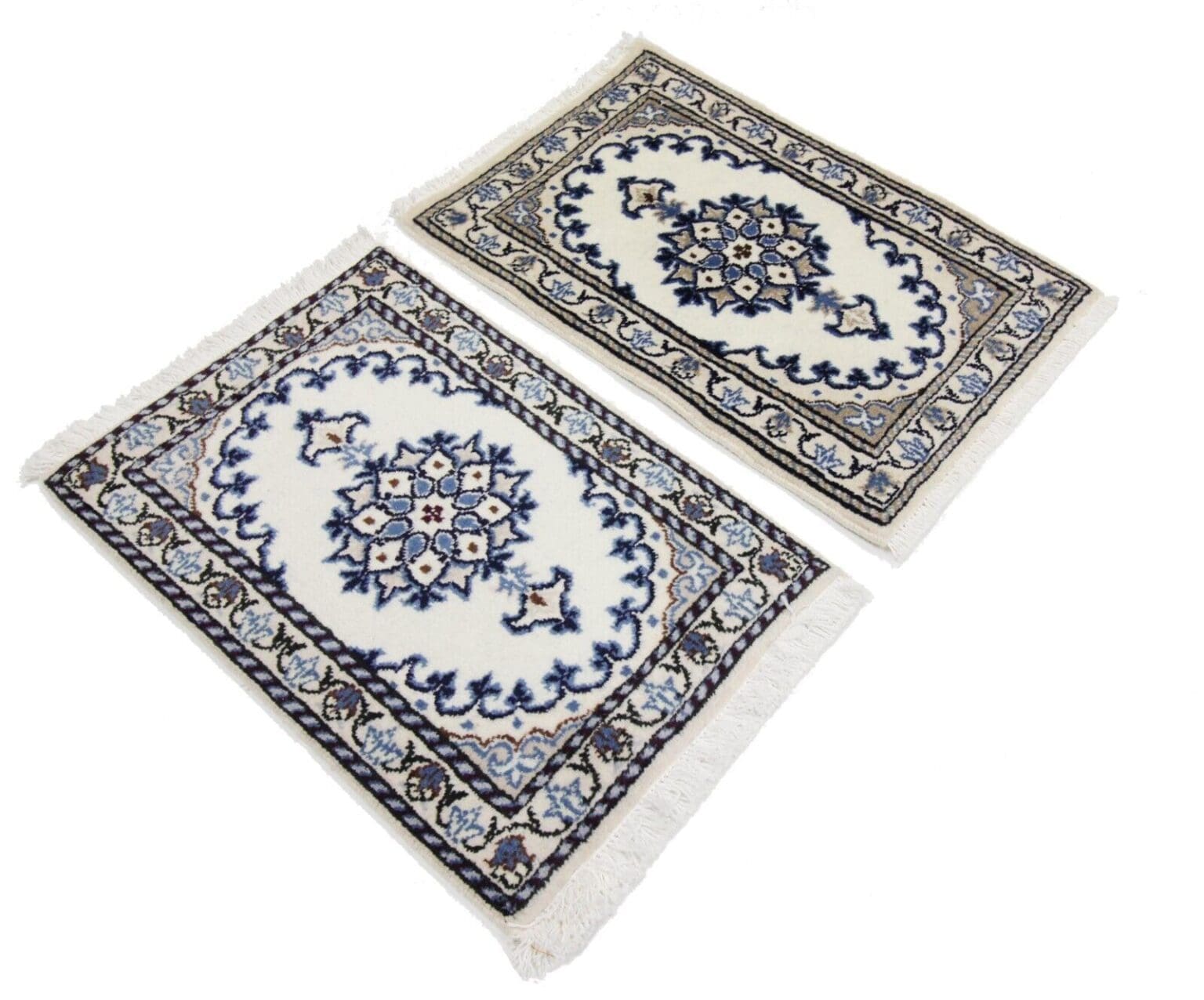
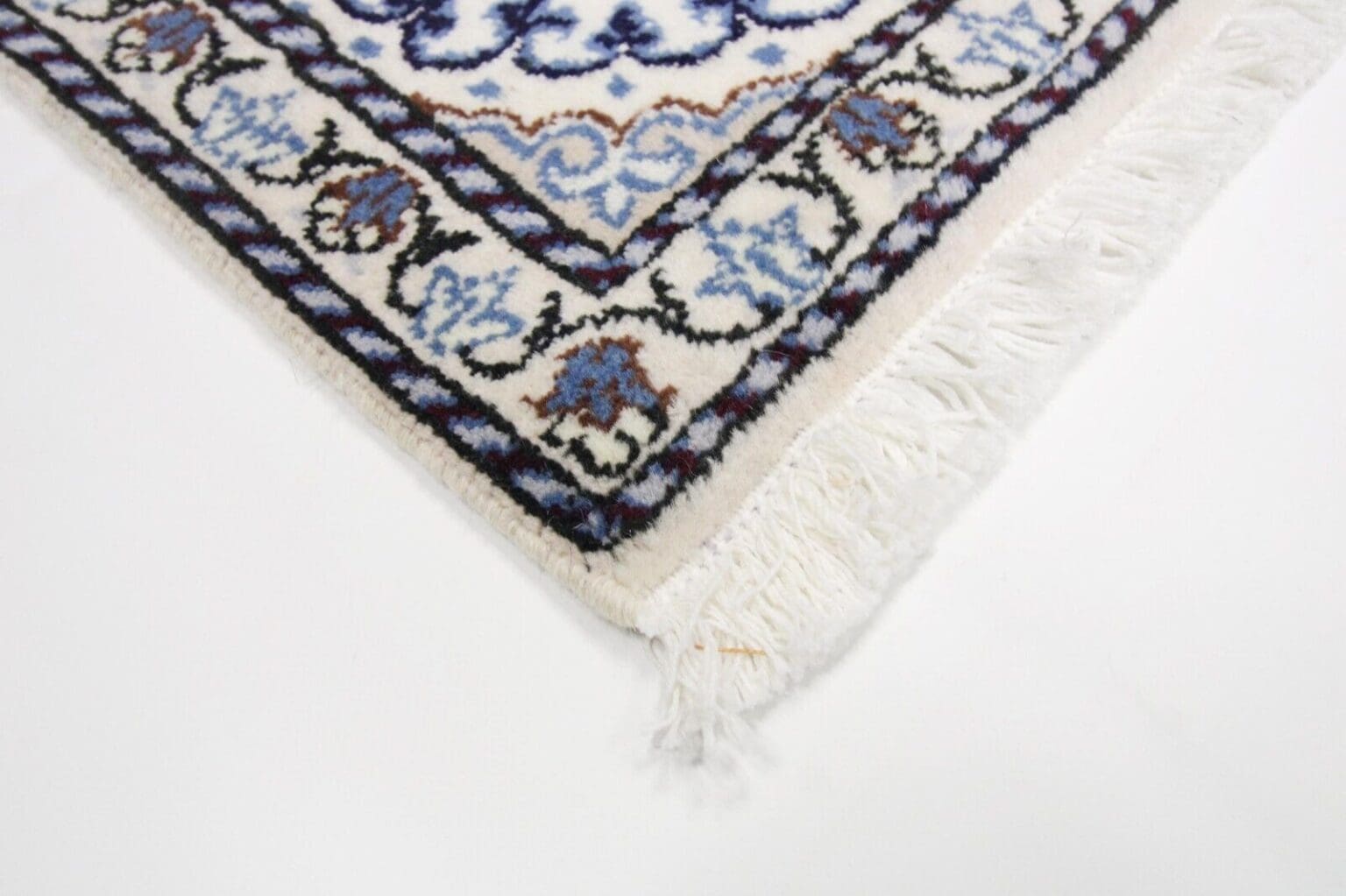
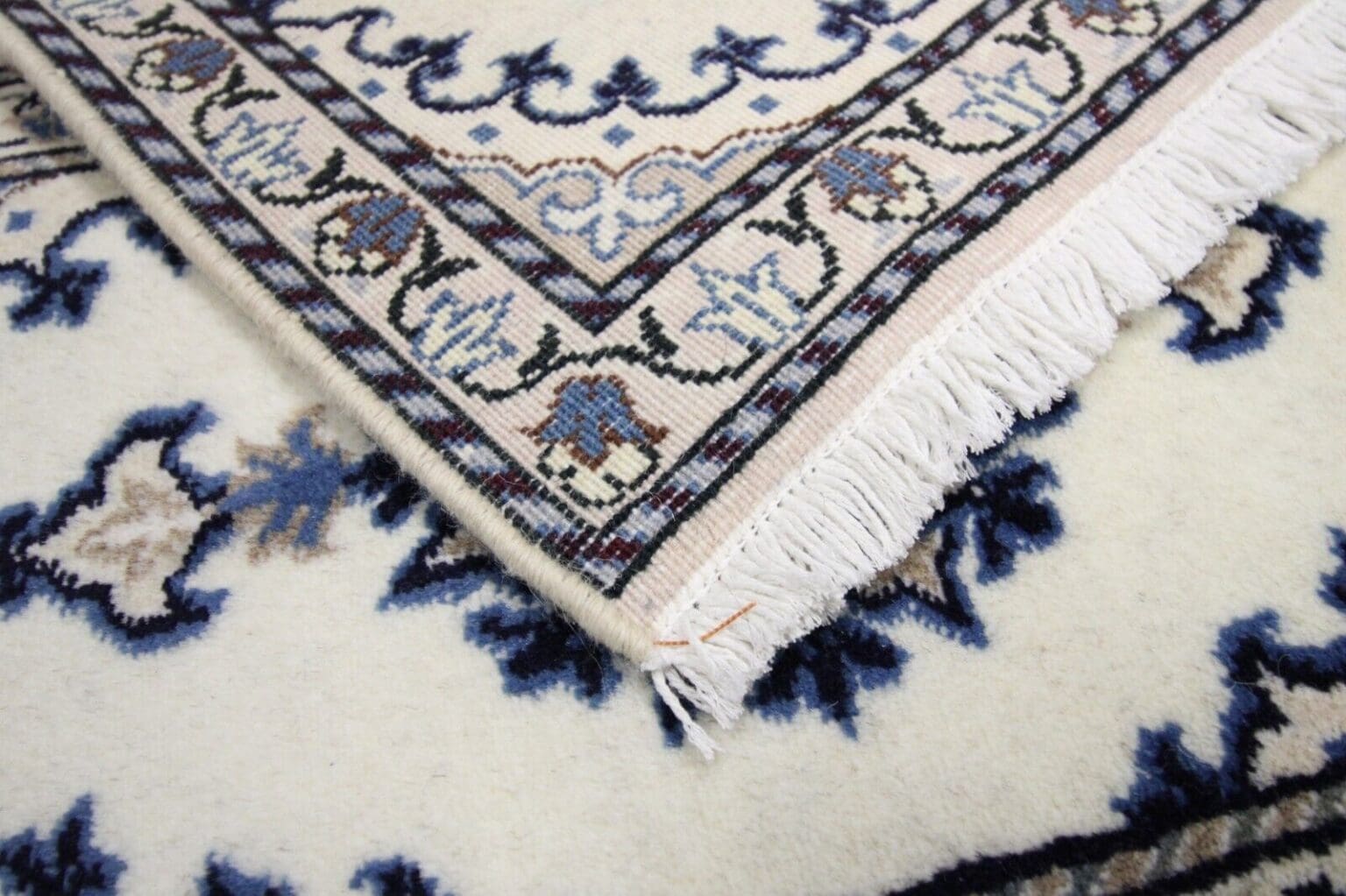
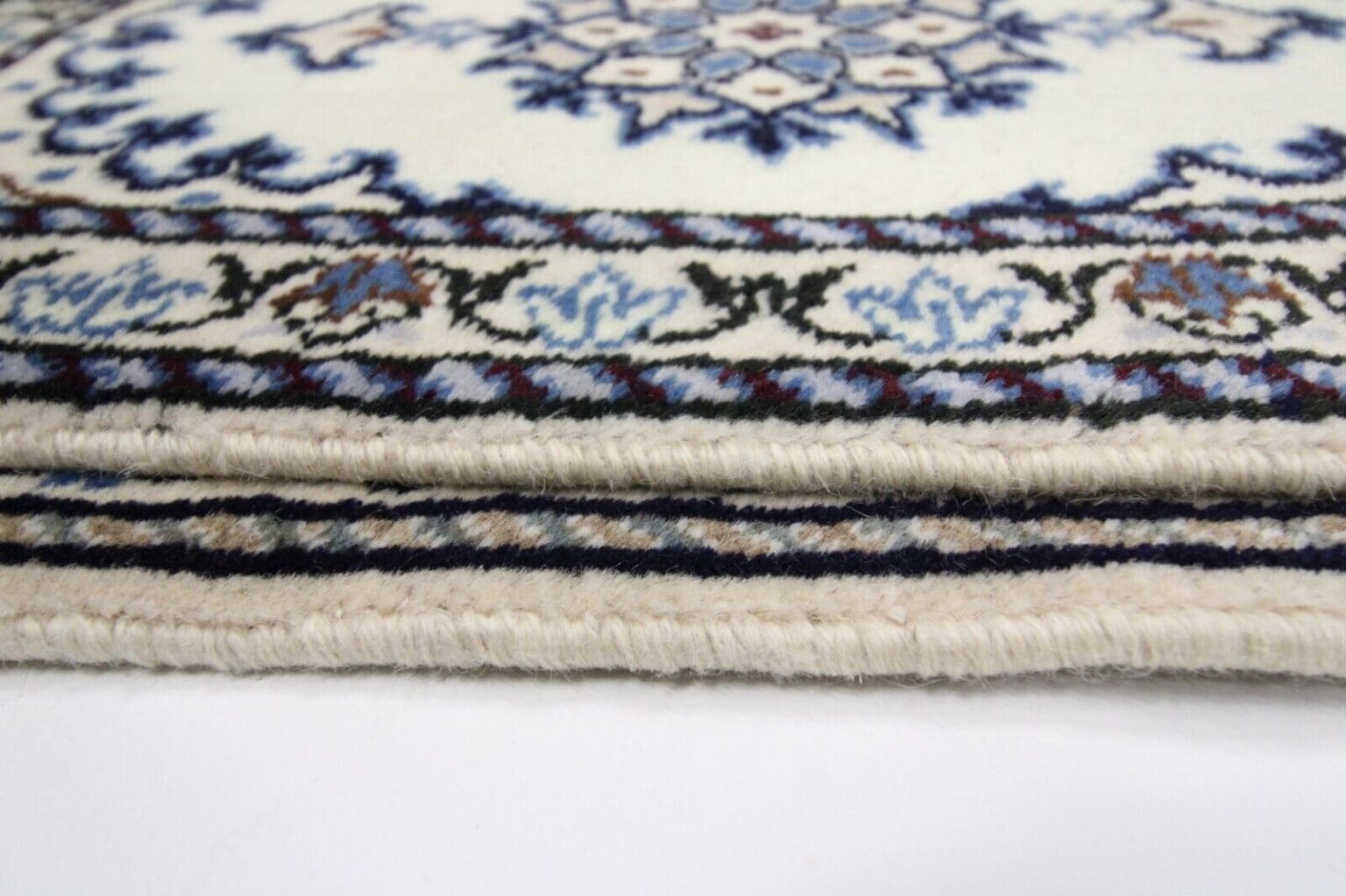
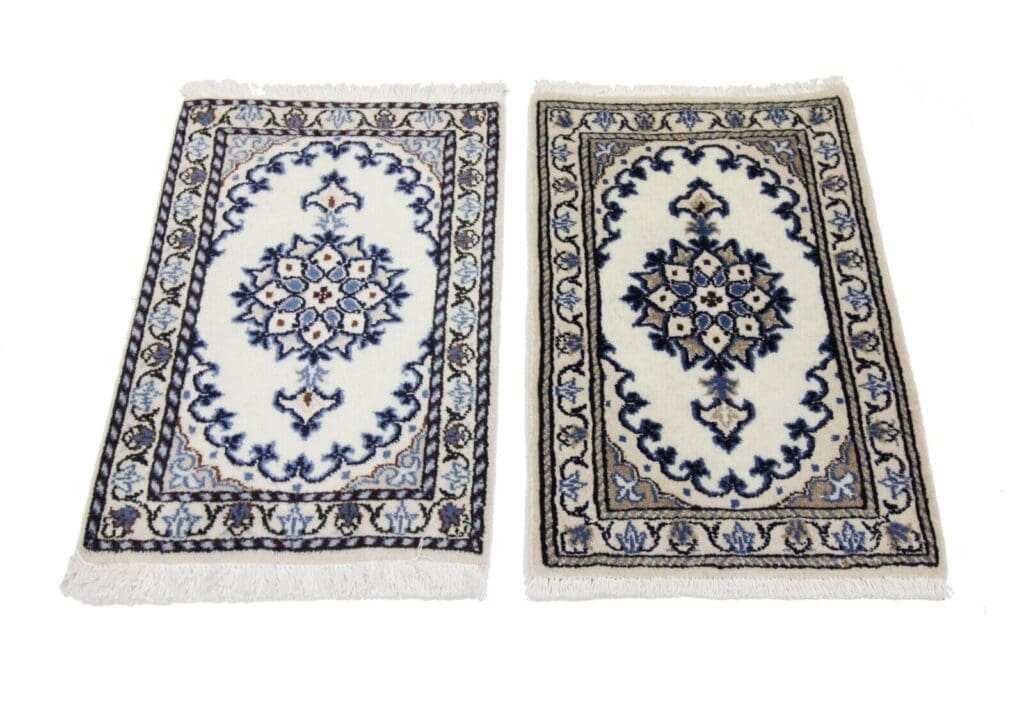
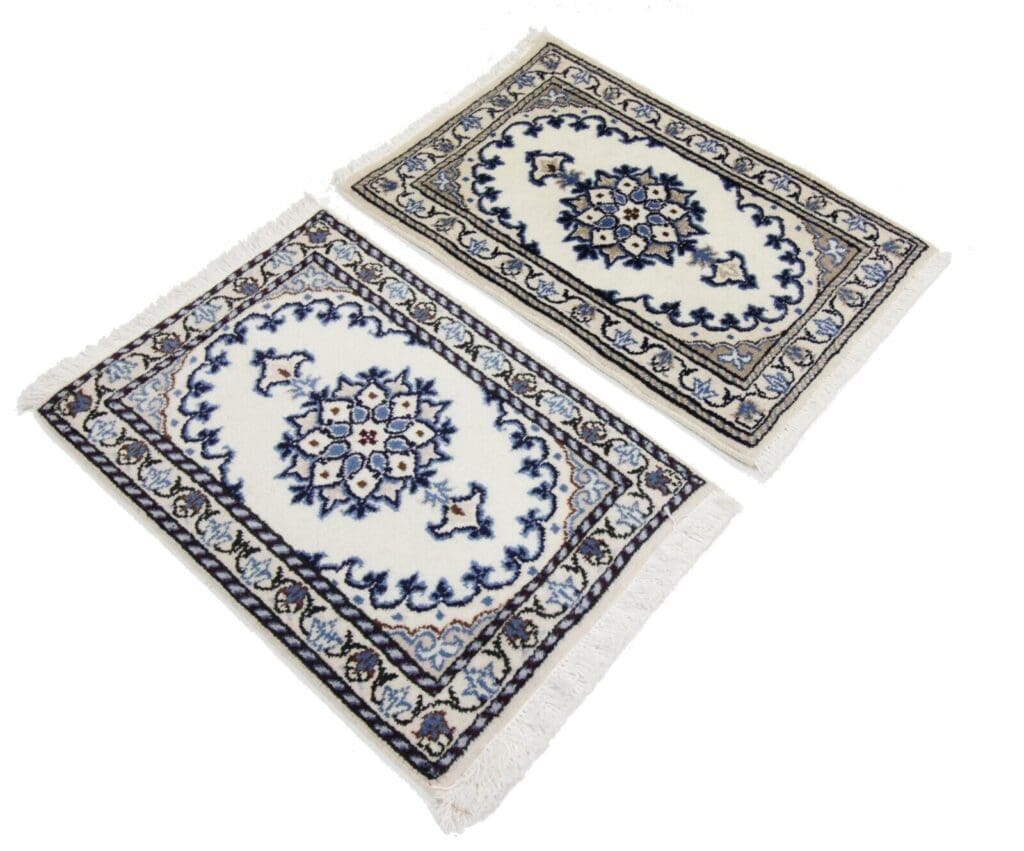
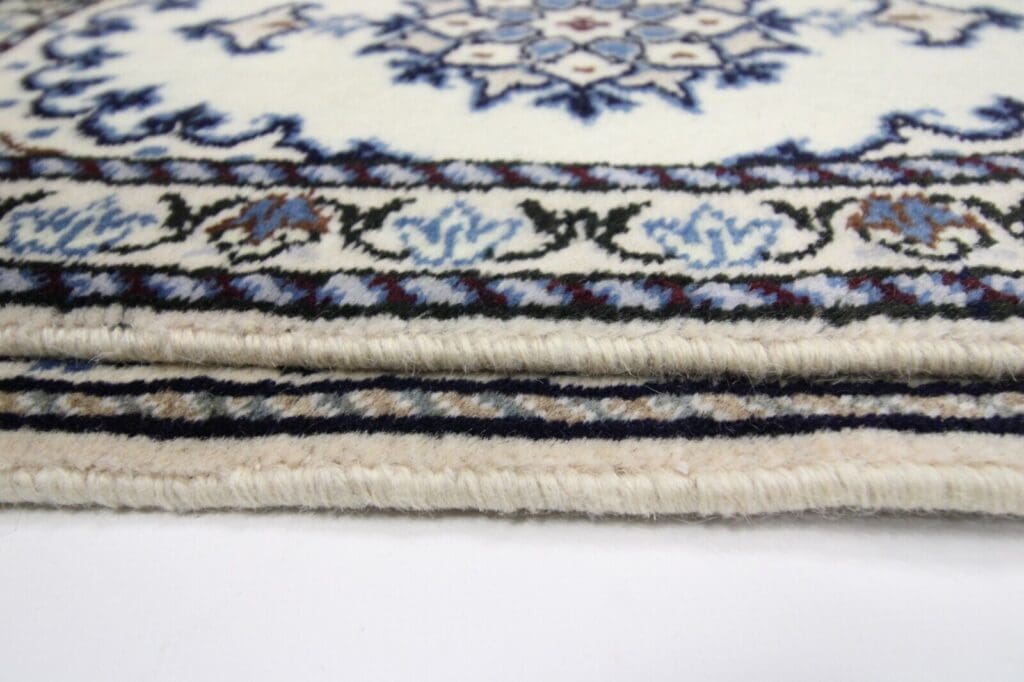
Hand-knotted Nain Persian Rug | Knot density: Hand-knotted | Material: pile wool, warp cotton | Size: 40 x 60 cm | Pattern: Oriental | Condition: New without label, top condition
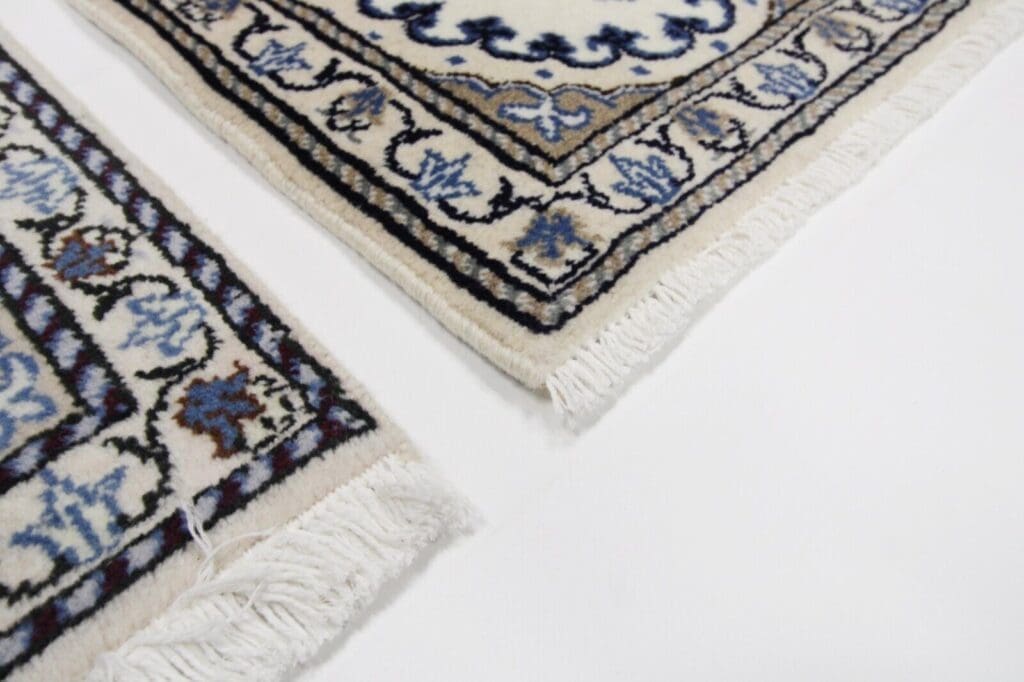
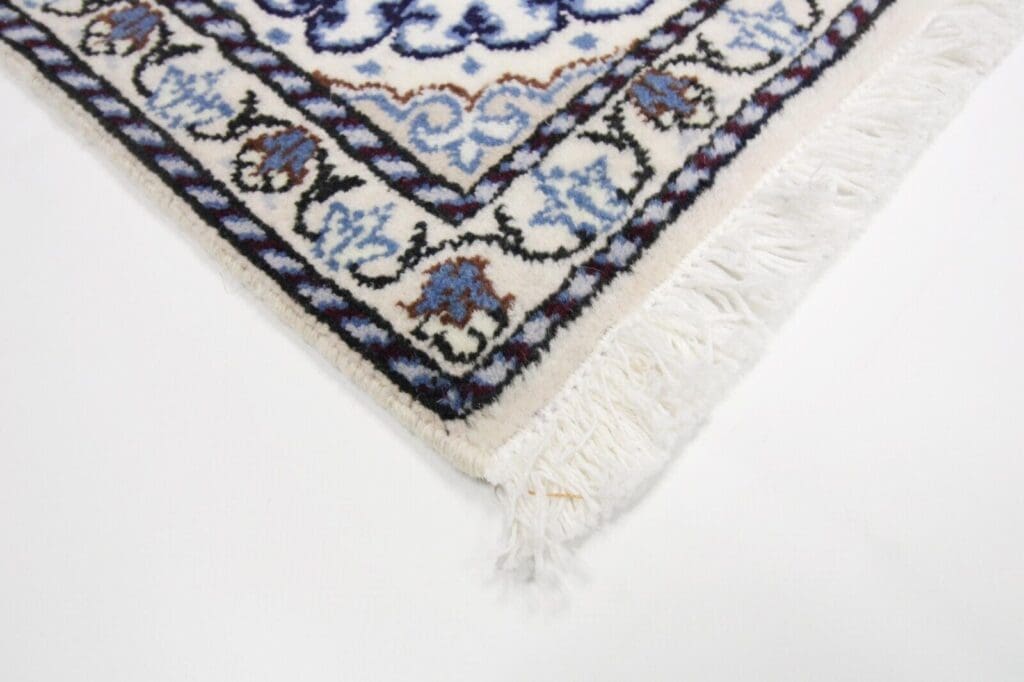
This Nain Persian rug is hand-knotted. The listed materials are high-quality wool and cotton. Wool forms the pile and gives the surface the soft, full character associated with a high pile. Cotton is named as an additional material. The combination reflects a long-established foundation of Persian rug making: the visible pile creates the design and texture, while the underlying textile structure supports the knotted construction.
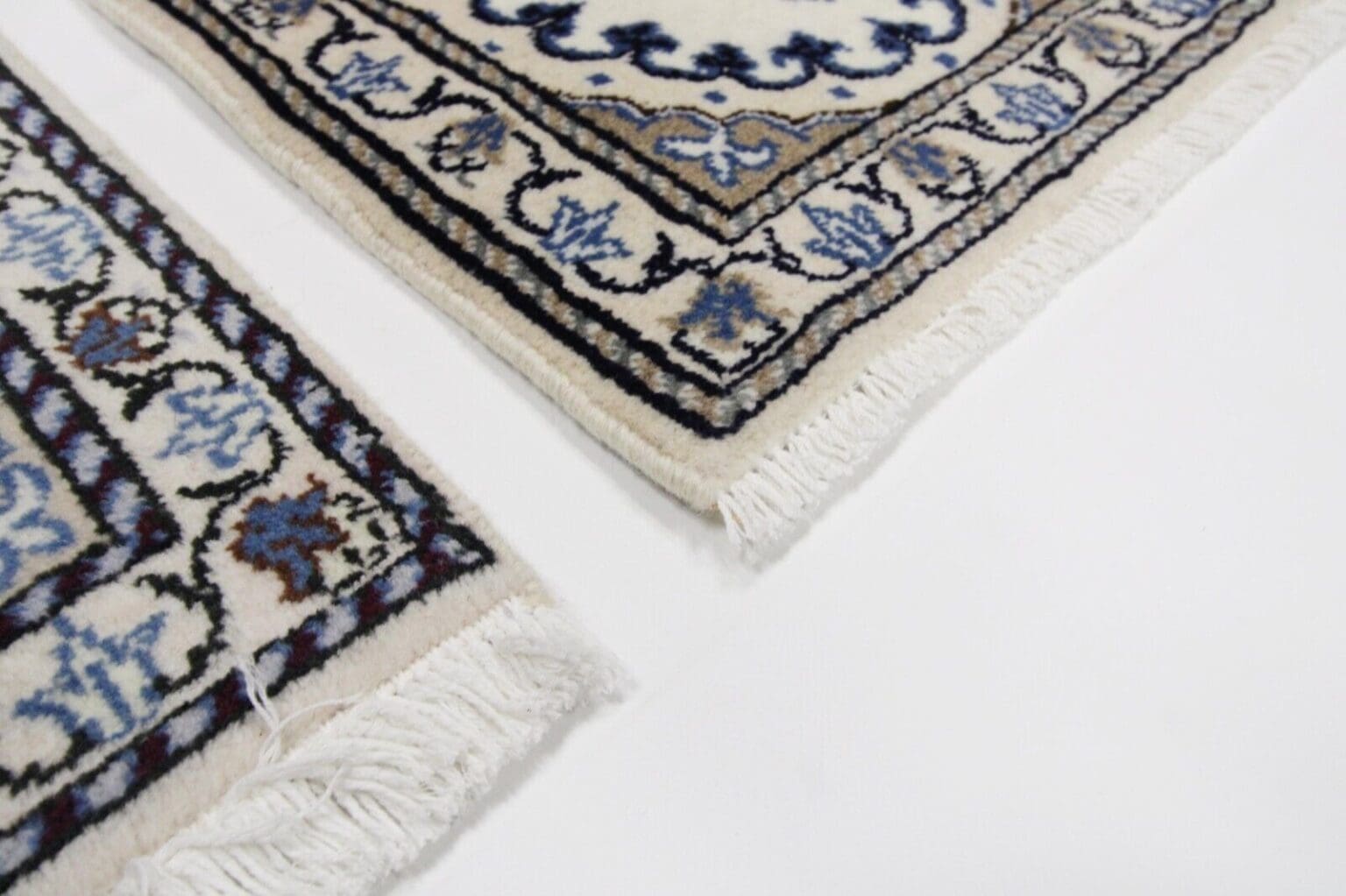
In hand-knotting, each knot is made individually. The pile yarn is looped around the warp threads, row by row, and the rows are secured and aligned as the work progresses. This requires consistent tension, close attention to the design and considerable time. Unlike a machine-made rug, the surface is built directly through the repeated work of the maker. A high pile is then trimmed and evened so that the finished rug has a substantial, tactile surface.
The term Poshti places the rug within a compact format of Persian rug tradition. In rug terminology, Poshti is used for smaller, carefully made rugs. For this piece, the specified characteristics are its hand-knotted construction, high-quality wool and cotton, and high pile. The description identifies the knot density as hand-knotted; it does not provide a numerical knot count. That distinction matters because hand-knotting describes the technique, while knot count is a separate technical measurement.
Origin and Tradition
The rug comes from Nain in Persia. Nain is one of Iran’s recognised weaving centres and has developed a distinctive tradition of carefully structured rugs. The city is located in the dry landscape of central Persia. Its rug culture grew alongside older Persian crafts and became particularly associated with refined workshop production. Nain rugs are traditionally made within specialised workshops and weaving families, where knowledge of materials, drawing and construction is passed from one generation to the next.
Traditionally, Nain weaving connects the arrangement of field, border and ornament into one ordered composition. A rug is not treated only as a practical floor covering, but also as a textile work whose drawing must be planned and repeated accurately. Designs may be guided by established patterns, workshop templates and inherited knowledge. Even when a design is based on a familiar model, hand production gives the final surface its own character through the maker’s tension, knot placement and finishing work. Minor variations in lines and repeated elements are a normal part of a handmade process.
Persian rugs from different regions have their own histories and preferences in structure, ornament and colour. Nain is generally associated with balanced layouts and finely organised decoration. Many traditional Nain compositions use floral forms, scrolling vines and a clearly controlled relationship between the central field and its borders. These are features of the regional design language rather than additional claims about every individual rug. A specific piece must be described through its stated origin, construction and documented pattern.
Persian knotting represents a body of knowledge built through generations. It includes preparing and tensioning the warp, inserting the weft, placing the knots, beating the rows into position and trimming the pile. Workshops may differ in their working methods and in the degree of fineness or robustness they seek. Some rugs are made with a closely detailed surface, while others use a more substantial pile intended for everyday use. Nain tradition therefore includes both visual discipline and practical textile skill.
The term Persian Rug here identifies an Iranian origin in Nain, rather than merely a decorative style. Persian-inspired patterns are produced in many countries, but the stated origin Nain refers to a place in Persia. Other Iranian centres, including Tabriz, Isfahan and Kashan, have their own weaving traditions and should not automatically be treated as Nain. Regional names carry historical and technical meaning: they connect a rug to a place, a network of workshops and a particular vocabulary of design.
Design and Pattern
The pattern of this rug is described as Oriental, and its style is identified as traditionally Persian. These terms place the design within the broader ornamental language associated with Persian and Oriental rugs. That language may include organised fields, repeated vines, flowers, leaves and geometric details. Such elements can be combined in many ways. The general description does not specify a particular medallion arrangement, border design or colour scheme, so no individual motif beyond the stated Oriental pattern is assigned to this rug.
Borders are an important part of Persian rug design. They frame the central field and create a visual transition between the main composition and the outer edge. A broad main border may be accompanied by one or more narrow guard borders. The field itself can contain a central medallion, an all-over repeat, floral scrolling or a geometric structure. Which arrangement is used depends on the individual workshop design. Since the source gives only the Oriental pattern description, the rug is not presented as having one specific arrangement that has not been named.
Nain design traditions often rely on balance, controlled spacing and a fine relationship between large forms and small details. Vines may connect floral motifs across the field, while repeated leaves establish rhythm and direction. In the wider history of Persian ornament, stylised plants can suggest ideas of growth, order and the relationship between nature and designed space. These are general interpretations of the tradition, not a claim that a particular symbolic image appears on this rug. The secure description remains its Oriental pattern and traditional Persian style.
Pile height also affects how a design is seen. A high pile gives the surface a softer, more dimensional presence and can alter the way lines appear when viewed from different directions. Light is caught differently by the pile as it lies or is brushed, creating changes in surface tone. In a hand-knotted rug, outlines are produced through the placement of individual knots, so the clarity of a line depends on both the drawing and the craft used to execute it.
Persian pattern names are often based on places, shapes or arrangements. A medallion refers to a central ornament; an all-over design distributes repeated motifs across the field; floral designs use stylised botanical forms; geometric designs depend on angles, diamonds and ordered axes. The source does not assign one of these specialised names to this rug. It identifies the design as Oriental and the style as traditional Persian, while Nain identifies the Iranian origin. Those are the pattern and provenance facts that can be stated for this piece.
Special Features
The rug is identified as second choice. Its condition is described as new without a label and as being in top condition. It has a high pile and is suitable for use with underfloor heating. These statements describe the offered item and its intended use. In general, regular gentle vacuuming helps remove loose dust from a high pile, while professional cleaning may be appropriate from time to time. Strong direct sunlight should be avoided because prolonged exposure can cause colours to fade.
A hand-knotted rug can also contribute to room acoustics because a textile surface absorbs sound and softens footfall. Wool has long been used in rugs for its resilient and comfortable feel. These are general properties of the materials, not a substitute for individual care instructions. With underfloor heating, an even and moderate heat setting is advisable; suitability for underfloor heating is expressly stated for this rug.
FAQ
How should I care for this Persian rug?
Vacuum the rug regularly and gently so that dust and loose particles do not remain in the high pile. Occasional professional cleaning can help preserve the textile over time. Avoid strong direct sunlight, as it may fade the colours. Cleaning should take account of the wool, cotton and high-pile construction. For washing, stain treatment or repairs, a specialist familiar with hand-knotted rugs is the appropriate point of advice.
How does a Persian rug differ from other rugs?
A Persian rug such as this one is hand-knotted and combines an Iranian origin with a developed Oriental pattern language. Many other rugs are machine-made or belong to different regional traditions. In hand-knotting, each knot is placed individually, producing a textile structure different from an industrially manufactured surface. The name Nain also identifies an Iranian weaving centre; it is not simply the name of a decorative motif used anywhere in the world.
How can I tell whether a Persian rug is genuine?
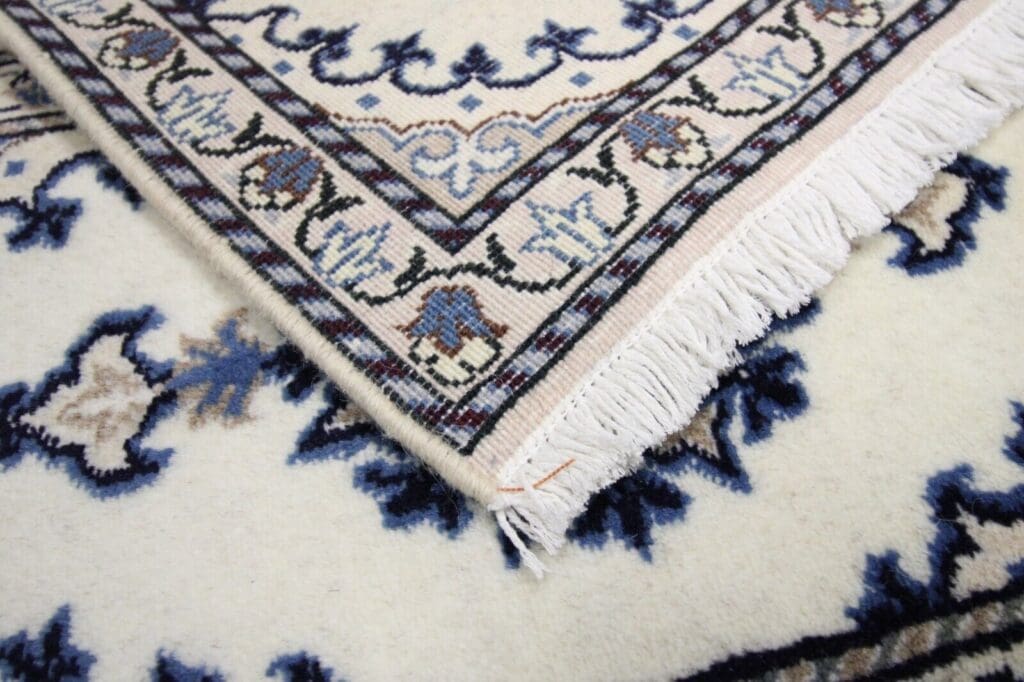
Examining the reverse, the knot structure and the materials can help assess a hand-knotted Persian rug. High-quality wool or silk may provide clues about construction, but material alone does not prove authenticity. Origin information, workshop details and available certificates can support the assessment. When a reliable attribution is important, the most dependable approach is an inspection by a qualified rug specialist who can compare the construction, design language and documented origin.
To provide the best experiences, we use technologies like cookies to store and/or access device information. Consenting to these technologies will allow us to process data such as browsing behavior or unique IDs on this site. Not consenting or withdrawing consent, may adversely affect certain features and functions.
Functional Always active
The technical storage or access is strictly necessary for the legitimate purpose of enabling the use of a specific service explicitly requested by the subscriber or user, or for the sole purpose of carrying out the transmission of a communication over an electronic communications network.
Preferences
The technical storage or access is necessary for the legitimate purpose of storing preferences that are not requested by the subscriber or user.
Statistics
The technical storage or access that is used exclusively for statistical purposes.The technical storage or access that is used exclusively for anonymous statistical purposes. Without a subpoena, voluntary compliance on the part of your Internet Service Provider, or additional records from a third party, information stored or retrieved for this purpose alone cannot usually be used to identify you.
Marketing
The technical storage or access is required to create user profiles to send advertising, or to track the user on a website or across several websites for similar marketing purposes.
 SECURE PAYMENT
 SHIPPING PARTNERS


