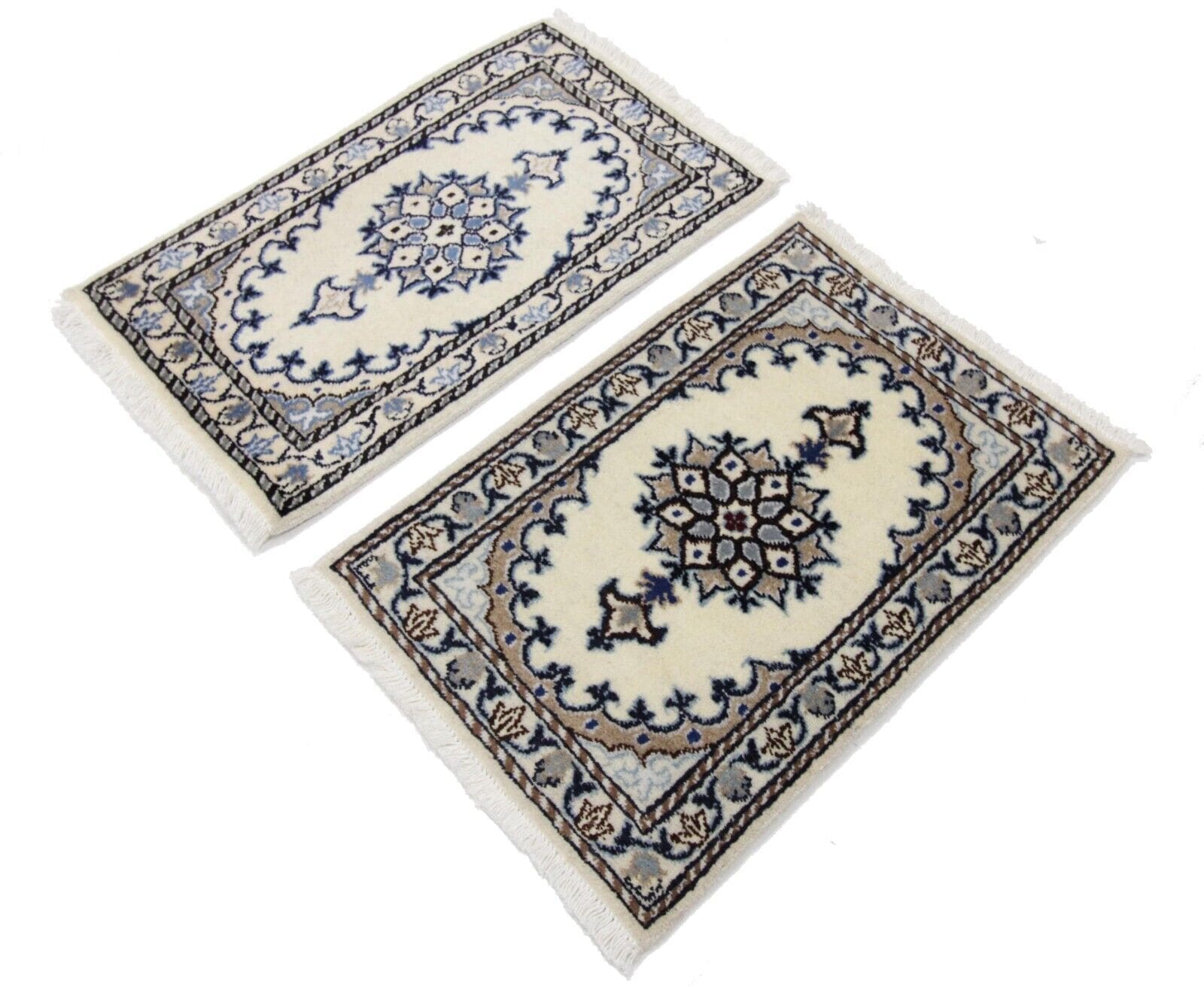
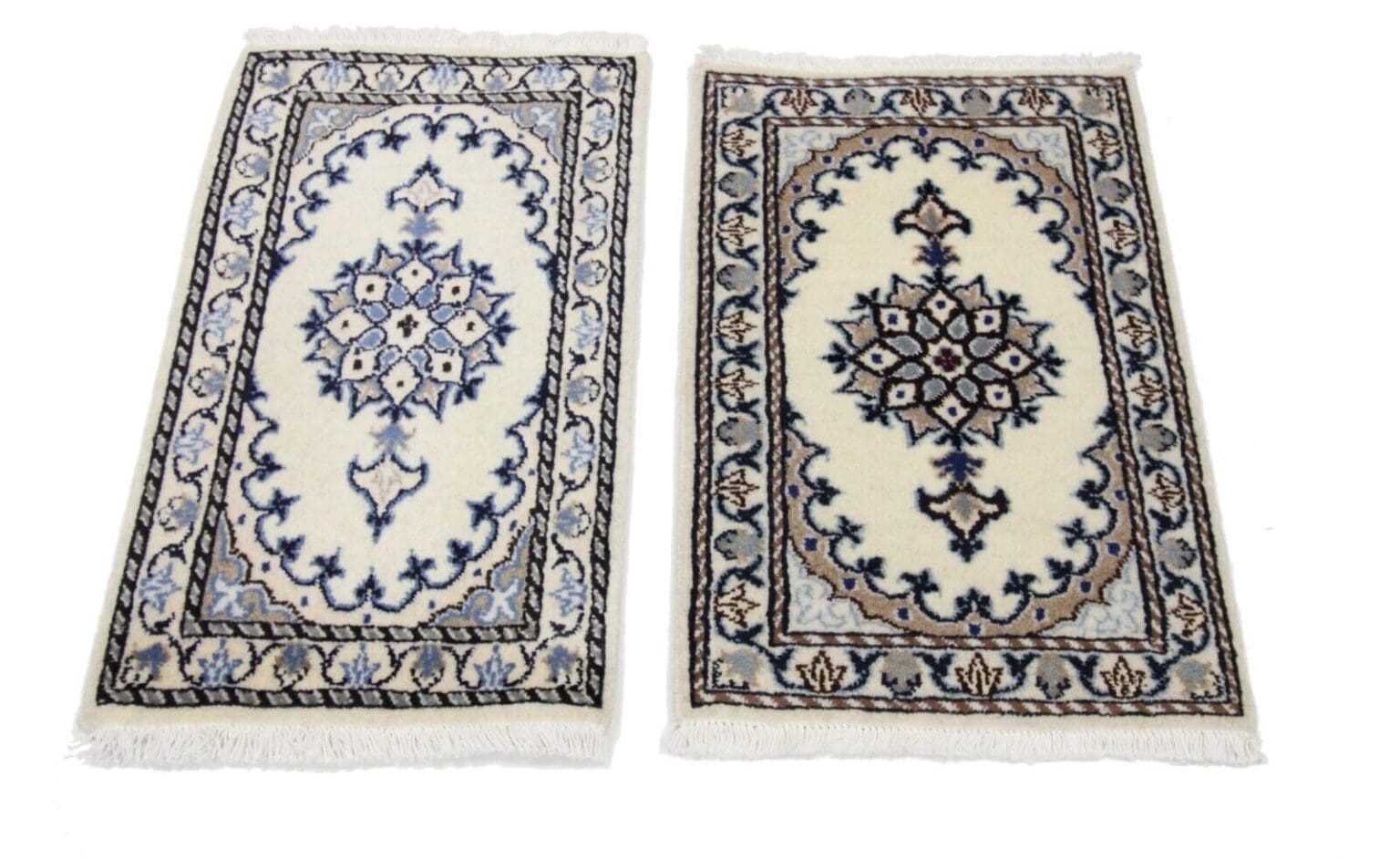
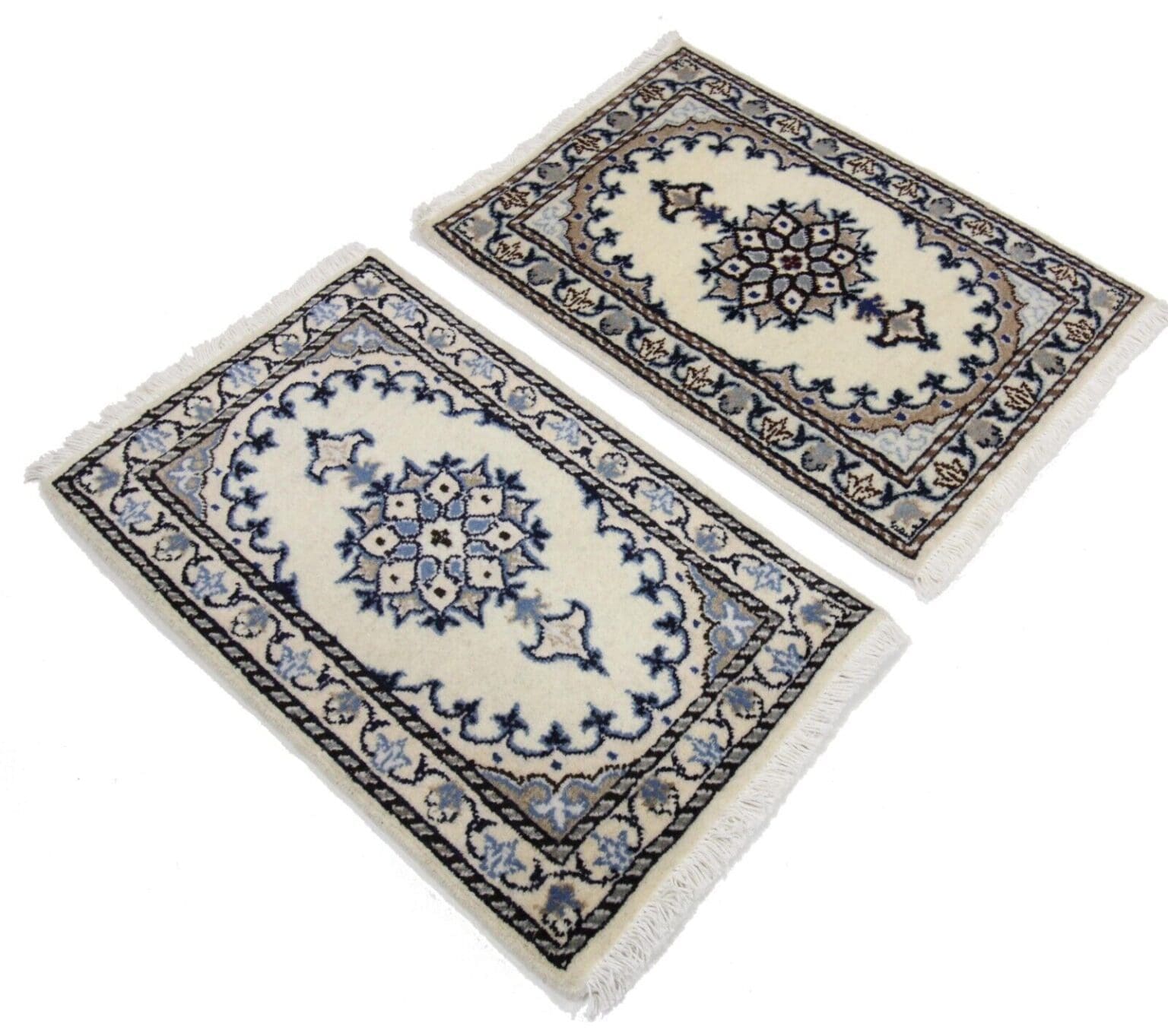
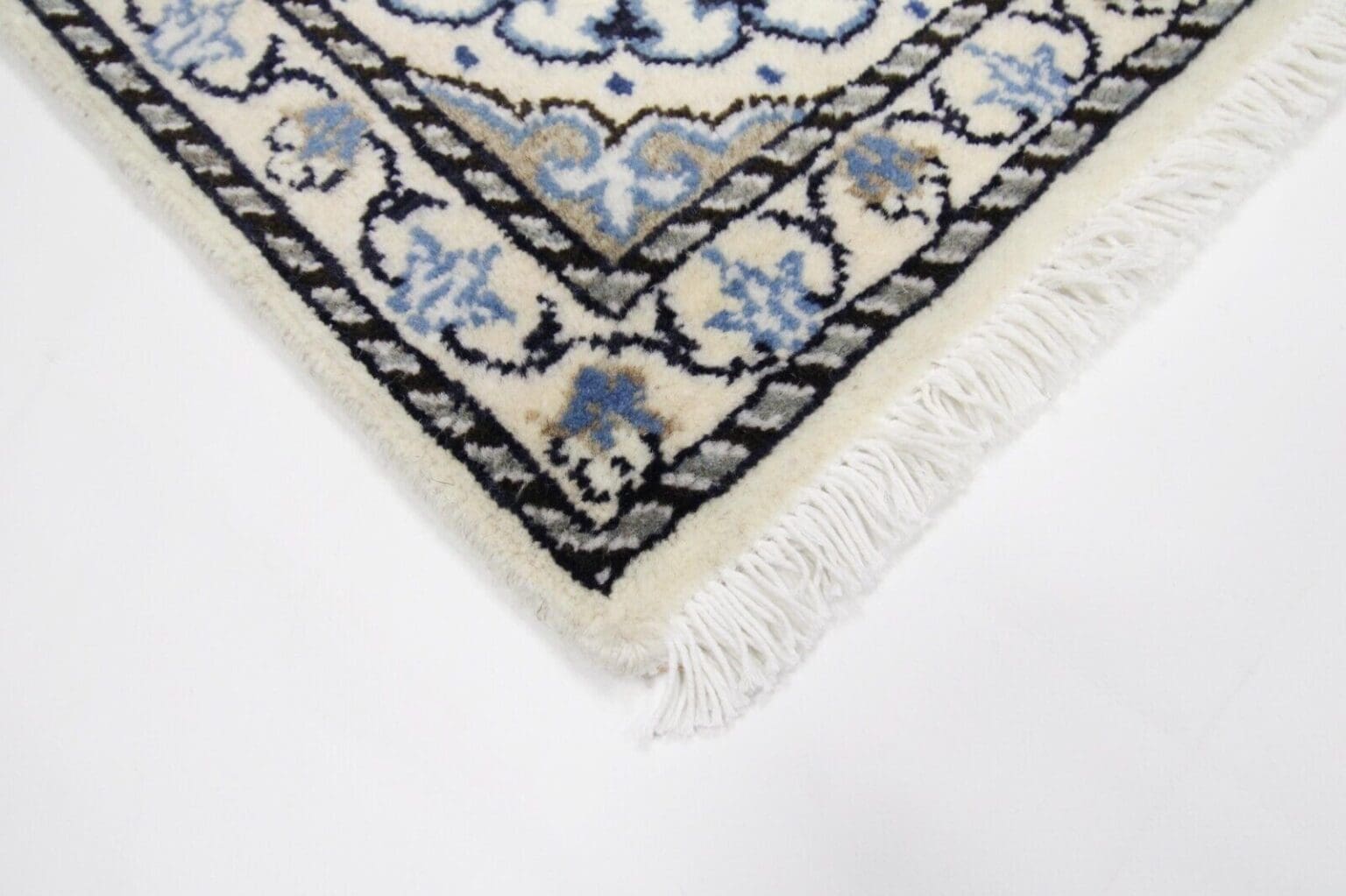
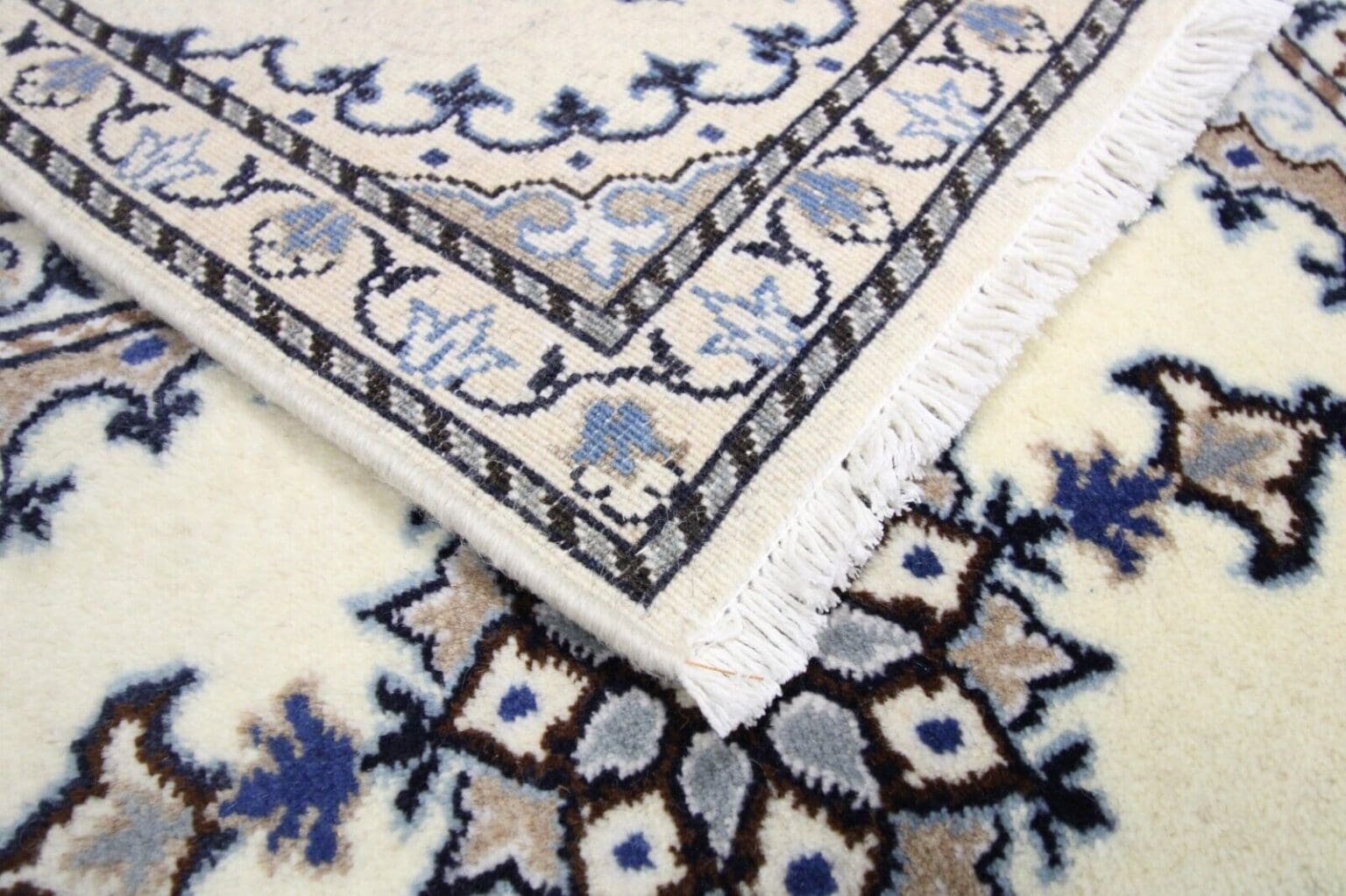
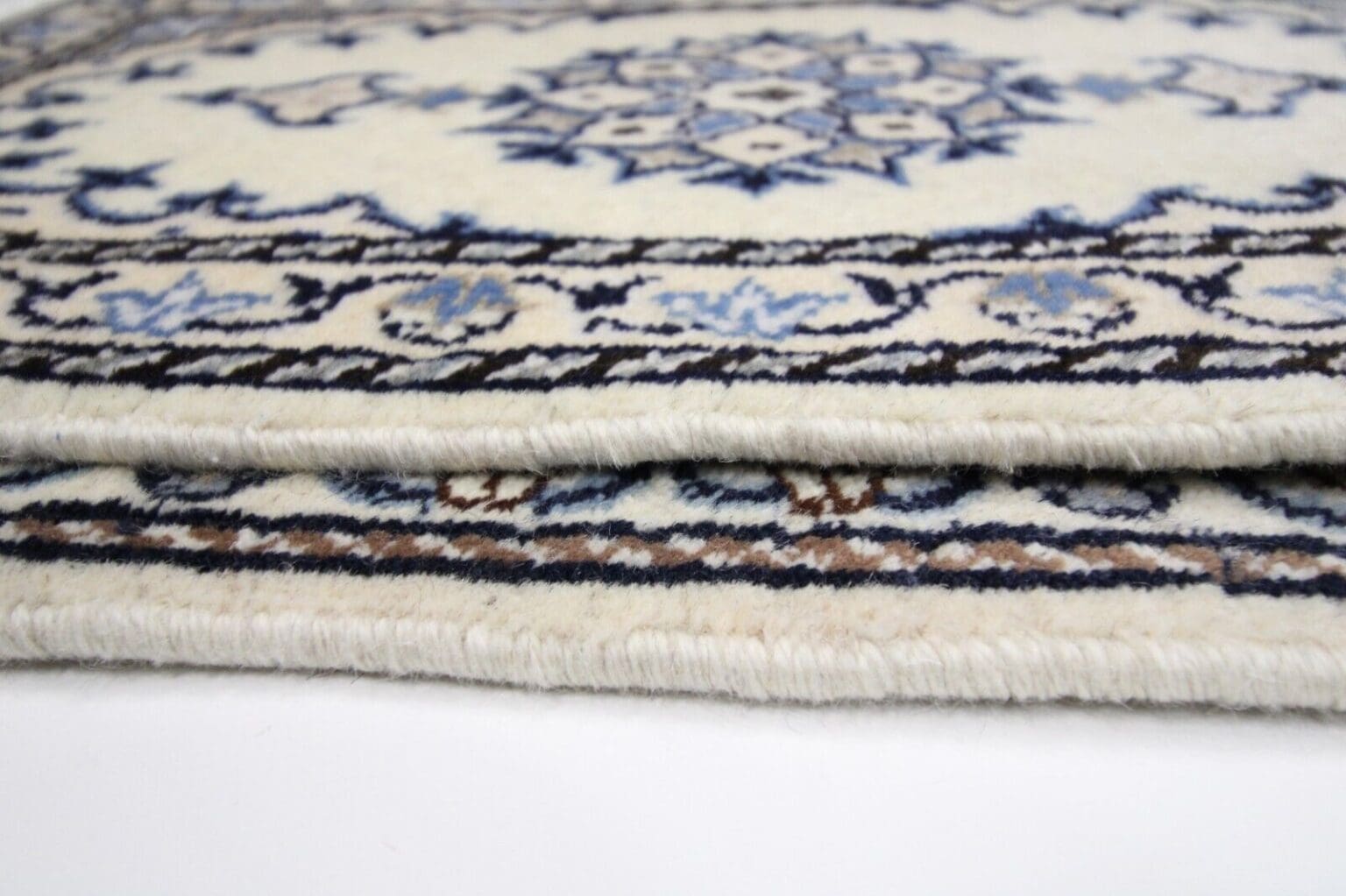
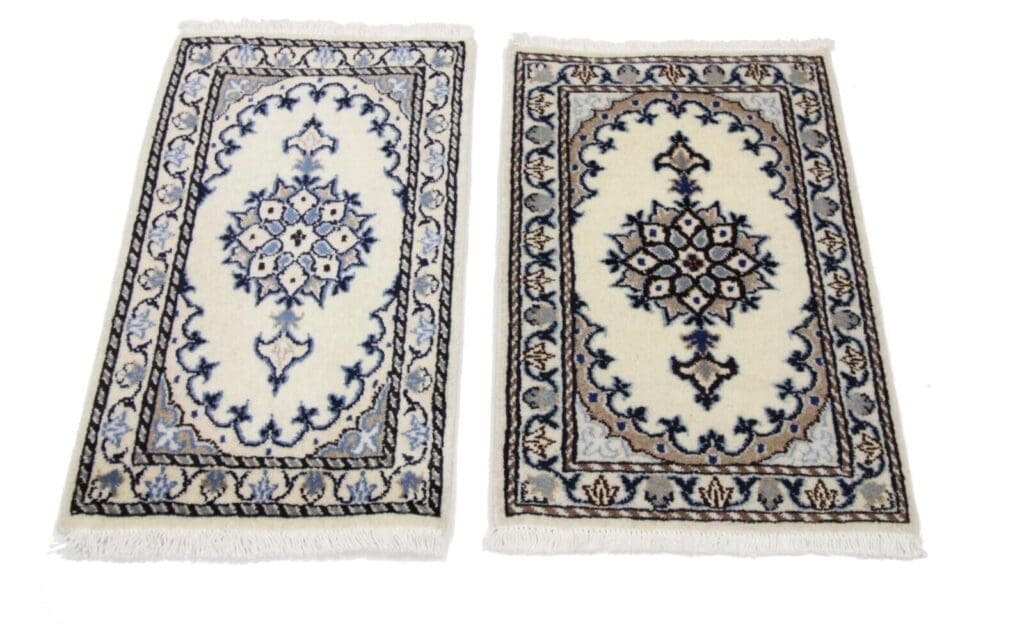
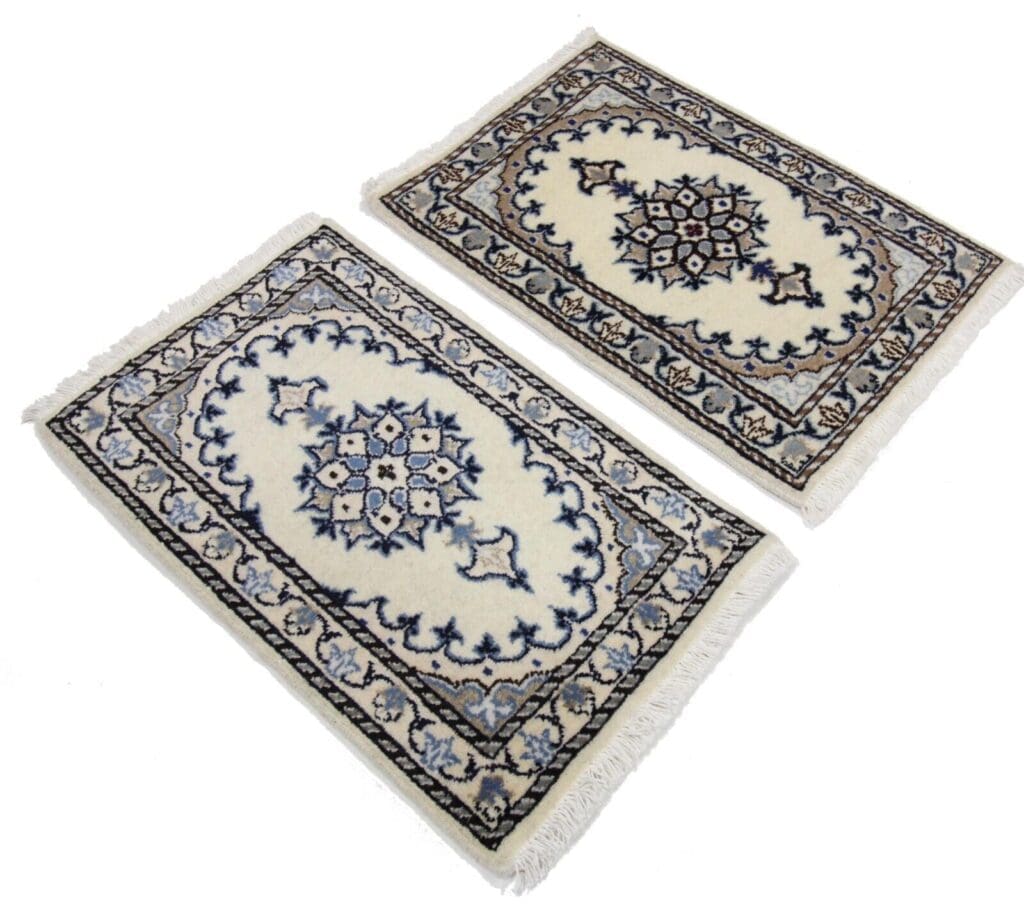
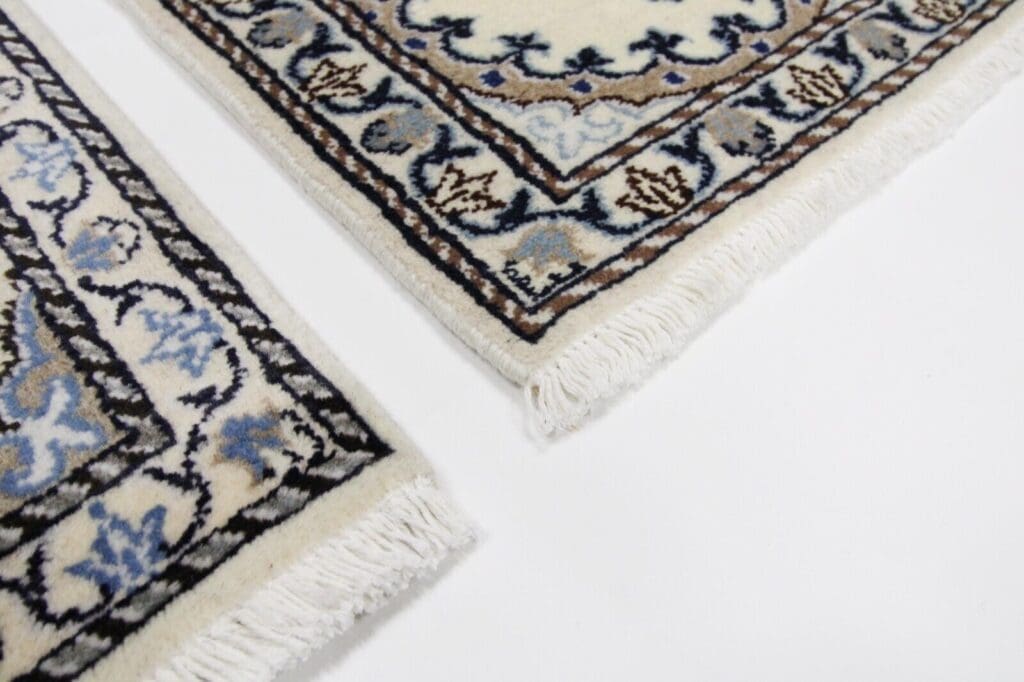
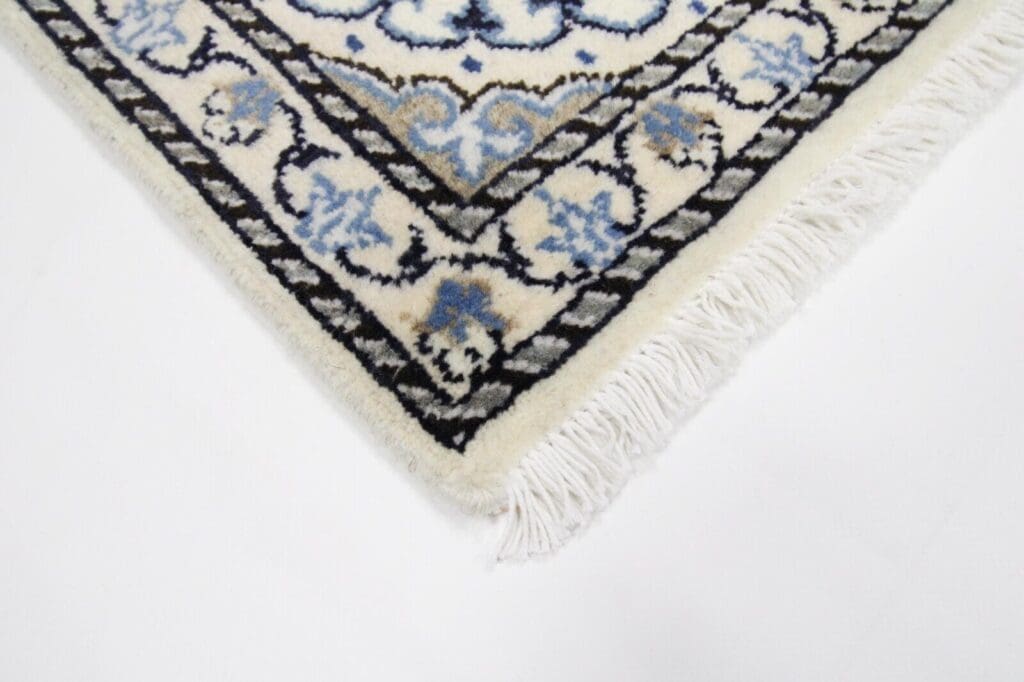
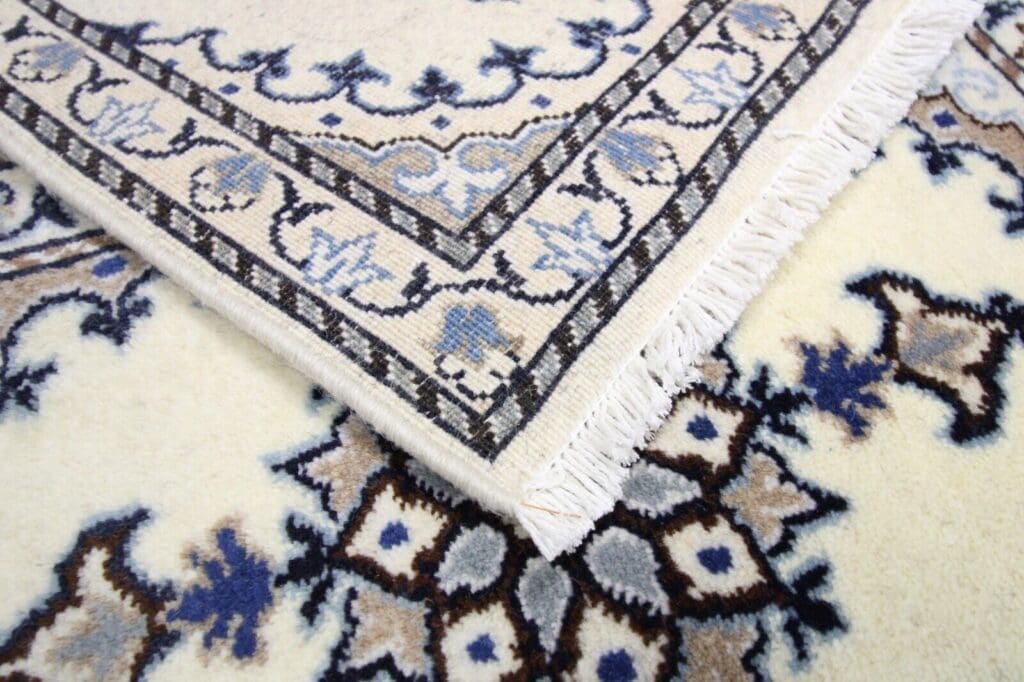
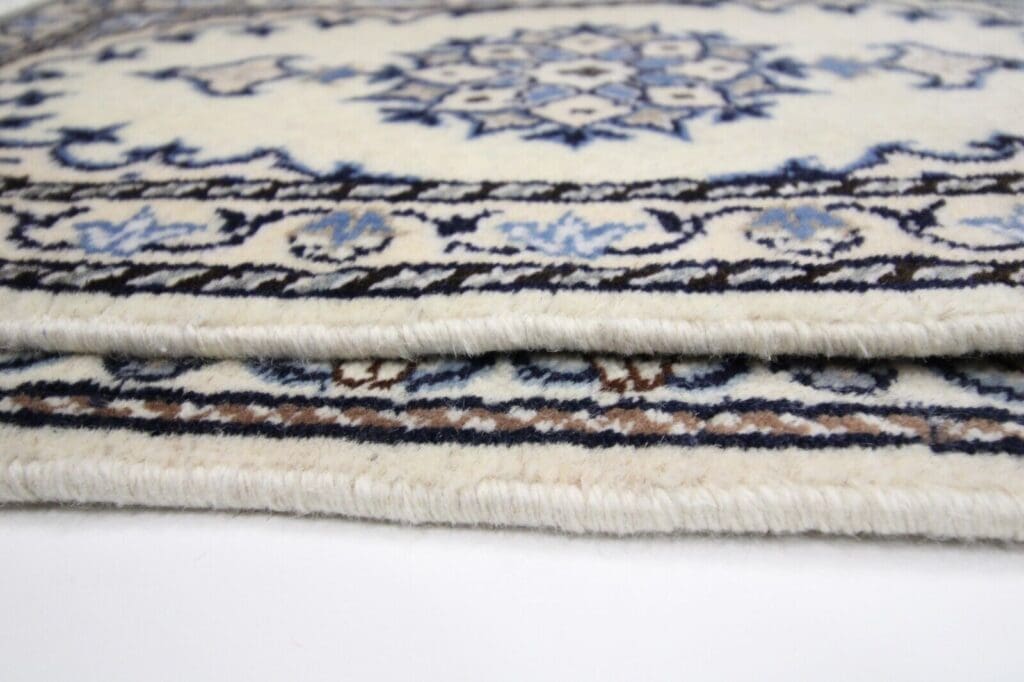
Persian Rug Nain 40 cm x 60 cm Wool Hand-knotted
€ 317
Hand-knotted Nain Persian rug | Knot density: Hand-knotted | Material: Wool and cotton | Size: 40 cm x 60 cm | Pattern: Oriental | Condition: New, very clean
1 available
- ✓Free Shipping in EU
- ✓2-5 Business Days Delivery
- ✓14-Day Return Policy
- ✓Worldwide Shipping on request
 SECURE PAYMENT
 SHIPPING PARTNERS
Inventory number: EA0CDB0A
Description
Nain Persian Rug
Material and Craftsmanship
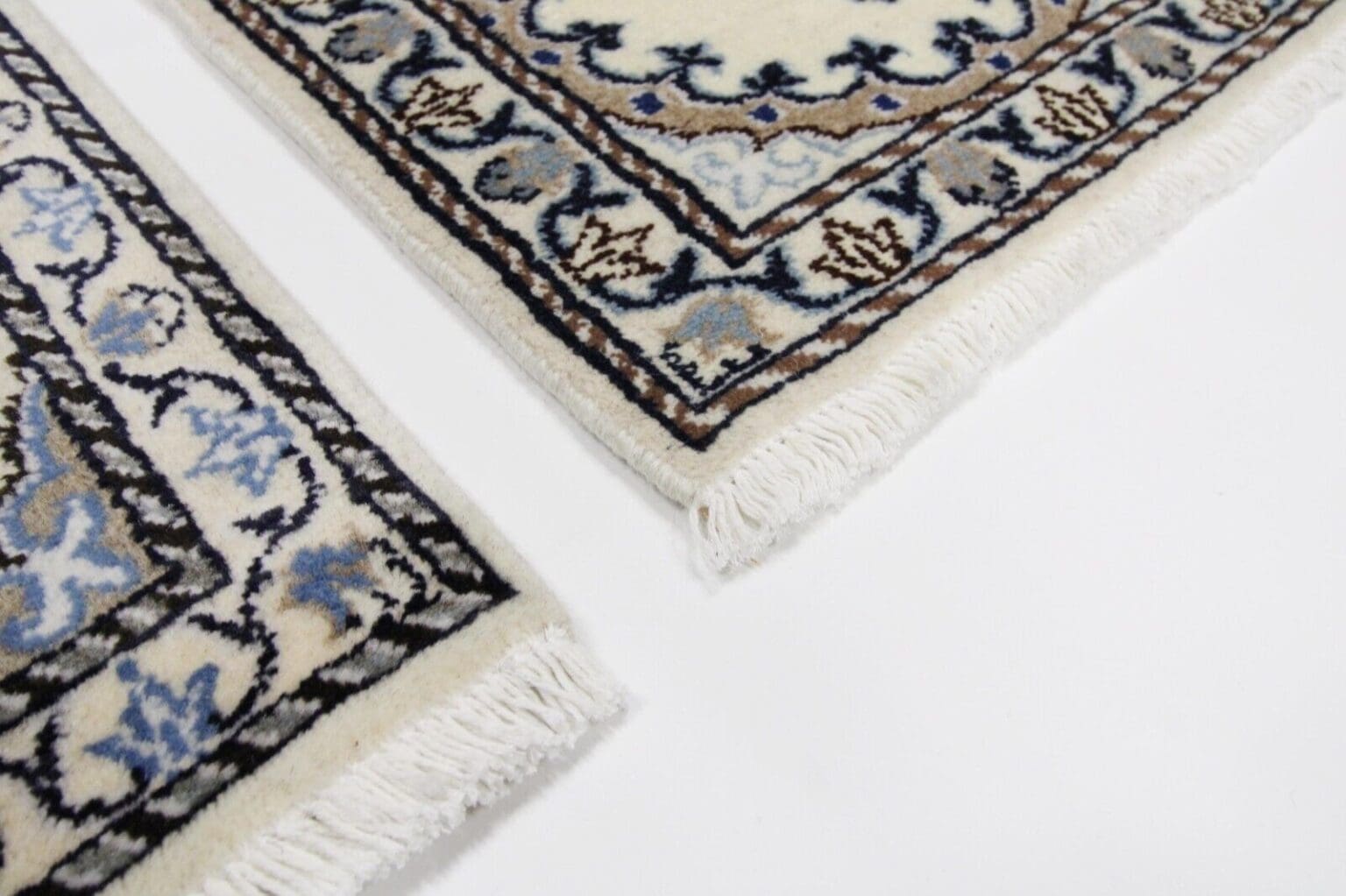
This Nain Persian rug is hand-knotted and made of wool and cotton. The combination of these materials belongs to the established foundation of many Persian rugs: wool is valued for its pleasant surface and its suitability for pile, while cotton is commonly used as part of the supporting structure in rug making. With a hand-knotted rug, the piece is not produced by a machine process. Instead, knots are placed one by one on a prepared foundation and incorporated into the continuing construction. This makes production time-consuming and requires consistent manual work, concentration, and experience.
The term hand-knotted describes the way this rug was made. It identifies a textile process in which the design and the physical construction are closely connected. The pile is built up in rows, while warp and weft provide the foundation and help give the rug its shape. Wool is well suited to this kind of work because it can be cut, compacted, and finished at different pile heights. Cotton is another traditional material in Persian rug construction. The pile of this particular rug is described as high pile.
The stated materials are wool and cotton; no other fibre is named for this piece. A specific knot count is not provided either. What is established is the hand-knotted construction. It identifies the production method without making a claim about a particular knot density. The high-pile description refers to the textile surface and its structure. The rug is new and very clean. These details belong to this individual rug and should be kept separate from general descriptions of other Nain rugs.
Origin and Tradition
Nain is a Persian rug centre in present-day Iran and is associated with finely organised, classically oriented weaving traditions. The city lies in central Iran, in an arid landscape between important cultural and trading regions. Its rug craft developed in contact with older Persian design traditions. Nain rugs are therefore often associated with controlled ornament, ordered compositions, and careful workmanship. The designation Nain refers to a regional tradition rather than simply to a general Oriental appearance.
Persian rugs are made in many places, each with its own conventions for construction, pattern selection, and colour balance. Nain belongs to the urban weaving traditions known for measured ornament and a composed overall arrangement. Designs are traditionally planned so that the field, borders, and smaller filling elements form a coherent structure. During knotting, that plan is transferred step by step into a textile surface. The work combines drawing, knowledge of materials, and practiced hand skills.
The history of Persian rug making extends across many centuries. Rugs have served as practical furnishings, textile elements for organising rooms, and expressions of regional design. Knowledge of knots, foundations, pile, and patterns was passed down through workshops and family-based production. Within this history, Nain represents an urban rug tradition. Compared with purely nomadic weaving, many urban designs are characterised by planned symmetry, controlled repetition, and close attention to small details.
The making of a hand-knotted Persian rug begins with the preparation of its foundation. Knots are then inserted in rows, the pile is aligned, and each stage of the work is checked as the piece progresses. Edges, ends, and the surface are finished after the main construction is complete. This sequence explains why a hand-knotted rug is an individual textile object rather than a standardised machine-made product. Traditional designs may follow recognised models, but each finished example is made as a separate piece.
Nain rugs are often discussed alongside Persian weaving centres such as Tabriz, Isfahan, and Kashan. Each of these places has its own historical and visual profile. A Nain attribution should therefore not be replaced by a random floral or geometric description. For this rug, Nain is named as the origin, Persia as the country of origin, and the style is identified as traditionally Persian. The designation consequently describes both the regional connection and the cultural framework of its design.
Design and Pattern
The pattern of this rug is described as Oriental, its style as traditionally Persian, and its colour as beige. These are the principal visual details supplied for the piece: an Oriental pattern vocabulary, a Persian design tradition, and a light, restrained colour impression. Oriental rug designs may include floral forms, geometric elements, or a combination of both. Since no individual motif such as a medallion, Herati pattern, or boteh is named for this rug, no specific motif is assigned to it.
Traditional Persian designs often depend on a clear relationship between the central field and the surrounding borders. A field may be enclosed by one or several borders, while small ornaments fill the spaces and create a measured rhythm. Other compositions distribute vines or floral forms across the entire surface instead of using a strictly central arrangement. These options are part of Persian design history. The general term Oriental leaves room for the actual drawing without attaching an unlisted motif to this particular rug.
Beige is frequently used in Persian rug design as a ground or background colour. Light areas can separate pattern lines and give a composition a calm sense of order. The visual effect of a colour always depends on its relationship with other tones, the density of the drawing, and the character of the surface. Beige is the colour specified for this rug. No further colours or particular dyeing method are stated, so they are not added to the description of this individual piece.
Persian pattern traditions often work with forms inspired by plants, including stylised flowers, vines, and leaves. They also include more strictly geometric arrangements, in which lines and repeated units determine the structure. Many motifs have been developed over long periods and adapted from one region to another. A pattern is therefore not only a decorative surface but also part of the transmission of rug-making knowledge. For a Nain rug, the connection between ordered workmanship and regional design tradition is important, without allowing a particular unnamed motif to be inferred here.
Rendering a design in knots requires close attention to the planned arrangement. Small variations may occur because a drawn design is transferred into wool by hand. That direct relationship between design and manual work is part of the history of Oriental rugs. The description of this example remains with the stated facts: Oriental pattern, traditionally Persian style, and beige colouring. A more precise pattern name would require additional information.
Special Features
The explicitly stated features include the new and very clean condition, the high pile, the beige colour, and suitability for underfloor heating. The rug is also identified as second choice. This classification describes its position in the range and is not supplemented here by a particular fault or defect. No reason for the second-choice classification is given. Therefore, no specific deviation, repair, or damage is claimed.
Suitability for underfloor heating is listed as a product characteristic. During use, heat should be distributed evenly, and care should be adapted to the hand-knotted construction. The surface is described as high pile, distinguishing it from a flat-woven Kelim. For ongoing care, regular vacuuming without a brush attachment, protection from direct sunlight, and professional cleaning at longer intervals are recommended.
FAQ
How should I care for this hand-knotted Nain Persian rug?
For regular care, gentle vacuuming without a brush attachment is recommended. This removes loose dirt without subjecting the high pile to unnecessary mechanical stress. Professional cleaning every few years may be appropriate. Direct sunlight should be avoided so that the colours do not fade. When the rug is used over underfloor heating, treatment should also be even and suitable for the materials and hand-knotted construction.
Where do Persian rug patterns come from?
Persian rug patterns are shaped by Persian culture and history. Many designs draw on nature, mythology, or regional traditions. Certain patterns are associated with particular centres, including Tabriz and Isfahan. This rug comes from Nain and has an Oriental pattern in a traditionally Persian style. No individual motif is specified for this piece.
How long can a high-quality hand-knotted Persian rug last?
With proper care, a high-quality hand-knotted Persian rug can last for several generations. The materials and the craft involved in its construction contribute to long-term use. Regular gentle maintenance, protection from direct sunlight, and professional cleaning support its durability. The actual service life nevertheless depends on use, care, and the conditions in the room where the rug is placed.
Additional information
| Design Style | |
|---|---|
| Color | |
| Size | |
| Shape | |
| Origin | |
| Material |
Related products

Persian Rug Isfahan 250 x 155 cm Silk Hand-knotted
€ 3600
Persian Rug Nain 200 x 129 cm Wool Hand-knotted
€ 2100
Persian Rug Rosenbidjar 222 x 131 cm Wool Hand-knotted
€ 1530
Persian Rug Tabriz 353 x 253 cm Wool & Silk Hand-knotted
€ 4200
Persian Rug Kashan 198 x 128 cm Silk Hand-knotted Antique
€ 7249
Persian Rug Kashan 345 x 253 cm Wool Hand-knotted
€ 2910
Oriental Rug Kashmir 405 x 299 cm Silk Hand-knotted
€ 3300
Persian Rug Farahan 235 x 154 cm Wool Hand-knotted
€ 990