Persian Rug Nain 40 cm x 60 cm Hand-knotted (Sold)
€ 375
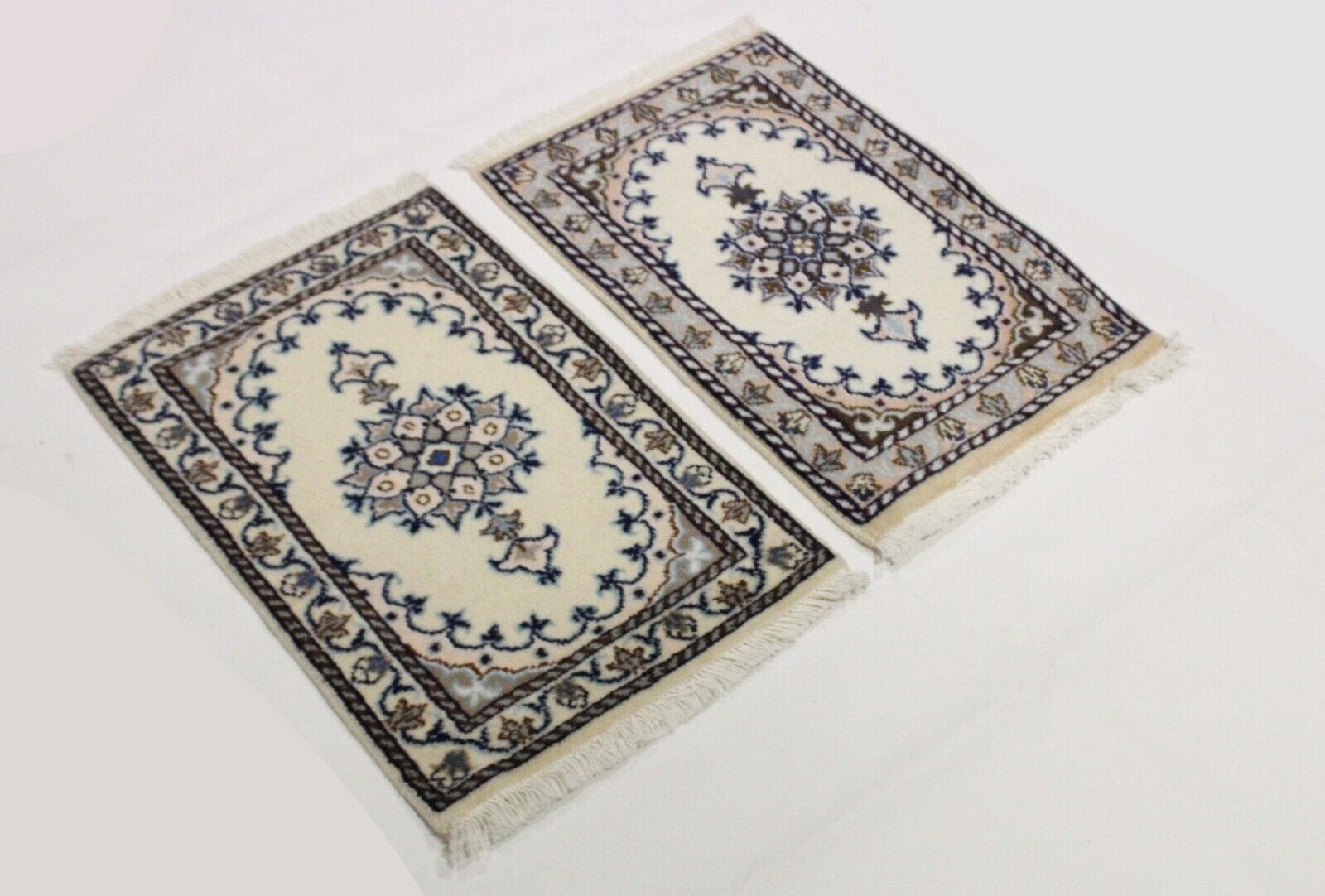
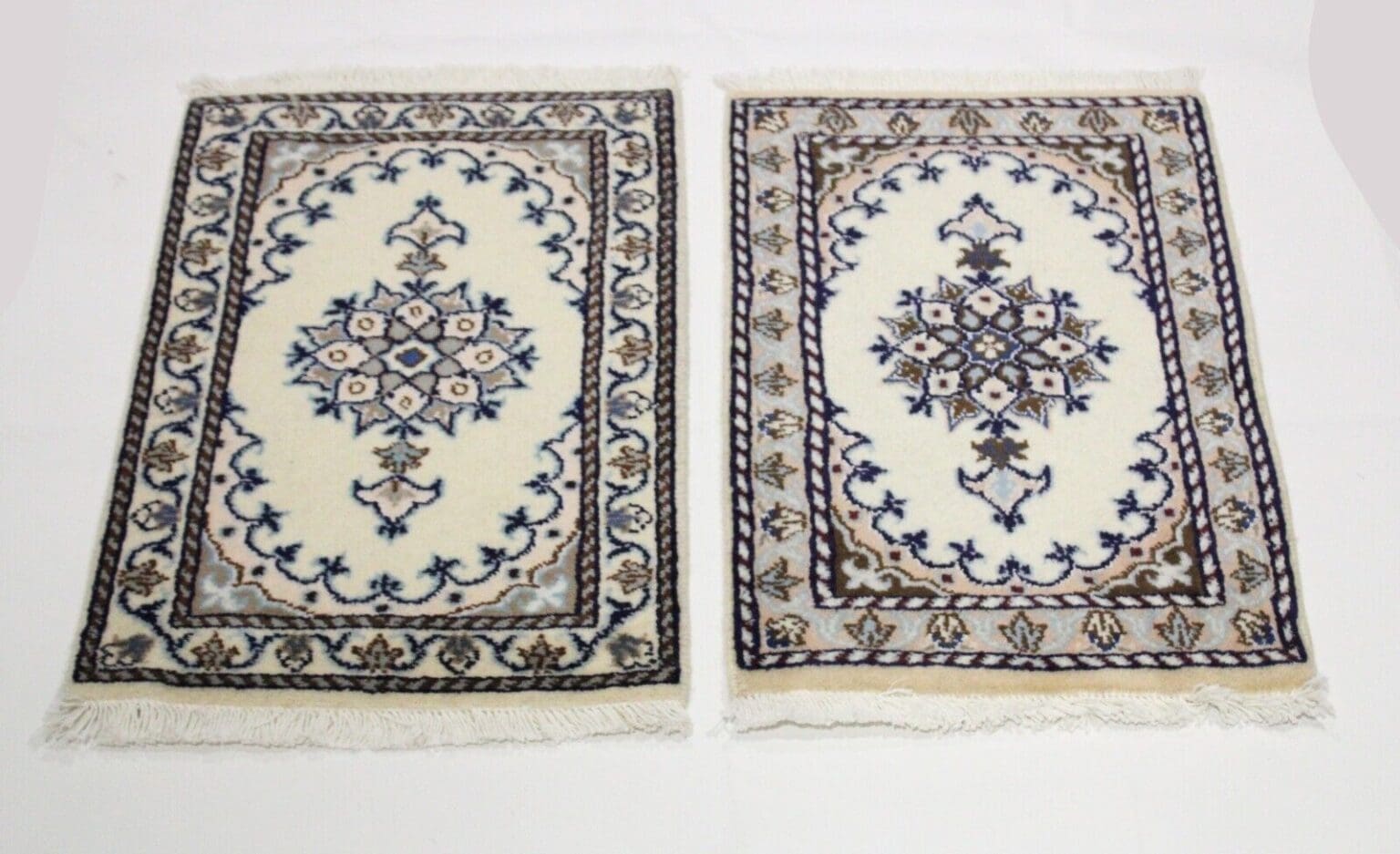
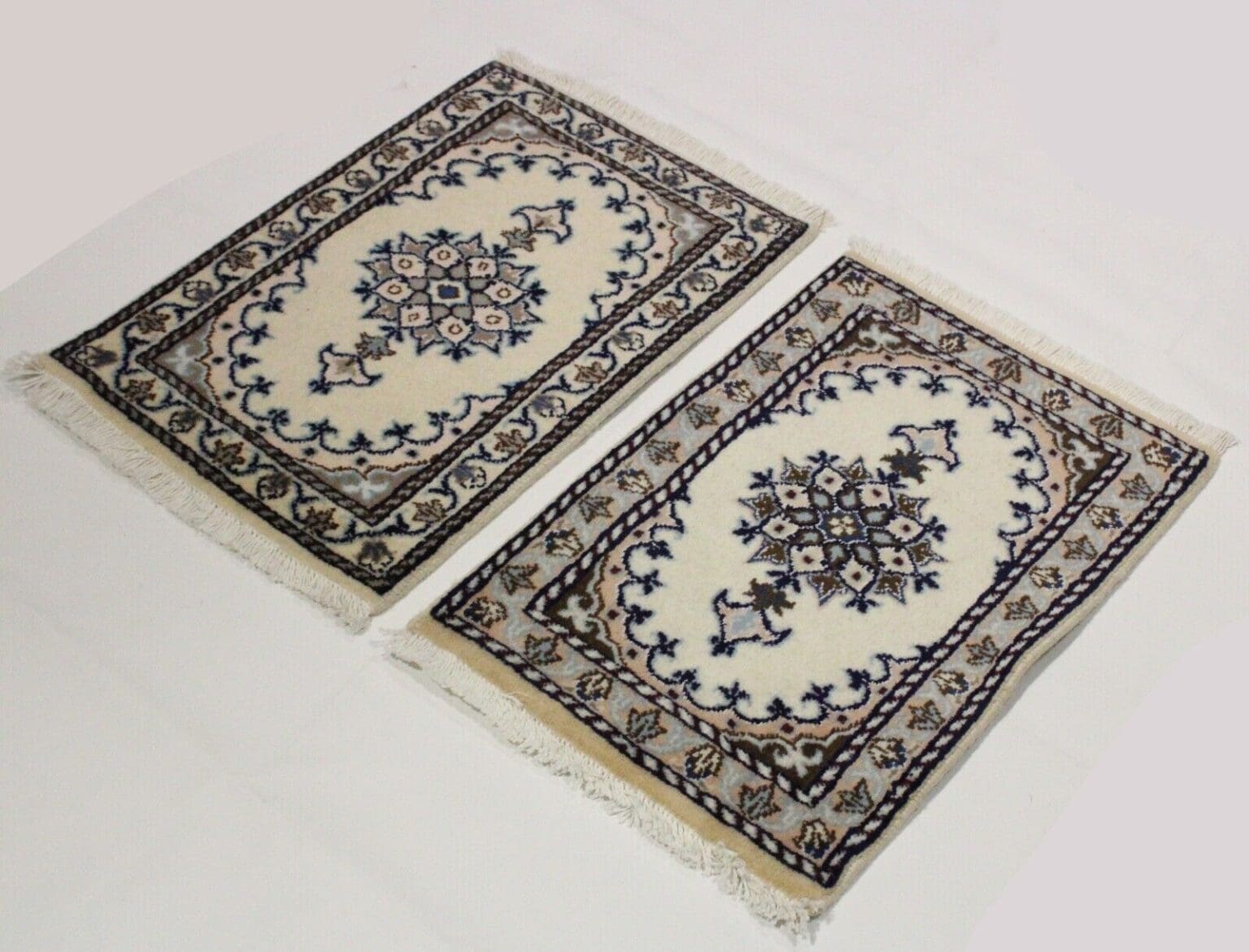
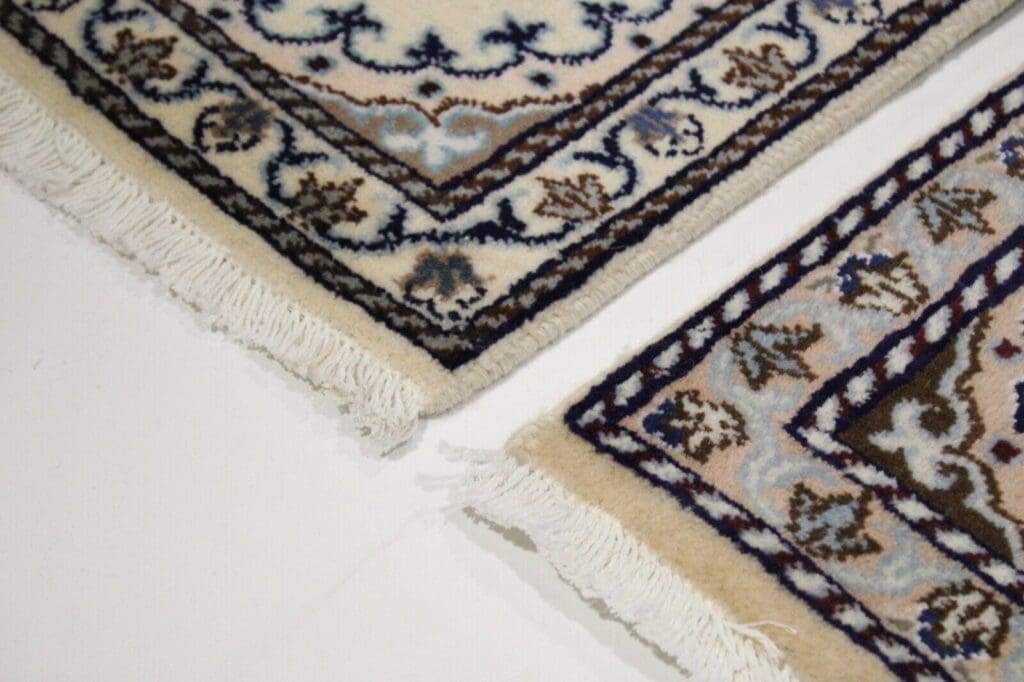
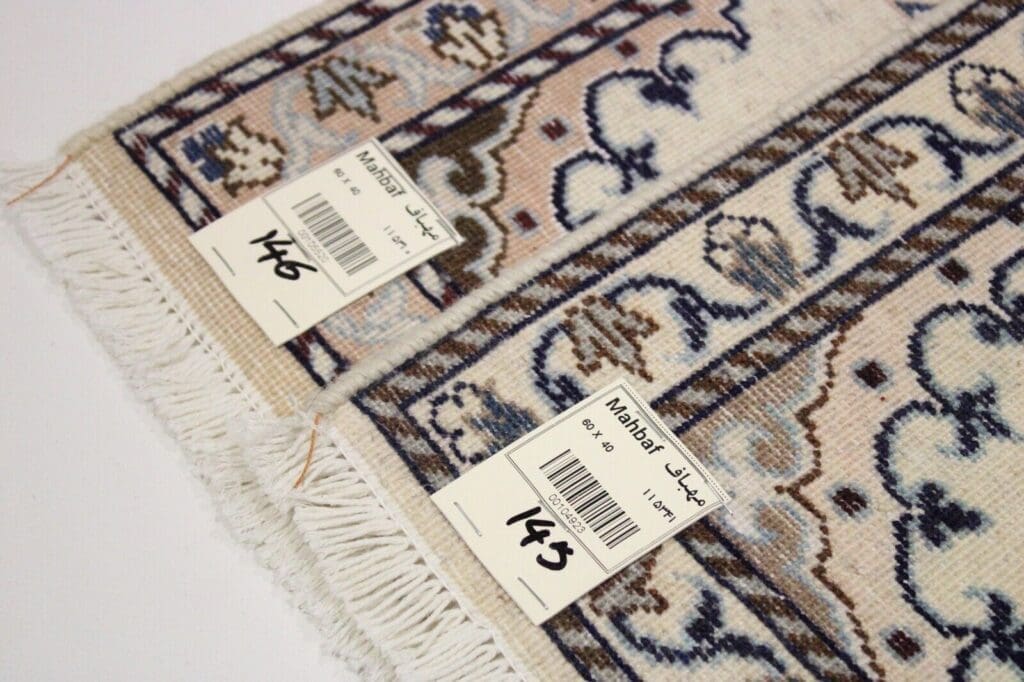
Hand-knotted Nain Persian rug | Knot density: Hand-knotted | Material: wool and cotton | Size: 40 x 60 cm | Pattern: Oriental | Condition: new without tag
This Nain Persian rug is hand-knotted and made from high-quality wool and cotton. Together, these materials define the structure and handle of the rug. Wool has a long tradition in Oriental rug making because its fibres are resilient and pleasant to the touch. Cotton contributes a firm and even character to the material composition. The information for this rug identifies the combination of wool and cotton, but does not assign a separate function to each material.
Hand-knotting builds the textile knot by knot. The design is created as part of the making process rather than printed or applied to a completed surface. Each knot contributes to the drawing, the stability and the structure of the pile. This technique requires time, experience and consistent work across the rows. In Nain weaving, hand-knotting is traditionally associated with careful workmanship and with the precise rendering of floral and geometric forms.
The rug is described as having a high knot density. In hand-knotted rugs, a dense construction can support a more differentiated rendering of small lines, contours and ornaments. It also affects the compact appearance of the surface. No numerical number of knots per square metre is specified for this piece and none is added here. The knotting technique gives the pile a distinct structure, in which light can change according to the direction from which the surface is viewed.
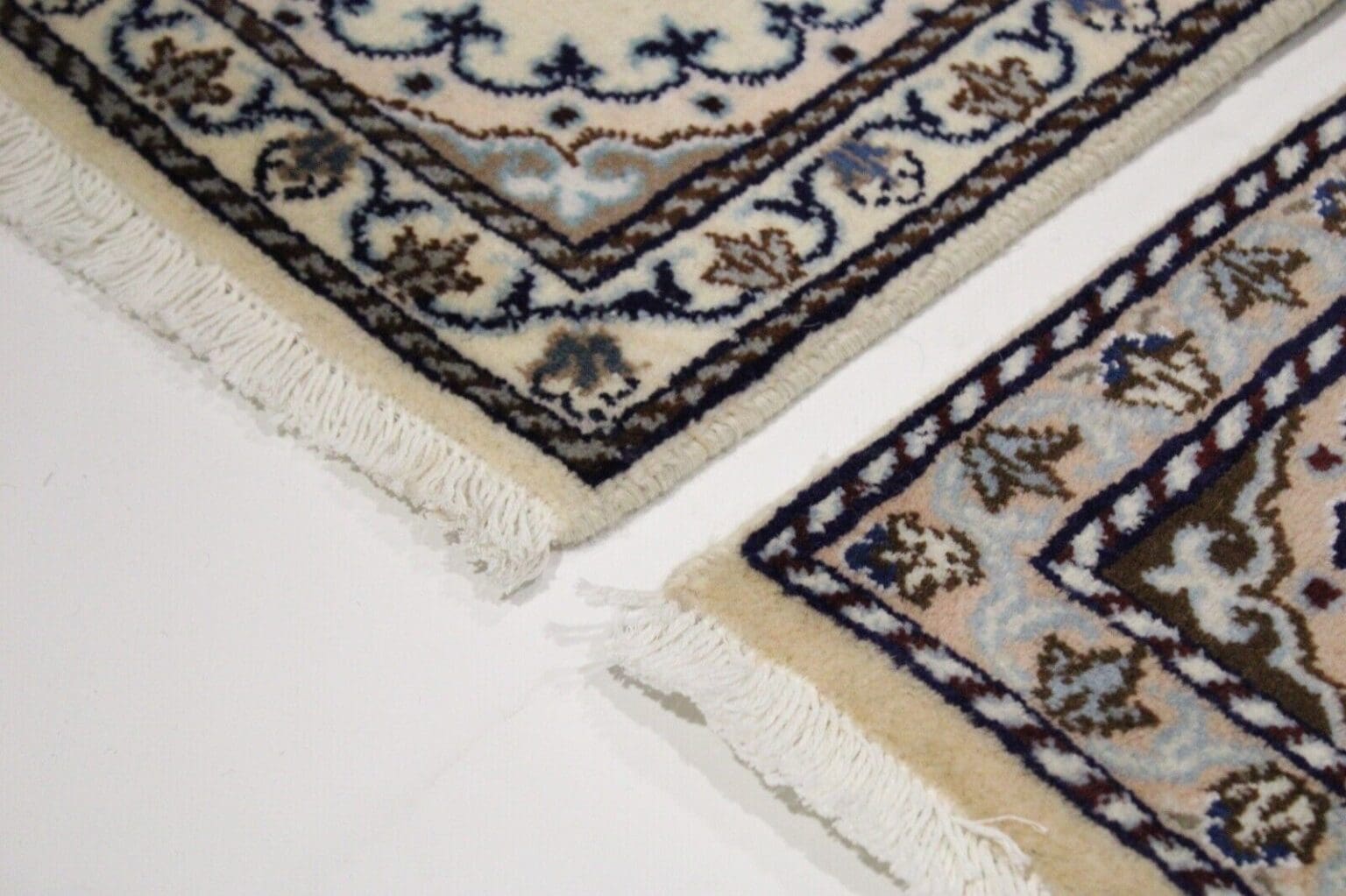
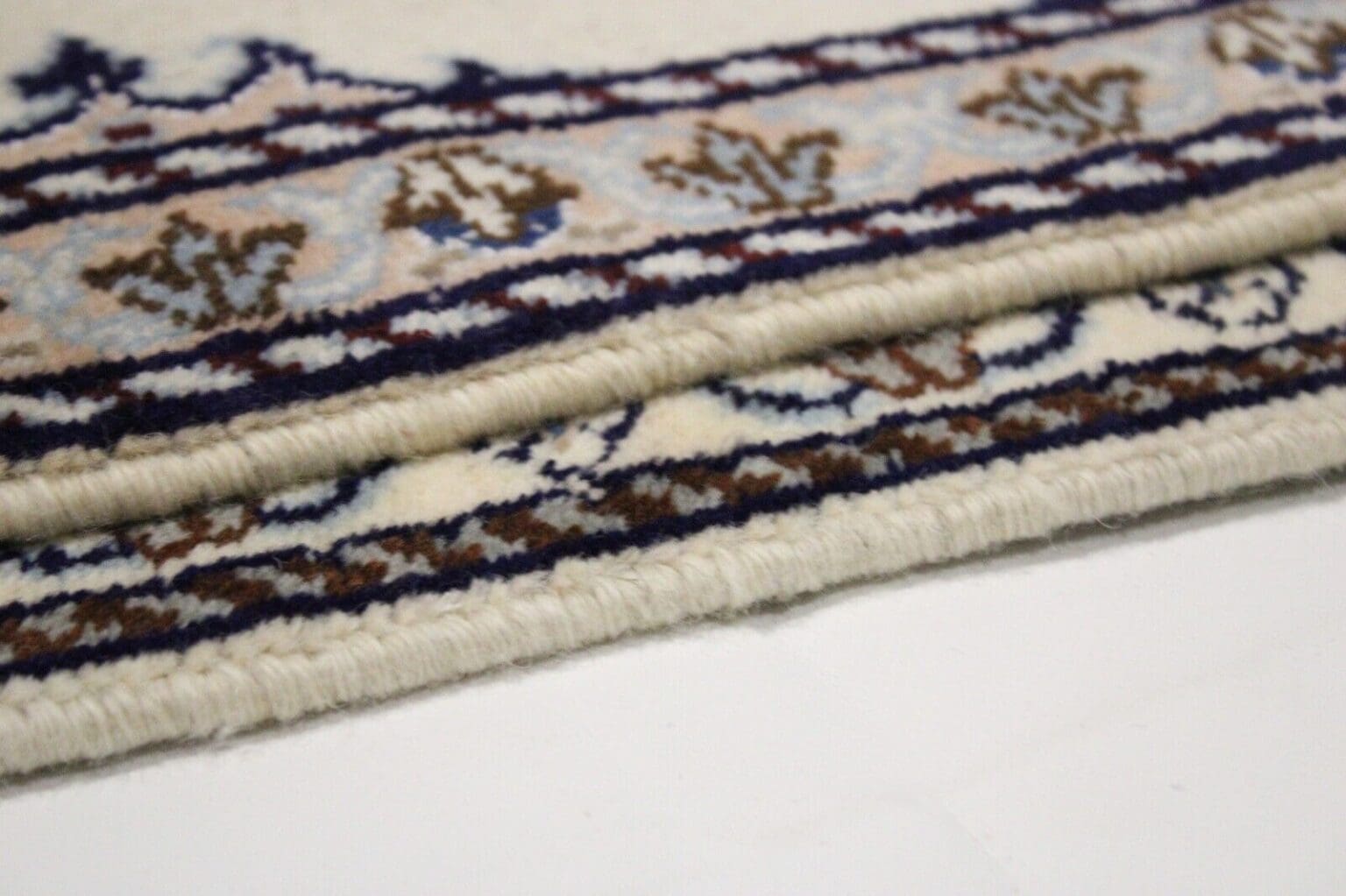
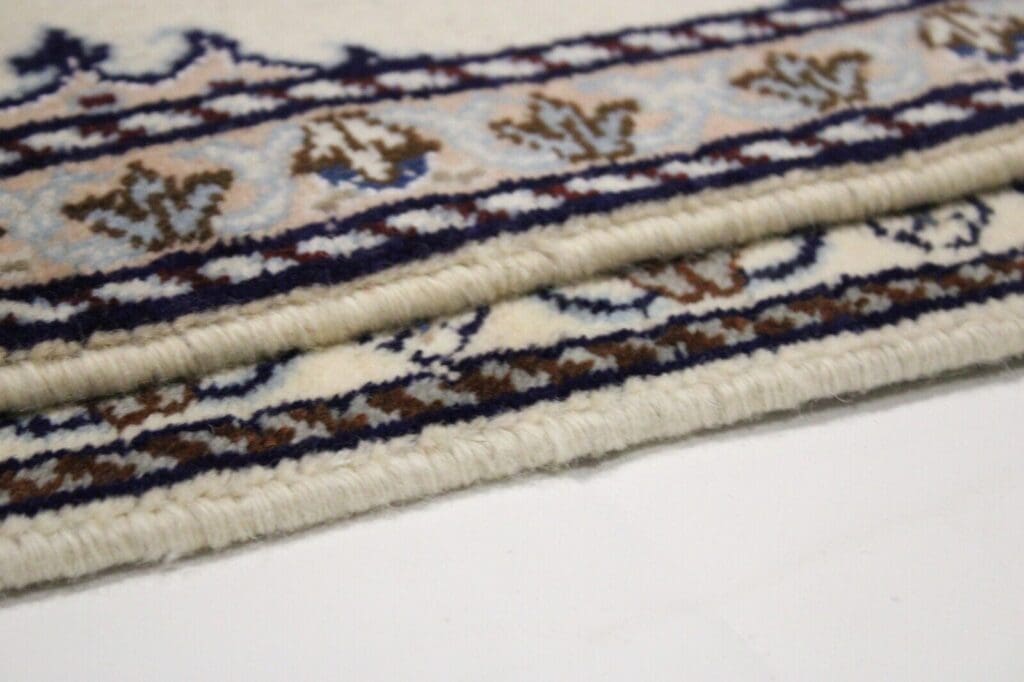
The pile is described as high-pile. Pile forms the visible surface and influences the feel of the rug. The combination of high pile, wool and cotton, and hand-knotted construction defines the material character of this one-off piece. The description also classifies it as second choice. This means that smaller irregularities may be present and are often not visible. No particular type or location of such an irregularity is identified.
At the same time, the rug is described as new without a tag and as being in excellent condition. The second-choice classification and the condition statement provide different information: the first concerns grading, while the second concerns the state of the offered piece. The workmanship is described as high quality and finely executed. No further construction details are provided.
Origin and Tradition
This rug comes from Nain in Persia. Nain lies in the heart of Iran and forms part of the Isfahan region. The town is known for its carpet production and occupies an established place in the Persian weaving tradition. The history of Nain rug making is traced back to the sixteenth century. Nain therefore represents a regional craft tradition developed over a long period through inherited techniques, patterns and methods of careful knotting.
The name Nain refers not only to a place but also to a particular tradition of carpet design. Nain rugs are especially associated with fine knotting and elegant, restrained compositions. A design must be transferred step by step into a textile surface while the rug is being made. Lines, symmetry, borders and inner fields need to remain coordinated throughout the work. Craftsmanship consequently depends both on the execution of each knot and on an understanding of the composition as a whole.
Rug making in Nain is deeply rooted in the region. Knowledge of materials, knotting methods and pattern construction is often passed from one generation to the next. This transmission preserves not only individual working steps but also a regional visual vocabulary. The craft combines practical experience with design rules that have developed over time. Nain rugs thus reflect not only a particular technique, but also the history, culture and values connected with their region of origin.
The garden is a recurring reference in Persian carpet art. Floral ornaments may recall plants, blossoms and cultivated garden spaces. Geometric elements give the field a clear order and can frame or balance organic lines. Such imagery is often associated with the garden of paradise and with harmony in nature. This symbolic meaning belongs to the wider tradition of Persian carpets. It explains the background of the design language and does not claim an unmentioned specific motif in this individual rug.
Making a hand-knotted rug requires continual coordination between the design and its execution. The weaver must understand how lines, fields and motifs relate to one another and how the chosen knotting process will express them in the finished surface. Fine knotting can support the depiction of small shapes and delicate transitions. This precision is traditionally central to Nain weaving. The present rug is identified as hand-knotted and as having high knot density, but no exact numerical density is stated.
The references to Persia and Nain should be distinguished from the general pattern description Oriental. Persia identifies the Iranian tradition in the product description, while Nain gives the regional attribution or rug type. Oriental describes the broad character of the pattern. These terms therefore perform different functions and should not be treated as interchangeable. As a Persian rug, this piece belongs to the Iranian carpet tradition.
The Isfahan region has long been an important setting for Persian artistic and craft traditions. Within this cultural environment, refined textile techniques and carefully organised ornament could develop. Nain represents its own recognisable tradition within that wider setting. Its background lies in the relationship between precise knotting, floral and geometric forms, and a balanced composition. This regional context explains the rug type without adding unrecorded characteristics to the individual piece.
Design and Pattern
The pattern of this rug is described as Oriental, while its style is identified as traditionally Persian. Nain rugs are generally known for classically elegant designs. Their visual language may combine floral elements with geometric forms. Floral lines bring flowing contours and organic movement to the surface. Geometric elements organise the composition through axes, repetitions, divisions or regular intervals.
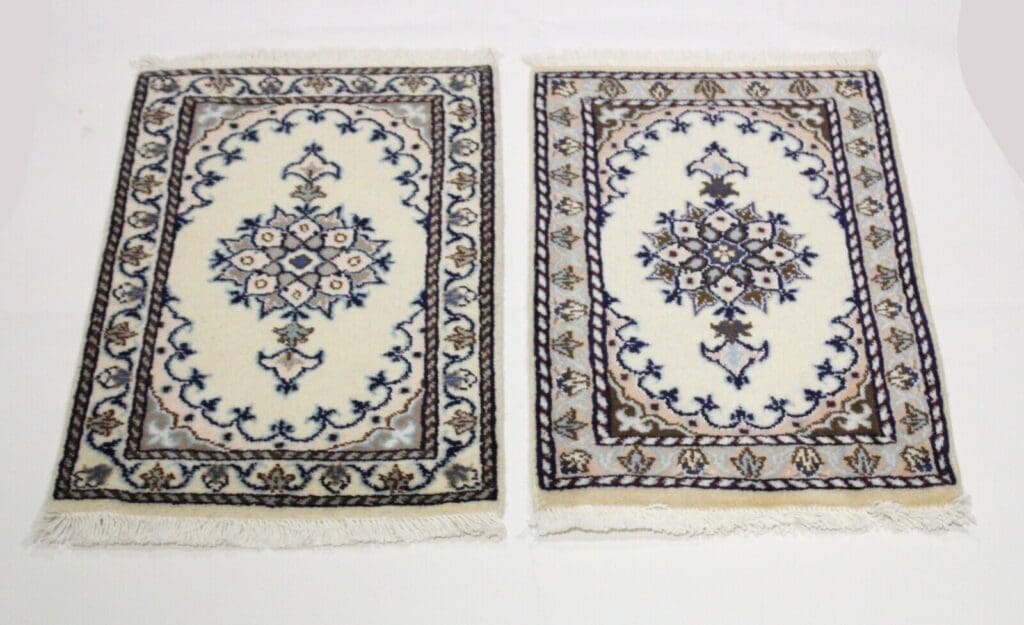
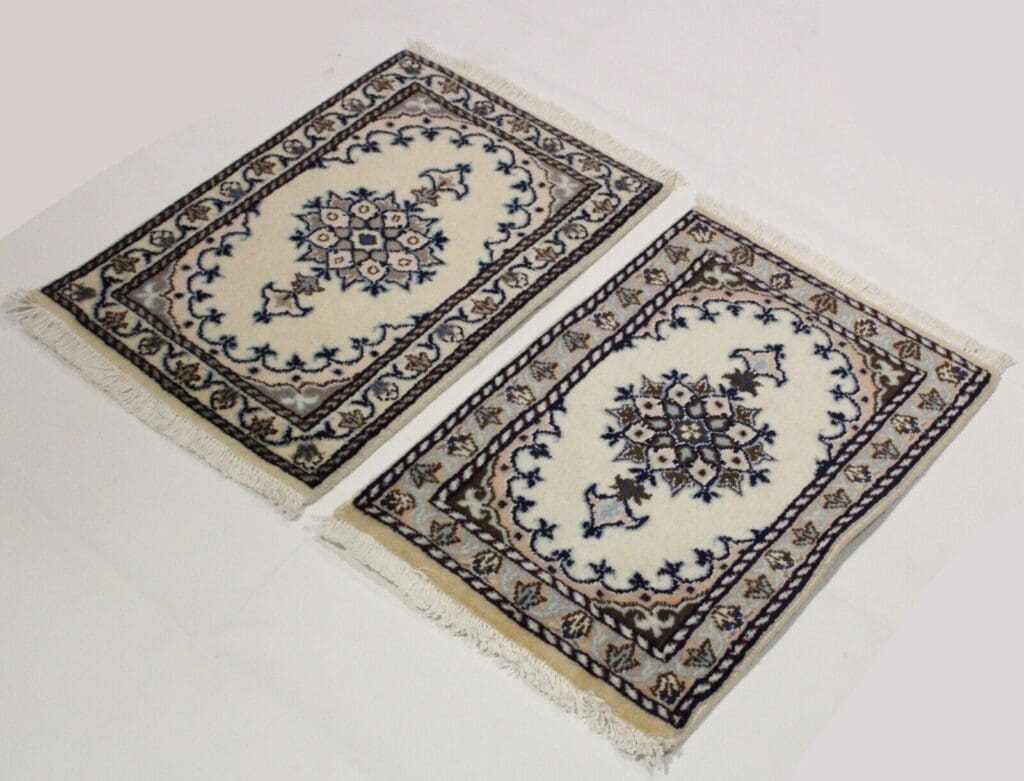
Elaborate borders and medallions are among the design devices commonly associated with the Nain tradition. A border frames the principal field and creates a visual transition between the outer edge and the interior. A medallion may serve as a central organising feature and give the composition a defined centre. Nain rugs vary in the precise arrangement, scale and treatment of such elements. For this piece, the pattern is identified generally as Oriental; no specific medallion or border arrangement is expressly recorded.
The traditional palette associated with Nain includes blue, beige and brown tones. These colours may appear in lighter or darker gradations and can serve different purposes within a composition. Blue is often used in Persian design as a cool counterpoint to warmer natural tones. Beige and brown can connect fields, outlines and transitions. This palette supports the ordered and restrained character commonly associated with classical Nain designs. The exact distribution of the colours in this rug is not stated.
The representation of delicate ornaments is closely connected with the knotting method. Because the design is assembled from individual knots, lines, blossoms and geometric details can be developed gradually across the surface. A high knot density can generally support differentiated drawing, but it does not provide a description of the particular motifs present here. The high pile also influences how outlines and colours appear under changing light. The visible effect therefore results from the interaction of pattern, material and construction.
The classically elegant design language of Nain rugs can be used with both traditional and modern furnishing styles. Ordered fields, floral ornament and a restrained palette can be placed in a variety of living environments. This rug is described as suitable for all rooms. That statement indicates general intended use and does not assign the piece to a particular room or interior scheme.
A Persian carpet is characterised not only by individual ornaments. The relationship between the central field and the border, the repetition of forms and the balance between open and decorated areas are equally important. In the Nain tradition, these features contribute to a coherent overall composition. Fine hand-knotting allows lines and areas to be differentiated with care. The specific pattern information for this rug remains Oriental, with a traditionally Persian style.
The combination of floral and geometric ideas has a long history in Persian carpet art. Natural forms are not simply copied; they are translated into an ordered ornamental vocabulary. Blossoms may be repeated rhythmically, vines may be arranged symmetrically and geometric frames may divide the composition. This creates a pattern world that is both decorative and structured. The general explanation describes the Nain type and does not introduce individual motifs that have not been named.
Special Features
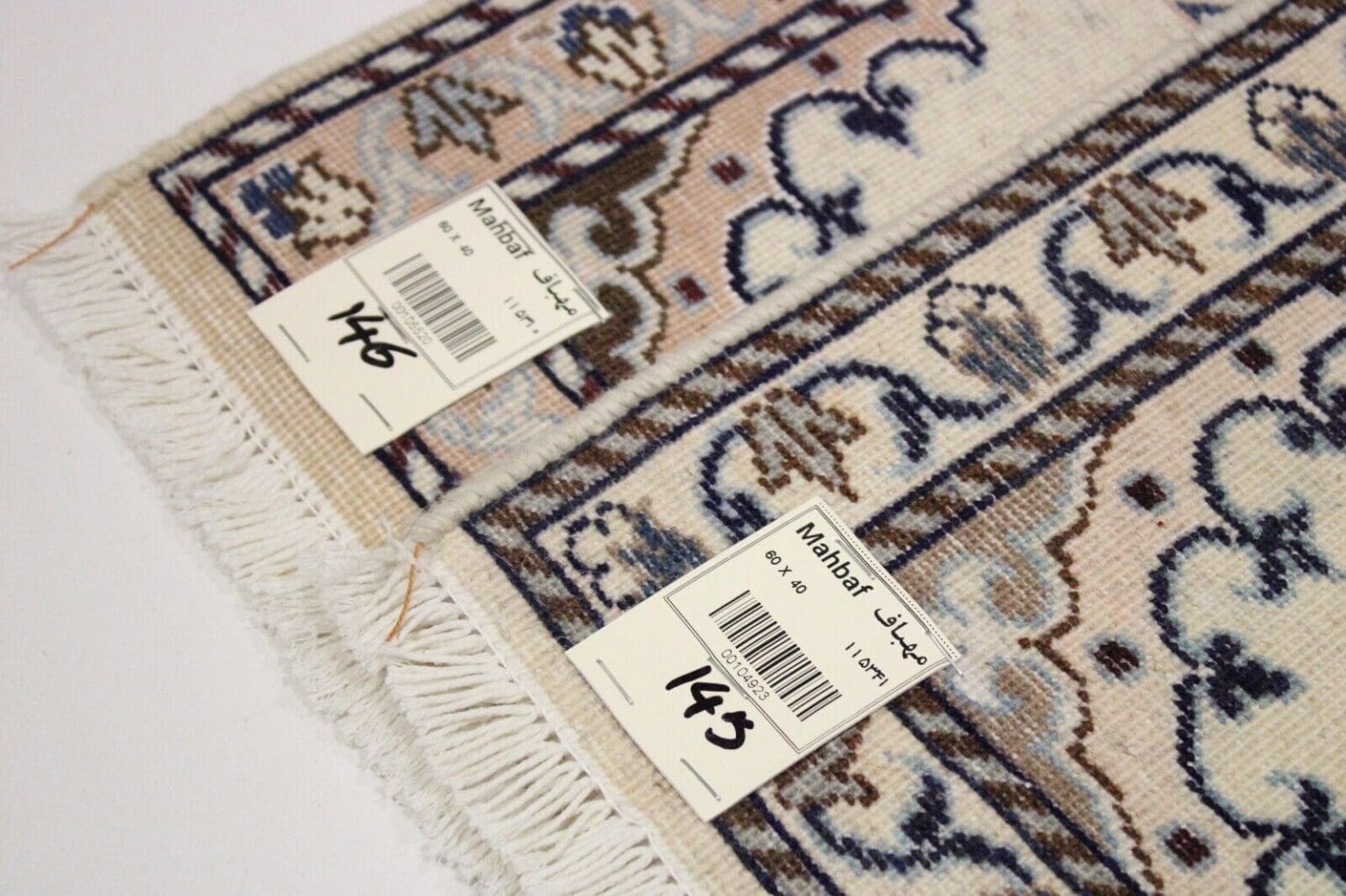
A notable feature of this rug is its second-choice classification. In Persian rug terminology, this category indicates that smaller irregularities may be present and are often not visible. It is a grading designation, not an indication of origin. Despite this classification, the rug is described as being in excellent condition. Its condition is also recorded as new without a tag. The grading and the condition should therefore be understood as two separate statements about the same item.
The explicitly stated characteristics include hand-knotted construction, high-quality wool and cotton, and high pile. Care should be carried out attentively. Regular vacuuming without a brush attachment removes dust and dirt without placing unnecessary strain on the pile. Stains should be treated promptly with a damp cloth and a mild cleaning agent. Professional cleaning once a year is recommended for thorough care and for helping to preserve the textile and its colours.
The rug is generally suitable for use in rooms with underfloor heating. Wool provides good thermal insulation and helps prevent the rug from overheating. The temperature should nevertheless not be set too high in order to protect the fibres. The exact setting depends on the technical requirements of the particular underfloor-heating system.
How should I care for my Persian rug?
For regular basic care, vacuum the rug without using a brush attachment. This removes dust and dirt while avoiding unnecessary stress on the high pile. Stains should be treated as soon as possible with a damp cloth and a mild cleaning agent. Professional cleaning once a year is recommended for more thorough care and to help preserve the textile and its colours. The hand-knotted structure should be taken into account during cleaning.
What is the difference between first and second choice?
First-choice rugs are described as flawless and free from workmanship defects. Second-choice rugs may have smaller irregularities that are often not visible. This Nain rug is classified as second choice while also being described as new without a tag and in excellent condition. The classification explains the grading of the rug, whereas the condition statement describes the present state of the offered piece.
Can I use the rug over underfloor heating?
Yes. This hand-knotted Persian rug is generally suitable for rooms with underfloor heating. Wool provides good thermal insulation and helps prevent the rug from overheating. The temperature should still not be set too high so that the fibres are protected. The exact temperature setting should follow the requirements of the individual underfloor-heating system.
To provide the best experiences, we use technologies like cookies to store and/or access device information. Consenting to these technologies will allow us to process data such as browsing behavior or unique IDs on this site. Not consenting or withdrawing consent, may adversely affect certain features and functions.
Functional Always active
The technical storage or access is strictly necessary for the legitimate purpose of enabling the use of a specific service explicitly requested by the subscriber or user, or for the sole purpose of carrying out the transmission of a communication over an electronic communications network.
Preferences
The technical storage or access is necessary for the legitimate purpose of storing preferences that are not requested by the subscriber or user.
Statistics
The technical storage or access that is used exclusively for statistical purposes.The technical storage or access that is used exclusively for anonymous statistical purposes. Without a subpoena, voluntary compliance on the part of your Internet Service Provider, or additional records from a third party, information stored or retrieved for this purpose alone cannot usually be used to identify you.
Marketing
The technical storage or access is required to create user profiles to send advertising, or to track the user on a website or across several websites for similar marketing purposes.
 SECURE PAYMENT
 SHIPPING PARTNERS


