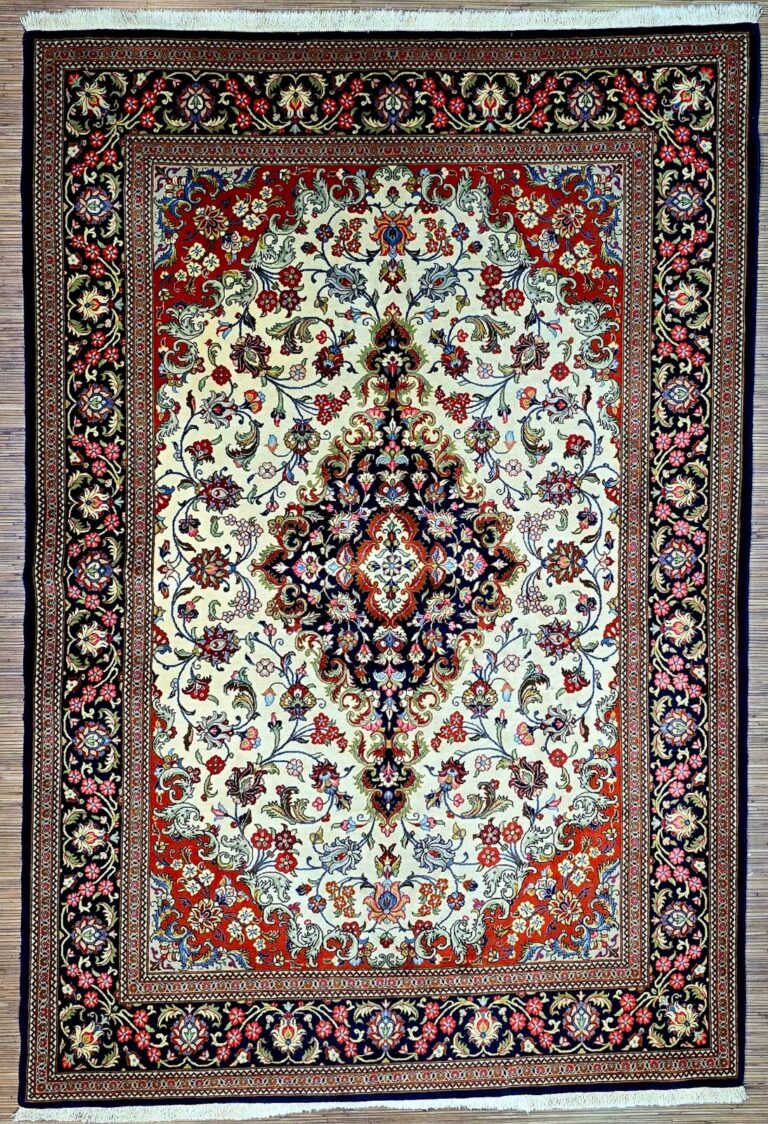
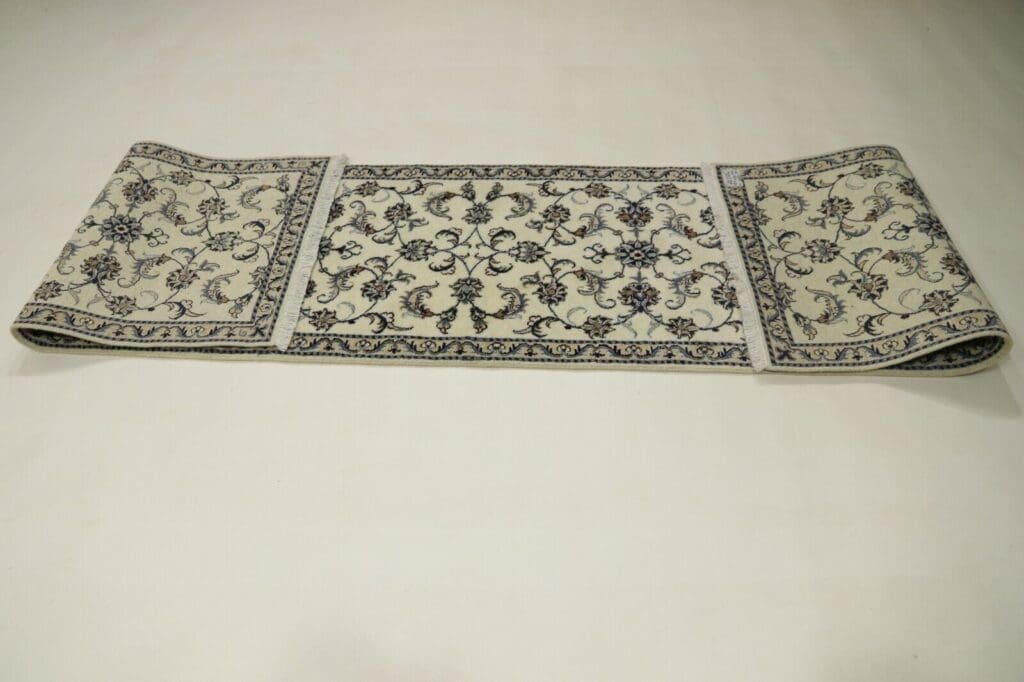
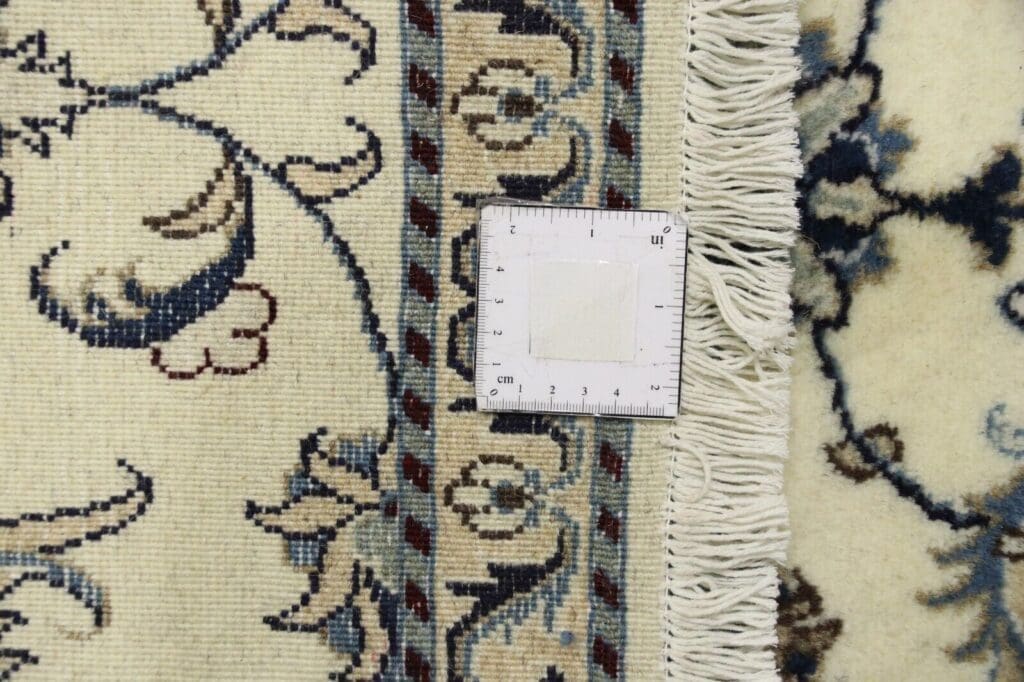
This Nain Persian Rug is hand-knotted with a pile made from 90% virgin wool and 10% silk. Its warp is 100% cotton. Virgin wool forms the main part of the pile and is traditionally valued in rug making for its resilience, durability and pleasant handle. Silk adds a smoother fibre and a distinct lustre to the wool. The cotton warp forms the foundation of the rug and provides the structure to which the knots are attached.
Hand-knotting is a manual construction method in which each knot is secured individually around the warp. The maker works across the loom row by row, gradually building the pile and the pattern. Weft threads help secure the completed rows, while careful tension keeps the structure stable. The process requires patience, concentration and practical experience. Because the rug is made by hand, it is an individual textile rather than an identical machine-produced item.
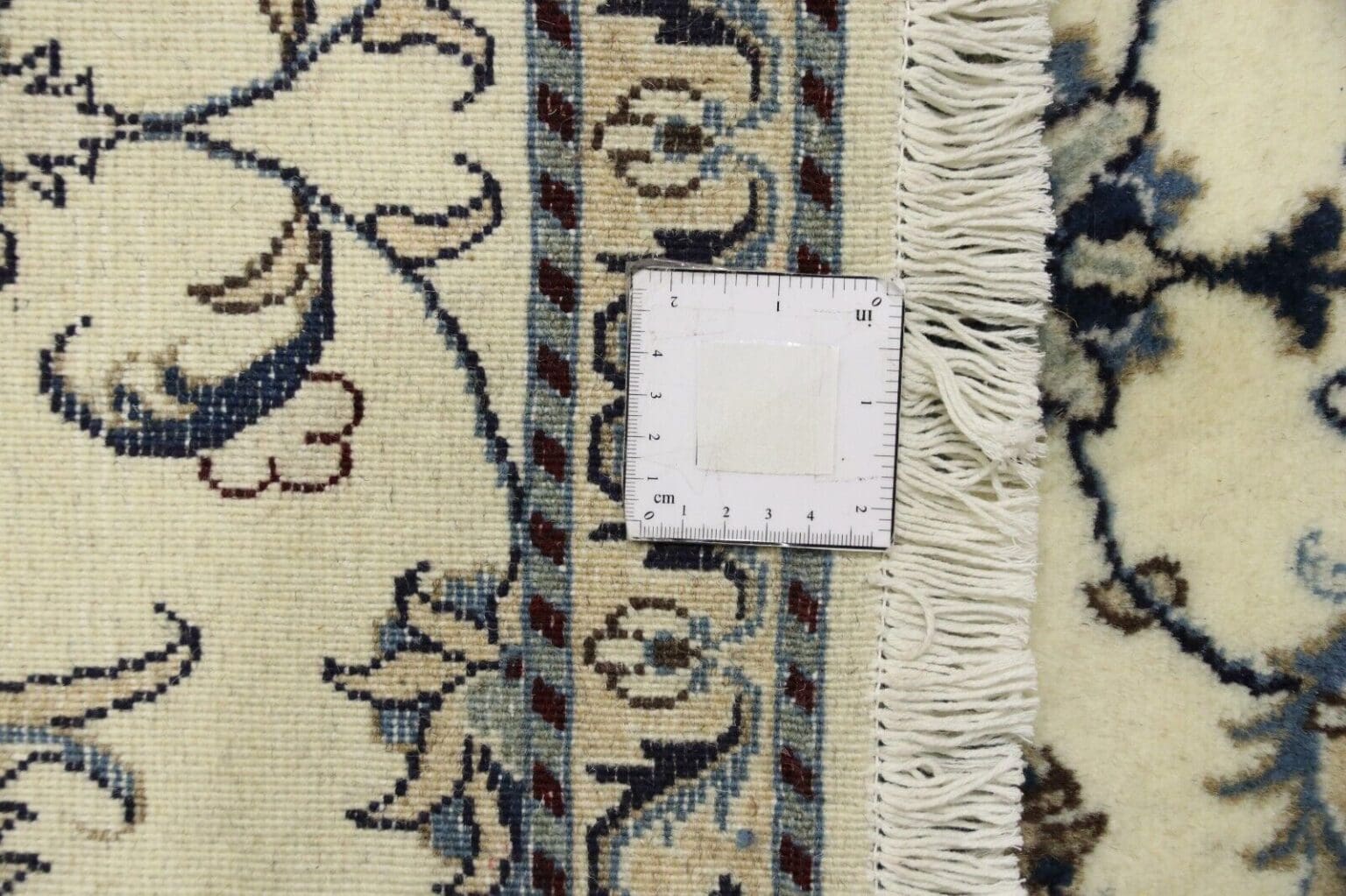
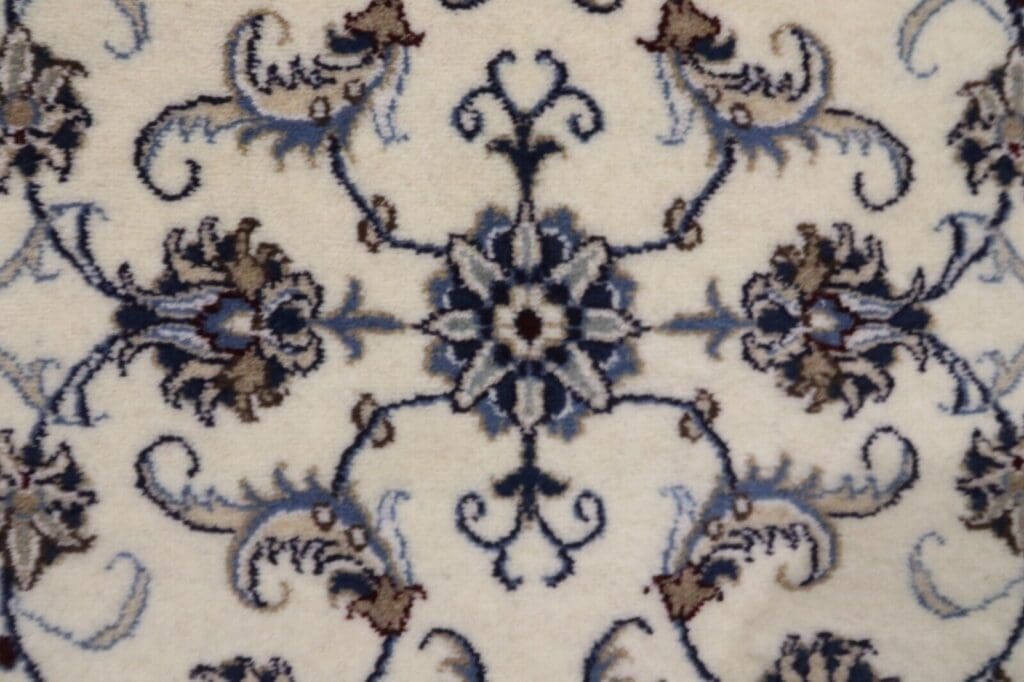
The knot density is approximately 300,000 knots per square metre. A dense knotting allows fine outlines, small ornaments and carefully controlled transitions to be rendered in the pile. It also represents a substantial amount of manual work. The combination of virgin wool and silk brings together a durable principal fibre and a finer supplementary material. This rug is described as new and in very good condition, giving it the condition of a nearly unused piece for a living space.
The pile thickness is given as approximately eight millimetres. The rug is also described as suitable for underfloor heating and as pet-friendly. These practical details complement its hand-knotted construction. Long-term care should be adapted to the fibres, with regular gentle vacuuming and suitable treatment of heavier soiling. Wool, silk and the cotton warp should not be exposed to unsuitable cleaning products or unnecessary moisture.
Origin and Tradition
The rug is offered as a Nain Persian Rug with its origin stated as Persia. Nain is one of the established traditions of Persian rug making. The city is located in central Iran, a region with a long-standing culture of textile production. Nain rugs are generally associated with fine knotting, careful workmanship and clearly organised designs. These points describe the wider tradition and do not add an unnamed motif or other unrecorded detail to this particular rug.
The history of Persian rugs developed through the interaction of nomadic, village and urban weaving practices. Each setting contributed different approaches to materials, tools, colours and patterns. Urban workshops often used planned compositions, with a central field, framing borders and repeated decorative units. Other rugs developed more freely arranged or strongly geometric structures. The appearance of a finished piece depended on local customs, the available fibres, the preparation of the yarn and the knowledge of the makers.
The Nain tradition is connected with orderly, fine workmanship. Preparing the fibres, spinning the yarn, arranging the warp, maintaining loom tension and placing the knots all form part of the technical process. A pattern guide may help the maker preserve proportions and repetitions across the field. The actual execution remains manual, however. The experience of the person working at the loom affects the handling of the threads and the regularity of the finished surface.
Persian rugs have traditionally been both useful objects and carriers of cultural design. They cover floors, define areas within interiors and provide a textile surface underfoot. At the same time, they preserve forms and methods transmitted through generations. Making a rug requires knowledge of fibres, dyes, knot structures and loom work. The result depends on the relationship between the material, the foundation, the density of the knots and the planned arrangement of the design.
The designation Persian Rug refers to the stated origin in Persia, rather than merely to an Oriental decorative style. Rugs from different countries can use similar botanical, geometric or medallion-based ideas while belonging to separate regional traditions. In the Nain tradition, Persian origin and fine hand-knotting are important points of reference. The origin provides the geographic and historical context; the exact design of an individual piece is determined by its own pattern and handmade execution.
Persian pattern traditions were not static. Workshop designs could be preserved, adapted and combined with other established forms. A familiar vine, border or floral unit might appear in a different arrangement or with a changed balance of field and framing elements. This combination of continuity and variation explains the breadth of Persian rug design. The Nain name and the stated Persian origin place this rug within that wider history of urban Persian craftsmanship.
Design and Pattern
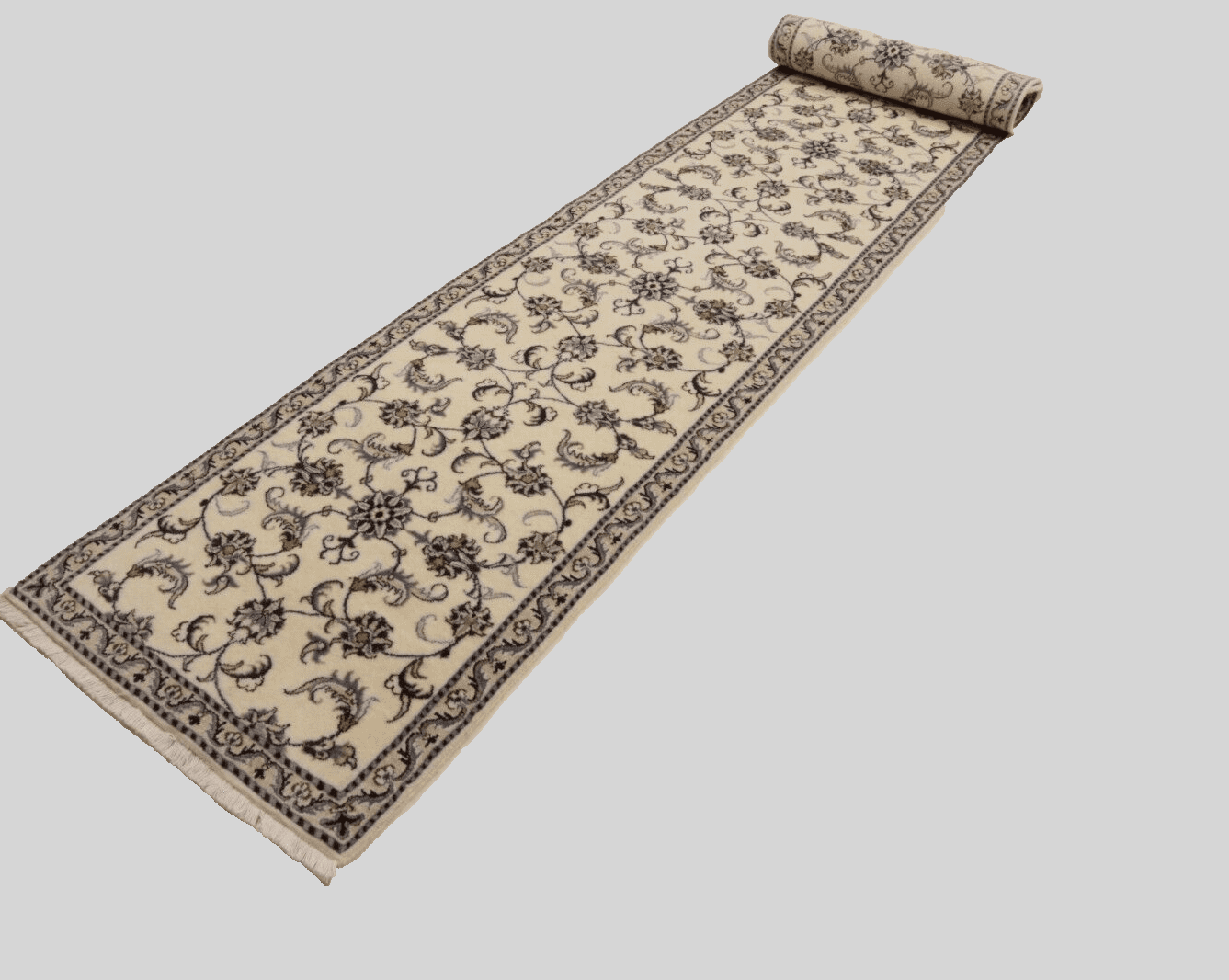
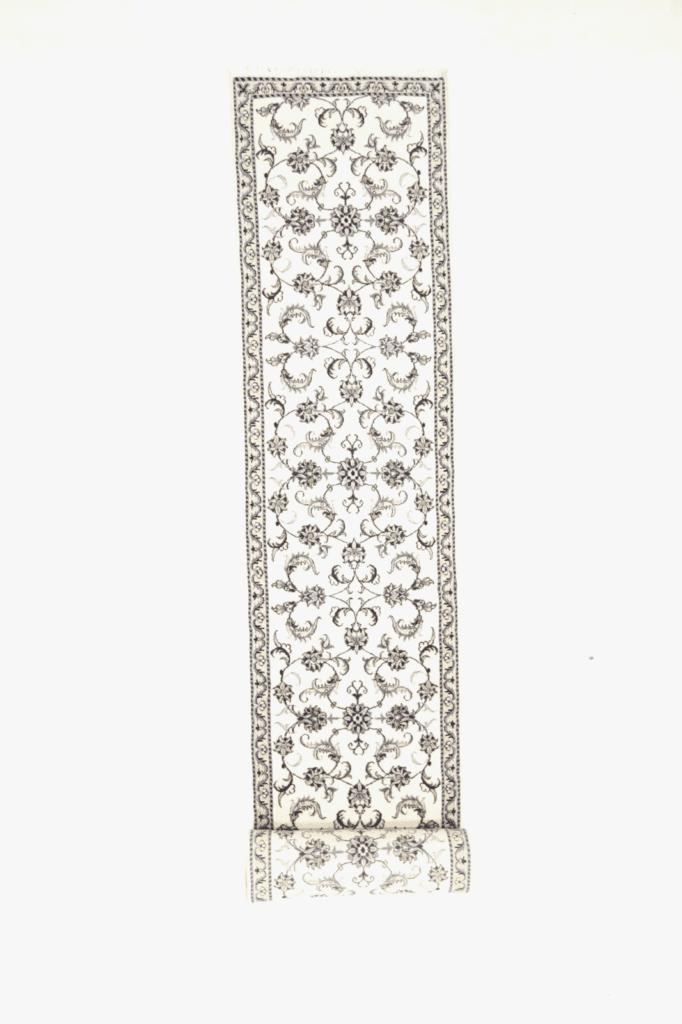
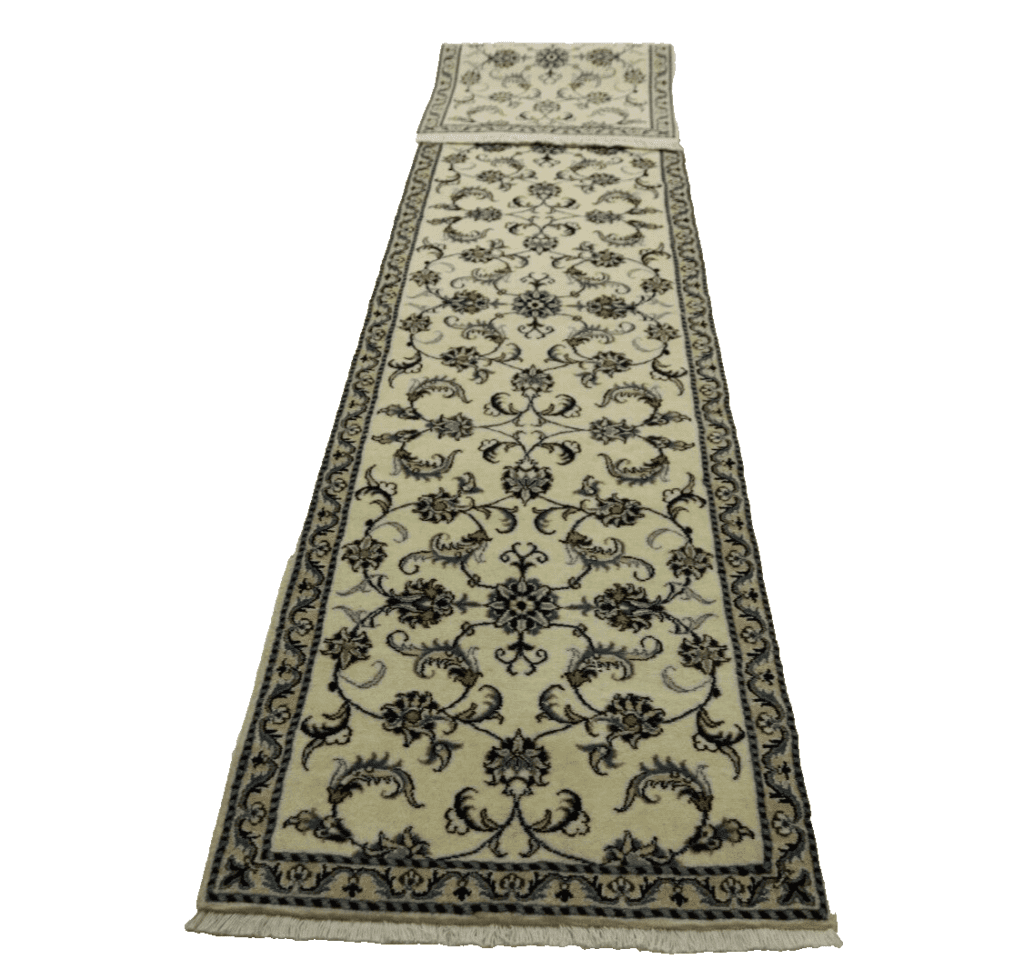
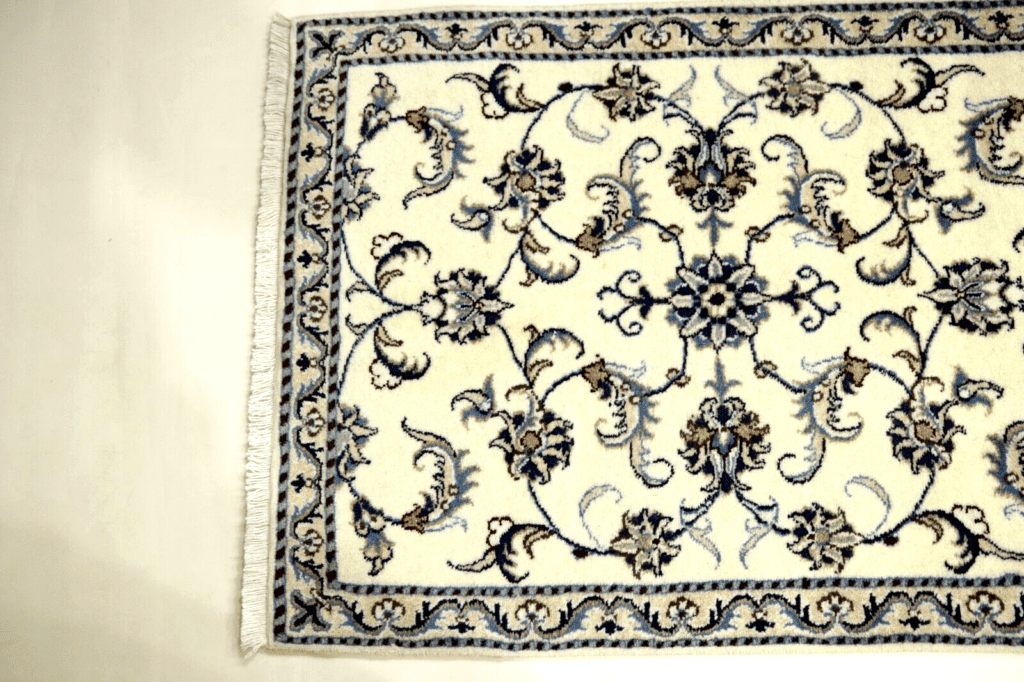
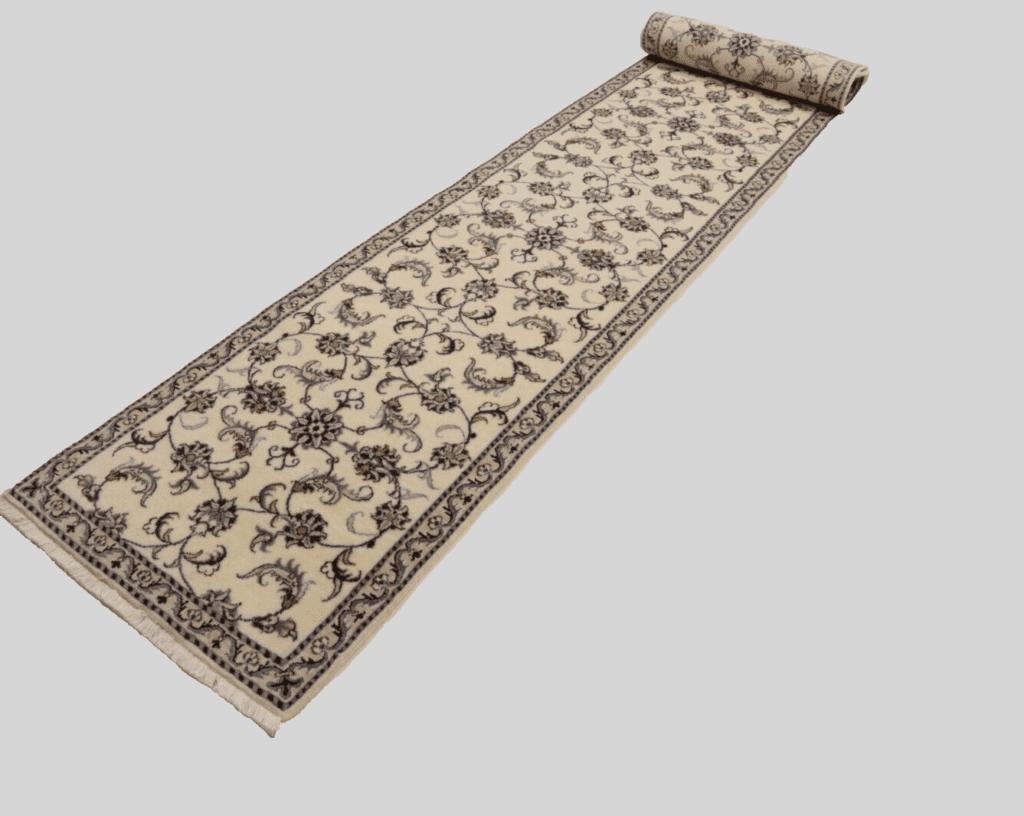
The rug is described as traditional Oriental and Persian in style. Oriental rug designs often organise the surface into related areas. A central field may be enclosed by one or more borders, with ornaments repeated at measured intervals or arranged around an axis. Leaves, vines, blossoms and stylised floral elements are common in Persian design traditions. Geometric lines and framed sections can provide structure and help define the transitions between the different parts of a composition.
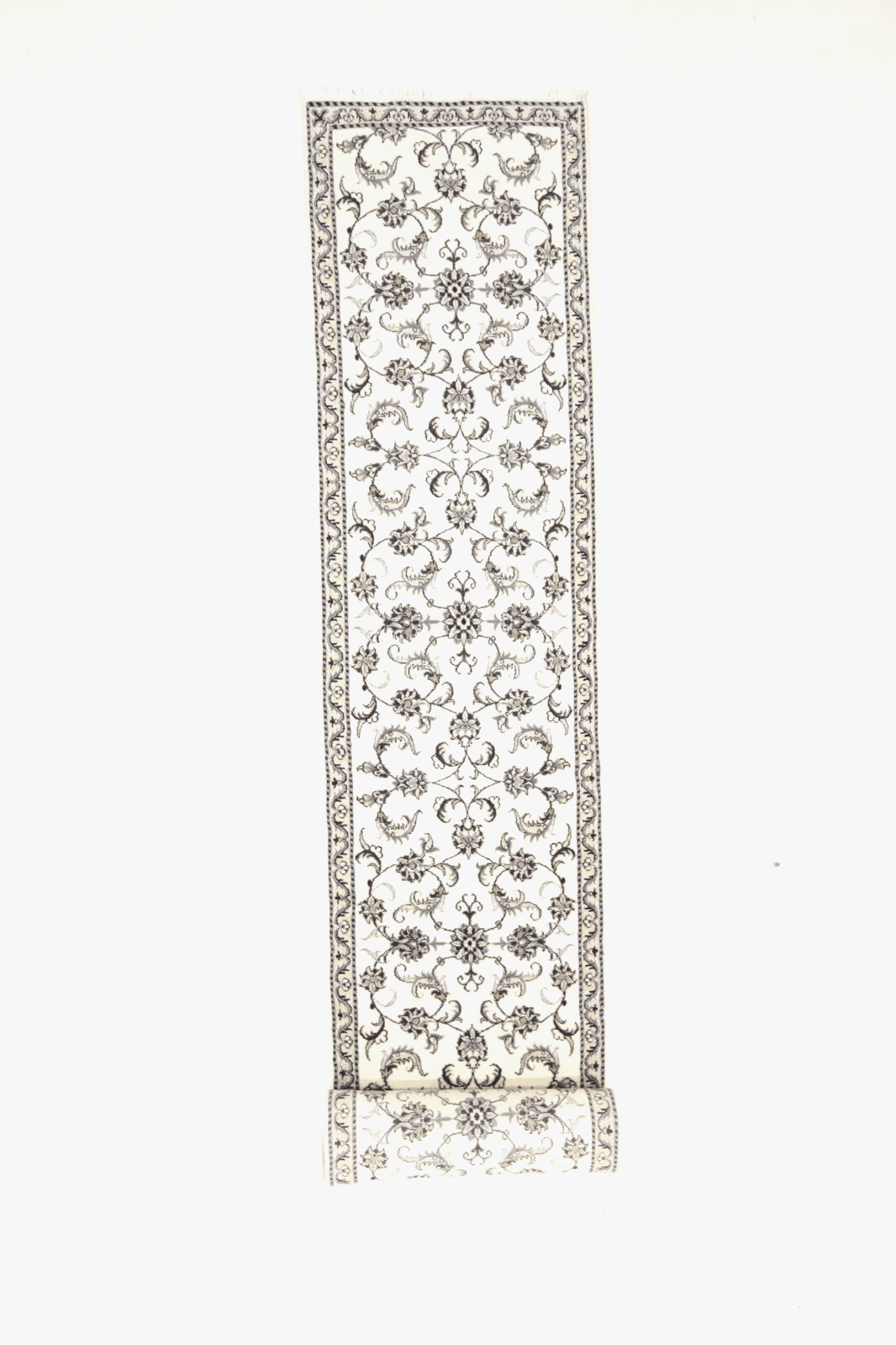
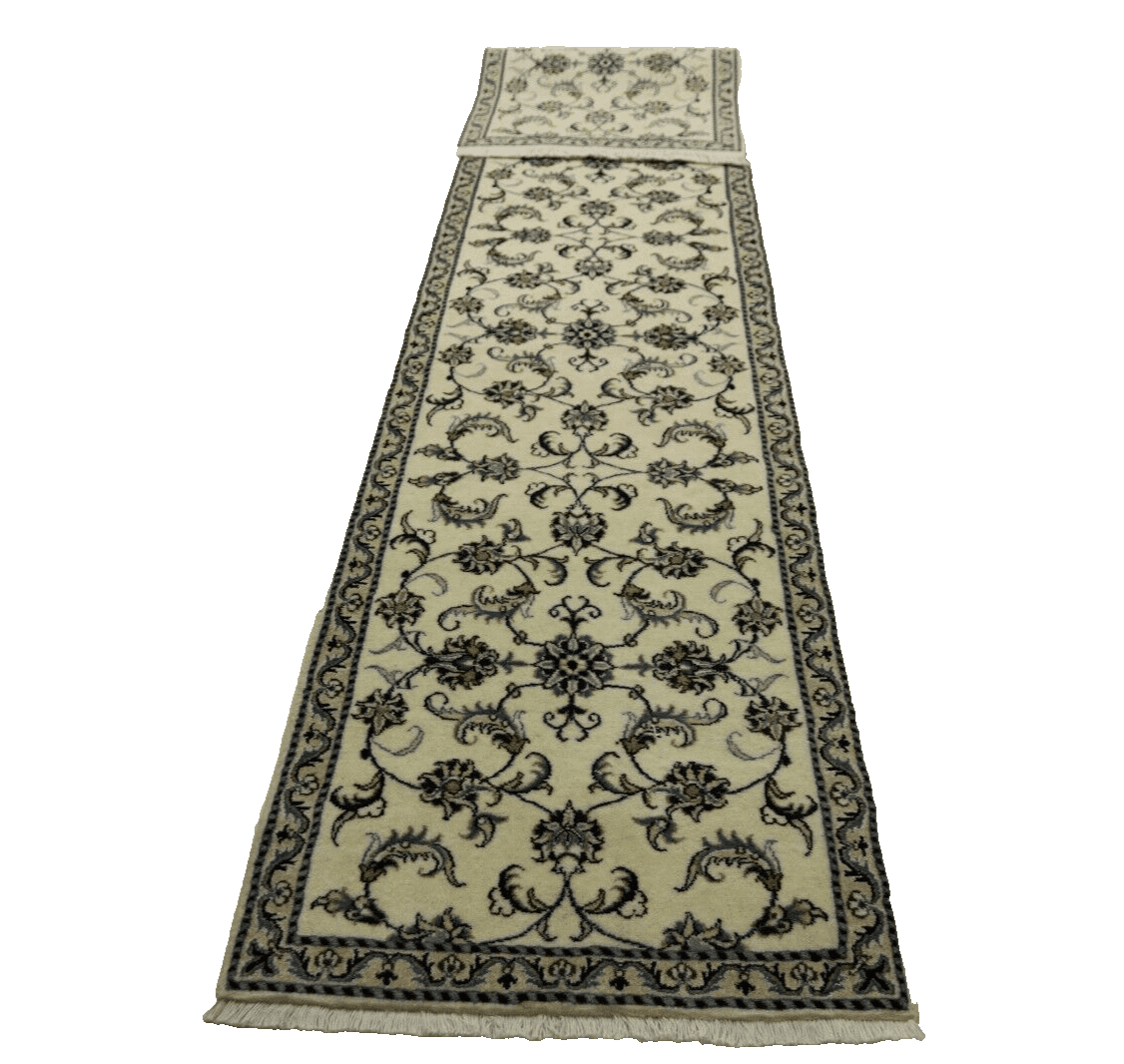
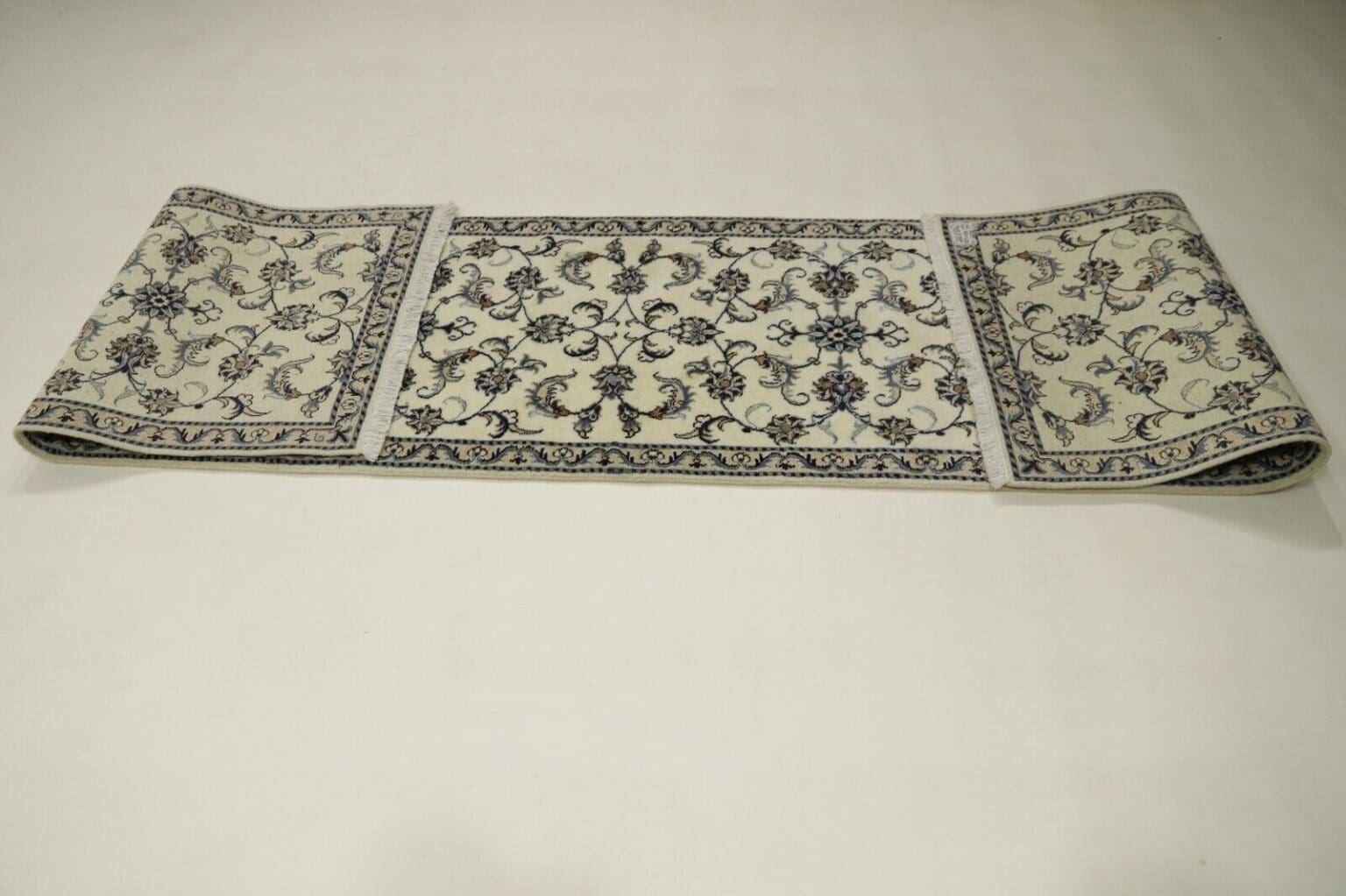
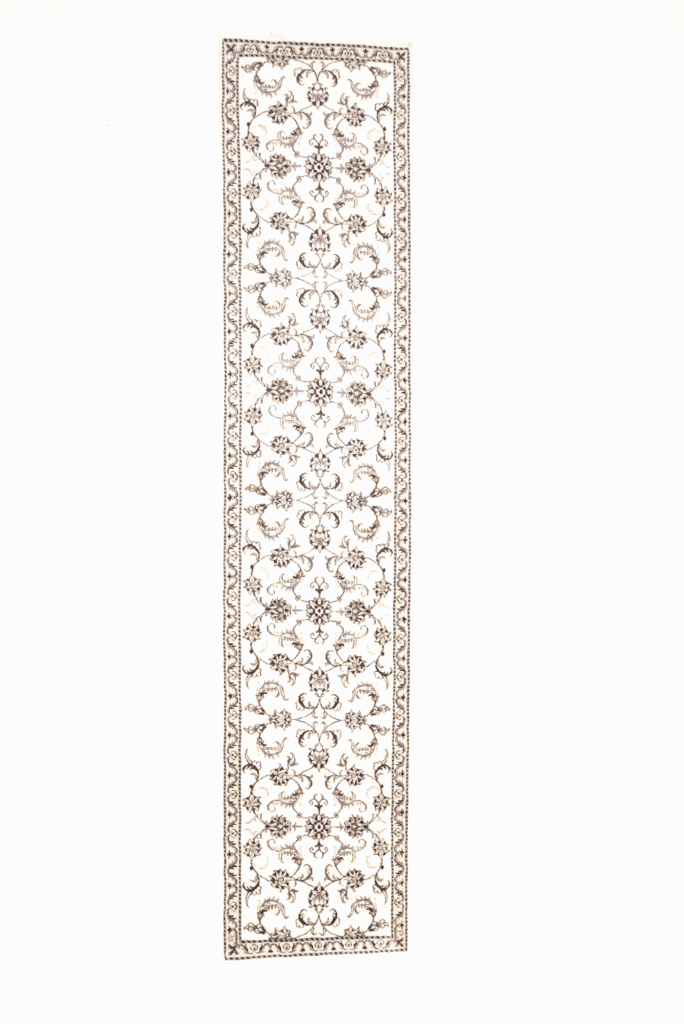
Persian designs often depend on the relationship between surface, line and repetition. An ornament is placed within a larger sequence rather than treated as an isolated sign. Repeated units create rhythm, while borders and axes hold the composition together. The elongated format of a runner can support a directional arrangement within an interior. It may accompany a hallway, run beside furniture or connect longer areas of a room. The precise visual effect depends on the room, the floor and the surrounding furnishings.
Many Oriental rug motifs have been used for generations. Vines are often associated with growth and continuous movement, while flowers and leaves can refer to nature and renewal. Geometric borders provide order, definition and a clear edge to the field. These interpretations form part of the broader symbolic vocabulary of Oriental rugs. They should not be presented as a definite statement about the intention of the makers of this specific rug. Patterns are also shaped by workshop practice, inherited designs and changing preferences.
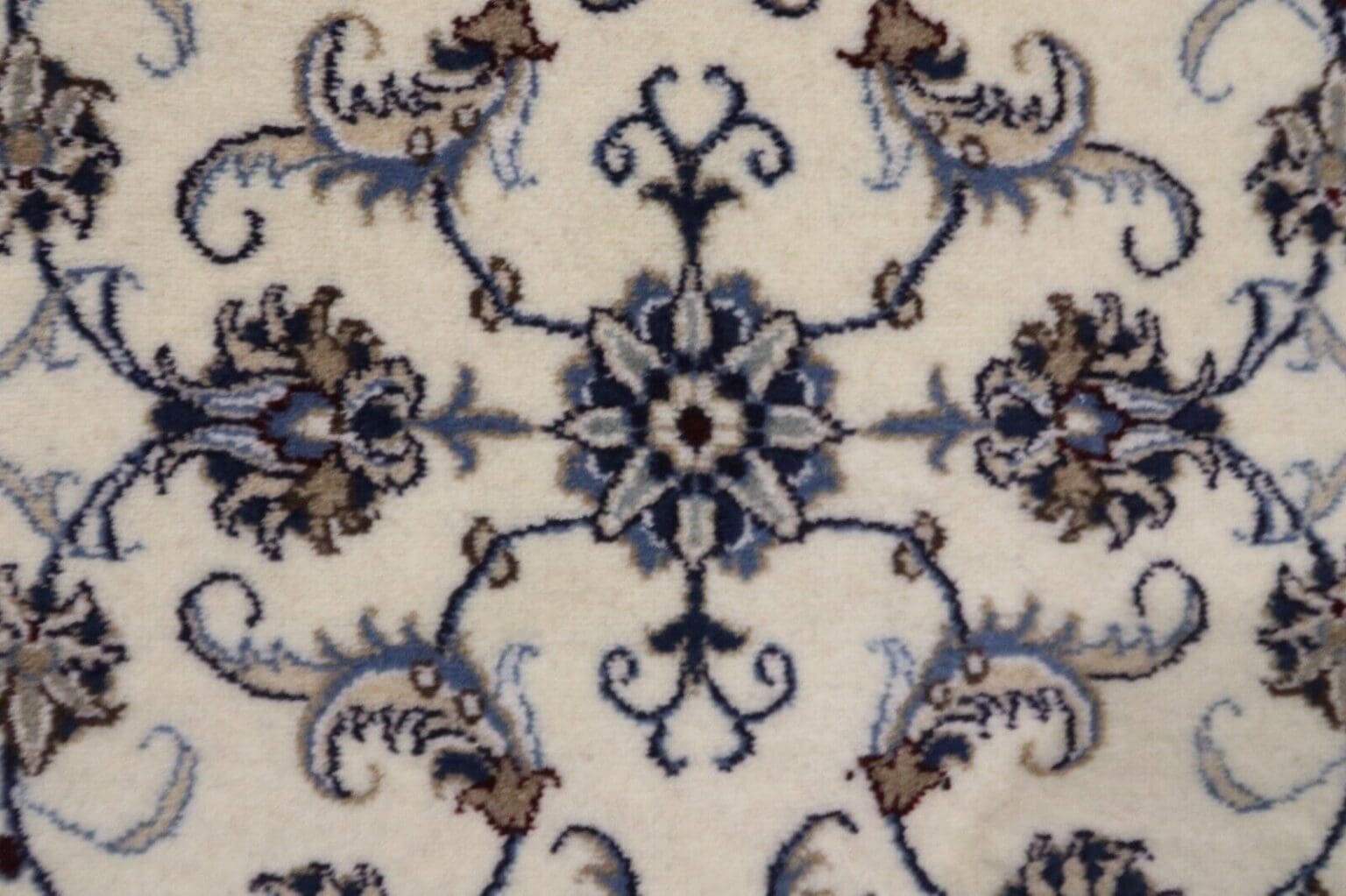
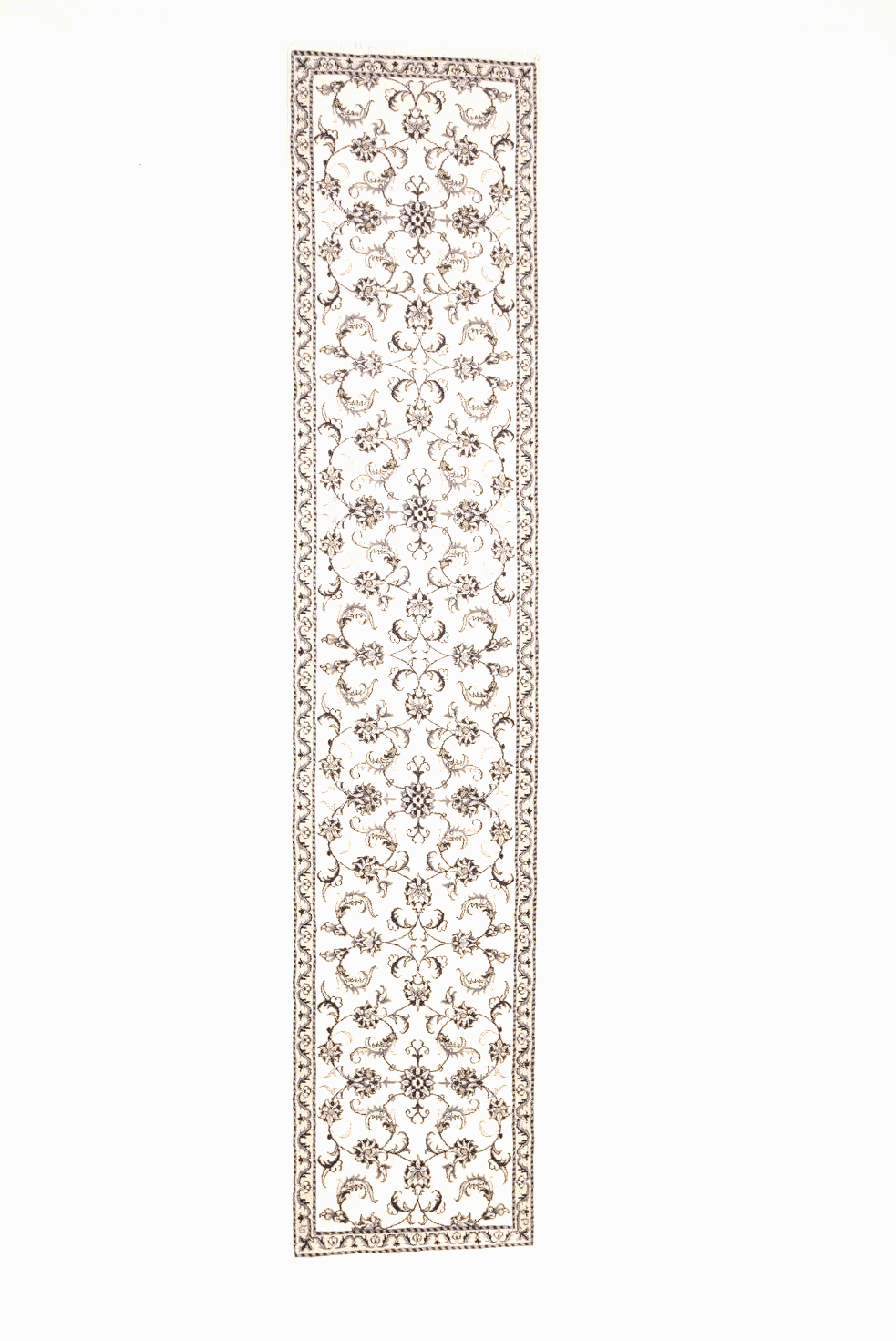
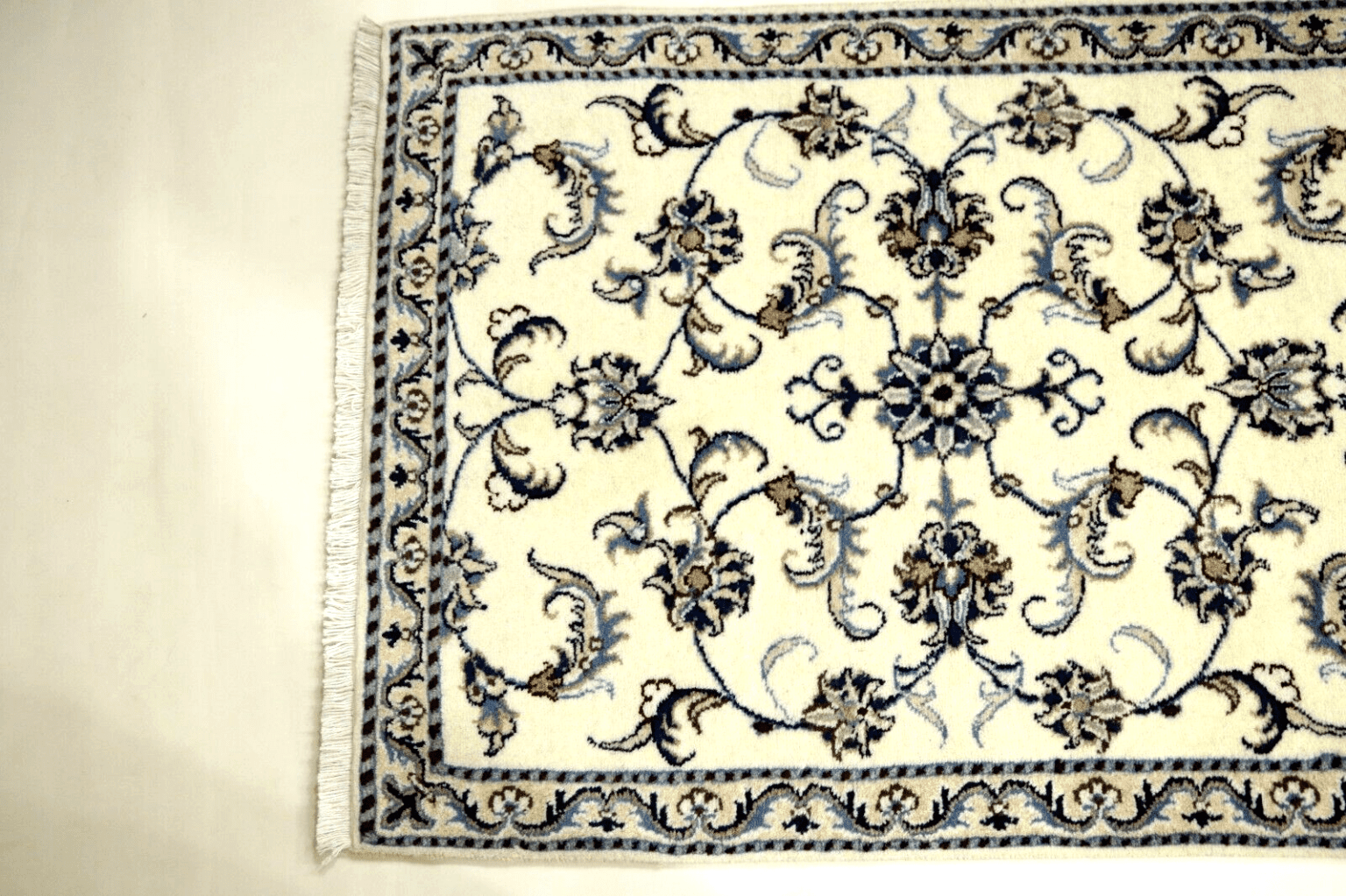
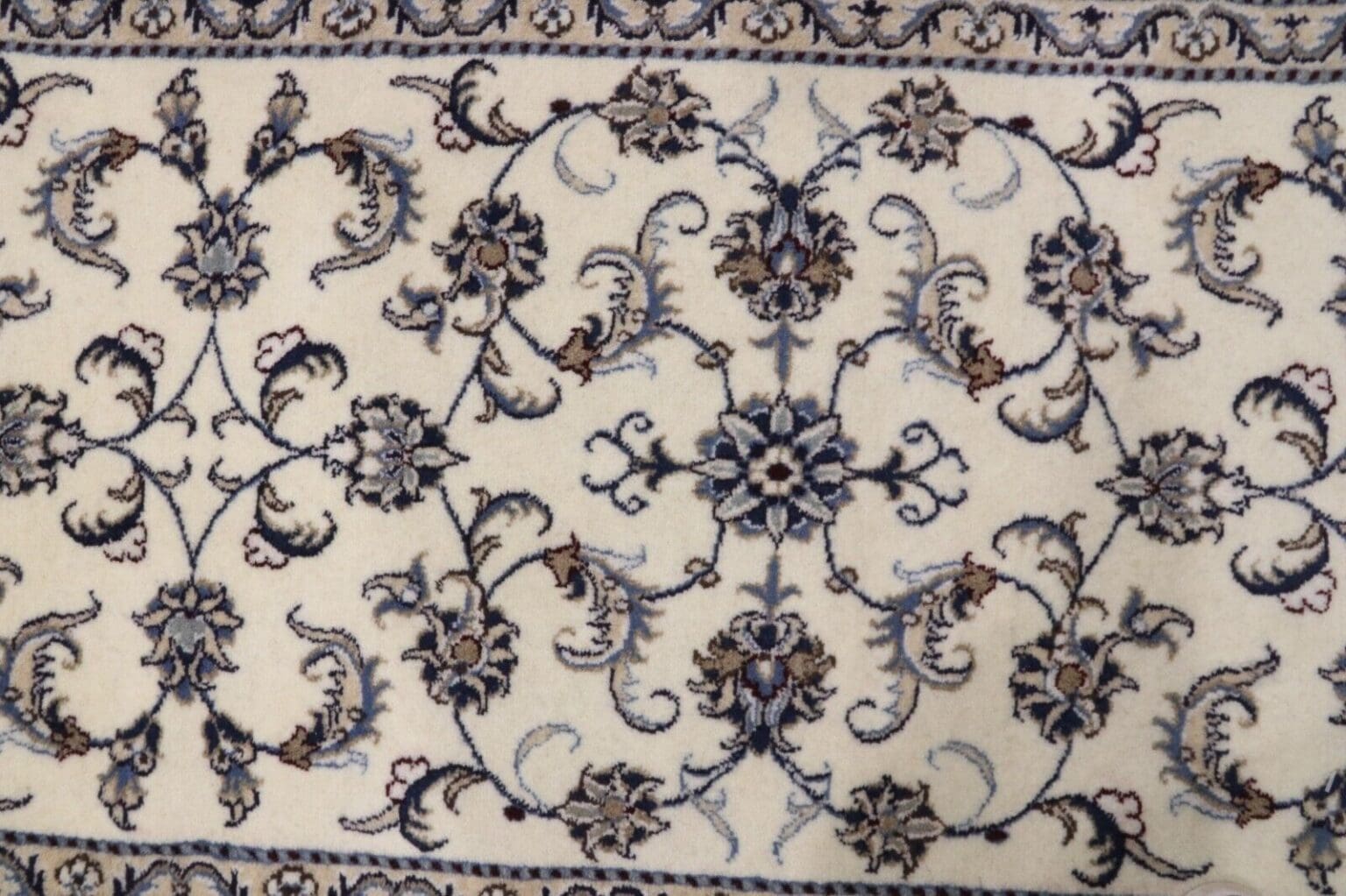
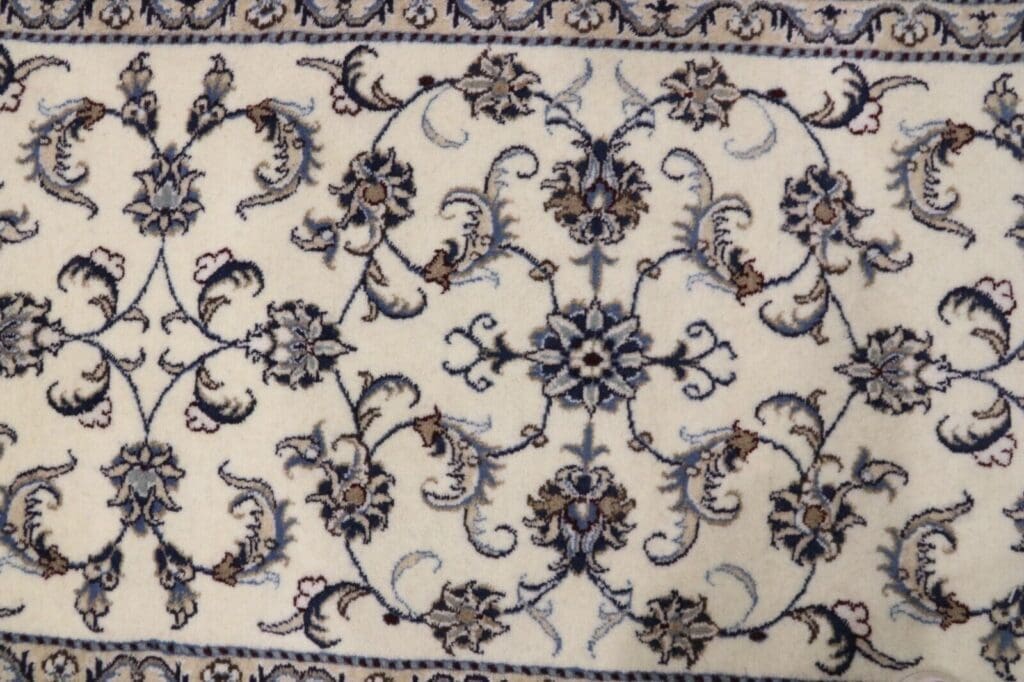
The source describes this rug as artistically designed and brightly coloured. No individual motif or exact colour sequence is named. The most precise pattern description is therefore its traditional Oriental and Persian style, together with the reference to an artistic design and vivid colours. Fine knotting can generally support clear outlines and detailed textile work. Silk may also create changing surface reflections as the light moves across the pile. These are technical effects of the materials and do not justify adding a motif that has not been identified.
Traditional rug composition can involve medallions, all-over fields, floral repeats, geometric borders or combinations of these approaches. Symmetry may create balance, while smaller repeated forms connect the central area with the surrounding frame. The visual character of a rug is often produced by the relationship between many elements rather than by one emblem alone. A dense knotting makes it possible to place such elements closely and to maintain fine transitions between lines and shapes.
Designs from a workshop can remain recognisable while changing through time. Pattern sources, local taste, the choice of colours and the personal handling of the maker all influence the finished result. Rugs from the same tradition may therefore share a visual language without being identical. The Nain type is generally associated with careful, detail-focused compositions. For this one-off rug, the documented information remains limited to the traditional Oriental/Persian style, the artistic design and the vivid colours described in the source.
Special Features
The rug’s notable features are its approximately 300,000 knots per square metre, its hand-knotted construction and its combination of 90% virgin wool with 10% silk. The warp is 100% cotton. The high knot density represents fine, detailed textile work. Virgin wool contributes the resilience and durability associated with that fibre, while silk adds a smoother feel and further lustre. The cotton warp provides the foundation for the knotted pile.
The rug is described as new and in very good condition. It is offered as a runner, is suitable for underfloor heating and is listed as pet-friendly. Its material combination allows it to be used in different living areas. Gentle regular vacuuming helps remove dust and loose dirt. Direct sunlight should be avoided to reduce the risk of fading, and heavier soiling should be handled by a professional rug cleaner familiar with wool and silk.
FAQ
How should I care for the Nain Persian Rug?
Regular, careful vacuuming helps keep dust and loose dirt from settling permanently into the pile. Strong direct sunlight should be avoided because prolonged exposure can fade colours over time. For heavier soiling, professional rug cleaning is recommended. Cleaning products and household remedies should not be used on wool and silk without checking that they are suitable. A proper cleaning process takes account of the wool pile, the silk content and the cotton warp, particularly when moisture is involved.
Where can the rug be placed?
The rug is described as a runner and can be used in several areas of the home. Examples include the living room, bedroom and hallway. Its elongated format is practical for passageways and longer sections of a room, and it can also be placed beside a bed or in front of furniture. The best position depends on the room layout, the floor surface and the existing furnishings. Since the rug is listed as pet-friendly, it is also intended for homes with pets; regular maintenance remains useful in that setting.
Is the rug suitable for underfloor heating?
Yes. This hand-knotted Nain Persian Rug is listed as suitable for underfloor heating. The materials used allow good heat transmission, so the rug can be placed over a heated floor. The surface should be level and clean so that the runner lies flat. Appropriate care and adequate air circulation are also sensible during use. Its suitability for underfloor heating adds a practical use option to the stated placement in different living areas.
To provide the best experiences, we use technologies like cookies to store and/or access device information. Consenting to these technologies will allow us to process data such as browsing behavior or unique IDs on this site. Not consenting or withdrawing consent, may adversely affect certain features and functions.
Functional Always active
The technical storage or access is strictly necessary for the legitimate purpose of enabling the use of a specific service explicitly requested by the subscriber or user, or for the sole purpose of carrying out the transmission of a communication over an electronic communications network.
Preferences
The technical storage or access is necessary for the legitimate purpose of storing preferences that are not requested by the subscriber or user.
Statistics
The technical storage or access that is used exclusively for statistical purposes.The technical storage or access that is used exclusively for anonymous statistical purposes. Without a subpoena, voluntary compliance on the part of your Internet Service Provider, or additional records from a third party, information stored or retrieved for this purpose alone cannot usually be used to identify you.
Marketing
The technical storage or access is required to create user profiles to send advertising, or to track the user on a website or across several websites for similar marketing purposes.

 SECURE PAYMENT
 SHIPPING PARTNERS