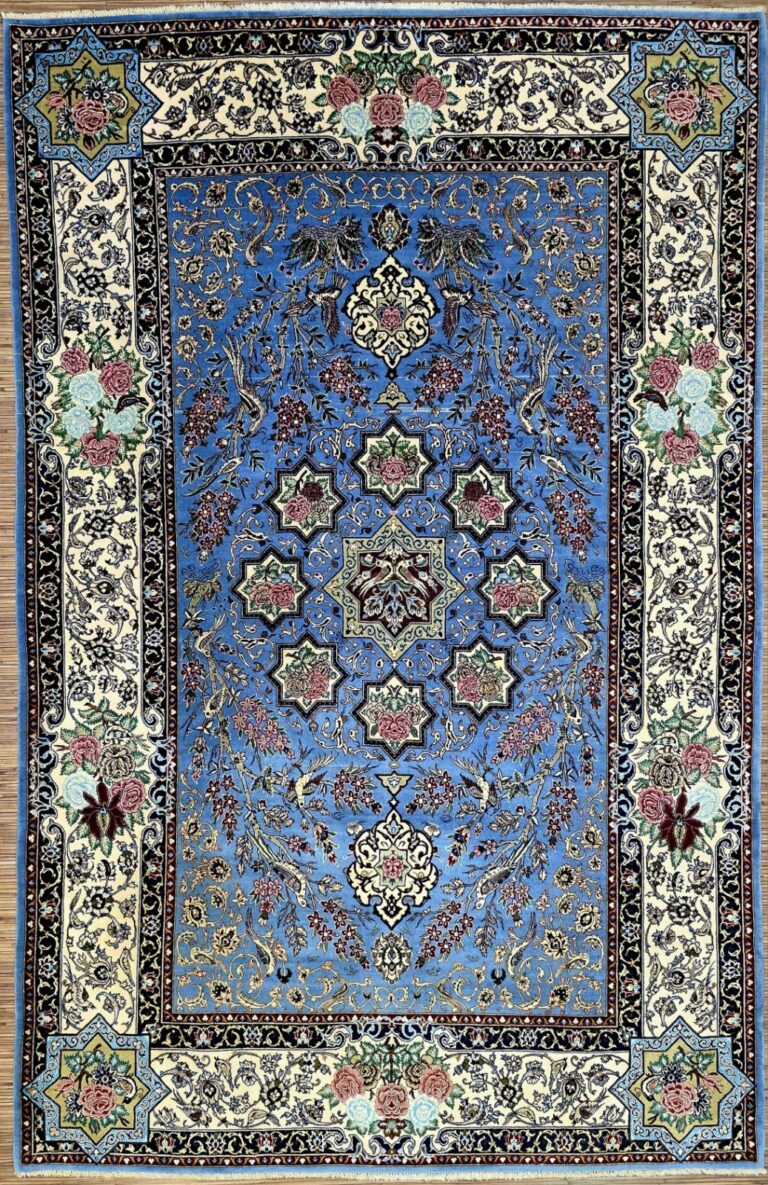
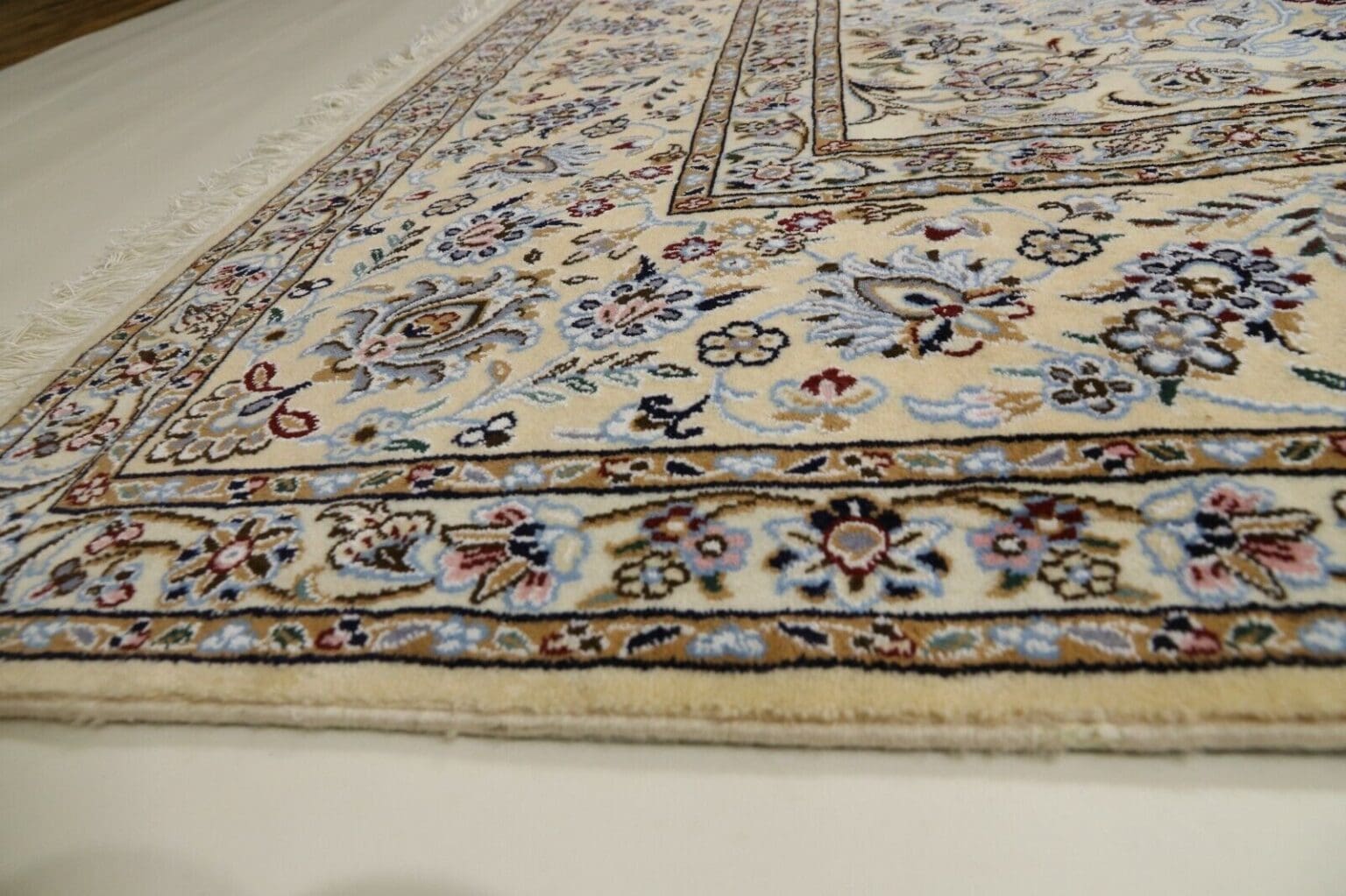
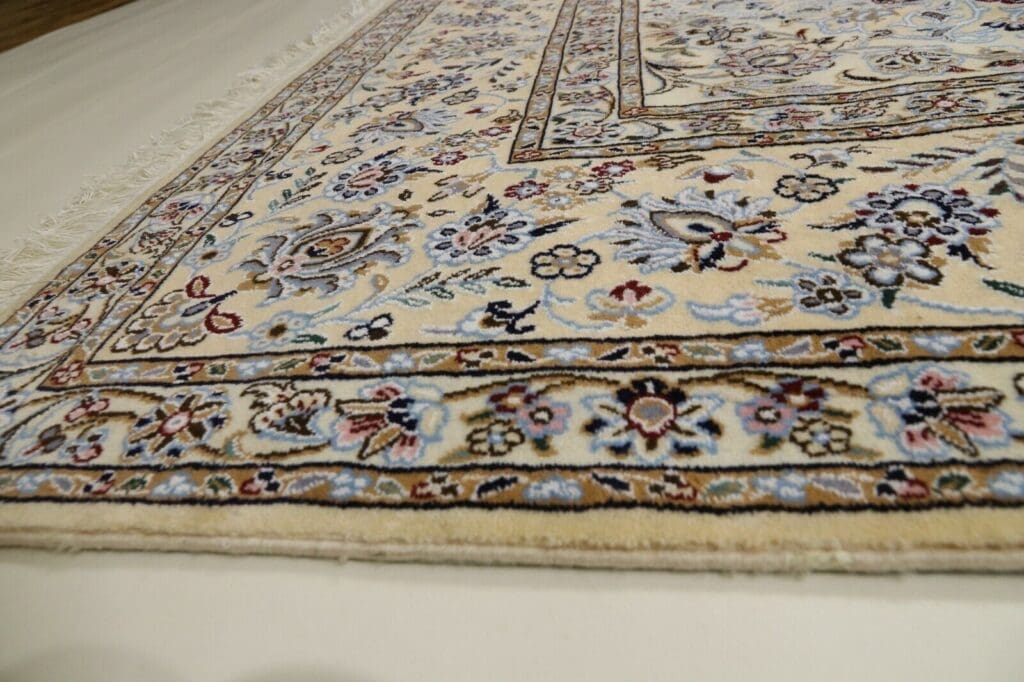
This hand-knotted Persian rug has a pile made from 90% virgin wool and 10% silk. Its warp is made from 100% cotton. The two pile fibres bring different textile qualities to the surface: virgin wool provides a soft and hard-wearing foundation, while silk contributes a smooth handle and a restrained sheen. The source description also identifies the wool as durable and easy to care for. Together, these materials form a pile suited to use as a residential floor covering.
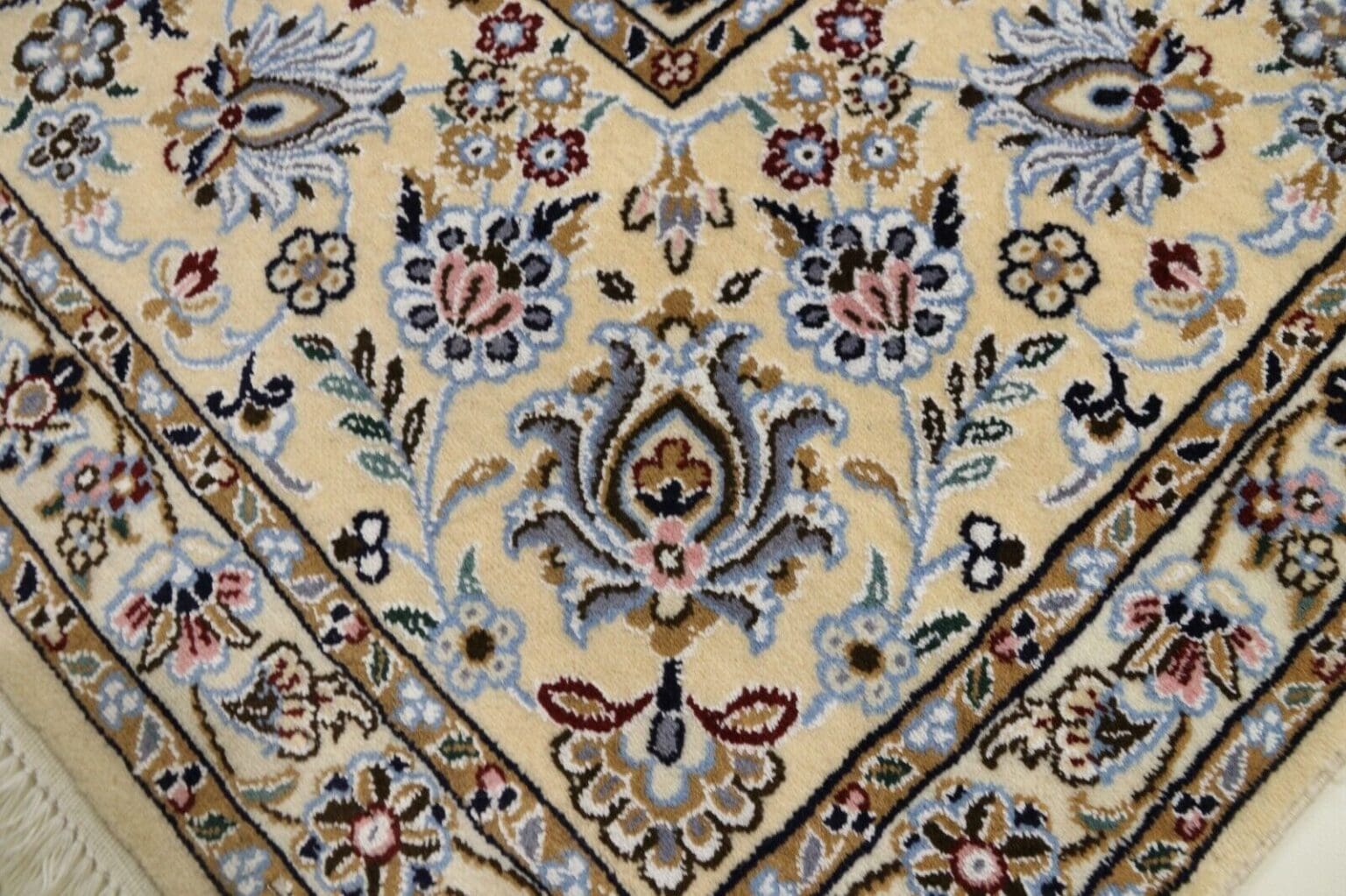
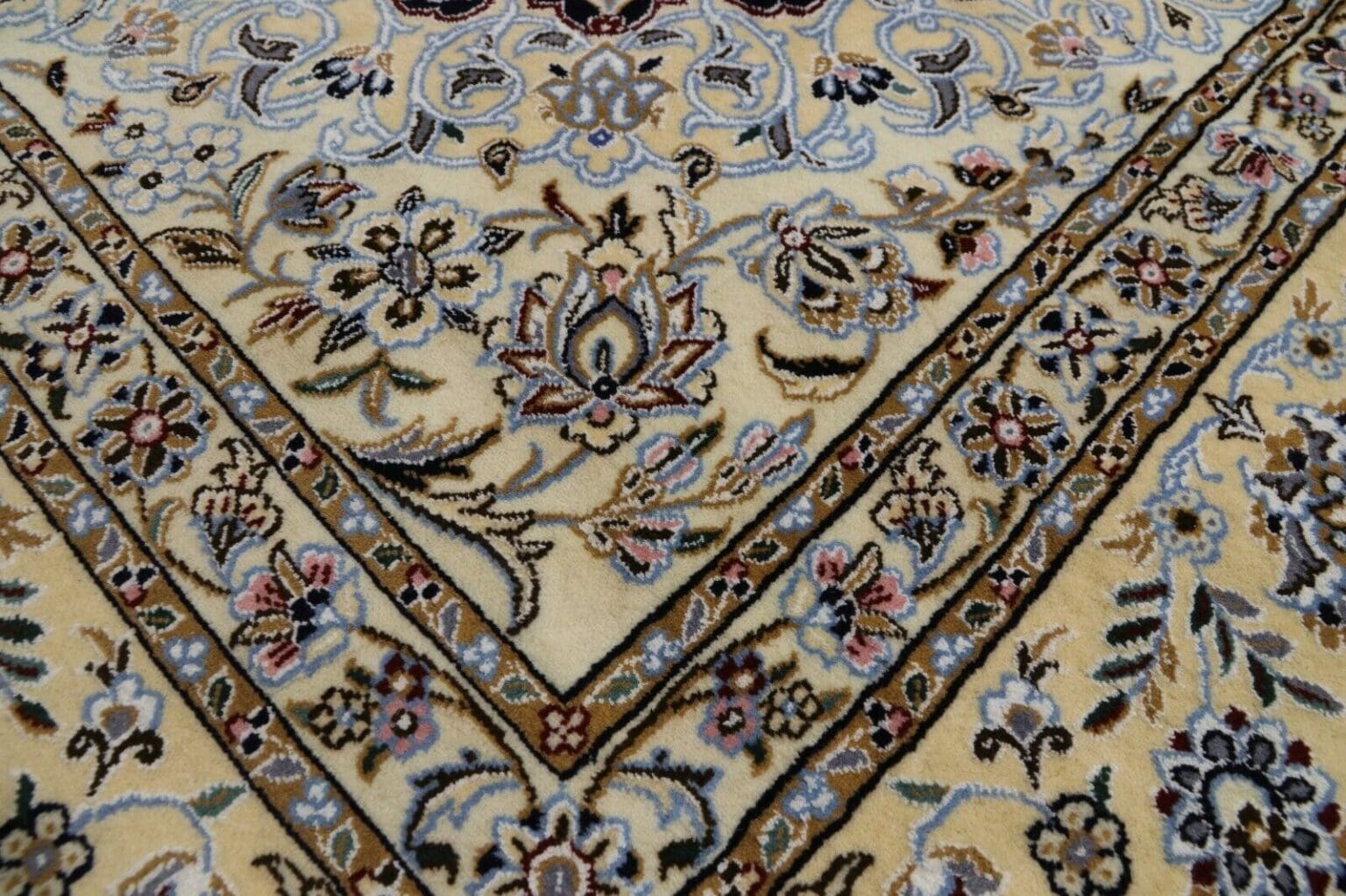
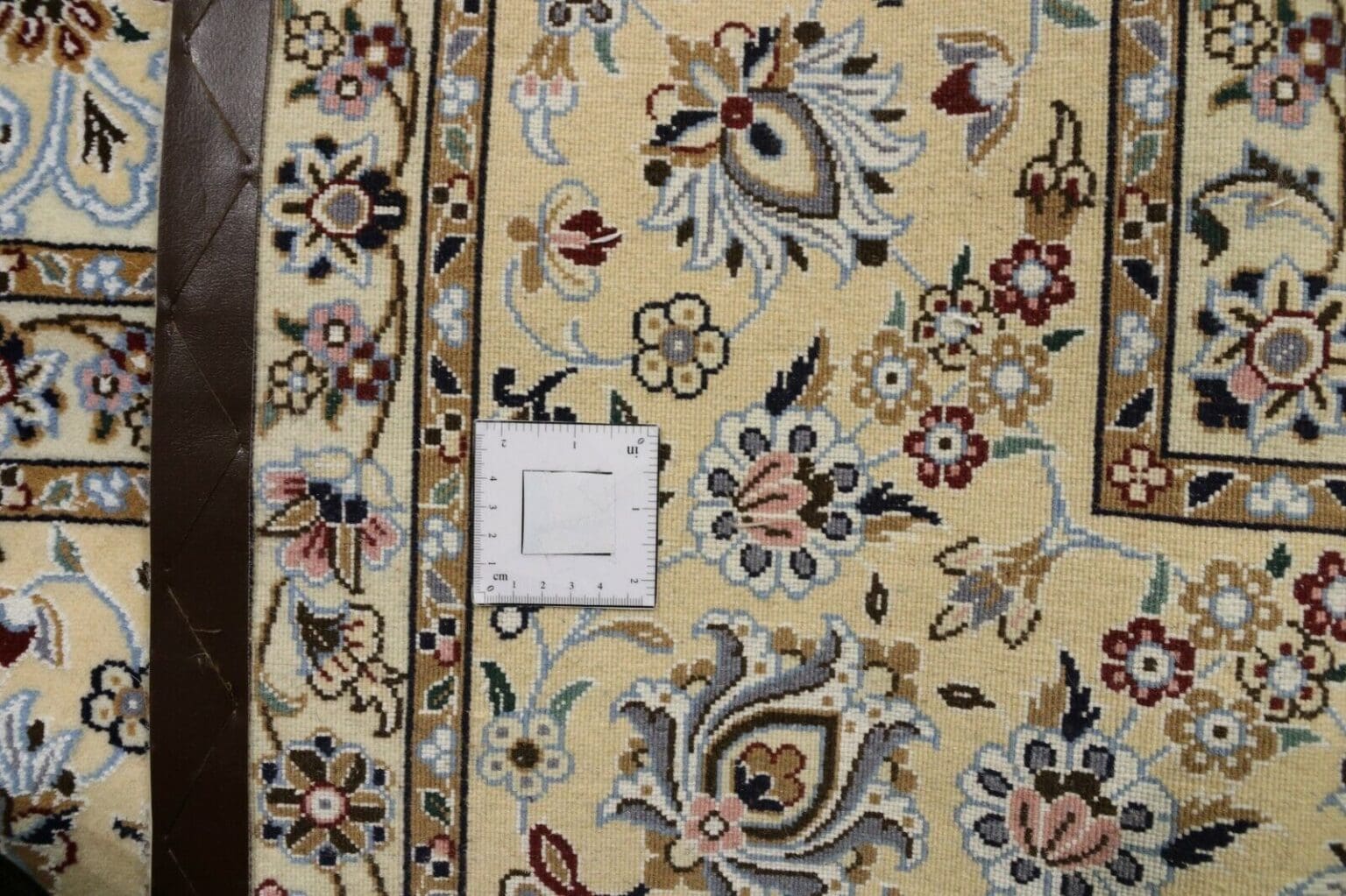
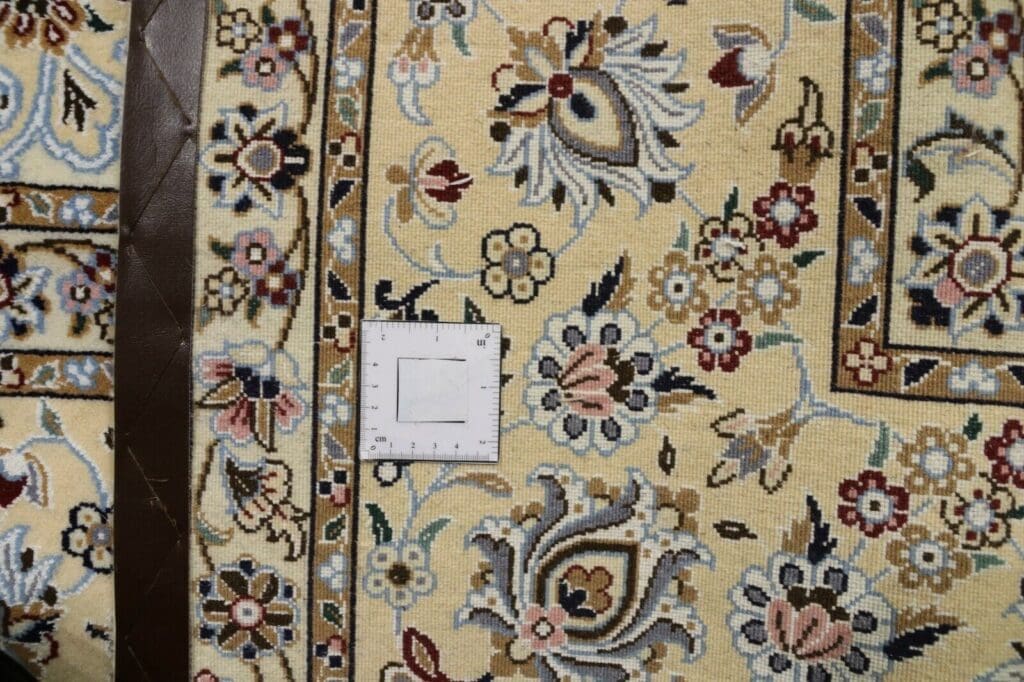
Hand-knotting is a manual construction method in which individual knots are tied into the prepared foundation rather than produced through an industrial process. The stated density of approximately 500,000 knots per square metre indicates a particularly fine construction and supports detailed pattern work. The cotton warp forms the structural basis of the rug, while wool and silk make up the visible pile. Because it is listed as a unique one-off piece, this rug has the individual character associated with a specific hand-knotted work.
The rug is described as new and in very good condition. It is ready for use in the living space. Its construction combines the resilience and softness of virgin wool with the slight reflective quality of silk, while the dense knotting allows the design to be worked with precision. These are the materials and manufacturing details stated for this piece; no additional textile components are specified.
Origin and Tradition
Nain is a city in Iran and an established centre of Persian rug weaving. Rugs from Nain are associated with careful craftsmanship, fine drawing and the use of selected materials. The Super Nain 9 La belongs to this tradition. The name Nain therefore identifies a regional connection rather than merely describing a general Oriental appearance. As a rug from Persia, it is a Persian rug.
The regional weaving tradition of Nain is traced in the source description back to the nineteenth century. Knowledge of preparing the foundation, selecting fibres, tying knots and organising the design was passed from one generation and workshop to the next. Within this context, a rug is both a practical household textile and an example of regional craft. The repeated work of knotting creates the structure, while the individual execution gives each finished rug its own character.
Nain weaving is commonly linked with a fine knot structure and clearly articulated ornament. Closely spaced knots give the weaver a suitable basis for rendering small floral forms, narrow lines and ordered geometric details. This relationship between construction and drawing is important in Persian rug making: the technical density is not separate from the design, but helps determine how precisely the motifs can be represented. Nain rugs are consequently associated with measured composition and carefully controlled detail.
The region’s rug tradition belongs to the wider cultural history of Persian textile art, in which different weaving centres developed their own approaches to colour, ornament and construction. Nain is known for combining delicate floral elements with an organised overall arrangement. The tradition is carried forward through both continuity and individual workmanship. Established design principles provide the visual language, while every hand-knotted rug remains a separate object created through a particular sequence of manual work.
Super Nain 9 La is part of this rug’s product name. It does not replace the stated origin information: the rug is identified with Persia or Iran and with Nain as its regional type. The classification as traditionally Oriental and Persian places its design within the broader history of Oriental rug weaving and Persian decorative art.
Design and Pattern
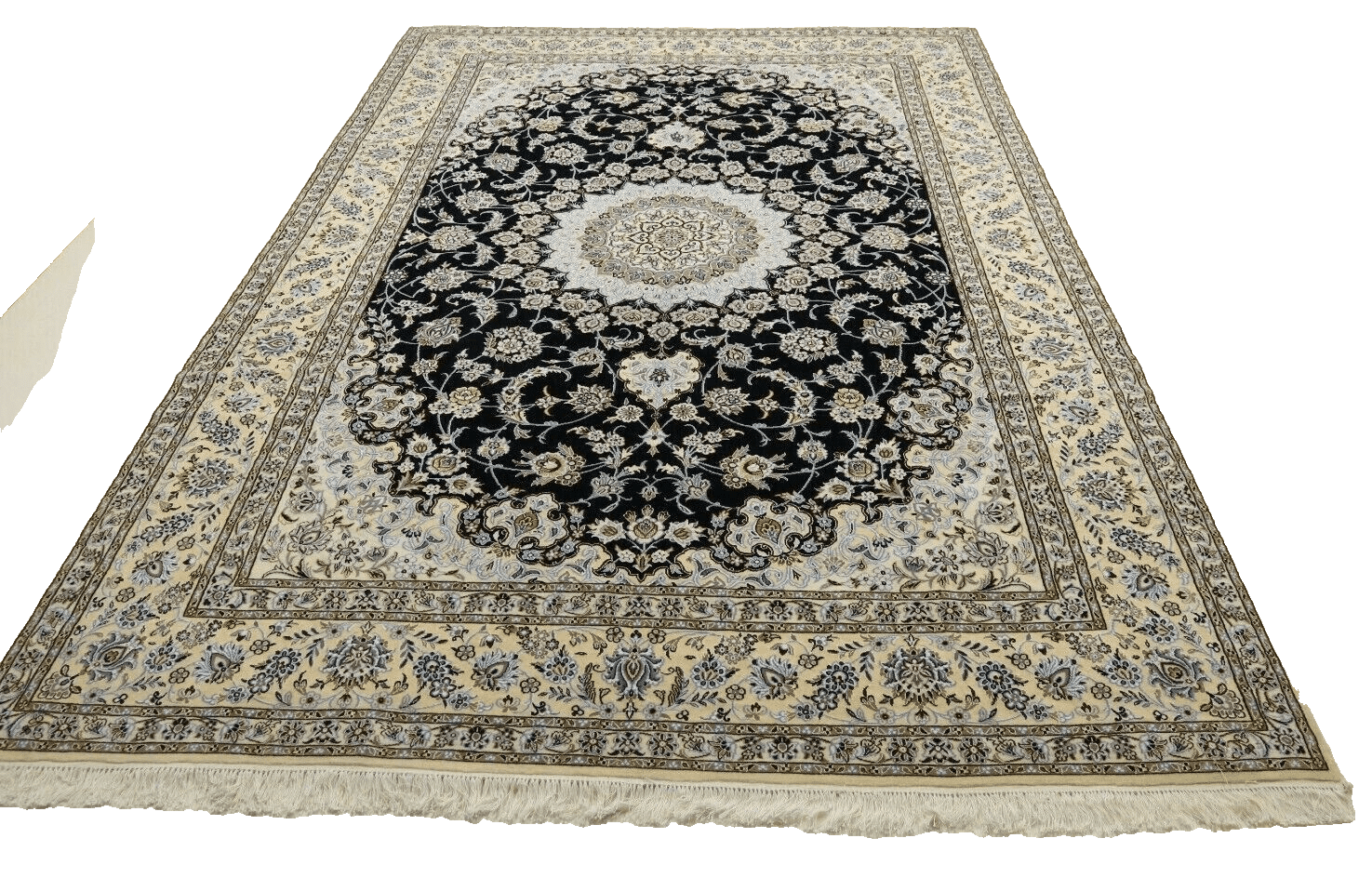
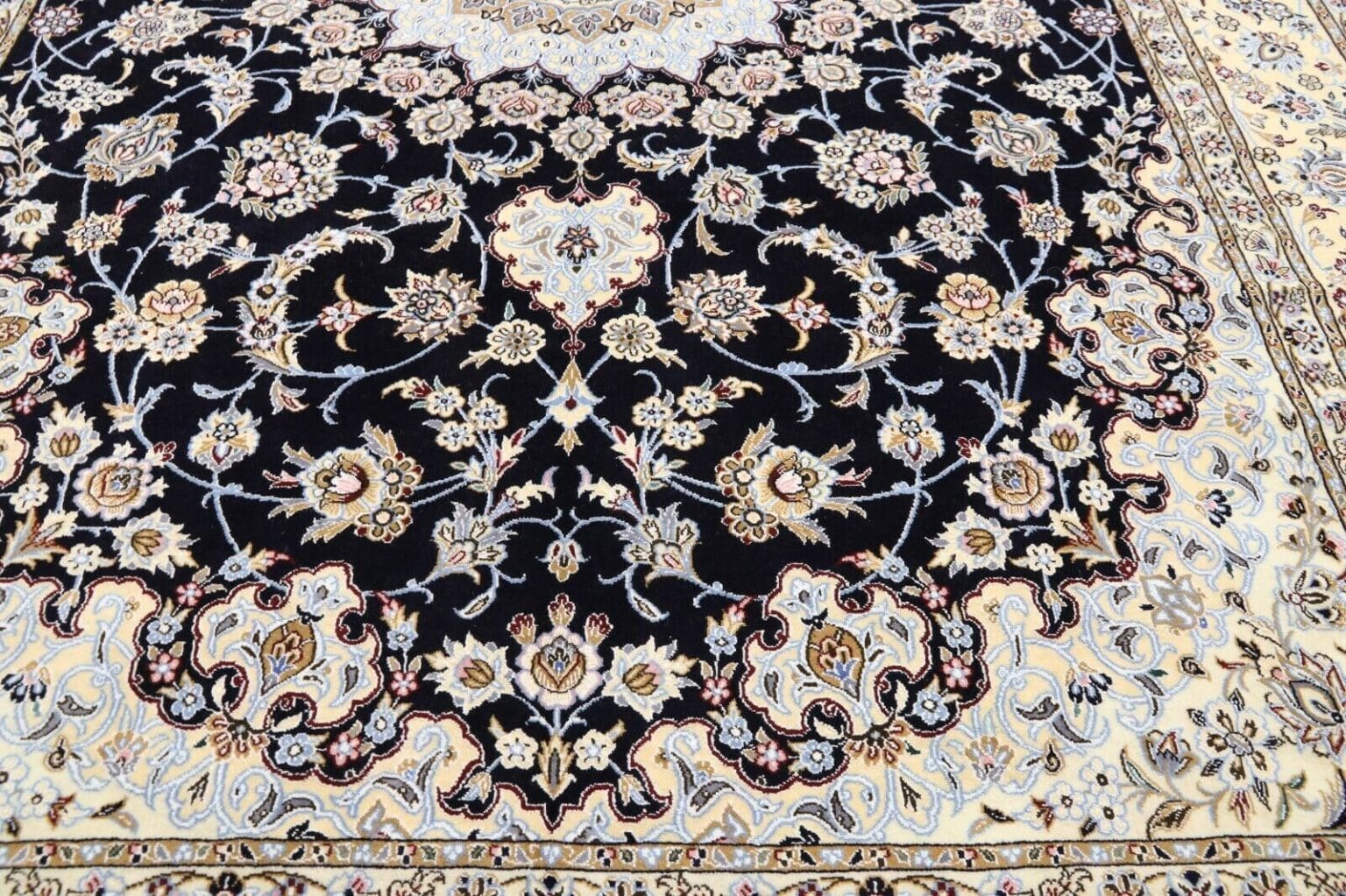
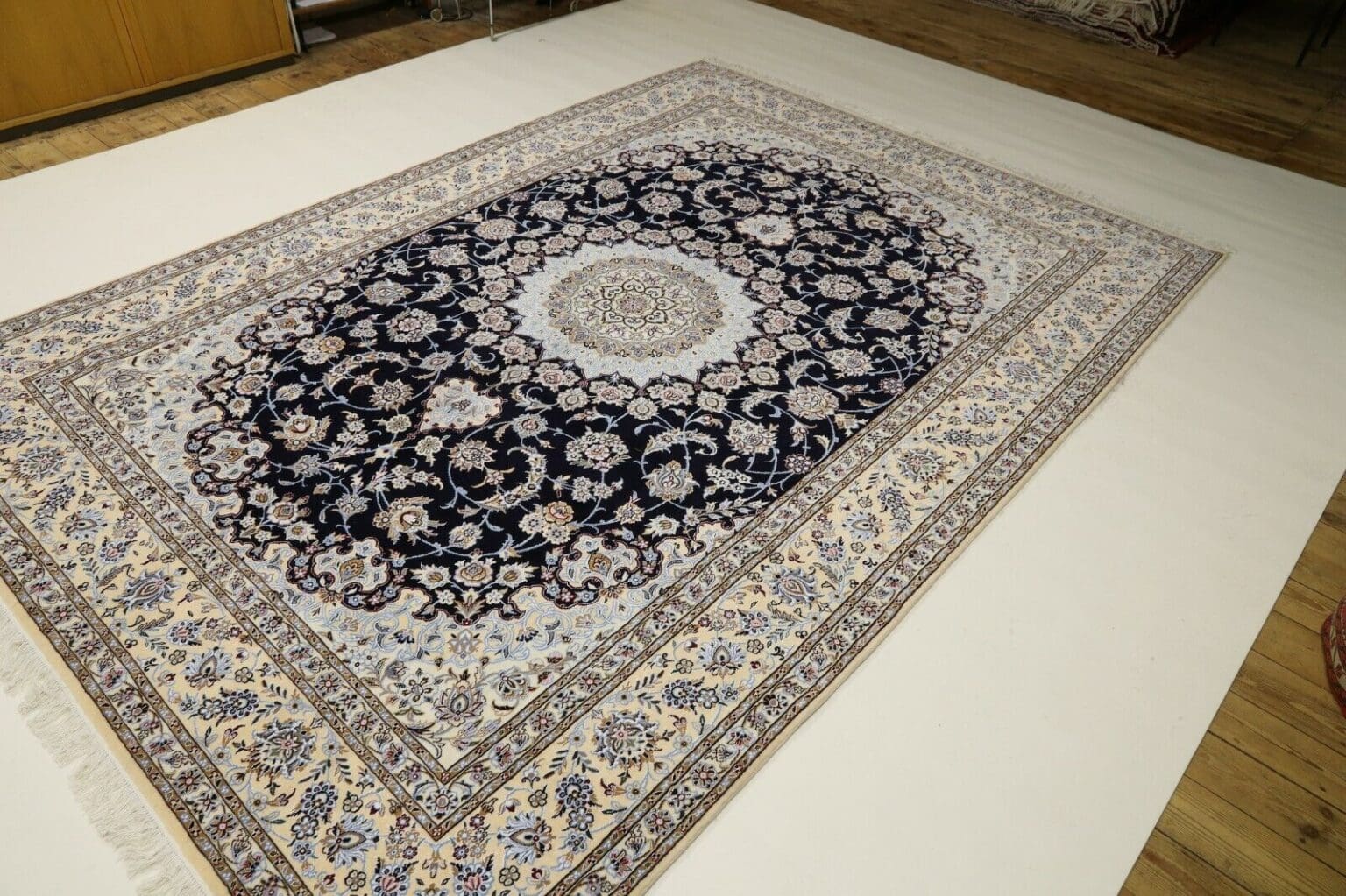
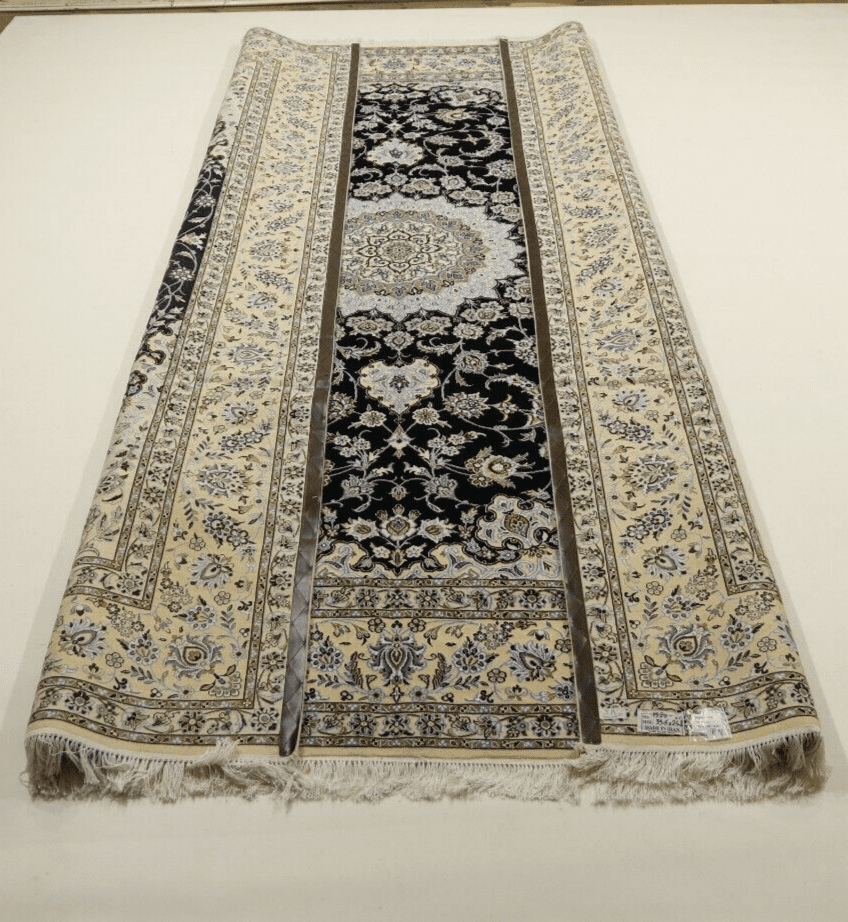
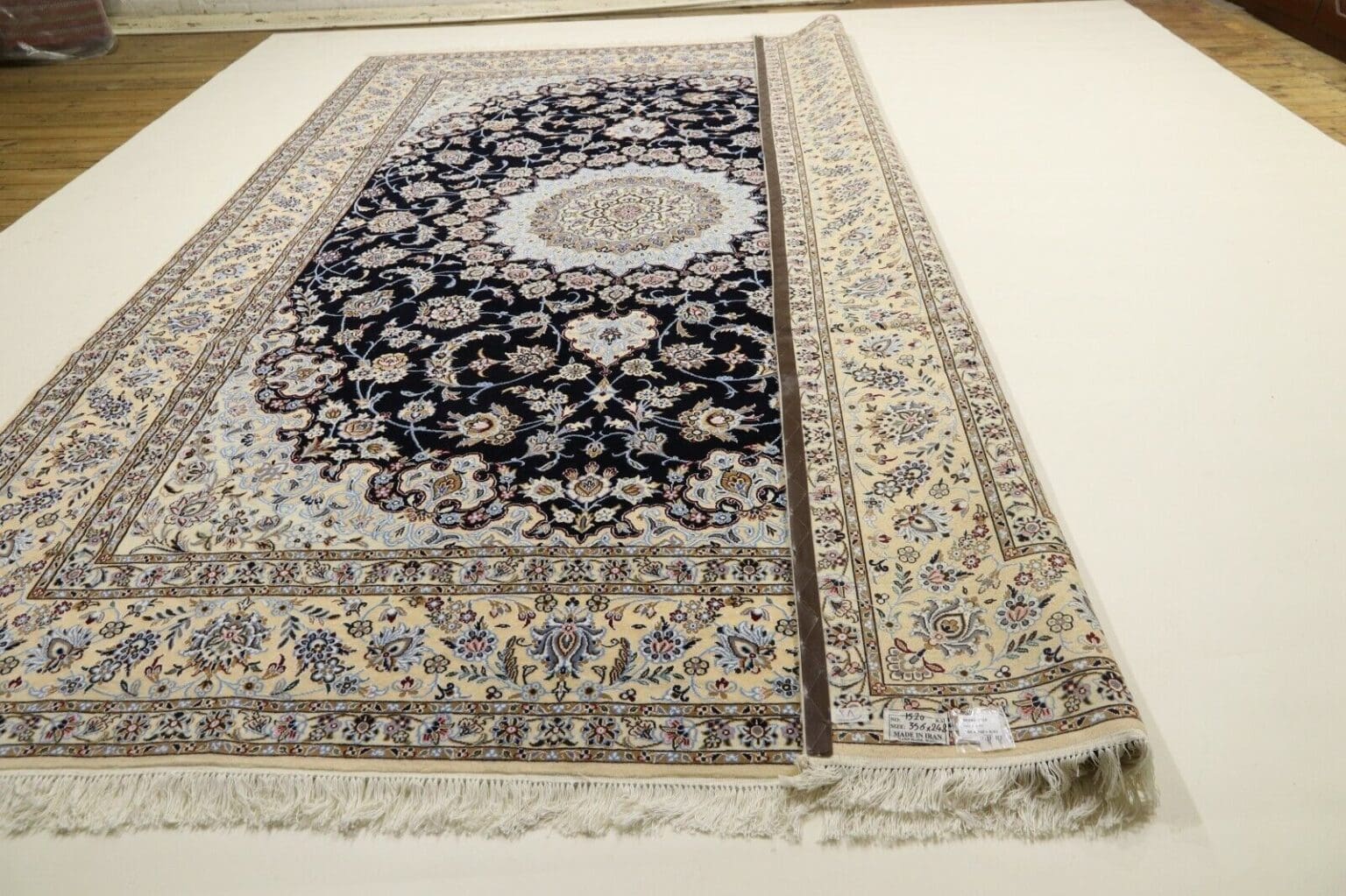
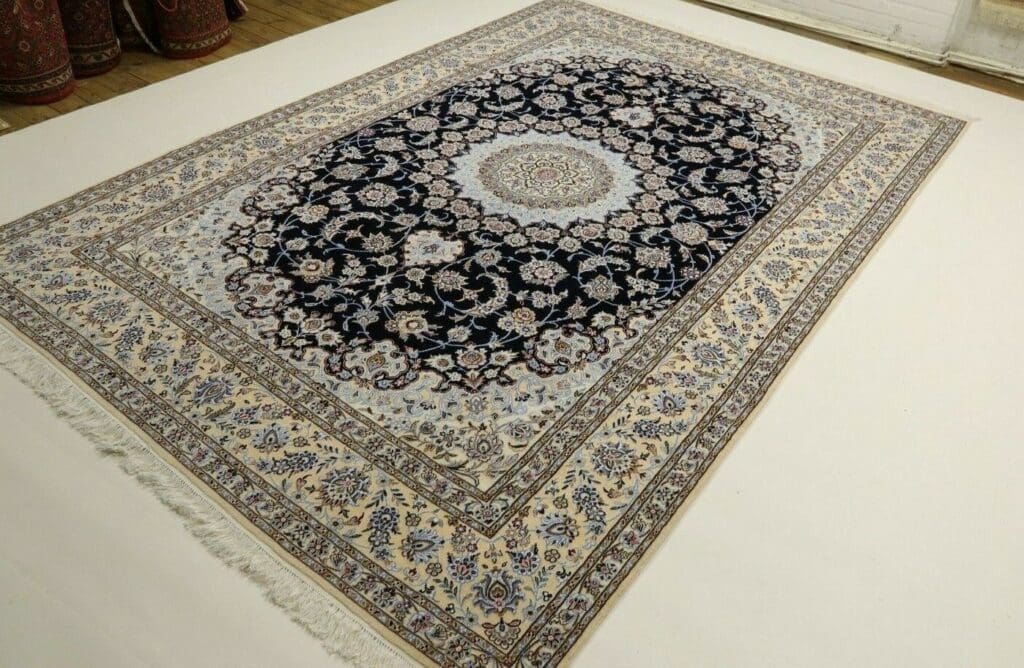
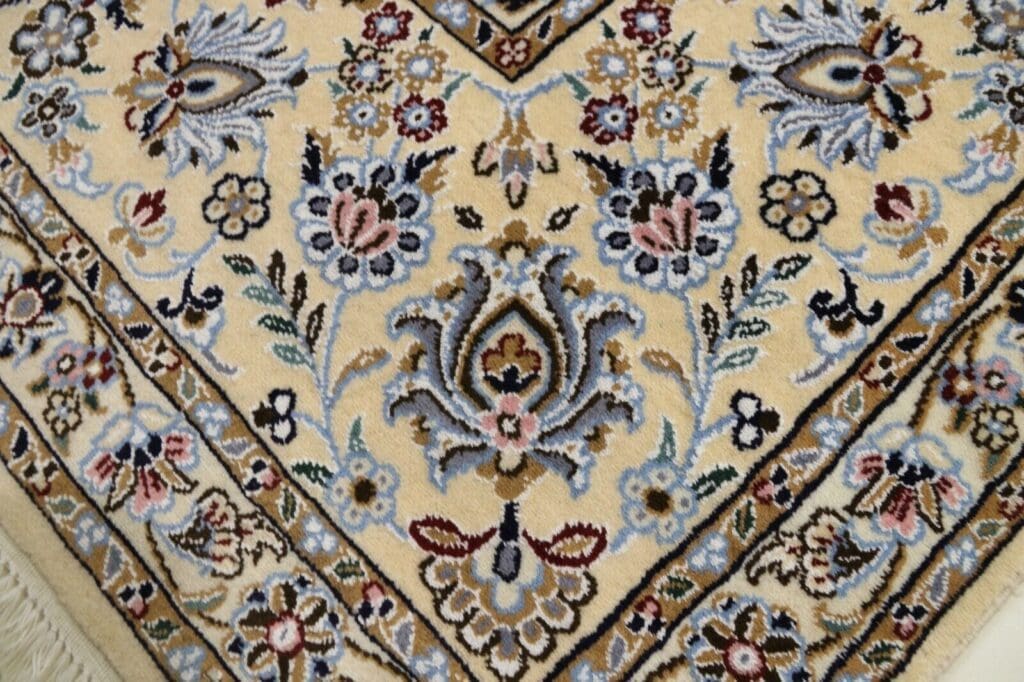
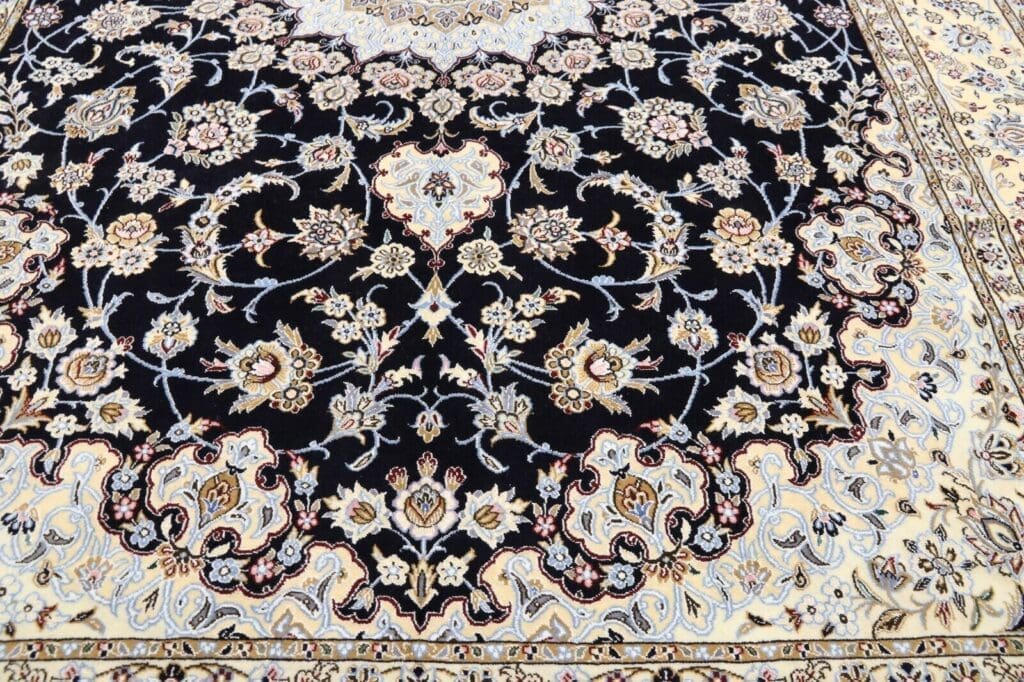
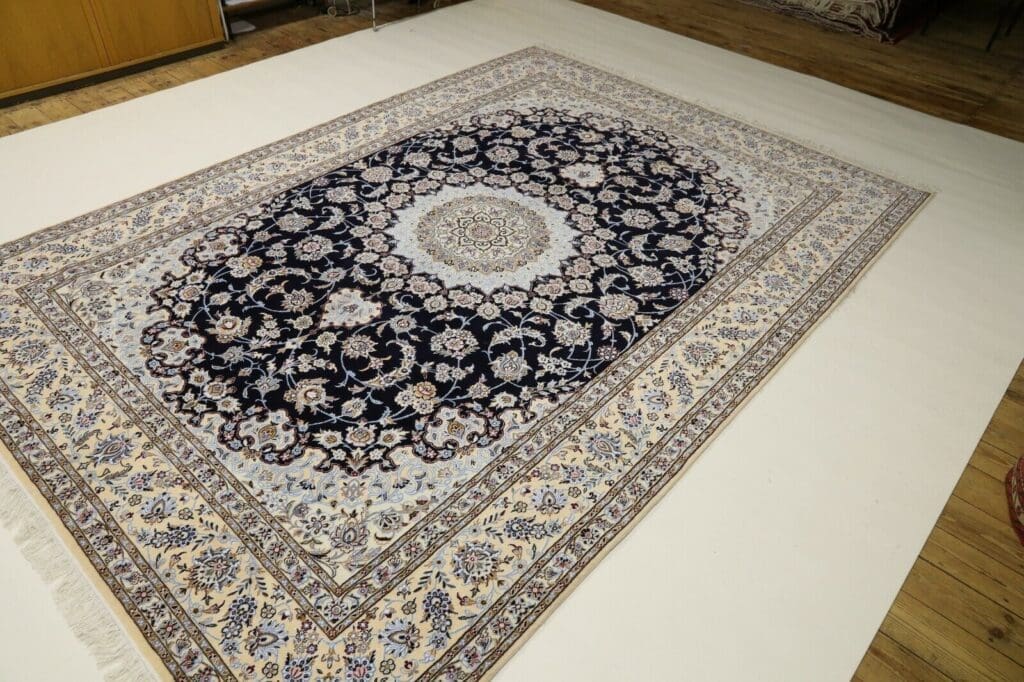
The design is described as classic and traditionally Oriental and Persian. Nain rugs are generally recognised for delicate, harmonious colour combinations. Rather than relying on arbitrary contrasts, this approach uses related tones to support the order of the composition. The source description specifically highlights the harmonious arrangement of colours as part of this rug’s appearance.
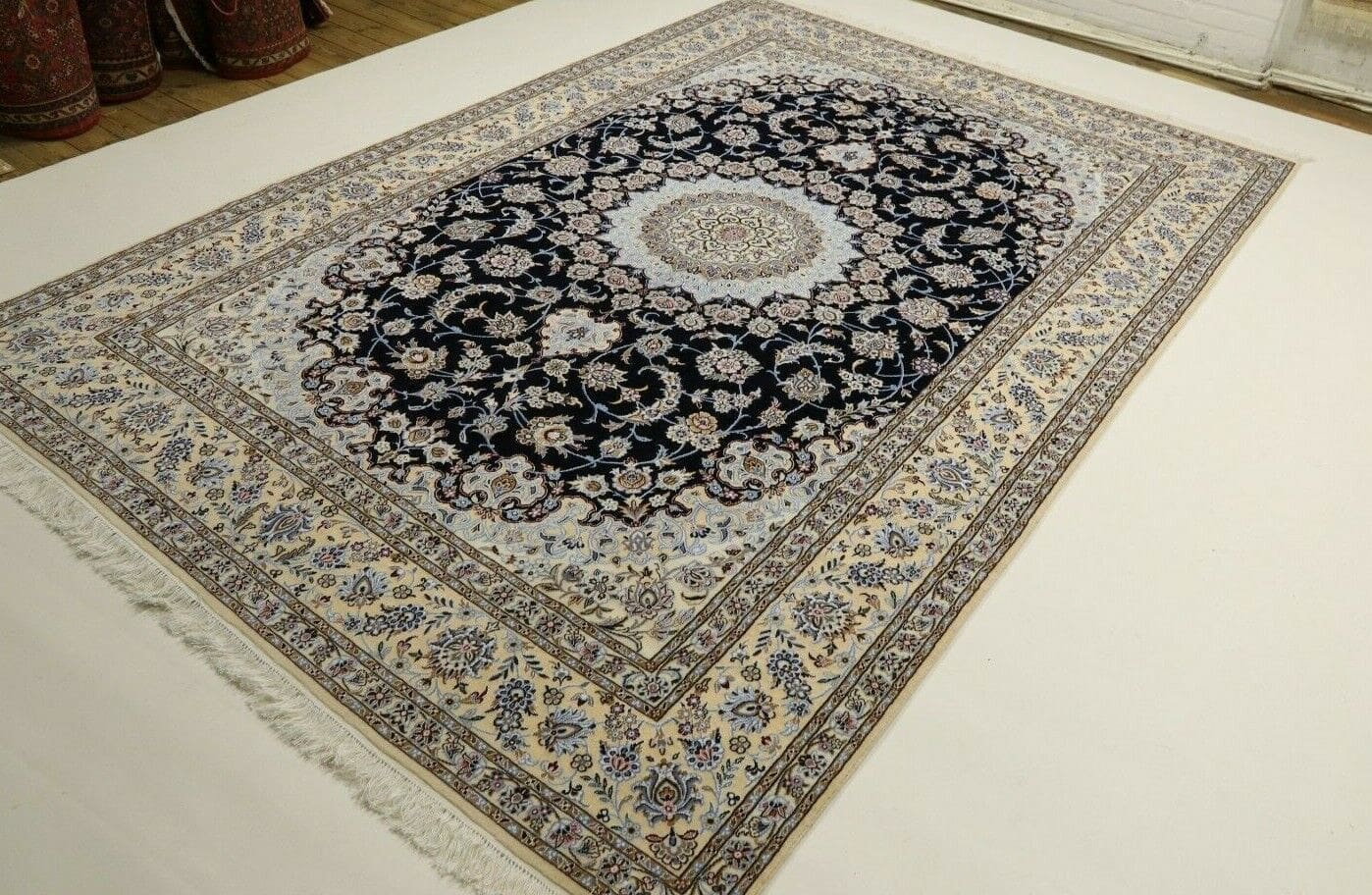
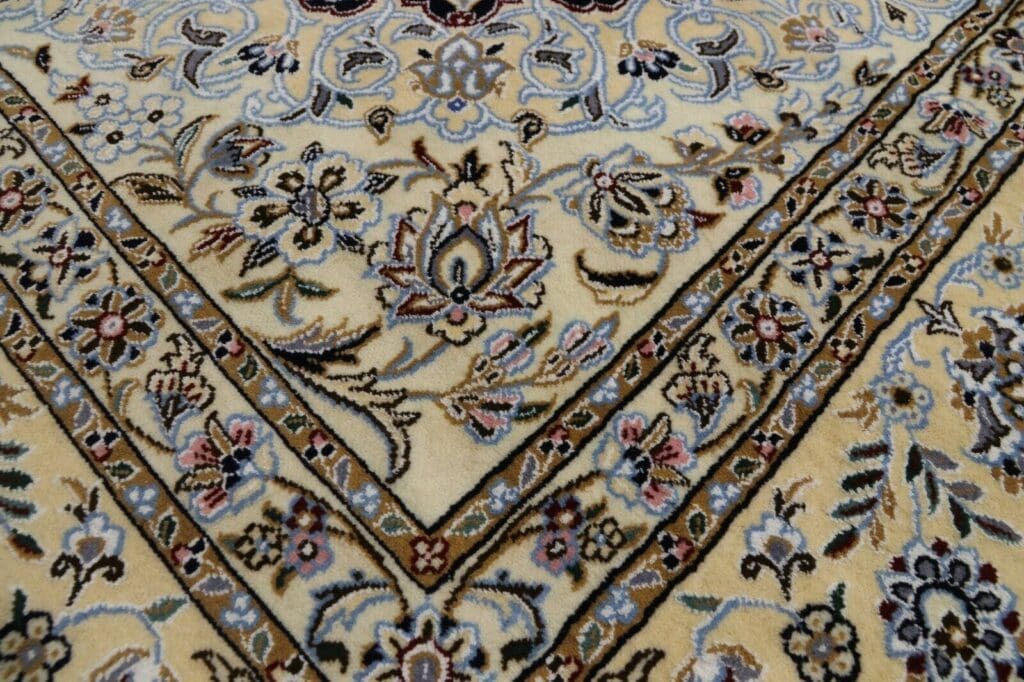
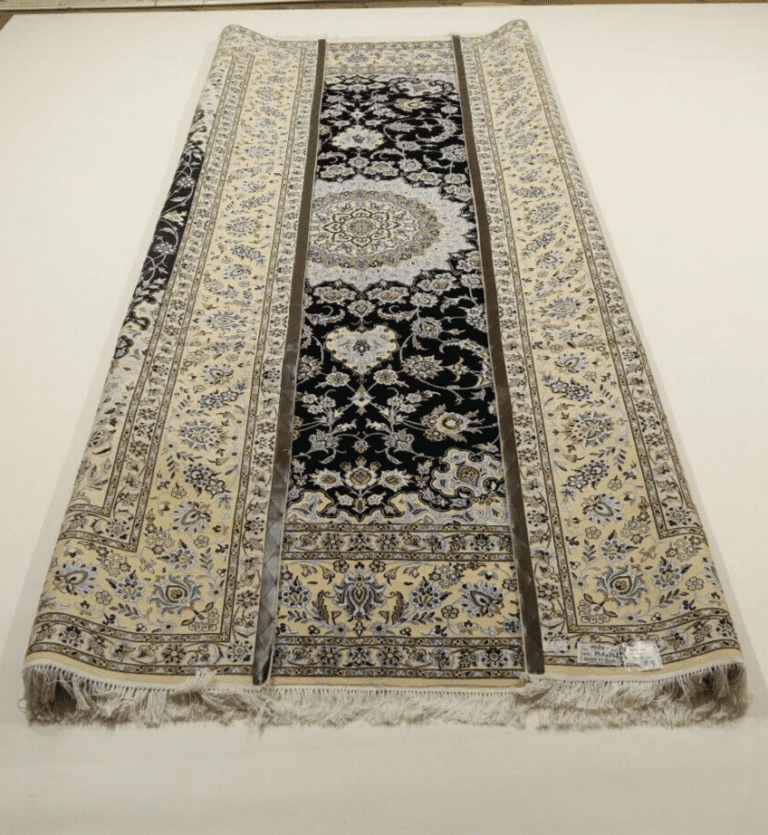
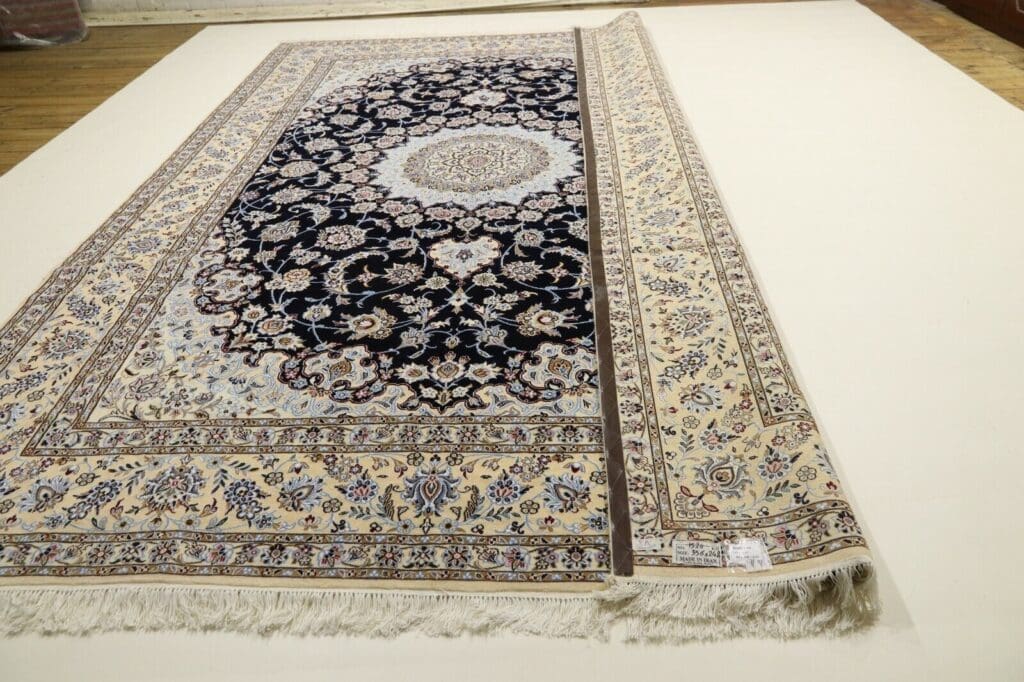
Floral motifs, fine vines, leaves and carefully arranged geometric details are part of the established Nain design vocabulary. These elements may be organised around a central medallion or distributed through a more continuous field, with borders and secondary ornaments providing structure. The source describes this rug as classically designed and refers to floral patterns and artistic medallions as characteristic features of Nain rugs. The pattern tradition therefore brings botanical forms together with a balanced and deliberate layout.
Floral ornament introduces flowing movement across the surface. Vines can connect separate motifs, while flowers and leaves create points of emphasis. Geometric lines and repeated forms give the composition clarity and keep the decorative field visually ordered. In Persian rug design, these elements are usually combined into a system of fields, borders and recurring ornaments rather than placed as unrelated decorations. Fine hand-knotting helps preserve the distinction between the individual parts of the drawing.
A medallion can function as a visual centre in Persian pattern design. Surrounding vines and secondary motifs may be arranged to balance the central form with the outer field. Other compositions distribute the ornament more evenly across the surface. The classic design of the Super Nain 9 La is described through harmony, elegance and the combination of floral and geometric references. No further individual symbolic interpretation is assigned to the motifs in the source description.
The design can be placed in both traditional and contemporary interiors because it is based on an established Persian ornamental language while maintaining a clear and ordered appearance. It is not described as an abstract composition, but as a classic Oriental and Persian pattern concept. The colour harmony, floral vocabulary and precise workmanship belong together and define the visual character of the rug.
Special Features
The specifically listed features include the fine knot density, hand-knotted construction, a pile of virgin wool and silk, and a cotton warp. The dense construction supports detailed pattern reproduction and allows the drawing to be examined closely. The rug is identified as a unique one-off piece, so its hand-made execution is part of its product identity.
The condition is new and very good. Virgin wool contributes durability and a soft surface, while silk adds a subtle sheen. The rug is described as both decorative and functional and as suitable for frequently used living areas. Proper care remains important, especially for a hand-knotted rug with a fine pile. Regular, gentle maintenance helps preserve the surface without subjecting the fibres to unnecessary stress.
FAQ
What is the best way to care for the Nain Persian rug?
Regular vacuuming on a low setting is suitable for removing loose dirt. This should be done carefully so that the pile is not unnecessarily strained. Water and chemical products should not be applied directly, as they may affect the fibres and the colour appearance. For persistent stains, professional rug cleaning is the appropriate option. Vigorous rubbing, excessive wetting and unsuitable household cleaners should be avoided when caring for a hand-knotted rug.
Can the rug be used with underfloor heating?
Yes, the Nain Persian rug can be used over underfloor heating. The temperature should not be set too high, so that the material is not subjected to unnecessary stress or damage. Moderate, even warmth is the sensible approach when the rug is placed on a heated floor. The rug should also lie flat and have suitable air circulation around it as part of the room arrangement.
What accessories are needed for installation?
No special tools are normally required to place the rug. A non-slip underlay is recommended to reduce movement and help prevent ripples from forming. Chairs and other furniture should be placed carefully on the rug so that the hand-knotted structure is not damaged. The underlay should be appropriate for the floor and the intended use, allowing the rug to remain secure and as flat as possible.
To provide the best experiences, we use technologies like cookies to store and/or access device information. Consenting to these technologies will allow us to process data such as browsing behavior or unique IDs on this site. Not consenting or withdrawing consent, may adversely affect certain features and functions.
Functional Always active
The technical storage or access is strictly necessary for the legitimate purpose of enabling the use of a specific service explicitly requested by the subscriber or user, or for the sole purpose of carrying out the transmission of a communication over an electronic communications network.
Preferences
The technical storage or access is necessary for the legitimate purpose of storing preferences that are not requested by the subscriber or user.
Statistics
The technical storage or access that is used exclusively for statistical purposes.The technical storage or access that is used exclusively for anonymous statistical purposes. Without a subpoena, voluntary compliance on the part of your Internet Service Provider, or additional records from a third party, information stored or retrieved for this purpose alone cannot usually be used to identify you.
Marketing
The technical storage or access is required to create user profiles to send advertising, or to track the user on a website or across several websites for similar marketing purposes.
 SECURE PAYMENT
 SHIPPING PARTNERS