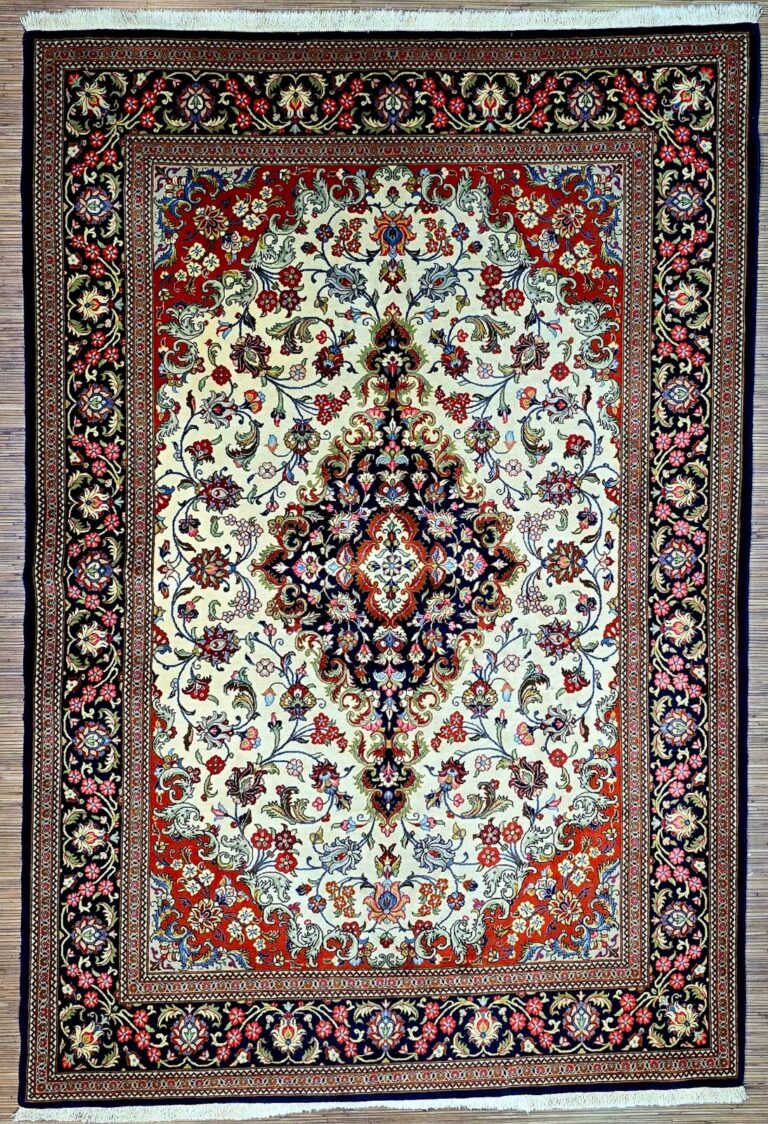
This Nain Persian rug is hand-knotted. Its pile combines 100% wool with silk, while the warp is made from 100% cotton. The material description therefore distinguishes the elements of the rug’s construction: wool forms the basis of the pile, silk is worked into the pile, and cotton provides the warp structure. These different fibres meet within a traditional hand-knotted textile rather than in a printed or machine-applied surface.
Wool is used in hand-knotted rugs for its resilient, full-bodied character and its comfortable surface feel. It gives the pile substance and supports the structure of the finished rug. Silk contributes a smoother fibre quality and a distinctive sheen. Depending on the light and the viewing angle, silk can make parts of a design appear more pronounced and can give the surface a changing visual texture alongside the wool.
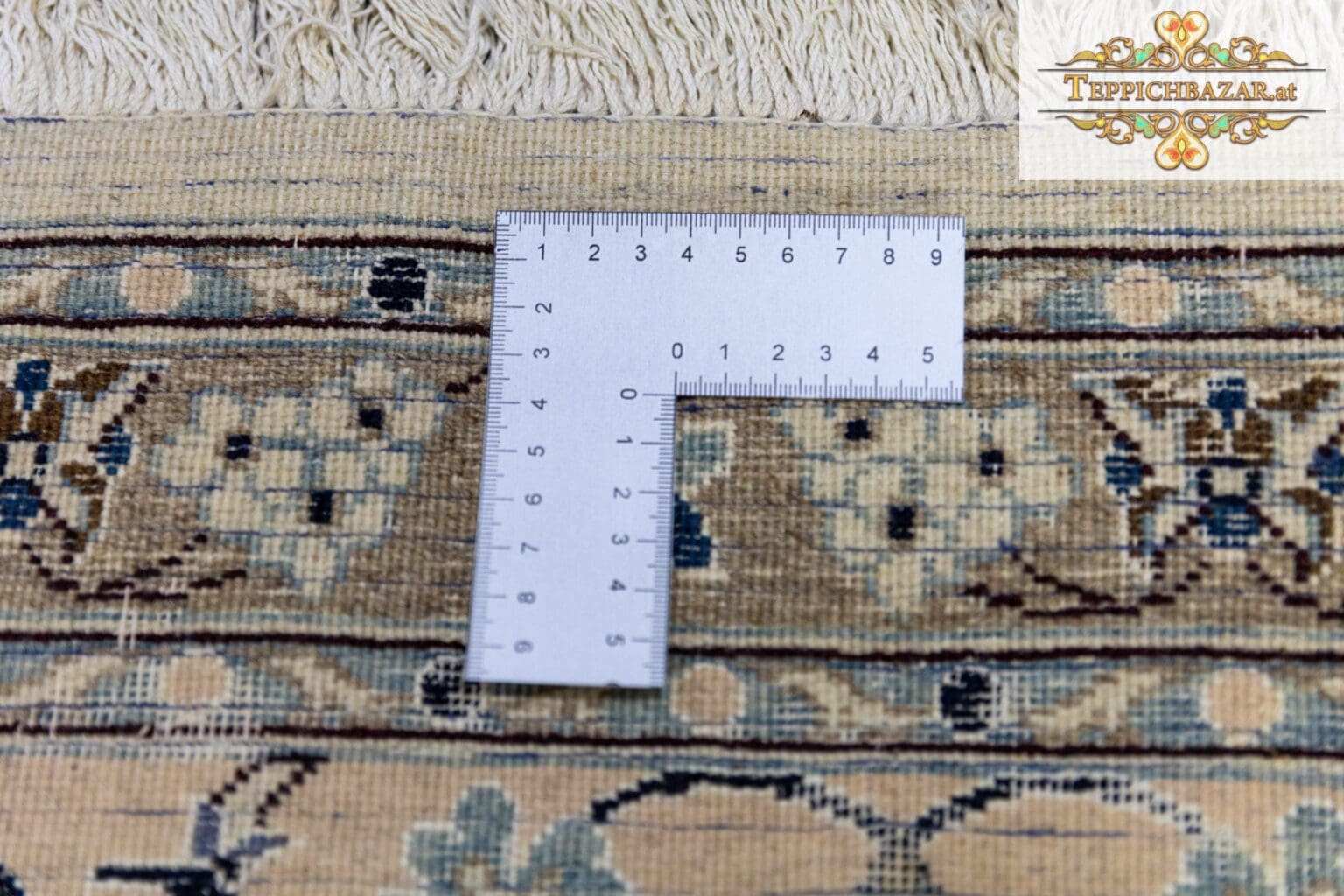
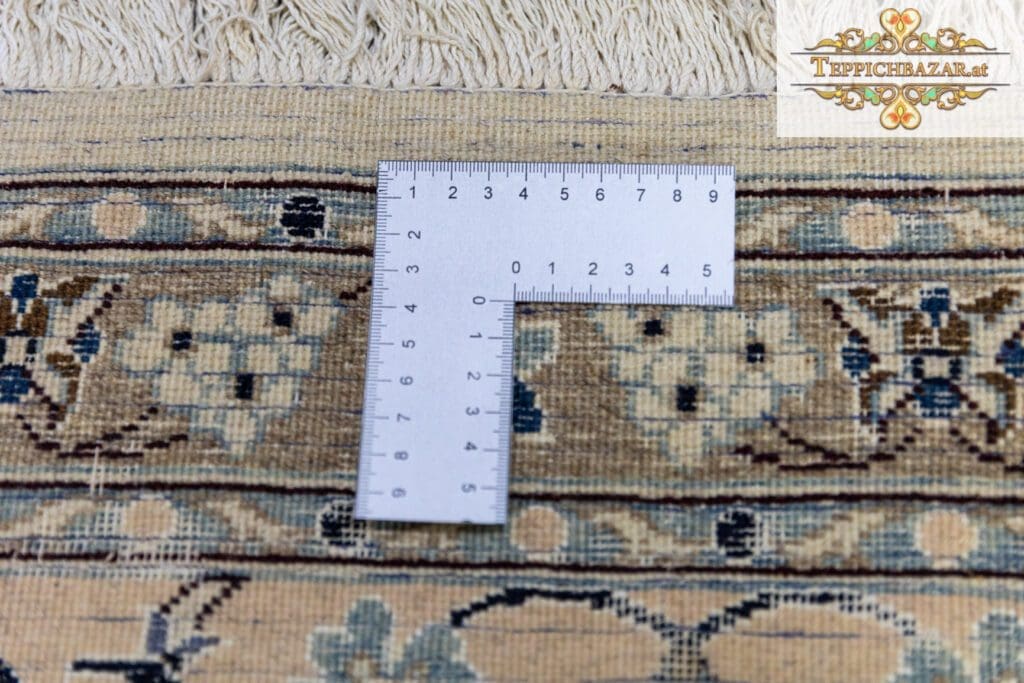
The warp of 100% cotton forms the foundation to which the knots are attached. In hand-knotting, the pile is built one knot at a time across the warp. The listed density of 12La, approximately 250,000 knots per square metre, represents a fine and detailed construction. A dense knot structure allows floral outlines, internal contours and smaller decorative passages to be worked with precision.
Hand craftsmanship means that the rug is not produced as a completely uniform series item. The knotter places the individual knots by hand and develops the pattern gradually through the rows. Material, knot structure and drawing are therefore closely connected. This rug is made as an individual hand-knotted piece, bringing together wool, silk and cotton in one textile construction.
Origin and Tradition
The rug comes from the city of Nain in Persia. Nain is known as an Iranian carpet centre associated with finely knotted work. Its tradition developed within the wider culture of Persian carpet making and is connected with careful drawing, controlled compositions and the use of wool and silk. Nain rugs are often discussed in relation to precise patterning, where a fine knot structure supports the rendering of small and clearly defined forms.
Iranian carpet making is based on knowledge passed from one generation to the next. This knowledge includes preparing the warp, selecting and preparing yarns, tying the knots, securing each row and finishing the pile. In Nain, this technical knowledge is combined with a disciplined approach to design. The craft requires attention to warp tension, knot regularity and the exact sequence of colours and motifs as the composition develops.
Nain belongs to a region where textile work forms part of a long Persian cultural history. Carpets from this tradition are not only functional floor coverings. Their ornaments preserve forms from Persian decorative art and transfer them into a knotted surface. Floral scrolls, blossoms and ordered compositions become part of the history of the craft. At the same time, each rug remains a distinct execution because the design is built by hand during the knotting process.
The Nain tradition is also associated with considered colour use and balanced distribution of the pattern. Light and soft tones are traditionally used to keep the drawing legible and to separate floral elements from one another. Silk can add further reflections within such a composition. It changes the way selected areas are perceived in the light while leaving the underlying order of the design intact.
Historical influences within Persian culture can be seen in the relationship between ornament, symmetry and technical discipline. Nain rugs are identified not only by their place of origin but also by their construction and drawing. Fine knotting, a combination of wool and silk, and carefully developed ornament are important aspects of the tradition associated with this carpet centre. The rug described here belongs to that context through its origin in the city of Nain.
Design and Pattern
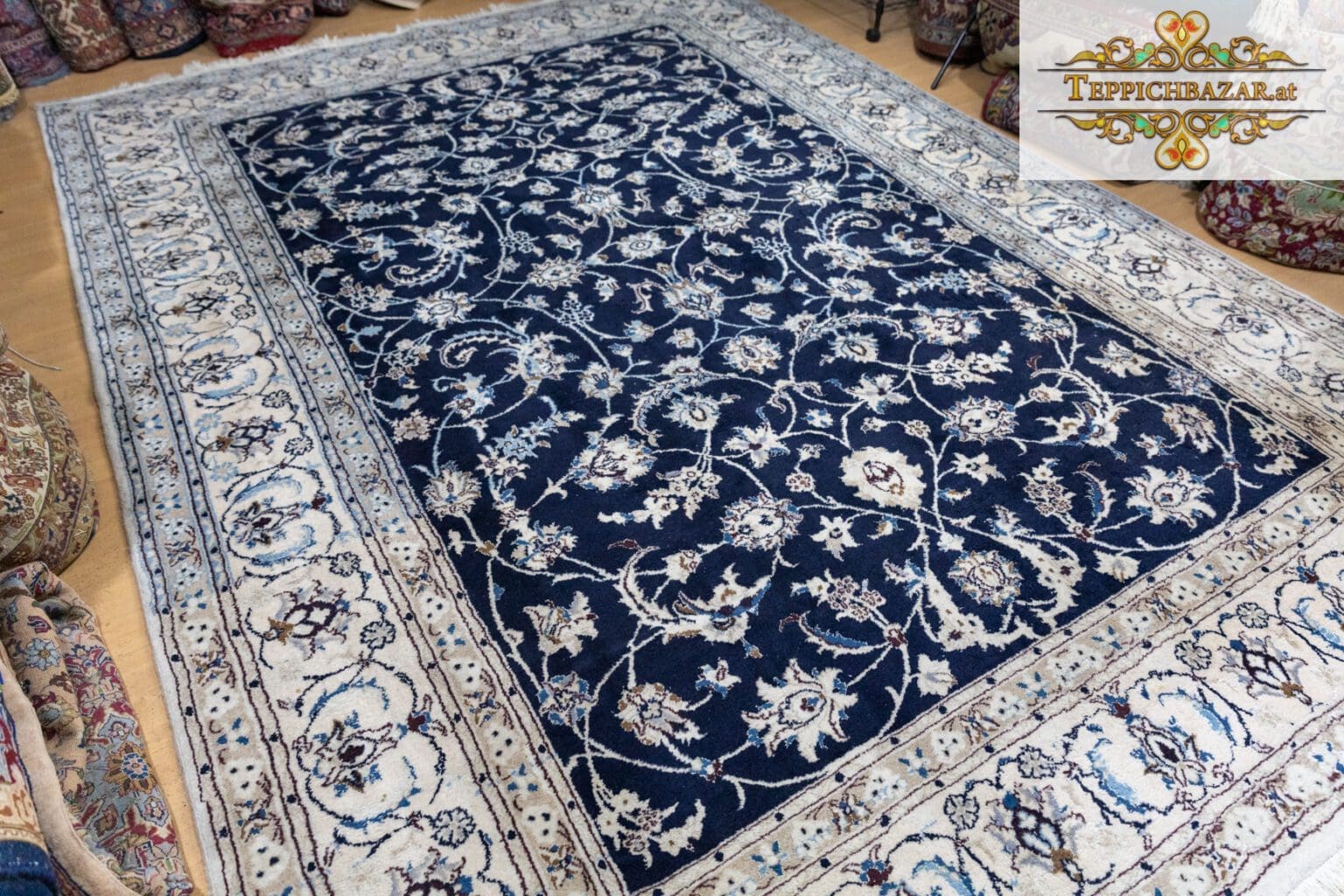
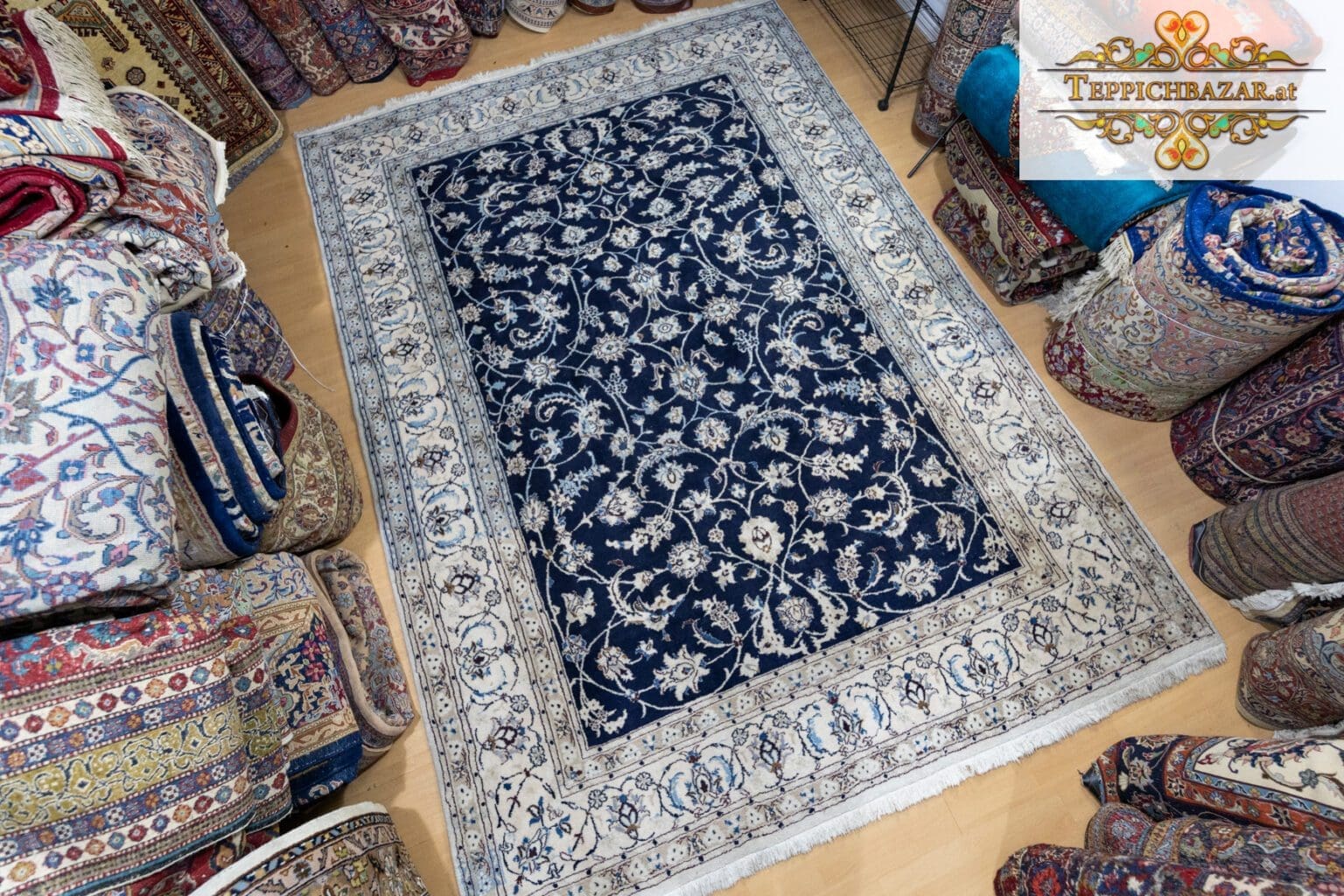
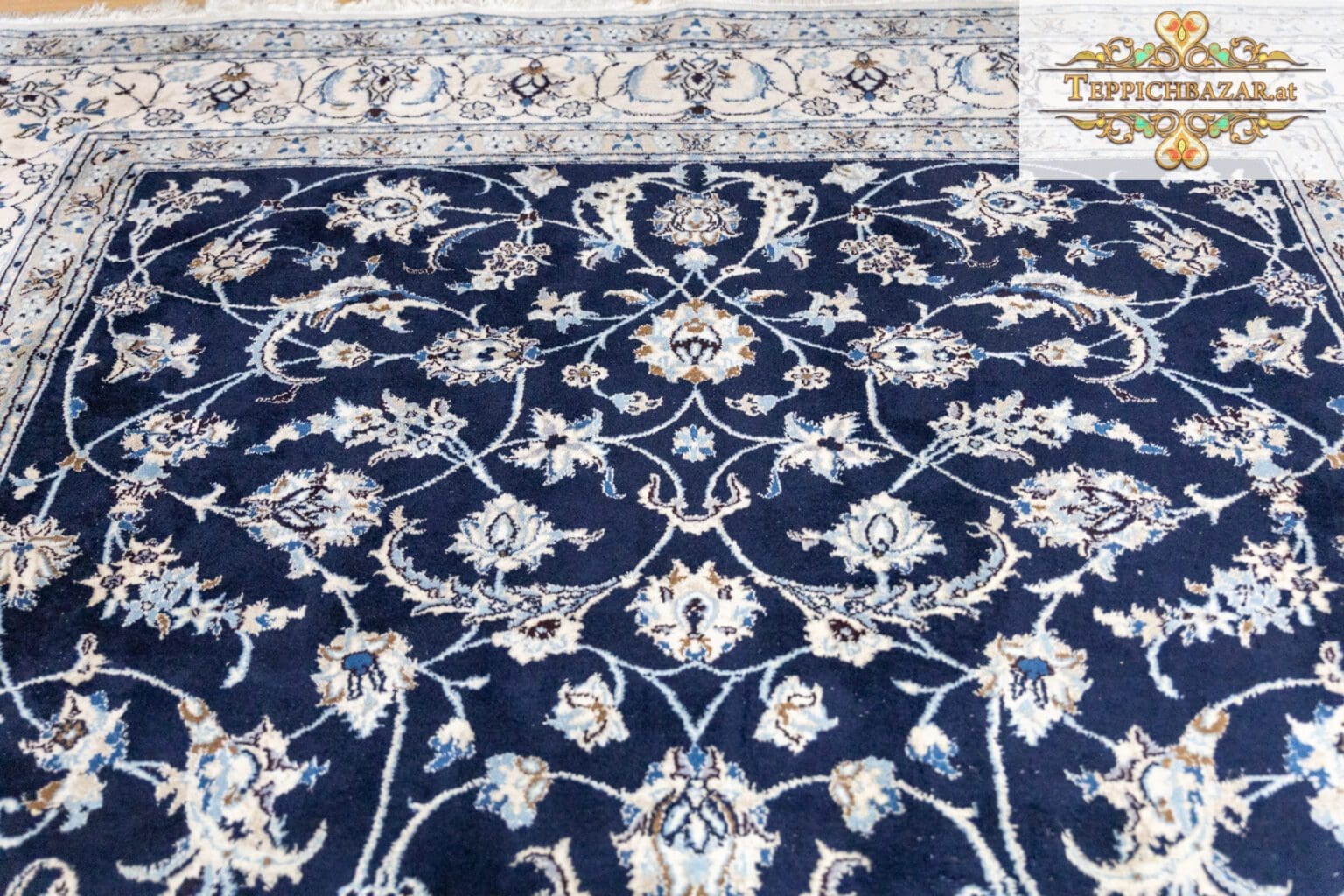
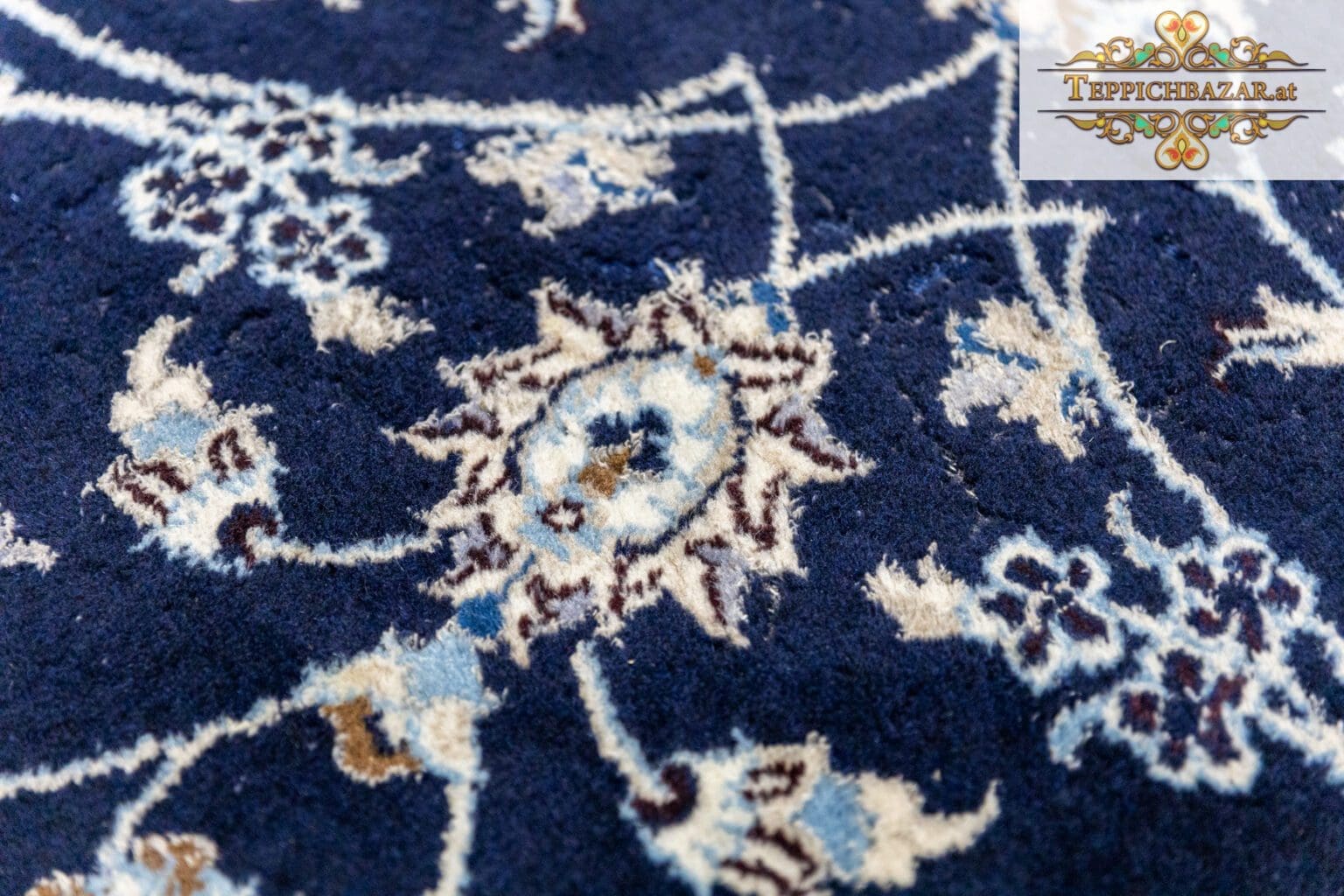
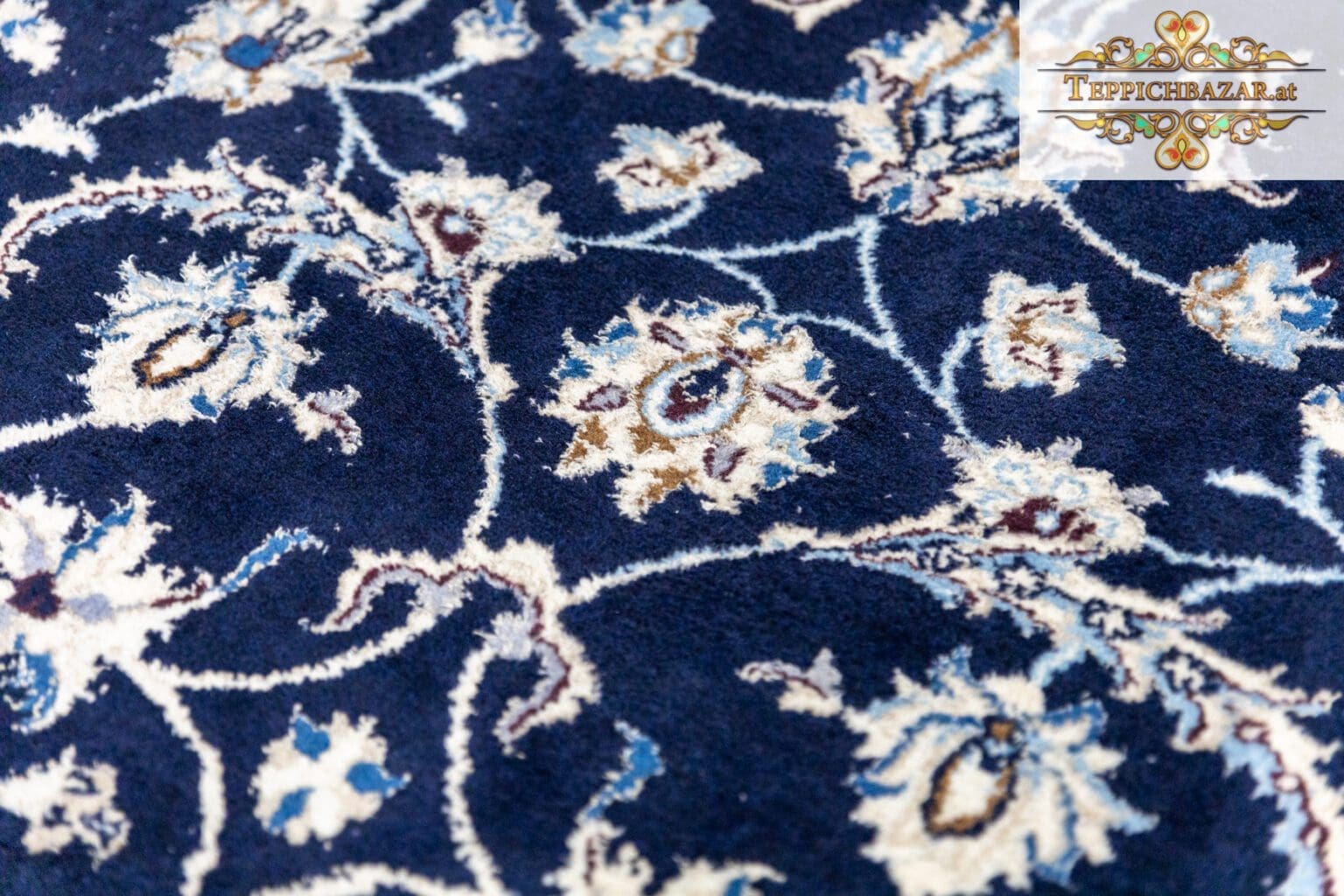
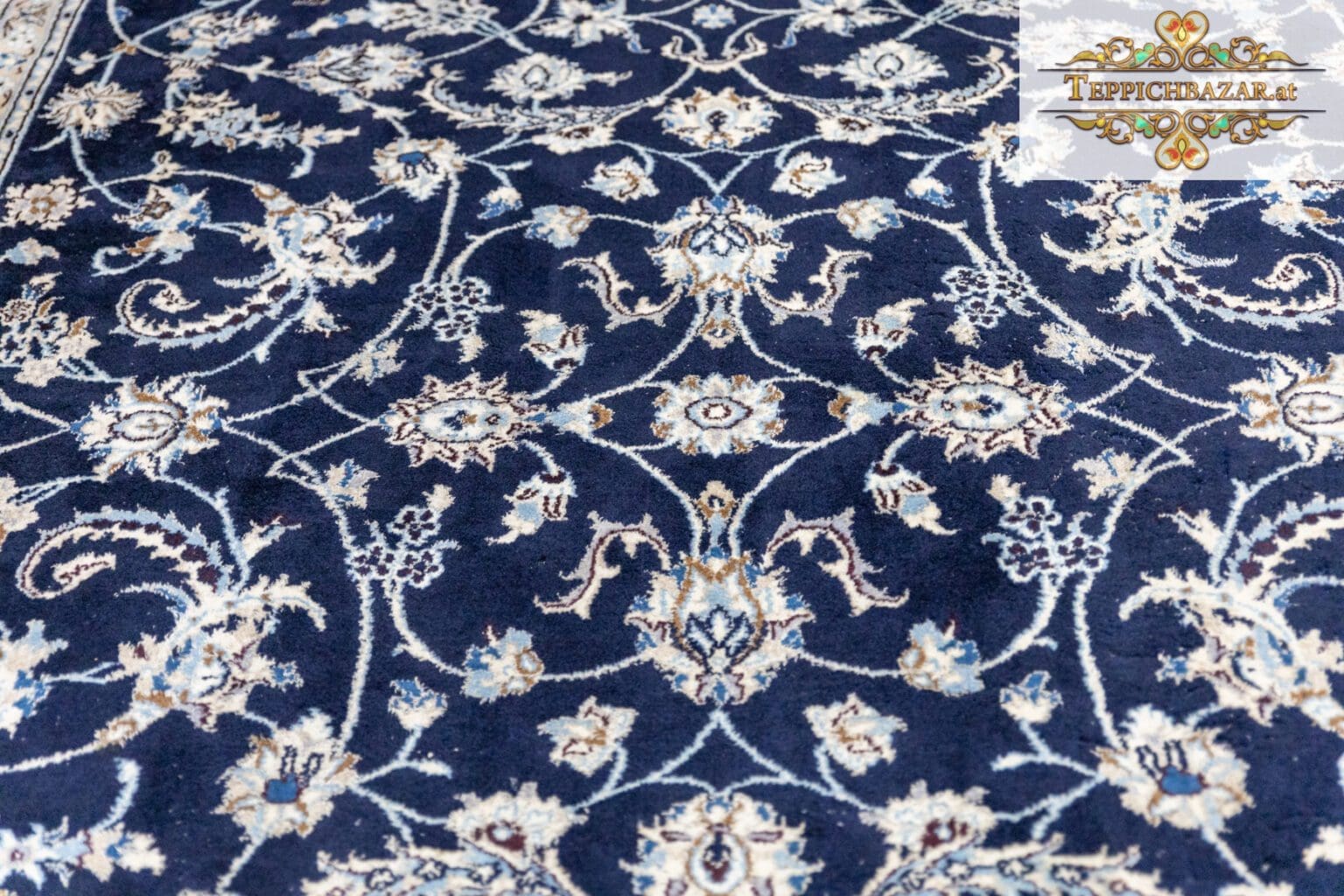
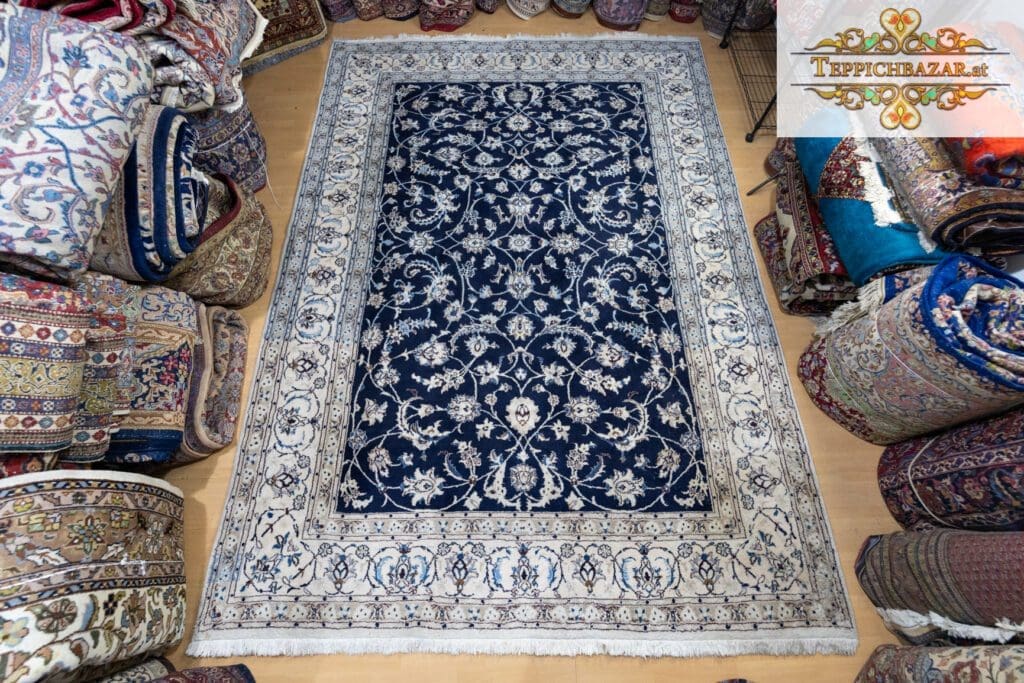
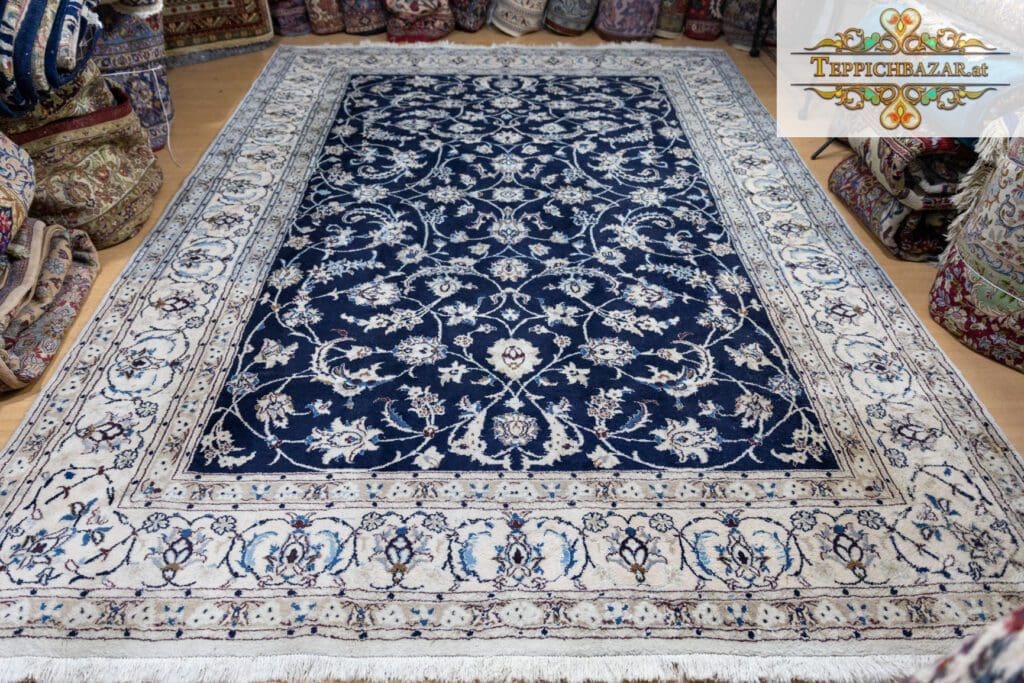
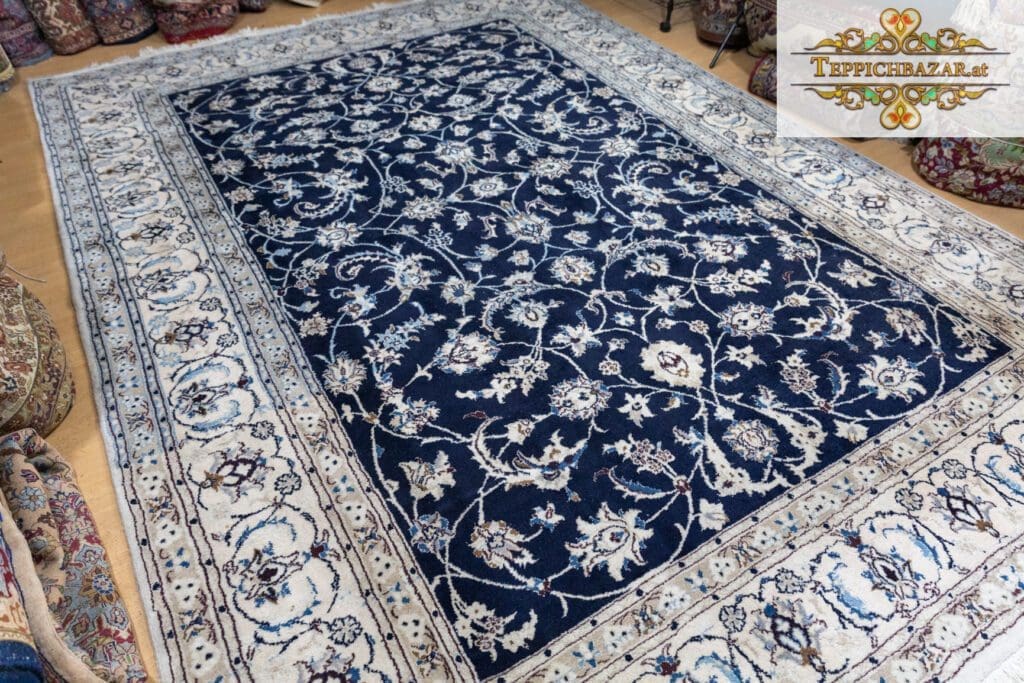
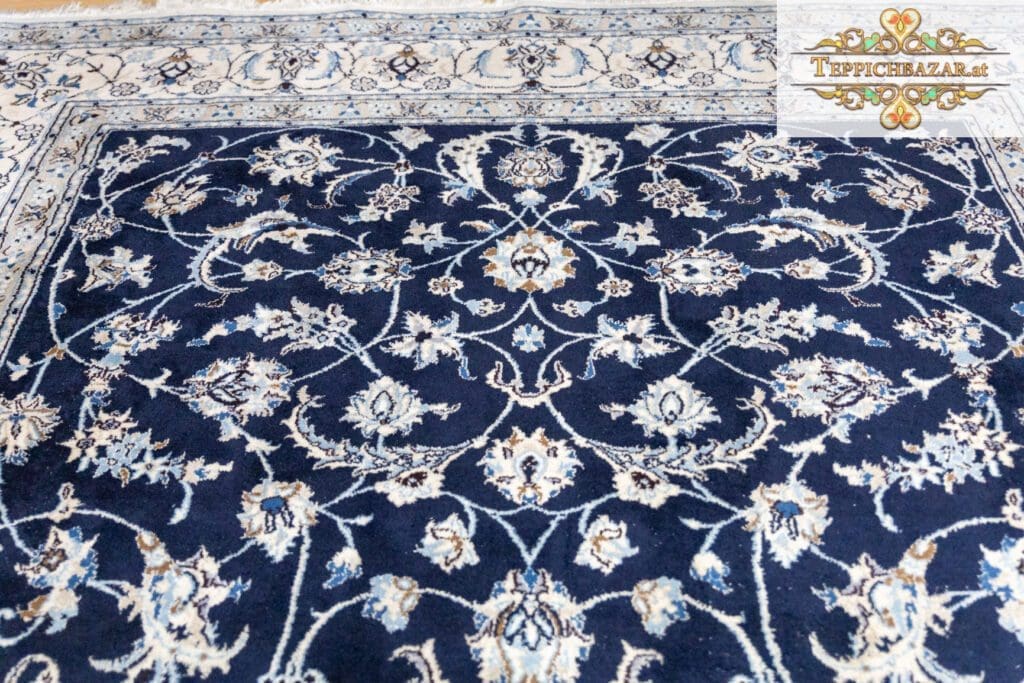
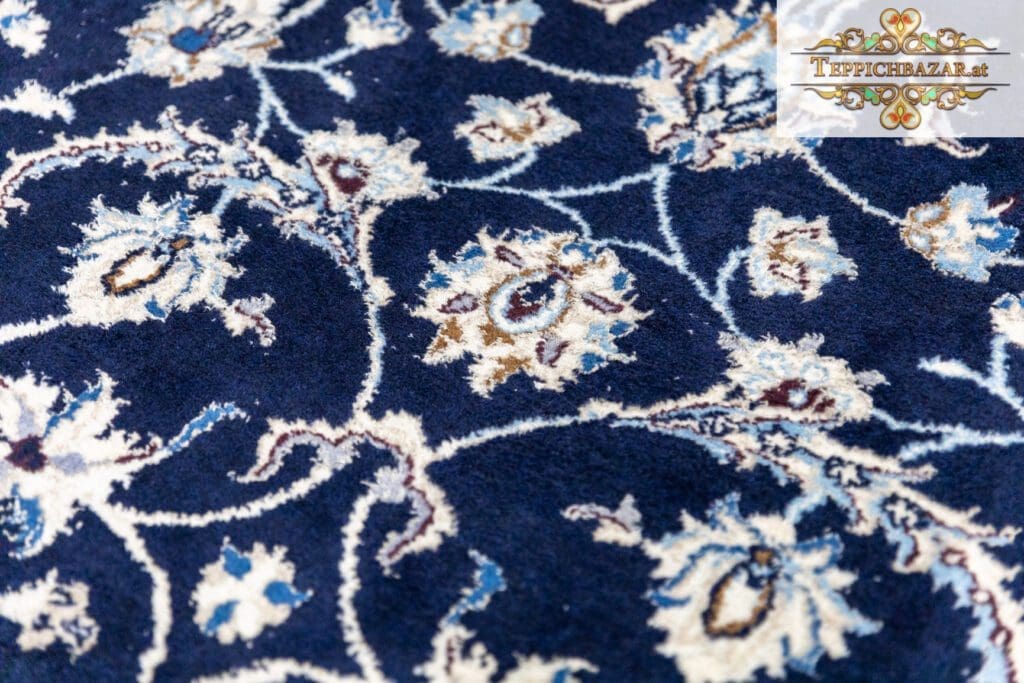
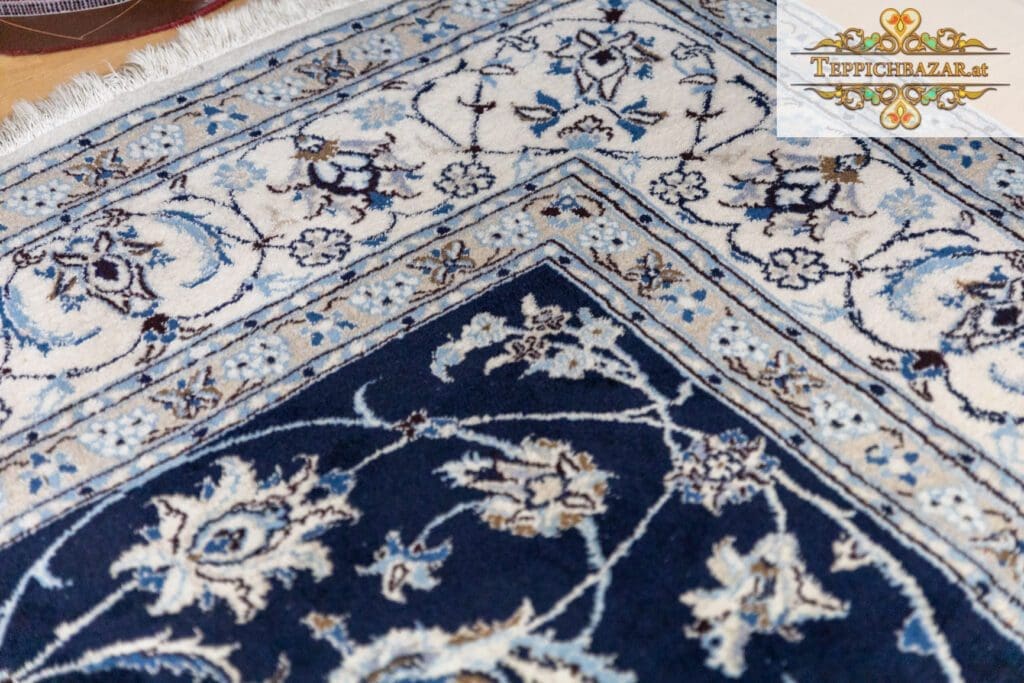
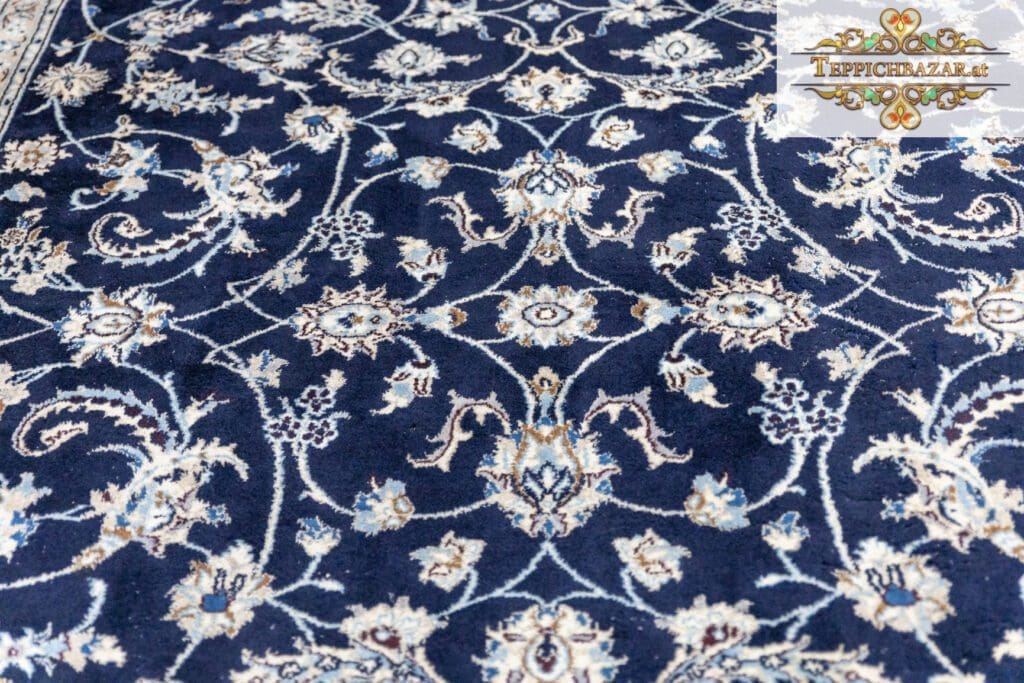
The pattern of this rug is floral. Floral carpet designs arrange blossoms, leaves, vines and related plant forms into a connected composition. The ornament may flow across the field, gather around a central arrangement or appear in repeated units. What unites these approaches is the drawn relationship between the individual plant forms, which creates a coherent pattern across the knotted surface.
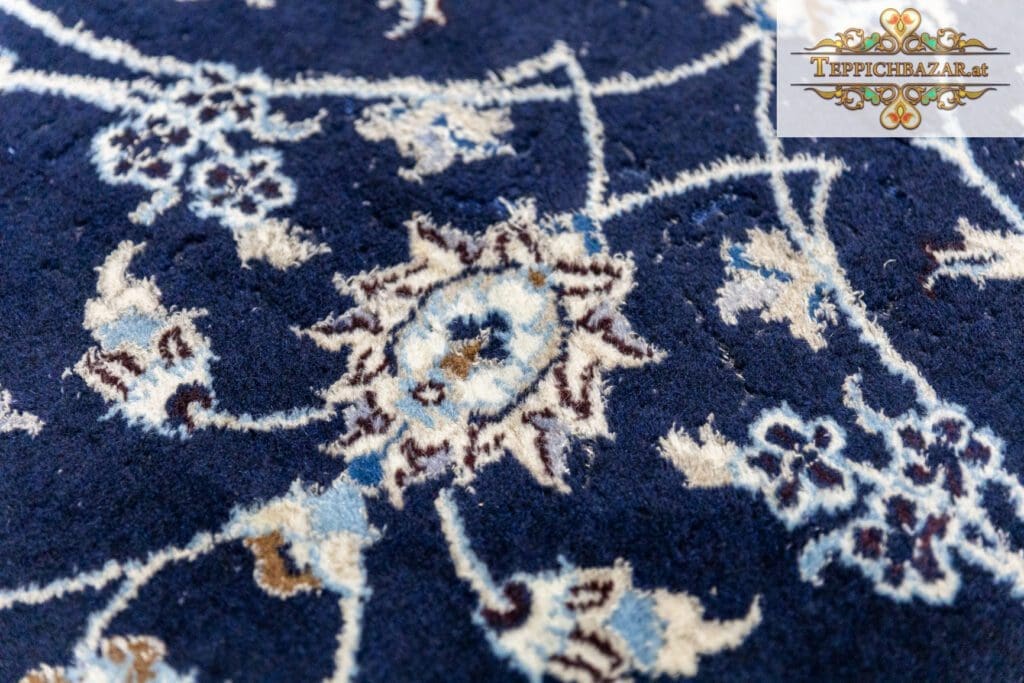
Within the Nain tradition, floral motifs are often combined with clear line work and an ordered overall structure. The forms are not scattered at random; they follow a deliberate arrangement. Vines can link different areas, blossoms can create accents, and leaves can fill the spaces between larger motifs. A fine knot structure makes it possible to define smaller contours and to distinguish neighbouring ornaments in a controlled way.
Floral ornament also has a long place in Persian decorative history. Plant forms are stylised rather than copied as literal botanical images. A blossom, leaf or vine becomes a decorative sign expressed through curves, lines and measured repetition. This transformation allows the design to function as a textile composition rather than as a naturalistic scene. The resulting pattern is connected to nature while remaining governed by the rules of ornament.
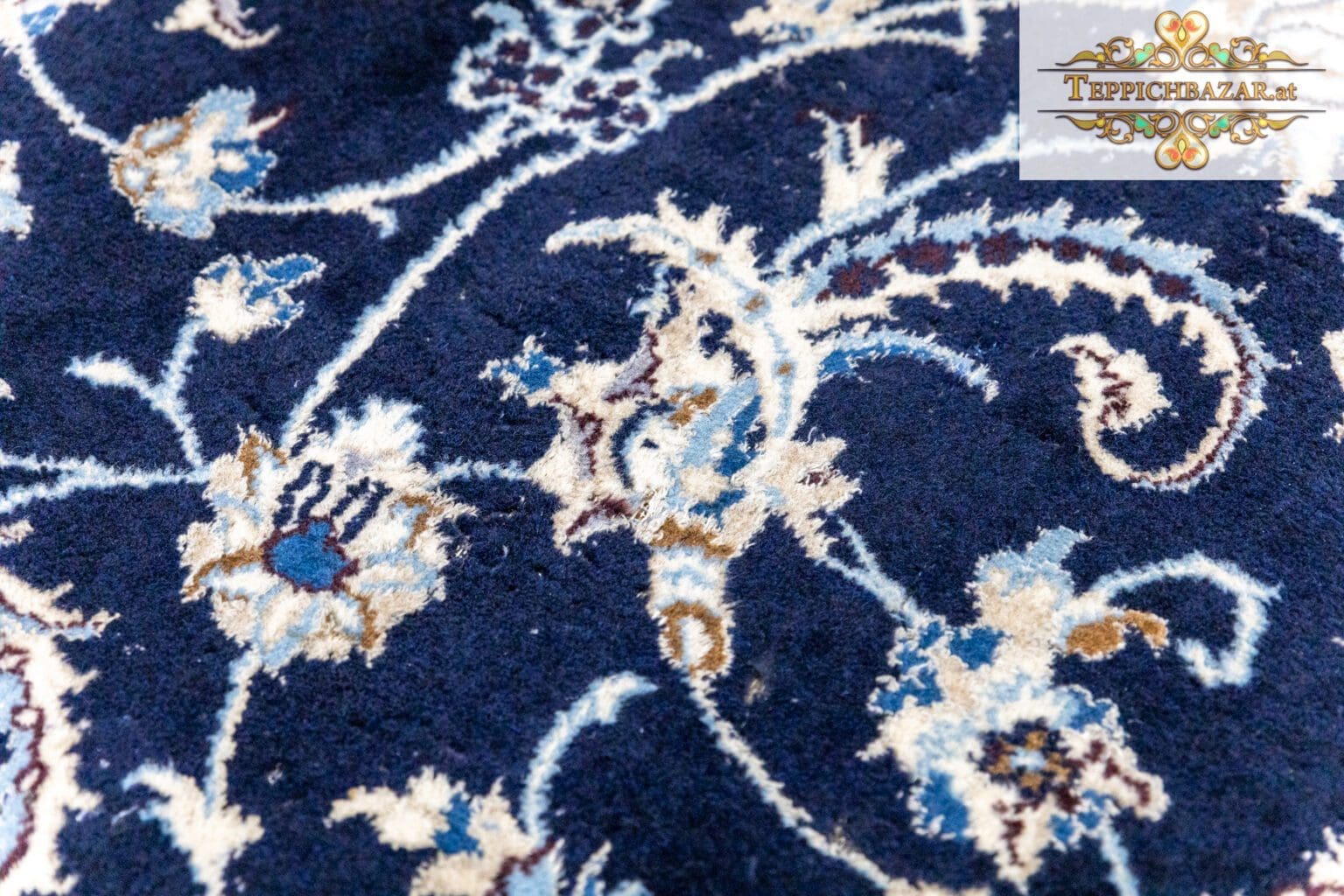
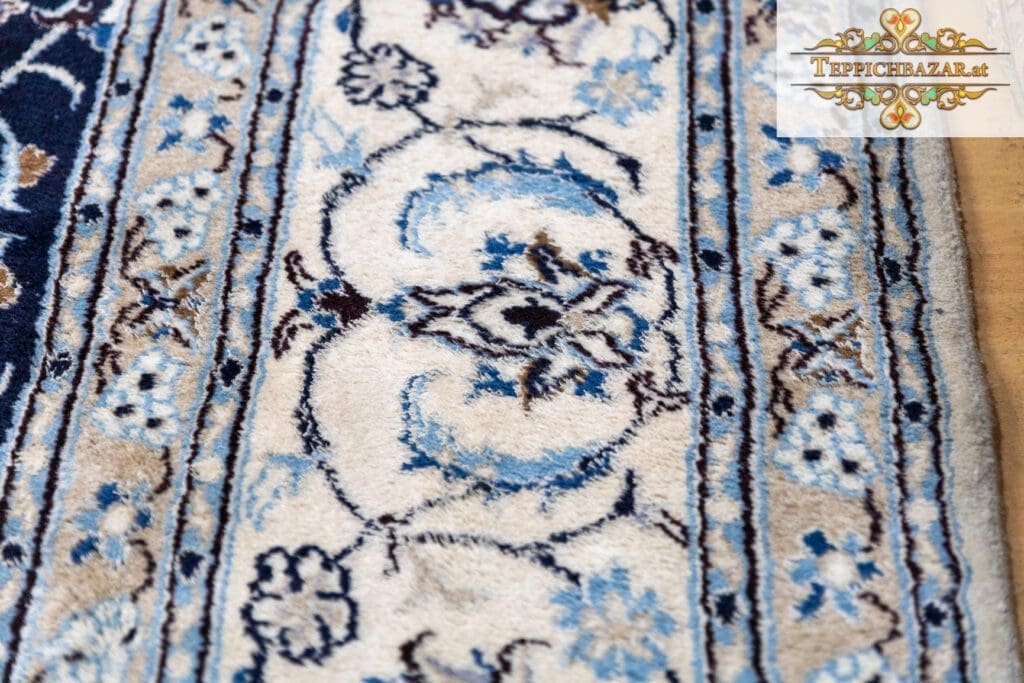
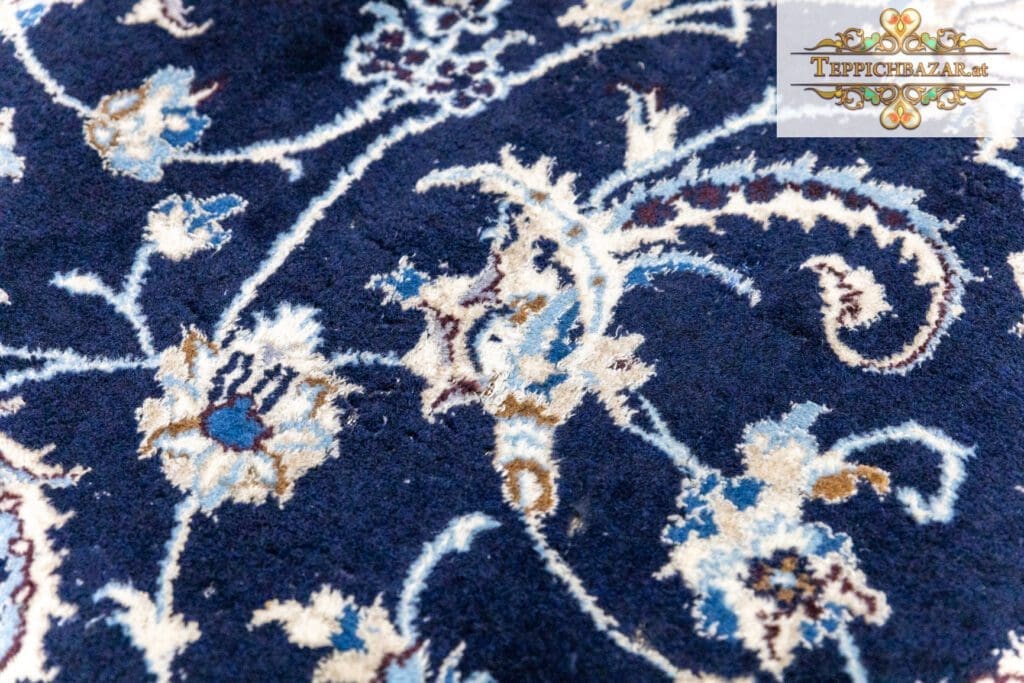
Here, the combination of wool and silk supports the visual effect of the drawing. The wool pile gives the motifs a dense textile presence, while the silk can catch and return light from selected areas. The appearance of a passage may therefore vary with the angle from which it is viewed. This changing surface effect is a characteristic optical quality of silk and adds another layer to the floral composition.
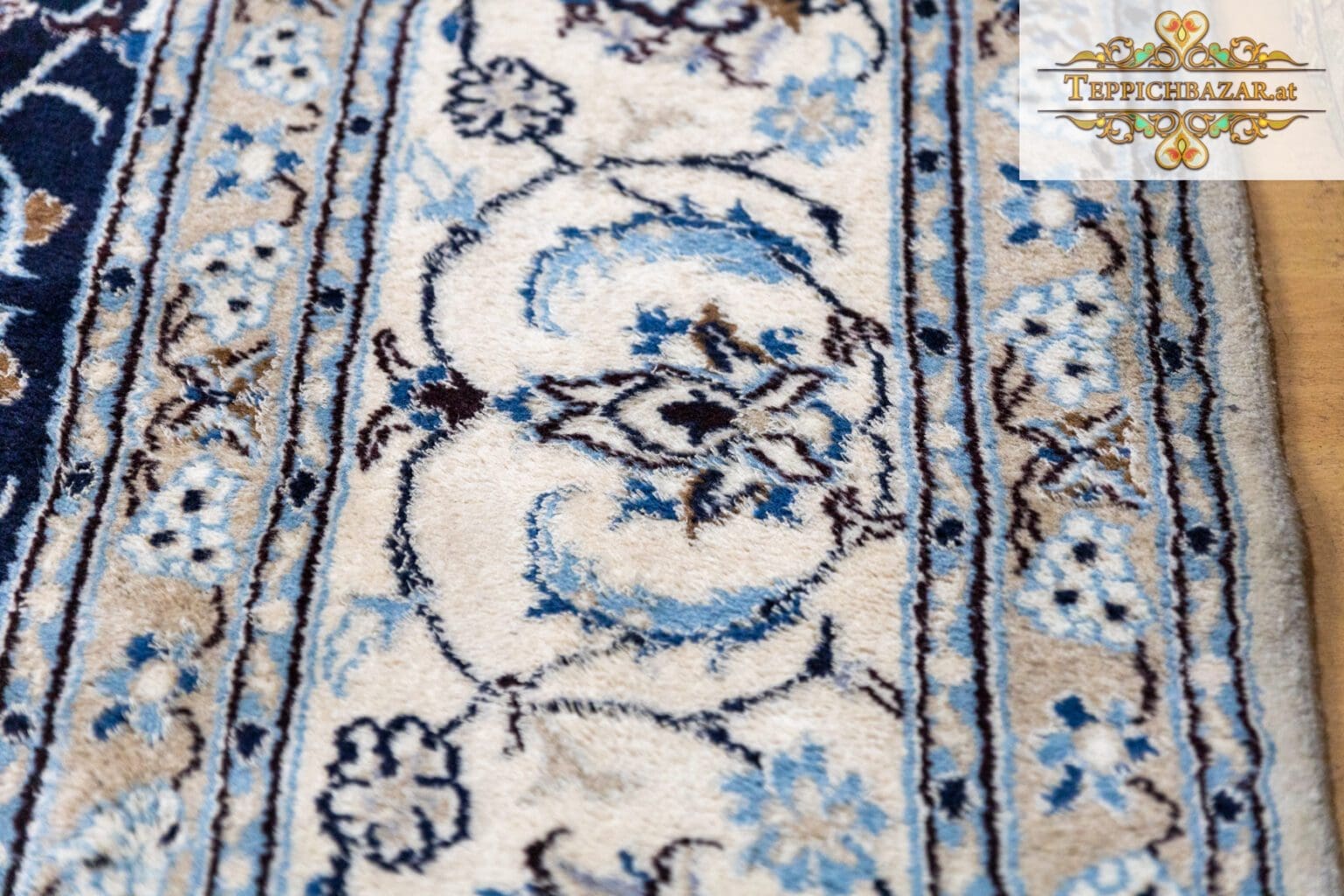
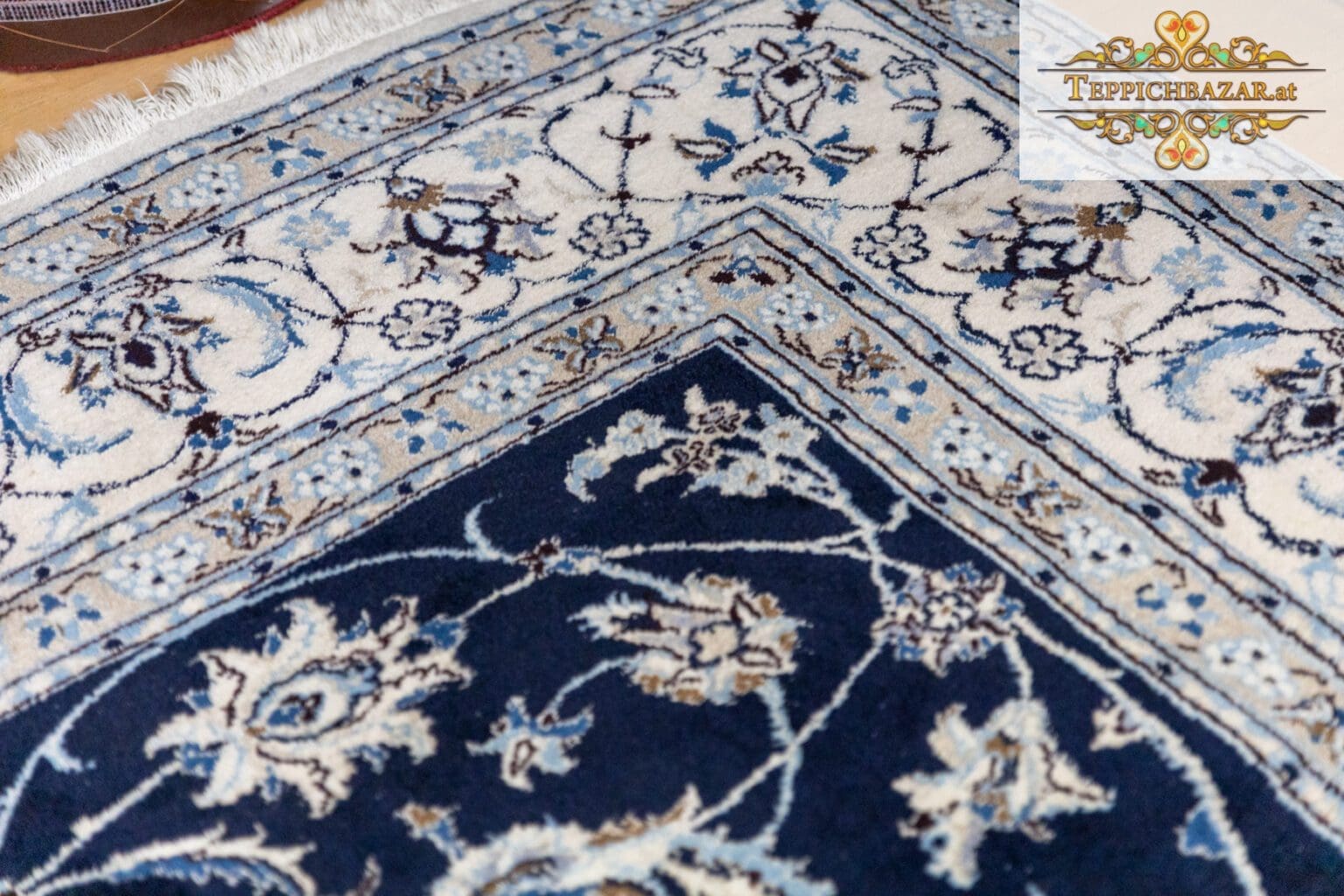
Nain design traditions can include floral arrangements alongside geometric borders and abstract ornamental structures. Such elements may define the edges of a field, create borders or organise transitions between different areas. They give a floral composition a framework and help the viewer read the central motifs and surrounding zones as parts of one design. The result remains decorative while retaining a clear sense of order.
A floral pattern can also carry cultural associations without presenting a fixed pictorial narrative. In Persian carpet design, the central concerns are often the relationship between repetition, proportion, rhythm and workmanship. Plant motifs are transformed through the knotting technique and acquire their final character through the particular execution of the individual rug. The design is therefore both part of a regional tradition and the result of a specific handcraft process.
Special Features
A notable feature of this rug is the combination of a fine 12La construction with a pile made from 100% wool with silk. Its hand-knotted technique makes the textile structure visible in principle: the pattern is created by the sequence of individual knots rather than printed or applied by machine. The cotton warp provides the foundation for this knotting process.
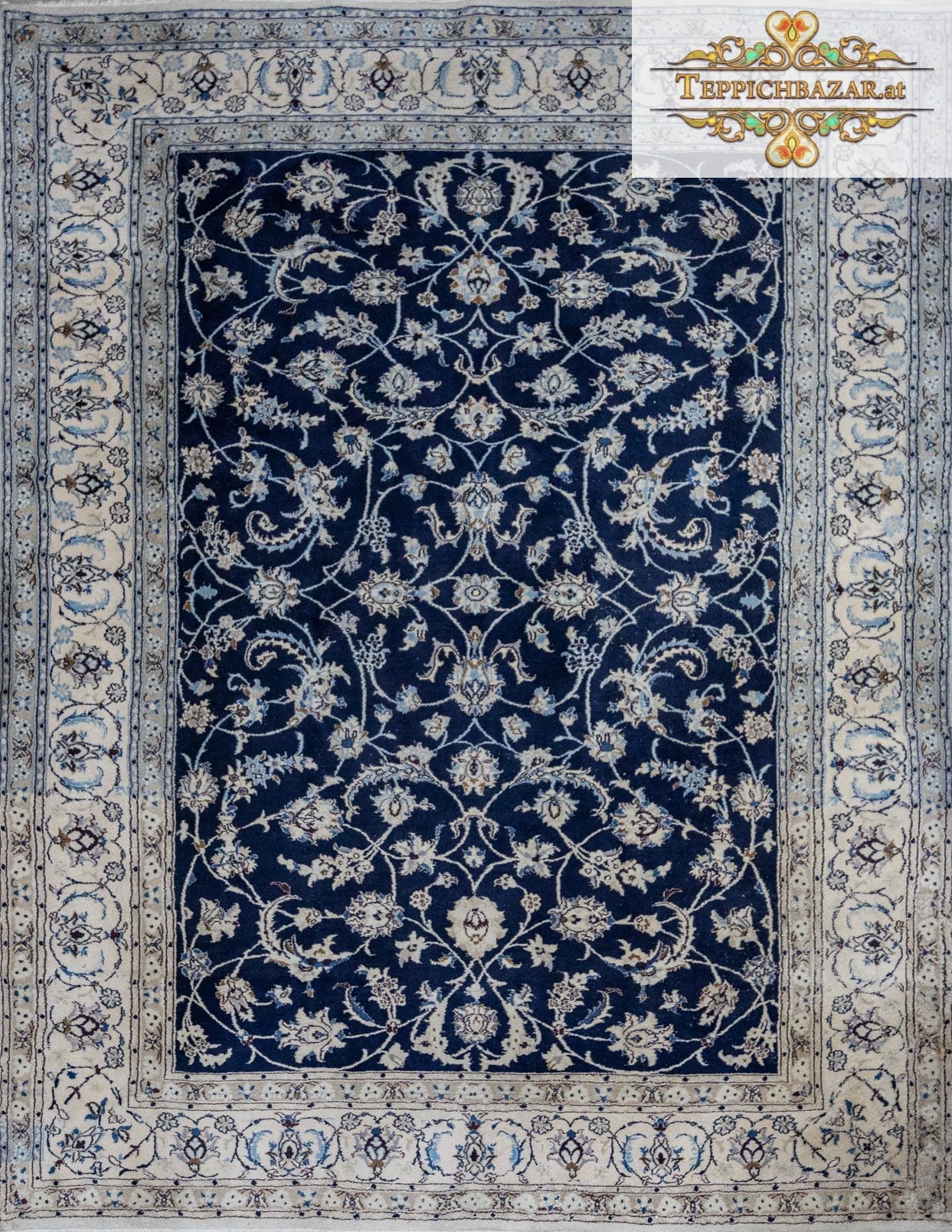
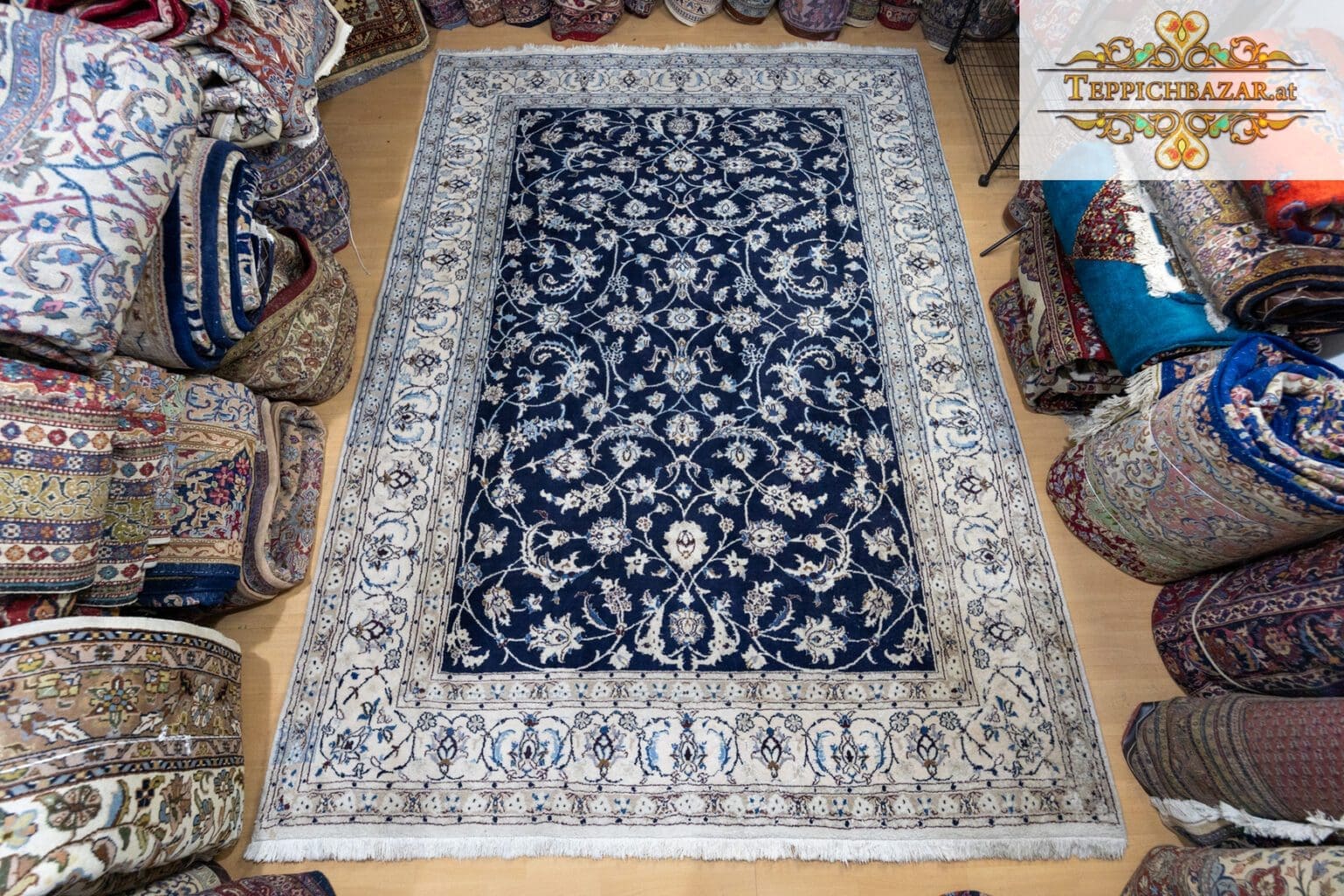
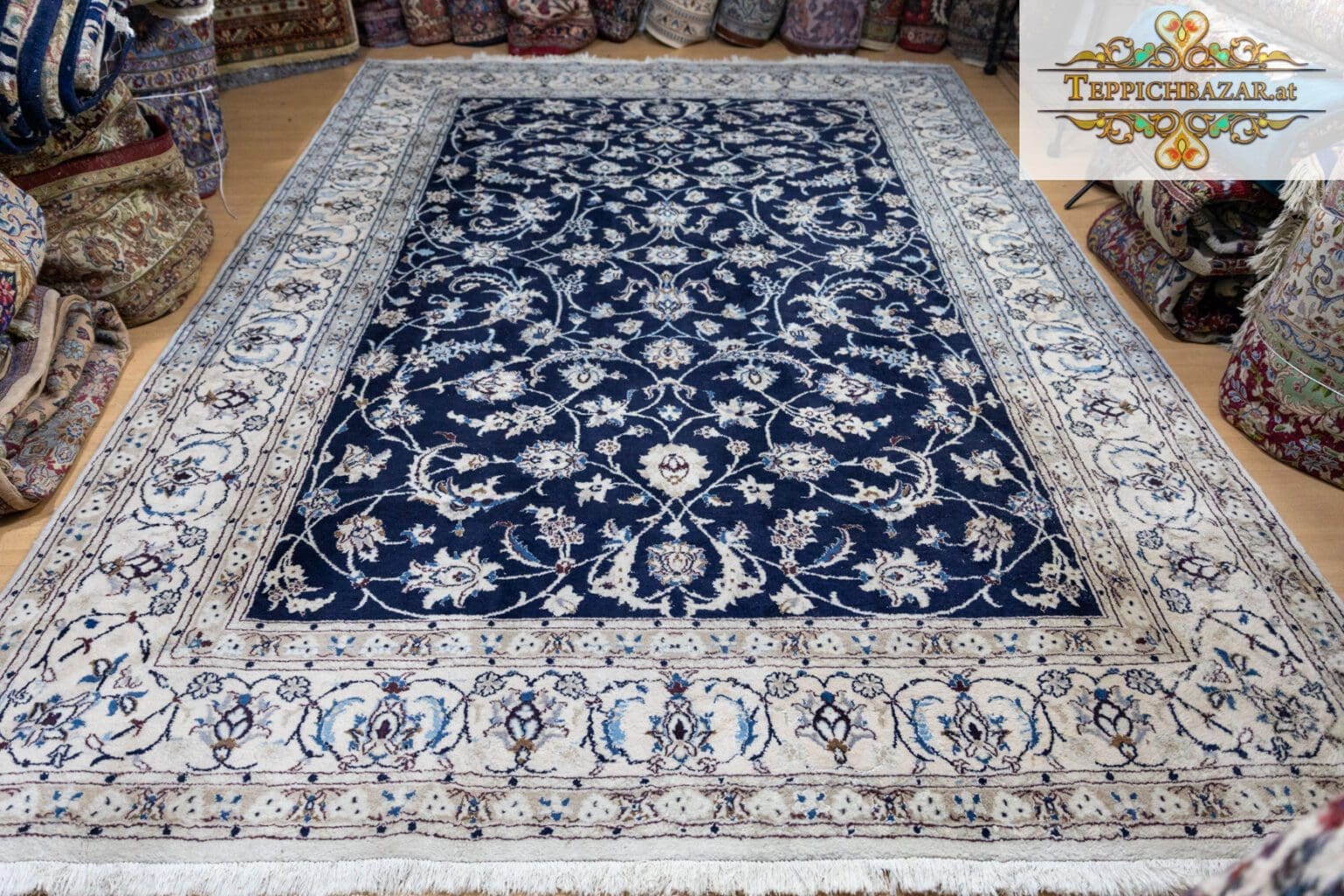
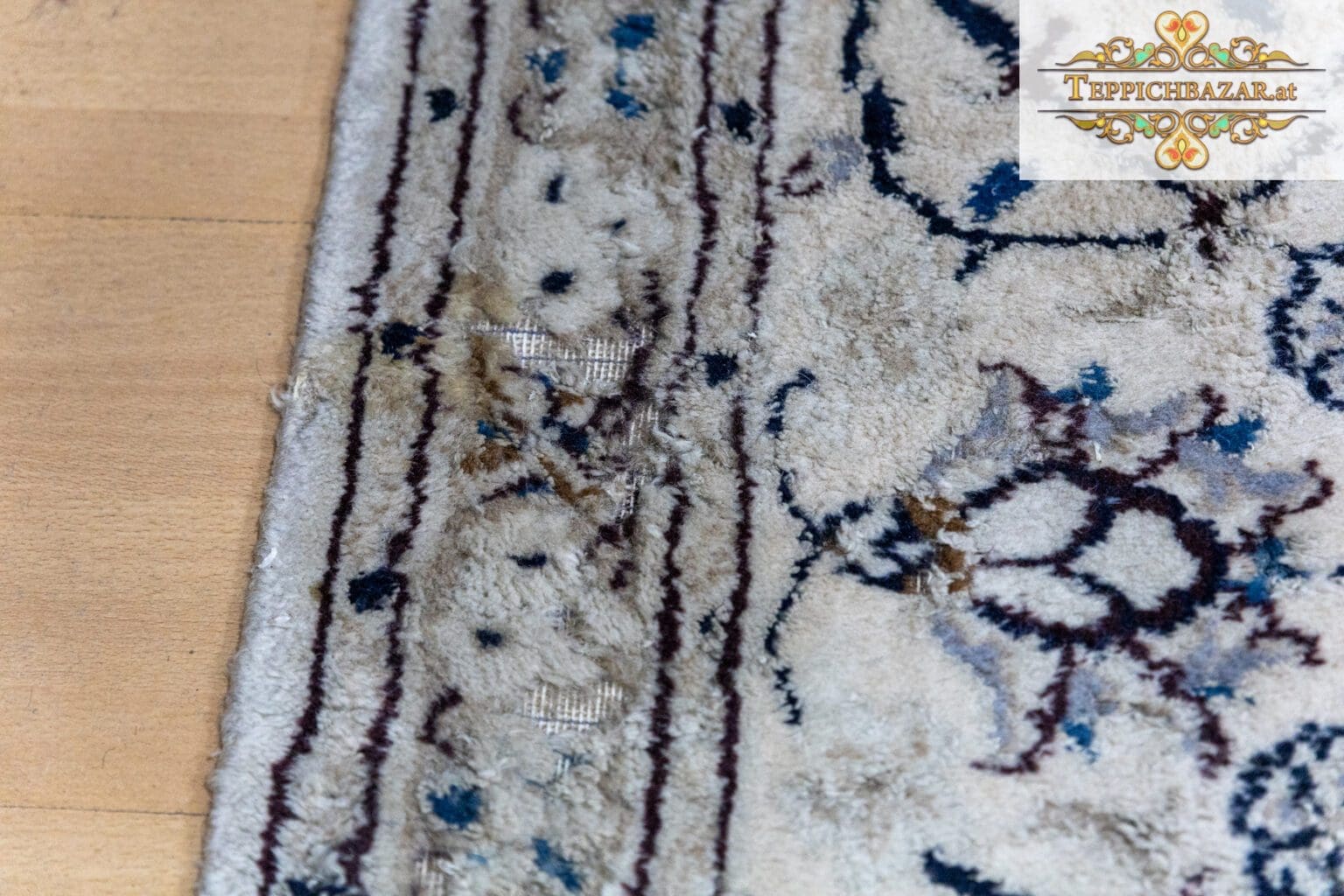
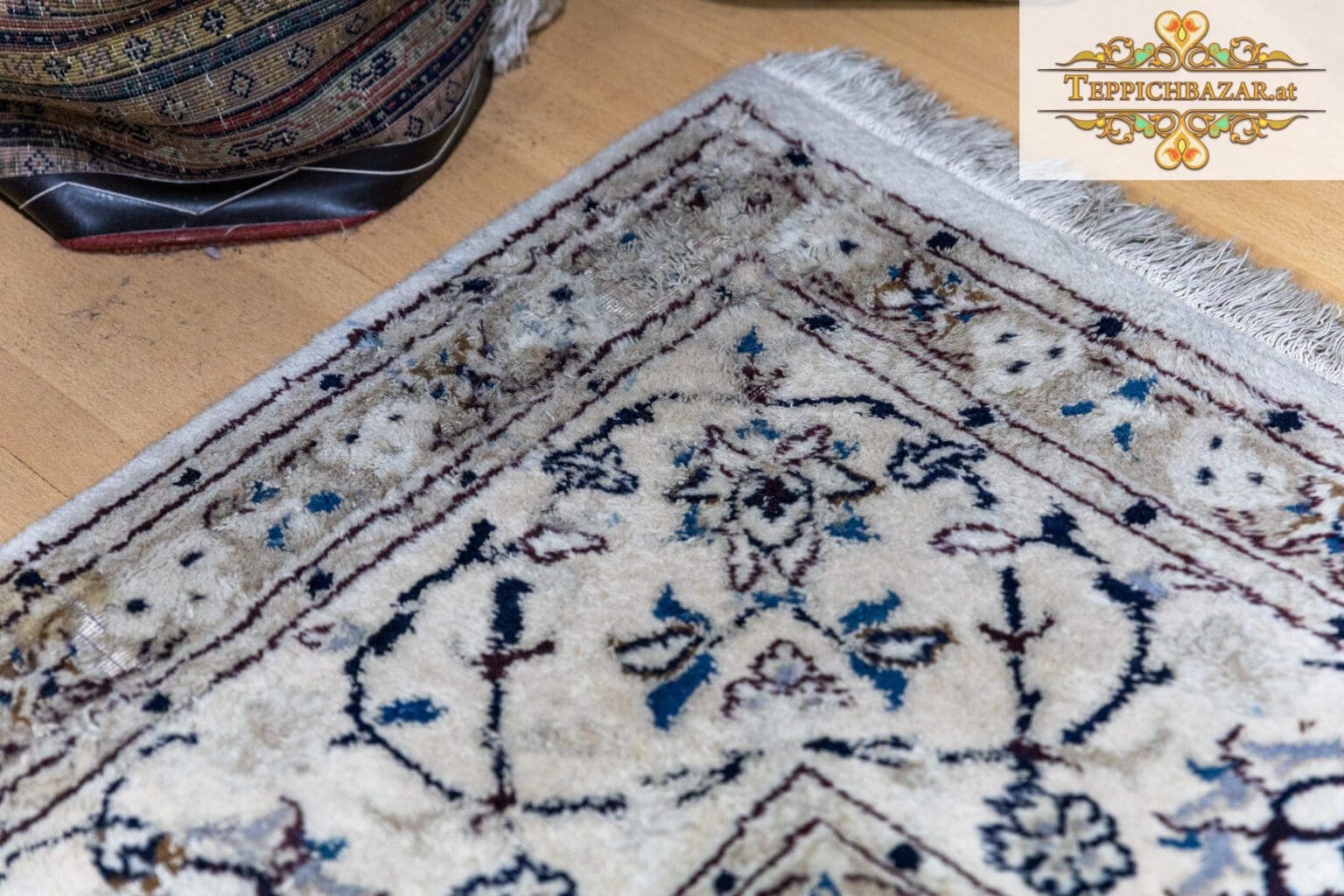
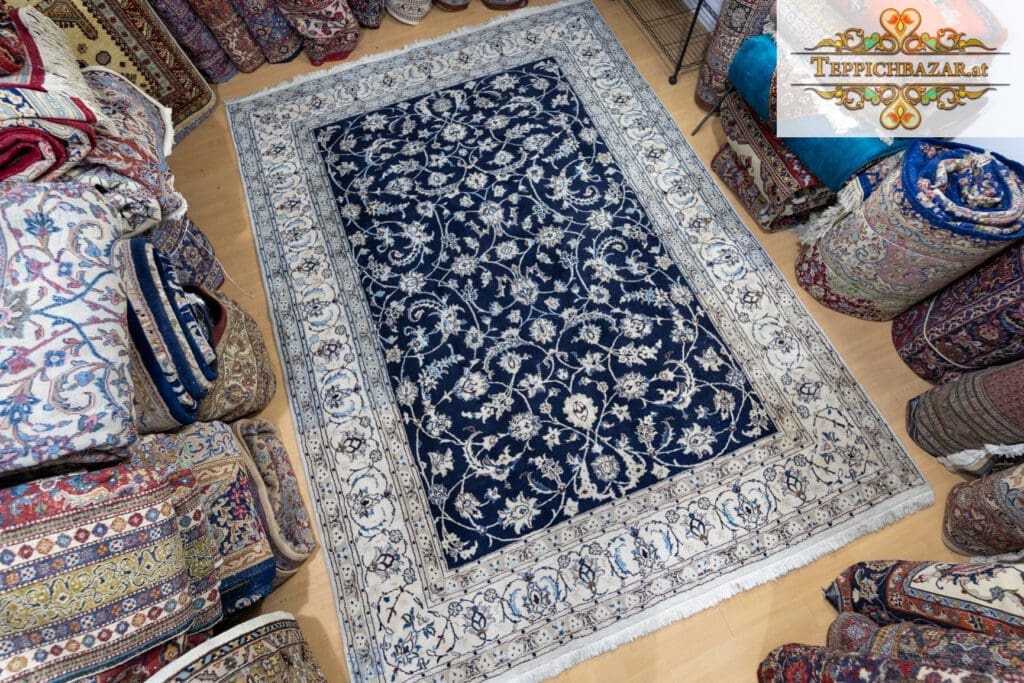
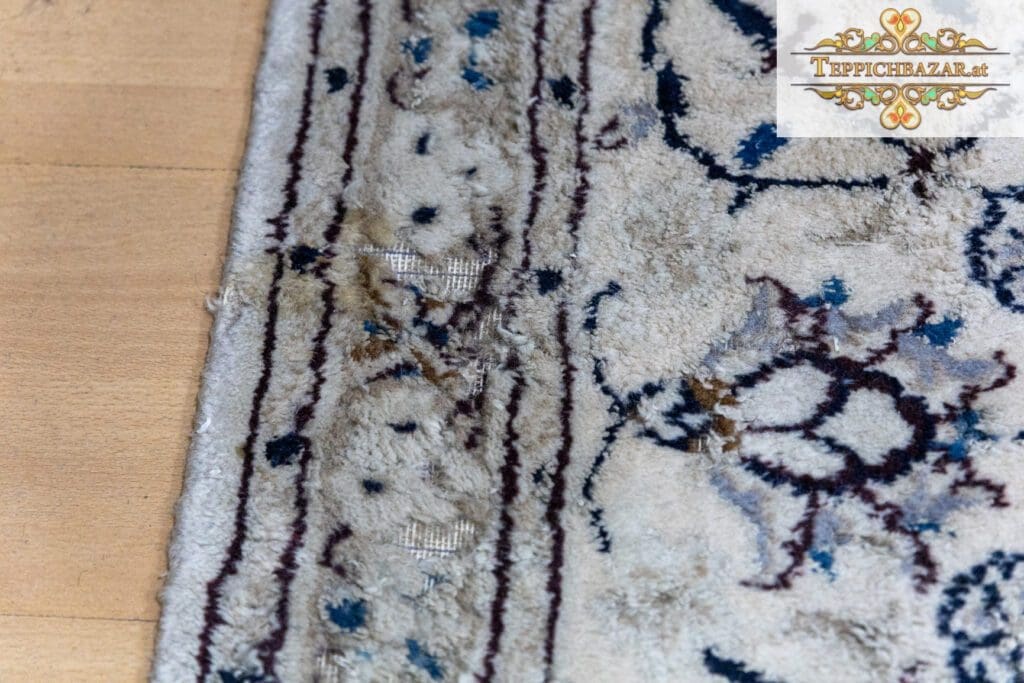
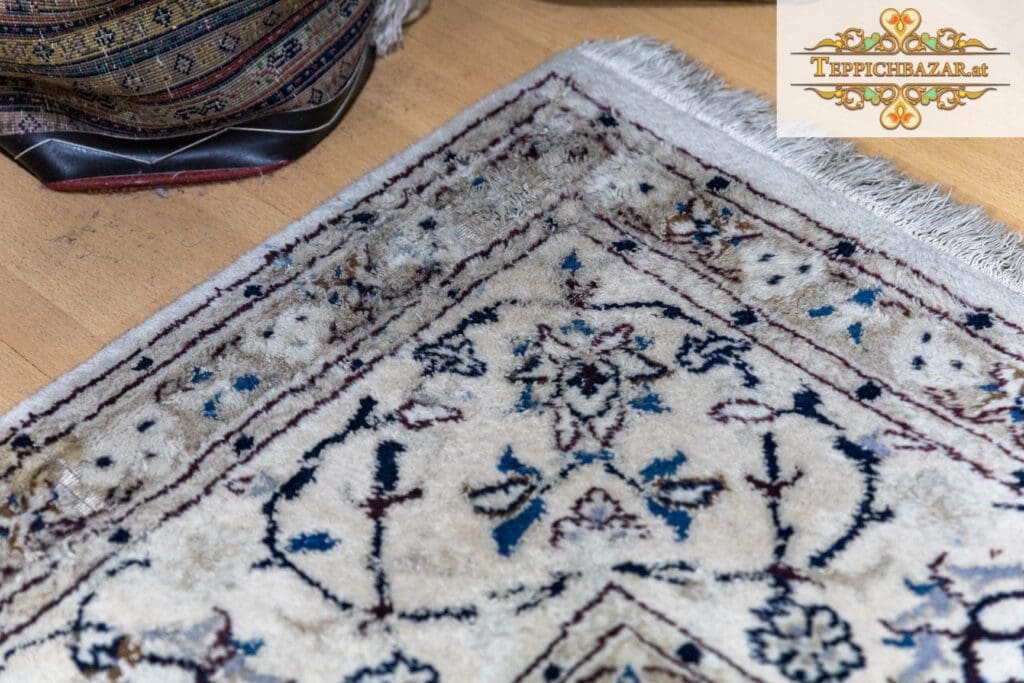
The rug is described as used with PATINA; its condition can be seen in the images. Patina refers to the visible traces and developed surface character that a used piece acquires over time. In a rug containing wool and silk, this effect may be perceived in the way pile, sheen and pattern respond to light. The particular condition of this individual rug is documented by its pictured appearance.
The materials are described as hypoallergenic. For care, regular vacuuming without a brush is recommended. A thorough cleaning should be carried out professionally so that the wool, silk and textile construction are not damaged. Blot stains immediately with a soft cloth instead of rubbing the surface. Direct sunlight should be avoided, and the rug should be kept in a dry place.
FAQ
How should I clean a Nain Persian rug with silk?
Regular vacuuming without a brush helps remove dust and dirt from the pile. For a thorough cleaning, professional treatment is recommended because a combination of wool and silk requires careful handling. If a stain occurs, blot the affected area immediately with a soft cloth. Do not rub, as rubbing can place unnecessary stress on the pile and fibres.
How can I recognise a genuine Nain rug?
Genuine Nain rugs are hand-knotted and are distinguished by a high knot density. You can also examine the reverse, the hand-knotted structure and the quality of the materials used. The absence of knots on the back is given as an additional point of reference. In this piece, the described characteristics include the fine 12La construction and a pile made from wool with silk.
How should I care for the rug to help preserve it?
Keep the rug away from direct sunlight and vacuum it regularly without using a brush. Store or keep it in a dry place. Stains should be blotted immediately with a soft cloth, and rubbing should be avoided. For comprehensive care or heavier soiling, professional cleaning is the appropriate method.
To provide the best experiences, we use technologies like cookies to store and/or access device information. Consenting to these technologies will allow us to process data such as browsing behavior or unique IDs on this site. Not consenting or withdrawing consent, may adversely affect certain features and functions.
Functional Always active
The technical storage or access is strictly necessary for the legitimate purpose of enabling the use of a specific service explicitly requested by the subscriber or user, or for the sole purpose of carrying out the transmission of a communication over an electronic communications network.
Preferences
The technical storage or access is necessary for the legitimate purpose of storing preferences that are not requested by the subscriber or user.
Statistics
The technical storage or access that is used exclusively for statistical purposes.The technical storage or access that is used exclusively for anonymous statistical purposes. Without a subpoena, voluntary compliance on the part of your Internet Service Provider, or additional records from a third party, information stored or retrieved for this purpose alone cannot usually be used to identify you.
Marketing
The technical storage or access is required to create user profiles to send advertising, or to track the user on a website or across several websites for similar marketing purposes.
 SECURE PAYMENT
 SHIPPING PARTNERS