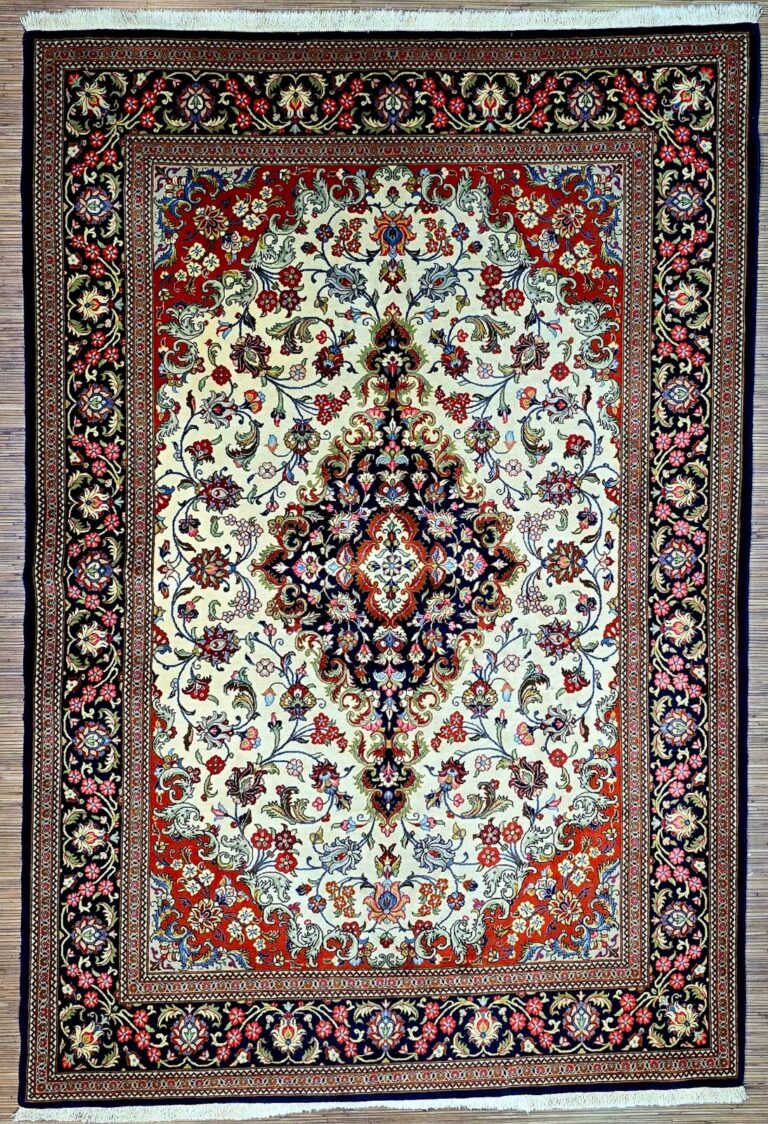
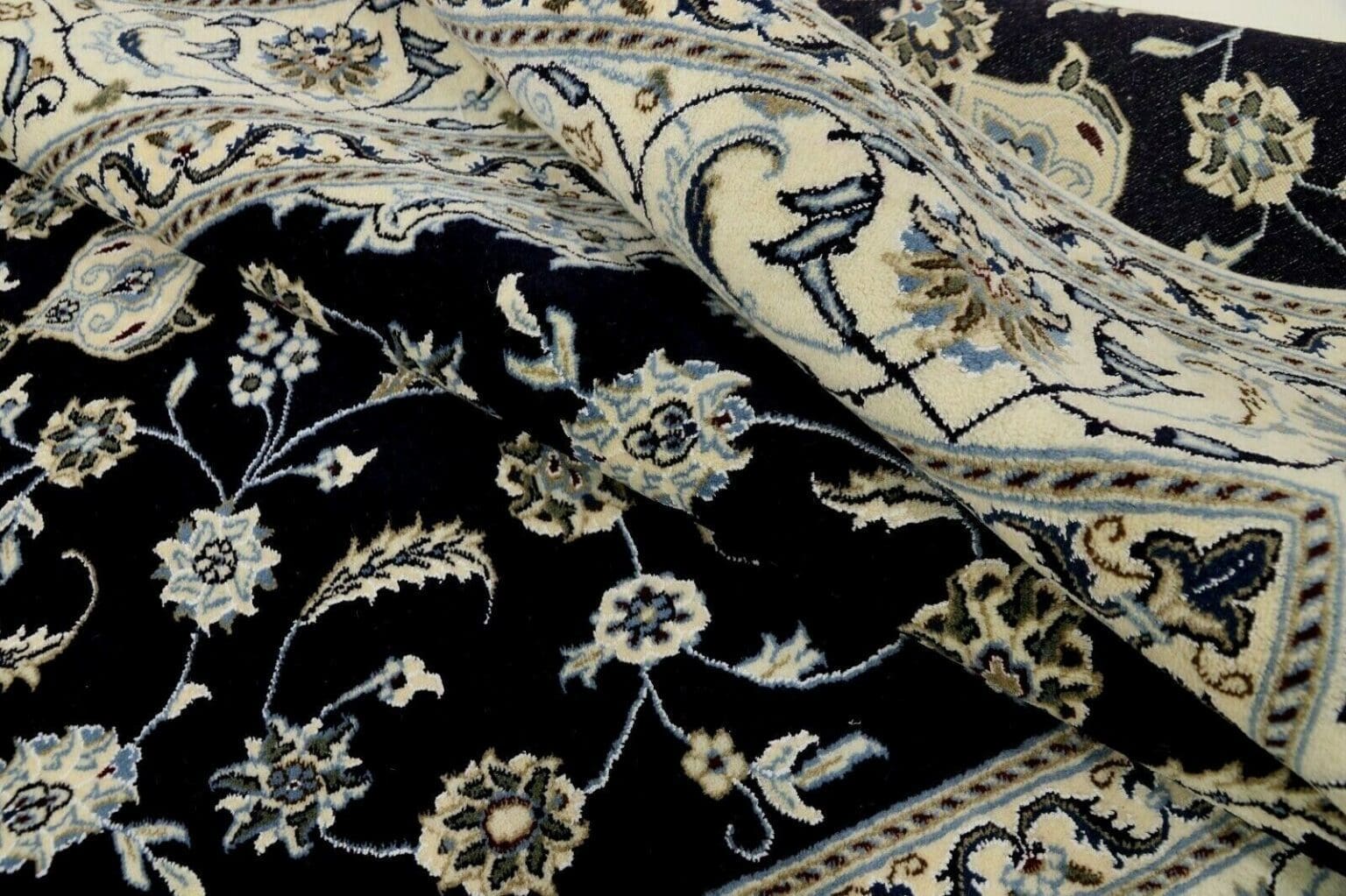
This Super Nain is a hand-knotted Persian rug with a pile made from 90% virgin wool and 10% silk. Its warp is 100% cotton. The listed fibres therefore have distinct roles: wool and silk form the pile, while cotton provides the warp structure. This combination influences both the texture and the visual character of the rug. Virgin wool is traditionally valued for its resilient yet pleasant textile surface. Silk adds a finer fibre quality and a characteristic sheen. The wool and silk fibres described for this rug also have a natural range of colour, allowing the surface to appear lively under different lighting conditions.
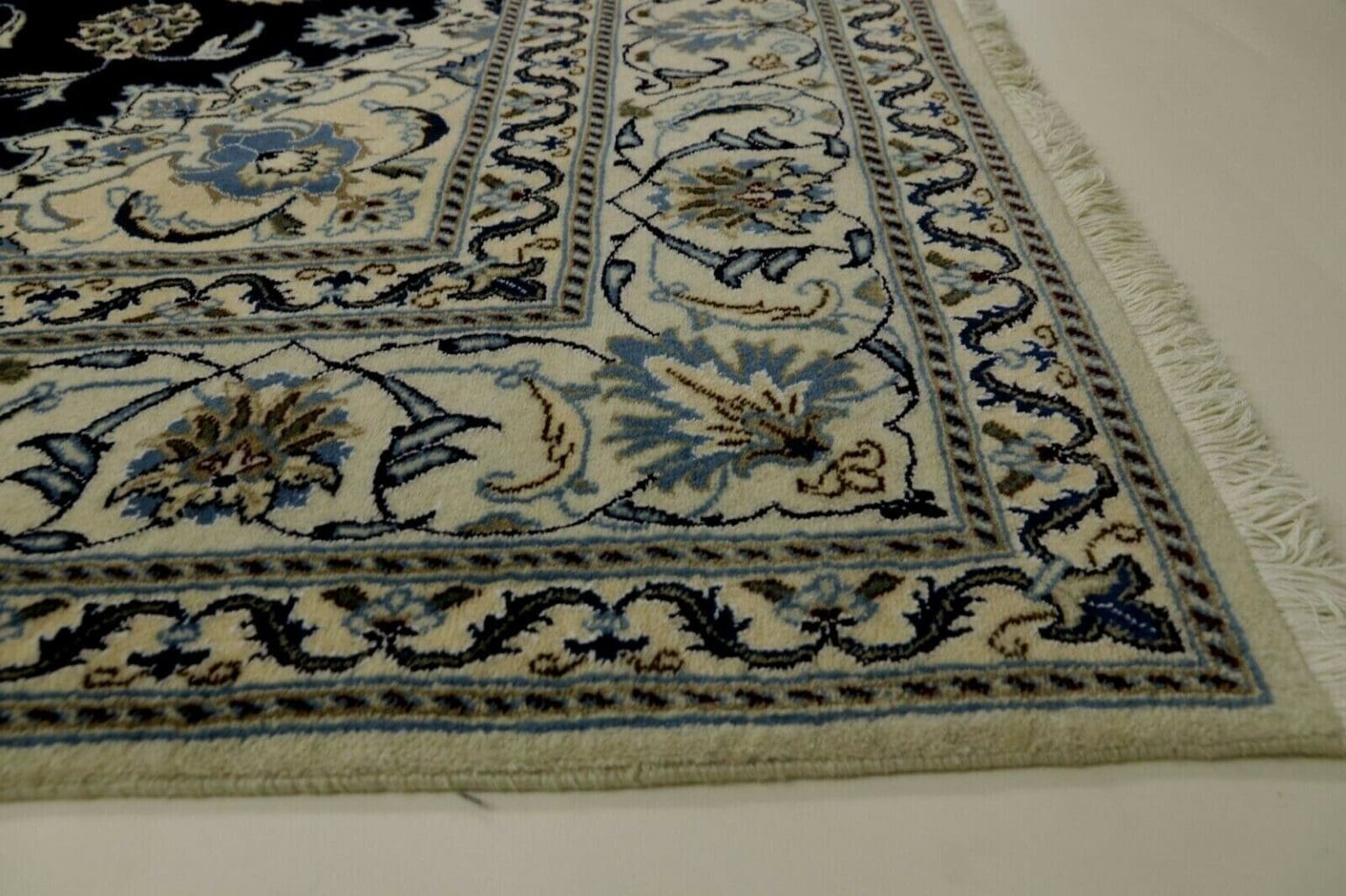
The rug is made by hand knotting rather than by a machine process. Individual knots are tied into the prepared warp, with successive rows building the pile and the overall design. A high knot density permits fine definition in lines, ornaments and colour areas. This Super Nain is listed with approximately 300,000 knots per square metre. The dense construction is associated with a finely articulated surface and contributes to its soft, comfortable feel. Since each rug is assembled knot by knot, the hand-knotted method makes this piece a one-off, even though it follows an established Nain design tradition.
The condition is described as new and very good. The rug has a rectangular form and is identified as a unique single piece. Its particular construction is defined by the combination of virgin wool, silk and a cotton warp, together with the careful handwork. The source description also characterises the natural fibres as sustainable and notes that hand production uses less energy than machine manufacturing. Those points concern the materials and the general production method used for this rug.
Origin and Tradition
The Super Nain comes from the Nain region in Iran. Nain is one of the recognised Persian weaving areas and is associated with finely executed rugs, detailed drawing and careful workmanship. The city and its surrounding region have a long carpet-making history, described here as reaching back to the sixteenth century. Skills passed down through generations, together with changing artistic influences, have shaped a distinctive weaving culture in the area.
Persian rug making brings practical handwork together with an inherited visual language. In the Nain tradition, this is commonly associated with precise patterns, clearly organised ornament and a differentiated use of colour. Production starts with the arrangement of the warp. Knot rows are then tied and secured with weft threads, gradually creating a continuous textile surface. The finished rug emerges from the relationship between warp, pile, knots and the final handling of the surface. Each stage requires patience and accuracy, particularly when the pattern contains fine details.
The region is also known for high-quality wool from local sheep raising. Wool is used as the pile foundation in many regional rugs and gives the surface a natural textile character. Silk threads are also used in Nain weaving and can bring additional delicacy and lustre to selected areas. Silk is expressly listed as part of this rug’s pile alongside virgin wool. Cotton forms the warp on which the pile knots are secured, making it an important structural element even though it is not the main pile material.
The Nain tradition therefore combines regional fibres, inherited design principles and manual production. A hand-knotted rug is not created in one industrial operation. Its surface develops row by row, as the weaver follows and builds the planned composition. This is why the knotting method is as important to the character of a Nain as its motifs. Dense knotting supports a precise rendering of ornament, while the different fibres influence the way the surface feels and how its colours respond to light.
Persian rugs are often classified by their weaving centres and by the design traditions connected with those places. Nain refers not only to a geographical origin but also to a particular direction within Persian rug culture. In the present description, Super Nain identifies the rug with that Nain tradition. It does not describe a machine-made product; it identifies a hand-knotted, one-off rug from the Iranian region of Nain.
Design and Pattern
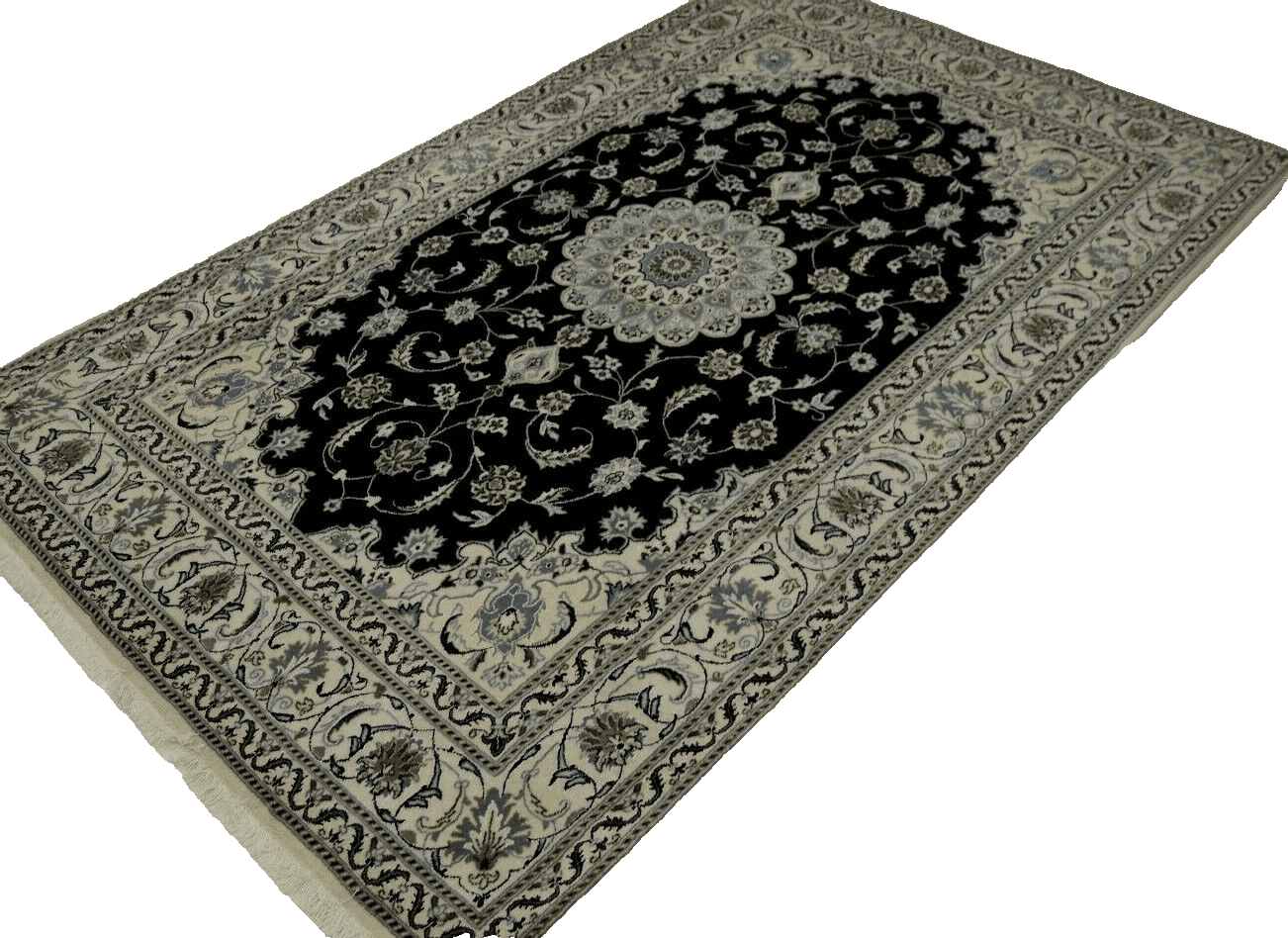
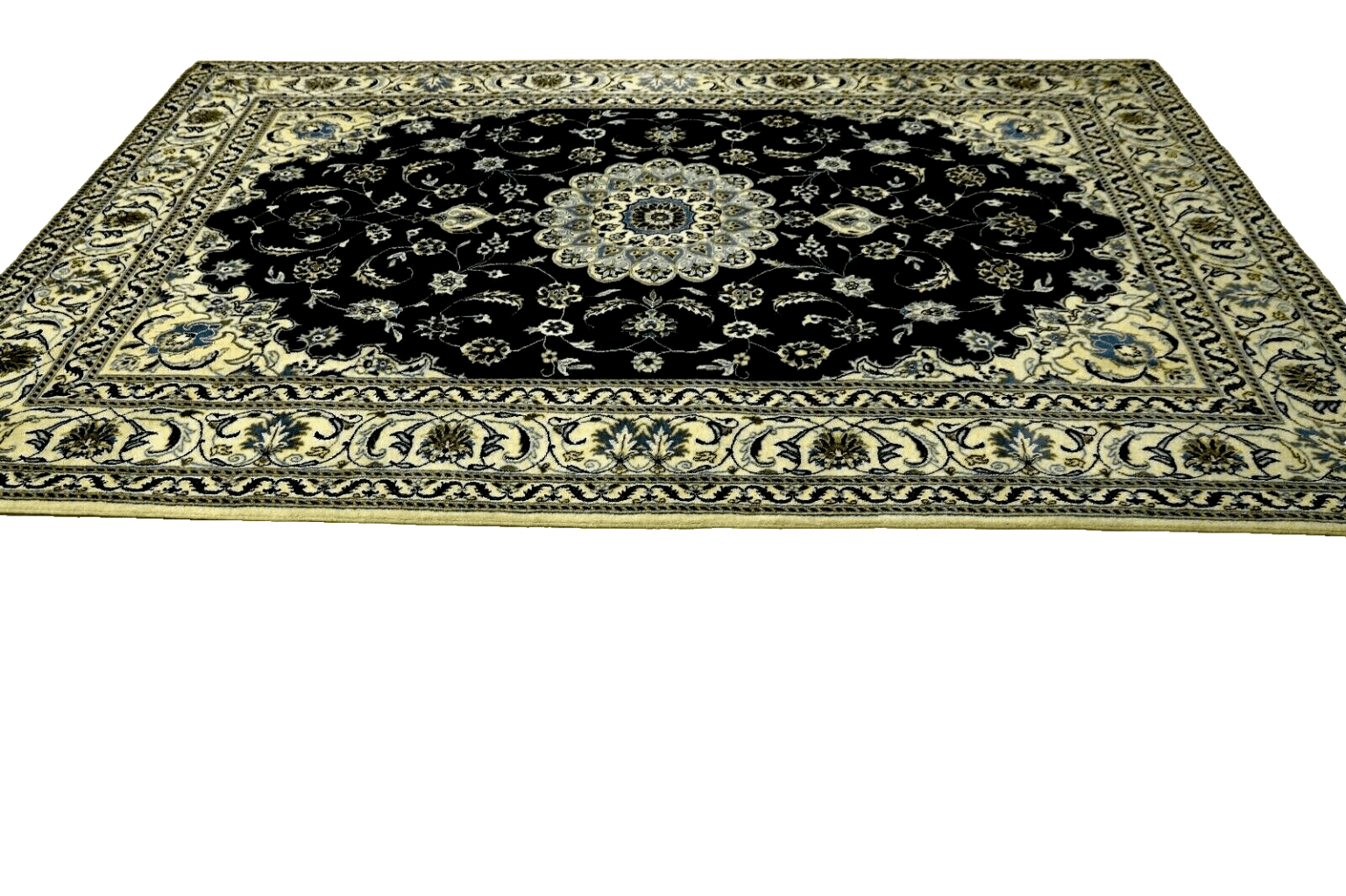
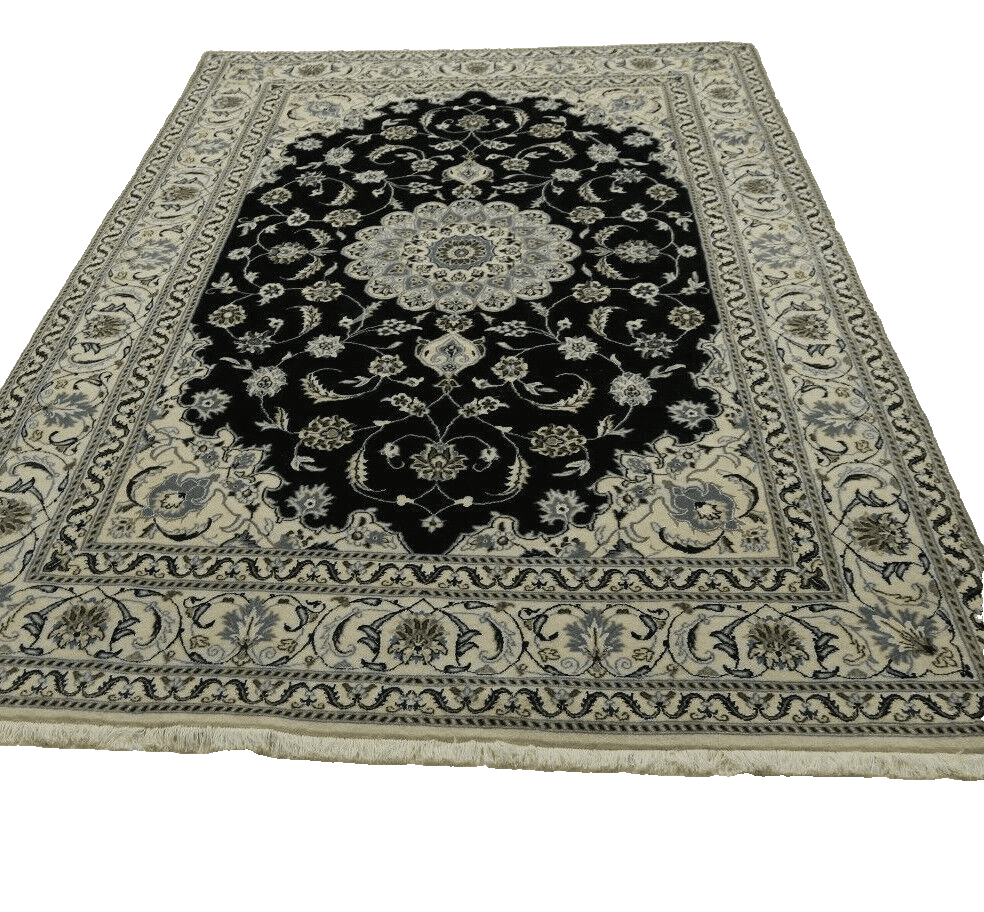
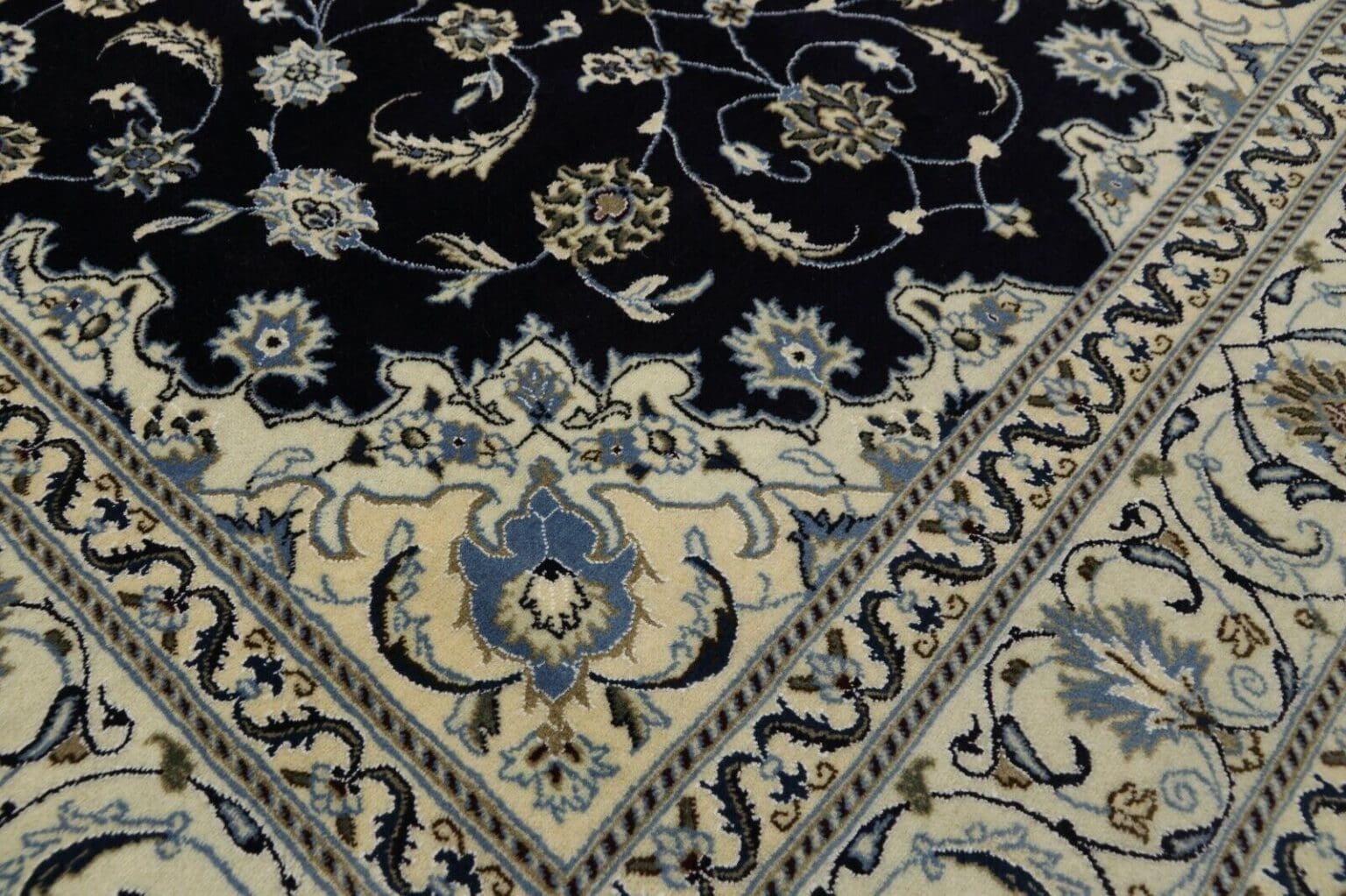
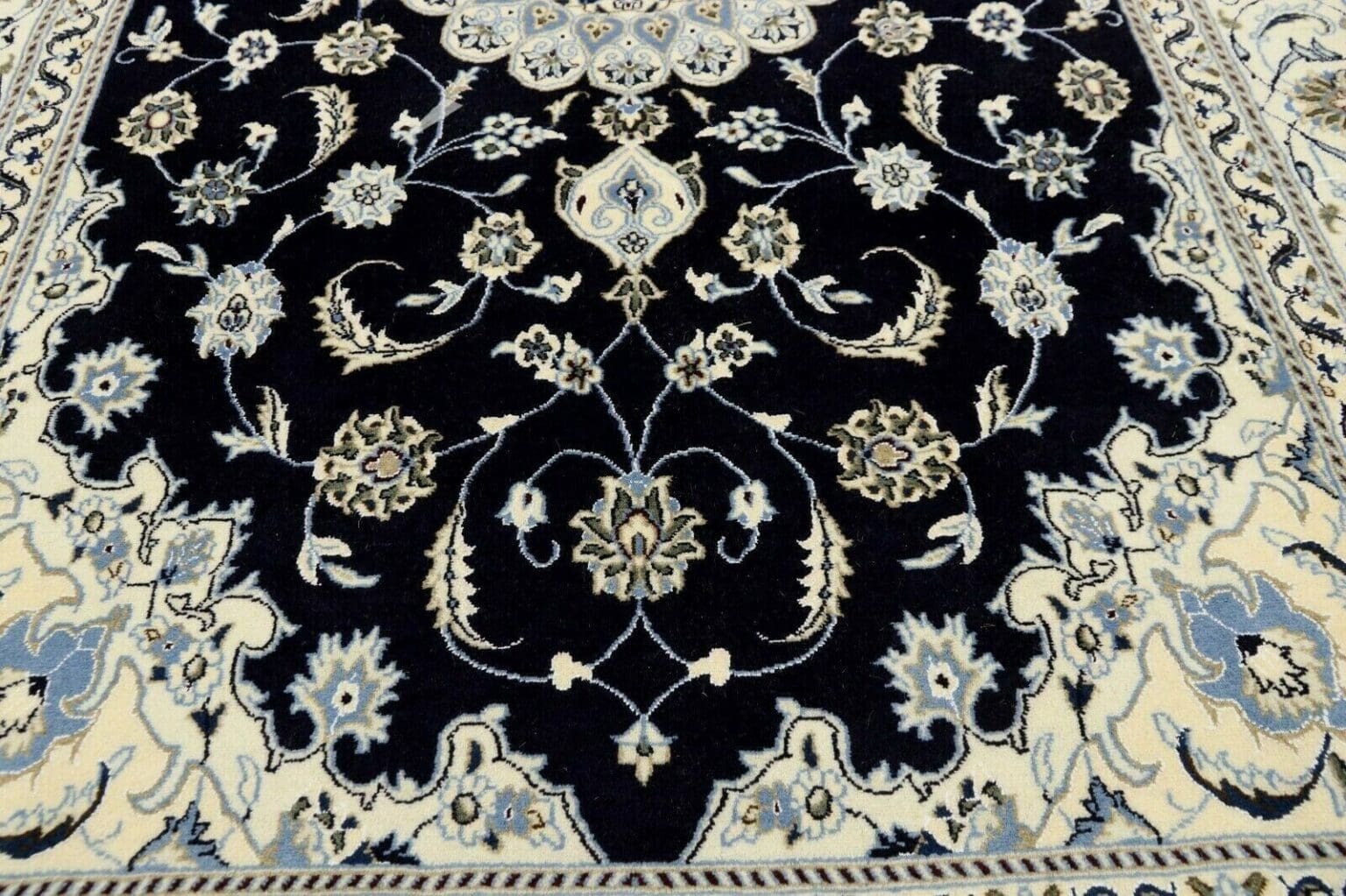
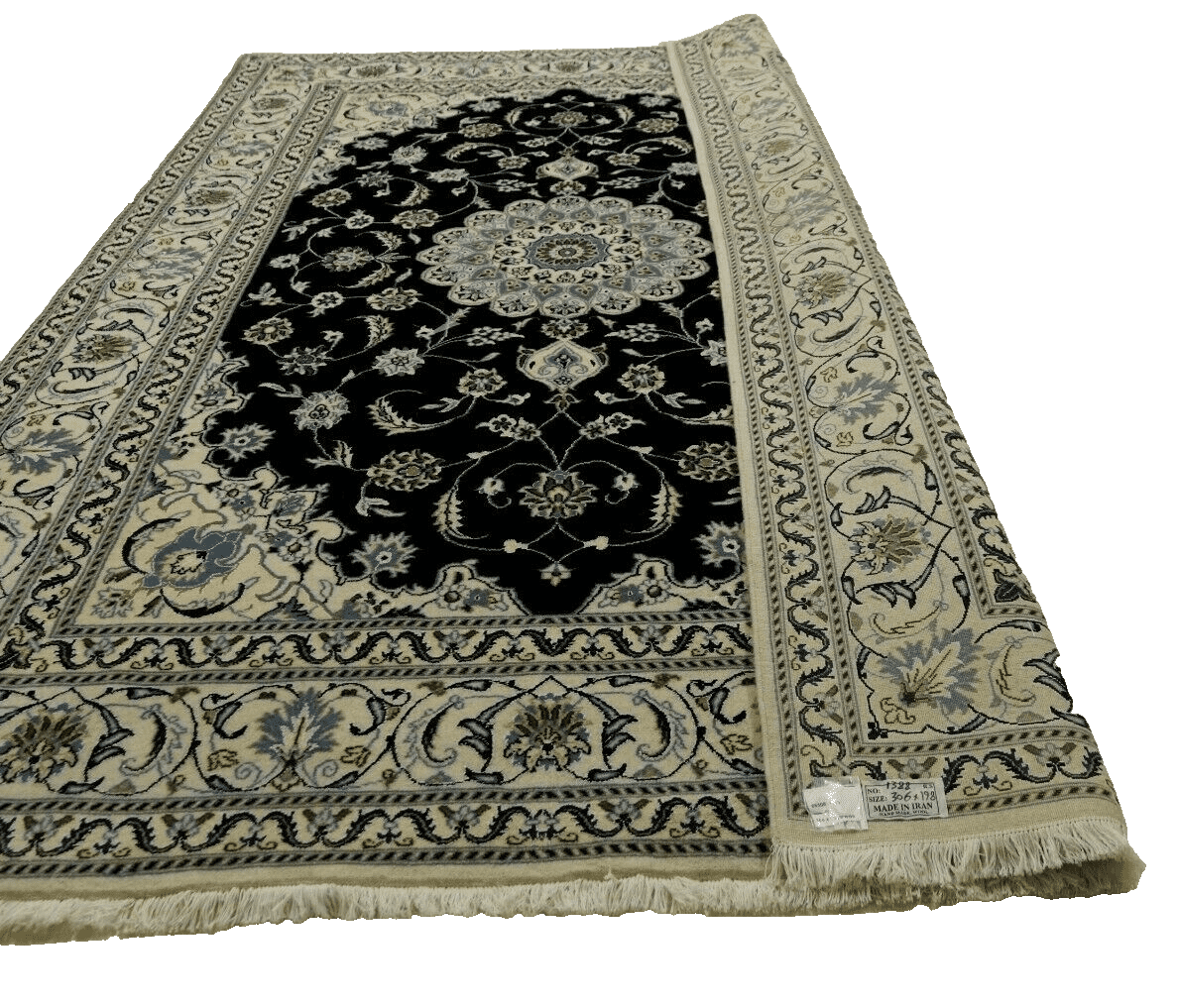
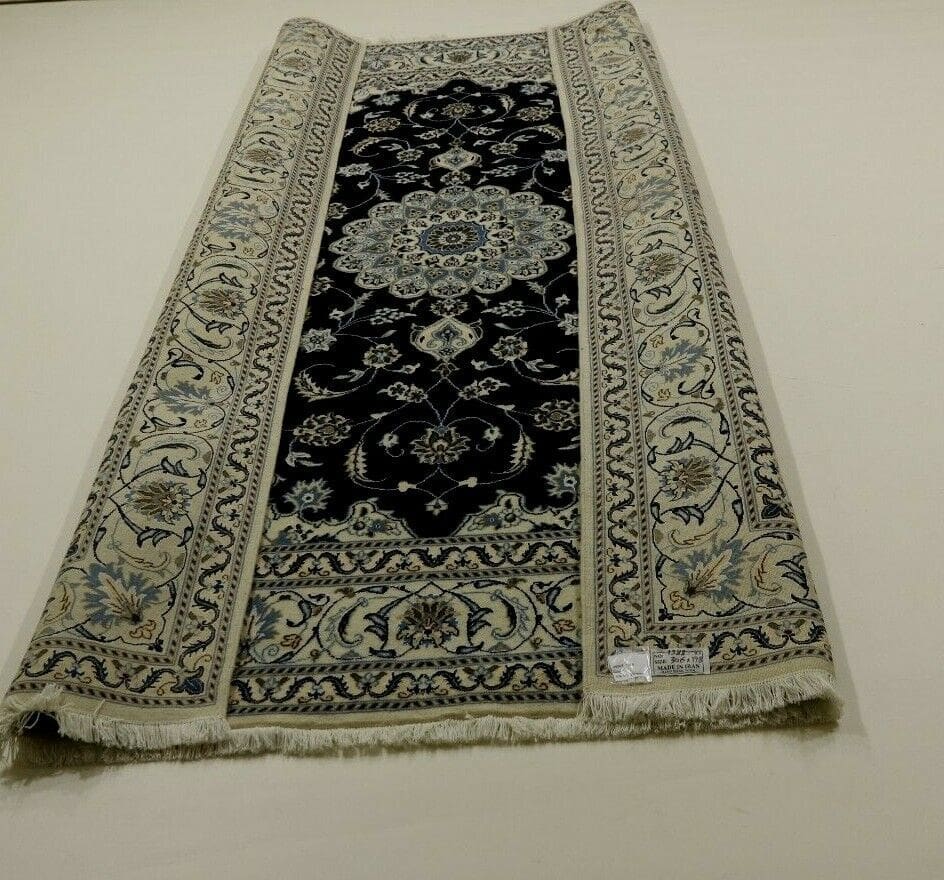
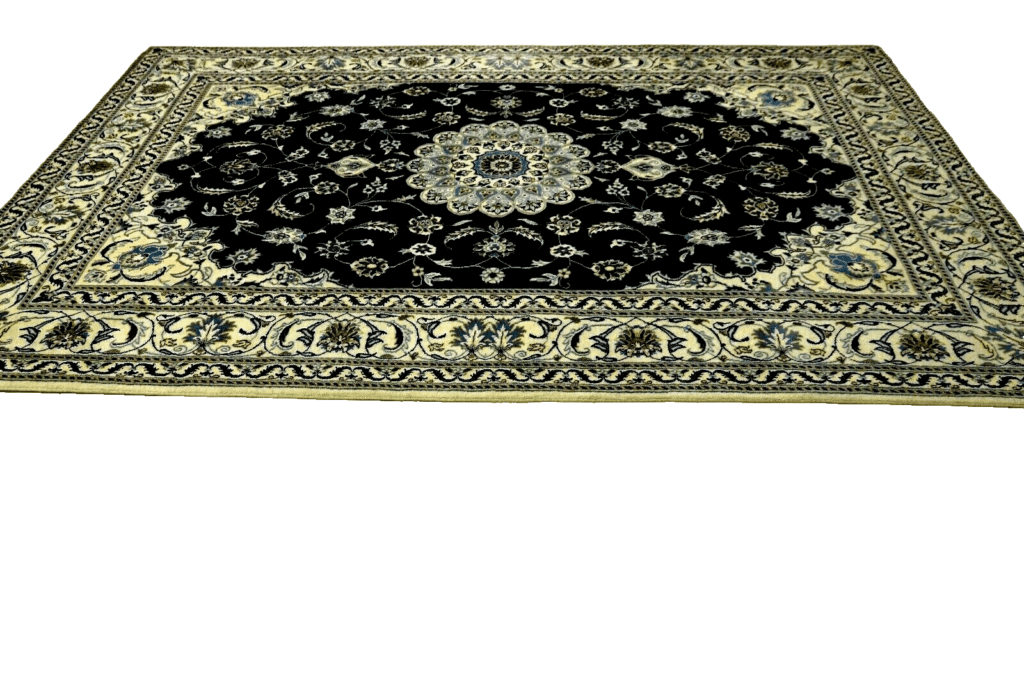
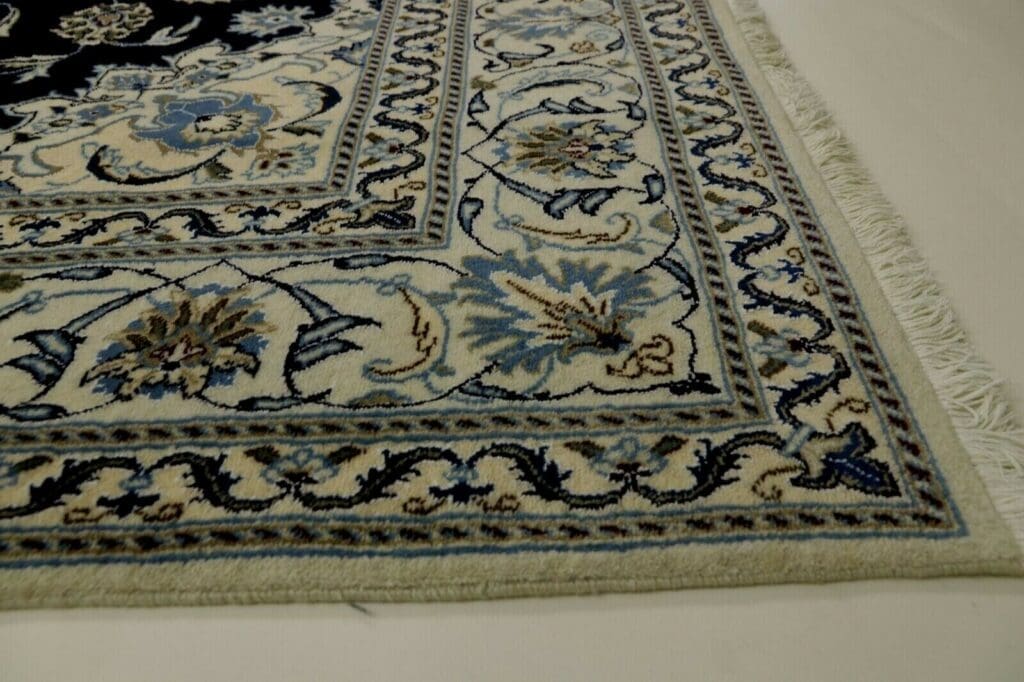
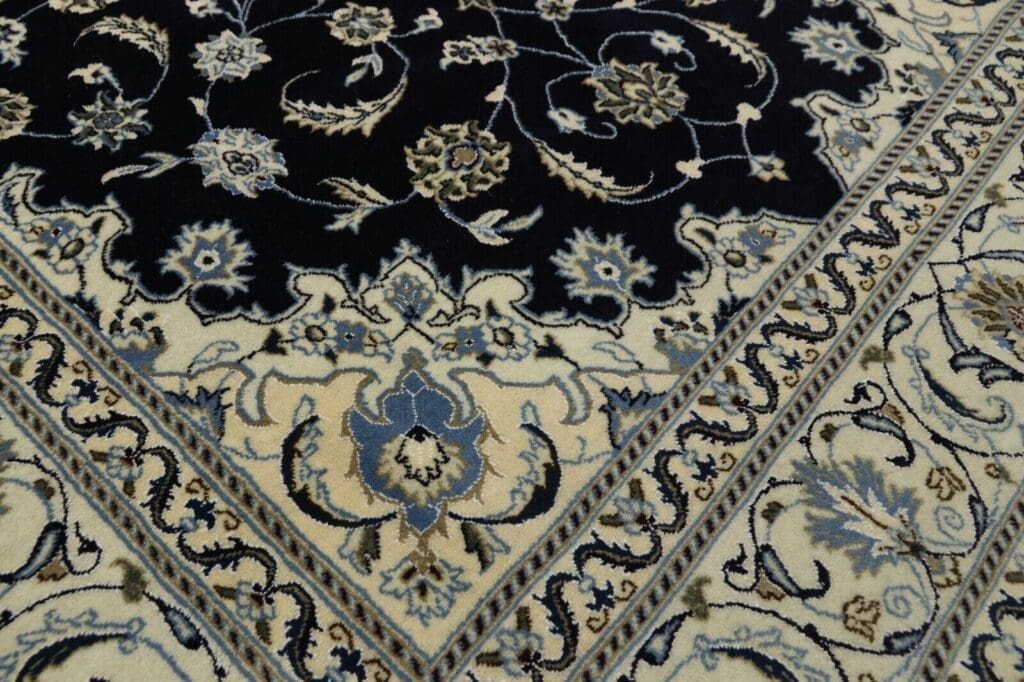
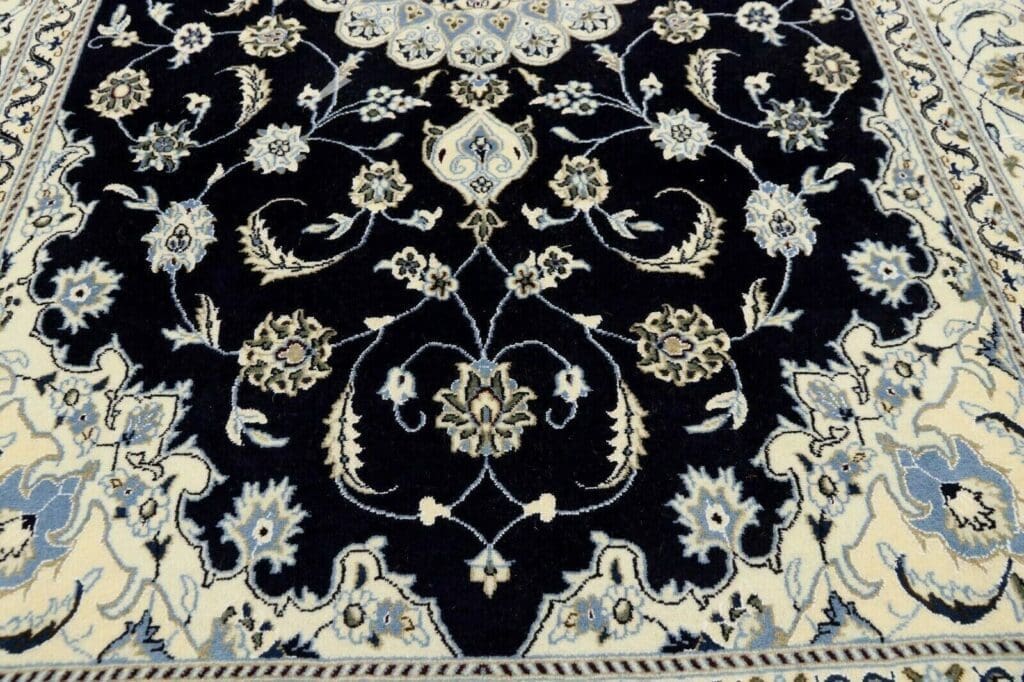
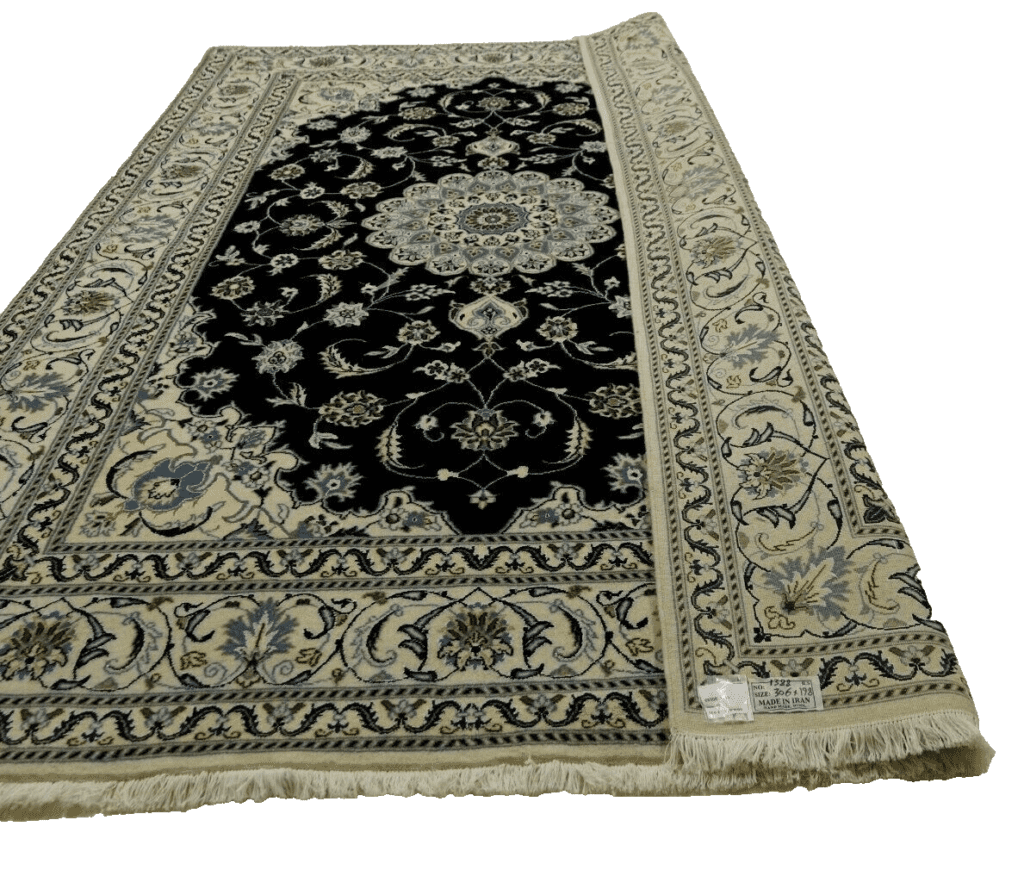
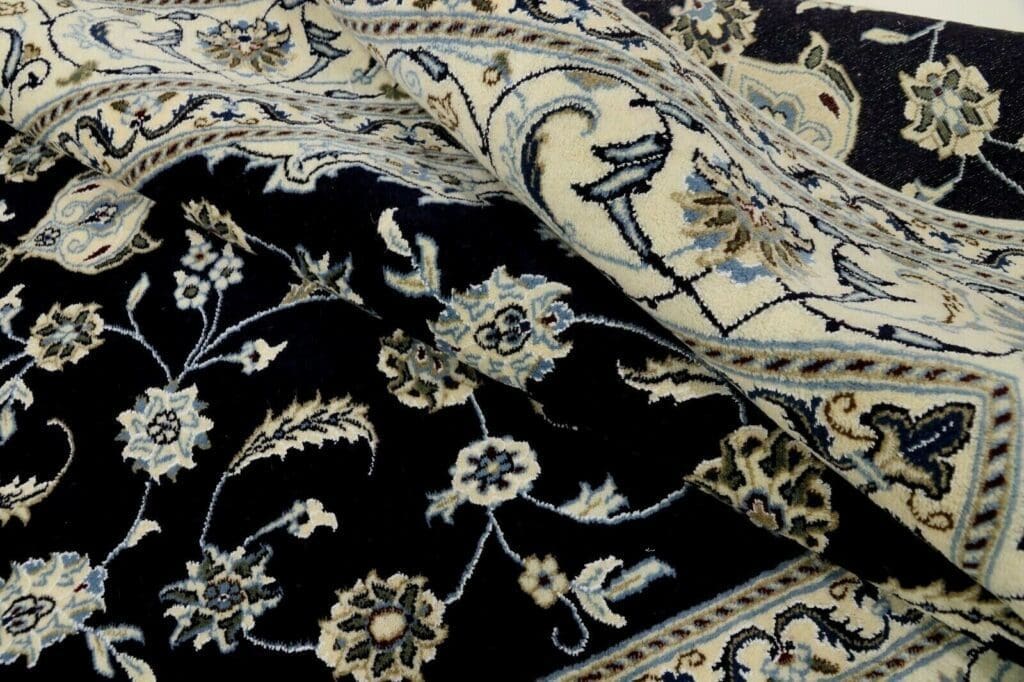
The pattern is described as traditional oriental and Persian. Its design belongs to the Nain tradition, known for fine and detailed compositions. The stated stylistic vocabulary includes arabesque and floral elements. Arabesques bring together flowing lines and interlaced forms, while floral motifs may draw on leaves, blossoms and other plant-based ornaments. These components are arranged into an ordered whole rather than treated as unrelated individual marks.
Oriental rug design often depends on repetition, rhythm and the relationship between adjoining forms. An ornament can recur, mirror another element or become part of a larger field. This creates visual continuity across the surface. In finely knotted Nain rugs, small shapes and narrow lines can be rendered with particular definition. The high knot density supports the technical possibility of detailed drawing, although no specific central motif or border is stated for this individual piece. The confirmed design information is its Nain association and its traditional arabesque and floral Persian character.
The colour range extends from warm earth tones to vivid maritime colours, which are described as harmoniously combined. Earth tones can create a calm foundation for a composition, while stronger colours introduce emphasis within the ornamental field. In a hand-knotted rug, each colour area is built from many individual knots. As a result, the surface may look different from various distances and under changing light. The wool and silk fibres contribute to this effect: their natural colour variation and the silk’s sheen can alter the way a section is perceived.
Oriental rugs are both decorative textiles and carriers of cultural tradition. Motifs are passed from one generation to the next, while weavers and workshops interpret them in different arrangements. Floral and arabesque forms can therefore express continuity without making every rug identical. The source description presents oriental rugs as an expression of art and tradition. Here, pattern, repetition and colour are part of a visual language rooted in Persian weaving culture rather than merely a surface covering.
The rectangular shape gives the design a clearly defined frame. Within that frame, the field and ornamental areas can be balanced as a unified composition. The source does not identify a particular medallion, border arrangement or individual floral motif, so none is added here. The stated facts are the traditional oriental and Persian style, the connection with Nain, and the use of fine arabesque and floral design elements.
Special Features
This rug’s distinguishing features are its hand-knotted construction, high knot density and pile combining virgin wool with silk. The workmanship is described as artistic, with every knot forming part of a larger composition that has been carefully planned and executed. The piece is listed as new and in very good condition, and it is offered as a unique single rug.
Its traditional design is described as suitable for a range of interiors. The source mentions both traditional and modern furnishing styles, as well as living rooms, offices and stylish entrance areas. These are the suggested settings for the piece. They do not alter its origin, materials or pattern classification.
FAQ
How should I care for my oriental rug?
Gentle, regular vacuuming helps remove dust and loose dirt. The rug should not be washed too frequently. If a stronger stain occurs, a professional rug-cleaning service is advisable, as appropriate treatment can help prevent damage to the pile, colours or structure. The hand-knotted construction and the combination of virgin wool and silk make careful handling appropriate for everyday maintenance.
Are hand-knotted rugs more sustainable than machine-made rugs?
In general, hand-knotted rugs are considered more sustainable when they use natural fibres and require less energy to produce than machine-made alternatives. This rug is described as containing virgin wool, silk and cotton, and its production is manual. The sustainability statement is a general comparison between hand-knotted and machine-manufactured rugs, based on materials and energy use rather than an additional claim about the rug’s origin.
What makes Nain rugs distinctive?
Nain rugs are associated with fine patterns, high knot density, quality materials and a long regional weaving tradition. The described design language includes arabesque and floral elements. This individual piece also combines hand-knotting with a pile of virgin wool and silk and comes from Nain in Iran. Together, these features express the regional craft tradition in a single, individually made composition.
To provide the best experiences, we use technologies like cookies to store and/or access device information. Consenting to these technologies will allow us to process data such as browsing behavior or unique IDs on this site. Not consenting or withdrawing consent, may adversely affect certain features and functions.
Functional Always active
The technical storage or access is strictly necessary for the legitimate purpose of enabling the use of a specific service explicitly requested by the subscriber or user, or for the sole purpose of carrying out the transmission of a communication over an electronic communications network.
Preferences
The technical storage or access is necessary for the legitimate purpose of storing preferences that are not requested by the subscriber or user.
Statistics
The technical storage or access that is used exclusively for statistical purposes.The technical storage or access that is used exclusively for anonymous statistical purposes. Without a subpoena, voluntary compliance on the part of your Internet Service Provider, or additional records from a third party, information stored or retrieved for this purpose alone cannot usually be used to identify you.
Marketing
The technical storage or access is required to create user profiles to send advertising, or to track the user on a website or across several websites for similar marketing purposes.
 SECURE PAYMENT
 SHIPPING PARTNERS