This Nain Persian rug is made from 90% virgin wool and 10% silk. Virgin wool accounts for the greater part of the pile and gives the surface a pleasant, natural feel. Wool has long been used in rug making because it is soft and warm to the touch while also being regarded as a high-quality, durable and hard-wearing textile fibre. Its natural surface accepts colour well and gives the rug a balanced material character.
The silk content adds a finer visual note to the wool. Silk can bring a gentle sheen to the surface and reinforce the depth of colour. In this rug, the two fibres therefore work together: the wool contributes a quieter, fuller texture, while the silk can catch the light and make selected details appear more vivid. The blend joins a resilient textile base with the refined appearance associated with silk.
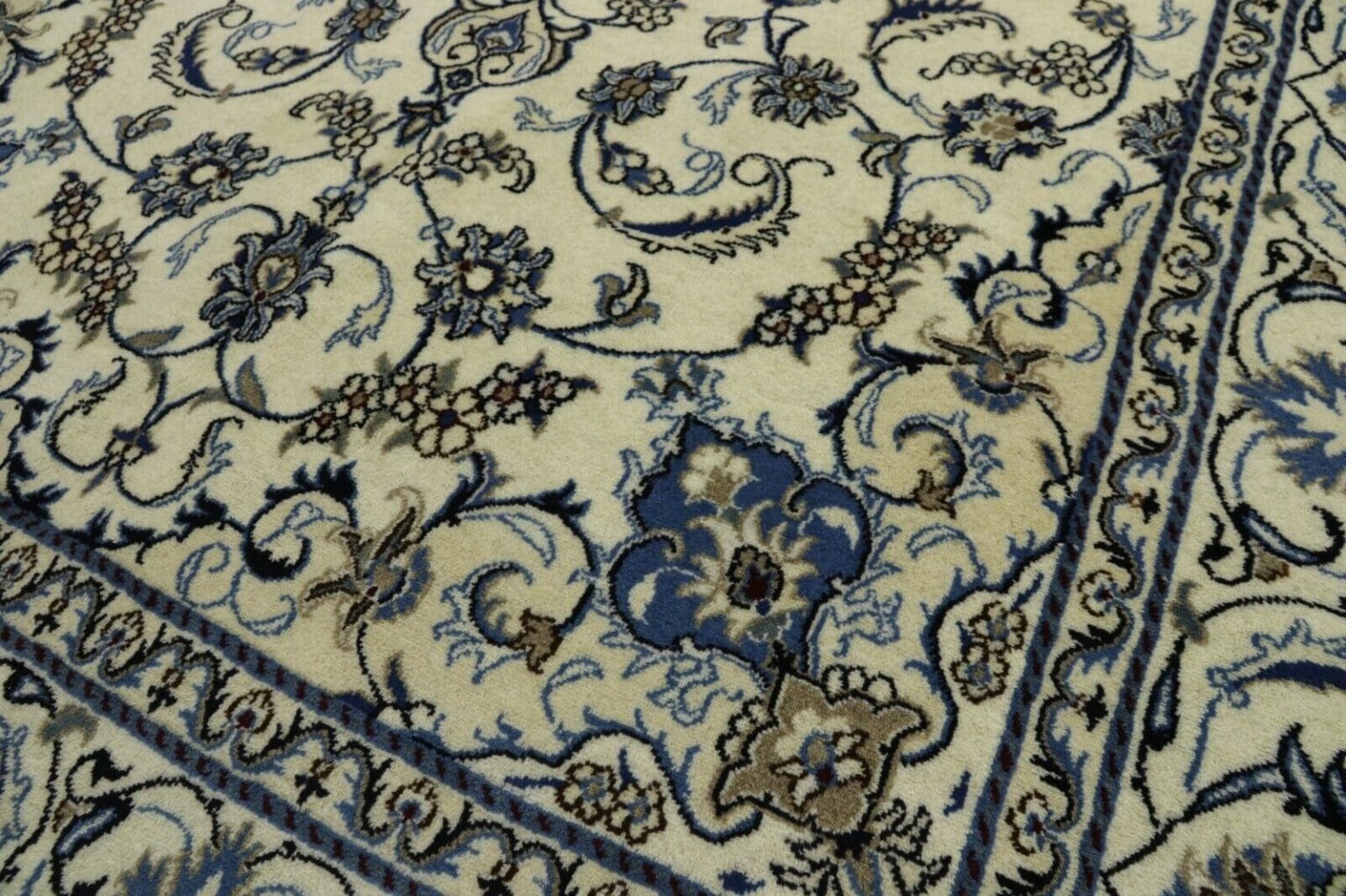
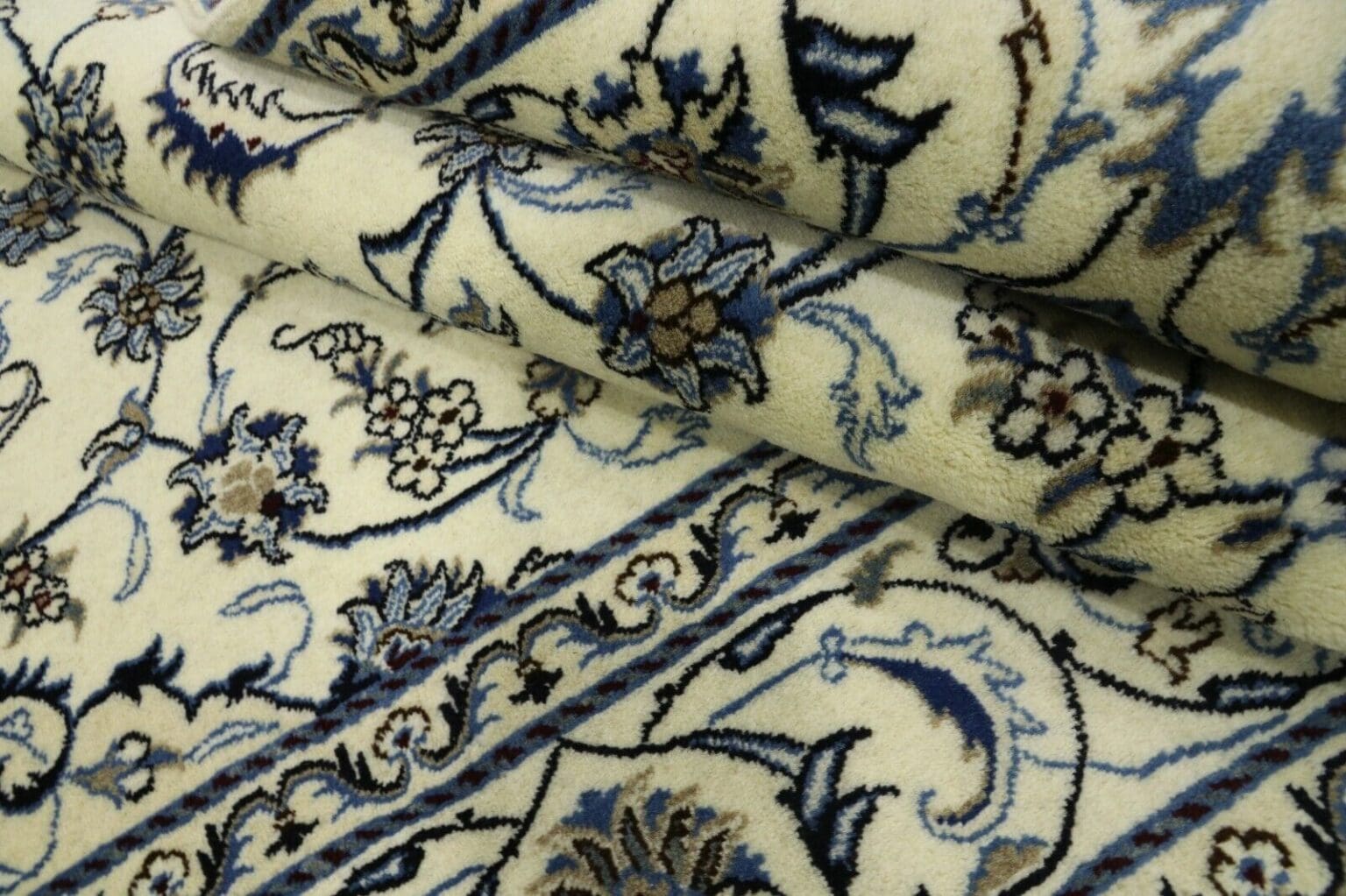
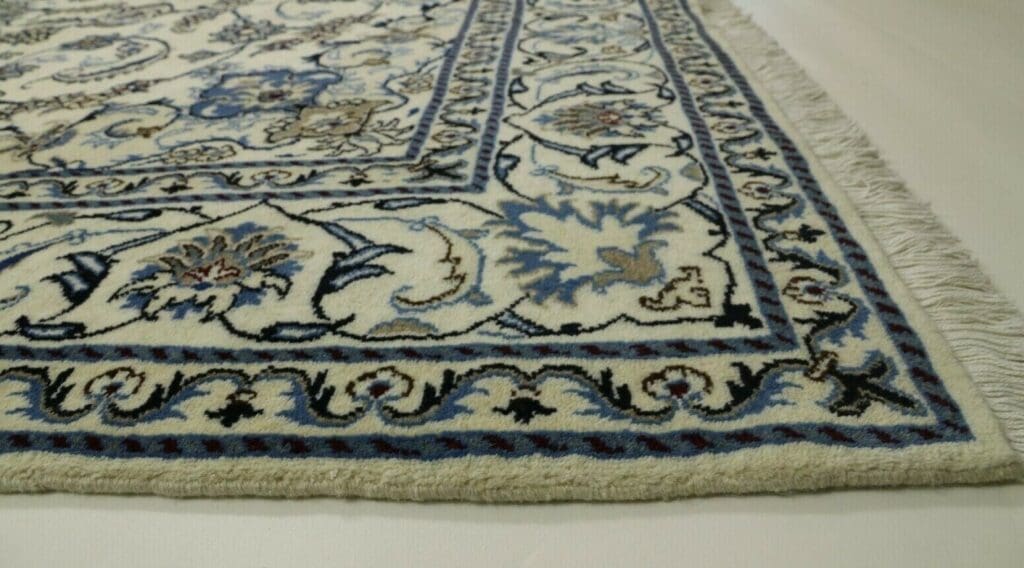
The rug is hand-knotted. In this traditional method, each knot is made by hand, requiring concentration, experience and careful coordination of material, colour and design. Hand-knotting gives every individual rug its own character and makes this piece a unique one-off. Its stated density of approximately 300,000 knots per square metre reflects finely worked knotting.
Handmade rugs are not produced as perfectly identical machine-made articles. Minor variations belong to the manual process and express the individual work of the maker. Here, that process is combined with virgin wool and silk to create a textile intended for interior living spaces. The result is defined by its handwork, its fibre blend and the Nain tradition named for its origin.
Origin and Tradition
This rug comes from Persia and is identified with Nain. Nain is a city in Iran known for its rug-making tradition. Its production developed a distinct place within Persian carpet art, with an emphasis on carefully drawn designs, fine materials and detailed workmanship. Nain rugs are associated with refined construction and comparatively high knot densities, as well as with a controlled and harmonious visual language.
Persian rug making encompasses many regional traditions, each with its own preferences in colour, ornament and technique. The name Nain therefore points both to a geographic origin and to a recognizable craft tradition. Designs from the region are often orderly and finely articulated, with the parts of the composition arranged to form a coherent whole. The work relies on knowledge passed between generations as well as on the individual skill of the person who ties the knots.
The use of wool together with silk is an important part of the Nain association. Wool offers a warm and durable foundation, while silk can support finer drawing, subtle highlights and greater colour depth. Many Nain rugs are known for this combination. This particular rug follows that material tradition through its stated blend of virgin wool and silk, while its hand-knotted construction connects it to the wider Persian craft of individually made floor textiles.
Traditional Persian weaving involves more than repeating a decorative image. The maker must maintain proportions, rhythm and relationships between the field, borders and smaller ornaments. A design is translated into knots and colour changes rather than applied to a finished surface. This demands both technical control and an understanding of the regional visual vocabulary. A Nain rug consequently brings together a place-based tradition and the personal execution of the individual craftsman.
Persian rugs have historically served practical and decorative purposes. They cover and organise interior floors, but they also carry patterns that reflect the artistic language of their weaving region. Floral elements, scrolling vines, medallion structures and geometric details can be arranged in many different ways. Nain is particularly associated with a calm, fine and balanced appearance. That background explains the character of this rug without suggesting that it is an interchangeable example of serial production.
The regional tradition also shows how material and design are connected. A fine drawing benefits from a carefully controlled knotting process, while the combination of wool and silk creates differences in surface and light. In a Nain rug, these aspects are considered together: the technical work supports the ornament, and the ornament gives the material its visual order. This piece belongs to that Persian tradition through its Nain origin, its hand-knotting and its wool-and-silk composition.
Design and Pattern
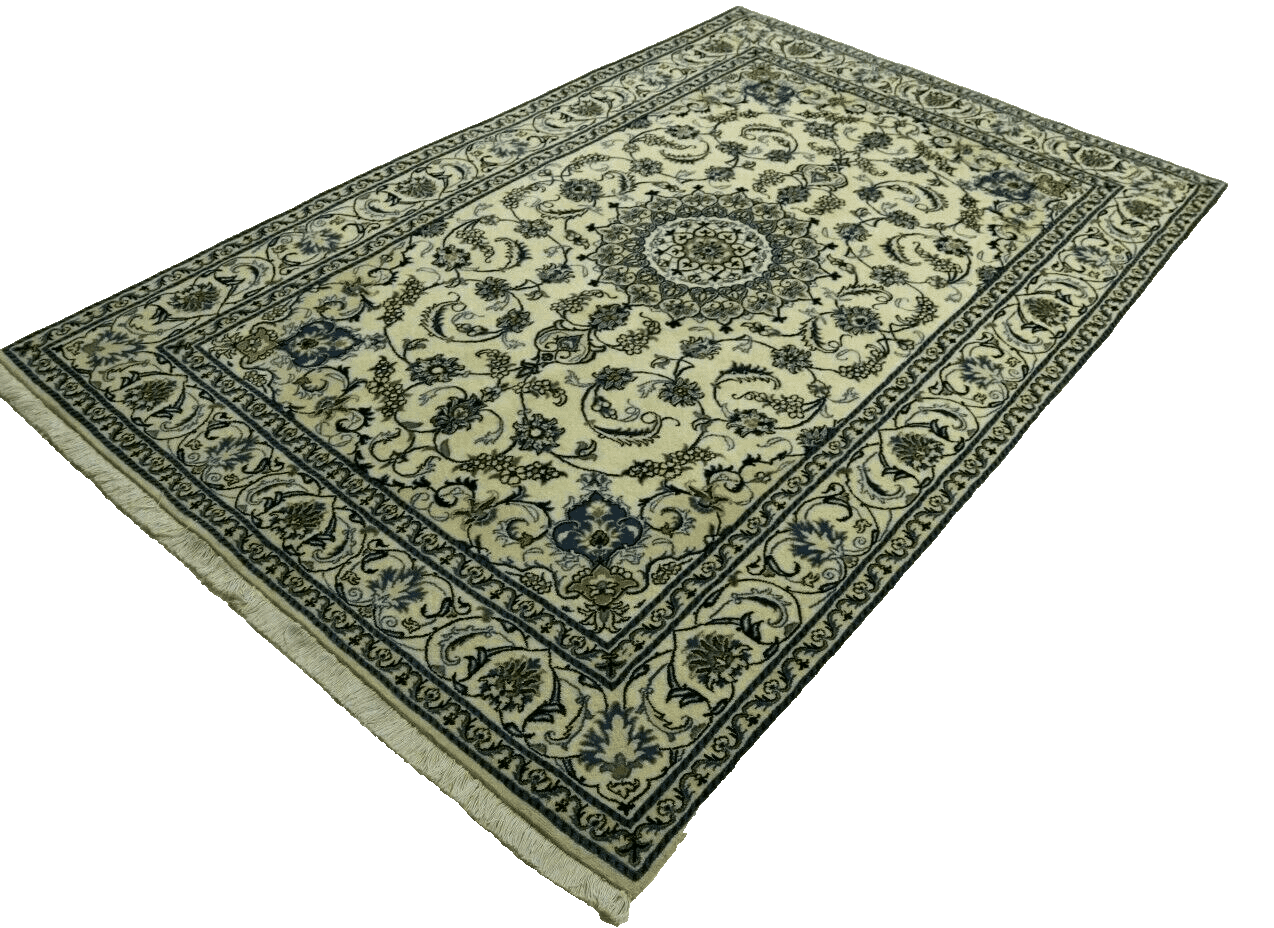
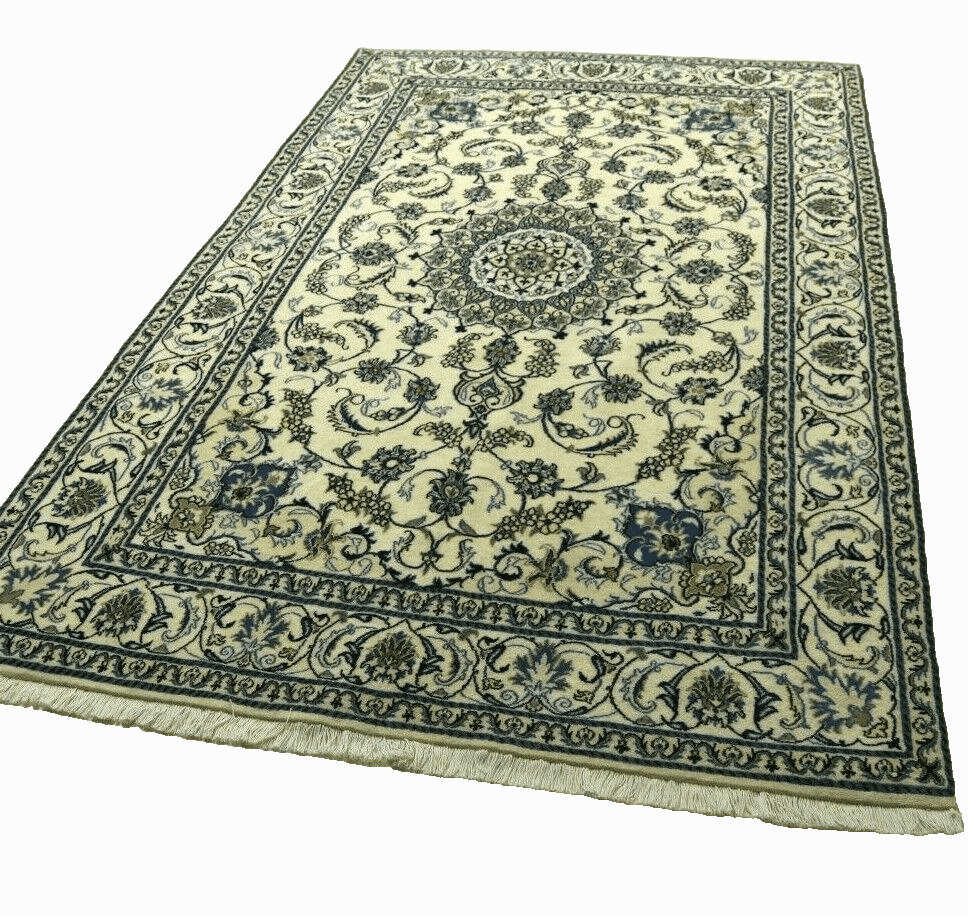
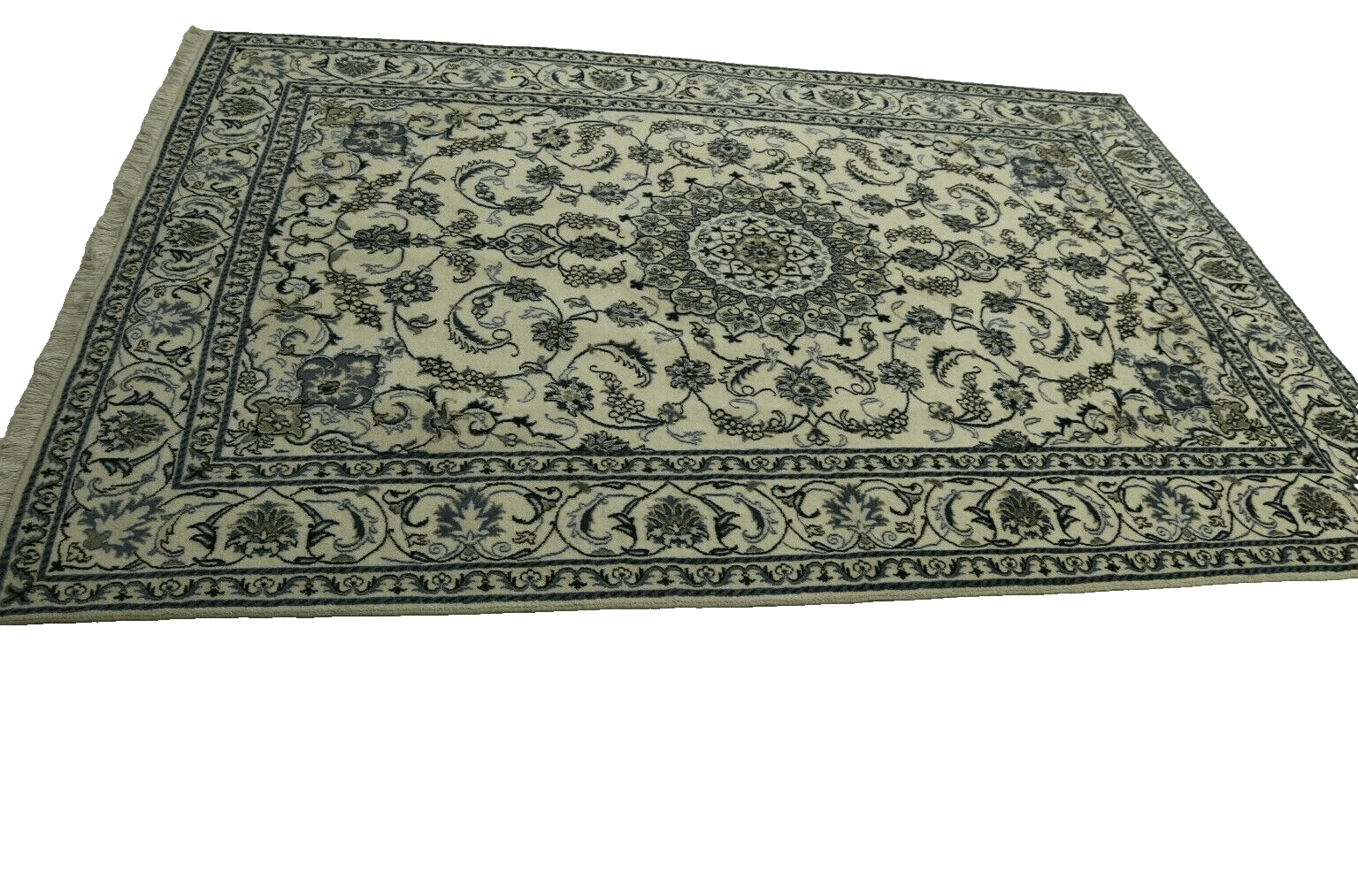
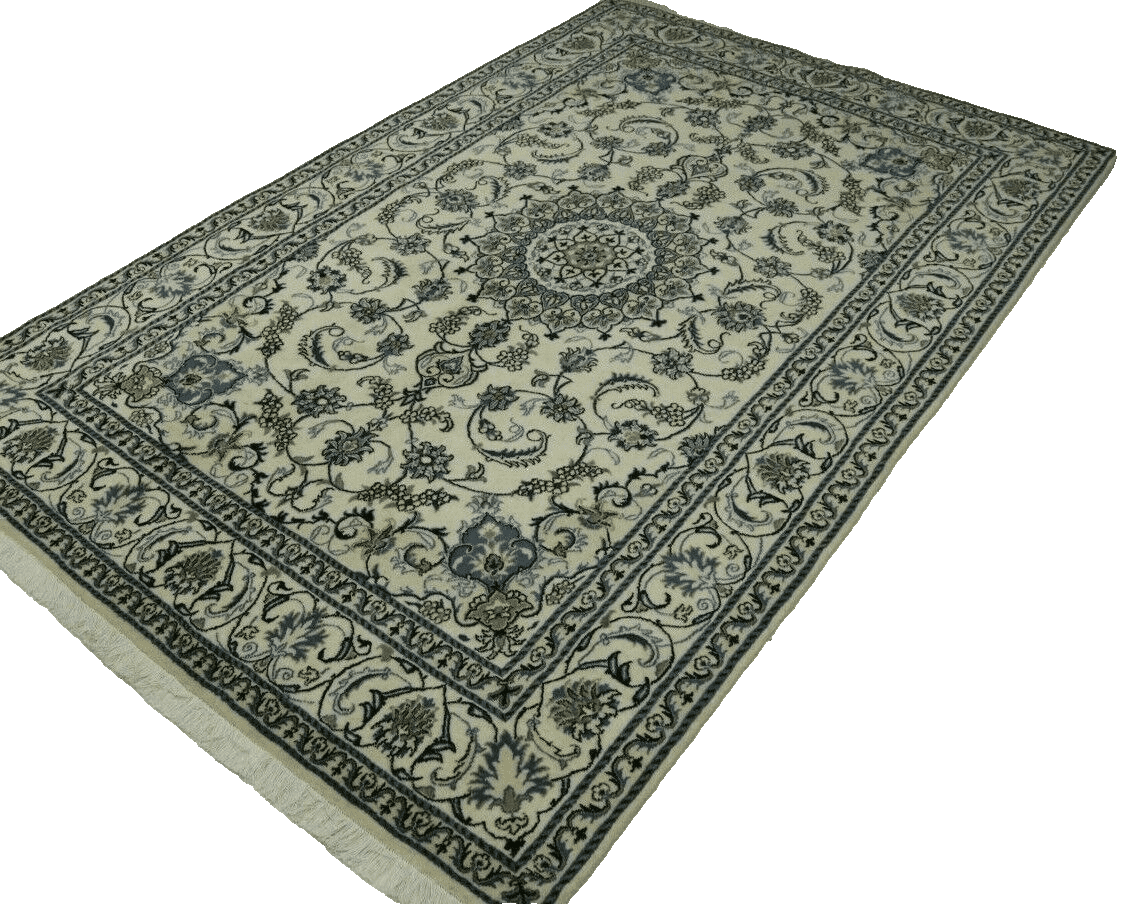
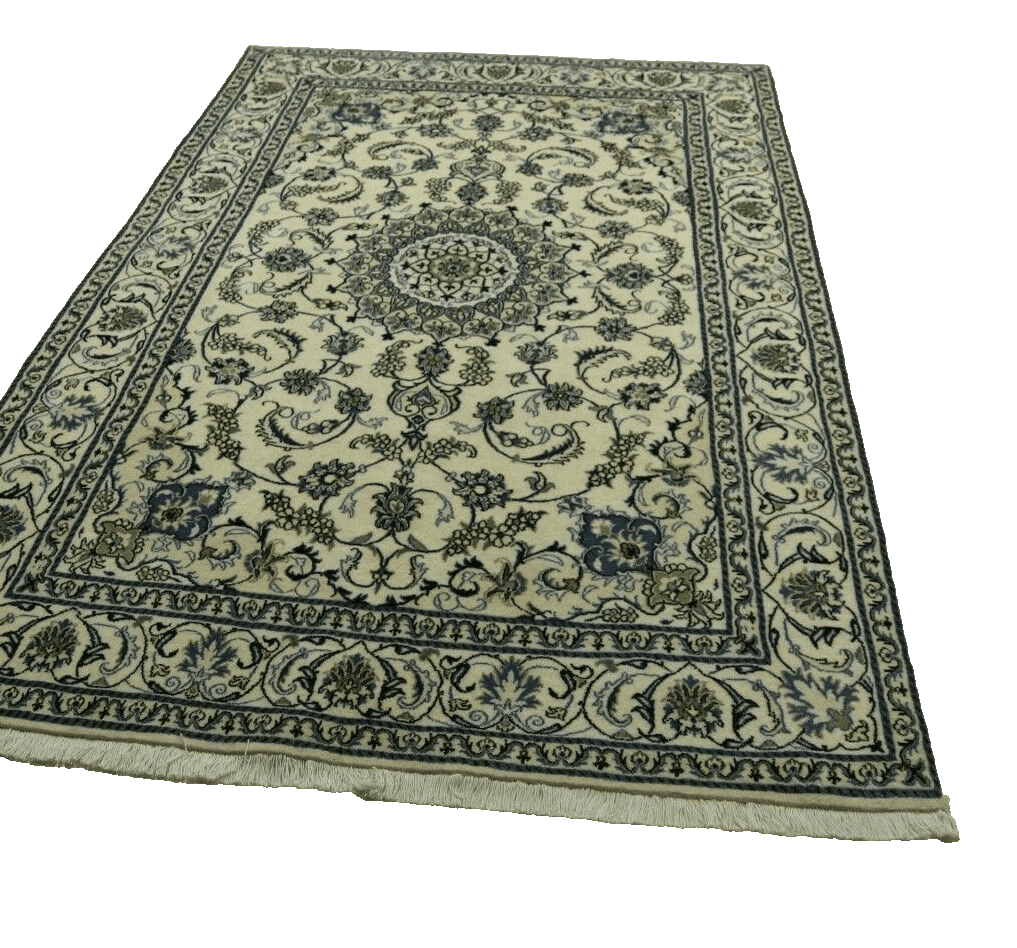
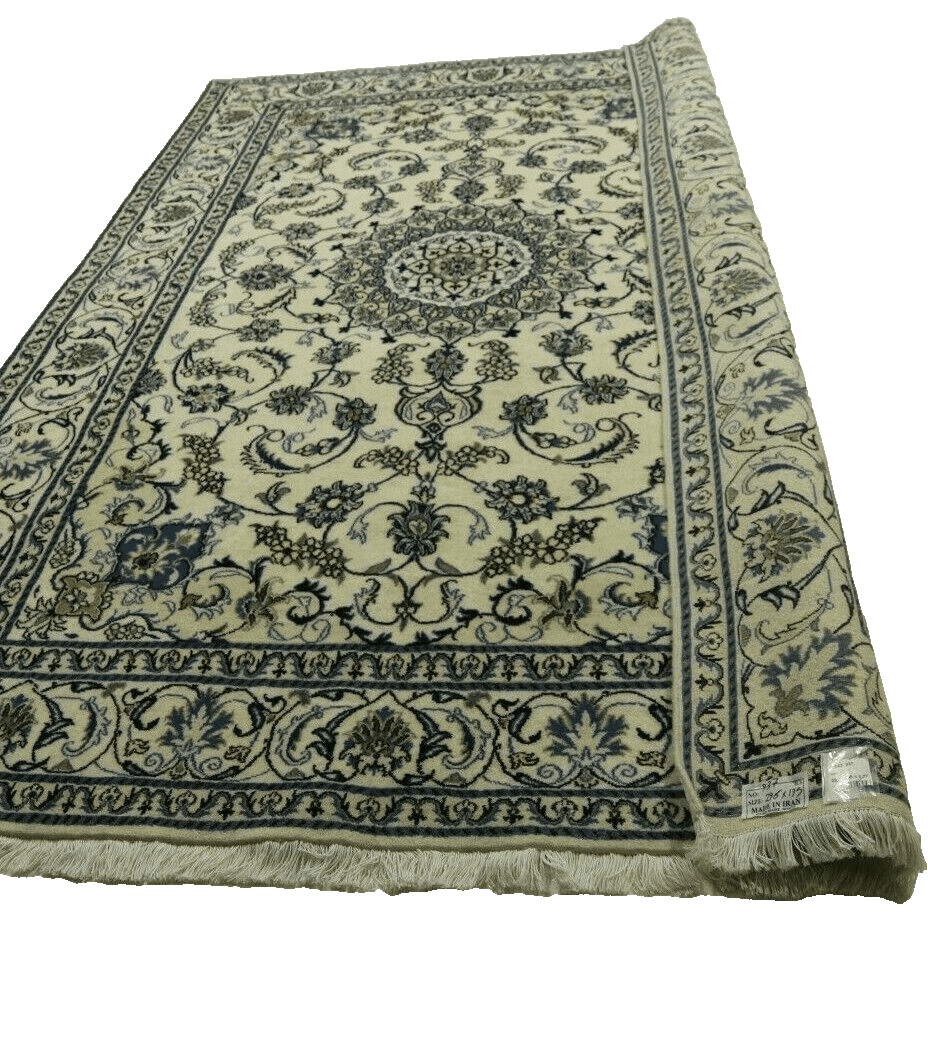
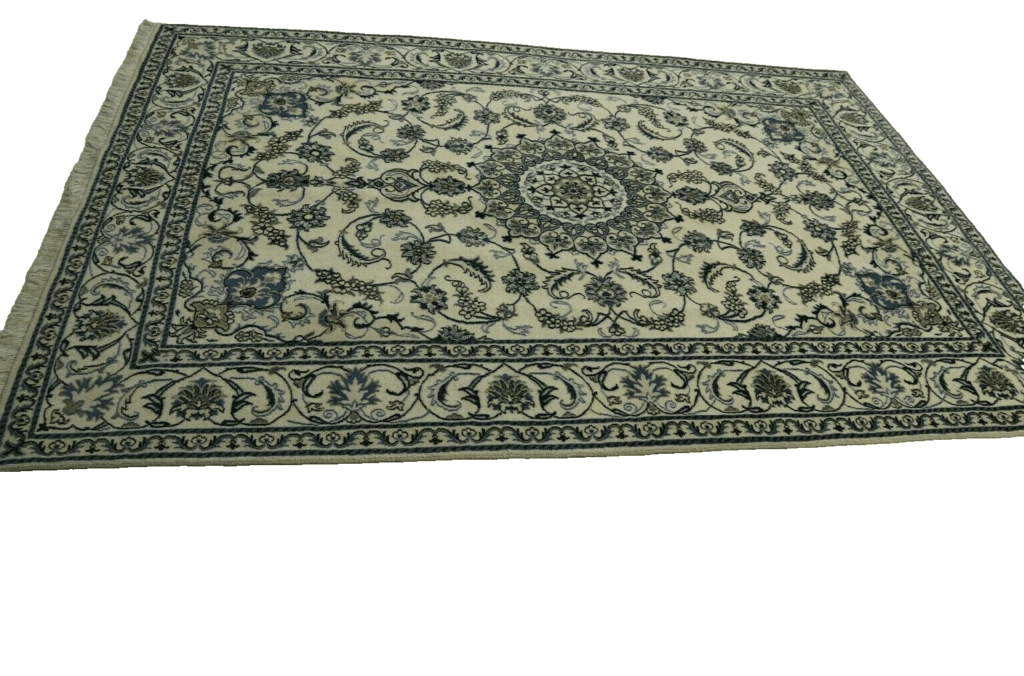
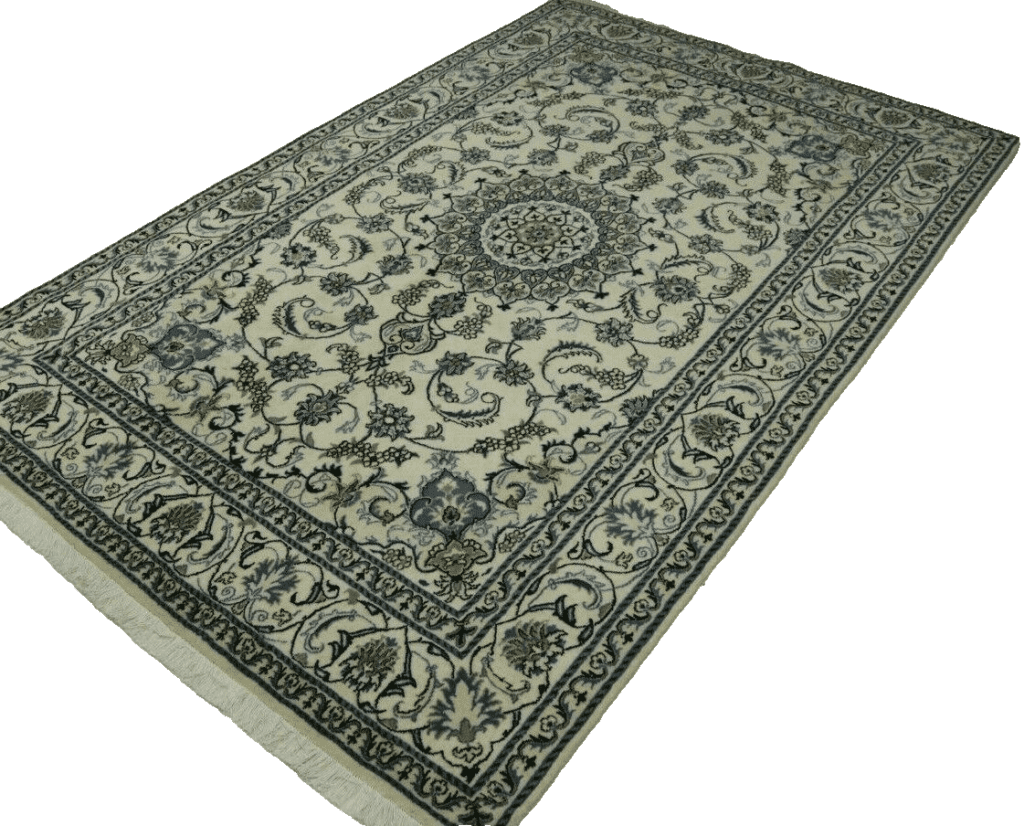
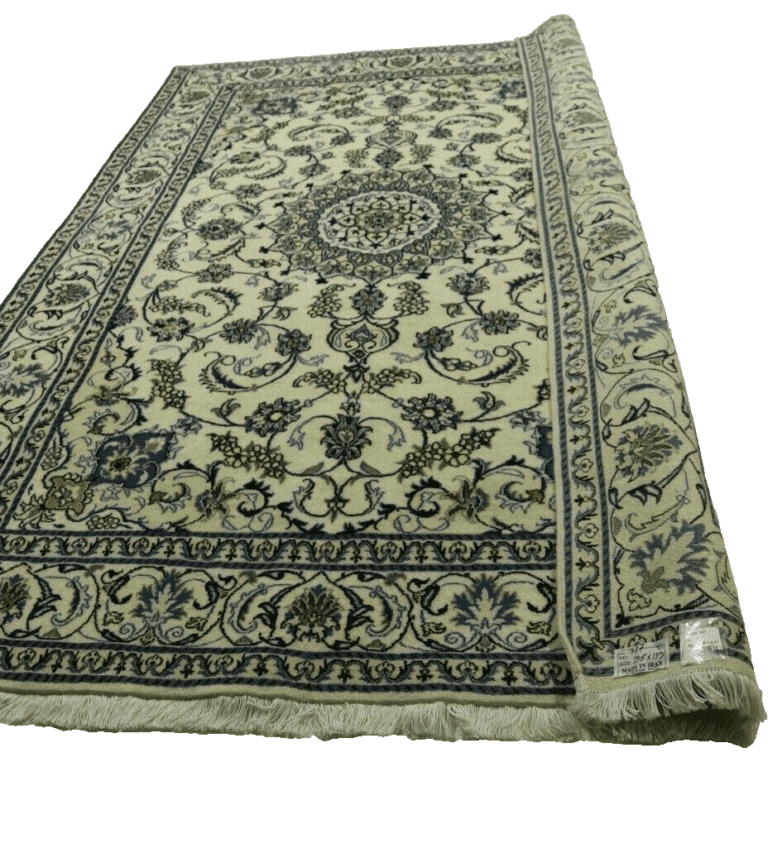
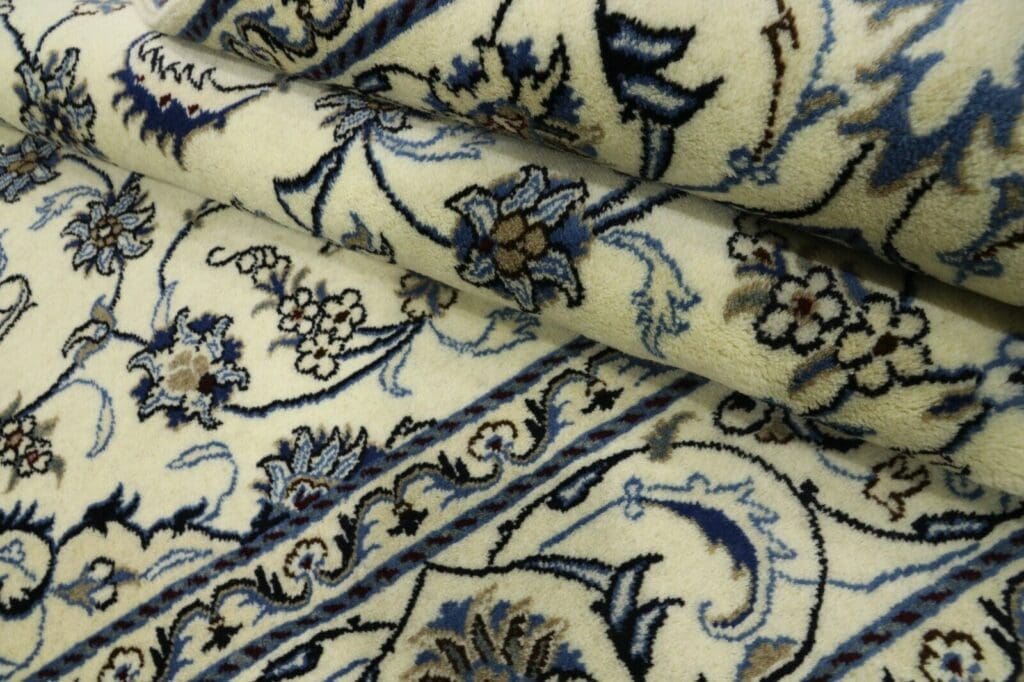
The rug is classified as Traditional Oriental/Persian in style and is white in colour. Its design belongs to the broader language of classical Persian ornament, where floral, botanical and geometric forms are frequently combined. These elements may be arranged symmetrically, repeated across a field or connected by scrolling lines. The aim of such an arrangement is a balanced composition in which individual motifs and open spaces remain related to one another.
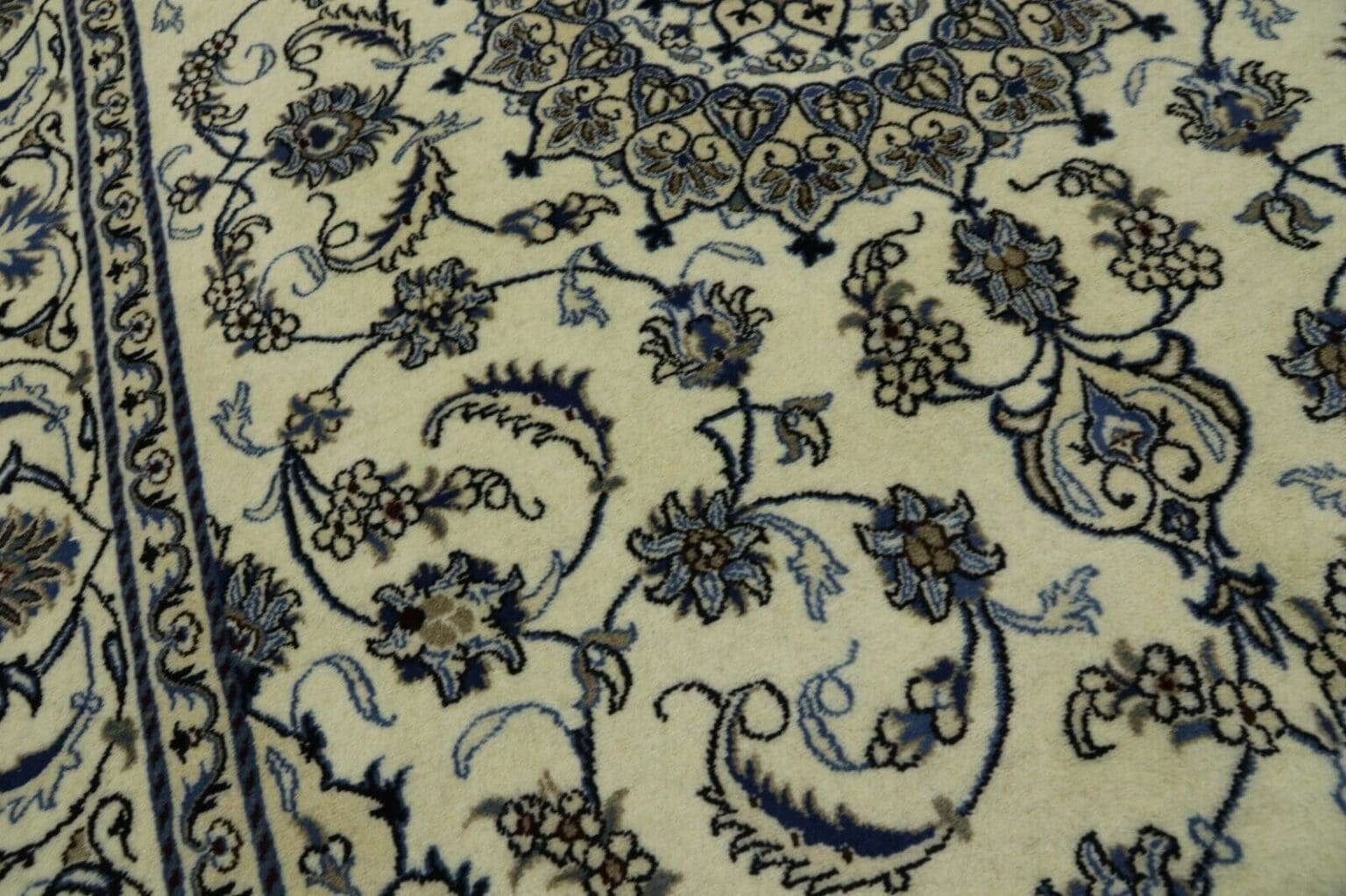
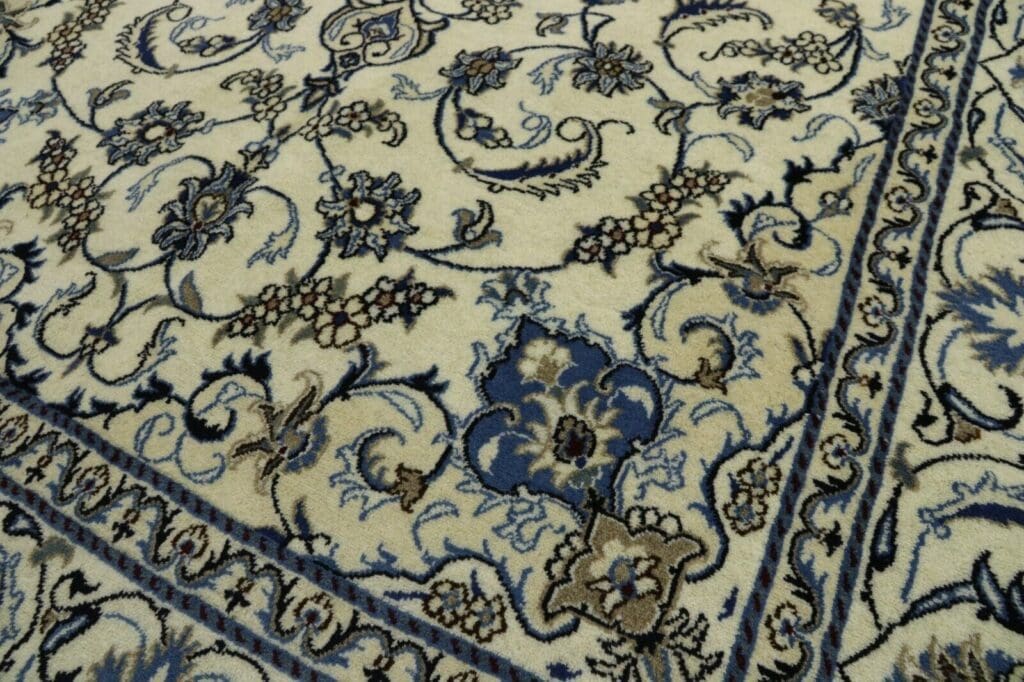
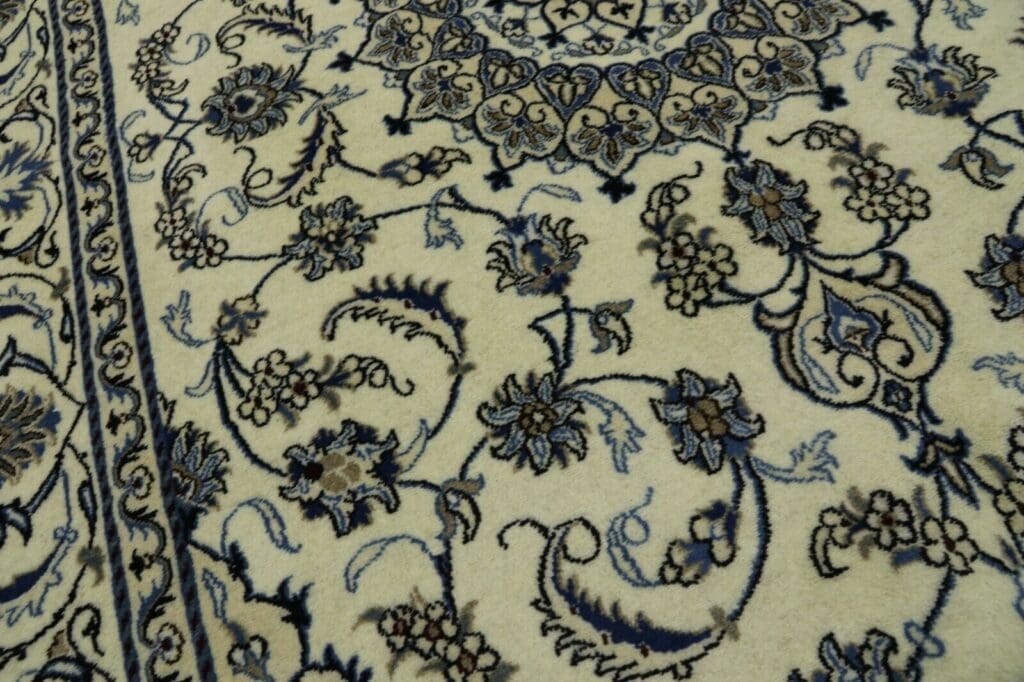
Nain designs are often associated with floral arrangements and stylised plant forms. Flowers, leaves and vines are not necessarily copied directly from nature; they are adapted into an ornamental system that can be mirrored, repeated and fitted into an ordered layout. This stylisation allows natural references and geometry to exist together. The result can be detailed without losing the clarity of the overall pattern.
Historical and cultural symbols have also influenced the vocabulary of Oriental rugs. Their forms may be recombined from one design to another, and a motif does not always have one fixed interpretation. It can function at once as decoration, visual rhythm and a way of organising the surface. In the Nain tradition, fine drawing and harmonious relationships between the motifs are especially important to the overall effect.
White determines the rug’s colour statement. Light Persian designs are often developed through delicate contrasts, detailed outlines and differences in the density of ornament rather than through a heavy range of dark colours. The silk may make selected areas more noticeable in changing light, while the wool gives the surface a softer textile depth. Colour and fibre therefore work together in the way the pattern is perceived.
A traditional Oriental design depends on more than a single central image. The connection between the field and the border, the recurrence of small details and the transitions between fuller and quieter areas all contribute to its structure. Persian design practice uses these relationships to make the rug read as one unified surface. Nain rugs are commonly valued for this fine drawing, their restrained harmony and their association with carefully chosen materials.
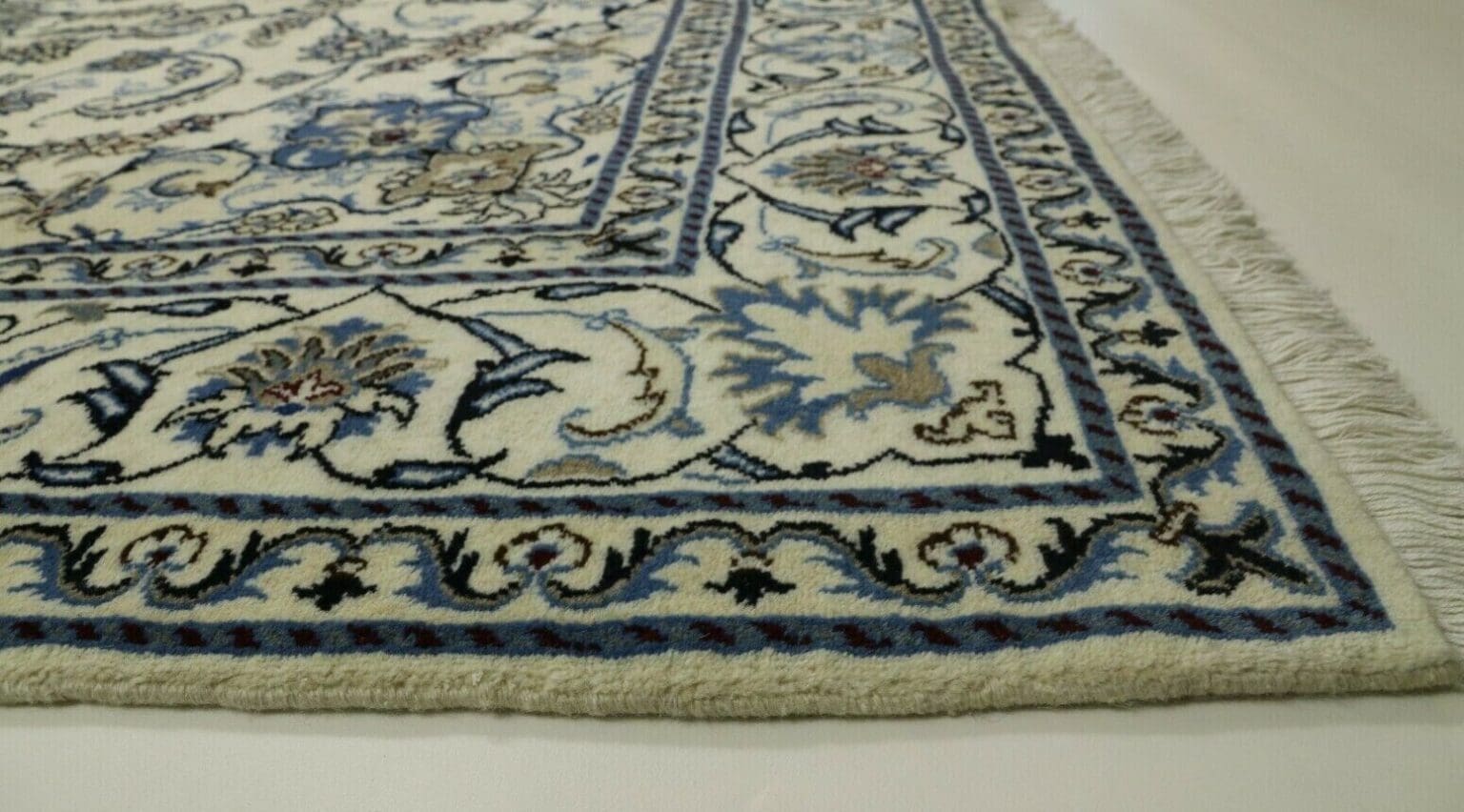
Because the pattern is hand-knotted, its lines and motifs are formed from individual knots rather than printed onto the rug. The graphic order of the design is consequently joined to the texture of the fibres. This produces a traditionally Oriental and Persian appearance shaped by the white colour, the wool-and-silk blend and the regional Nain vocabulary. The pattern is therefore both a decorative composition and the visible result of a manual textile process.
Special Features
A defining feature of this rug is its blend of 90% virgin wool and 10% silk. The combination brings together wool’s pleasant feel, durability and resistance to wear with the sheen and enhanced colour depth associated with silk. The choice of fibres affects both the surface and the way the traditional pattern appears.
The rug is new and in flawless condition. It is hand-knotted and therefore a unique one-off. Individual handwork makes each rug an independent execution and reflects the skill of its maker. An authenticity certificate is included with the rug.
Its white colour and traditional Oriental/Persian classification complete the description of the piece. The rug thus combines a named Nain origin, a traditional Persian technique and a material choice frequently connected with Nain production. These features describe this individual rug without assigning it an additional provenance or a pattern not given for it.
FAQ
How should I care for and clean this Nain Persian rug?
Remove dust and loose dirt regularly with a vacuum cleaner. Work carefully so that the wool-and-silk surface is treated gently. For heavier soiling, professional rug cleaning is advisable. Direct sunlight should be avoided because it can cause the colours to fade. A consistent and careful cleaning routine helps preserve the textile feel, the light colour and the visual relationship between the wool and silk areas.
Can the Persian rug be used over underfloor heating?
Yes, this Nain Persian rug can be used over underfloor heating. The temperature should not be set too high, so that the wool and silk are not damaged. A rug pad or underlay can provide additional insulation and comfort. During use, make sure that the heat is moderate and evenly distributed, and avoid exposing the rug unnecessarily to excessive temperatures.
Can I use the rug outdoors?
No. This Nain Persian rug is primarily designed for indoor use. Outdoor conditions such as rain, moisture and direct sunlight can damage the fibres and affect the colours. Wool and silk should be protected from changing weather conditions. Keep and use the rug in a sheltered interior setting to help maintain its textile quality and its appearance.
To provide the best experiences, we use technologies like cookies to store and/or access device information. Consenting to these technologies will allow us to process data such as browsing behavior or unique IDs on this site. Not consenting or withdrawing consent, may adversely affect certain features and functions.
Functional Always active
The technical storage or access is strictly necessary for the legitimate purpose of enabling the use of a specific service explicitly requested by the subscriber or user, or for the sole purpose of carrying out the transmission of a communication over an electronic communications network.
Preferences
The technical storage or access is necessary for the legitimate purpose of storing preferences that are not requested by the subscriber or user.
Statistics
The technical storage or access that is used exclusively for statistical purposes.The technical storage or access that is used exclusively for anonymous statistical purposes. Without a subpoena, voluntary compliance on the part of your Internet Service Provider, or additional records from a third party, information stored or retrieved for this purpose alone cannot usually be used to identify you.
Marketing
The technical storage or access is required to create user profiles to send advertising, or to track the user on a website or across several websites for similar marketing purposes.
 SECURE PAYMENT
 SHIPPING PARTNERS


