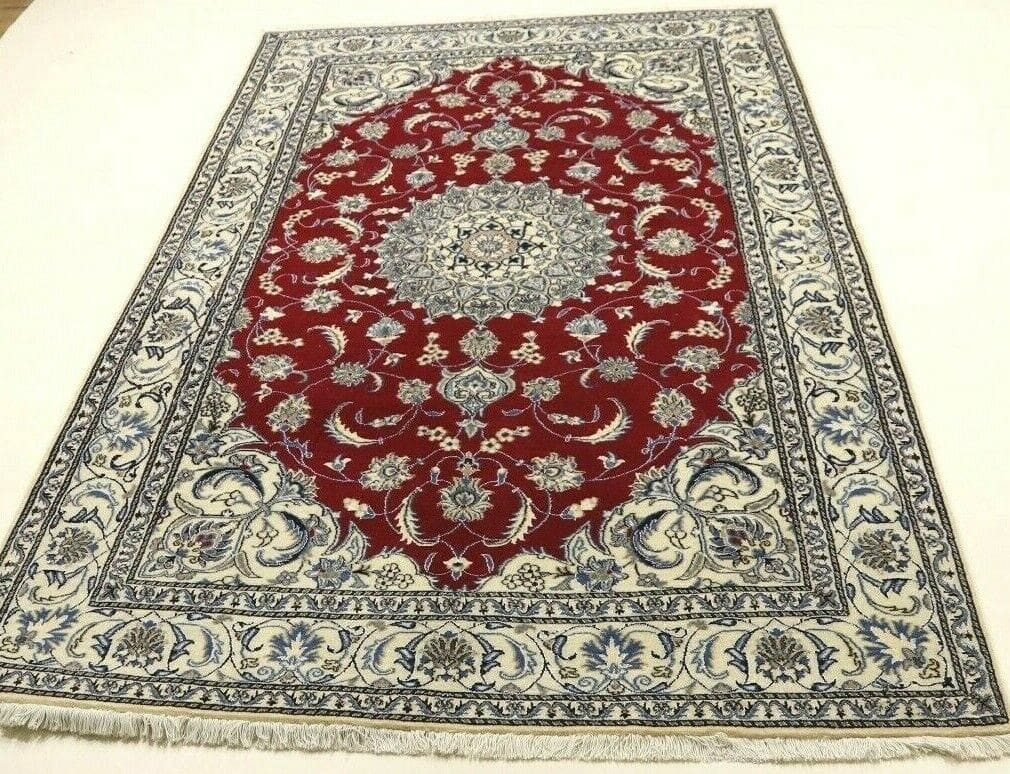
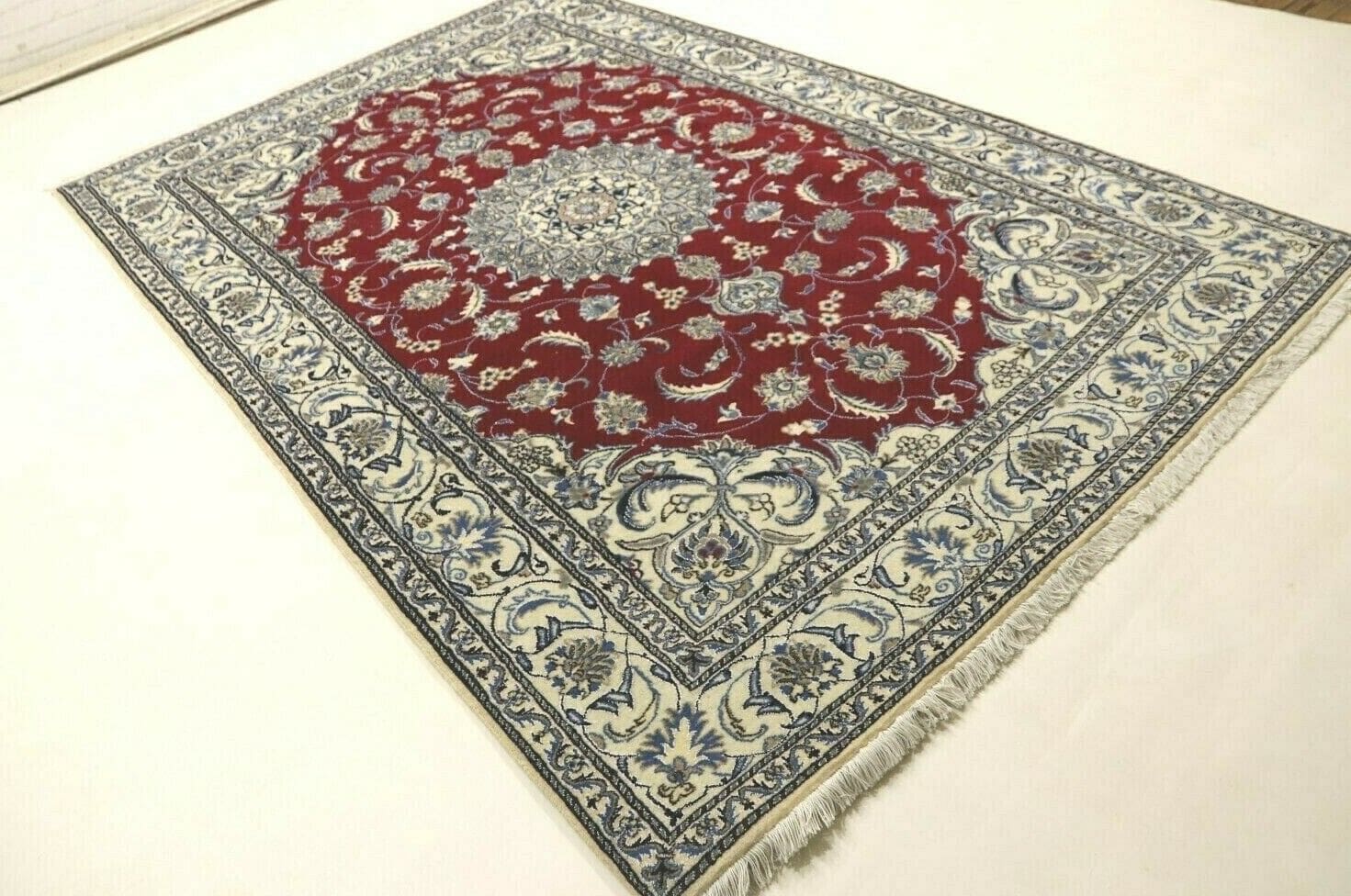
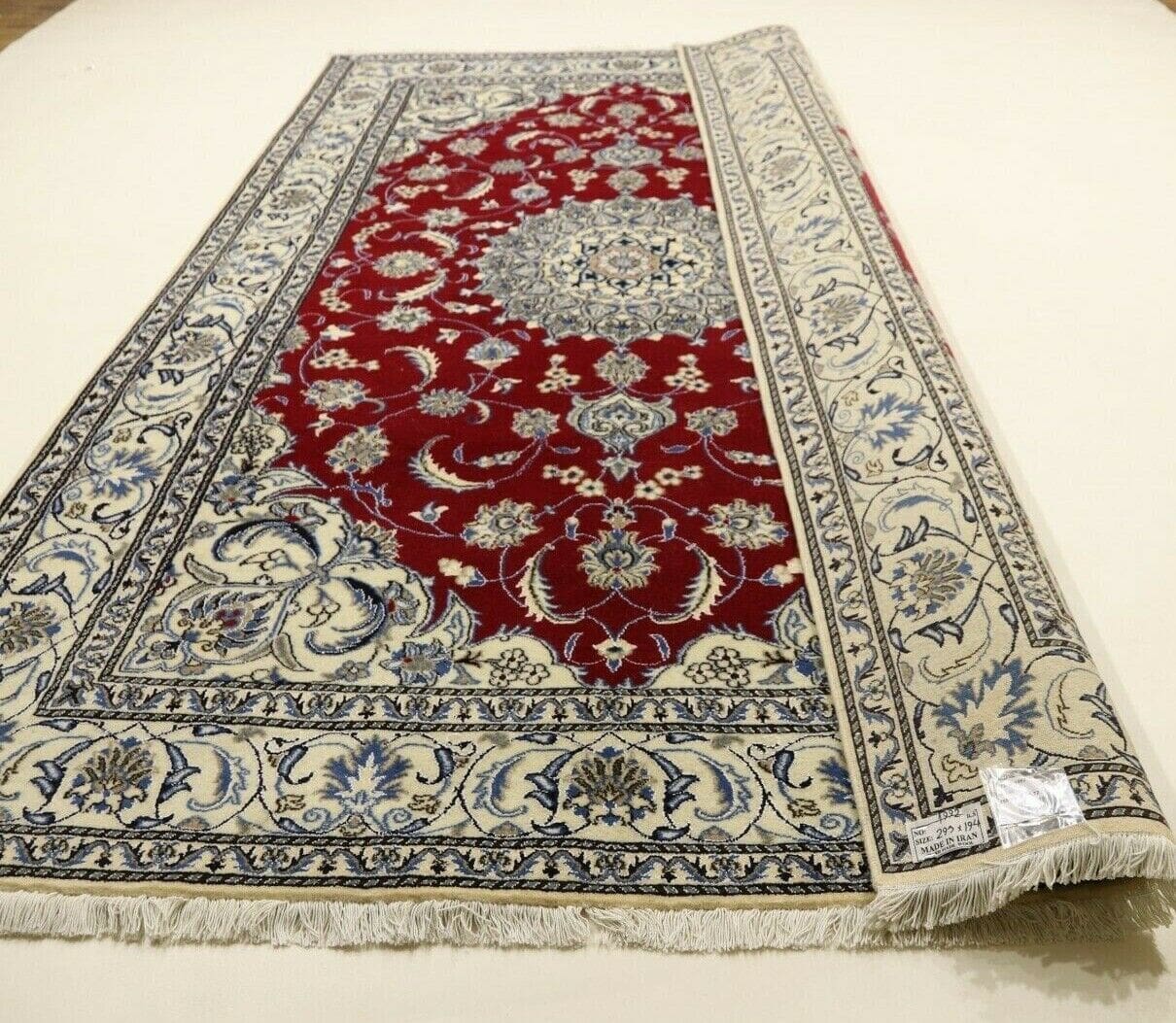
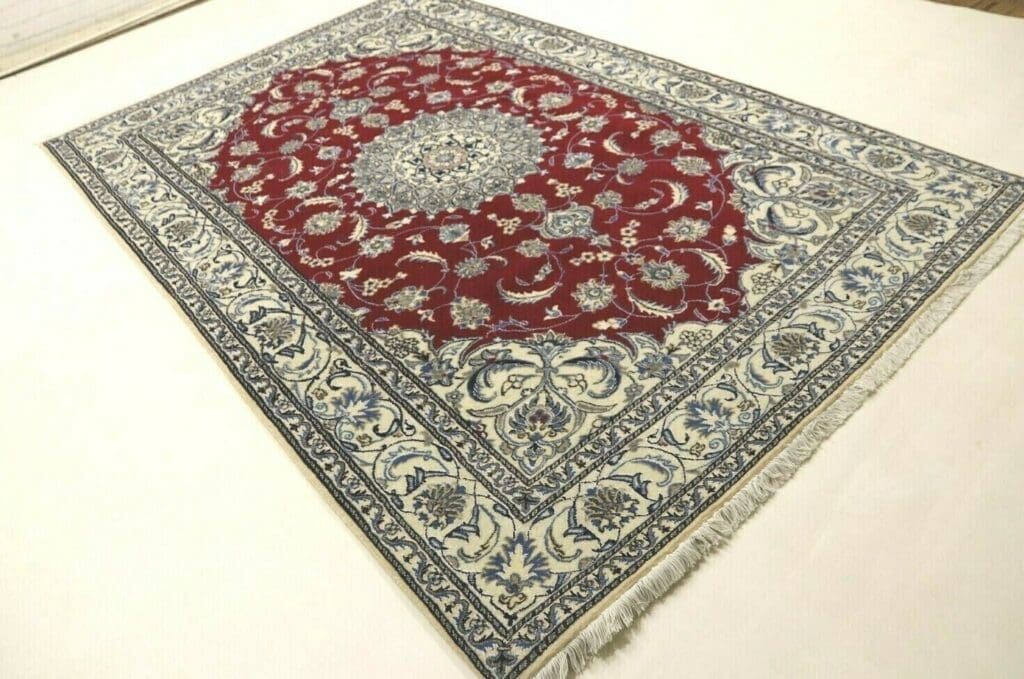
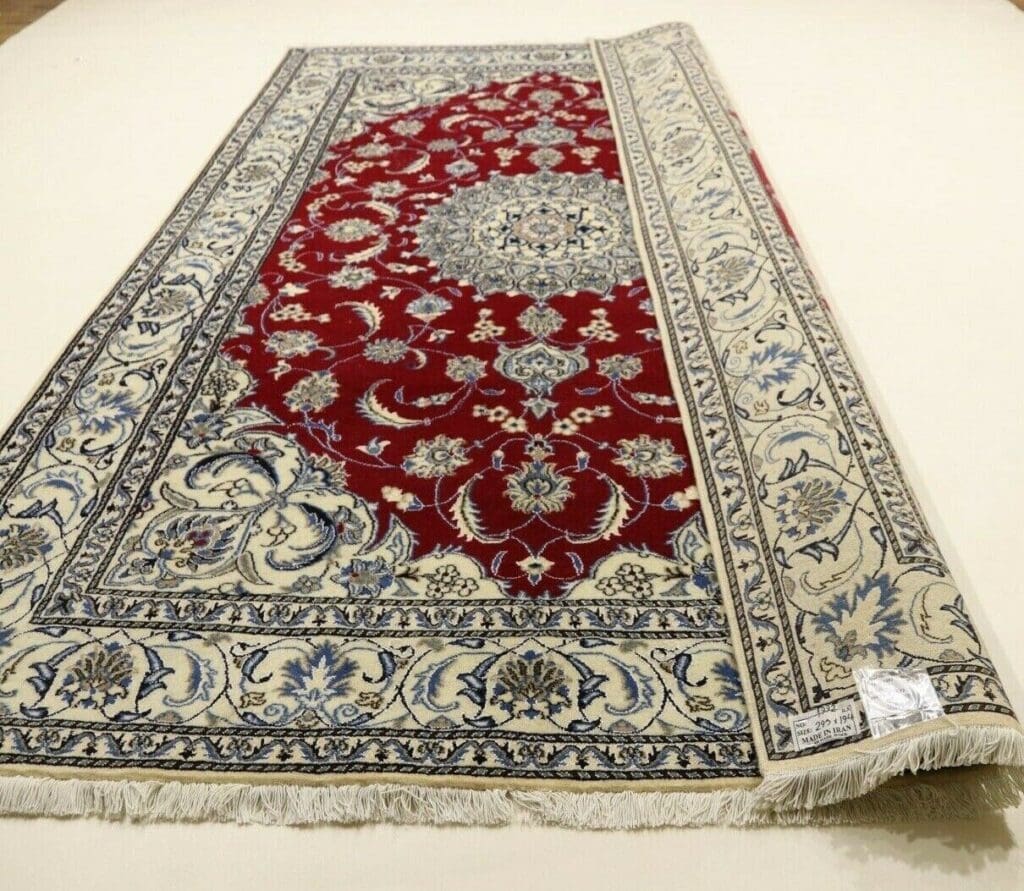
Hand-knotted Nain Persian Rug | Knot density: approx. 300,000 knots/m² | Material: pile 90% virgin wool, 10% silk, warp 100% cotton | Size: 295 x 194 cm | Pattern: traditional Oriental and Persian | Condition: New, very good
This Super Nain rug is hand-knotted with a pile made of 90% virgin wool and 10% silk. Its warp is made of 100% cotton. The construction therefore combines a predominantly wool pile with a defined silk component and a cotton foundation. Wool is the main pile fibre, while silk adds a finer surface character and a restrained sheen. The material combination is part of the rug’s stated construction and gives the pile a distinct balance of substance and delicacy.
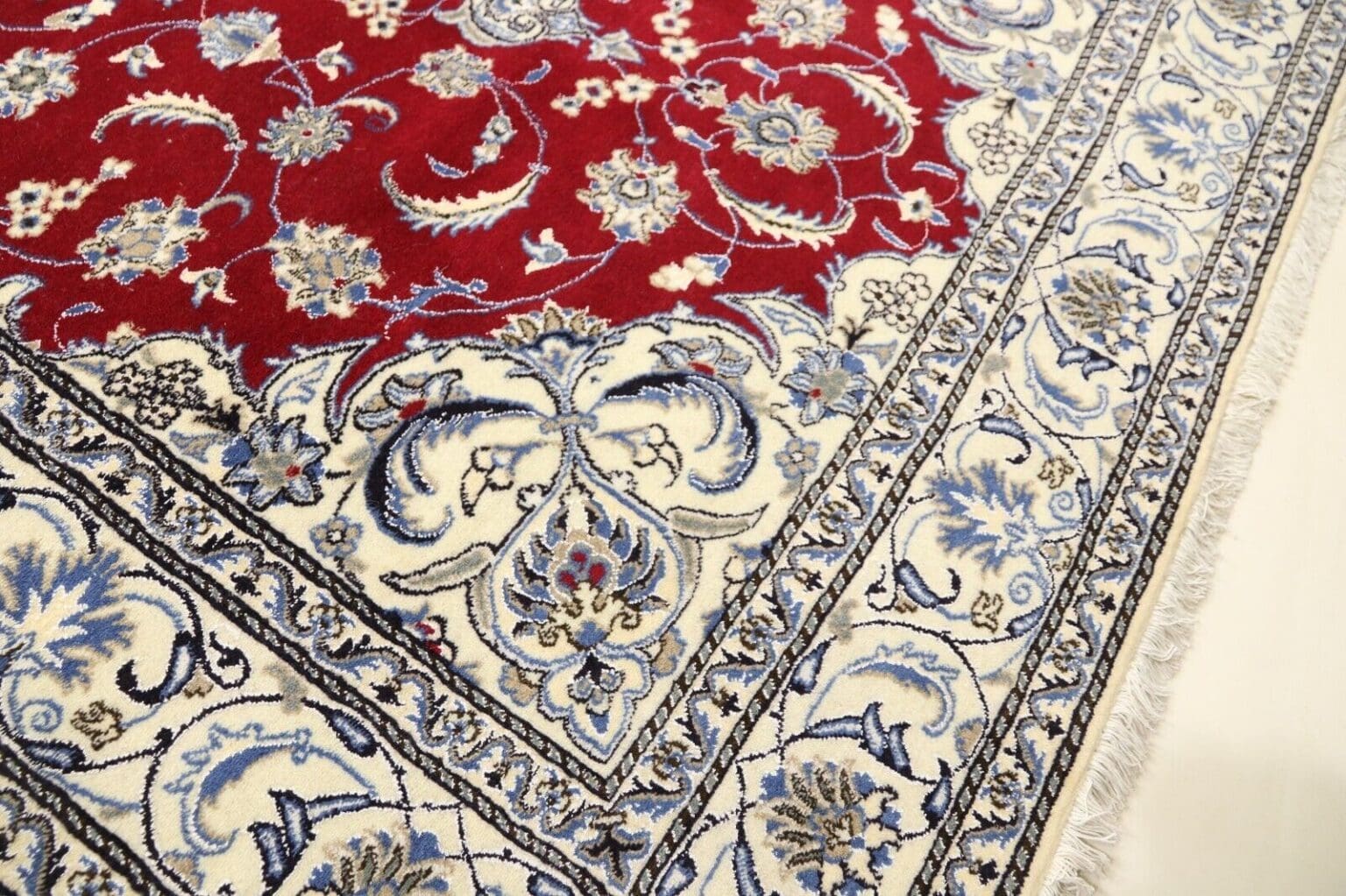
The knot density is approximately 300,000 knots per square metre. A dense knot structure allows a design to be drawn with precise outlines, small decorative elements and controlled transitions. In hand-knotting, the pattern is built one knot at a time across the foundation. Each stage requires a consistent rhythm and careful coordination of the pile, warp and weft. The resulting surface has a fine structure in which floral lines and geometric forms can be defined with clarity.
Traditional hand-knotting makes each rug an individually made piece. Minor variations between individual knots are part of this method rather than evidence of machine production. The product is described as new and in very good condition. It is also suitable for use in rooms with underfloor heating. The stated construction, materials and production method are the central technical features of this Super Nain.
Origin and Tradition
The rug comes from Persia, present-day Iran, and is identified as a Super Nain. Nain is a city and weaving area in central Iran, known for finely knotted Persian rugs. Its distinctive tradition developed within the broader history of Iranian carpet making and became especially recognised during the twentieth century. Nain rugs are associated with carefully organised compositions, fine drawing and a controlled knotting technique.
The landscape around Nain contributed to a regional design language that combines classical Persian forms with a highly ordered appearance. Workshops developed patterns based on central fields, surrounding borders, scrolling foliage and floral detail. These elements can be arranged in restrained compositions while still allowing considerable detail. The tradition is not defined by one single pattern, but by the relationship between precise workmanship and established Persian design principles.
Persian carpet making has a long history in which rugs served as useful household objects as well as works of regional craft. Designs, colour arrangements and technical knowledge were transmitted through workshops and generations of makers. A weaver’s knowledge includes the preparation of the foundation, the handling of fibres, the interpretation of a drawing and the maintenance of even structure across the field. Nain belongs to this wider Iranian tradition while retaining its own recognisable identity.
Hand-knotting requires the weaver to place every knot separately and to build the design progressively. The pile, warp and weft work together as a textile structure, while the density of the knots affects the level of detail that can be rendered. Fine contours and small floral passages depend on careful placement throughout the field. The Nain designation in this case refers to a Persian regional tradition, not merely to a general Oriental decorative style.
The term Super Nain is used in the rug trade for Nain rugs with a particularly fine visual character. For this piece, the relevant identifying details are the Persian origin, the Super Nain designation, the hand-knotted construction and the stated knot density. The silk portion complements the wool pile and contributes to the refined surface impression. In this way, regional tradition and a material combination of wool, silk and cotton meet in one hand-made rug.
Design and Pattern
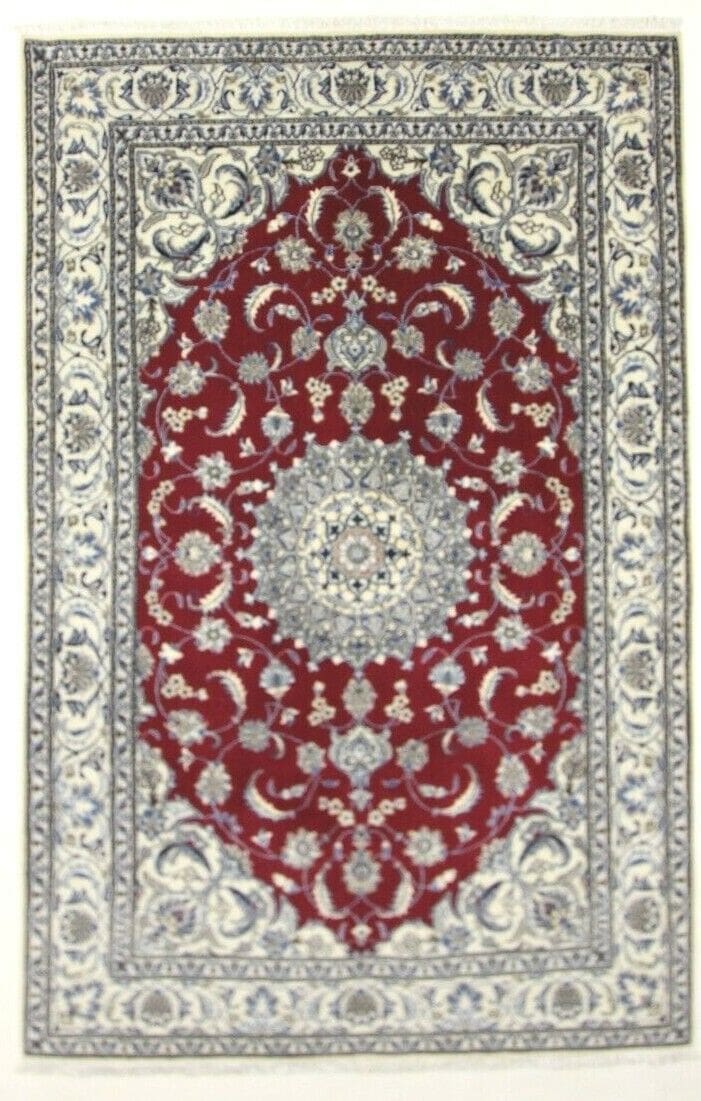
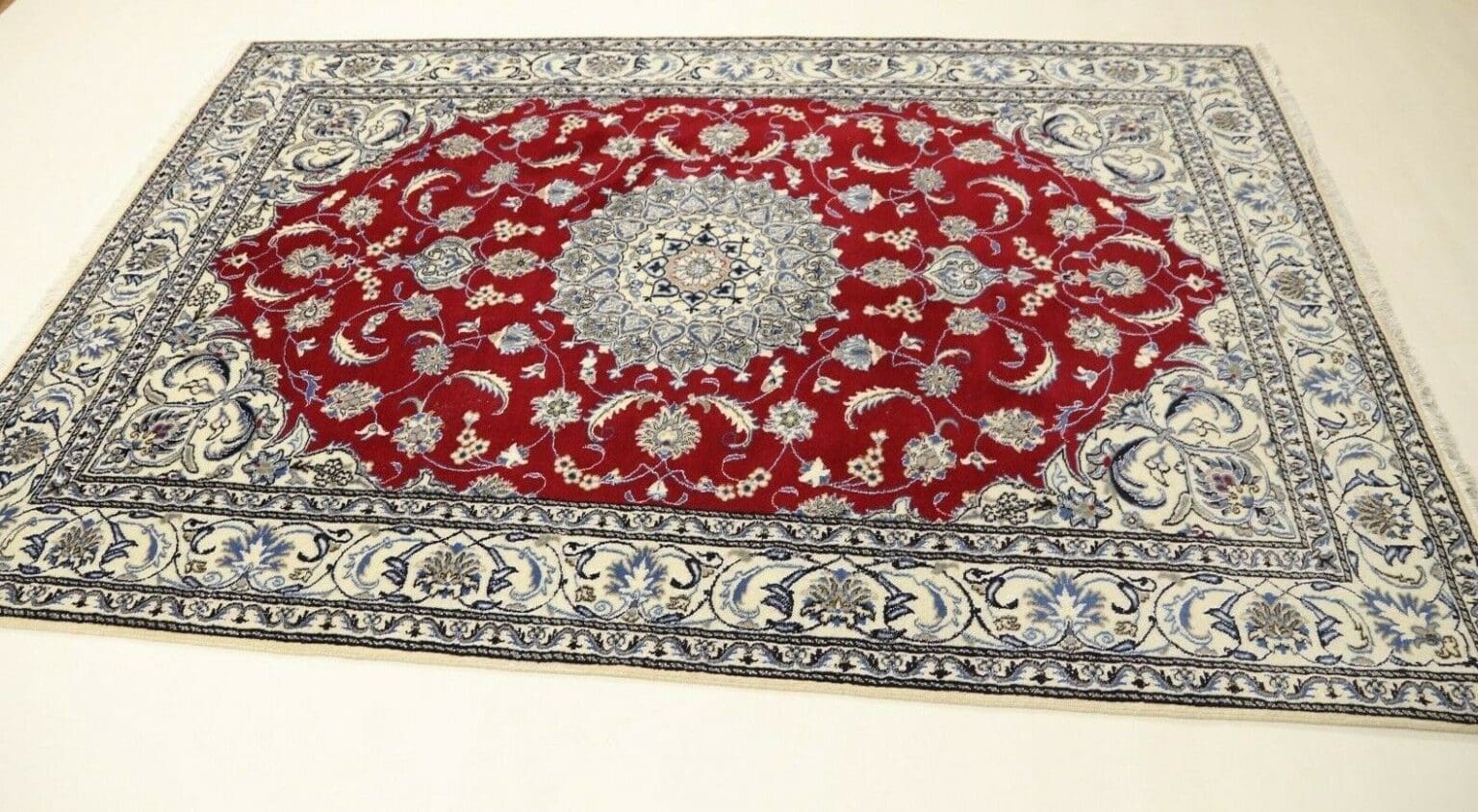
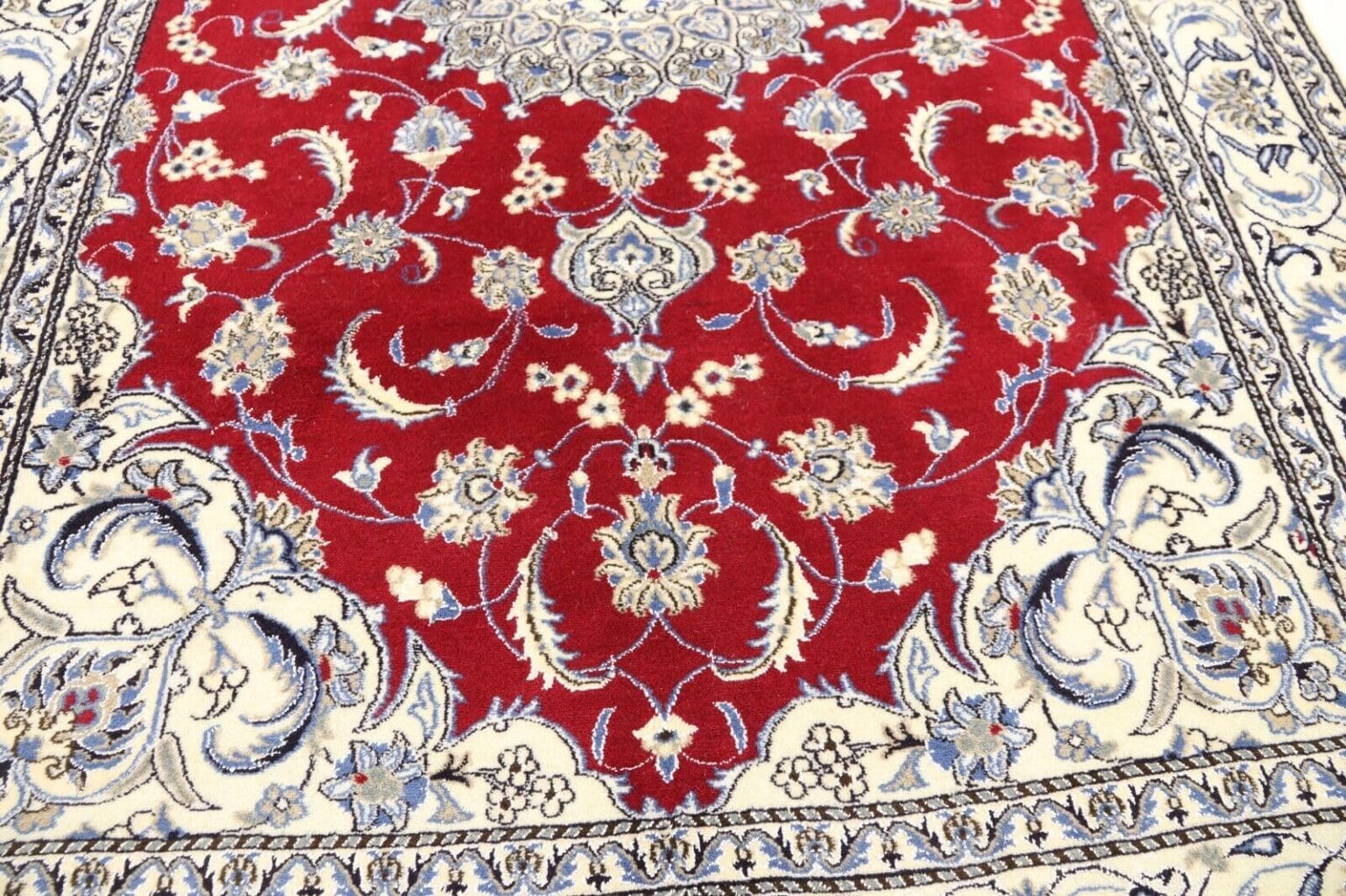
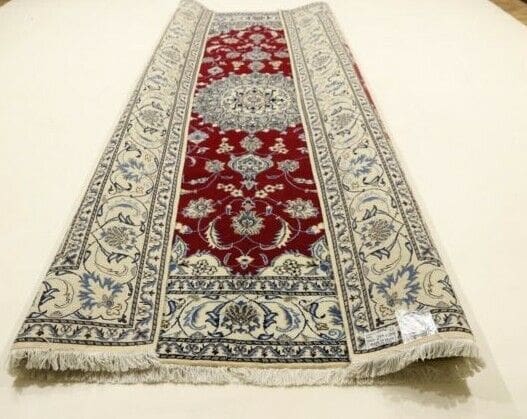
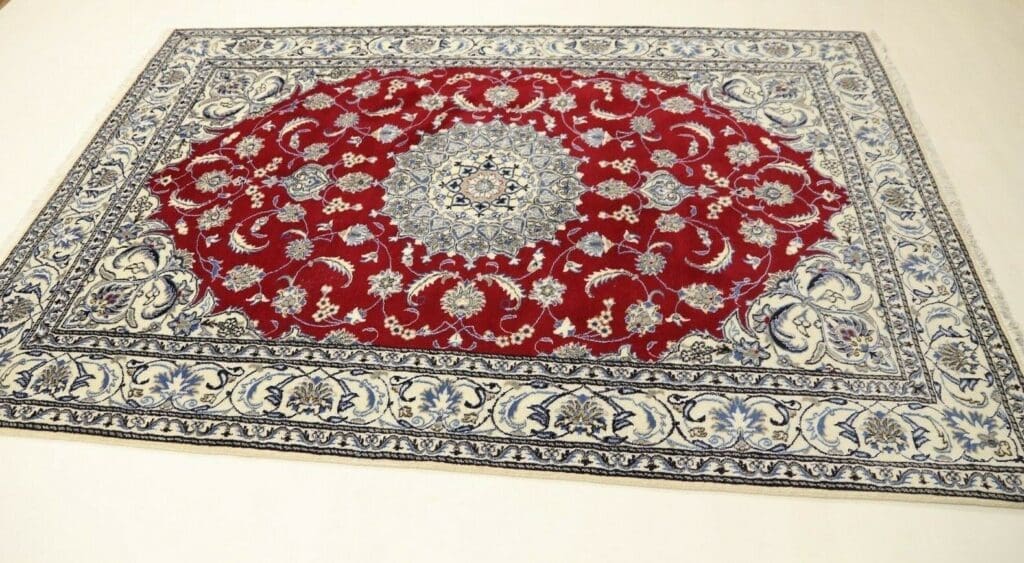
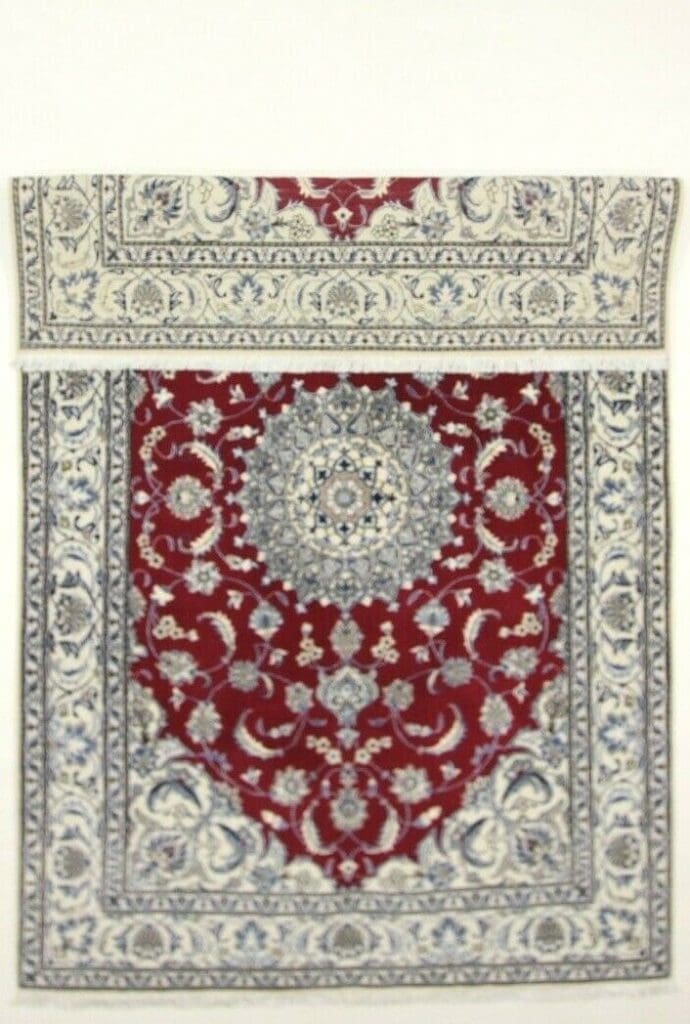
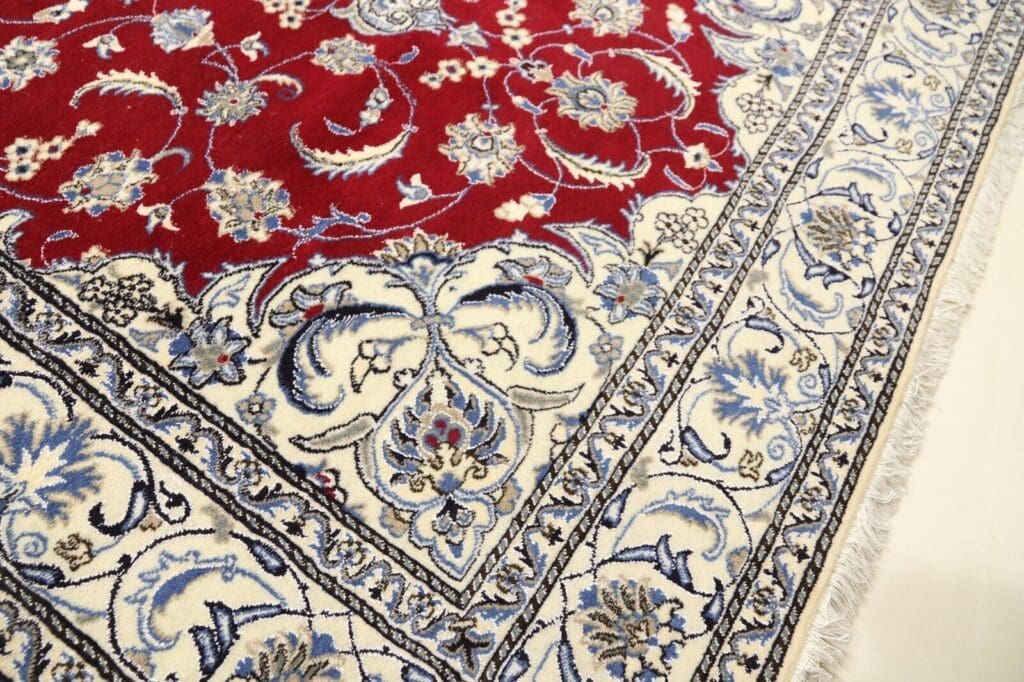
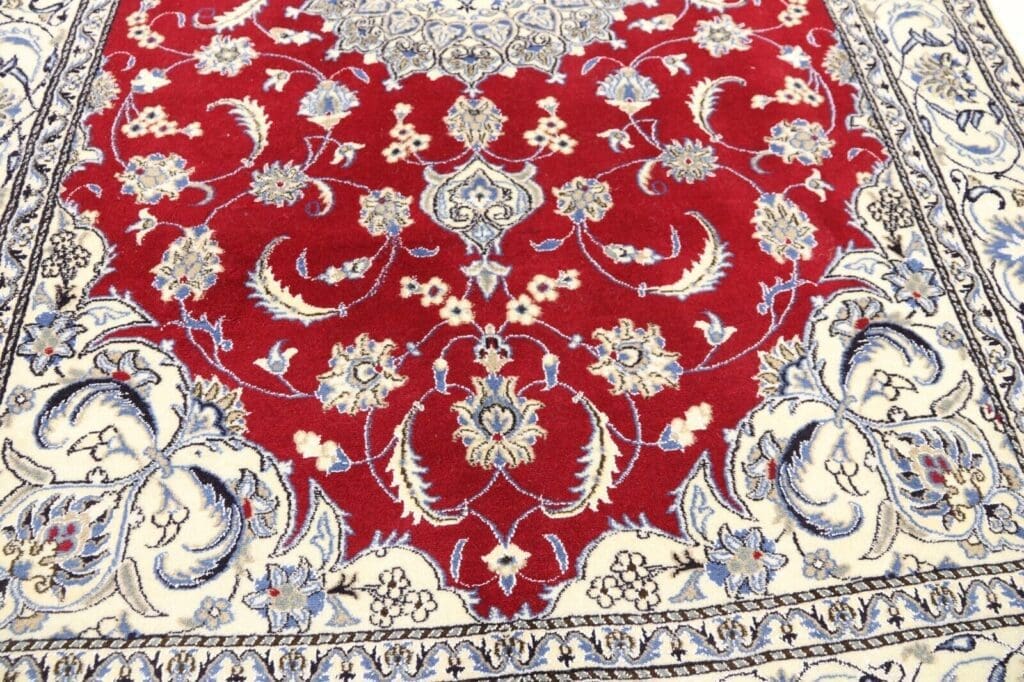
The design is described as traditional Oriental and Persian. It combines floral motifs with geometric forms. Floral elements introduce scrolling movement through leaves, blossoms and vegetal lines, while geometric structures establish order through axes, borders and repeated intervals. Together they create a balanced composition with the layered character associated with classical Oriental rugs.
Floral ornament in Persian carpets is usually stylised rather than copied as a literal botanical image. A blossom may become part of a rosette, and a leaf may be linked to a continuous vine or scrolling branch. Geometric shapes help organise these details and clarify the relationship between the central field and its surrounding decoration. A high knot density supports the rendering of small contours and carefully spaced ornamental passages.
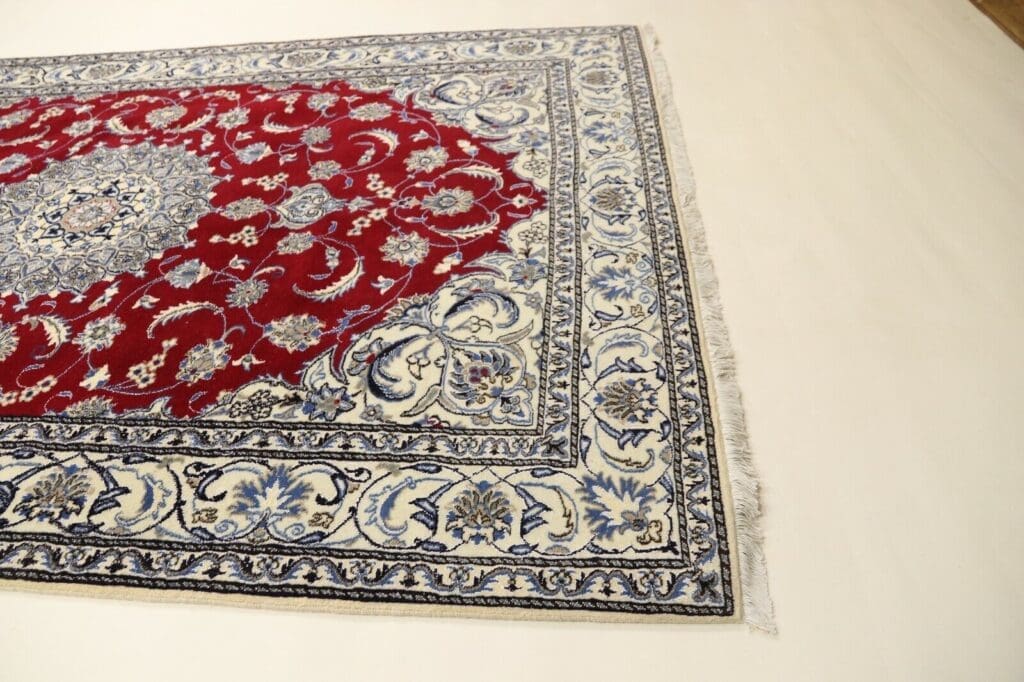
The listed colour character includes soft blue, delicate beige and warm earth tones. Blue can establish a calm visual foundation, while beige and earthy shades connect the individual ornaments and add warmth to the composition. These colours are part of the rug’s described design palette. Their restrained relationship allows the traditional drawing to sit beside both classic furnishings and more understated contemporary interiors, without prescribing a particular room arrangement.
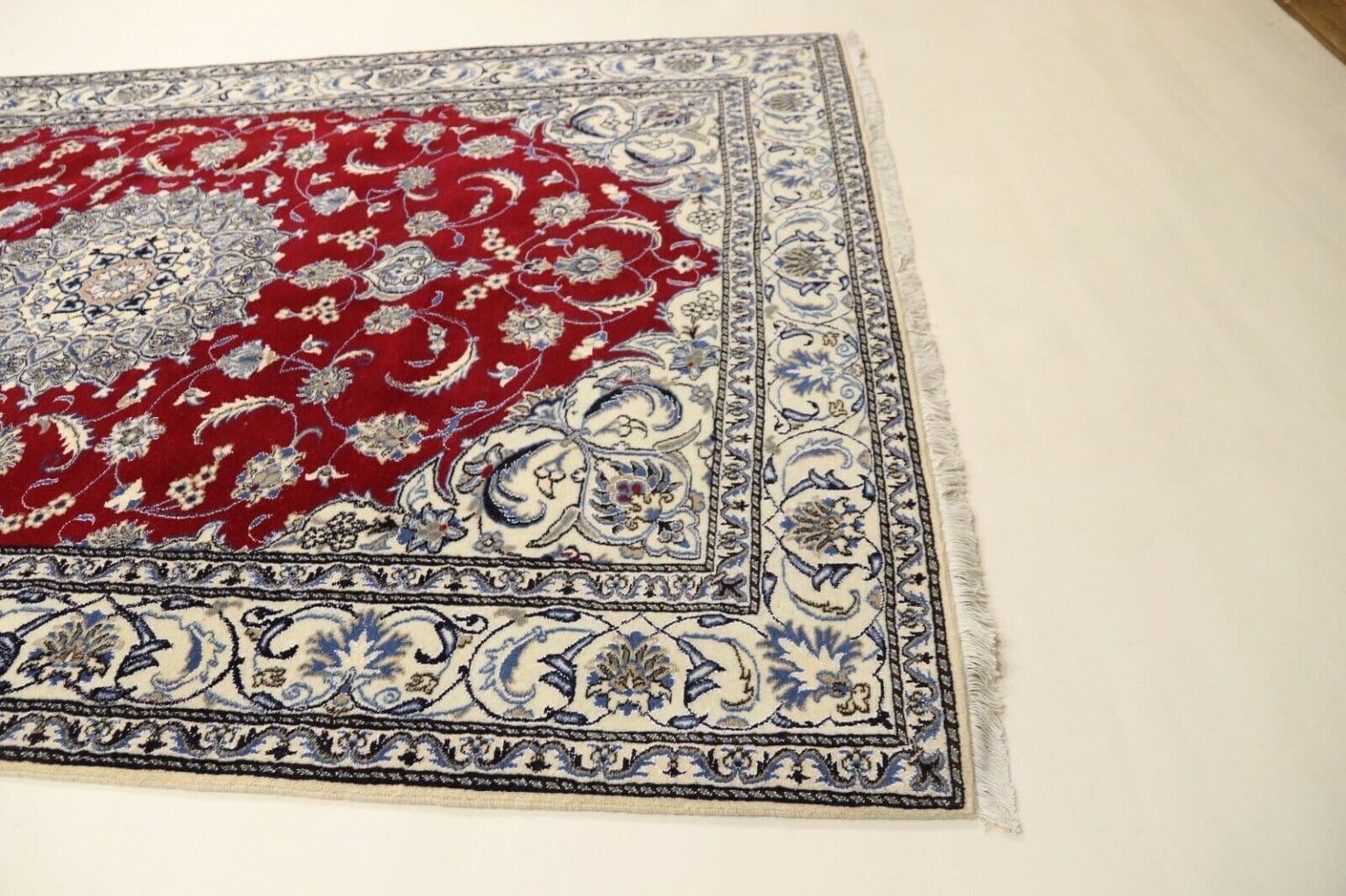
Many Persian compositions are structured through a central field and one or more borders. The border gives the design an outer frame and provides a visual transition between the rug and its surroundings. Within Nain-inspired drawing, fine floral detail can be set into an orderly framework of repeated motifs and measured lines. Geometric organisation prevents the ornament from appearing random, while the floral elements keep the overall pattern varied and flowing.
Oriental rug motifs have been developed over long periods and can carry different cultural associations depending on their region and context. Flowers, vines and repeated geometric devices appear in many variations across Persian weaving traditions. Their interpretation is not identical from one design to another. For this rug, the specific design facts are its traditional Oriental and Persian character, its combination of floral and geometric forms, and the colours soft blue, delicate beige and warm earth tones.
Special Features
The principal features are the hand-knotted construction, the approximately 300,000 knots per square metre and the pile of virgin wool with a silk component. The warp is 100% cotton. This combination gives the rug a wool-based pile with the finer surface effect associated with silk, supported by the stated cotton foundation.
The rug is new and in very good condition. It is suitable for underfloor heating according to the product information. Its traditional Persian design allows it to be used in living spaces, entrance areas or offices. These are the areas named for its use and do not depend on a particular furnishing style.
As a hand-knotted one-off, the Super Nain reflects an individual production process rather than a mechanically repeated surface. The design, regional identity, material structure and dense workmanship belong together. The result is a Persian rug whose defining features are stated clearly through its Nain origin, its fibres, its construction and its traditional pattern language.
FAQ
What is the best way to clean this Super Nain?
Professional rug cleaning is recommended. A pile made from virgin wool with a silk component should be treated with methods suited to both fibres. For routine care, vacuum the rug regularly without using a rotating brush. This removes loose dust and everyday dirt while reducing unnecessary stress on the pile. Stains should not be scrubbed aggressively or treated with unsuitable household products. Specialist cleaning helps preserve the fine structure, colours and surface of this hand-knotted rug.
How long can a hand-knotted rug like this last?
With proper care, a hand-knotted rug can last for several decades. Its dense knotting, traditional construction and stated materials support long-term use. Care should include gentle vacuuming, appropriate professional cleaning and protection from unnecessarily heavy treatment. The silk component should be taken into account when selecting cleaning methods. Actual service life also depends on foot traffic, room conditions and the way the rug is maintained over time.
Is the rug suitable for underfloor heating?
Yes. The Super Nain is stated to be suitable for rooms with underfloor heating. Its fine materials allow good heat transfer and support a comfortable release of warmth. The heating system should be operated correctly, and the rug should lie flat on the floor. Regular airing and suitable care help keep the fibres in good condition. The stated suitability concerns use in rooms where underfloor heating is installed.
To provide the best experiences, we use technologies like cookies to store and/or access device information. Consenting to these technologies will allow us to process data such as browsing behavior or unique IDs on this site. Not consenting or withdrawing consent, may adversely affect certain features and functions.
Functional Always active
The technical storage or access is strictly necessary for the legitimate purpose of enabling the use of a specific service explicitly requested by the subscriber or user, or for the sole purpose of carrying out the transmission of a communication over an electronic communications network.
Preferences
The technical storage or access is necessary for the legitimate purpose of storing preferences that are not requested by the subscriber or user.
Statistics
The technical storage or access that is used exclusively for statistical purposes.The technical storage or access that is used exclusively for anonymous statistical purposes. Without a subpoena, voluntary compliance on the part of your Internet Service Provider, or additional records from a third party, information stored or retrieved for this purpose alone cannot usually be used to identify you.
Marketing
The technical storage or access is required to create user profiles to send advertising, or to track the user on a website or across several websites for similar marketing purposes.
 SECURE PAYMENT
 SHIPPING PARTNERS


