This Super Nain rug is hand-knotted, with a pile made from 90% virgin wool and 10% silk. The warp is 100% cotton. Its construction therefore combines a wool-based pile with silk content and a cotton foundation. Virgin wool is a traditional carpet fibre valued for resilience, a comfortable handle and natural warmth. In a living space, wool provides a practical textile surface while retaining the tactile character associated with hand-made rugs.
Silk contributes its characteristic lustre to the wool pile. In finely drawn carpets, silk can make contours, ornaments and changes of colour appear more distinct. The surface may show different nuances as the light or viewing angle changes. The cotton warp forms the foundation into which the knots are tied. With hand-knotting, each knot is inserted individually. The pile is then aligned and finished so that the separate rows become a coherent field of colour and pattern.
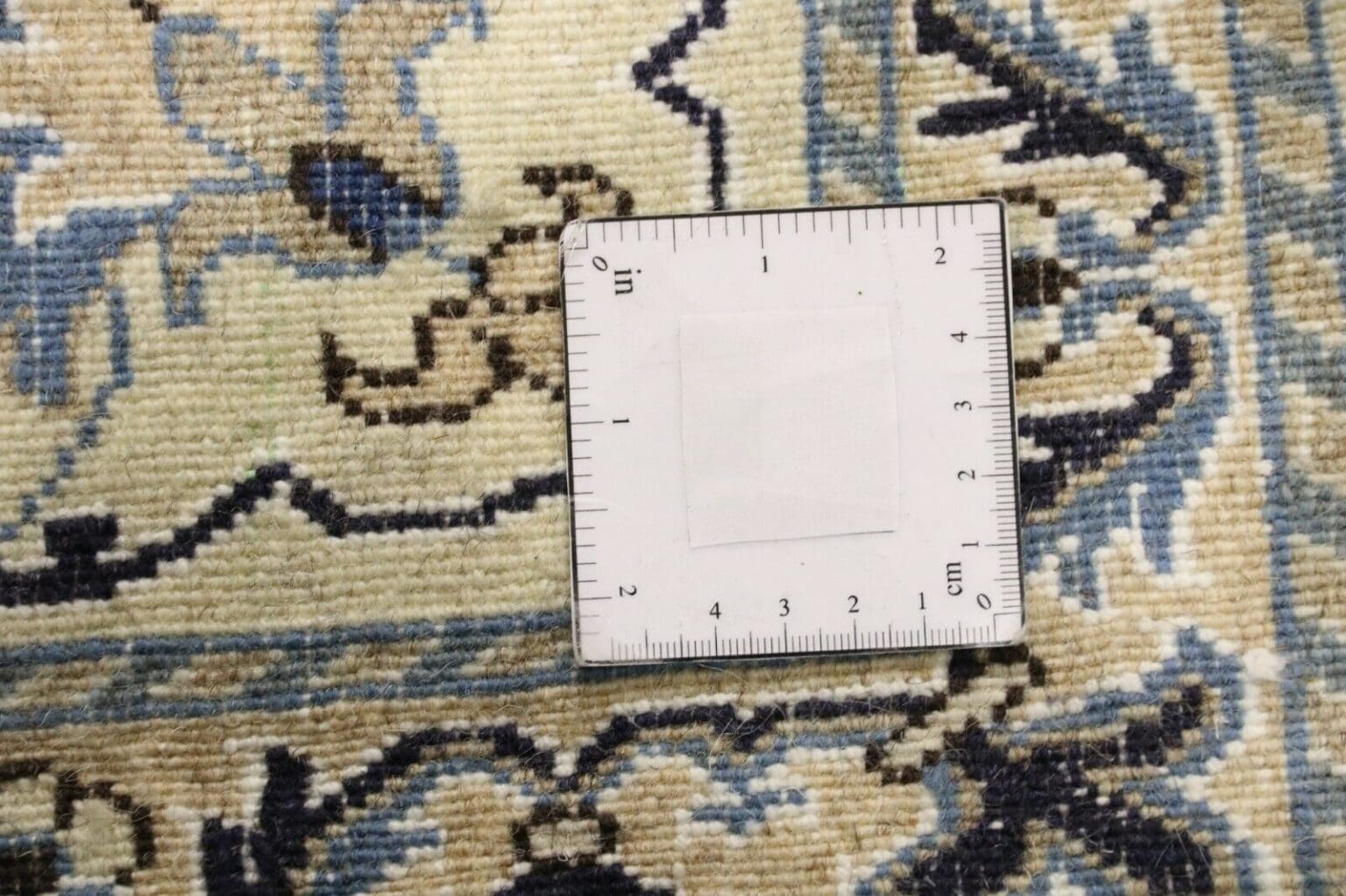
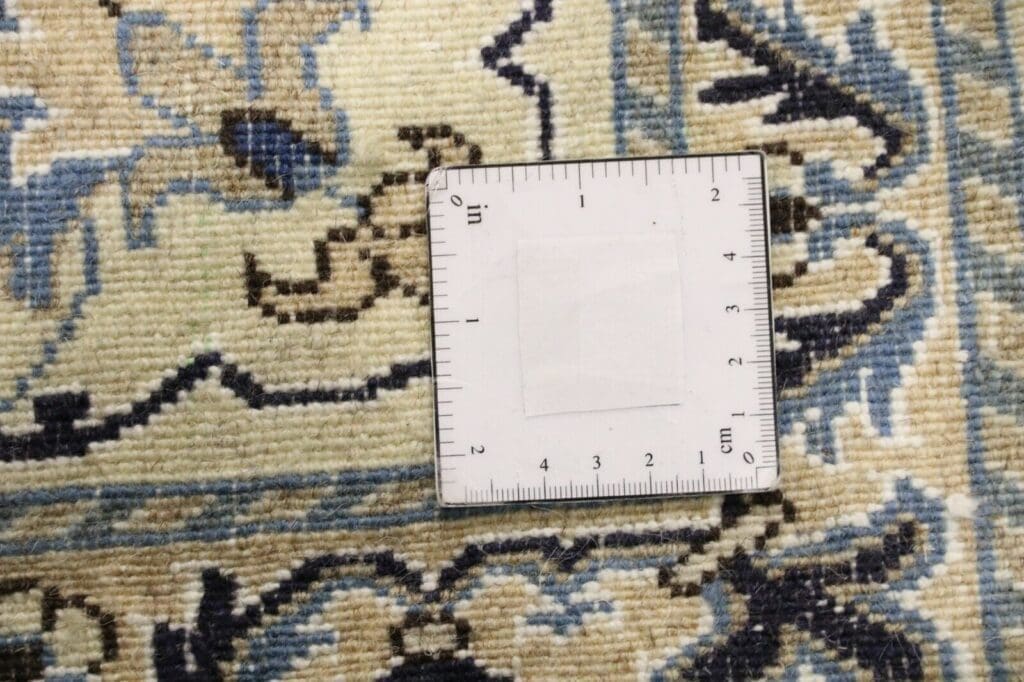
A knot density of approximately 300,000 knots per square metre indicates a dense construction. Dense knotting allows small-scale lines, fine contours and differentiated ornaments to be rendered with precision. Knot density is an important part of the workmanship, but it is considered together with the fibres, the knotting method and the execution as a whole. In this rug, dense hand-knotting is combined with virgin wool, silk and a cotton warp.
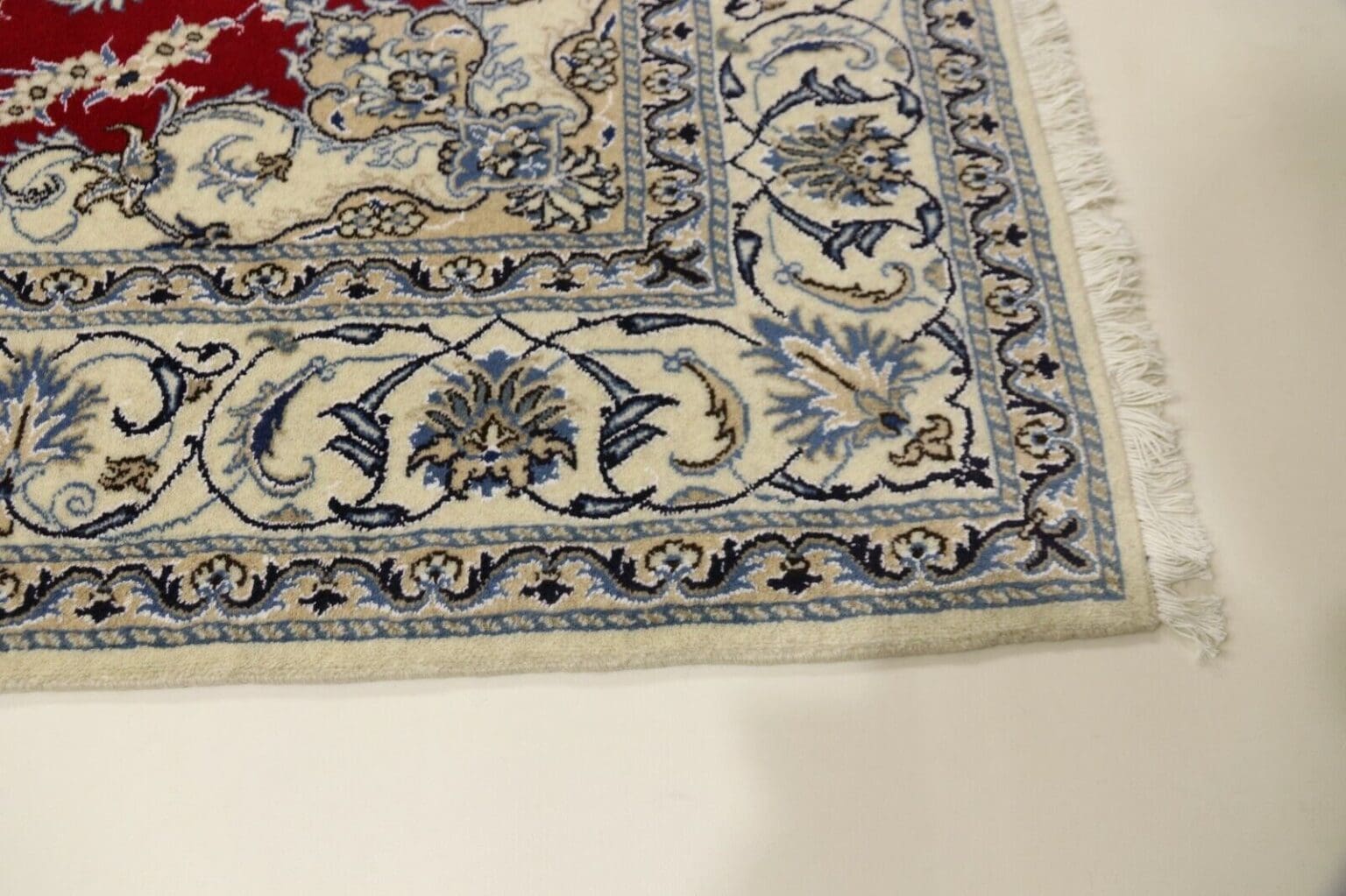
Hand-knotted rugs are not produced in one single operation. The foundation is prepared first. Knots are then tied row by row around the warp and secured with weft threads. The pile is regularly compacted and aligned during the work. At the end, the surface is finished so that the design can be read clearly and the structure appears even. This process explains why the visual design of a hand-knotted rug is directly connected with its technical construction.
Origin and Tradition
The rug comes from Nain in Iran. Nain is associated with a distinct Persian carpet tradition known for fine knotting, balanced compositions and a clearly organised decorative vocabulary. The city lies in Isfahan Province, a region with an important place in Persian carpet culture. Nain rugs are commonly connected with carefully drawn floral and ornamental designs, where the arrangement of the elements is as significant as the individual motif.
The history of carpet making in Nain is traced back to the sixteenth century. Within this development, regional design, inherited handwork and the use of selected fibres became closely connected. Producing a hand-knotted rug requires patience and close attention to a design plan. Knots are placed row by row so that the field, borders and smaller ornaments retain their intended relationship. The finished textile is consequently formed through many individual actions rather than a mechanically repeated surface.
The Nain tradition is often associated with fine drawing and carefully controlled distribution of motifs across the field. Floral elements may work together with geometric outlines. A central field, an enclosing main border and narrower secondary borders are typical ways of organising a composition. Individual Nain rugs do not all follow one fixed scheme. Recurring characteristics include attention to proportion, orderly use of space and detailed treatment of ornament.
Persian carpet art preserves design elements across generations while also allowing them to be adapted and redrawn. Flowers, vines and geometrically framed forms may refer to classical models without appearing in exactly the same manner on every rug. In Nain, such motifs are often associated with precise line work and a measured distribution of forms. Regional origin therefore describes both the place of production and the craft and design context connected with that place.
Isfahan Province has a long tradition of making and designing Persian rugs. Within this cultural setting, knowledge of fibres, knotting methods, pattern construction and colour relationships has been passed on over time. Workshops may use inherited basic forms while interpreting them in different ways. Nain origin is therefore not a reference to one rigid pattern, but to a particular connection between place, handwork and visual language.
Knotting technique is central to the classification and appearance of a Nain rug. The precision of a design depends on how consistently the knots are arranged in relation to the working drawing. At the same time, fibre, pile and colour distribution affect the finished surface. Persian carpet tradition treats these aspects as interconnected. Materials and construction create the basis on which regional pattern language can be developed.
Design and Pattern
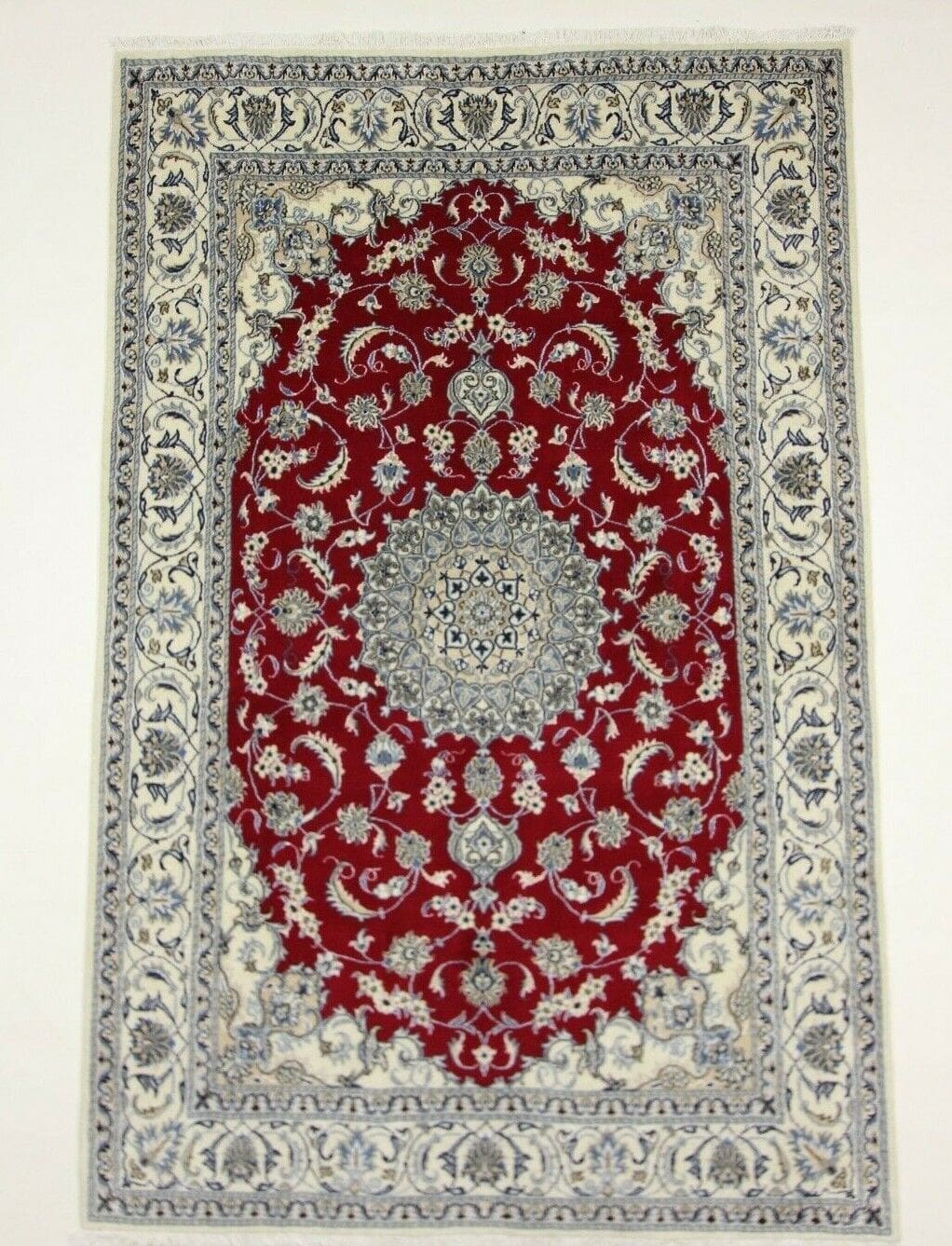
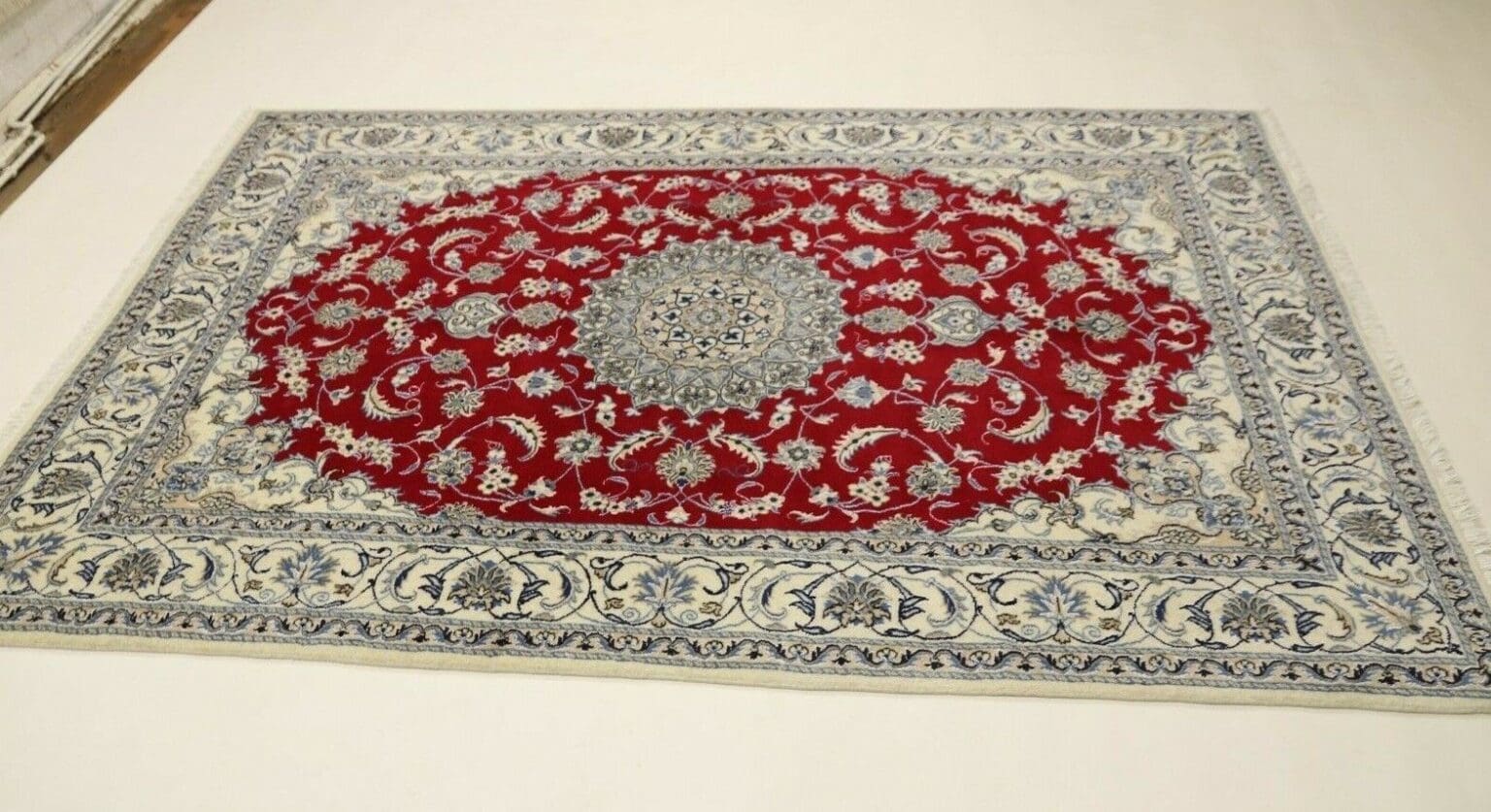
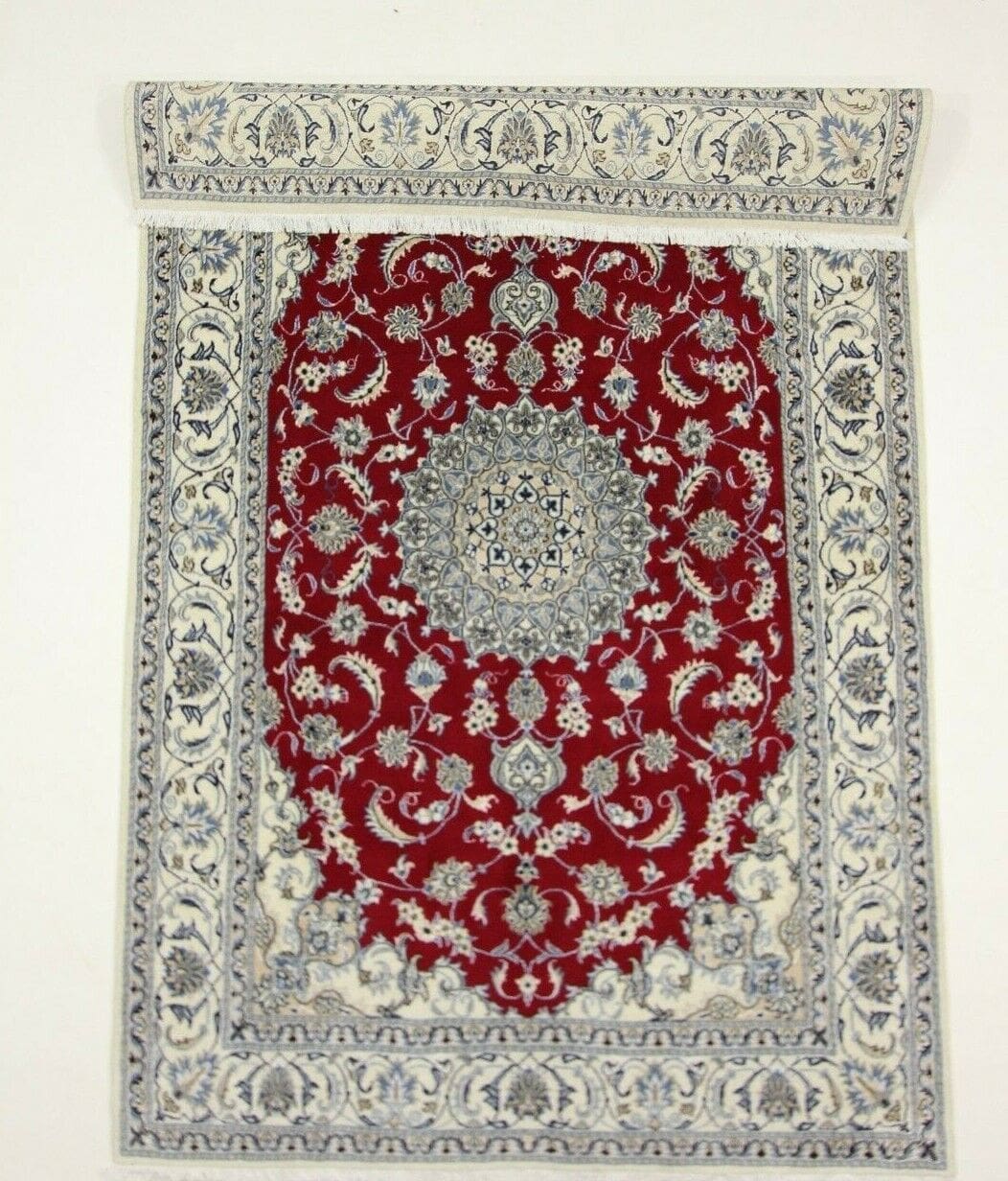
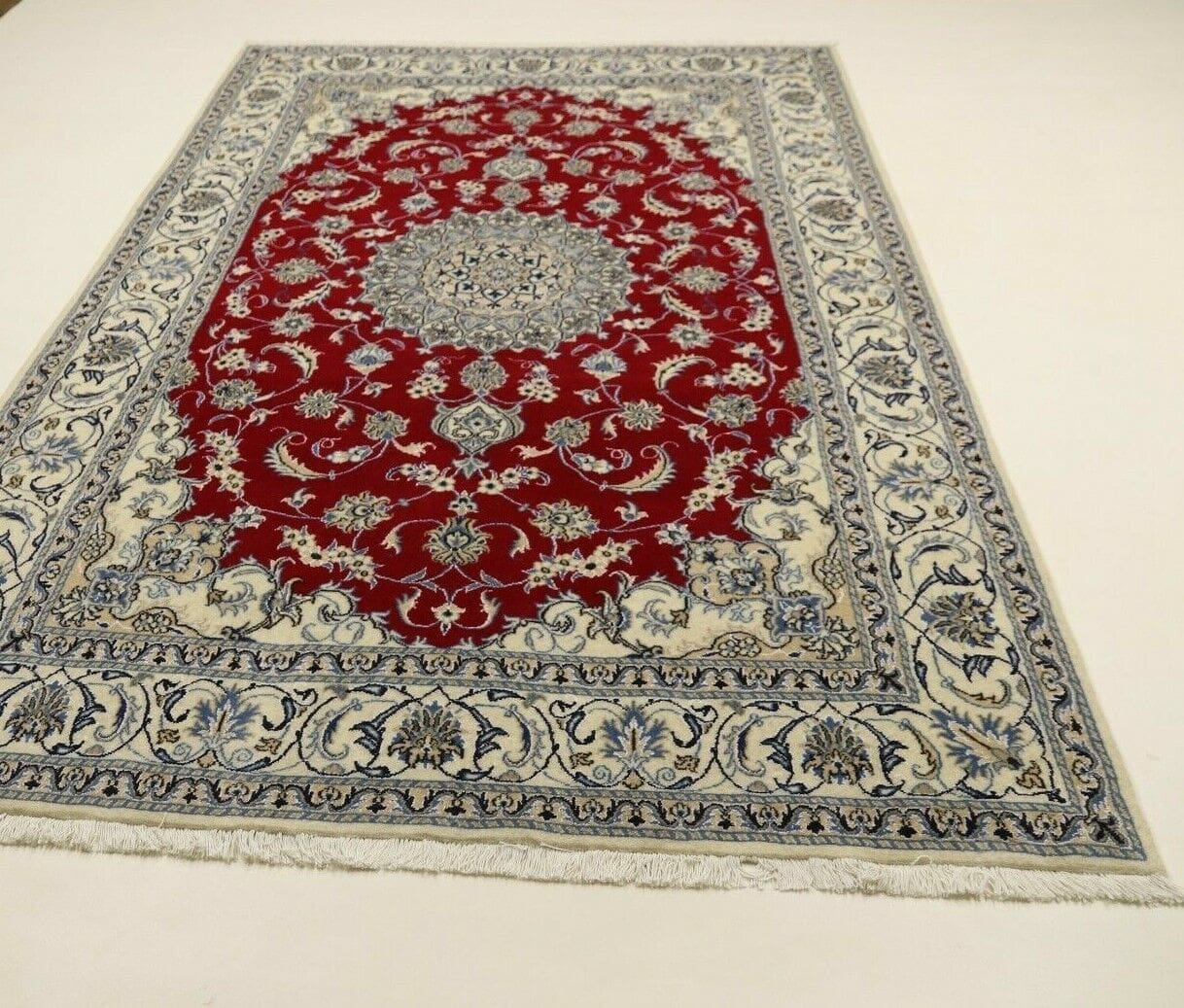
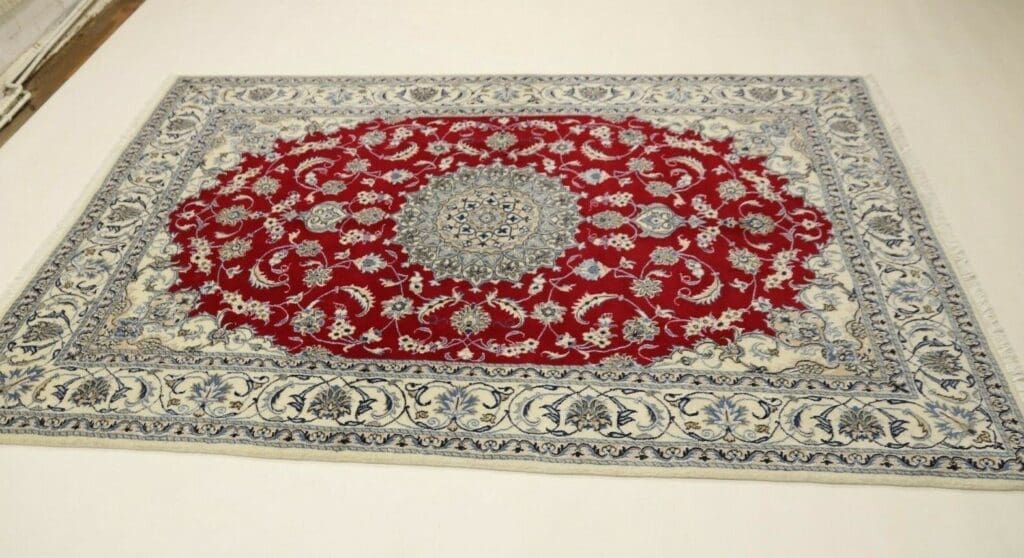
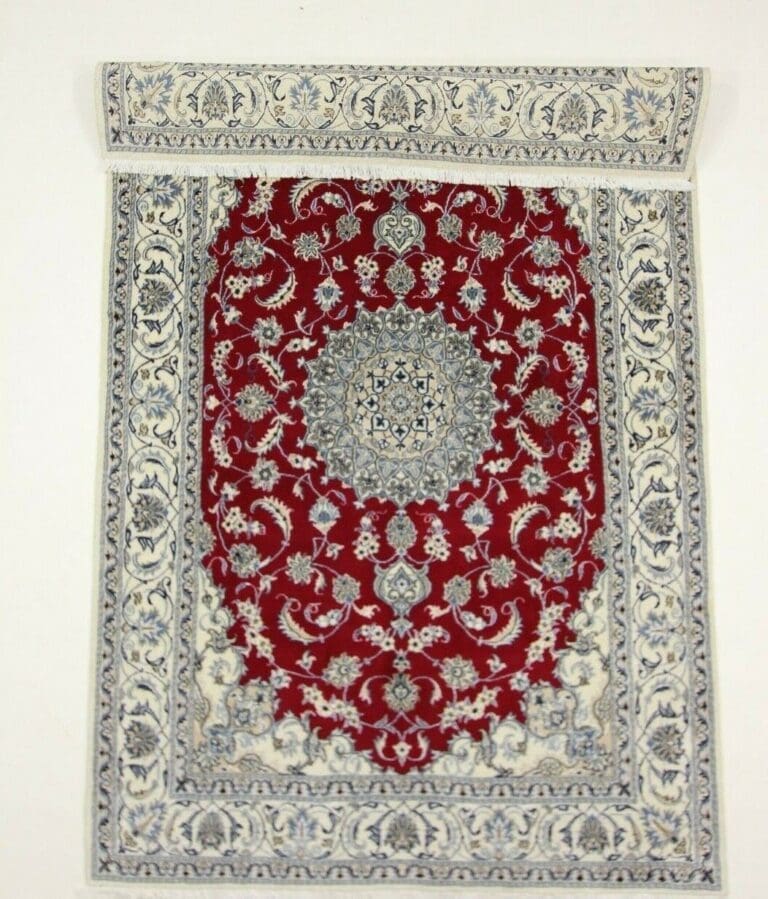
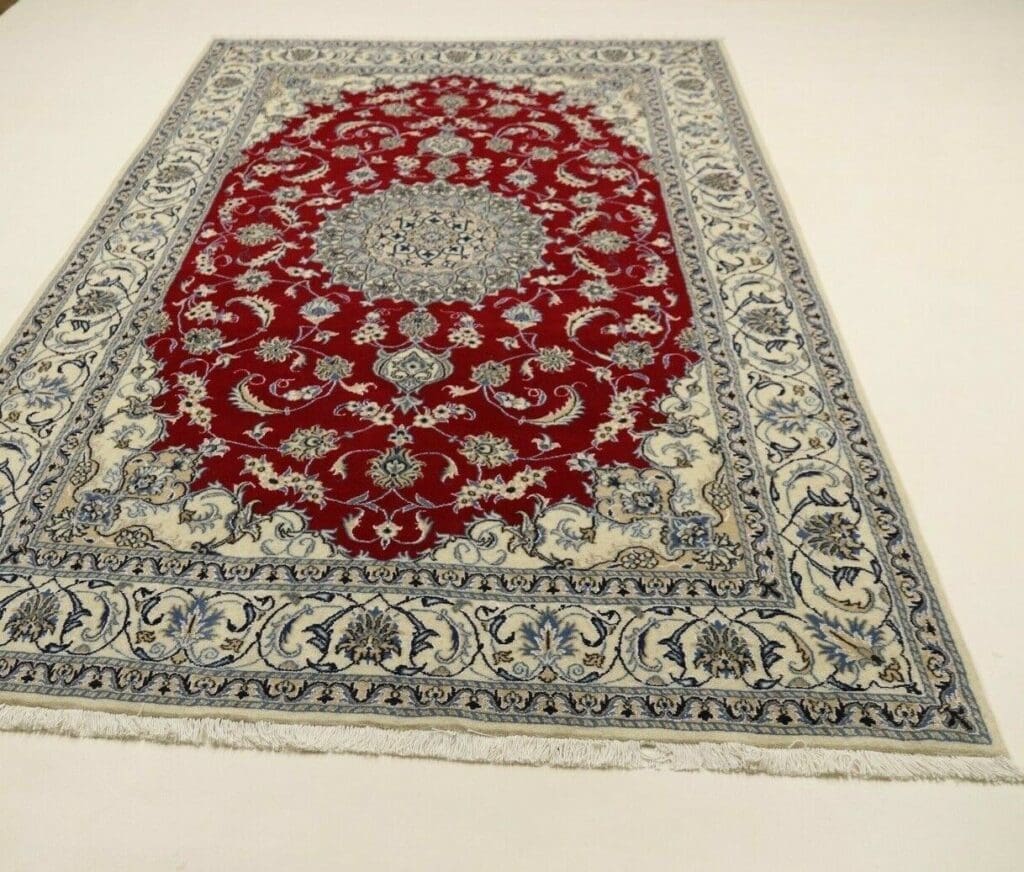
The Super Nain has a traditional Oriental Persian design in white and red. The light ground is structured by red accents. Pale areas allow floral and ornamental lines to remain legible, while red sections create contrast and can emphasise selected parts of the composition. The appearance of a hand-knotted rug also changes with light and direction because the fibres do not reflect illumination in exactly the same way from every angle.
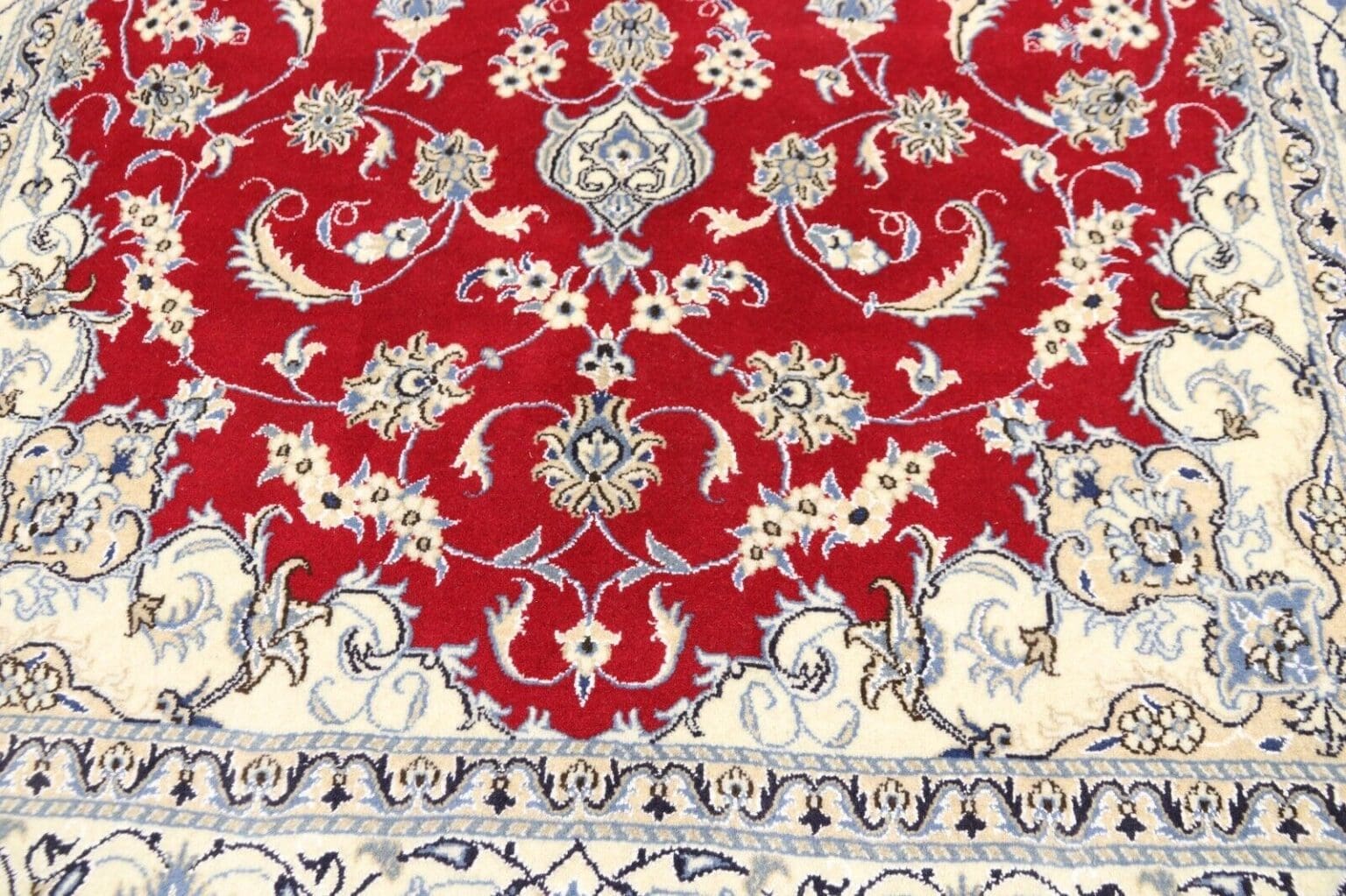
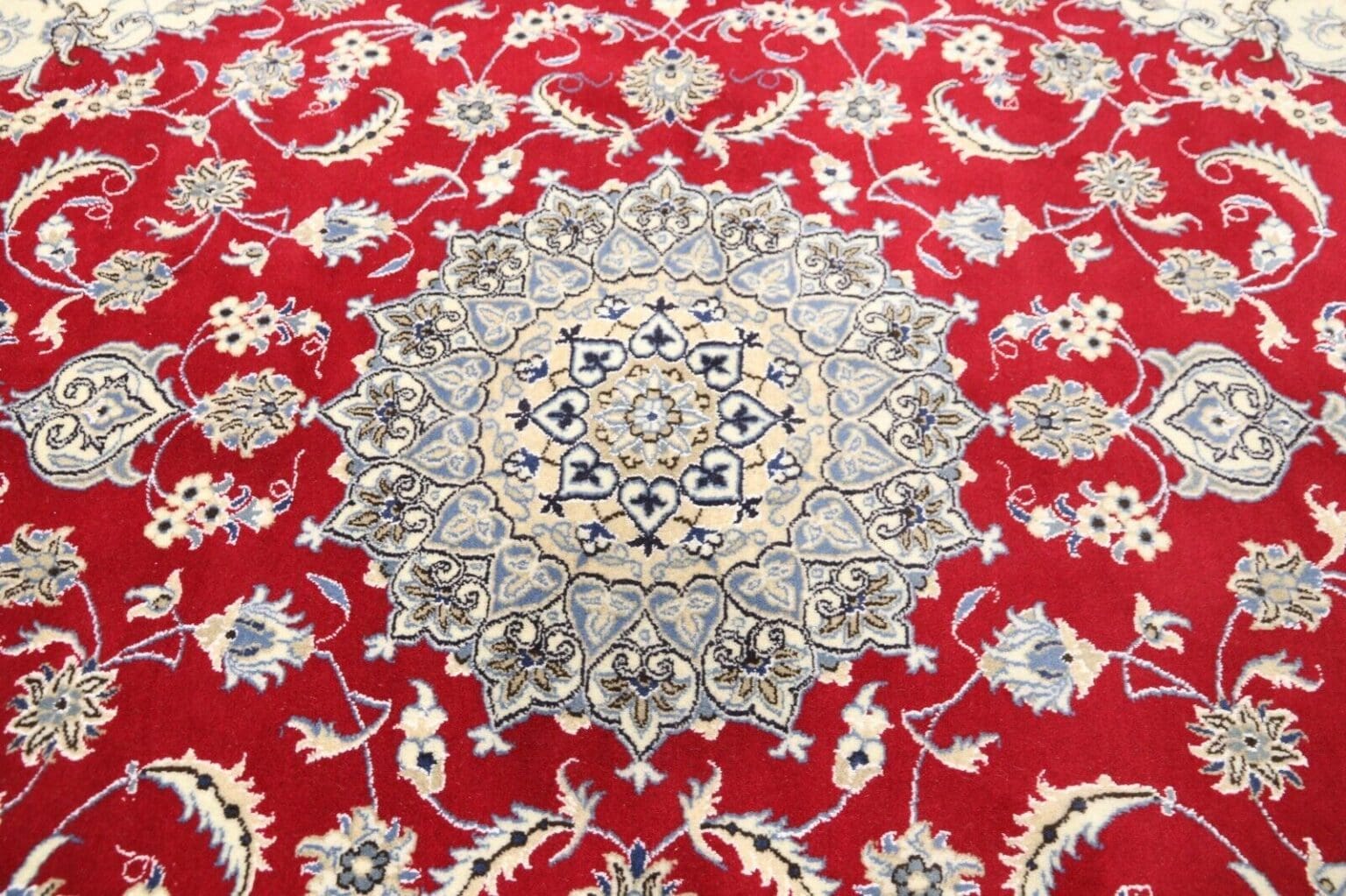
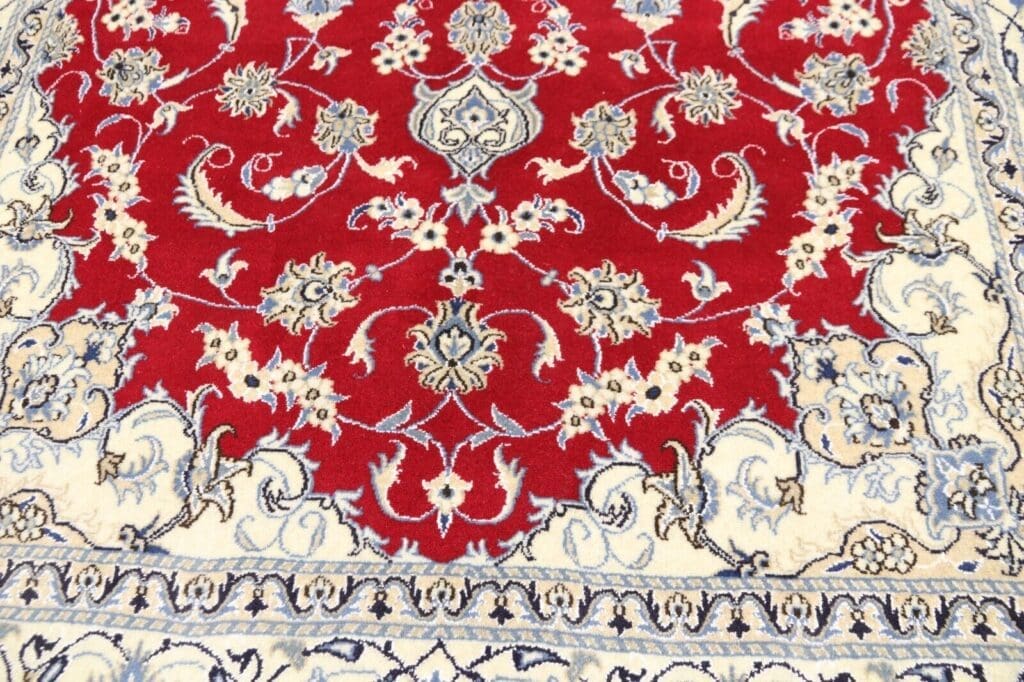
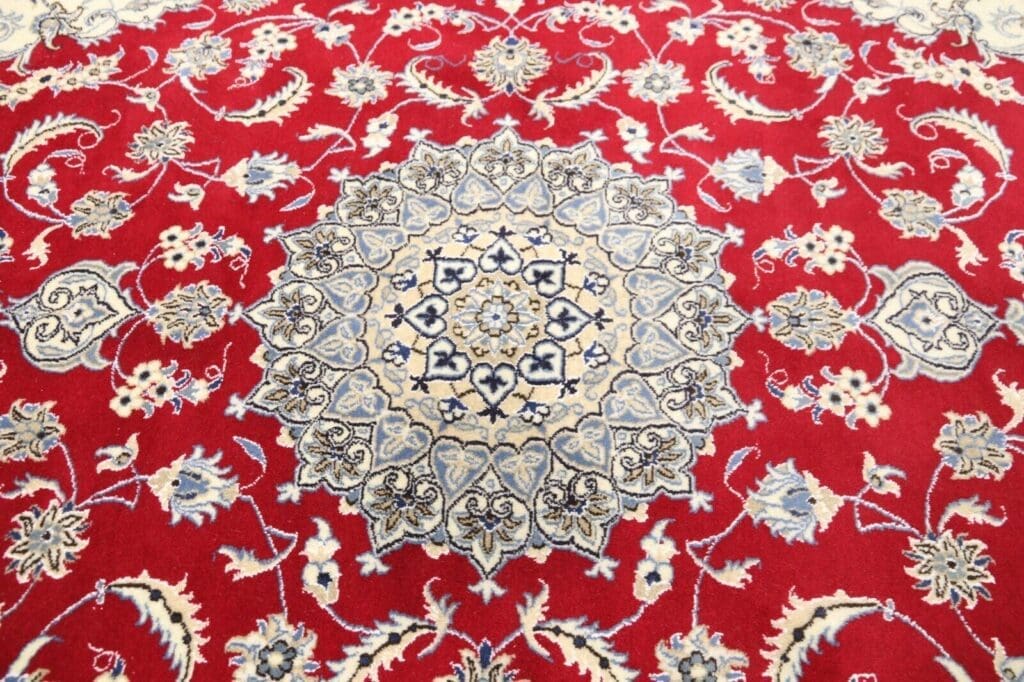
Stylised flowers, vines and ornamental forms are typical motifs associated with Nain rugs. They may be arranged around a centre, distributed through an interior field or connected in a continuous drawing. Geometric contours provide a framework for floral details and make the composition easier to follow. The combination of flowing plant forms and defined outlines is a recurring design device in the Nain tradition. It permits detailed drawing while retaining an ordered overall structure.
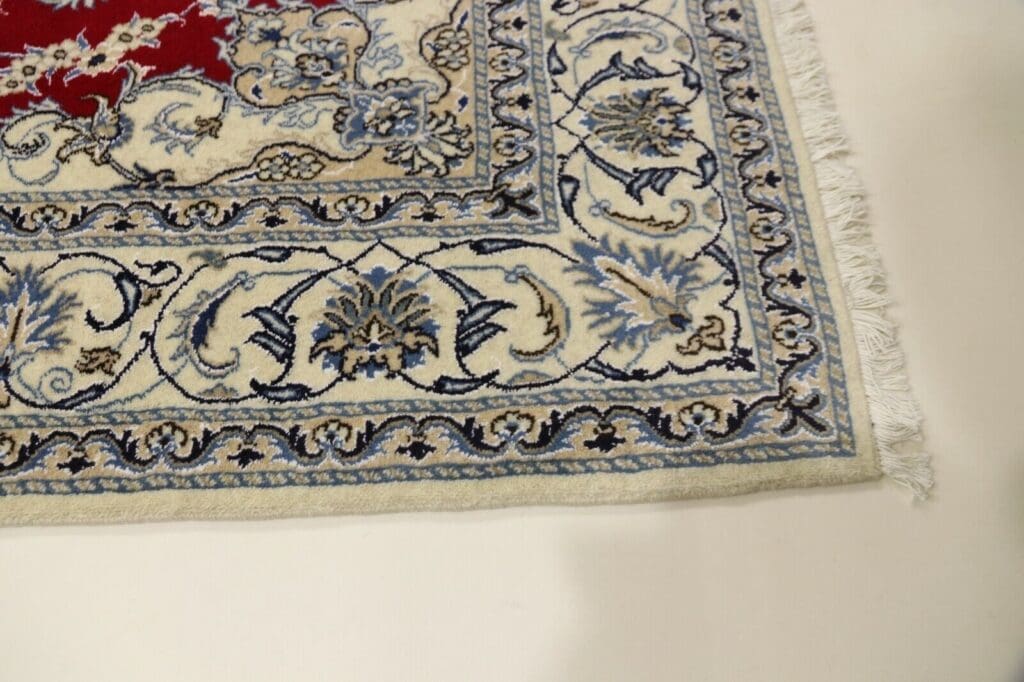
On many Persian rugs, a border frames the central field and creates a visual transition towards the outer edge. It may repeat elements from the main design in a modified arrangement. Secondary borders can reinforce this frame and clarify the proportions of the composition. Reading a Nain design therefore involves more than identifying separate flowers or lines. The relationship between centre, border and recurring ornament is part of the pattern’s organisation.
Fine knotting supports the rendering of small details. Differences in contour, line width and colour placement can be worked into the surface through individual knots. The pattern is consequently part of the textile rather than a printed image applied afterwards. This gives the drawing textile depth and connects its visual effect with the process of making it. The precision of the workmanship is especially apparent where floral lines, borders and small ornaments are coordinated closely.
White and red create a different balance from a palette dominated by deep tones. White keeps the ground visually light, while red adds warmth and contrast. The design remains connected with the Oriental Persian setting of the Nain tradition. Its floral ornament can function as a traditional feature or as a defined visual counterpoint in a contemporary room. The principal design elements are the Nain origin, the floral and ornamental vocabulary, and the stated white-and-red colouring.
Floral patterns in Persian carpet art often serve both decorative and organising functions. Vines can connect areas of the field, blossoms can create accents, and geometric lines can define the composition. These motifs are not arranged identically on every rug. Their effect results from the relationship between repetition, spacing, contour and colour. The Nain tradition uses these devices to create a detailed surface that remains structured and readable.
Special Features
The rug is described as new and in perfect condition. This condition is one of its expressly stated characteristics. Its hand-knotted construction, knot density and combination of virgin wool and silk define its principal technical features. The rectangular form also allows it to be used in different room layouts.
The rug is suitable for underfloor heating and is described as pet-friendly. These details concern its practical use. Its wool and silk pile together with its cotton warp make it a traditional textile furnishing with Persian origin. At the same time, it is intended for living areas in which a rug can perform both a design and a functional role. The light colouring with red accents keeps the pattern clearly visible.
FAQ
How should a hand-knotted Nain rug be cleaned?
Gentle, regular vacuuming is suitable for routine care. Spots should be blotted or wiped carefully as soon as possible so that they do not penetrate further into the pile. Because the rug contains both virgin wool and silk, unnecessary rubbing and harsh cleaning agents should be avoided. A professional rug-cleaning service is recommended for thorough and careful treatment. Specialist cleaning can take the different fibres into account and protect the surface during the process. If a cleaning product is being considered, professional advice or a test on an inconspicuous area should be used first.
Where can the rug be used?
The Super Nain is suitable for living rooms, dining rooms and studies. Its rectangular form can be placed in front of seating, beneath a dining table or as a defining textile element in a work area. The traditional Oriental Persian design works with classic furnishings and can also provide a deliberate contrast in a modern interior. Its suitability for underfloor heating broadens the rooms in which it can be used. The white ground and red details create a clear accent, while the floral ornament connects the room with Persian design tradition.
How can I tell whether a rug is hand-knotted?
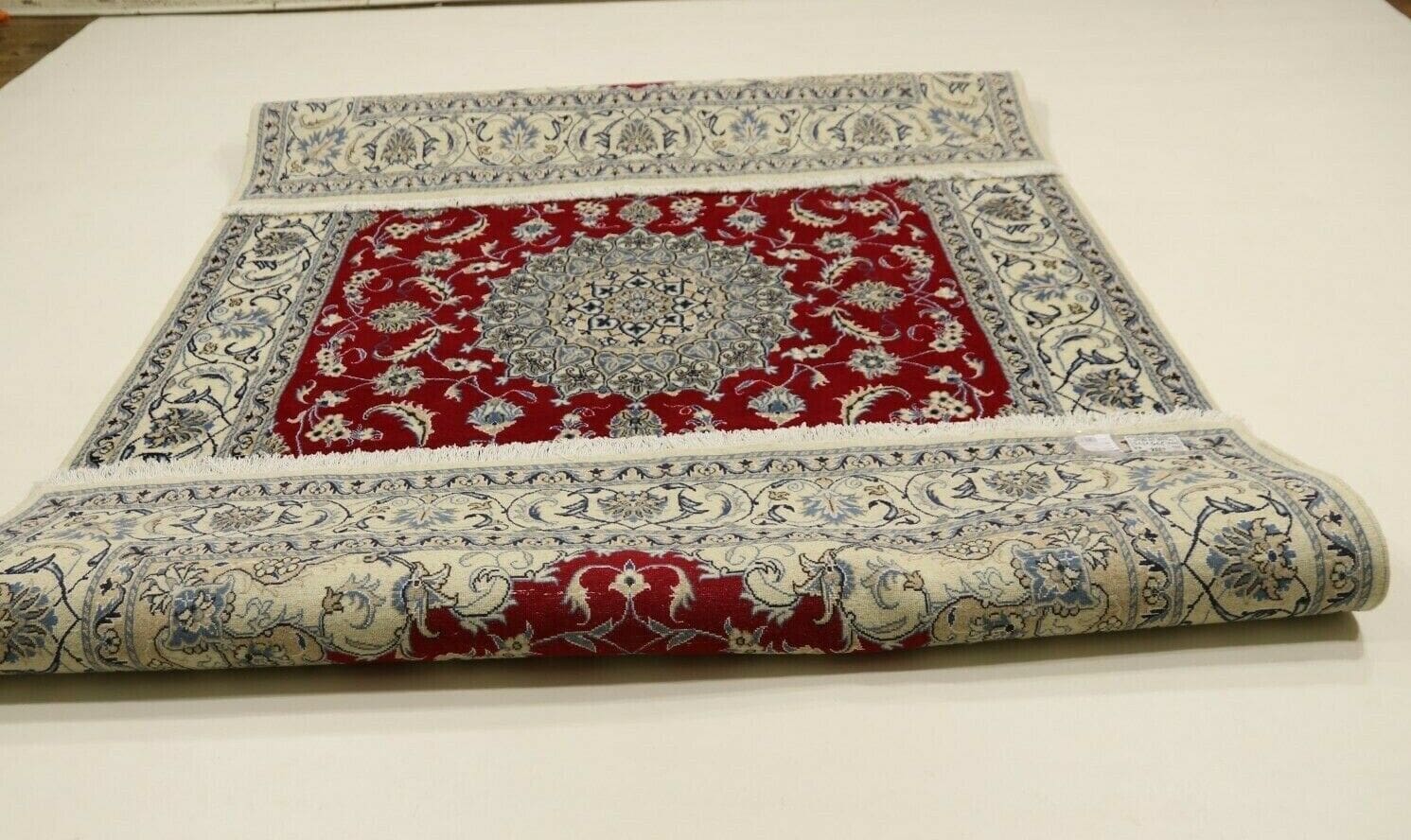
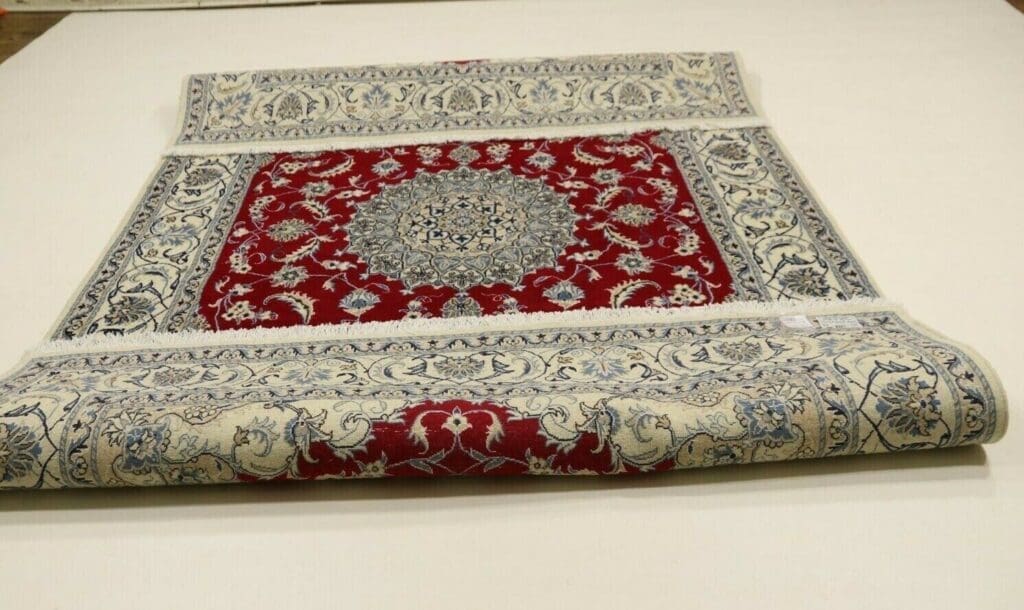
The reverse of a hand-knotted rug often reveals a visible knot structure. The knots form part of the construction, unlike a pattern that has simply been printed or mechanically applied. Fine drawing and a high number of knots per square metre can also indicate the knotting technique. This rug is identified as hand-knotted and has a knot density of approximately 300,000 knots per square metre. For a reliable assessment, the back, pile and general workmanship should be considered together rather than relying on one feature alone.
To provide the best experiences, we use technologies like cookies to store and/or access device information. Consenting to these technologies will allow us to process data such as browsing behavior or unique IDs on this site. Not consenting or withdrawing consent, may adversely affect certain features and functions.
Functional Always active
The technical storage or access is strictly necessary for the legitimate purpose of enabling the use of a specific service explicitly requested by the subscriber or user, or for the sole purpose of carrying out the transmission of a communication over an electronic communications network.
Preferences
The technical storage or access is necessary for the legitimate purpose of storing preferences that are not requested by the subscriber or user.
Statistics
The technical storage or access that is used exclusively for statistical purposes.The technical storage or access that is used exclusively for anonymous statistical purposes. Without a subpoena, voluntary compliance on the part of your Internet Service Provider, or additional records from a third party, information stored or retrieved for this purpose alone cannot usually be used to identify you.
Marketing
The technical storage or access is required to create user profiles to send advertising, or to track the user on a website or across several websites for similar marketing purposes.
 SECURE PAYMENT
 SHIPPING PARTNERS


