This Super Nain Persian rug is hand-knotted. Its pile is made from 90% virgin wool and 10% silk, while the warp consists of 100% cotton. The combination brings together the practical qualities of wool and the distinctive surface character of silk. Virgin wool is used in hand-knotted rugs for its resilience and natural resistance to dirt. It gives the pile a soft, comfortable handle and provides the substantial textile base of the surface. Silk adds a fine sheen and a smooth feel underfoot, creating a more refined visual effect within the wool pile. Together, these fibres form a surface that is pleasant to walk on while remaining suitable for everyday use.
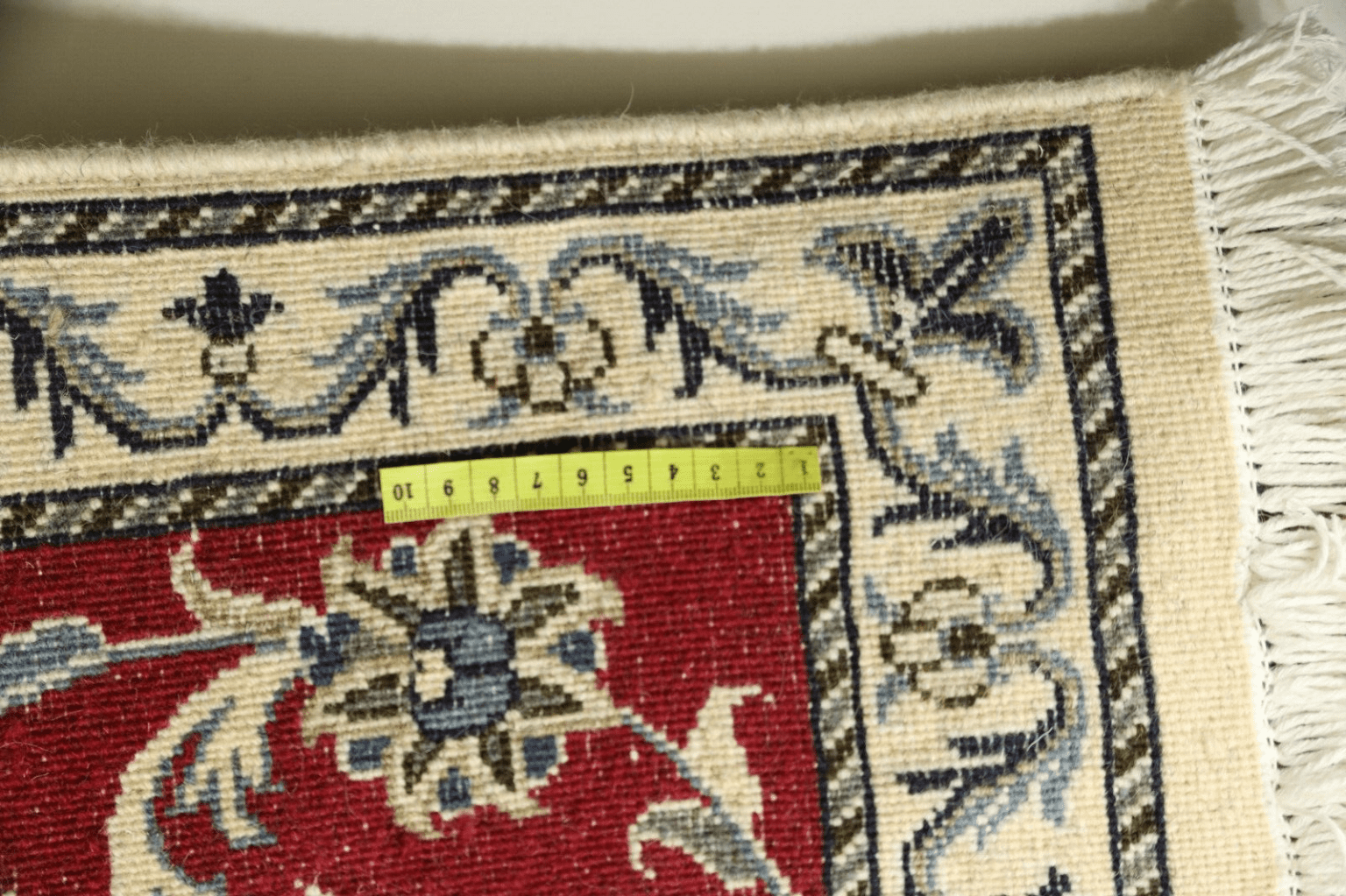
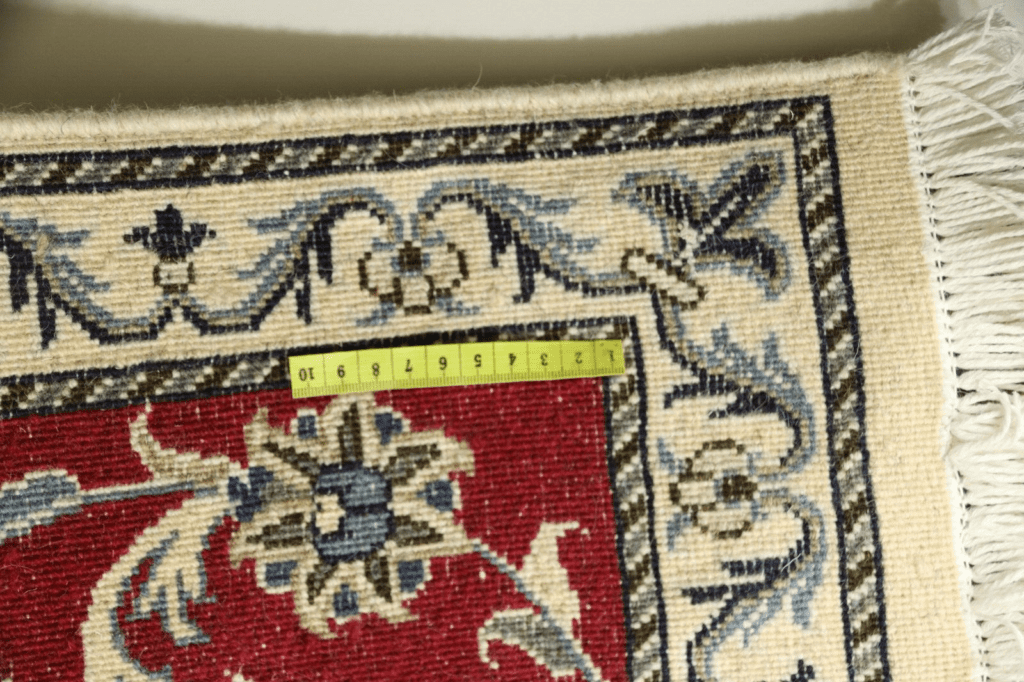
Hand-knotting means that the pile is built by placing each knot individually into the foundation. This process requires careful tension, steady workmanship and accurate control of the warp and pile. The cotton warp acts as the supporting framework to which the pile yarns are attached. After knotting, the rug is trimmed and finished so that the surface becomes even and the design can be read clearly. A hand-knotted piece is therefore not identical to a machine-made floor covering. Small variations belong to the character of an individually made textile, while the overall construction reflects the skill and precision required in traditional rug production.
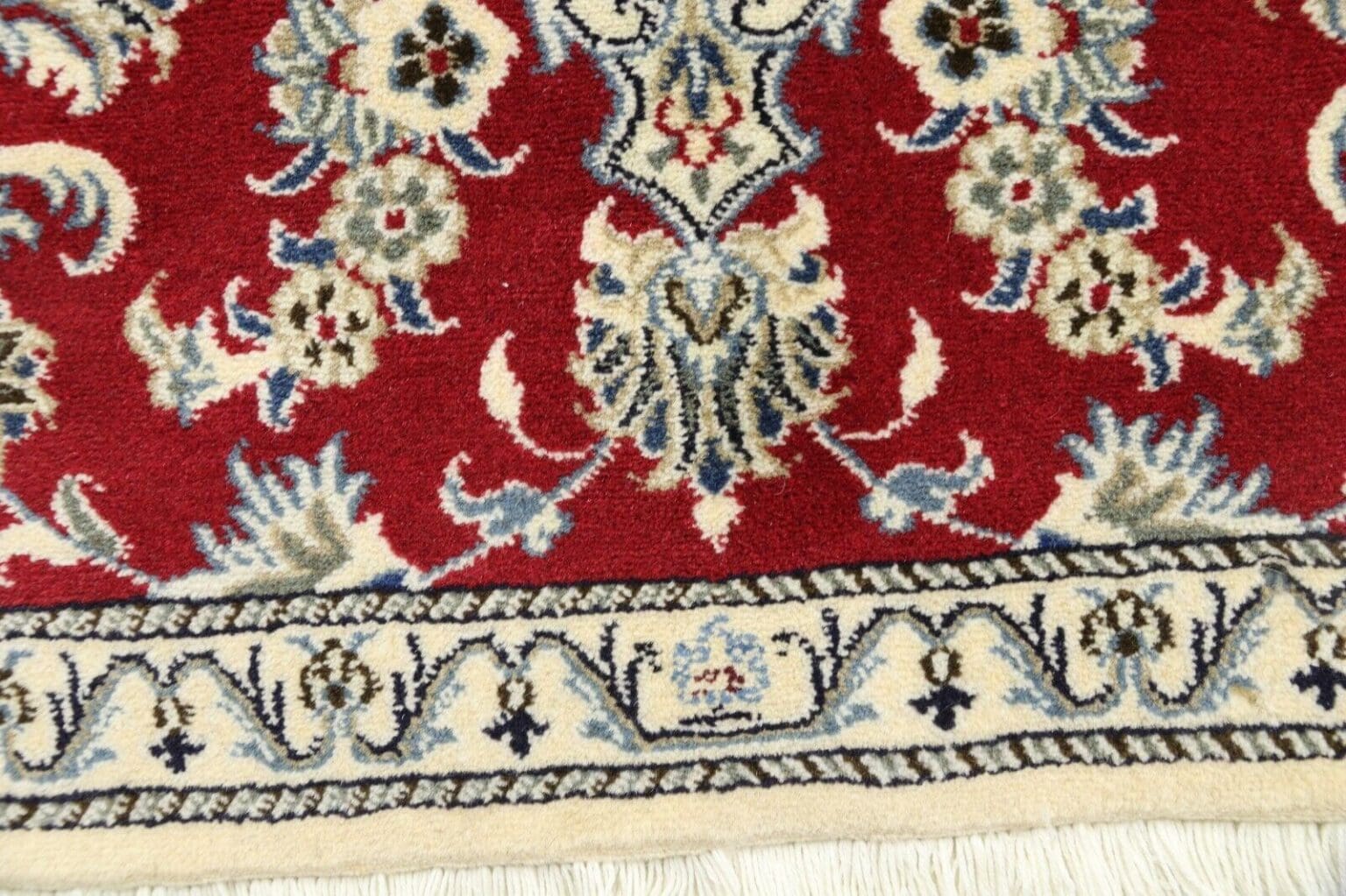
The pile height is approximately eight millimetres. It gives the rug a soft and comfortable surface while allowing the fine drawing of the pattern to remain visible. The dense knotting supports precise outlines and carefully rendered ornamental details. At the same time, the wool base gives the surface a durable textile structure, while the silk content contributes to its subtle reflective quality. The materials are not merely decorative choices: they affect the feel, appearance and way in which the design is expressed.
The rug is described as an individual piece. Its character comes from the relationship between natural fibres, a cotton foundation and manual workmanship. Each stage, from preparing the foundation to arranging the pile and finishing the surface, contributes to the final result. The construction belongs to the established craft tradition of Persian city rugs, in which material selection and knotting precision are closely connected to the clarity of the design.
Origin and Tradition
This rug comes from Persia, present-day Iran, and is associated with Nain. Nain is a city with a well-established tradition of Persian rug making and is recognised as one of the important centres of urban weaving. The Nain tradition is linked with fine workmanship, carefully ordered compositions and a restrained use of colour. Its designs draw on the broader Persian vocabulary of medallions, floral scrolls, borders and geometric organisation, while the execution is known for fine drawing and controlled detail.
Rug production in Nain has a history reaching back to the nineteenth century. The city developed a reputation for woven pieces that combined workshop discipline with the design heritage of Persian court and urban carpets. In a traditional workshop, drawing, colour planning, knotting, trimming and finishing are interdependent stages. The weaver must maintain the intended proportions of the design while repeating small motifs across the field and borders. Fine wool and silk are materials associated with this tradition. Silk can lend definition and luminosity to selected parts of a pattern, while wool provides the principal body and resilience of the pile.
Persian rugs are also records of regional design knowledge. Their patterns are based on motifs that have been adapted, repeated and refined over generations. A Nain composition may use a central organisation, a surrounding field and one or more borders, although the exact arrangement varies from piece to piece. Floral scrolls can soften a structured layout, while geometric divisions provide rhythm and visual balance. The result depends on the relationship between the drawing, the knotting and the colours rather than on any single ornament in isolation.
The name Nain identifies a place and a weaving tradition, not merely a decorative appearance. Persian rug production includes many regional styles, each with its own approach to materials, pattern structure and workshop practice. Nain is commonly connected with light grounds, delicate ornament and a refined balance between floral and geometric forms. This rug belongs to that Persian context and is described as a traditional Oriental/Persian piece. Its hand-knotted construction places it within a craft culture in which technical knowledge is passed from one generation of makers to the next.
The origin also explains why the rug combines a calm overall structure with fine ornament. In urban Persian weaving, a design is usually planned before the knotting begins, allowing the makers to work from a measured pattern and a defined colour arrangement. Repetition is used to create order, but the handmade process keeps the result individual. The cultural tradition is therefore visible both in the motifs and in the disciplined way the composition is built.
Design and Pattern
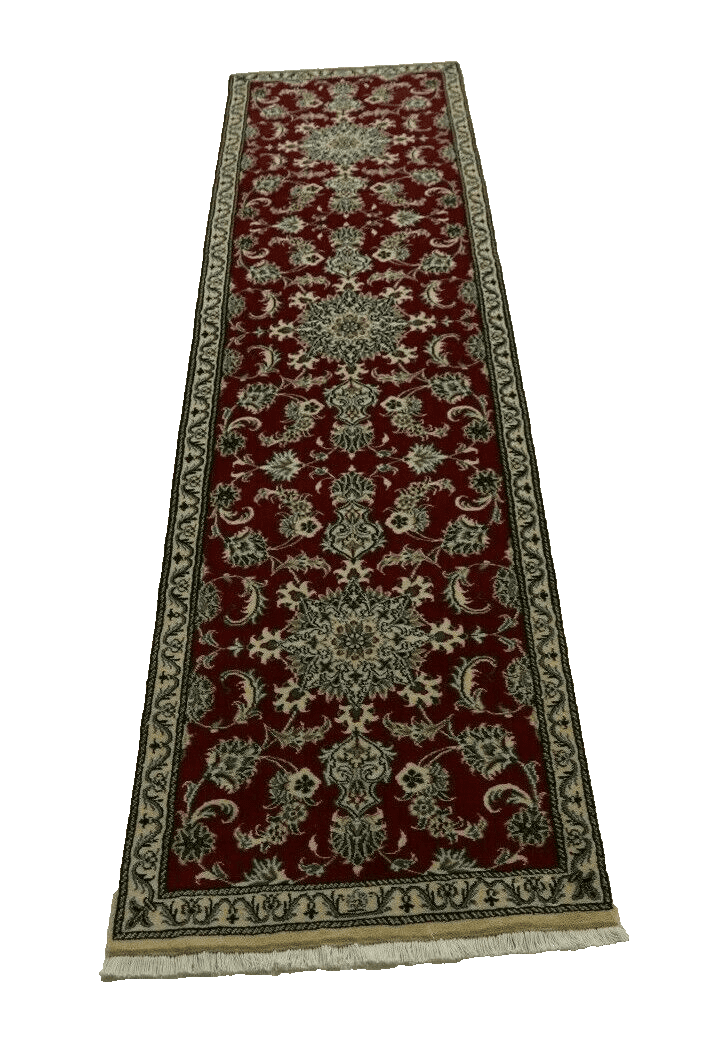
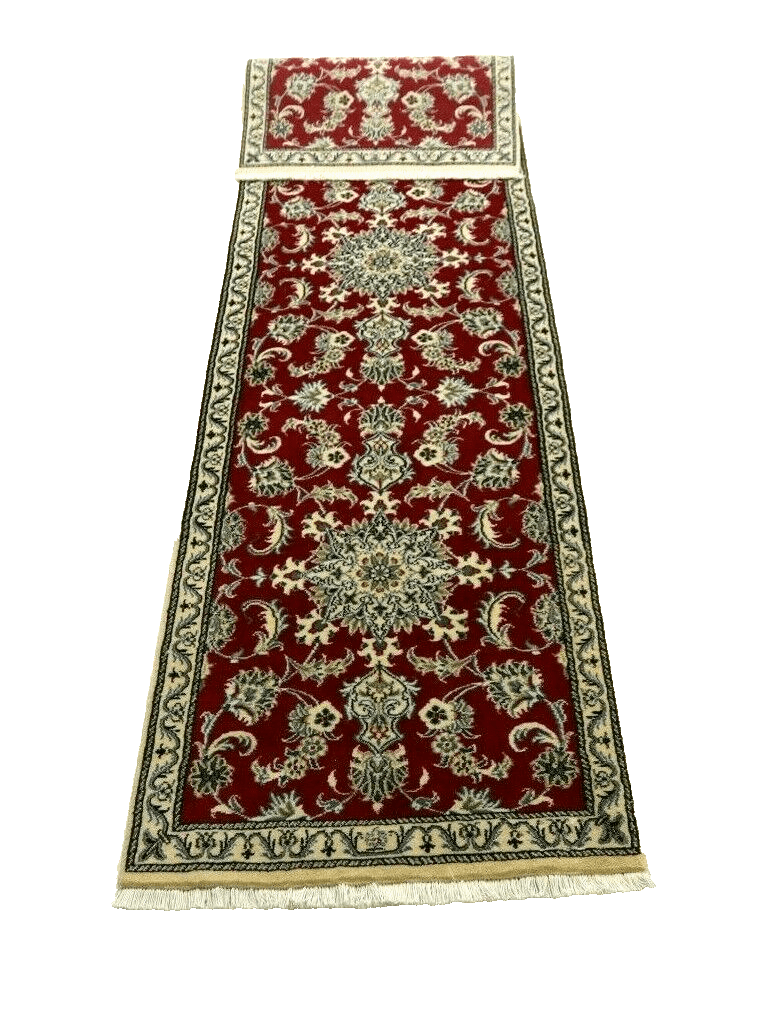
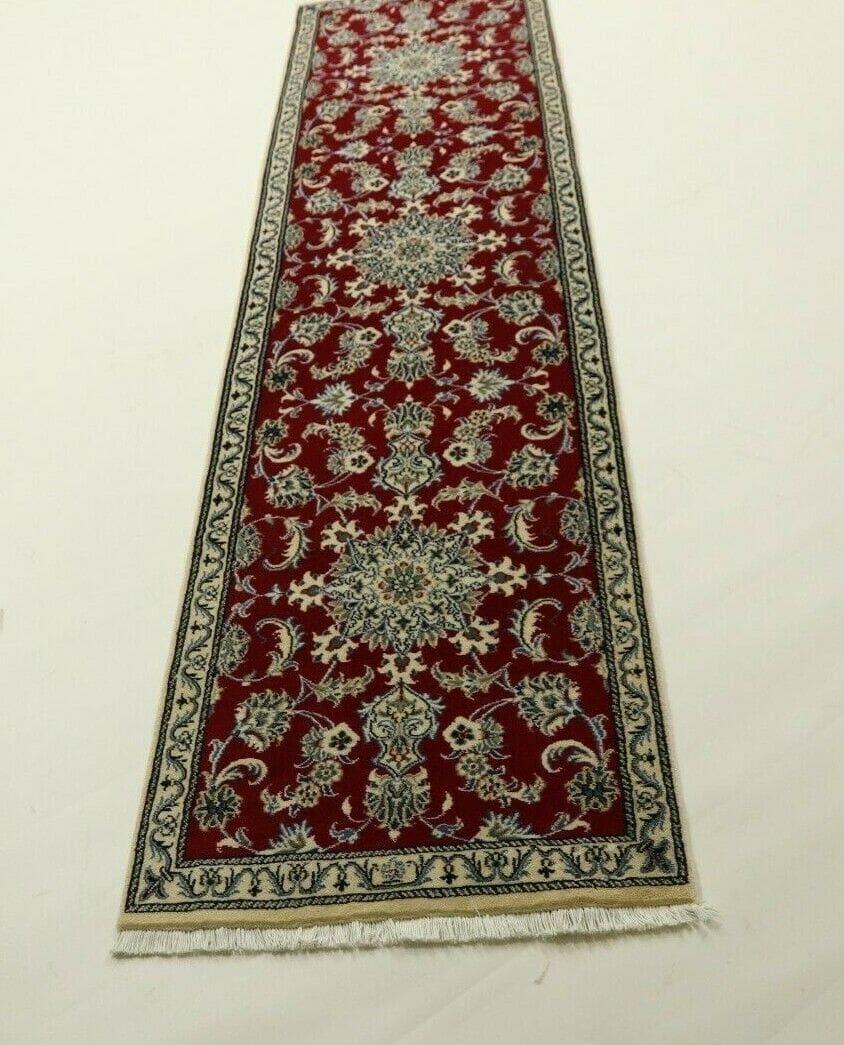
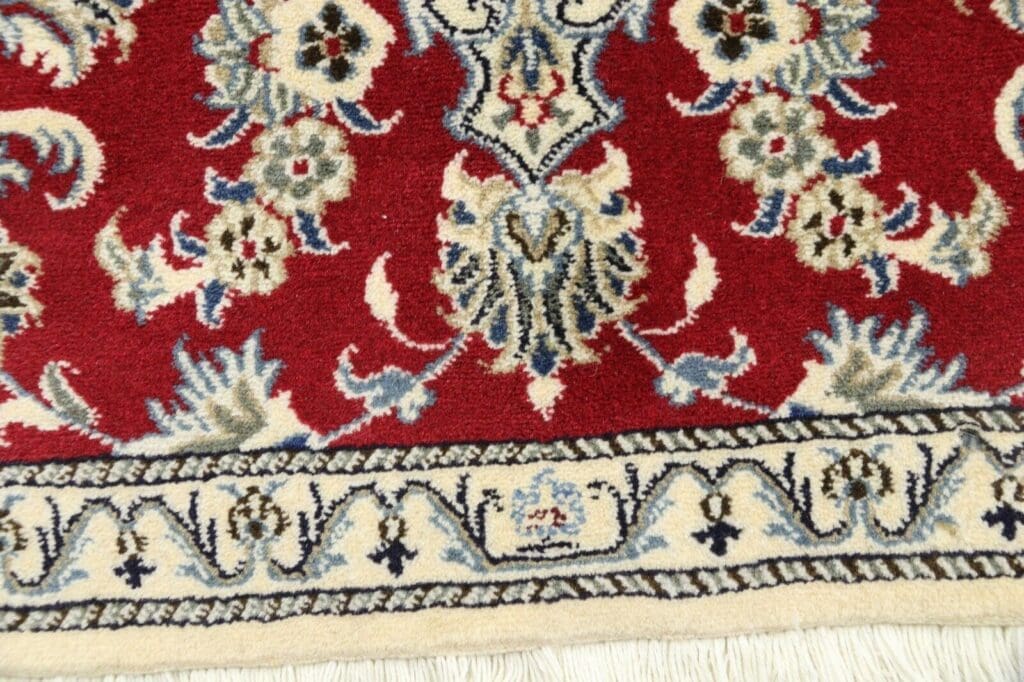
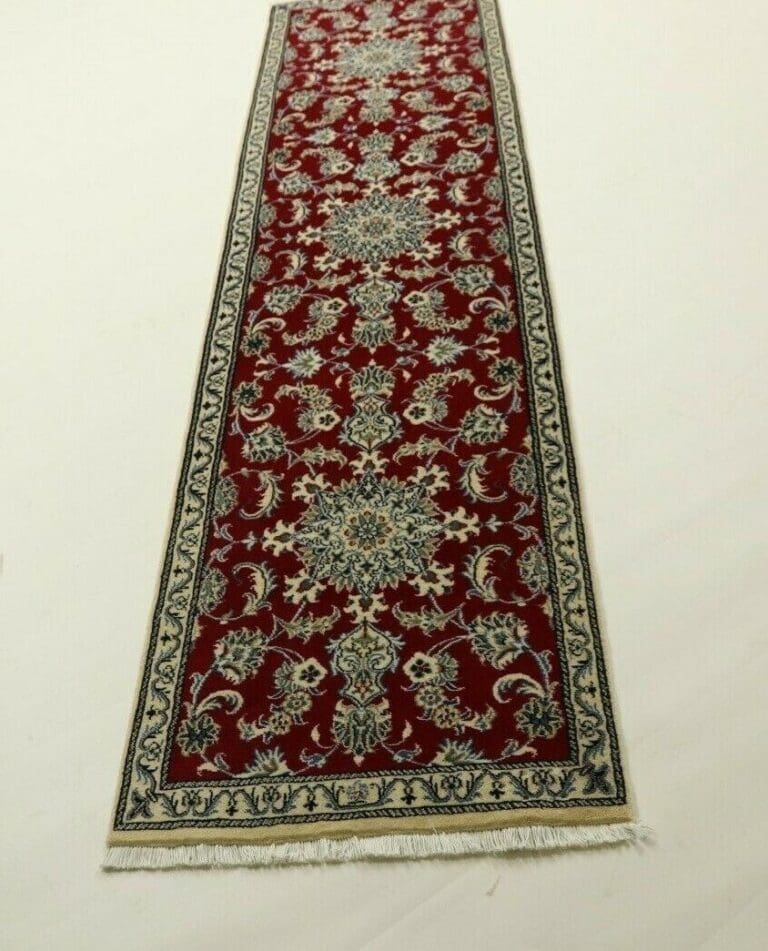
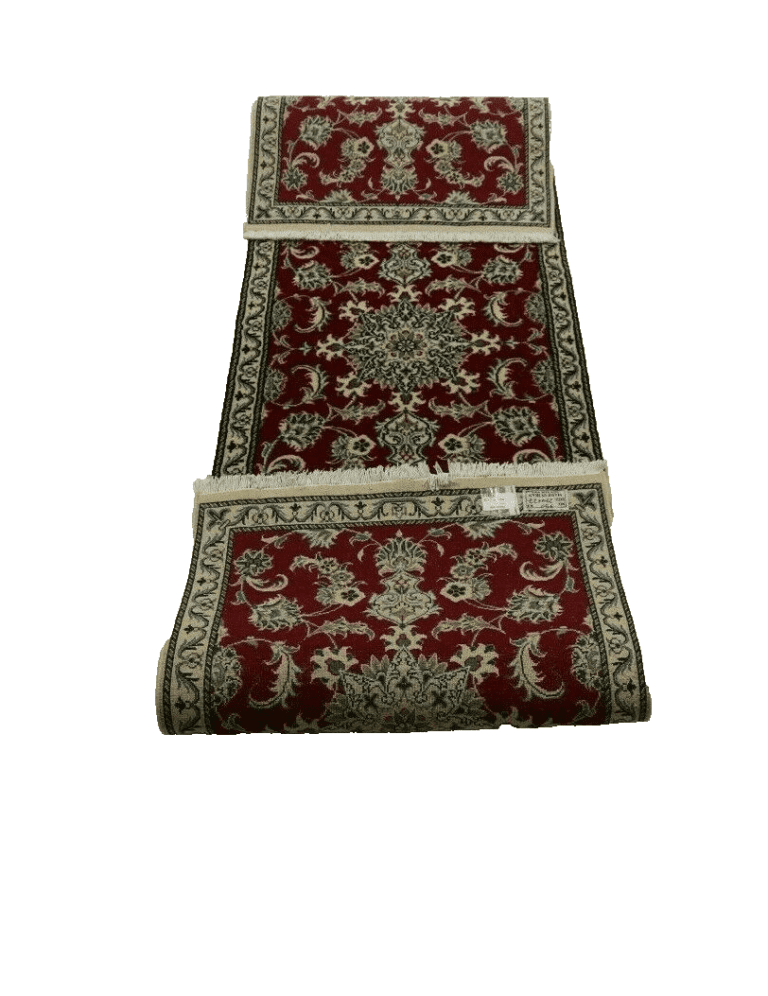
The design is described as traditional Oriental and Persian. Its colour scheme combines white and red. The light ground gives the rug an open appearance and makes the ornament easier to distinguish, while the red elements provide contrast and visual structure. This approach to colour is characteristic of a composition in which a pale field is organised by stronger accents rather than by a uniformly dark palette. The effect is clear and balanced, while remaining connected to the established language of Persian rug design.
Nain rugs are often associated with floral and geometric elements. Floral motifs may include blossoms, leaves, vines and branching arabesques. Geometric forms can define fields, axes, borders or repeated sections. These two forms of drawing are frequently combined rather than treated as separate systems. A regular overall layout may be animated by curving foliage, while flowers and leaves are placed within carefully controlled compartments. Such an arrangement gives the eye both a stable framework and a sequence of finer details to follow.
The fine knotting allows outlines, narrow bands and small repeated motifs to be rendered with precision. A pattern’s effect comes from the balance between its main field, secondary ornaments and borders. When the individual groups are proportioned consistently, the design reads as a coherent whole. The white and red palette reinforces this organisation: the pale areas create visual space, and the red accents guide attention through the composition. Silk may also catch the light differently from wool, adding subtle variation to the surface without changing the traditional character of the pattern.
Floral and geometric motifs belong to a long Persian design vocabulary. Flowers and vines may evoke the natural world, while repeated geometric structures express order, measure and continuity. Their meanings are not limited to one universal interpretation; within a rug, they function primarily as elements of a carefully arranged visual system. The Nain tradition uses this vocabulary in a refined and finely drawn manner. The design can therefore appear classical without being tied to a particular short-lived interior trend.
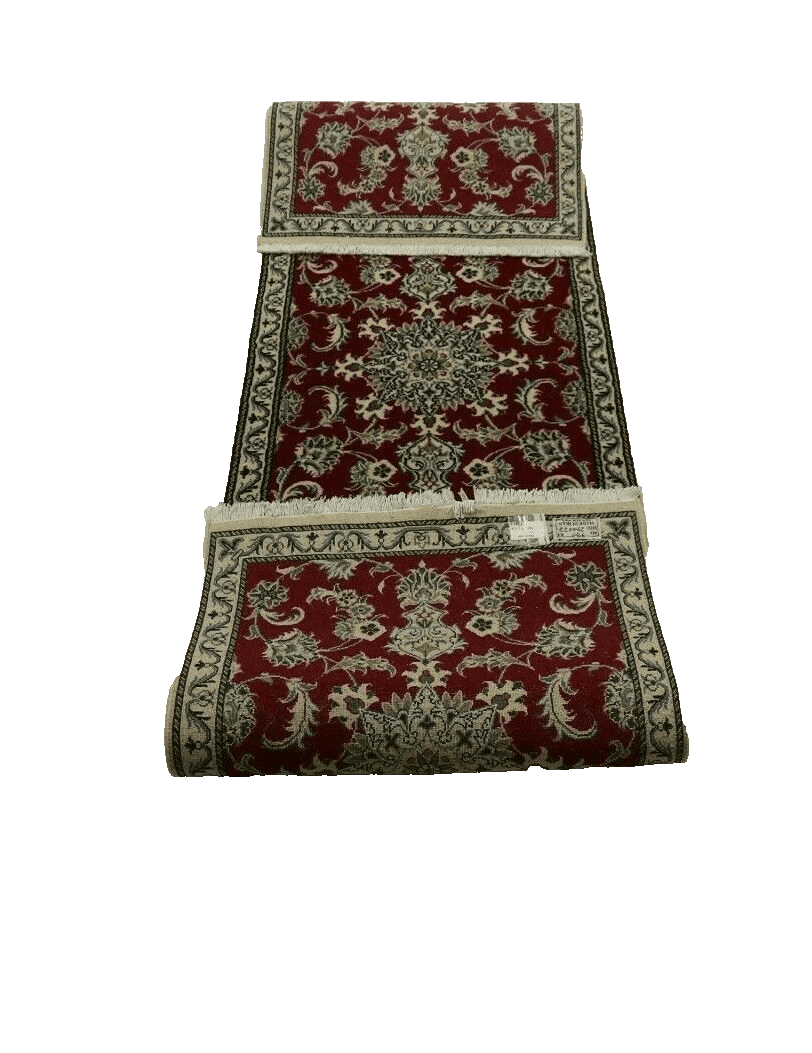
As a runner, the rug is suited to elongated areas such as hallways, passages and transitional spaces. The description also identifies it as suitable for all rooms. It can define a route through an open interior, sit alongside furniture in a living room or bring a patterned accent to a dining area. The white and red colours can be coordinated with neutral furnishings or used as a deliberate contrast. In every setting, the pattern remains the principal decorative feature, while the narrow format supports placement where a broad rug would not be appropriate.
Special Features
The rug has an approximate knot density of 300,000 knots per square metre, a feature that supports the clear and precise rendering of the design. It combines virgin wool and silk in the pile with a cotton warp, and it is made by hand. The rug is new and in perfect condition. It is offered as a one-off individual piece. Its use of natural materials is also described as sustainable and environmentally friendly. These features connect the practical role of a floor covering with the craft tradition of Persian hand-knotting.
The approximately eight-millimetre pile gives the surface a soft and comfortable feel. Wool provides the main textile body, while silk adds a fine sheen and a smoother visual finish. The elongated format makes the rug versatile in different rooms, and the description specifically states that it is suitable for underfloor heating. Its white and red colour scheme, fine construction and traditional Nain association are the defining characteristics of this individual rug.
FAQ
How should I care for my Oriental rug?
Vacuum the rug regularly and gently to remove dust and loose dirt before they settle into the pile. If something is spilled, treat the spot promptly with a soft, damp cloth. Avoid aggressive detergents, bleach and other unsuitable household cleaners, as they can affect natural fibres, silk and colour. Do not saturate the rug with water or rub a mark forcefully, since excessive moisture and friction can damage the surface. Direct, strong sunlight should also be avoided because it may lead to colour changes over time. For a comprehensive cleaning, a specialist rug cleaner is the appropriate choice.
Is this rug suitable for underfloor heating?
Yes. The rug is suitable for use with underfloor heating. Its hand-knotted construction and stated materials allow heat to pass through while the pile remains comfortable underfoot. It should be laid flat on a suitable, even surface, and the heating should operate evenly. Check periodically that the rug has not shifted or developed folds. Underfloor heating does not alter its role as a textile floor covering: it can still provide a soft surface and display its traditional Persian pattern while the room is heated from below.
Where is the best place to position the Oriental rug?
The rug can be used in a living room, hallway or dining area, and it is described as suitable for all rooms. As a runner, it works particularly well in elongated spaces, passages and areas between furniture. In an open-plan interior it can mark a route or visually connect separate zones. It can also serve as a patterned addition beside existing furnishings. When choosing a location, consider the white and red colour scheme, the long format and the need for the design to remain visible. A level surface is important, and prolonged direct sunlight should be avoided to help preserve the colours.
To provide the best experiences, we use technologies like cookies to store and/or access device information. Consenting to these technologies will allow us to process data such as browsing behavior or unique IDs on this site. Not consenting or withdrawing consent, may adversely affect certain features and functions.
Functional Always active
The technical storage or access is strictly necessary for the legitimate purpose of enabling the use of a specific service explicitly requested by the subscriber or user, or for the sole purpose of carrying out the transmission of a communication over an electronic communications network.
Preferences
The technical storage or access is necessary for the legitimate purpose of storing preferences that are not requested by the subscriber or user.
Statistics
The technical storage or access that is used exclusively for statistical purposes.The technical storage or access that is used exclusively for anonymous statistical purposes. Without a subpoena, voluntary compliance on the part of your Internet Service Provider, or additional records from a third party, information stored or retrieved for this purpose alone cannot usually be used to identify you.
Marketing
The technical storage or access is required to create user profiles to send advertising, or to track the user on a website or across several websites for similar marketing purposes.
 SECURE PAYMENT
 SHIPPING PARTNERS


