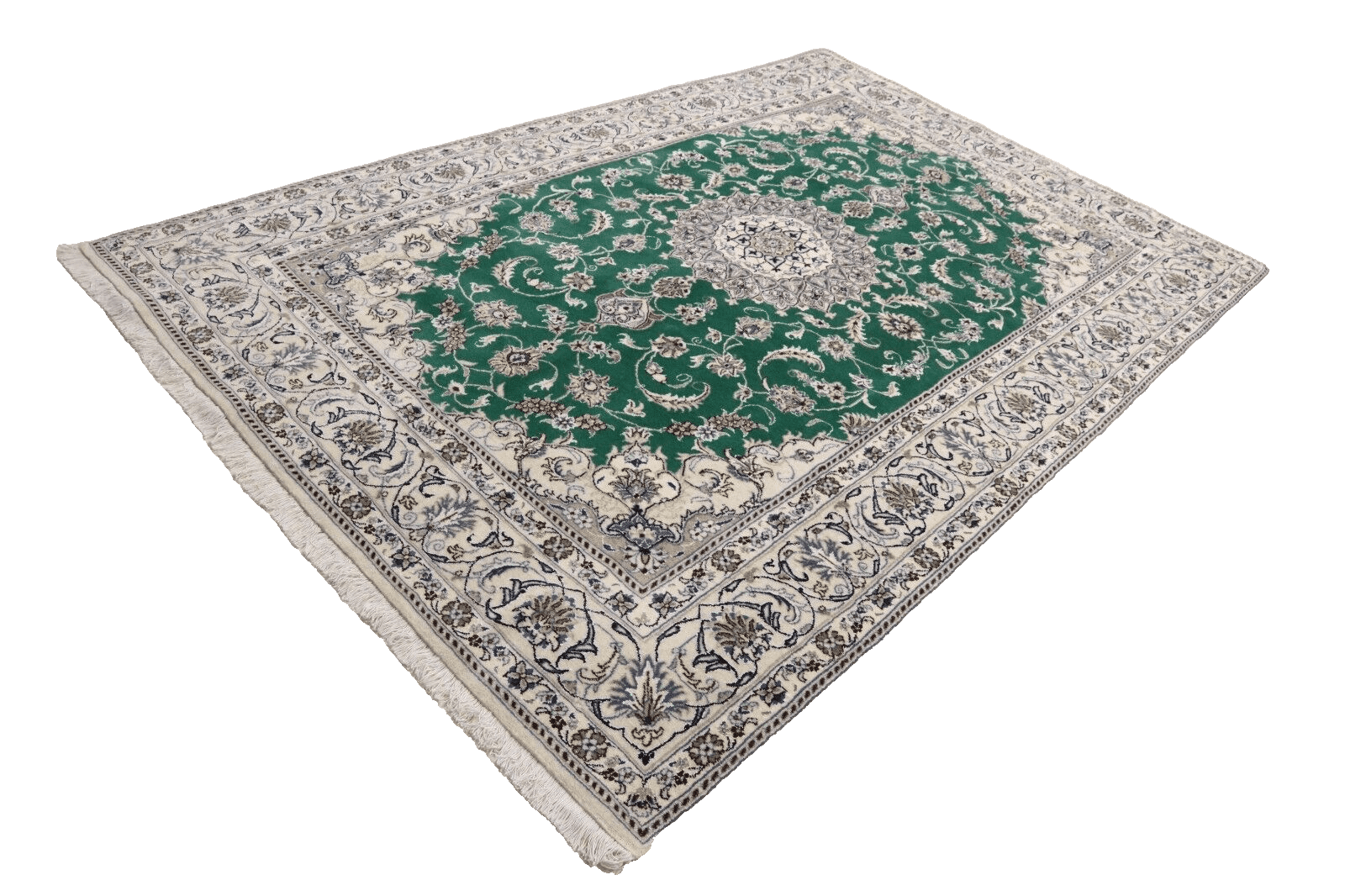
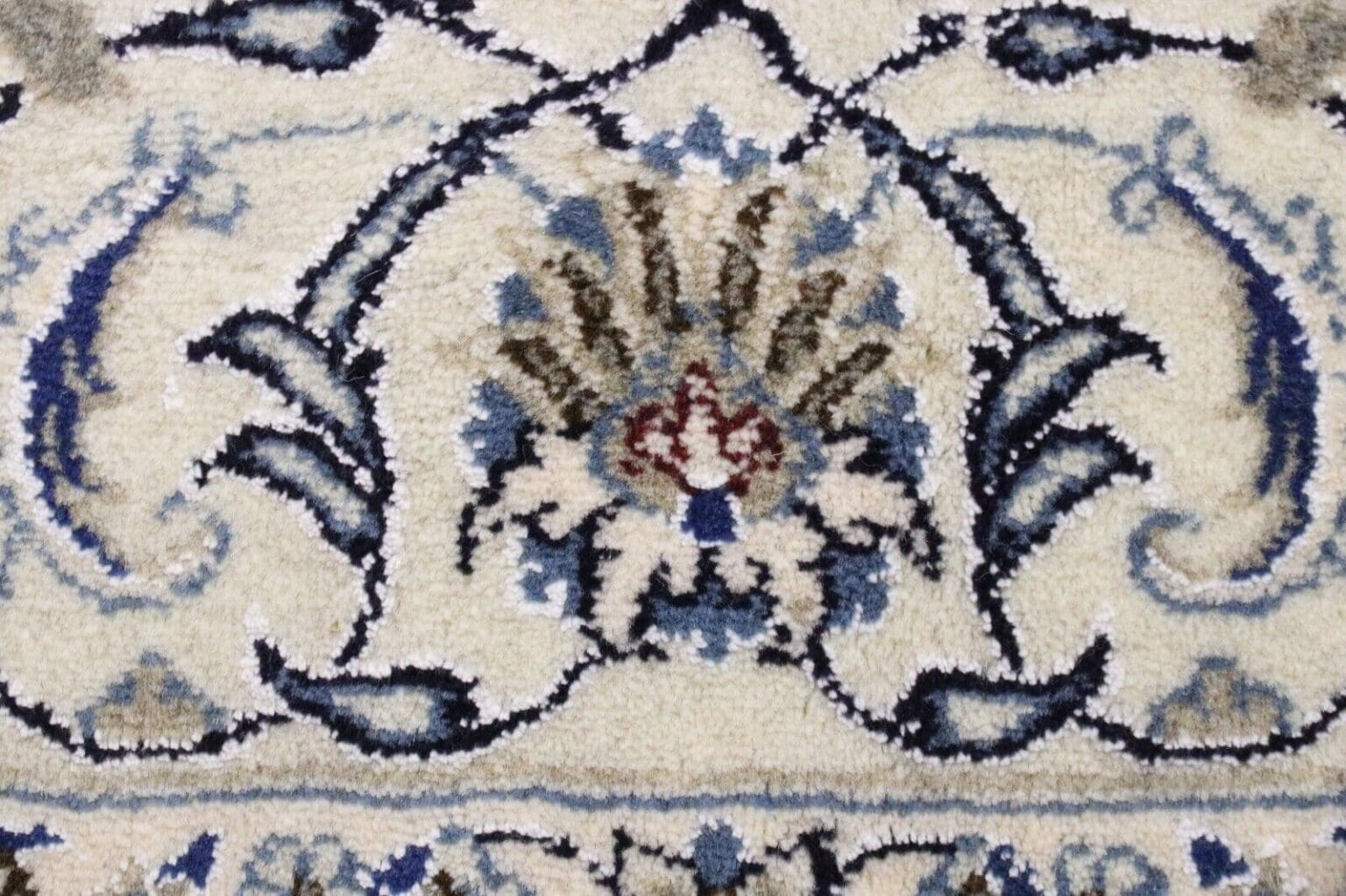
This Nain Persian rug is hand-knotted, with a pile made from virgin wool and silk. The two pile materials give the surface different tactile and visual qualities. Virgin wool is a traditional rug fibre valued for its resilient structure and pleasantly firm handle. Silk introduces a smoother element and can lend finer light reflections to the pile. Together, these materials create a surface led by wool and refined by silk.
The warp is made from cotton. It forms the structural foundation of the rug and provides the threads around which the knots are tied. In hand-knotting, each knot is placed individually around the warp and then secured with weft threads. The process proceeds row by row at a loom rather than through mechanical production. Its appearance and structure therefore result from the coordinated work of the knotter, the yarns and the drawn pattern.
The stated knot density is one of the rug’s technical characteristics. A dense knot structure allows small ornaments, narrow outlines and carefully differentiated areas to be rendered with greater definition. In a Nain design, this precision supports the ordered appearance associated with fine Persian rugs. The material construction combines a wool and silk pile with a cotton warp, while the rug’s new condition means that it has not previously been used. It is described as being in perfect condition.
Origin and Tradition
This rug comes from Persia and is identified as a Nain Persian rug. Nain is one of the established traditions within Persian rug production. The town and its surrounding area are associated with finely drawn designs, disciplined compositions and careful knotting. Nain rugs are often recognised for their detailed ornament, balanced layouts and controlled use of line. Their visual language reflects the Persian practice of organising a central field, surrounding borders and smaller transitional motifs into a coherent whole.
Persian rug culture developed through the interaction of urban workshops, village production and nomadic weaving traditions. Urban workshops often worked with prepared designs and inherited pattern systems, while the actual knotting remained dependent on the experience of individual craftspeople. This relationship between a planned composition and manual execution is central to the character of a hand-knotted rug. Even when a design follows an established tradition, the completed piece is formed through a particular sequence of manual decisions.
Nain is commonly associated with fine knotting and precise drawing. Such a technical approach is especially suitable for compositions containing delicate flowers, scrolling foliage, medallions or carefully framed geometric details. The Nain tradition is not limited to one fixed layout. It includes several approaches to the relationship between field, border and ornament, united by an emphasis on clarity, balance and detailed execution.
Persian rugs are traditionally understood through more than their colours alone. The arrangement of the motifs, the treatment of the border, the relation between the central field and its surroundings, the construction and the chosen fibres all contribute to their identity. The reference to Persia places this rug within the Persian cultural and craft tradition. The name Nain specifies the regional design and production tradition; it should not be confused with the names of other Persian weaving centres.
Related Persian rug traditions include Nain and Tabriz, each with its own established design vocabulary. Nain is frequently associated with fine patterns and a high knot density, while Tabriz is known for vivid colour combinations and complex compositions. Isfahan is another important Persian centre, often linked with elaborate floral designs and bright colours. These comparisons describe broader traditions in Persian rug making and do not change the origin designation of this particular rug.
Design and Pattern
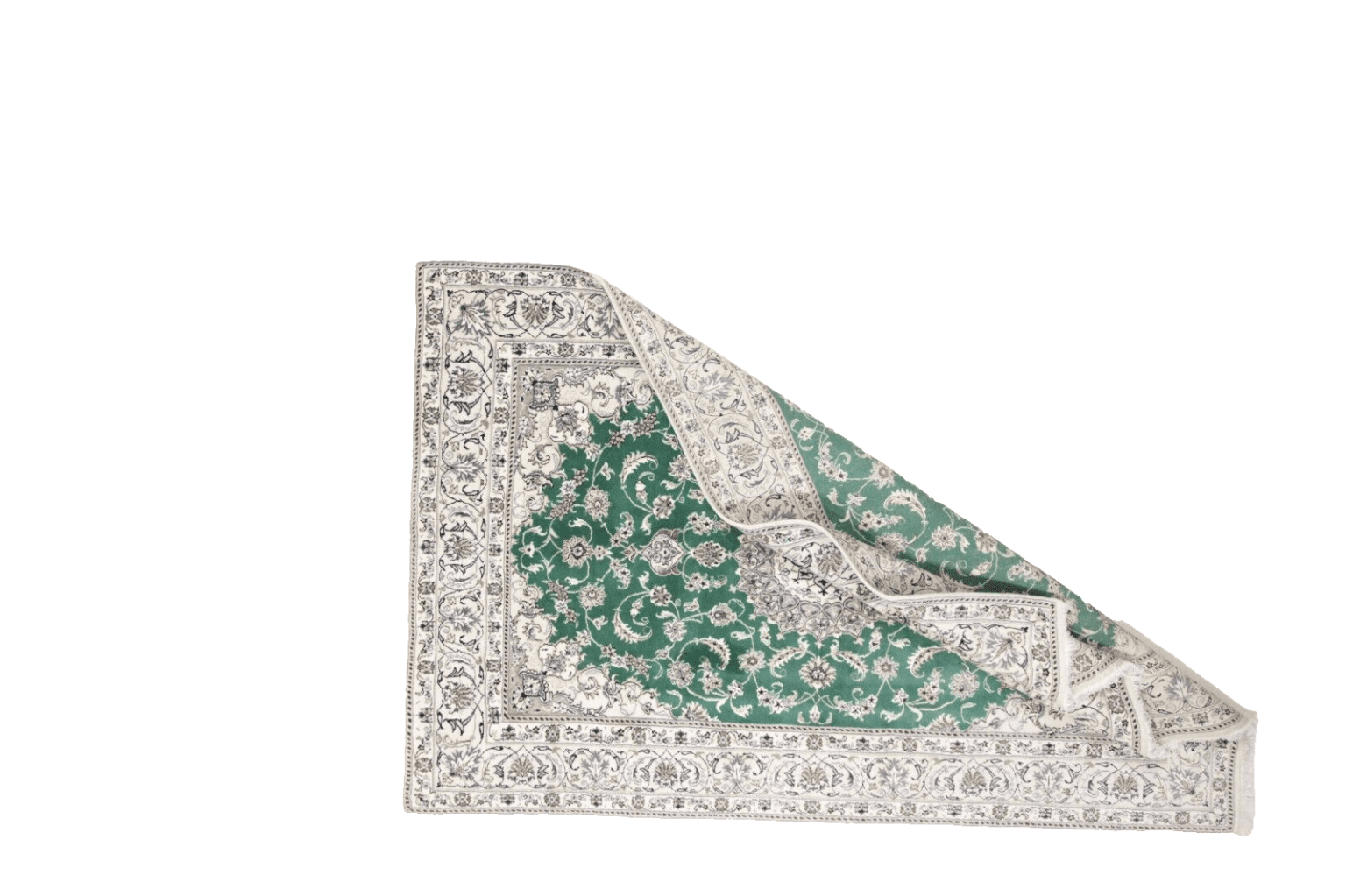
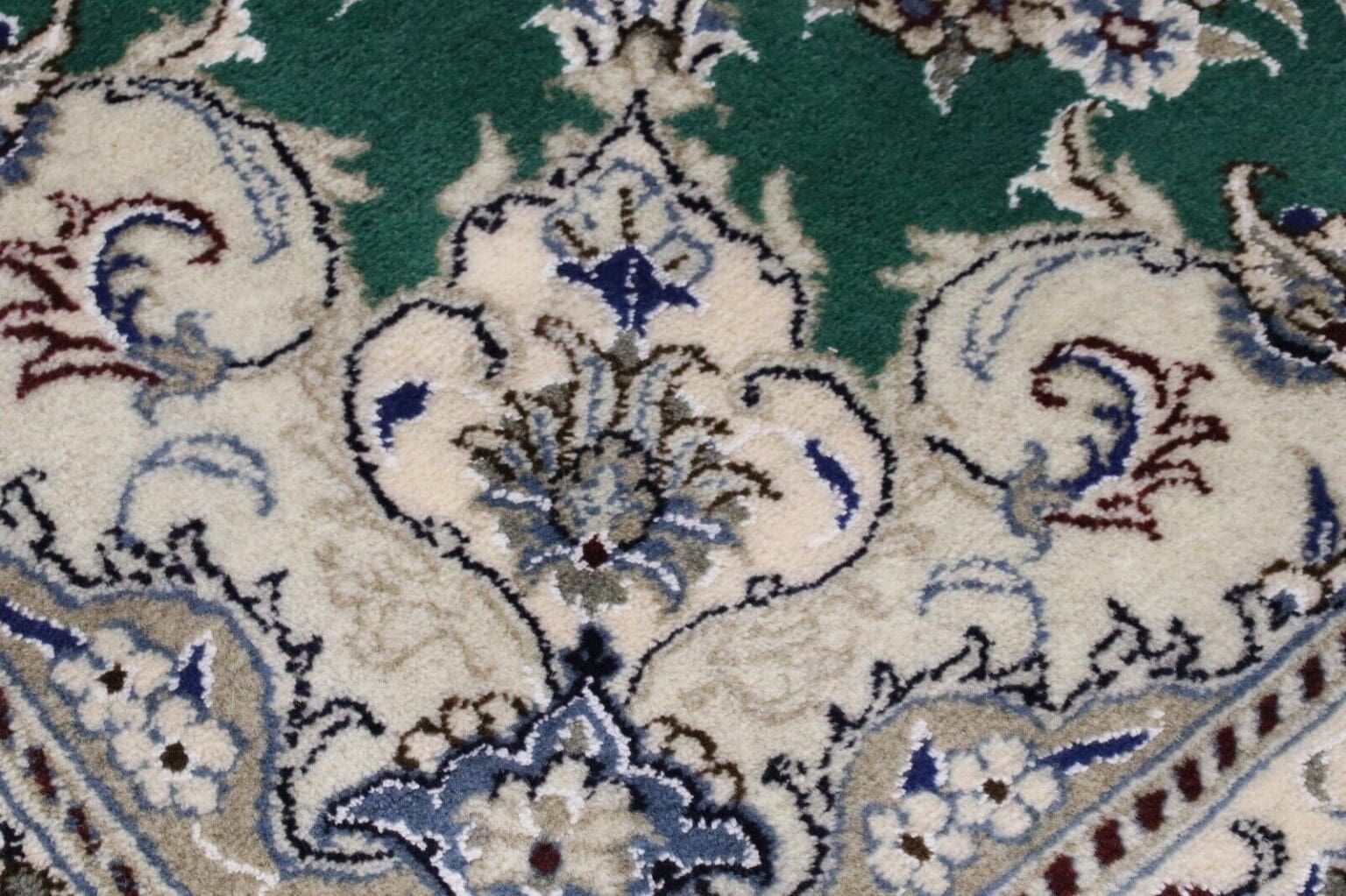
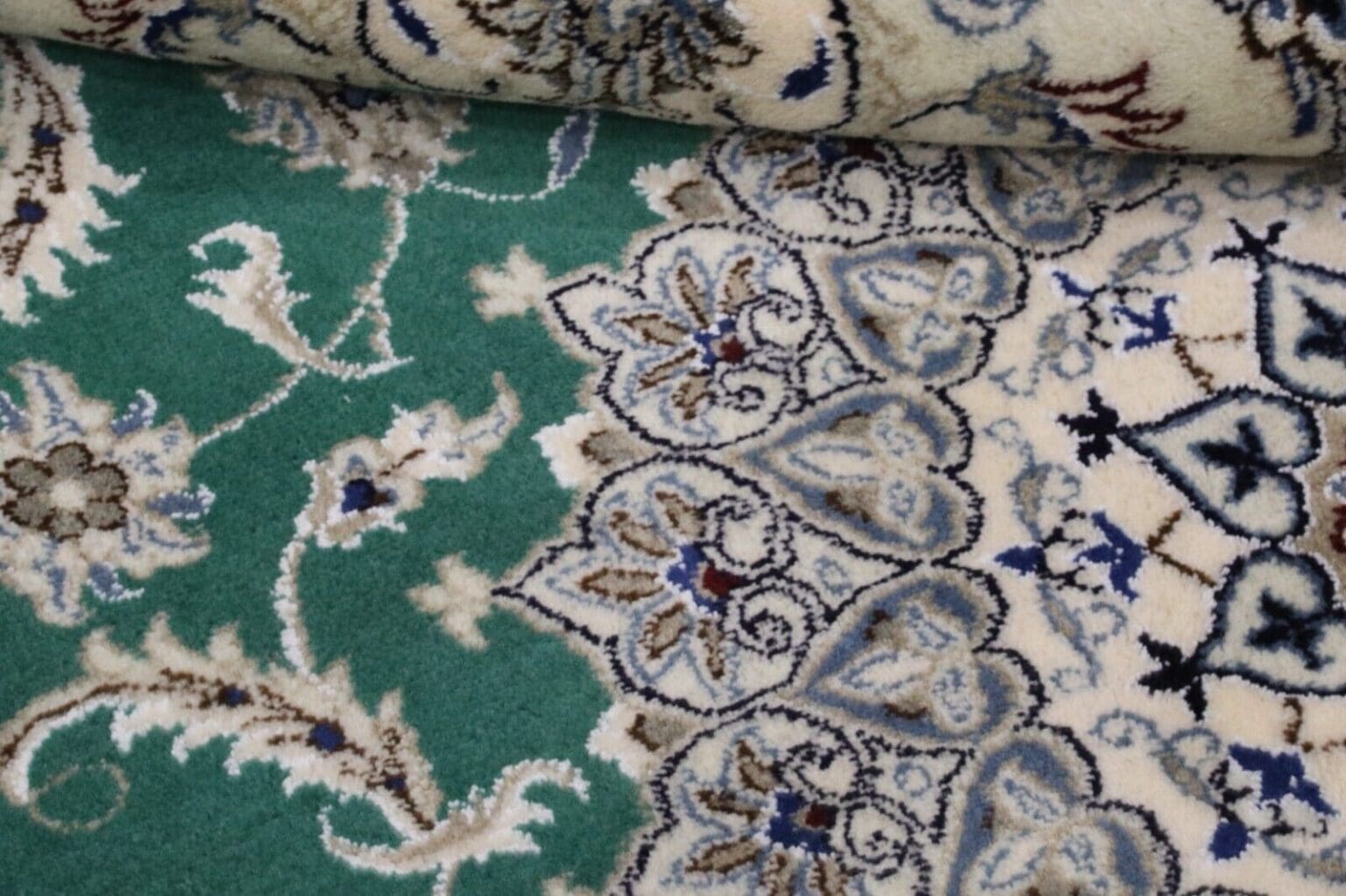
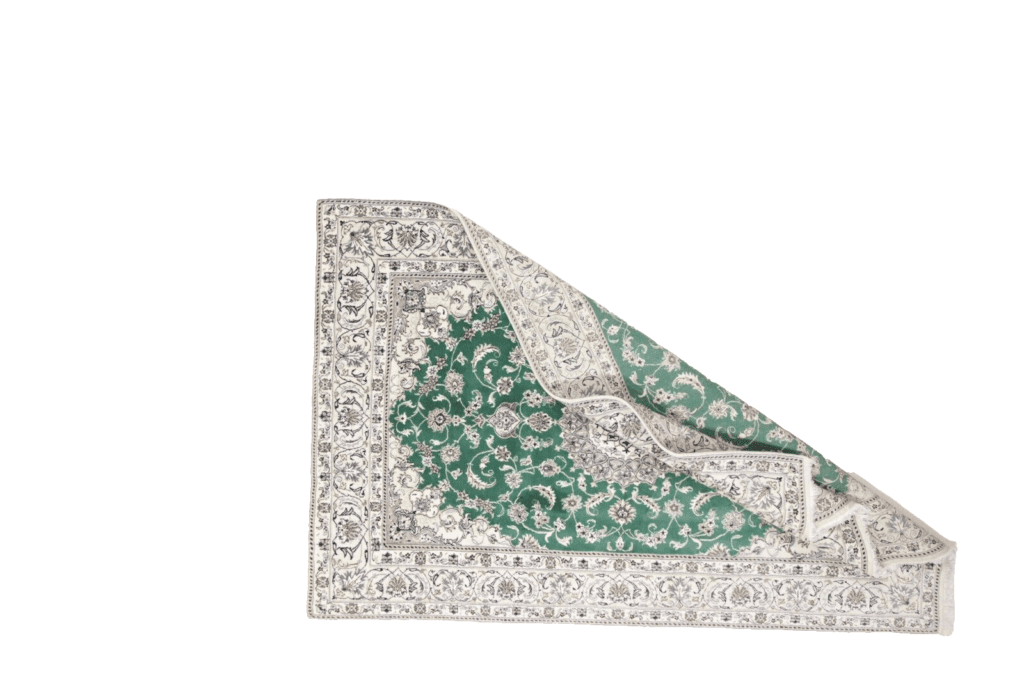
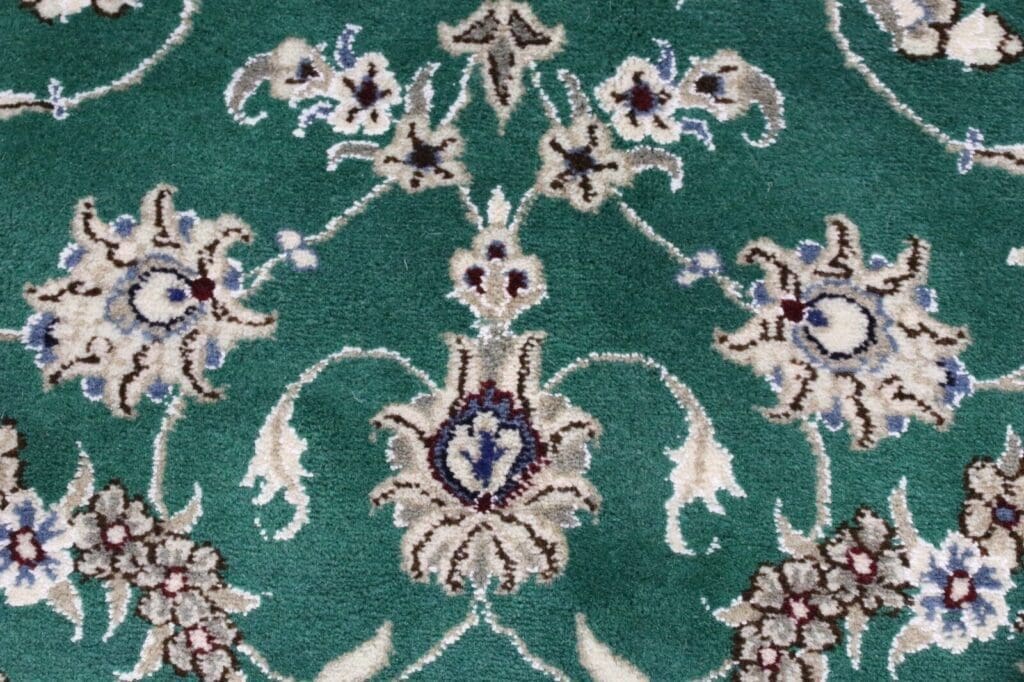
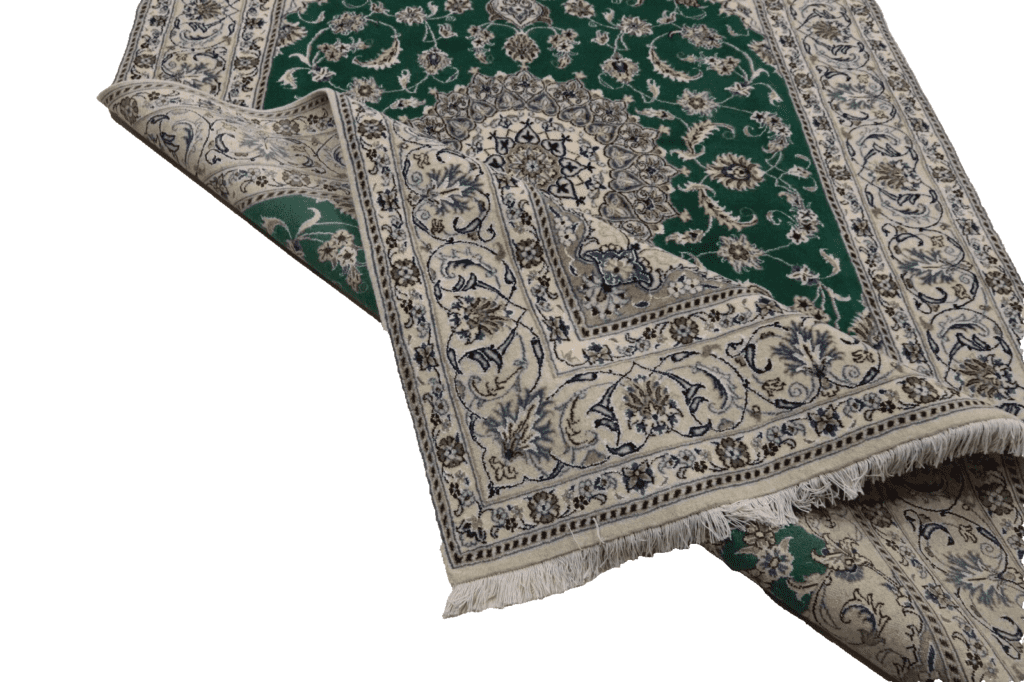
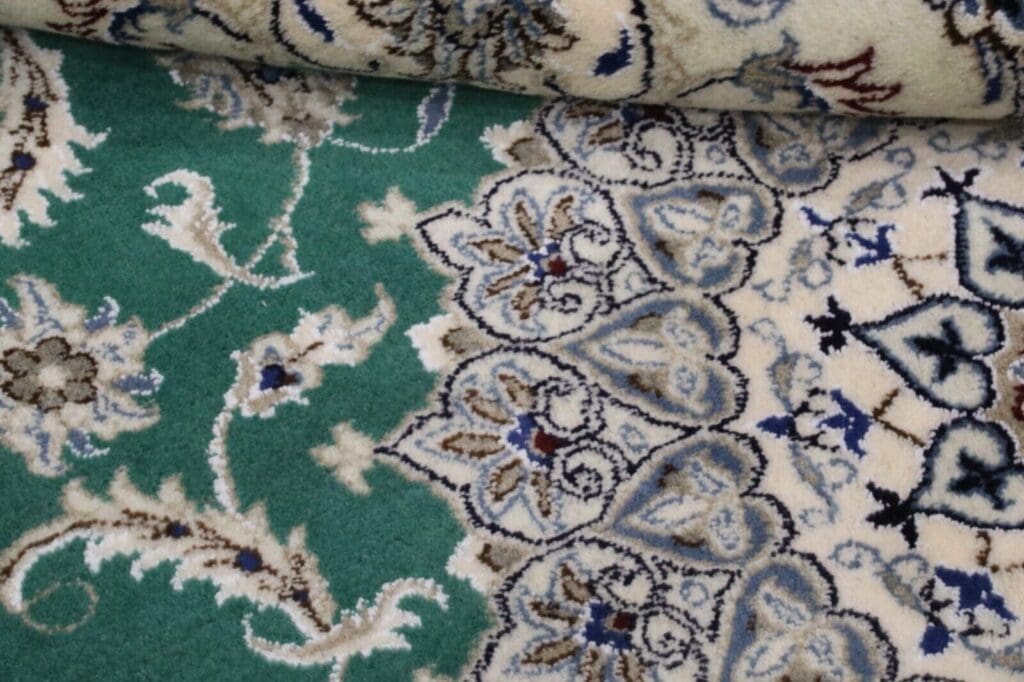
The design is described as traditional Oriental-Persian, with green given as its colour. The colour establishes the main visual field, while the pattern brings the separate areas of the composition into relation. Persian rugs often organise their design around a central field, one or more surrounding borders and smaller ornaments that mediate between them. A composition may be floral, geometric or combine both approaches. The source describes this rug’s pattern as floral or geometric without assigning it a more specific named motif.
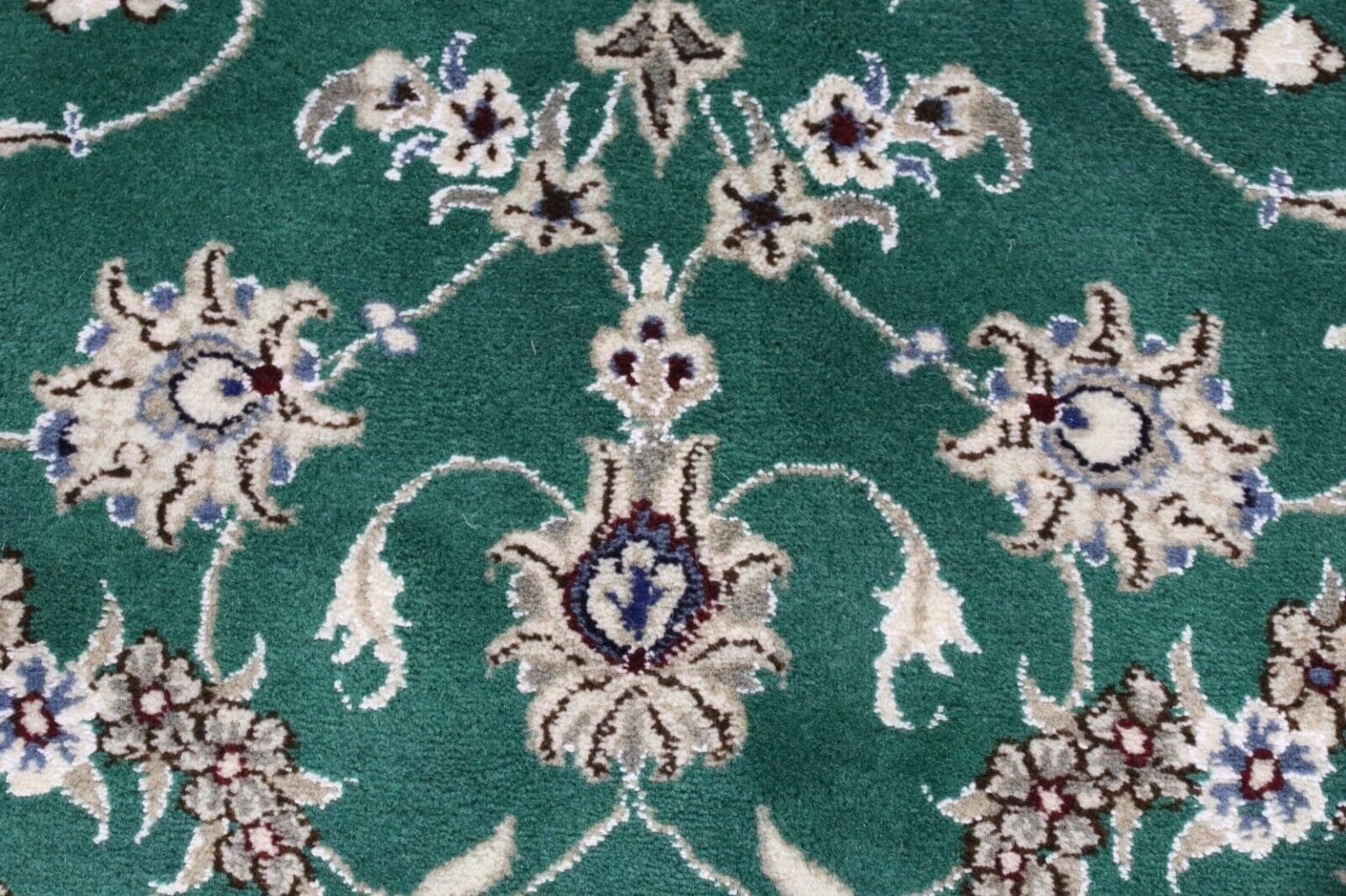
Floral ornament is one of the major forms in Persian rug design. Flowers, leaves, vines and rosettes are usually transformed into rhythmic decorative elements rather than copied as literal botanical images. Repetition, symmetry and measured spacing create continuity across the field. A medallion may focus the design towards the centre, while a continuous vine can distribute the ornament more evenly. The chosen arrangement depends on the individual design and its intended balance.
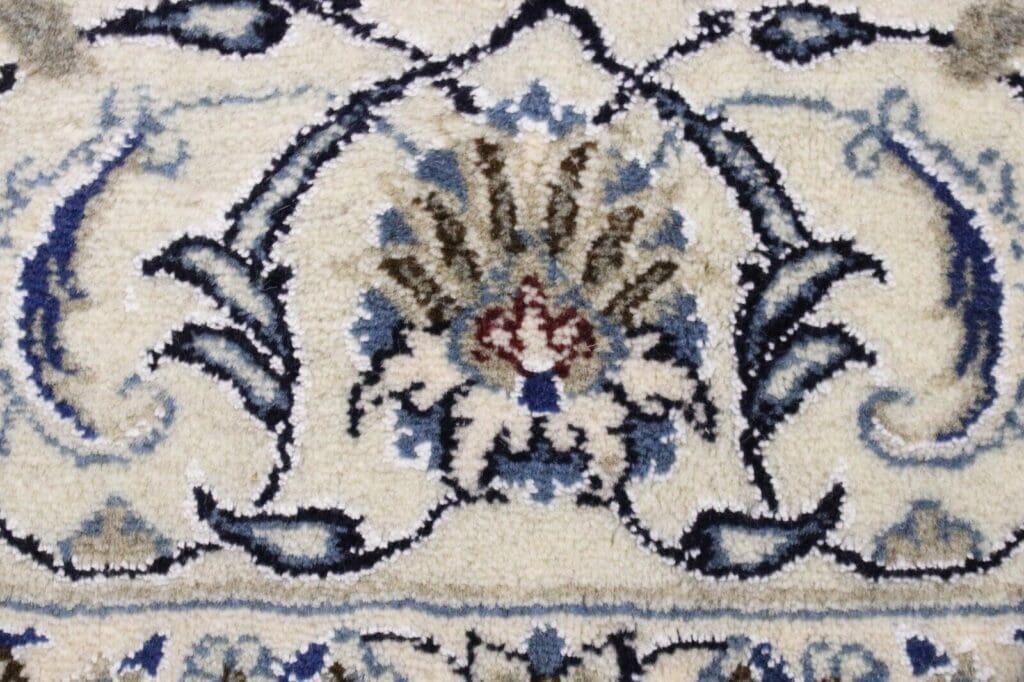
Geometric ornament is based more visibly on lines, angles, enclosed shapes and repeated units. Stars, stylised flowers and stepped or framed forms can establish a clear rhythm. Floral designs can also rely on geometric planning, since borders and field divisions give the softer plant forms their structure. In Persian design, natural references and abstraction therefore often work together. Curving vines, crisp outlines and repeated border elements can belong to the same ordered composition.
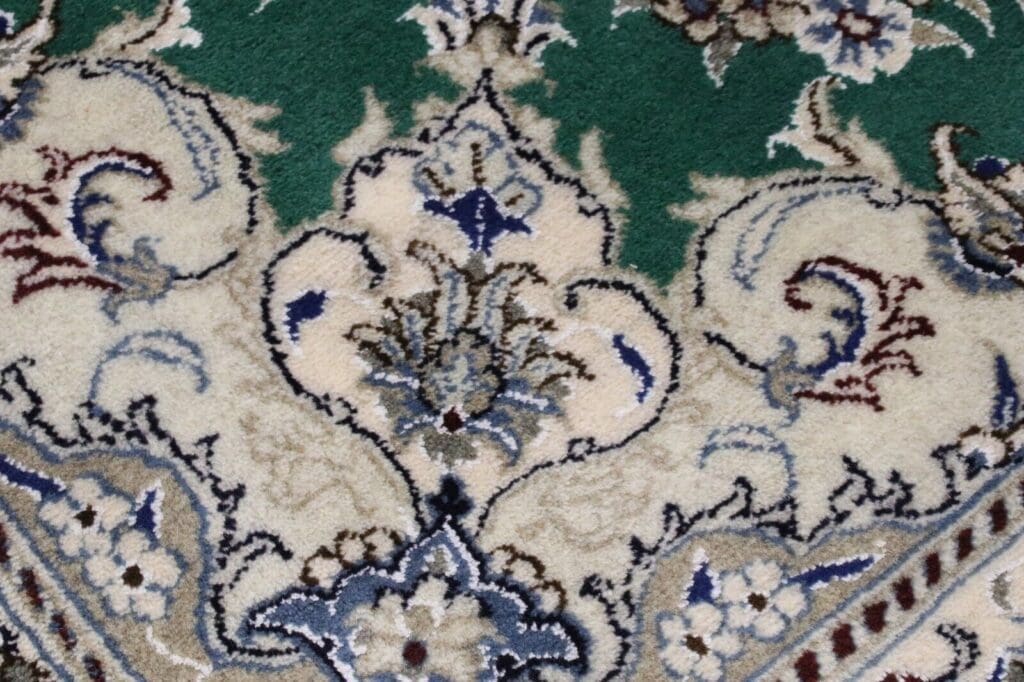
The green colour can be used as a unifying field while contrasts within the pattern distinguish the principal ornament from its background. Persian colour design is not merely a matter of filling areas. Colour can define hierarchy, separate motifs, sharpen outlines and create depth between layers of ornament. Silk in the pile may respond to changing light with a finer sheen, whereas wool contributes a quieter, more tactile surface. The interaction depends on the arrangement of the pile and the colours used in the design.
A high knot density is particularly useful where a design calls for small-scale detail, short contour lines and carefully controlled transitions. In the Nain tradition, this technical precision is often used to maintain a clean relationship between the principal field and its surrounding ornament. The pattern description for this rug remains deliberately at the stated level: traditional Oriental-Persian, green, and floral or geometric. No particular medallion, border formula or named motif is assigned beyond those facts.
Special Features
The rug is new and is described as being in perfect condition. It is a one-off piece and comes with a rug certificate confirming its authenticity. These details concern this individual rug and its supplied documentation. A hand-knotted rug is produced through a distinct sequence of manual work, so the combination of its materials, pattern and colour remains specific to the piece.
This rug is suitable for use with underfloor heating and is described as pet-friendly. Those features concern its intended practical use as well as its decorative role. Suitability for underfloor heating stands alongside the rug’s hand-knotted construction and fibre composition. Regular, appropriate care helps preserve the pile. When heavier soiling occurs, professional cleaning is recommended so that the wool and silk can be treated correctly.
FAQ
What defines a Nain Persian rug?
A Nain Persian rug belongs to a Persian weaving tradition associated with fine drawing, ordered layouts and carefully rendered detail. Its design may organise floral and geometric elements through a central field, borders and smaller connecting ornaments. This rug combines hand-knotting, a virgin wool and silk pile, a cotton warp and a traditional Oriental-Persian design in green. Its stated high knot density is another technical feature relevant to the detailed appearance of Nain rugs.
How should this Persian rug be cared for?
Vacuum the rug regularly using low suction so that loose dirt can be removed without placing unnecessary stress on the pile. Ventilation can help keep the rug fresh. If more substantial soiling occurs, professional cleaning is advisable because wool and silk require a suitable treatment method. Spilled liquids should be absorbed promptly rather than rubbed vigorously into the surface. Care should be carried out gently and consistently, particularly where the pile has fine detail.
How can its authenticity be assessed?
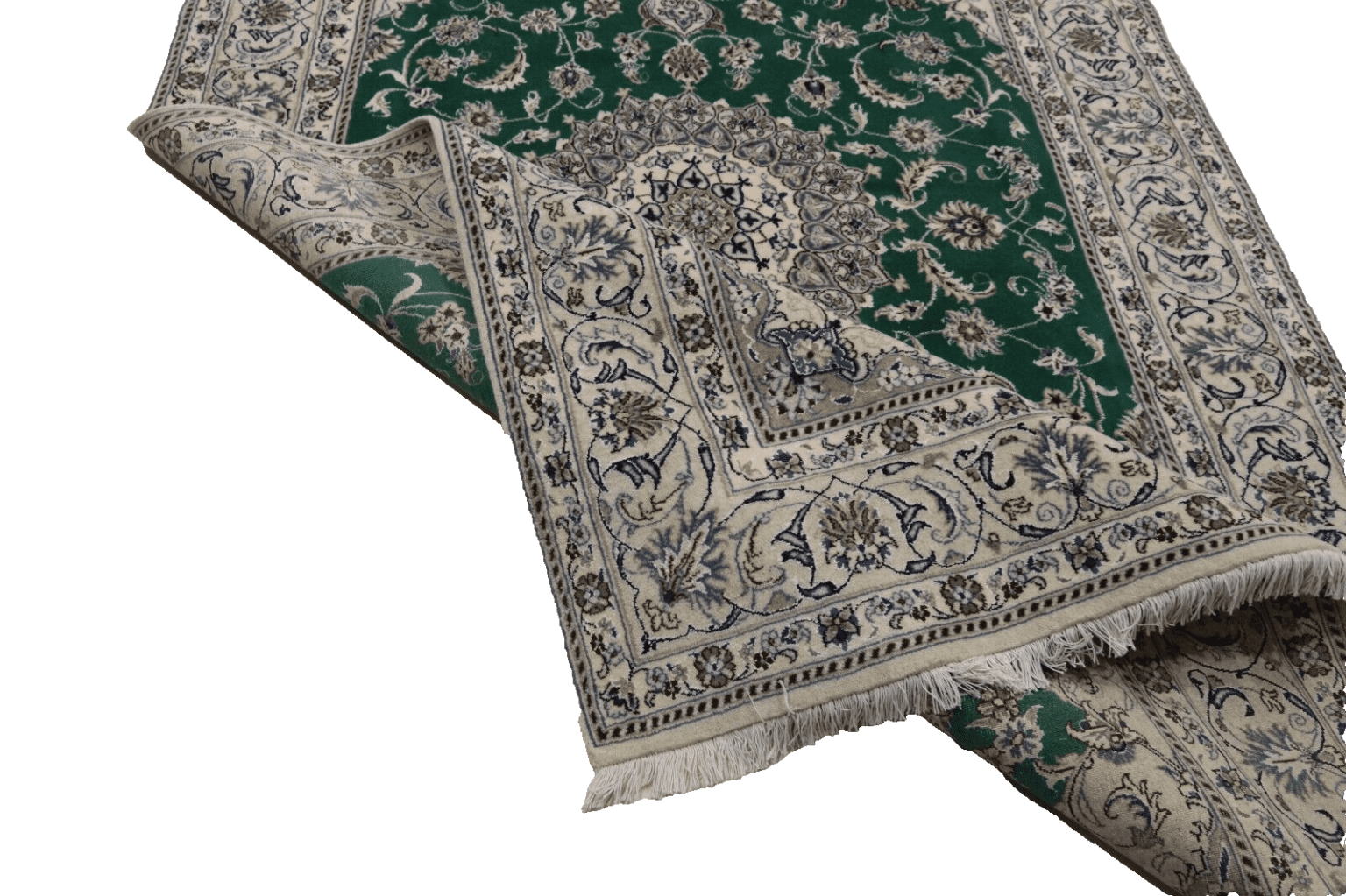
Several features help place a Persian rug in context: its hand-knotted construction, the fibres used, the knot density and the execution of its design. This rug is supplied with a rug certificate confirming its authenticity. The back can also be examined on a hand-knotted rug, since the knot structure and the connection with the warp are visible there. A specialist assessment can provide an additional professional interpretation of these construction and material features.
To provide the best experiences, we use technologies like cookies to store and/or access device information. Consenting to these technologies will allow us to process data such as browsing behavior or unique IDs on this site. Not consenting or withdrawing consent, may adversely affect certain features and functions.
Functional Always active
The technical storage or access is strictly necessary for the legitimate purpose of enabling the use of a specific service explicitly requested by the subscriber or user, or for the sole purpose of carrying out the transmission of a communication over an electronic communications network.
Preferences
The technical storage or access is necessary for the legitimate purpose of storing preferences that are not requested by the subscriber or user.
Statistics
The technical storage or access that is used exclusively for statistical purposes.The technical storage or access that is used exclusively for anonymous statistical purposes. Without a subpoena, voluntary compliance on the part of your Internet Service Provider, or additional records from a third party, information stored or retrieved for this purpose alone cannot usually be used to identify you.
Marketing
The technical storage or access is required to create user profiles to send advertising, or to track the user on a website or across several websites for similar marketing purposes.
 SECURE PAYMENT
 SHIPPING PARTNERS


